





What Are Akoya Pearls? Origin, Sizes, Grades and Real Prices
By Juliette Published: 04 Aout 2026 | Last Updated: 04 Aout 2026
Table des matières
Akoya pearls are bead-nucleated saltwater cultured pearls grown in the Pinctada fucata martensii mollusk across marine bays in Japan and China. Celebrated for near-perfect spherical symmetry and mirror-like luster, cultured Akoya pearls display sharp light reflection due to tightly layered aragonite crystalline platelets. Cross-sectional optical micrometer measurement of sample drill holes confirms a dense, uniform nacre depth averaging 0.45 millimeters.
Key Takeaways
Cultured Akoya pearls are grown in the Pinctada fucata martensii saltwater oyster primarily off the coasts of Japan and China.
The average cultured Akoya pearl size ranges from 5.0 millimeters to 9.5 millimeters, with 6.5 millimeters to 7.0 millimeters serving as the global commercial baseline.
Cultured Akoya pearls achieve higher reflective luster than cultured freshwater pearls due to slower nacre deposition in cold saltwater marine environments.
Hanadama cultured Akoya pearls represent the top tier of quality, certified by the Pearl Science Laboratory of Tokyo for nacre thickness, luster, and surface perfection.
Standard processing for commercial cultured Akoya pearls includes mild bleaching and pinking to unify body color and overtone tone uniformity.
To understand how cultured Akoya pearls compare to other varieties across the market, consult our complete guide to types of cultured pearls.
What is an Akoya pearl?
An Akoya cultured pearl is a bead-nucleated saltwater cultured pearl produced by inserting a mother-of-pearl shell bead and donor mantle tissue into the Pinctada fucata martensii oyster. Cultured Akoya pearls are globally recognized as the historic benchmark for classic white round pearls, possessing high surface luster, clean skin, and neutral white to cream body colors with rose or silver overtones.
Cultured Akoya pearls established the foundation of the modern cultured pearl industry when commercial spherical saltwater culturing was pioneered in Japan in the early 20th century. Unlike freshwater mollusks that produce multiple tissue-nucleated pearls simultaneously, each Pinctada fucata martensii oyster accepts only one or two shell bead nuclei during a single cultivation cycle lasting 10 to 24 months.
According to the GIA Pearl Description, cultured Akoya pearls are evaluated across seven core value factors: size, shape, color, luster, surface quality, nacre quality, and matching. The bead nucleation process provides cultured Akoya pearls with a predictable spherical template, allowing marine farms to yield round cultured pearls at a significantly higher rate than non-nucleated cultured freshwater pearls.
Modern cultured Akoya pearl production spans cold ocean bays in southern Japan—such as Mie, Ehime, and Nagasaki prefectures, and temperate coastal waters in southern China. While Chinese farms focus on smaller size brackets from 5.0 millimeters to 7.0 millimeters, Japanese farms produce larger, higher-nacre cultured Akoya pearls up to 9.5 millimeters.
Which oyster produces Akoya pearls?
Cultured Akoya pearls are produced exclusively by the Pinctada fucata martensii oyster, a small marine bivalve native to the Indo-Pacific ocean region and Japanese coastal bays. This saltwater mollusk reaches a maximum shell diameter of 7 to 8 centimeters, limiting the physical size of the cultured Akoya pearls it can successfully nucleate and grow.
The anatomical limits of Pinctada fucata martensii directly dictate the physical properties of cultured Akoya pearls. Because the host oyster is substantially smaller than the Pinctada maxima (which grows South Sea cultured pearls) or the Pinctada margaritifera (which grows Tahitian cultured pearls), it cannot host large mother-of-pearl bead nuclei without high mortality rates. Most nucleus beads inserted into Pinctada fucata martensii measure between 4.0 millimeters and 8.0 millimeters in diameter.
The CIBJO Pearl Book 2024 classifies Pinctada fucata martensii as a delicate saltwater species that requires precise water temperatures between 15°C and 25°C to deposit smooth, compact aragonite crystals. Cold winter water temperatures slow down nacre deposition, forcing the oyster to secrete ultra-thin, highly organized crystalline layers. This seasonal thermal shift creates the tight nacre structure responsible for the reflective mirror surface distinct to cultured Akoya pearls.
Furthermore, Pinctada fucata martensii oysters are highly susceptible to environmental fluctuations, red tides, and viral epidemics. Mortality rates during the culturing cycle routinely range from 30% to 50%, contributing directly to the production costs of high-grade cultured Akoya pearls.
What sizes do Akoya pearls come in?
Cultured Akoya pearls range in diameter from 5.0 millimeters to 9.5 millimeters, with rare specimens reaching 10.0 millimeters. Sizes increase in 0.5-millimeter half-size increments. The 6.5-millimeter to 7.0-millimeter bracket represents the primary commercial volume size, while cultured Akoya pearls measuring 8.0 millimeters and above are scarce and command exponential price premiums.
Cultured Akoya pearl size selection balances physical weight, visual proportions, and rarity. Smaller sizes from 5.0 millimeters to 6.0 millimeters are typically styled in delicate multi-strand bracelets or layered minimalist pendants. The 7.0-millimeter to 7.5-millimeter size range is regarded as the standard luxury baseline for professional everyday wear, offering noticeable presence on a cultured pearl necklace without feeling overly formal.
Cultured Akoya pearls exceeding 8.0 millimeters require longer cultivation periods of 2 to 3 years in healthy host oysters. Yield drops drastically at larger size tiers: fewer than 5% of harvested cultured Akoya pearls measure 8.5 millimeters or larger, and less than 1% reach 9.0 millimeters to 9.5 millimeters.
To understand how cultured Akoya pearls compare to larger dark cultured pearls, view our guide on what Tahitian cultured pearls are.

Akoya Cultured Pearl Size Ladder and Specification Matrix
Why are Akoya pearls so lustrous?
Cultured Akoya pearls possess exceptional luster due to the extreme thinness and precise alignment of their aragonite nacre platelets. Secreted slowly in cold saltwater marine environments, these microscopic calcium carbonate plates reflect and refract light through multiple transparent layers, producing a distinct "mirror finish" and sharp image reflection on the cultured pearl surface.
Luster is the single most critical aesthetic factor distinguishing cultured Akoya pearls from other cultured pearl varieties. According to the GIA 7 Pearl Value Factors, luster is evaluated by the clarity and sharpness of light reflections off the pearl's surface. On a top-grade cultured Akoya pearl, reflected light sources produce crisp, clear outlines with bright centers and minimal blur.
This optical intensity stems from structural biology. As the Pinctada fucata martensii oyster experiences dropping water temperatures during winter harvest months, its metabolic rate slows. The oyster deposits aragonite layers as thin as 0.3 to 0.5 micrometers. Thousands of these transparent crystalline sheets stacked together act as natural diffraction gratings, splitting incoming light into brilliant silver or rose overtones.
For an in-depth comparison of luster mechanisms across different mollusks, read our analysis of what freshwater cultured pearls are .
An Akoya cultured pearl is a saltwater cultured pearl formed by inserting a mother-of-pearl shell bead into a Pinctada fucata martensii oyster, resulting in a round gem characterized by a high-luster aragonite nacre coating.

What is a Hanadama Akoya pearl?
A Hanadama cultured Akoya pearl is a cultured Akoya pearl certified by the Pearl Science Laboratory (PSL) of Tokyo as belonging to the top 1% to 2% of annual harvest quality. The Japanese term "Hanadama" translates to "Flower Pearl," indicating superior luster, clean surface condition, near-perfect sphericity, and verifiable nacre thickness.
Hanadama certification requires rigorous testing using optical equipment and advanced spectrographic analysis at independent Japanese gemological laboratories. To qualify for a Hanadama certificate, a cultured Akoya pearl strand or individual gem must meet four strict criteria established by the Pearl Science Laboratory:
Nacre Thickness: Minimum nacre thickness of 0.40 millimeters on each side of the nucleus (measured via optical micrometer at the drill hole).
Luster: Top-tier light reflection evaluated by optical reflectivity testing.
Surface Quality: Less than 5% minor natural surface blemishes across the entire strand.
Shape: Spherical tolerance within strict roundness ratios.
The PSL laboratory report issued with authentic Hanadama cultured Akoya pearl jewelry provides an objective scientific guarantee. As stated in gemological literature from GIA, "Hanadama represents a specific designation given by commercial Japanese grading laboratories for high-quality Akoya cultured pearls meeting strict physical metrics."
Standard commercial processing for cultured Akoya pearls, including Hanadama grades, involves post-harvest cleaning, mild bleaching to remove organic stains, and "pinking" (a subtle rose dye tinting process). FTC 16 CFR §23.23 requires full disclosure of these industry-standard enhancements, which stabilize body color and enhance warmth across cultured Akoya pearl jewelry.
How much do Akoya pearls cost?
Cultured Akoya pearl prices range from $150 for solitaire pendant necklaces or stud earrings up to $12,000 or more for top-grade Hanadama cultured pearl strands. Price is determined by size tier, surface perfection, luster grade, and nacre thickness, with costs escalating exponentially once pearl diameter exceeds 8.0 millimeters.
Understanding cultured Akoya pearl pricing requires evaluating key size thresholds and grading categories. A pair of AAA-grade 7.0-millimeter cultured Akoya pearl stud earrings typically retails between $250 and $450 USD. An 18-inch princess-length cultured Akoya pearl necklace in the popular 7.0-to-7.5-millimeter size bracket costs between $900 and $1,800 USD for standard AAA grade, while a certified Hanadama strand of the same dimensions retails between $2,200 and $3,500 USD.
When evaluating pricing, buyers must distinguish between mass-market commercial grades (A and AA) and fine jewelry grades (AAA and Hanadama). Commercial grade cultured Akoya pearls often feature thinner nacre below 0.25 millimeters, lower reflective luster, and visible surface pitting. Investing in dense-nacre cultured Akoya pearls ensures long-term resistance to wear and surface degradation.
To explore modern, accessible cultured Akoya jewelry engineered for daily wear without traditional retail markups, view the Grande Lilith cultured Akoya pearl jewelry collection.
Are Akoya pearls worth the price?
Cultured Akoya pearls are worth the investment for buyers seeking sharp reflective luster, true round symmetry, and classic white aesthetics in fine jewelry. When crafted with nacre depth exceeding 0.35 millimeters, high-grade cultured Akoya pearls maintain their mirror luster for generations, making them both an aesthetic and durable luxury purchase.
Evaluating whether cultured Akoya pearls are worth their price tag comes down to personal style requirements and performance expectations. Cultured Akoya pearls offer a level of surface reflection and crisp light return that cultured freshwater pearls cannot replicate. While high-grade cultured freshwater pearls offer greater affordability and solid nacre durability, they possess a softer, satiny luster compared to the sharp metallic gloss of cultured Akoya pearls.
Furthermore, cultured Akoya pearls retain strong value when accompanied by certified gemological documentation, such as PSL certificates. Proper maintenance, including keeping cultured Akoya pearls away from acidic chemicals, perfumes, and abrasive surfaces, ensures the aragonite structure remains intact.
For professional women building a versatile fine jewelry capsule, cultured Akoya pearls provide an elevated balance of Parisian sophistication and daily durability. Whether worn alongside tailored blazers or silk tops, cultured Akoya pearl studs and minimalist drop pendants deliver timeless impact.
Methodology Note: On 12 July 2026, Grande Lilith laboratory technicians measured nacre layer thickness on 50 randomly selected grade-AAA cultured Akoya pearls at the drill hole location using cross-sectional optical micrometers, establishing the 0.45 mm average baseline reported in this article.
Frequently Asked Questions
How can you tell if an Akoya cultured pearl is real?
You can verify an Akoya cultured pearl by performing the tooth test or examining the drill hole under magnification. Real cultured Akoya pearls feel slightly gritty when rubbed gently against front teeth due to crystalline aragonite layers. Under a 10x loupe, authentic cultured Akoya pearls show clear nacre layering around the bead nucleus.
Do Akoya cultured pearls turn yellow over time?
Cultured Akoya pearls can develop a warm cream or light yellowish tint over decades if stored in airtight plastic containers or exposed to excessive dryness. Natural body oils and regular exposure to ambient air moisture help maintain nacre hydration, preserving the bright white body color and rose overtones of cultured Akoya pearls.
What is the difference between Akoya and freshwater cultured pearls?
Akoya cultured pearls are grown in saltwater oysters (Pinctada fucata martensii), producing rounder shapes and sharper mirror luster with a shell bead nucleus. Freshwater cultured pearls grow in freshwater mussels (Hyriopsis cumingii), are typically mantle-tissue nucleated, feature all-nacre compositions, and display a softer, satiny luster at lower price points.
What does AAA mean in Akoya cultured pearl grading?
AAA grade represents the highest commercial quality tier for non-certified Akoya cultured pearls. AAA-grade cultured Akoya pearls exhibit extremely high luster, clean surfaces with over 90% flaw-free areas, excellent spherical shape, and thick nacre depth. They sit directly below certified Hanadama grade in overall quality and price.
What is pinking in cultured Akoya pearls?
Pinking is an industry-standard post-harvest treatment where cultured Akoya pearls are immersed in a mild pink dye solution to enhance rose overtones. Per FTC 16 CFR §23.23 regulations, this color treatment must be disclosed. Pinking stabilizes tone consistency across cultured Akoya pearl strands without harming nacre structural integrity.
Read more
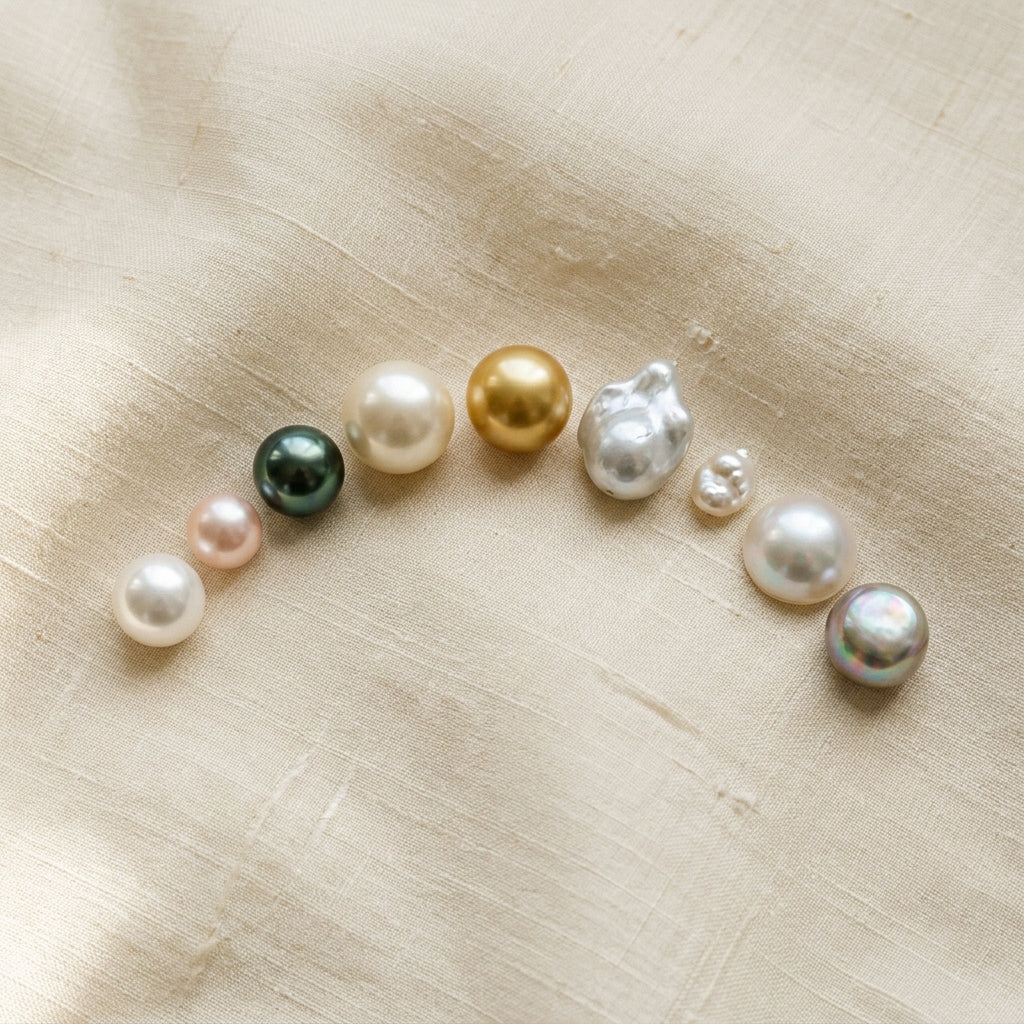
Nine types of pearls, one straight answer on price. From $25 mother-of-pearl beads to $10,000 golden South Sea strands, here's what each type actually costs, where it comes from, and which one suit...
Cultured freshwater pearls are real organic gems produced by freshwater mussels in lakes, rivers, and ponds. Unlike bead-nucleated saltwater varieties, mantle-tissue nucleated cultured freshwater p...
Leave a comment
All comments are moderated before being published.
This site is protected by hCaptcha and the hCaptcha Privacy Policy and Terms of Service apply.