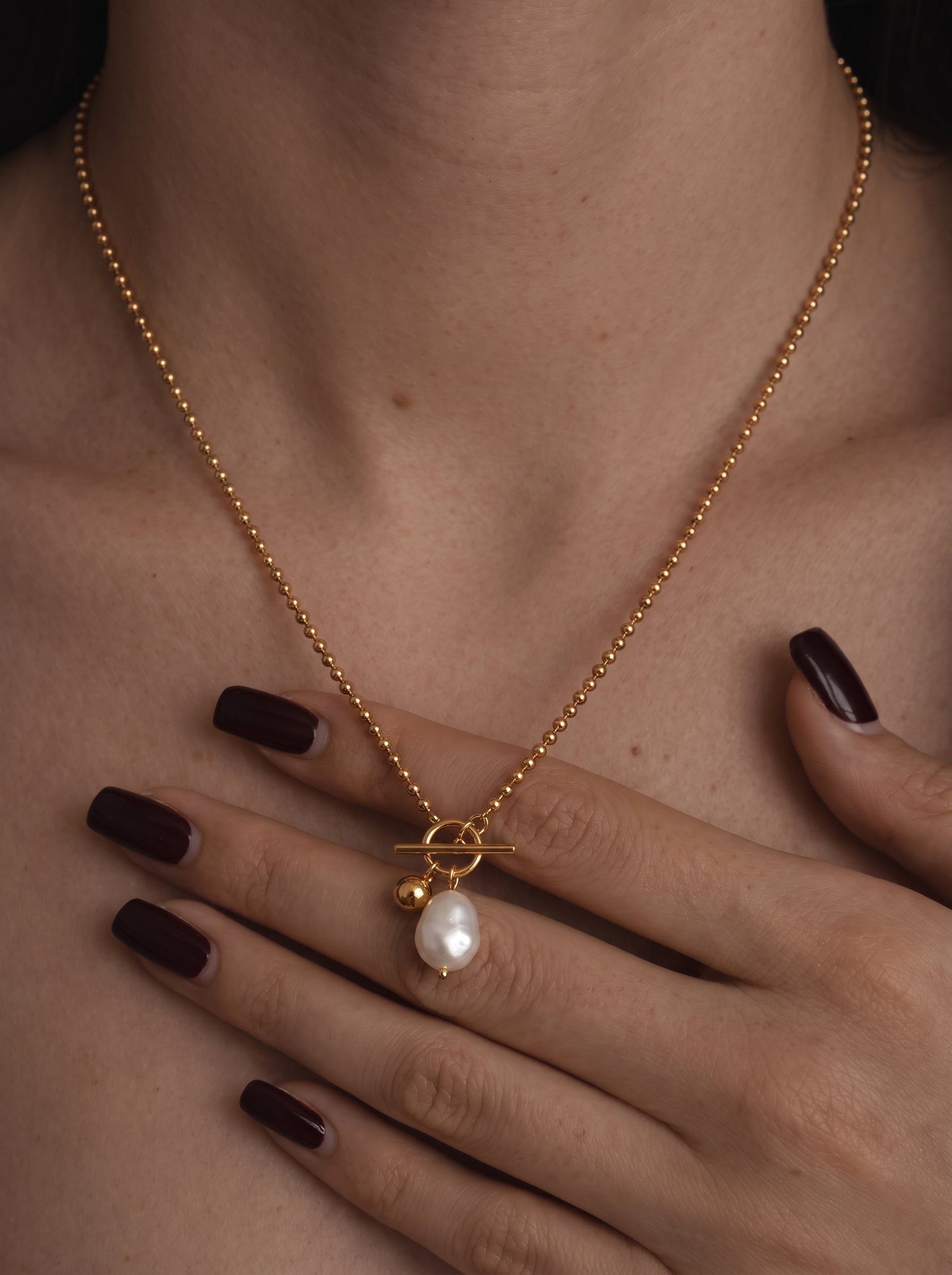
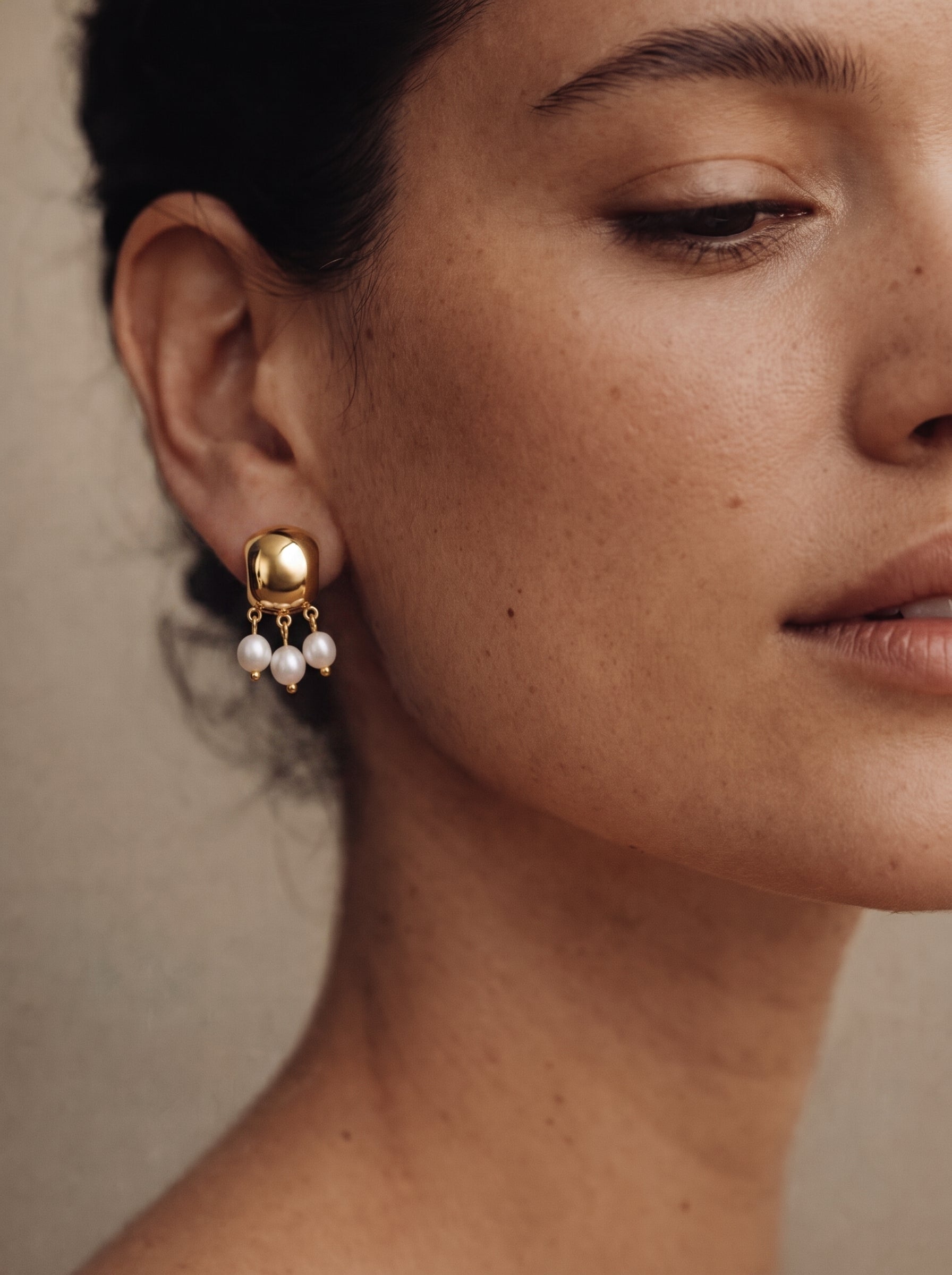
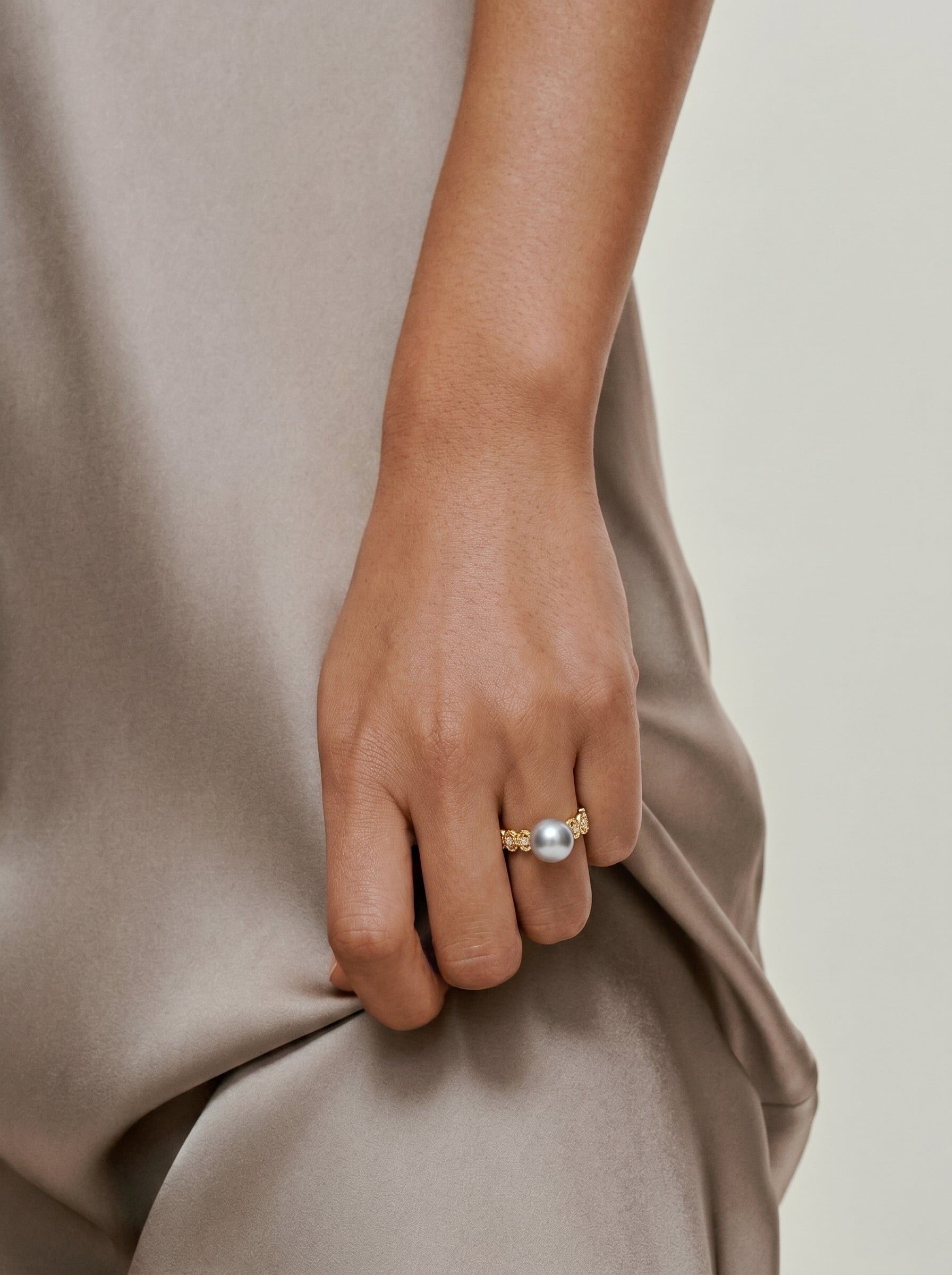
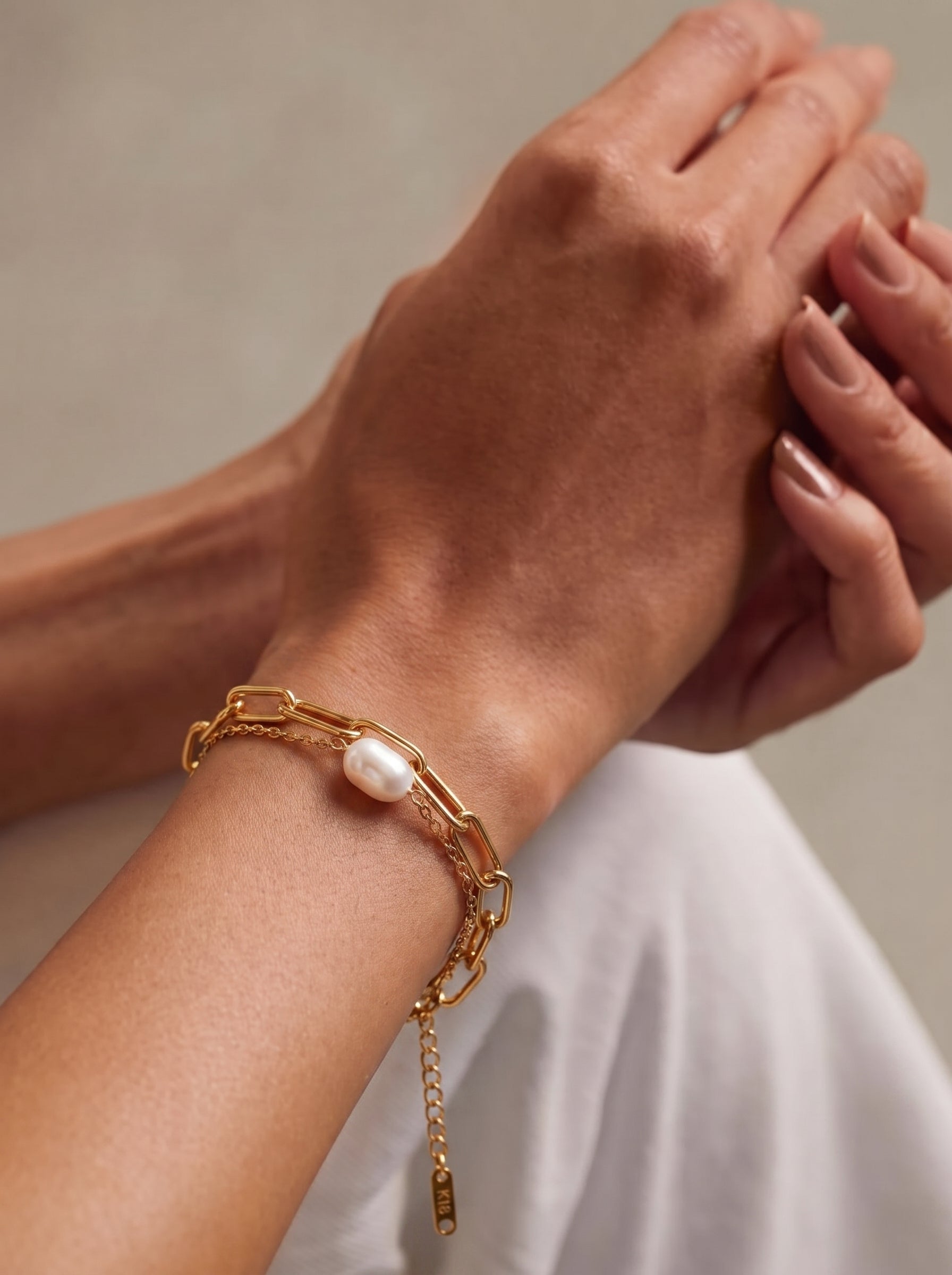
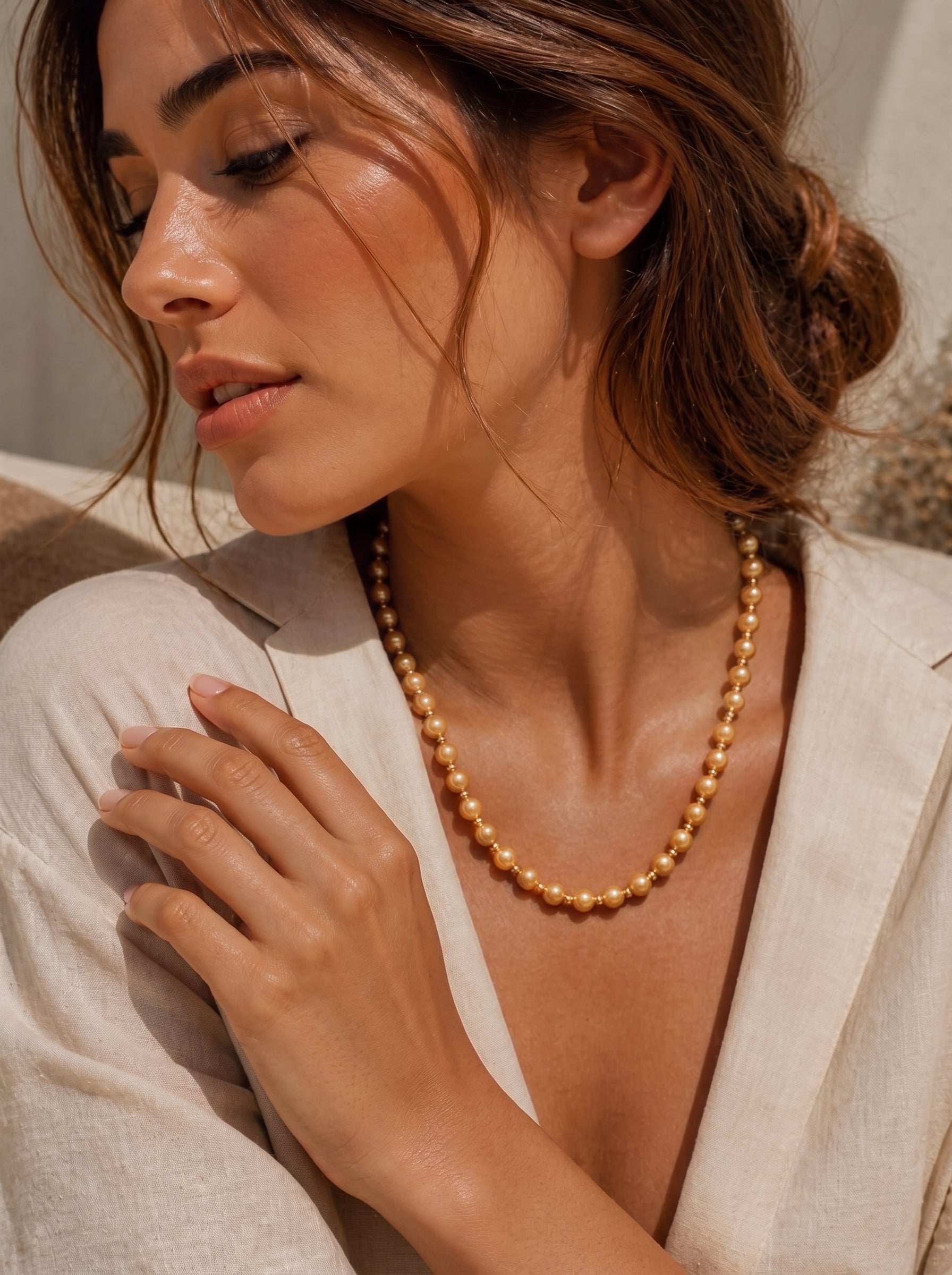
An Akoya pearl necklace is the pearl necklace most people picture when they hear the word. Round, white, and sharply lustrous, grown in Japan. It is also the most exacting thing to make, because Akoya pearls have to be matched before they can be strung.
What is an Akoya pearl necklace?
An Akoya pearl necklace uses saltwater cultured pearls grown in Pinctada fucata martensii, the Akoya oyster, primarily in Japan. Each pearl is grown around a round shell bead, which is why Akoya pearls are consistently spherical in a way freshwater pearls rarely are.
That roundness, combined with a thin dense nacre layer, produces the mirror-sharp reflection Akoya is known for. It is the reason a small Akoya pearl still reads from across a room.
What is the difference between Akoya and freshwater pearls?
Akoya pearls are saltwater pearls grown around a shell bead, which makes them round. Freshwater pearls are grown in Chinese mussels around mantle tissue, making them solid nacre but less uniformly round. Akoya luster is typically sharper. Freshwater nacre is typically thicker.
Choose Akoya when you want the classic round white pearl necklace. Choose freshwater when you want shape variety, larger size for the money, or a wider color range.
What size are Akoya pearls?
Akoya pearls typically run 6 to 9 mm. Anything above 9 mm becomes scarce quickly, because the Akoya oyster is small and cannot accommodate a larger nucleus. That size ceiling is part of why a matched Akoya strand costs what it does.
A farm has to grow, harvest, and then match hundreds of pearls for size, shape, color and overtone before a single strand can be assembled. Most of the price sits in the matching, not the growing.
Which Akoya pearl necklace style should you choose?
Floating necklaces
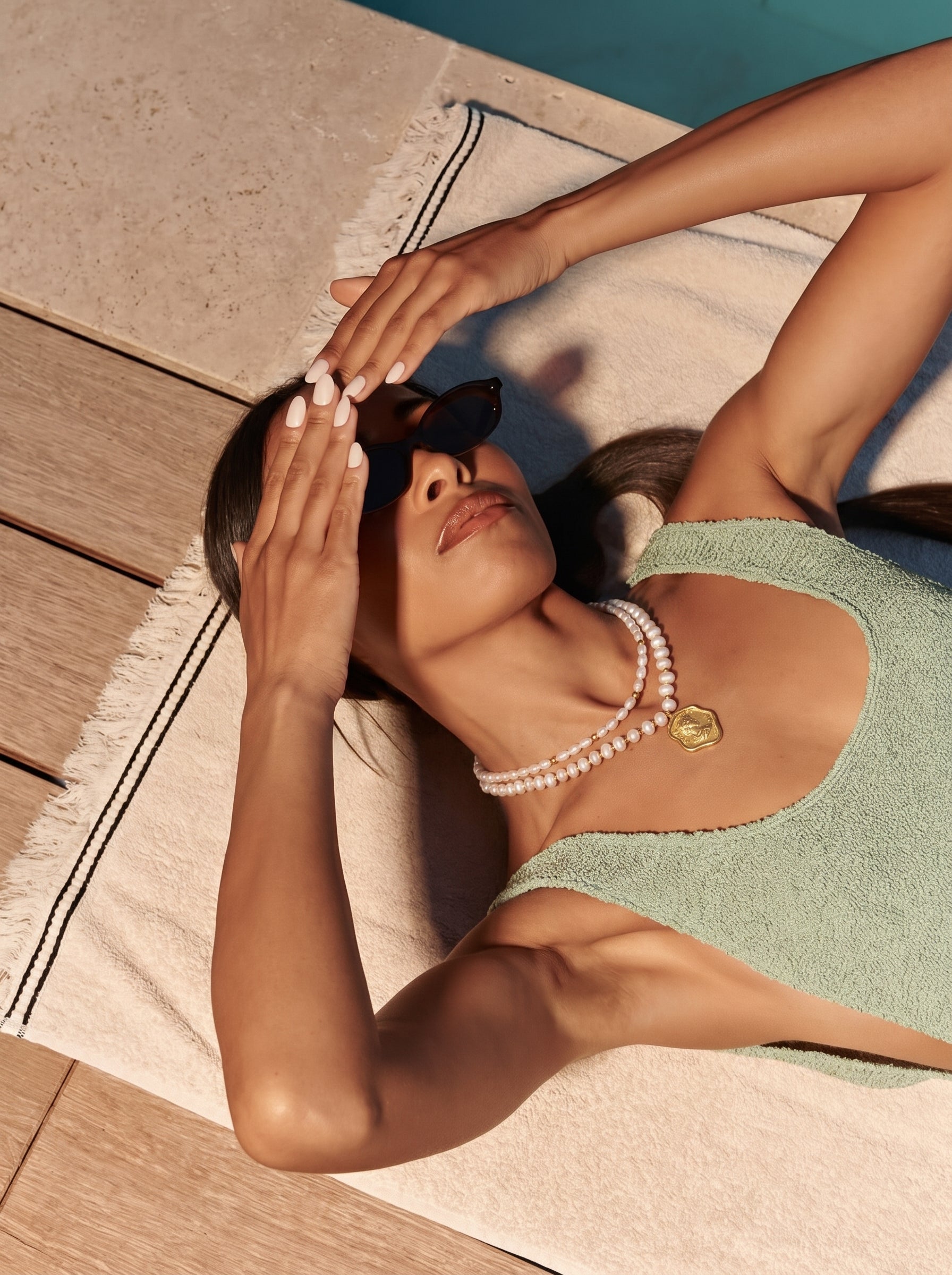
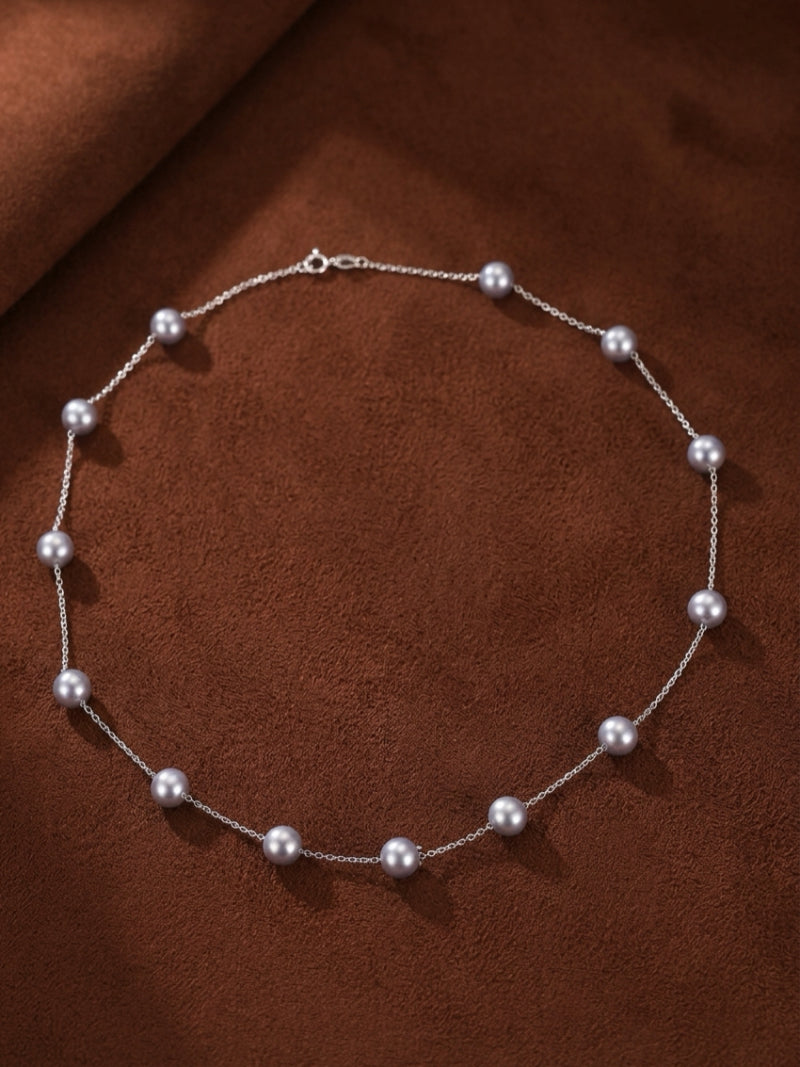
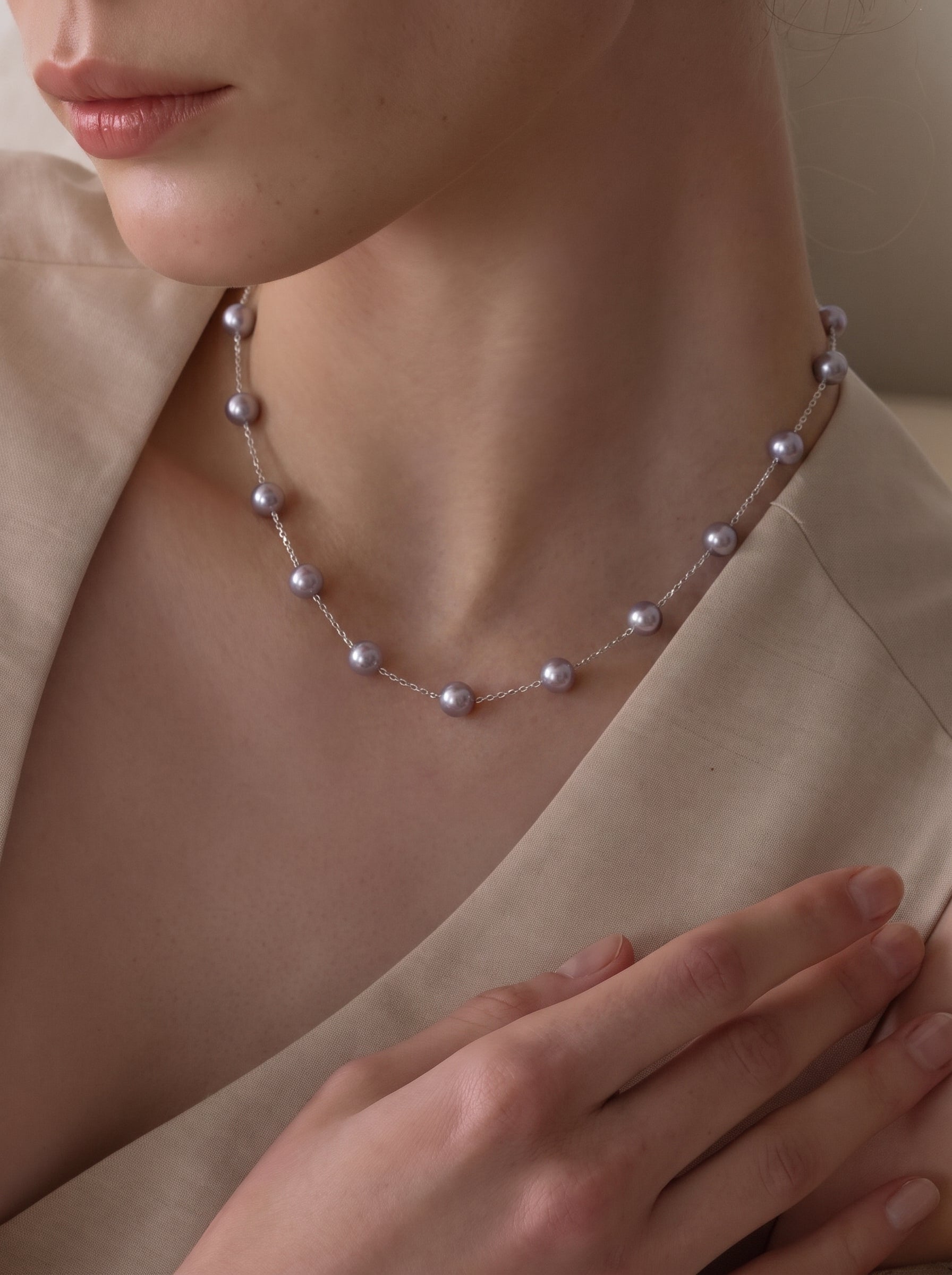
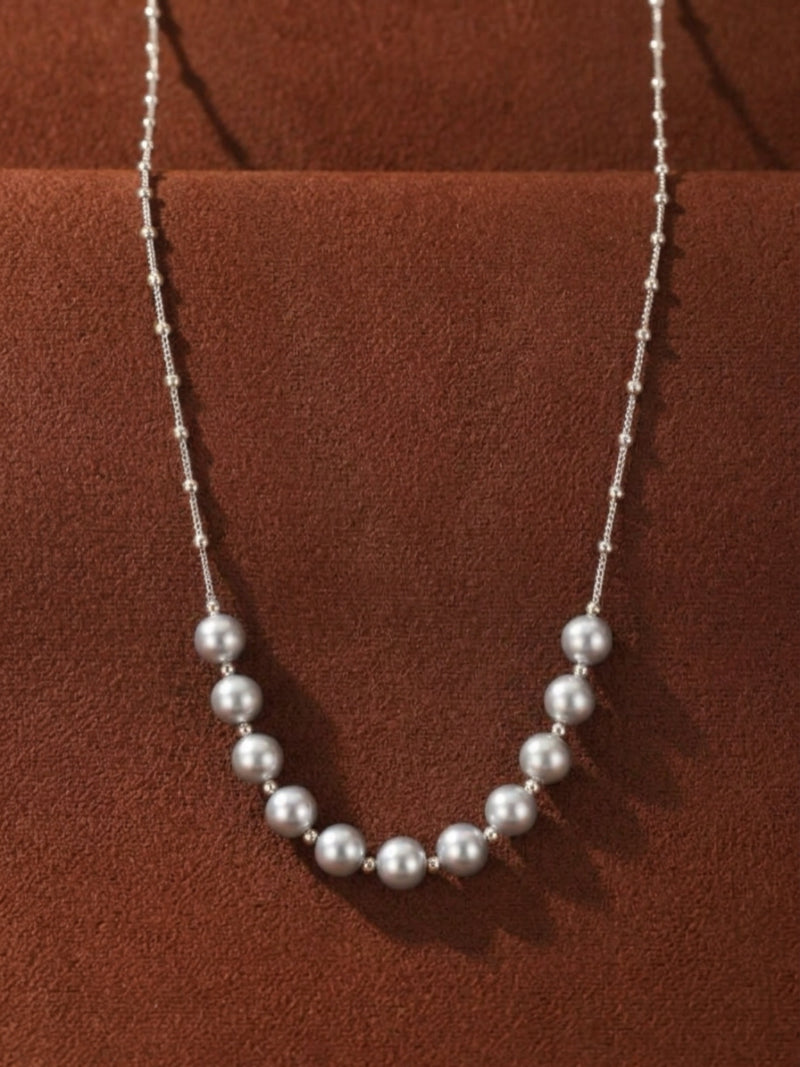
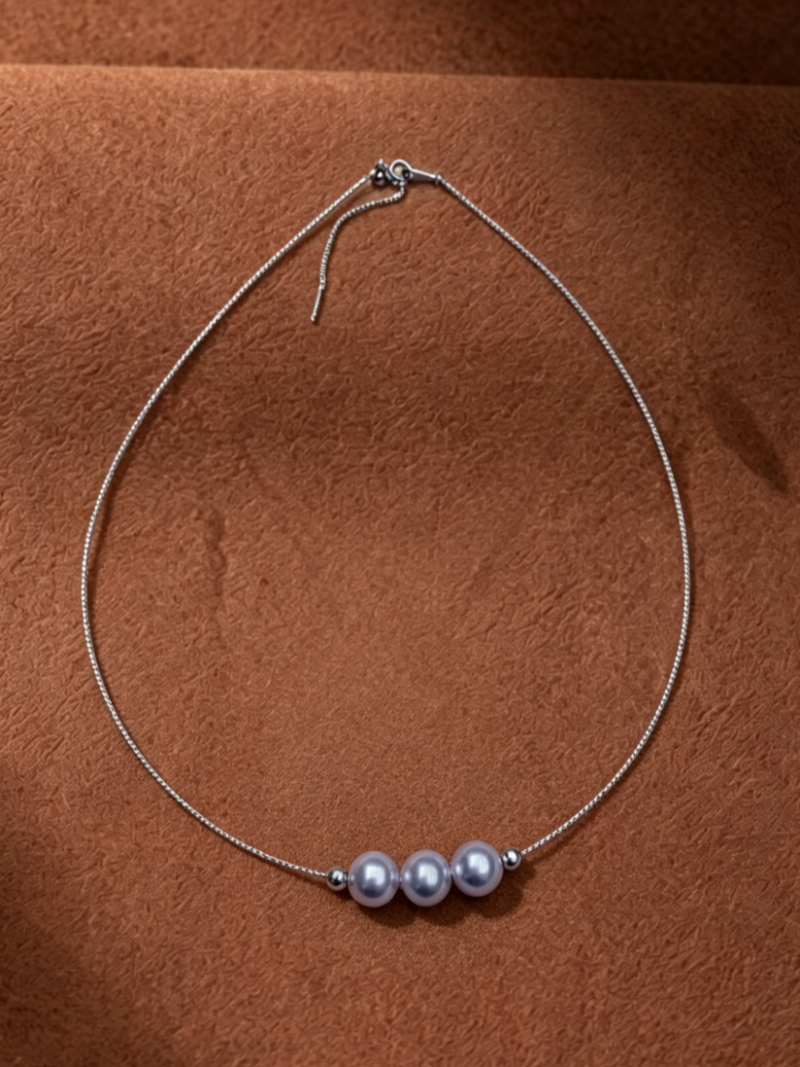
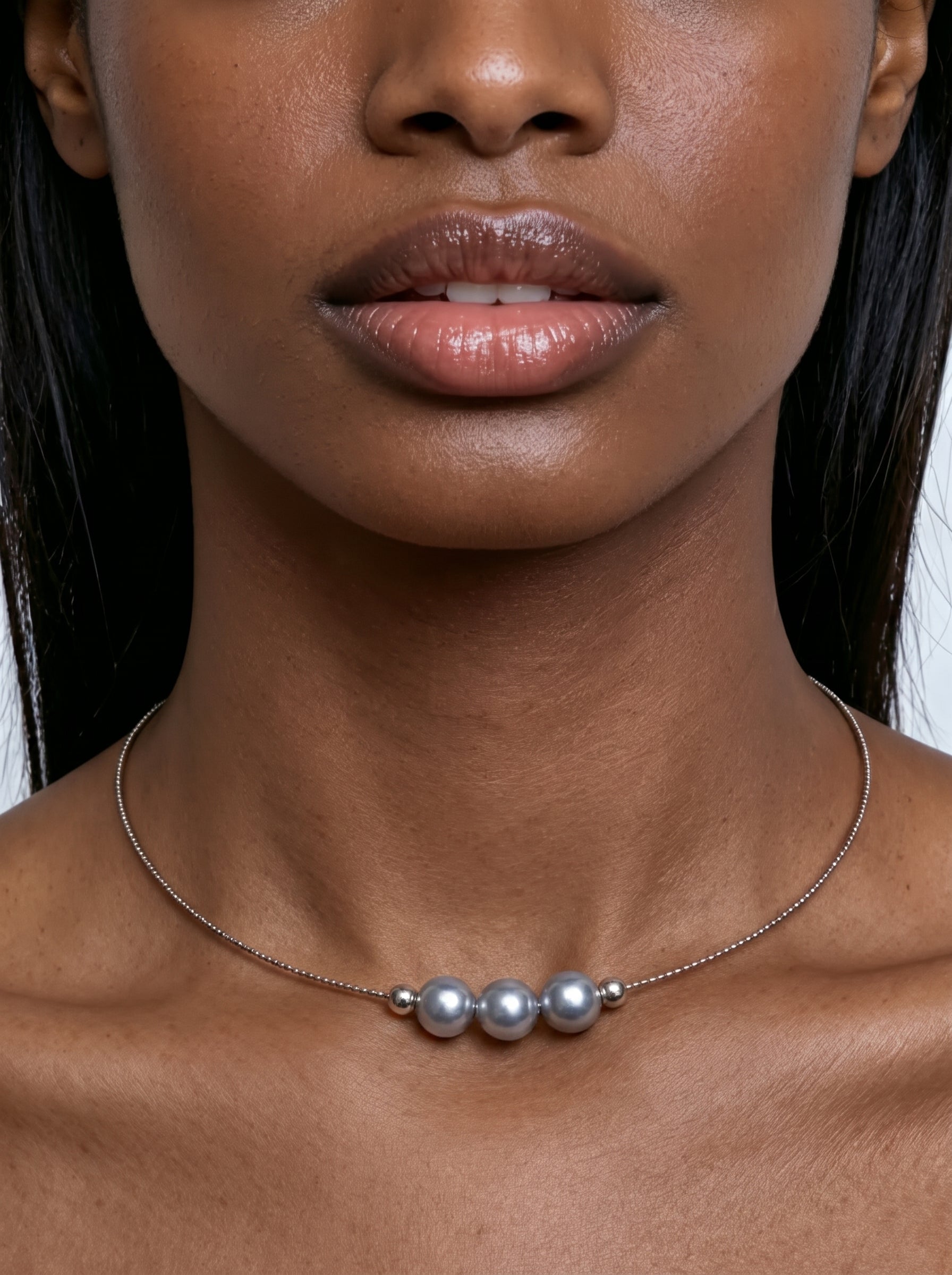
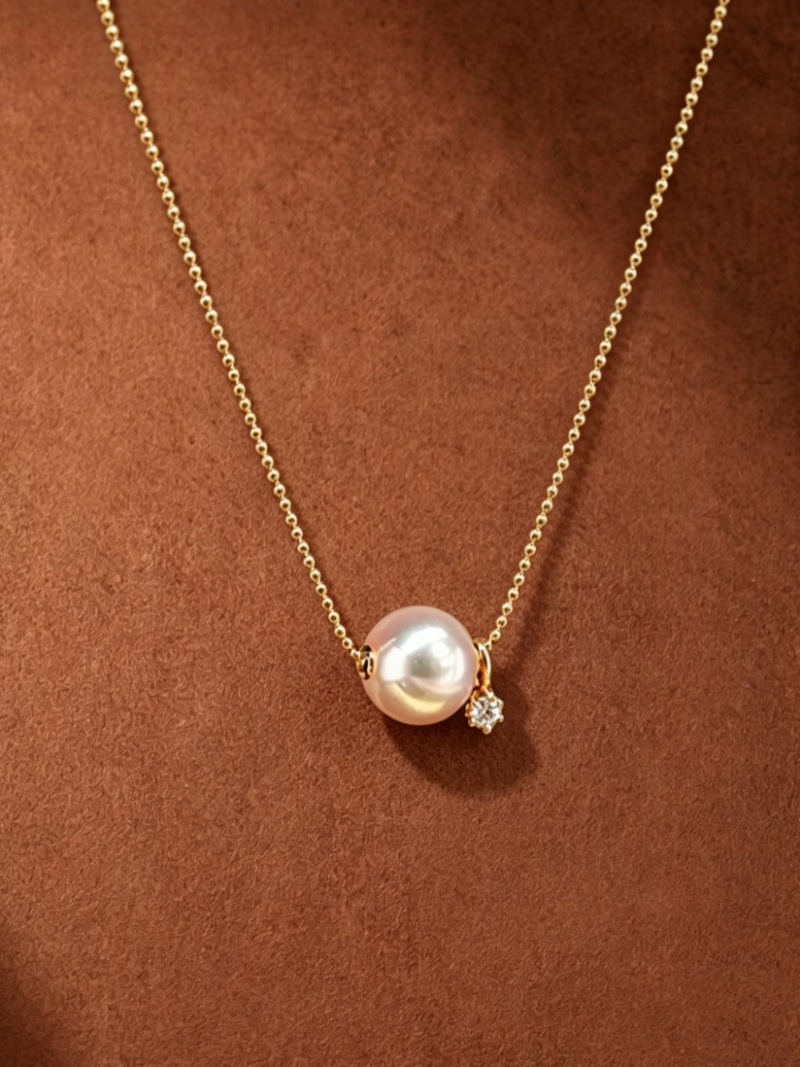
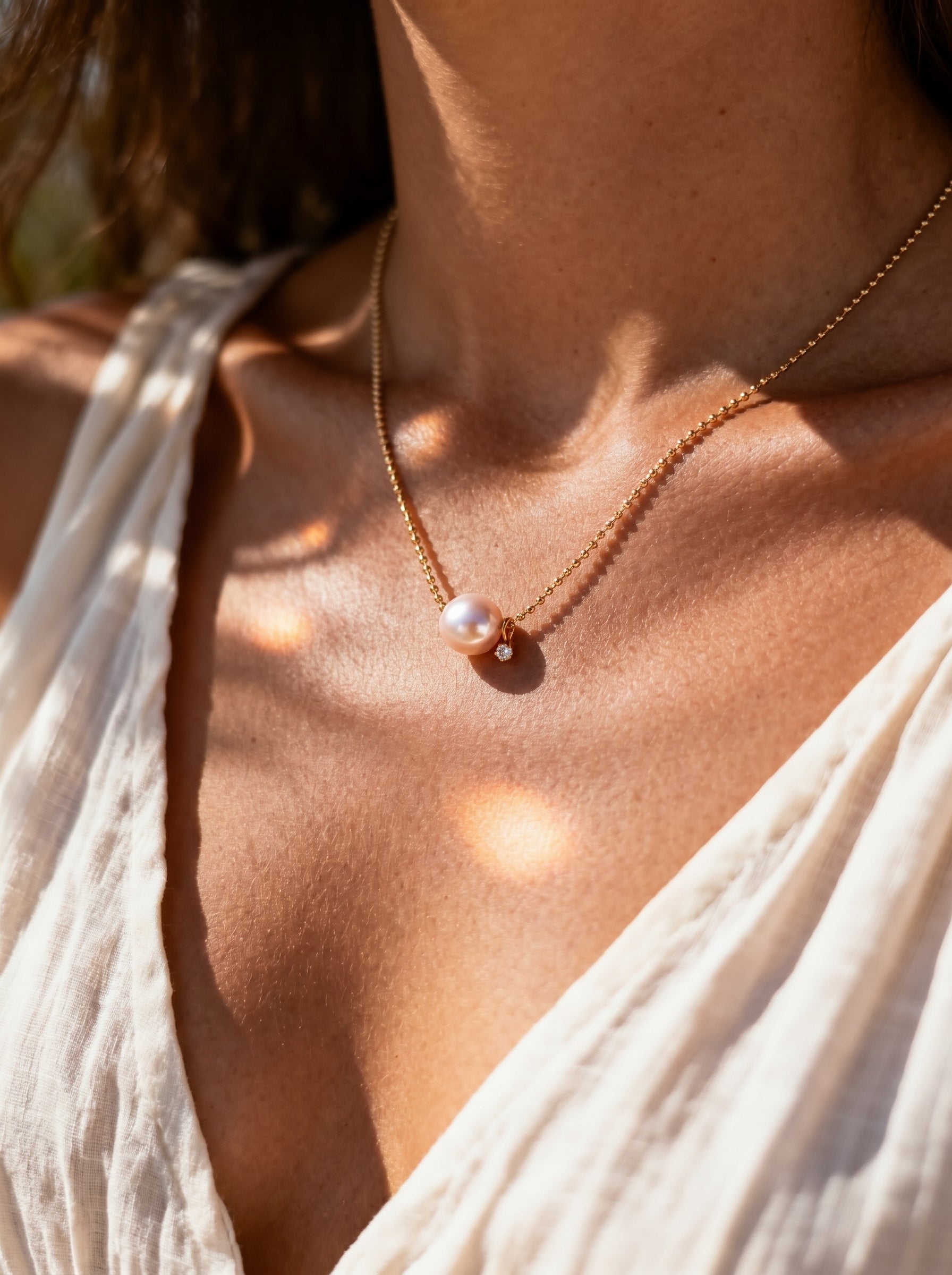
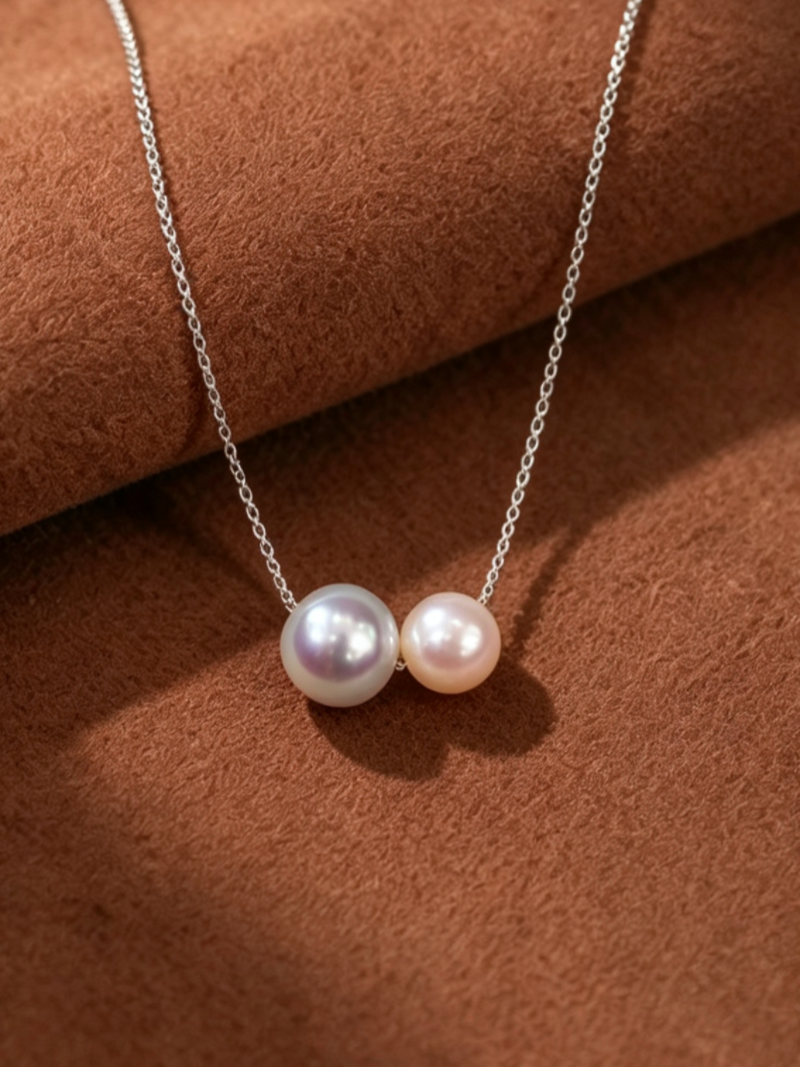
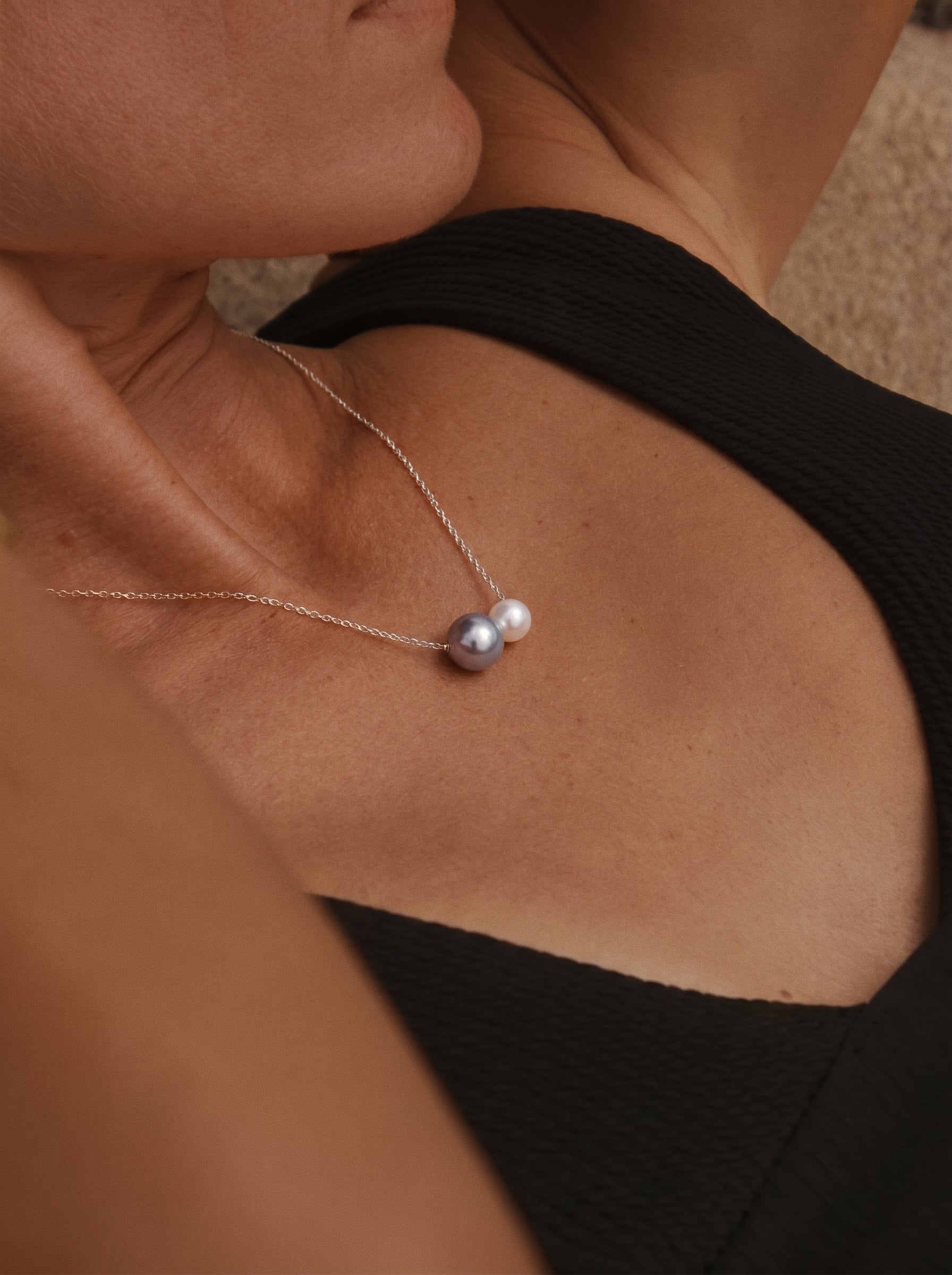
Pearls spaced along a fine chain so they appear to rest directly on the skin. This gives each pearl room to show its luster individually, which suits Akoya better than any other type.
Spaced chokers
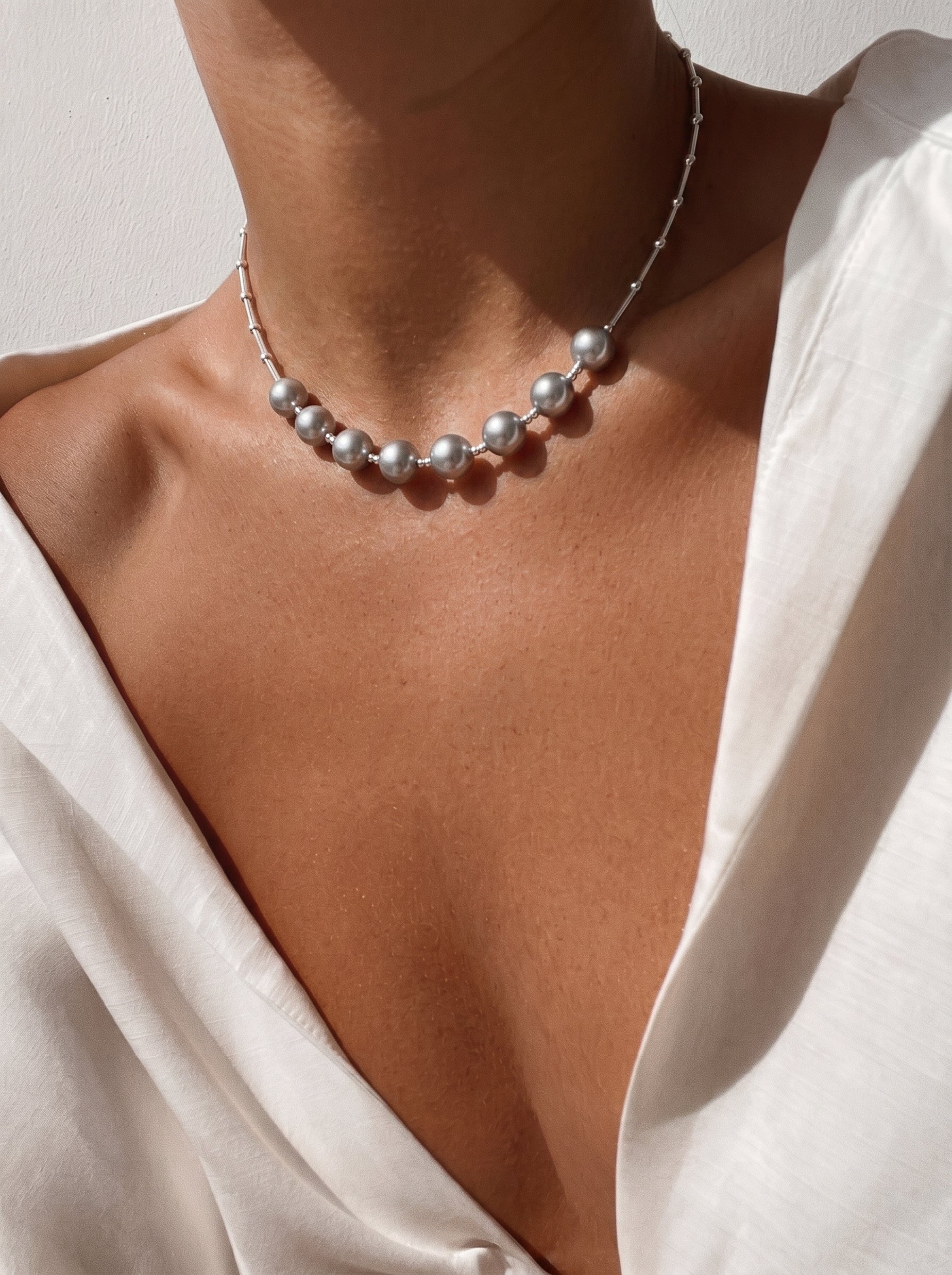
A choker length with pearls set at intervals rather than strung continuously. It sits high at the base of the throat and reads deliberate without the weight of a full strand.
Single pendants and drops
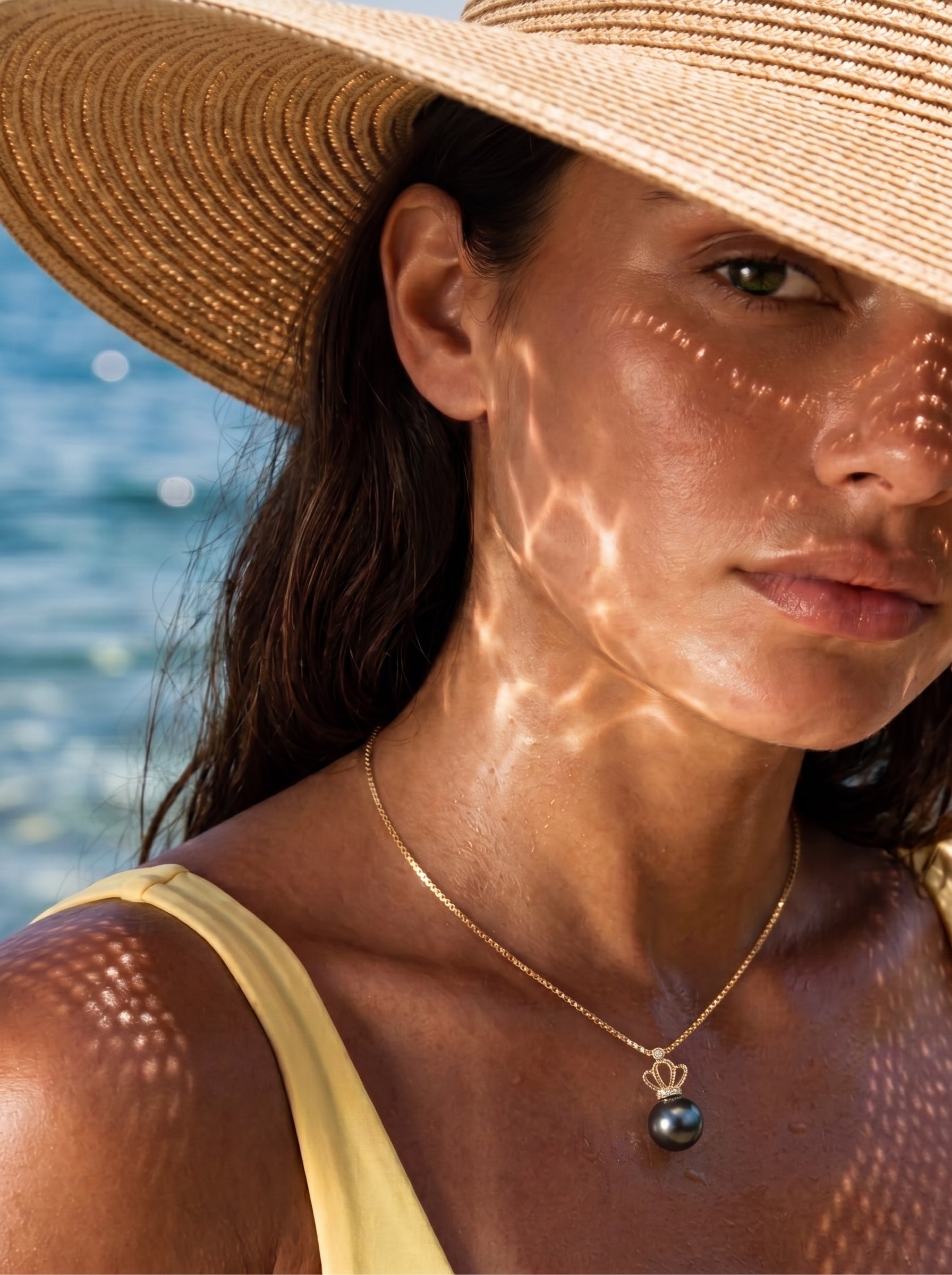
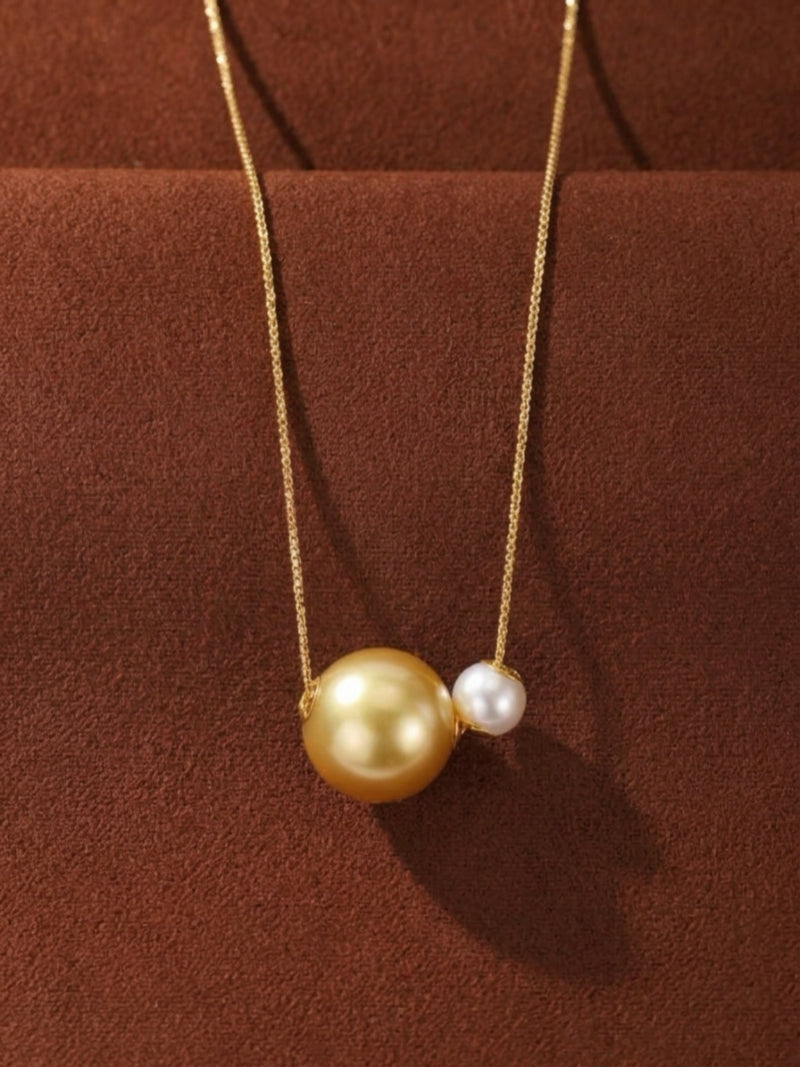
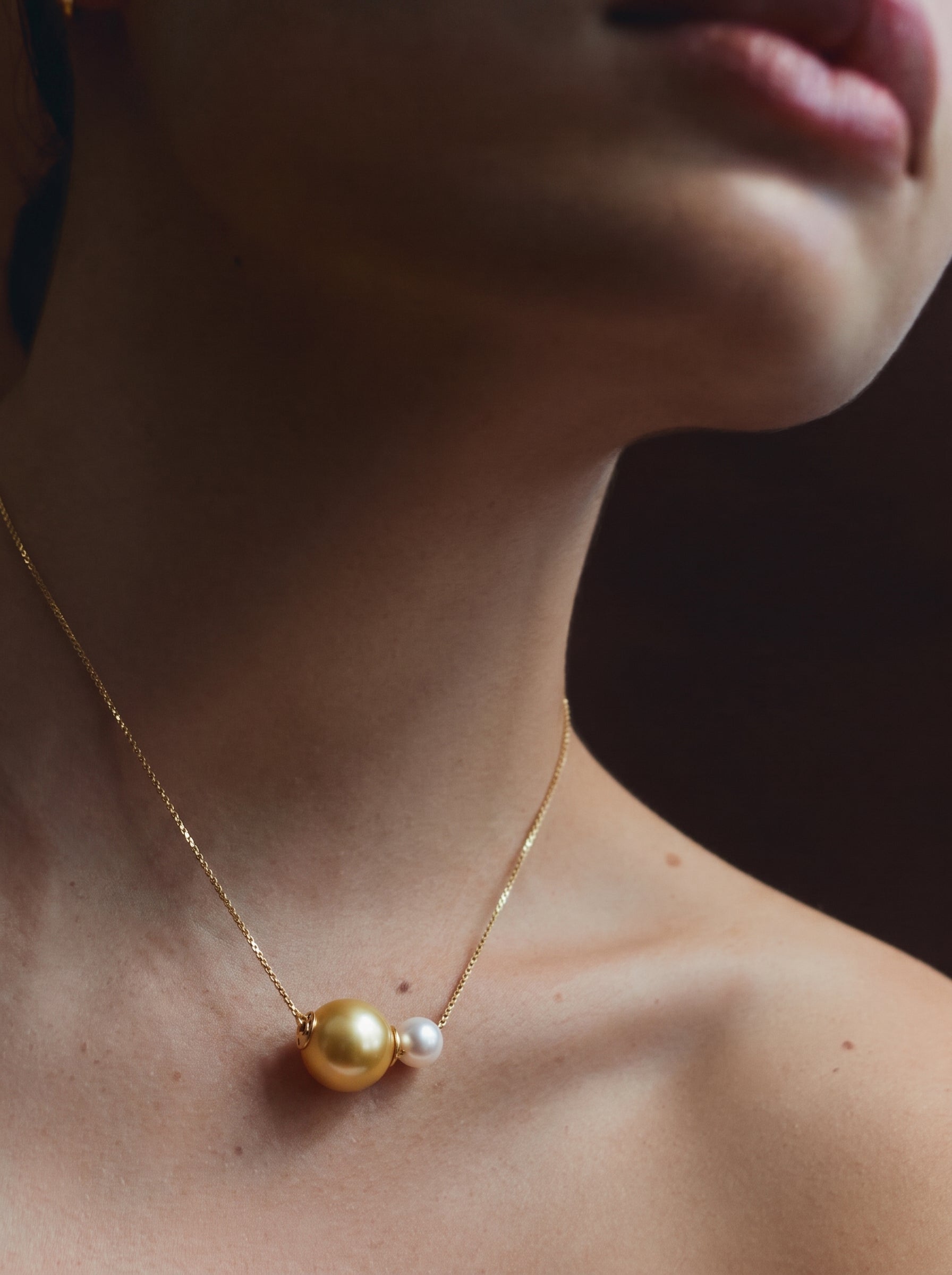
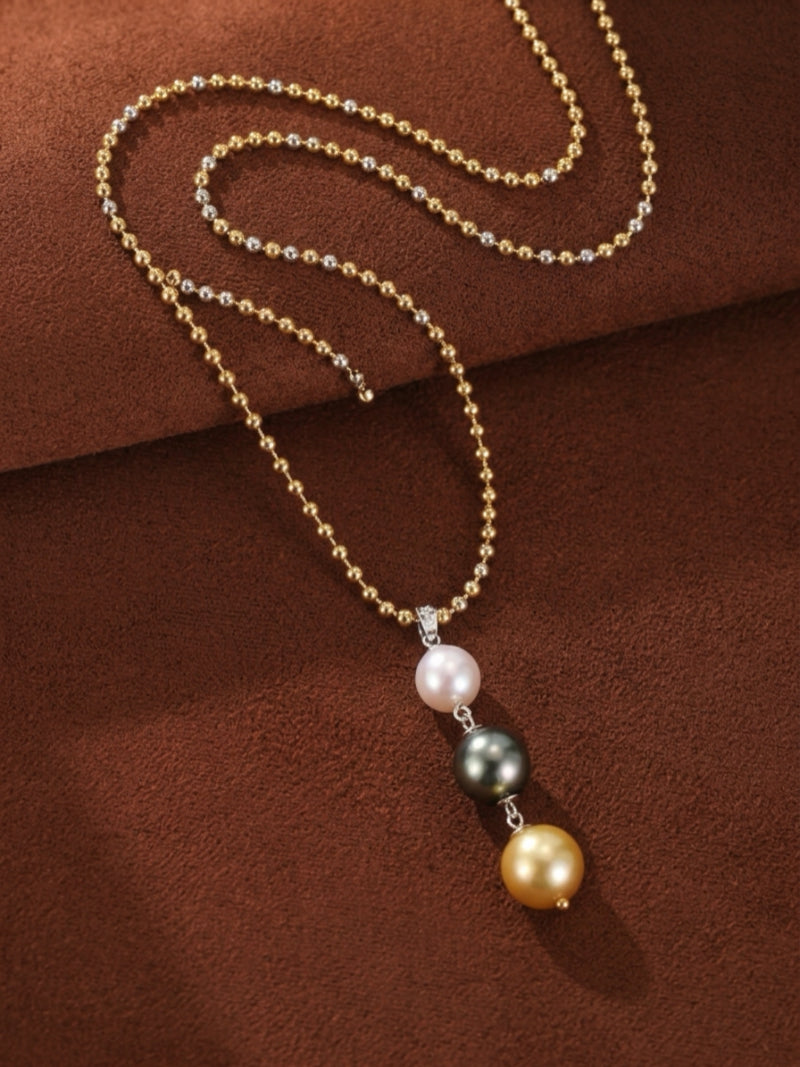
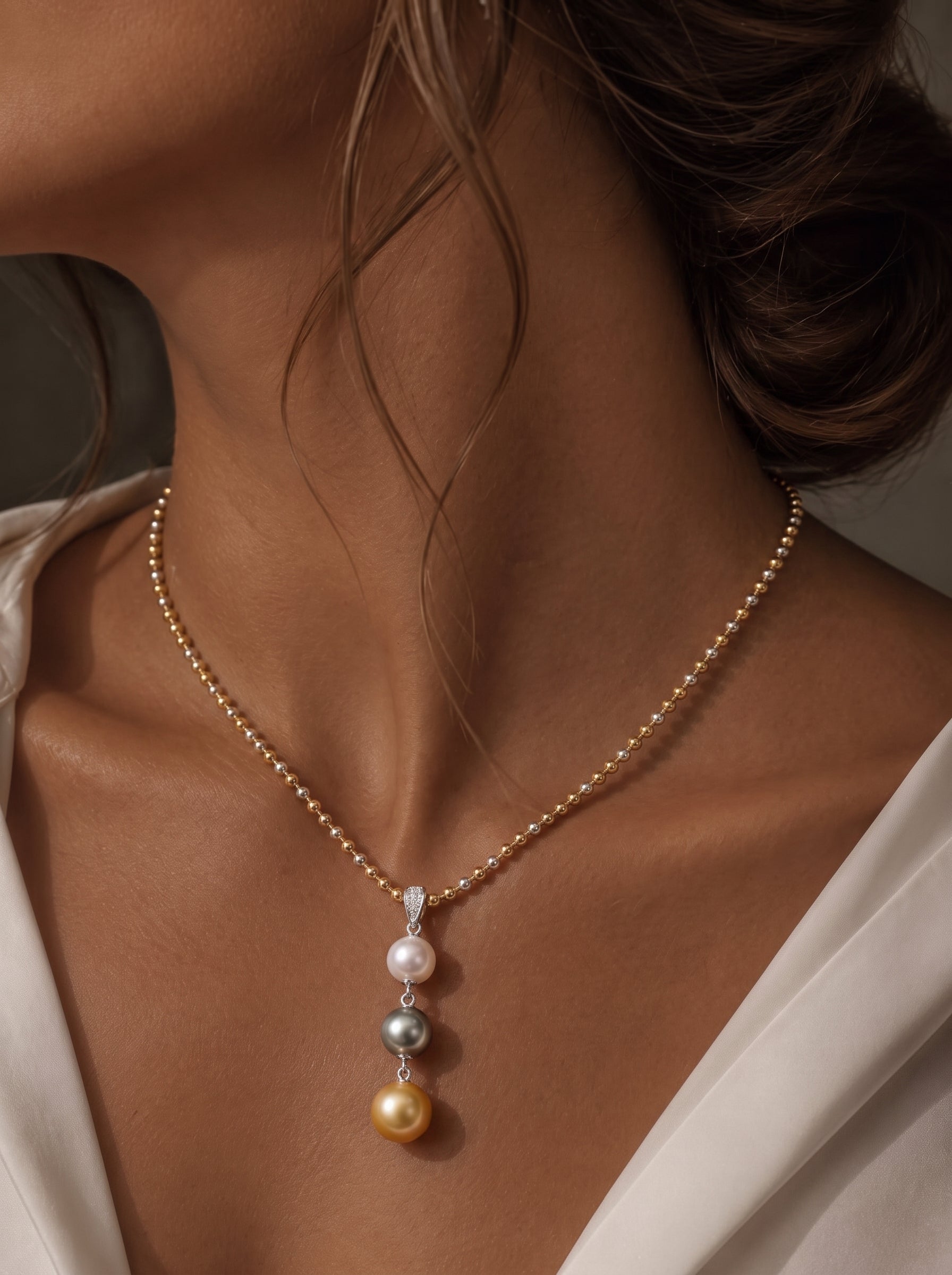
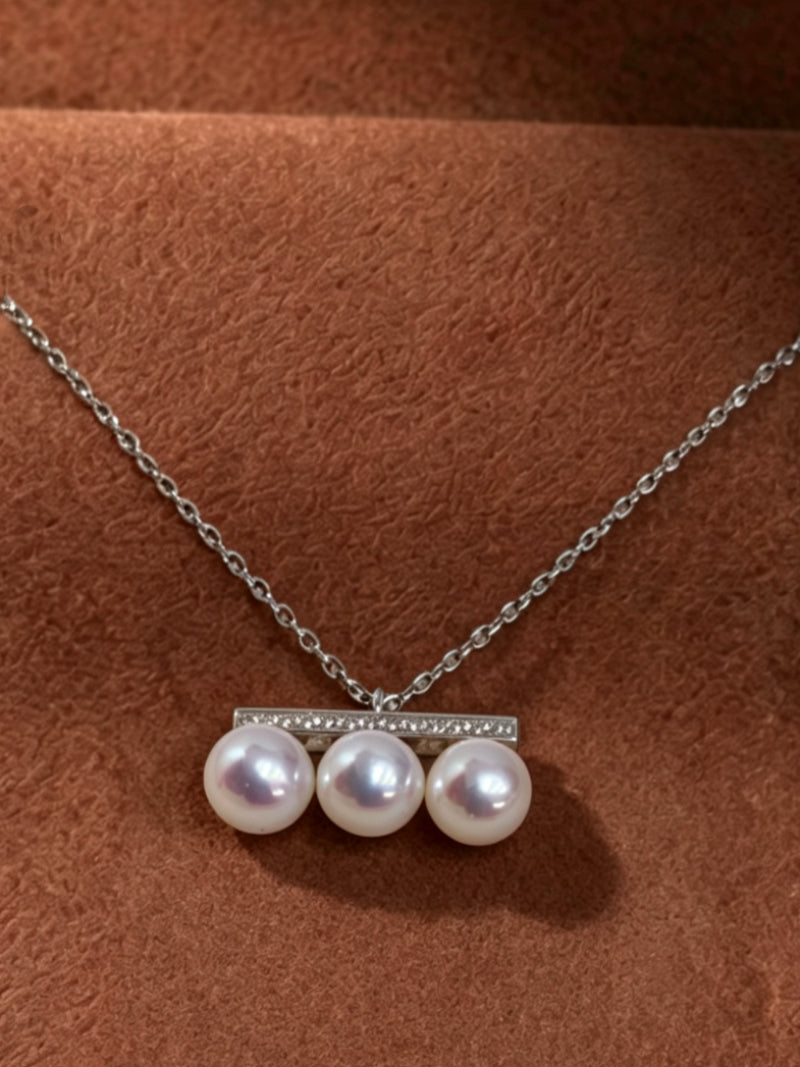
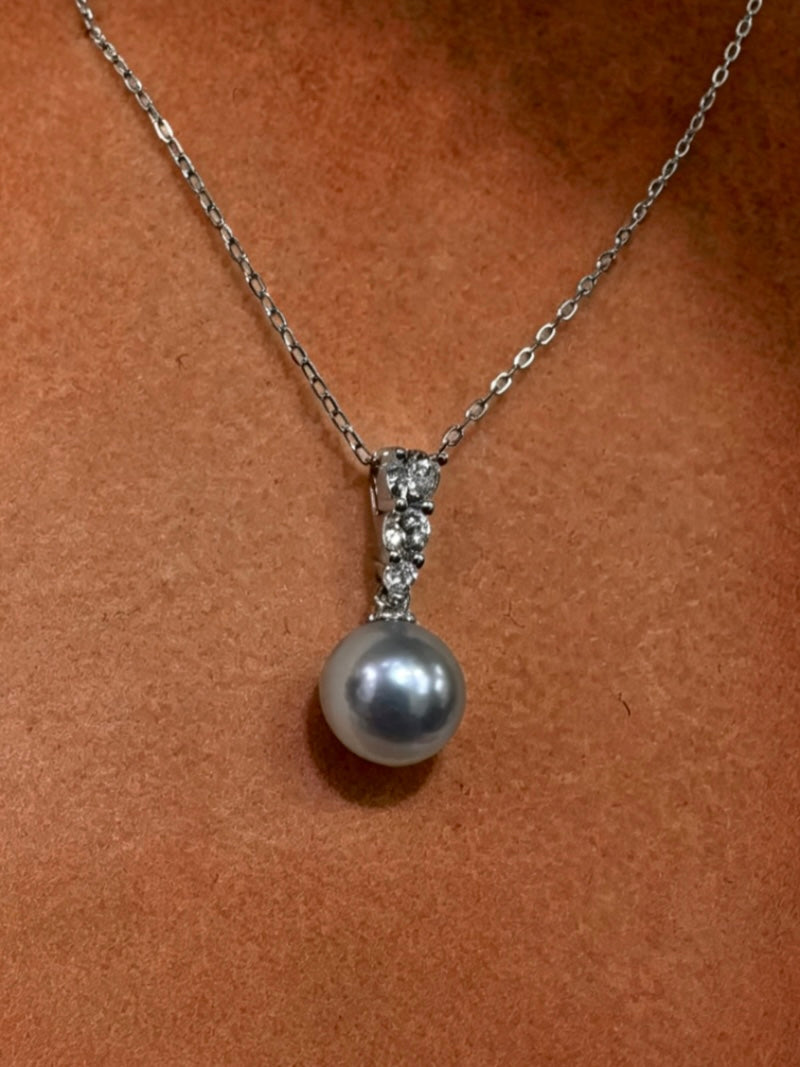
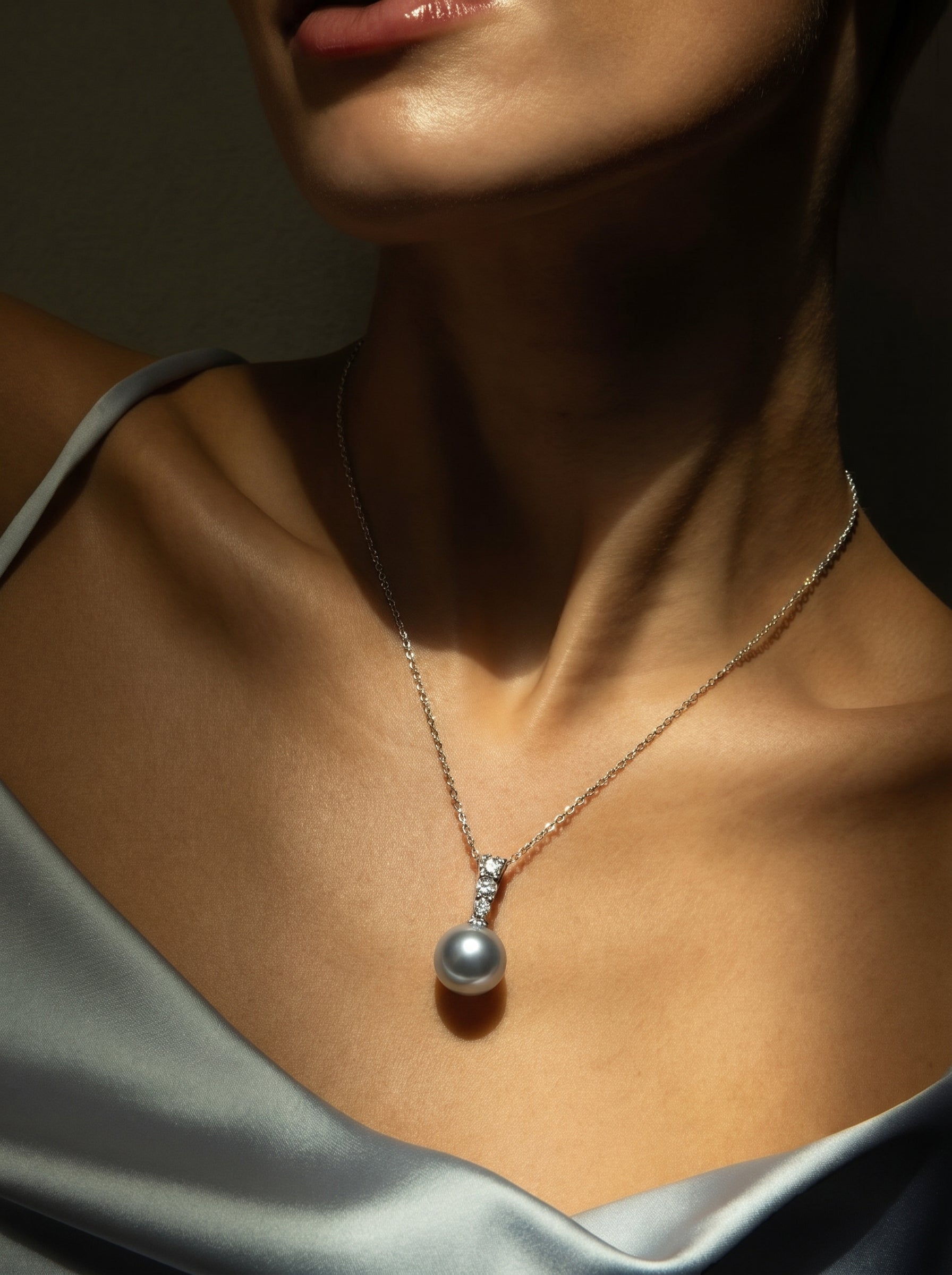
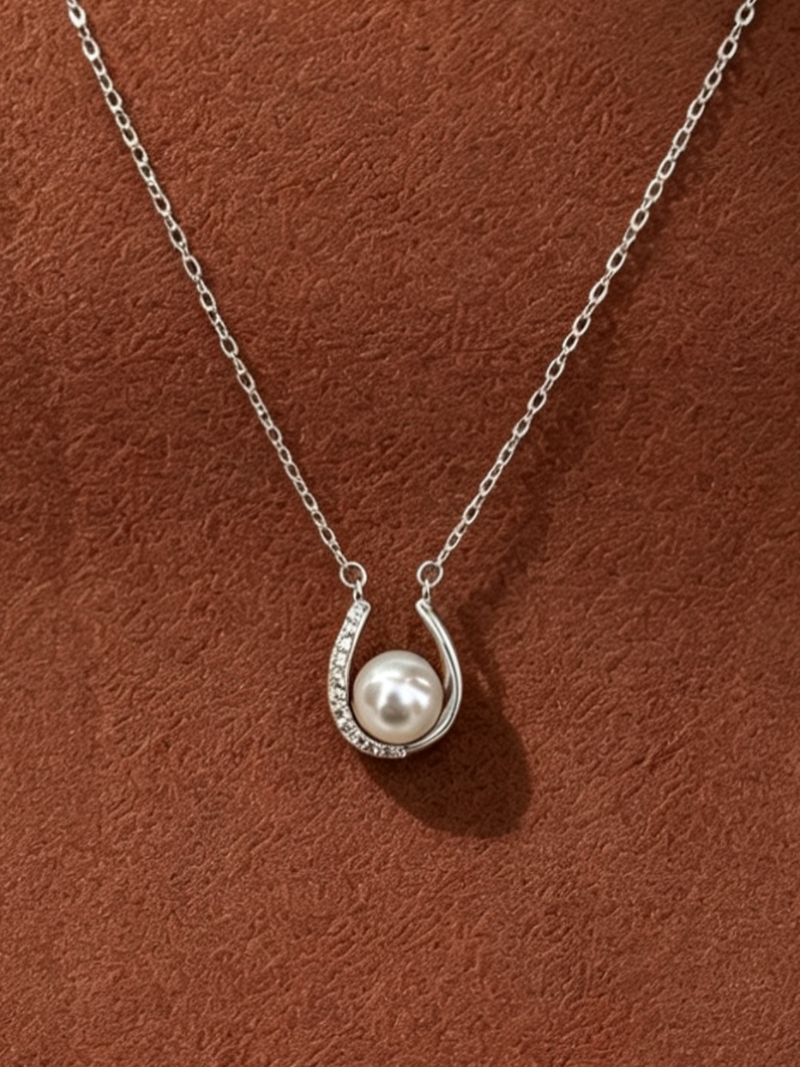
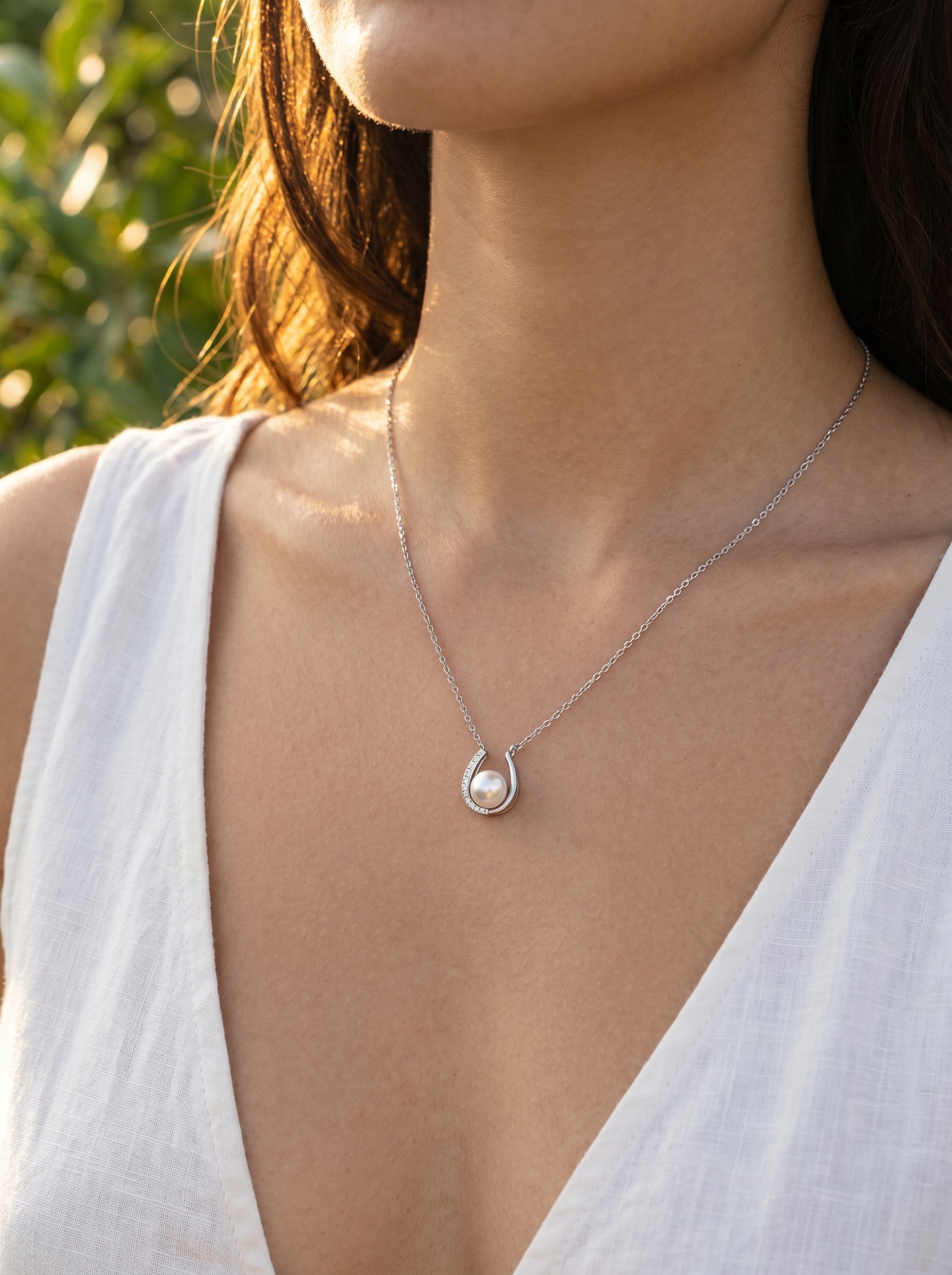
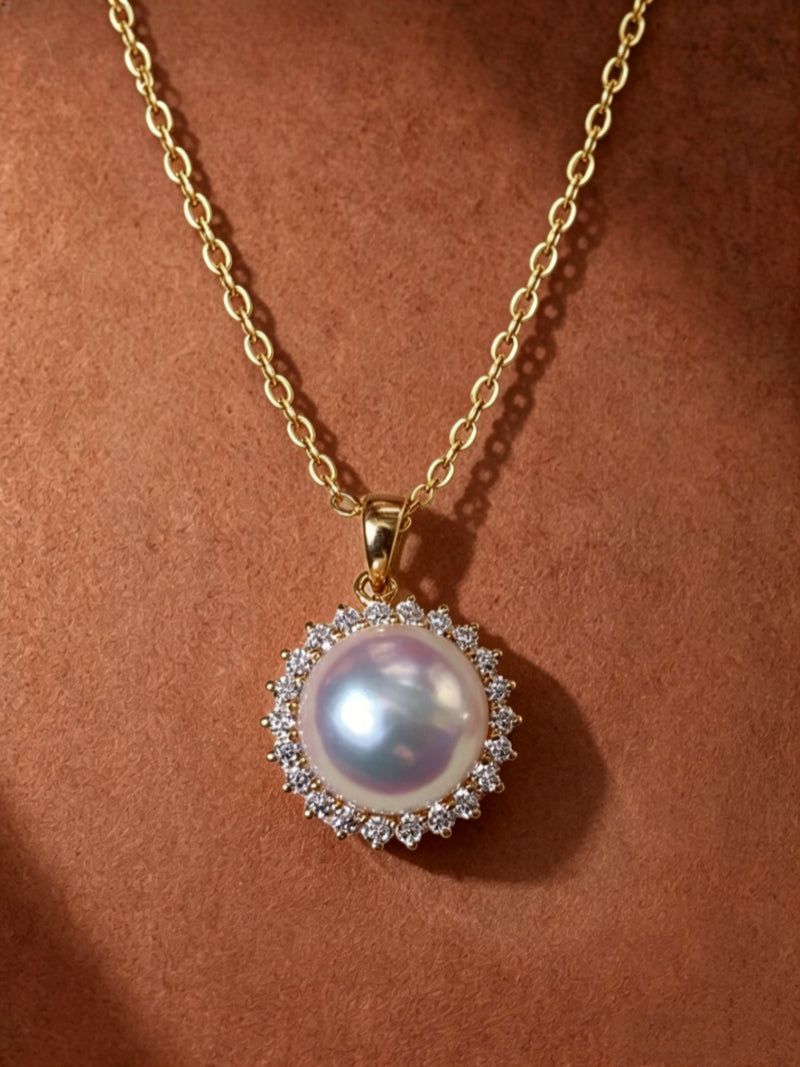
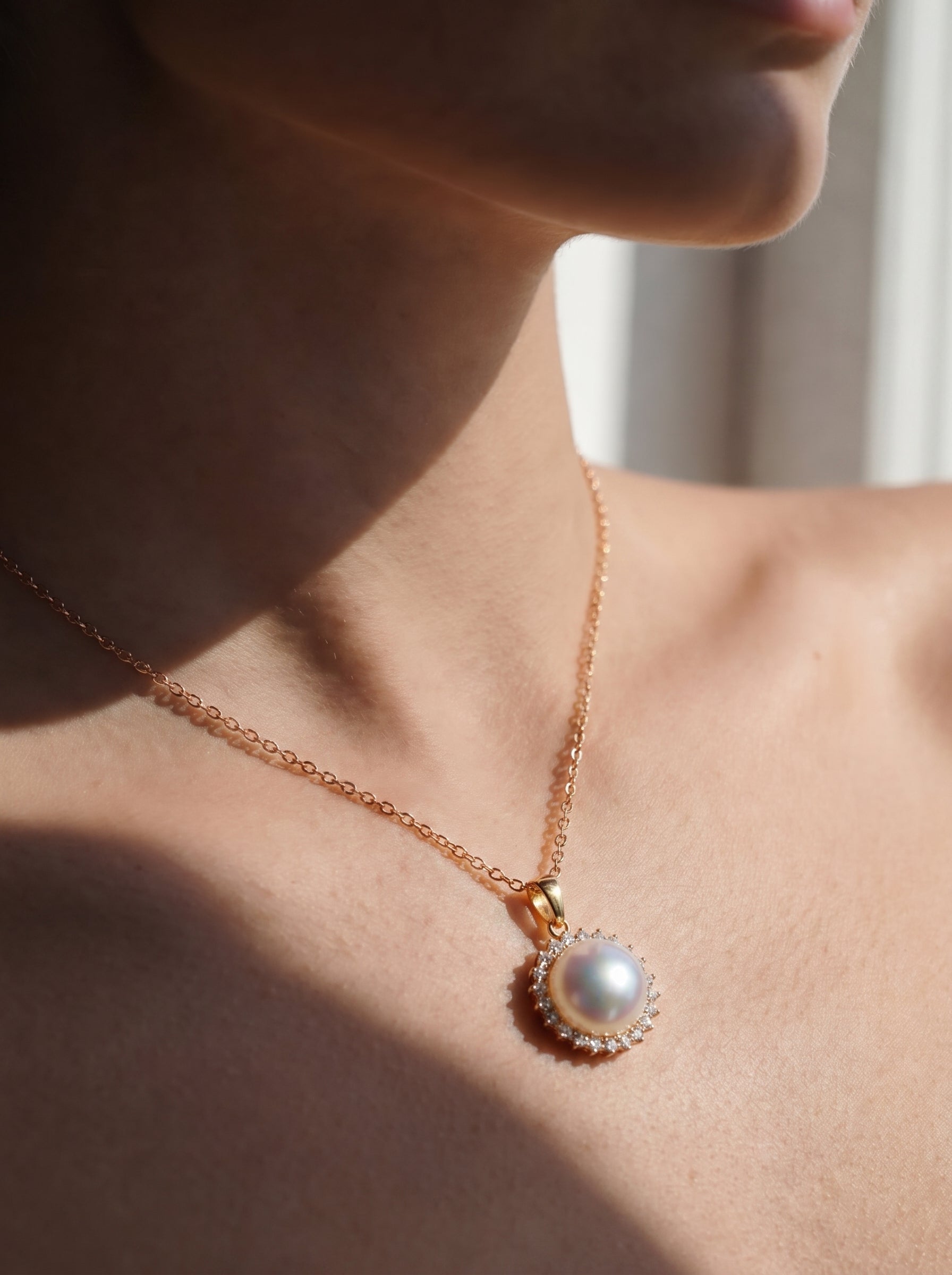
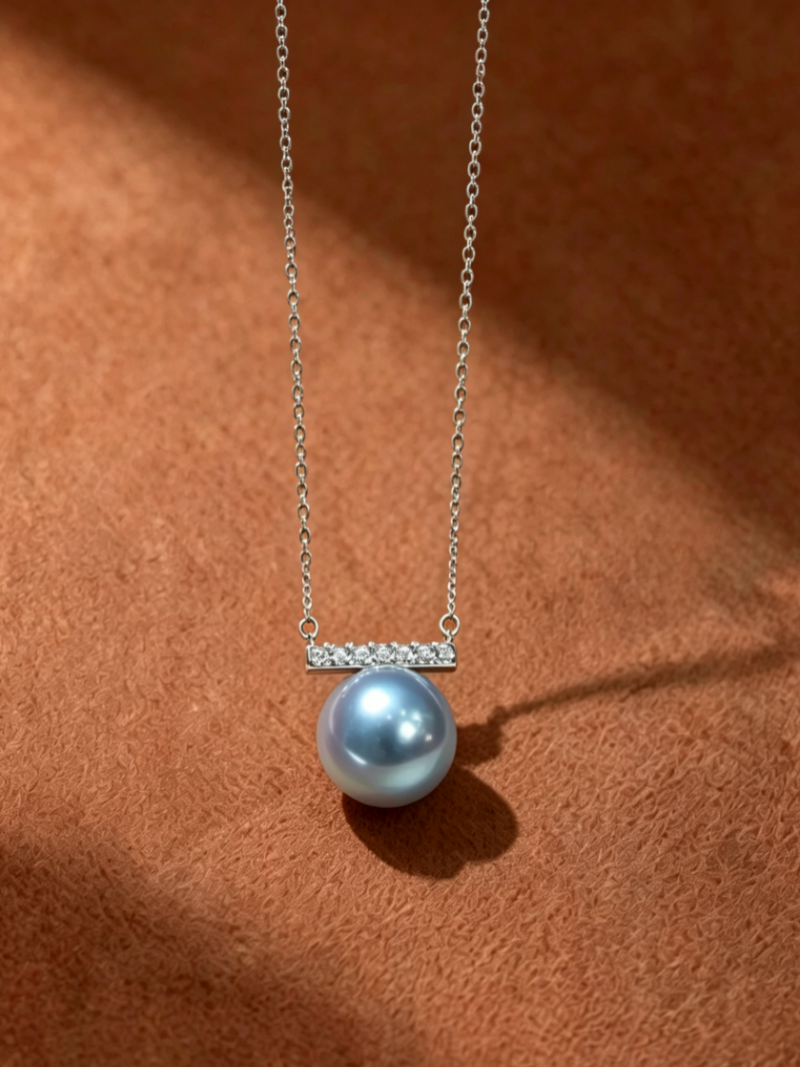
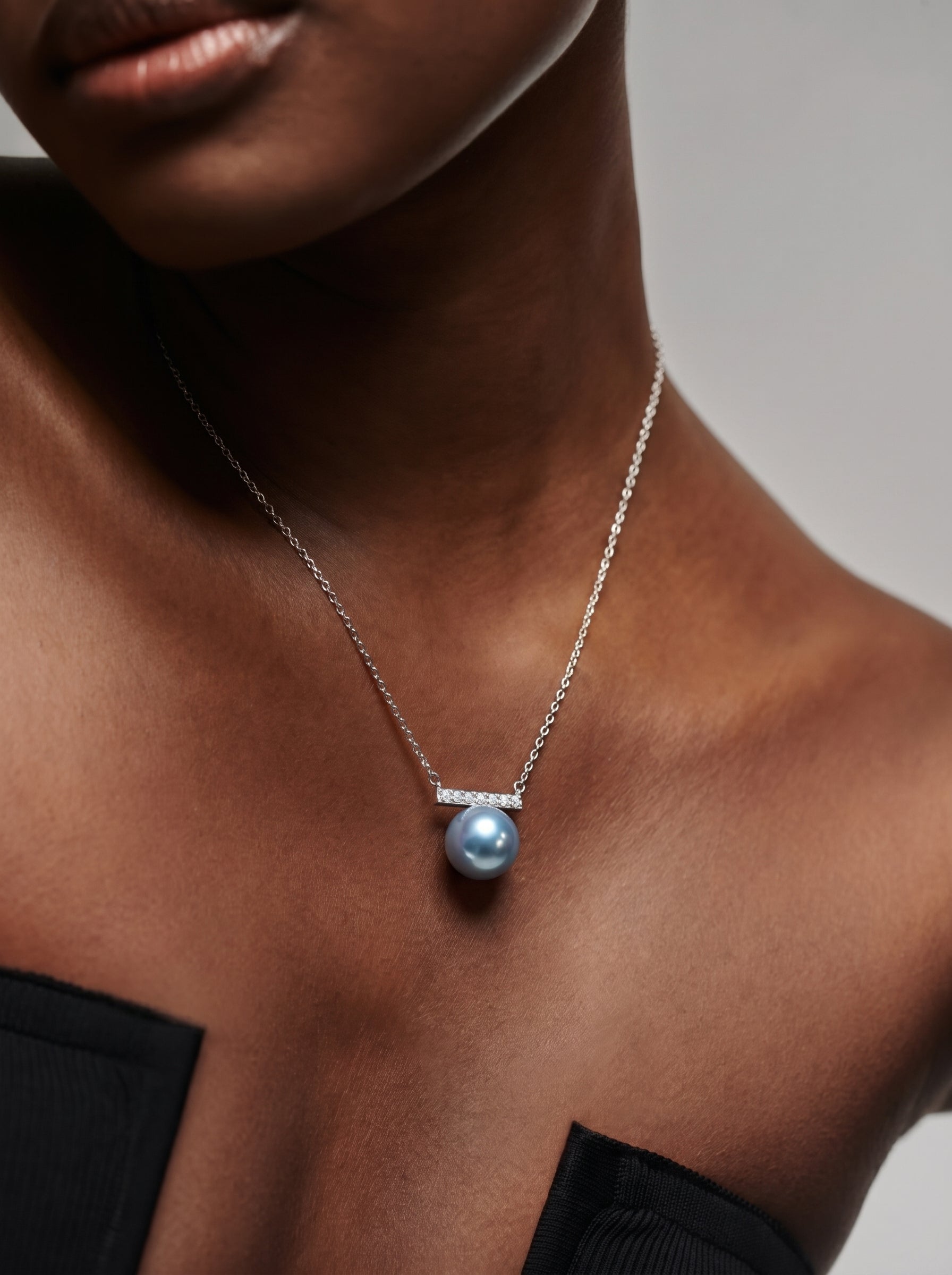
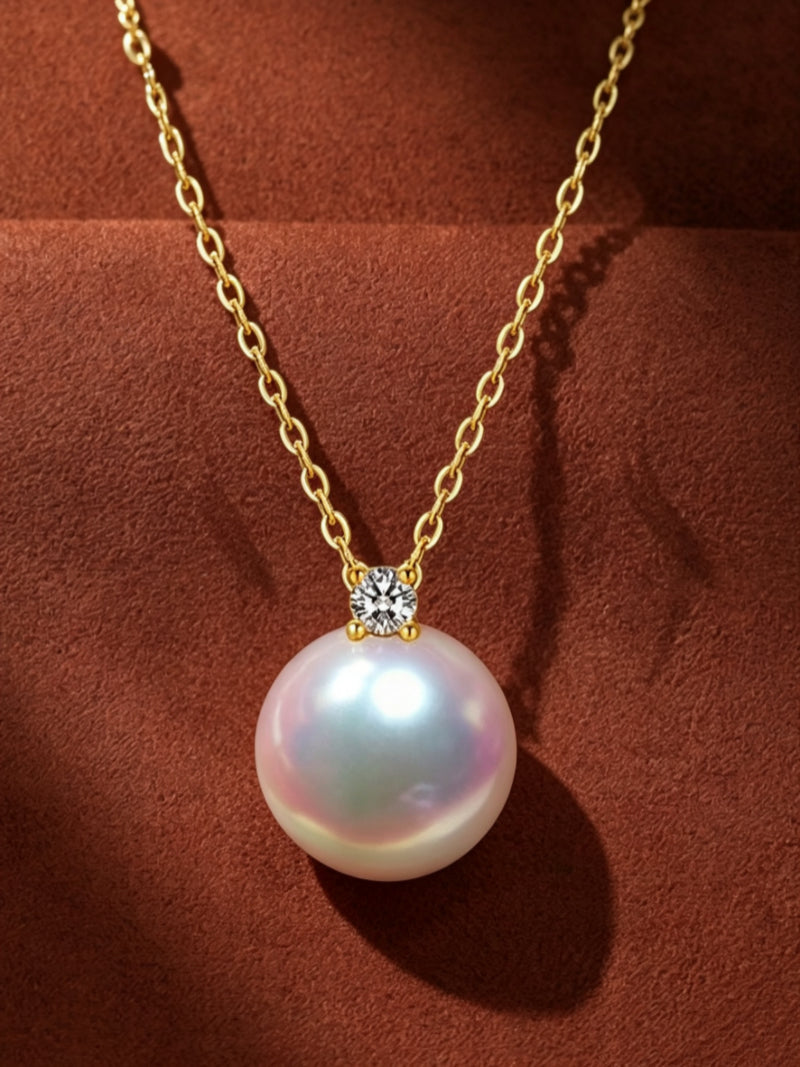
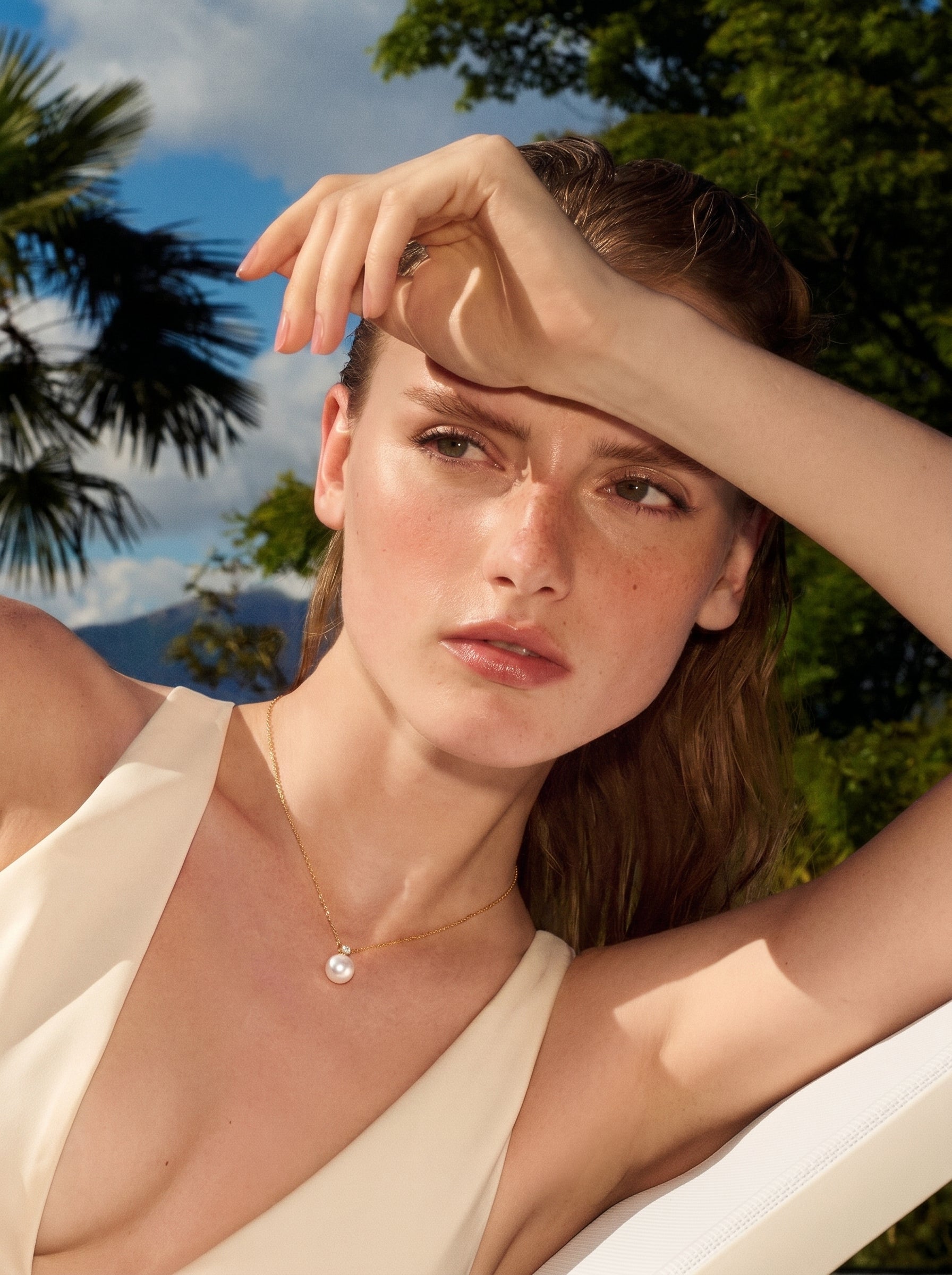
One Akoya pearl on a chain, sometimes with a pave bar, a sun, a star or a horseshoe above it. The most wearable way into Akoya, and the version that carries no matching premium at all.
What color are Akoya pearls?
Standard Akoya bodycolor is white or cream, with rose, silver or ivory overtone. Nearly all Akoya pearls on the market are bleached and polished as a matter of industry practice, which is standard and accepted. We state treatment on every product page rather than leaving it unsaid.
Why buy an Akoya pearl necklace from Grande Lilith
Akoya is the category where buyers are most likely to be paying for a name rather than a pearl. We publish the detail that lets you tell the difference.
- Origin named: Japan. Not "Akoya-type" or "Akoya-style", which are used elsewhere for pearls grown outside Japan.
- Eight provenance markers on every product page, including grade and treatment.
- Partners vetted by our GIA-certified pearl specialist, on working conditions as well as quality.
- Nickel-free, lead-free and cadmium-free settings on gold, silver and stainless steel.
- Designed in Paris. Thirty days to change your mind, and every order arrives in a magnetic pouch.
Frequently asked questions
Why are Akoya pearls more expensive?
Because of matching and yield. The Akoya oyster is small, produces one pearl per cycle, and gives a low proportion of gem-grade results. Assembling a strand where every pearl agrees on size, shape, color and overtone takes hundreds of pearls to begin with.
Are Akoya pearls the best pearls?
They are the best at one specific thing: round white pearls with mirror luster. For larger sizes South Sea is better, for dark color Tahitian is better, and for shape variety freshwater is better. Best depends on what you want the necklace to do.
How thick is Akoya nacre?
Thinner than freshwater, because the pearl is a nacre layer over a shell bead rather than solid nacre. That is why Akoya luster reads sharper, and also why Akoya pearls need more care against abrasion over decades.
What length Akoya necklace is most classic?
Sixteen to eighteen inches. That length sits at or just below the collarbone and is the proportion most associated with a classic Akoya strand. It works with an open collar, a crew neck and a blazer without adjustment.
Can Akoya pearls be worn daily?
Yes, with the usual habits. Put the necklace on after perfume and lotion have dried, wipe it with a soft cloth before storing, and keep it away from harder stones. Because Akoya nacre is thinner, avoiding abrasion matters more here than with freshwater pearls.