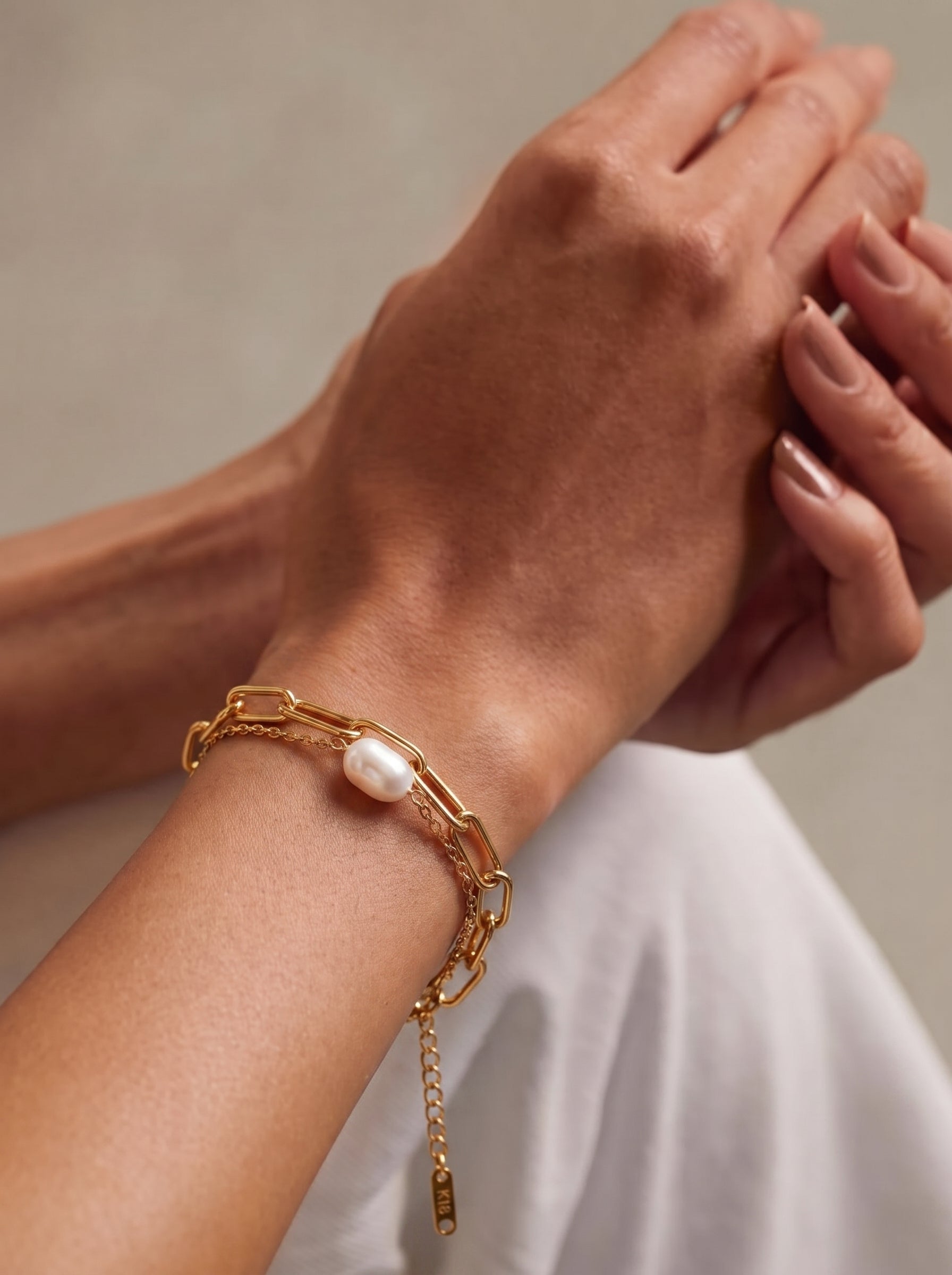
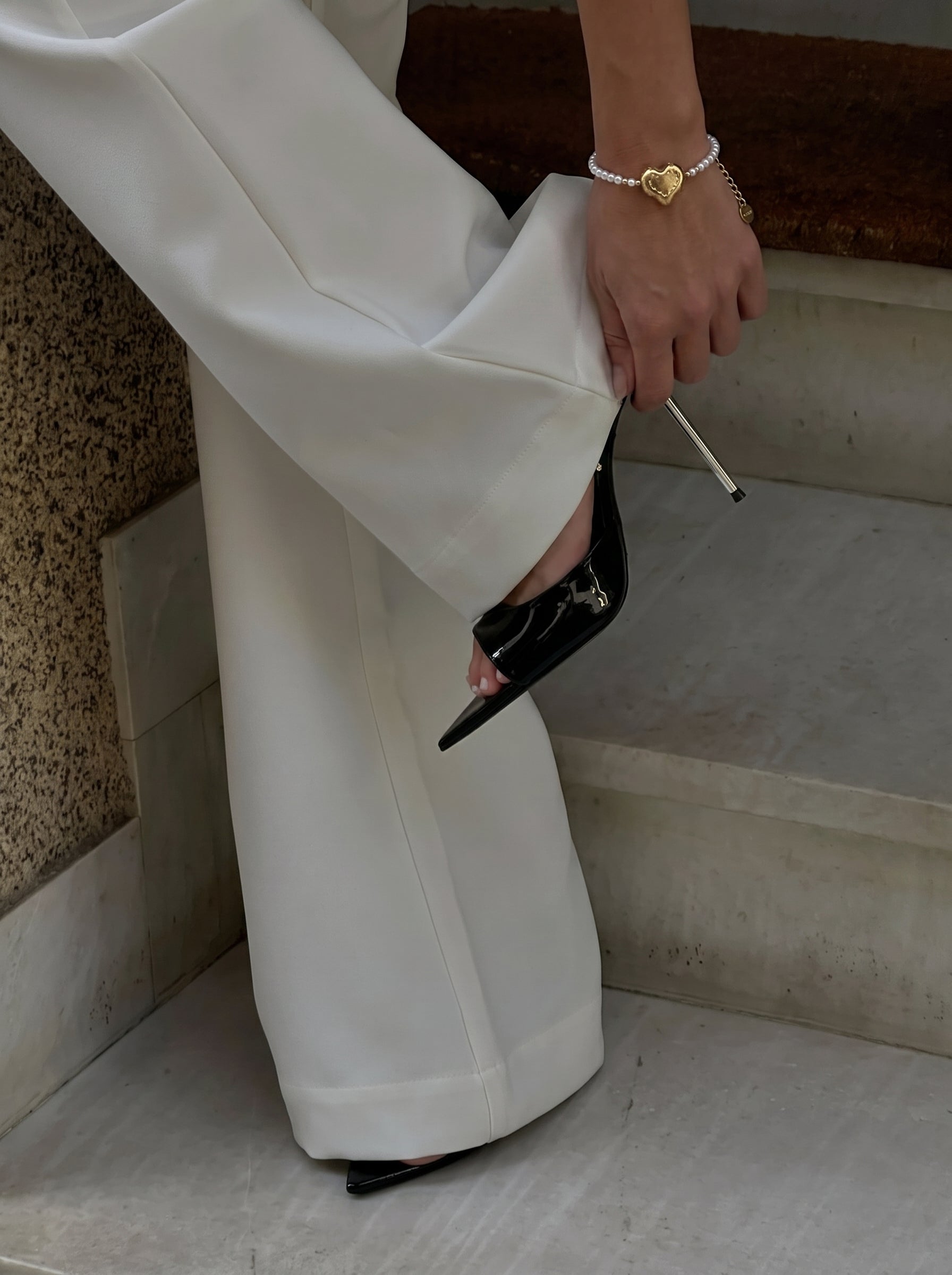
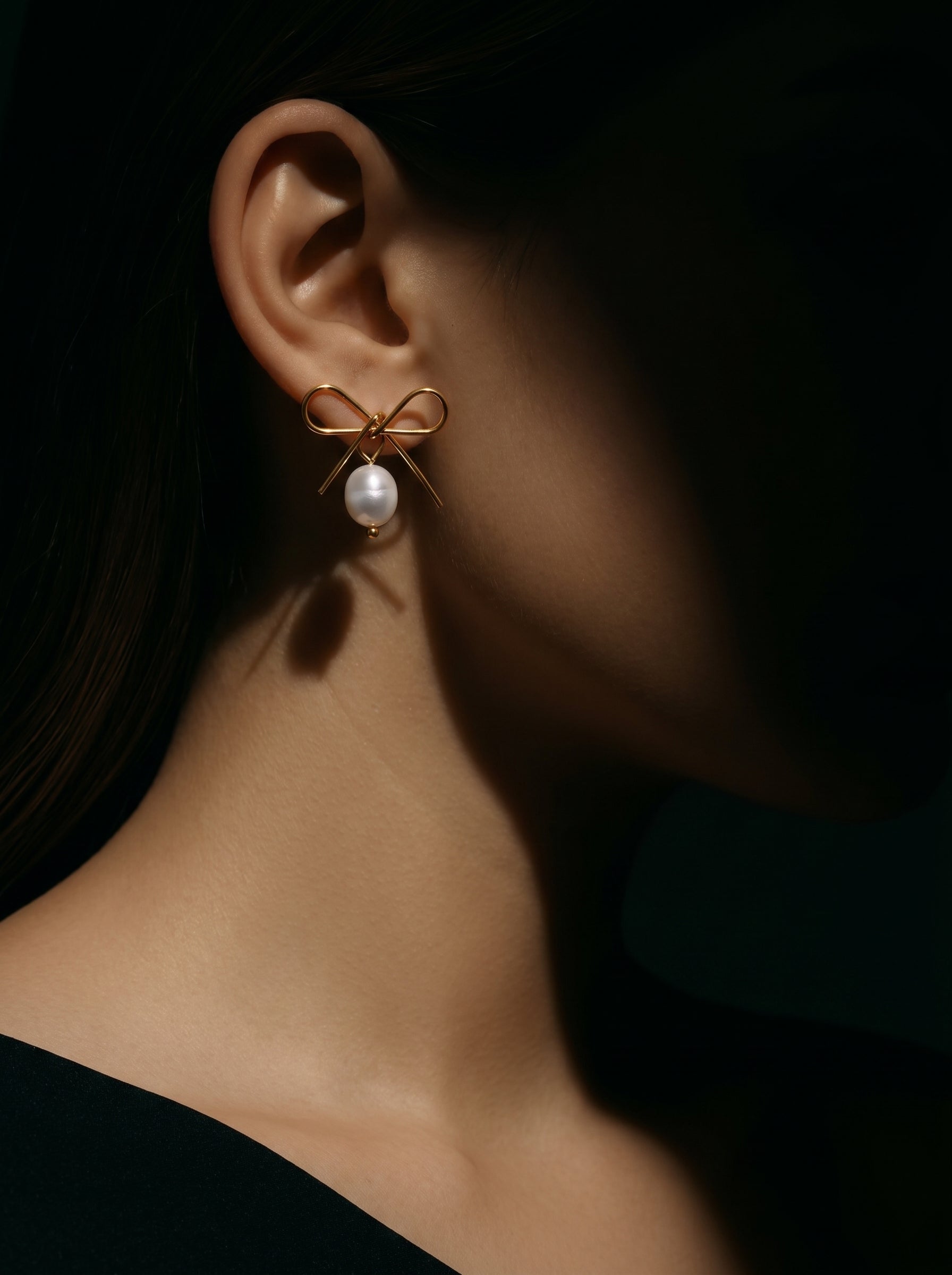
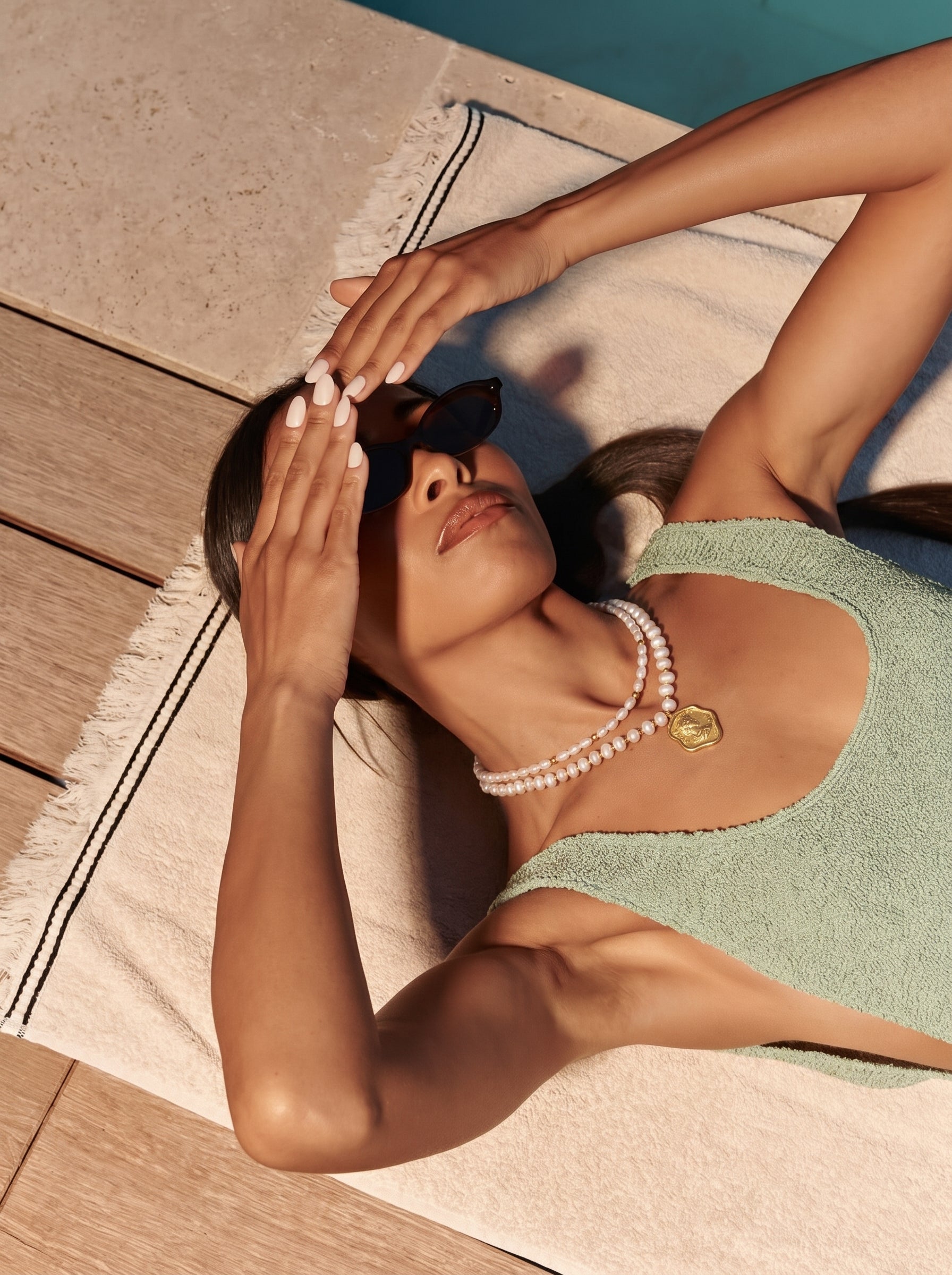
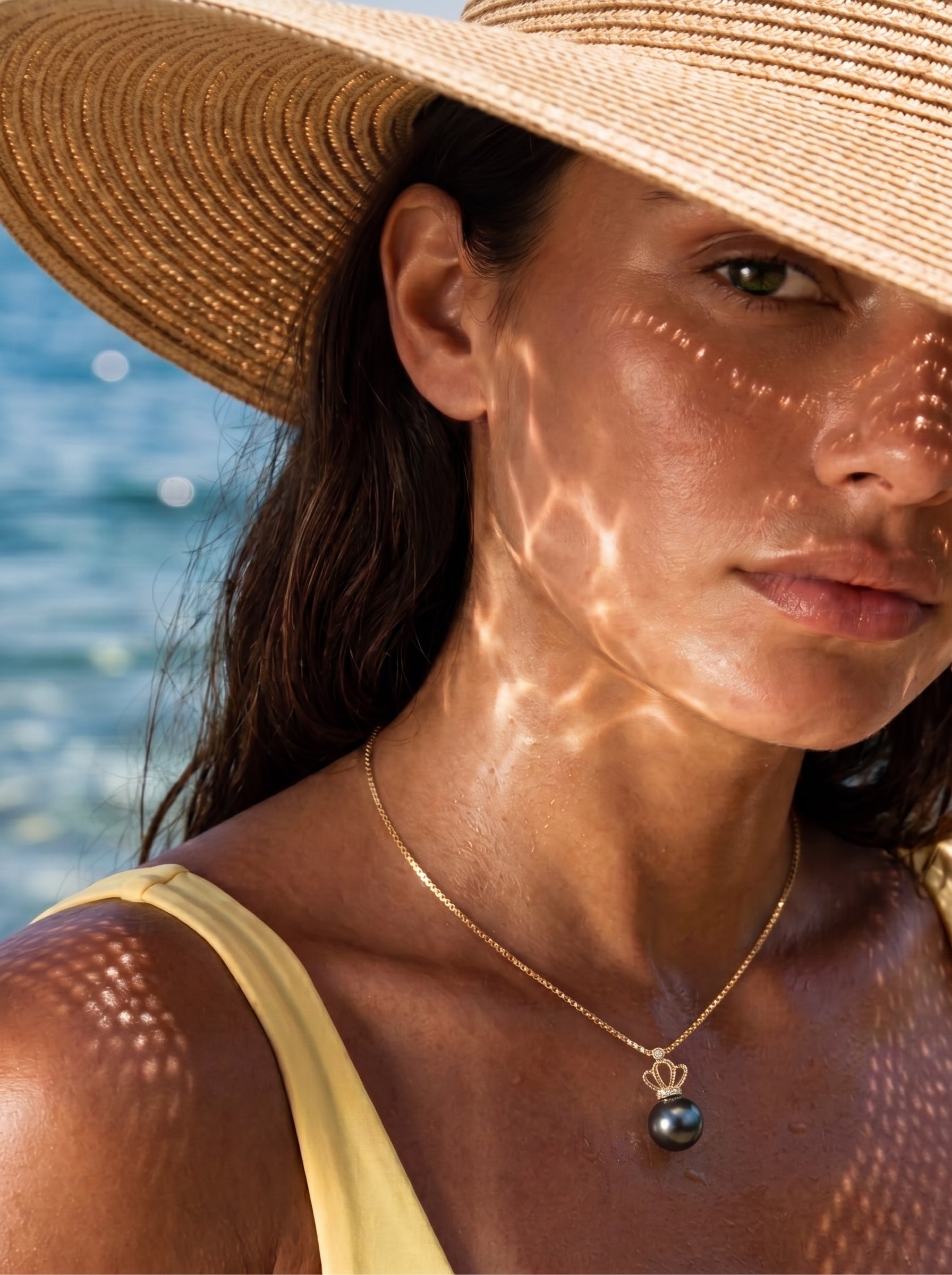
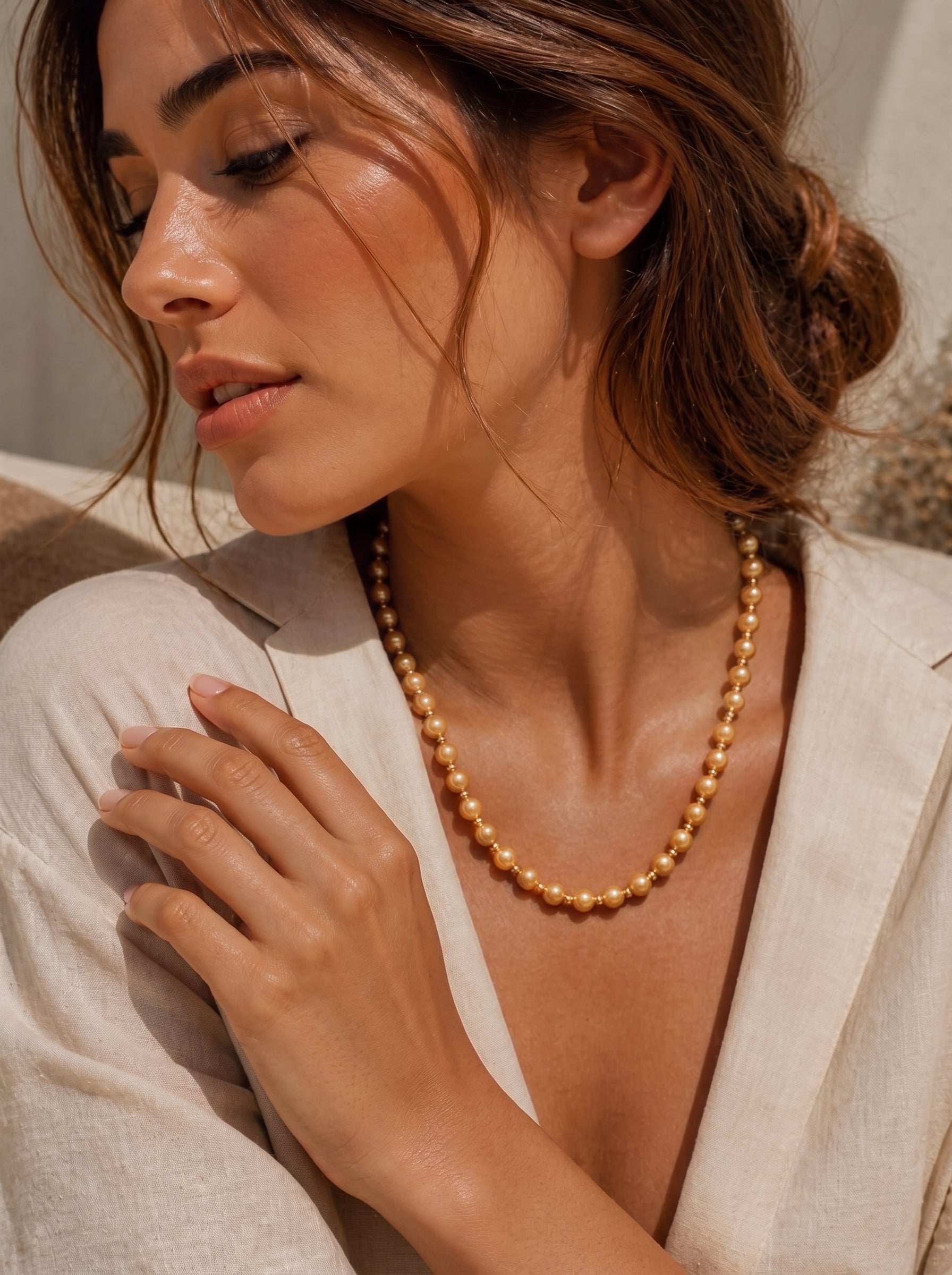
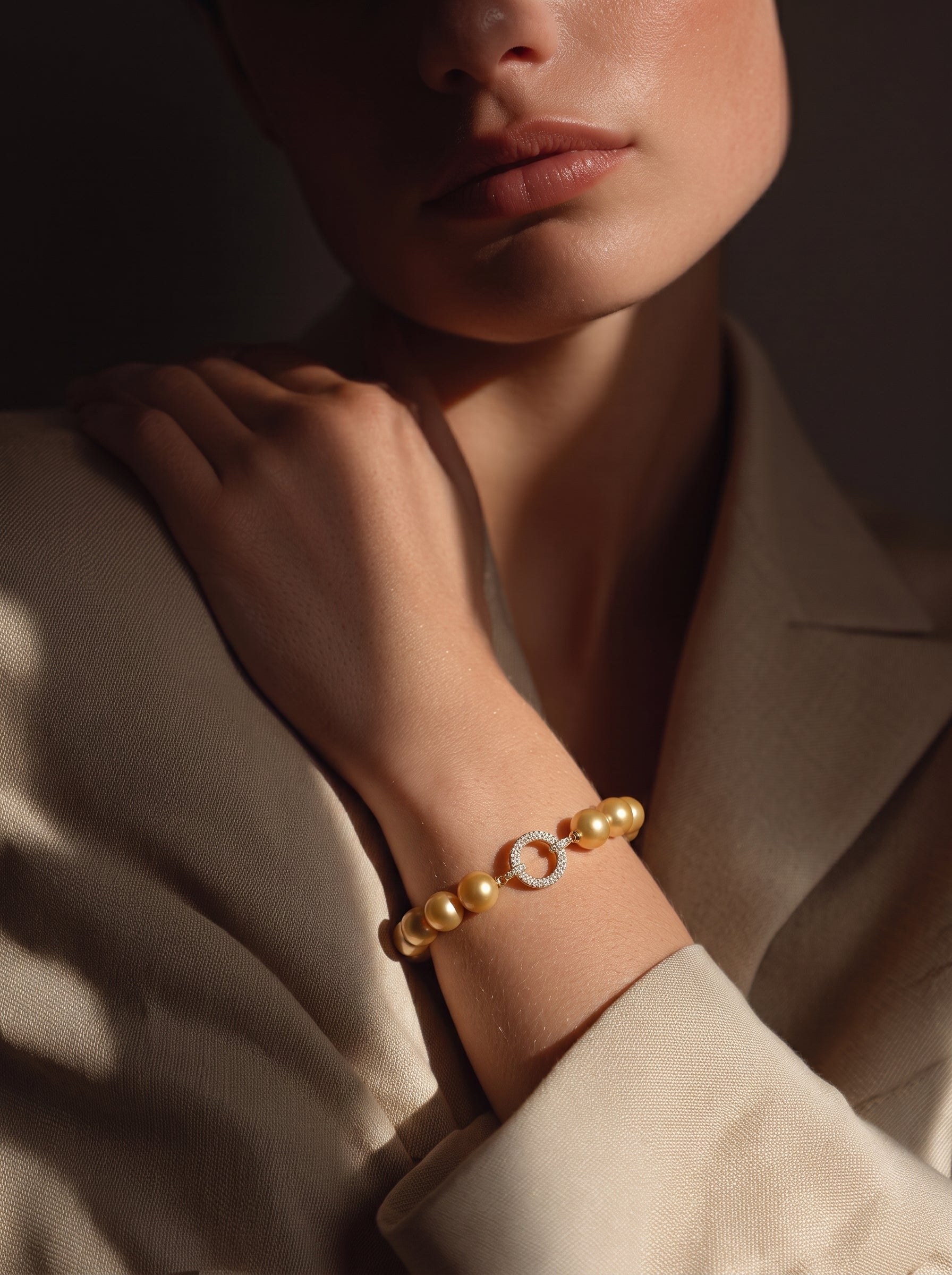
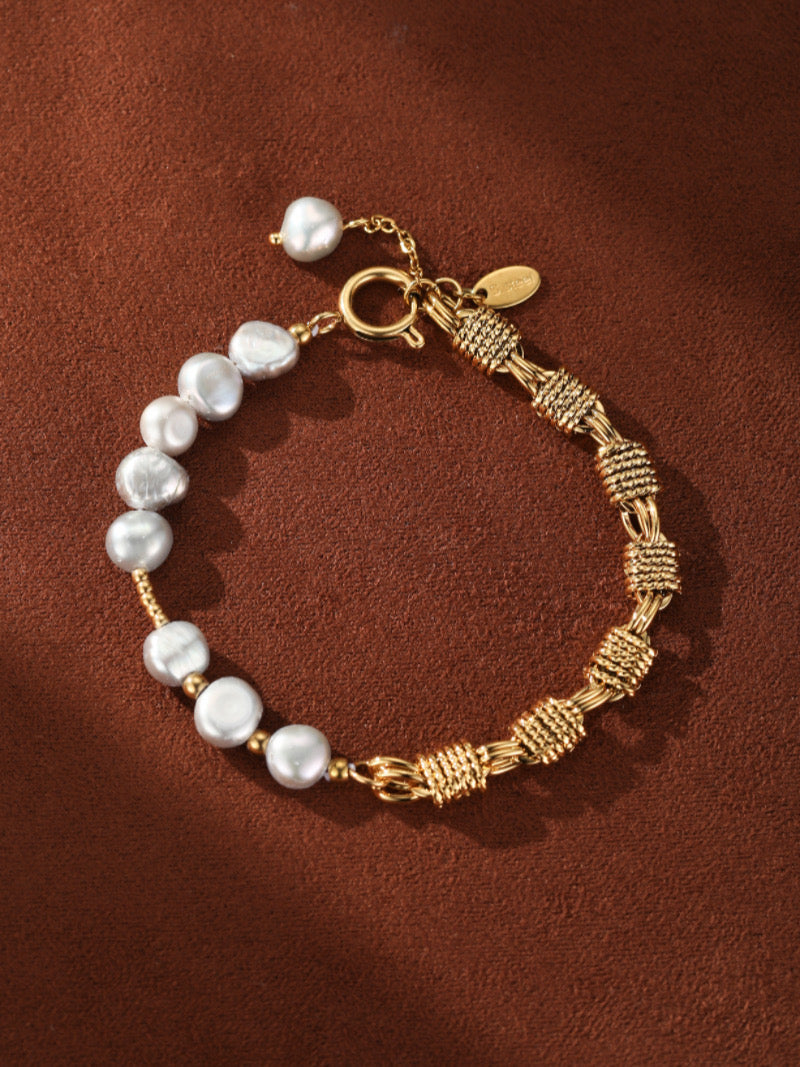
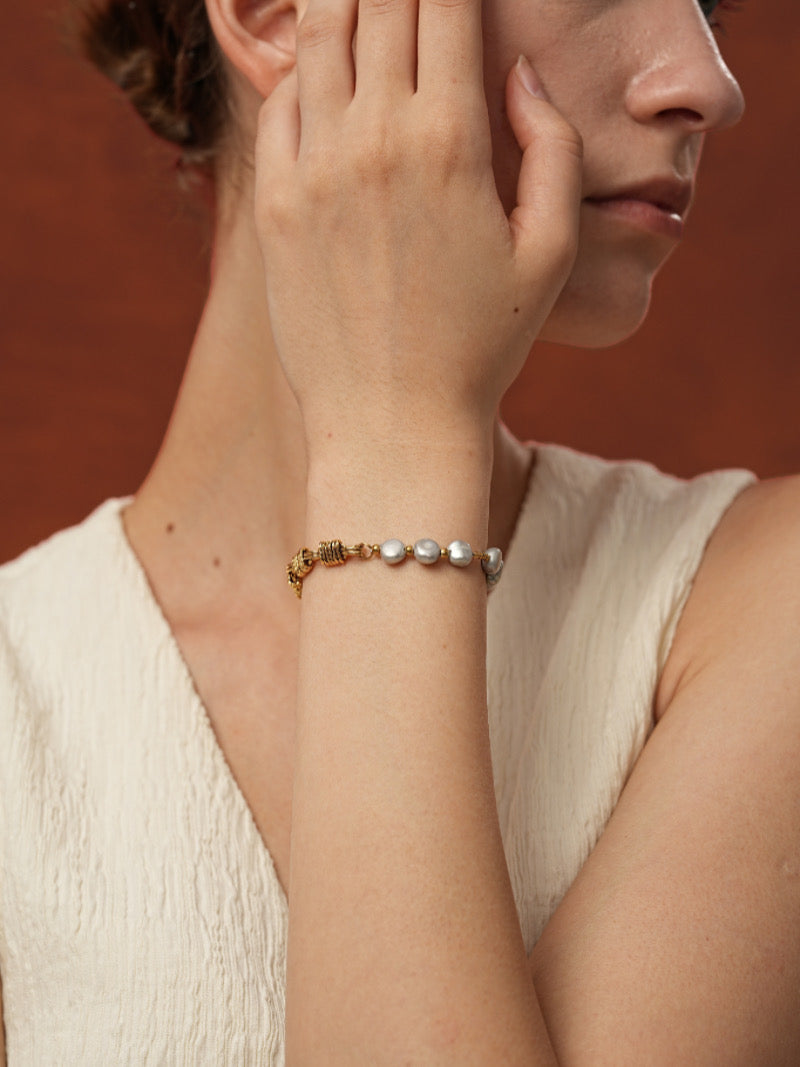
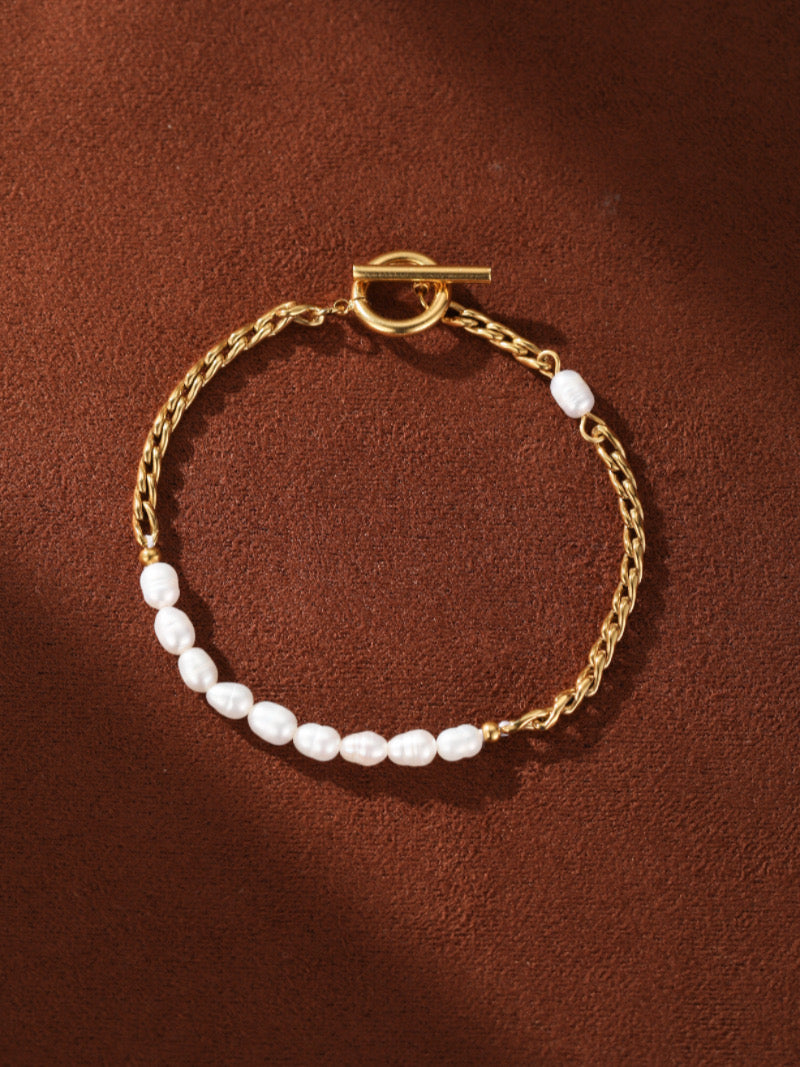
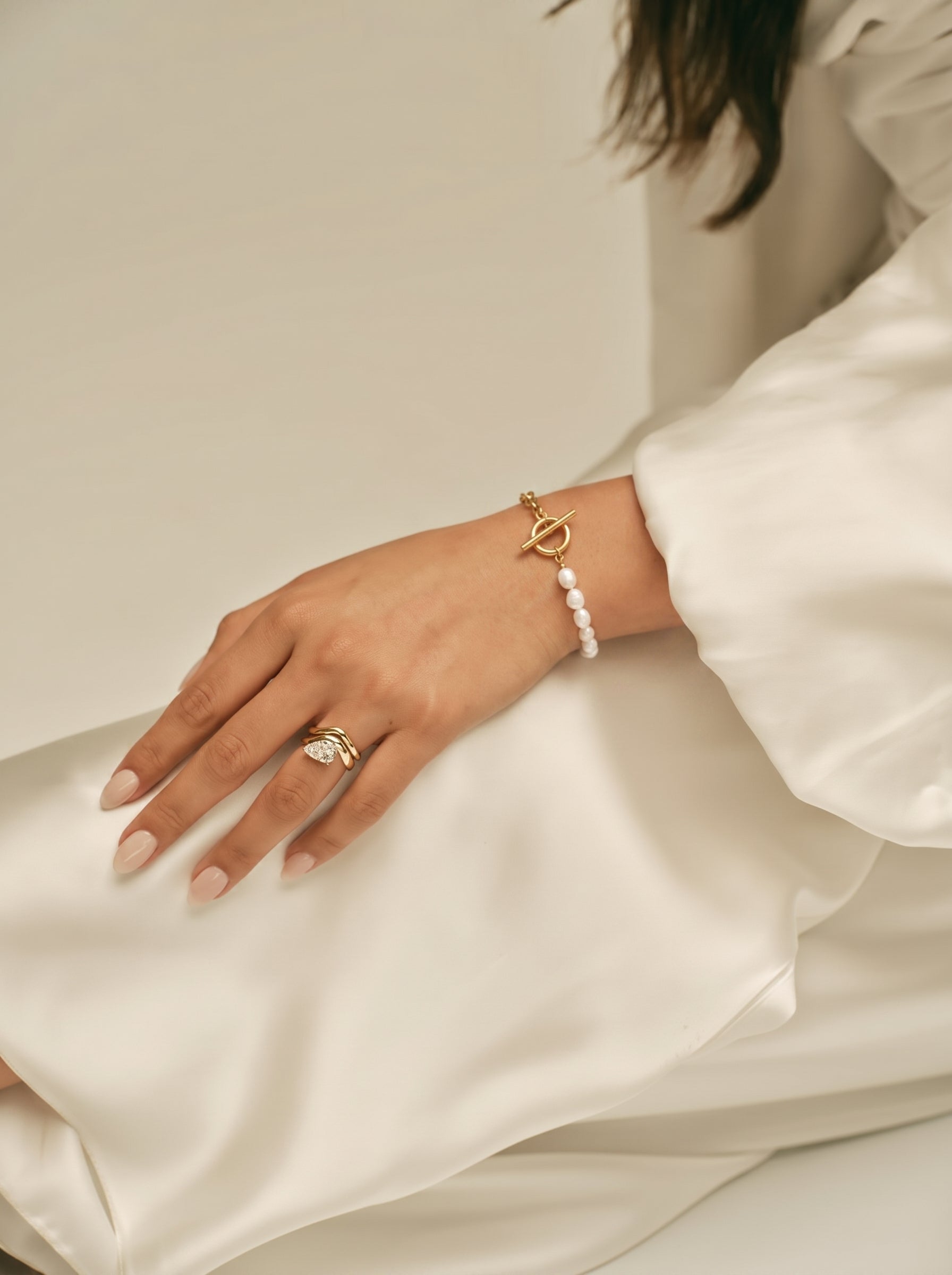
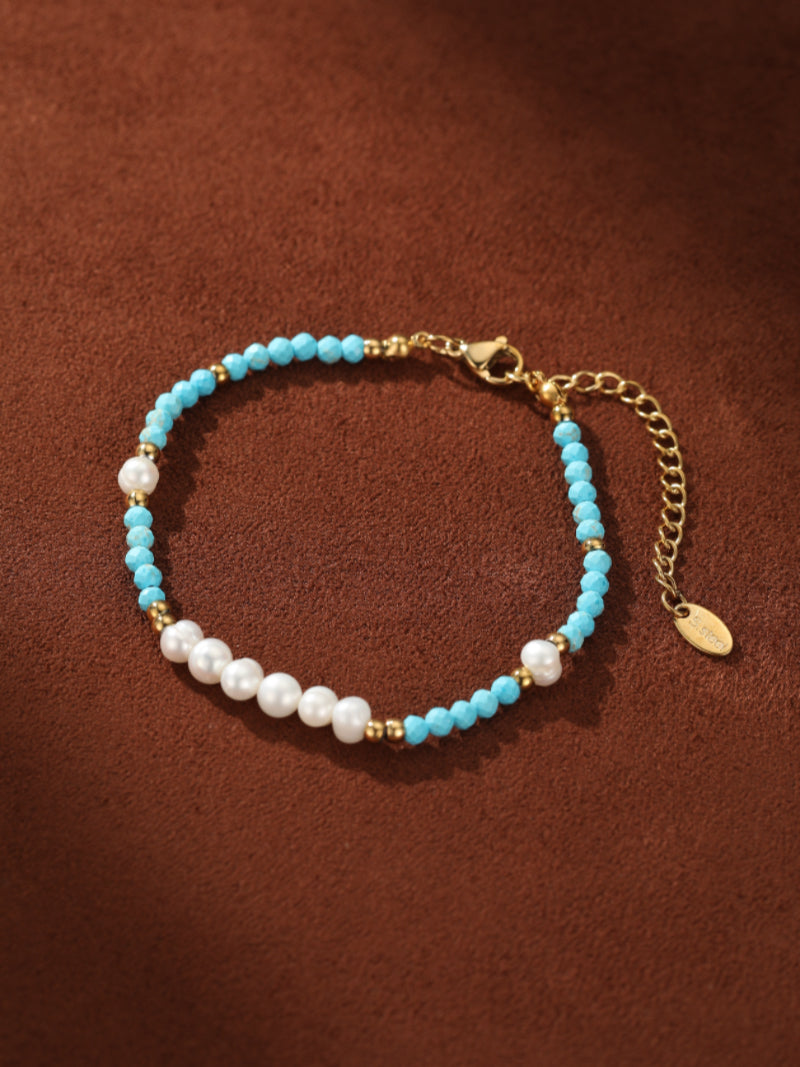
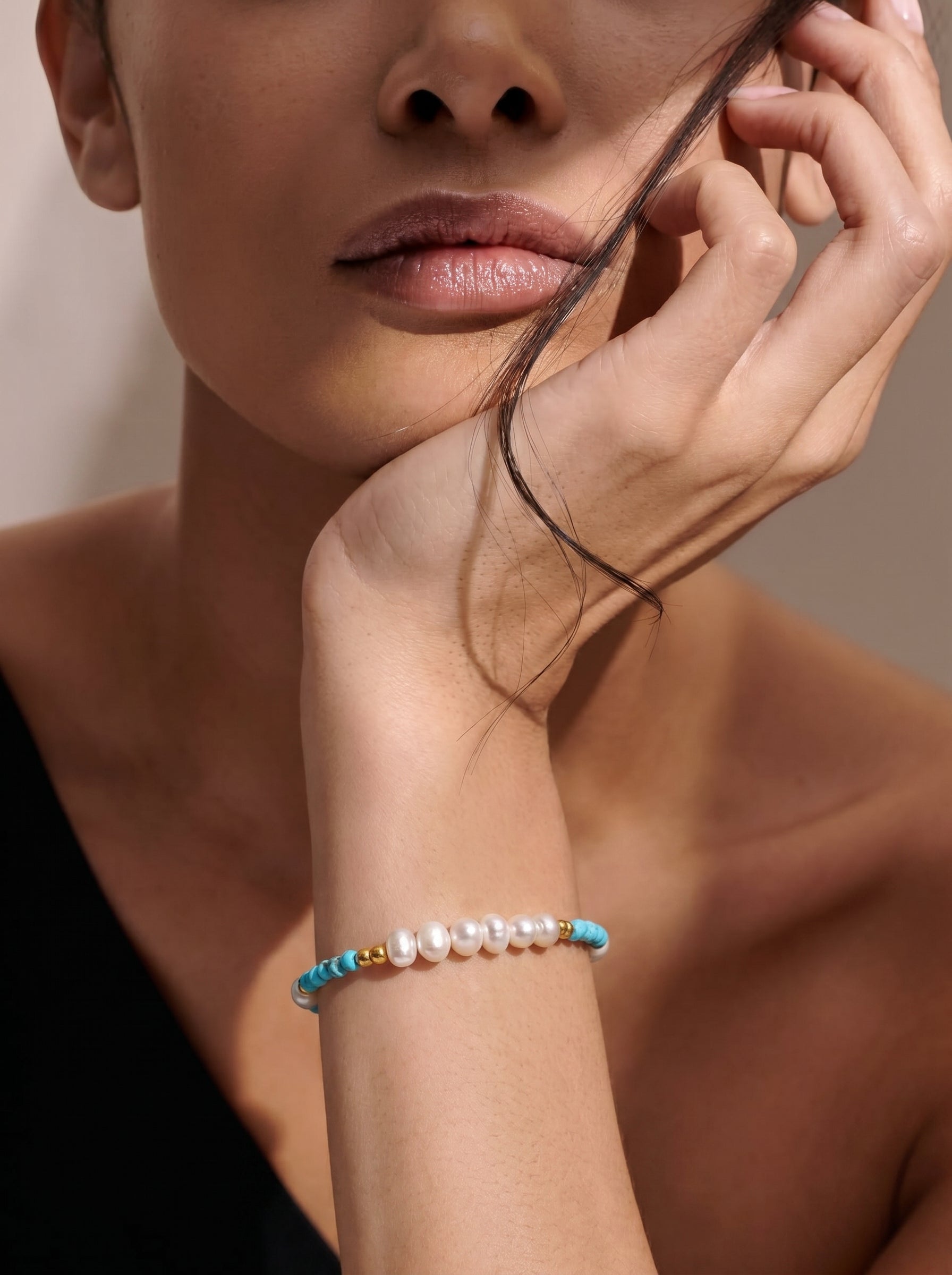
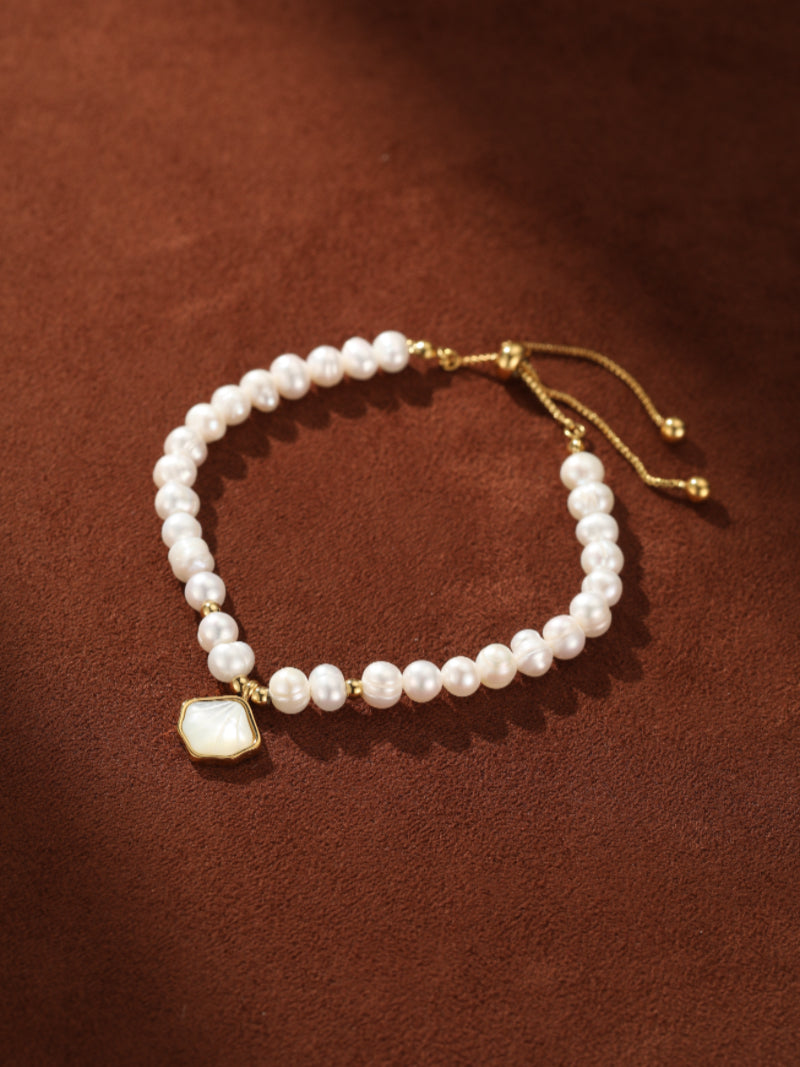
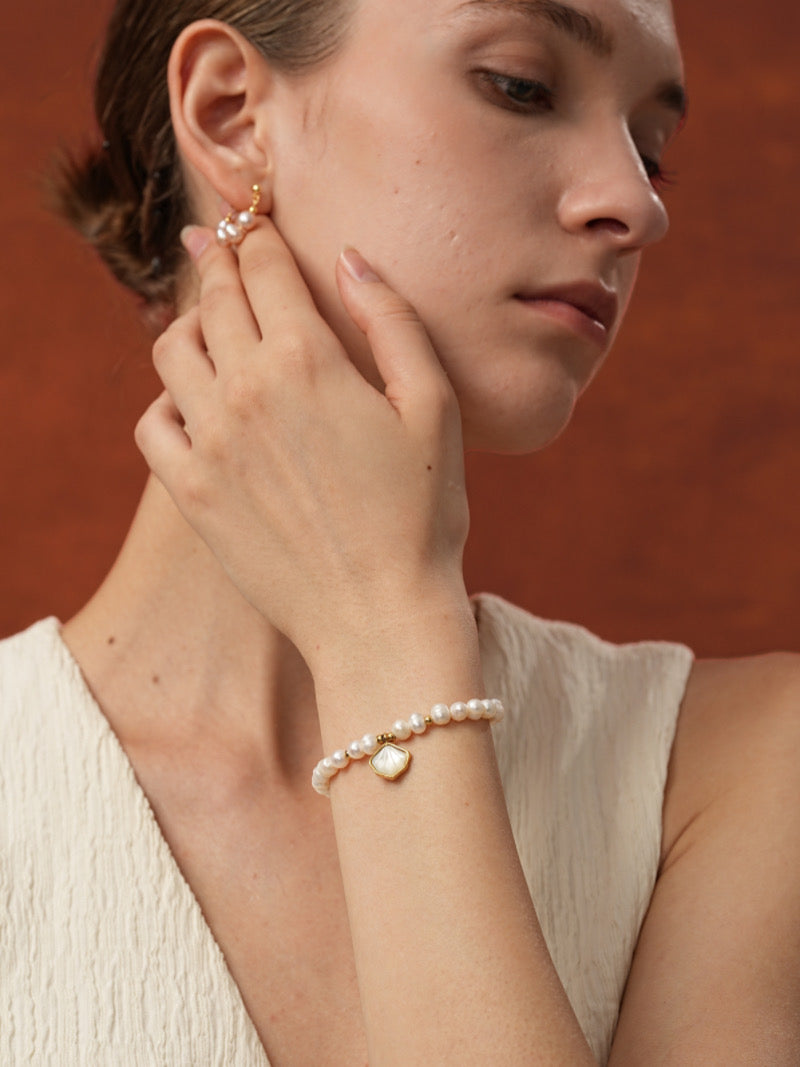
A freshwater pearl bracelet is the piece you see yourself, all day, at the edge of your own field of view. Freshwater pearls make that affordable enough to own more than one, which is why this is the collection people come back to rather than the one they buy once.
What is a freshwater pearl bracelet?
A freshwater pearl bracelet uses cultured pearls grown inside freshwater mussels rather than saltwater oysters. Ours come from Zhuji, China, and we name the source because you should be able to check it rather than take our word for it.
Most freshwater pearls grow without a bead nucleus, so they are solid nacre through to the center. On a bracelet that matters more than anywhere else, because the wrist takes constant contact and solid nacre cannot wear through to a shell core.
Which freshwater pearl bracelet style should you choose?
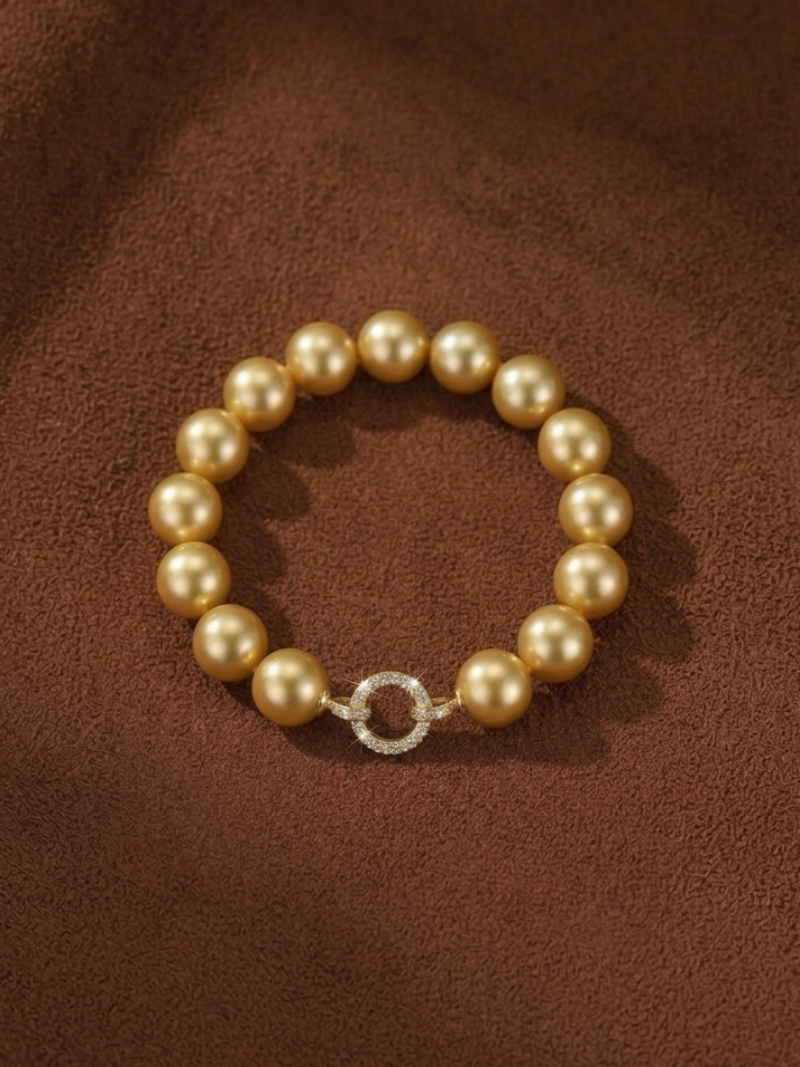
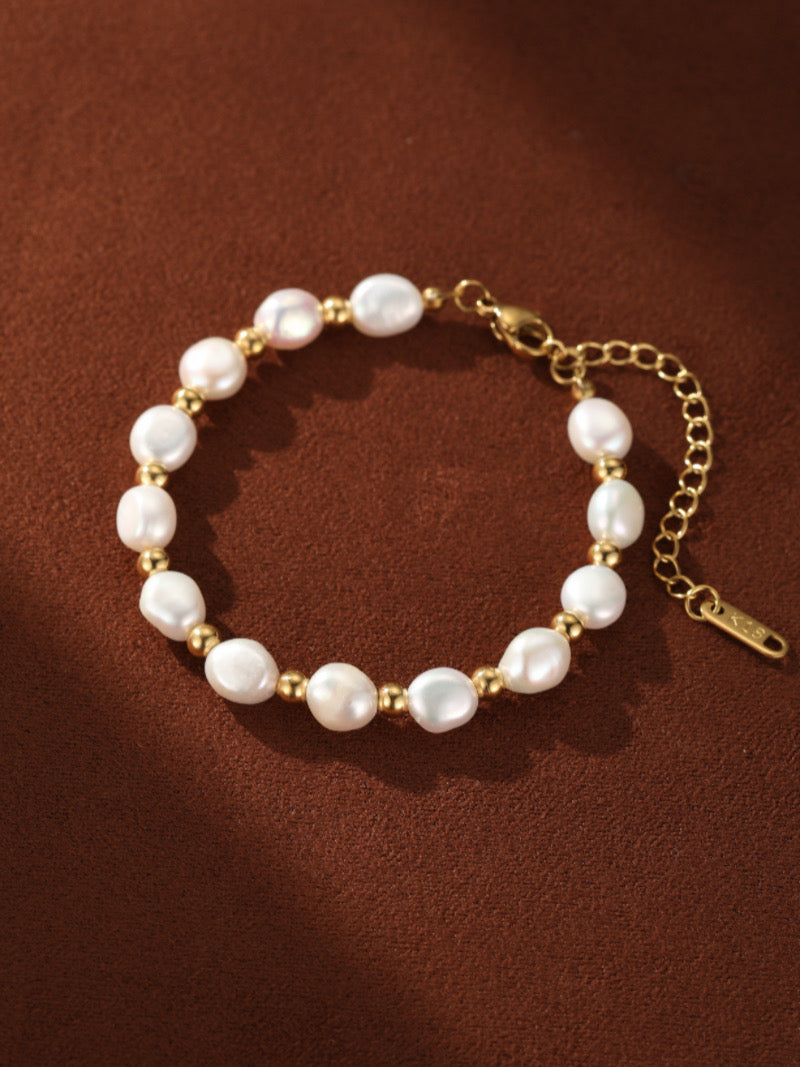
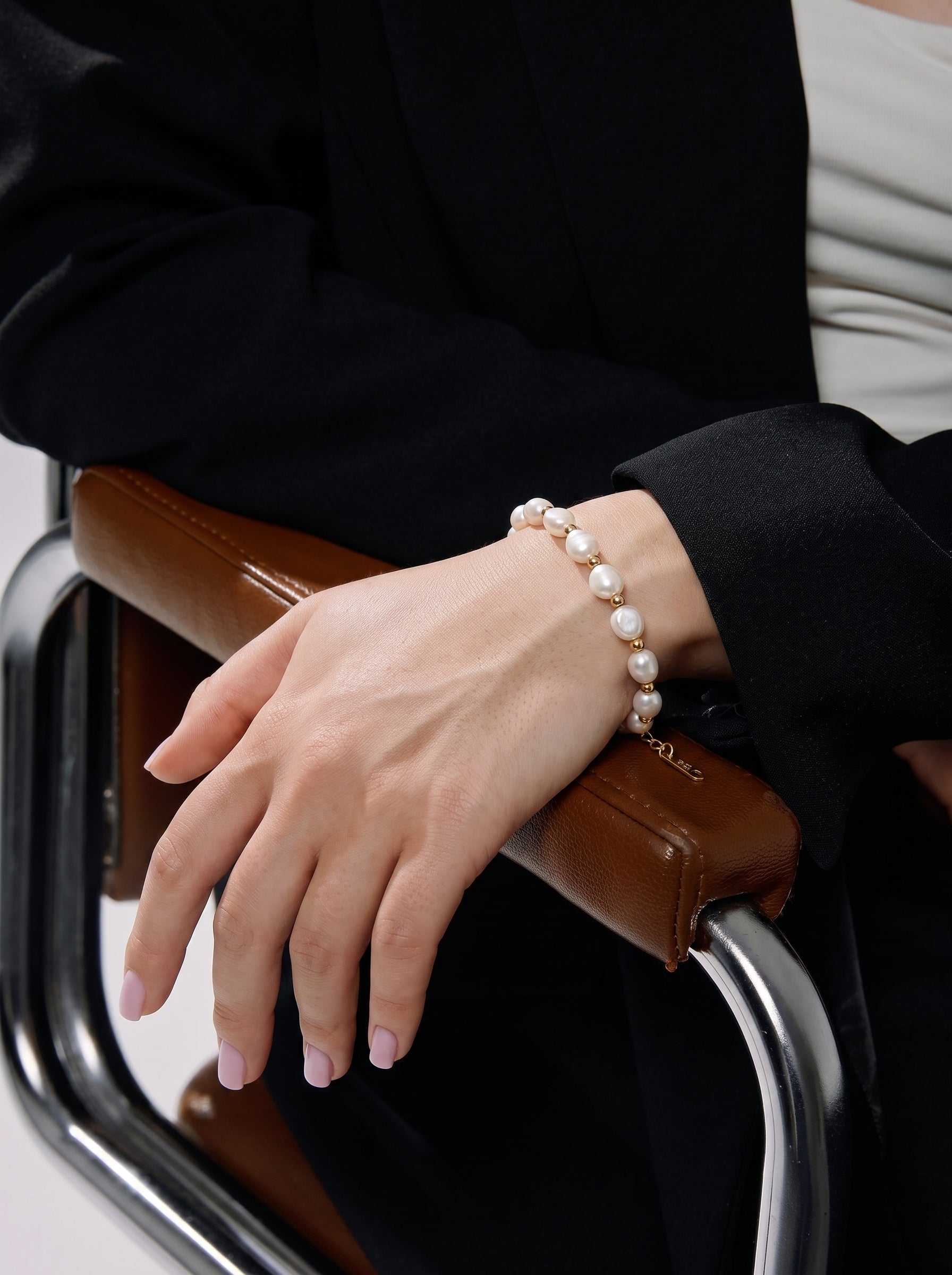
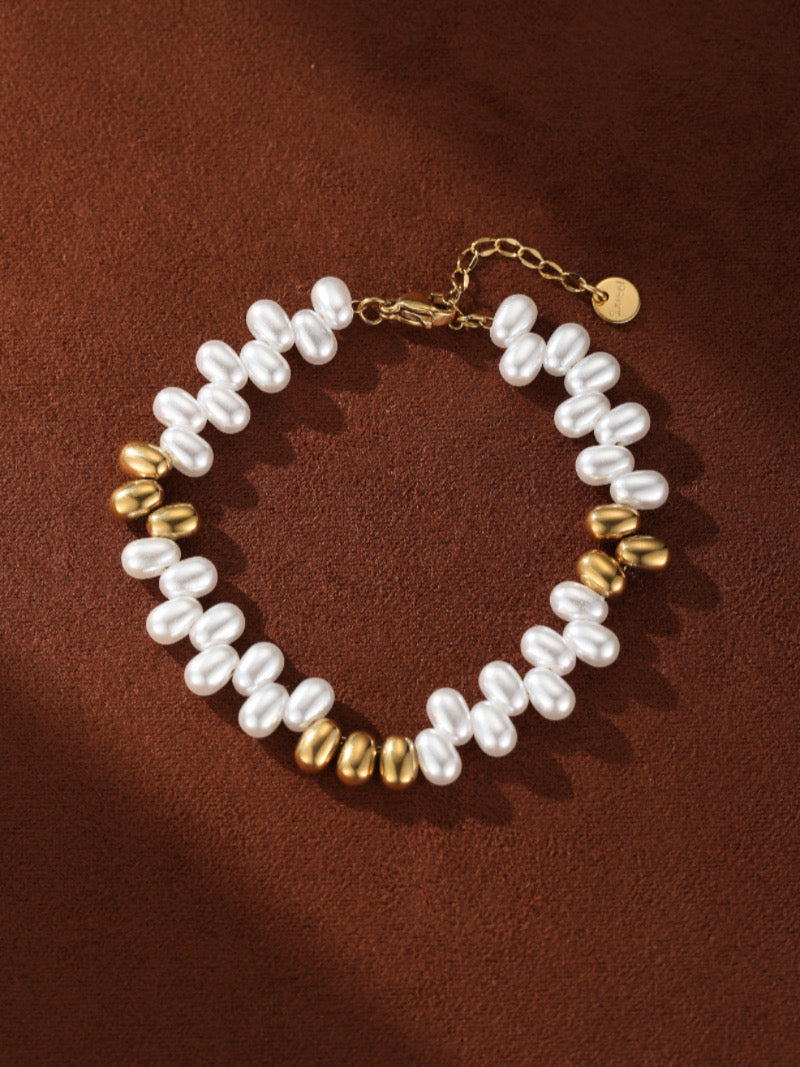
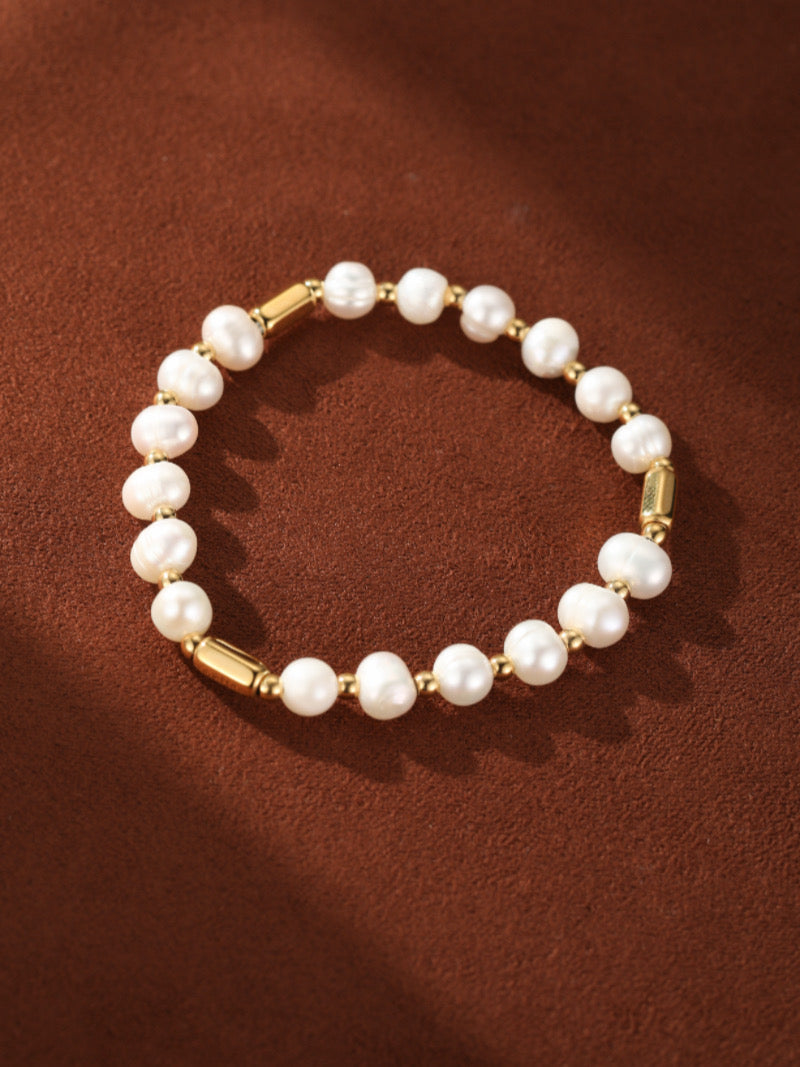
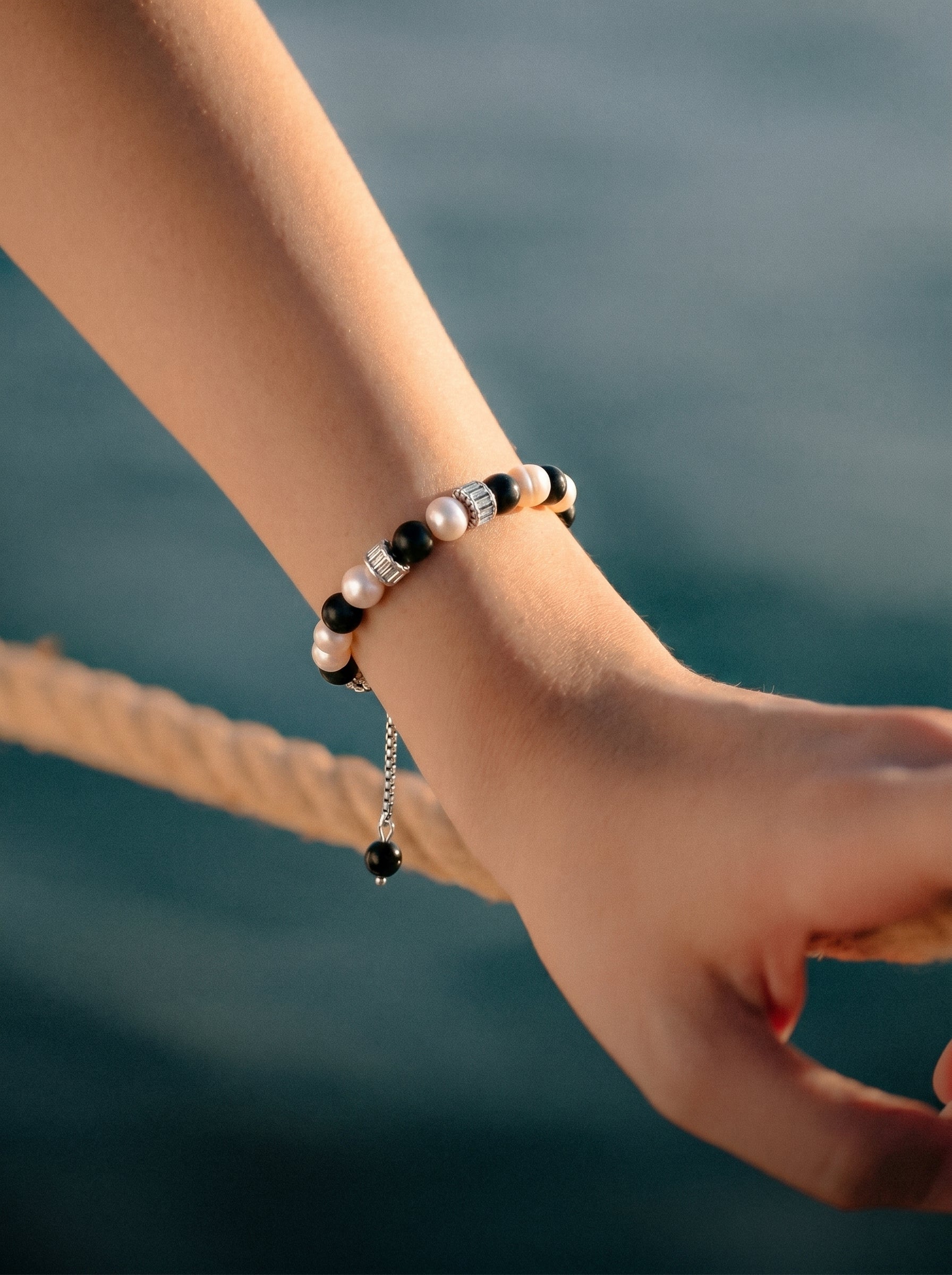
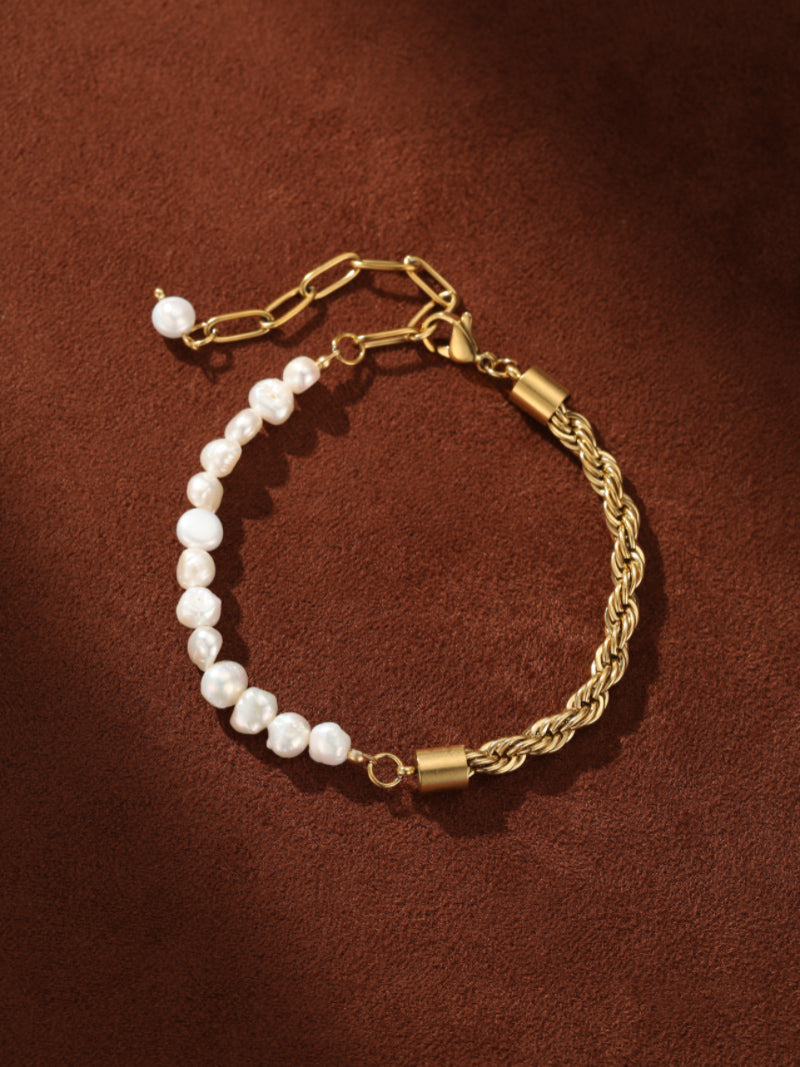
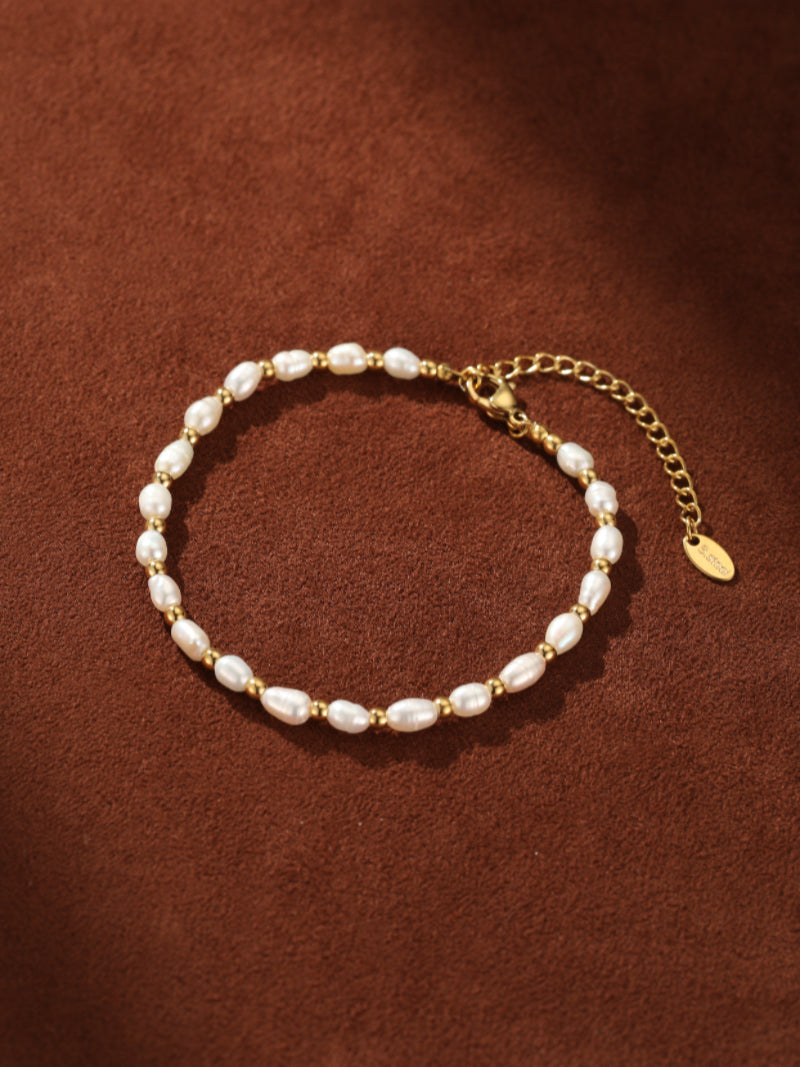
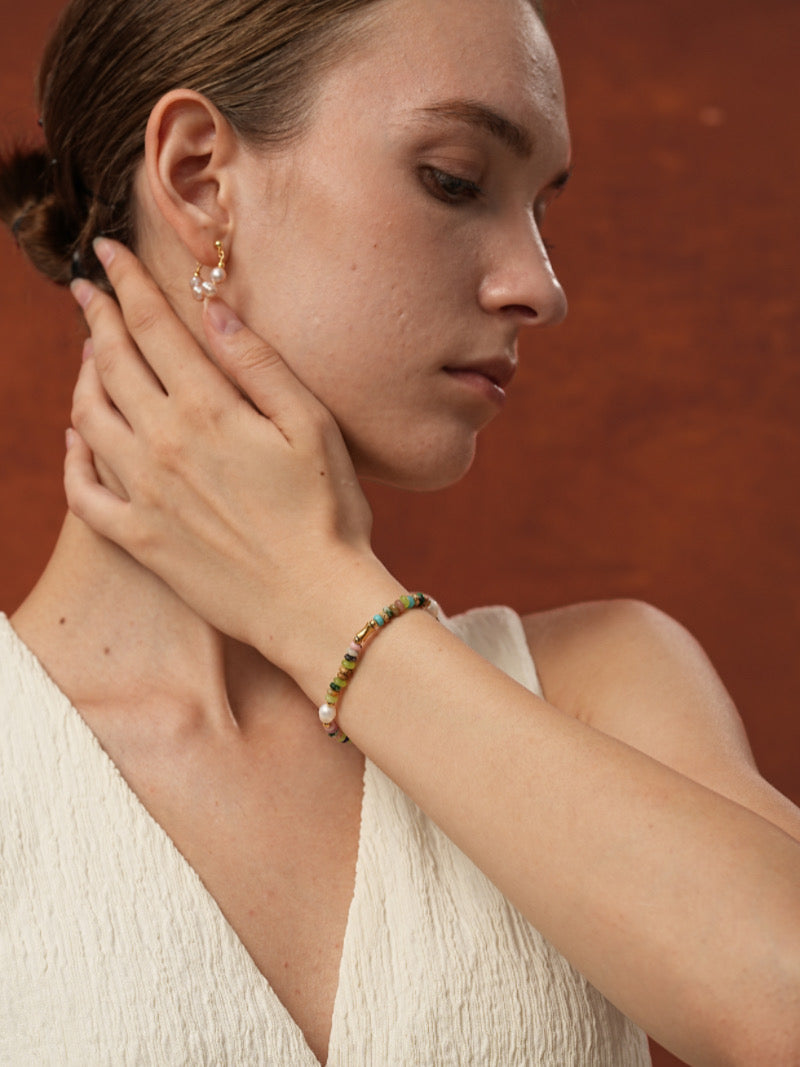
Beaded strands
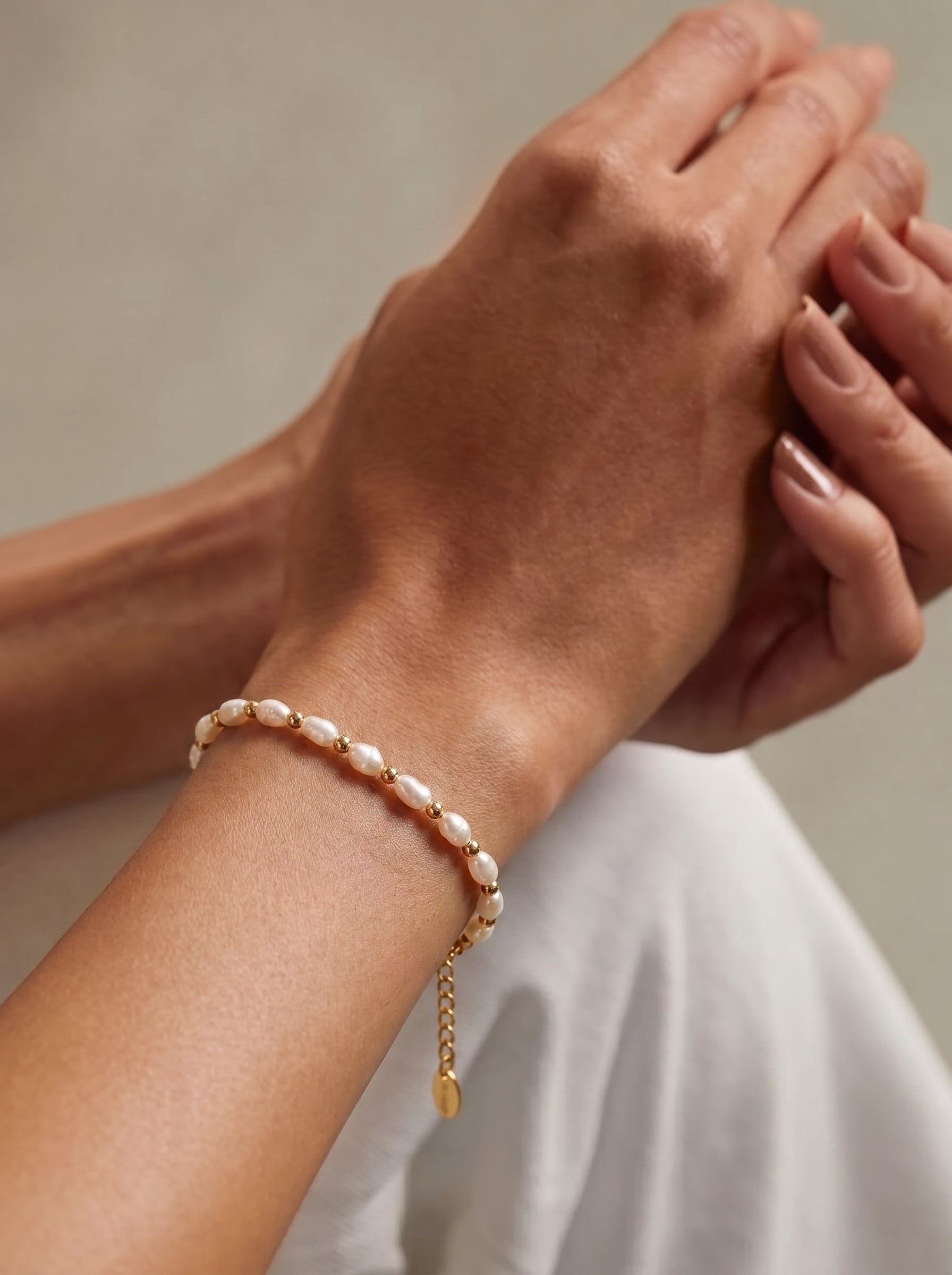
Pearls strung one after another, the way bracelets have been made for centuries. The most classic construction and the one that stacks best with a watch or a fine chain.
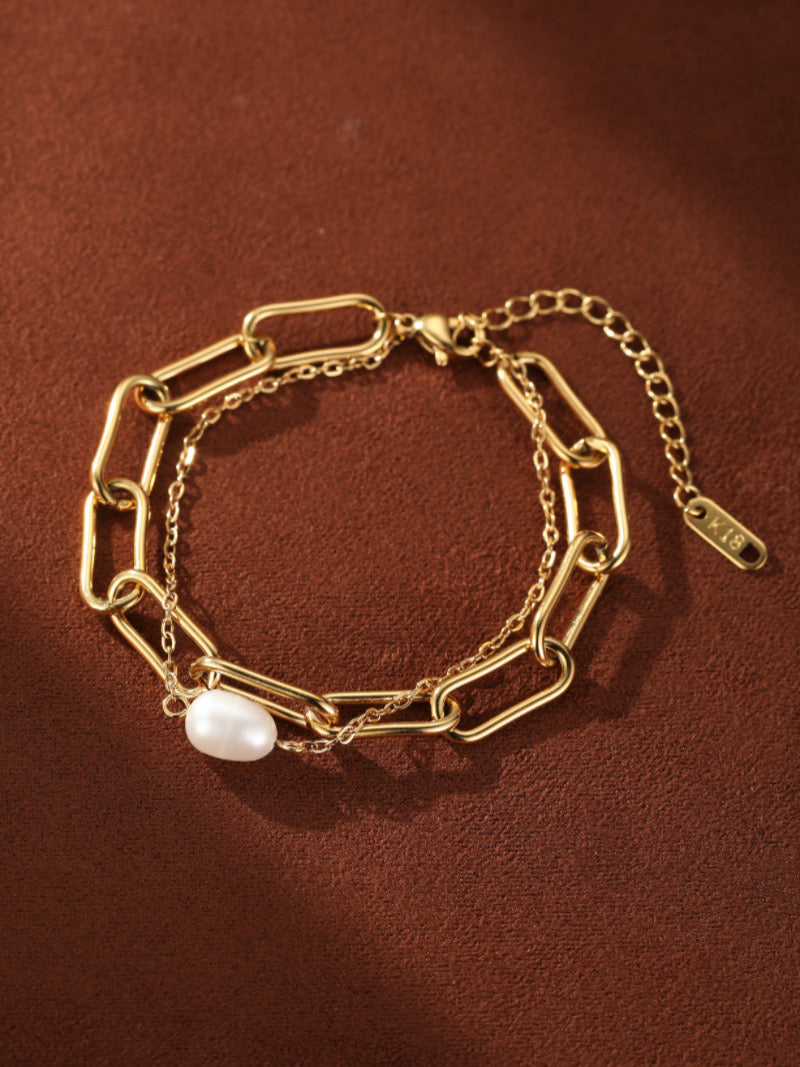
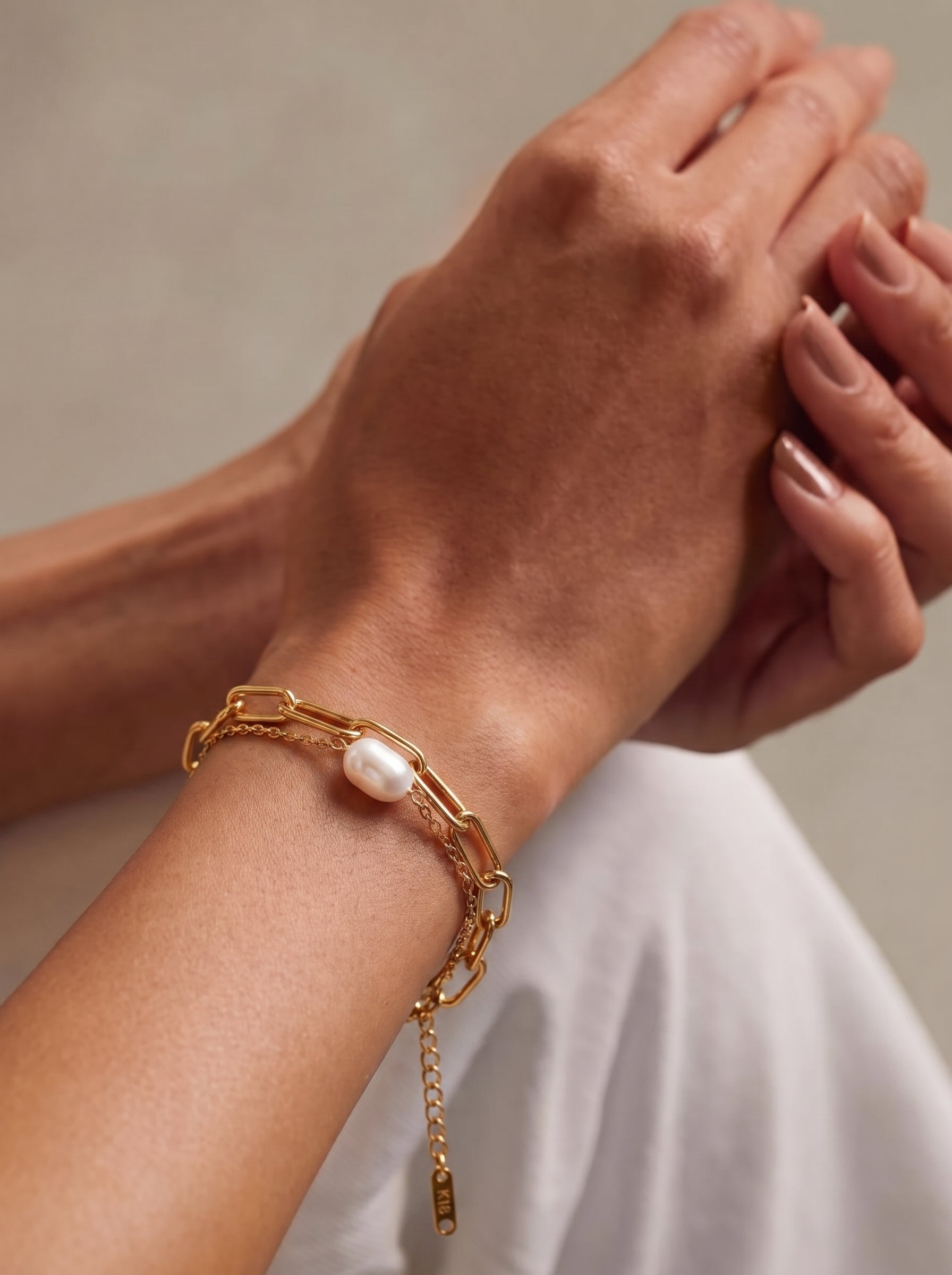
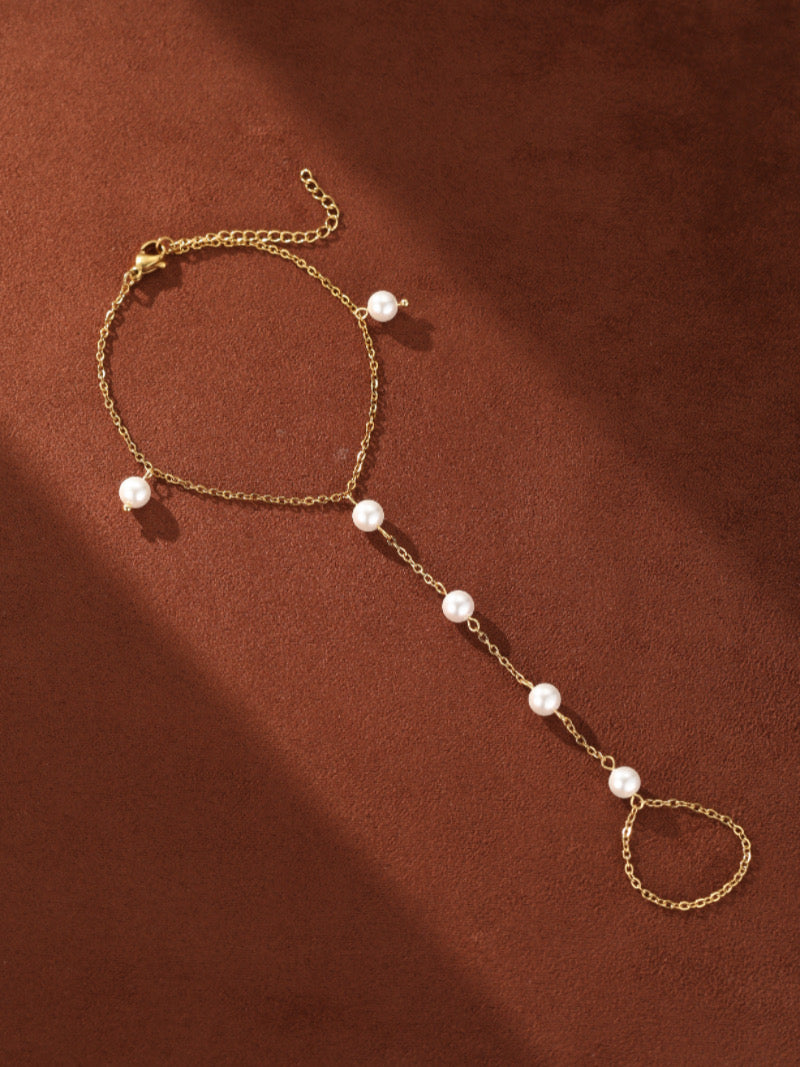
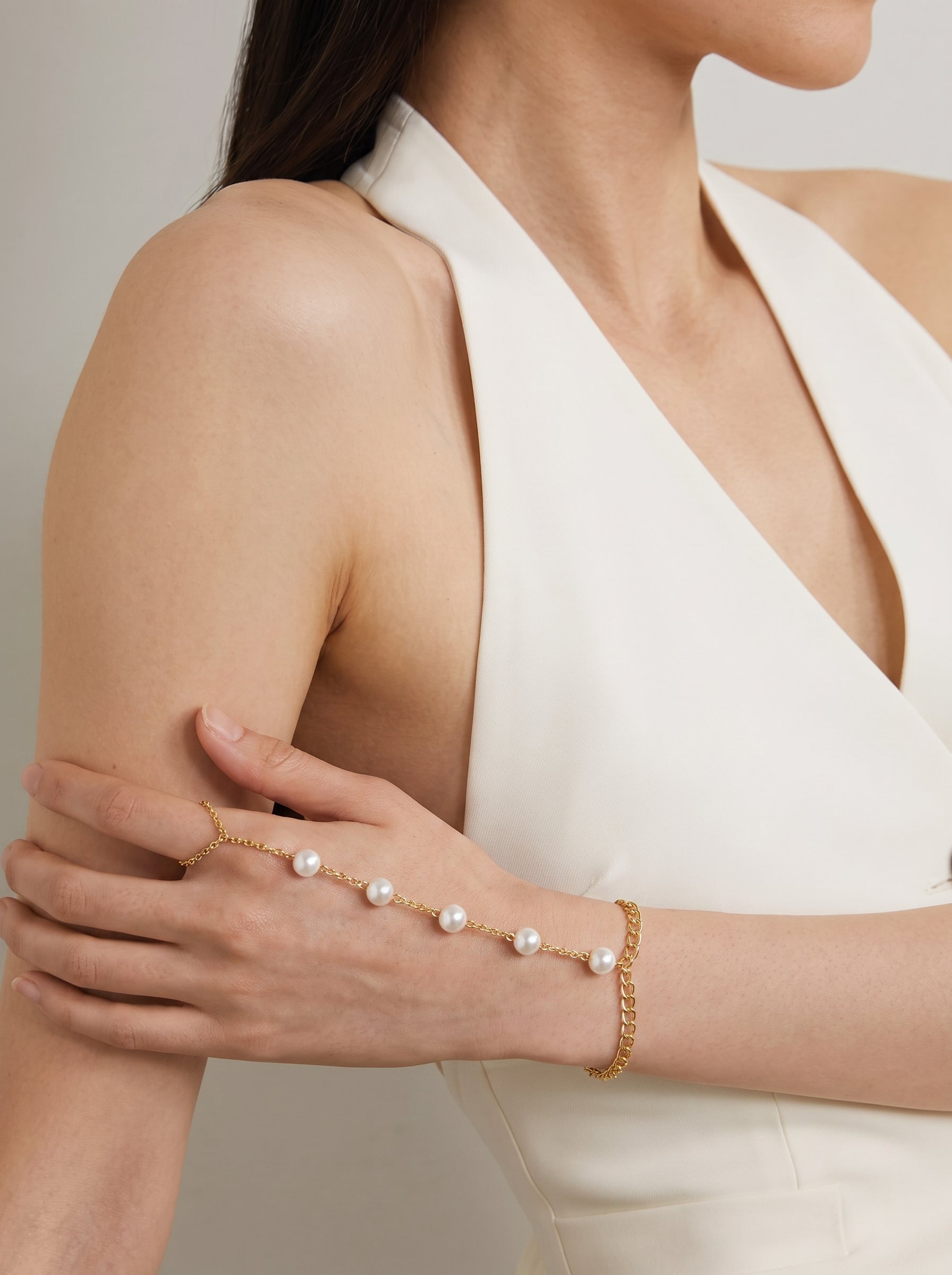
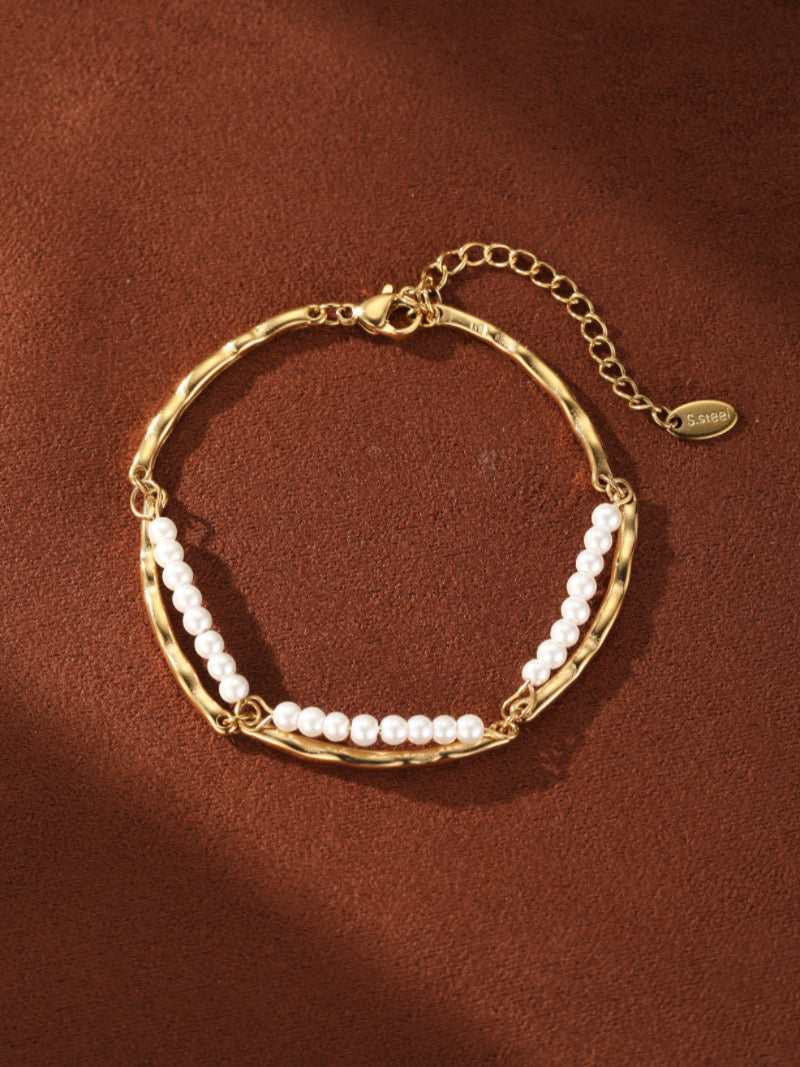
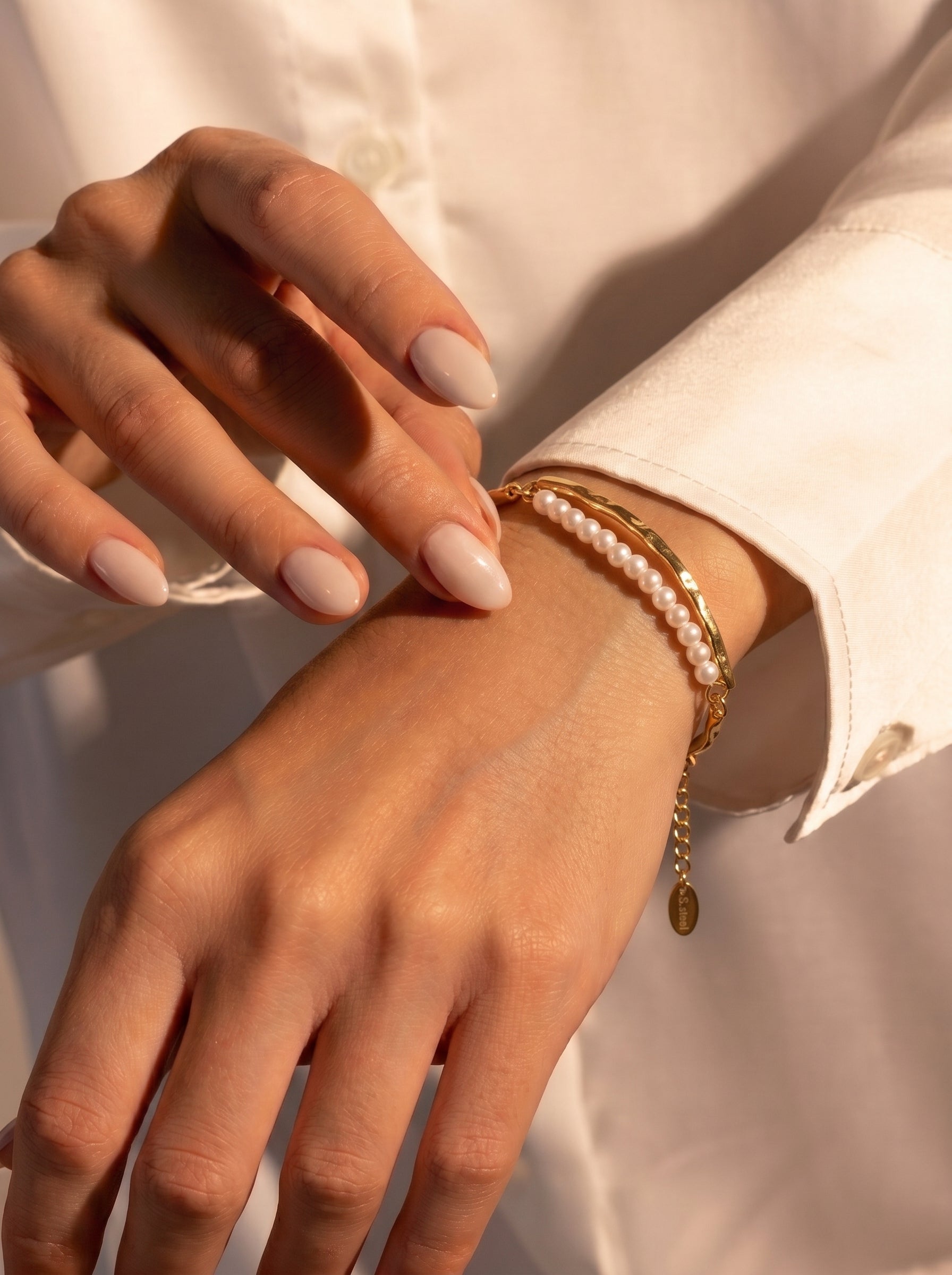
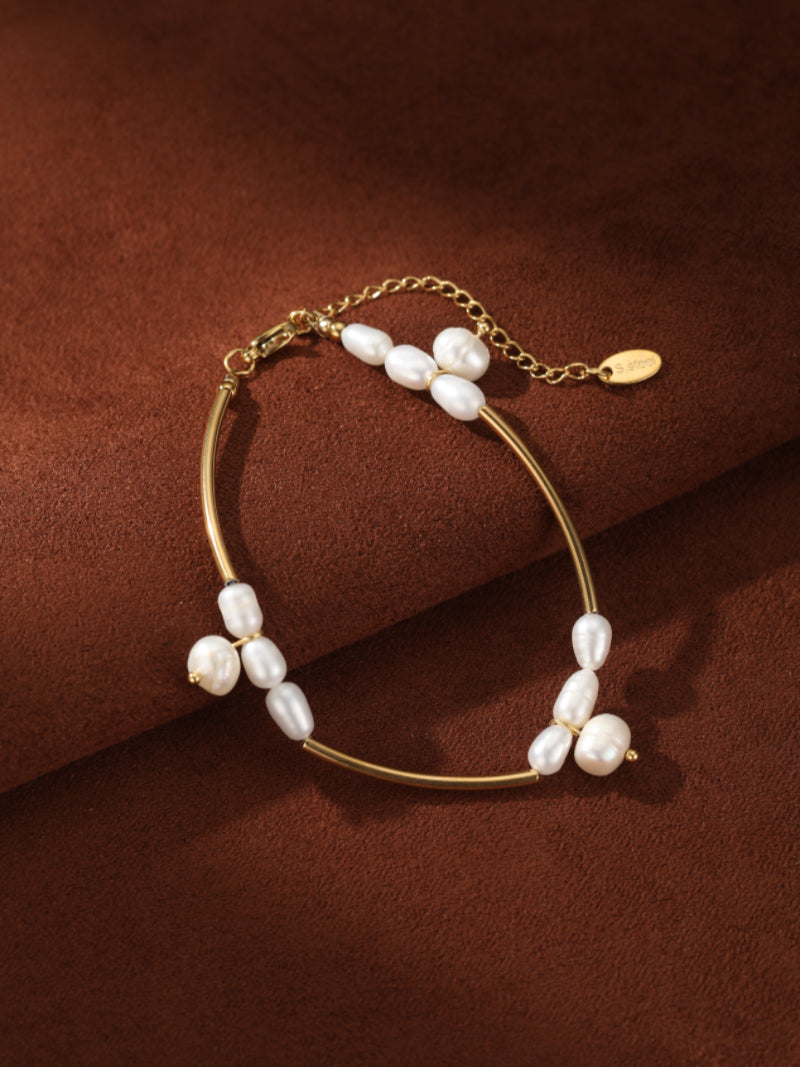
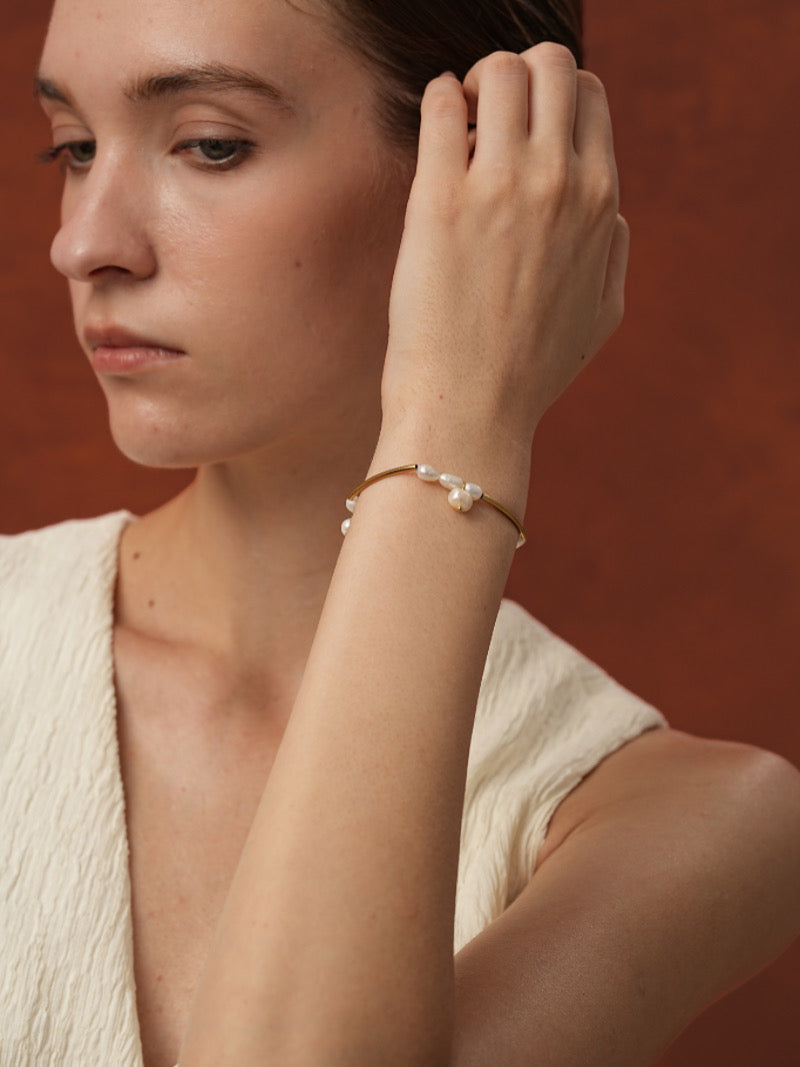
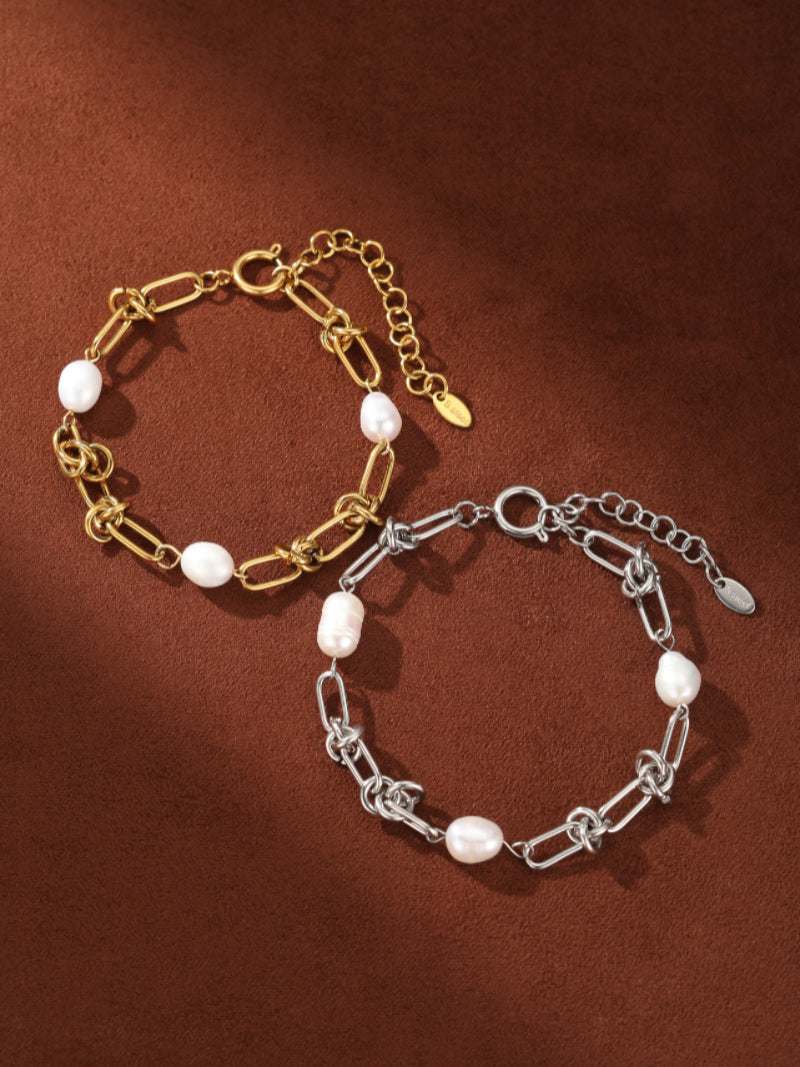
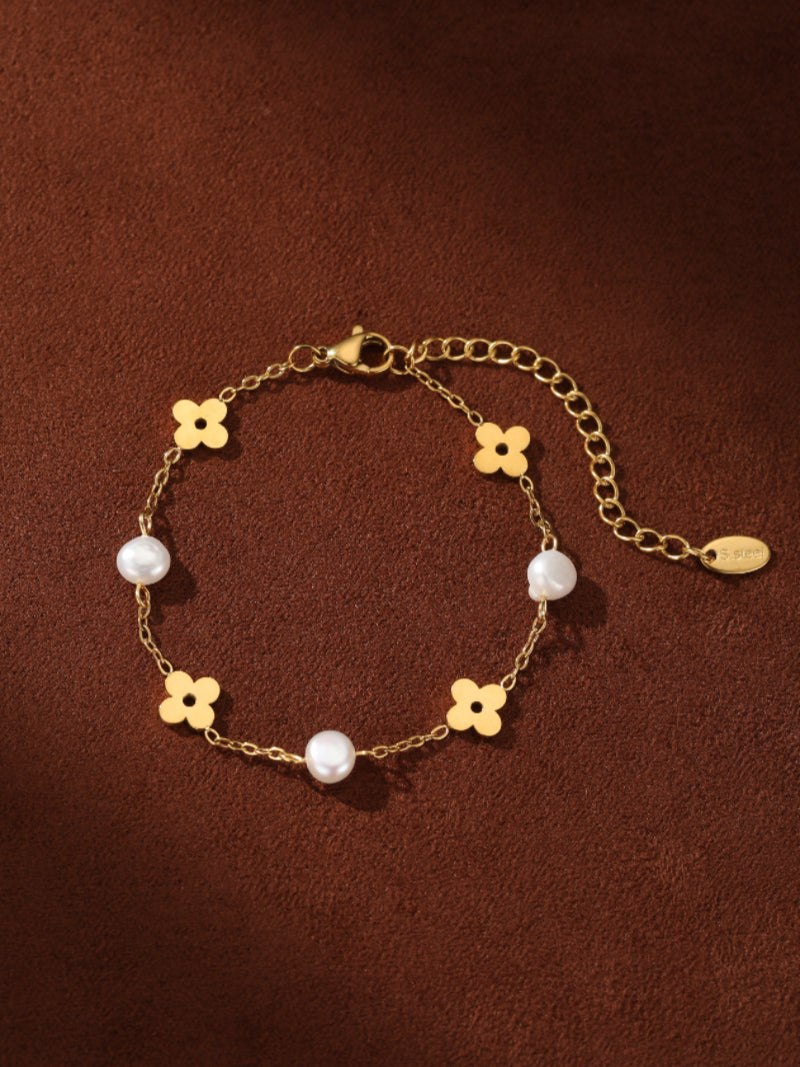
Floating chains
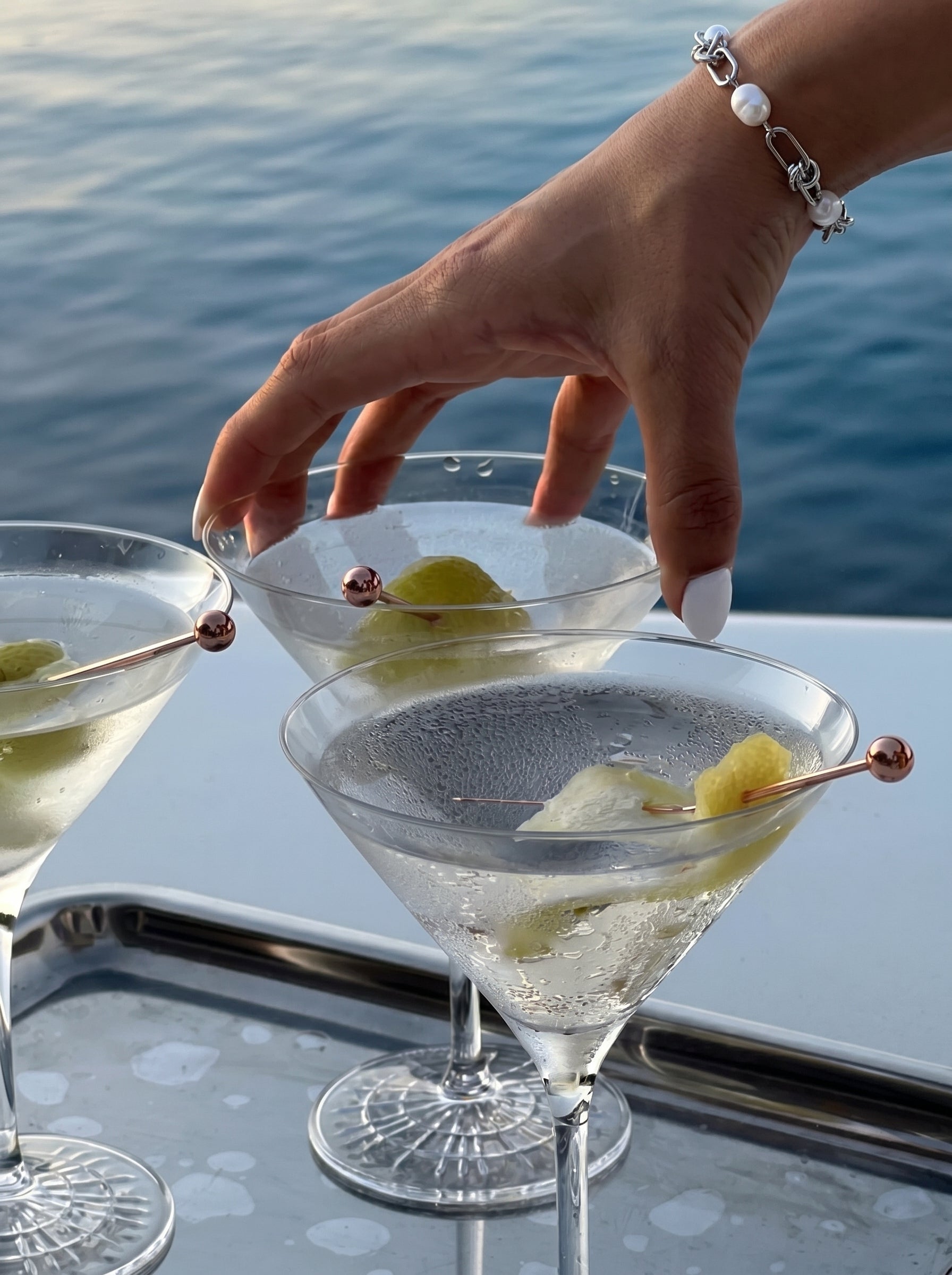
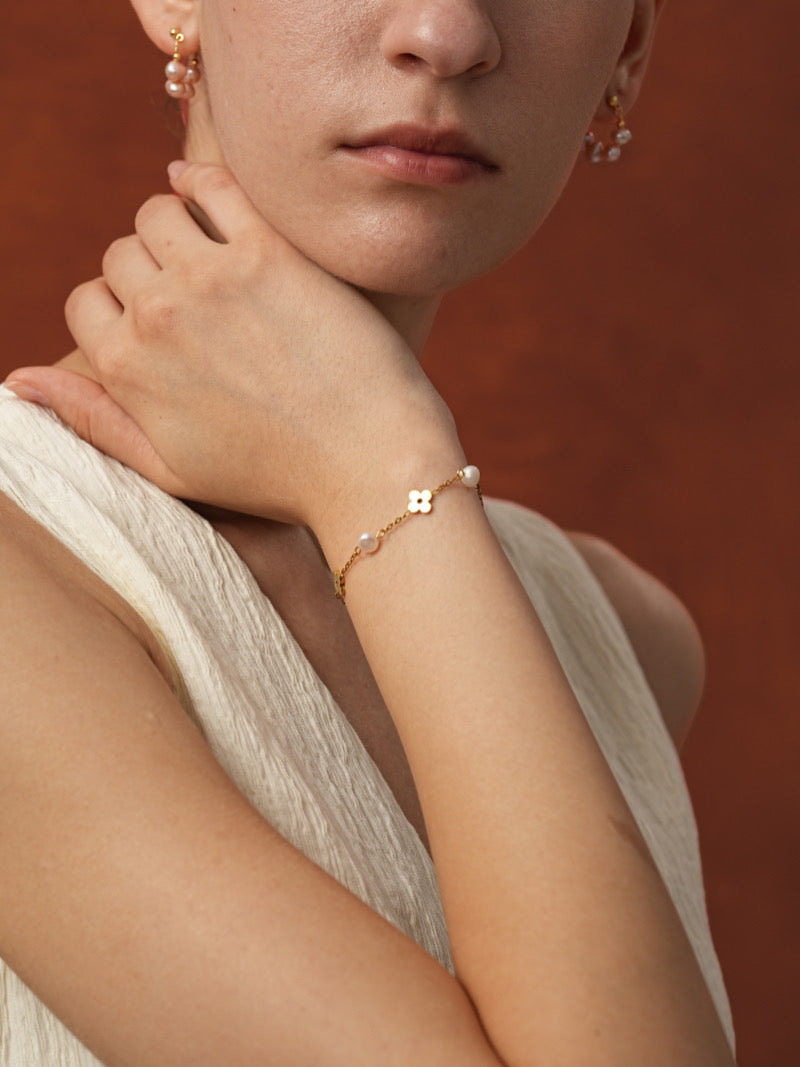
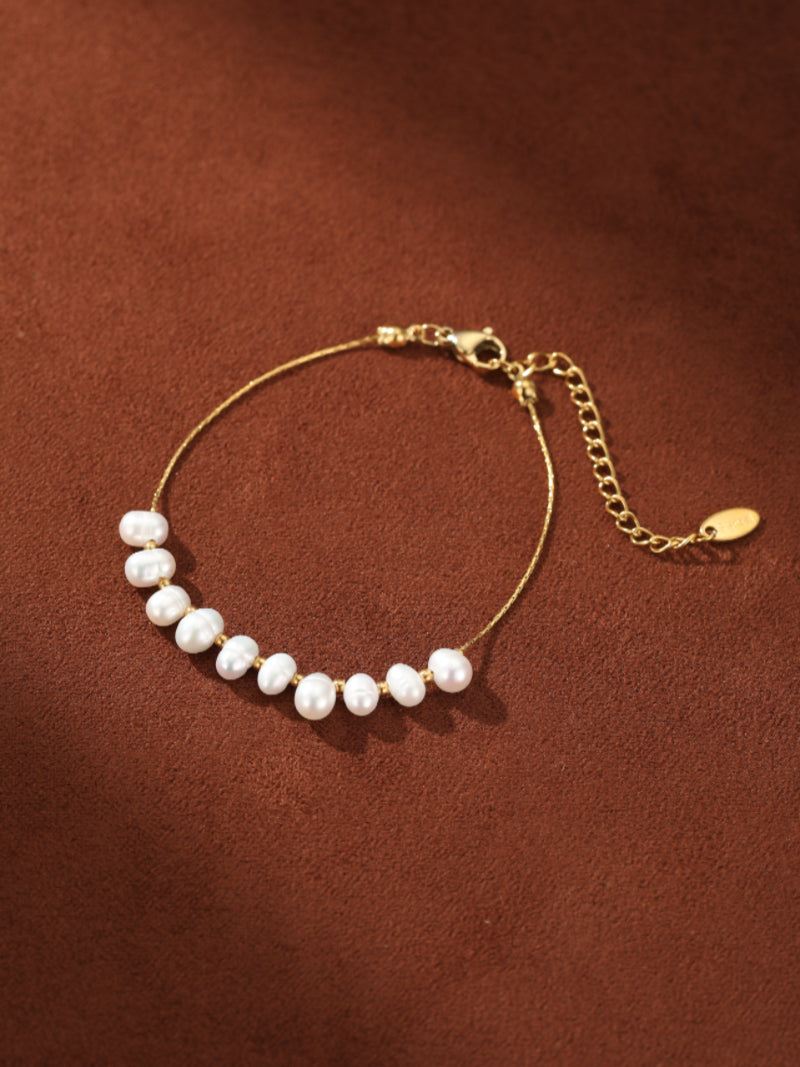
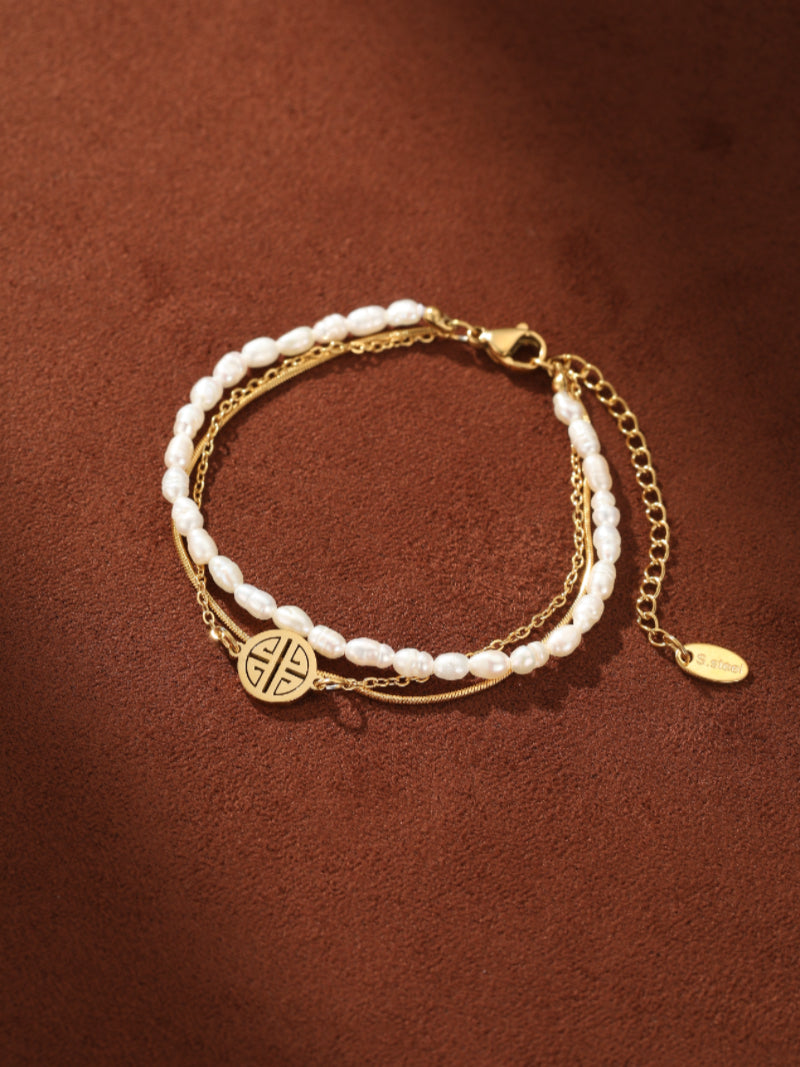
Pearls spaced along a fine chain so they appear to sit directly on the skin. Lighter than a full strand and considerably easier to wear under a shirt cuff.
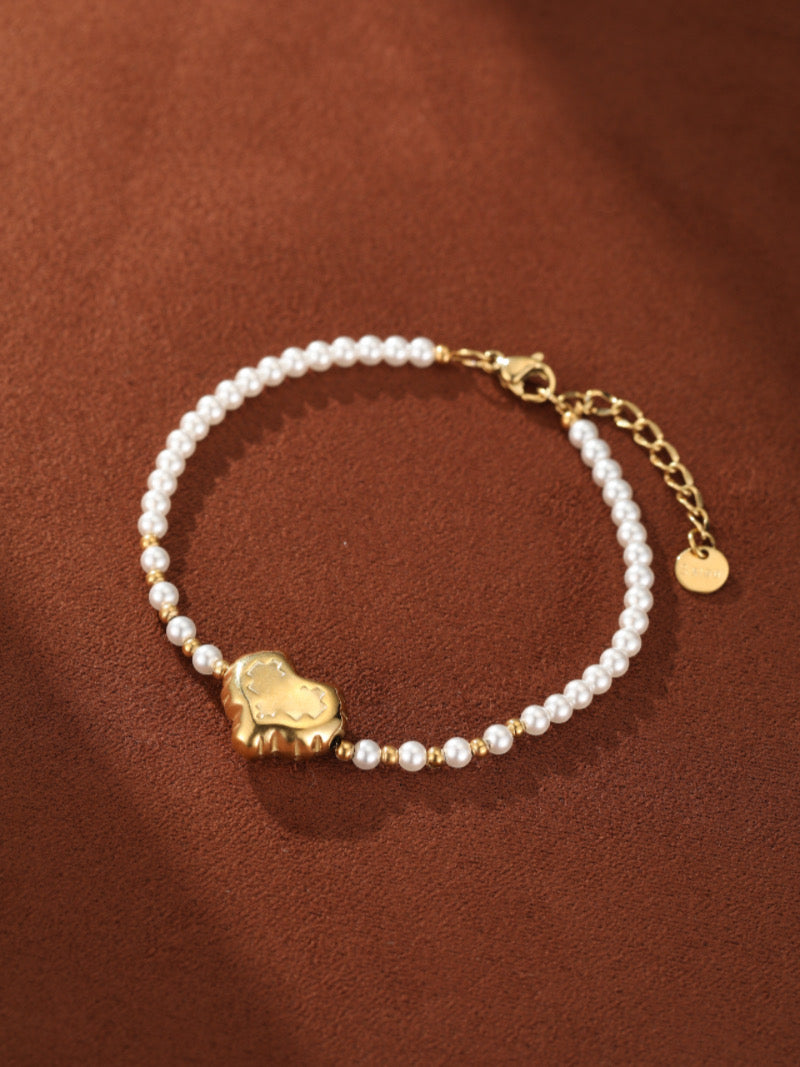
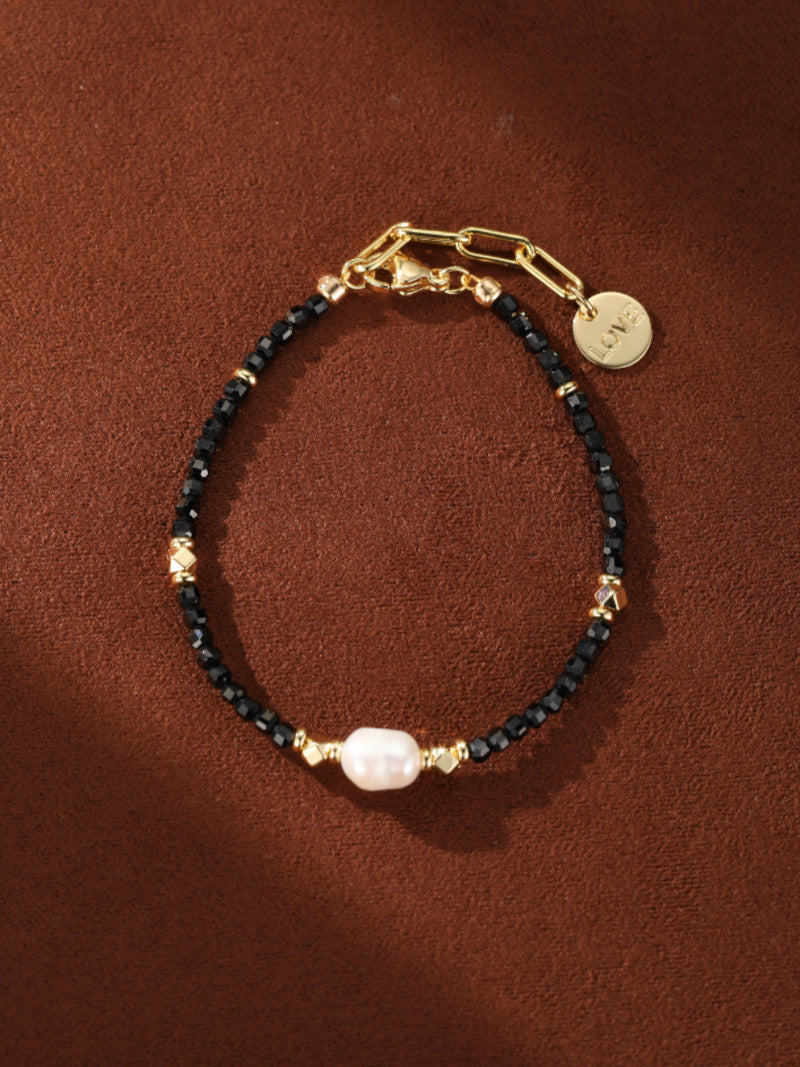
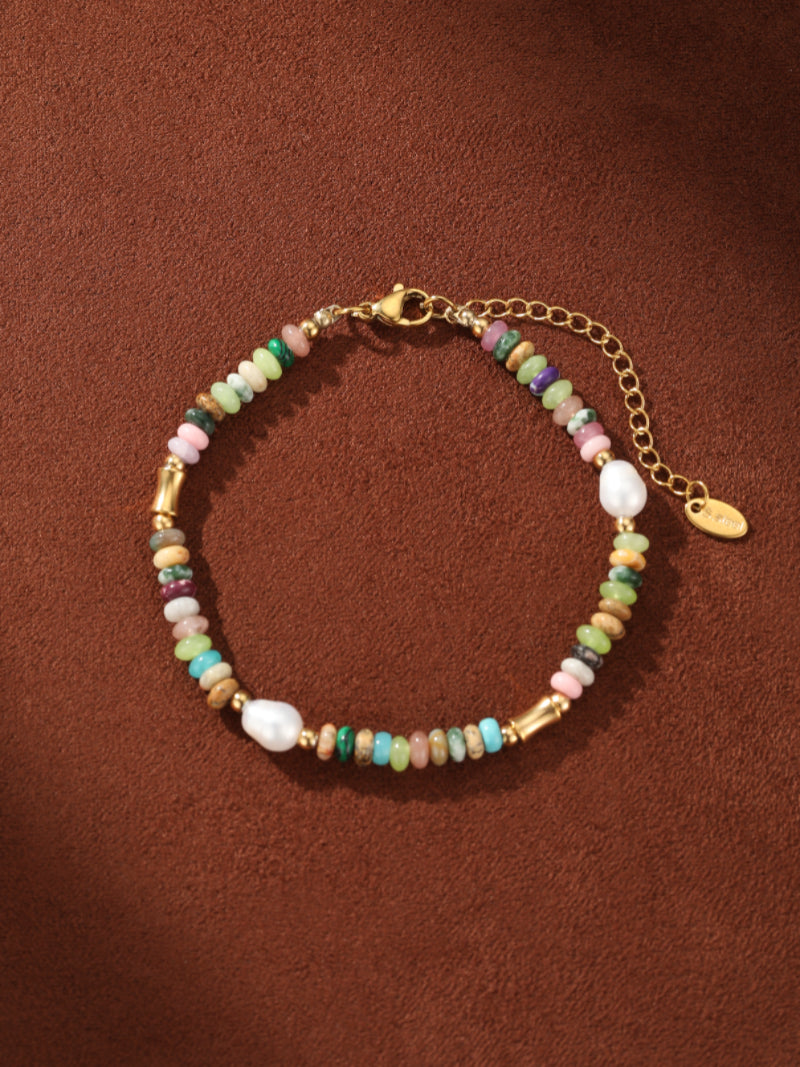
Charm bracelets
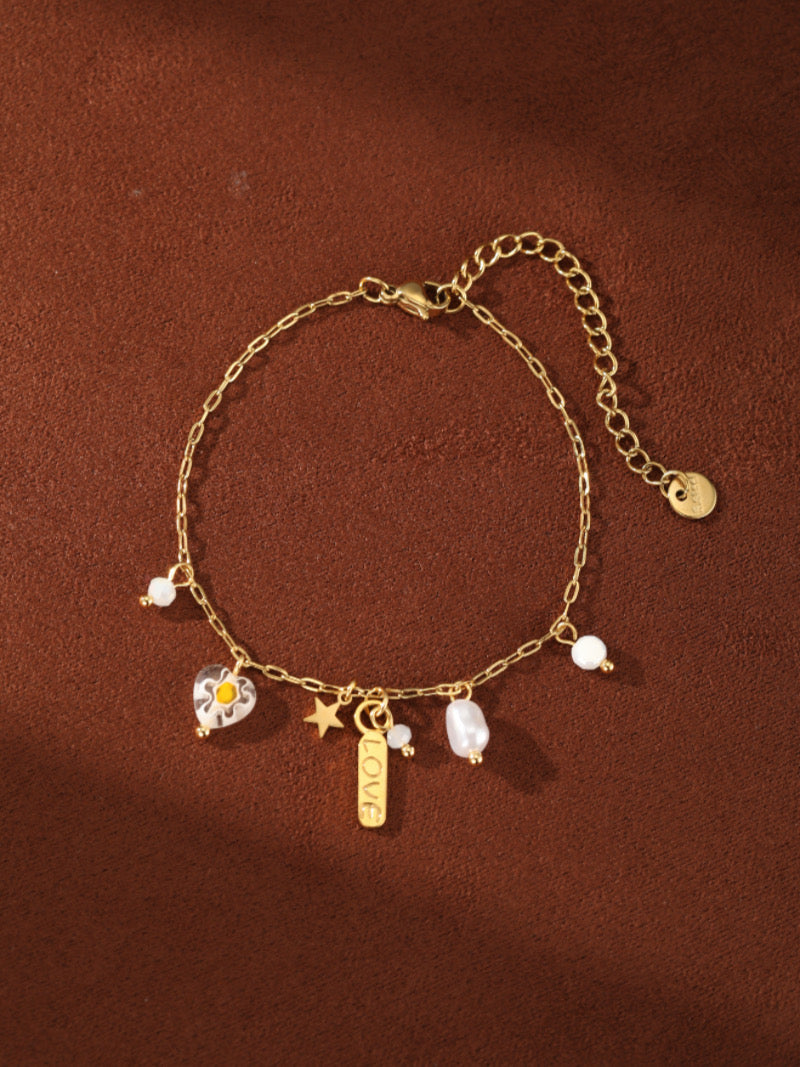
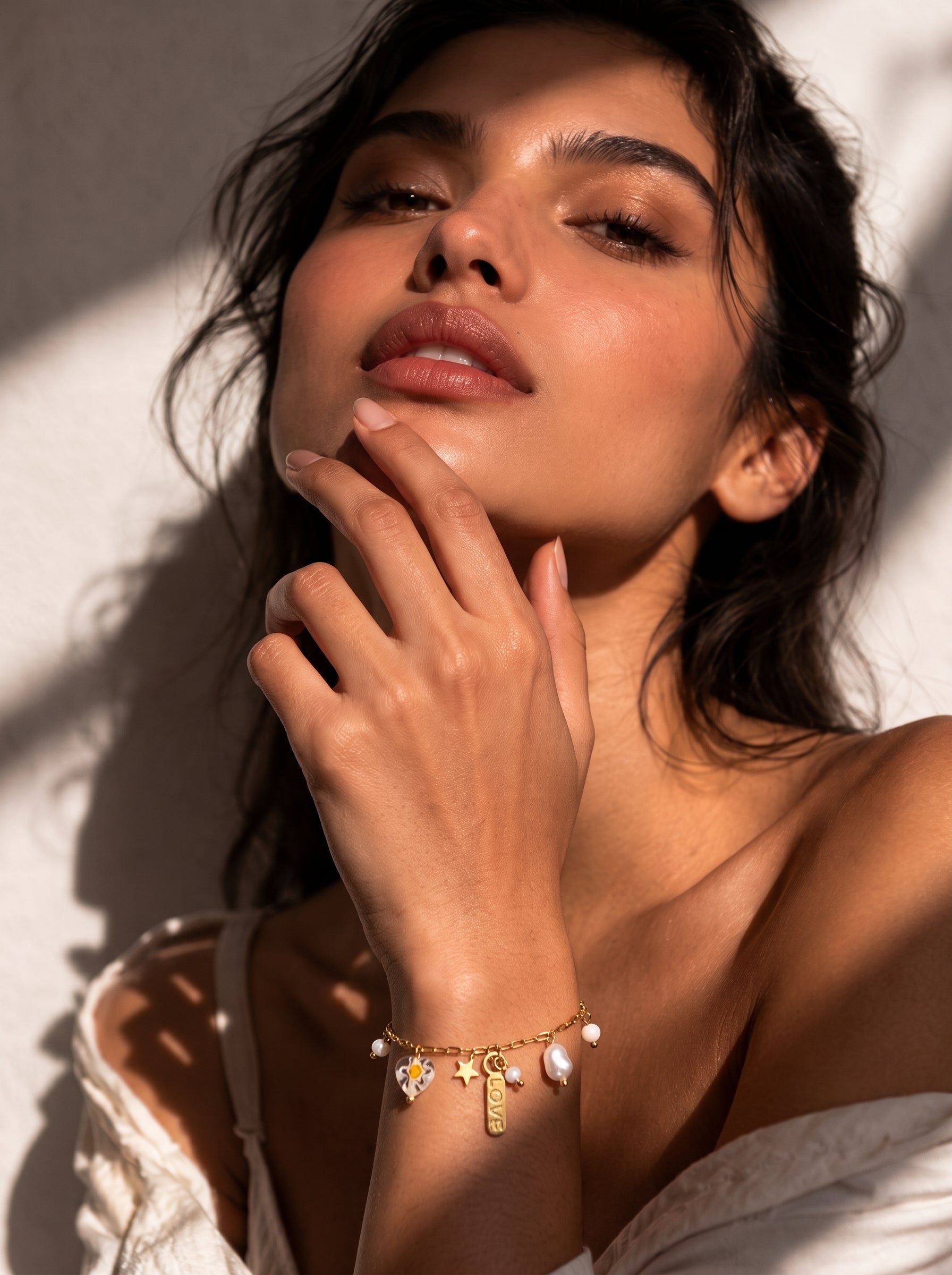
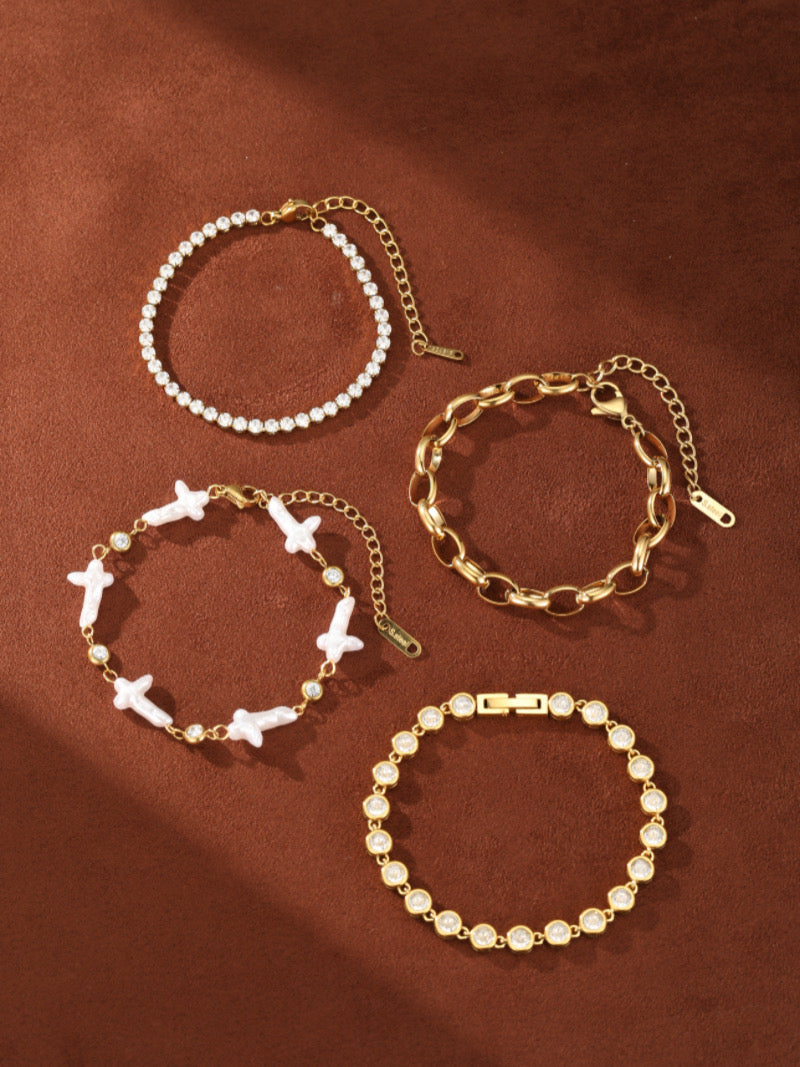
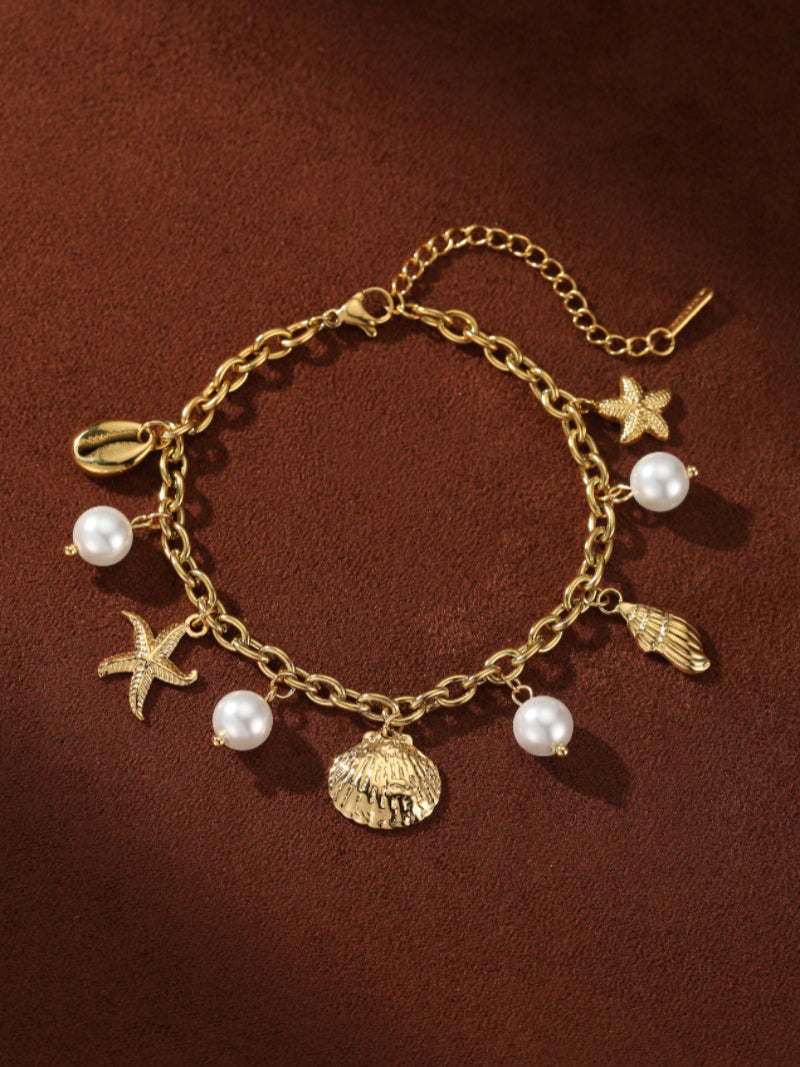
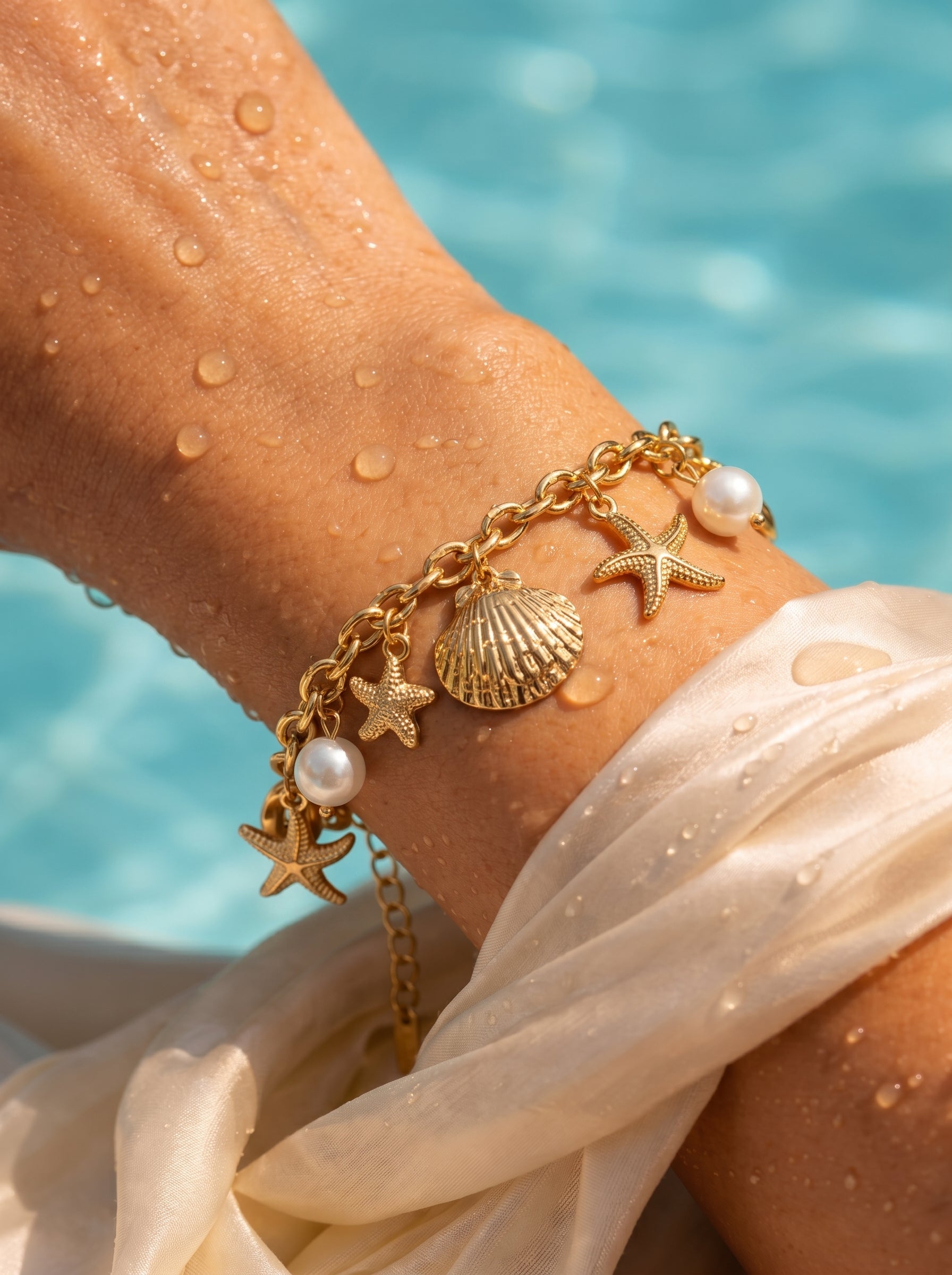
Pearls with stars, crosses, shells and hearts threaded alongside them. These read personal rather than formal, and they are the most given as gifts.
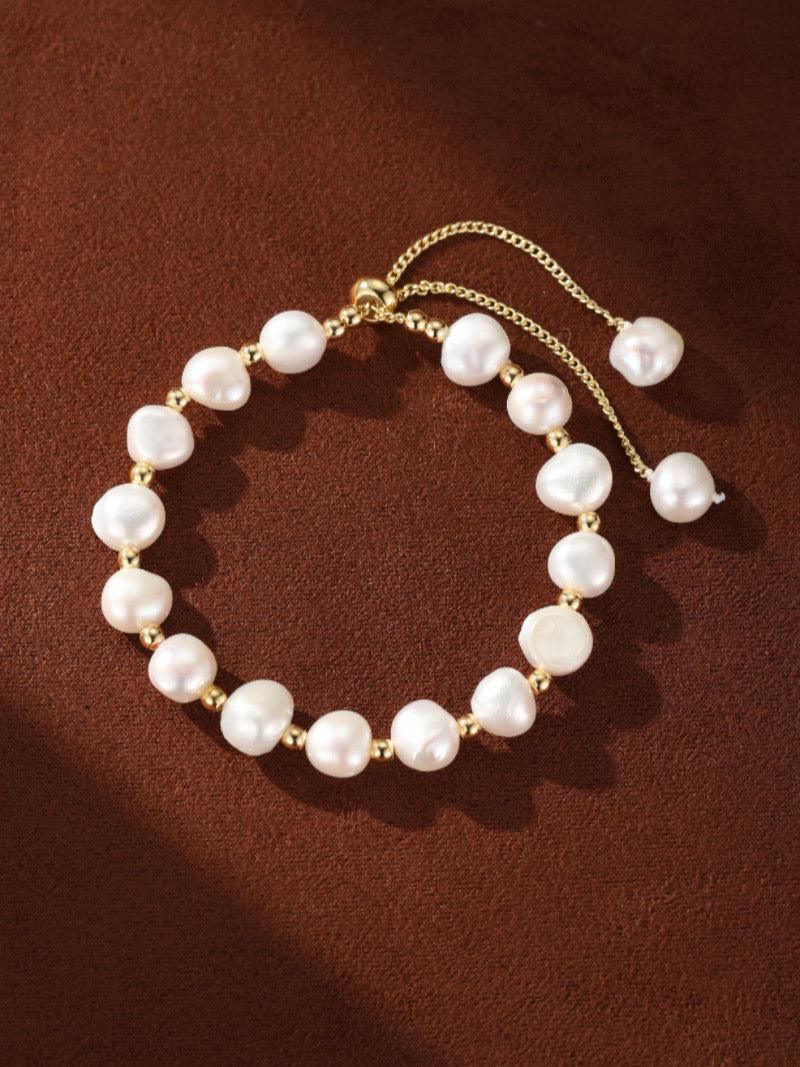
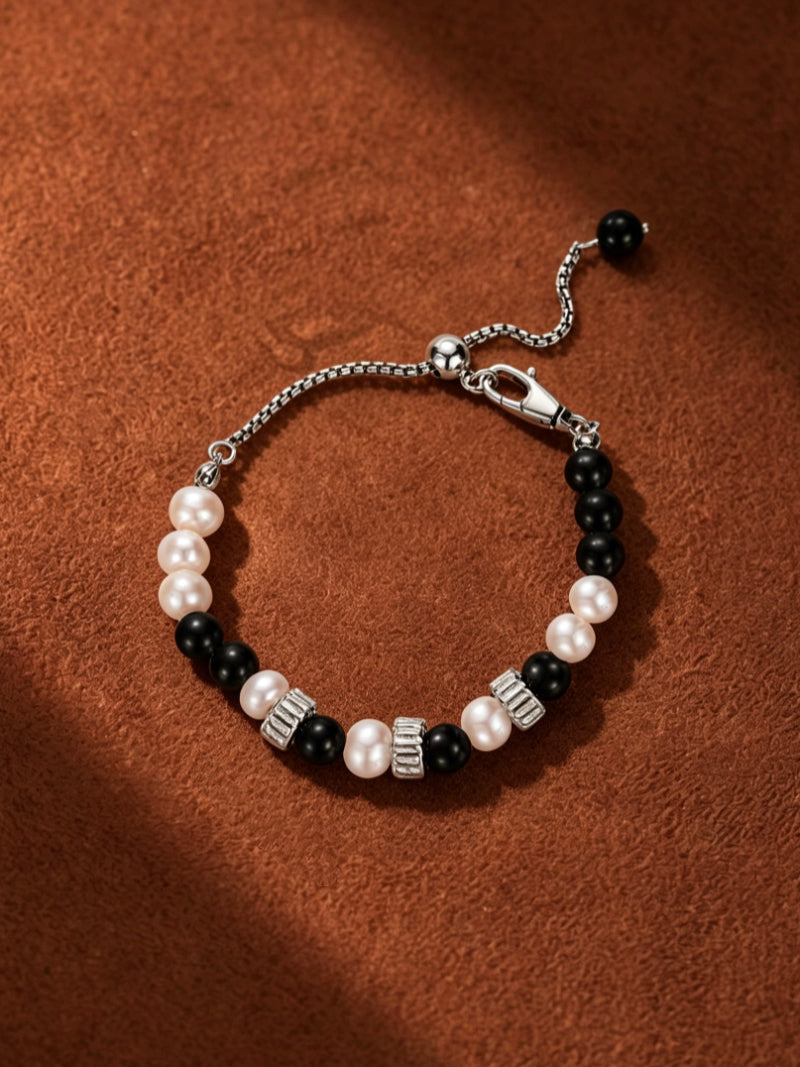
Cuffs and sliders
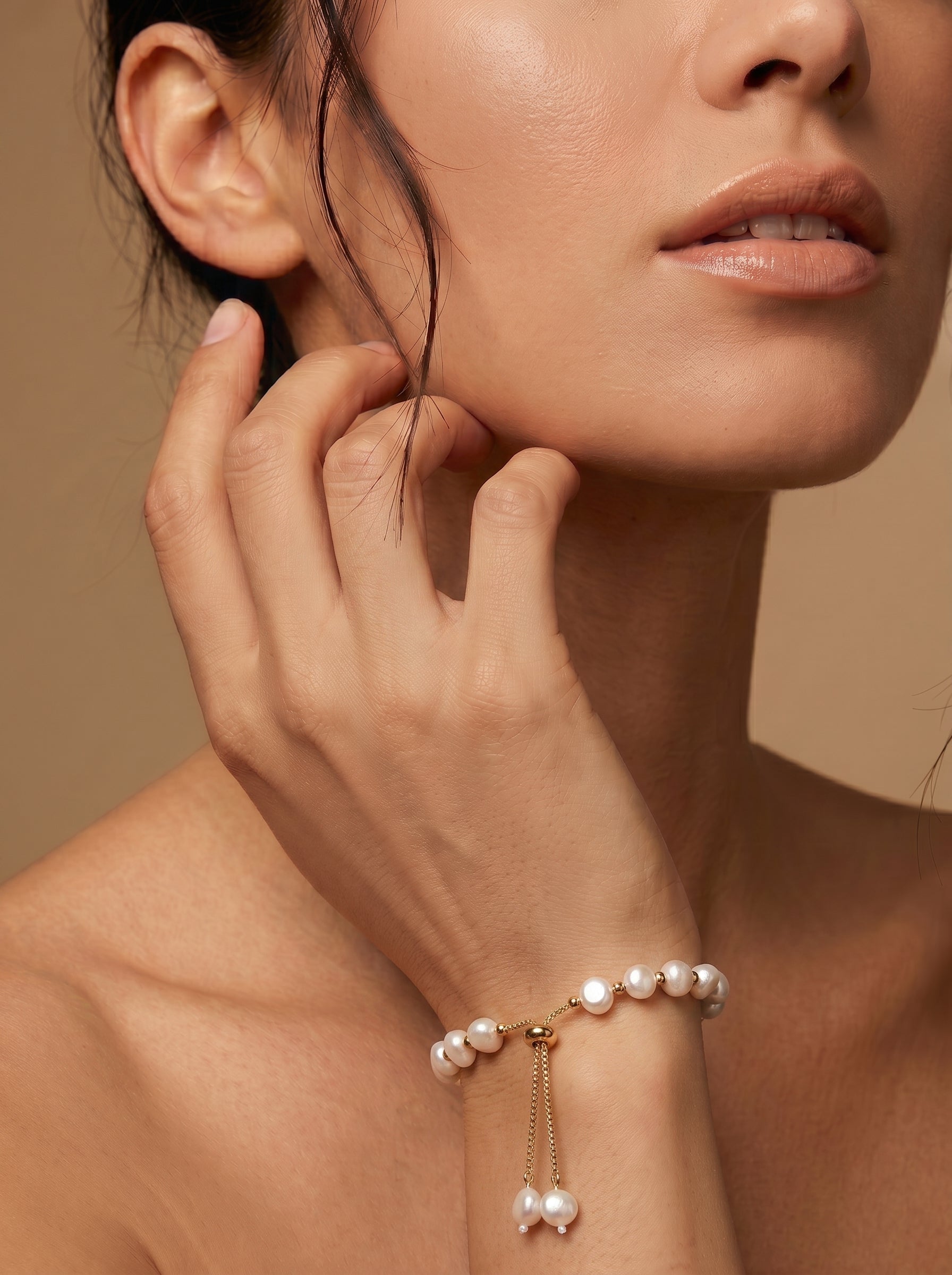
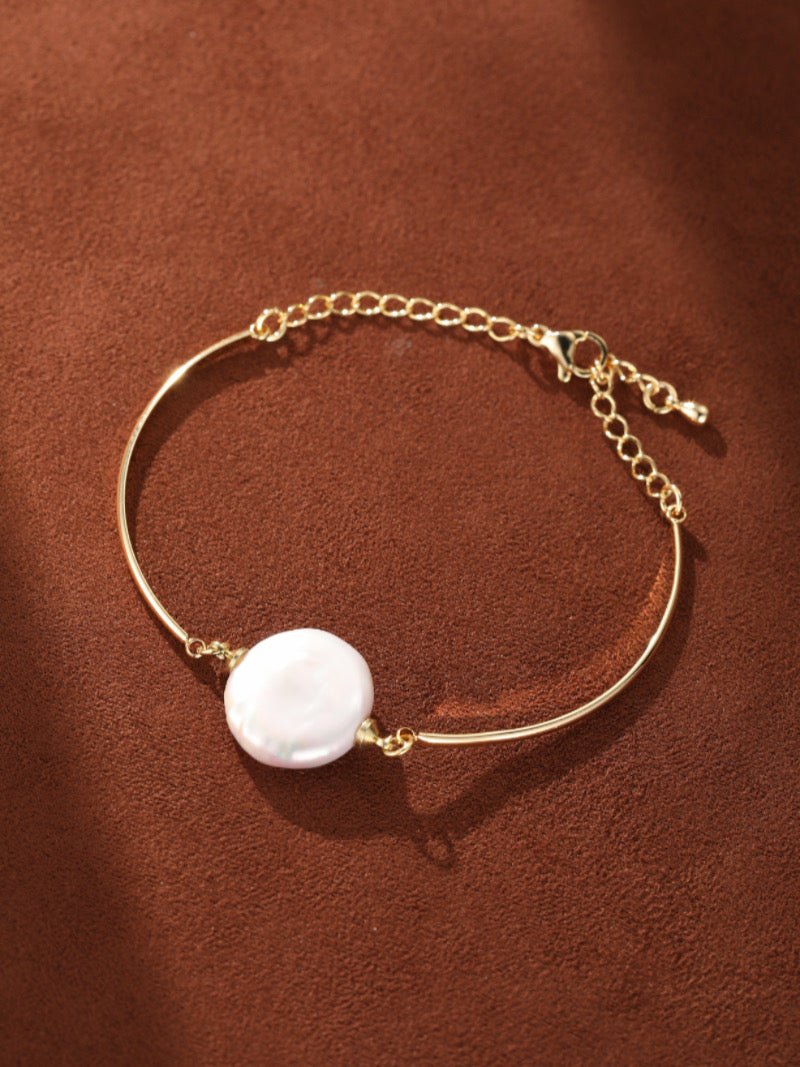
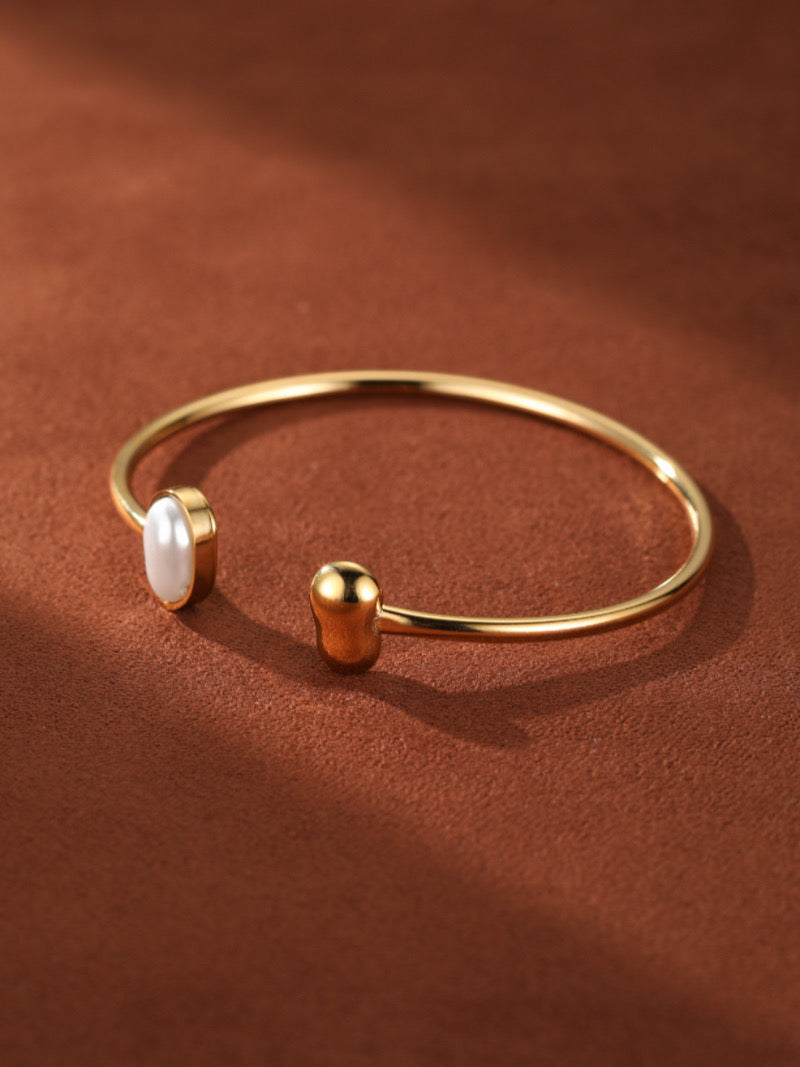
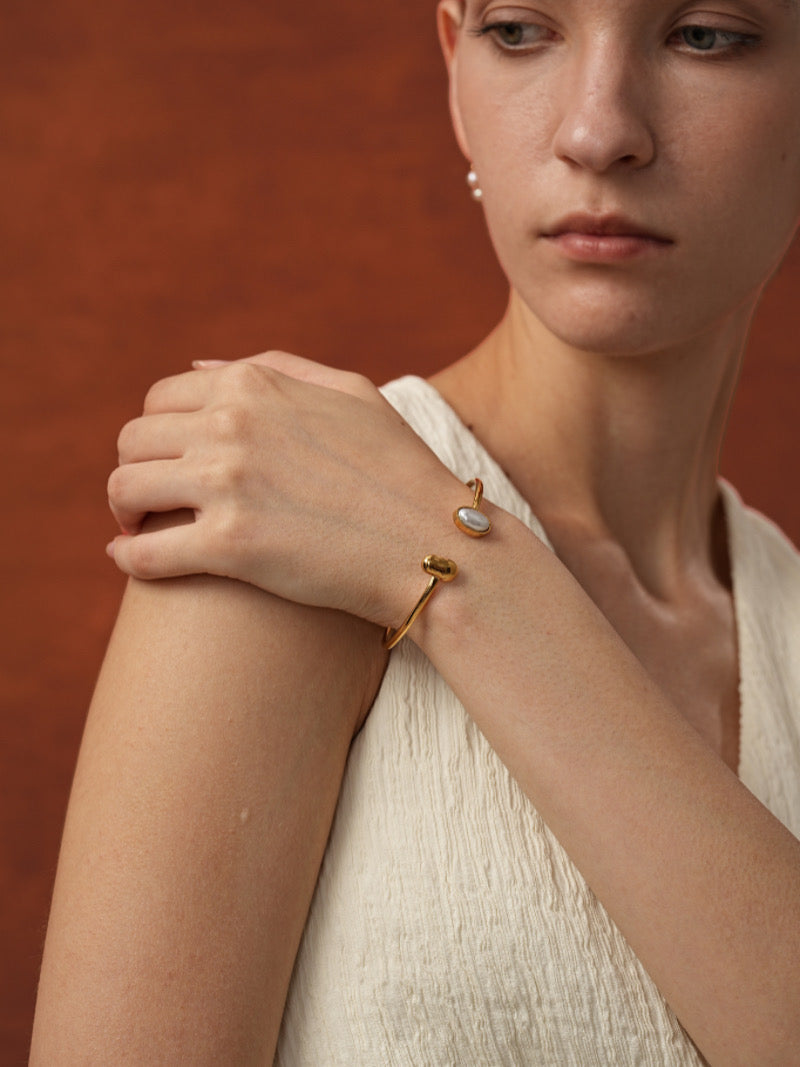
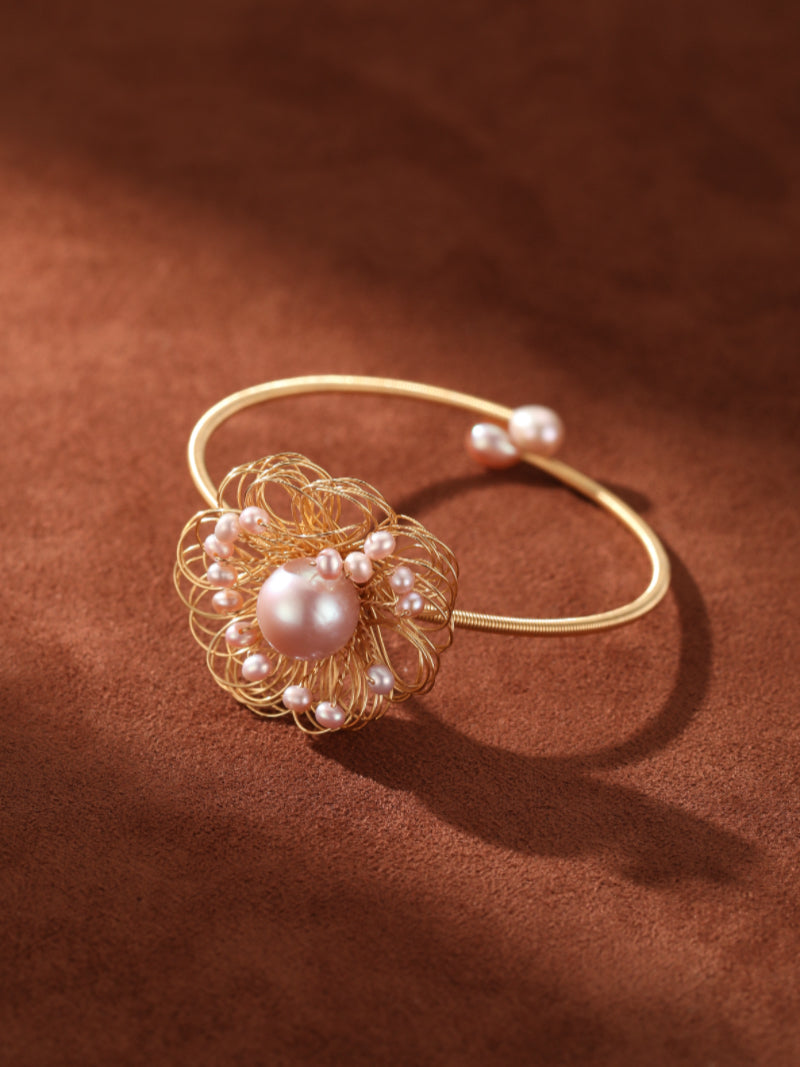
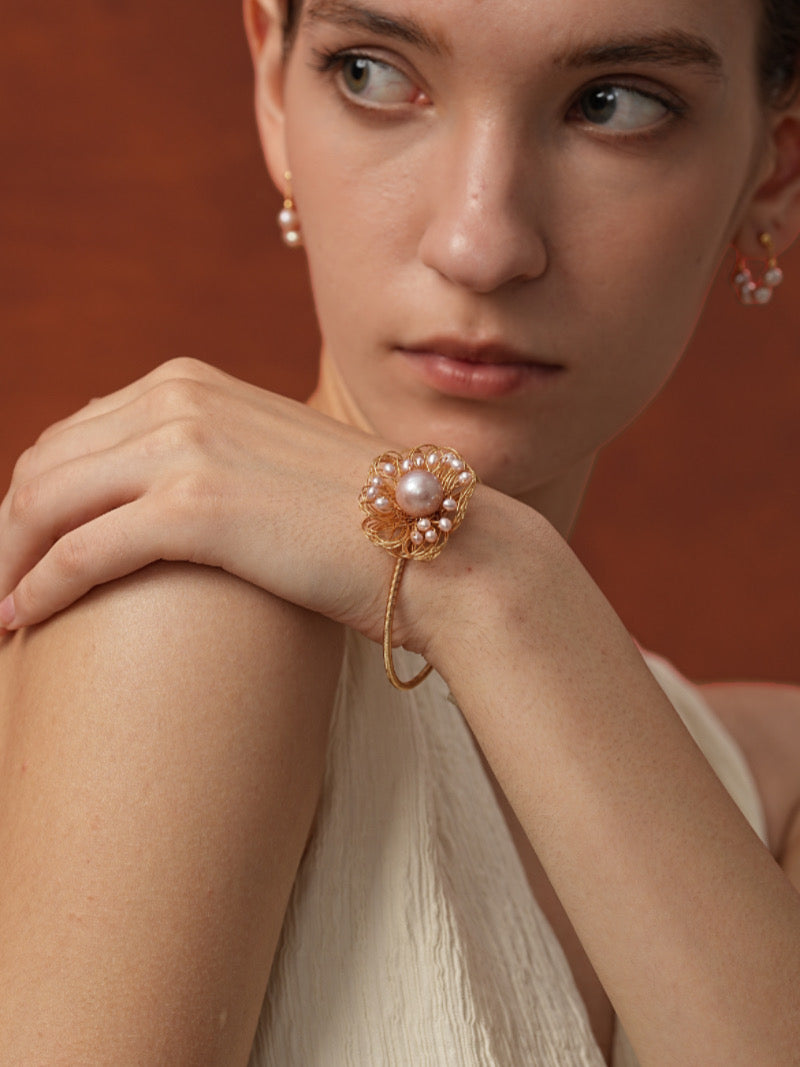
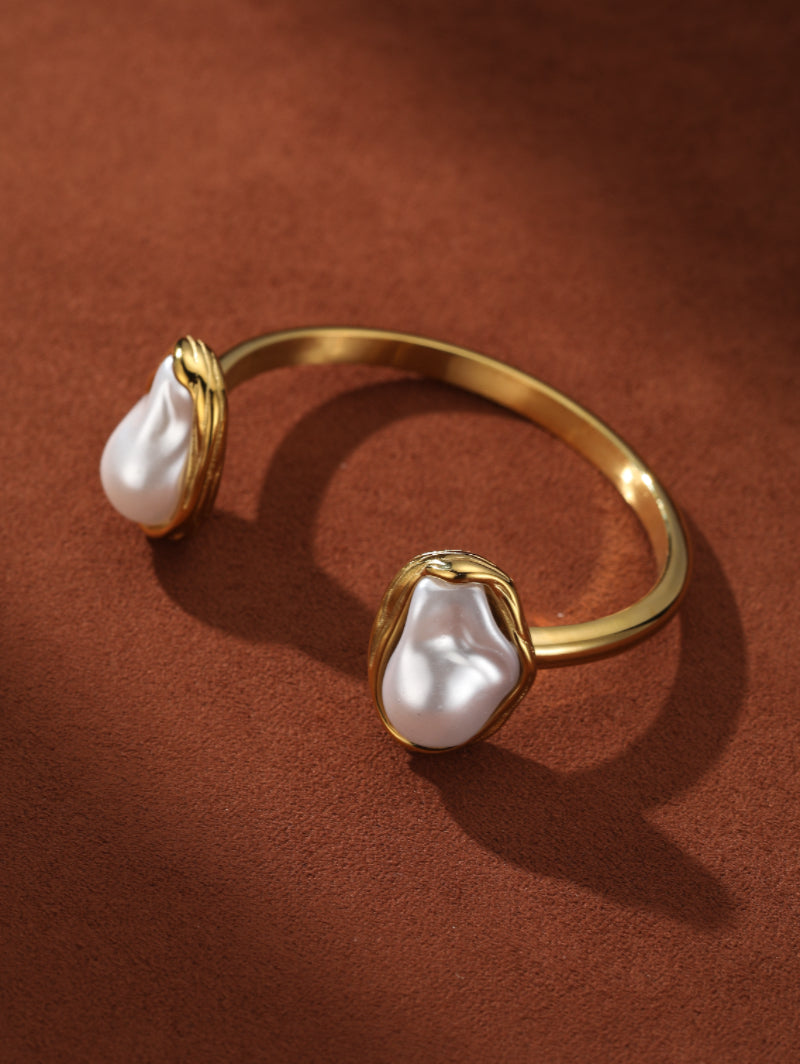
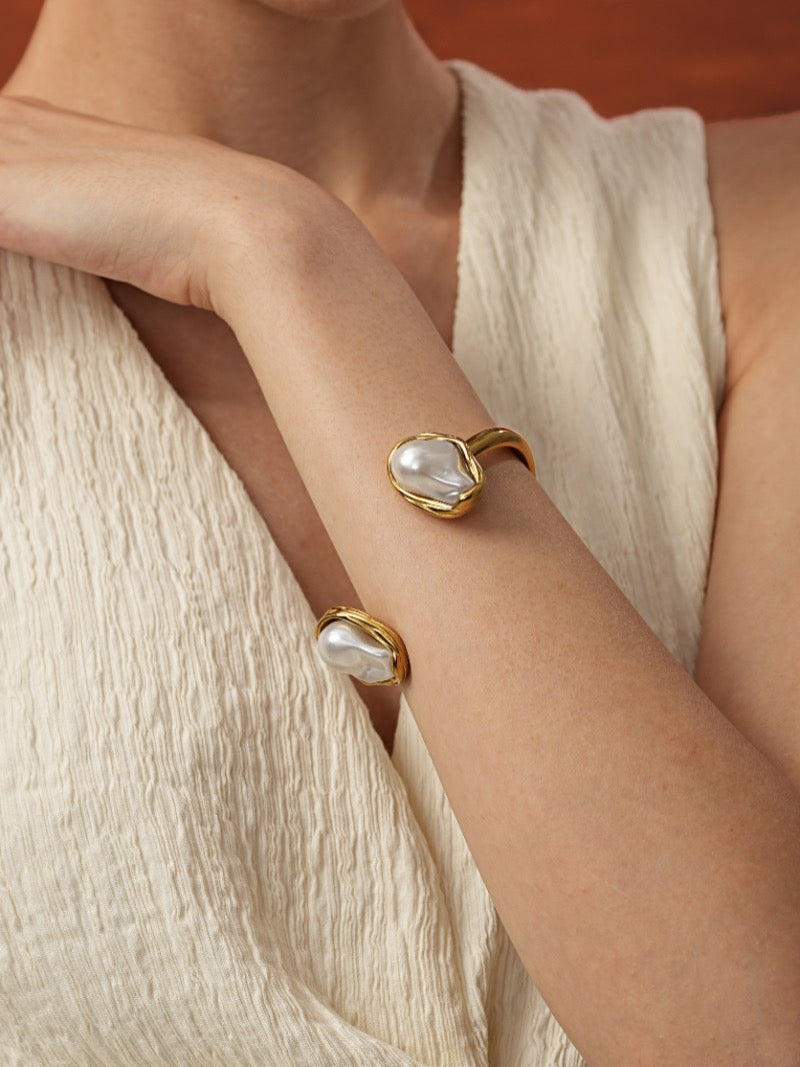
A rigid cuff holds its own shape with no clasp to fasten one-handed. A slider adjusts by pulling a cord, which solves fit entirely and makes the bracelet easy to give.
How should a freshwater pearl bracelet fit?
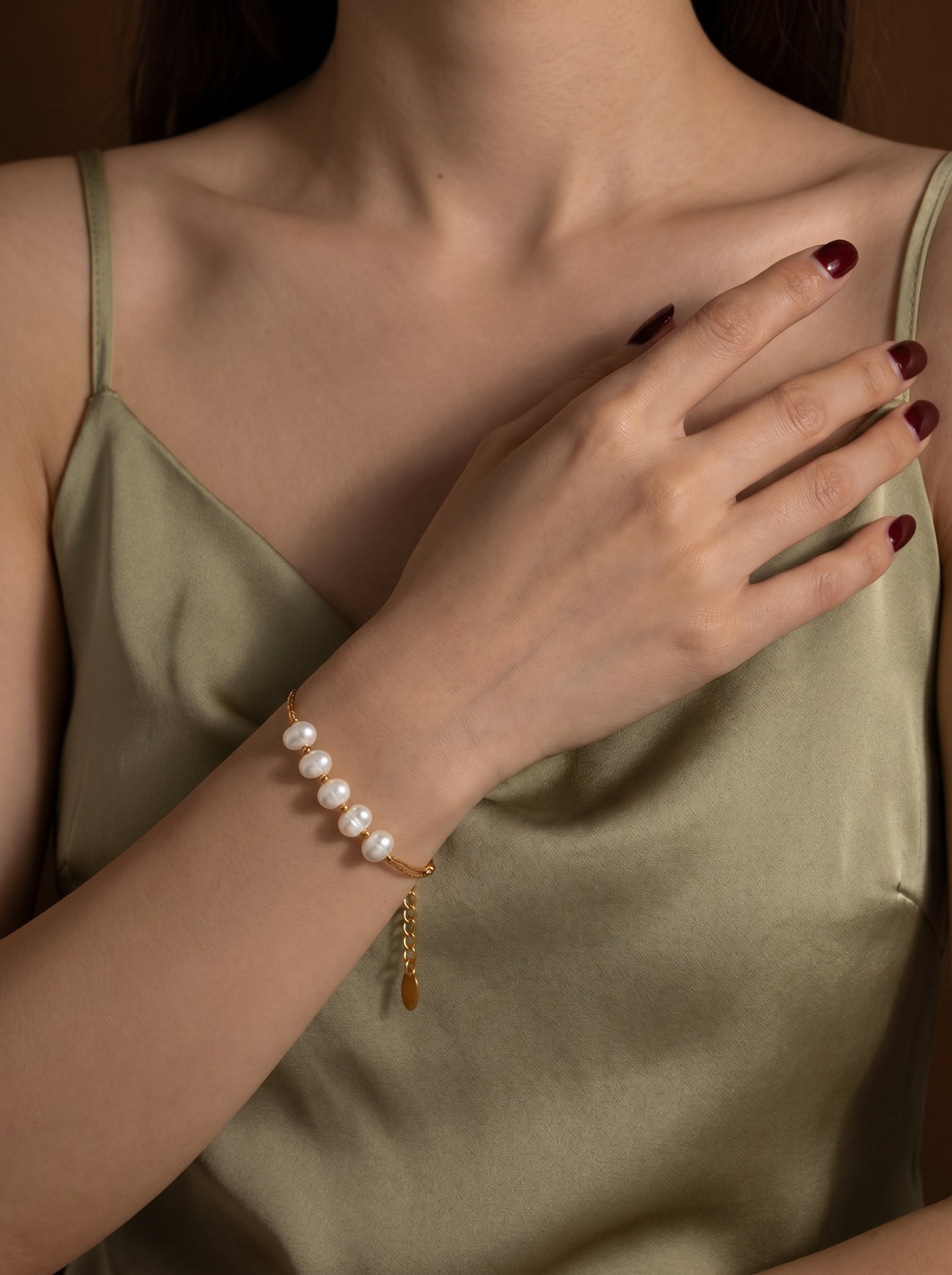
With about half an inch of room past your wrist measurement. Loose enough to rotate, close enough that it does not slide over the hand. Measure just below the wrist bone. Most women take 7 to 7.5 inches, and a heavily beaded style needs an extra half inch.
How do you stack pearl bracelets?
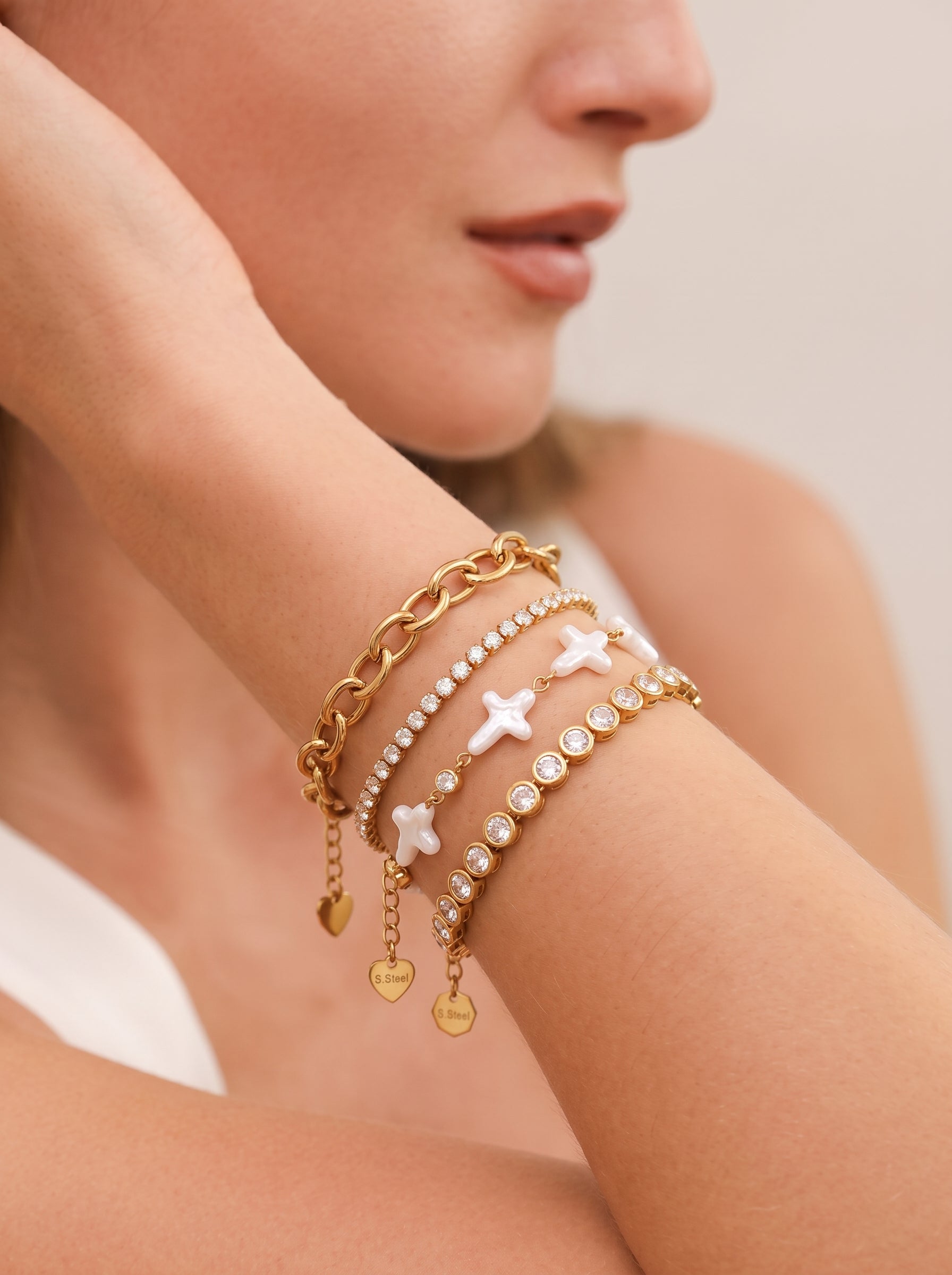
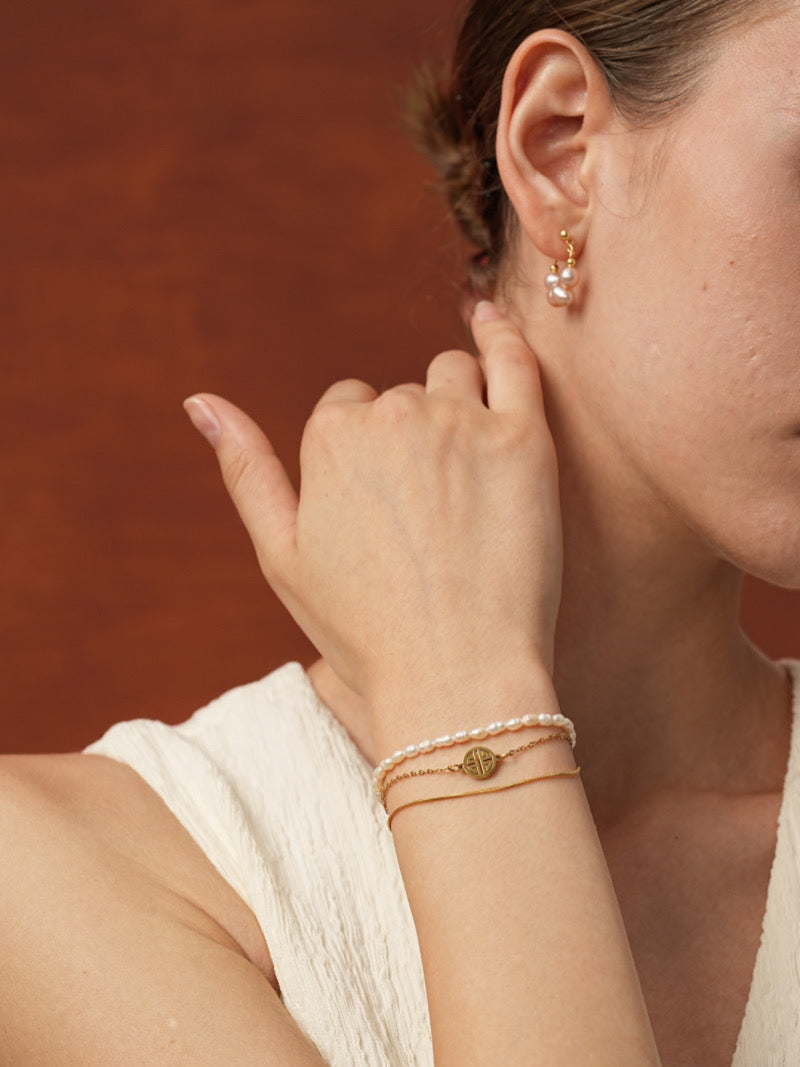
Keep one piece as the anchor and let the others sit quieter. A beaded strand stacks well with a fine chain and a watch. Avoid two chunky pieces on the same wrist, since neither gets room to read.
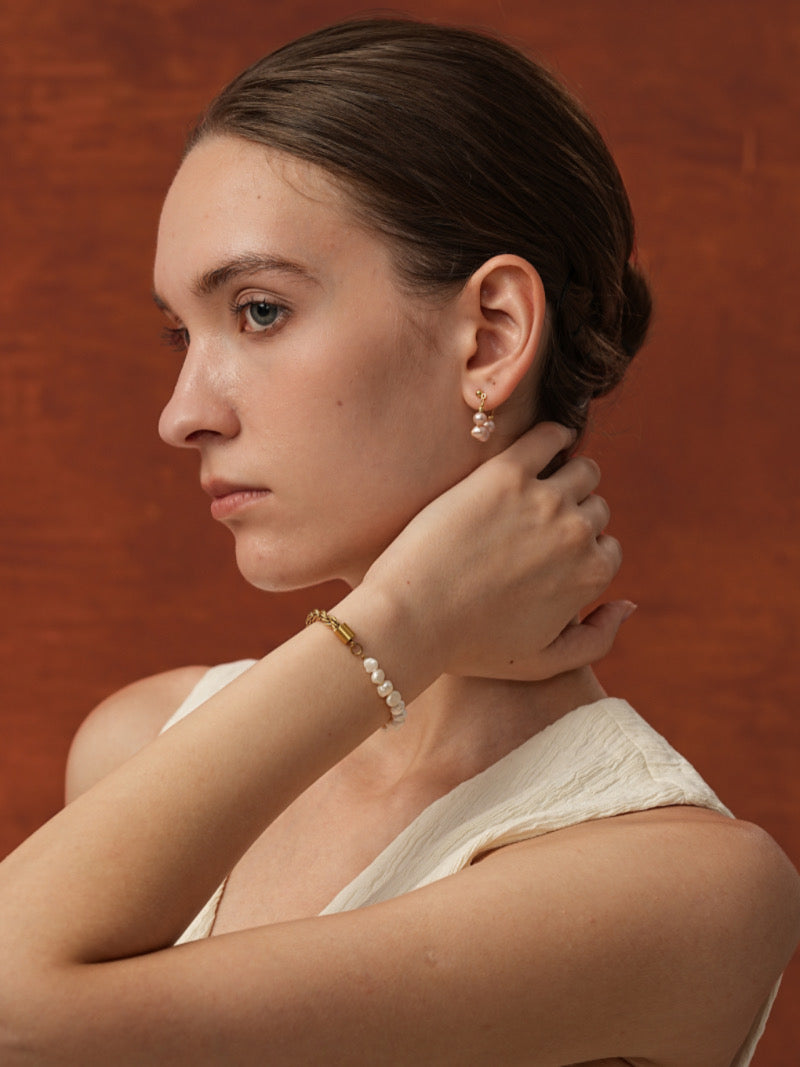
Put the pearls furthest from your hand, so they take less contact from desks and bag straps than the metal pieces do.
Why buy a freshwater pearl bracelet from Grande Lilith
- Origin named: Zhuji, China. Not a vague claim about responsible sourcing with no place attached.
- Eight provenance markers on every product page, including grade and treatment.
- Partners vetted by our GIA-certified pearl specialist, on working conditions as well as quality.
- Nickel-free, lead-free and cadmium-free clasps and findings, on the piece that touches your skin longest.
- Designed in Paris. Thirty days to change your mind, and every order arrives in a magnetic pouch.
Frequently asked questions
Can you wear a freshwater pearl bracelet every day?
Yes, with two habits. Take it off before washing dishes or applying hand cream, and choose a chain or slider construction if you work with your hands. Nacre dulls with repeated exposure to detergent and acid.
Should the pearls be knotted between beads?
On a strung bracelet, knotting stops the pearls rubbing against each other and prevents a total loss if the thread breaks. Bracelets set on chain do not need it, since each pearl is held individually.
Why are freshwater pearl bracelets less expensive?
A freshwater mussel can produce many pearls per cycle, while an Akoya or South Sea oyster produces one. Higher yield means a lower price, not lower quality. What you give up is perfect roundness, not nacre.
Which wrist should you wear it on?
Your non-dominant wrist takes less contact, which suits a pearl bracelet. If you wear a watch there already, put the bracelet on the other side or stack it above the watch face rather than below it.
Is a pearl bracelet a good gift?
It is one of the easier pieces to give, because wrist size is more forgiving than ring size and there is no neckline to consider. Slider and cuff styles remove the sizing question entirely.