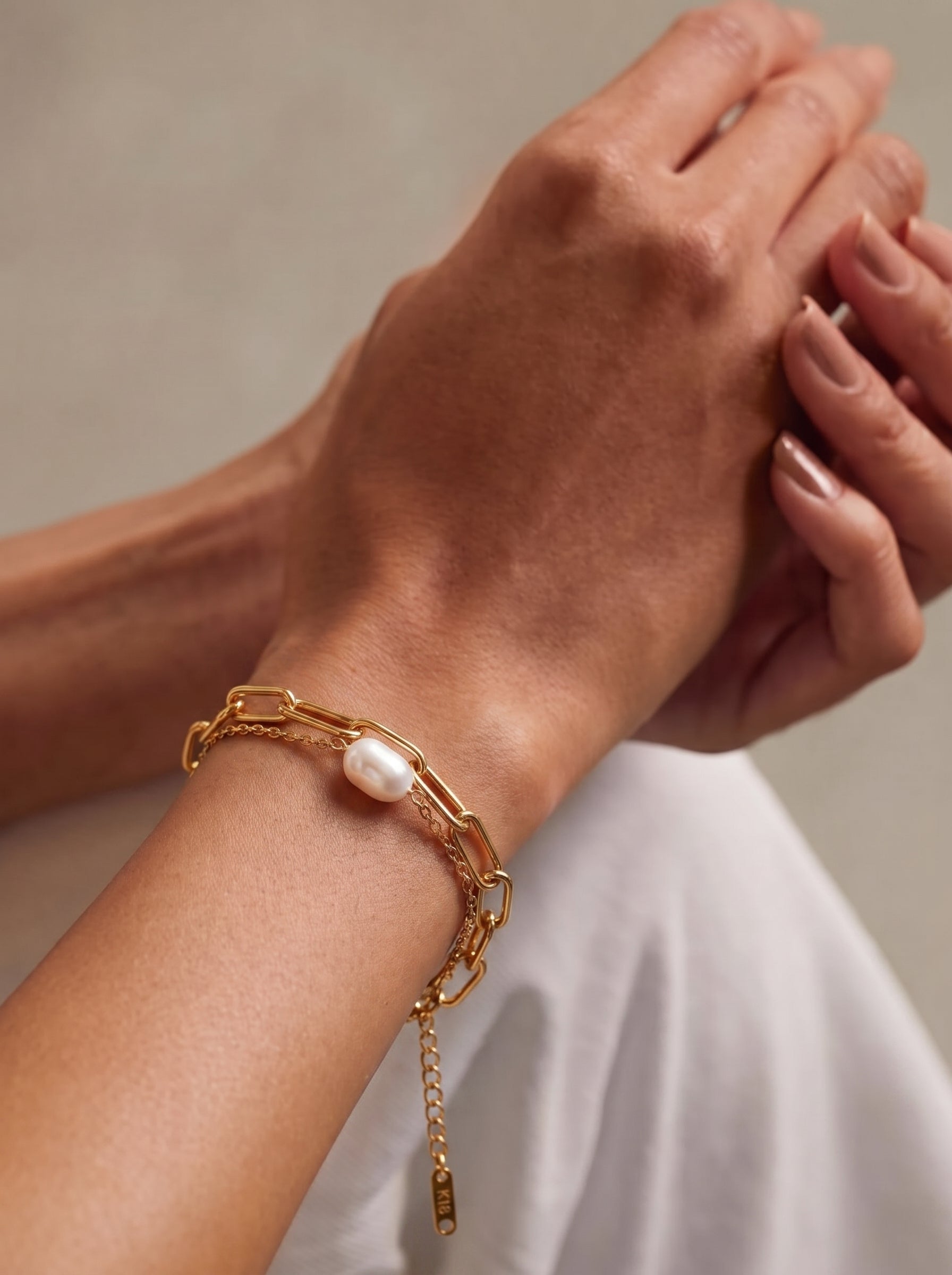
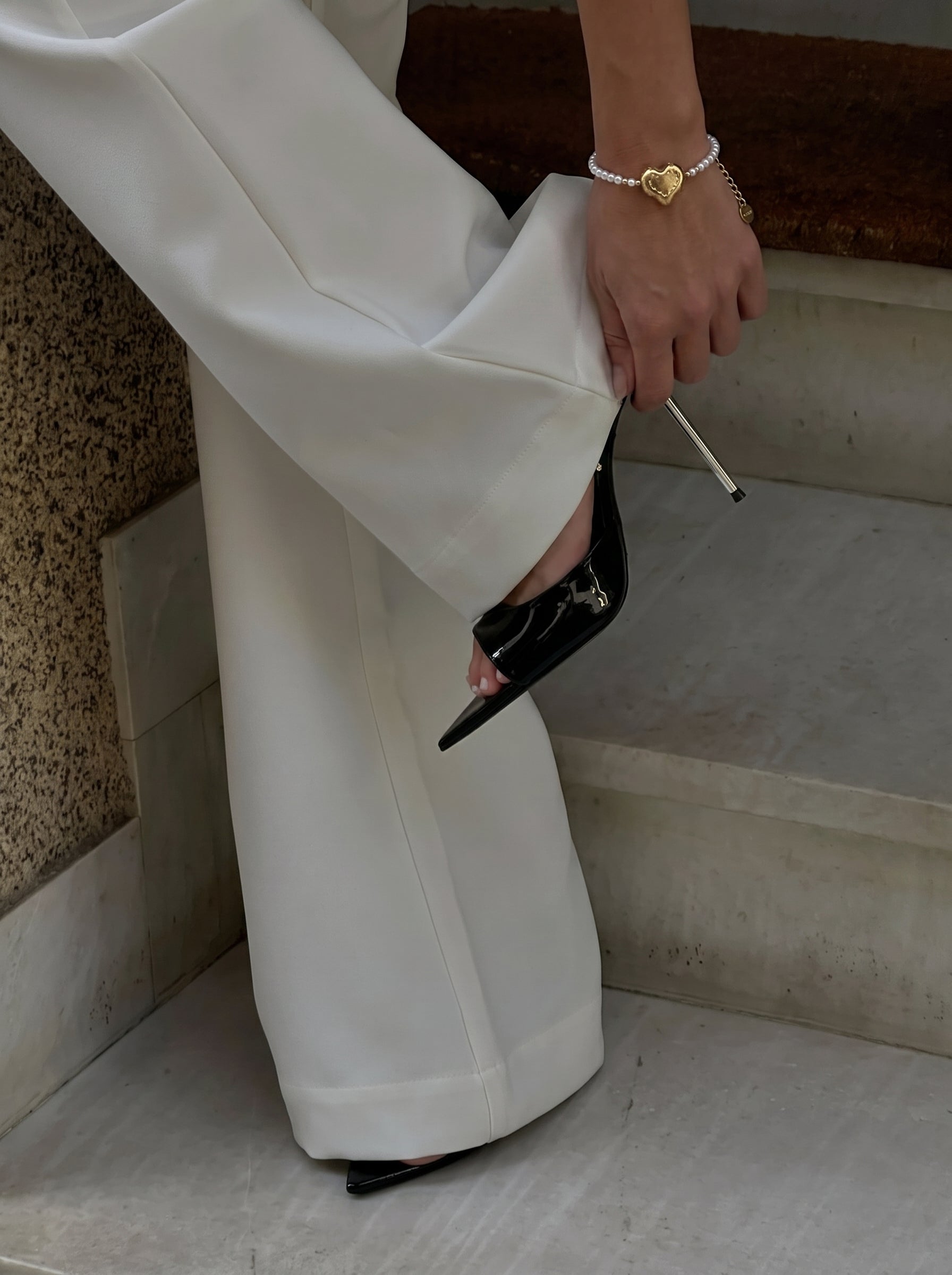
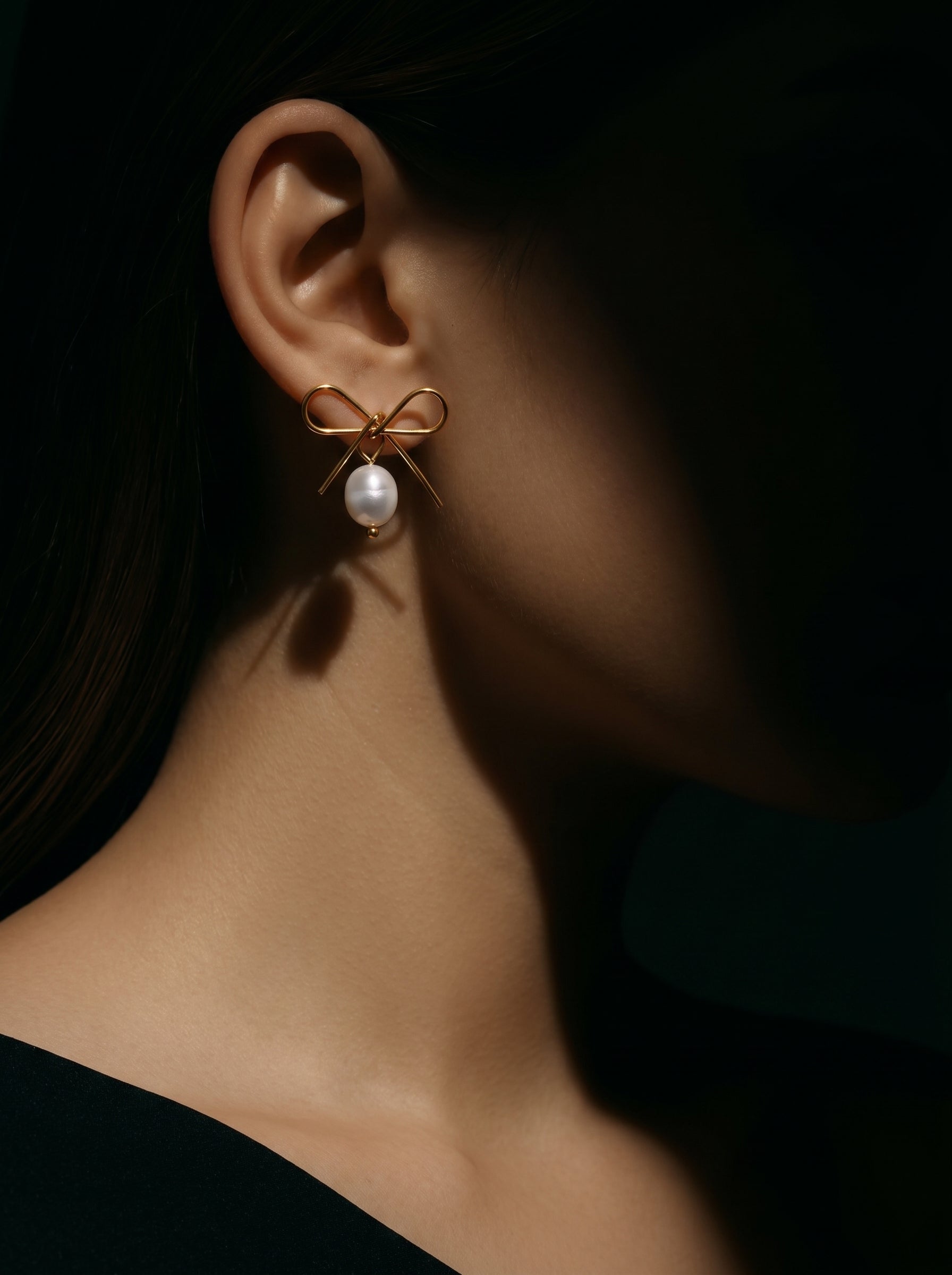
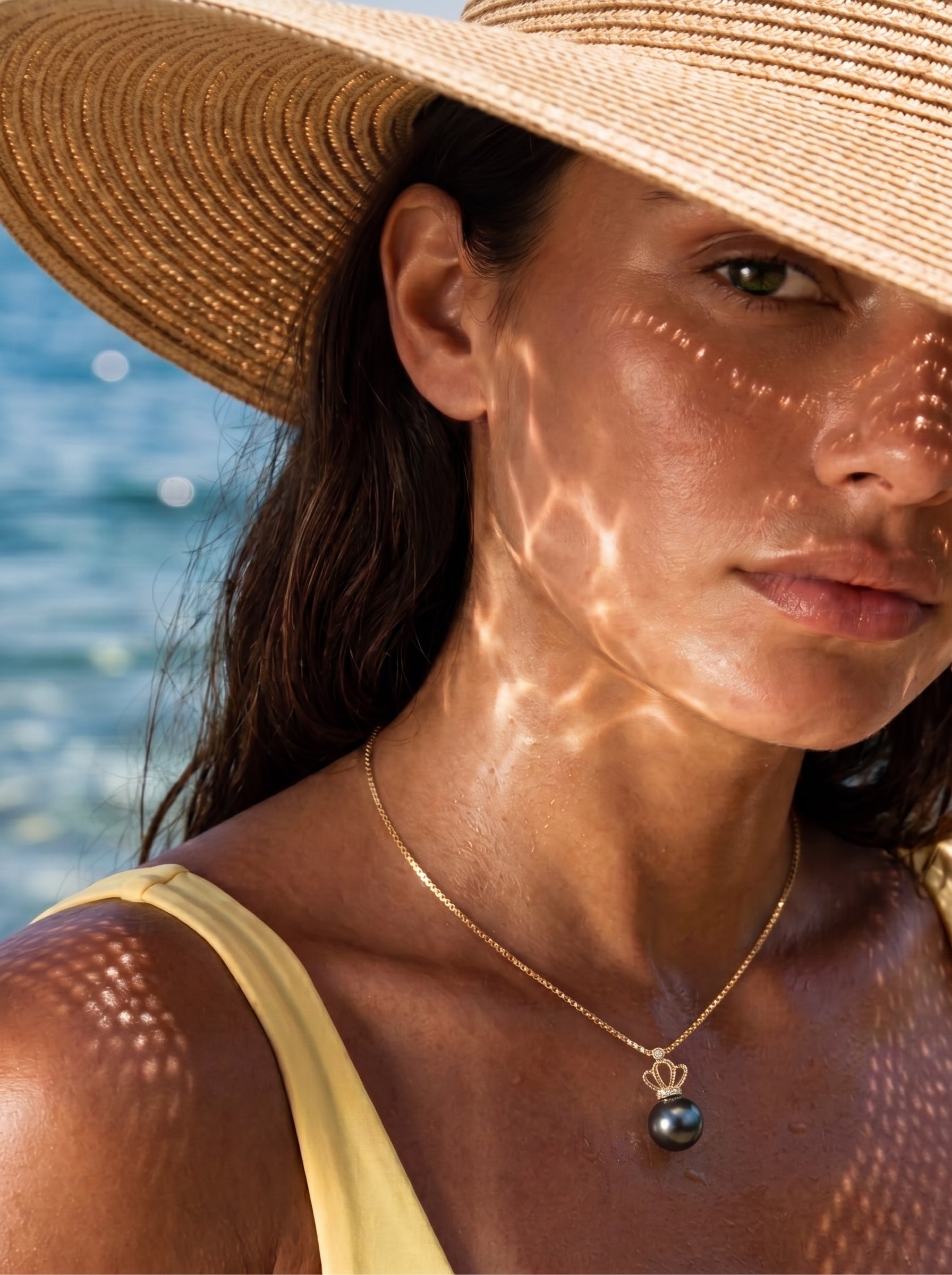
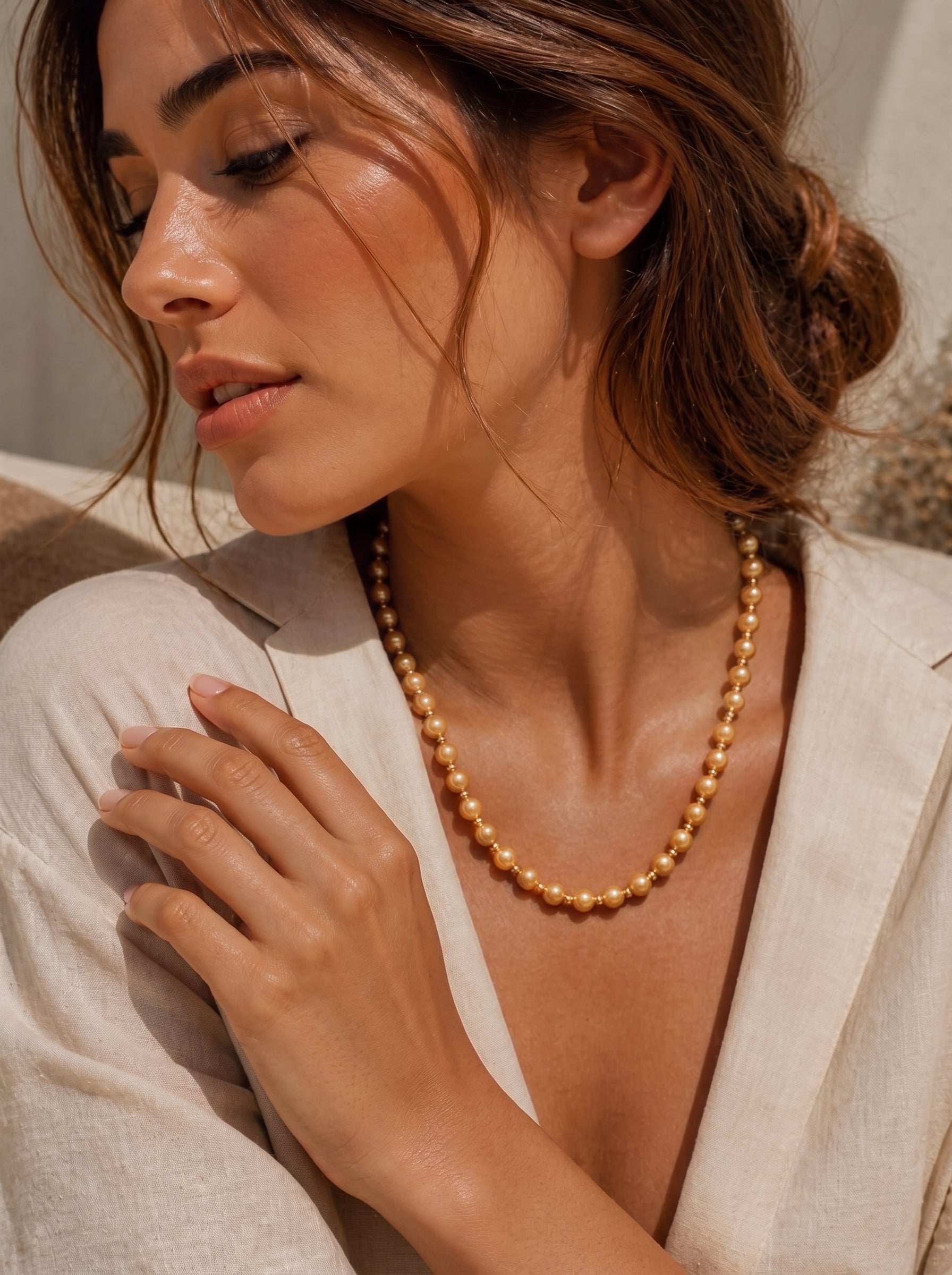
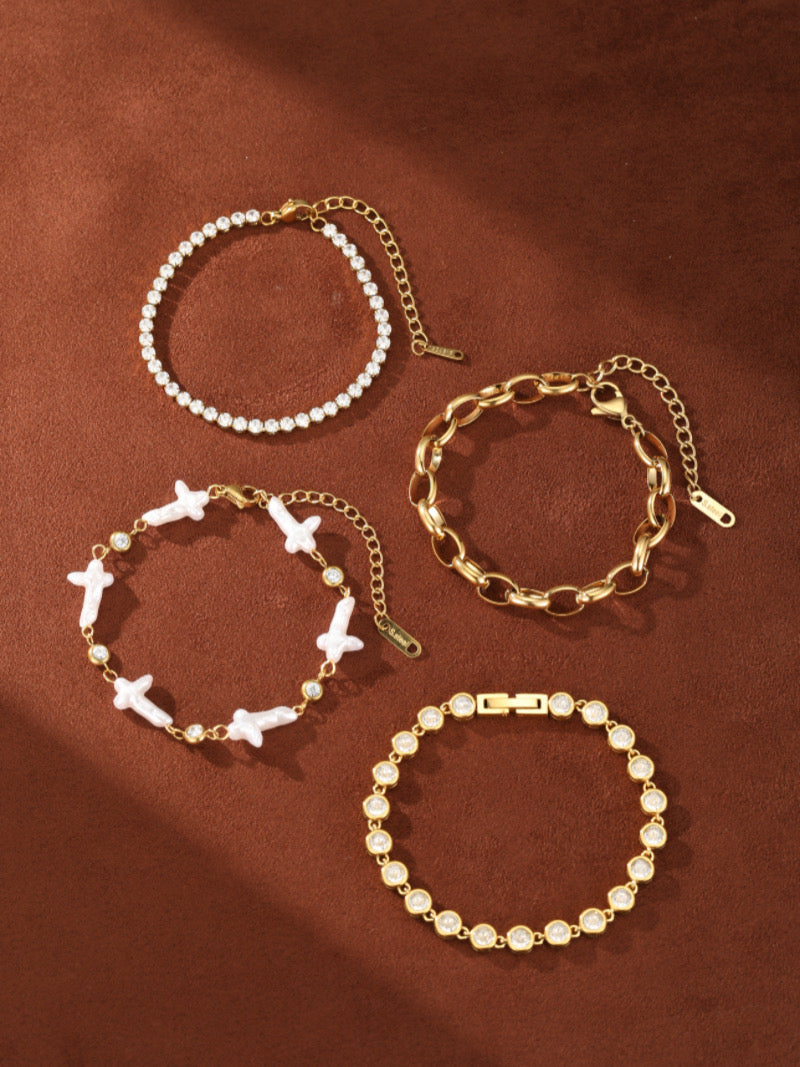
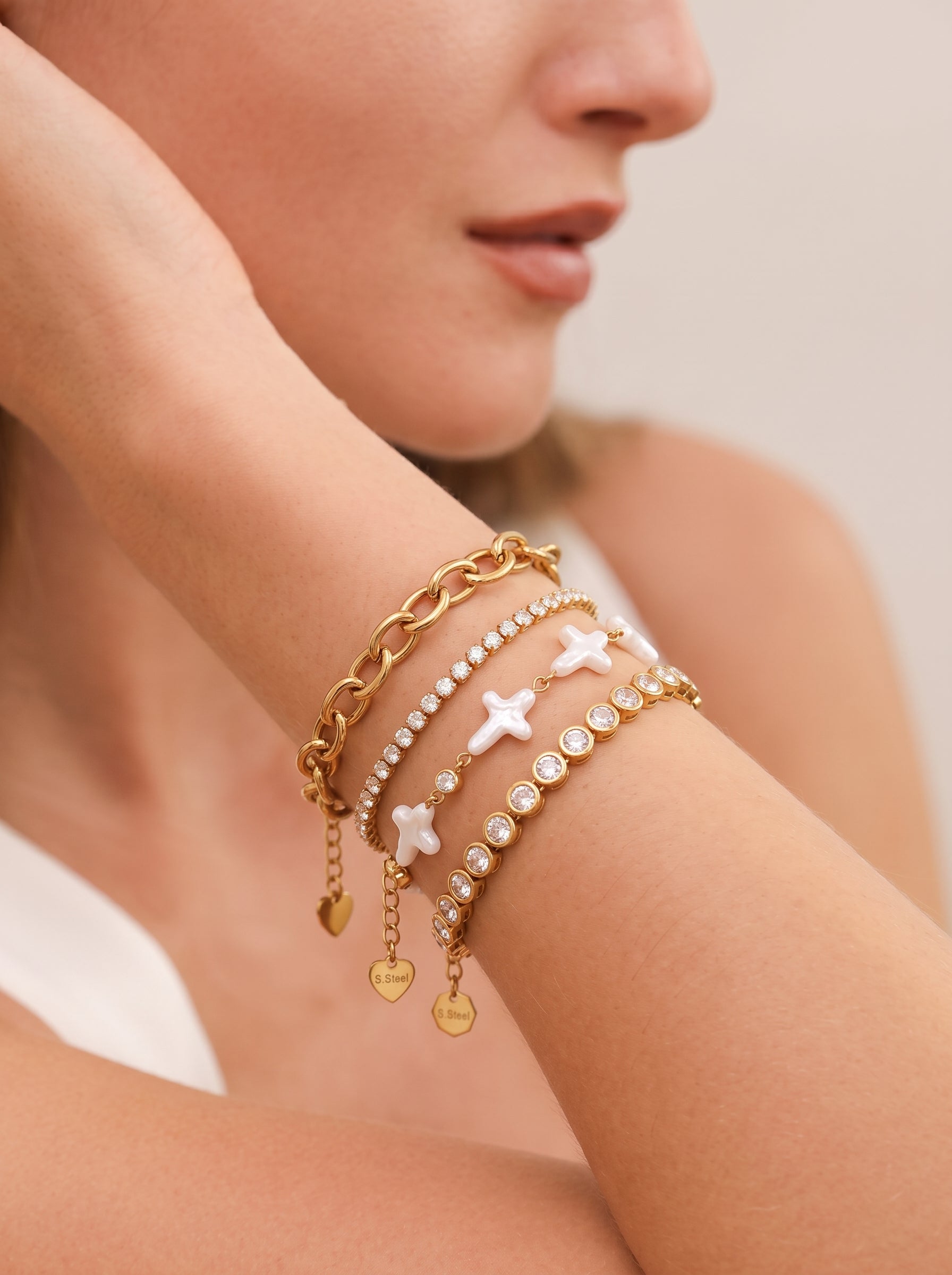
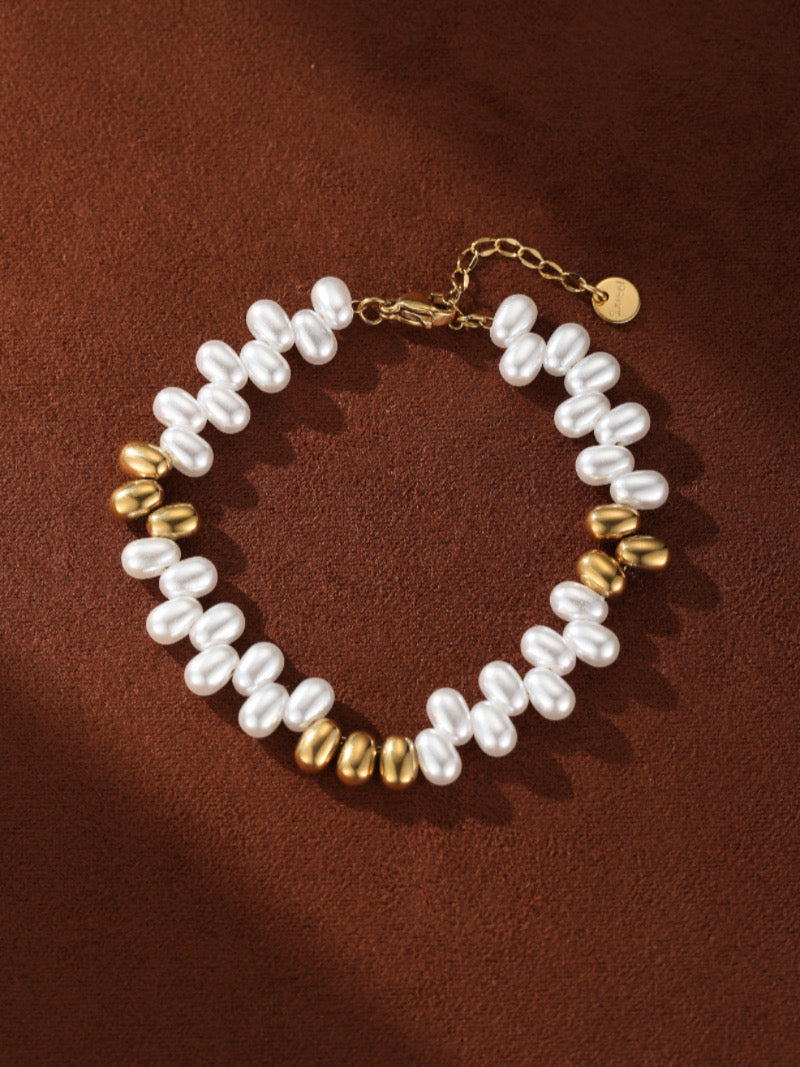
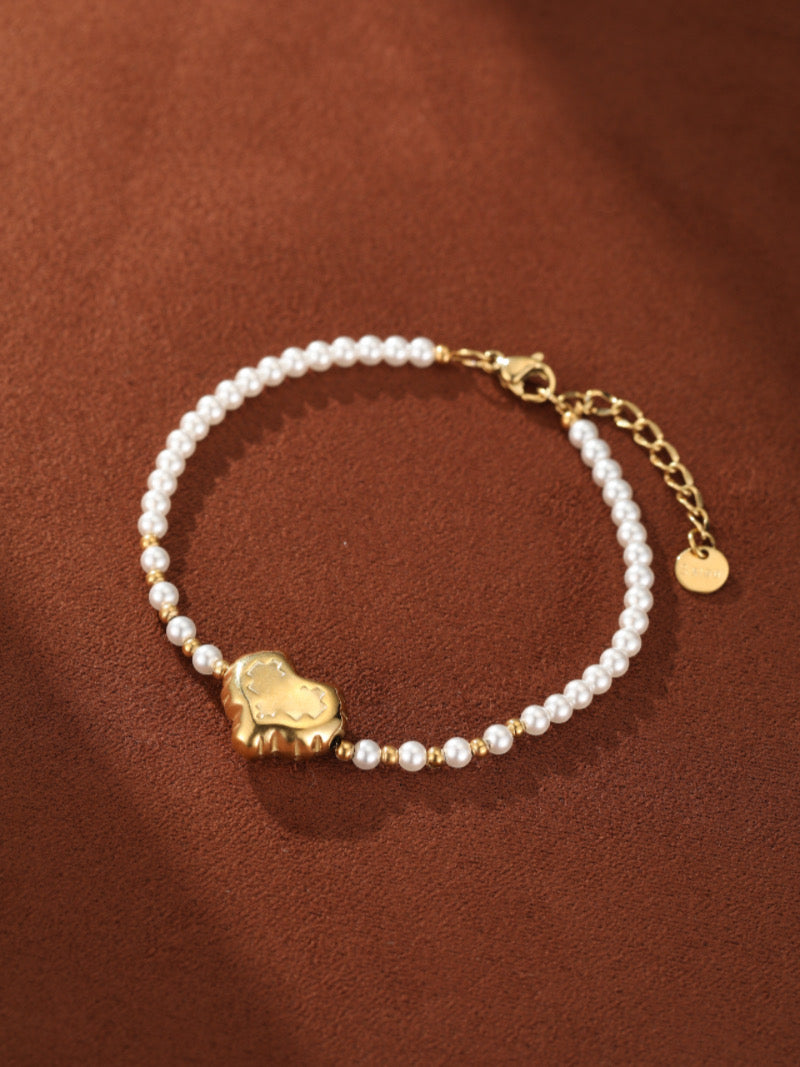
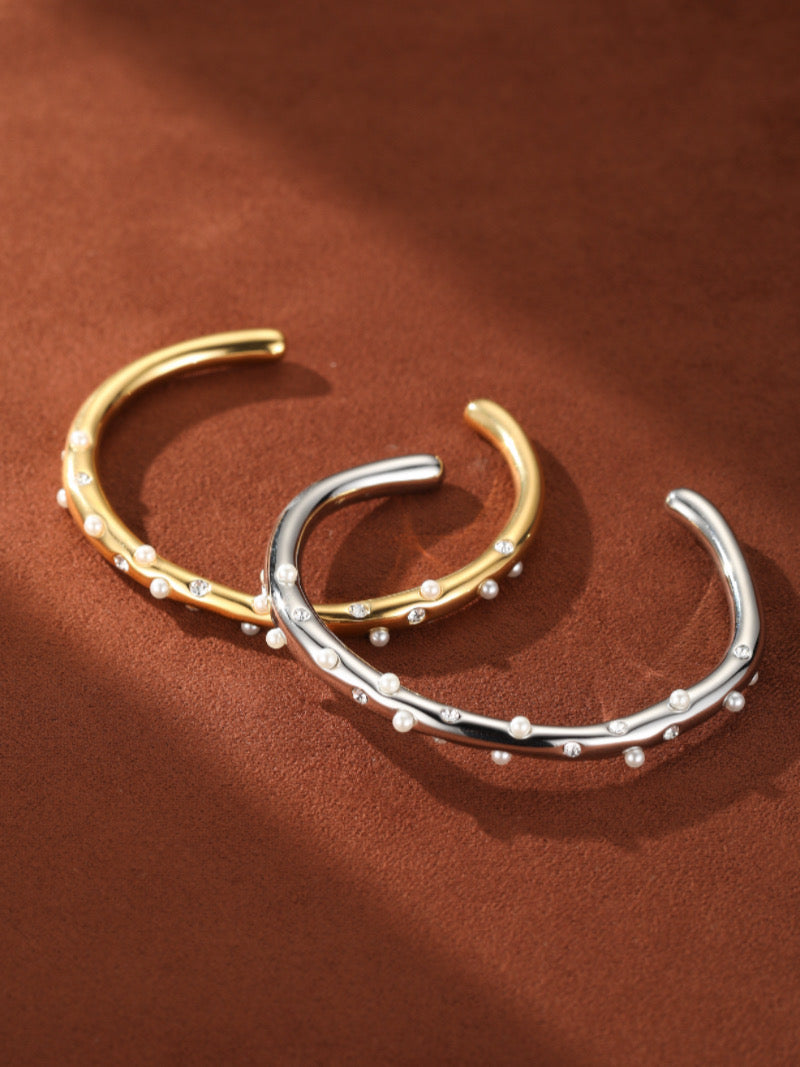
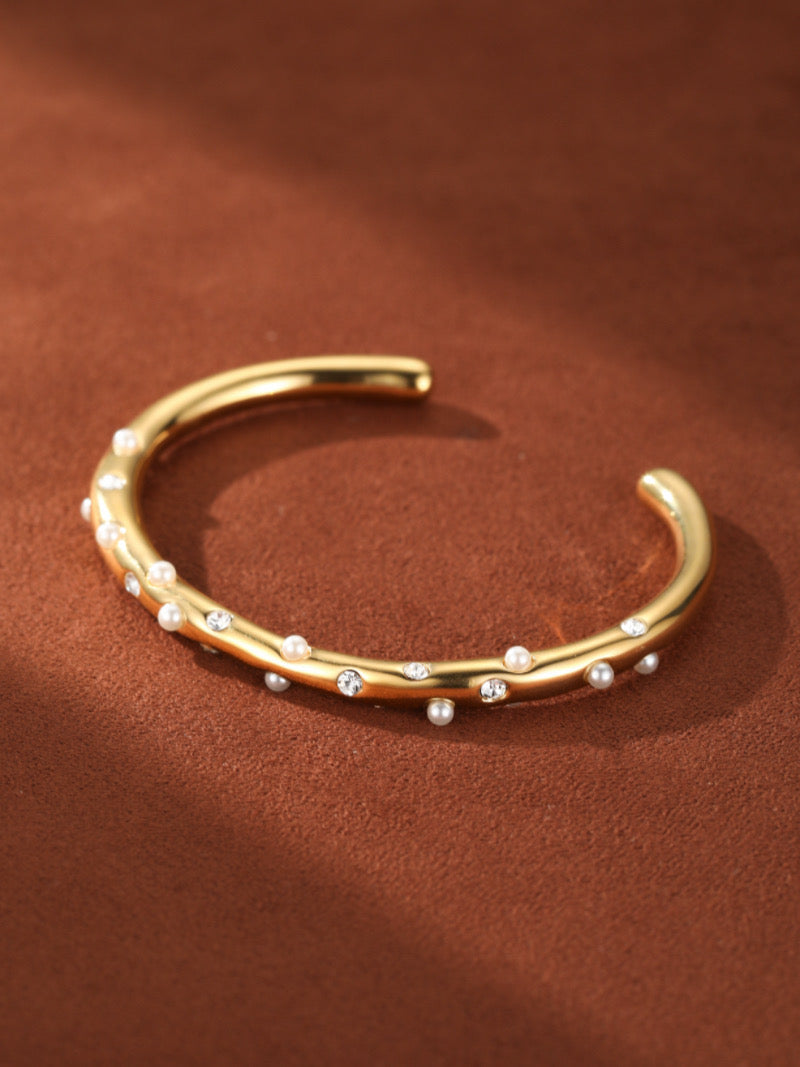
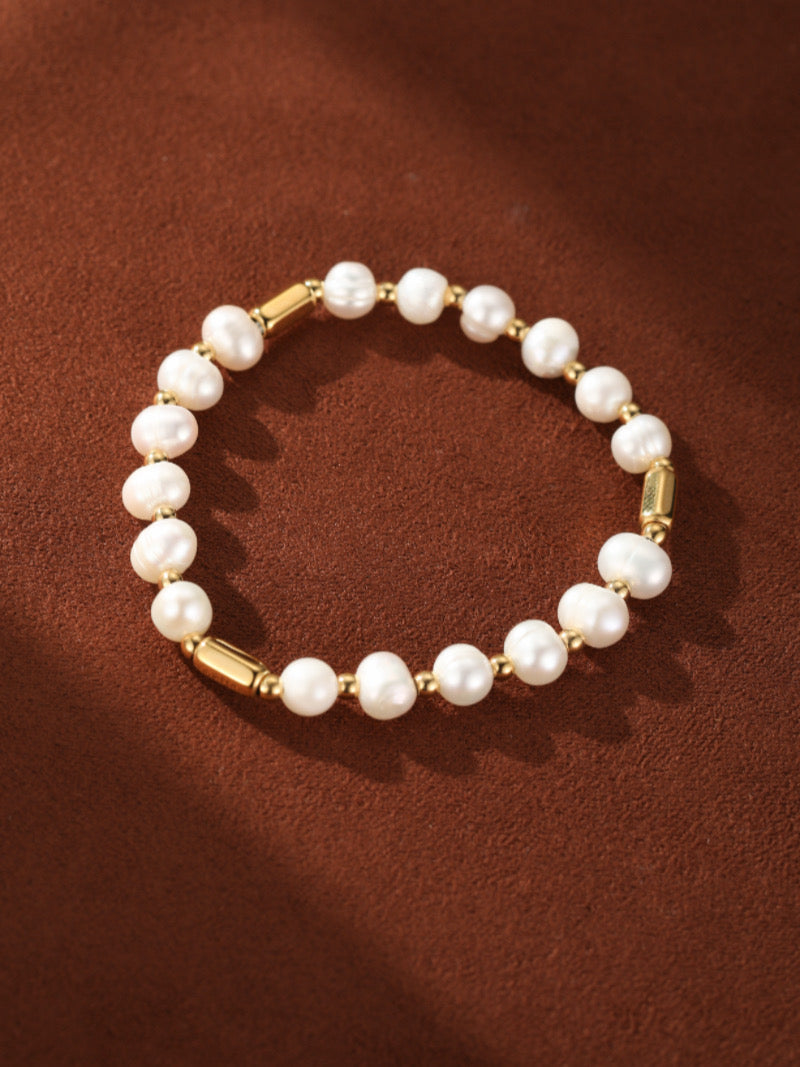
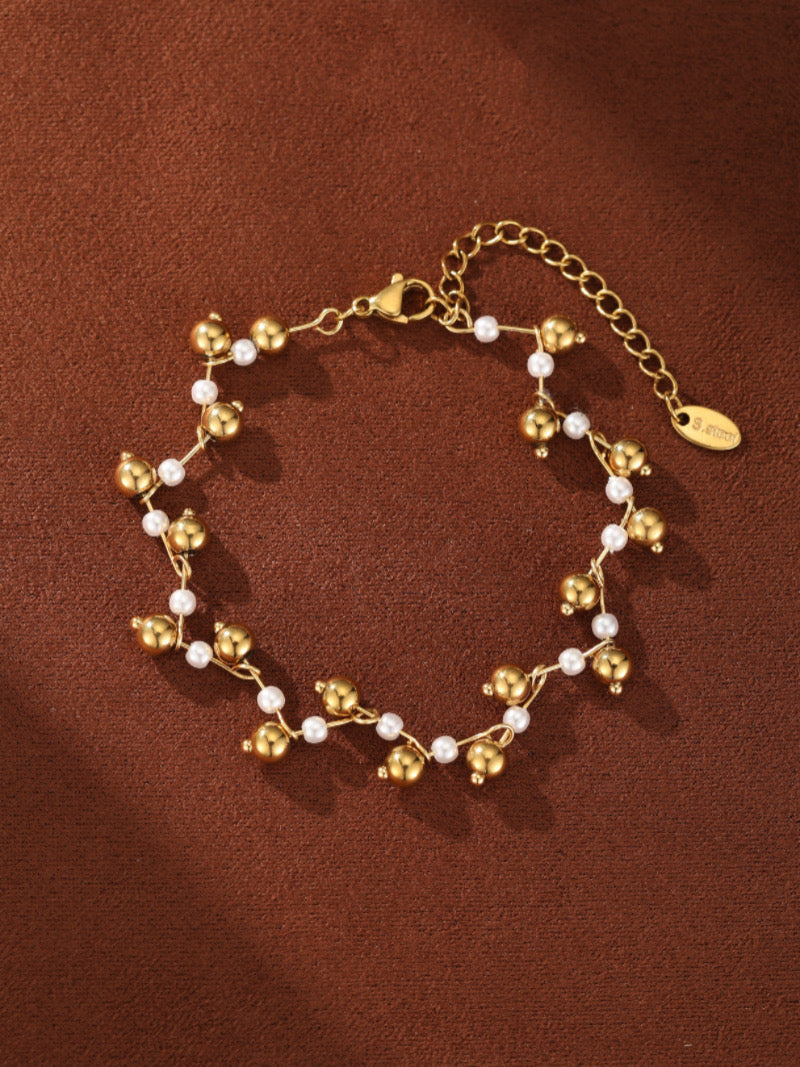
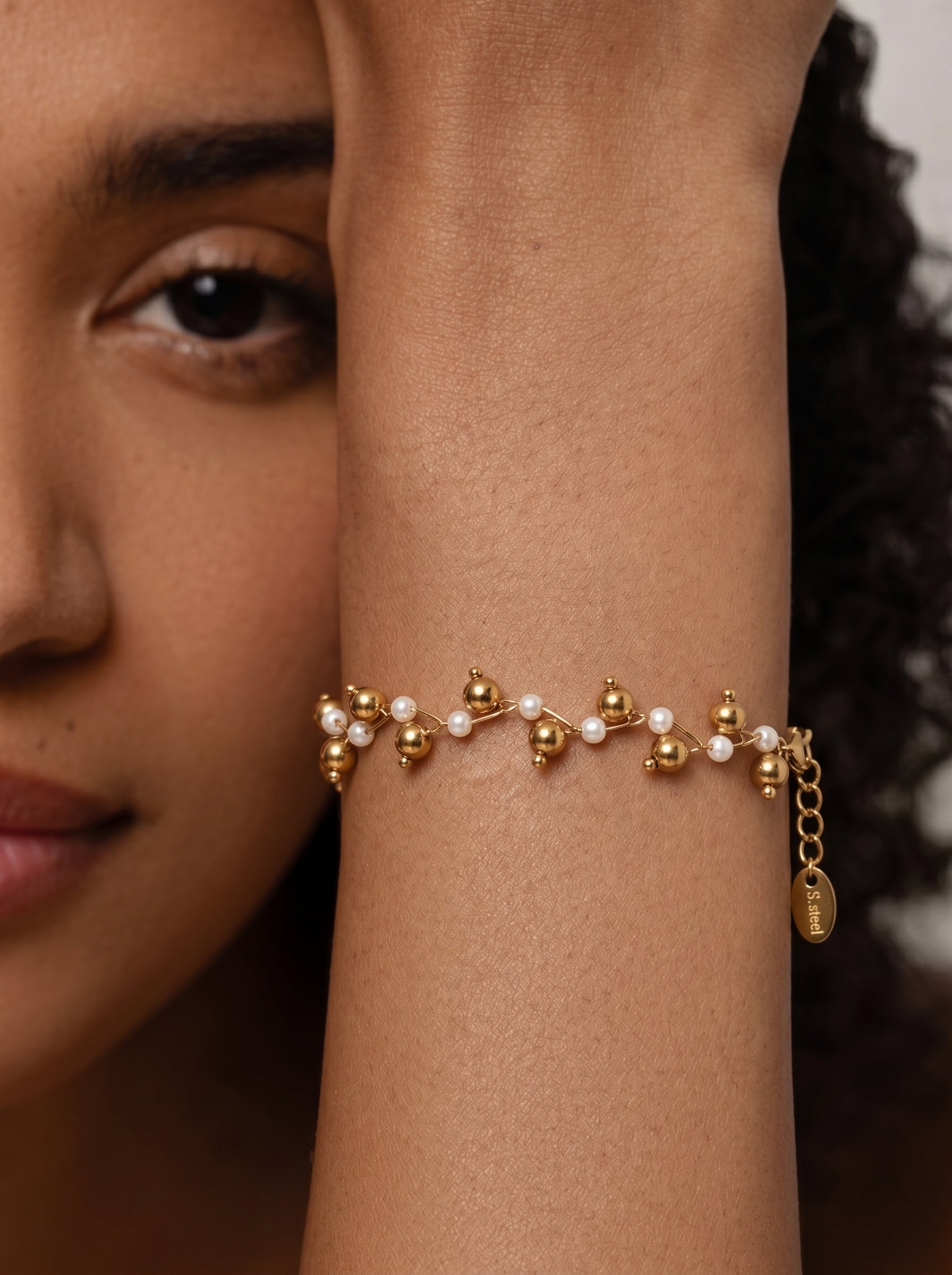
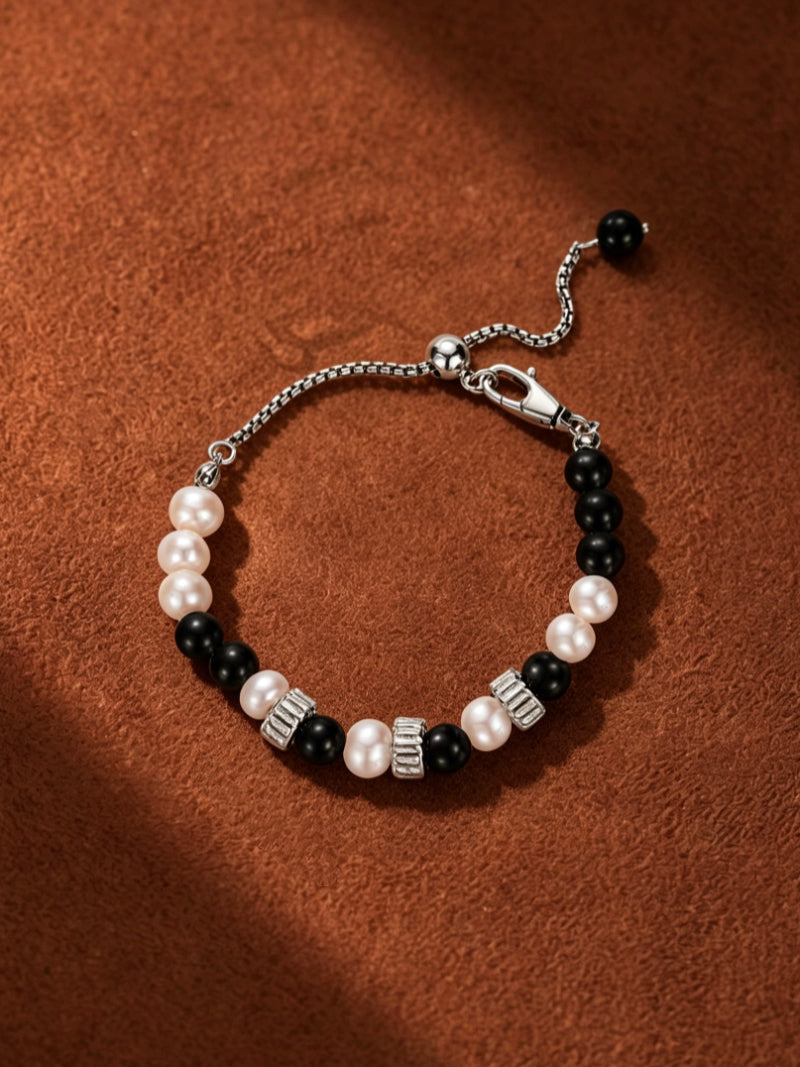
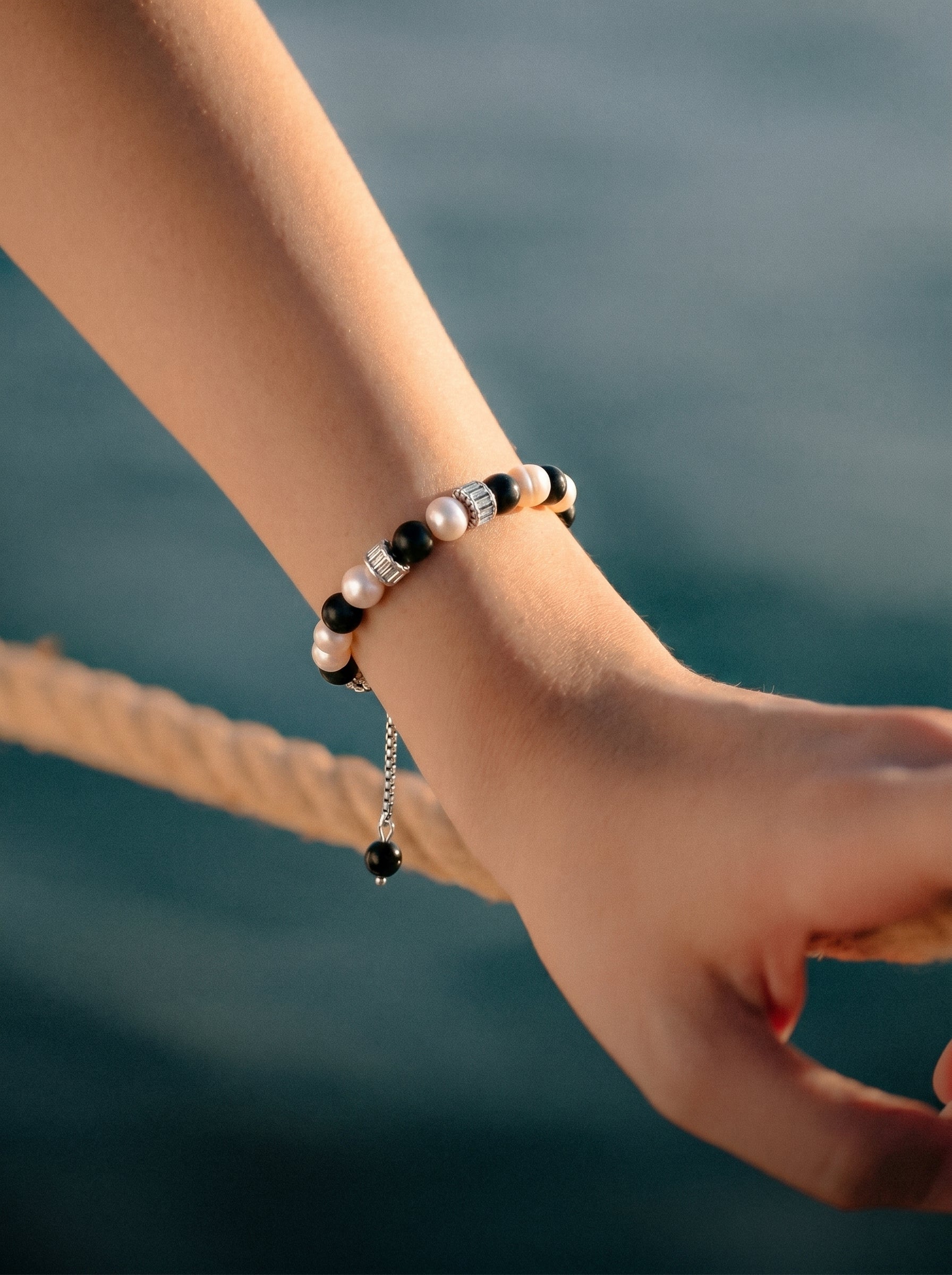
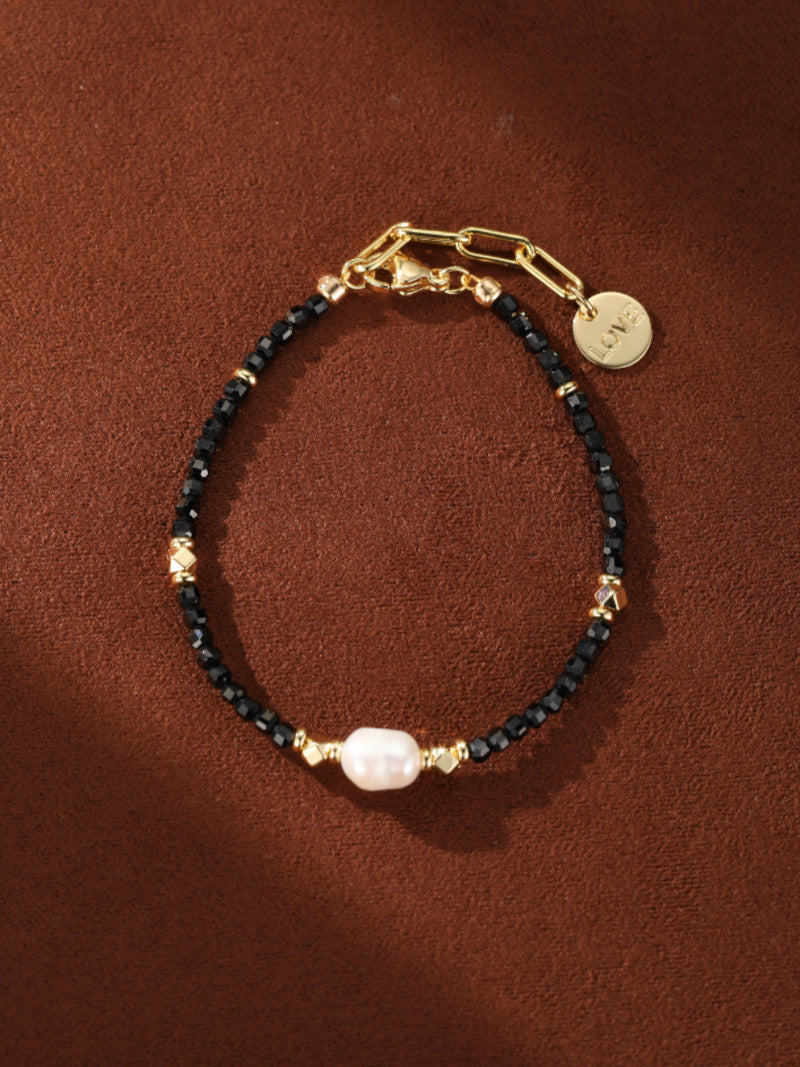
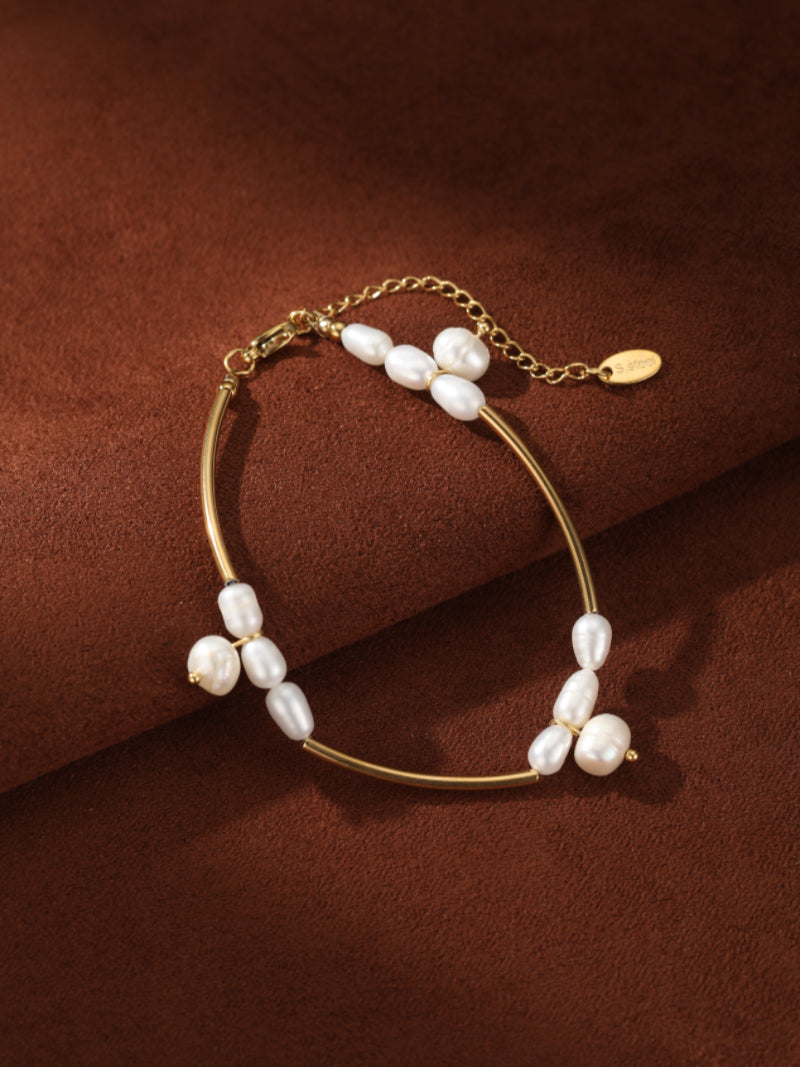
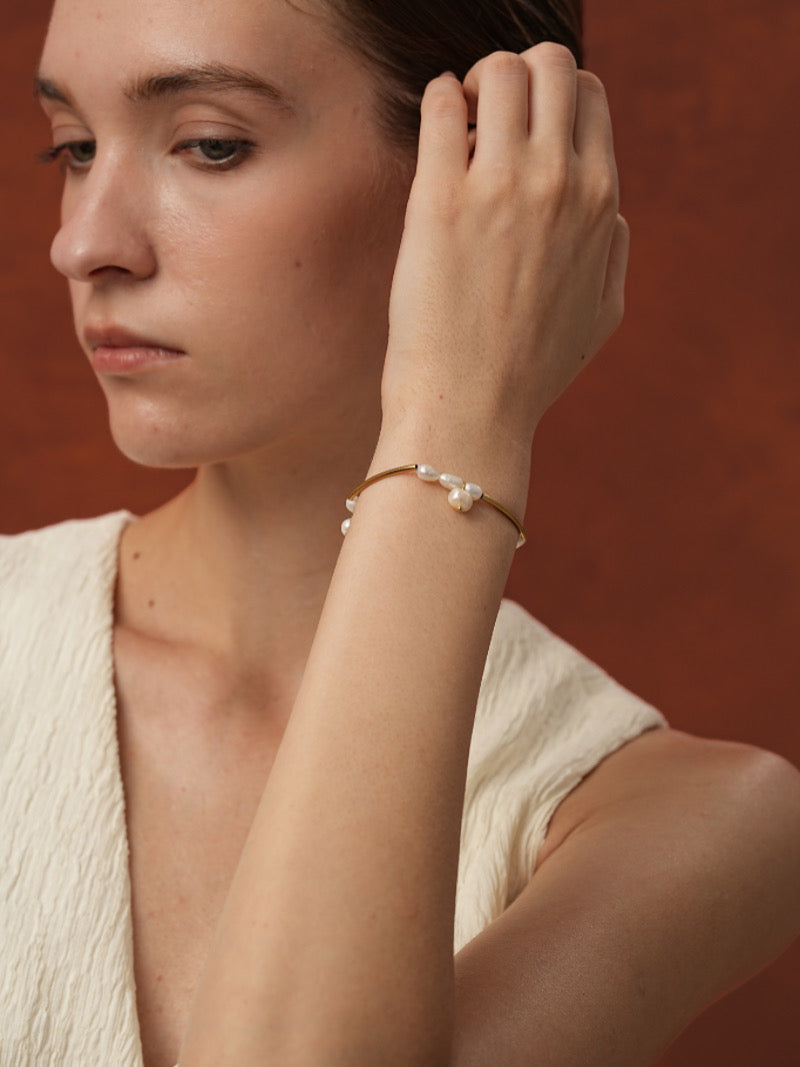
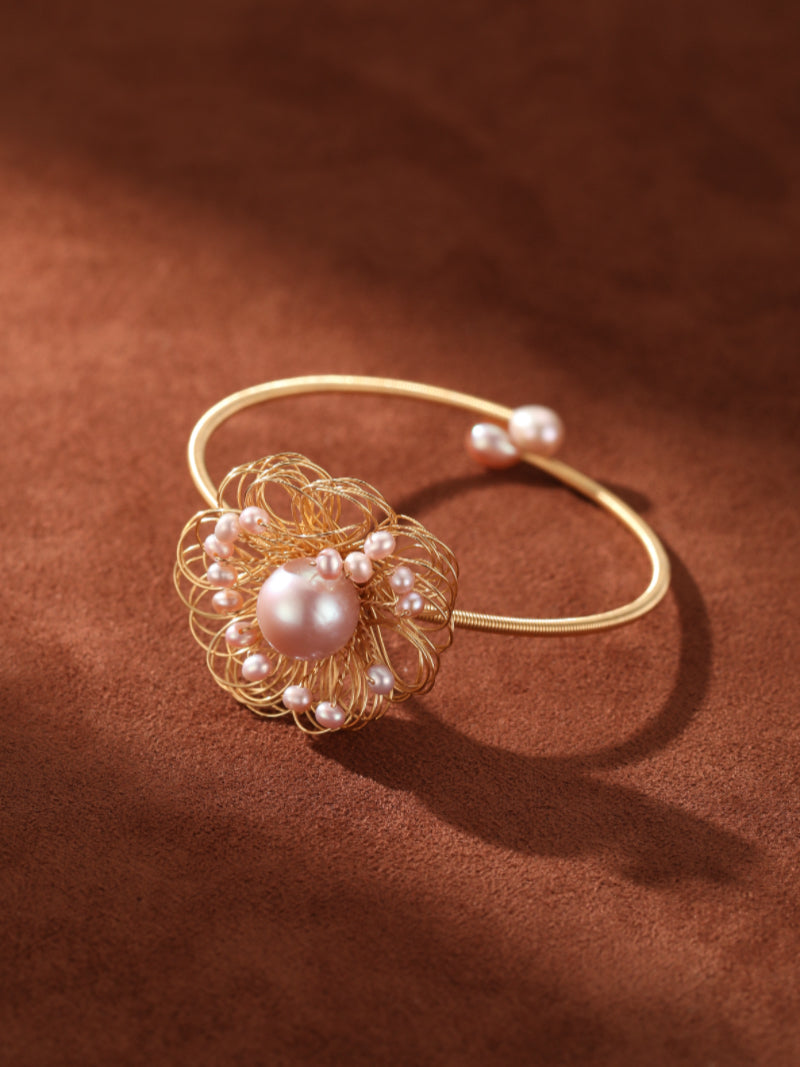
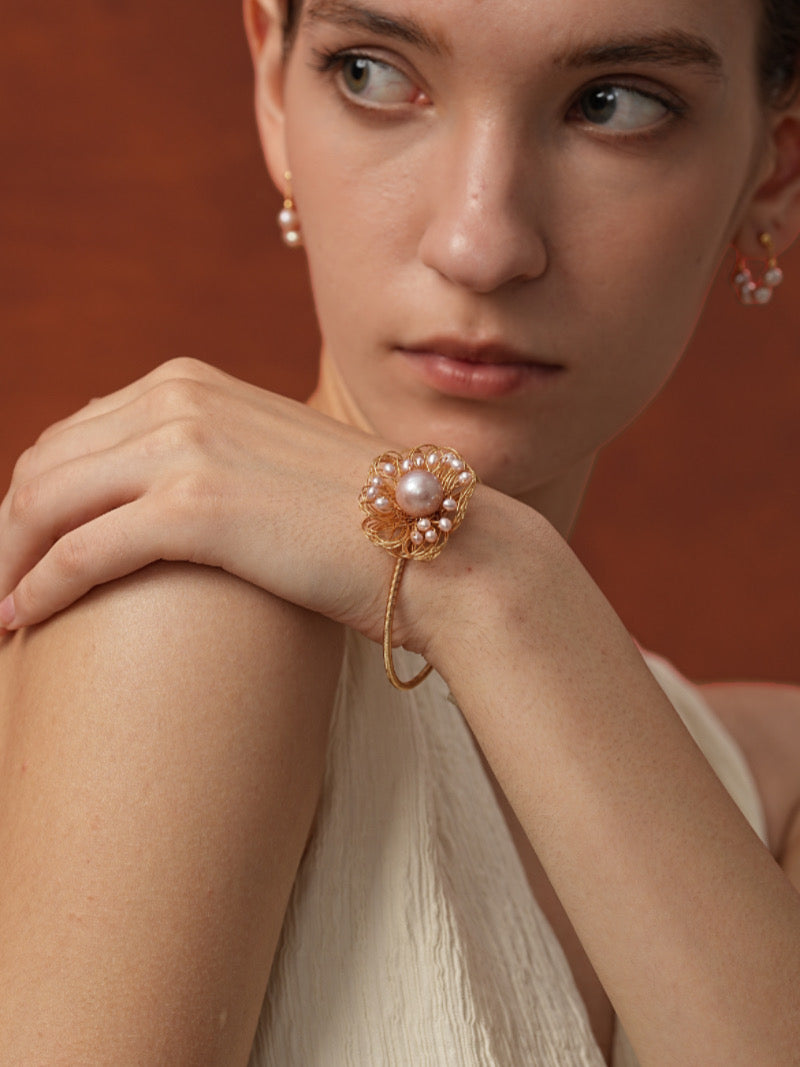
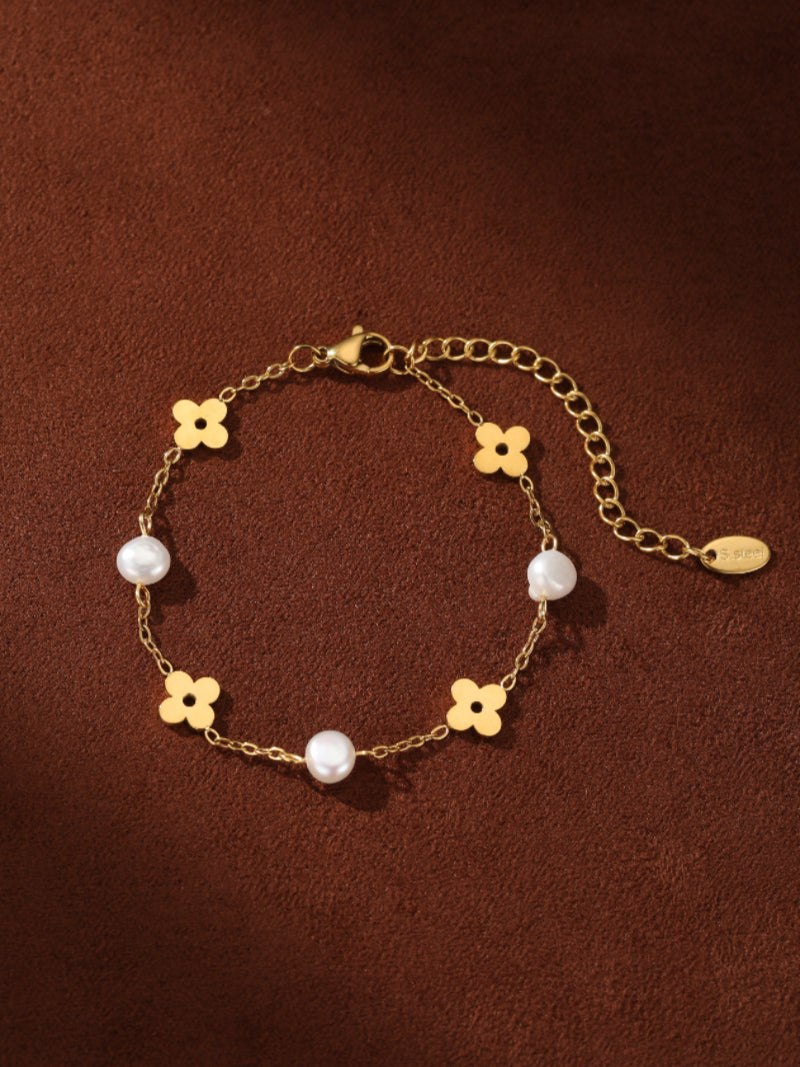
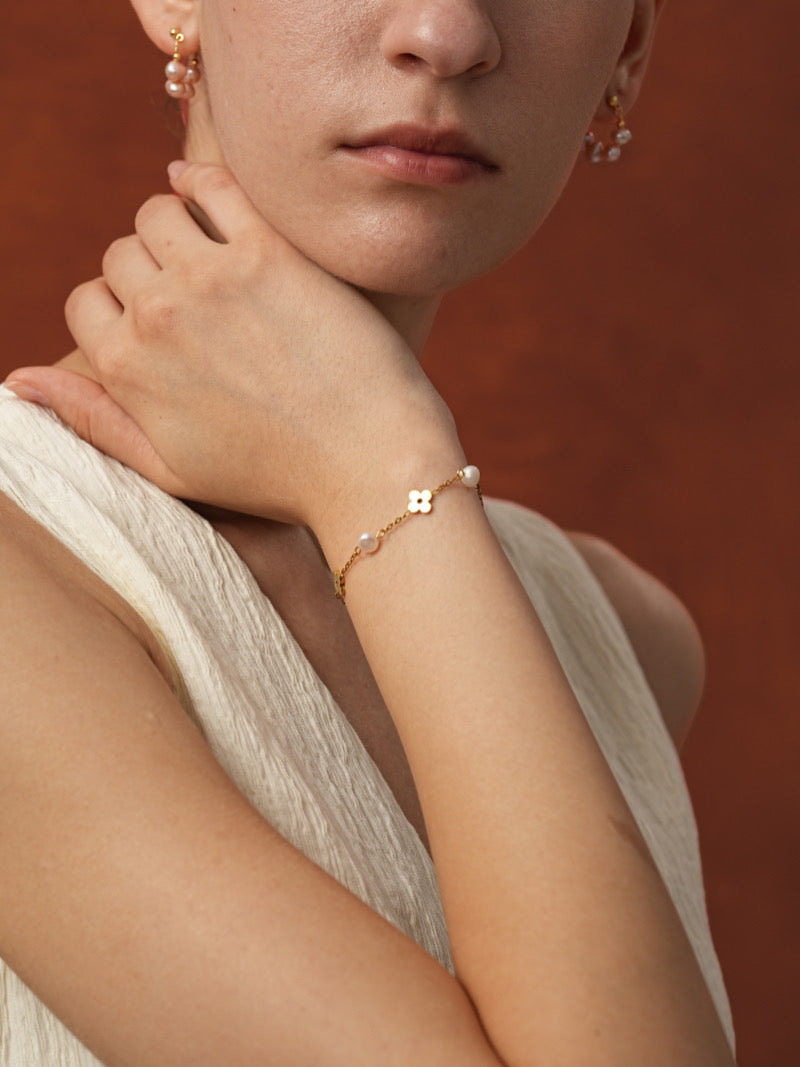
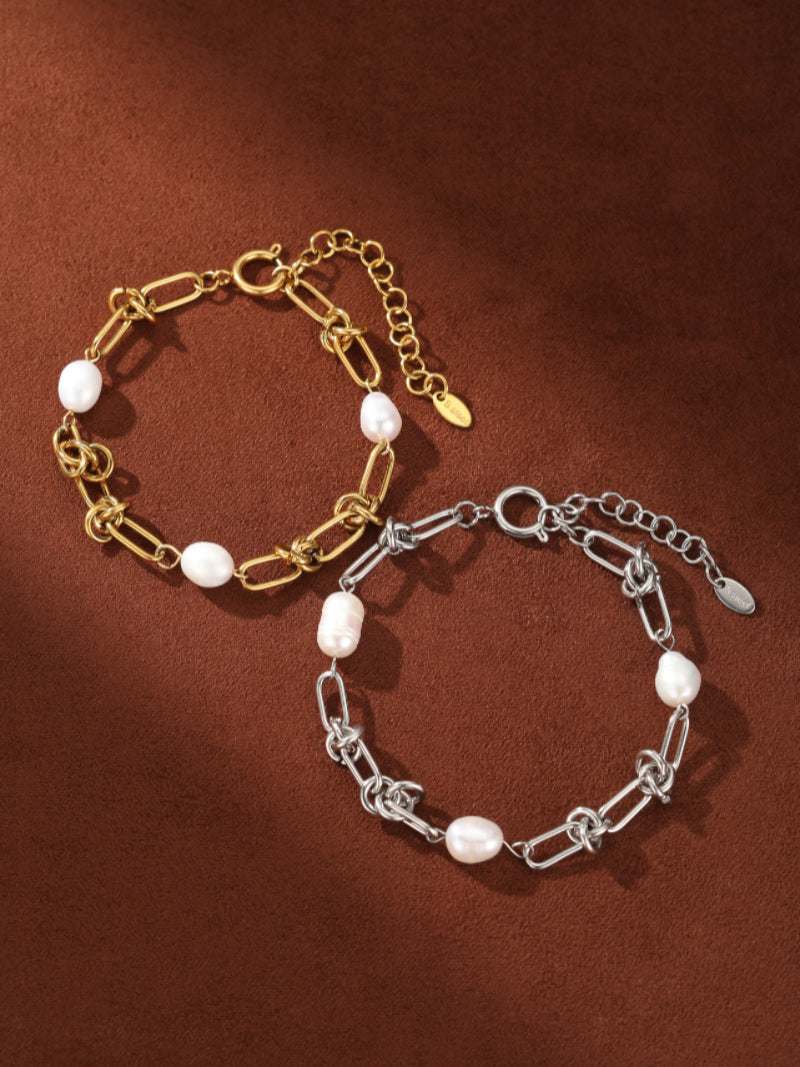
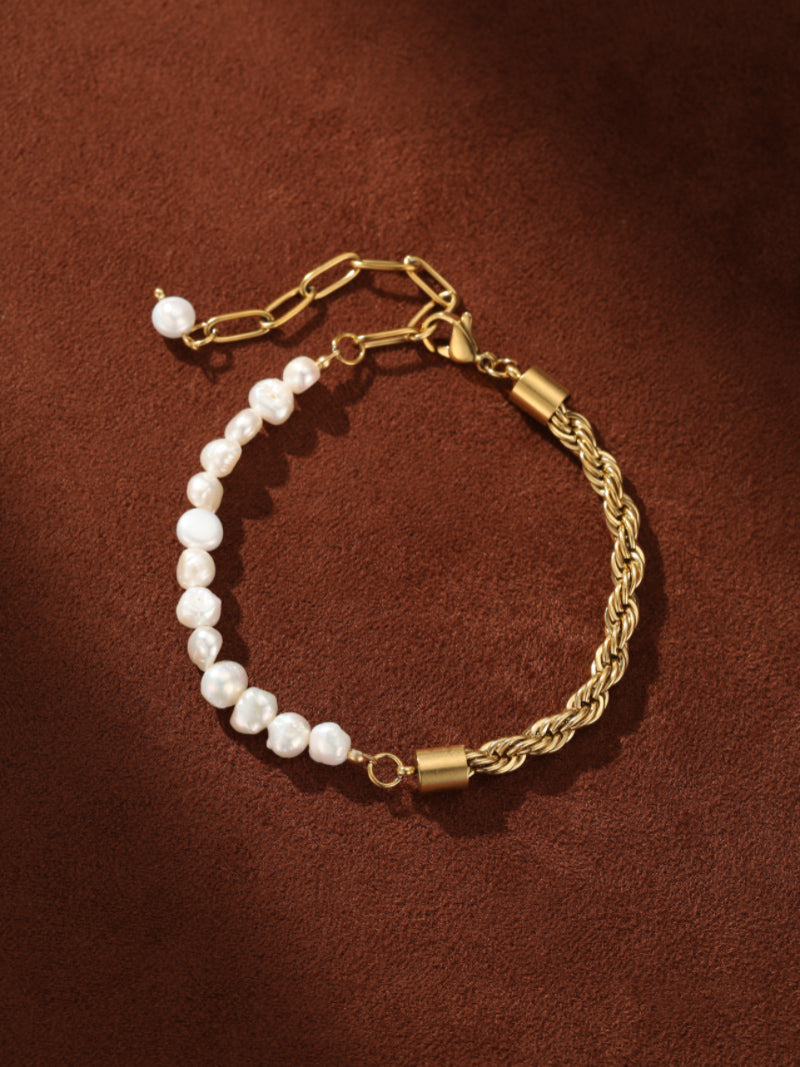
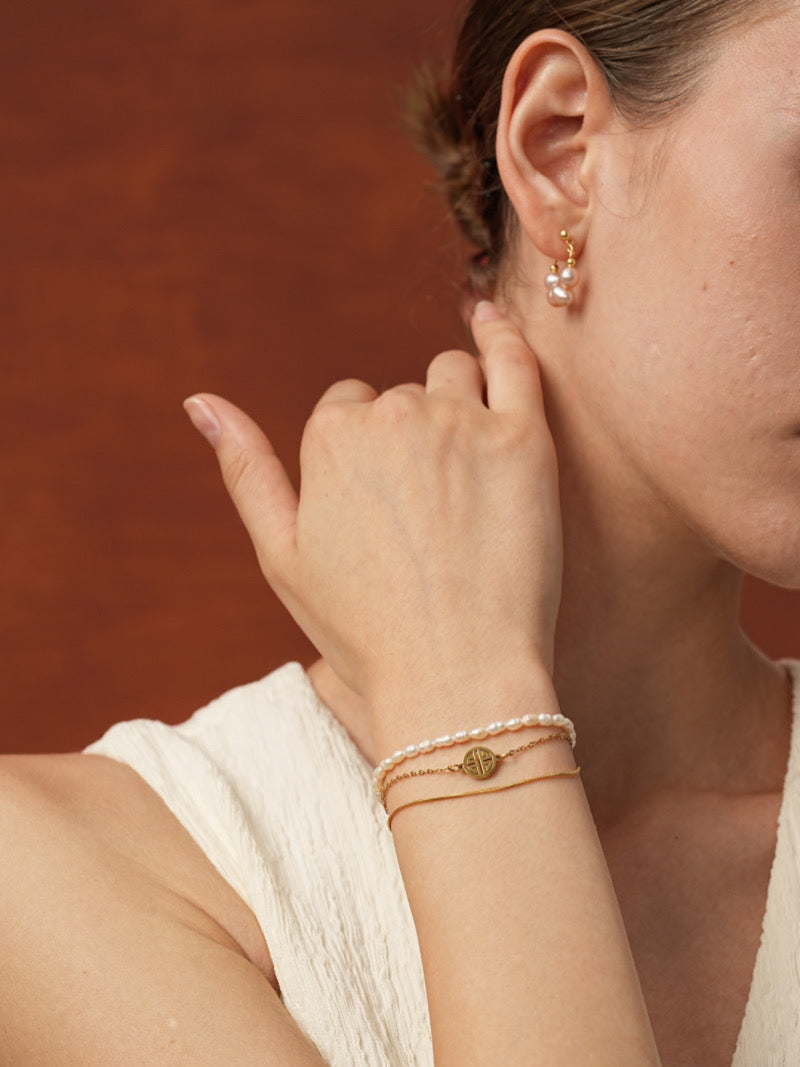
A pearl bracelet is the one piece you see yourself, all day, at the edge of your own field of view. That makes it more personal than a necklace and more forgiving than a ring. This collection covers cuffs, beaded strands, tennis lines and chunky links across every pearl type and metal we set.
What is a pearl bracelet?
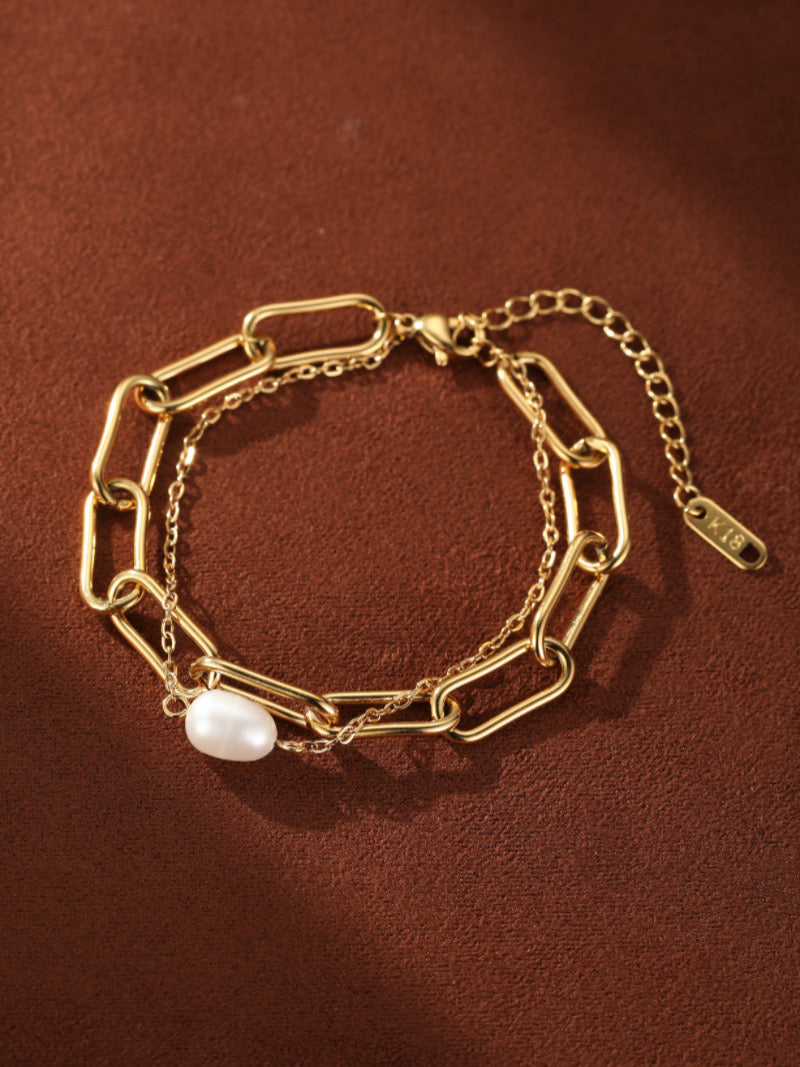
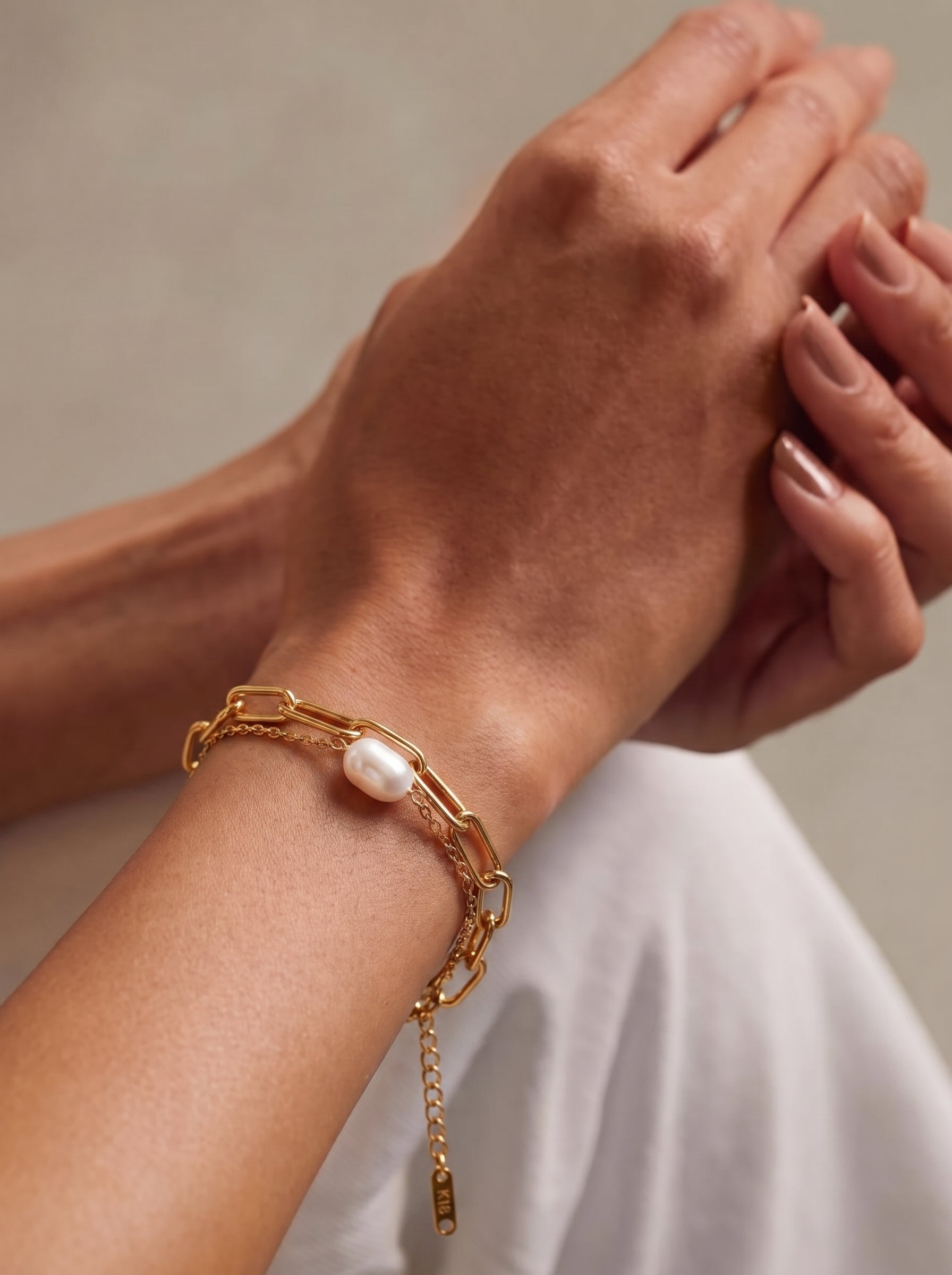
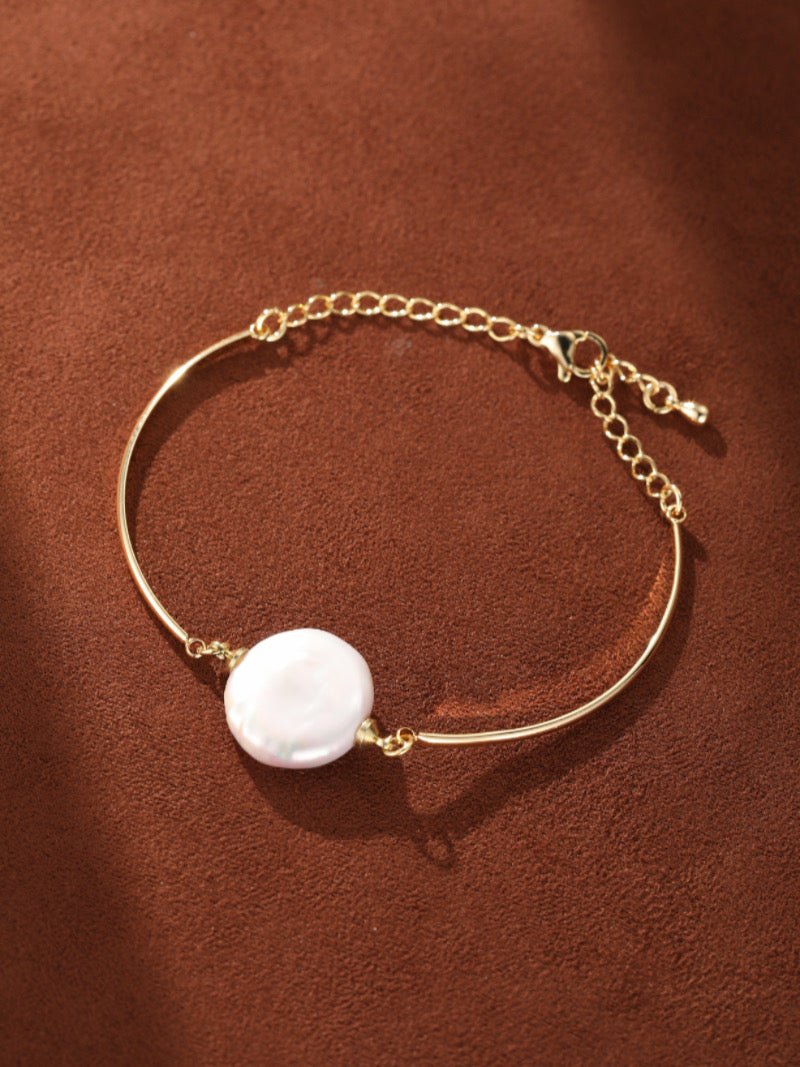
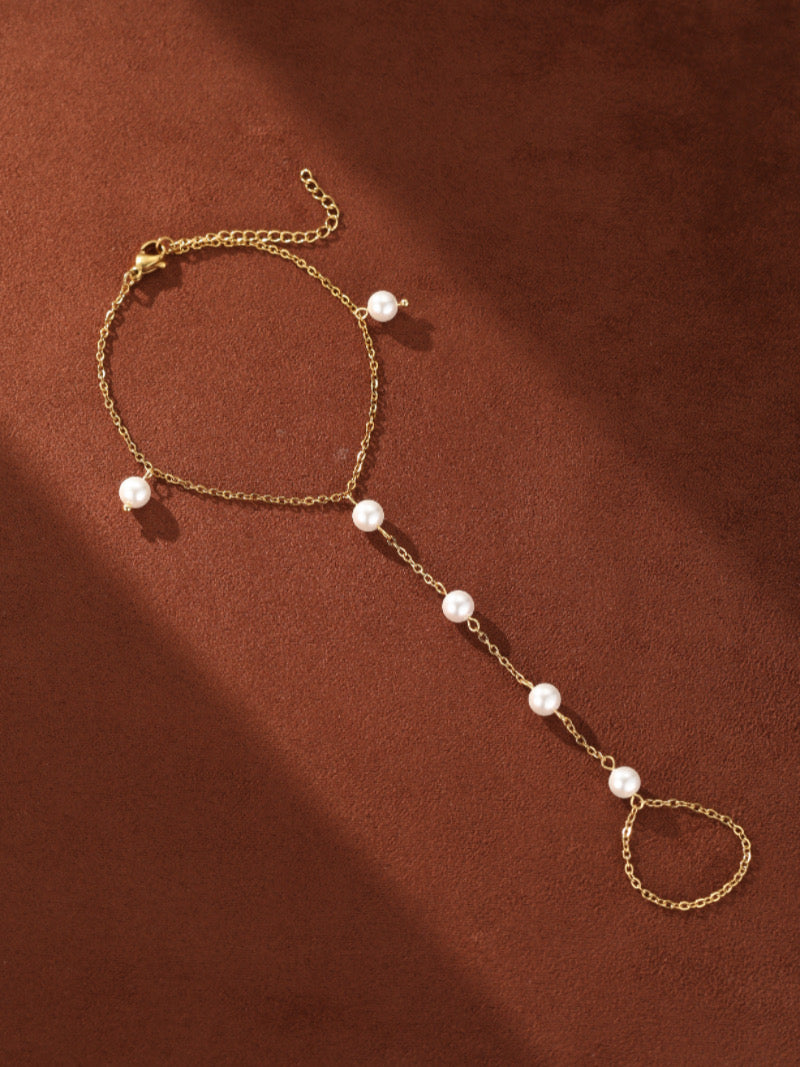
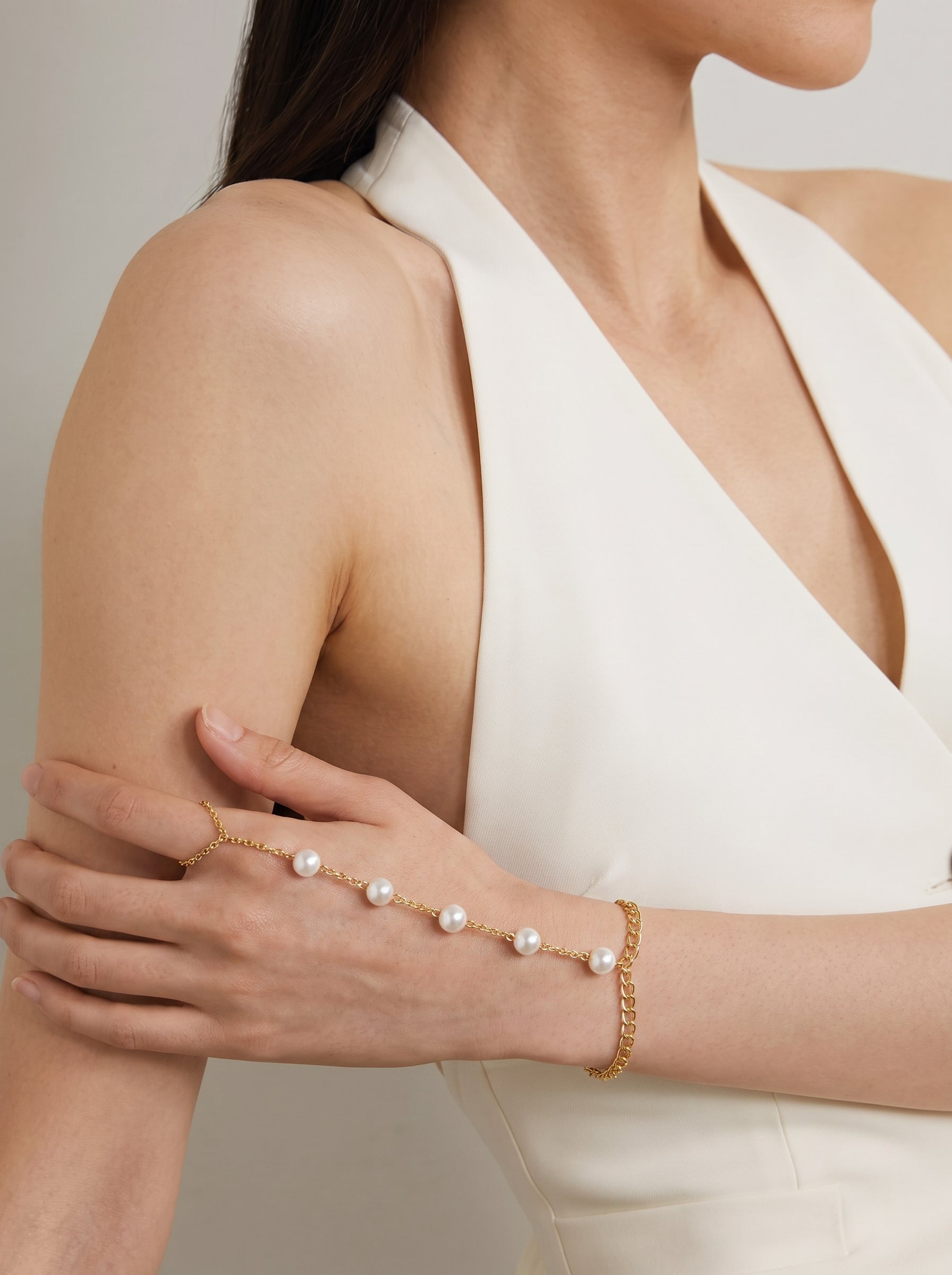
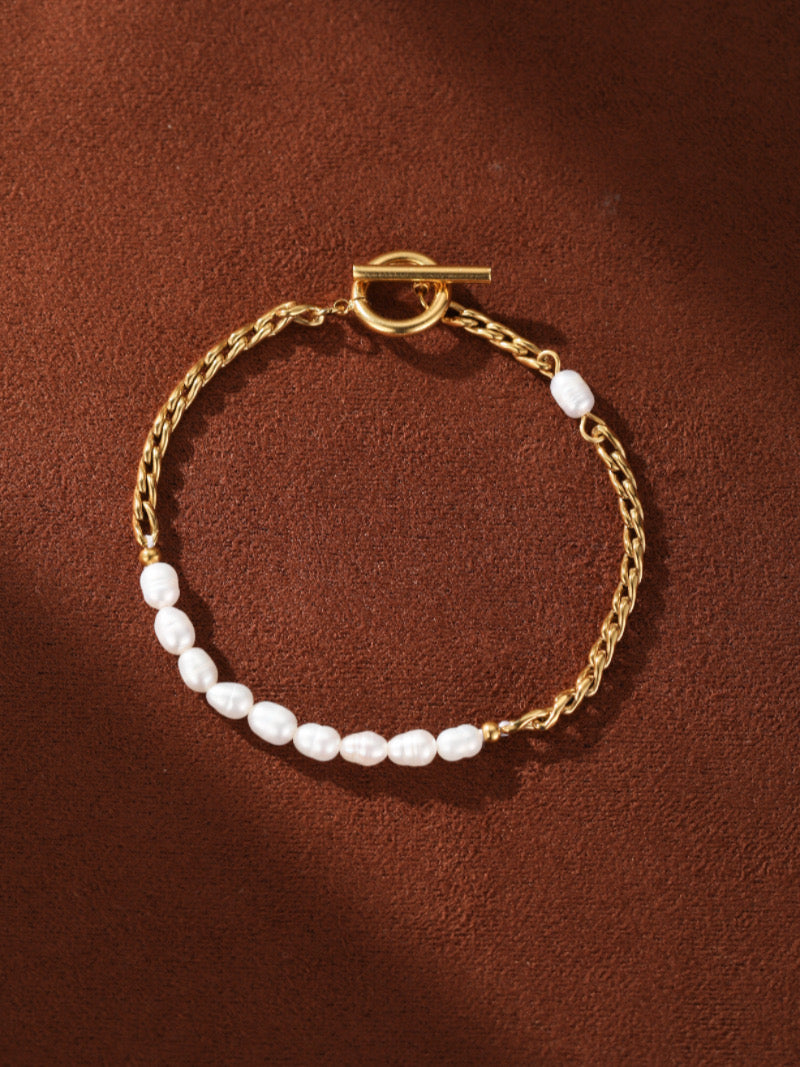
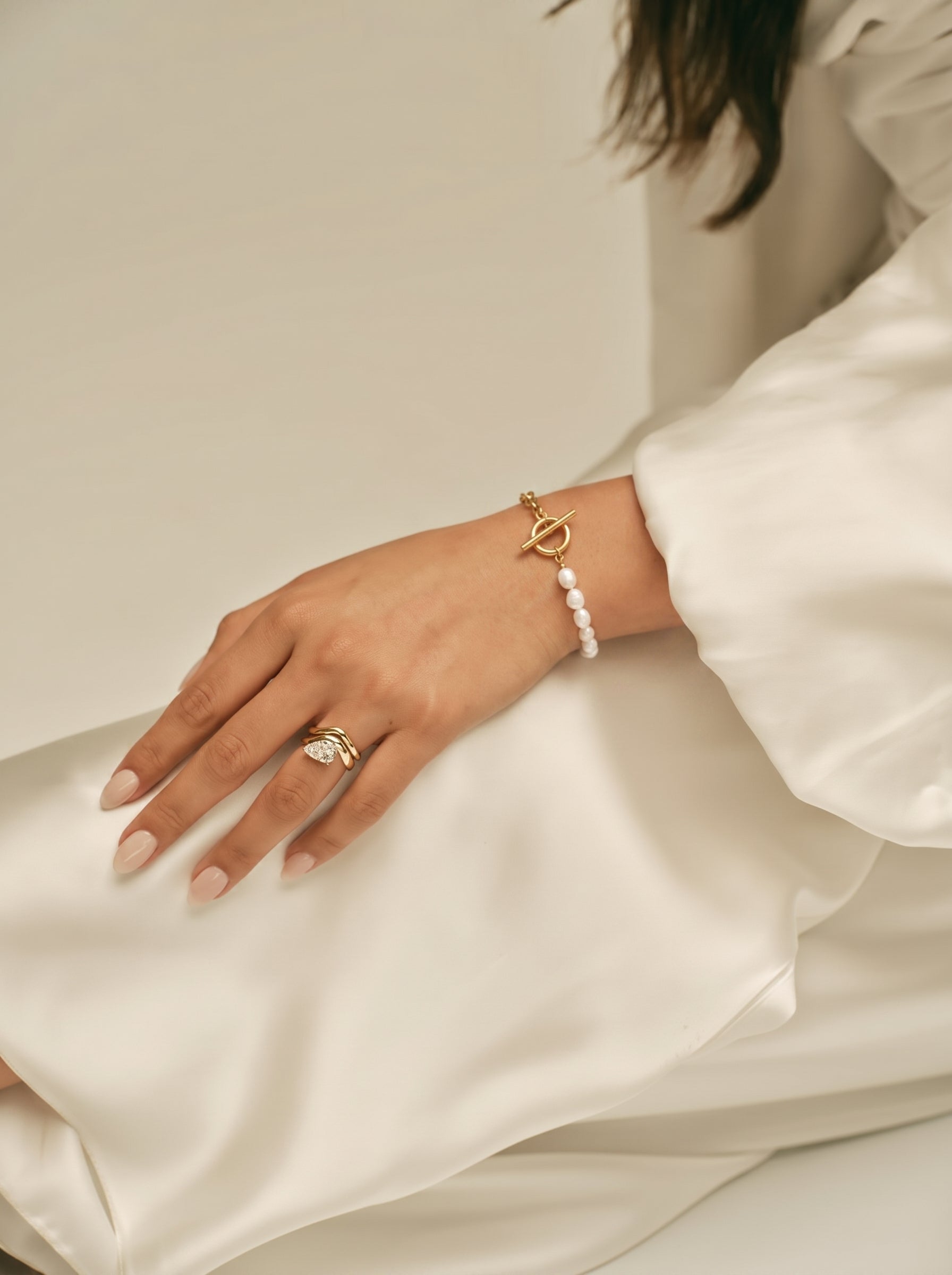
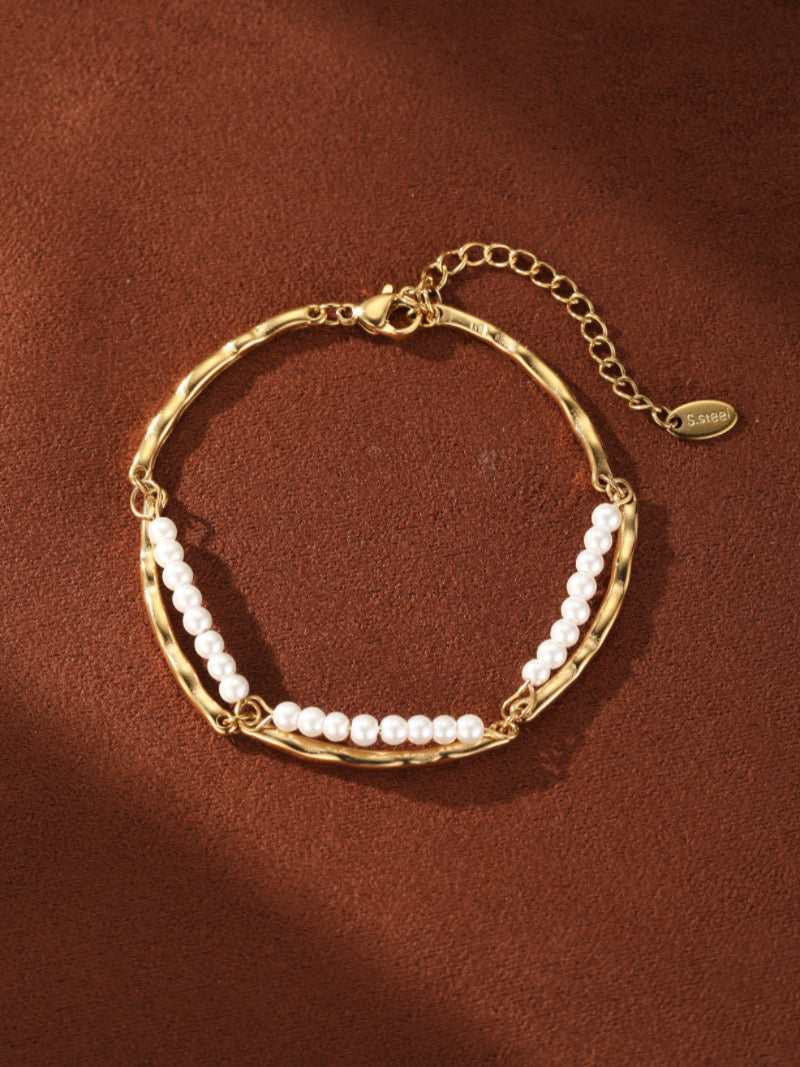
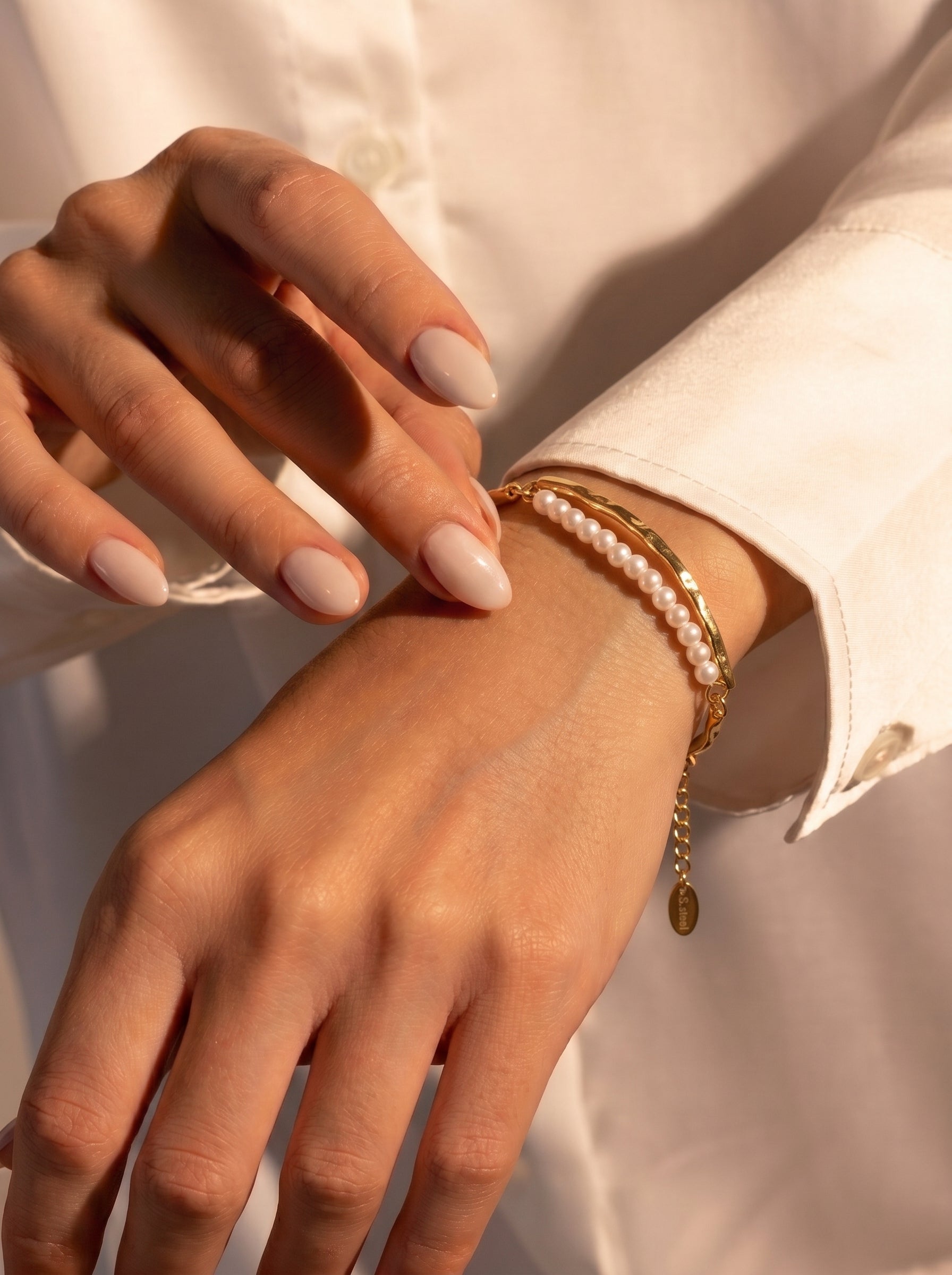
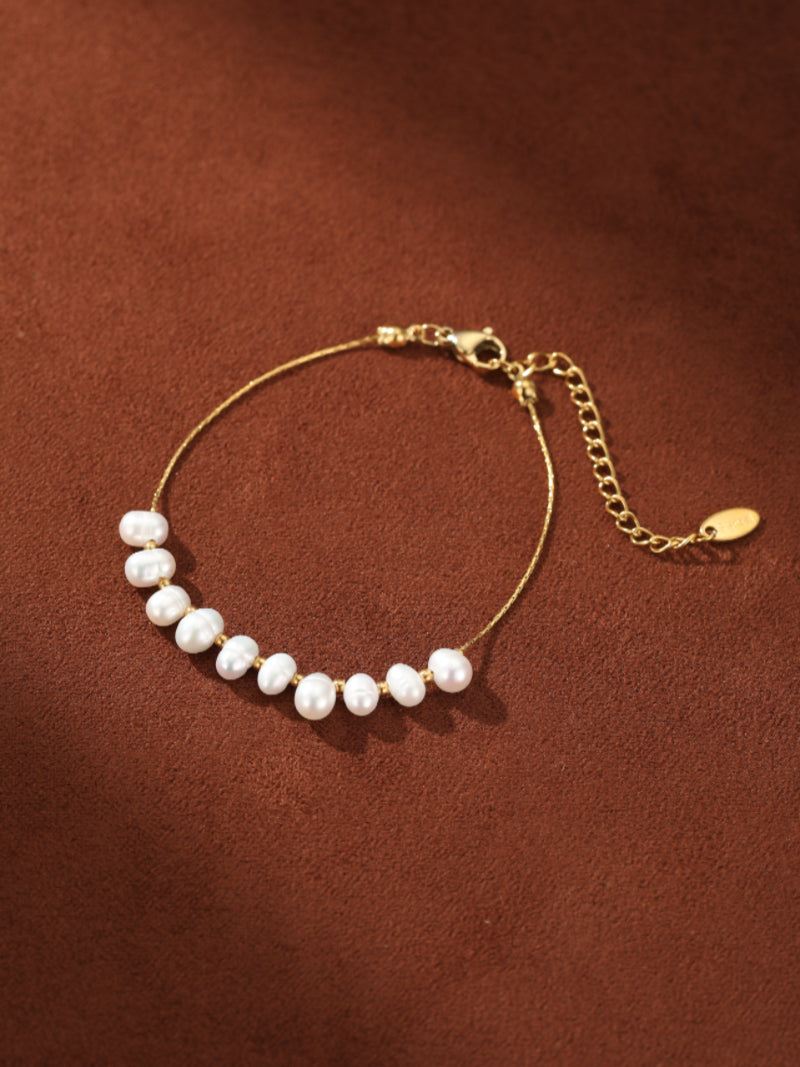
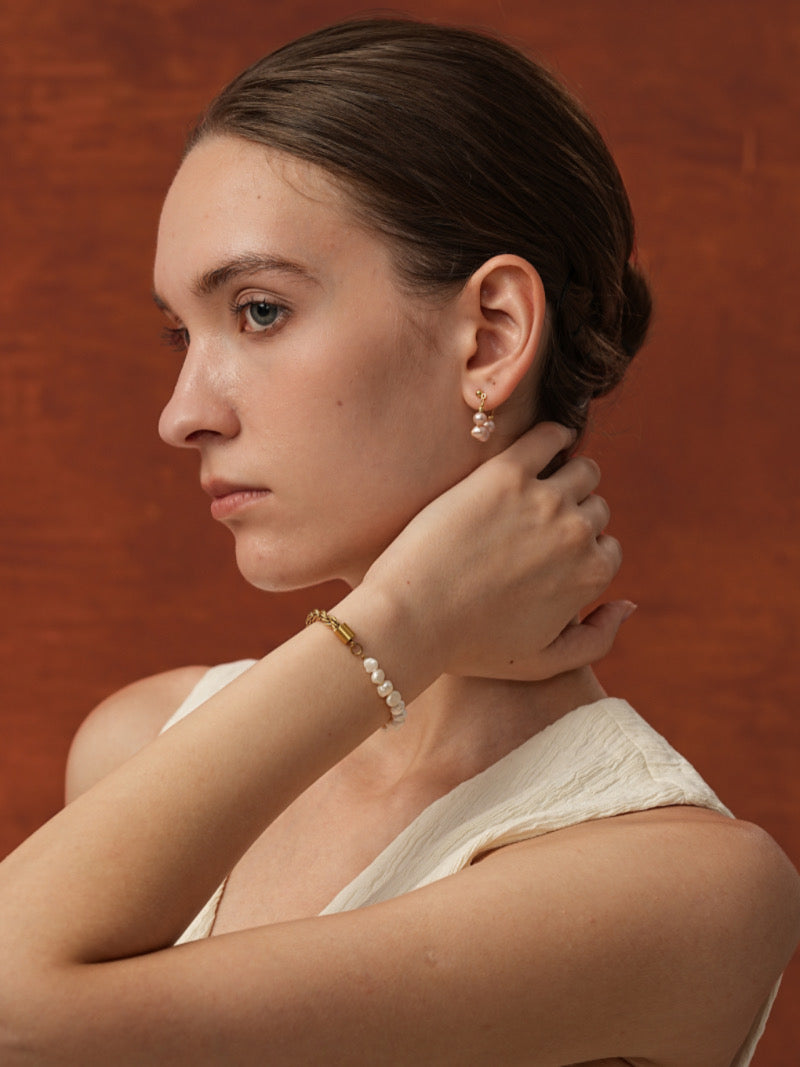
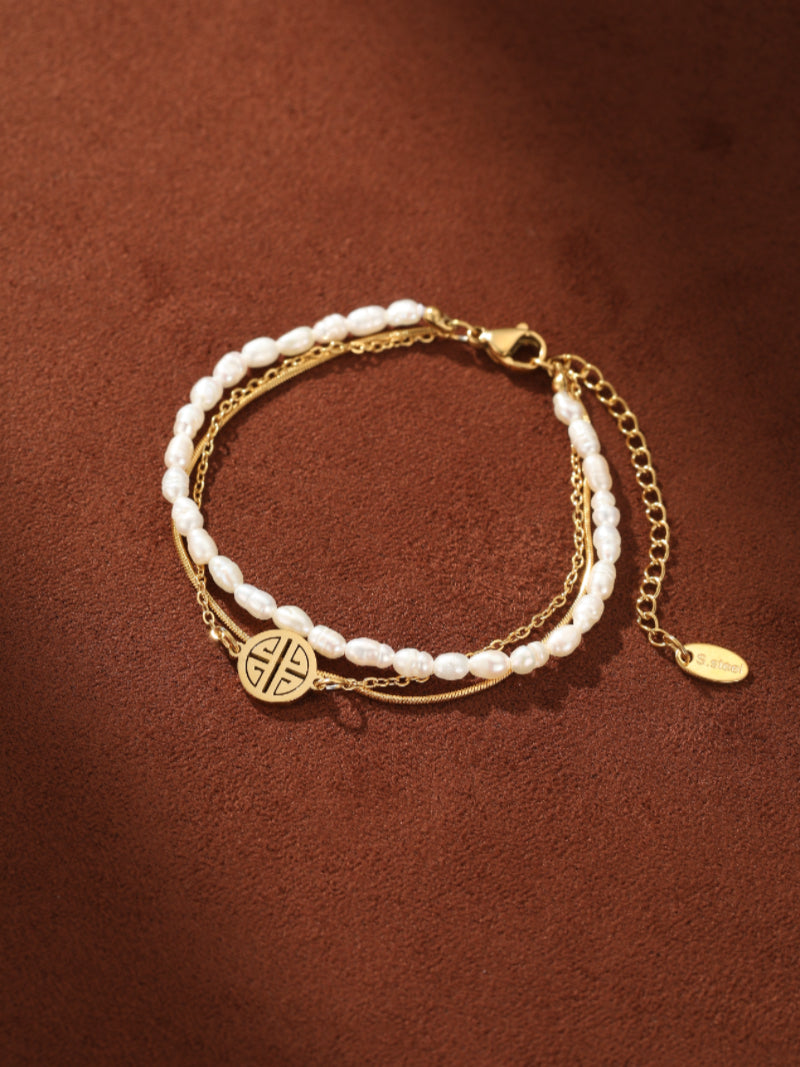
A pearl bracelet is any wrist piece where cultured pearls carry the design. Construction varies more here than in any other category: pearls can be strung on silk, threaded on a chain, spaced along links, set into a rigid cuff, or laid end to end in a continuous line.
That construction decides how much daily wear a bracelet takes. Strung pearls hang beautifully. Pearls set on a chain or a steel base take more handling and suit someone who works with their hands.
Which style of pearl bracelet should you choose?
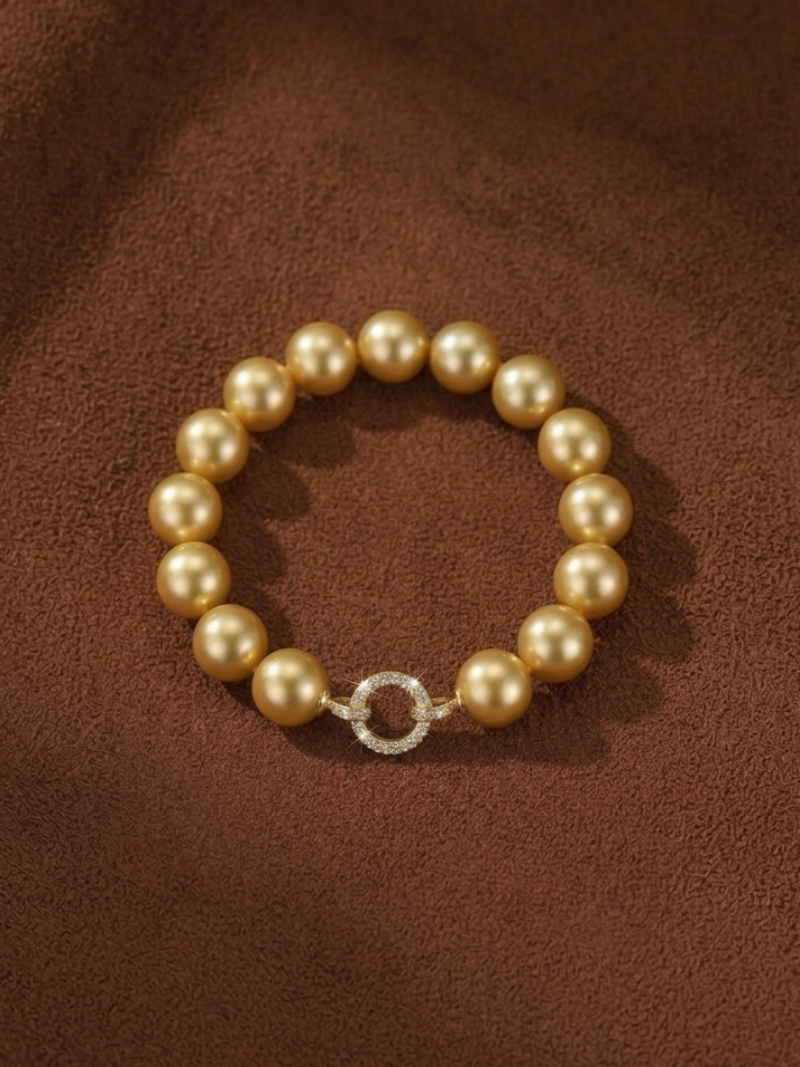
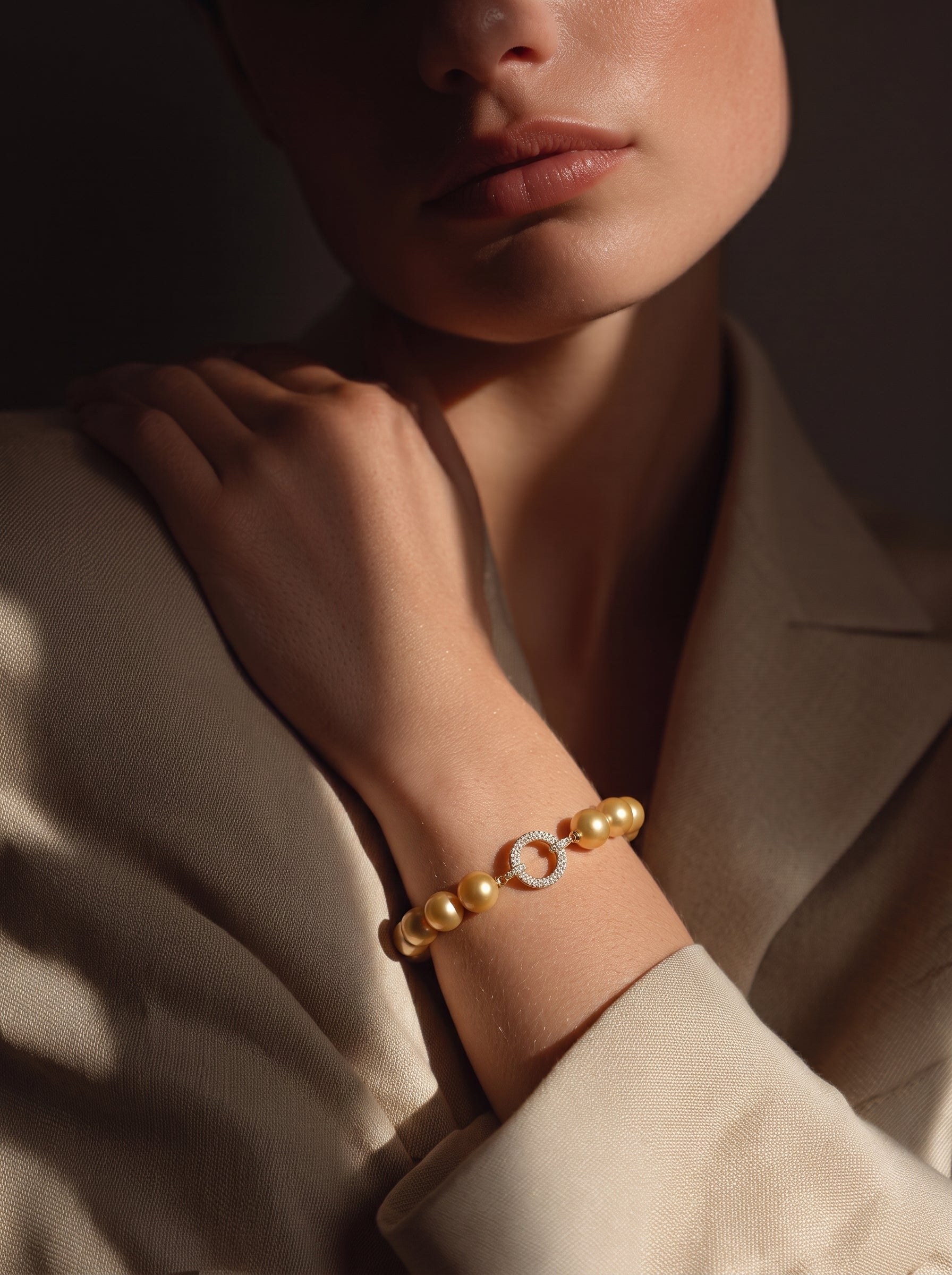
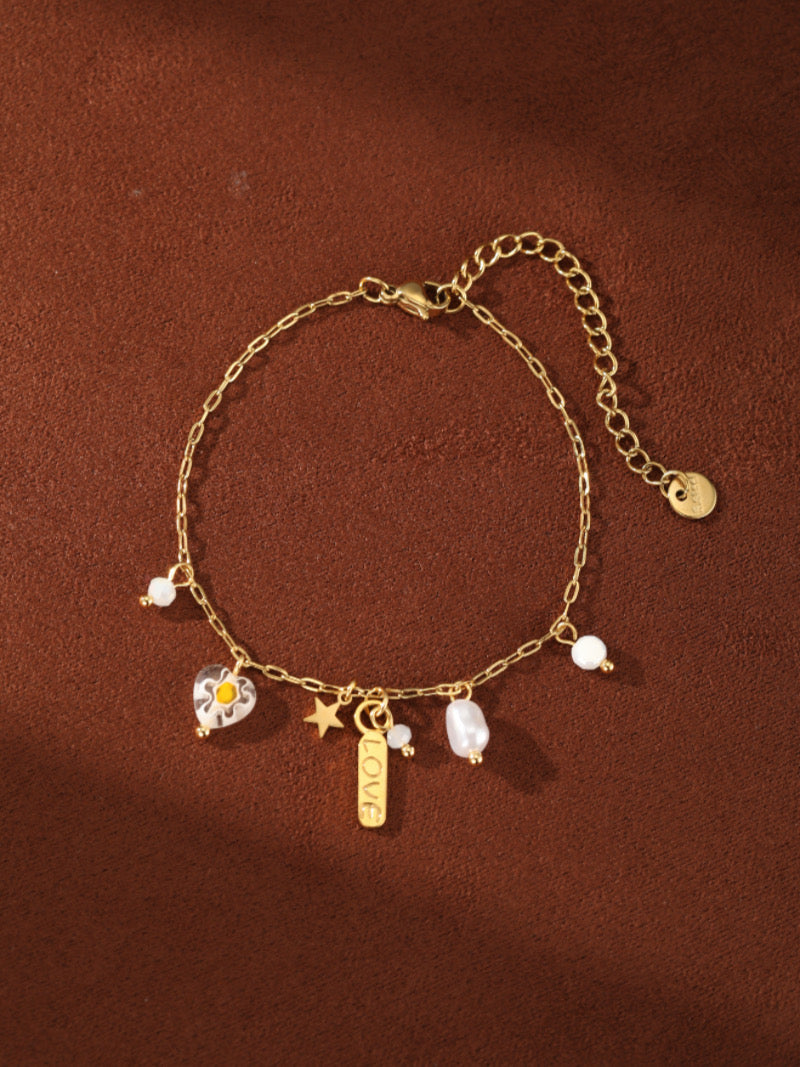
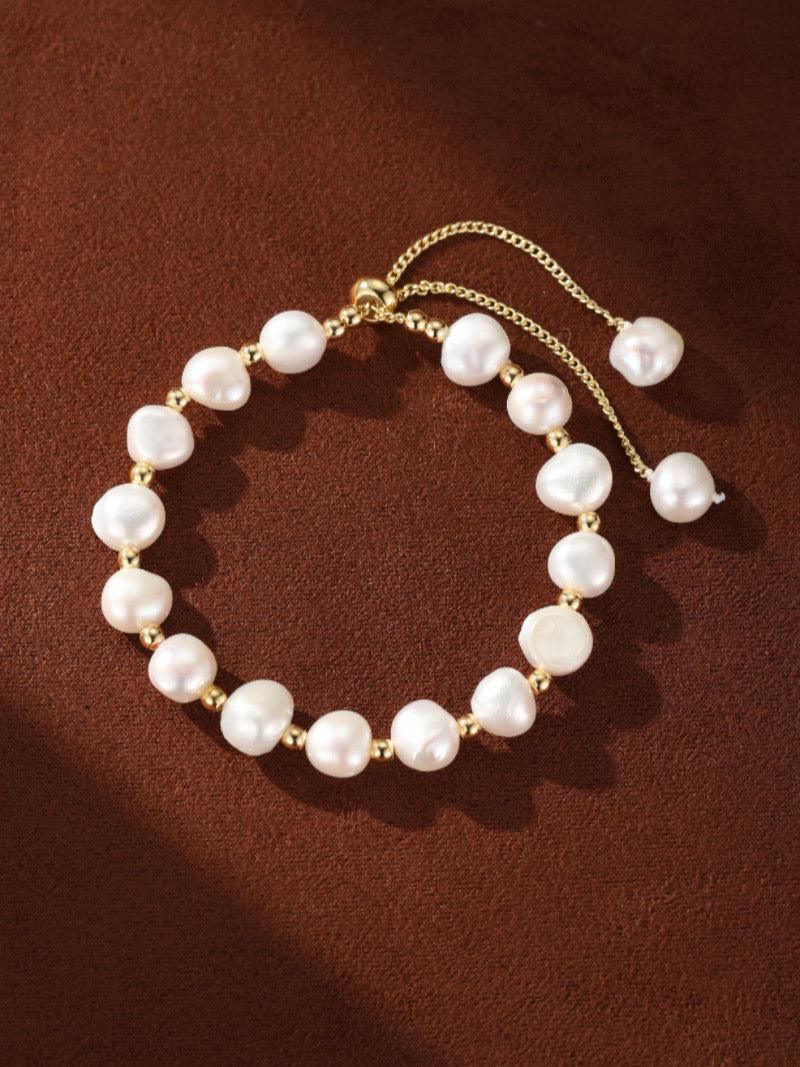
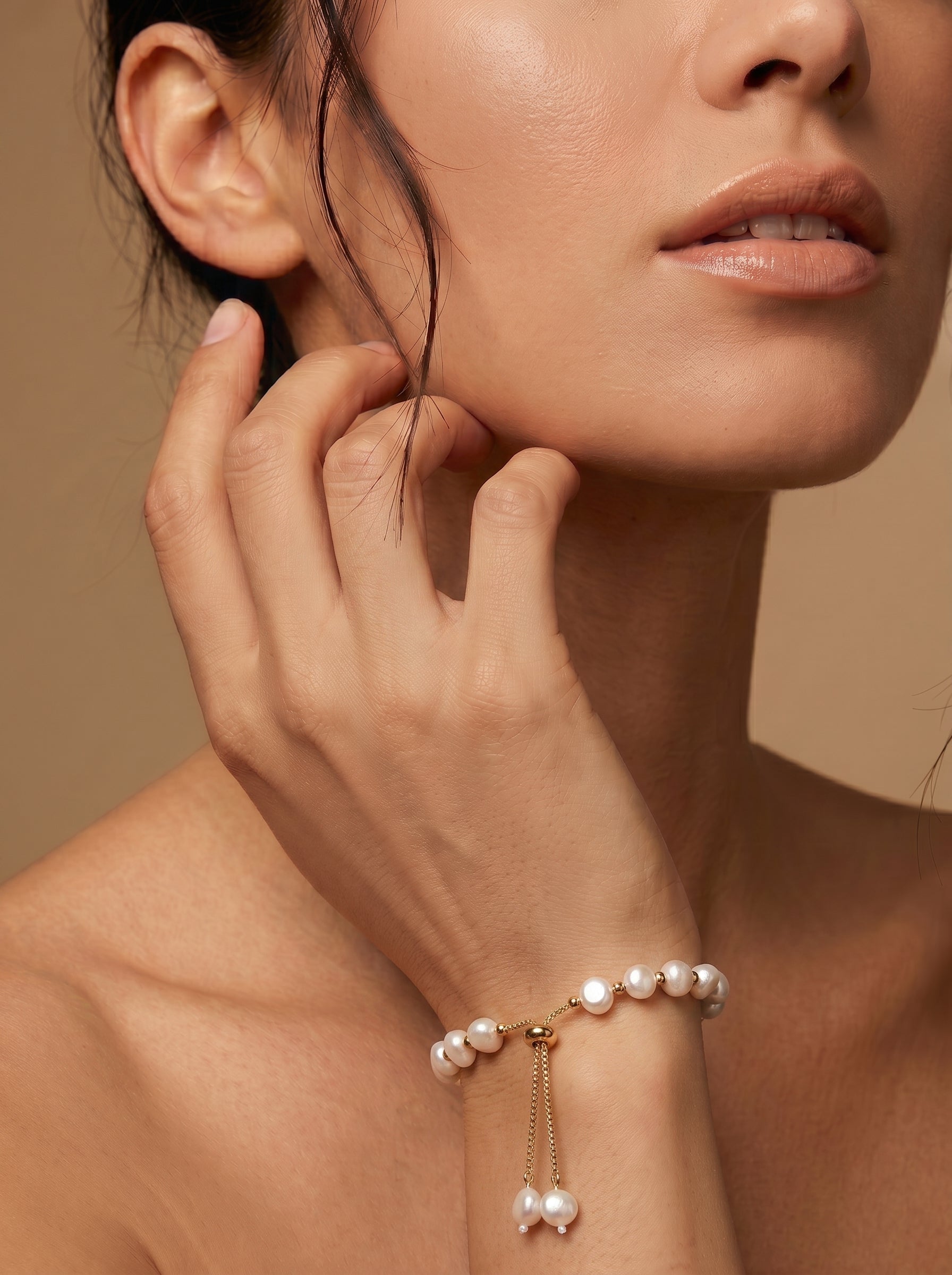
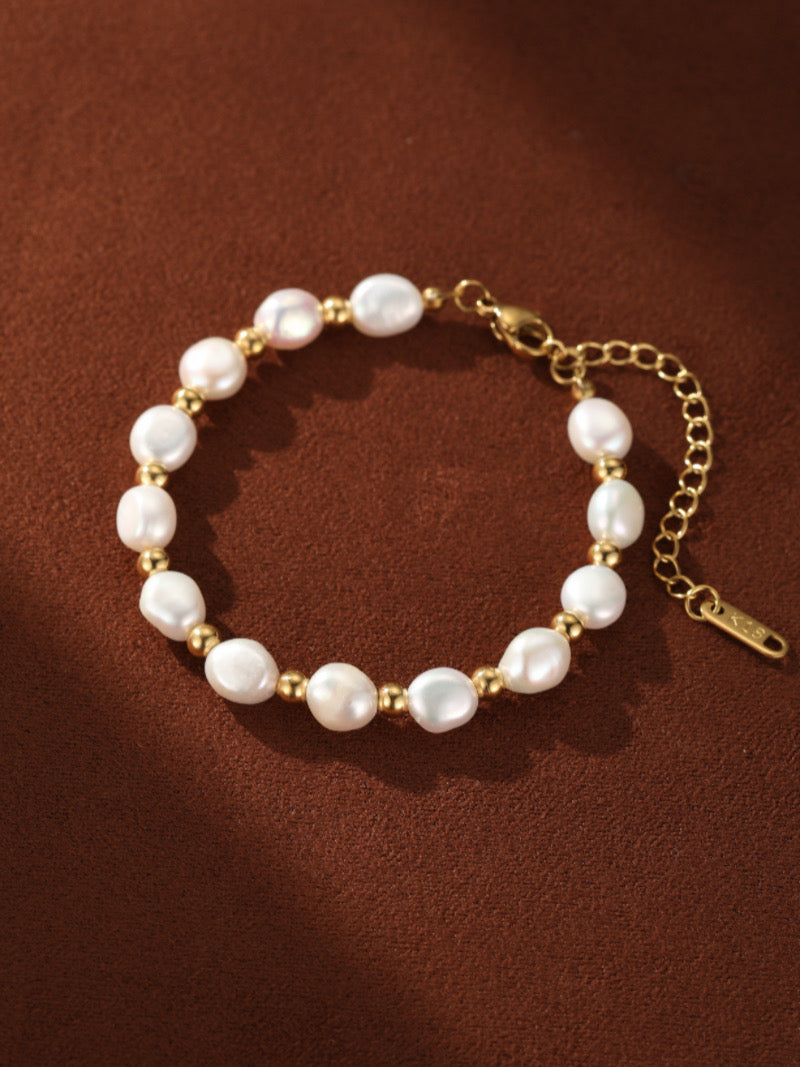
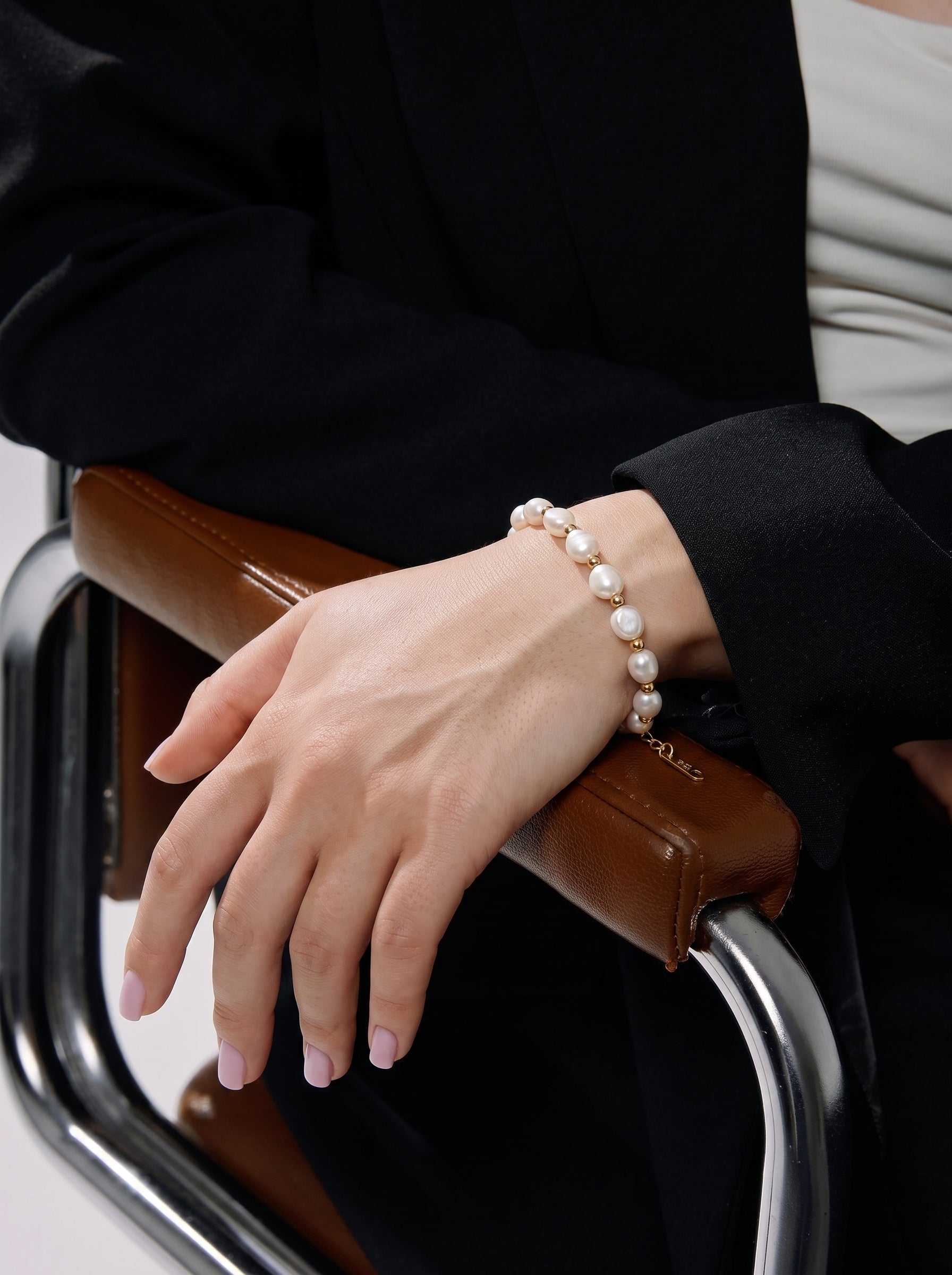
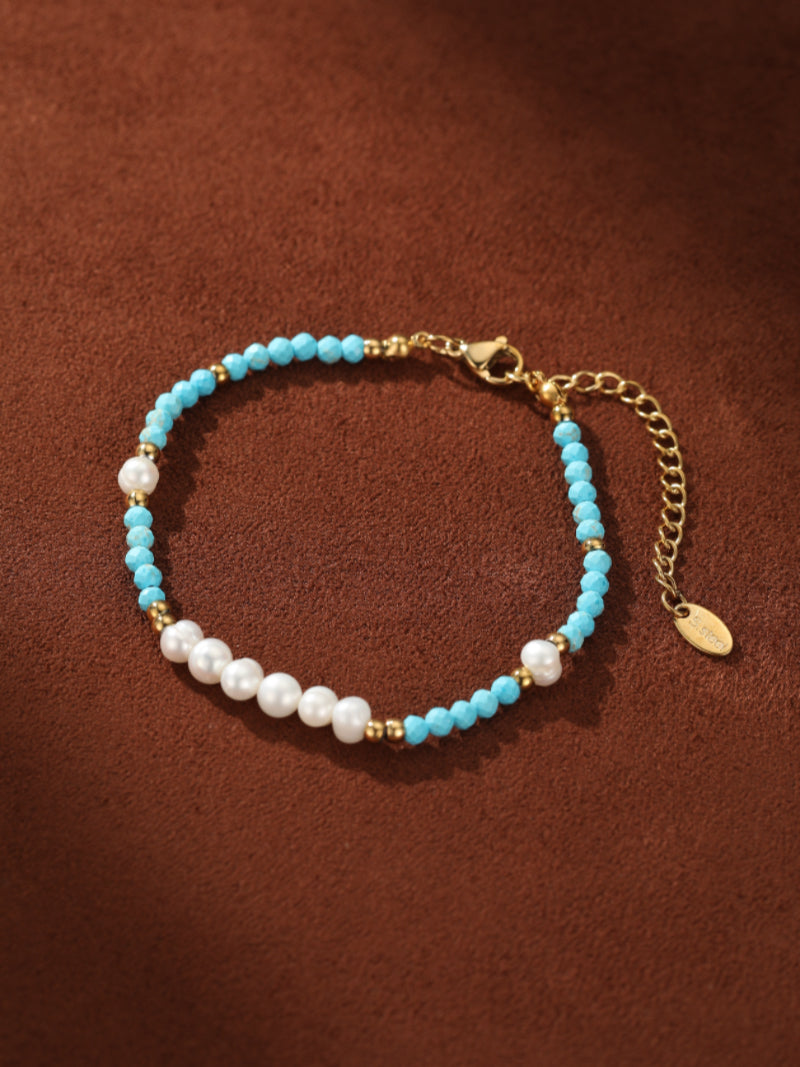
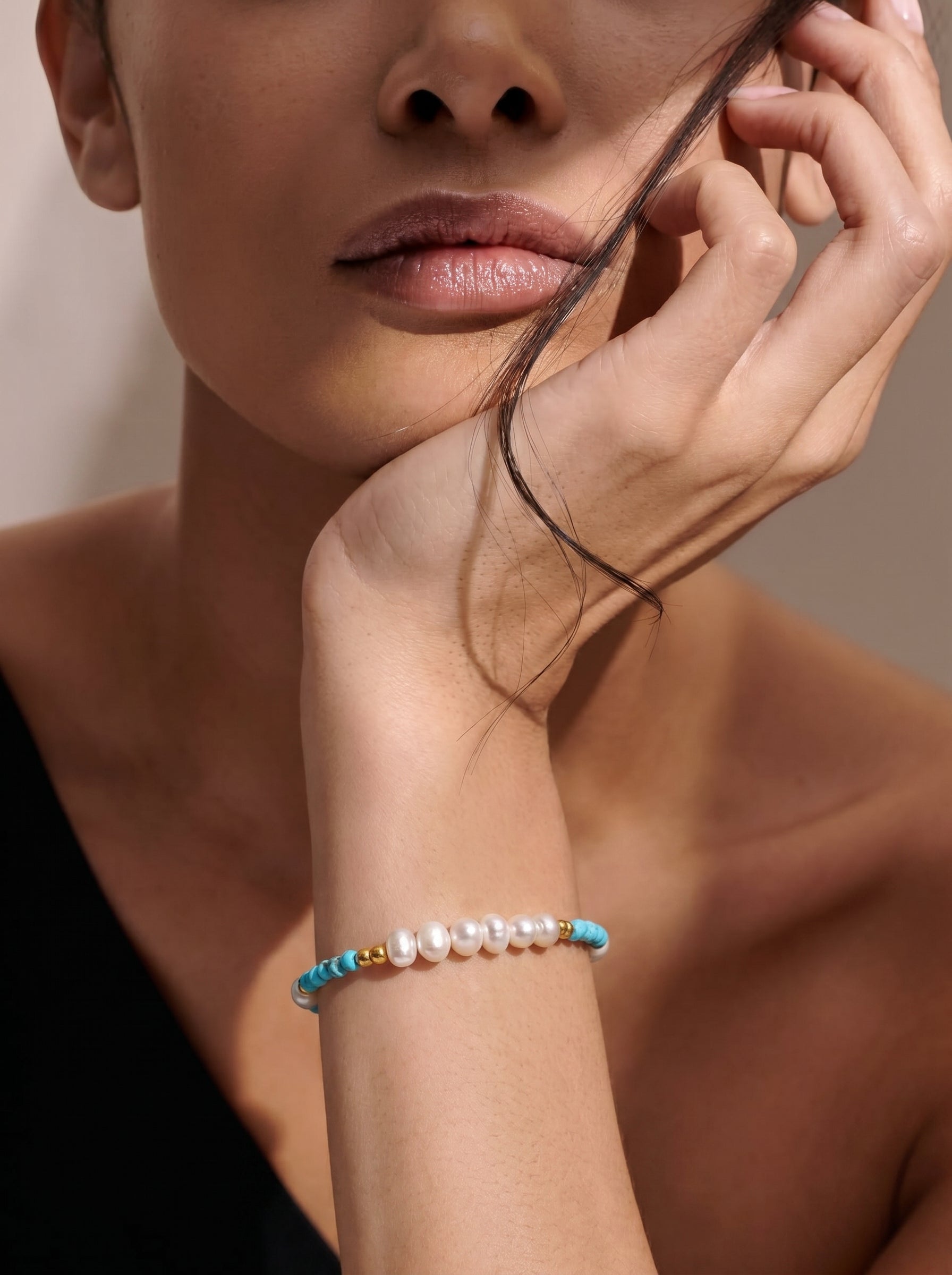
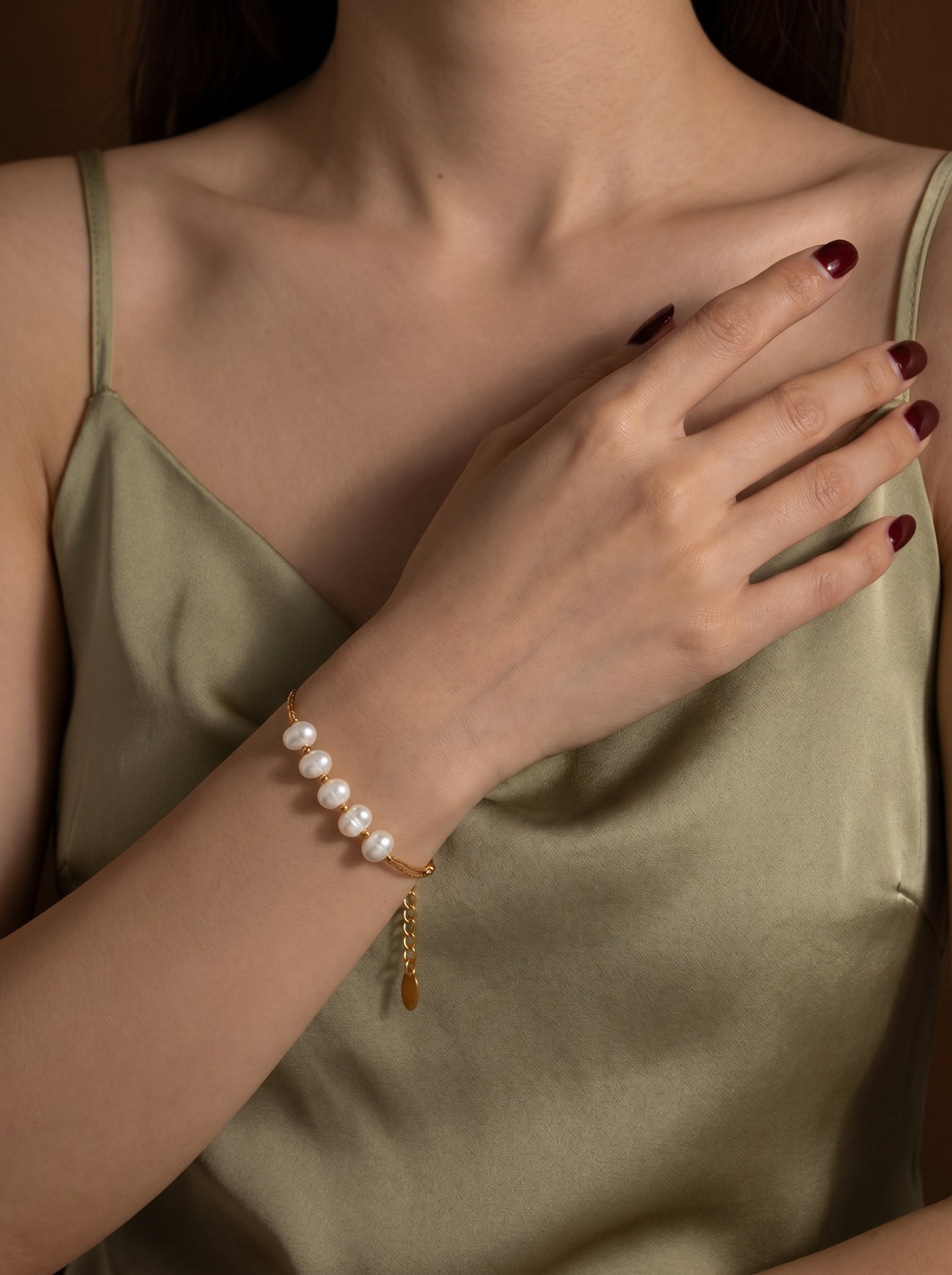
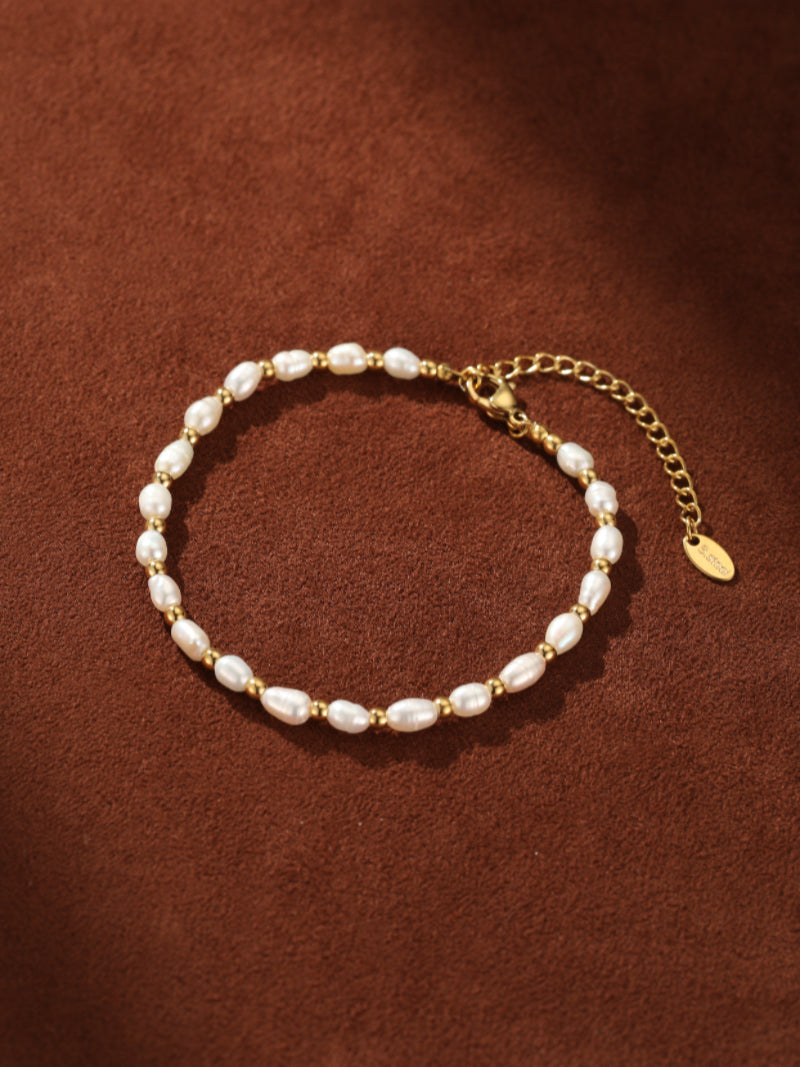
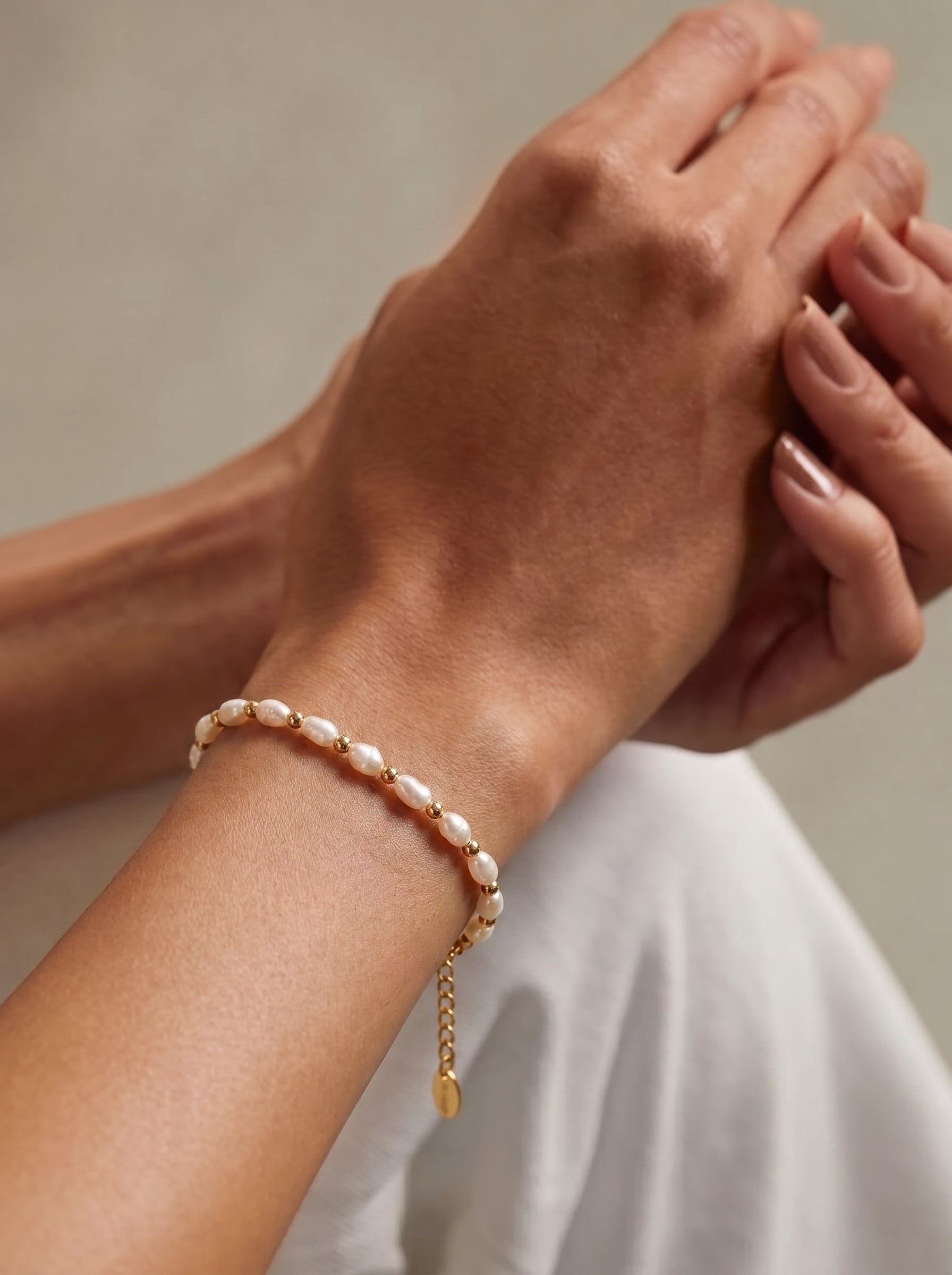
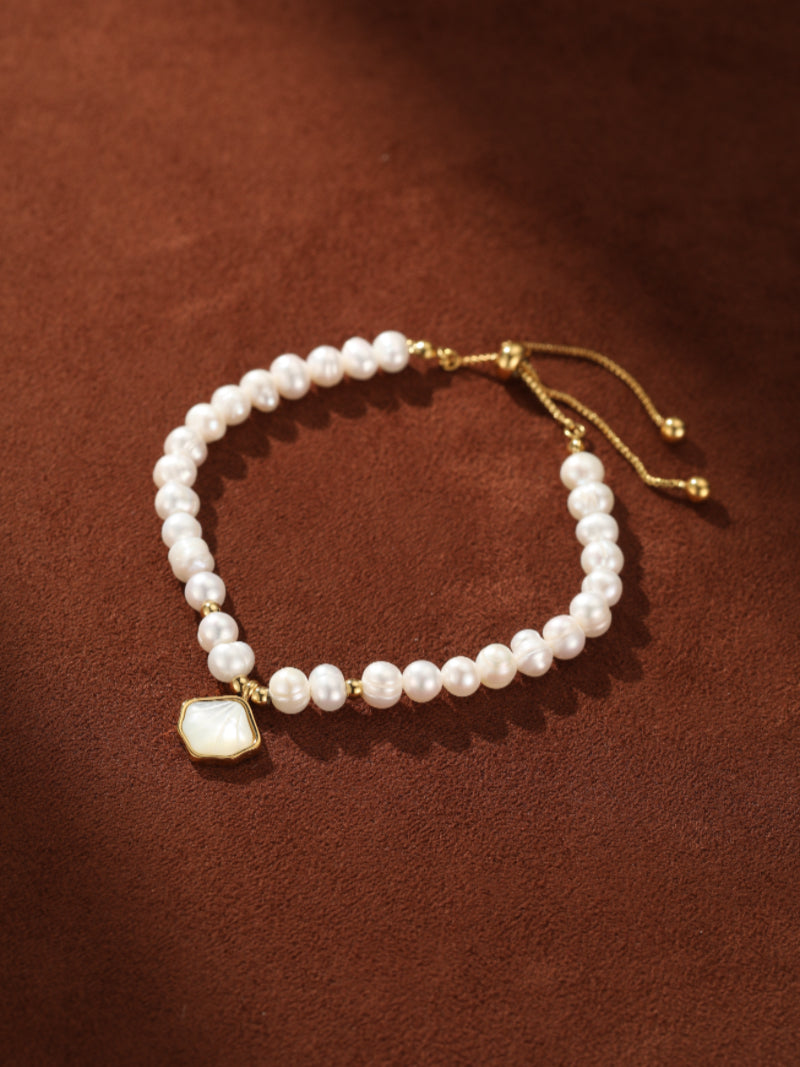
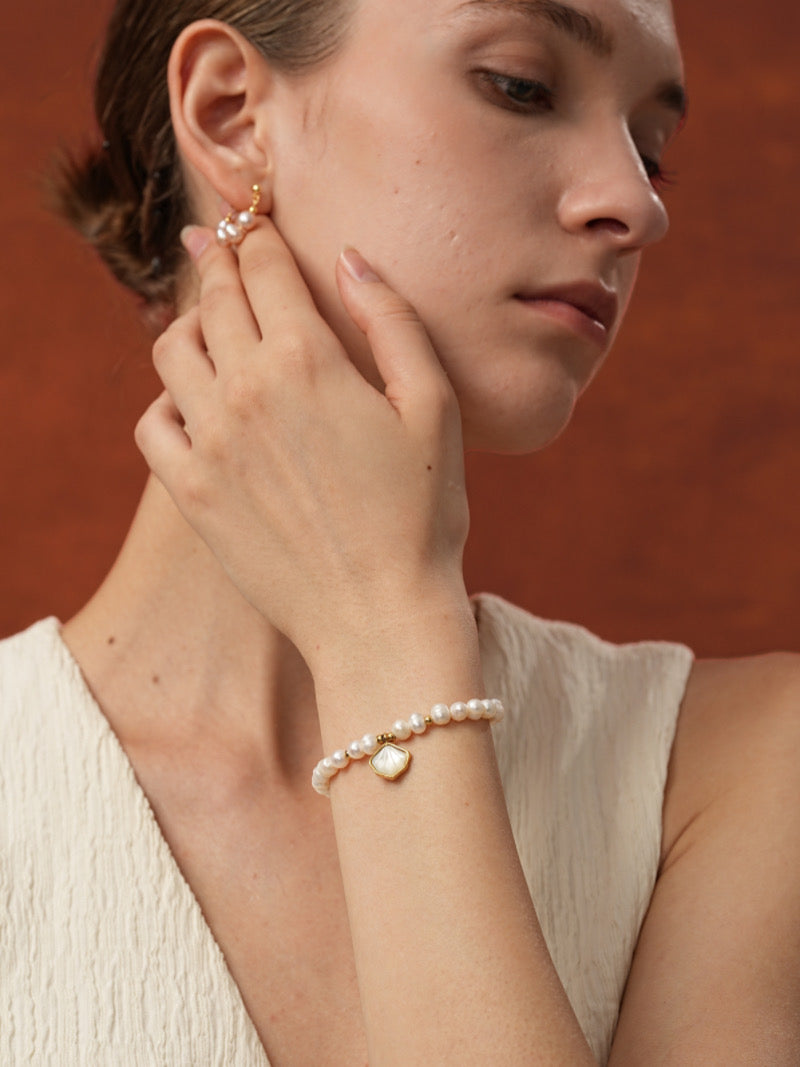
Pearl bead bracelet
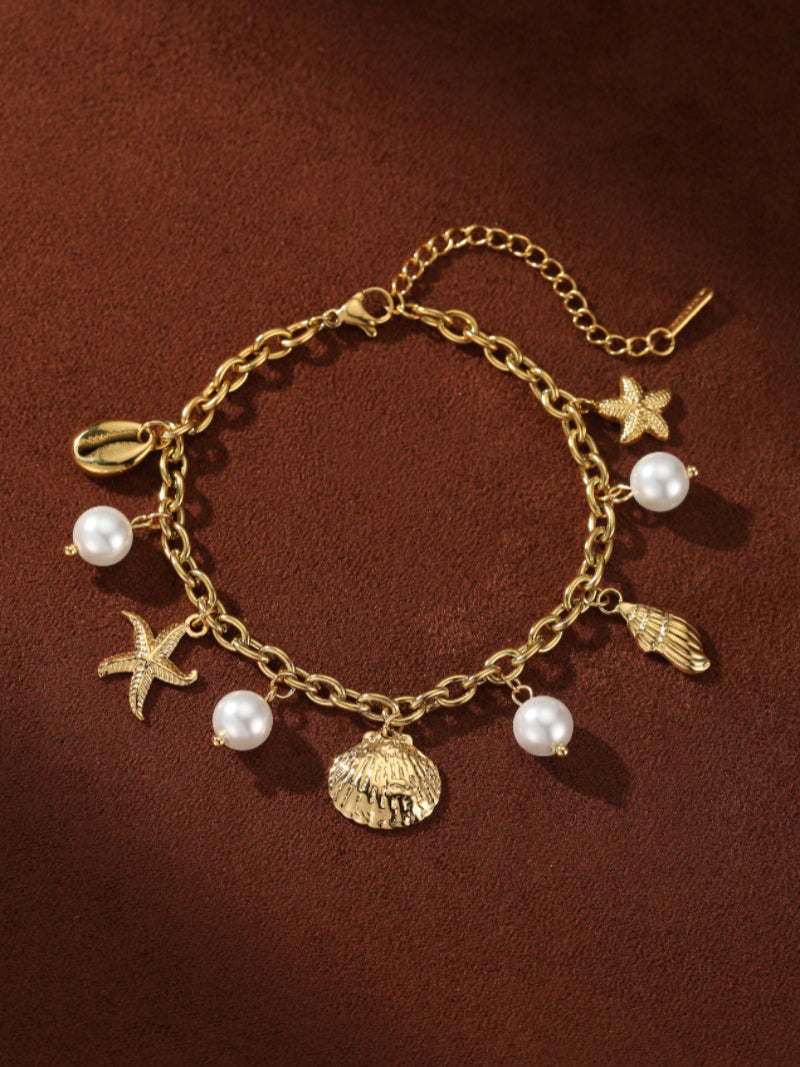
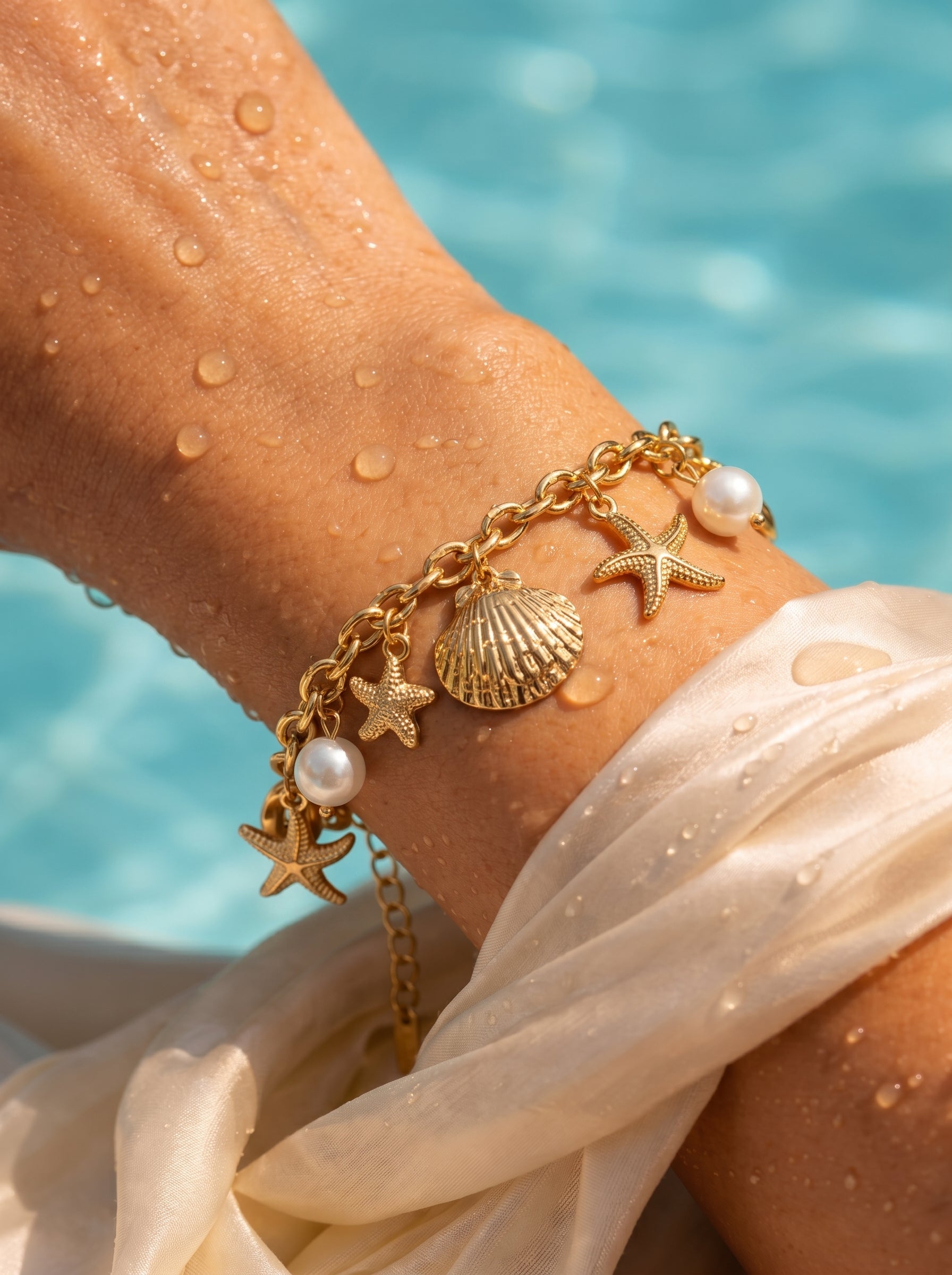
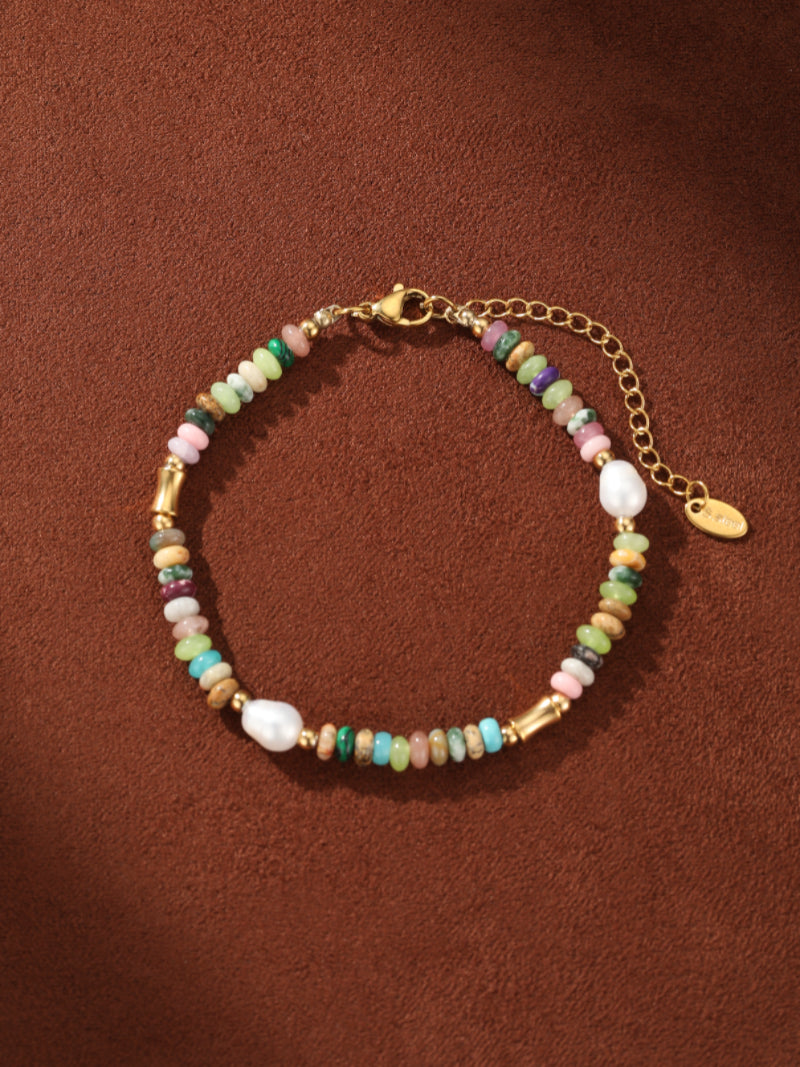
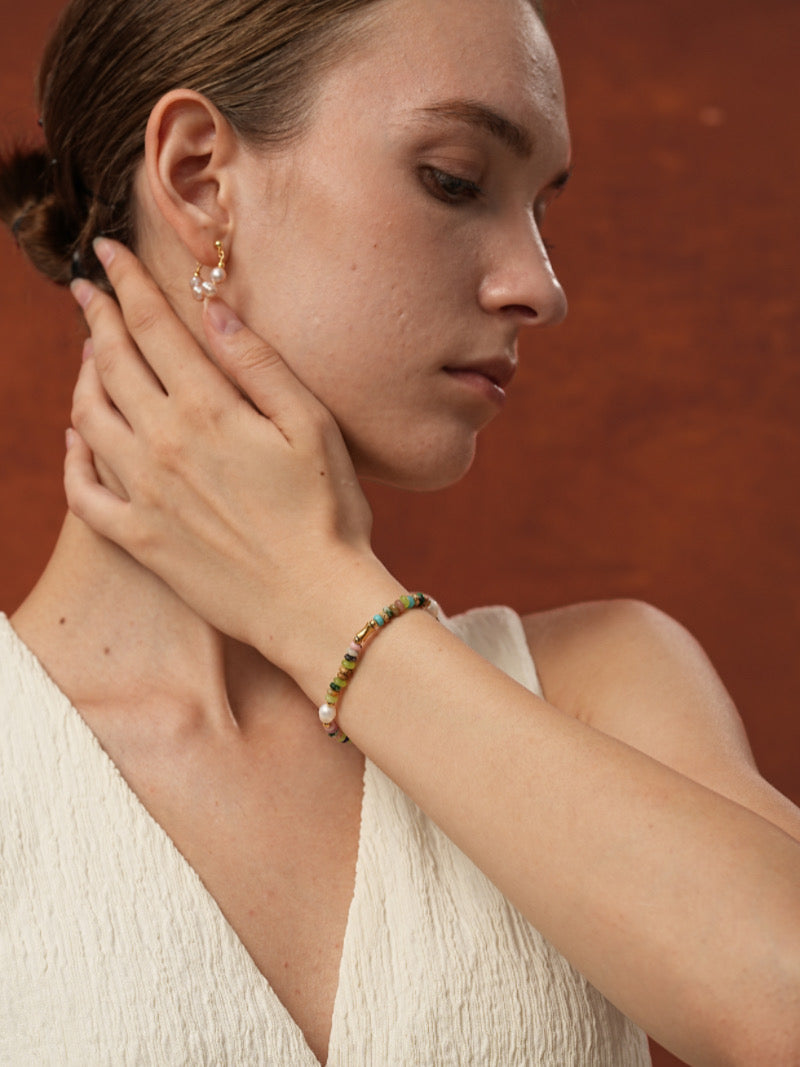
A pearl bead bracelet strings pearls one after another, the way bracelets have been made for centuries. Some are plain, others carry charms. These are the ones that stack, with a watch, with a chain, or with each other, and most women who buy one come back for a second.
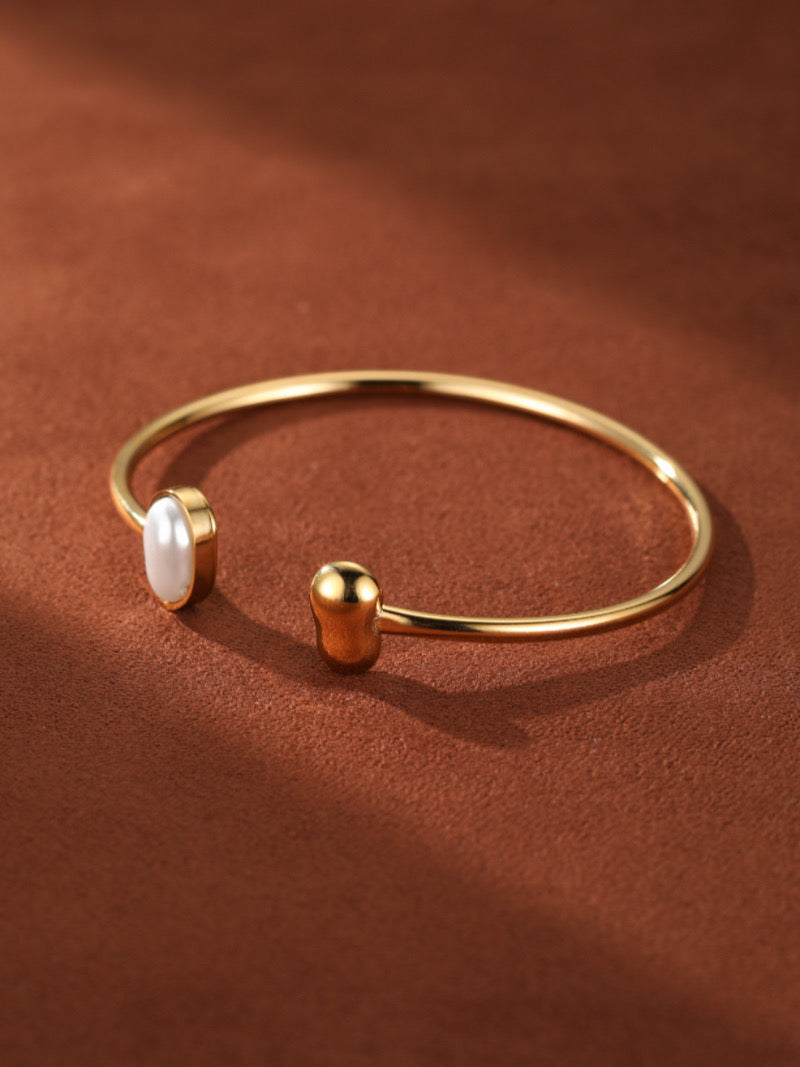
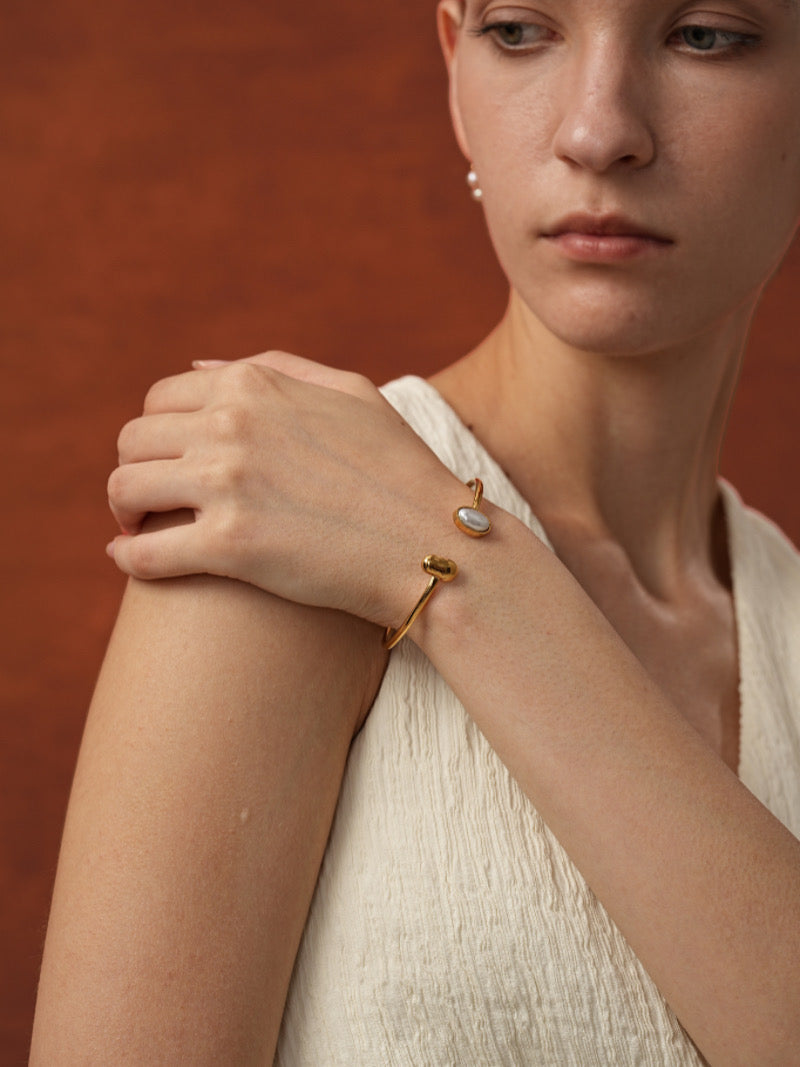
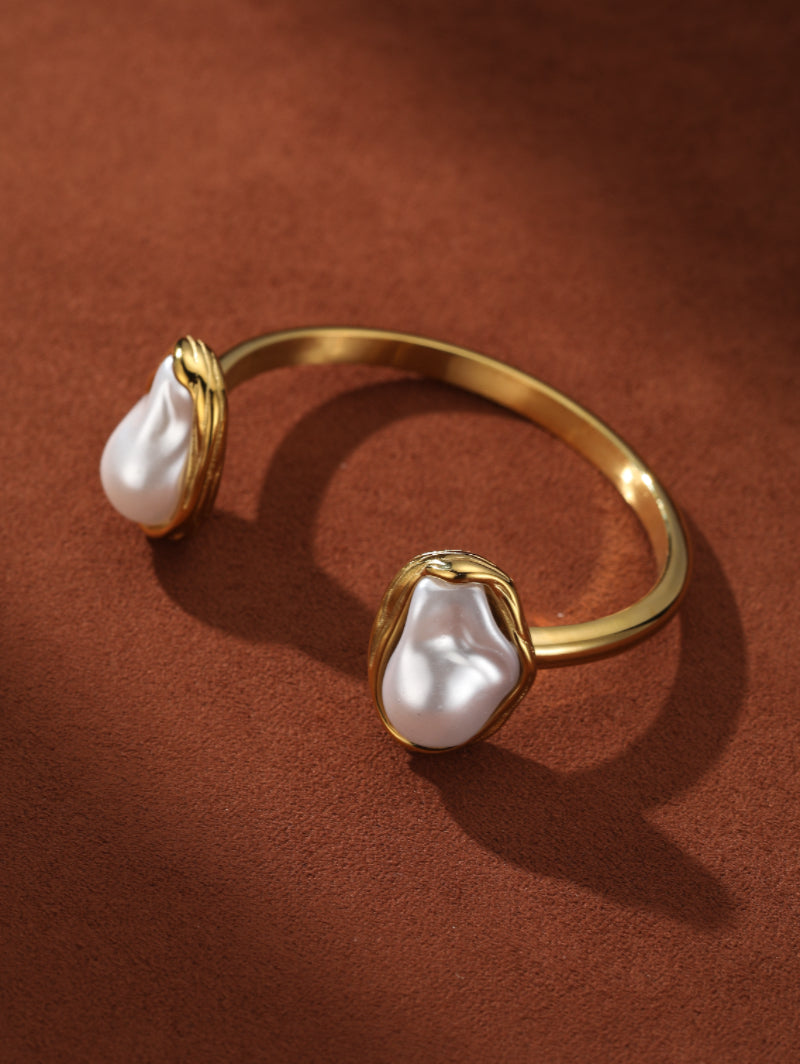
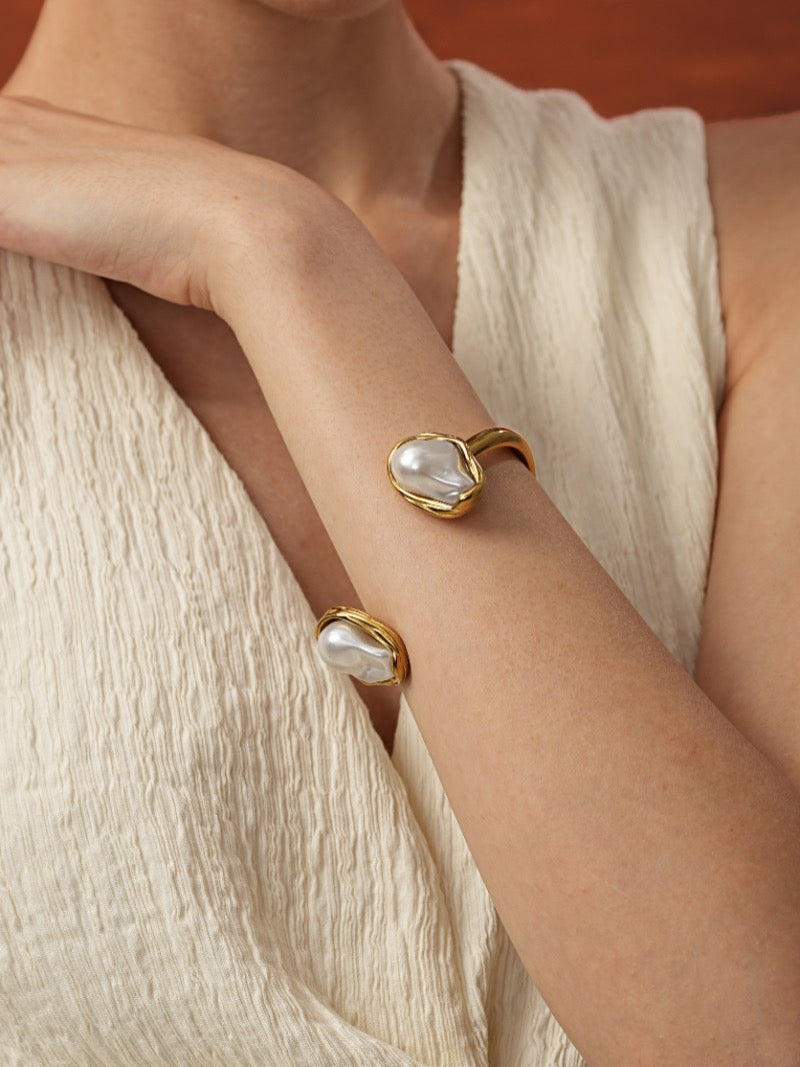
Pearl cuff bracelet
A pearl cuff holds its own shape. There is no clasp to fasten one-handed and no strand to twist around, so it slides on and stays where you put it. Sculpted metal with pearls set into the curve reads closer to an object than to a bracelet.
Pearl tennis bracelet
A pearl tennis bracelet sets pearls end to end in a single continuous line, giving a clean band of light around the wrist with no gaps interrupting it. It is the most structured bracelet we make and the one that looks best under a shirt cuff.
Chunky pearl bracelet
A chunky pearl bracelet uses large pearls and heavy links with real weight. It does not layer. It takes the wrist on its own and leaves the other one bare, and it is best worn with a rolled sleeve where the whole piece is visible.
How should a pearl bracelet fit?
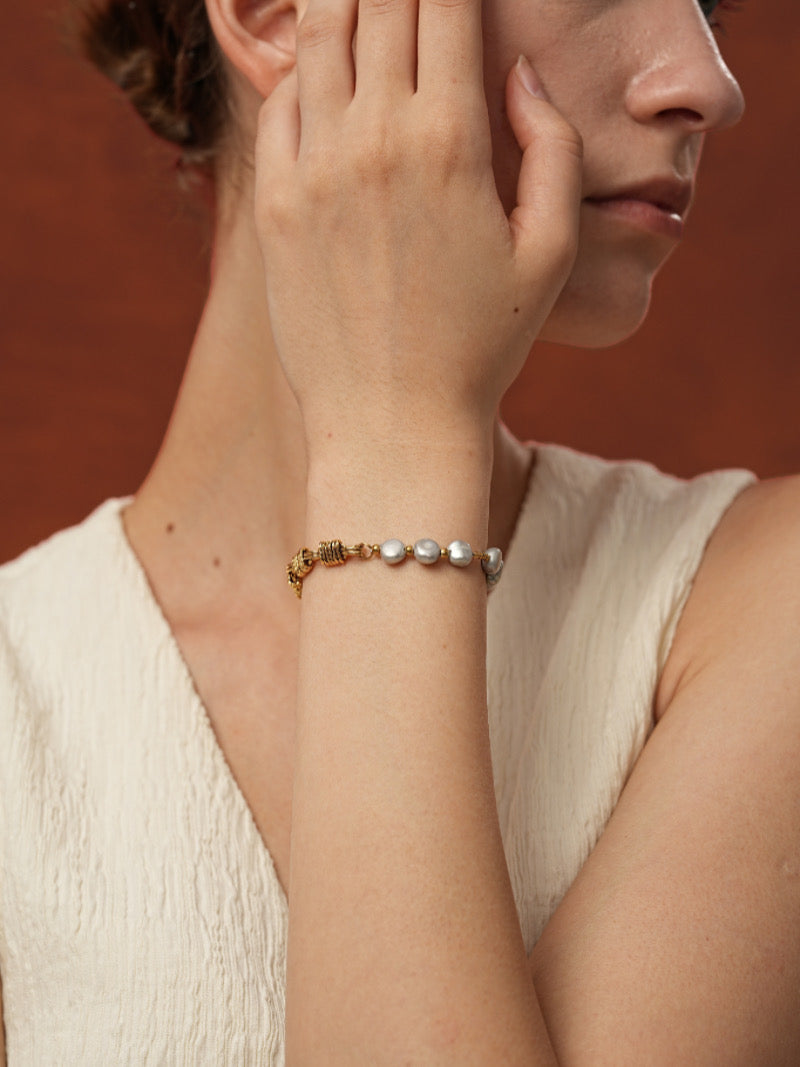
A pearl bracelet should sit with about half an inch of room past your wrist measurement. Loose enough to rotate, close enough that it does not slide over the hand. Measure just below the wrist bone. Most women take 7 to 7.5 inches, and a chunky or beaded style needs an extra half inch.
Which type of pearl works best in a bracelet?
- Freshwater pearl bracelet — from Zhuji, China. The widest range of shapes and the deepest selection here, made for stacking.
- Akoya pearl bracelet — from Japan. Round and bright, quiet enough to slide under a cuff and hold your own attention all day.
- Tahitian pearl bracelet — from French Polynesia. Green and aubergine surfacing as your hand moves, the quietest way to wear a dark pearl.
- South Sea pearl bracelet — the largest cultured pearls grown, in white-silver or deep golden with a satin glow.
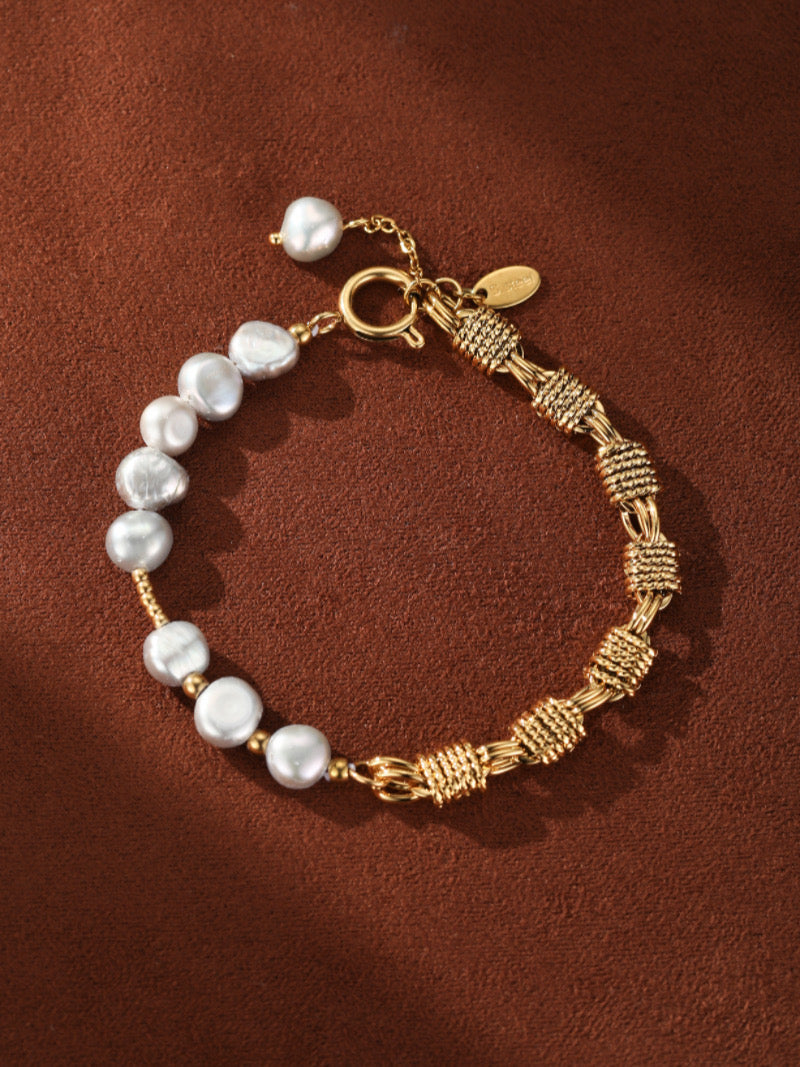
- Baroque pearl bracelet — irregular pearls strung close, giving the piece texture instead of repetition.
- Mother of pearl bracelet — flat polished shell discs, lighter than strung pearls and easier to stack.
What color and metal should you choose?
White pearl bracelets are the most versatile we make, sitting under a sleeve on a working morning and coming out again over dinner. Black pearl bracelets keep their color moving as your hand does. Pink pearl bracelets read warmer than white against skin. Golden pearl bracelets do most of their work against bare arms in summer.
A gold pearl bracelet in solid 18k gold matters more at the wrist than anywhere else, because this is where plating gives out first. A silver pearl bracelet in 925 sterling sits quietly beside a steel watch. A stainless steel pearl bracelet handles desks, sleeves, keyboards and bags without losing its finish.
Why buy a pearl bracelet from Grande Lilith
Most retailers tell you a pearl is real and stop there. We publish eight provenance markers on every product page: type, origin, bodycolor, overtone, shape, size, grade and treatment. Treatment is where the industry stays quiet, and where a buyer most needs the truth.
- Sourcing you can check: freshwater from Zhuji, Akoya from Japan, Tahitian from French Polynesia. Named, not implied.
- Partners vetted by our GIA-certified pearl specialist, on working conditions as well as quality.
- Nickel-free, lead-free and cadmium-free settings, on the piece that touches your skin longest.
- Designed in Paris, priced for a woman buying it for herself.
- Thirty days to change your mind, and every order arrives in a magnetic pouch.
Frequently asked questions
How do I measure my wrist for a pearl bracelet?
Wrap a tape measure just below the wrist bone and add about half an inch. Most women take 7 to 7.5 inches. Add another half inch for a chunky or heavily beaded style, since larger pearls take up more of the circumference.
Can I wear a pearl bracelet every day?
Yes, with two habits. Take it off before washing dishes or applying hand cream, and choose a chain or steel construction if you work with your hands. Nacre is a natural material and dulls with repeated exposure to detergent and acid.
How do I stack pearl bracelets?
Keep one piece as the anchor and let the others sit quieter. A beaded strand stacks well with a fine chain and a watch. Avoid stacking two chunky pieces on the same wrist, since neither gets room to read.
Should pearls be knotted between each bead?
Knotting between pearls stops them rubbing against each other and prevents a total loss if the thread breaks. It is the traditional build for strung pieces. Bracelets set on chain or steel do not need knotting, because the pearls are held individually.
Is a pearl bracelet a good gift?
It is one of the easier pieces to give, because wrist size is more forgiving than ring size and there is no neckline to consider. A beaded strand or a cuff in white pearl suits almost anyone. Every order arrives in a magnetic pouch, with gift packaging available at checkout.