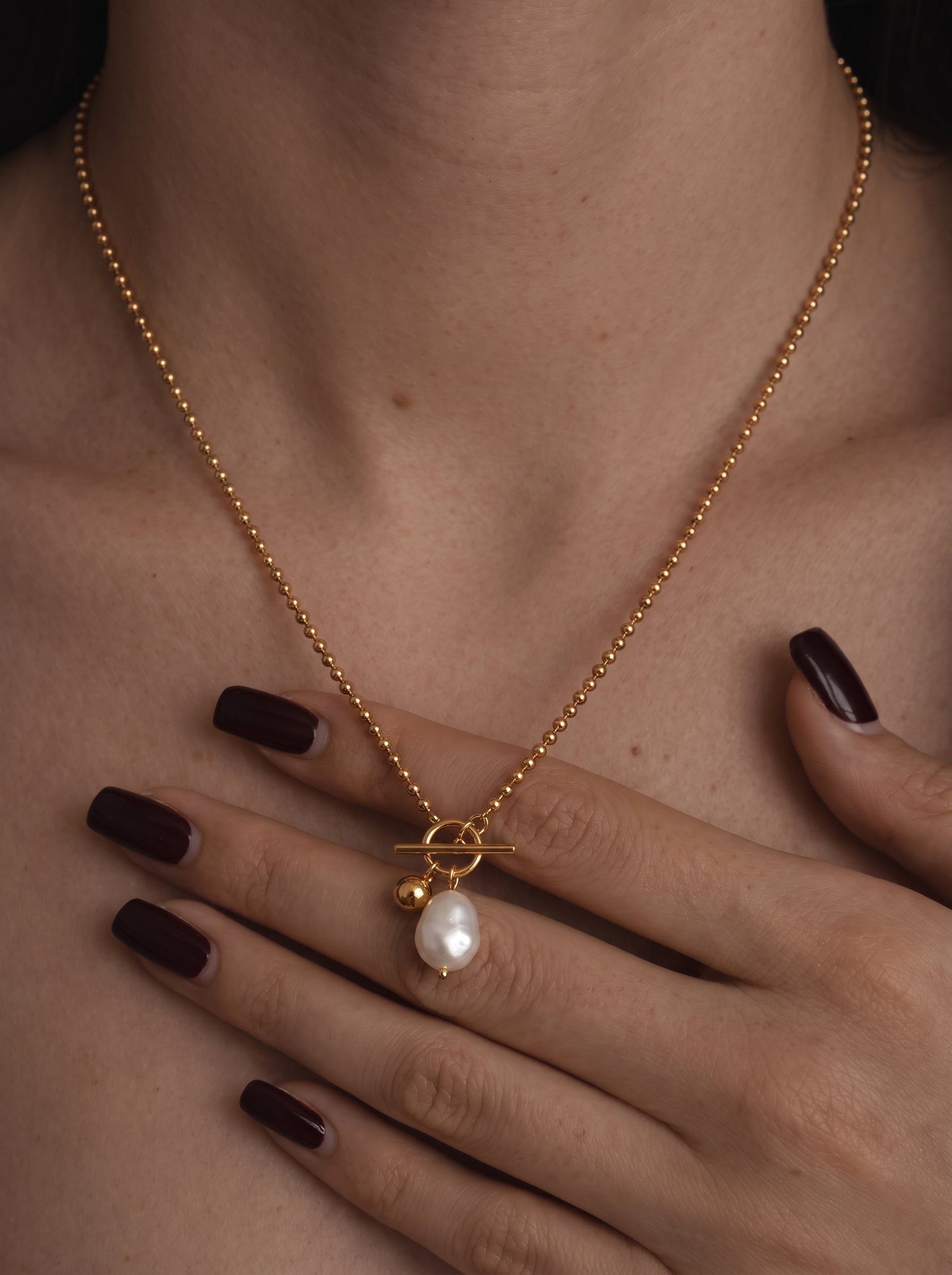
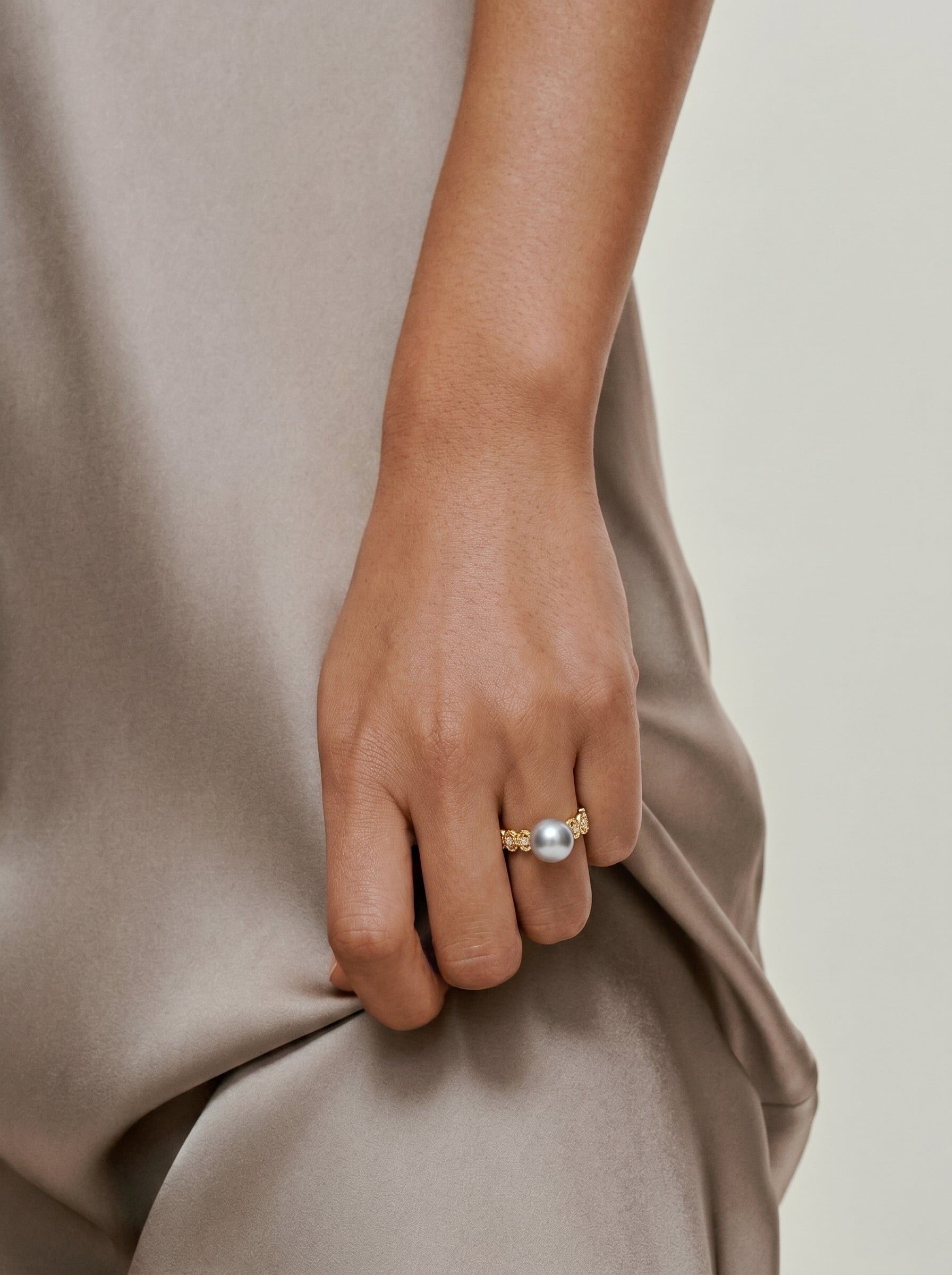
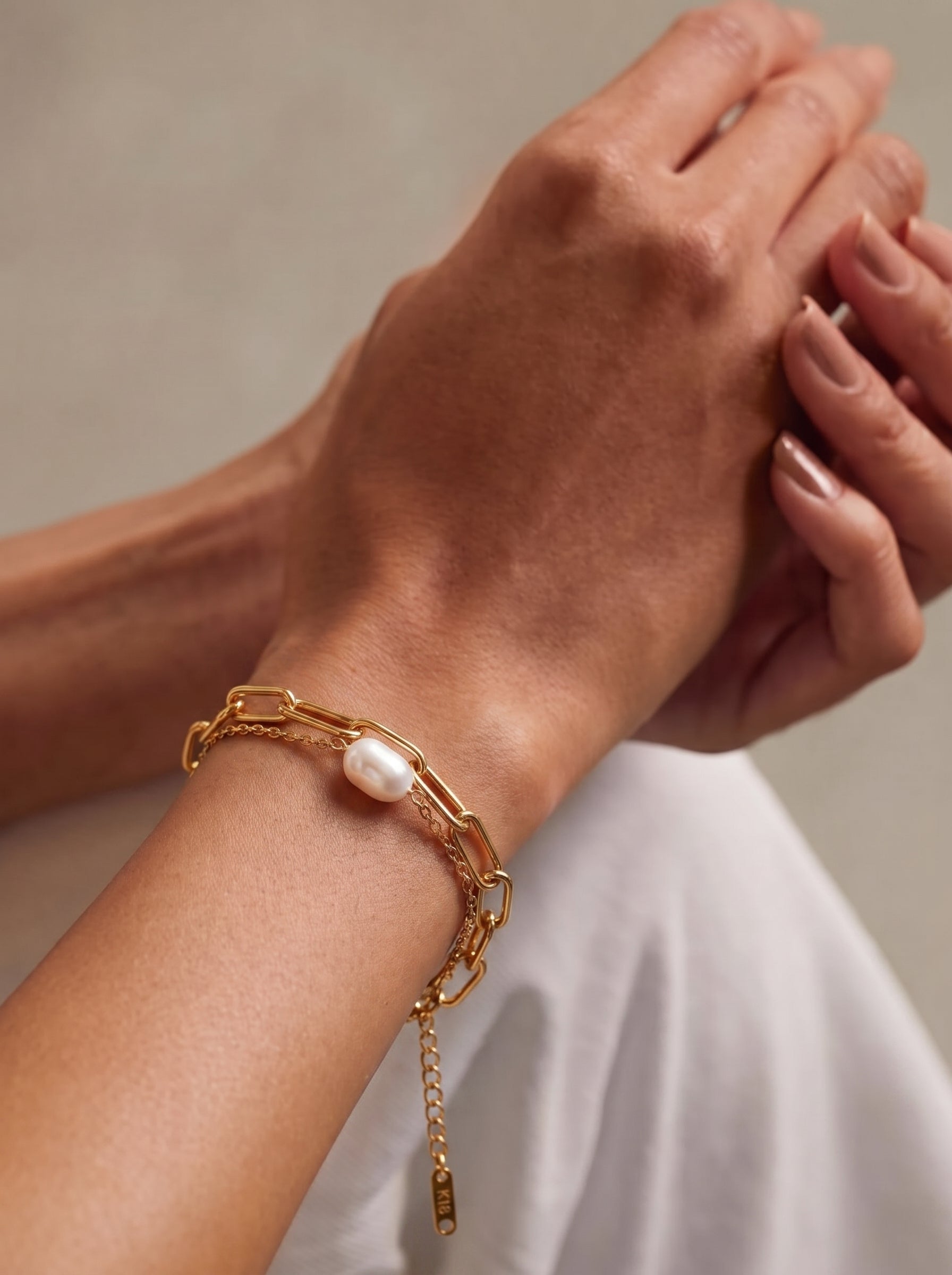
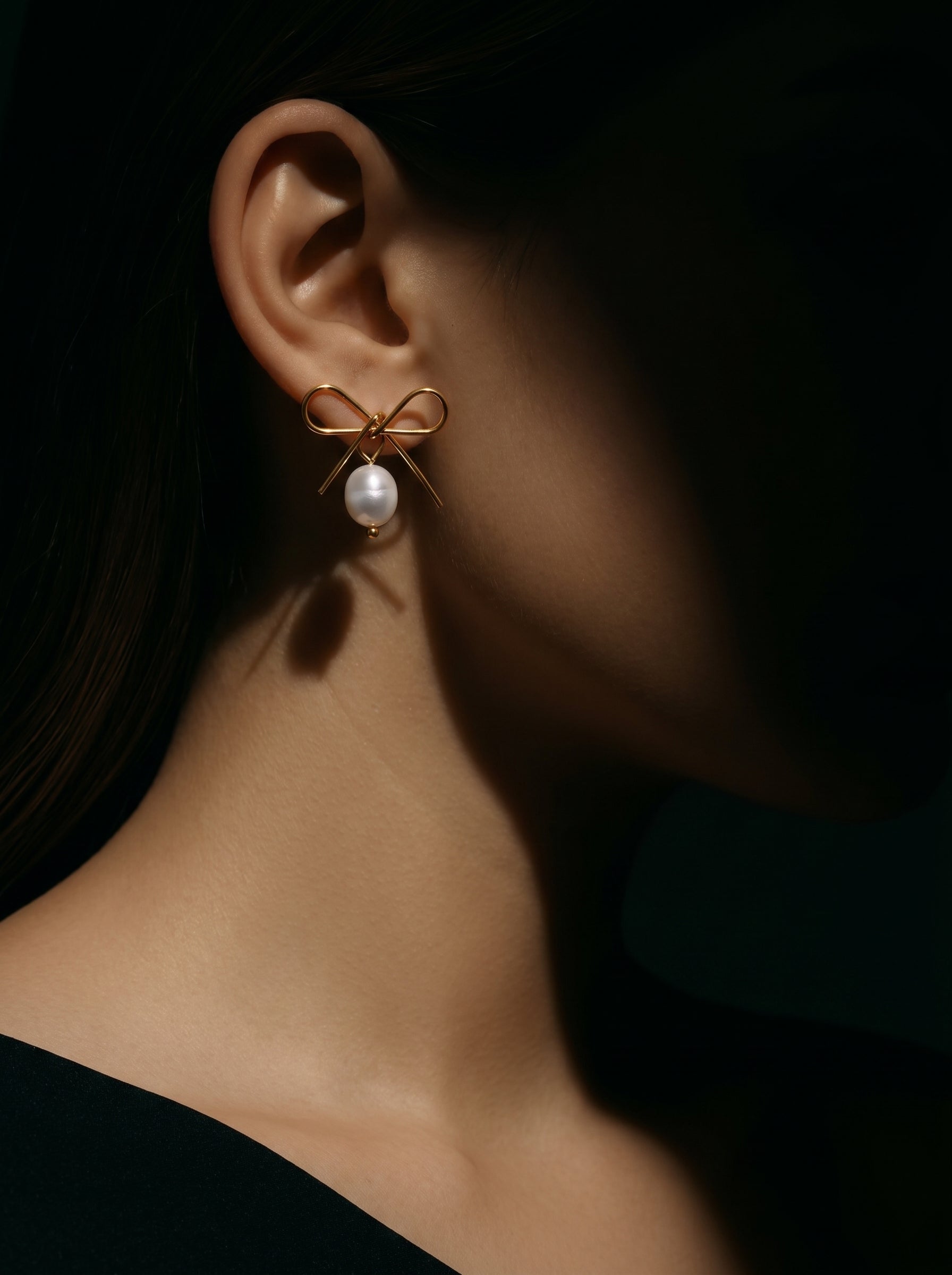
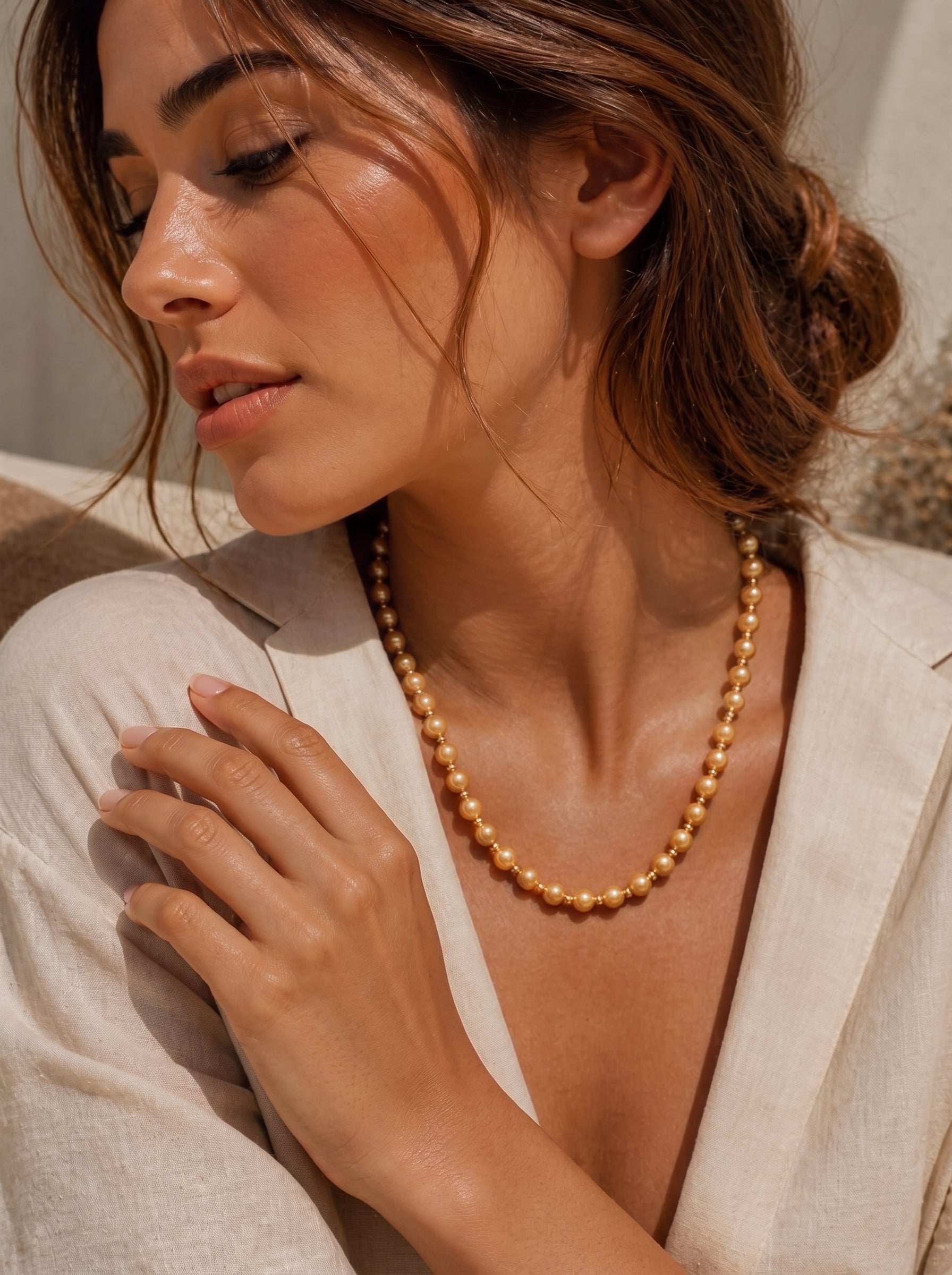
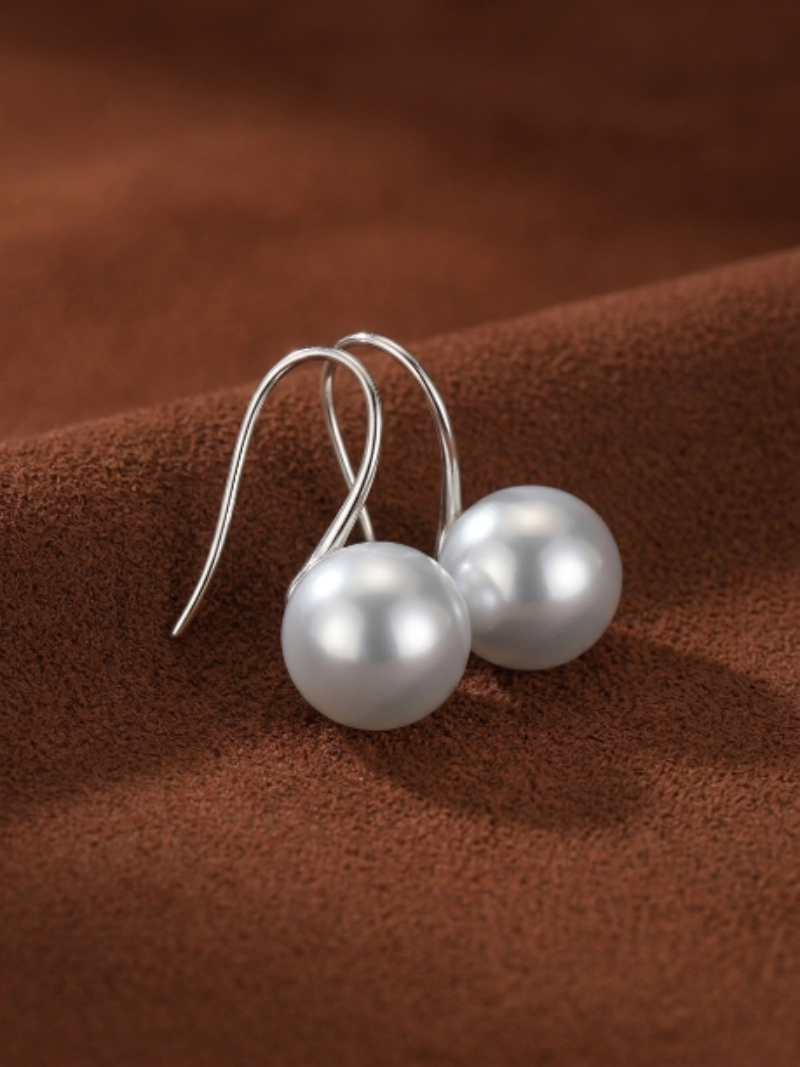
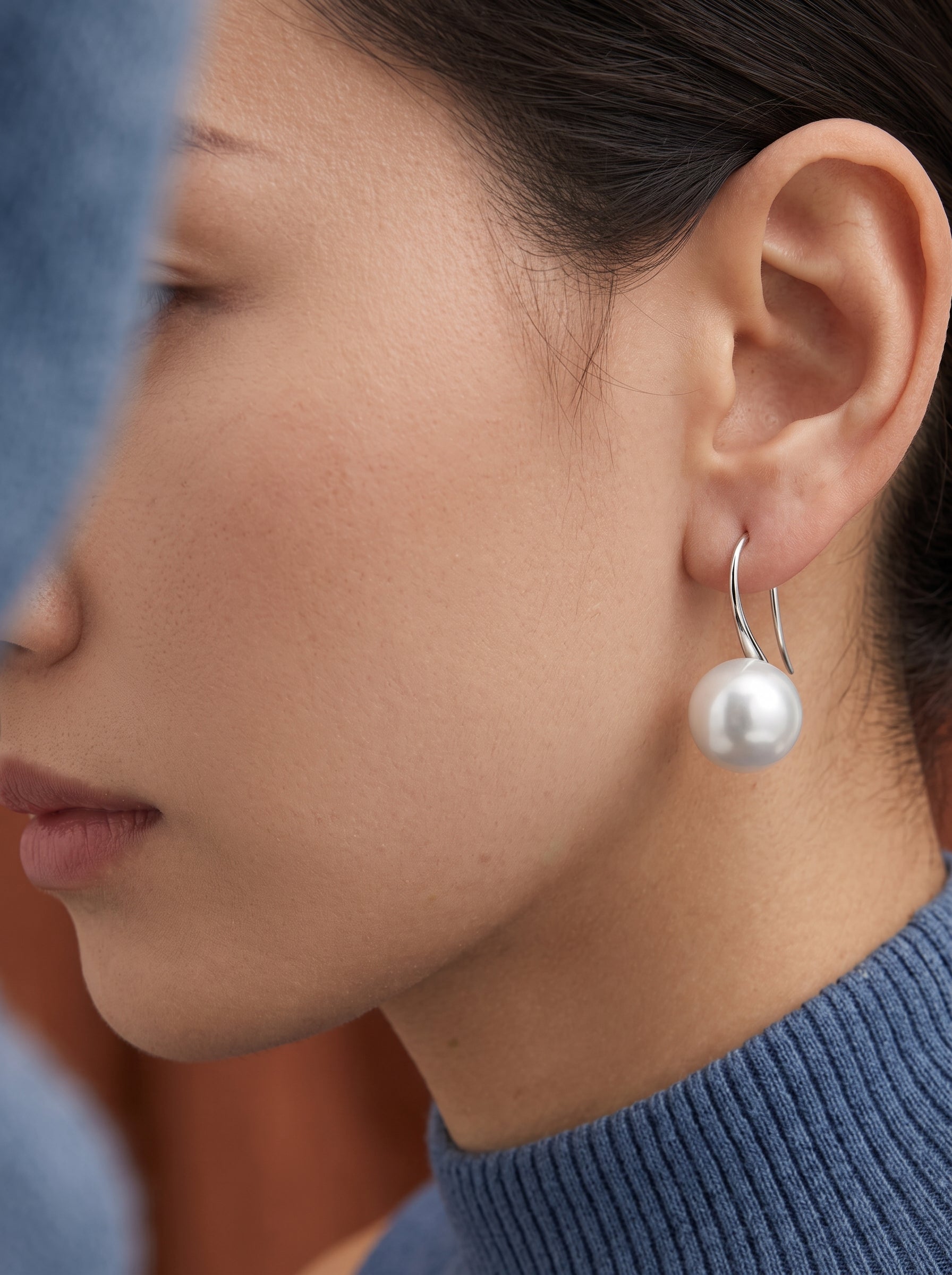
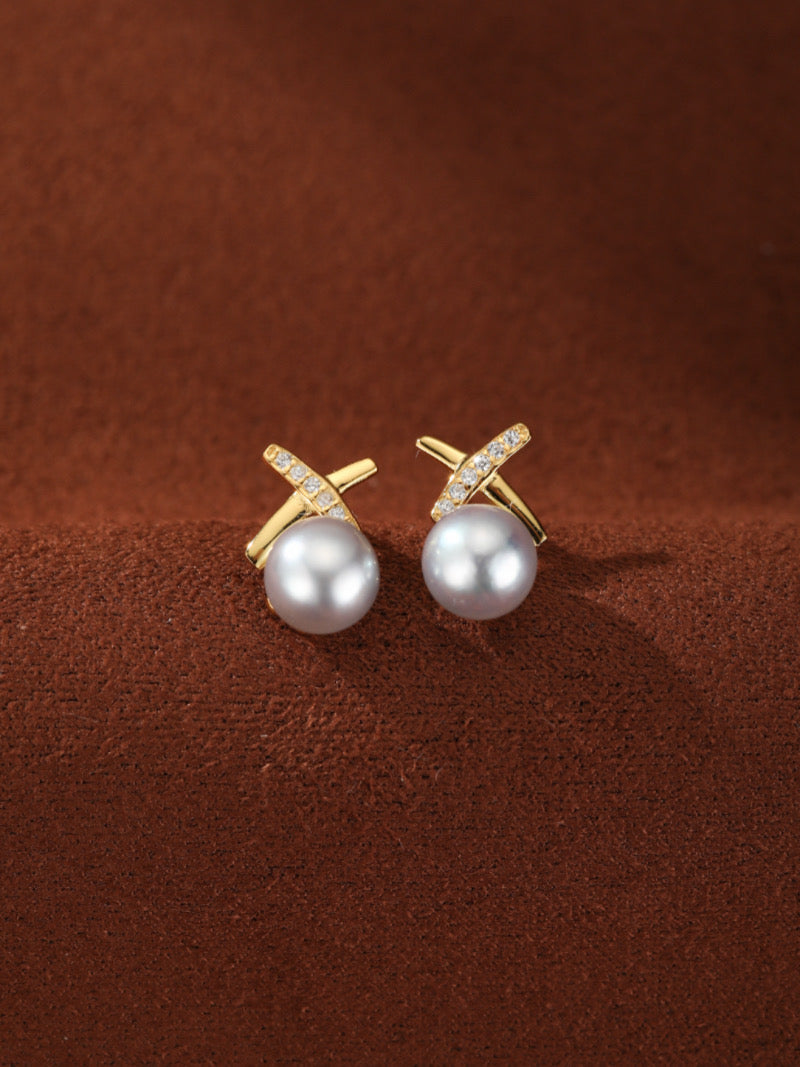
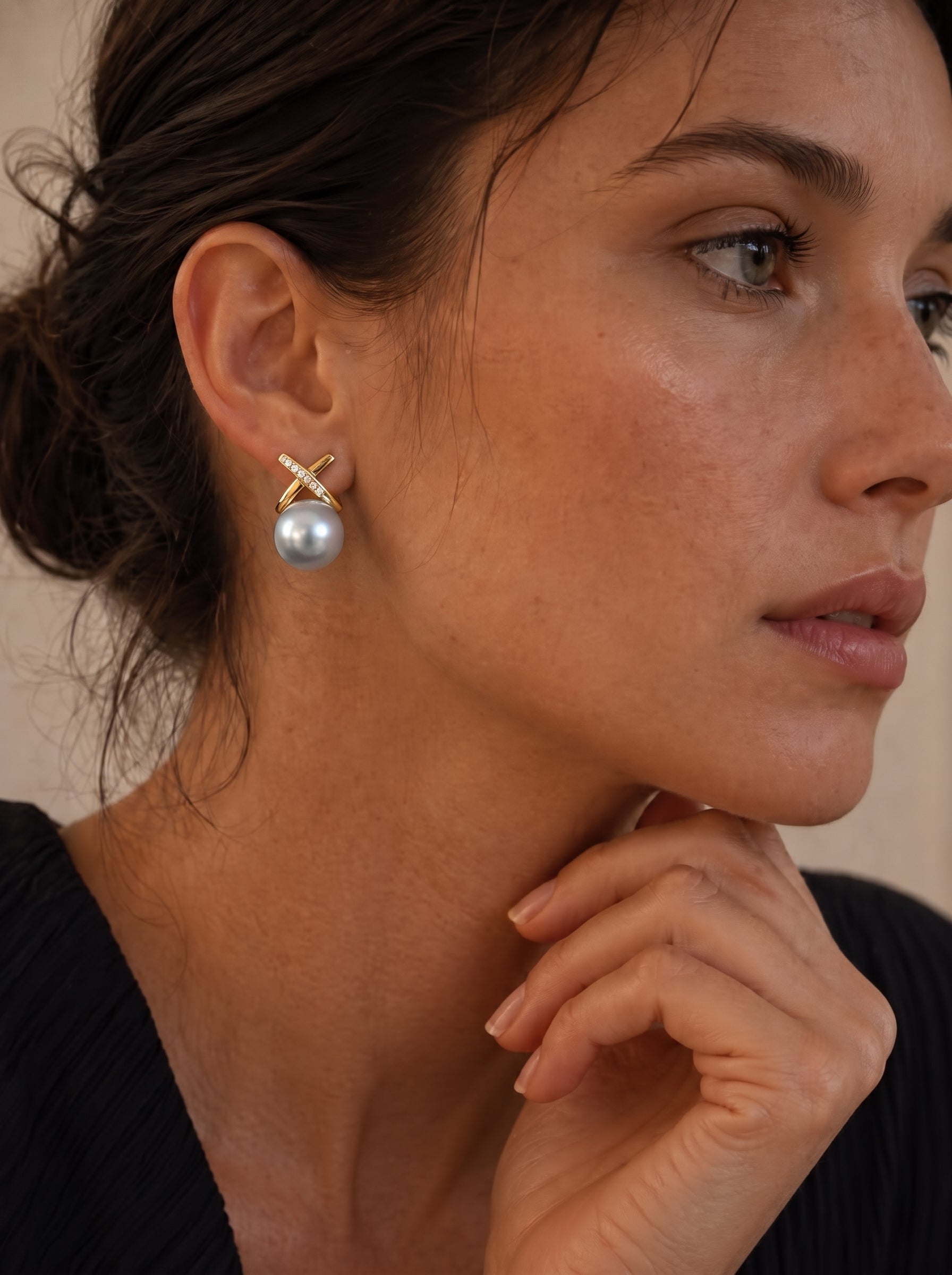
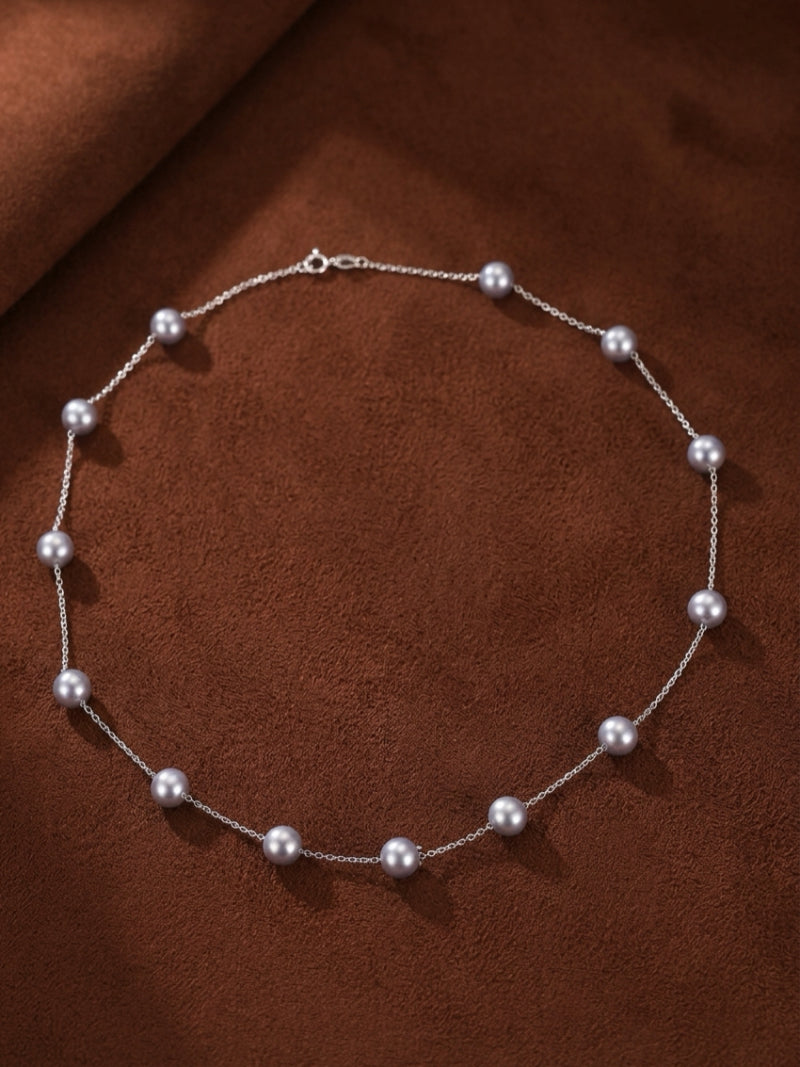
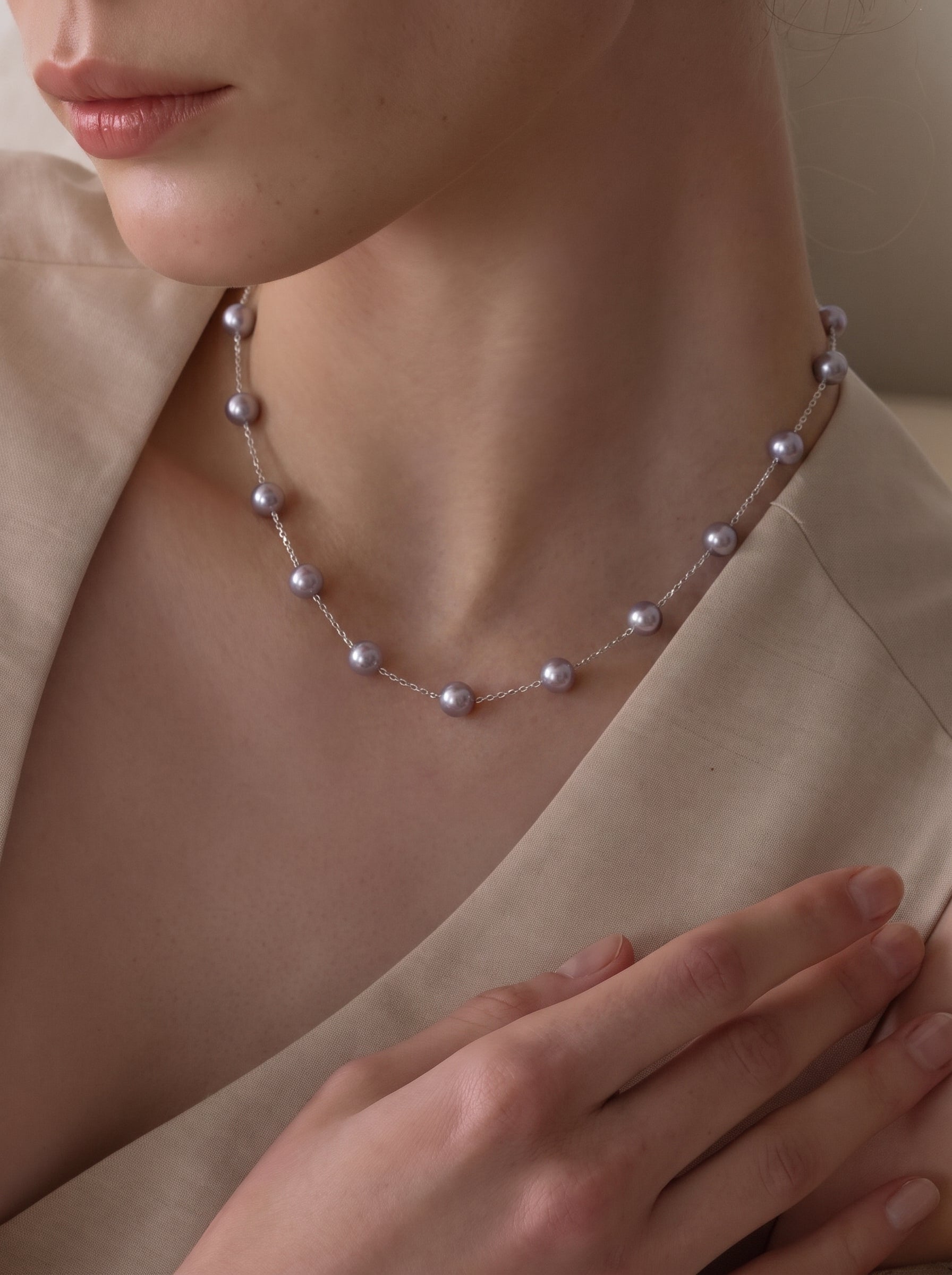
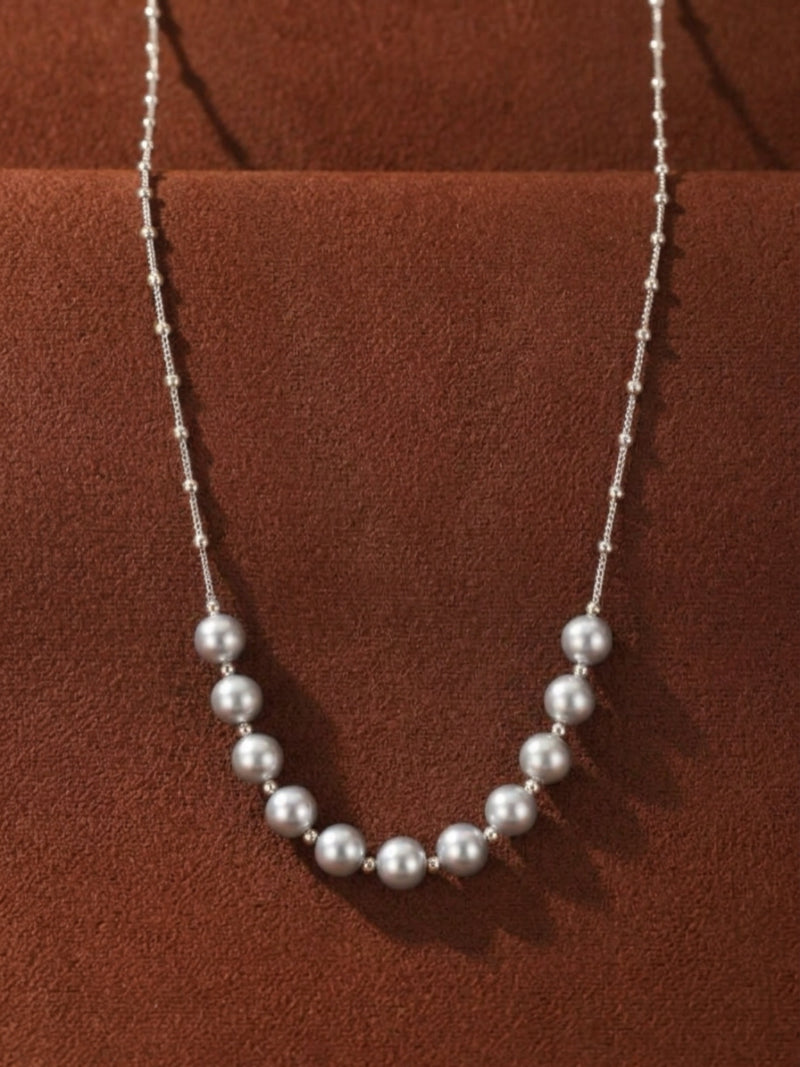
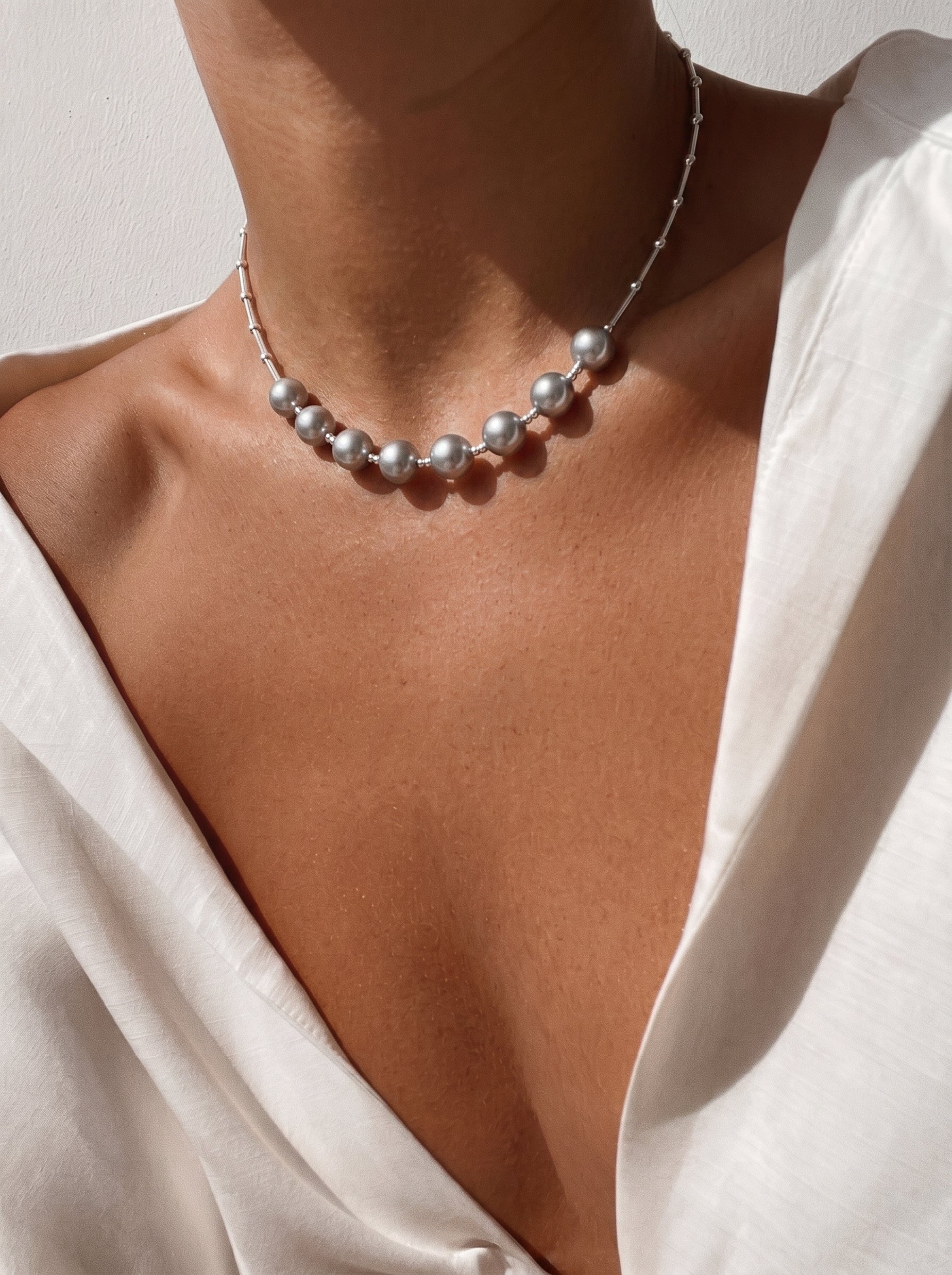
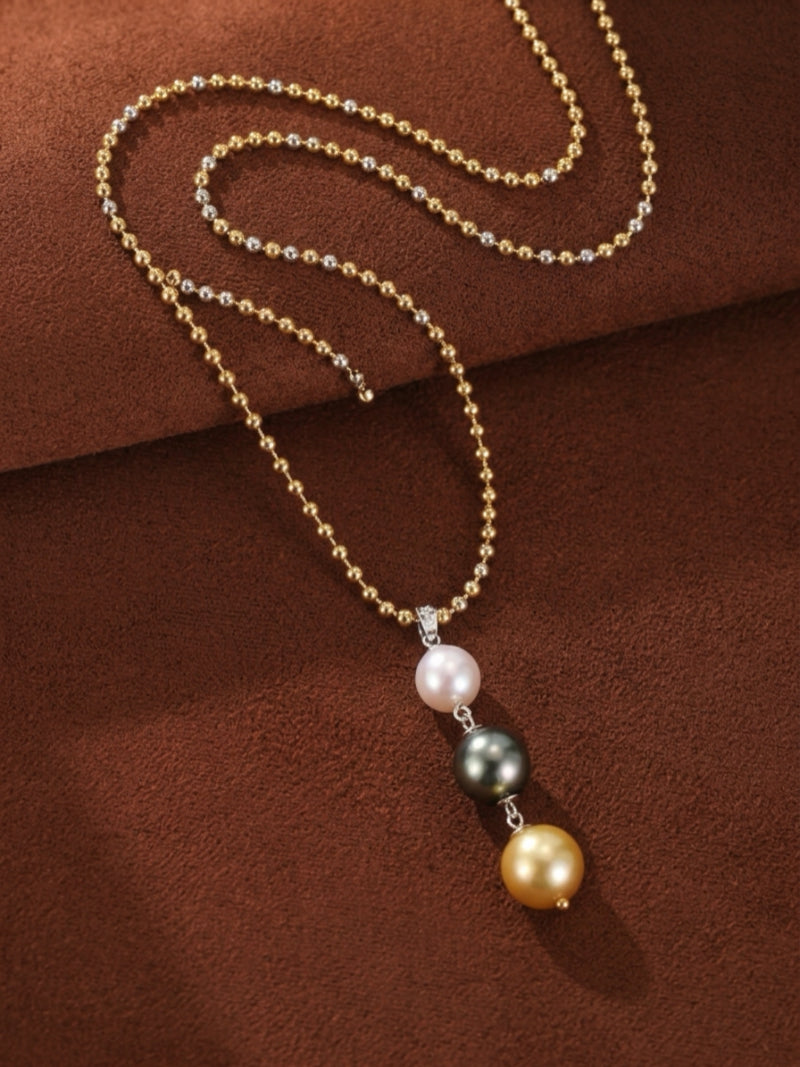
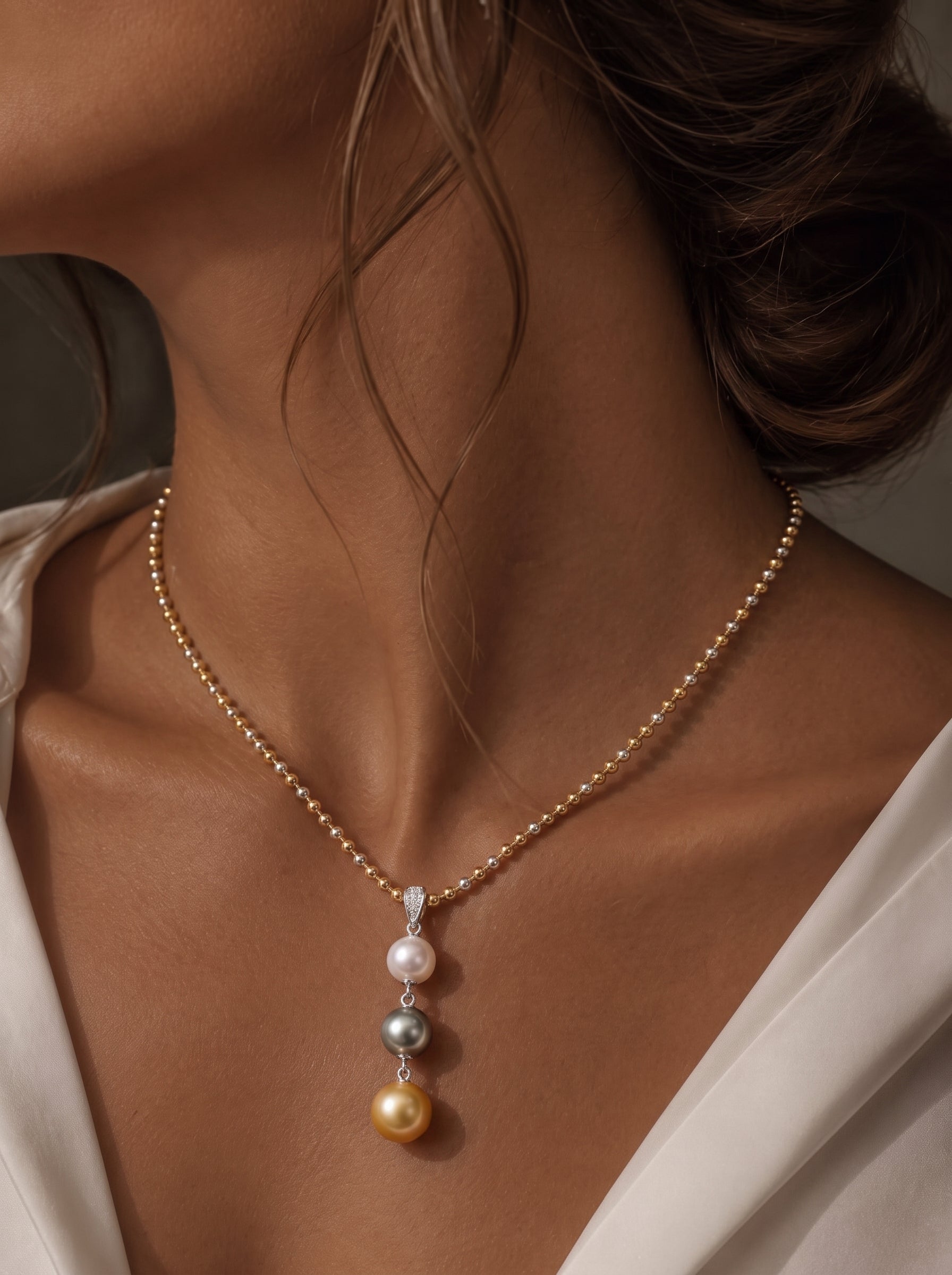
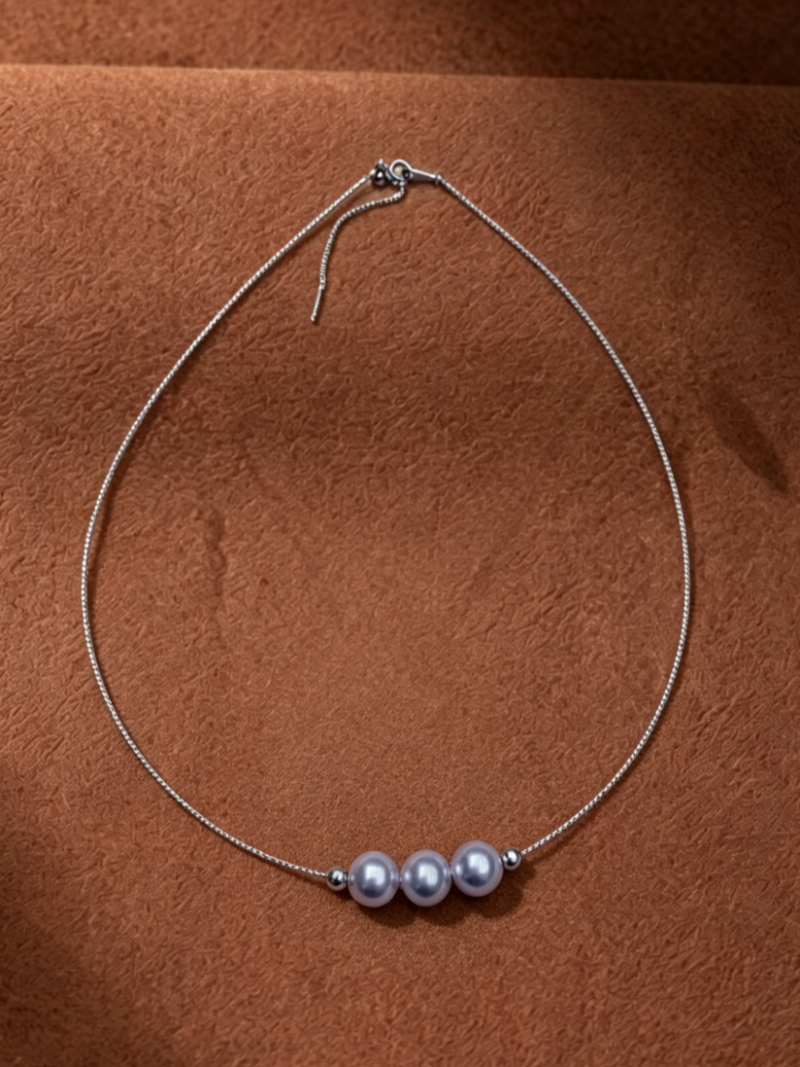
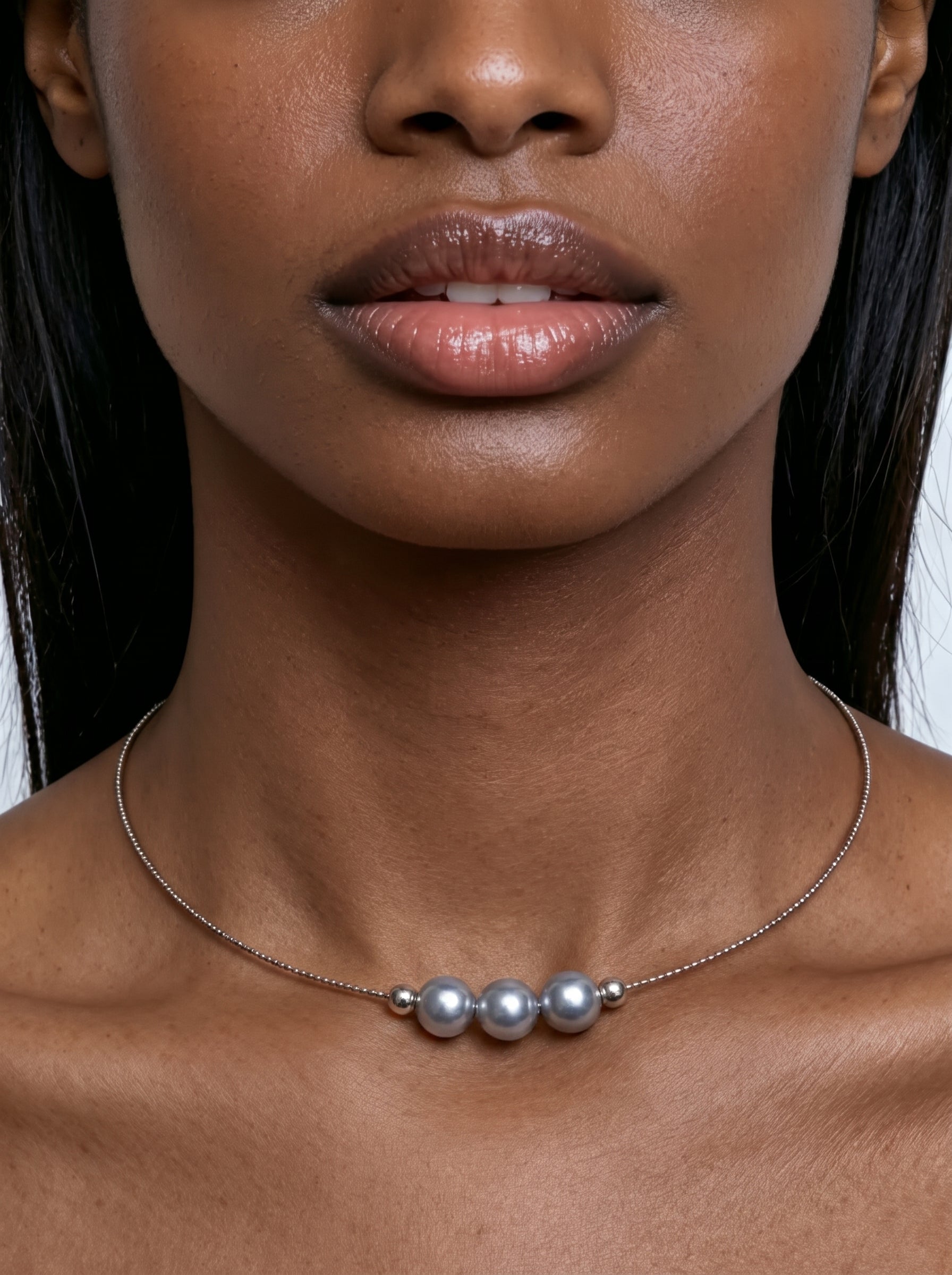
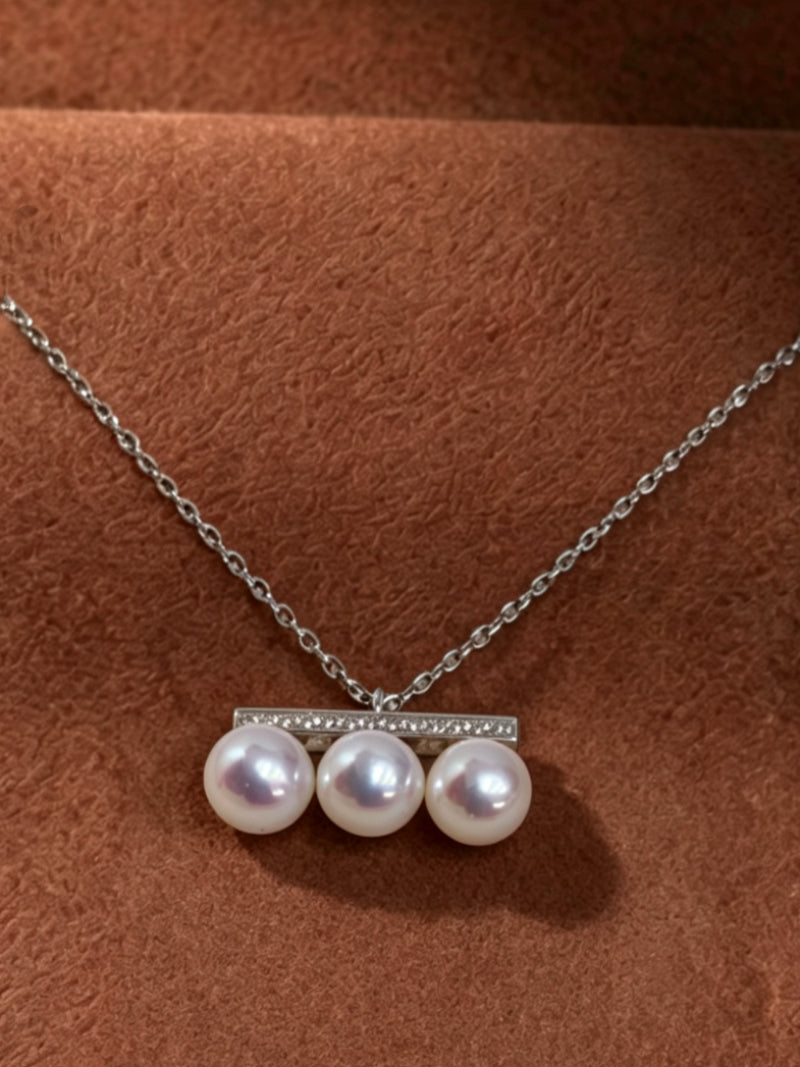
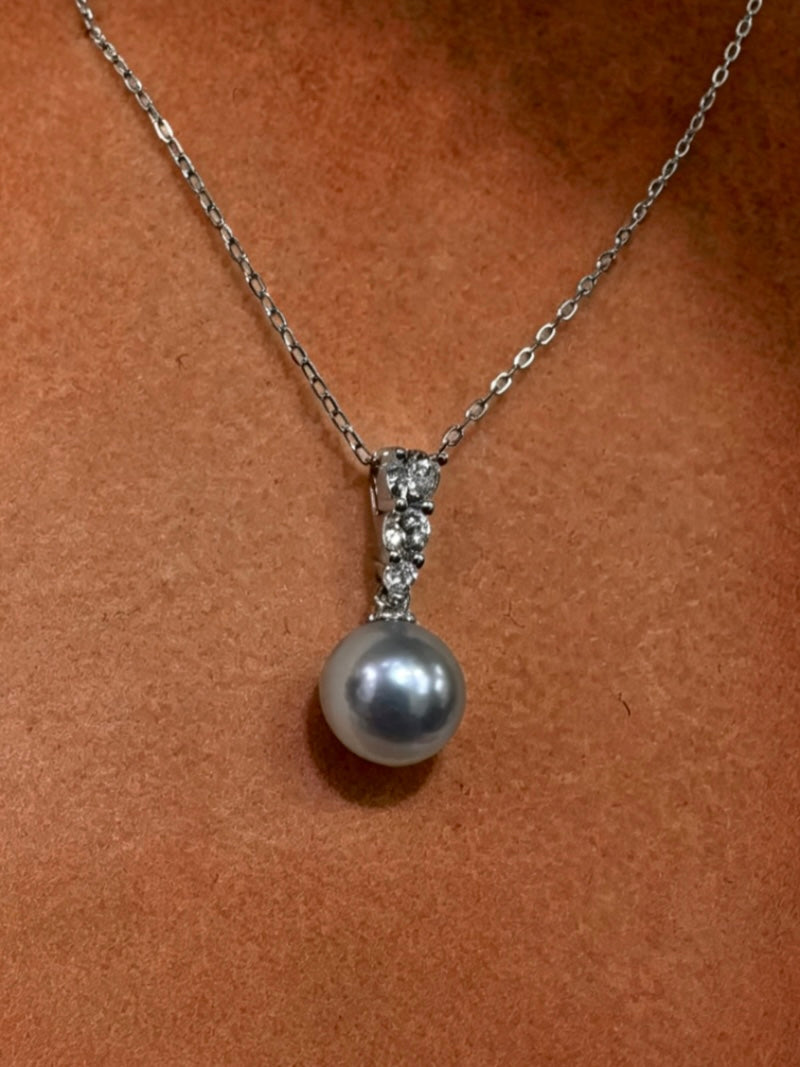
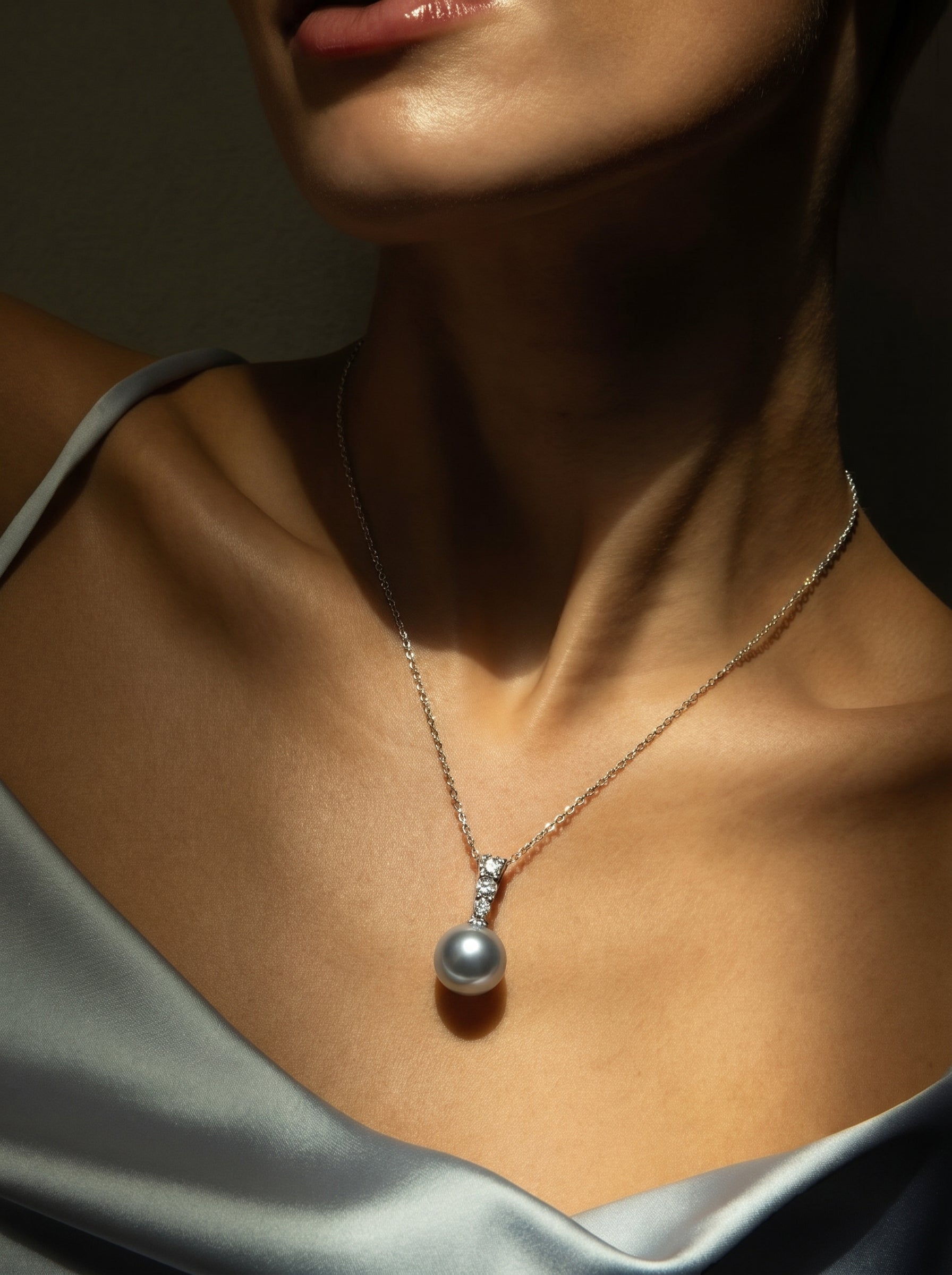
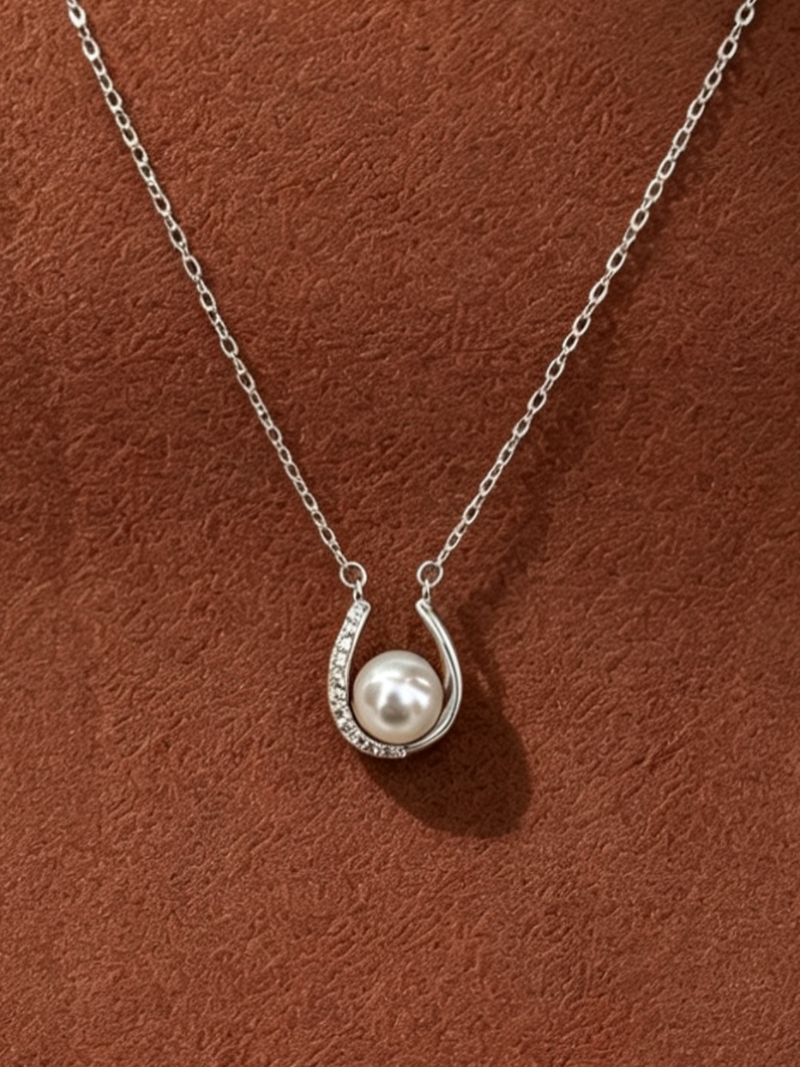
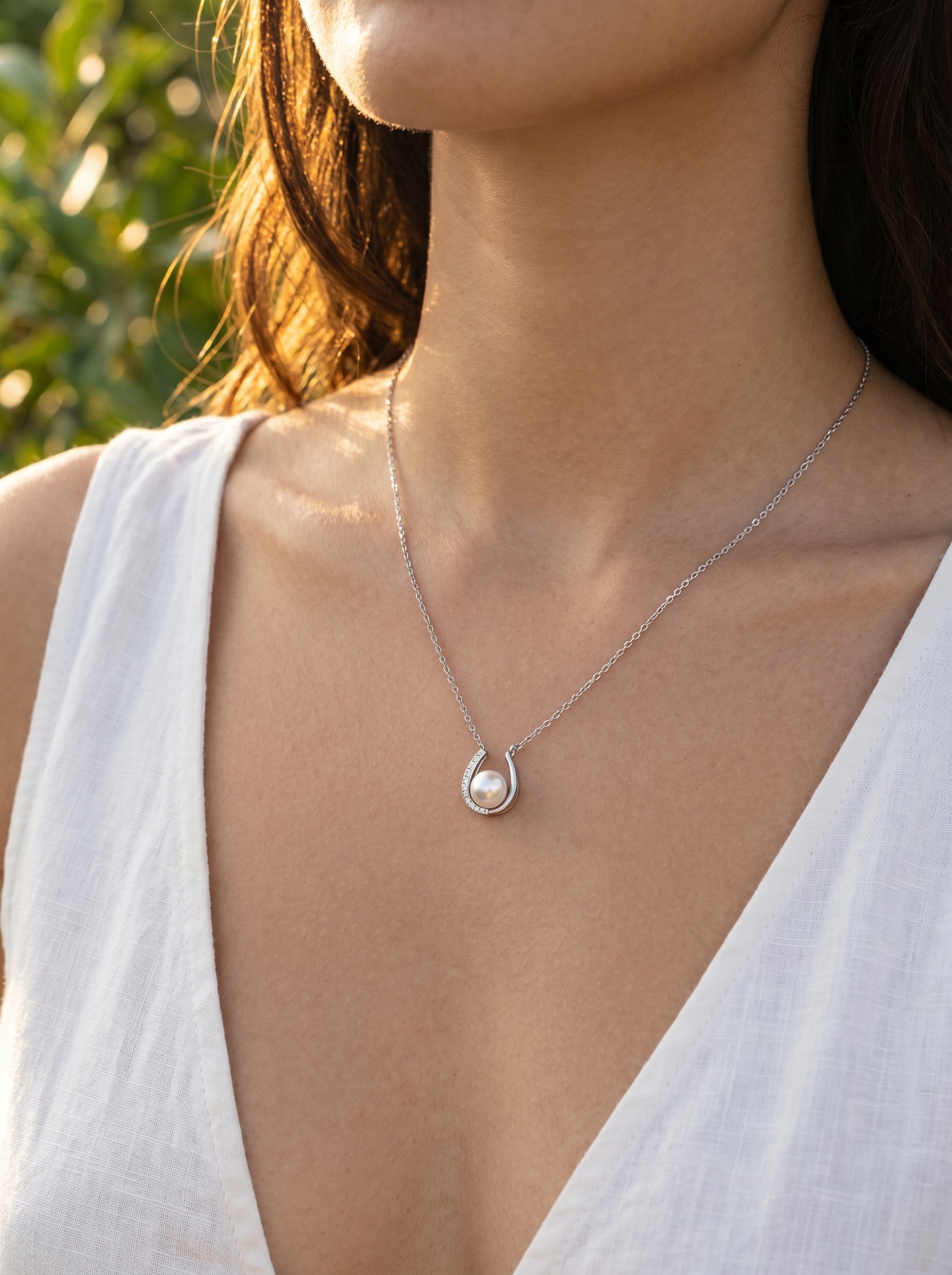
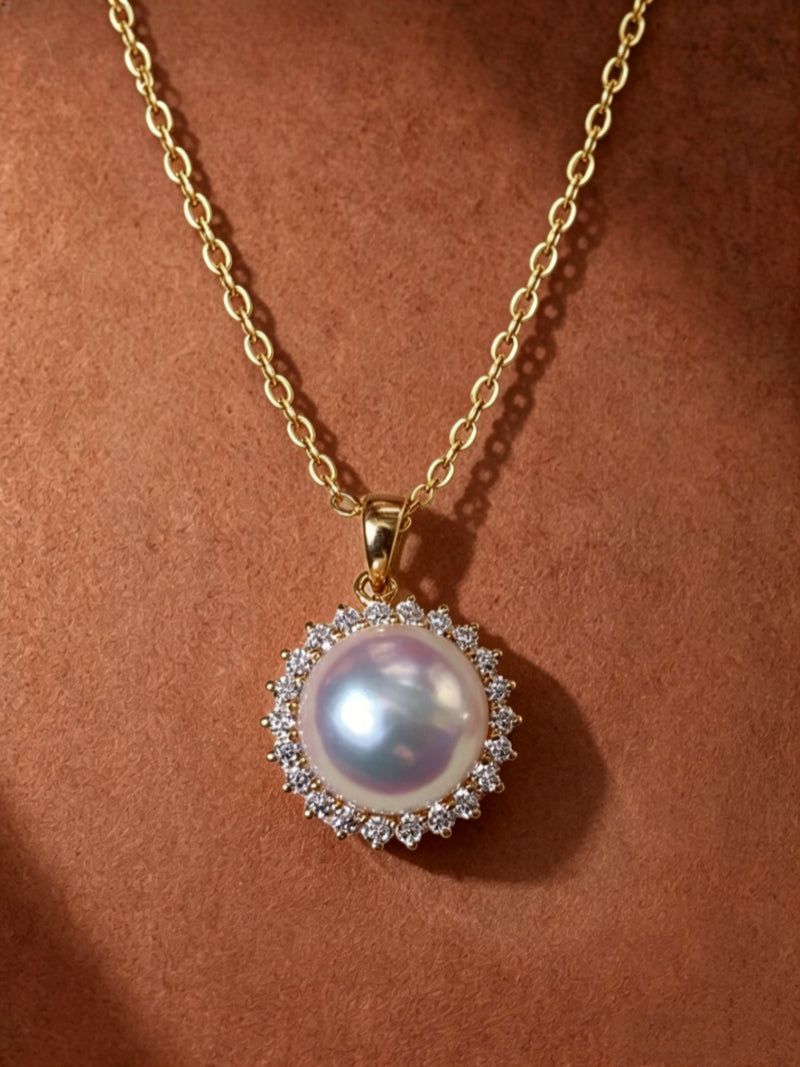
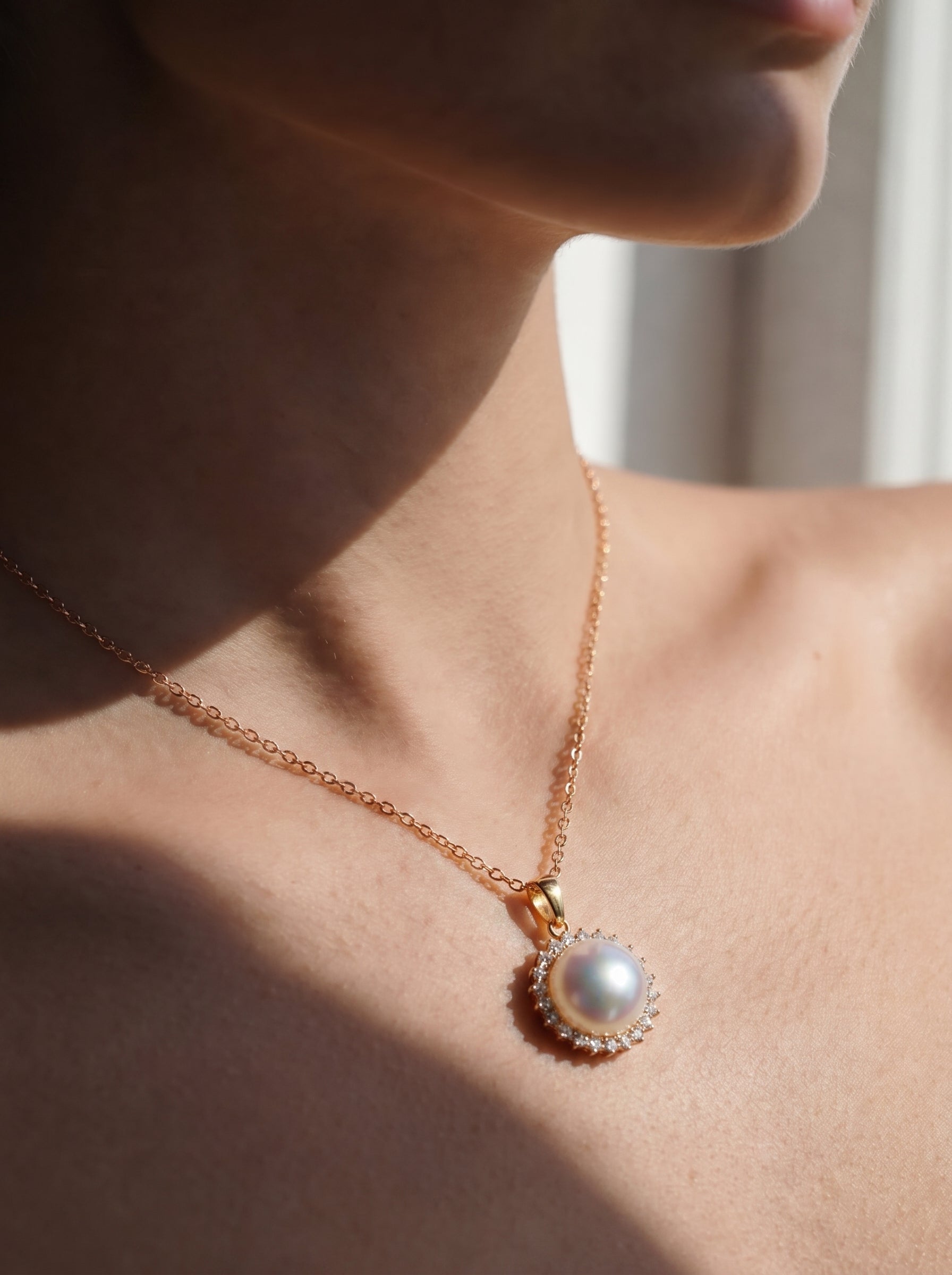
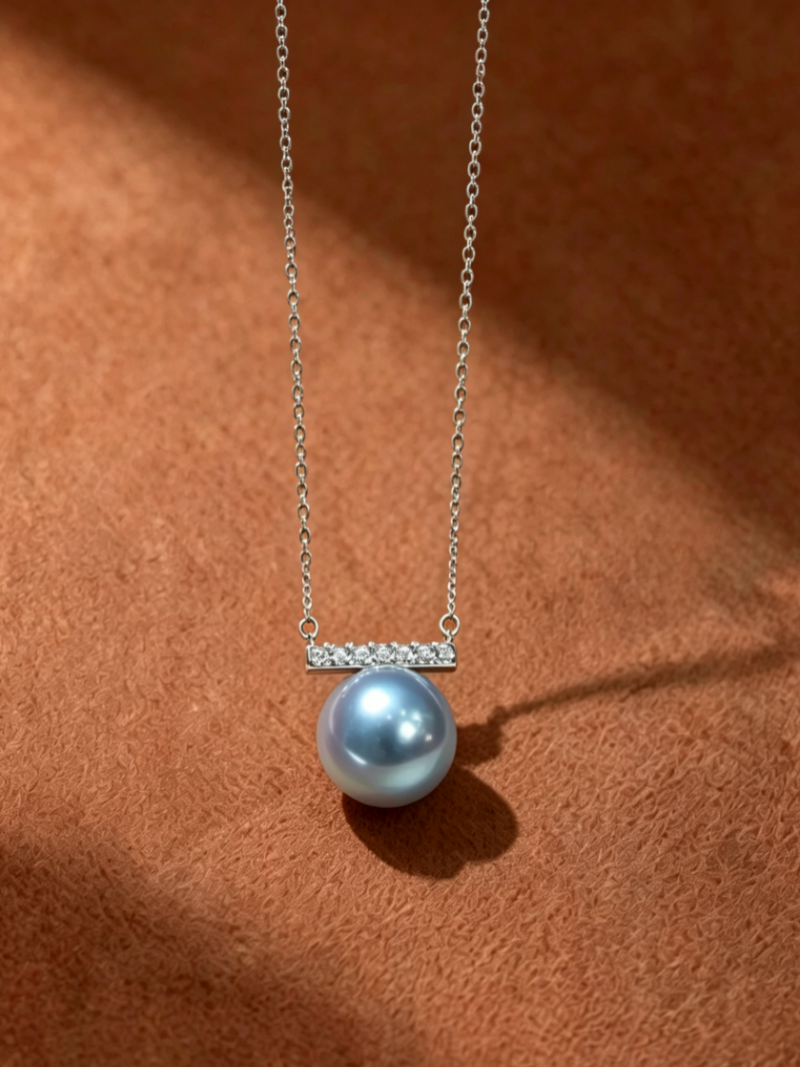
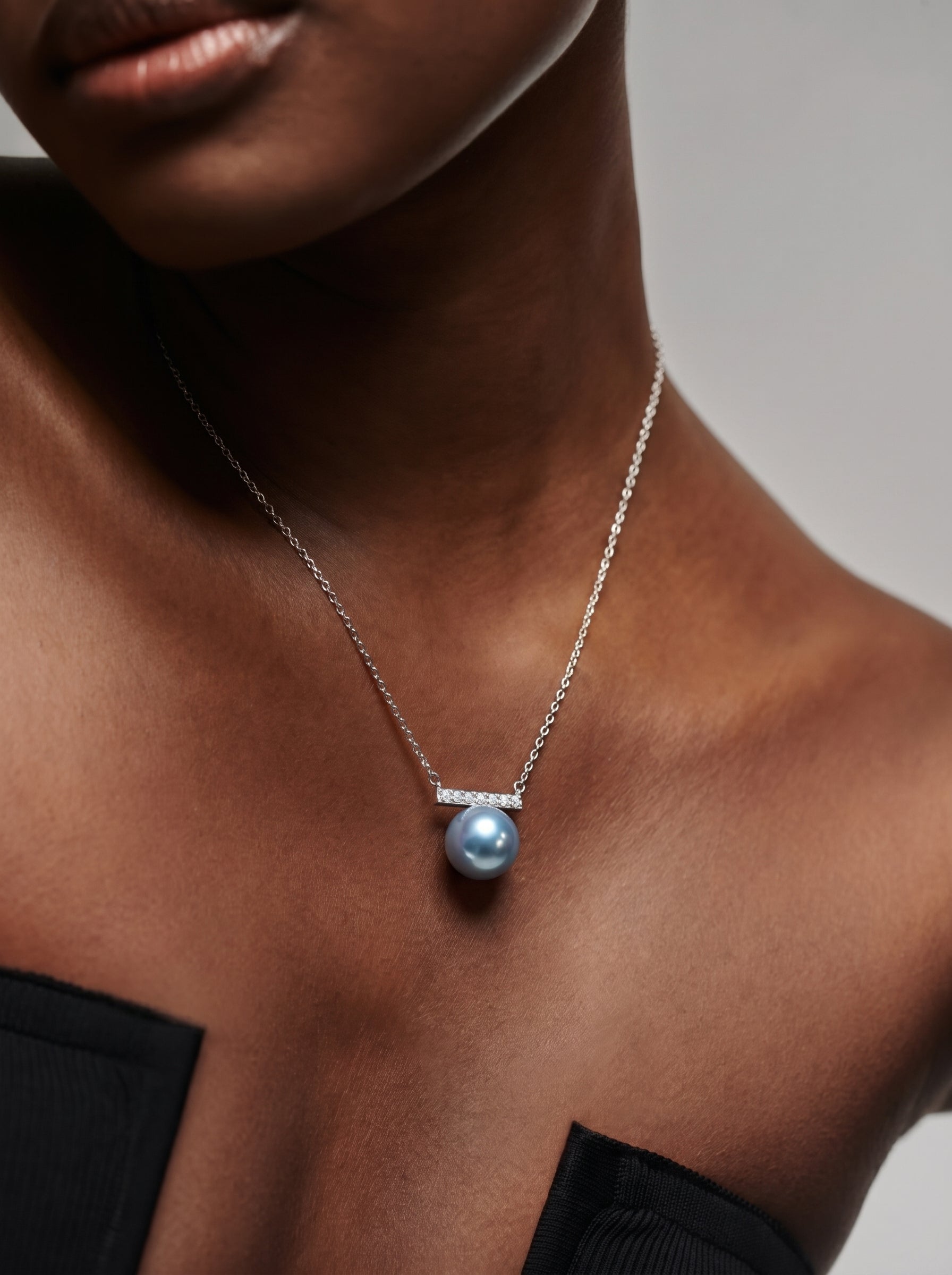
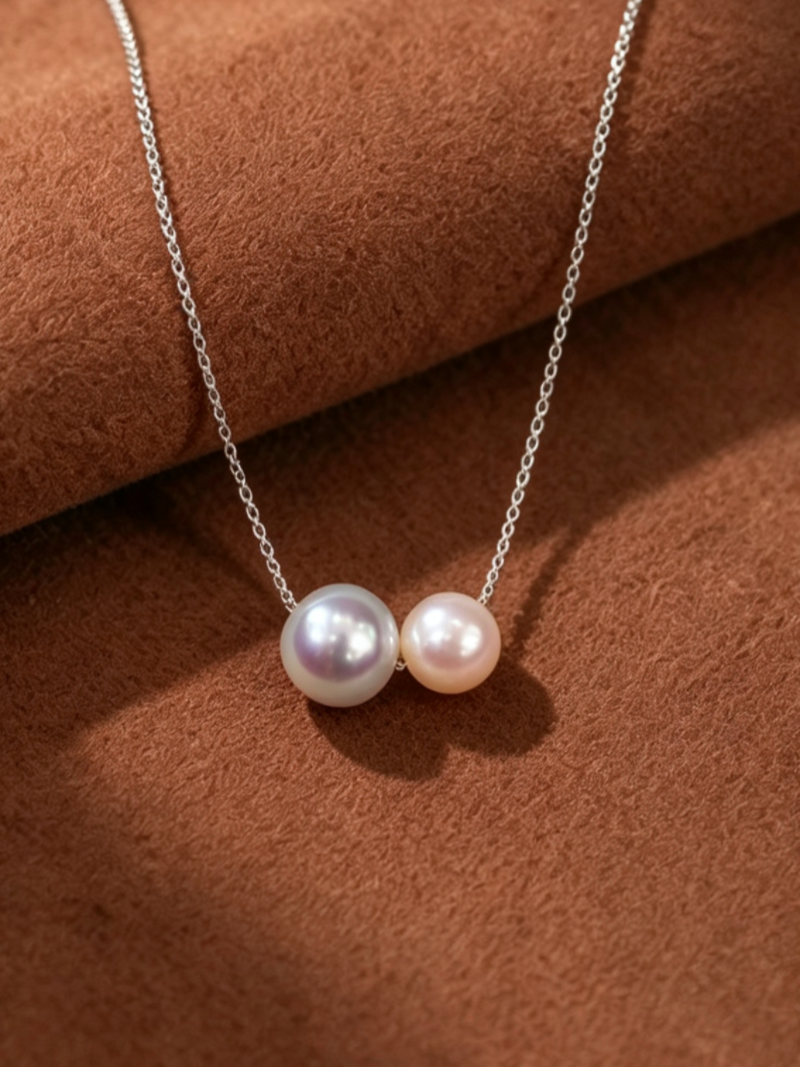
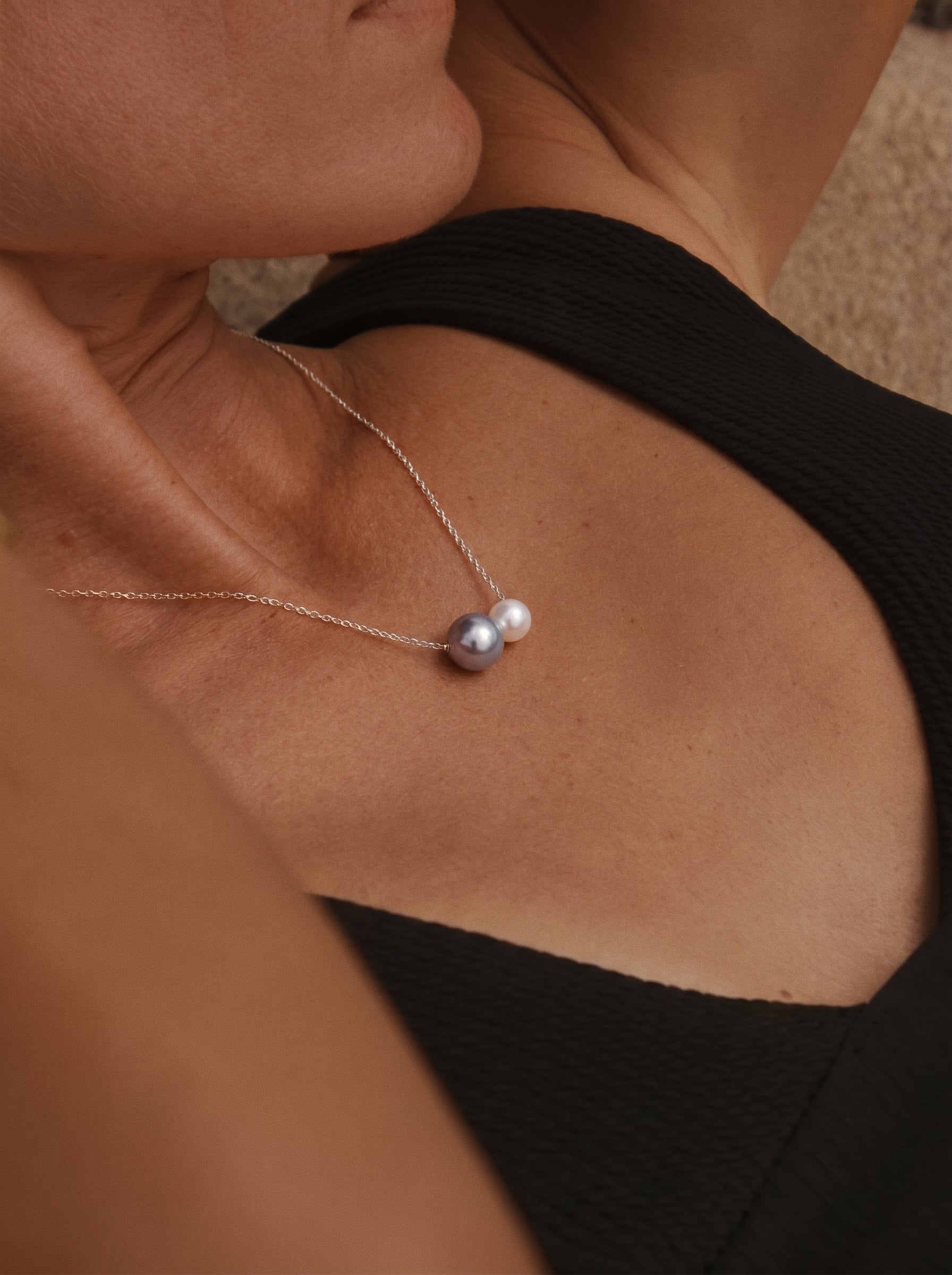
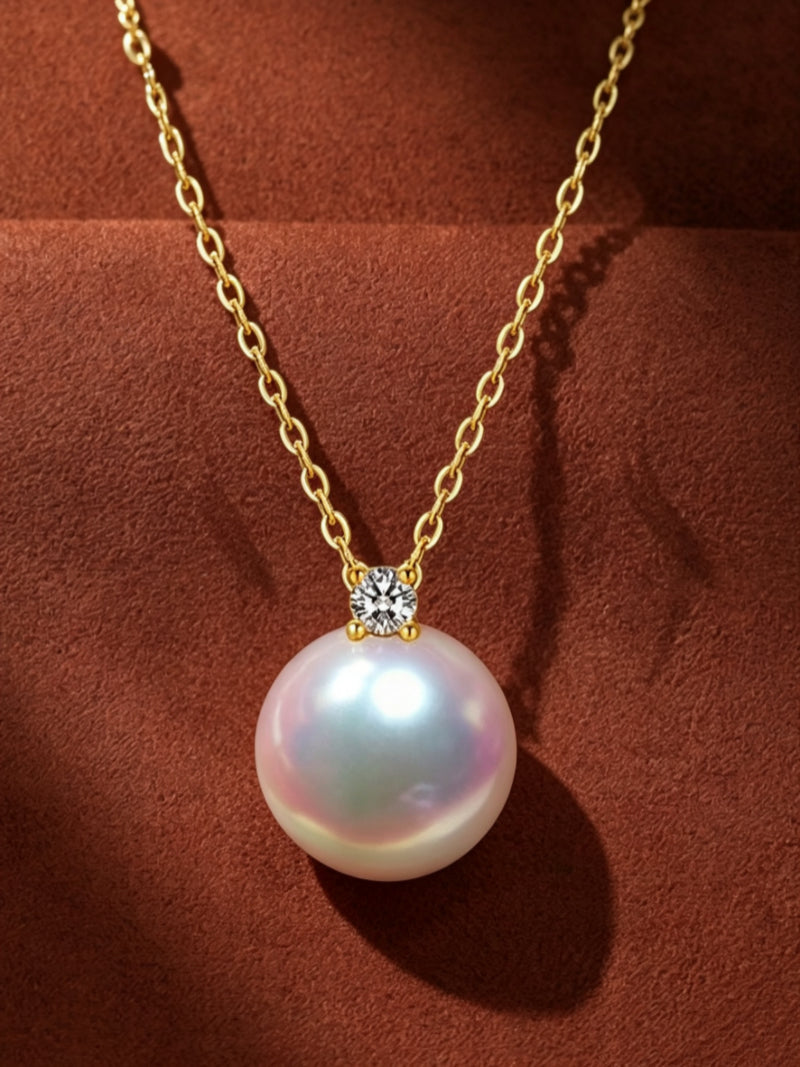
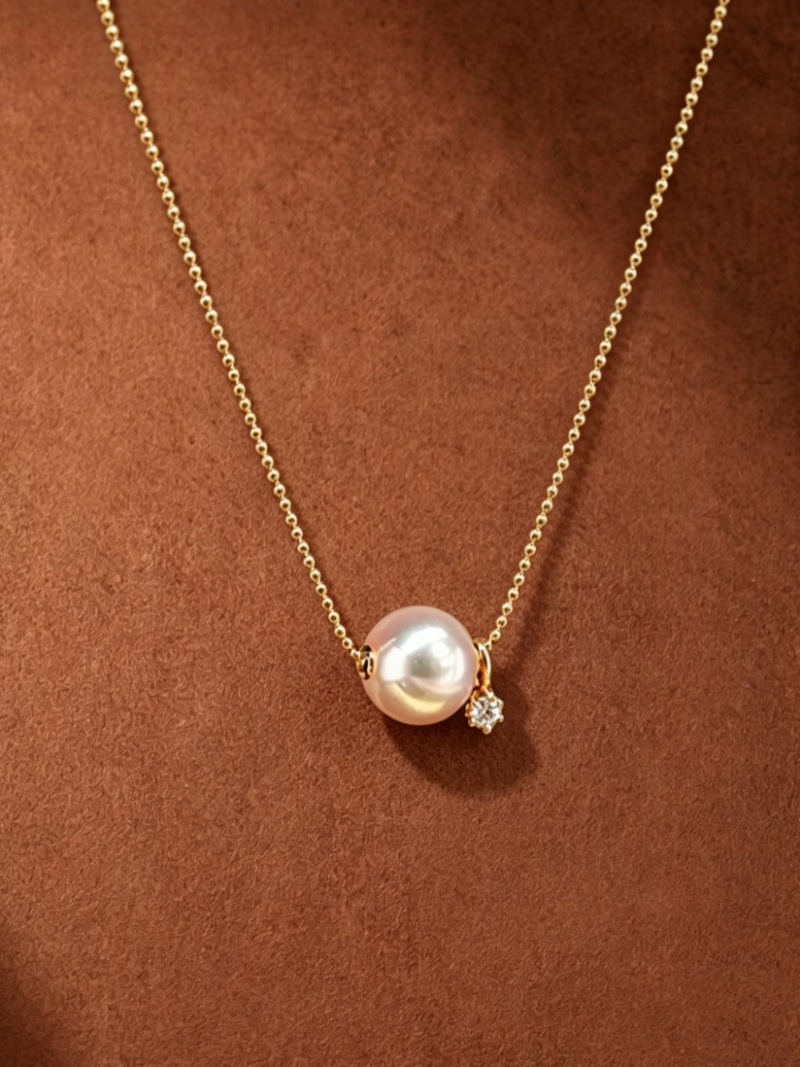
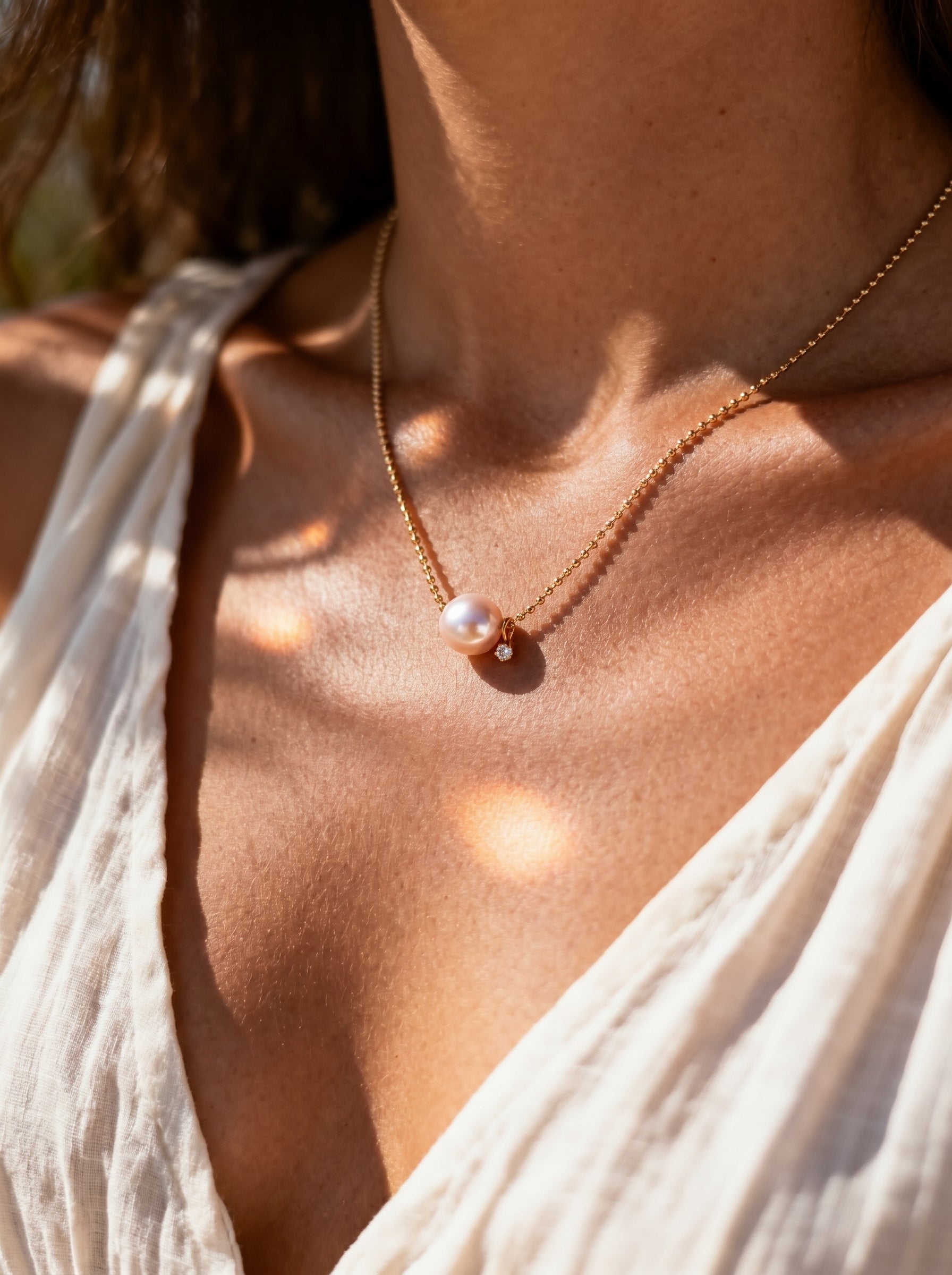
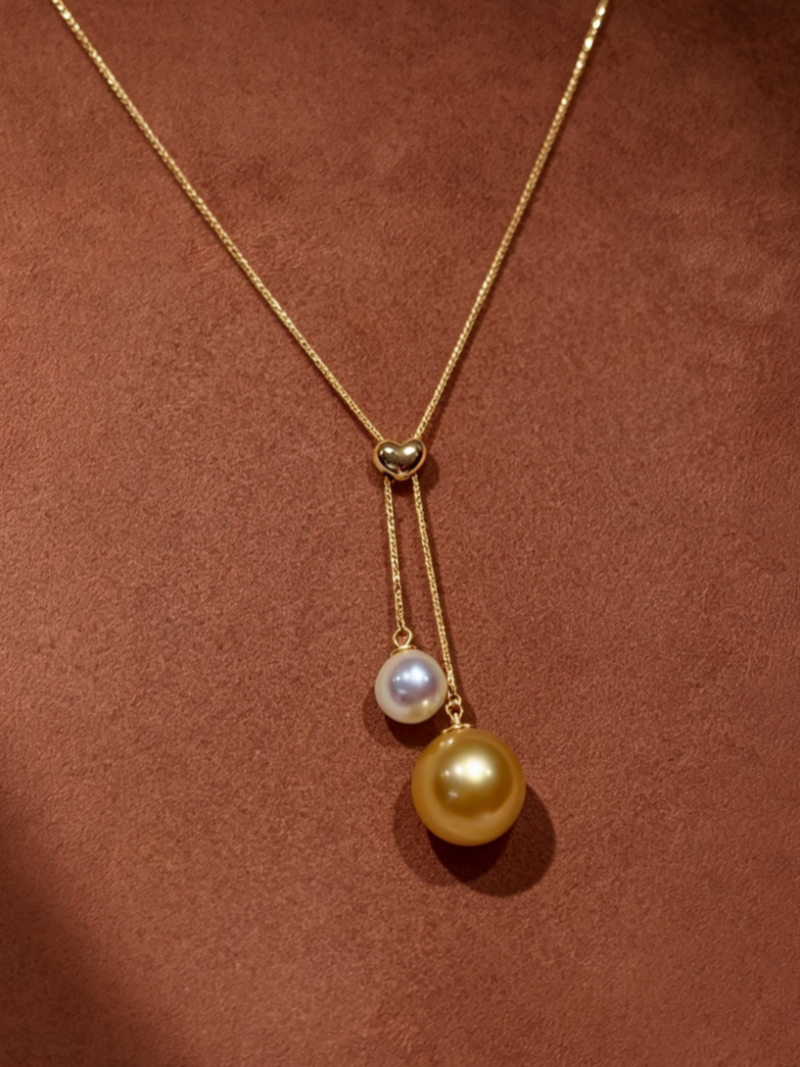
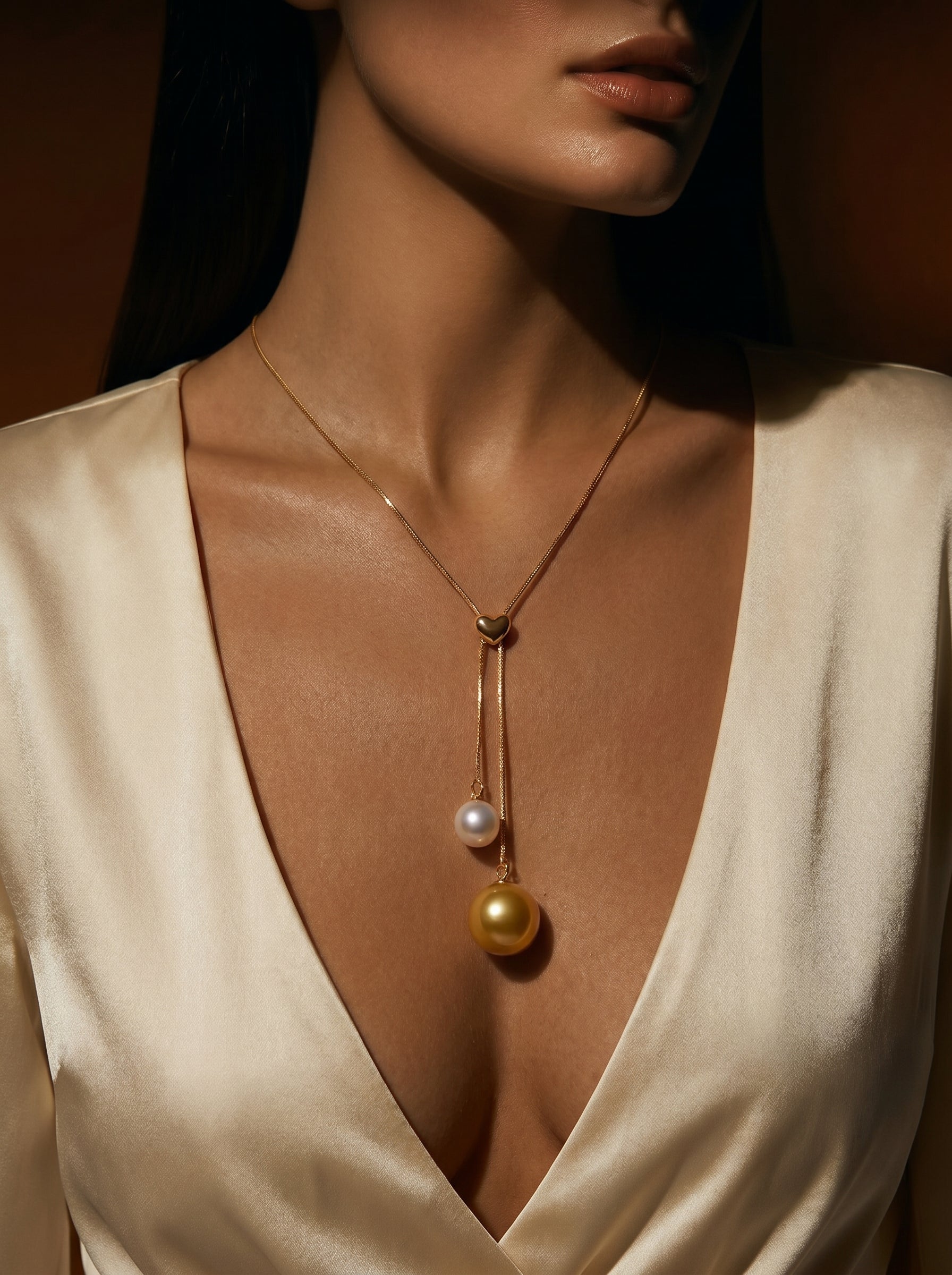
Akoya is the pearl people picture when they hear the word. Round, white, and mirror-bright, grown in Japan. It is the most exacting category in pearls, and the one where a small pearl still reads across a room.
What is an Akoya pearl?
An Akoya pearl is a saltwater cultured pearl grown in Pinctada fucata martensii, the Akoya oyster, primarily in Japan. Each pearl grows around a round shell bead inserted into the oyster, which is why Akoya pearls are consistently spherical.
The technique was developed in Japan in the early twentieth century and is the origin of the entire modern cultured pearl industry. Every cultured pearl grown anywhere today descends from that method.
Why is Akoya luster so sharp?
Akoya nacre is thin and densely layered over a shell bead, and that structure reflects light back in an almost mirror-like way. Freshwater pearls are solid nacre with a softer, deeper glow.
Neither is better. They are two different optical effects, and sharp luster is why a 7 mm Akoya registers at a distance that a larger pearl of another type would not.
What size are Akoya pearls?
Typically 6 to 9 mm. Anything above 9 mm becomes scarce quickly, because the Akoya oyster is small and cannot accommodate a larger nucleus. That ceiling is part of why a matched Akoya strand costs what it does.
Because the luster is sharp, you can go a size smaller in Akoya than you would in another pearl type and still be seen.
Why are Akoya pearls expensive?
Yield and matching. The oyster is small, produces one pearl per cycle, and gives a low proportion of gem-grade results. Then, for anything more than a single pearl, hundreds have to be sorted until enough agree on size, shape, color and overtone.
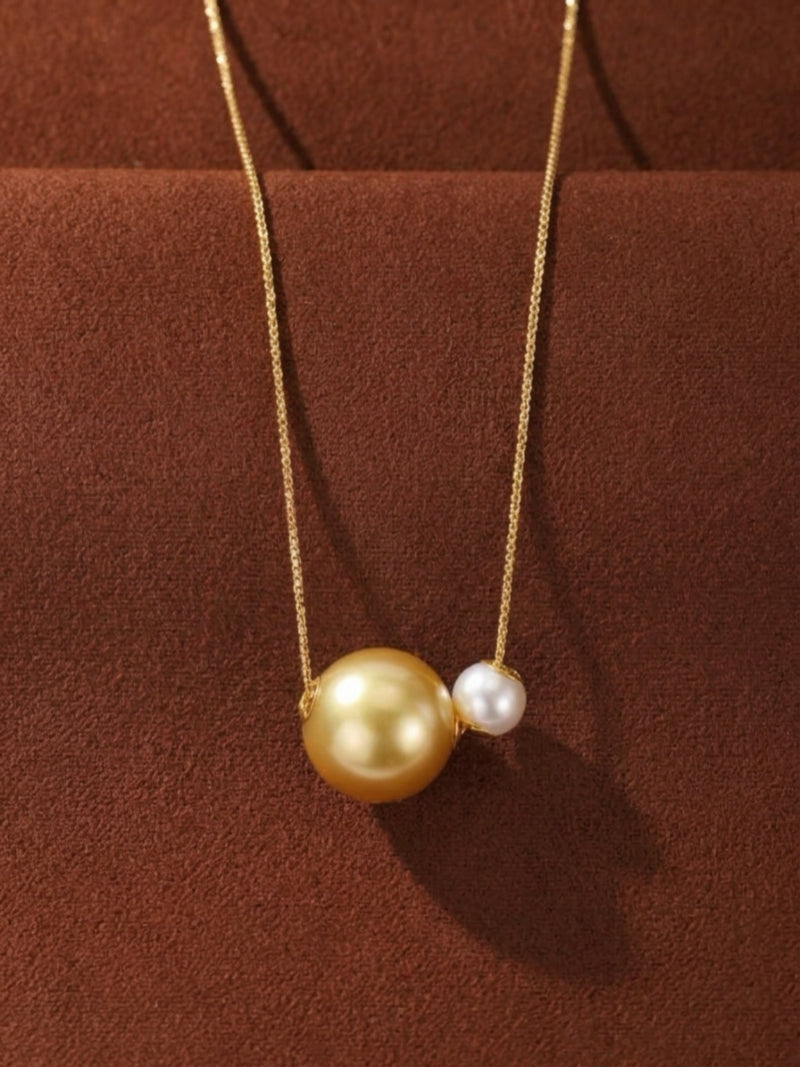
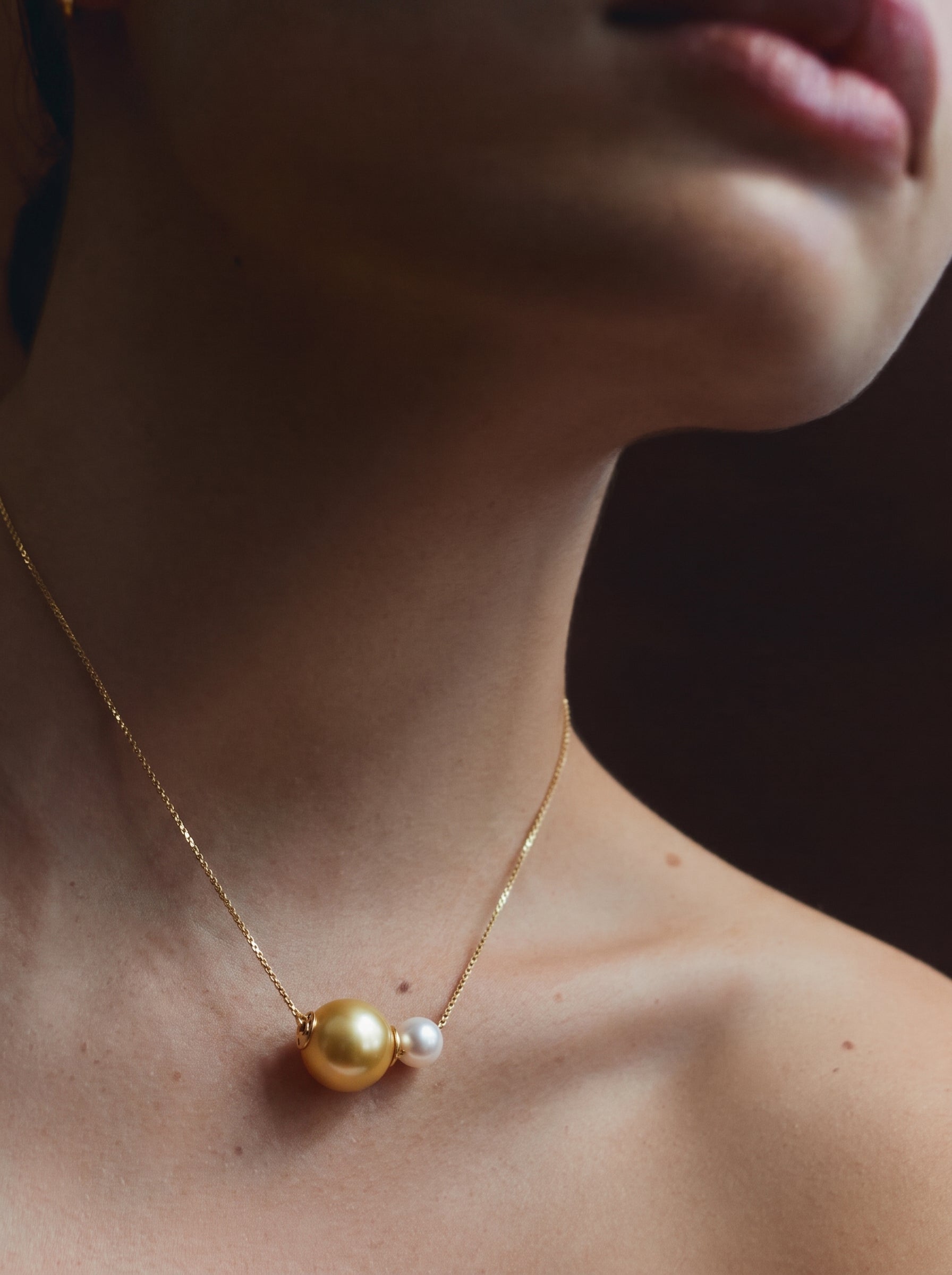
Most of the price sits in the matching rather than the growing, which is why a single Akoya pendant costs so much less than a strand of the same pearls.
What color are Akoya pearls?
Standard bodycolor is white or cream, with rose, silver or ivory overtone. Nearly all Akoya pearls on the market are bleached and polished as a matter of accepted industry practice.
That is standard and it does not affect authenticity. What matters is that it is stated, which is why treatment appears on every product page as one of eight provenance markers.
Why buy Akoya pearls from Grande Lilith
Akoya is the category where a buyer is most likely to be paying for a name rather than a pearl, because the term is used loosely for pearls grown well outside Japan.
- Origin named: Japan. Not "Akoya-type" or "Akoya-style", terms used elsewhere for pearls grown in other waters.
- Eight provenance markers on every product page, including grade and treatment.
- Partners vetted by our GIA-certified pearl specialist, on working conditions as well as quality.
- Nickel-free, lead-free and cadmium-free settings on solid 18k gold, 925 sterling silver and stainless steel.
- Designed in Paris. Thirty days to change your mind, and every order arrives in a magnetic pouch.
Frequently asked questions
Are Akoya pearls the best pearls?
They are the best at one specific thing: round white pearls with mirror luster. For larger sizes South Sea is better, for dark color Tahitian is better, and for shape variety freshwater is better. Best depends on what you want the piece to do.
How thick is Akoya nacre?
Thinner than freshwater, because the pearl is a nacre layer over a shell bead rather than solid nacre. That is why Akoya luster reads sharper, and also why Akoya pearls need more care against abrasion over decades.
Can Akoya pearls be worn daily?
Yes, with the usual habits and slightly more attention to abrasion. Put pieces on after perfume and hairspray have dried, wipe them with a soft cloth, and store them away from harder stones.
Are all Akoya pearls from Japan?
No, and this is worth checking. Akoya oysters are farmed in several countries, and the term is applied loosely. Where a pearl is grown affects both quality standards and price, which is why we name the country rather than the pearl type alone.
What should I look at first when judging an Akoya pearl?
Luster, before size or roundness. Look for a sharp reflection on the pearl's own surface, with clearly defined edges rather than a soft glow. On an Akoya, weak luster usually means thin nacre.