

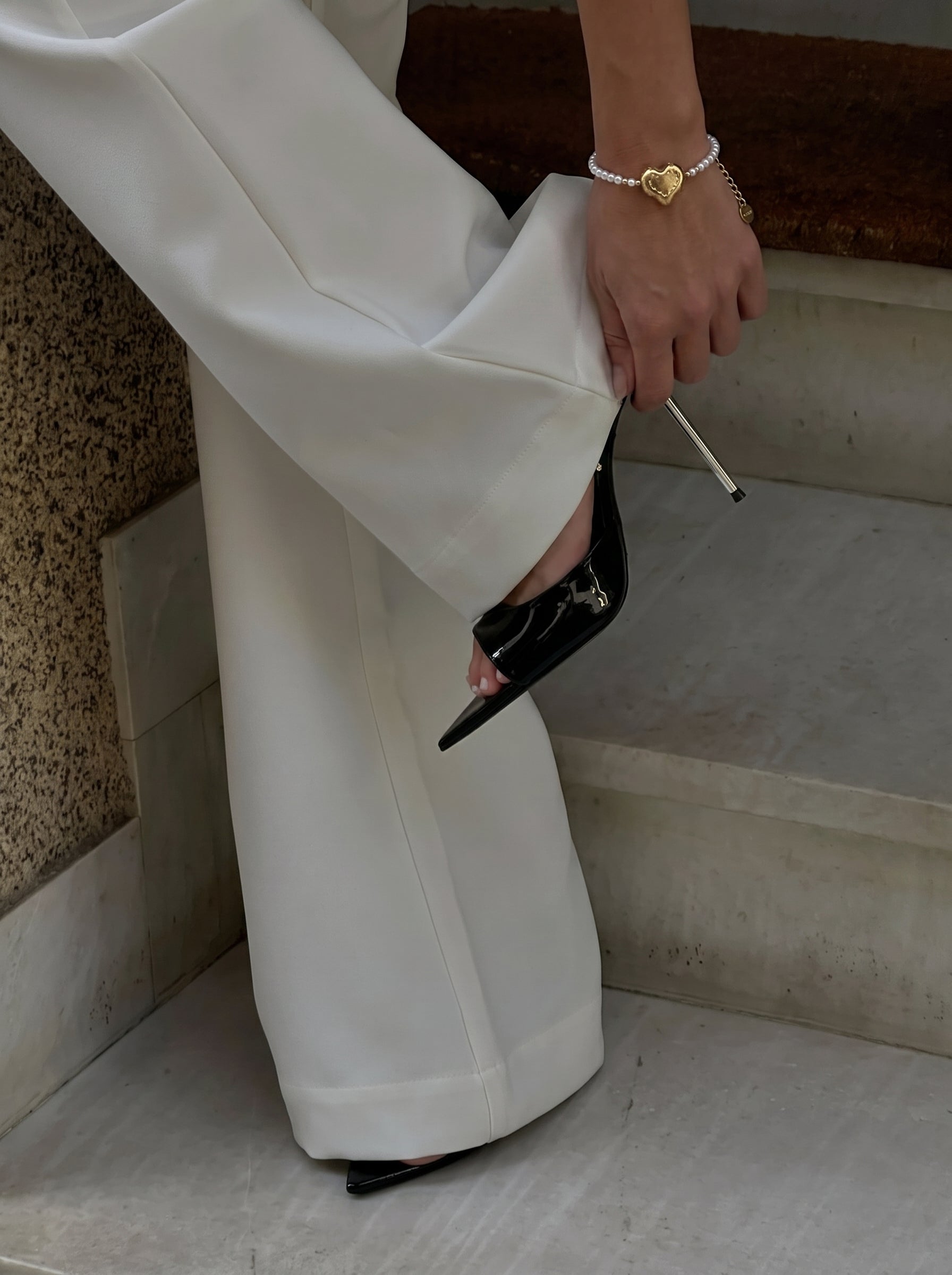
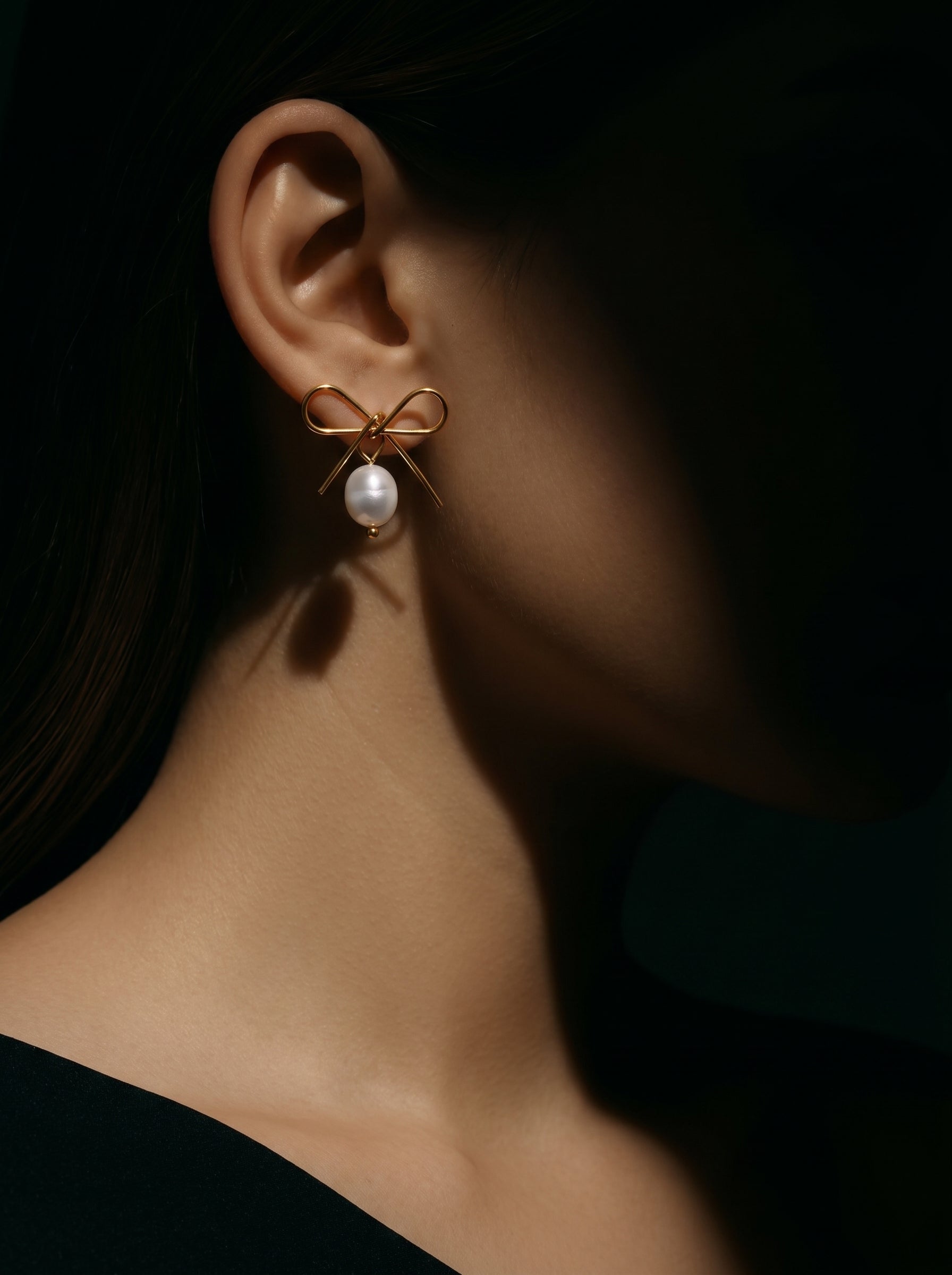

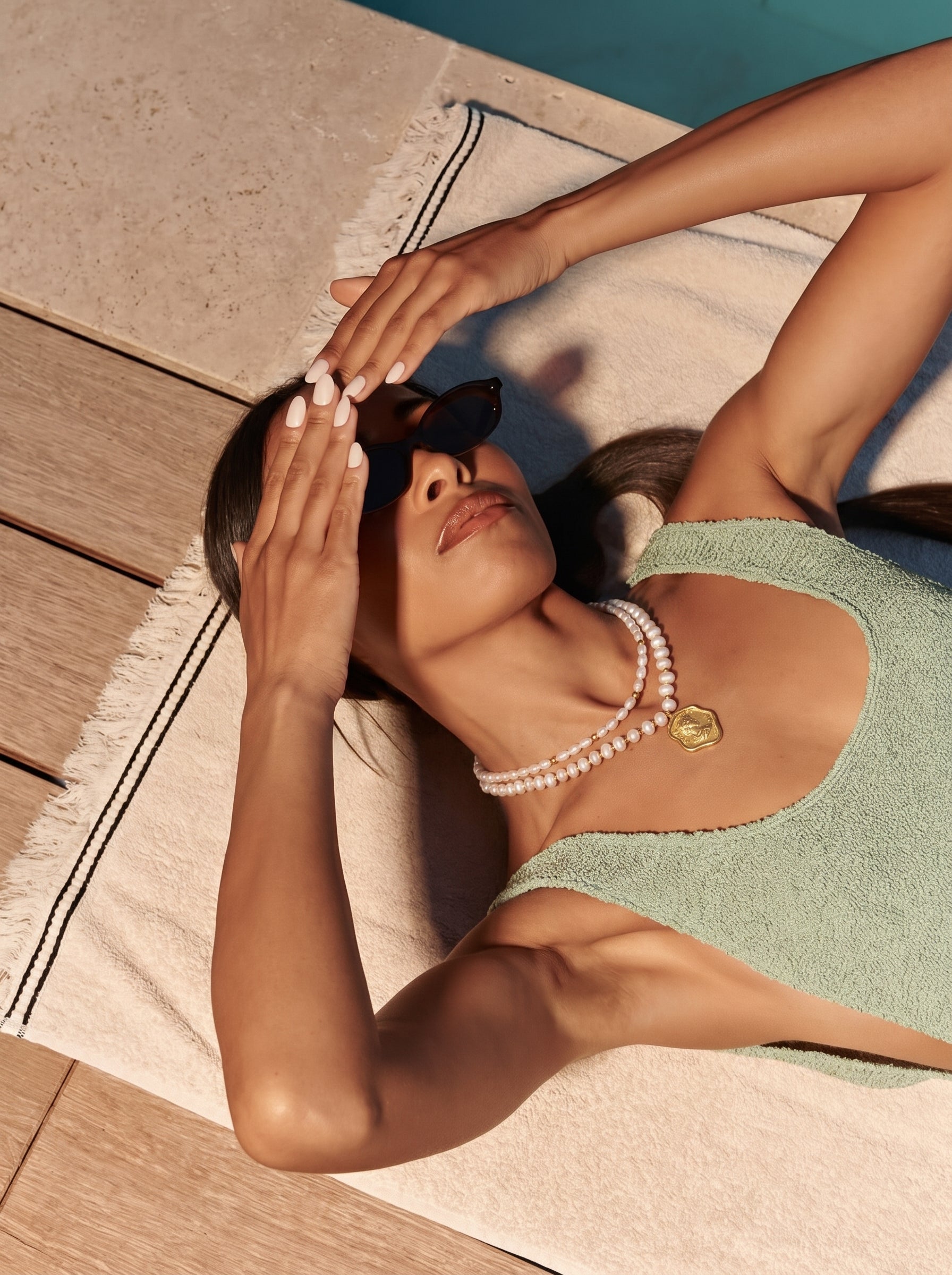
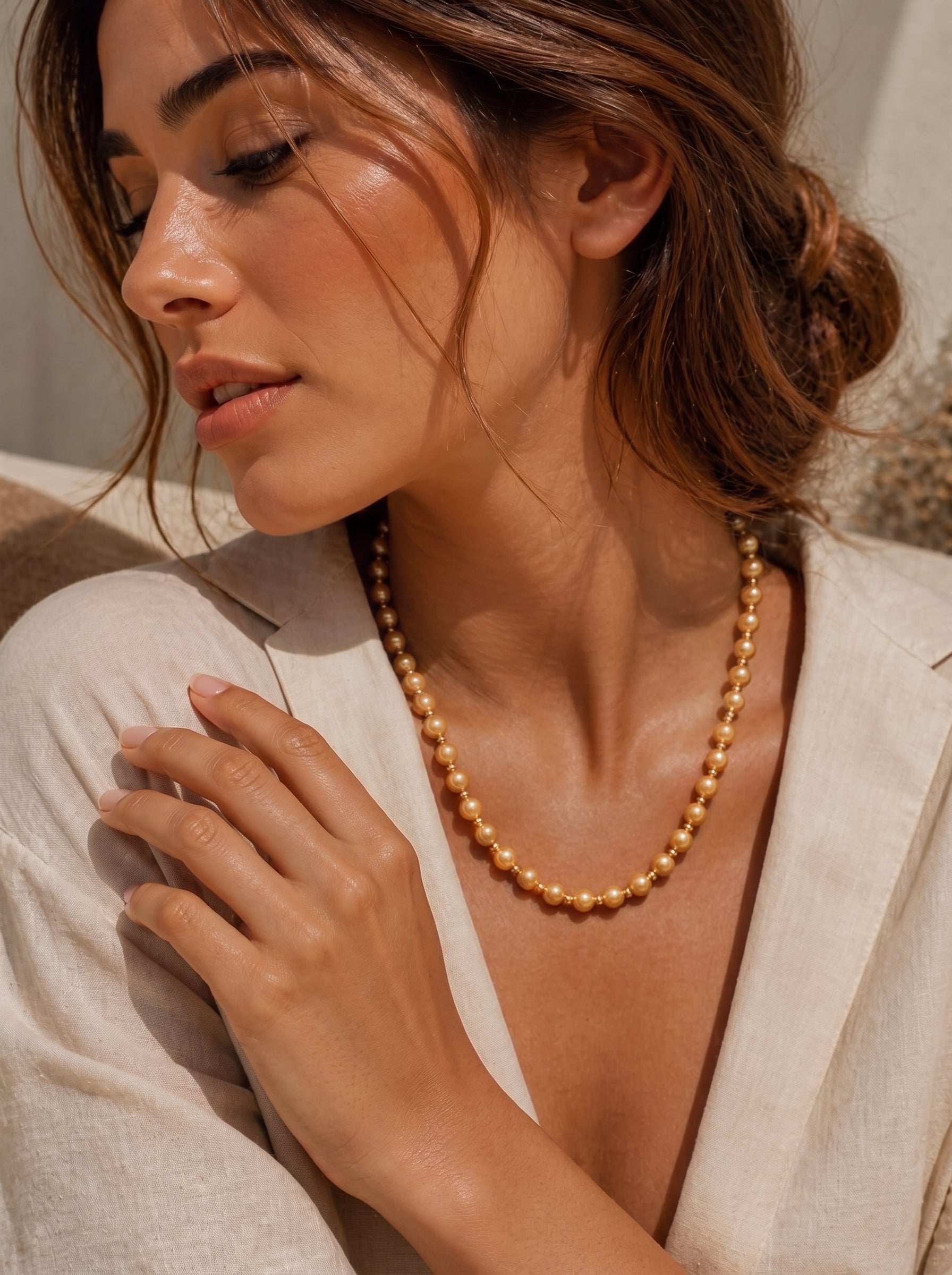
Akoya pearl bracelet
Round Japanese pearls, strung close or spaced along a chain. A bracelet sits in your own eyeline all day, and Akoya luster is what makes that worth something. Quiet enough to slide under a cuff, bright enough to catch you looking.
This collection is empty
Akoya pearl bracelet
A bracelet stays in your own field of view all day, which makes luster the thing that matters most. Akoya pearls have the sharpest luster of any cultured pearl, so a small Akoya bracelet holds your attention in a way a larger, duller pearl never does.
What is an Akoya pearl bracelet?
An Akoya pearl bracelet uses saltwater cultured pearls grown in Pinctada fucata martensii, the Akoya oyster, primarily in Japan. Each pearl grows around a round shell bead, which is why Akoya pearls are consistently spherical.
That roundness matters on a bracelet, because pearls at the wrist turn constantly. A sphere reads correctly from every angle. An irregular pearl presents a different face each time your hand moves.
Why is Akoya luster so sharp?
Akoya nacre is thin and densely layered over a shell bead, and that structure reflects light back in an almost mirror-like way. Freshwater pearls are solid nacre with a softer, deeper glow. Neither is better. They are two different optical effects.
Sharp luster is why a small Akoya still registers across a table, and why you can go a size smaller here than you would with another pearl type.
Which Akoya bracelet style should you choose?
Continuous strands
Round pearls strung close, drawing an unbroken line around the wrist. The classic reading, and the construction where matching quality is most visible.
Spaced chain bracelets
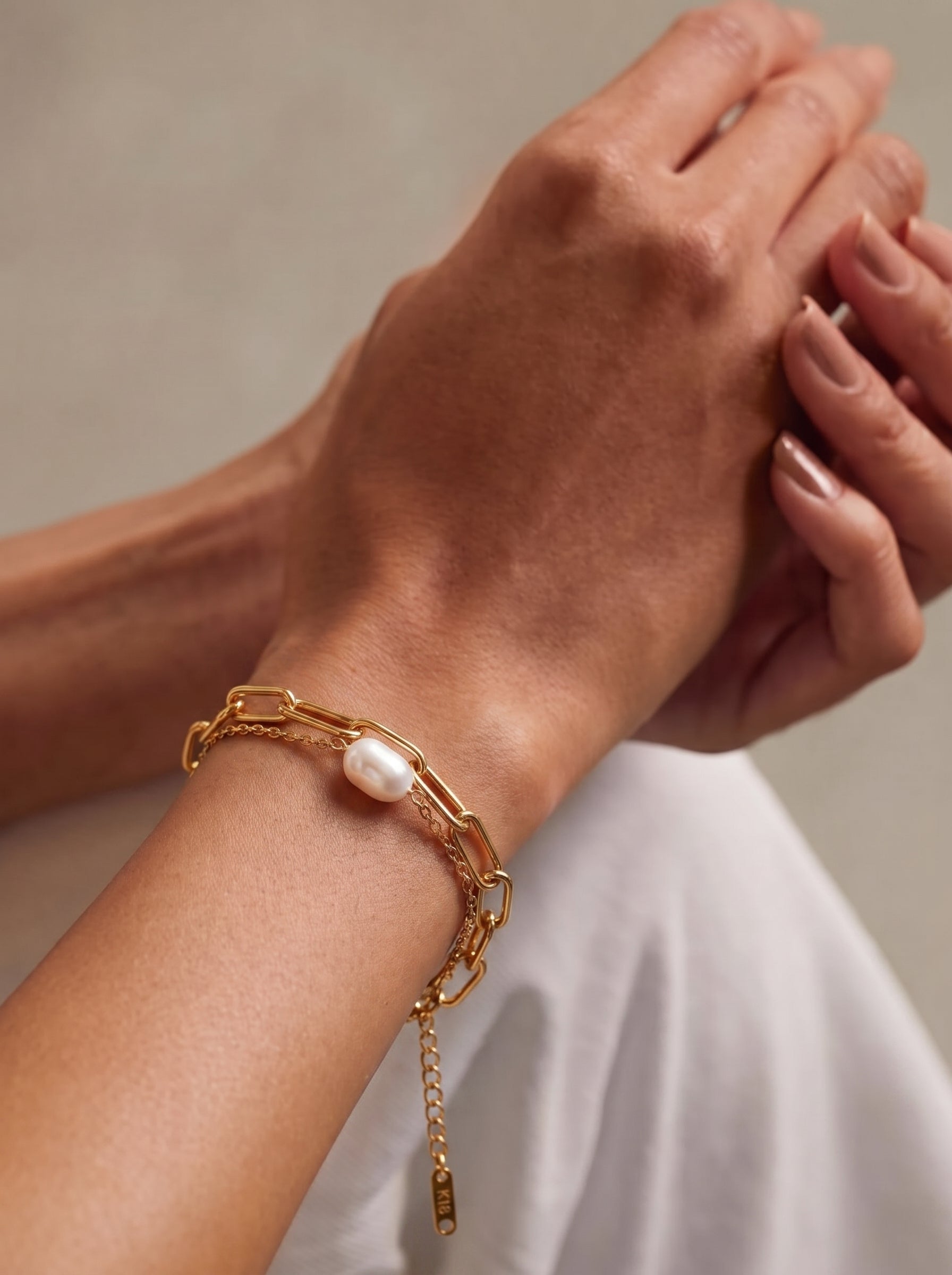
Pearls set at intervals along a fine chain so each one reads individually. Lighter, easier to slide under a shirt cuff, and the version that suits Akoya luster best because every pearl gets room.
What size Akoya pearls suit a bracelet?
Akoya pearls typically run 6 to 9 mm, and above 9 mm they become scarce quickly because the host oyster is small. For a bracelet, 6 to 8 mm sits comfortably under a sleeve and does not catch on a desk edge.
How should an Akoya bracelet fit?
With about half an inch of room past your wrist measurement. Loose enough to rotate, close enough that it does not slide over the hand. Measure just below the wrist bone. Most women take 7 to 7.5 inches.
Akoya nacre is thinner than freshwater nacre, so a bracelet that slides too far is worth avoiding. Abrasion against a desk edge matters more here than with a solid-nacre pearl.
Why buy an Akoya pearl bracelet from Grande Lilith
Akoya is the category where a buyer is most likely to be paying for a name rather than a pearl, because the term is used loosely for pearls grown well outside Japan.
- Origin named: Japan. Not "Akoya-type" or "Akoya-style", terms used elsewhere for pearls grown in other waters.
- Eight provenance markers on every product page, including grade and treatment.
- Partners vetted by our GIA-certified pearl specialist, on working conditions as well as quality.
- Nickel-free, lead-free and cadmium-free clasps and findings on gold, silver and stainless steel.
- Designed in Paris. Thirty days to change your mind, and every order arrives in a magnetic pouch.
Frequently asked questions
Can you wear an Akoya pearl bracelet every day?
Yes, with a little more care than freshwater. Akoya nacre is thinner, so abrasion matters. Take it off before washing dishes and typing for long stretches, and choose a spaced chain rather than a continuous strand if you work at a desk.
Why are Akoya bracelets more expensive than freshwater?
Yield and matching. The Akoya oyster is small and produces one pearl per cycle, with a low proportion of gem-grade results. Then every pearl on the strand has to agree on size, color and overtone.
Should Akoya pearls be knotted between beads?
On a strung bracelet, yes. Knotting stops the pearls rubbing against each other, which matters more with thin Akoya nacre than with solid freshwater nacre, and it prevents a total loss if the thread breaks.
Are Akoya pearls always white?
Standard Akoya bodycolor is white or cream, with rose, silver or ivory overtone. Nearly all Akoya on the market is bleached and polished as accepted industry practice, and we state that treatment on every product page.
Which wrist should you wear it on?
Your non-dominant wrist takes less contact, which suits thin-nacre pearls particularly well. If you wear a watch there, stack the bracelet above the watch face rather than below it, where it meets the desk.