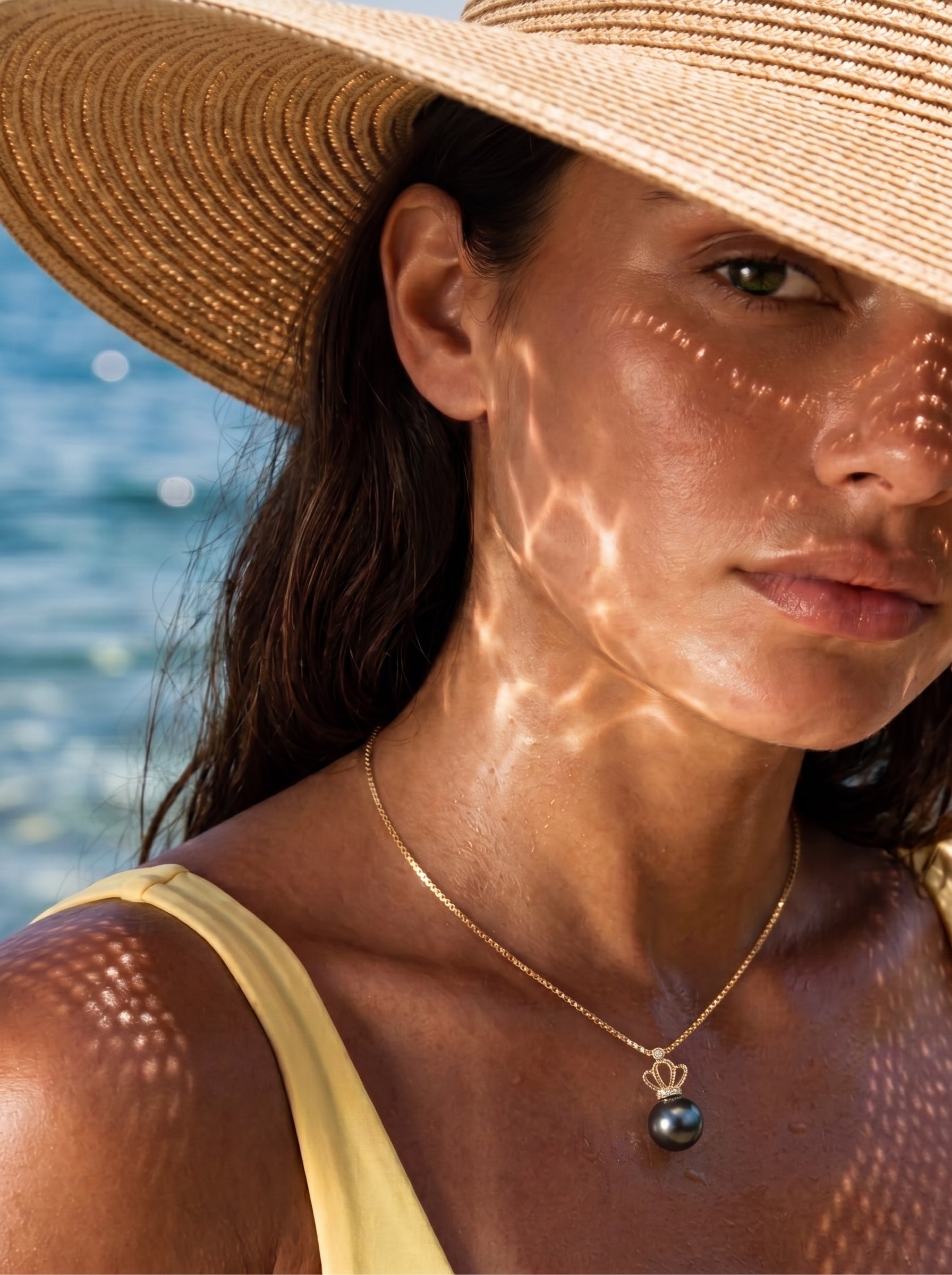
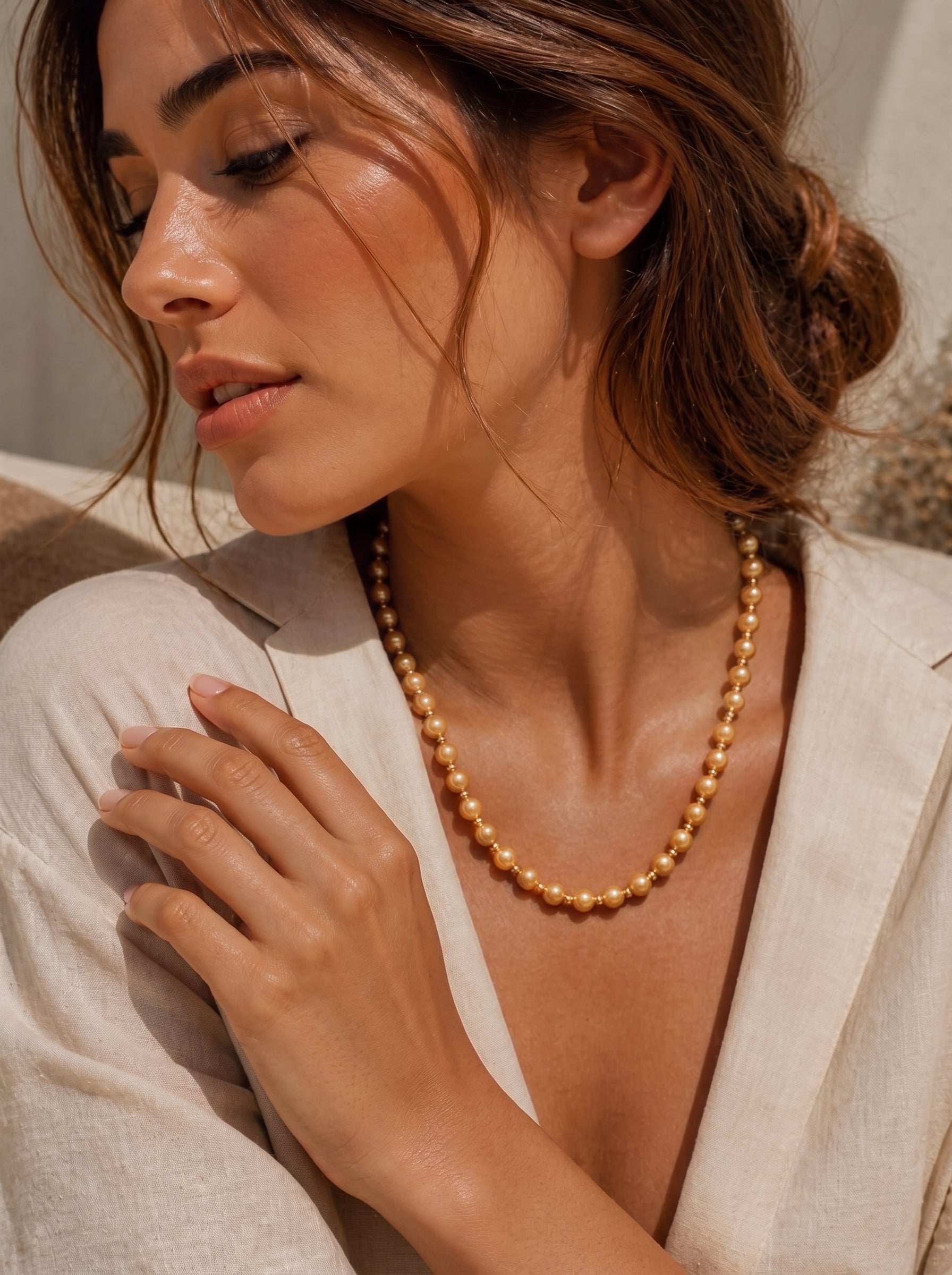
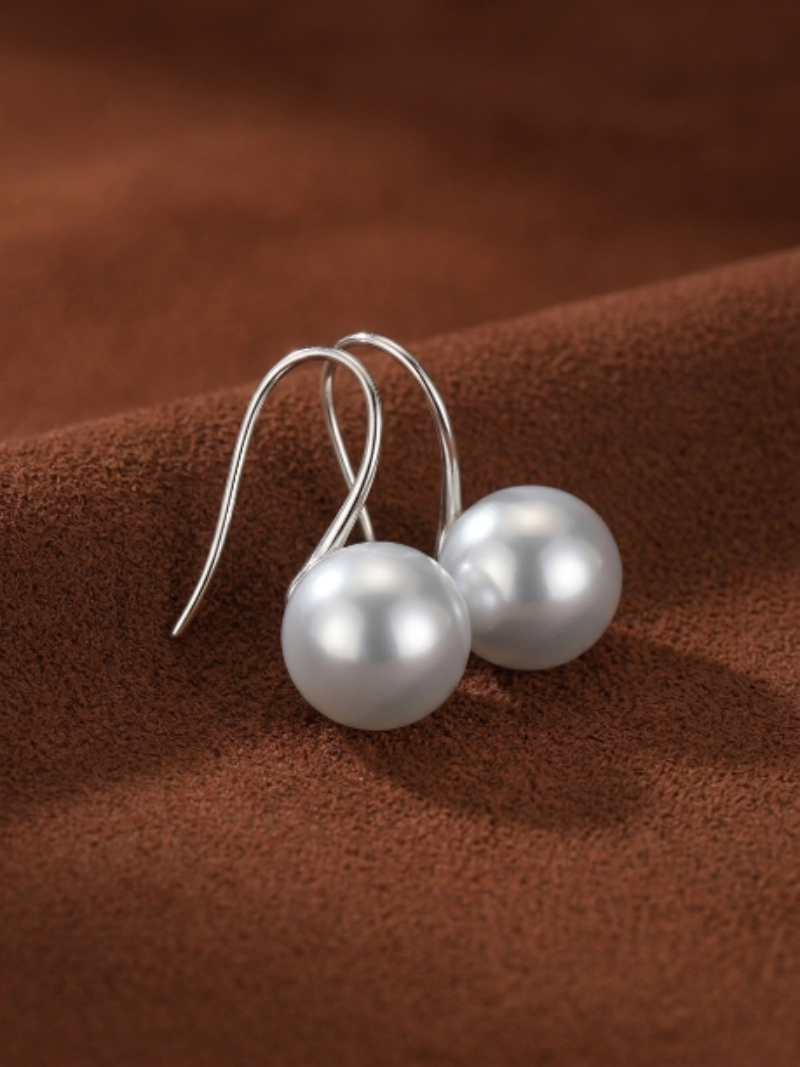
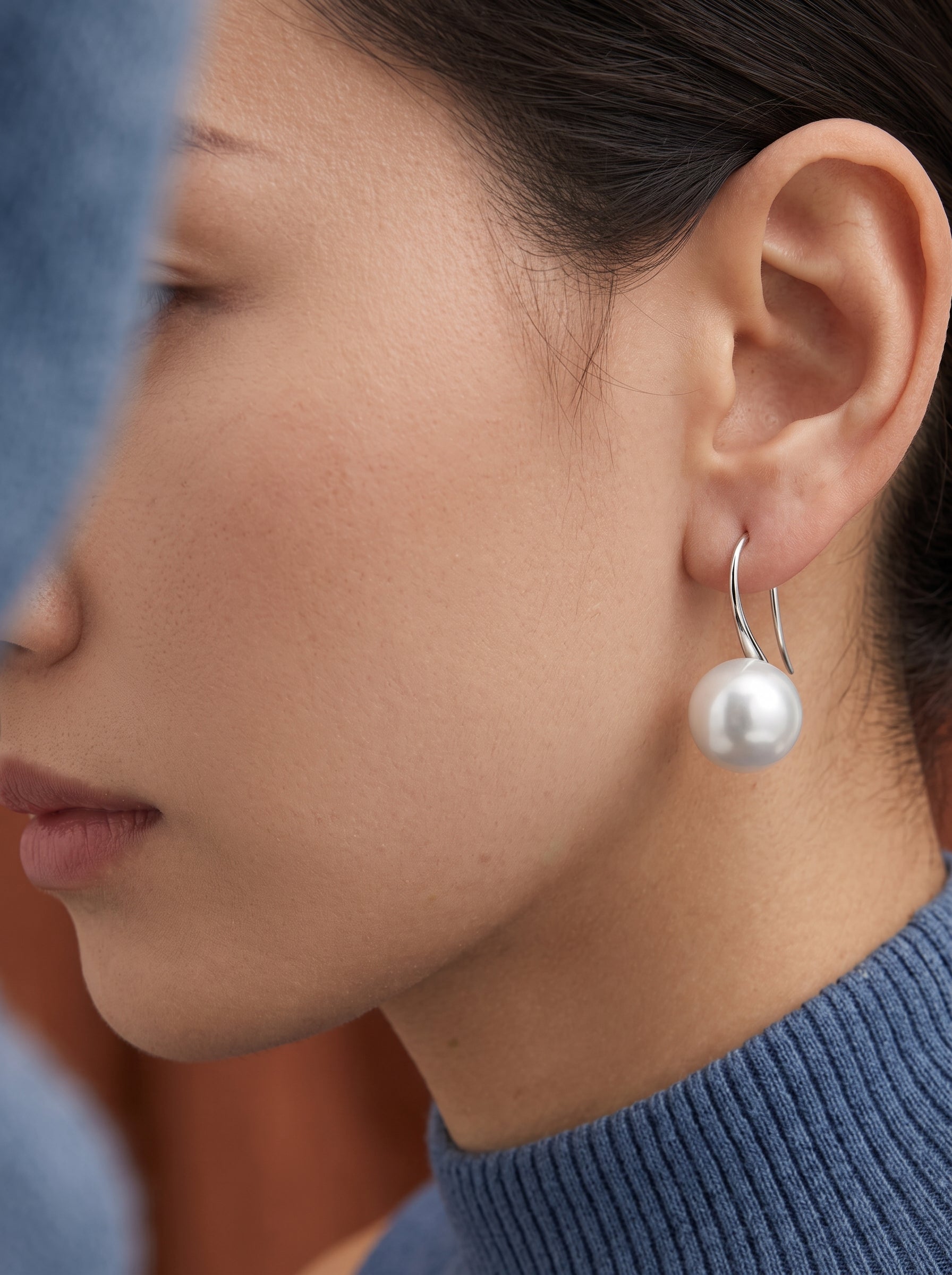
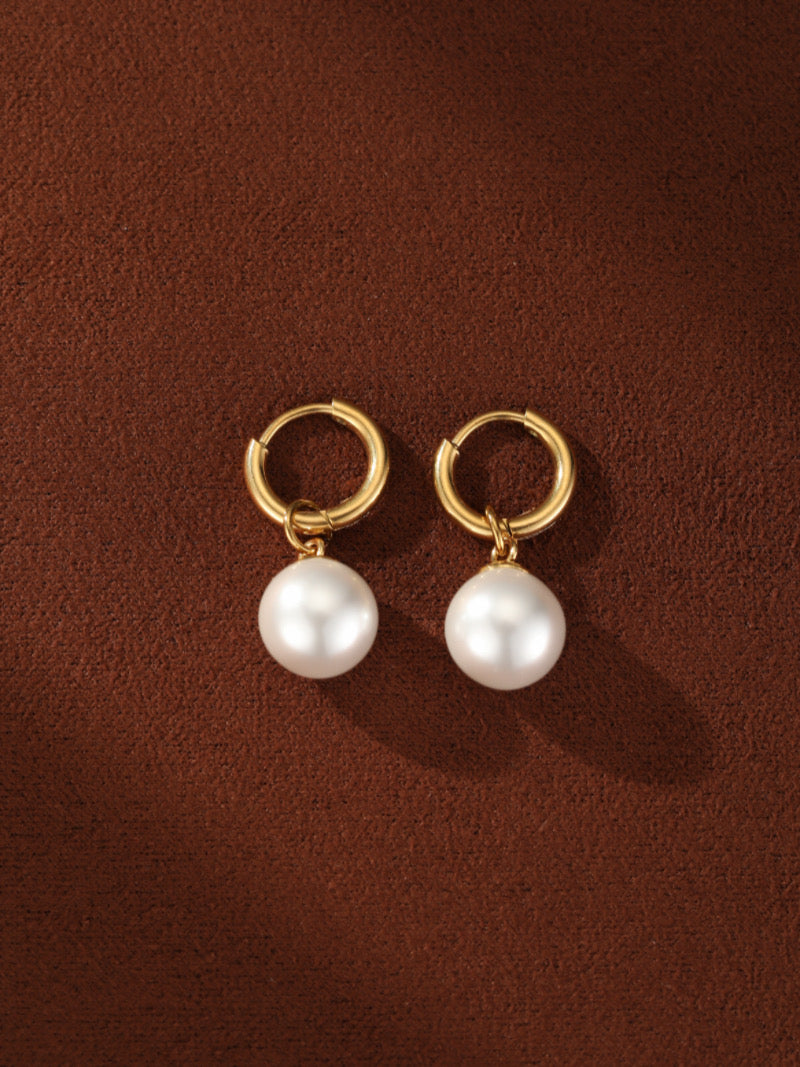
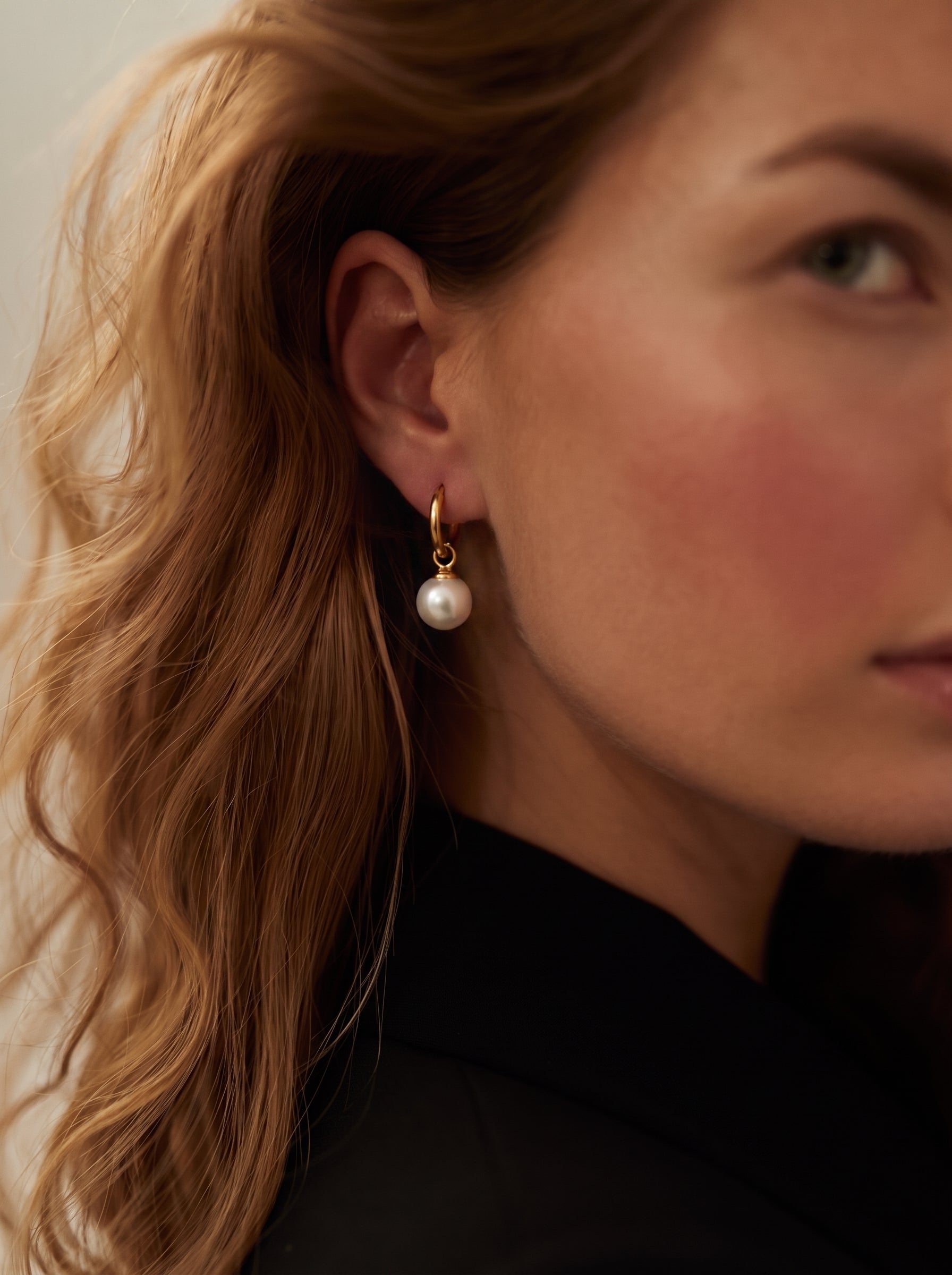
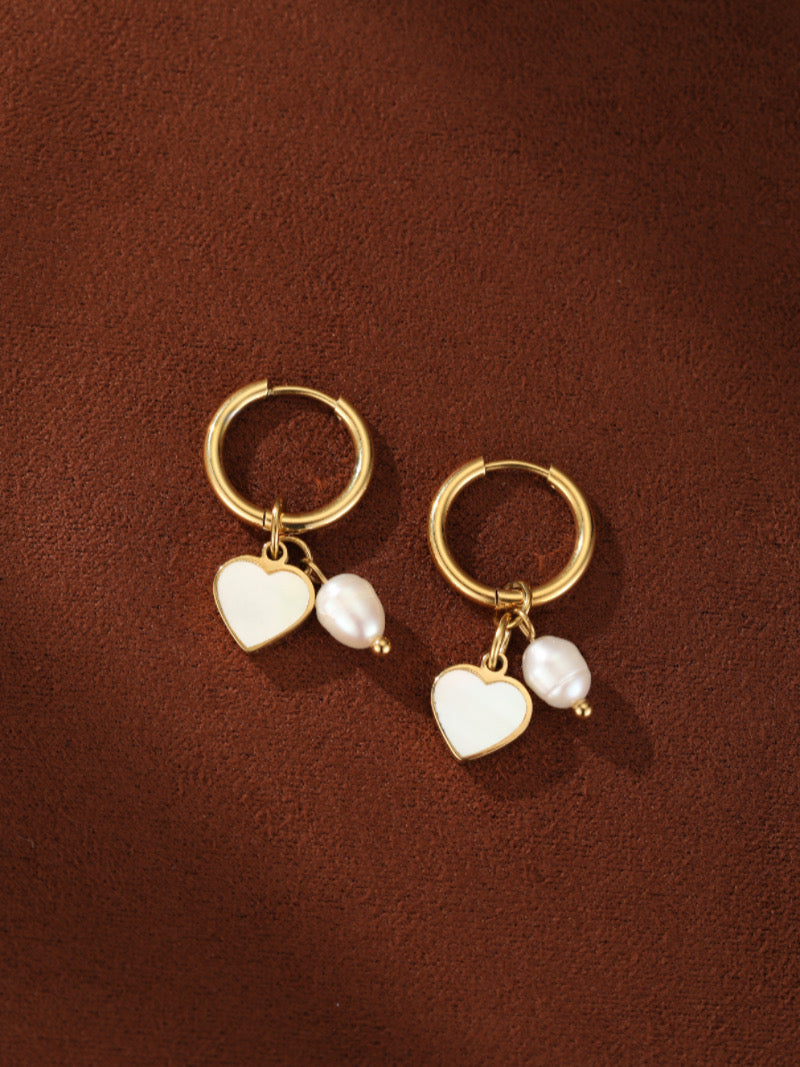
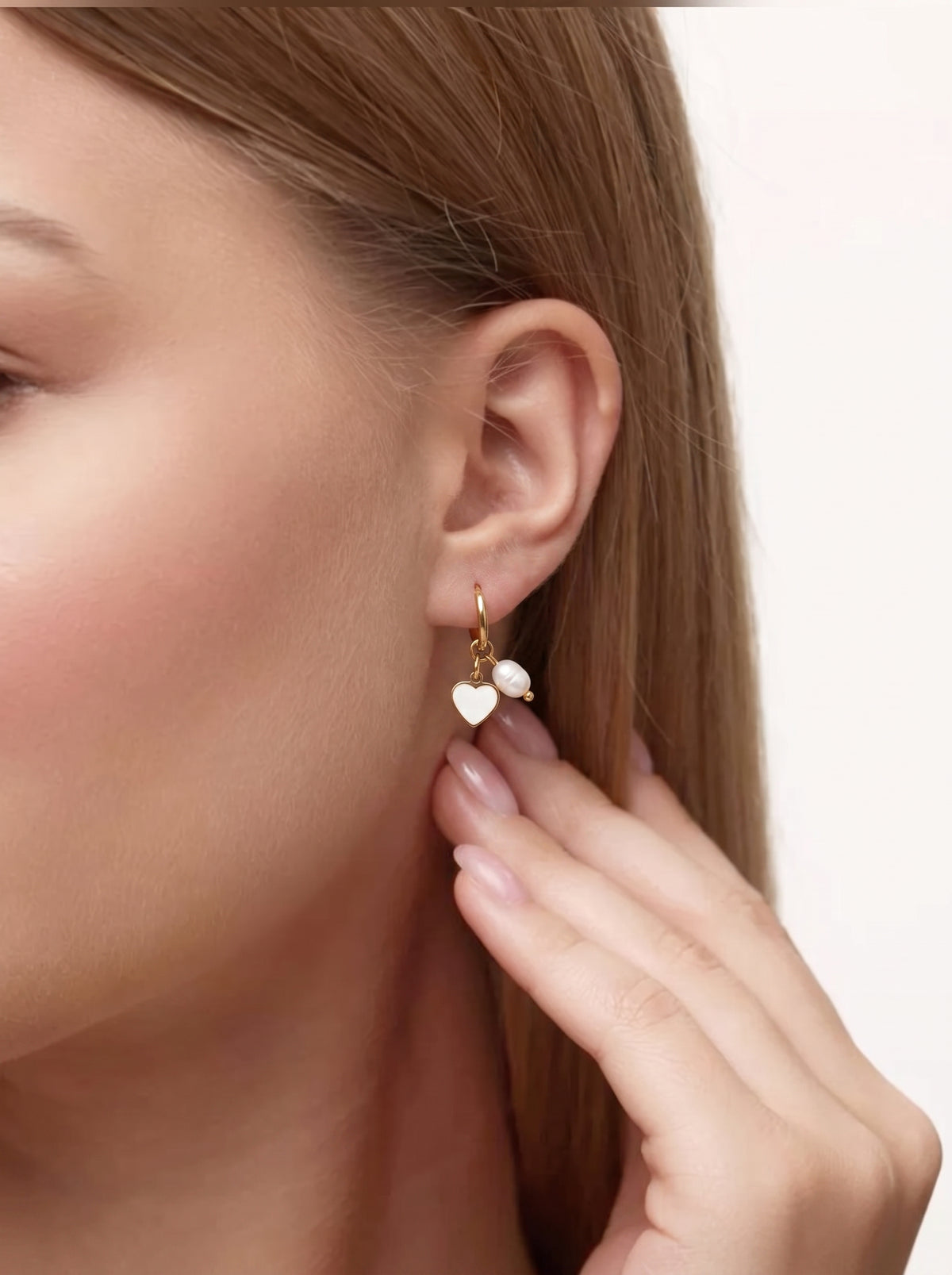
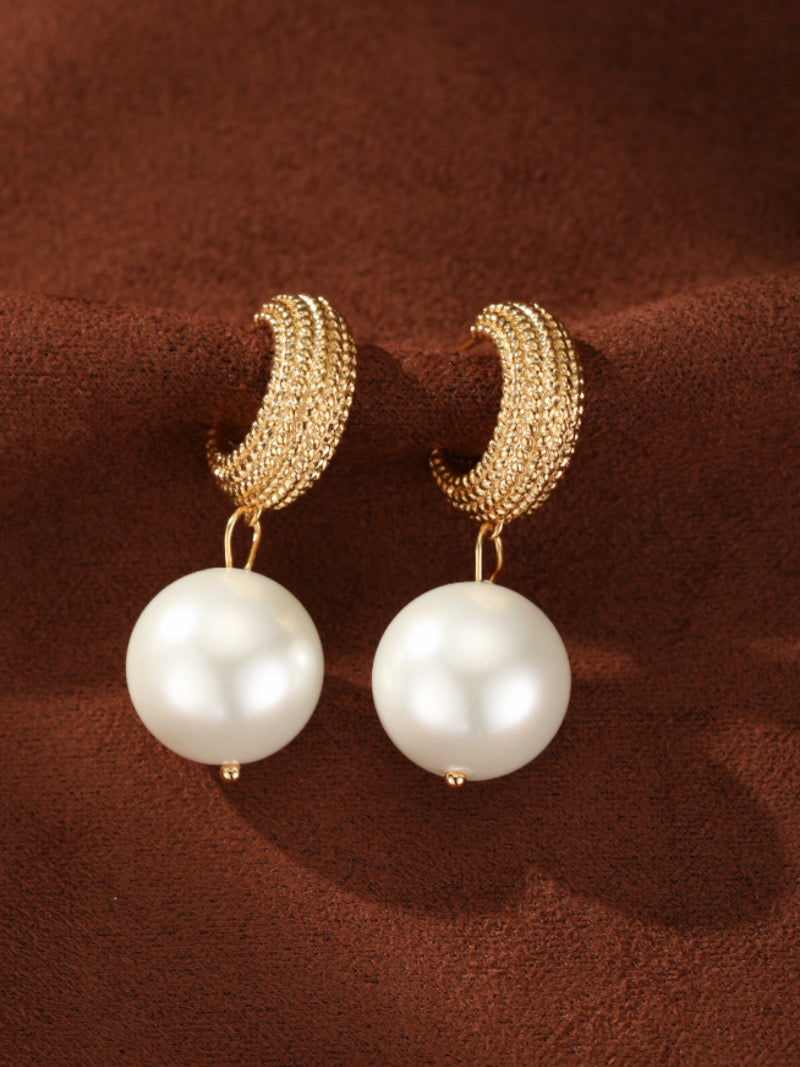
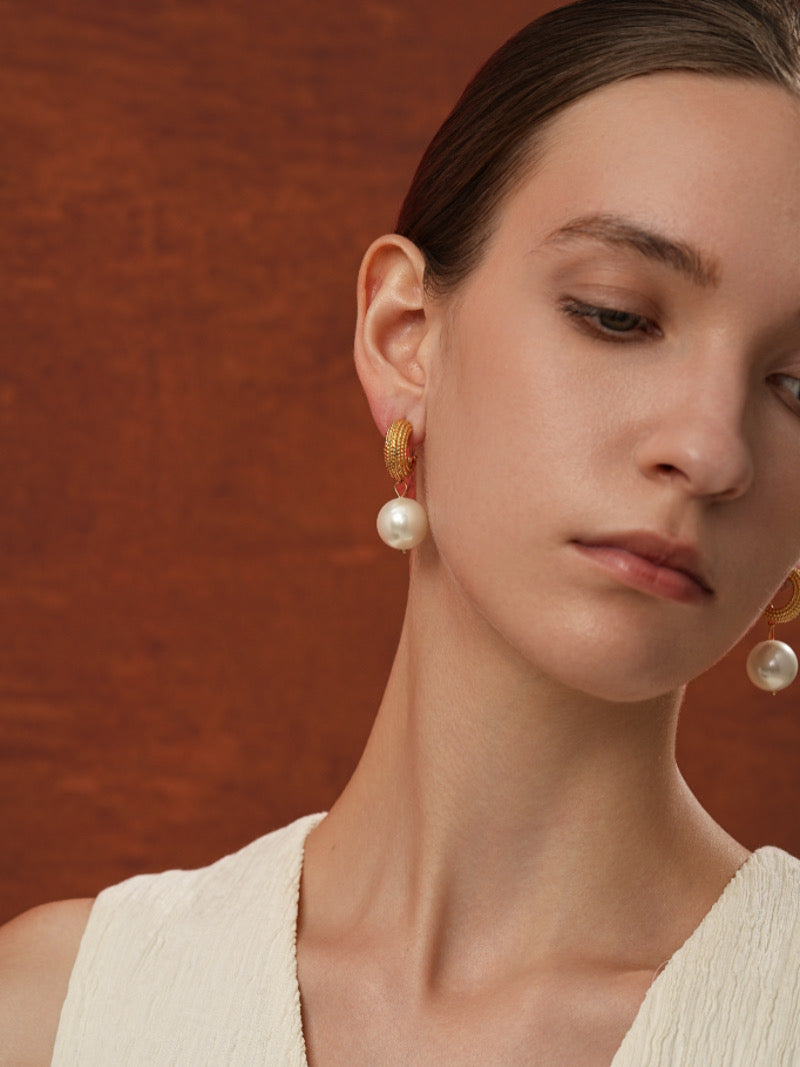
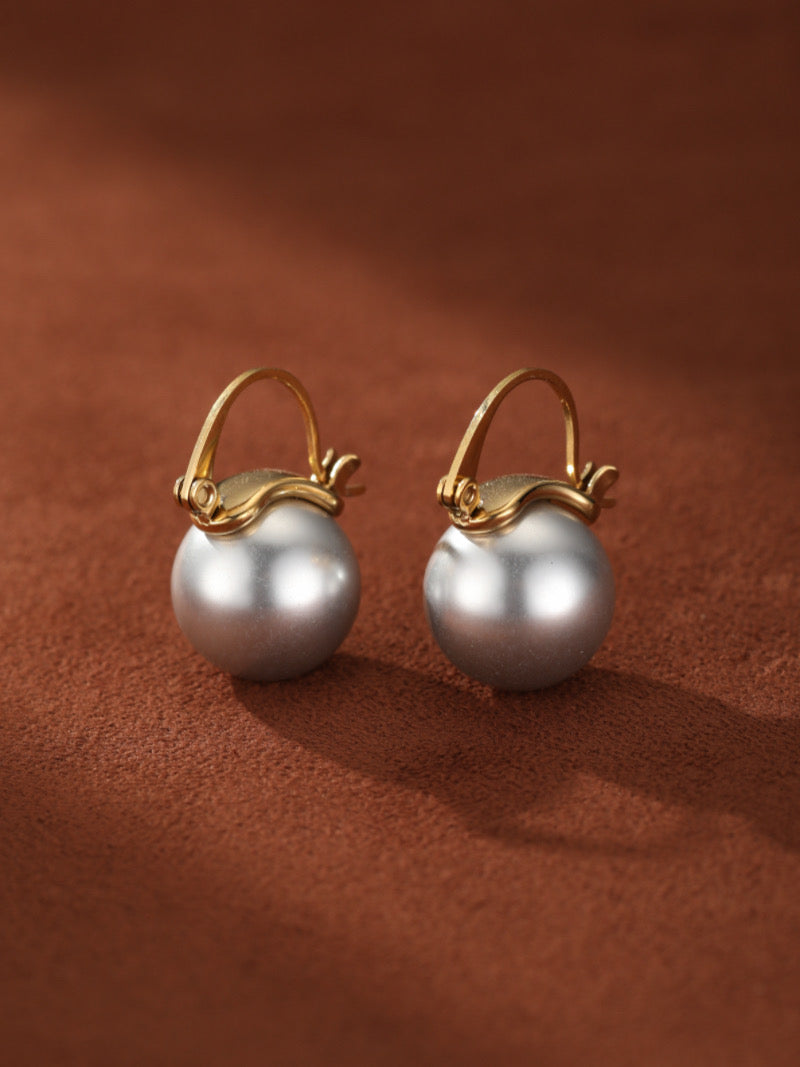
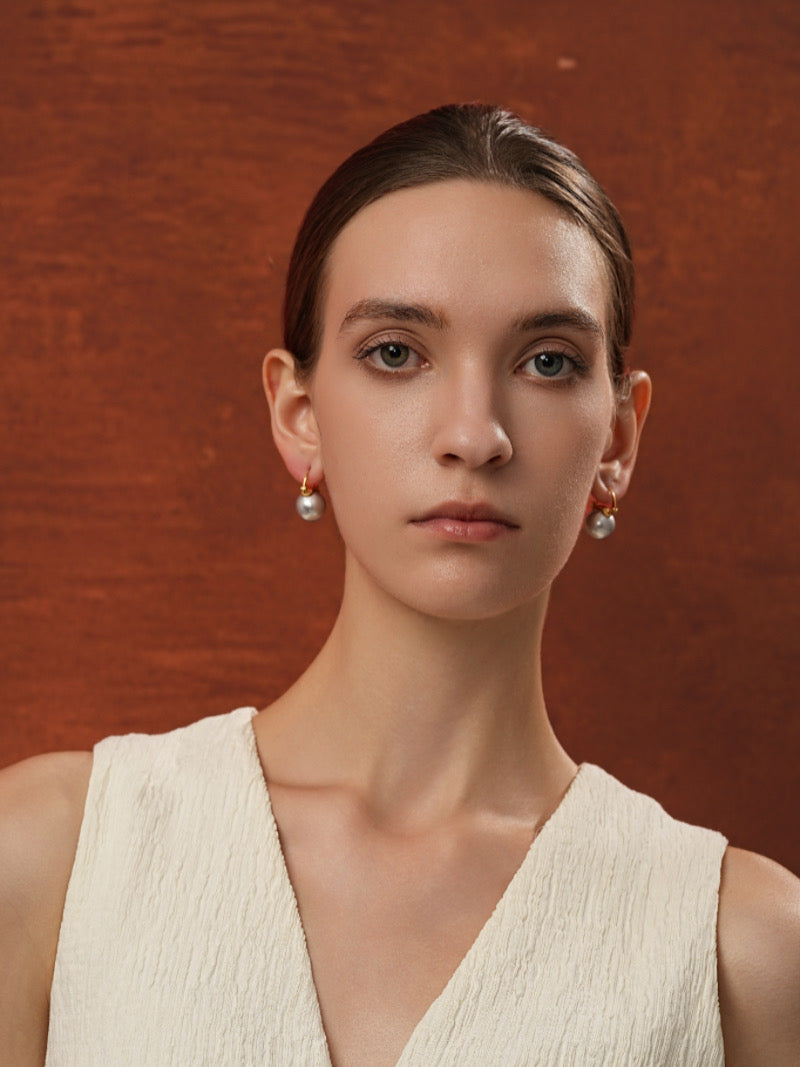
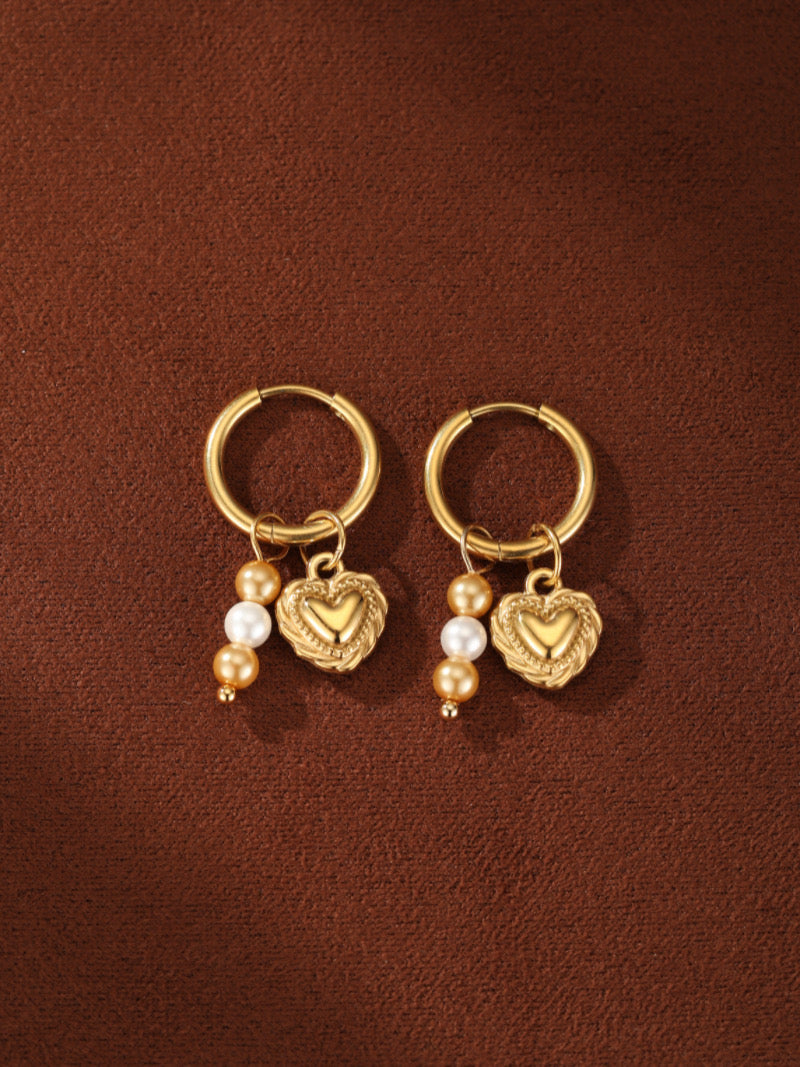
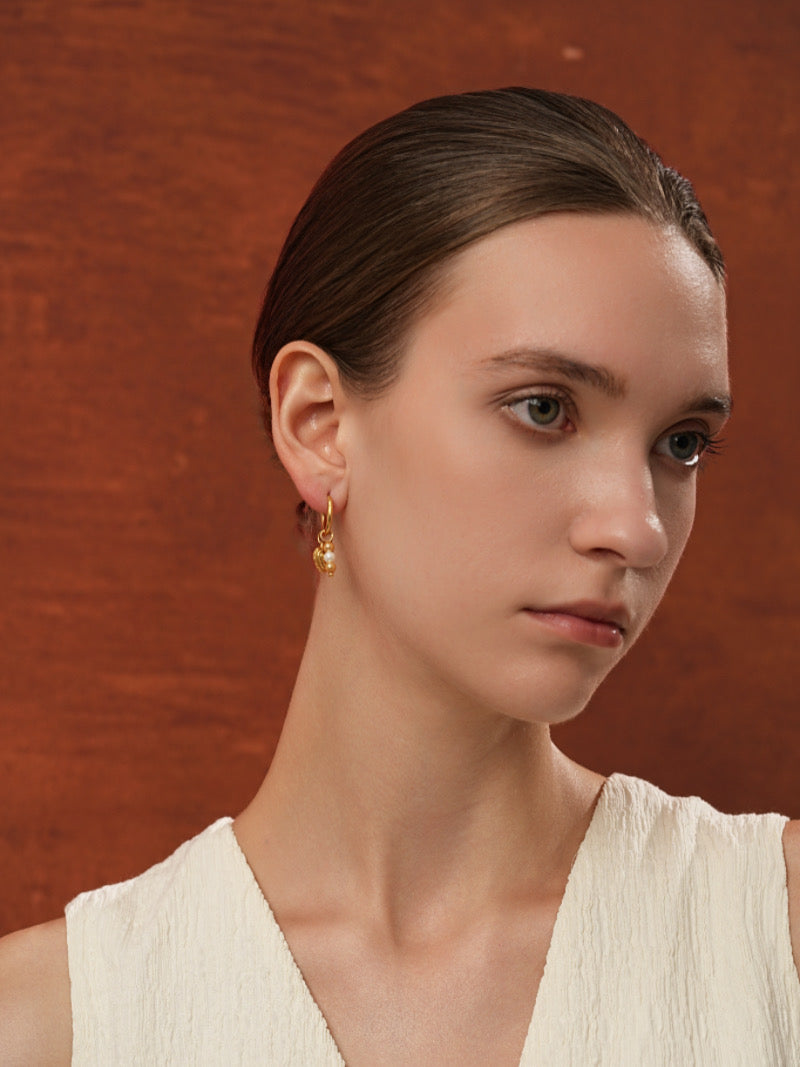
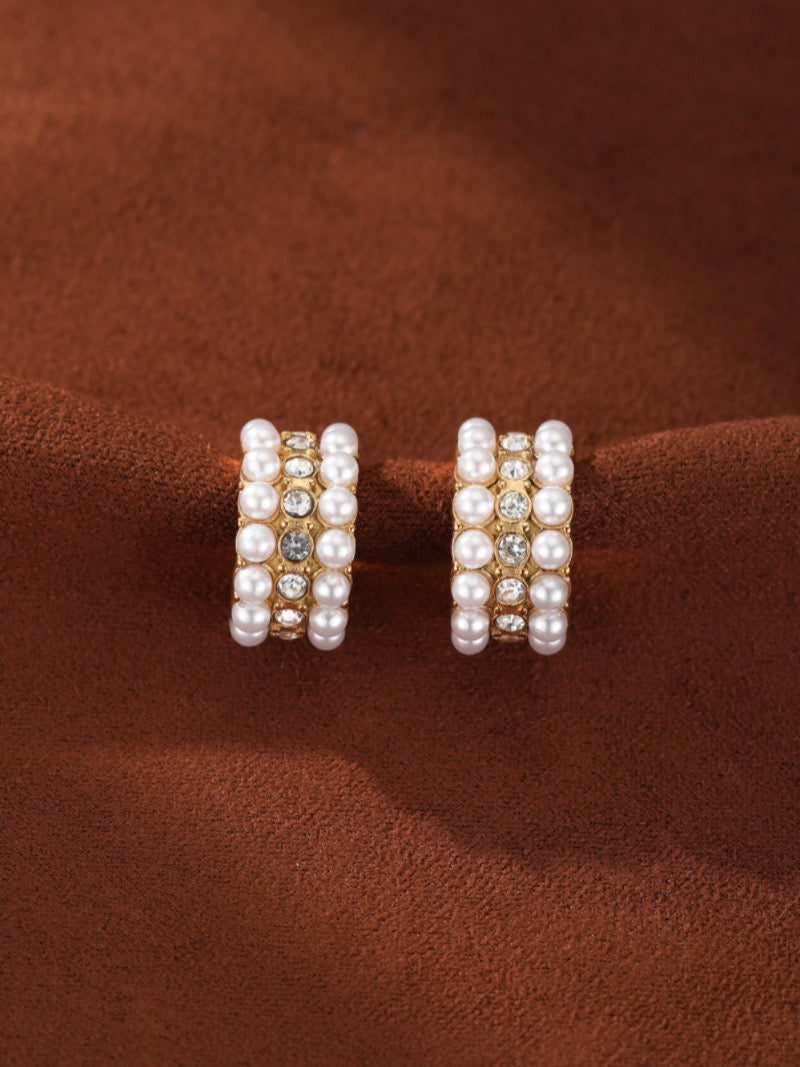
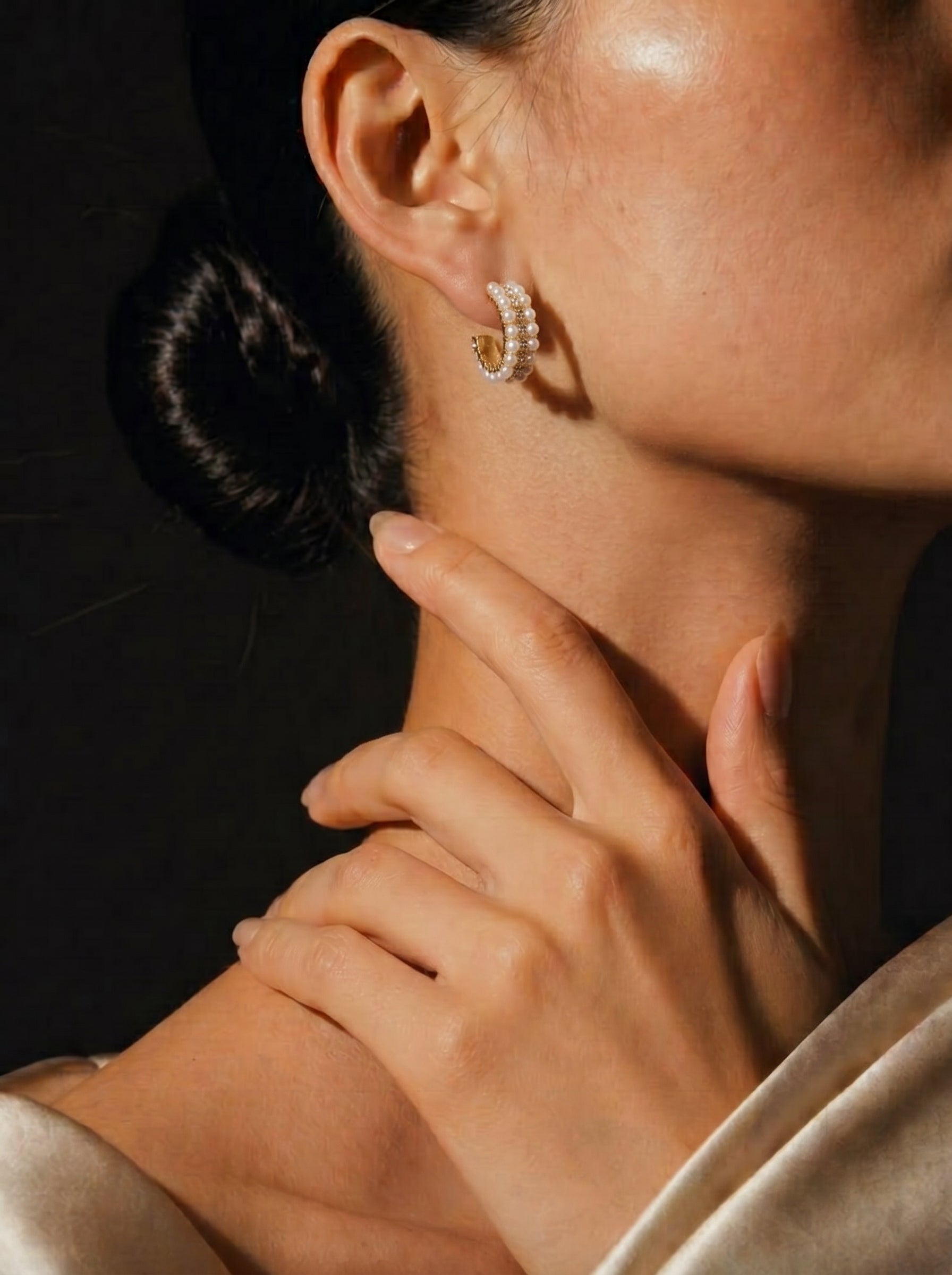
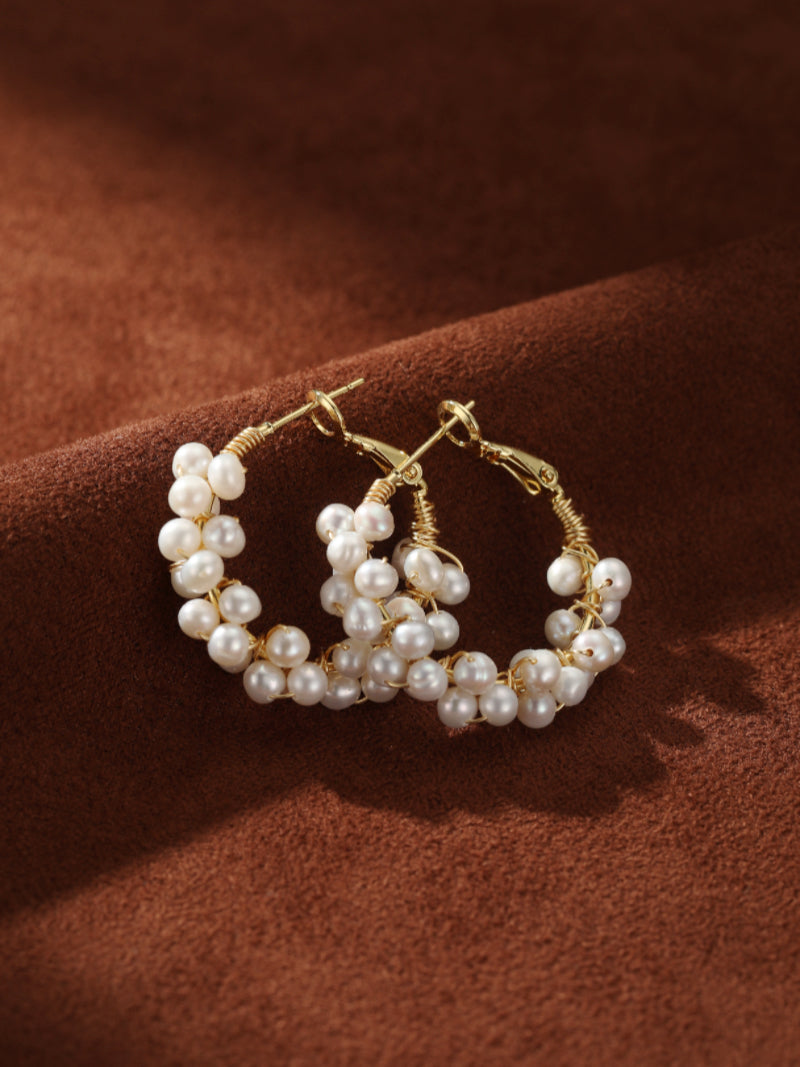
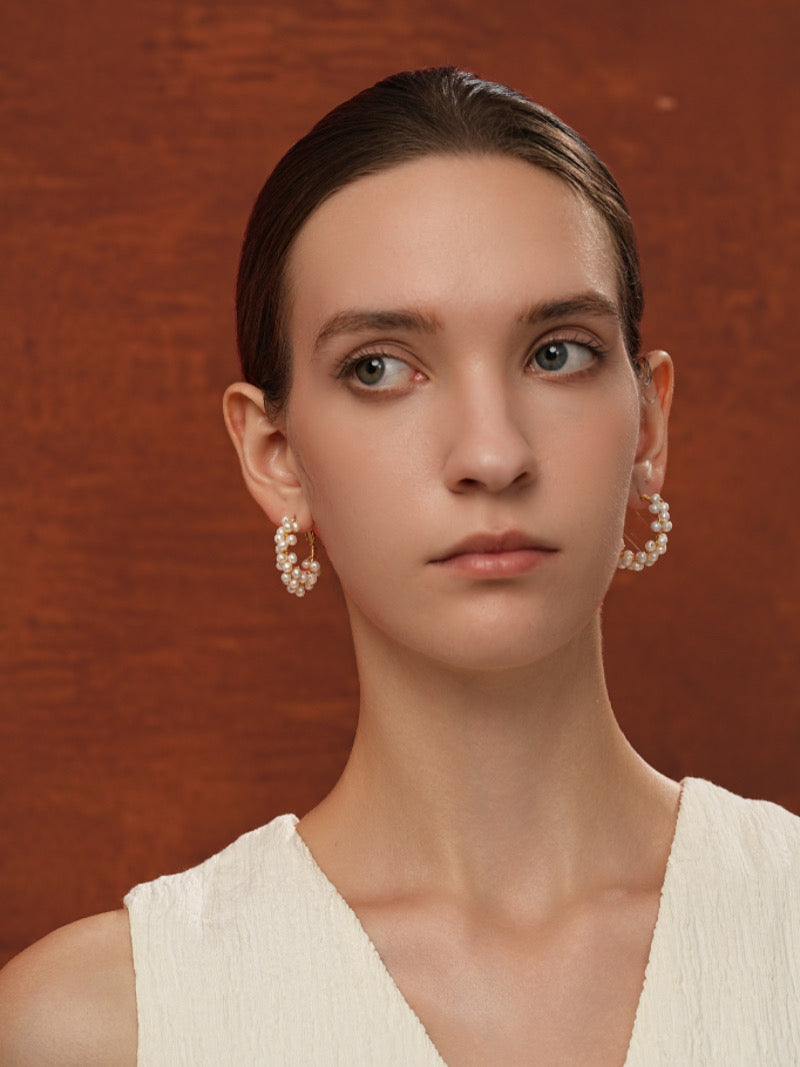
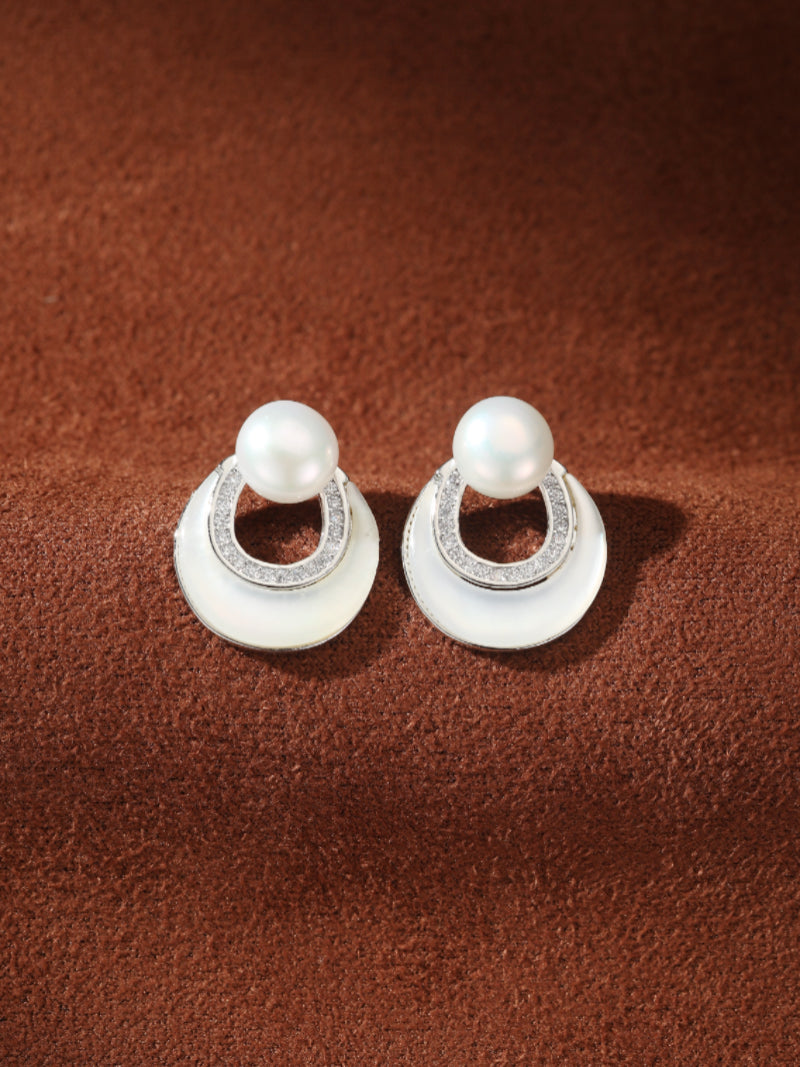
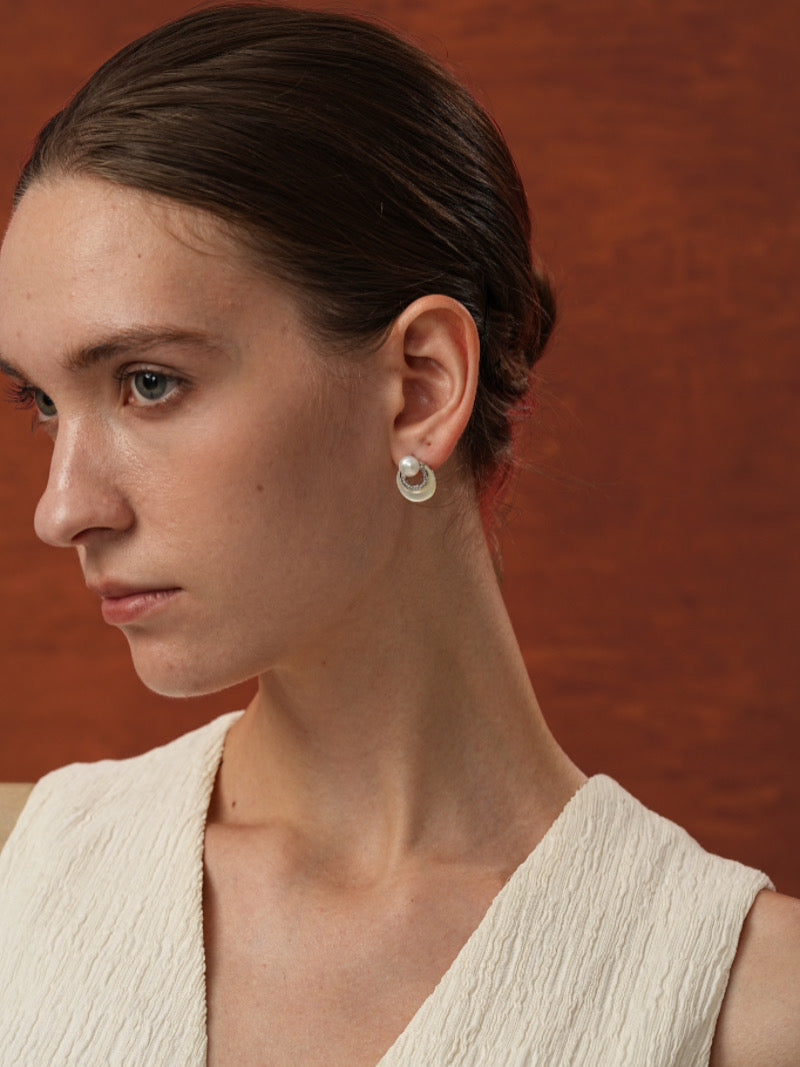
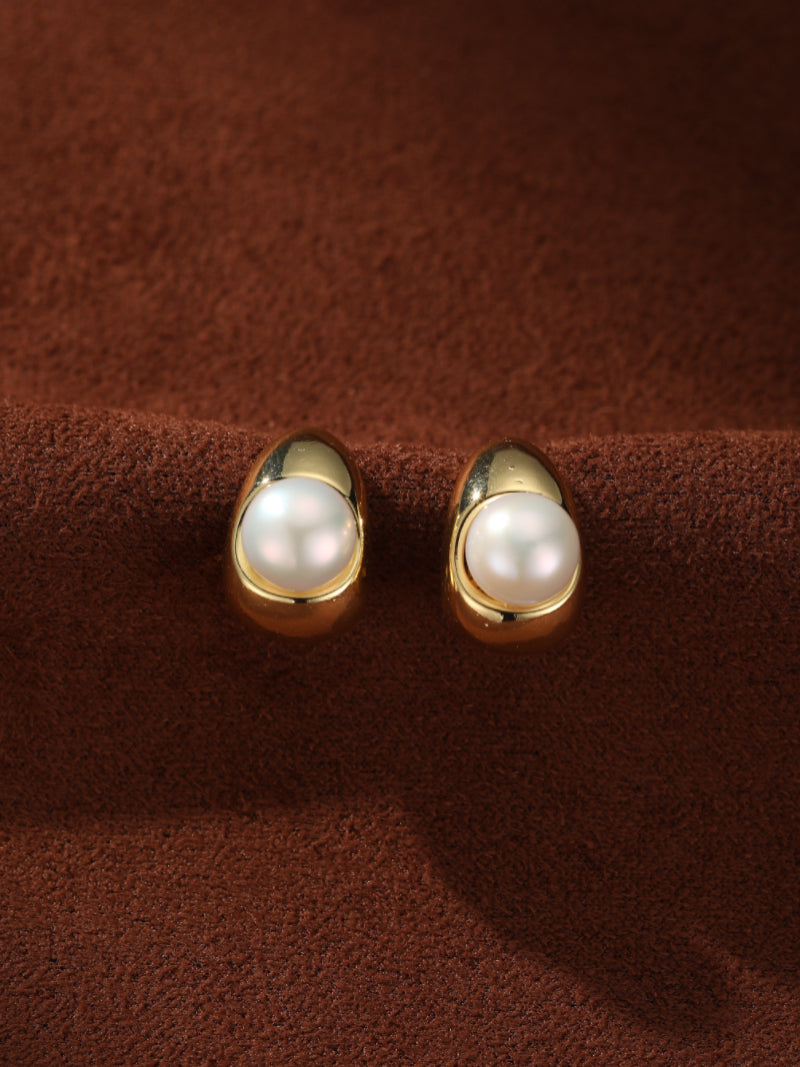
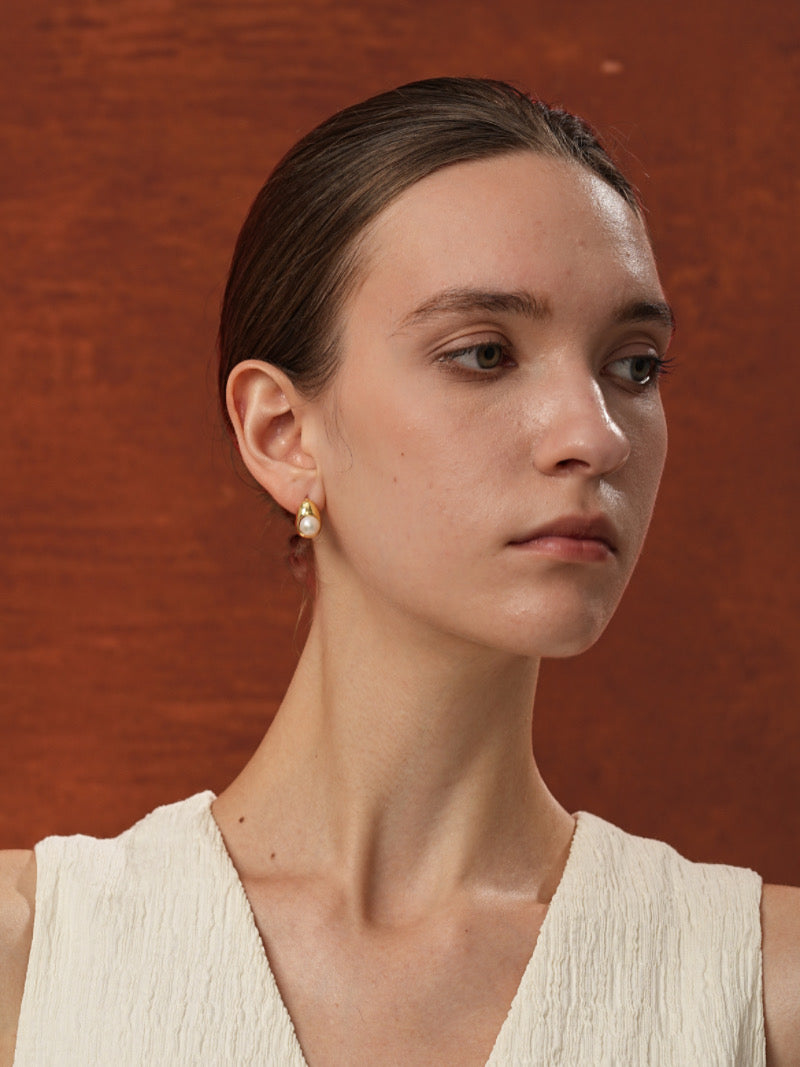
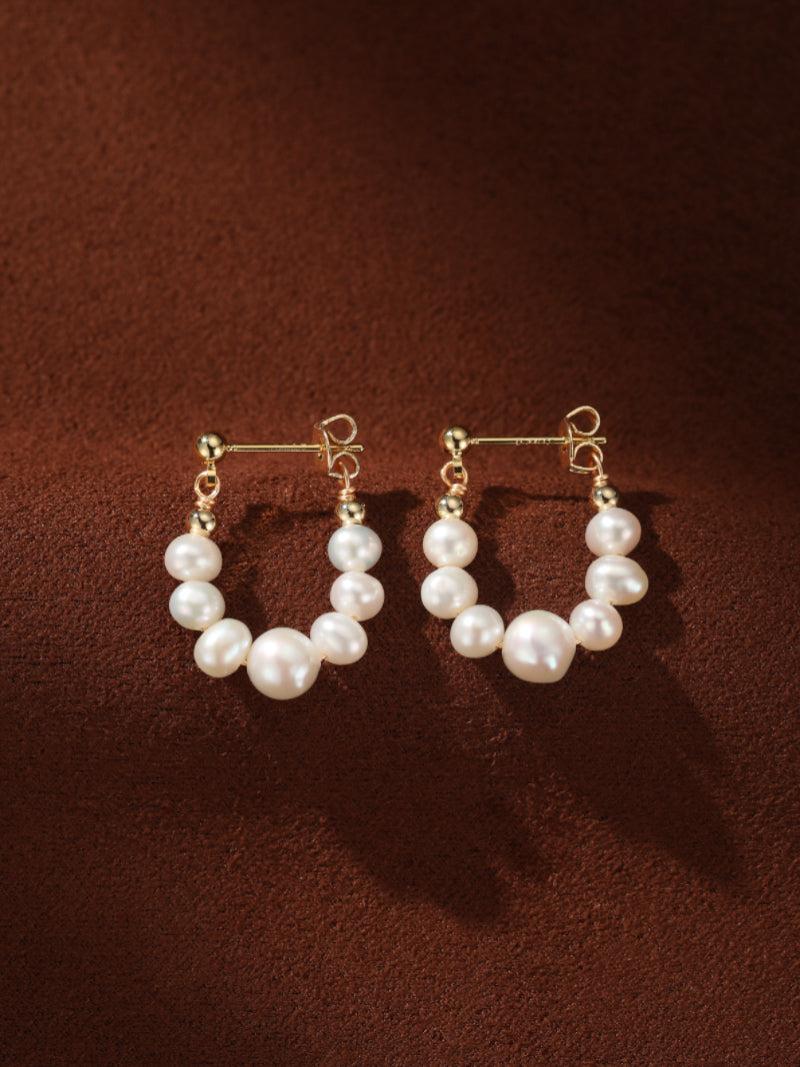
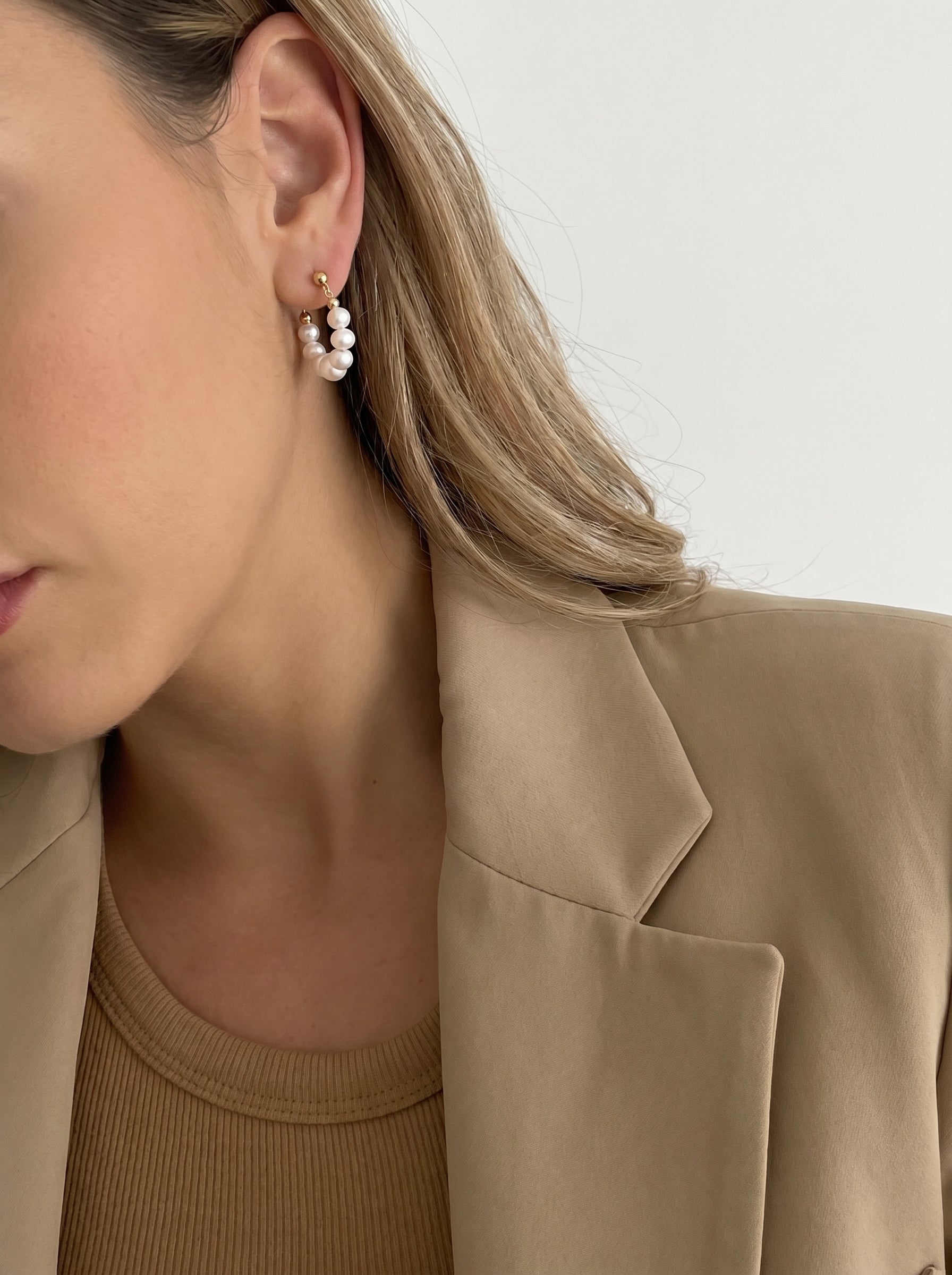
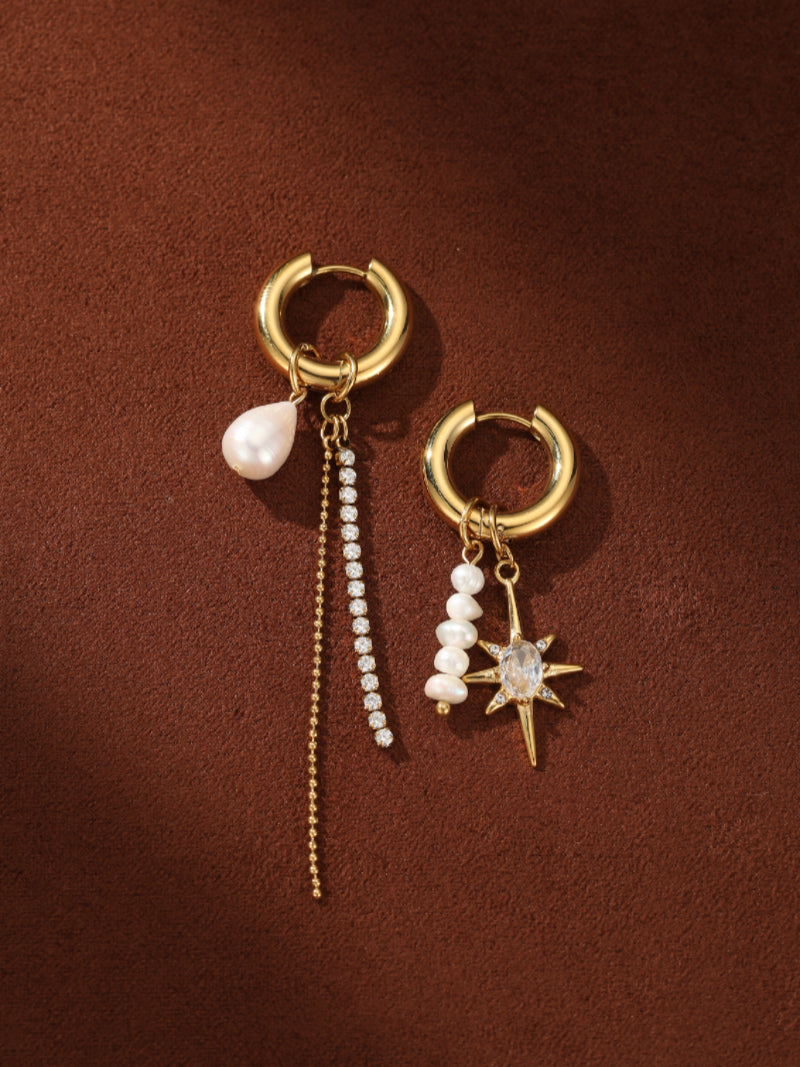
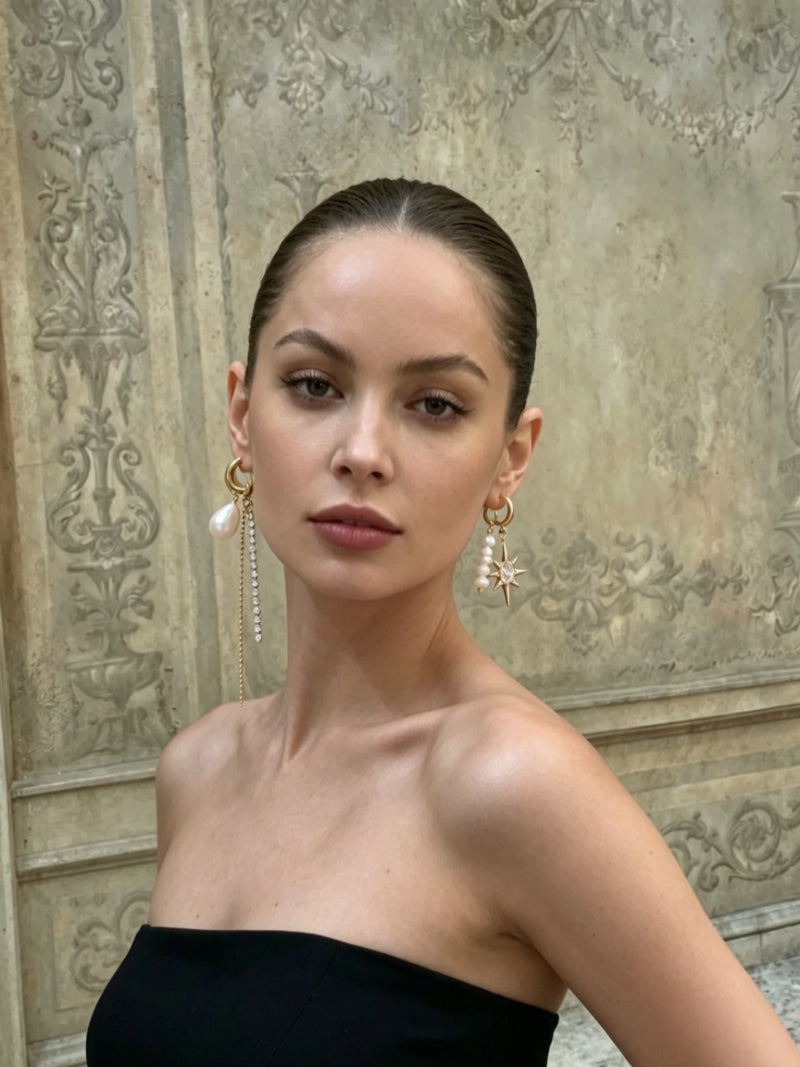
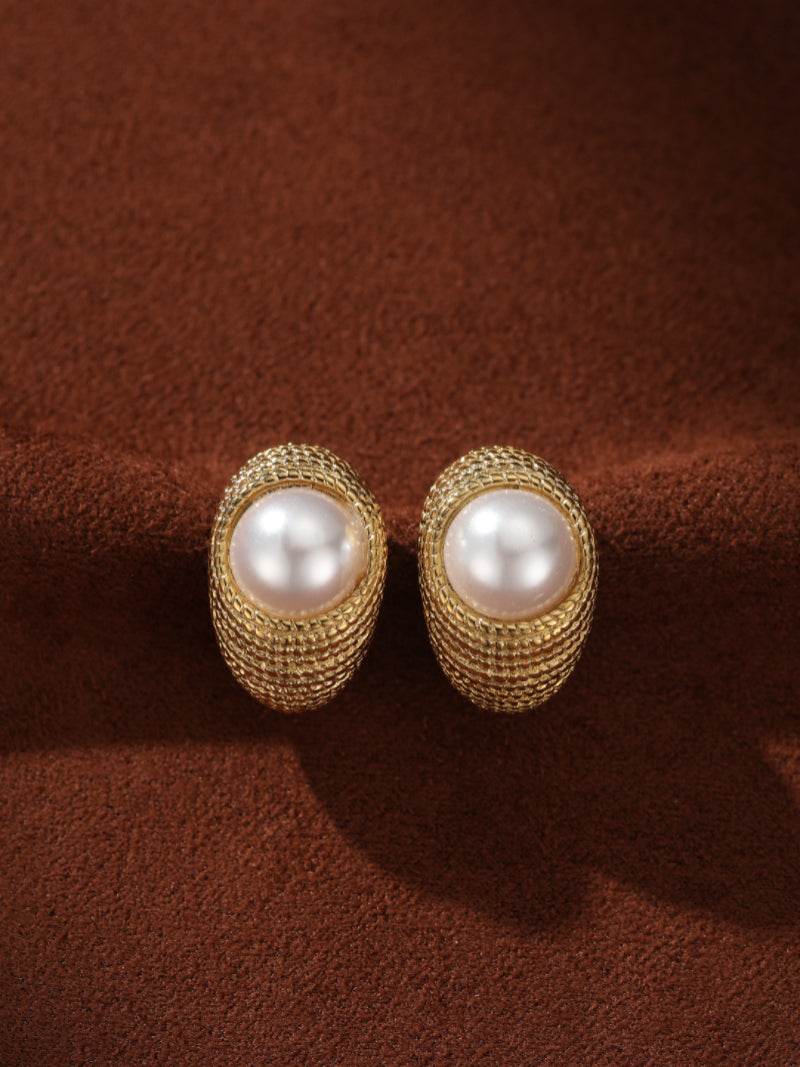
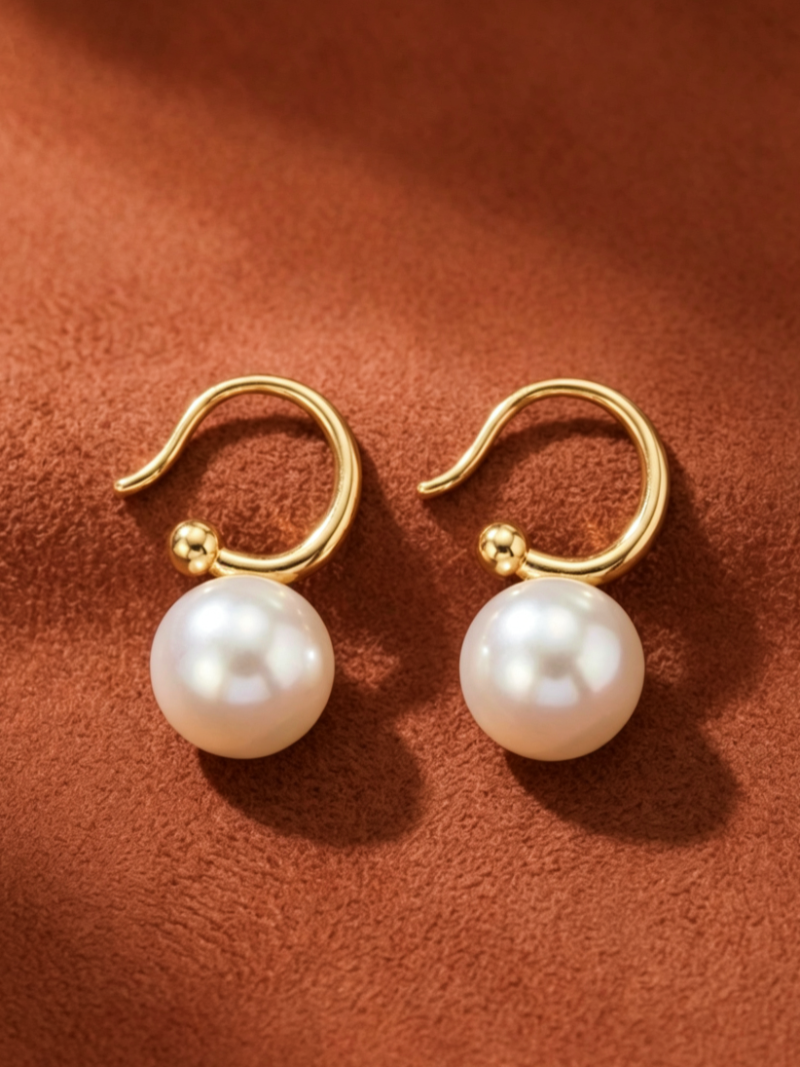
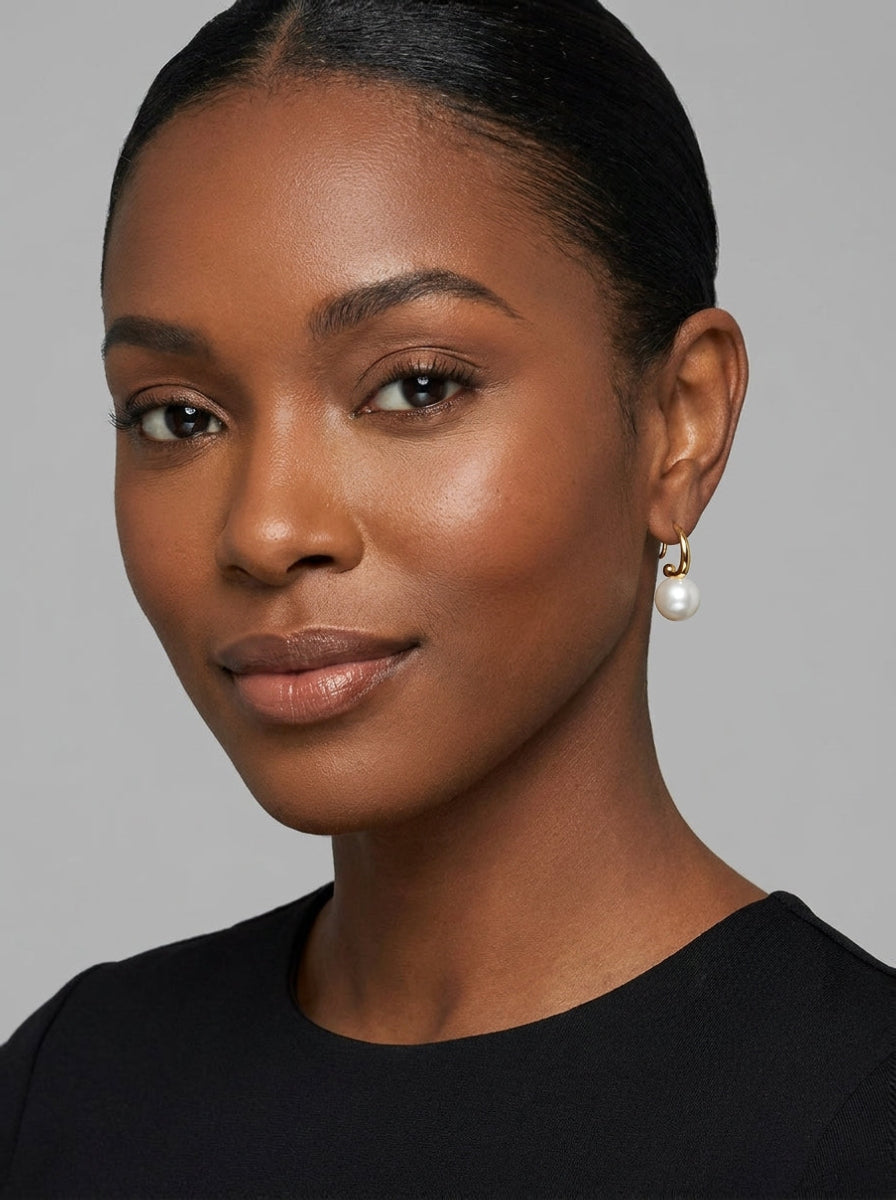
A pearl hoop earring puts a pearl at the curve, where it catches light every time you turn your head. The hoop gives an ear structure and the pearl softens it, which is why this combination works with a T-shirt as easily as with a dress.
What are pearl hoop earrings?
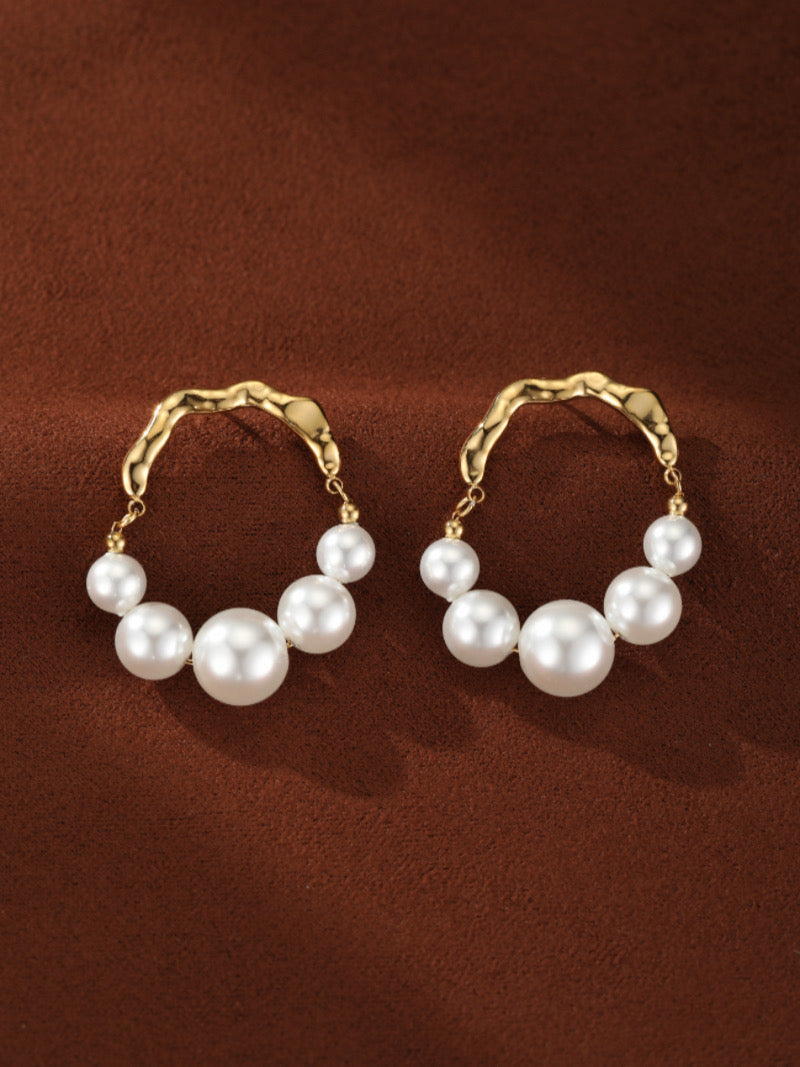
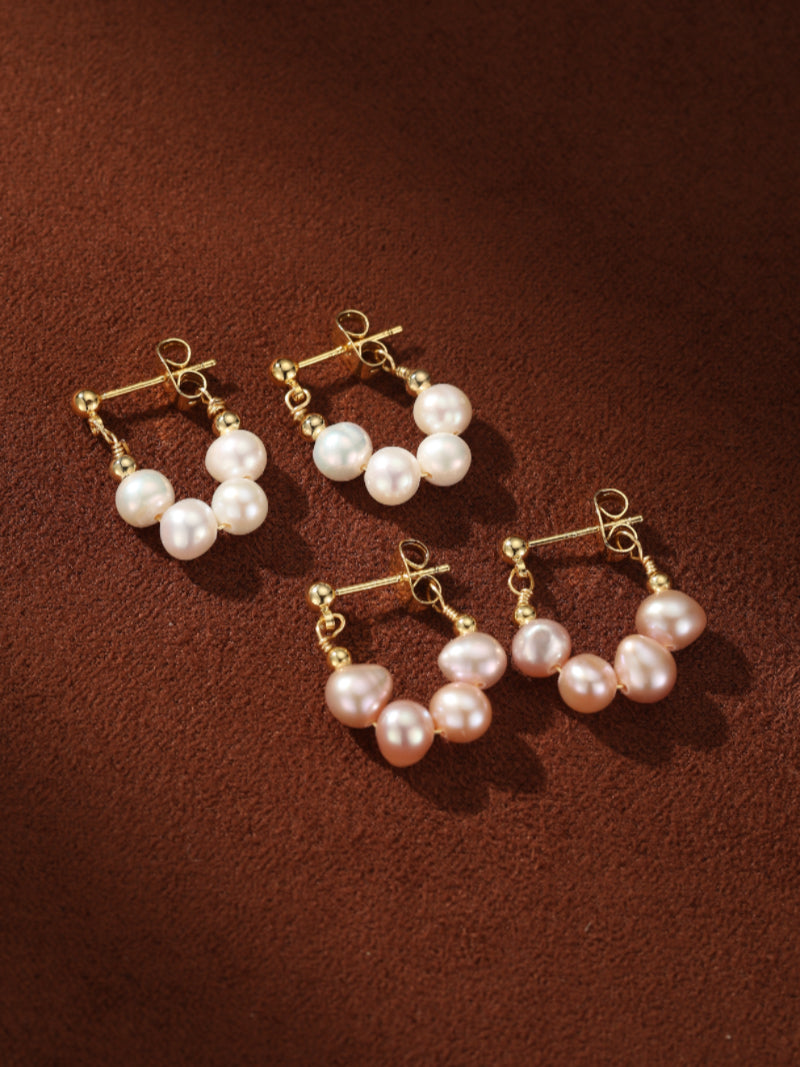
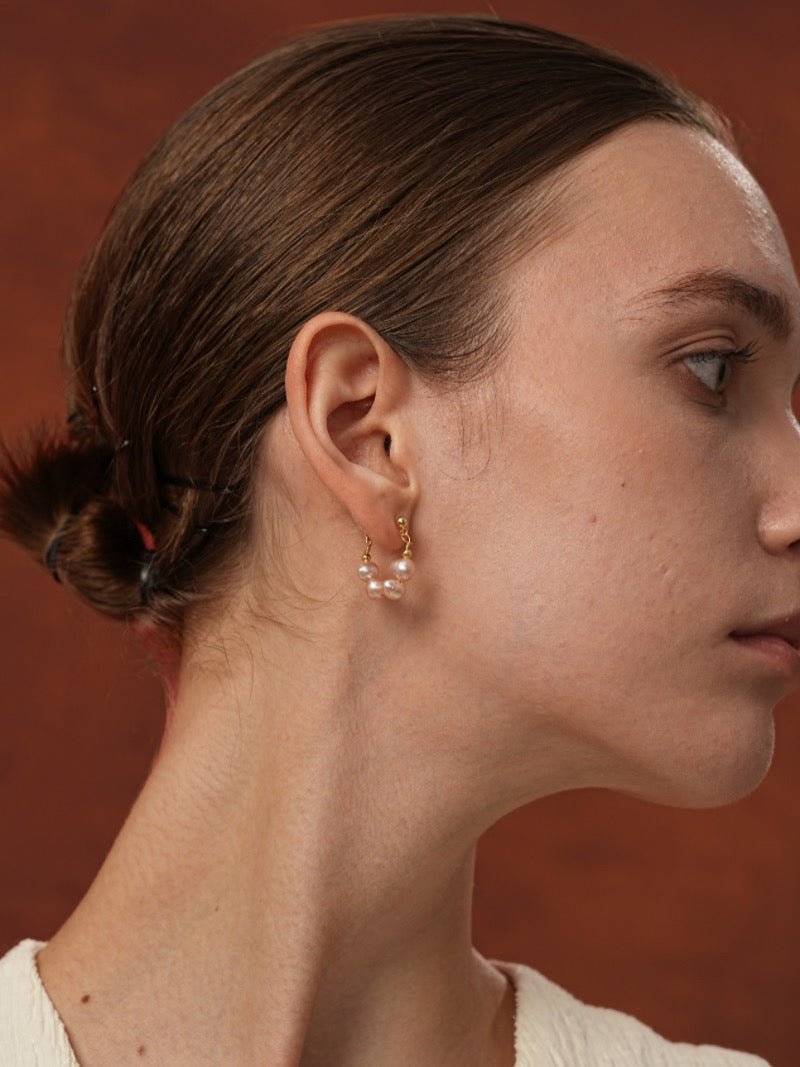
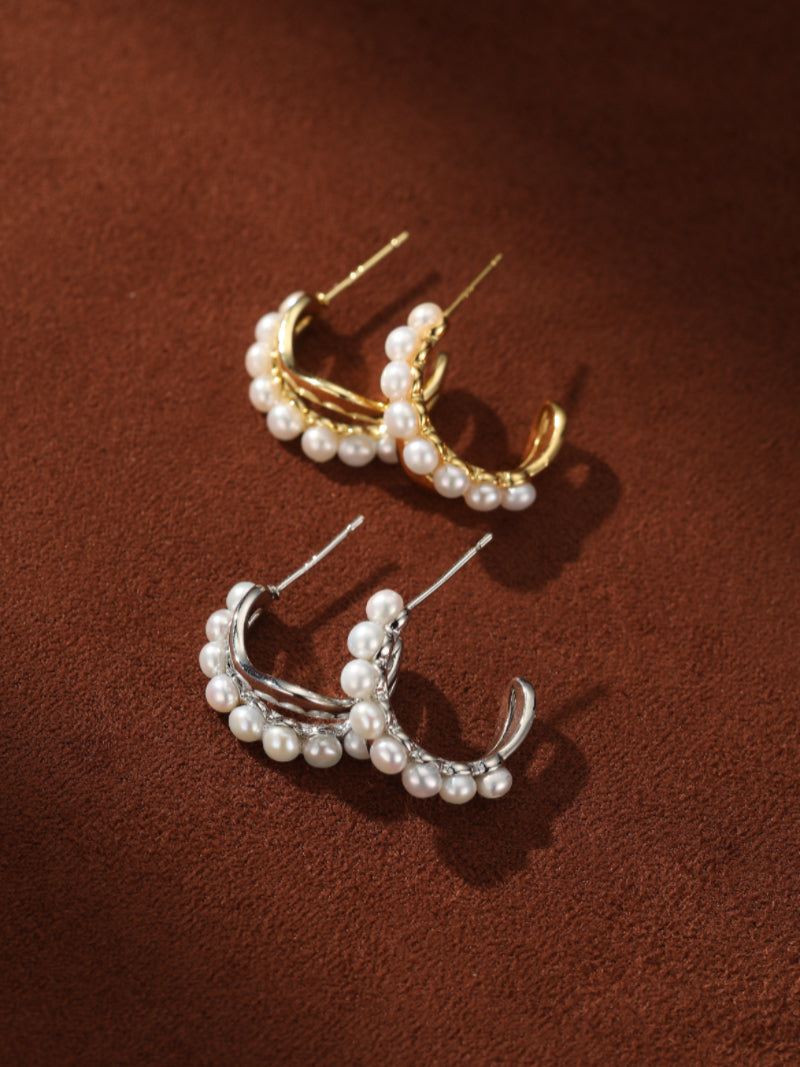
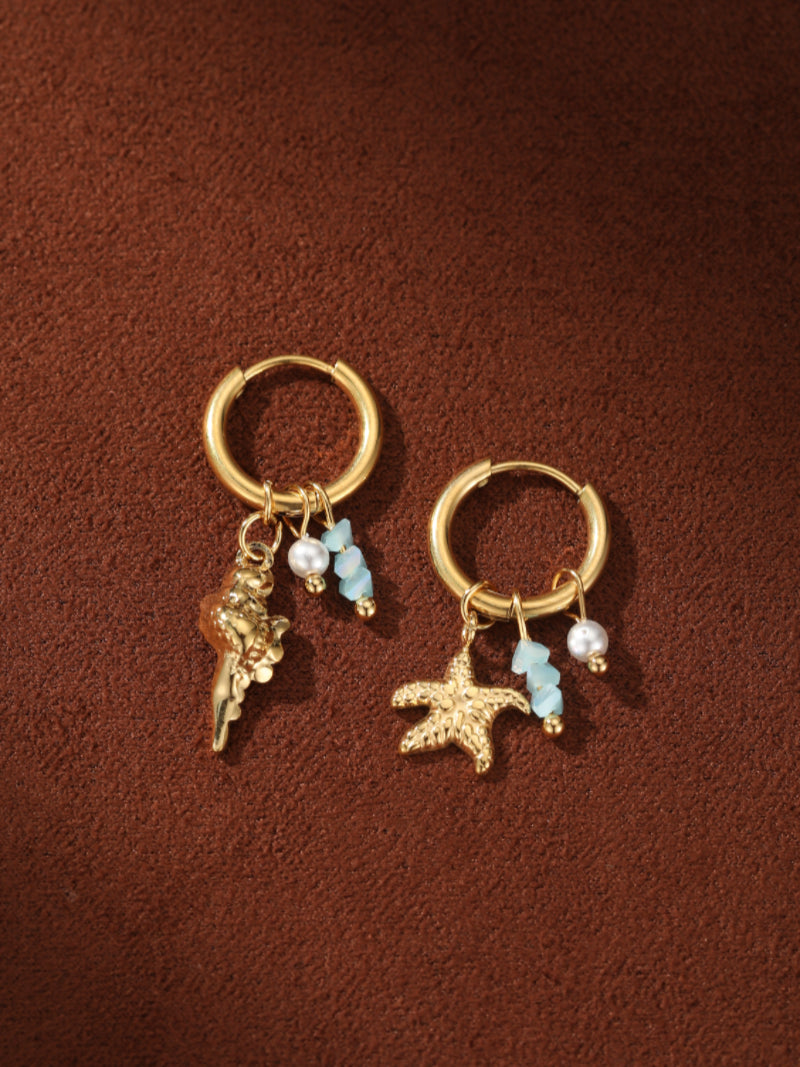
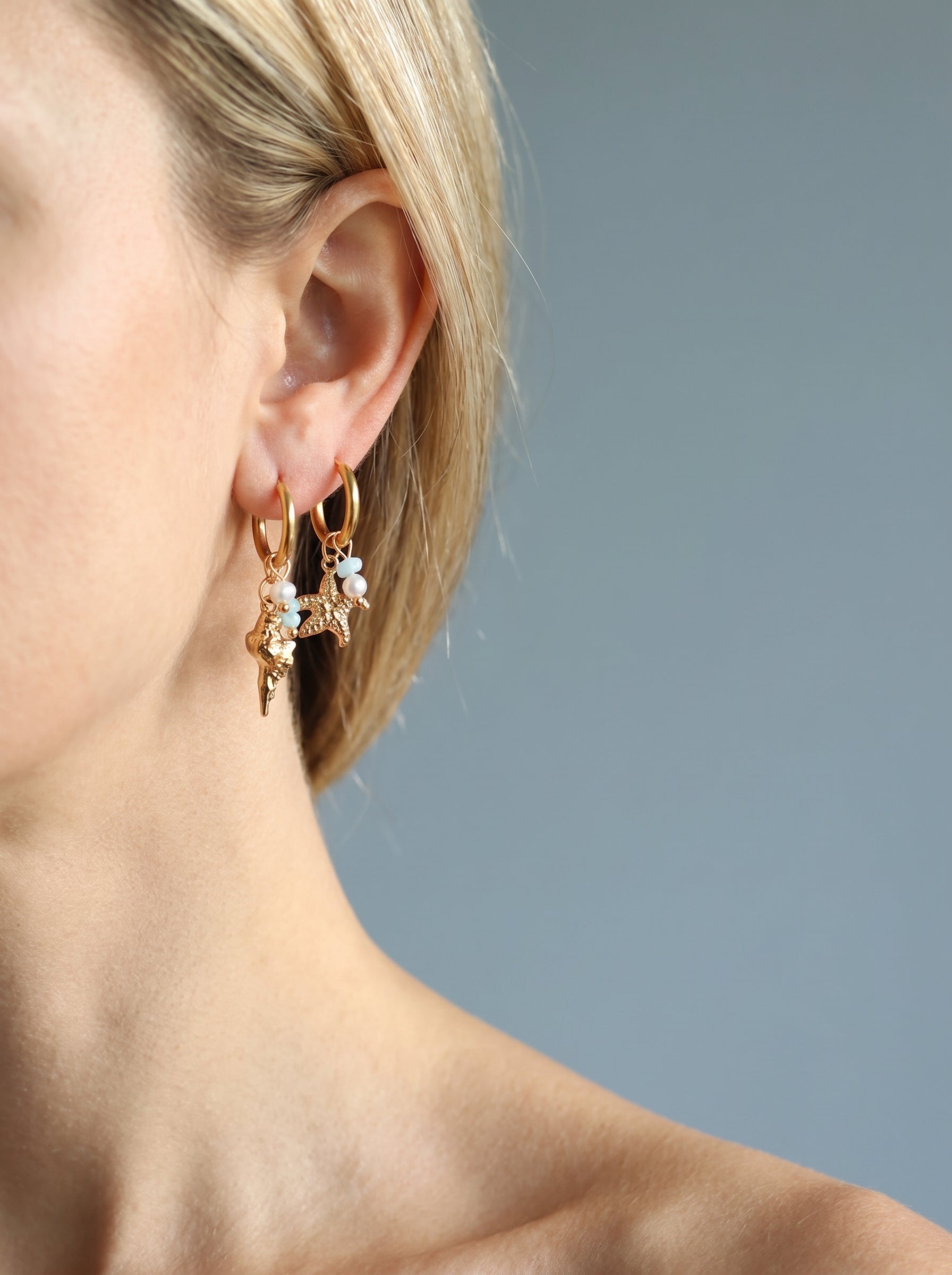
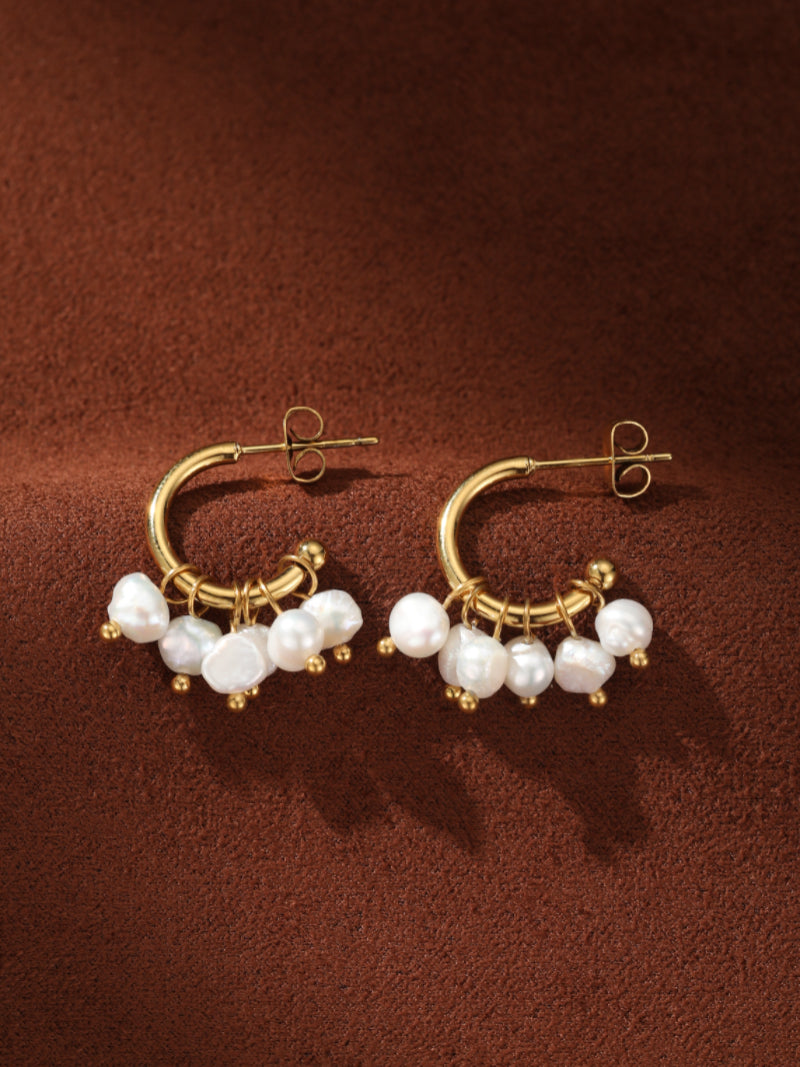
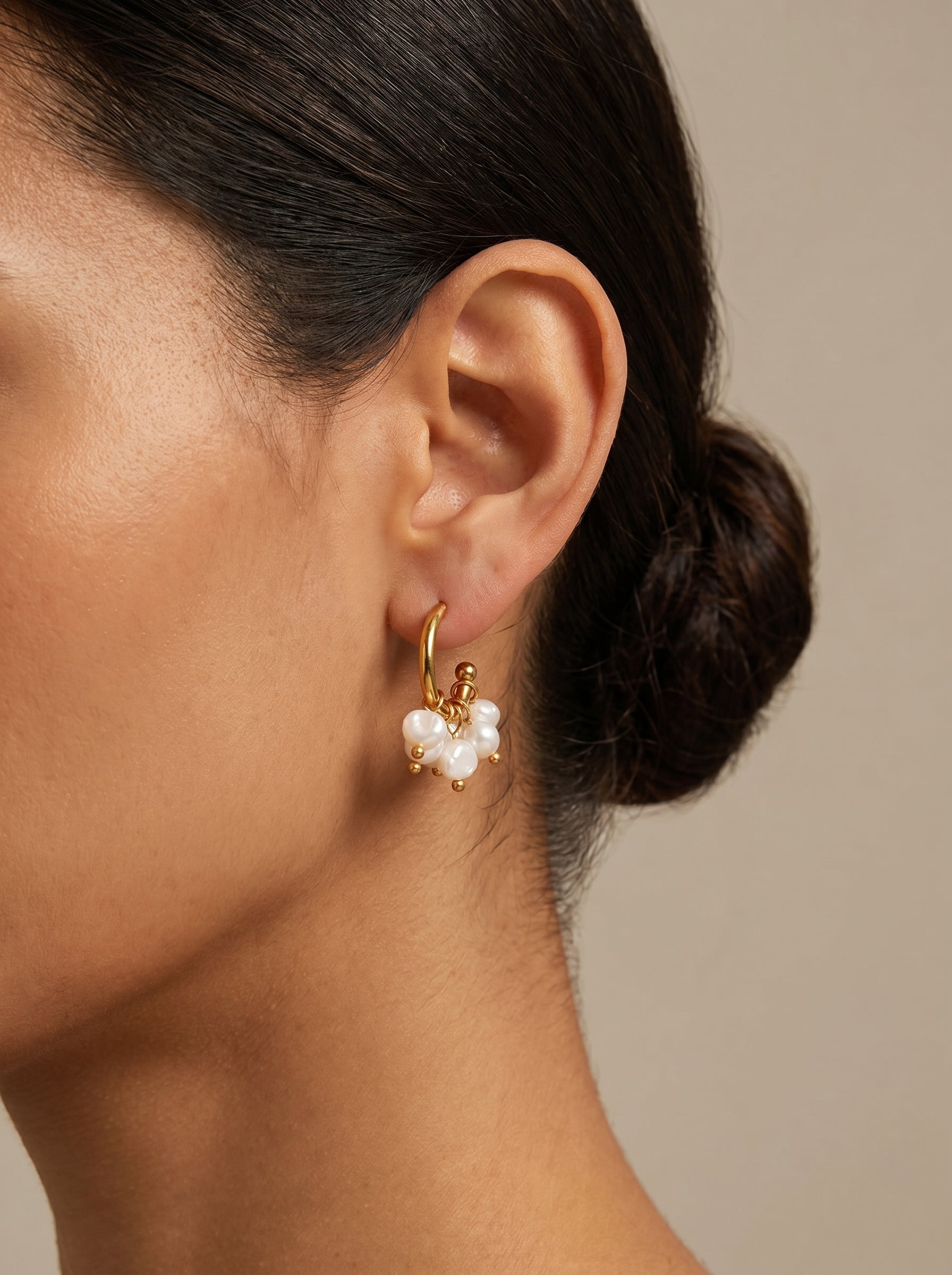
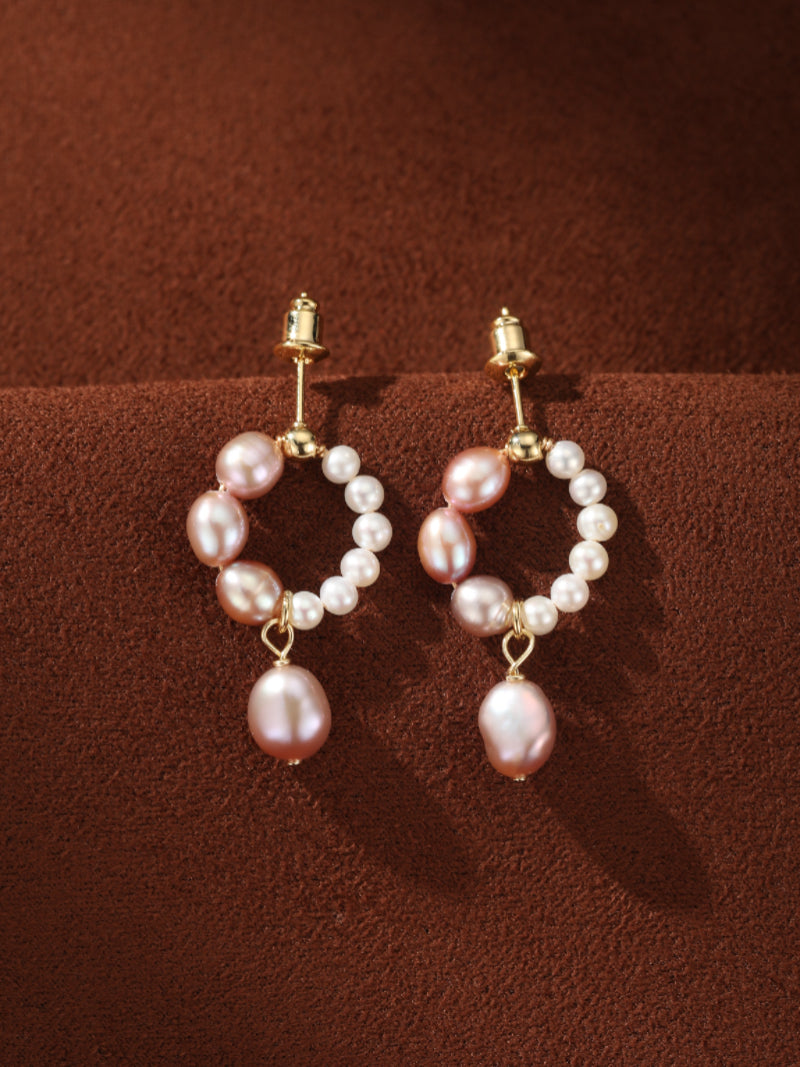
Pearl hoop earrings combine a circular or curved band with one or more cultured pearls. The pearl can sit at the base of the curve, thread onto the hoop itself, hang below it, or cap the ends. Each arrangement changes how much the earring moves and how much of the pearl is visible.
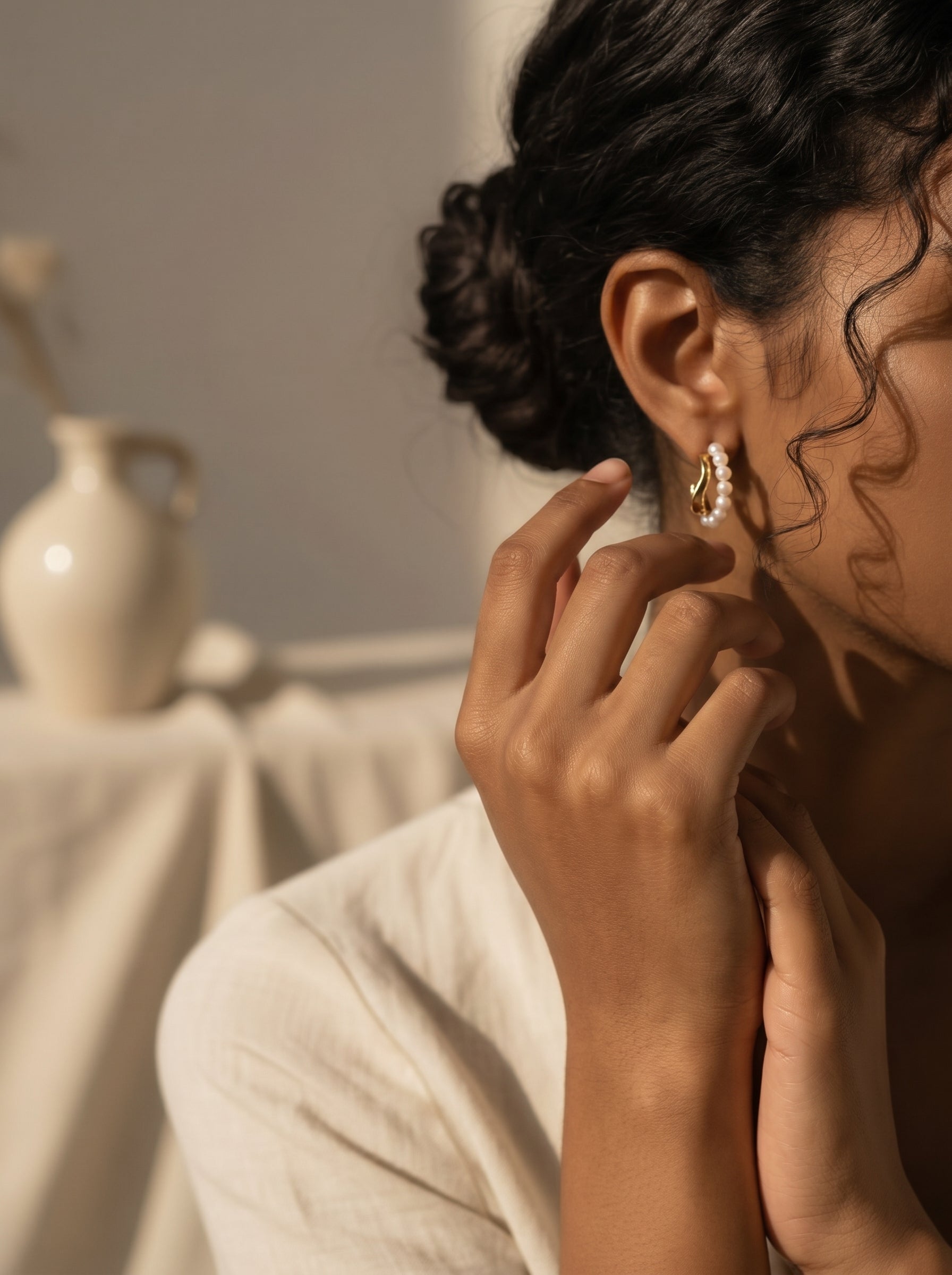
Unlike a stud, a hoop turns as you move, so light hits the pearl from different angles across a day rather than from one fixed direction.
What size hoop should you choose?
Hoop diameter decides whether the earring is a detail or a statement, and it matters more than pearl size.
- Huggies, under 15 mm — sit tight against the lobe. The most practical size for daily wear and for a second or third piercing.
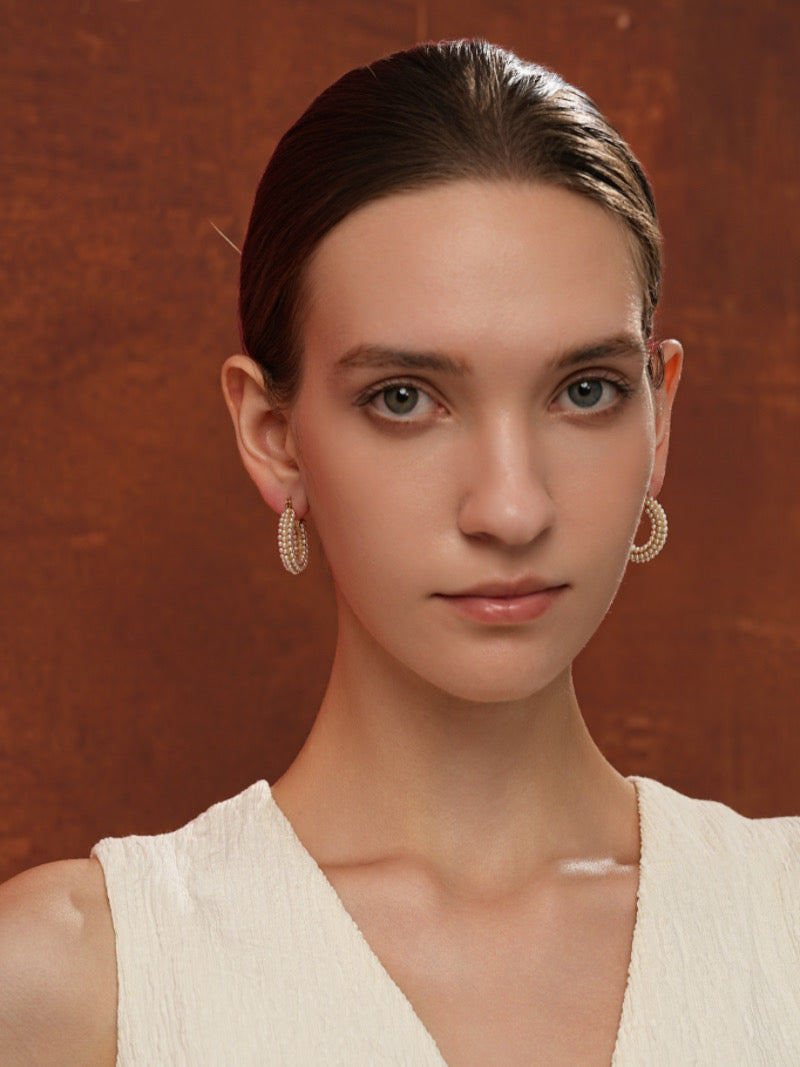
- Medium, 15 to 30 mm — visible from the front and in profile. The most versatile range and where most women land.
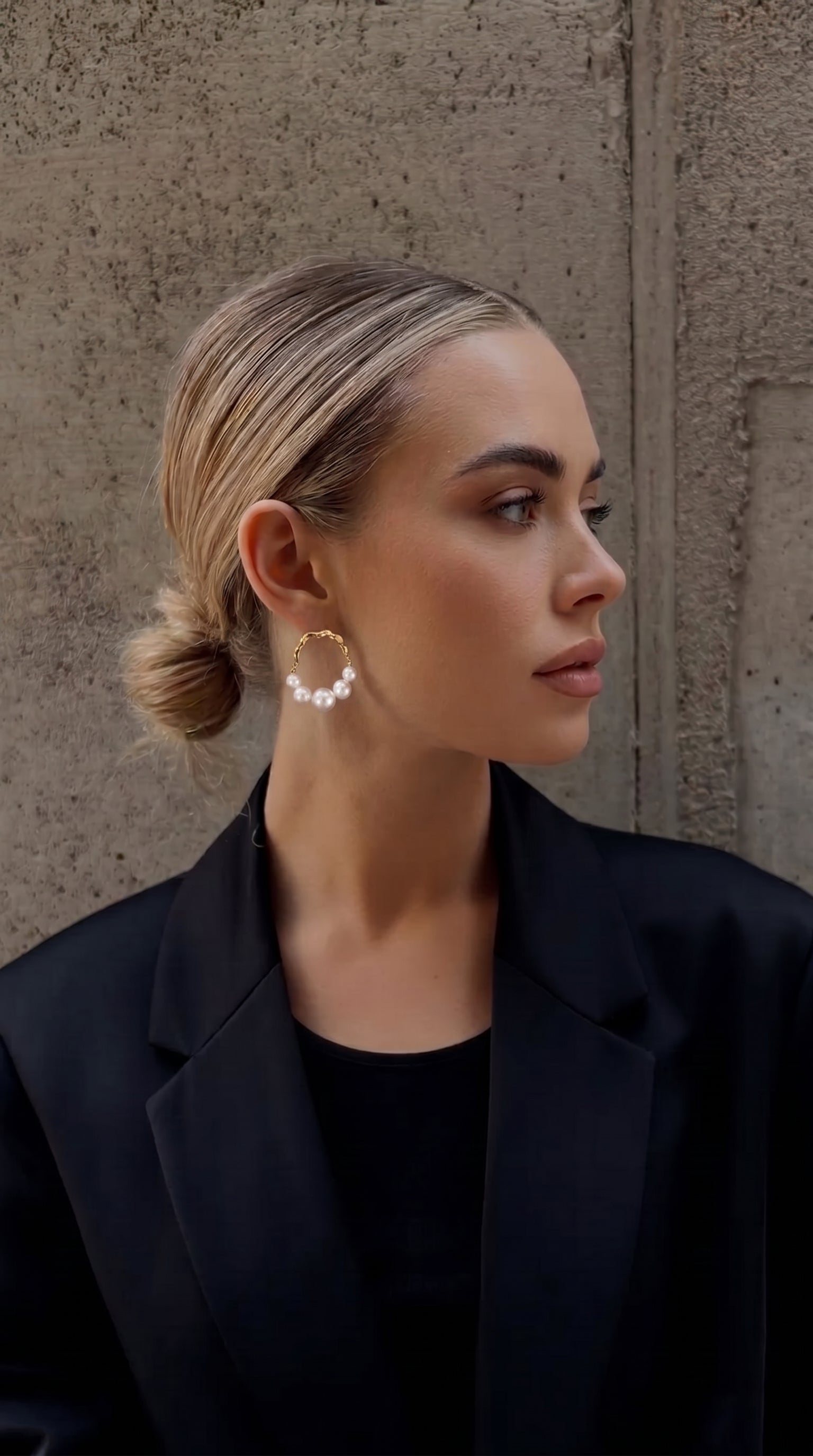
- Large, above 30 mm — a focal point that frames the jaw. Best with hair up or back and minimal other jewelry.
Which pearl hoop style suits you?
Classic hoops with a pearl at the curve
A single pearl sitting at the base of the hoop. The cleanest version and the one that suits the widest range of faces. Nothing here needs explaining, which is the point.
Wavy and spiral hoops
The band itself is shaped rather than perfectly circular, so the earring reads as a design object. These carry more interest without needing a larger pearl or a bigger diameter.
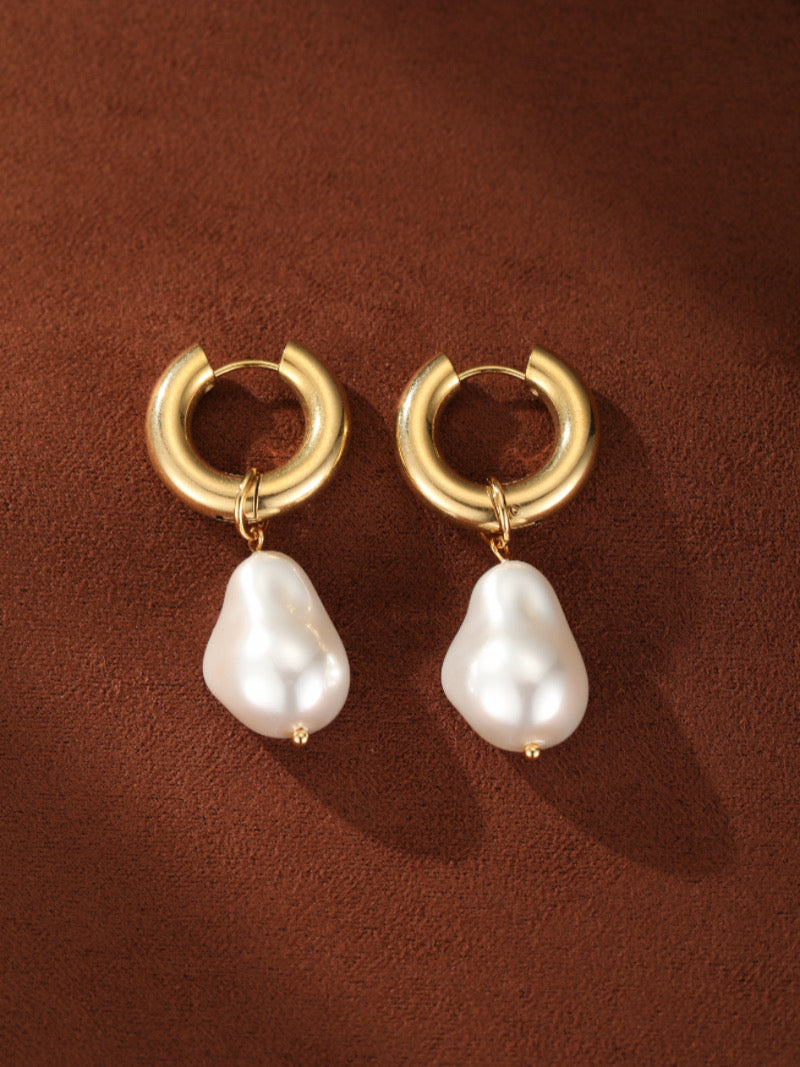
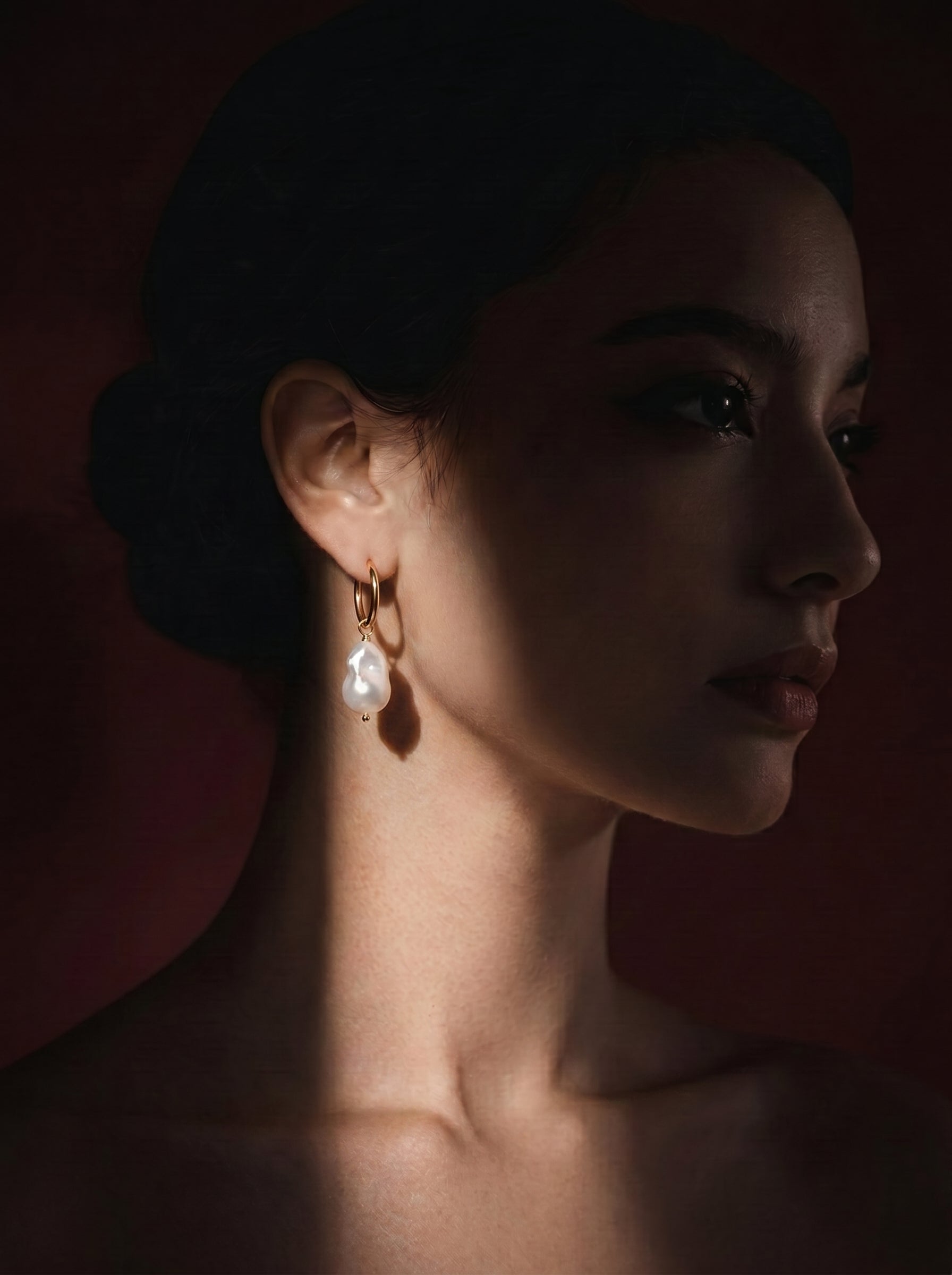
Chunky hoops
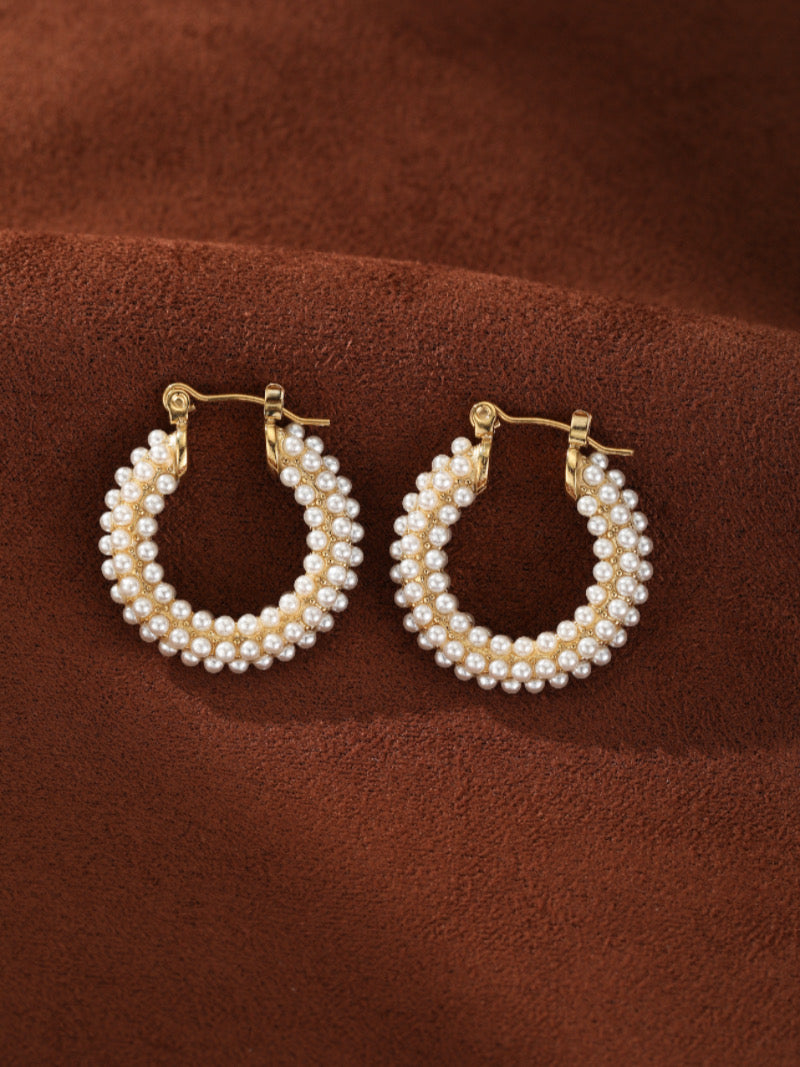
Thicker bands with real weight, set with larger pearls. These take the ear on their own and pair best with a bare neckline. The heaviest option, and the one to consider carefully if your piercings are sensitive.
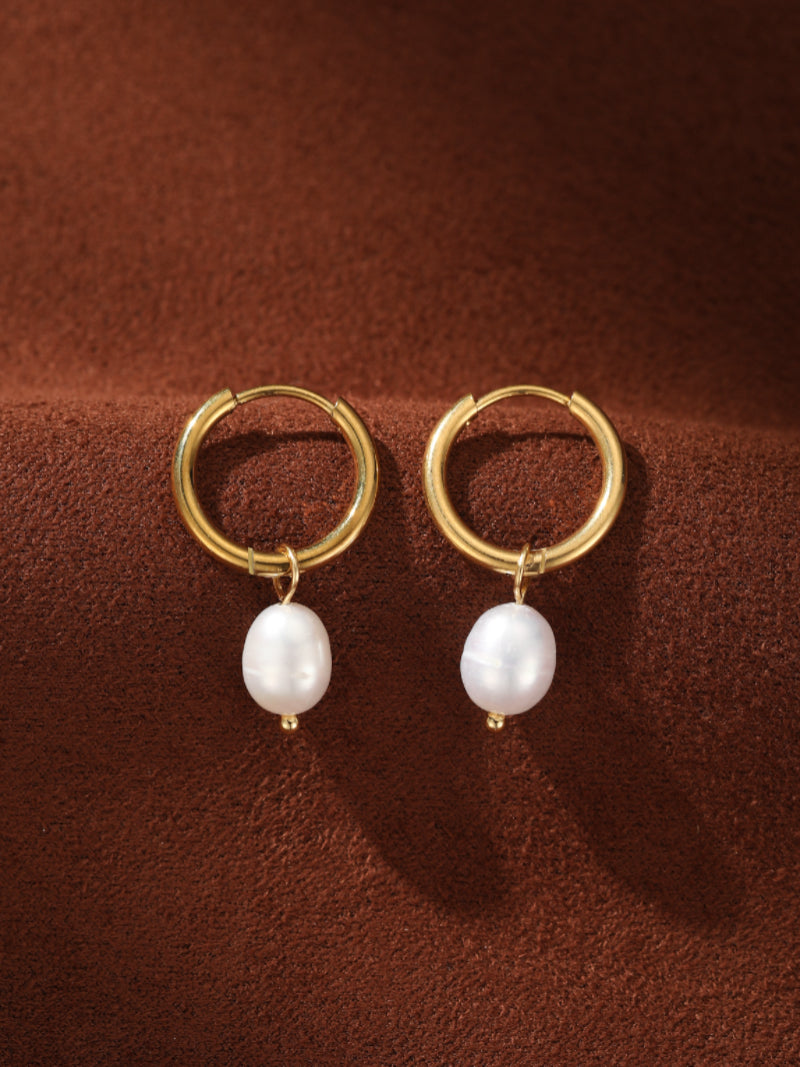
Hoops with drops
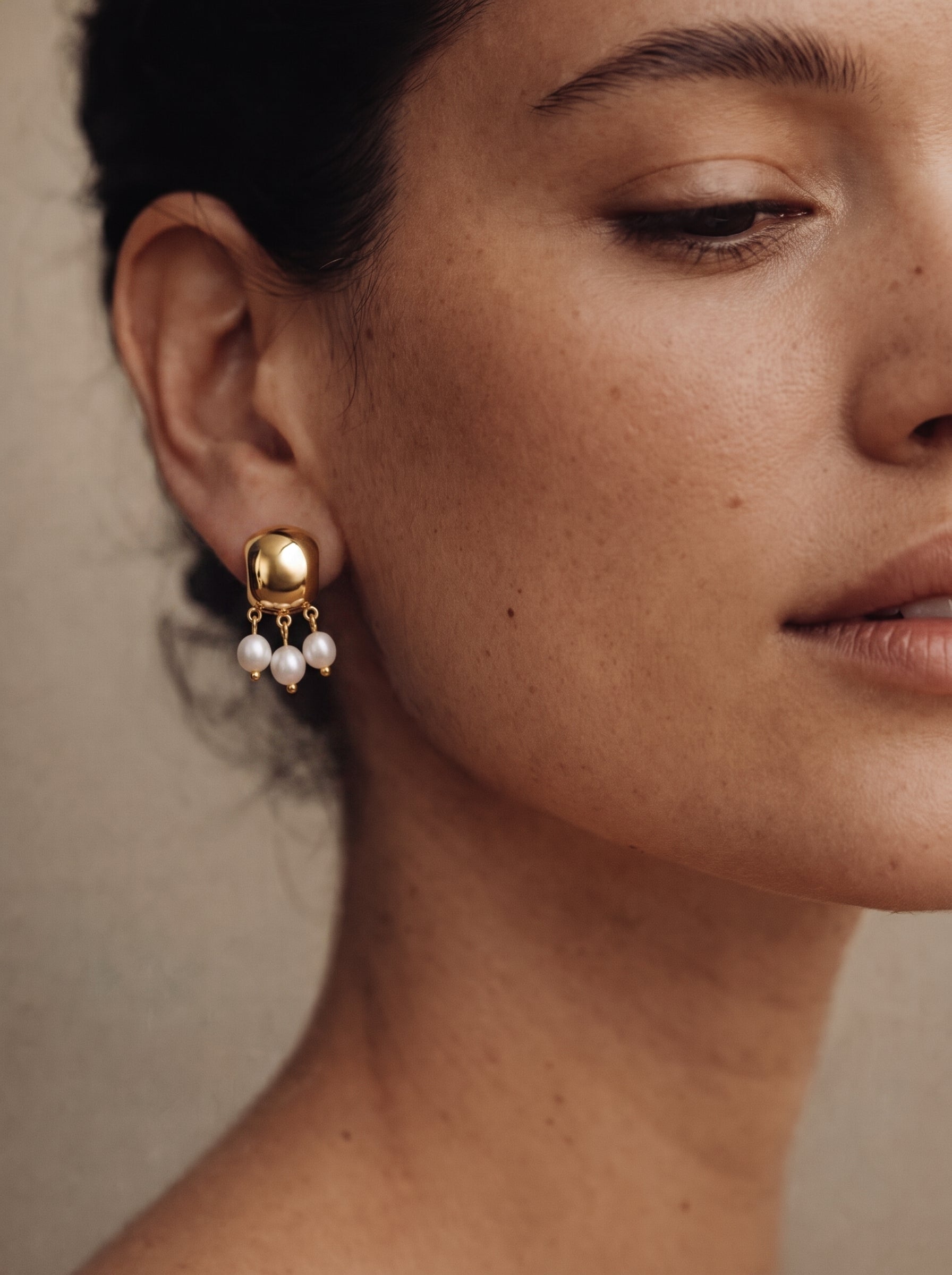
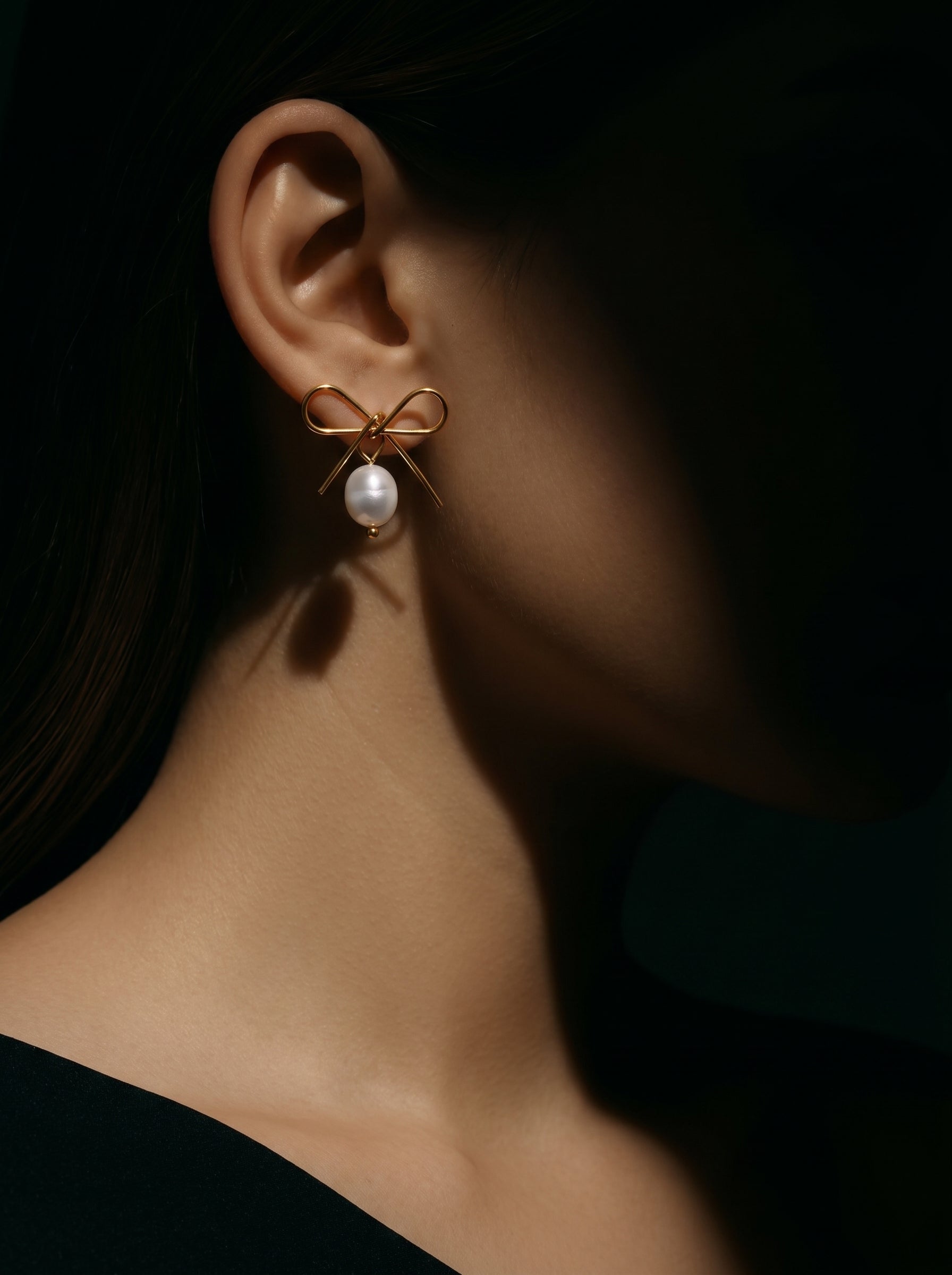
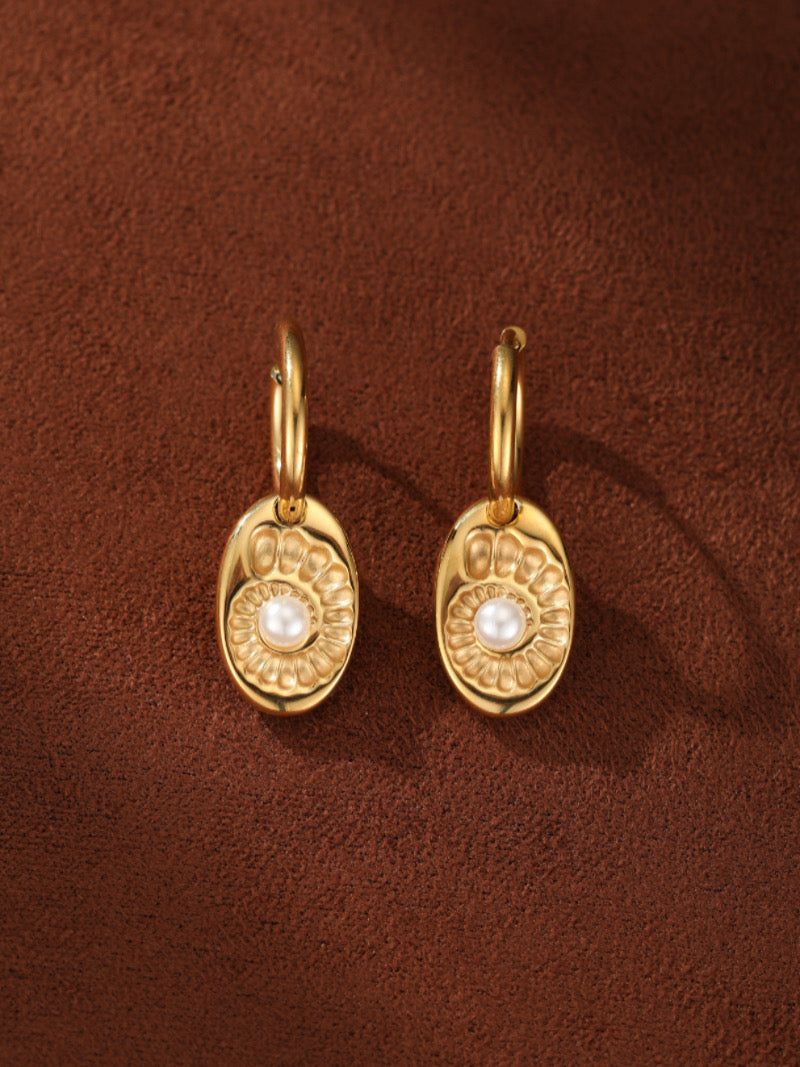
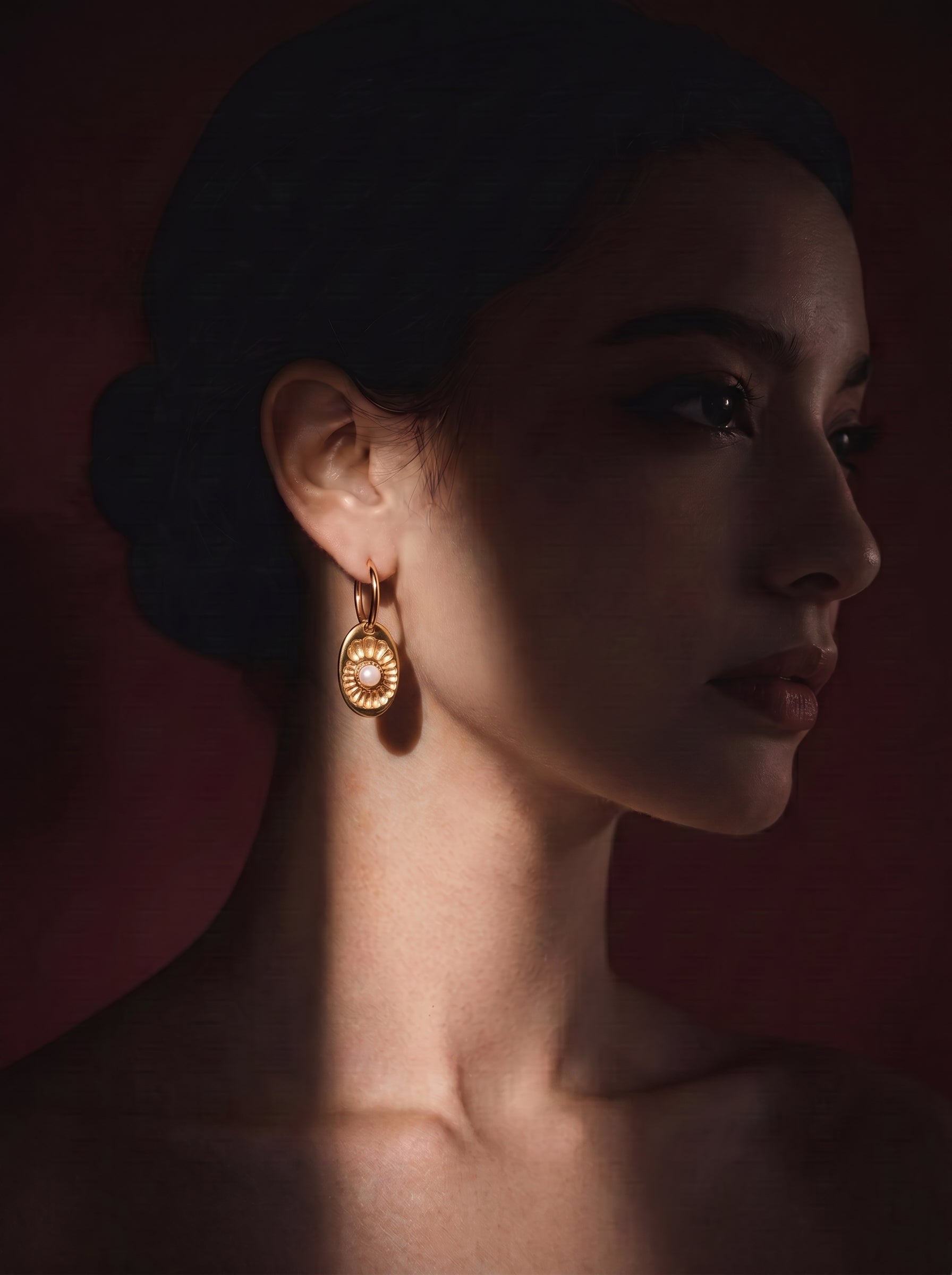
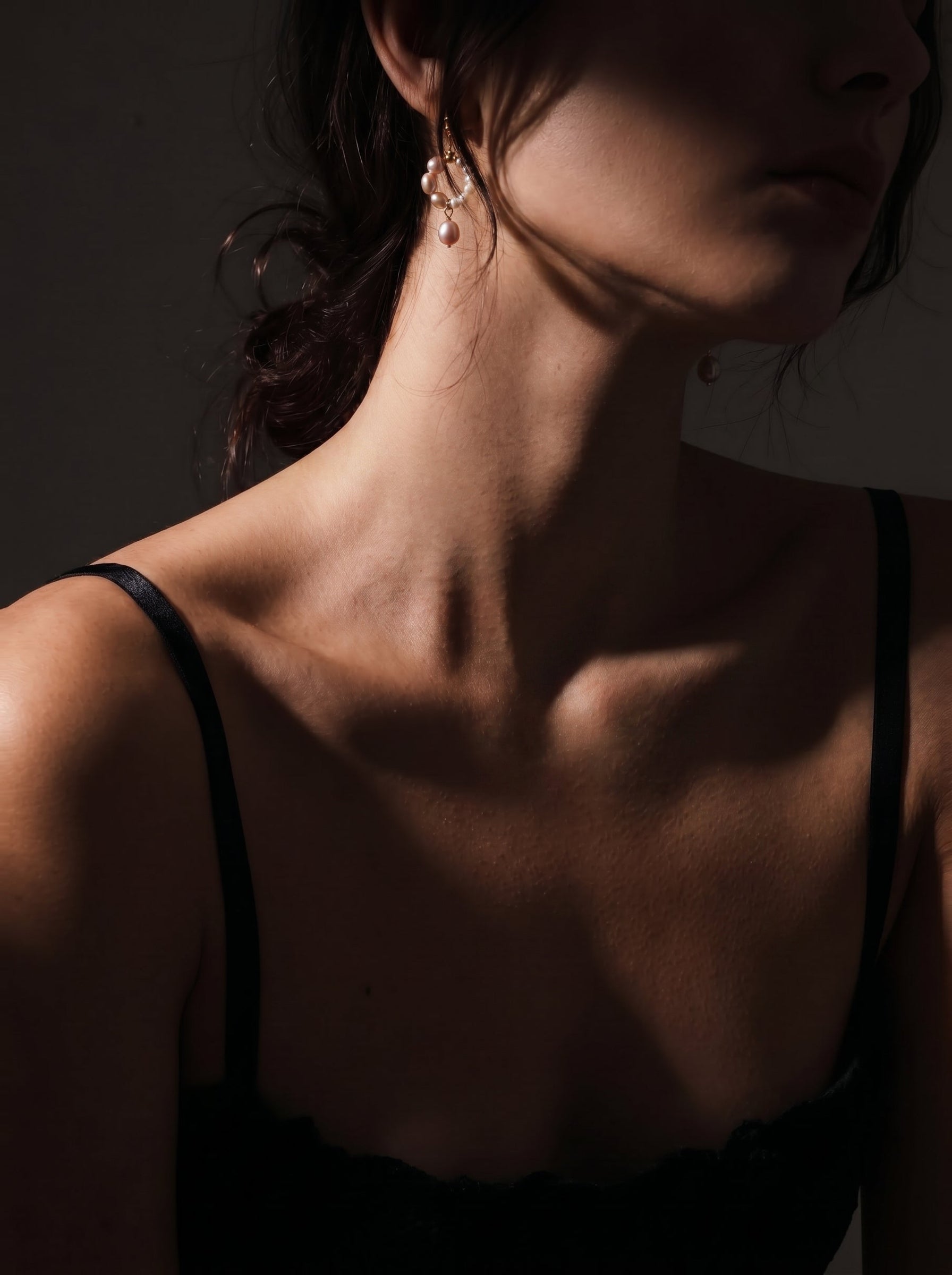
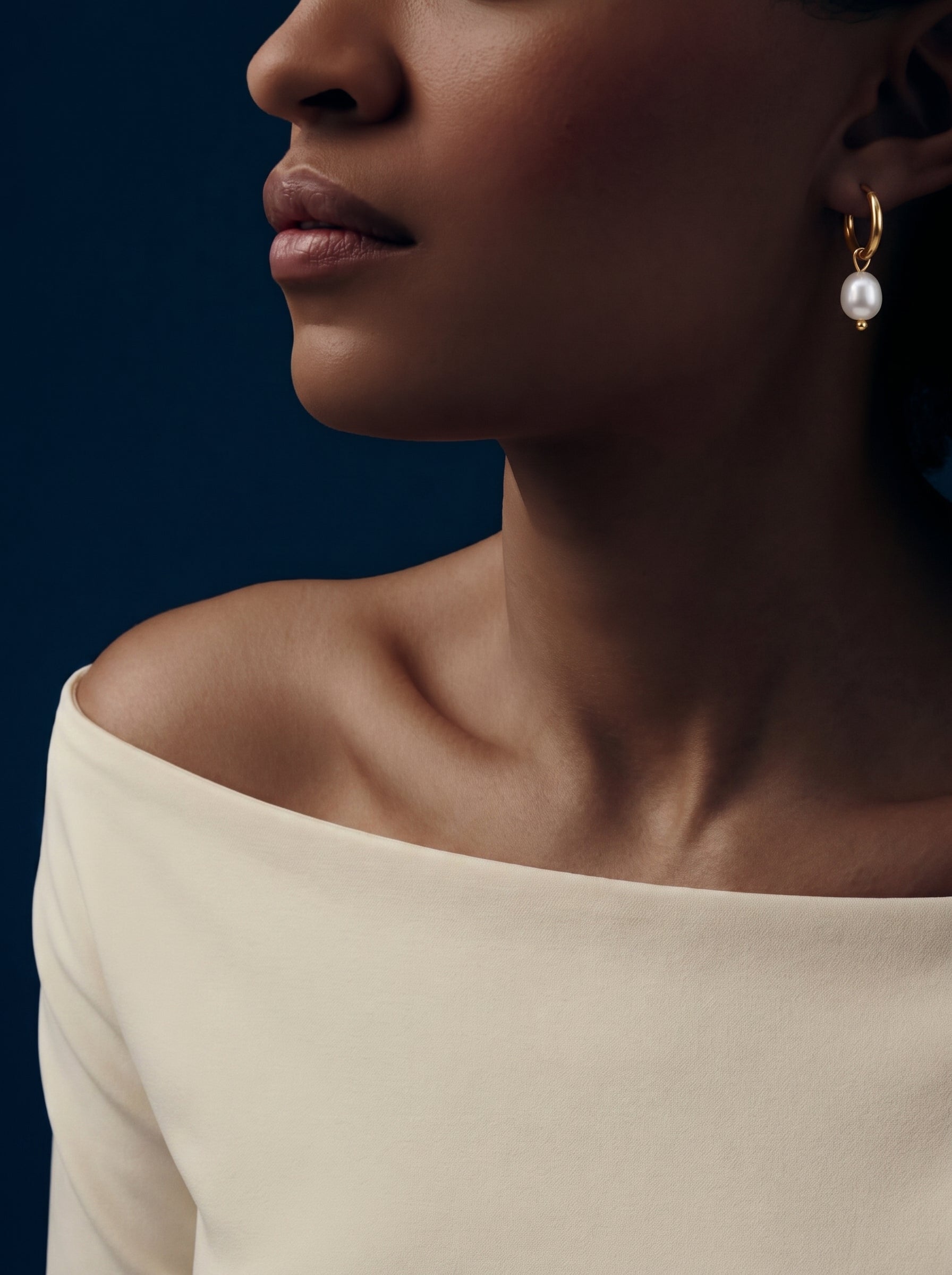
A pearl suspended below the hoop rather than set into it, combining a curved profile with a vertical line. This is the most flattering hoop variant for a round face, because it adds length the circle alone does not.
Which pearls work best in hoops?
Round and button pearls suit hoops best, because they sit cleanly against a curve without a directional shape fighting the circle. Akoya pearls are particularly effective here: their sharp luster reads well when the pearl is small relative to the hoop.
Every pearl is a real cultured pearl. Type, origin, bodycolor, overtone, shape, size, grade and treatment appear on every product page.
Why buy pearl hoop earrings from Grande Lilith
- Eight provenance markers on every product page: type, origin, bodycolor, overtone, shape, size, grade and treatment.
- Sourcing named to place: freshwater from Zhuji, Akoya from Japan, Tahitian from French Polynesia.
- Partners vetted by our GIA-certified pearl specialist, on working conditions as well as quality.
- Hypoallergenic stainless steel across the range, alongside solid 18k gold and 925 sterling silver.
- Designed in Paris. Thirty days to change your mind, and every order arrives in a magnetic pouch.
Frequently asked questions
What size pearl hoop is most versatile?
Between 15 and 25 mm. That range is visible from the front, reads clearly in profile, and still clears a coat collar. Smaller huggies are better for constant wear, larger hoops for occasions.
Can you sleep in pearl hoop earrings?
Small huggies are the only hoops worth sleeping in, and even then a stud is more comfortable. Anything larger presses against the pillow and against the ear, and nacre is soft enough that constant pressure shows eventually.
Do pearl hoops suit older women?
The hoop is one of the least age-specific earring shapes there is. What changes the reading is finish and scale rather than the shape: a fine hoop with a single pearl works at any age, and so does a chunky one worn with confidence.
Are pearl hoops appropriate for work?
Huggies and medium hoops are, since they turn rather than swing and do not catch on a collar. Large hoops and hoop drops move into a different register and are better suited to evening.
How do pearl hoops fasten?
Most use a hinged snap closure, which is secure and easy to fasten one-handed. Some smaller styles use a post and back. All posts and fittings are nickel-free, lead-free and cadmium-free.