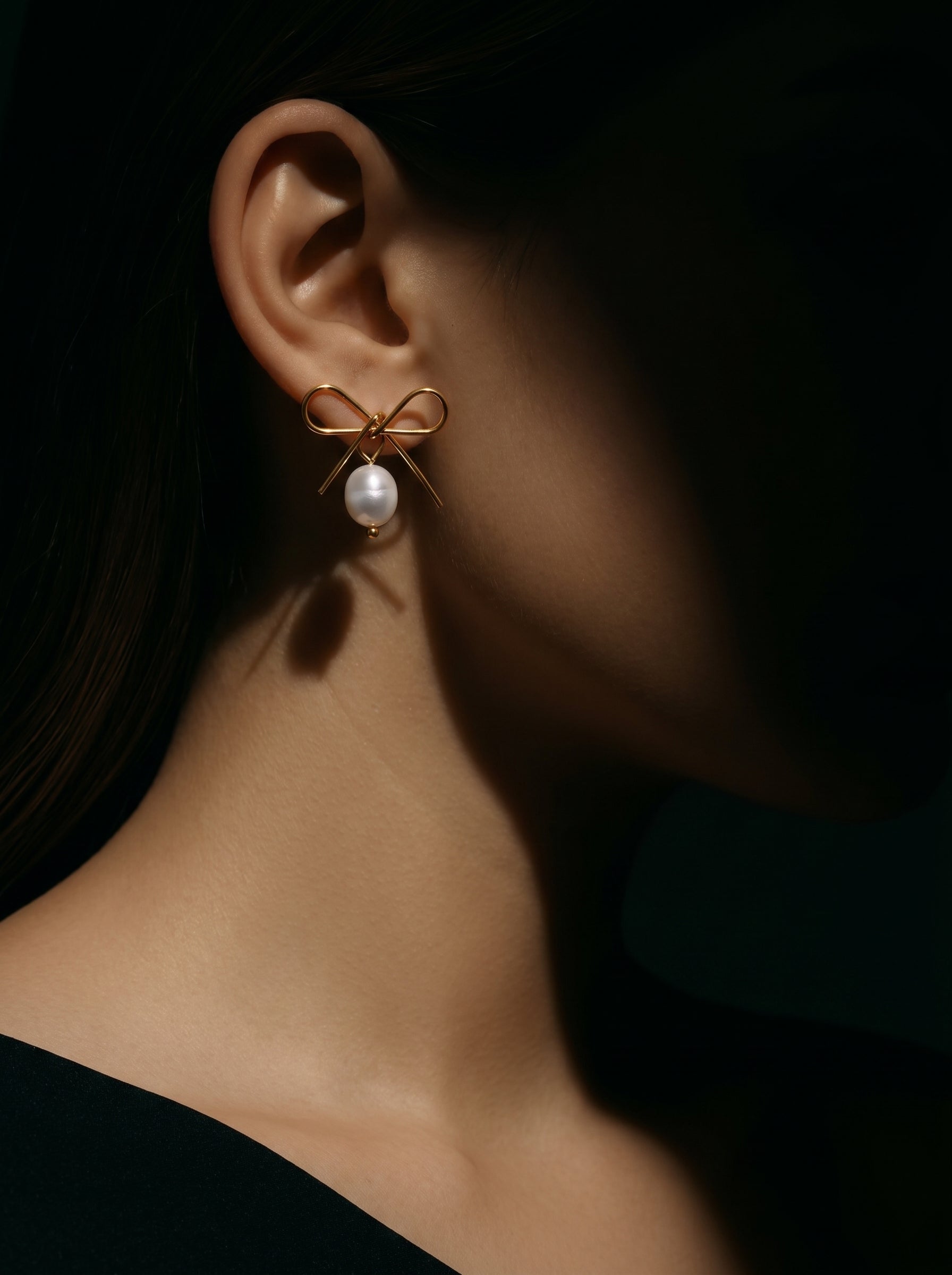
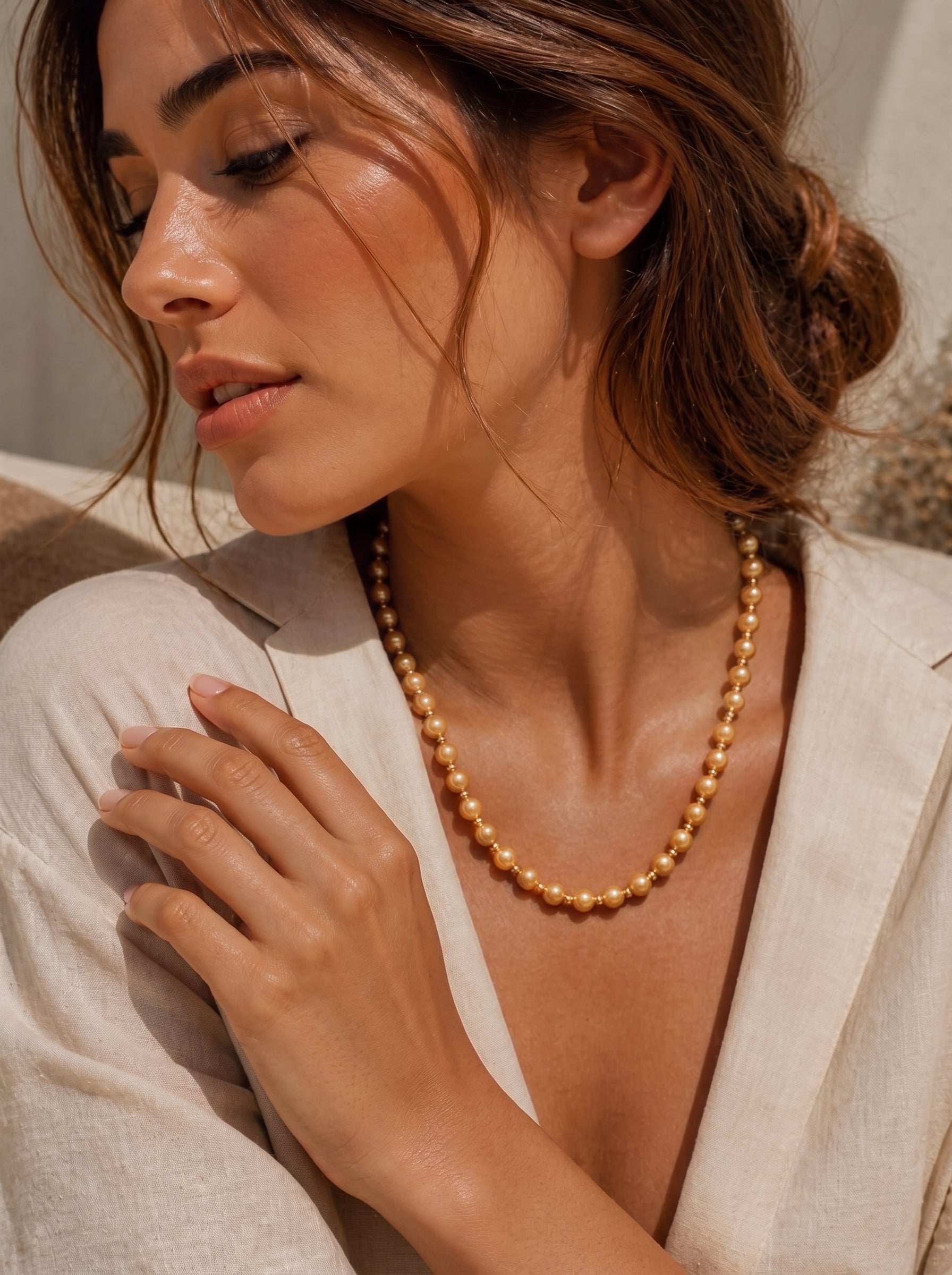
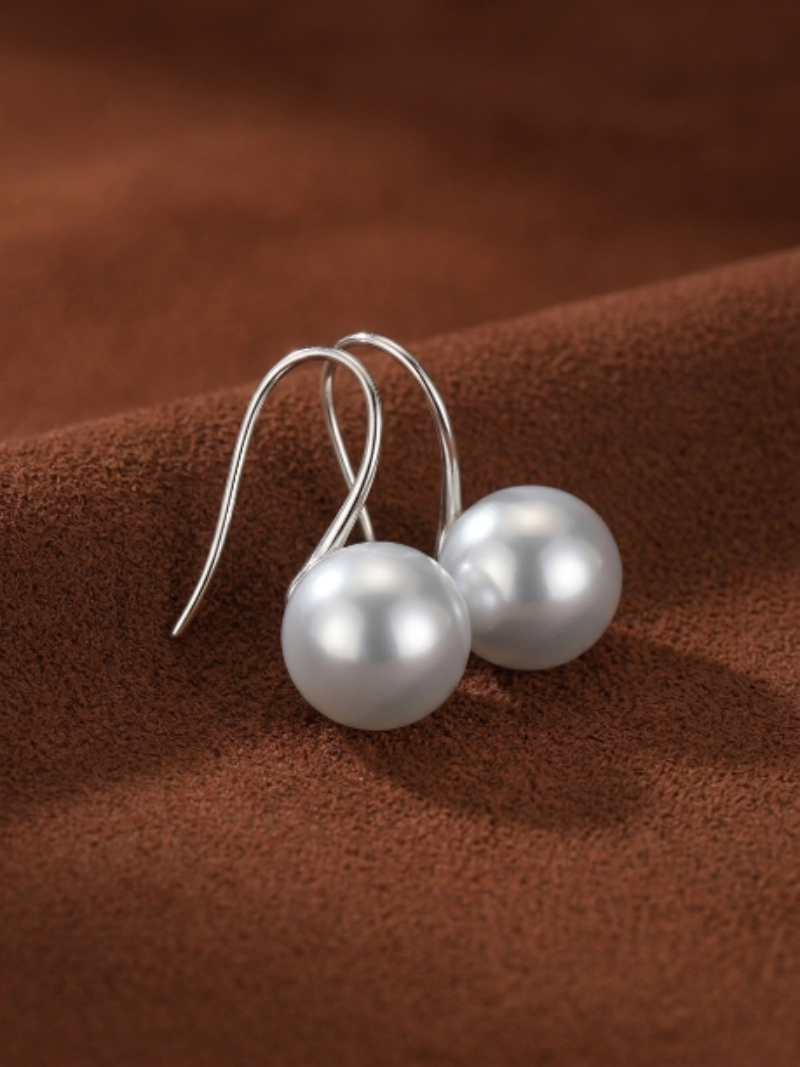
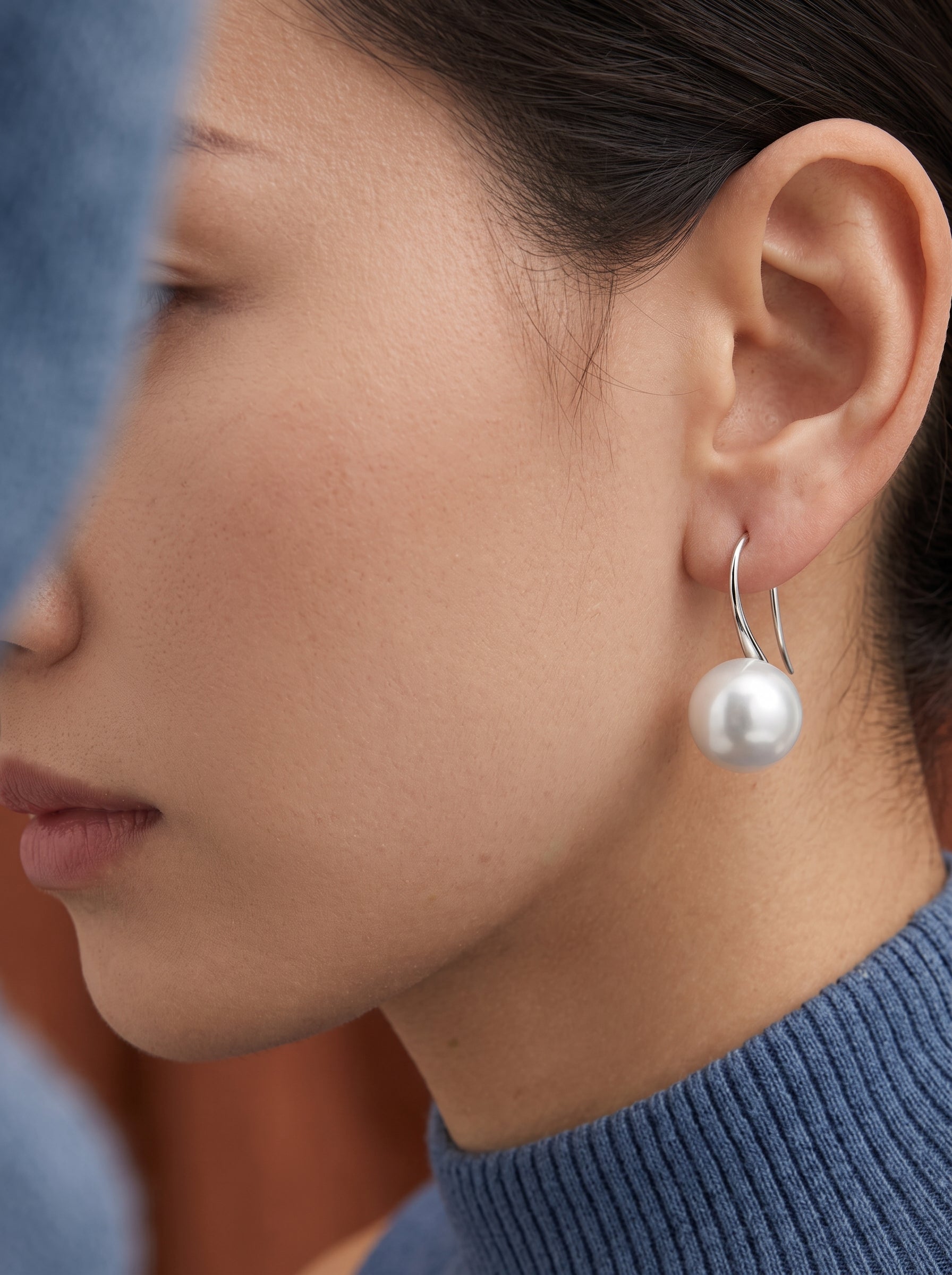
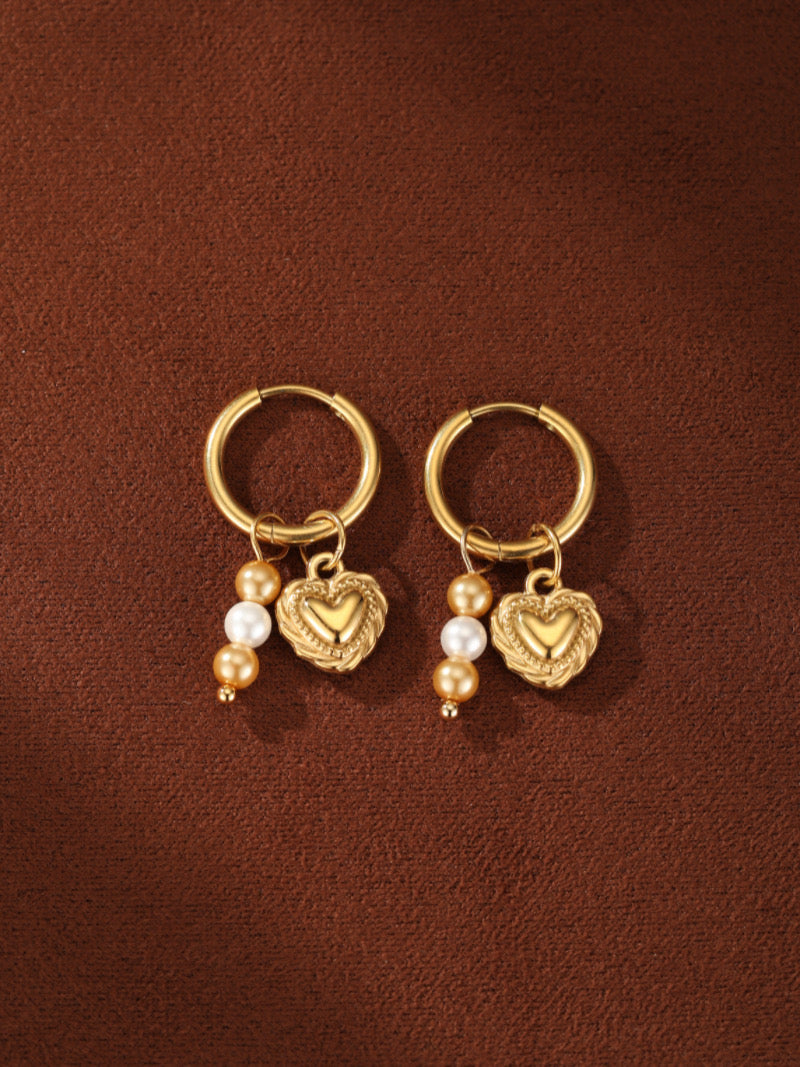
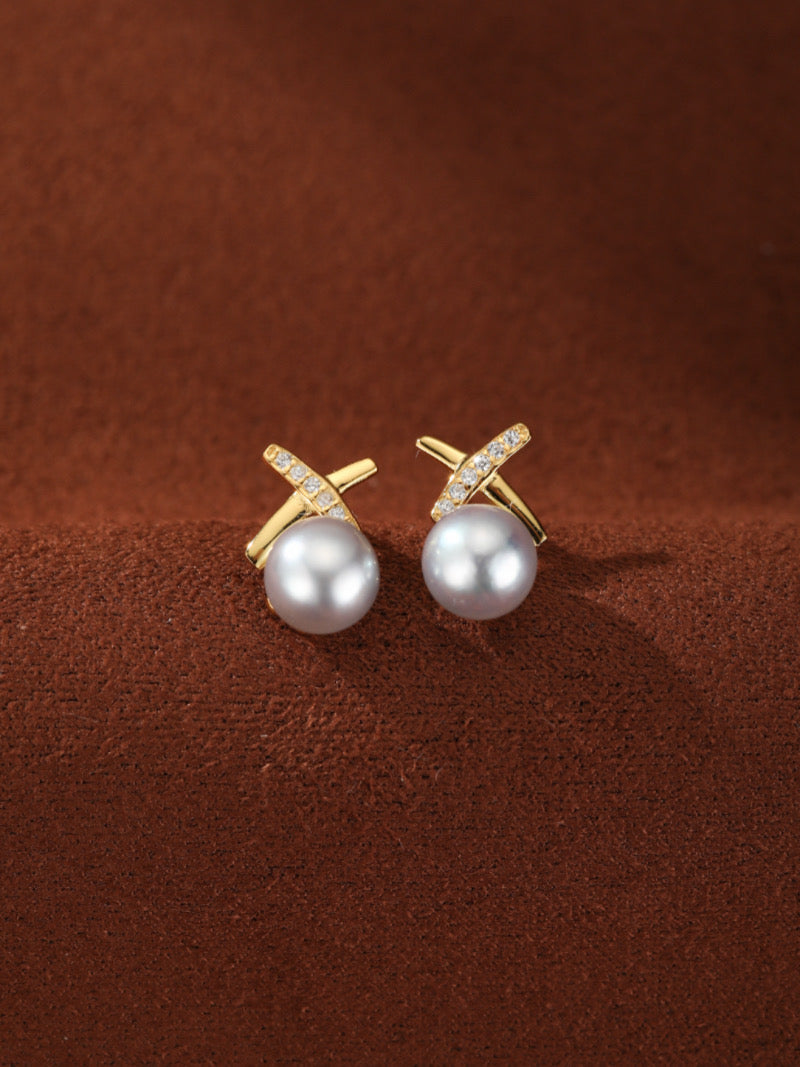
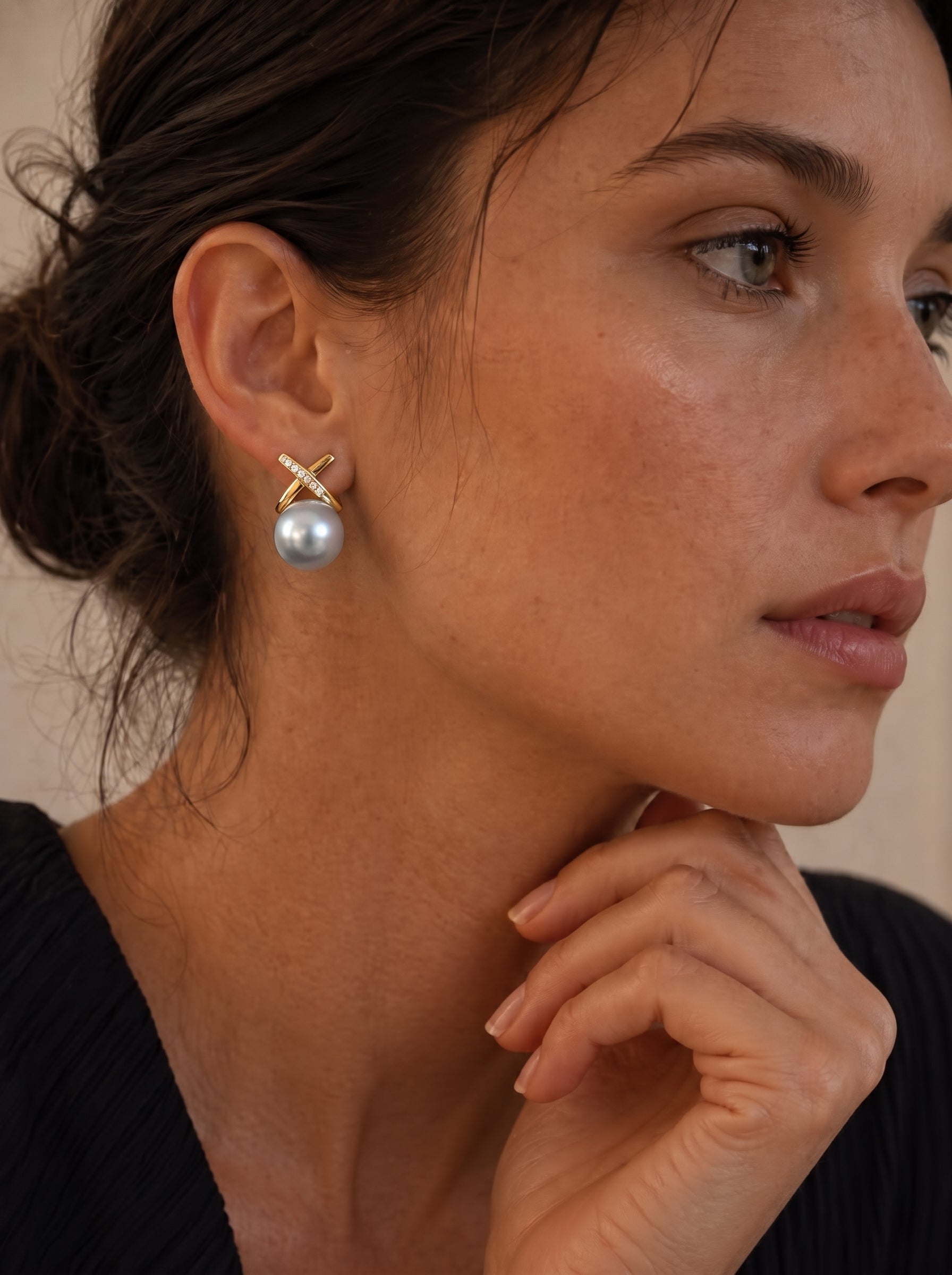
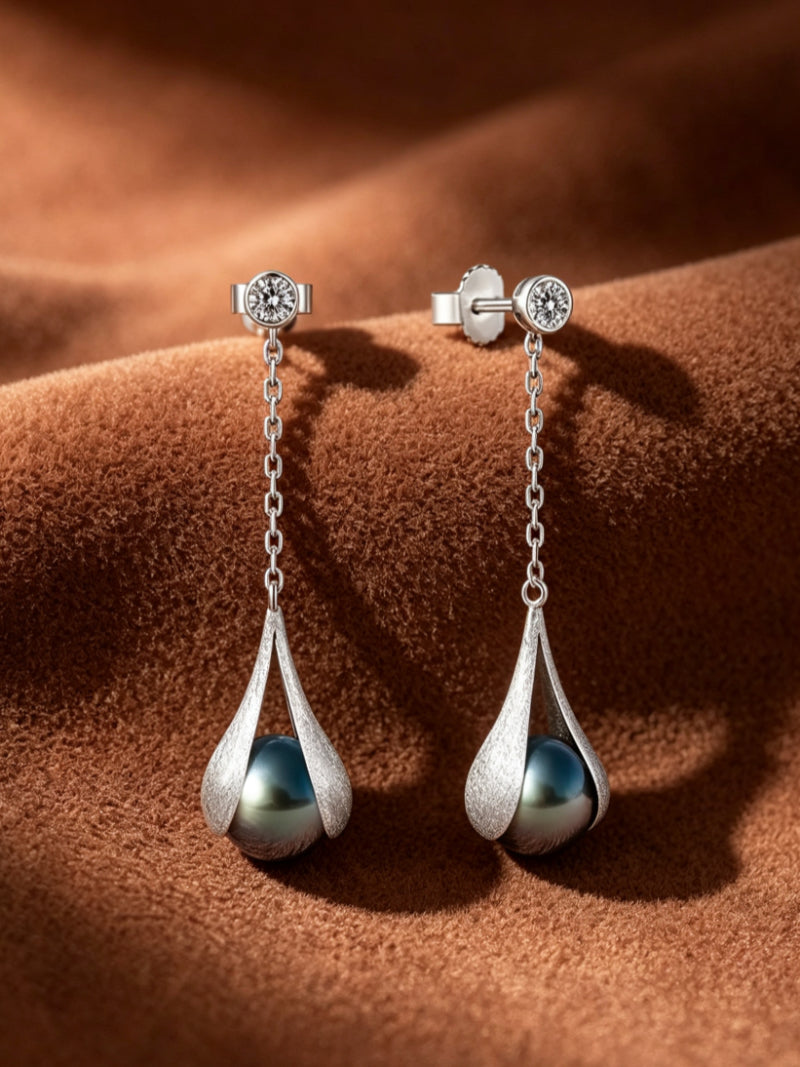
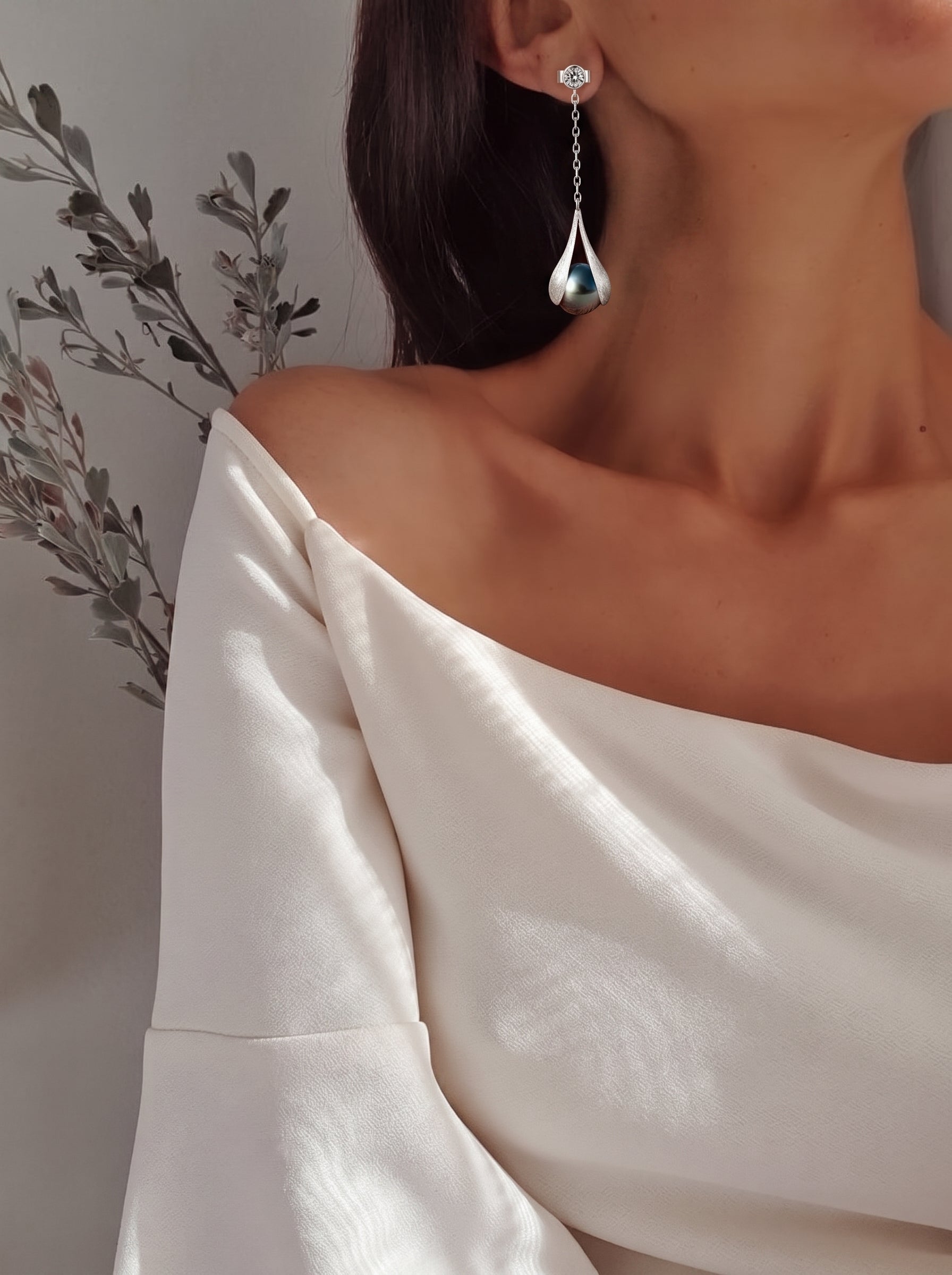
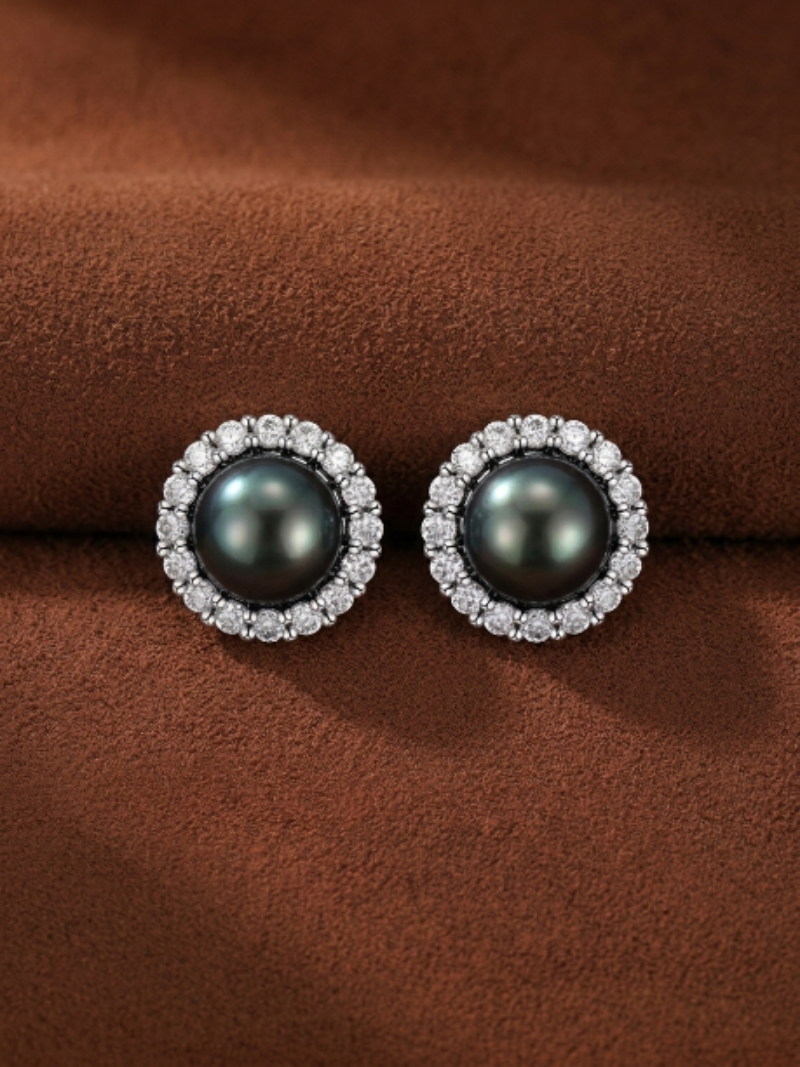
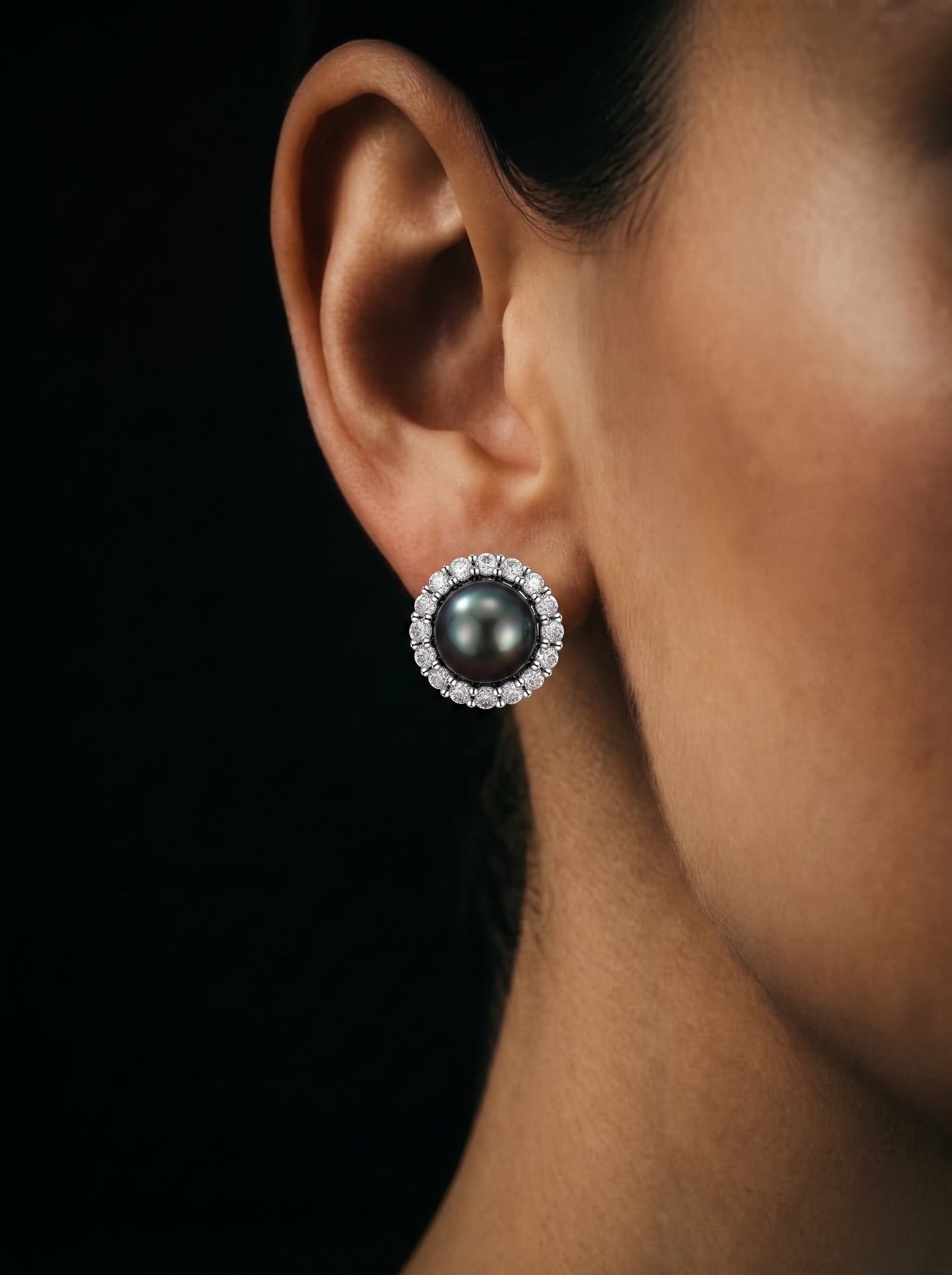
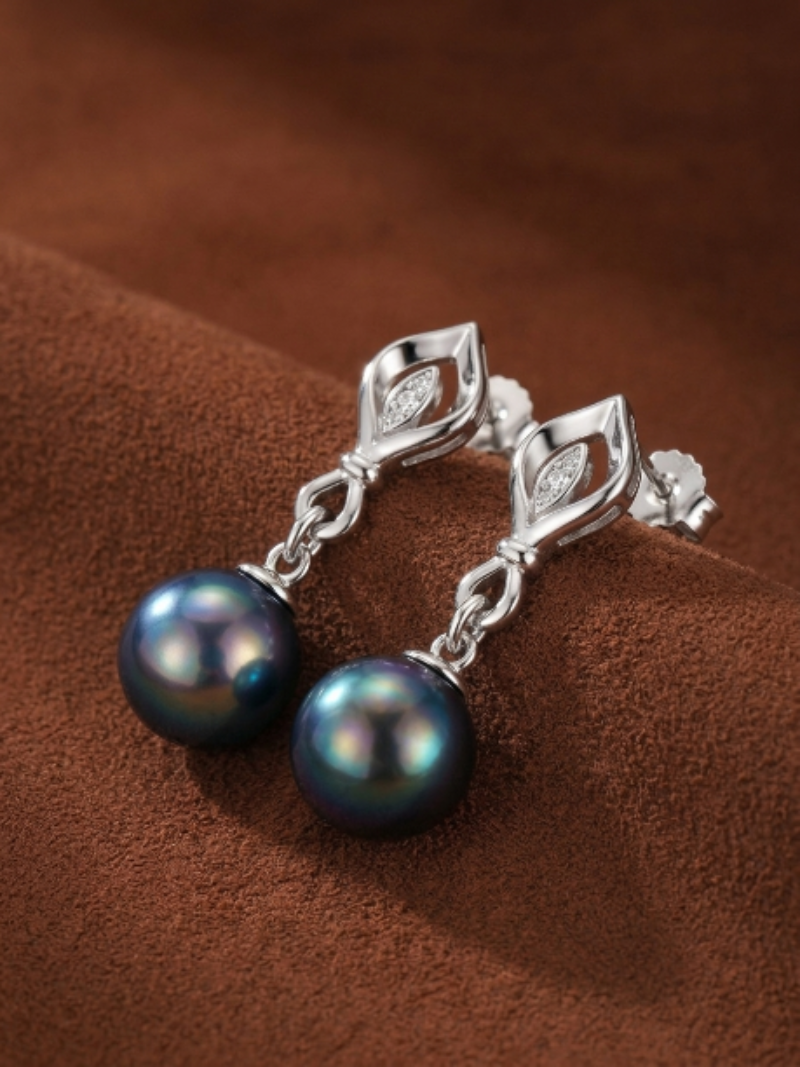
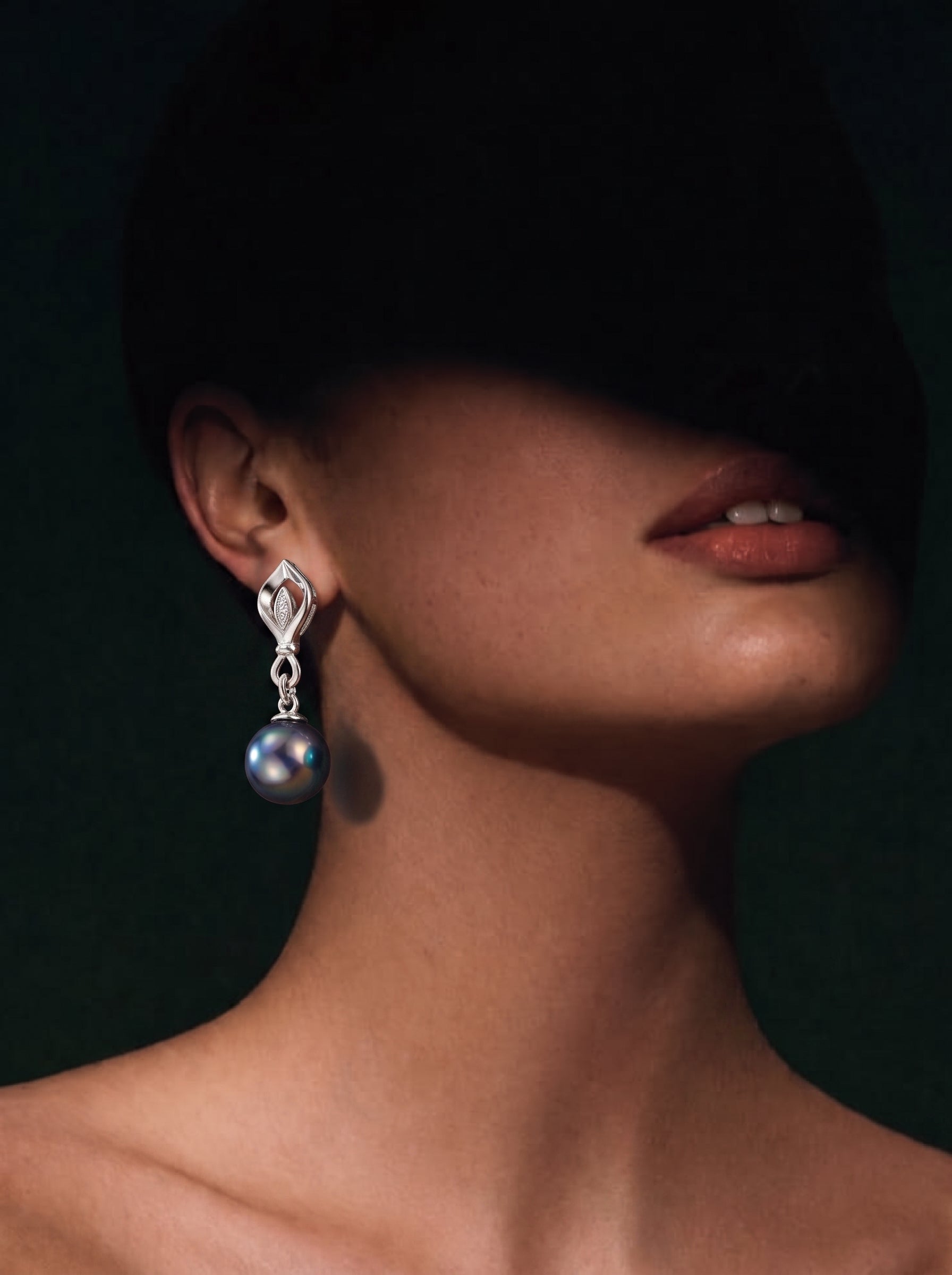
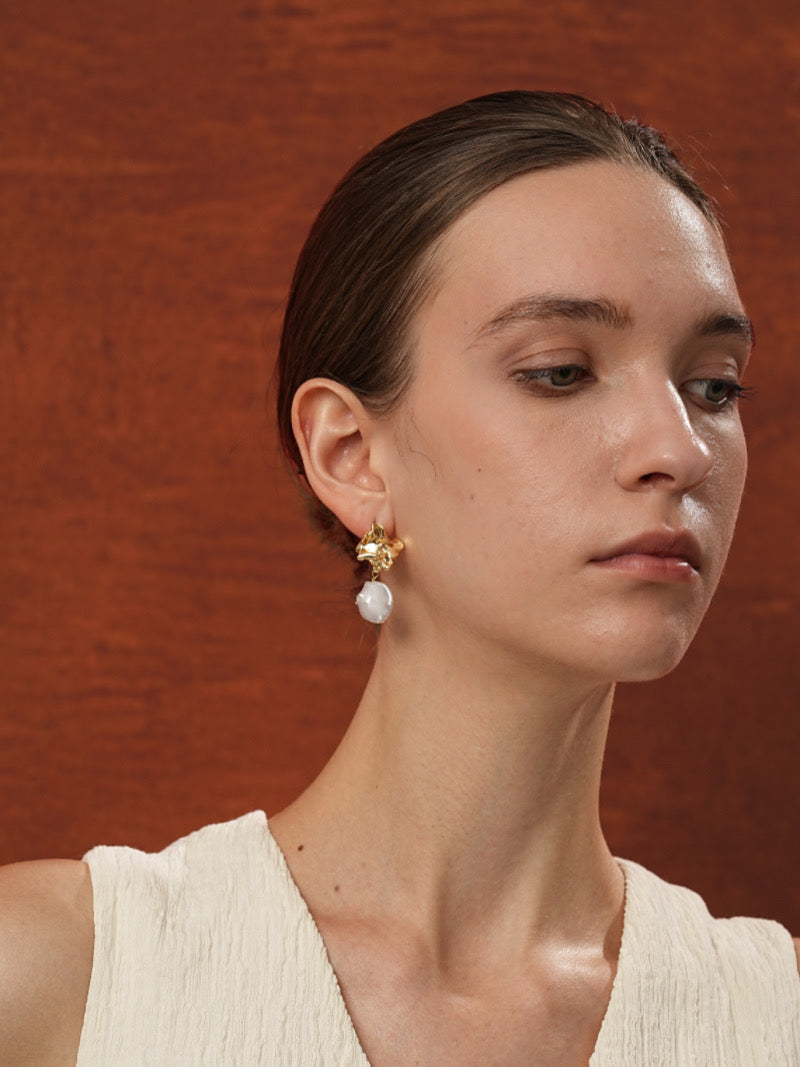
Black pearl earrings do something white pearls cannot. Next to the face they hold a color that shifts as you turn, moving from green to aubergine and back. That movement is why a dark pearl reads as a design decision rather than as a default.
What are black pearl earrings?
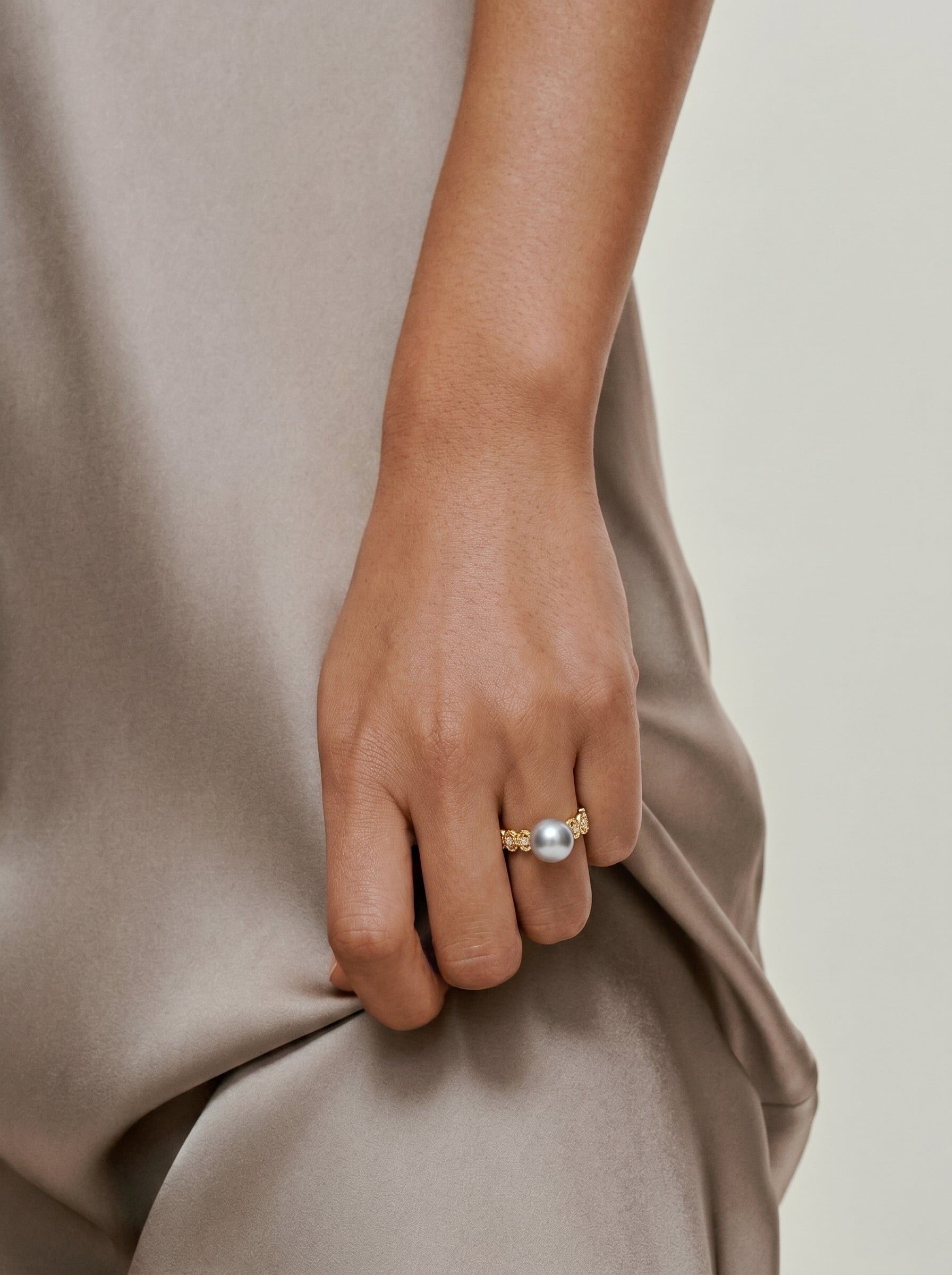
Black pearl earrings use cultured pearls with a dark bodycolor. The term covers a range rather than a single color: true black is rare, and most dark pearls are gray, green, aubergine or blue-gray with a secondary overtone floating over the base.
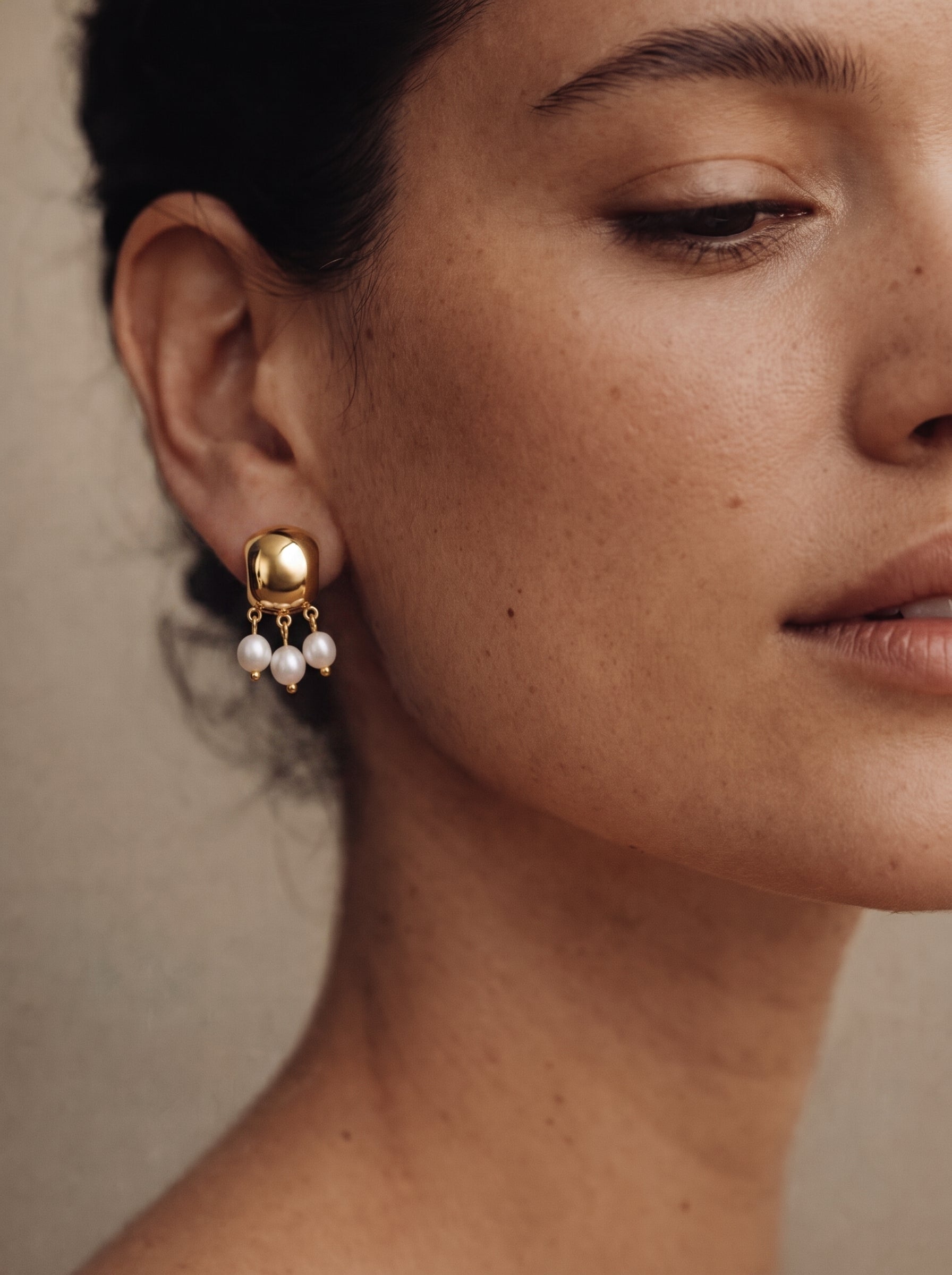
Worn at the ear, that overtone is more visible than anywhere else on the body, because the earring turns constantly against changing light while a pendant mostly stays still.
Are black pearls naturally black?
Tahitian pearls get their dark color naturally, from the black-lipped oyster that grows them. The color is in the nacre rather than on it. Other dark pearls sold as black are dyed or treated freshwater pearls, which is legitimate provided it is disclosed.
The two look similar in a photograph and differ substantially in price, so this is worth checking before you buy. We list bodycolor, overtone and treatment separately on every product page rather than collapsing them into one word.
Which black pearl earring style should you choose?
Halo studs
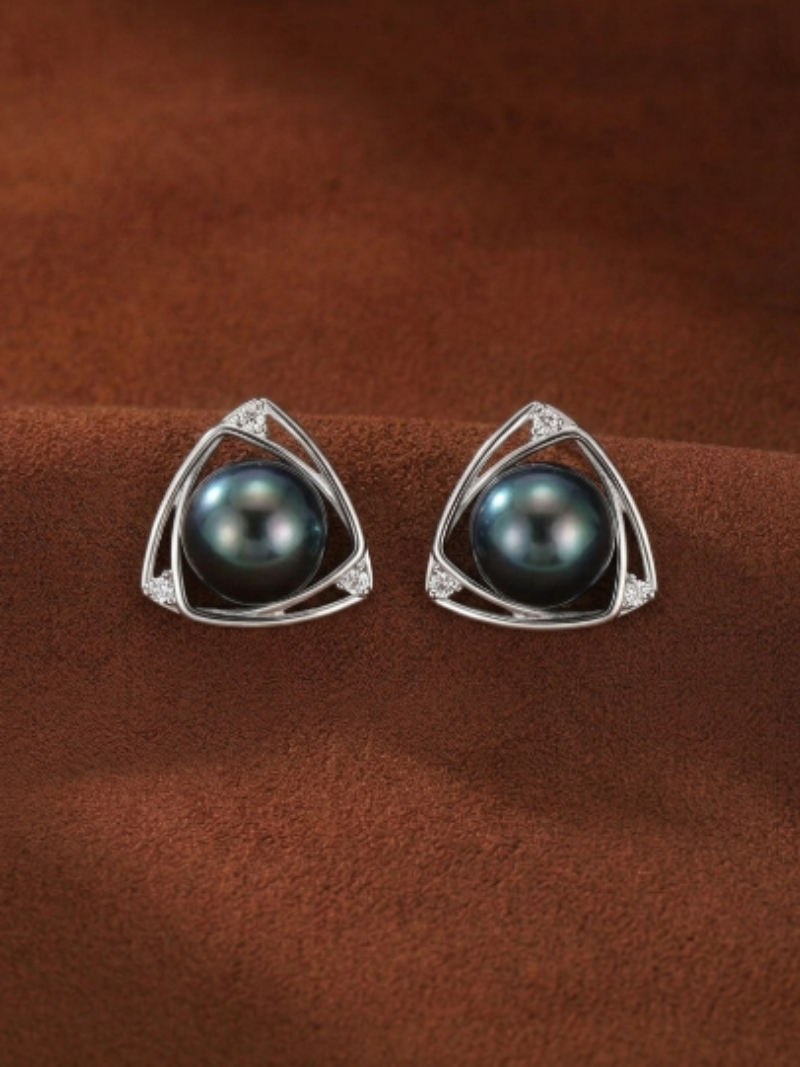
A dark pearl ringed by a fine metal or stone surround. The halo brightens the edge of the pearl, which stops a dark stud from reading as a shadow against the lobe.
Geometric settings
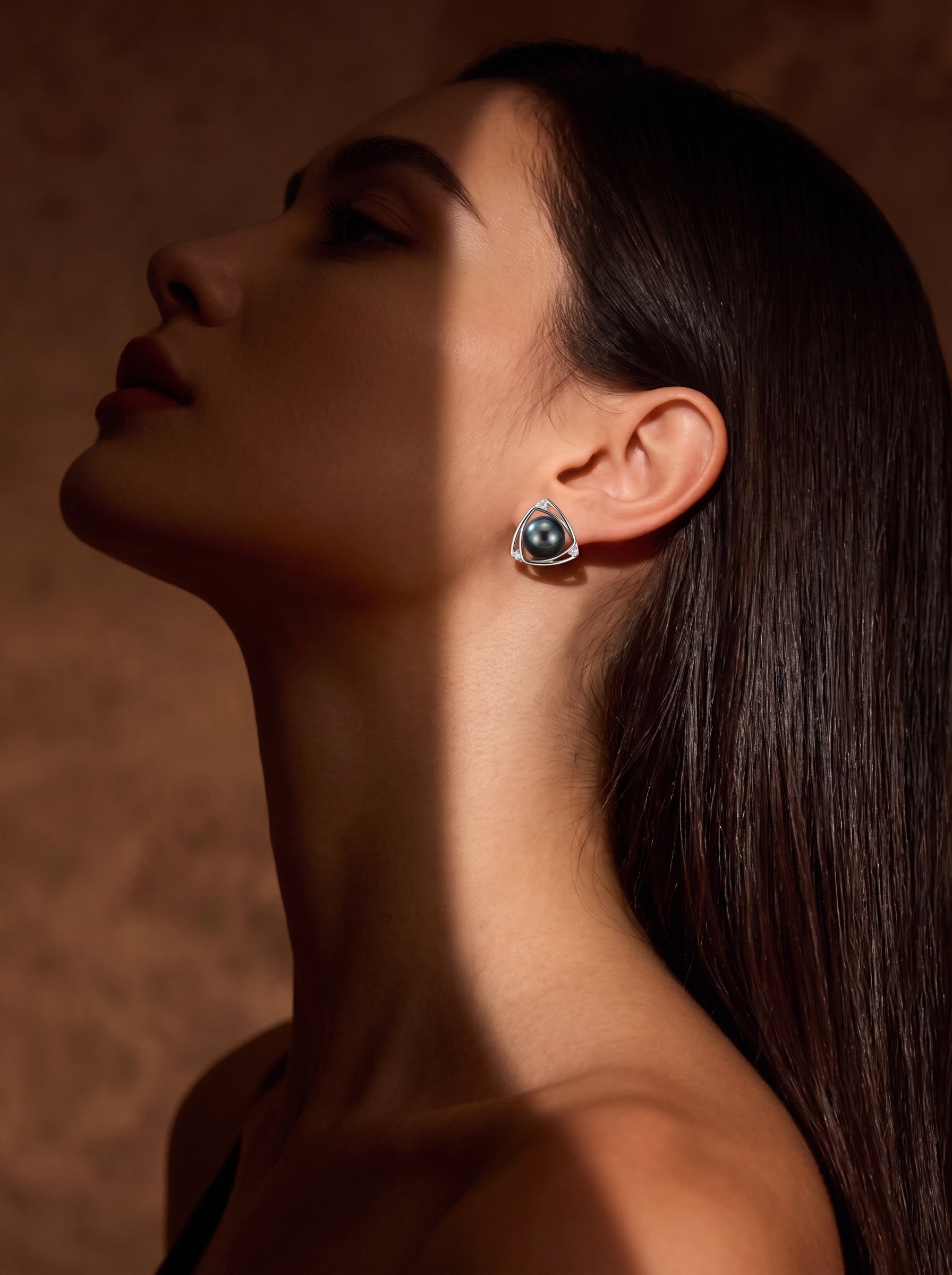
Triangle and angular mounts that place the pearl inside a hard-edged form. The contrast between an organic pearl and a drawn geometric line is the whole idea, and it suits dark pearls better than pale ones.
Drops and leaf forms
A dark pearl suspended below a worked setting, sometimes with diamonds set into the metal above it. These are the strongest evening pieces in the collection, and the ones where the overtone is most visible.
What should you wear black pearl earrings with?
Against black clothing the overtone separates and the pearl stops reading as a dark shape. Against cream, camel and navy it warms. Under warm restaurant light the green and aubergine come forward noticeably, which is why dark pearls suit evening better than midday.
They also work harder than white pearls against dark hair, where a pale pearl can disappear at the jawline.
Why buy black pearl earrings from Grande Lilith
Dark pearls are where the industry is least transparent, because a dyed freshwater pearl photographs like a Tahitian and costs a fraction as much.
- Bodycolor, overtone and treatment listed separately, not merged into a single description.
- Tahitian pearls named to origin: French Polynesia. Never implied.
- Partners vetted by our GIA-certified pearl specialist, on working conditions as well as quality.
- Nickel-free, lead-free and cadmium-free posts and fastenings across every metal.
- Designed in Paris. Thirty days to change your mind, and every order arrives in a magnetic pouch.
Frequently asked questions
How can you tell a natural black pearl from a dyed one?
Look at the drill hole. A dyed pearl often shows darkness pooling around it and reads flat and uniform elsewhere. A naturally dark pearl shows color that shifts as it turns, with an overtone reading separately from the bodycolor underneath.
Are black pearl earrings formal?
Less formal than white, which surprises people. A dark pearl stud reads modern and works with denim. It is scale rather than color that pushes an earring into formal territory.
Do black pearls suit fair skin?
Yes, and the contrast is sharper than on deeper skin, which some people want and some do not. If you prefer a softer effect, choose a pearl with a silver or blue-gray overtone rather than a deep peacock.
Do black pearls fade over time?
Naturally colored pearls do not, because the color is in the nacre. Dyed pearls can lose color over years of wear, which is another reason treatment disclosure matters at the point of purchase.
What size black pearl earring should I buy?
Dark pearls read smaller than pale ones at the same diameter, because they absorb light rather than reflecting it back. A 9 mm dark pearl has roughly the visual presence of an 8 mm white one, so consider sizing up slightly.