


Types of Pearls: The Complete Guide to Every Pearl Variety
Table des matières
- Key Takeaways
- Nine Types of Pearls at a Glance
- Nine Types of Pearls, Decoded
- What Are the Main Types of Pearls?
- What Is the Difference Between Natural and Cultured Pearls?
- Which Pearl Types Are Saltwater and Which Are Freshwater?
- How Much Does Each Type of Pearl Cost?
- Which Type of Pearl Is the Most Valuable?
- Which Pearl Type Is Best for Everyday Wear?
- Conclusion
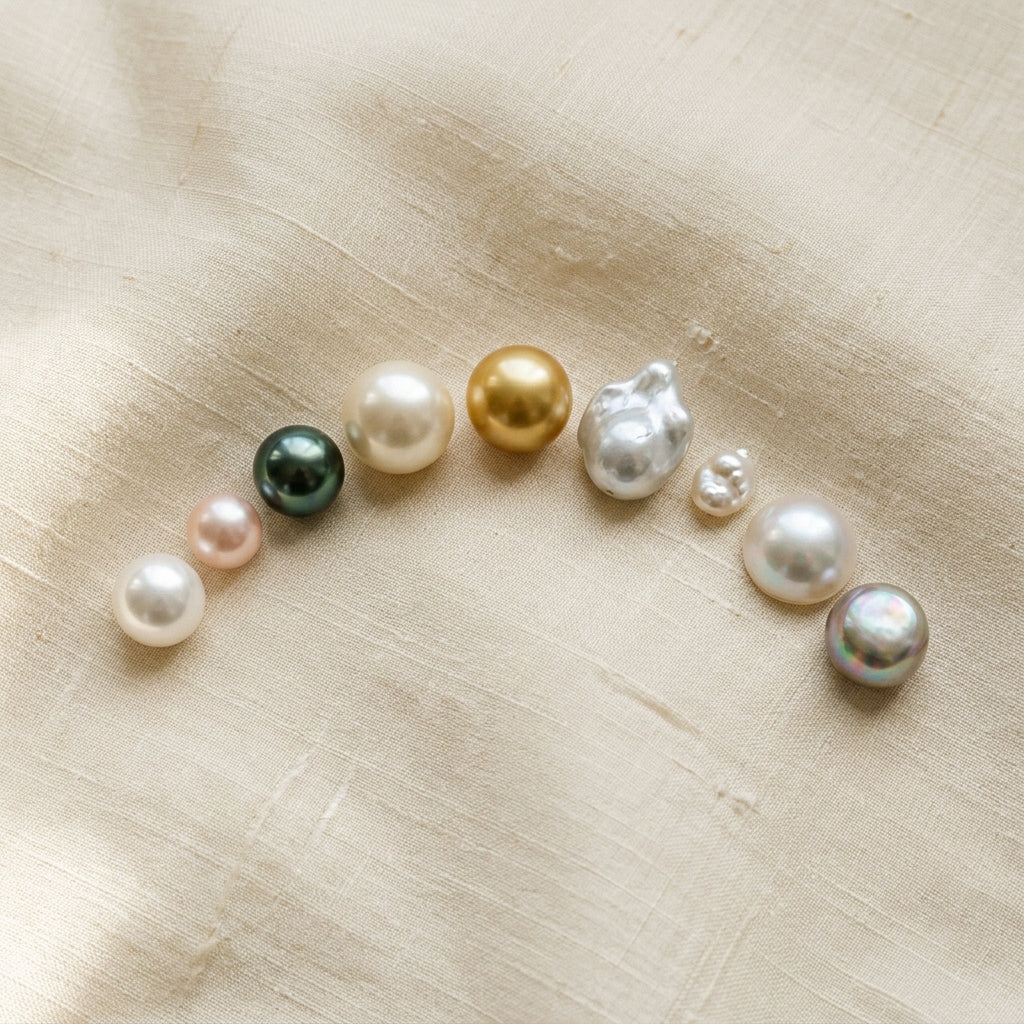
There are nine distinct types of pearls sold commercially today: Akoya, freshwater, Tahitian, white South Sea, golden South Sea, baroque, keshi, mabe, and mother of pearl. Understanding these different types of pearls and their value is crucial for any buyer. Each comes from a different mollusk, a different water, and a different price floor. Grande Lilith surveyed listed retail prices at eight leading US pearl retailers in August 2026 to price-band all nine.
This comprehensive guide serves as the hub for Grande Lilith's full library on all the major types of pearls, available on the Lilith Journal. Each of the nine types of pearls discussed below links out to its own dedicated deep-dive as those pages publish.
Key Takeaways
Discover the essential characteristics of the primary types of pearls at a glance:
Akoya pearls come from the saltwater oyster Pinctada fucata in Japan and China and are the classic round white pearl used in most bridal strands.
Freshwater pearls come from the mussel Hyriopsis cumingii, almost entirely farmed in China, and are the most affordable and most widely worn pearl type.
Tahitian pearls come from the black-lip oyster Pinctada margaritifera in French Polynesia and are naturally gray, green, blue, or aubergine, never true black without dye.
South Sea pearls, from the Pinctada maxima oyster in Australia, Indonesia, and the Philippines, are the largest cultured pearls and the most expensive of the nine types.
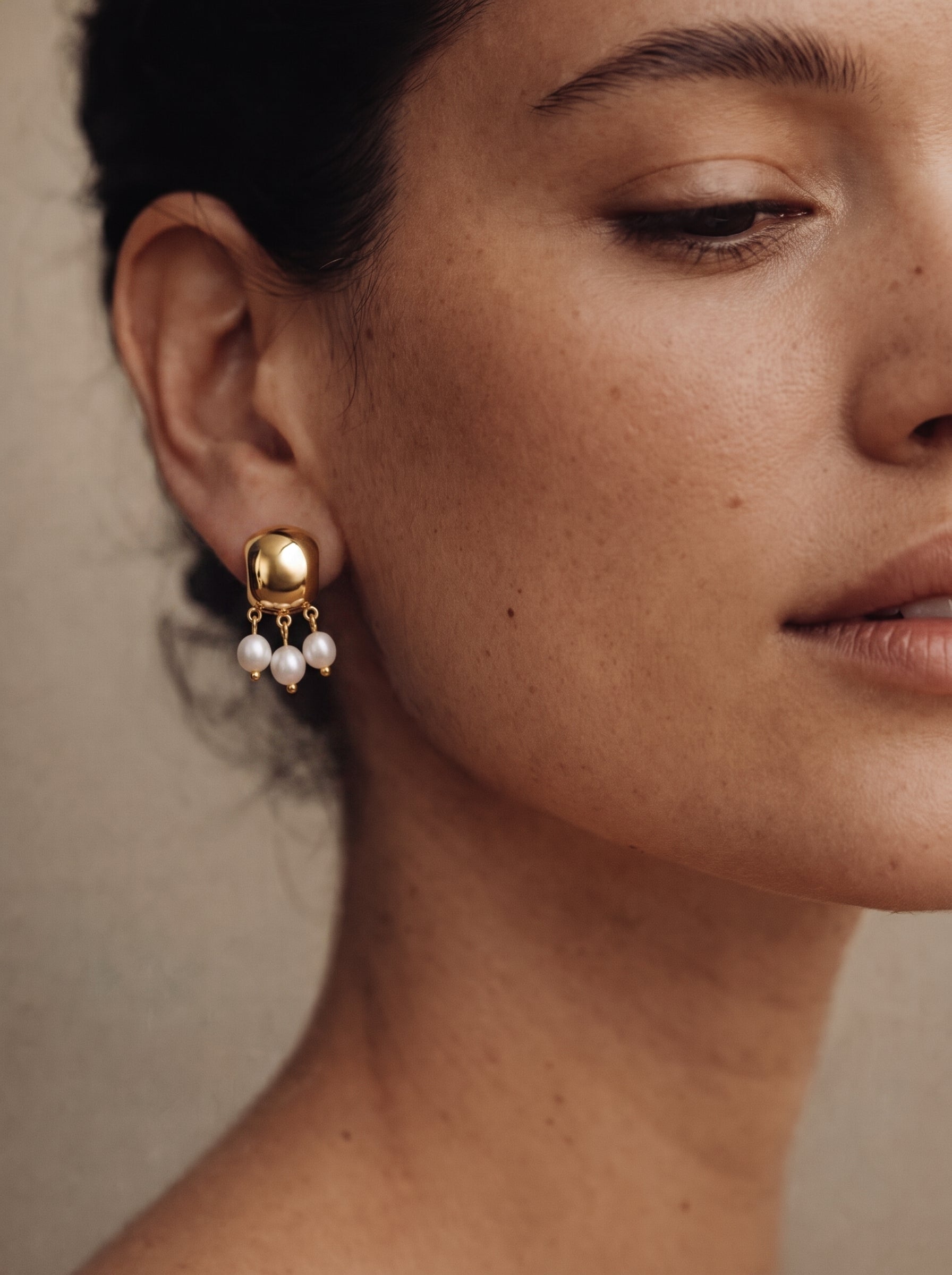
Baroque and keshi pearls are irregular, nucleus-free or accidental pearls that trade at a discount to round pearls of the same host species despite being 100% nacre.
Mother of pearl is not a pearl at all, it is the nacre-lined shell itself, sold as beads or inlay at a fraction of any pearl's price.
Methodology: Price bands reflect the most common length (16-inch, princess) at each retailer's mid-quality grade, sampled from listed prices at Angara, Blue Nile, Imperial Pearl, The Pearl Source, Pearls of Joy, Pearl Paradise, PearlsOnly, and Oriental Pearls in August 2026. Mabe pearls are priced per piece; mother-of-pearl is priced per 16-inch bead strand. Prices move with market conditions, treat as a band, not a quote.
Nine Types of Pearls at a Glance
This table provides a quick overview of the key features, origins, and value of the various types of pearls.
Nine Types of Pearls, Decoded
Delve deeper into each of the nine distinct types of pearls to understand what makes them unique.
Akoya pearls
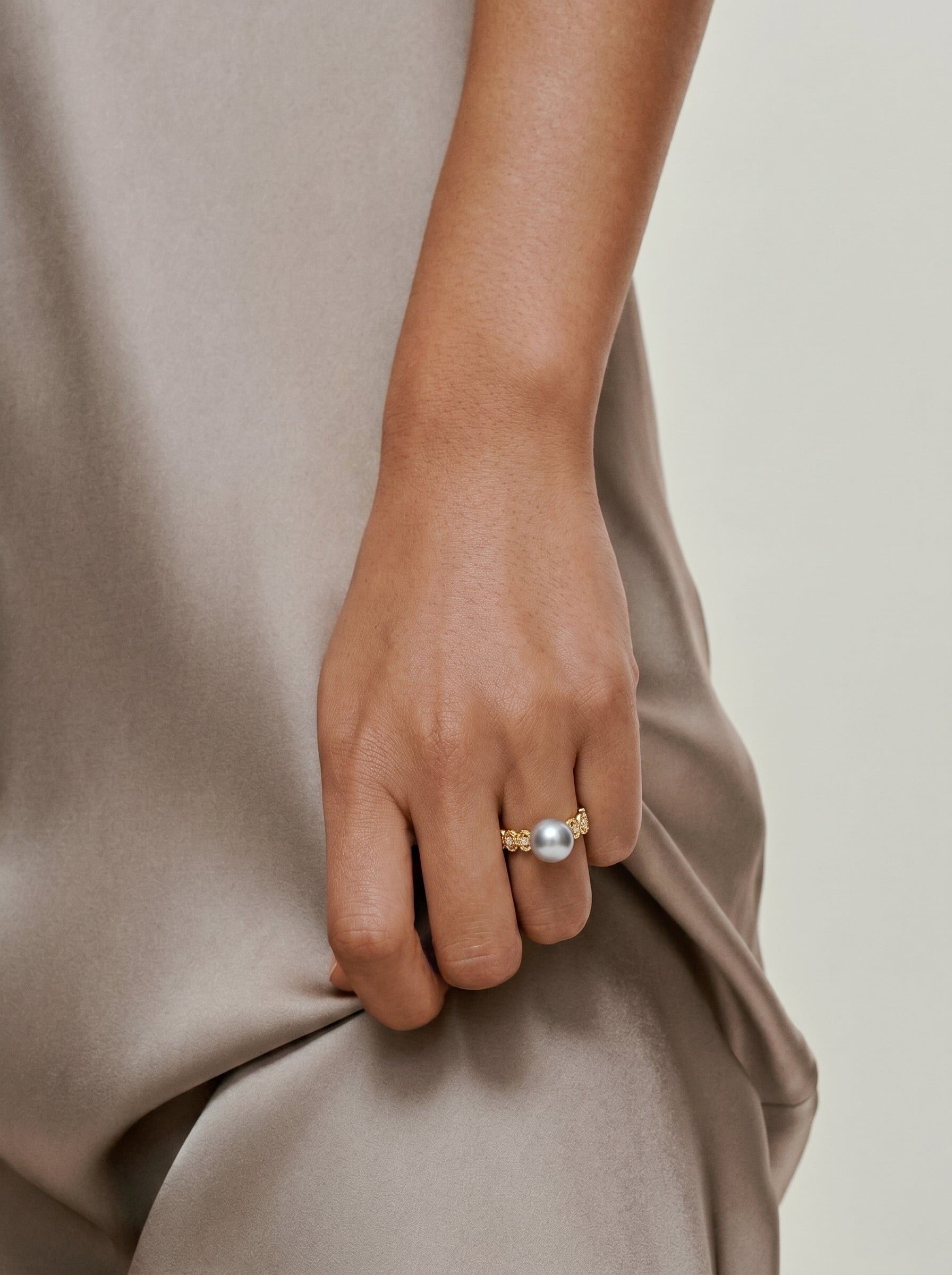
Akoya pearls are cultured in the saltwater oyster Pinctada fucata, farmed almost entirely in Japan and China. They are the pearl most people picture when they hear the word "pearl": round, white to cream, with a sharp, almost mirror-like luster that comes from thin, tightly layered nacre laid down over 10 to 18 months. As one of the most classic types of pearls, Akoyas are often chosen for traditional jewelry. The 6.5–7.0mm size dominates the market because it is the size a single Akoya oyster can reliably produce without excessive rejection rates. The top grade, Hanadama, is independently certified by the Pearl Science Laboratory in Kobe and commands a premium over uncertified strands of the same size.
Freshwater pearls
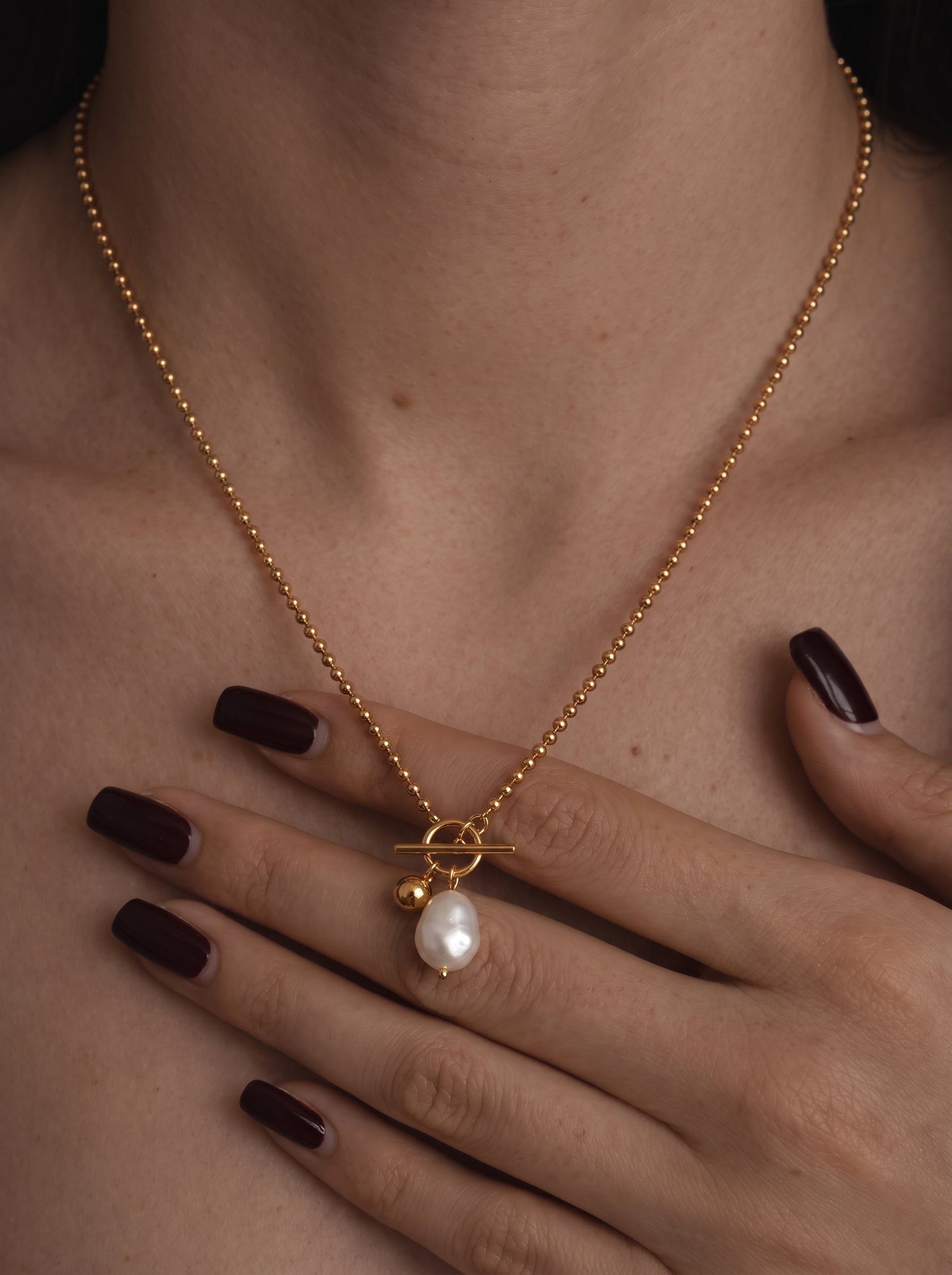
Freshwater pearls are grown in the triangle shell mussel Hyriopsis cumingii in lakes and ponds across China, which now supplies more than 99% of the world's freshwater pearl volume. Because a single mussel can be grafted with multiple tissue pieces and produce up to 20 pearls per harvest, freshwater pearls are priced well below any saltwater type of pearl of comparable size. Modern bead-nucleated freshwater pearls, sometimes marketed as "Edison" pearls, now reach 11–14mm with round shapes and luster that rivals Akoya, closing a quality gap that used to be much wider. These affordable types of pearls are incredibly popular for everyday wear. For the grading vocabulary behind that luster claim, see Understanding Luster and Quality in a Freshwater Pearl Necklace, and for how to spot a genuine strand, see How to Tell if Your Freshwater Pearl Necklace Is Real.

Tahitian pearls
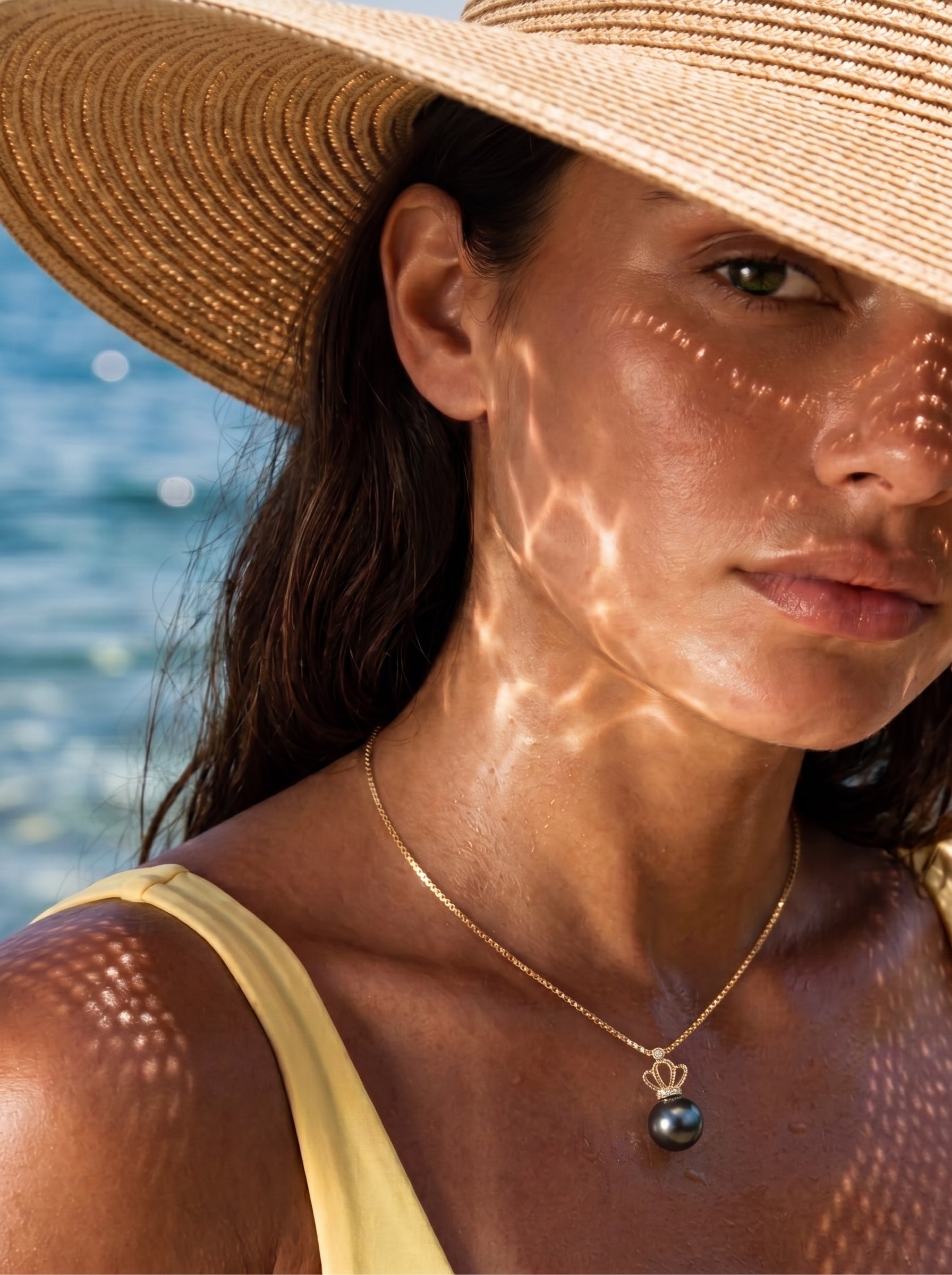
Tahitian pearls come from the black-lip oyster Pinctada margaritifera, farmed in the lagoons of French Polynesia. Despite the "black pearl" nickname, a genuinely black Tahitian pearl is rare; most show a dark gray, green, blue, or aubergine body color with a distinct overtone, a vocabulary buyers need before they shop. Among the various types of pearls, Tahitian pearls are celebrated for their unique dark hues. Culture periods run 18 to 24 months, producing nacre 2 to 6mm thick, among the deepest of any pearl type, which is part of why Tahitian luster reads as deeper and more three-dimensional than Akoya's.
White South Sea pearls
White South Sea pearls grow in the silver-lip variety of Pinctada maxima, the largest pearl-producing oyster, farmed off the coasts of Australia, Indonesia, and the Philippines. These types of pearls are renowned for their impressive size and luxurious appeal. A culture period of two to four years and a shell large enough to nucleate with beads up to 10mm produce pearls that regularly reach 13 to 16mm and occasionally 20mm, roughly triple the diameter of a small freshwater pearl. Australian white South Sea pearls, grown in wild-caught oysters under strict quota, are generally considered the benchmark for the type. See how they stack up against their darker Tahitian cousins in South Sea vs. Tahitian Pearls: Which One Reflects Your Power?
Golden South Sea pearls
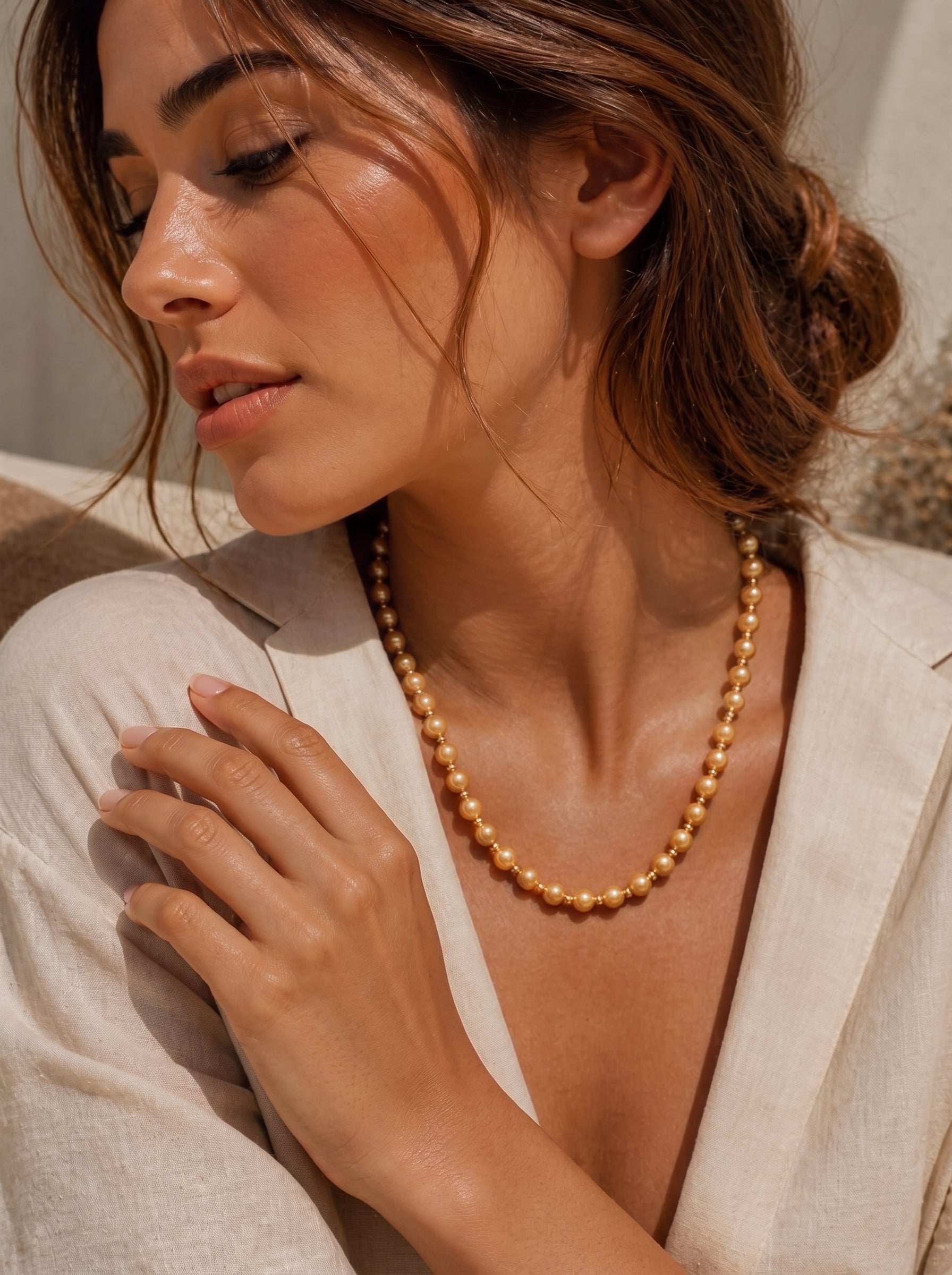
Golden South Sea pearls come from the gold-lip variety of Pinctada maxima, farmed primarily in the Philippines and Indonesia. The gold color is natural, produced by the oyster's own shell pigmentation rather than any dye or treatment, and ranges from a pale champagne to a deep, saturated gold that is the rarest and most valuable shade of the type. These particular types of pearls are highly sought after for their rich, warm tones. Golden South Sea pearls share the same long culture period and large size as their white counterparts, which is why the two types occupy the top of the price table together.
Baroque pearls
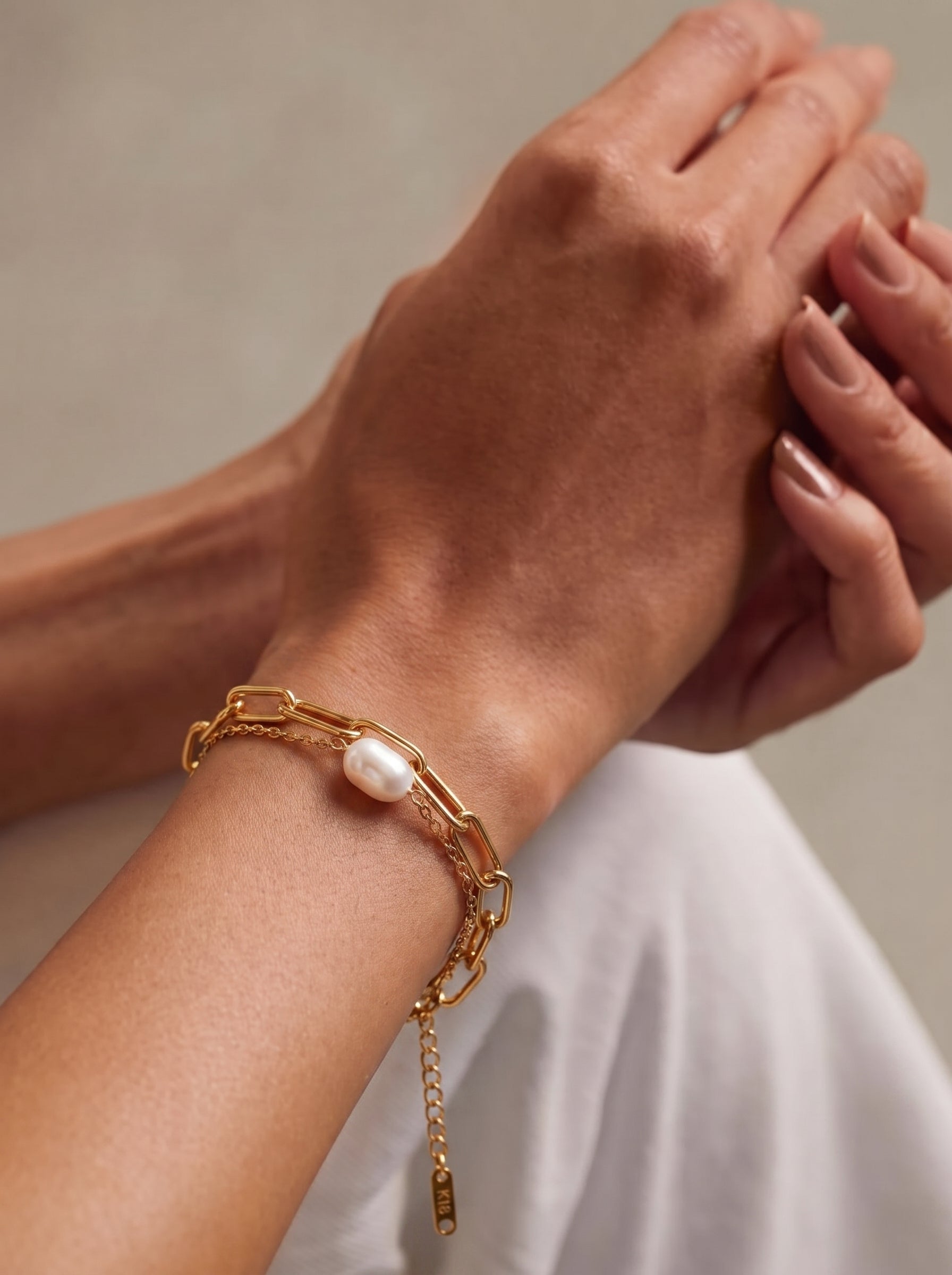
A baroque pearl is any pearl with an irregular, non-spherical shape, a description that applies to any of the host species above but is most common in freshwater culturing, where a tissue graft can shift inside the mussel as it grows. Rather than treating irregularity as a defect, baroque pearls are cut and set to showcase their organic form, drop, potato, and stick shapes are all baroque. Among the various types of pearls, baroque pearls offer a unique, artistic aesthetic at a more accessible price point. Because matched round strands are harder to assemble and more in demand, baroque pearls typically sell for less than a round pearl of the same host species and size. Common misconceptions about that irregularity are addressed directly in Common Myths About the Baroque Pearl Necklace Debunked.
Keshi pearls
Keshi pearls form by accident: when a host oyster or mussel rejects or expels the bead nucleus implanted during culturing but continues to secrete nacre around the leftover tissue, the result is an all-nacre pearl with no bead at its core. Keshi pearls can occur in Akoya, Tahitian, or South Sea culturing, and inherit the color and some of the luster character of whichever species produced them. These unique types of pearls are prized for their solid nacre and intense luster. Because they contain no bead, keshi pearls are structurally the most solid pearl on this list, pound for pound, despite their small size and lower price.
Mabe pearls
Mabe pearls are grown flat against the inside of the shell wall, most often in the winged pearl oyster, Pteria penguin, rather than as a free-floating sphere, producing a domed, half-round pearl still attached to the shell at harvest. After harvest, the dome is cut free, the hollow back is filled, and a thin disc of mother-of-pearl is cemented over the opening to finish the piece. As one of the more distinctive types of pearls, Mabe pearls offer a large visual impact. Because a single mabe pearl can reach 20mm at a fraction of the cost of a South Sea pearl that size, they are typically set into pendants and earring pairs rather than sold as strands.
Mother of pearl
Mother of pearl is not a pearl, it is the nacre that lines the inside of a mollusk's shell, cut, polished, and shaped directly from the shell itself. It comes from the same pearl-producing species listed above as well as from shells that never produce gem-quality pearls at all, including the trochus sea snail and the abalone, whose rainbow iridescence makes it a popular inlay material. While not strictly a 'type of pearl,' mother of pearl is closely related and widely used in jewelry. Because it requires no culturing period, no nucleation, and no farming risk, mother of pearl is the most affordable material on this list by a wide margin.
What Are the Main Types of Pearls?
The main different types of pearls sold today are Akoya, freshwater, Tahitian, white South Sea, golden South Sea, baroque, keshi, mabe, and mother of pearl. Each of these pearl types is named for its mollusk species or its shape, not its color alone, and each occupies a distinct price tier from roughly $25 for mother-of-pearl beads to $10,000 for a golden South Sea strand.
The first five, Akoya, freshwater, Tahitian, white South Sea, and golden South Sea, are round, nucleus-seeded pearls named for the oyster or mussel species that produces them and the water they grow in. Baroque and keshi describe a shape and a formation process rather than a single species: a baroque pearl is any irregularly shaped pearl, most often from the freshwater mussel Hyriopsis cumingii, while a keshi pearl is an accidental, nucleus-free byproduct that forms when a host oyster rejects or expels its implanted bead during Akoya, Tahitian, or South Sea culturing. Mabe pearls are grown flat against the inside of the shell rather than as a free-floating sphere, then cut, filled, and backed to form a half-dome. Mother of pearl closes the list as the odd entry: it is not a pearl at all, but the same nacre that lines the inside of pearl-producing shells, cut and polished on its own.

What Is the Difference Between Natural and Cultured Pearls?
A natural pearl forms in the wild without any human intervention, when an irritant lodges in a mollusk's mantle tissue by chance; a cultured pearl forms the same way but begins with a bead or tissue graft inserted by a technician on a farm. Both are made of the identical material, nacre, and both are real pearls under US law, but natural pearls are now rare enough to be effectively absent from mainstream retail.
According to GIA, natural pearls form in the mantle tissue of certain mollusks around a microscopic irritant "always without human help of any kind," while cultured pearls require human intervention and are grown in mollusks raised specifically for that purpose. Virtually every pearl sold by a jewelry retailer today, Akoya, freshwater, Tahitian, and South Sea alike, is cultured. Under the FTC Jewelry Guides, "cultured" must appear with equal prominence to "pearl" any time a cultured pearl is described, which is why Grande Lilith writes "cultured Akoya pearl," not "Akoya pearl," in every product listing. For a longer walkthrough of what culturing actually involves, see What Are Cultured Pearls? A Beginner's Guide to Intentional Luxury.
Which Pearl Types Are Saltwater and Which Are Freshwater?
Akoya, Tahitian, white South Sea, and golden South Sea pearls are saltwater types of pearls, farmed in ocean bays in Japan, French Polynesia, Australia, Indonesia, and the Philippines. Freshwater pearls, by contrast, are grown almost entirely in lakes and ponds in China, and account for the large majority of pearls sold worldwide by volume. Understanding these different types of pearls by their water origin helps in appreciating their unique characteristics and value.
The water a pearl grows in affects both its biology and its economics. Saltwater oysters are typically nucleated with a single round bead and produce one pearl per implant, with a culture period of one to four years depending on species, the longer the culture, the thicker the nacre and the higher the price. Freshwater mussels can be nucleated with multiple tissue grafts per shell and produce several pearls per harvest, which is the main reason freshwater strands cost a fraction of an Akoya or South Sea strand of comparable size. Baroque and keshi pearls exist in both categories: most baroque pearls on the market are freshwater, while most keshi pearls are saltwater byproducts of Akoya, Tahitian, or South Sea farming. Mother of pearl is harvested from both freshwater and saltwater shells, including the abalone, a saltwater mollusk prized for its rainbow iridescence. For a closer look at how the two saltwater and freshwater workhorses compare head-to-head, see Freshwater vs. Akoya Pearls: What's the Real Difference?
How Much Does Each Type of Pearl Cost?
A 16-inch strand ranges from about $25 for mother-of-pearl beads to $10,000 for a golden South Sea strand, with Akoya, freshwater, Tahitian, baroque, and keshi pearls filling the middle of that range and mabe pearls priced per piece rather than per strand. The value of these different types of pearls is significantly influenced by their size, nacre thickness, and culture length, rather than solely by brand. Size, nacre thickness, and culture length drive the gap far more than brand.
Within the August 2026 sample, freshwater strands were the most affordable round-pearl option at $150 to $900, followed by Akoya at $1,200 to $3,200 and Tahitian at $1,200 to $4,500 for comparable lengths. White and golden South Sea pearls topped every list surveyed, reflecting both their size, up to 20mm, roughly triple the diameter of a small freshwater pearl, and a culture period of two to four years versus roughly eight months for a freshwater mussel. Baroque and keshi pearls, despite being fully nacreous with no bead nucleus in the keshi case, priced below their round counterparts from the same host species, because irregular shape and small, inconsistent size reduce demand relative to matched round strands. Mabe pearls broke the per-strand pattern entirely: because they grow flat against the shell rather than as free spheres, they are sold and priced individually, typically set into a single pendant or a pair of earrings.
Which Type of Pearl Is the Most Valuable?
Golden and white South Sea pearls are the most valuable types of pearls, commanding the highest prices in the August 2026 survey at up to $10,000 per strand, driven by their large size, thick nacre, and the two-to-four-year culture period required to grow them. Within any single type of pearl, luster is the factor that separates a premium pearl from an average one.
Value inside the pearl trade is measured against the same seven criteria regardless of type. As GIA's Gems & Gemology GIA 7 Pearl Value Factors puts it: "In the trade, luster is the first characteristic an experienced buyer examines, and a pearl with exceptional luster will command a premium even where other factors are merely good." The seven factors, size, shape, color, luster, surface quality, nacre quality, and matching, explain why a smaller, exceptionally lustrous Akoya strand can outprice a larger but chalky freshwater strand, and why a rare, top-grade Hanadama-certified Akoya can rival a mid-grade South Sea strand despite the size difference. Rarity plays a role too: natural pearls of any type, though absent from this price table because they are not commercially farmed, remain the single most valuable pearl category when they do appear at auction.
Which Pearl Type Is Best for Everyday Wear?
Freshwater pearls are the best type of pearl for everyday wear, combining near-solid nacre with the lowest price band of the nine main types of pearls, which makes daily knocks and drops far less costly than they would be with an Akoya or South Sea strand. Baroque freshwater pieces add scuff-forgiving irregularity on top of that durability.
Nacre thickness is what actually determines a pearl's durability, not price. Because freshwater pearls are tissue-nucleated rather than bead-nucleated, they grow as close to solid nacre as any cultured pearl gets, which makes them more chip-resistant than a thin-nacre Akoya of similar size. Their lower cost also means a freshwater strand can be worn to the office, on a flight, or to bed without the owner mentally pricing every scrape, which is the entire premise Grande Lilith is built on: pearls for a woman's real, daily life, not just the occasions she takes them out of a box for. Keshi pearls, being 100% nacre with no bead at all, share this durability at an even smaller size, making them a strong choice for pieces worn constantly, like a stacked pearl ring or a single drop pendant.
Conclusion
Nine distinct types of pearls exist because nine different mollusks, farmed in nine different waters, each lay down nacre on their own timeline, and that timeline is what sets the price, not marketing. Exploring these various types of pearls reveals their unique characteristics and ideal uses. Freshwater and Akoya pearls cover daily wear and first purchases; Tahitian, white South Sea, and golden South Sea pearls carry the size and nacre depth that make a statement piece; baroque and keshi pearls trade a matched round shape for character and a lower price; mabe pearls and mother of pearl deliver the look of a pearl at a fraction of the cost, one grown flat against the shell, the other not a pearl at all. Knowing the species, the water, and the price band behind a strand is the difference between buying a pearl and buying the right pearl.
Explore the full pearl necklace collection to see Akoya, freshwater, and Tahitian strands side by side.
Sources: GIA, Pearl Description; GIA, The GIA 7 Pearl Value Factors, Gems & Gemology, Summer 2021; CIBJO Pearl Book, 2024 edition; FTC Guides for the Jewelry, Precious Metals, and Pewter Industries, 16 CFR Part 23.
Frequently Asked Questions
What is the rarest type of pearl?
Natural pearls of any species are the rarest, since they form by chance without human intervention and are almost never sold new by mainstream retailers. Among cultured types, large, high-luster golden South Sea pearls over 15mm are the rarest commercially farmed pearls.
Are Tahitian pearls the same as black pearls?
Tahitian pearls are often called black pearls, but true jet-black is uncommon without treatment. Most Tahitian pearls show gray, green, blue, or aubergine overtones over a dark body color, a distinction covered in full in Grande Lilith's dedicated Tahitian pearl guide.
Which pearl type is best for a first pearl purchase?
Freshwater pearls suit a first purchase best, combining round-pearl looks with the lowest price band of the nine types, so a first-time buyer can learn to judge luster and surface quality without the cost of an Akoya or South Sea strand.
Why are South Sea pearls so much more expensive than freshwater pearls?
South Sea pearls cost more because Pinctada maxima oysters are nucleated one pearl at a time, cultured for two to four years, and grow up to 20mm, versus freshwater mussels that can be nucleated with multiple grafts and harvested in under a year at a smaller average size.
Is mother of pearl a type of pearl?
No. Mother of pearl is the nacre lining of a mollusk shell, cut and polished directly from the shell itself rather than grown as a separate pearl, which is why it sells for a fraction of any pearl type's price.
Which pearl type holds its value best over time?
White and golden South Sea pearls tend to hold value best, since their price is driven by size and nacre thickness that cannot be replicated quickly, and supply is limited by the multi-year culture period. High-grade, certified Akoya strands hold value well within their own category for the same reason.
Read more
Packing for your next European getaway? Leave the heavy jewelry box behind. Discover how one versatile, modern pearl drop necklace can effortlessly elevate your travel wardrobe, taking you seamless...
Akoya pearls aren't the biggest pearl, they're the sharpest. Here's the oyster that grows them, the size that dominates the market, what Hanadama certification actually guarantees, and what a real ...
Leave a comment
All comments are moderated before being published.
This site is protected by hCaptcha and the hCaptcha Privacy Policy and Terms of Service apply.