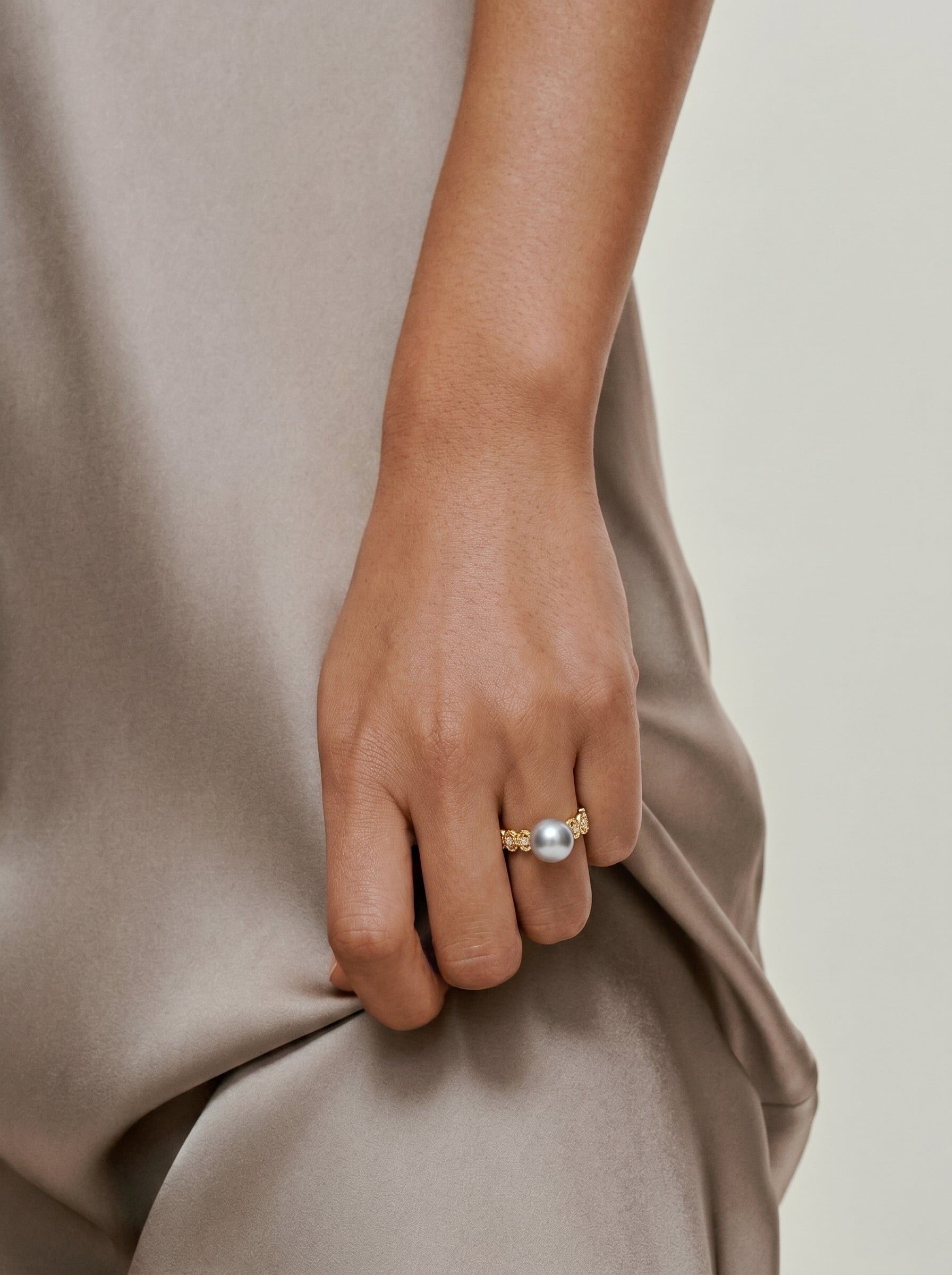
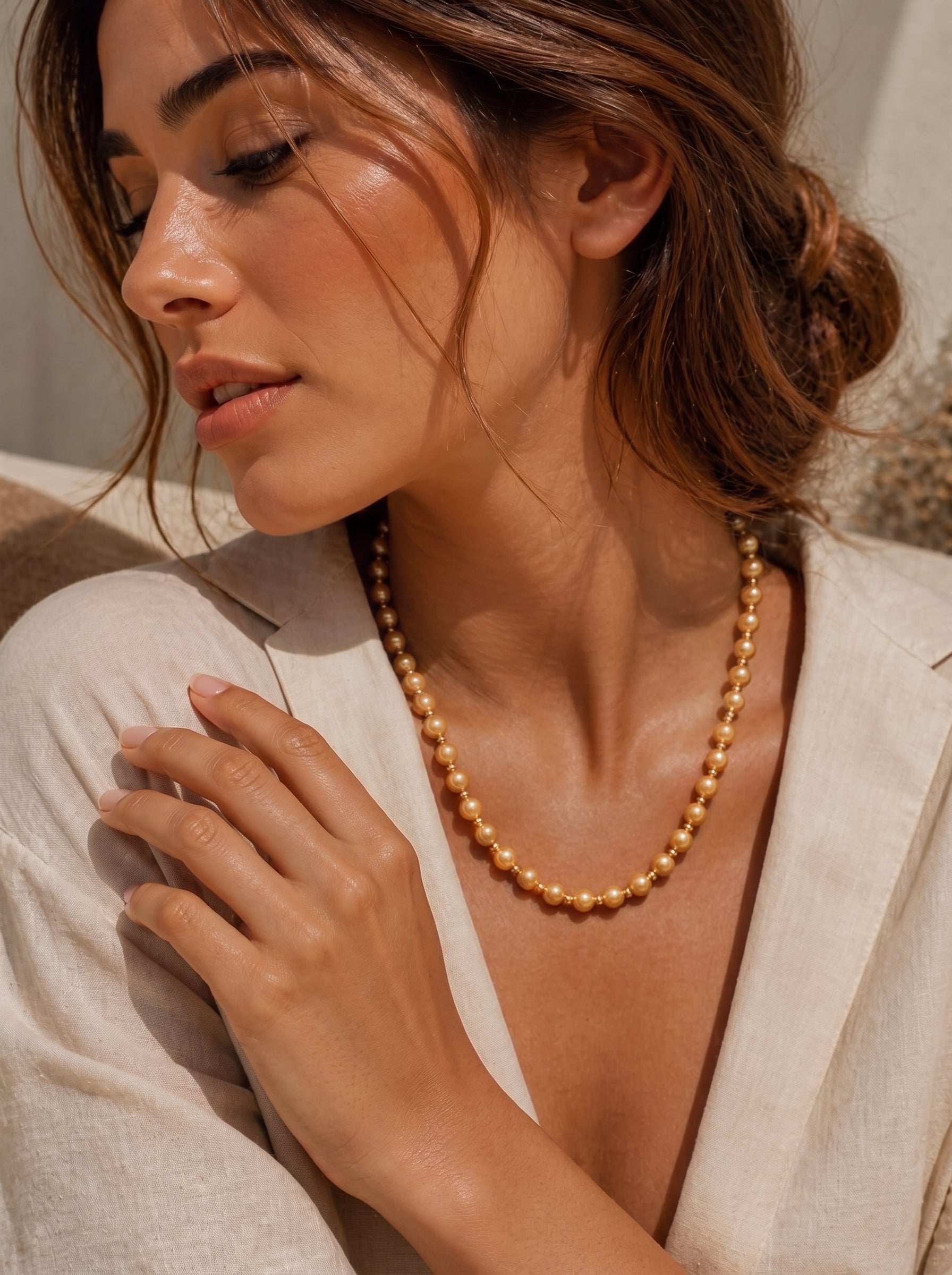
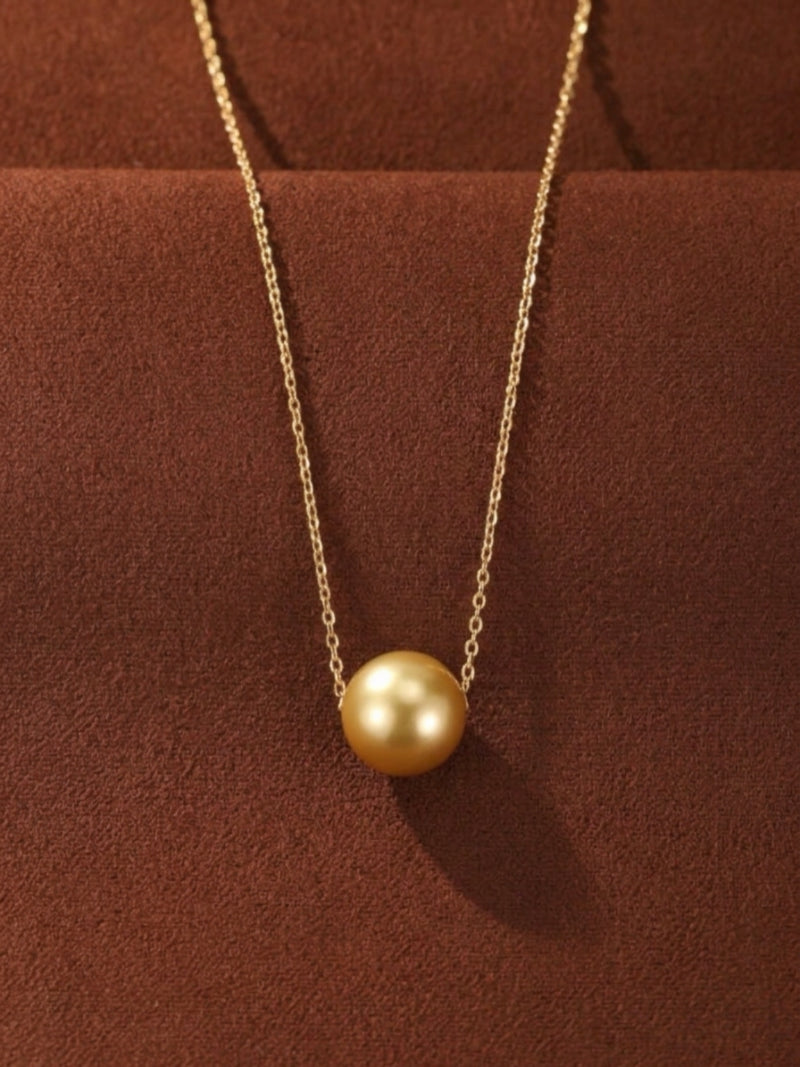
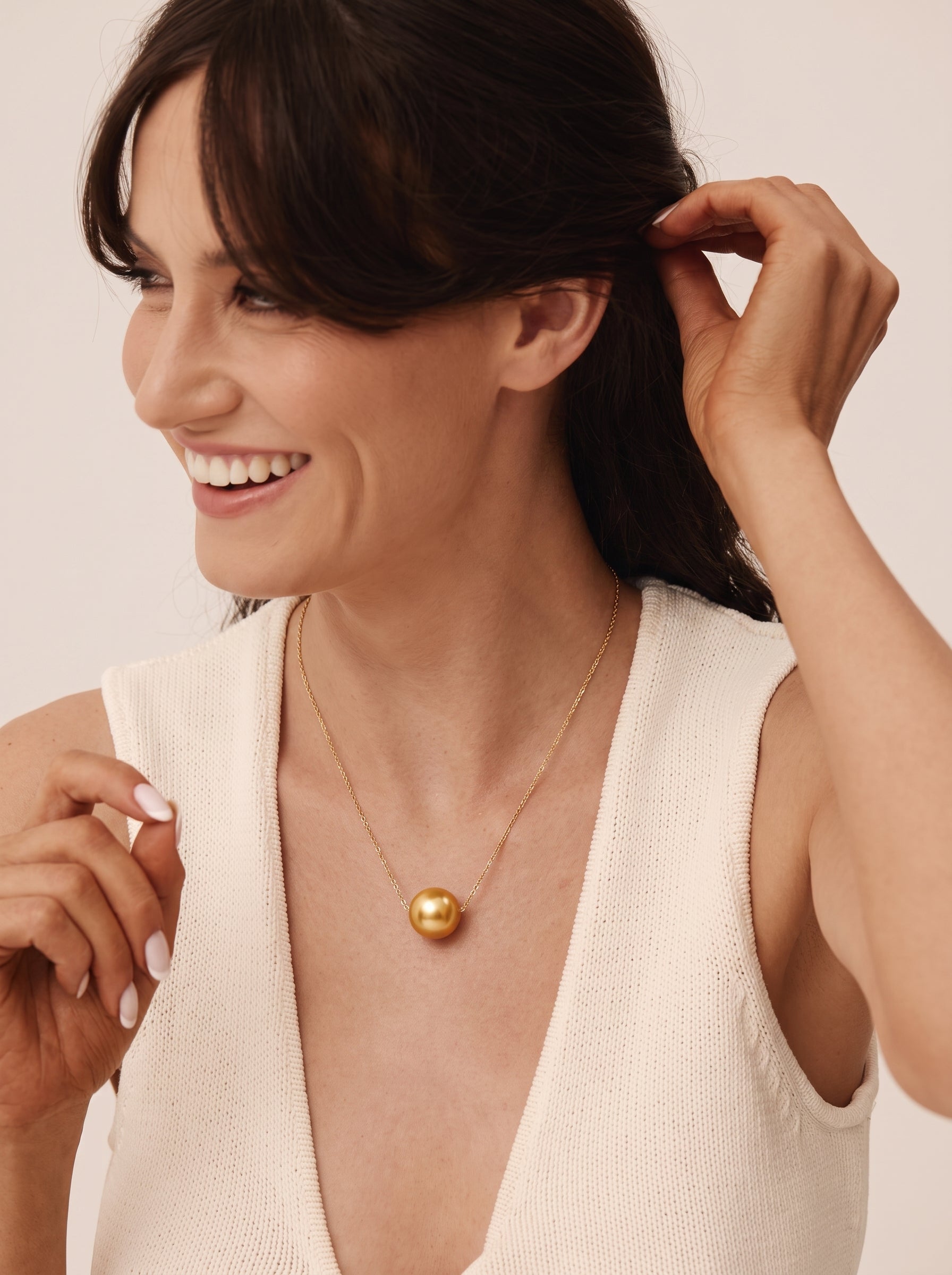
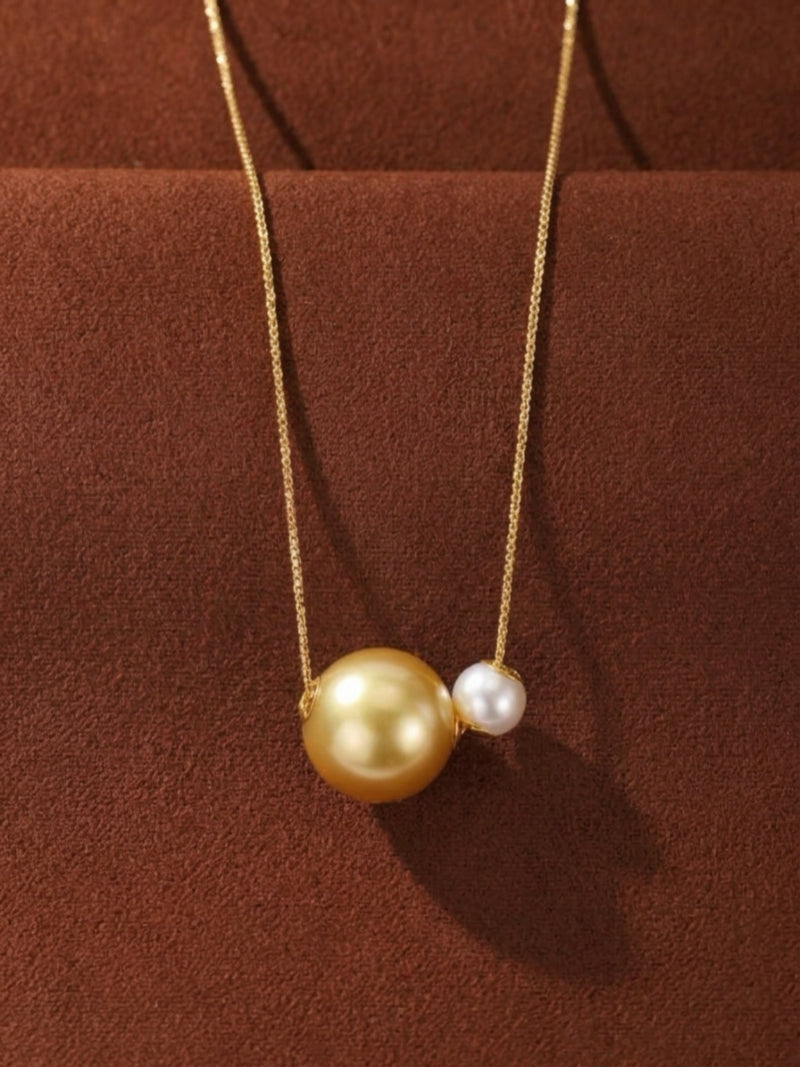
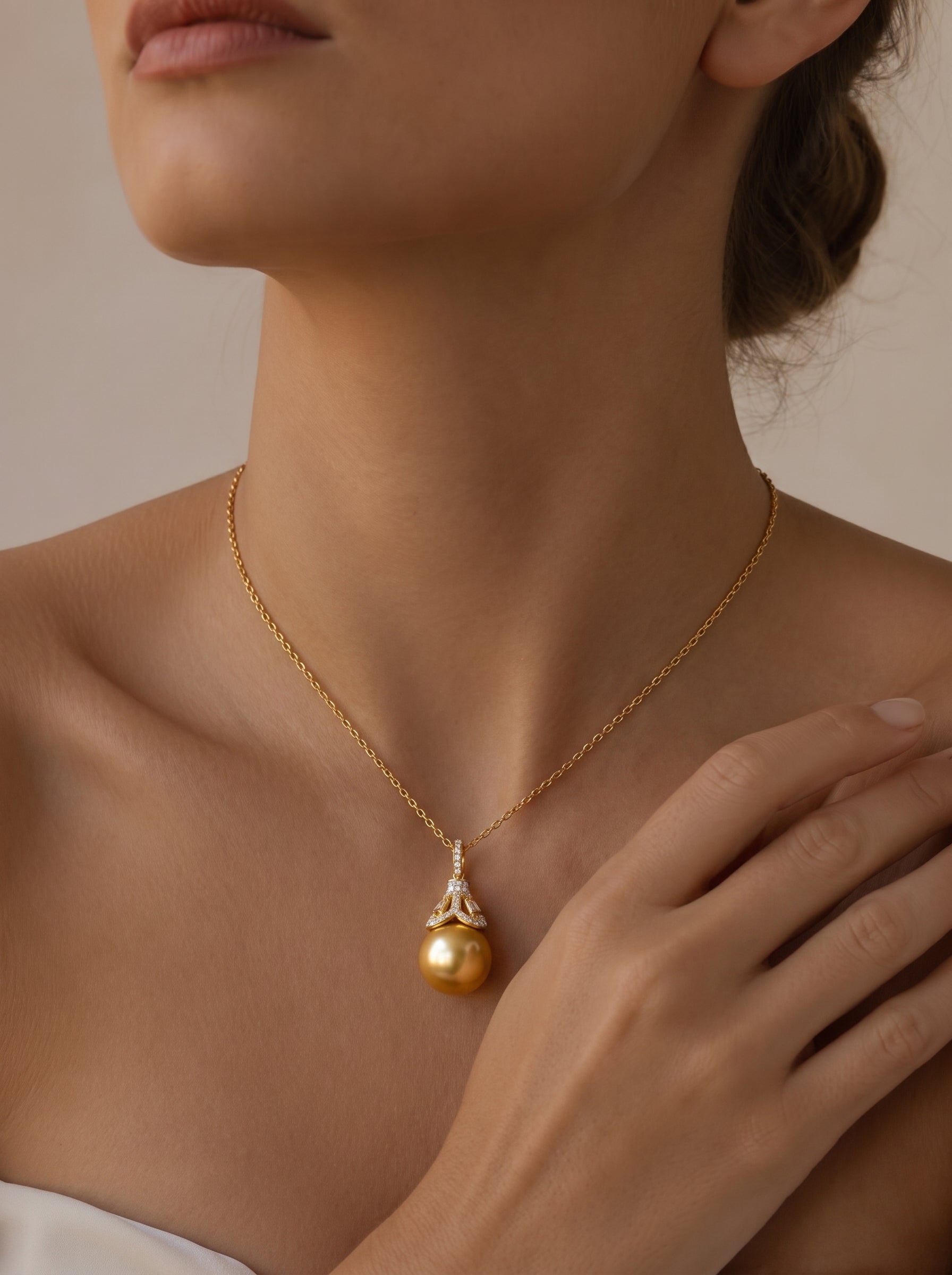
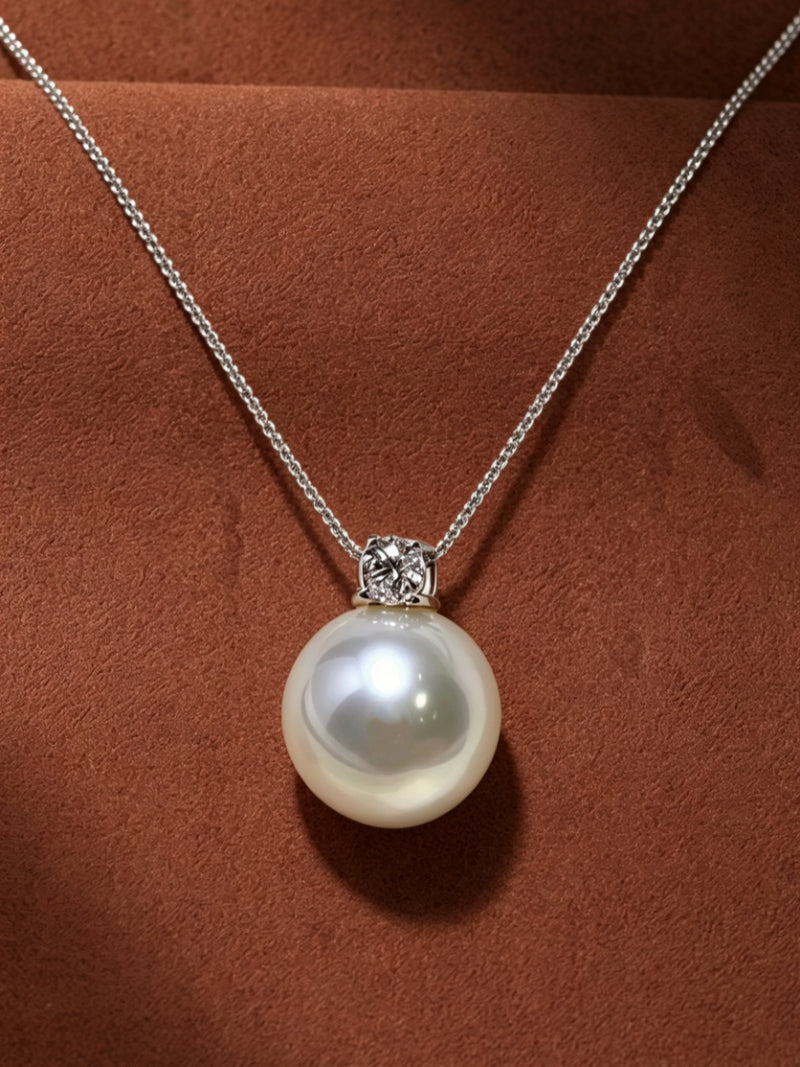
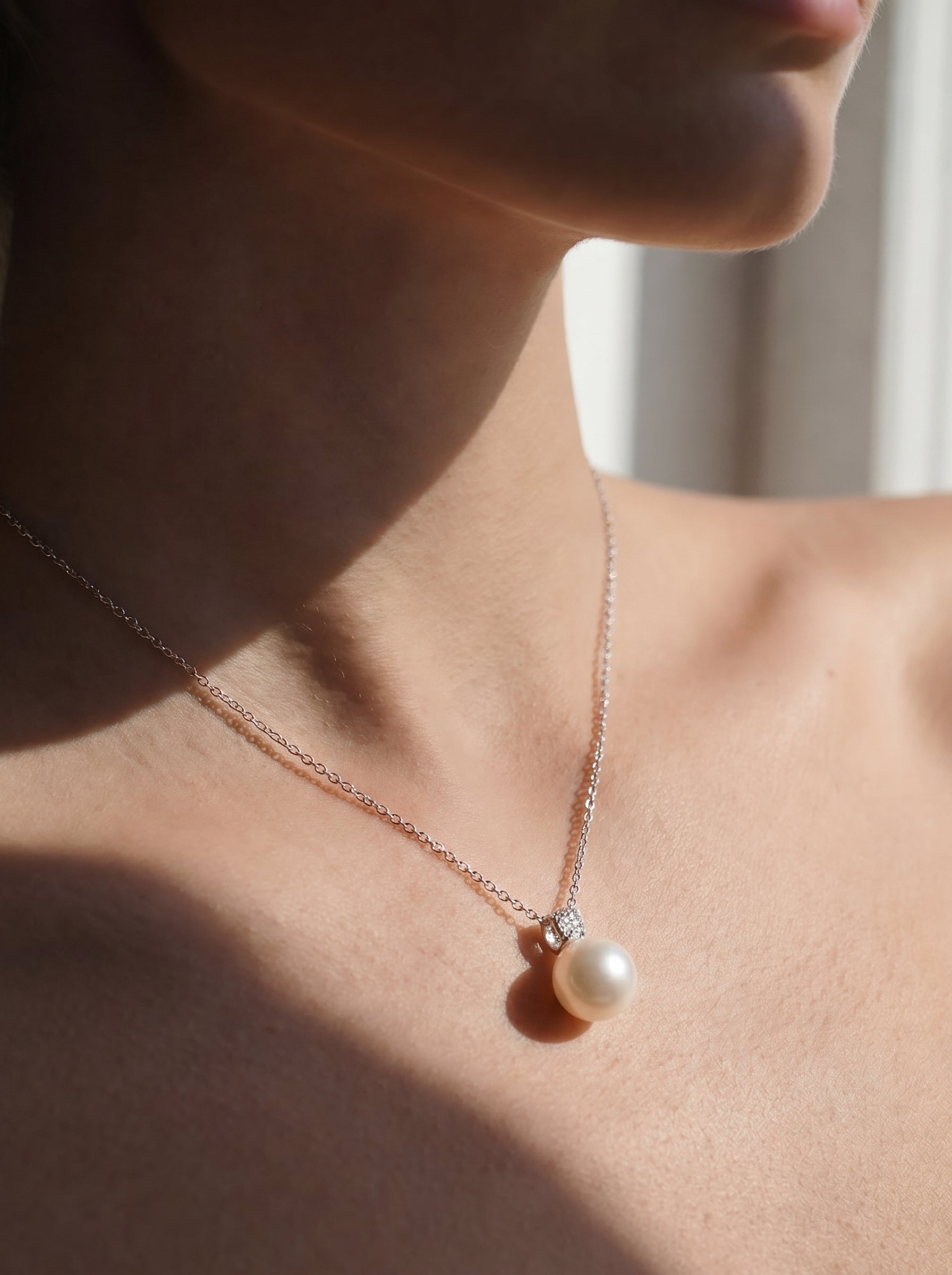
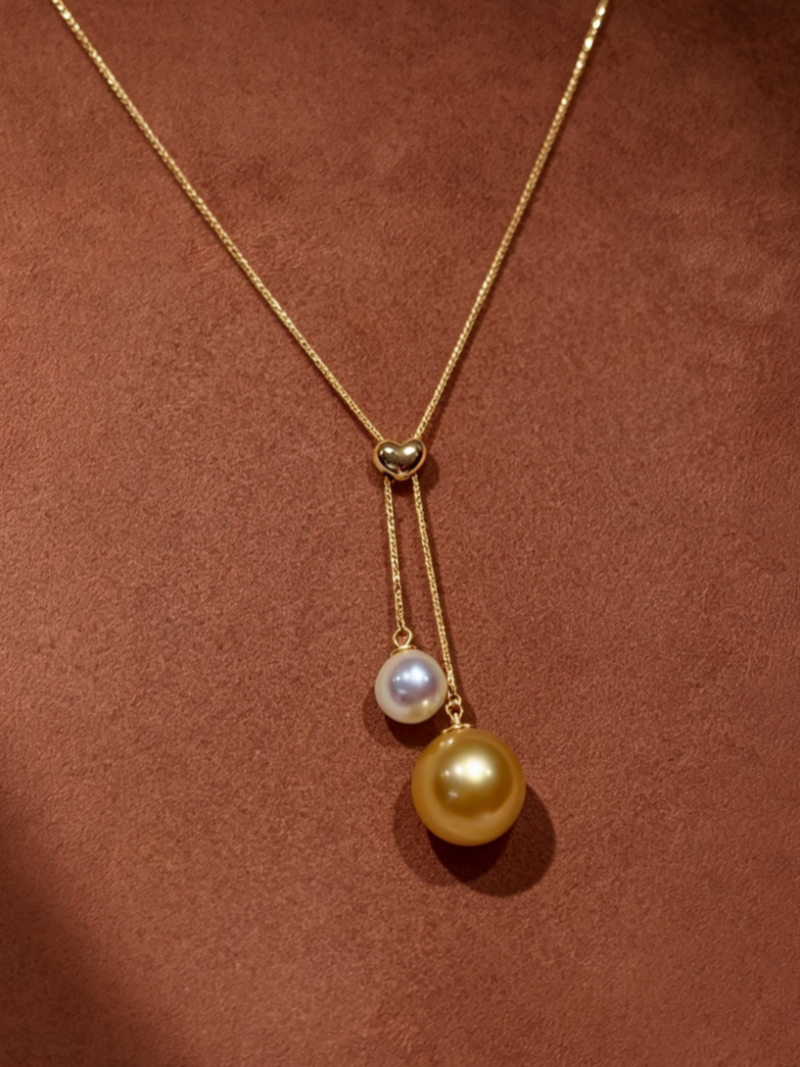
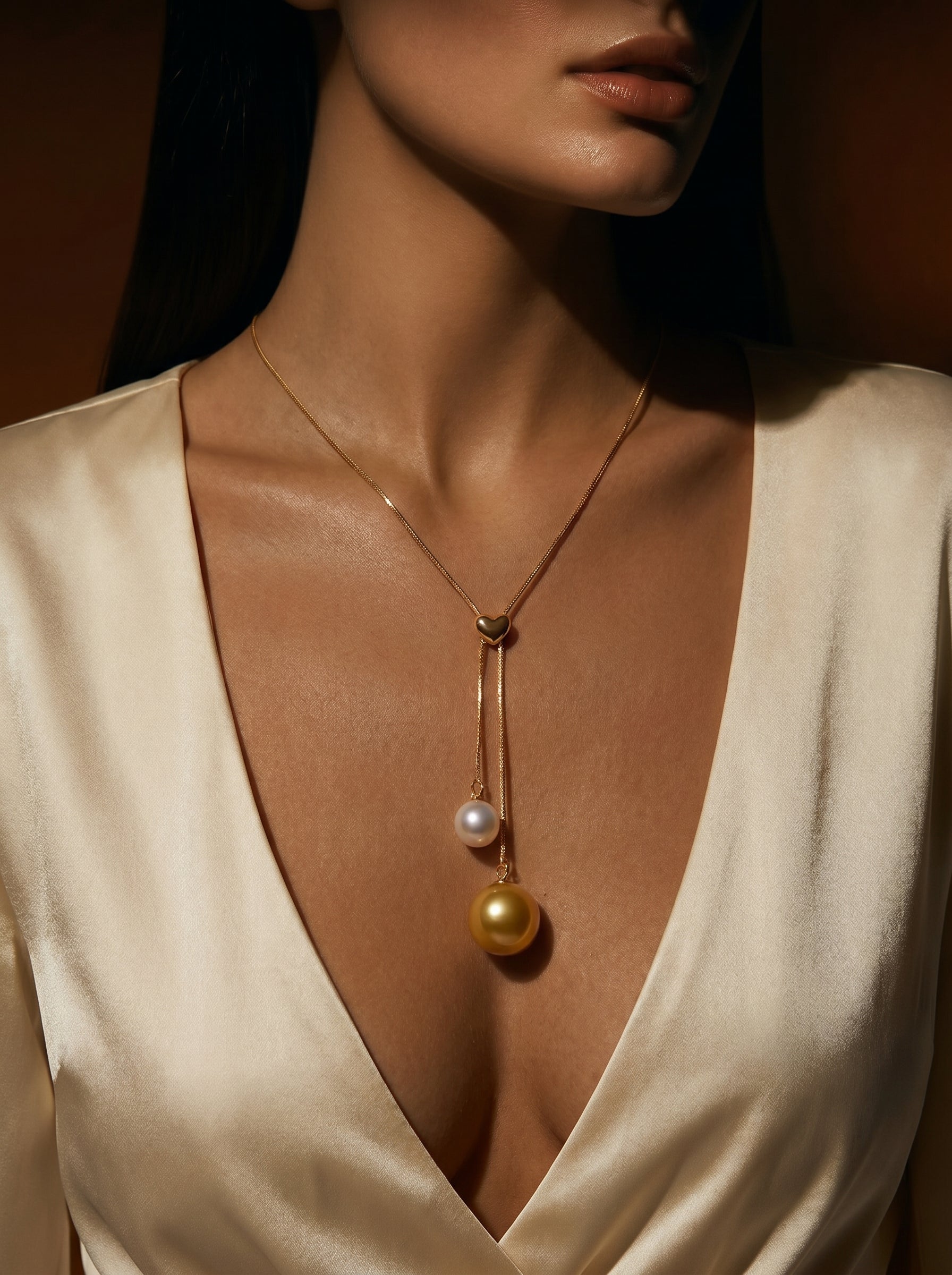
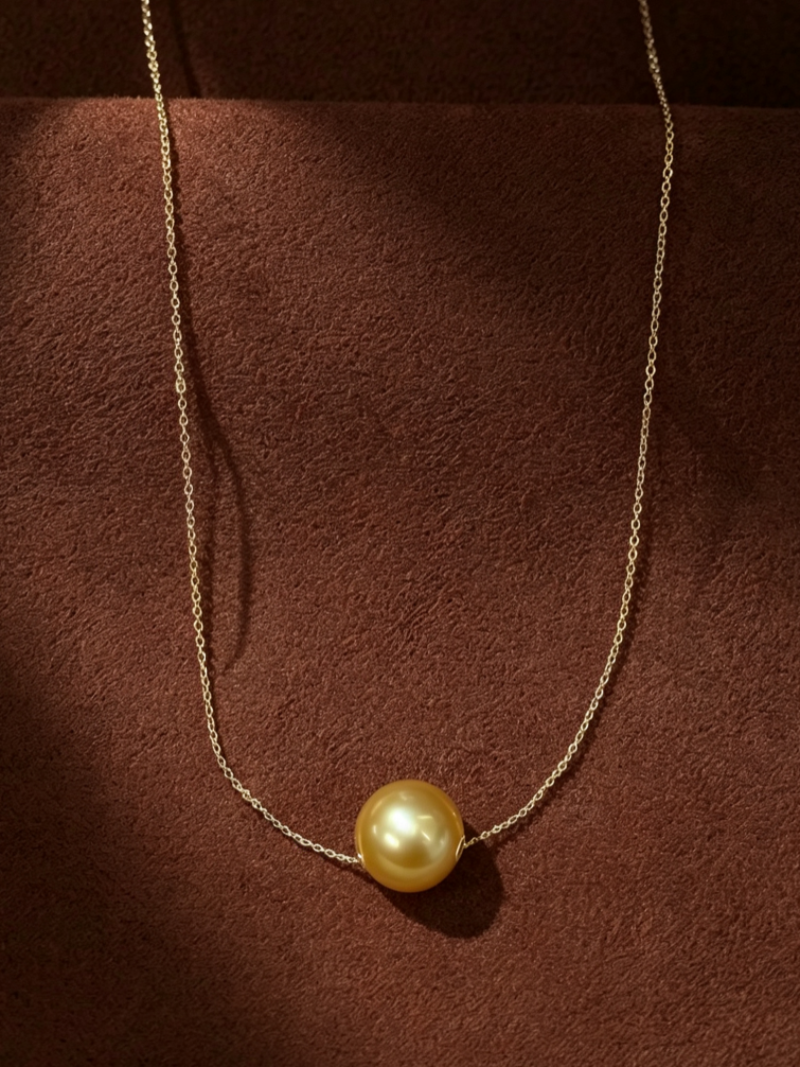
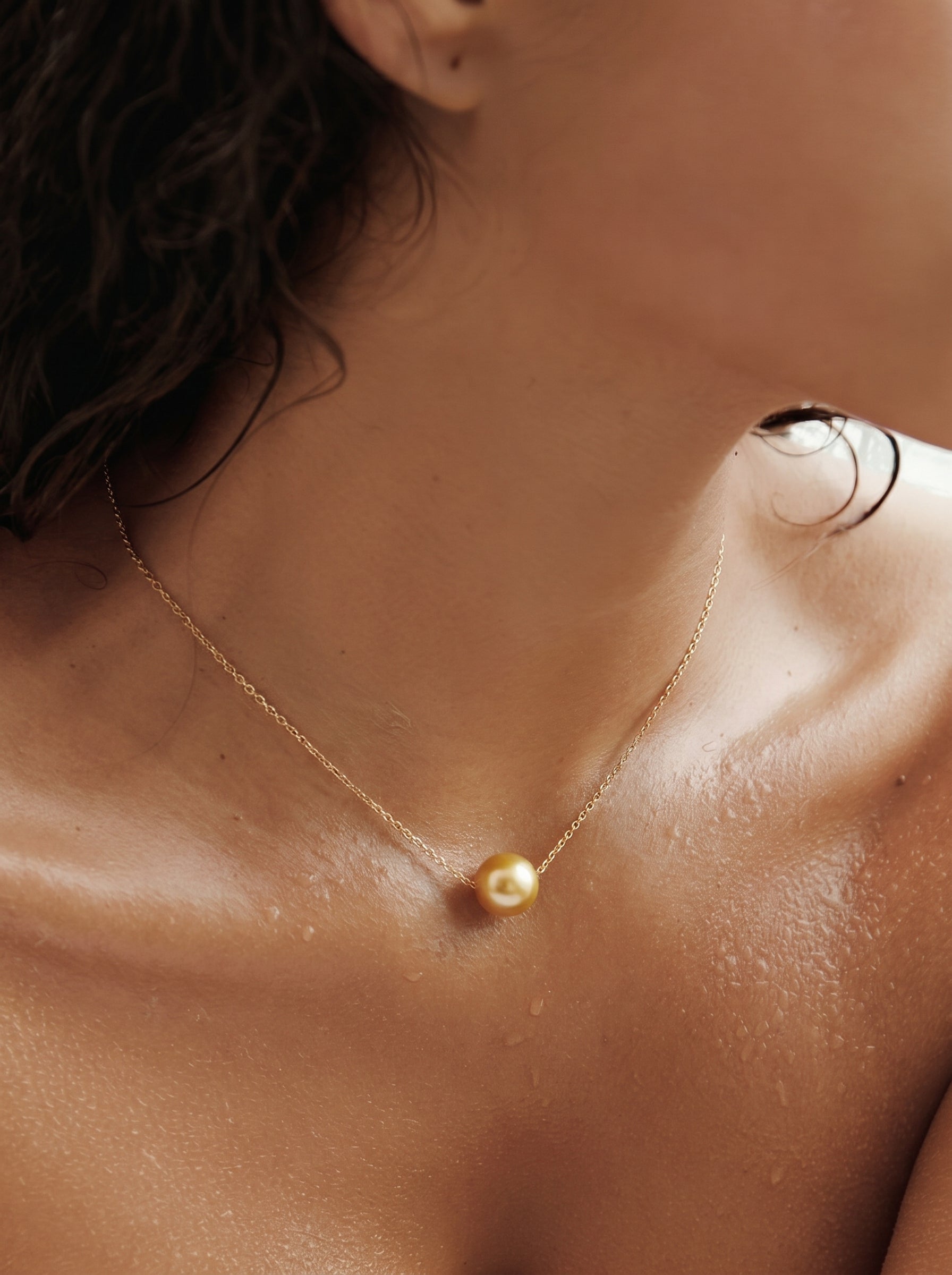
South Sea pearls are the largest cultured pearls grown, and their luster is satin rather than sharp. That combination is what makes real size wearable: the pearl fills the space without flashing at anyone.
What is a South Sea pearl necklace?
A South Sea pearl necklace uses cultured pearls grown in Pinctada maxima, the largest pearl-producing oyster, in the waters of Australia, Indonesia and the Philippines. The oyster can reach the size of a dinner plate, which is why the pearls reach sizes no other type does.
Sizes typically run 9 to 16 mm, with larger pearls appearing occasionally and priced accordingly.
Why is South Sea luster different?
Because the nacre is thick. A South Sea pearl grows for two to four years and lays down a nacre layer several times deeper than an Akoya pearl of the same diameter. Light enters that depth and diffuses rather than bouncing straight back.
The result is a glow that appears to come from inside the pearl, rather than a mirror reflection sitting on its surface. It is the reason a South Sea pearl looks calm at a size that would otherwise look loud.
What colors do South Sea pearls come in?
Two families, from two variants of the same oyster. The silver-lipped oyster produces white through silver-white. The gold-lipped oyster produces cream through deep golden, and the deeper the gold, the rarer the pearl.
Both colors are produced by the oyster itself. Treatment is stated on every product page as one of eight provenance markers, so natural color is never implied where it has been enhanced.
Which South Sea necklace style should you choose?
Single pendants
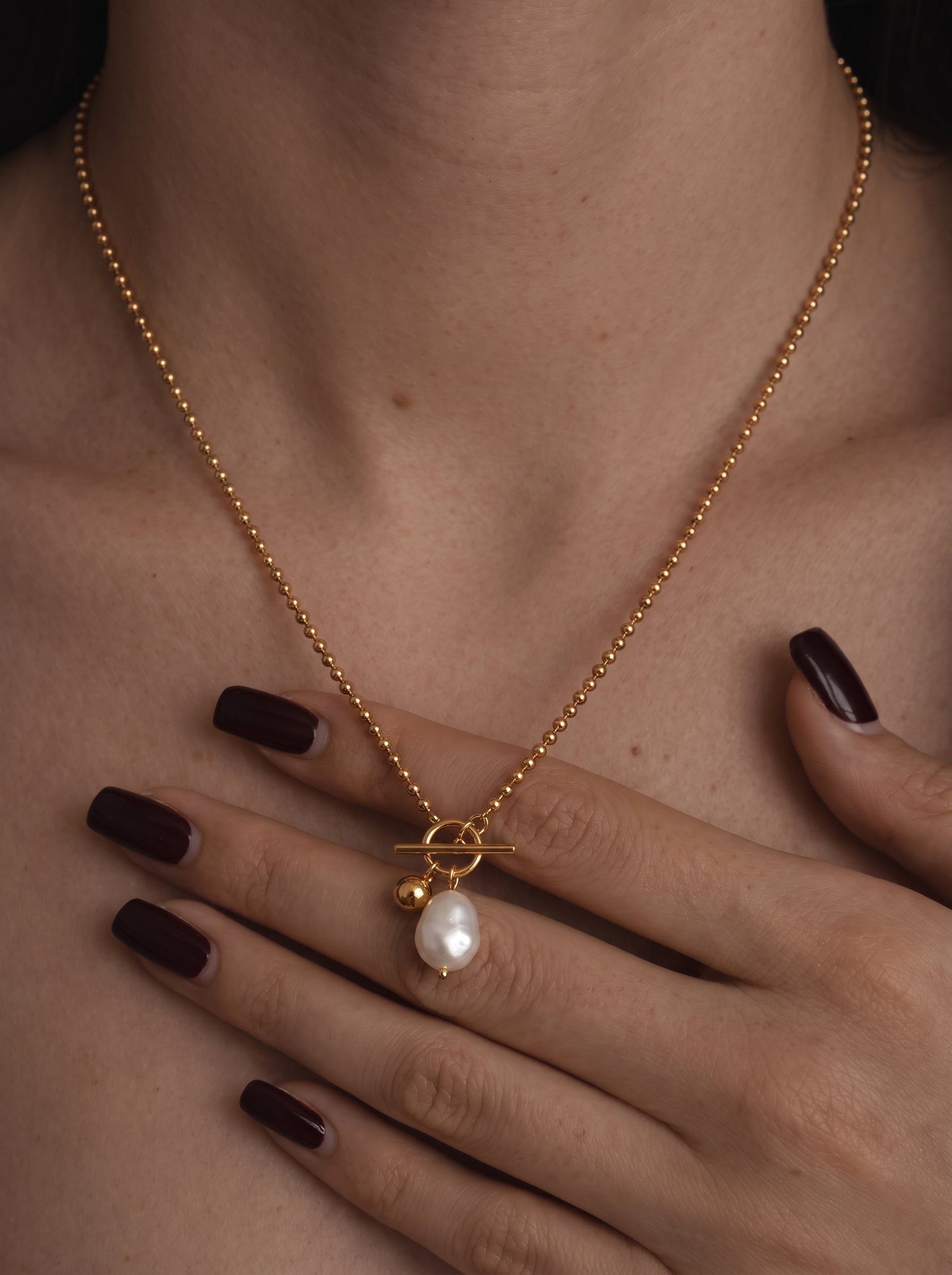
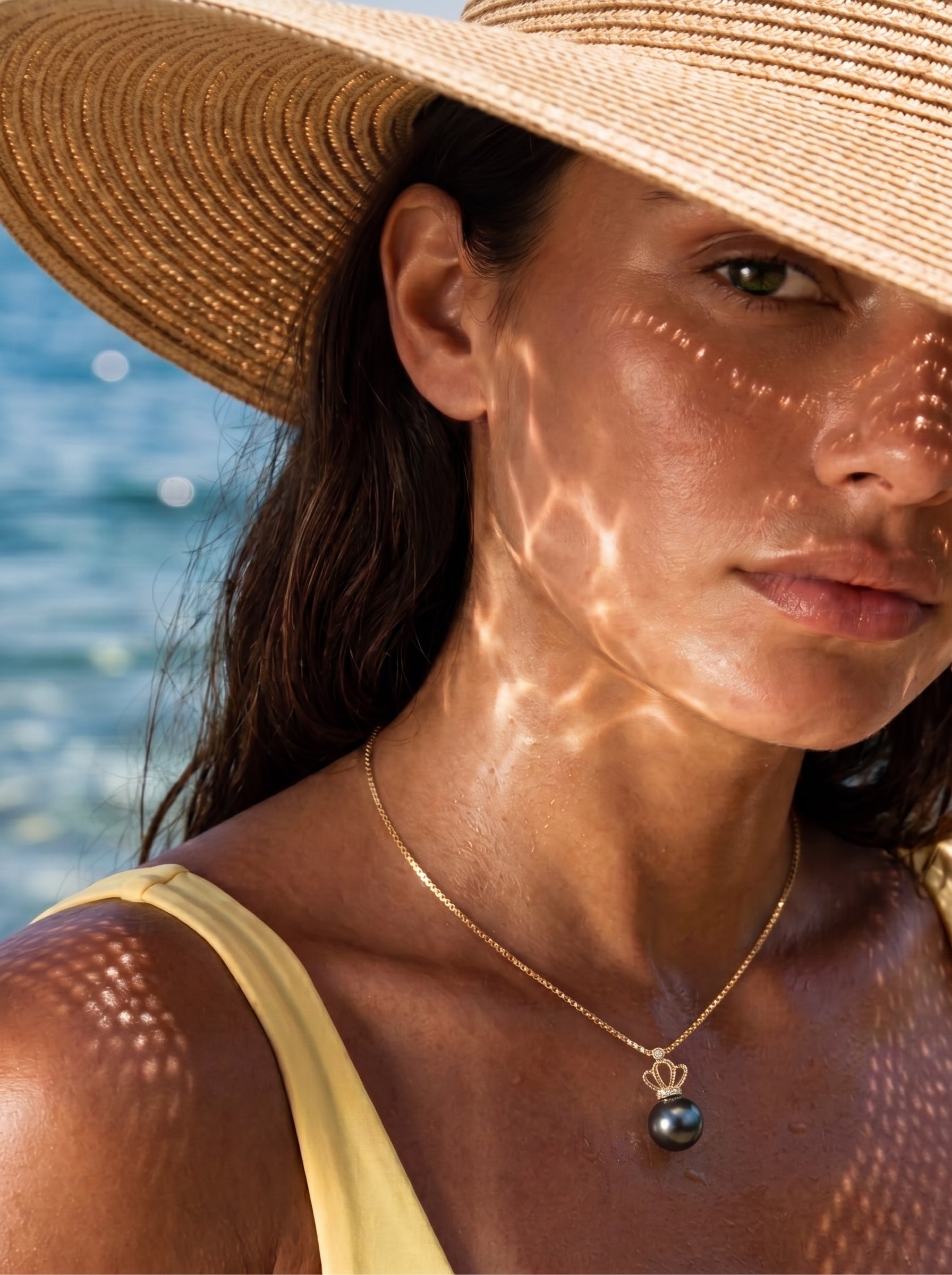
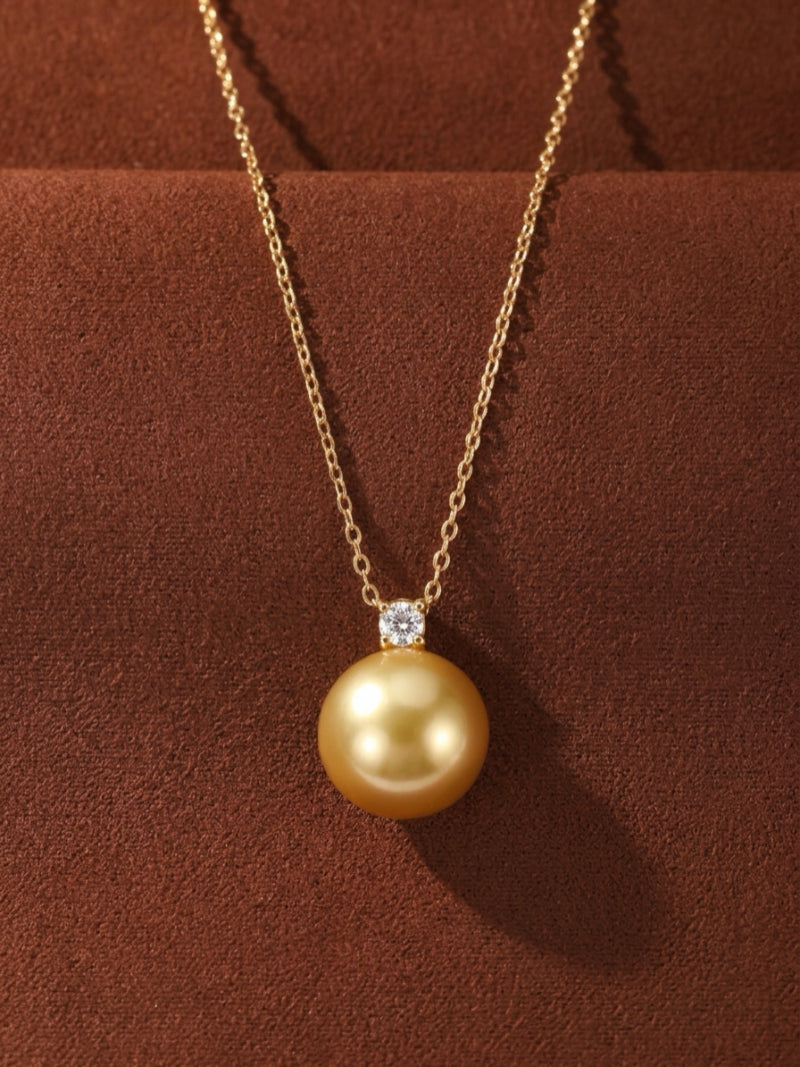
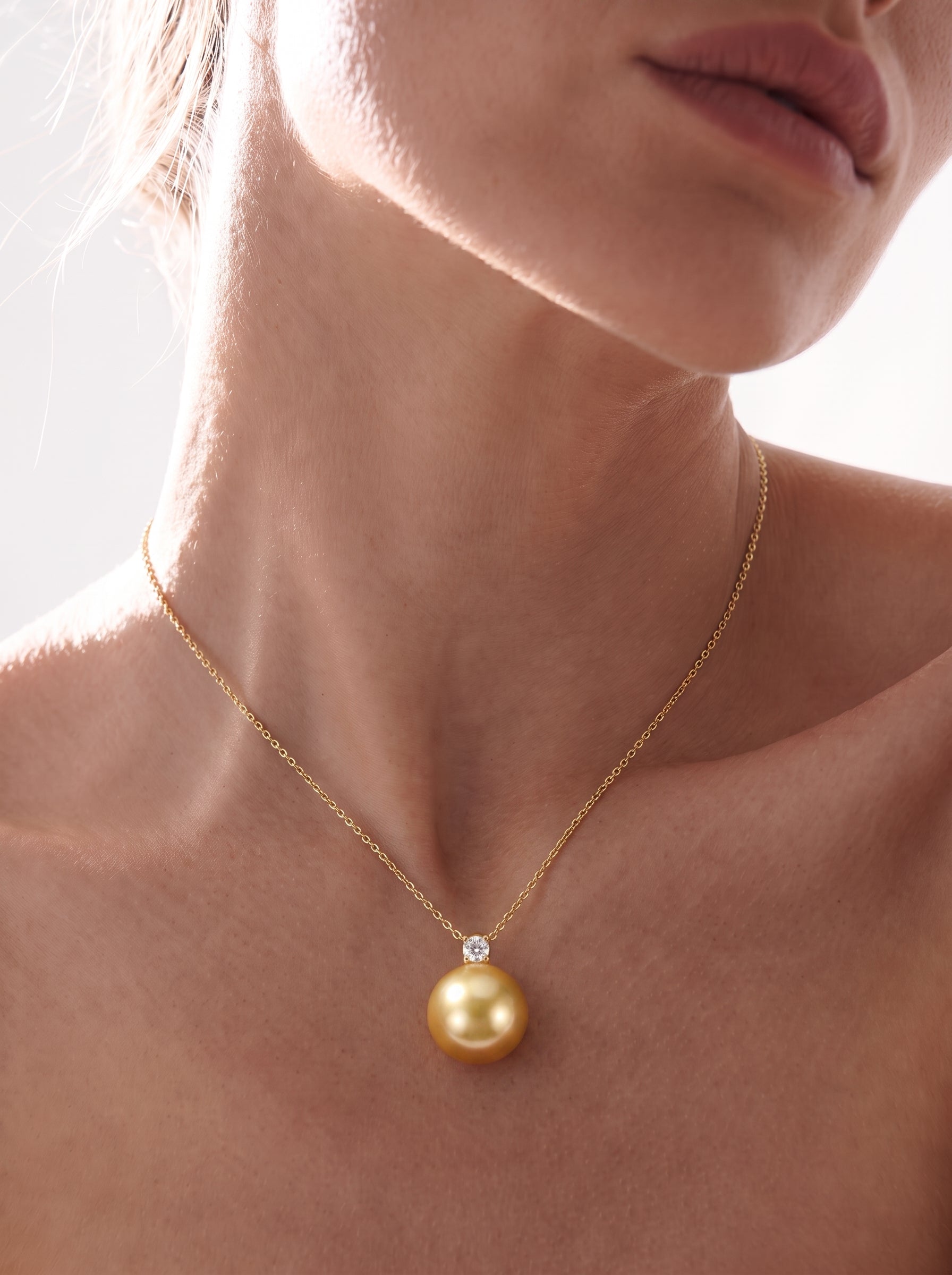
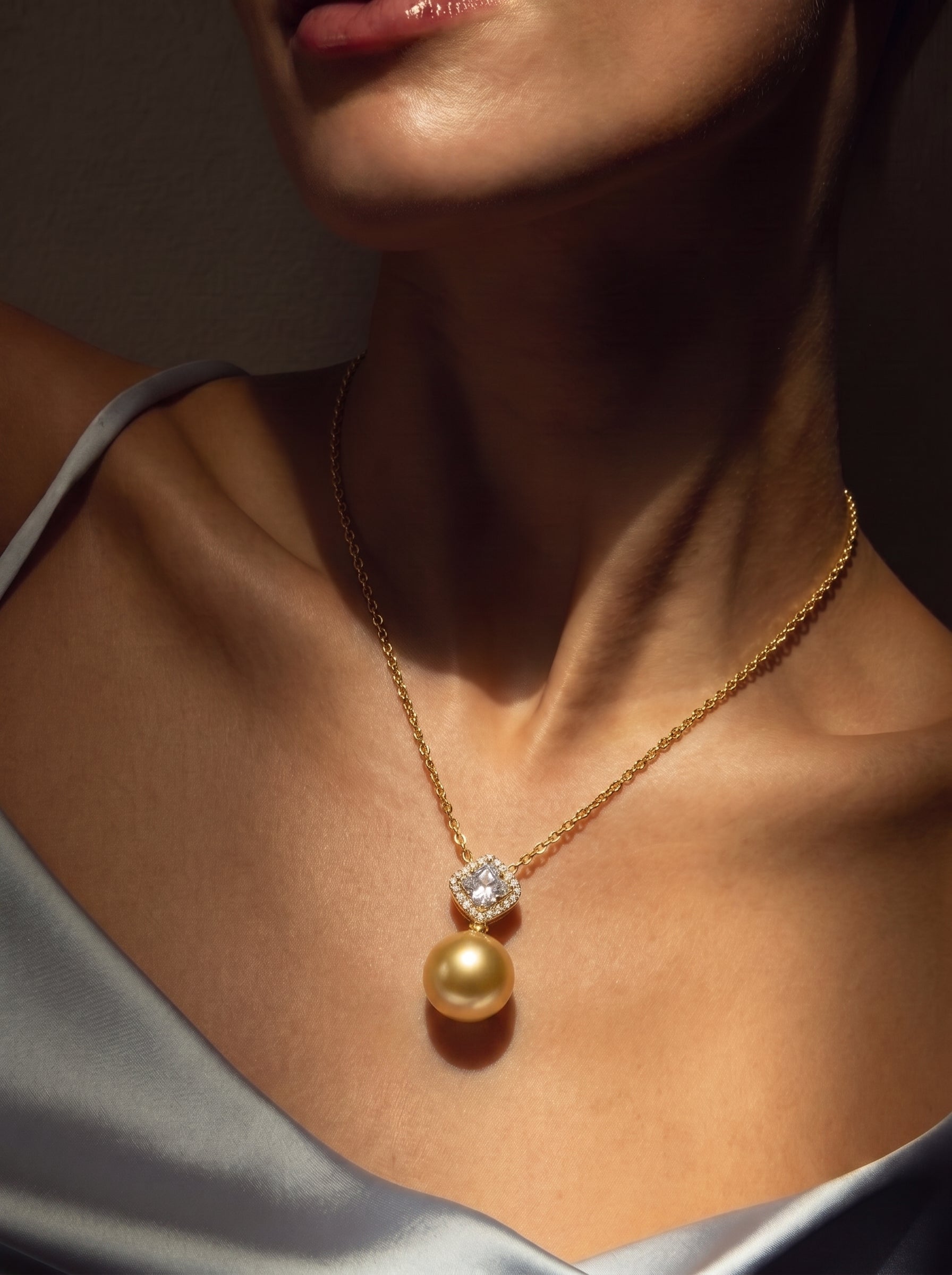
One large pearl on a chain. Because a South Sea pearl carries so much scale and depth on its own, this is the most common way to own one and the most wearable. It also carries no matching premium at all.
Floating and spaced necklaces
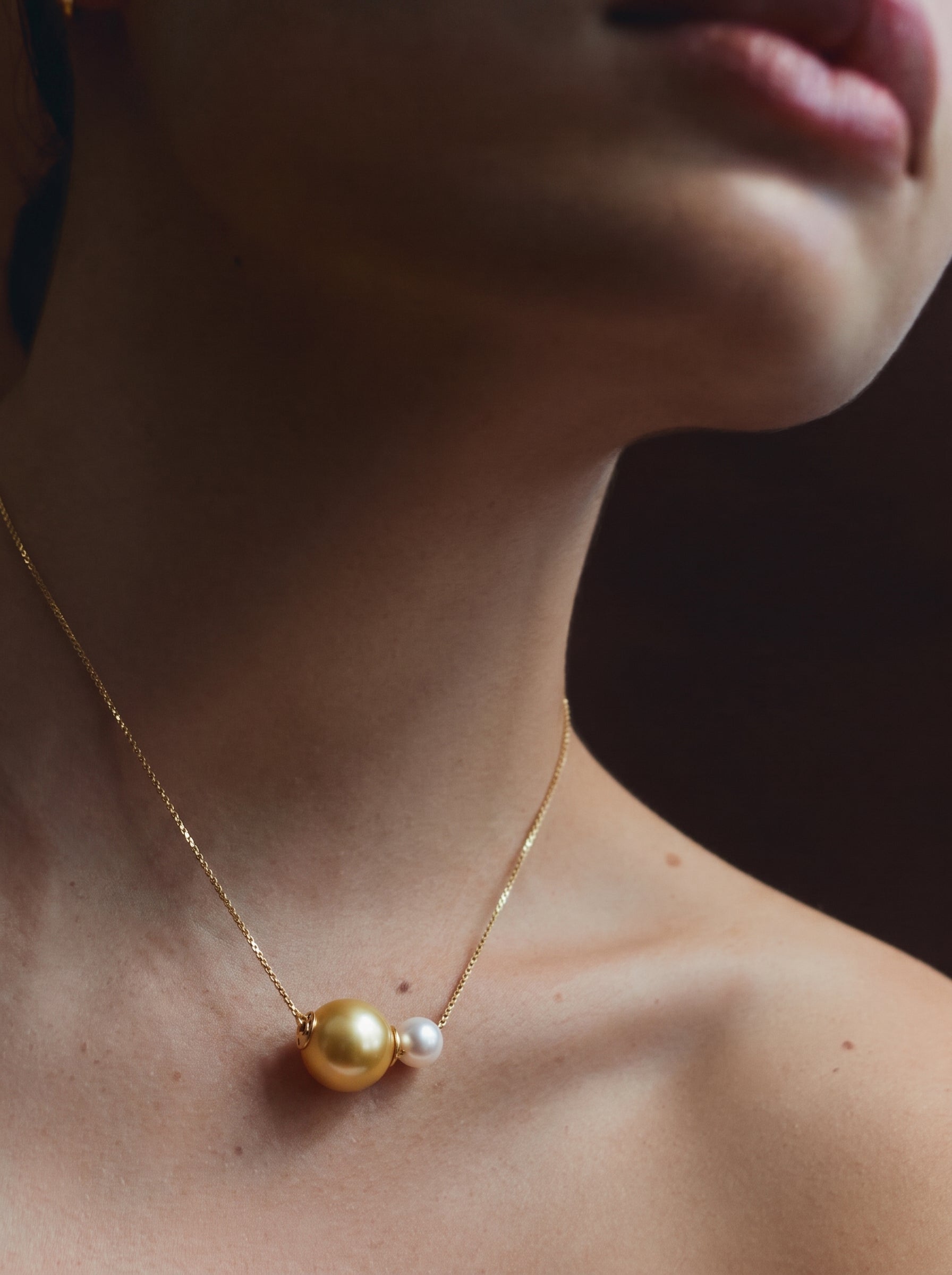
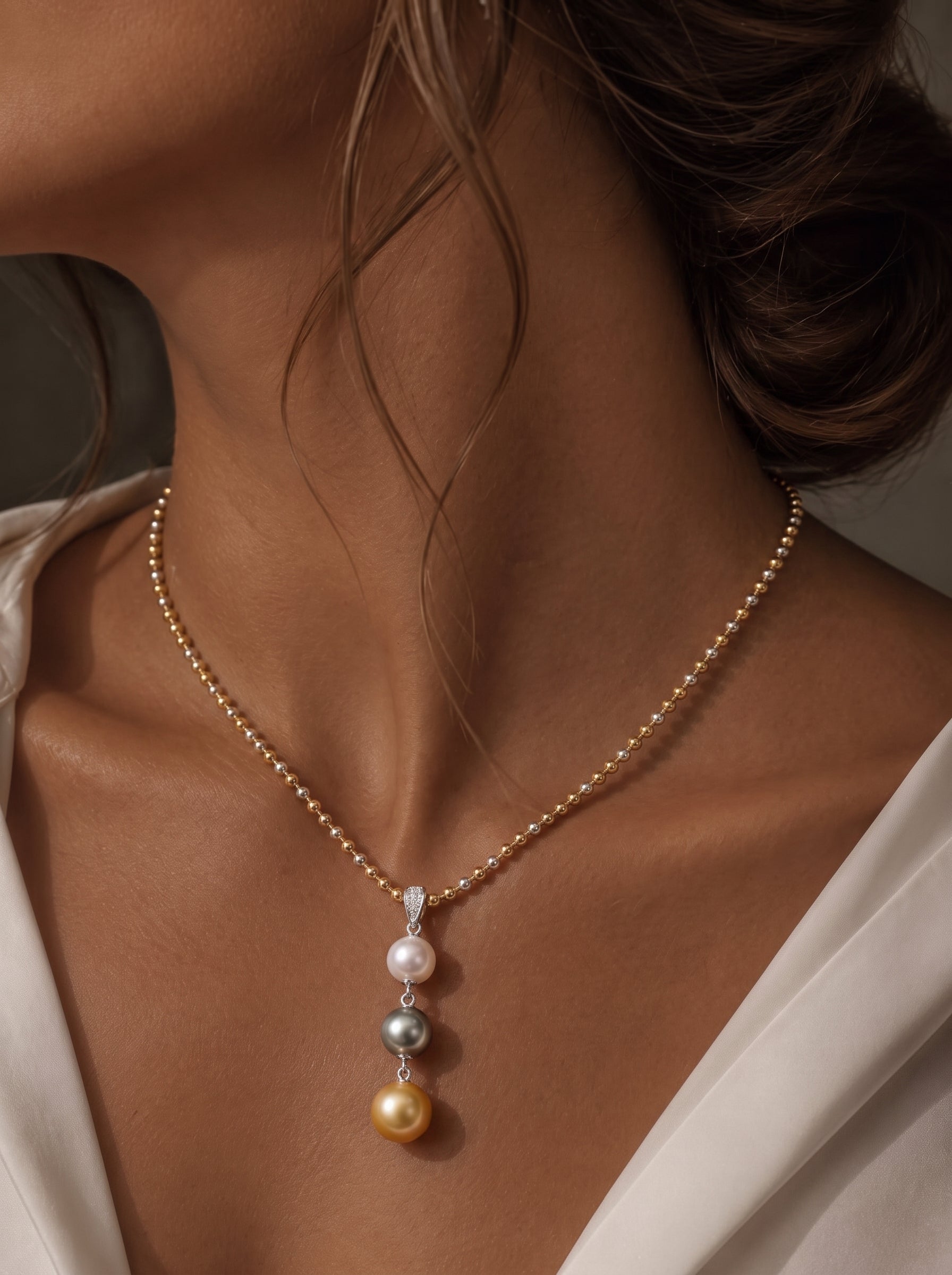
Pearls set at intervals along a fine chain, so each one has room to show its depth individually rather than competing with its neighbors.
Sculpted settings
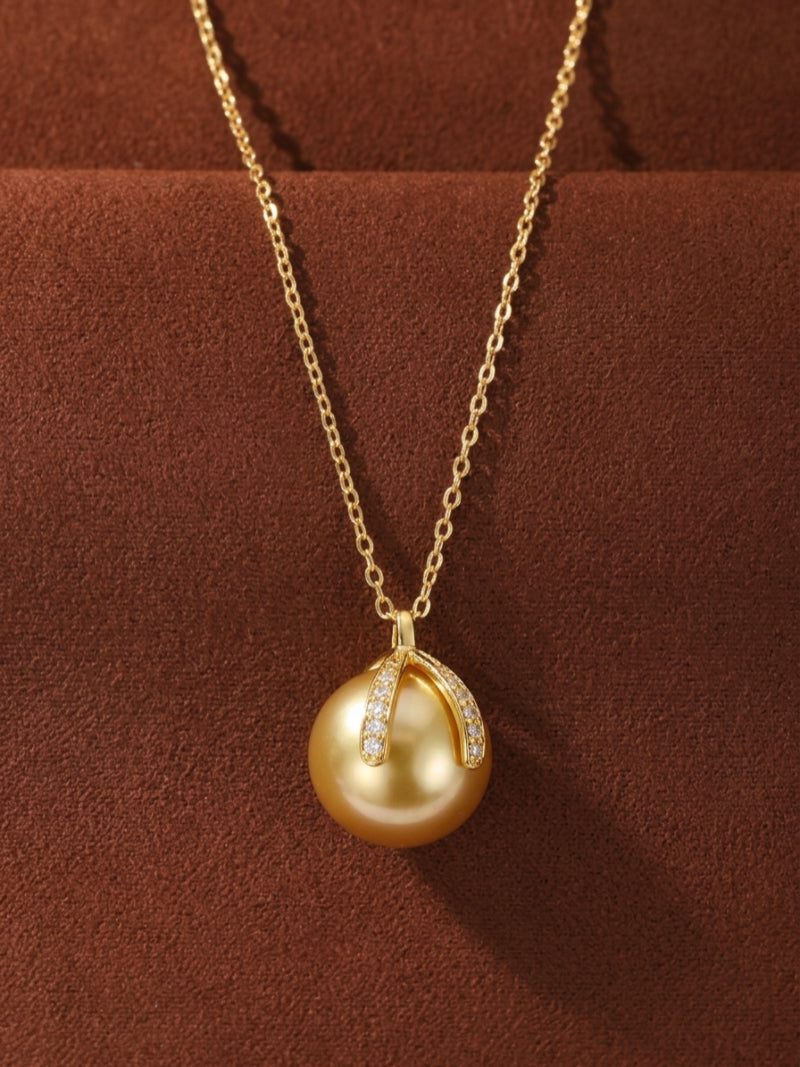
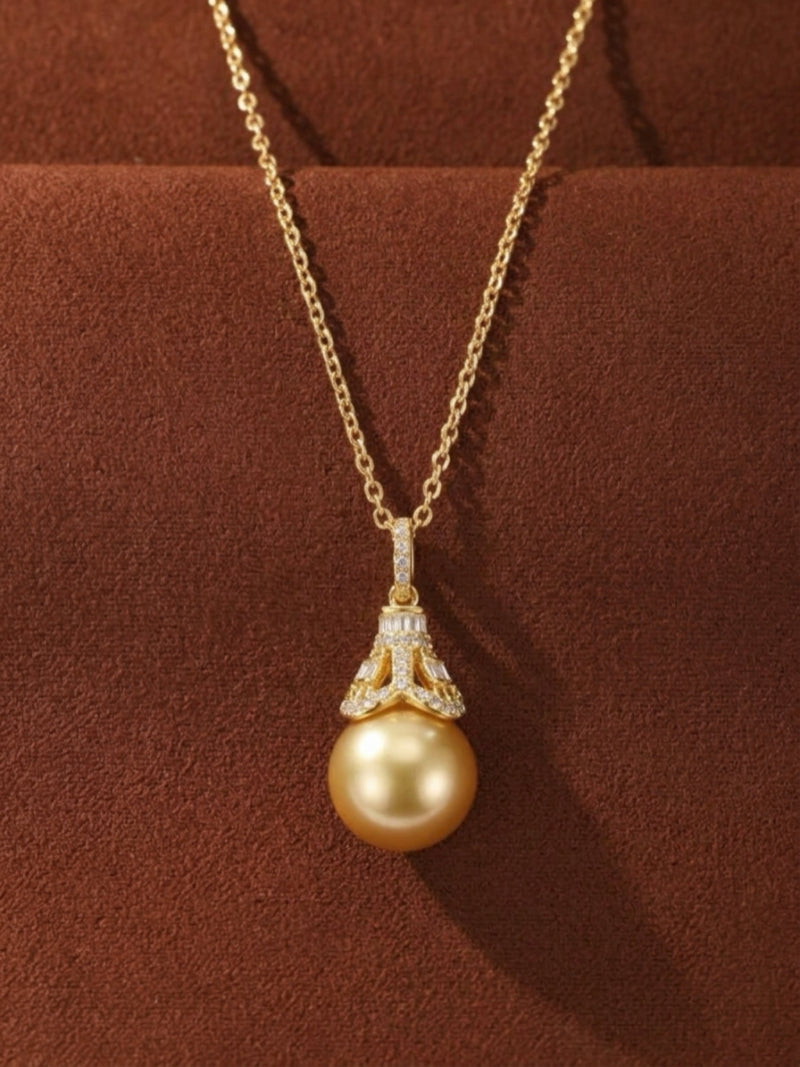
A large pearl held in a worked metal frame. The metal has to be restrained at this scale, since anything elaborate starts competing with a pearl that is already the size of the design.
Why buy a South Sea pearl necklace from Grande Lilith
At this size and price, every marker matters, because a large pearl with thin nacre or a poor surface has nowhere to hide.
- Eight provenance markers on every product page: type, origin, bodycolor, overtone, shape, size, grade and treatment.
- Grade and treatment stated rather than implied, on the category where the price gap is widest.
- Partners vetted by our GIA-certified pearl specialist, on working conditions as well as quality.
- Nickel-free, lead-free and cadmium-free settings on solid 18k gold, 925 sterling silver and stainless steel.
- Designed in Paris. Thirty days to change your mind, and every order arrives in a magnetic pouch.
Frequently asked questions
Why are South Sea pearls so expensive?
Time and risk. The oyster takes two years to reach a size that can hold a nucleus, then two to four more to grow the pearl, in open ocean conditions where a single storm can end a harvest. Very few reach gem grade.
Are South Sea pearls more durable?
Yes, relative to Akoya. Thick nacre cannot wear through to the shell bead the way a thin layer can. They are still soft compared with stones, so the usual habits apply.
What size South Sea pearl should I buy?
Between 10 and 12 mm is the most wearable range for a pendant. Below 10 mm the scale advantage over other pearl types starts to disappear. Above 13 mm the necklace becomes an occasion piece.
Is a single pearl better value than a strand?
Considerably. Most of the price of a South Sea strand is in matching dozens of large pearls for size, color and overtone. A single pendant skips that entirely and gives you the same pearl quality.
Can you wear a South Sea pearl necklace daily?
Yes, and thick nacre makes it more forgiving than most. Put it on after perfume and lotion have dried, wipe it with a soft damp cloth before storing, and keep it away from harder stones.