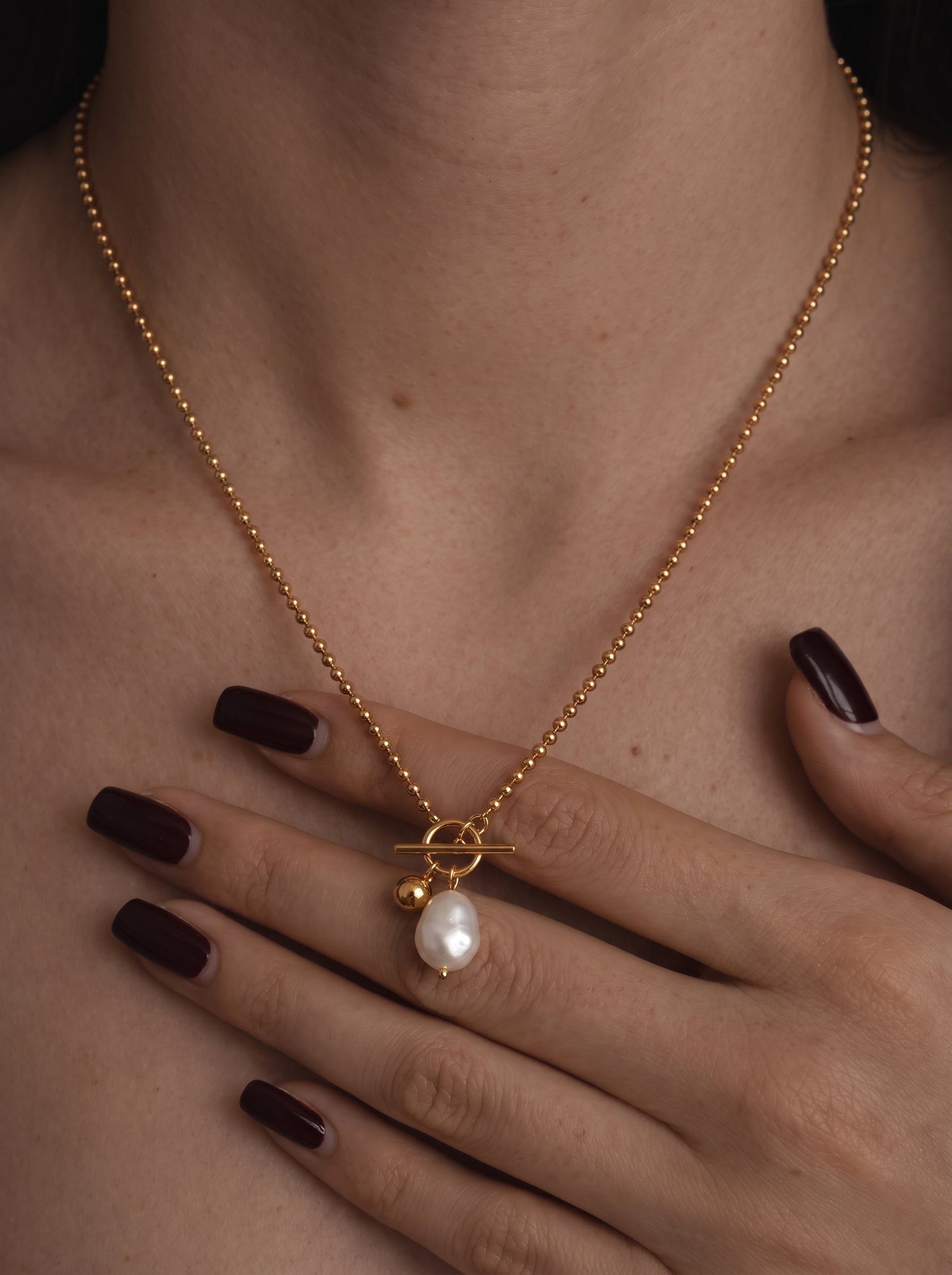
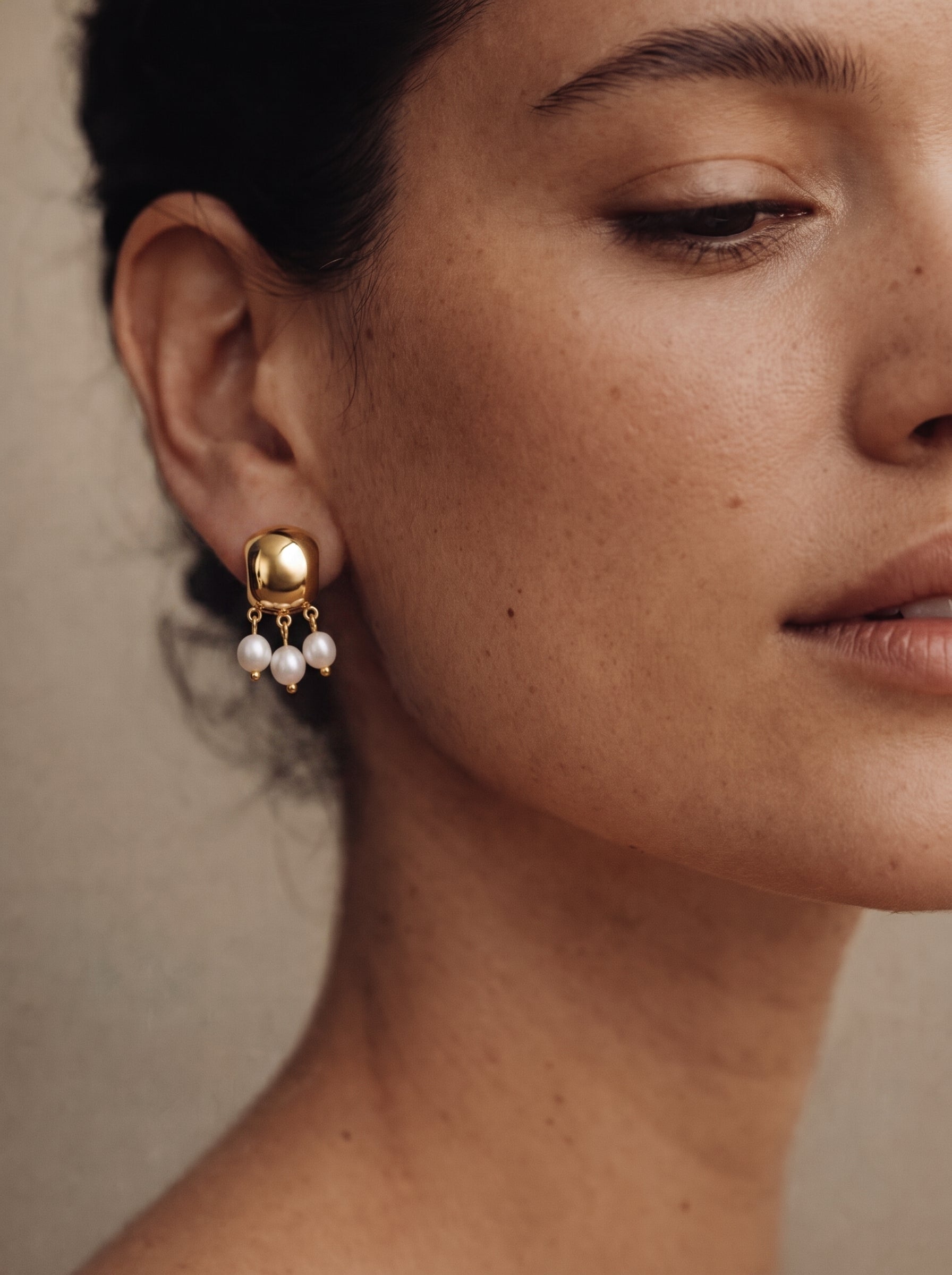
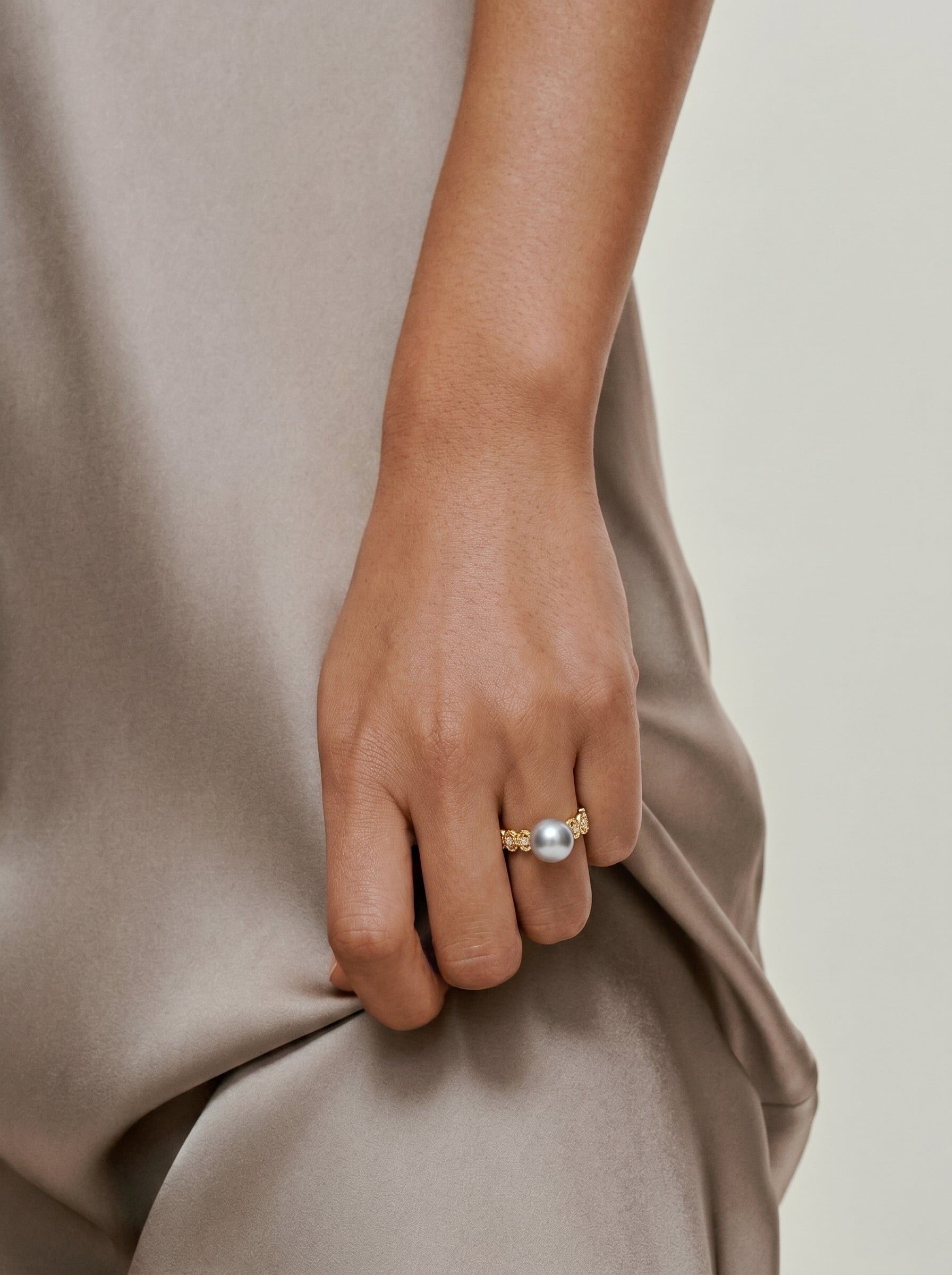
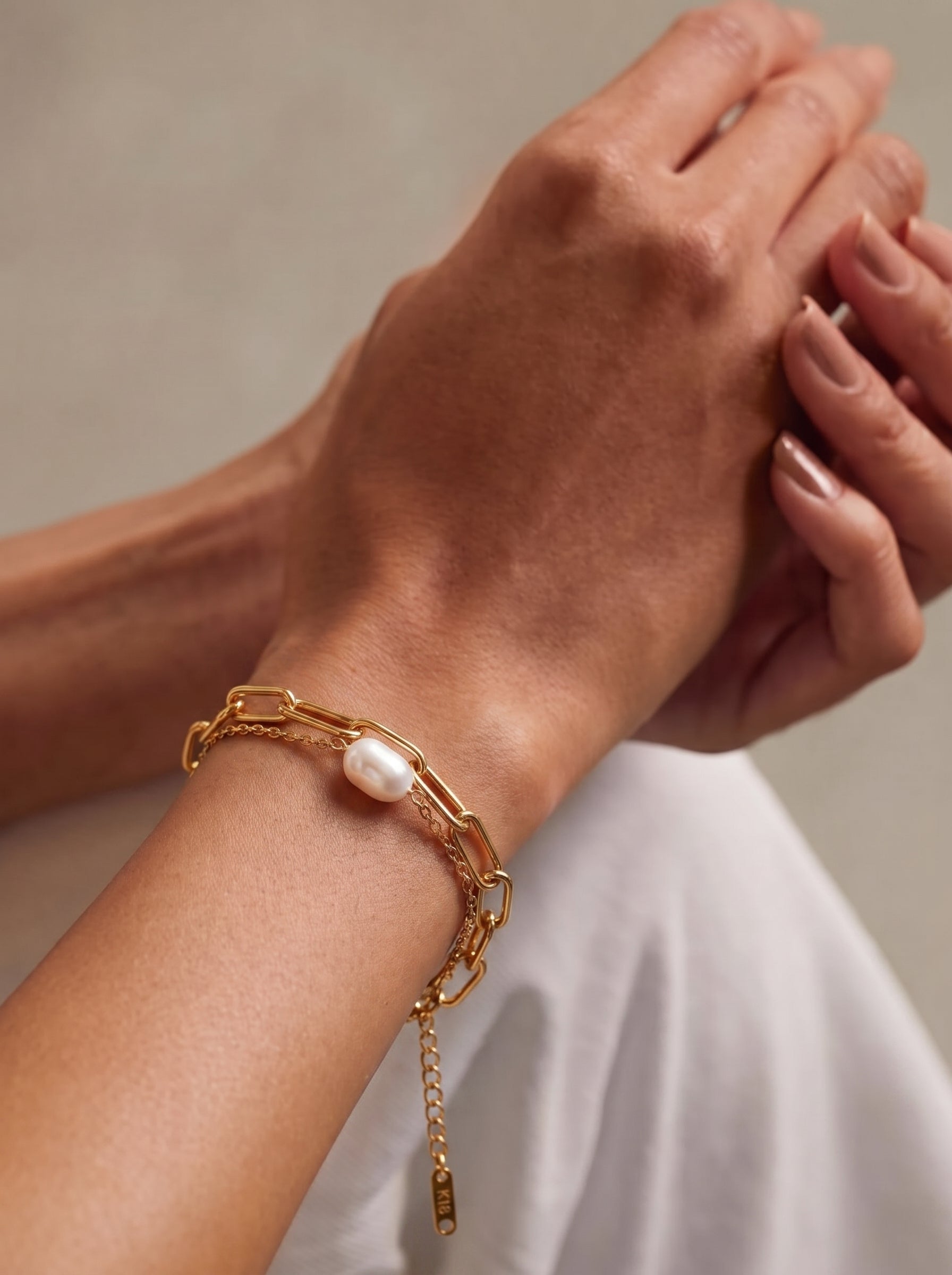
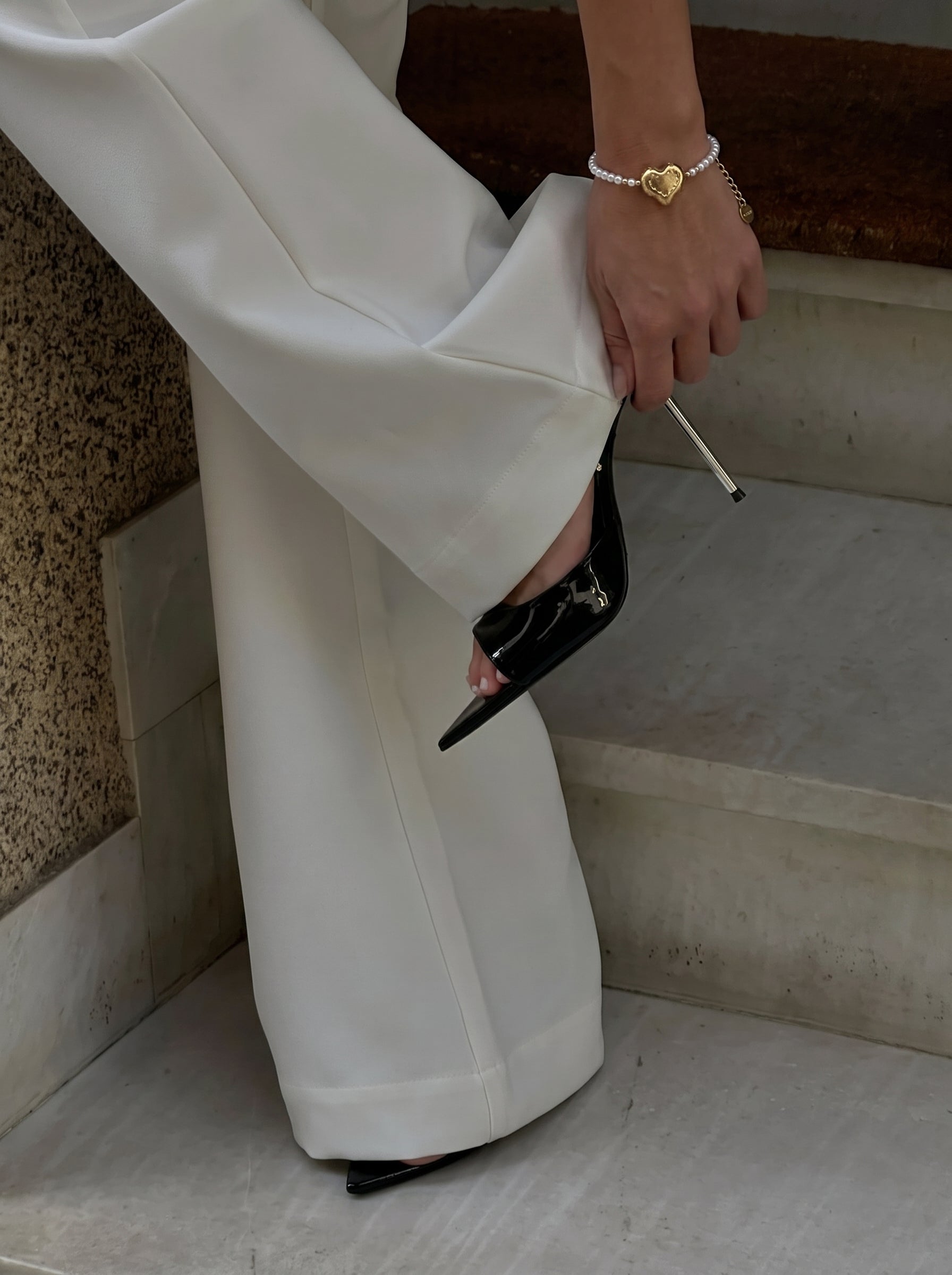
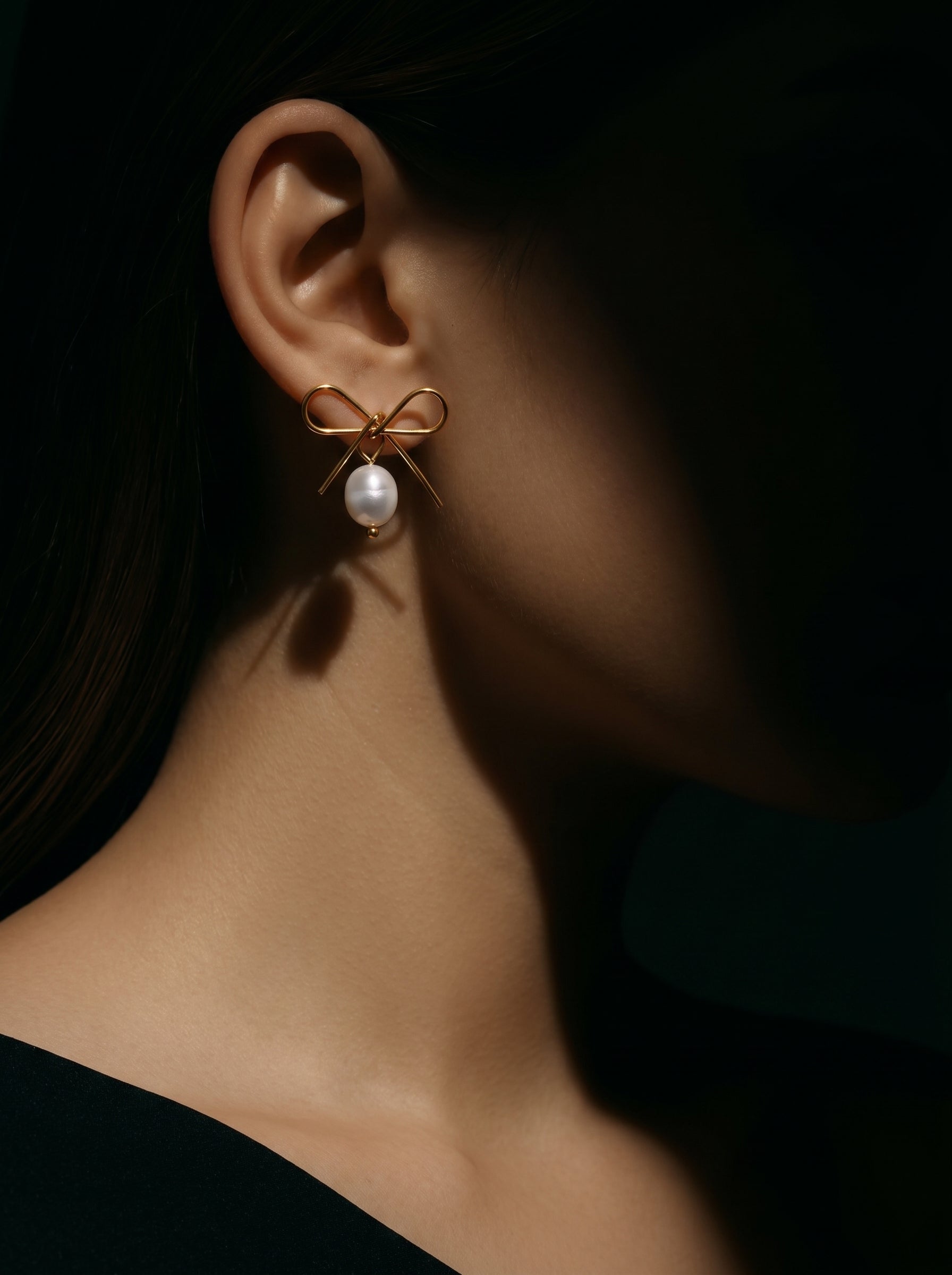
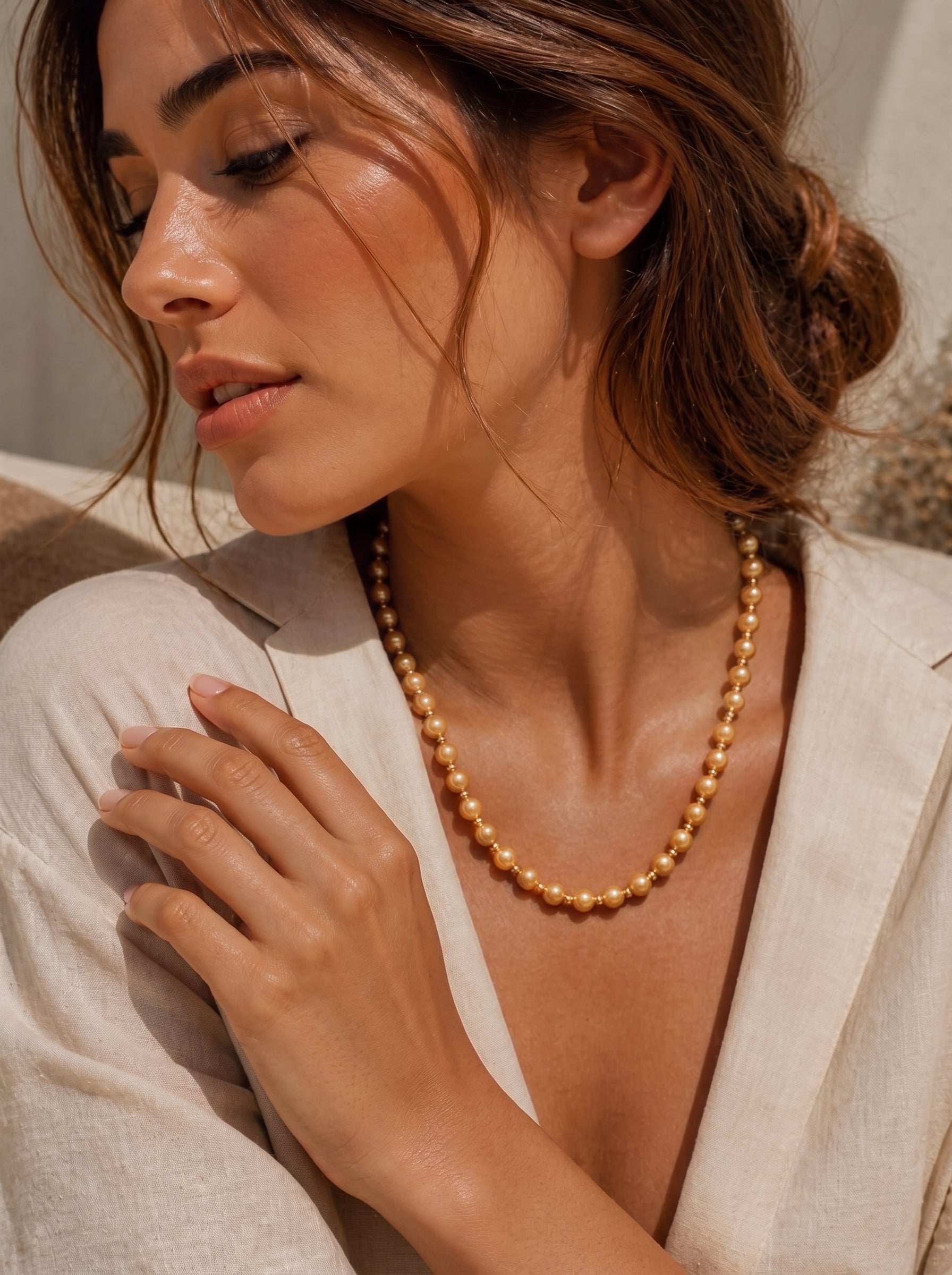
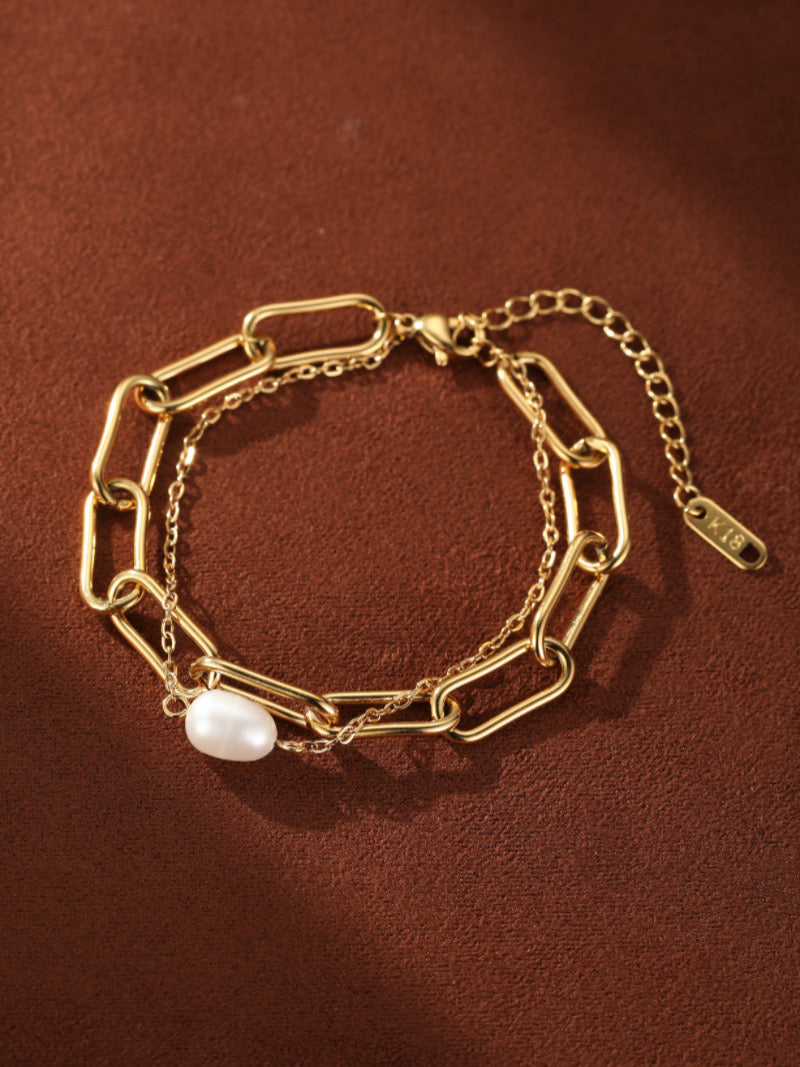
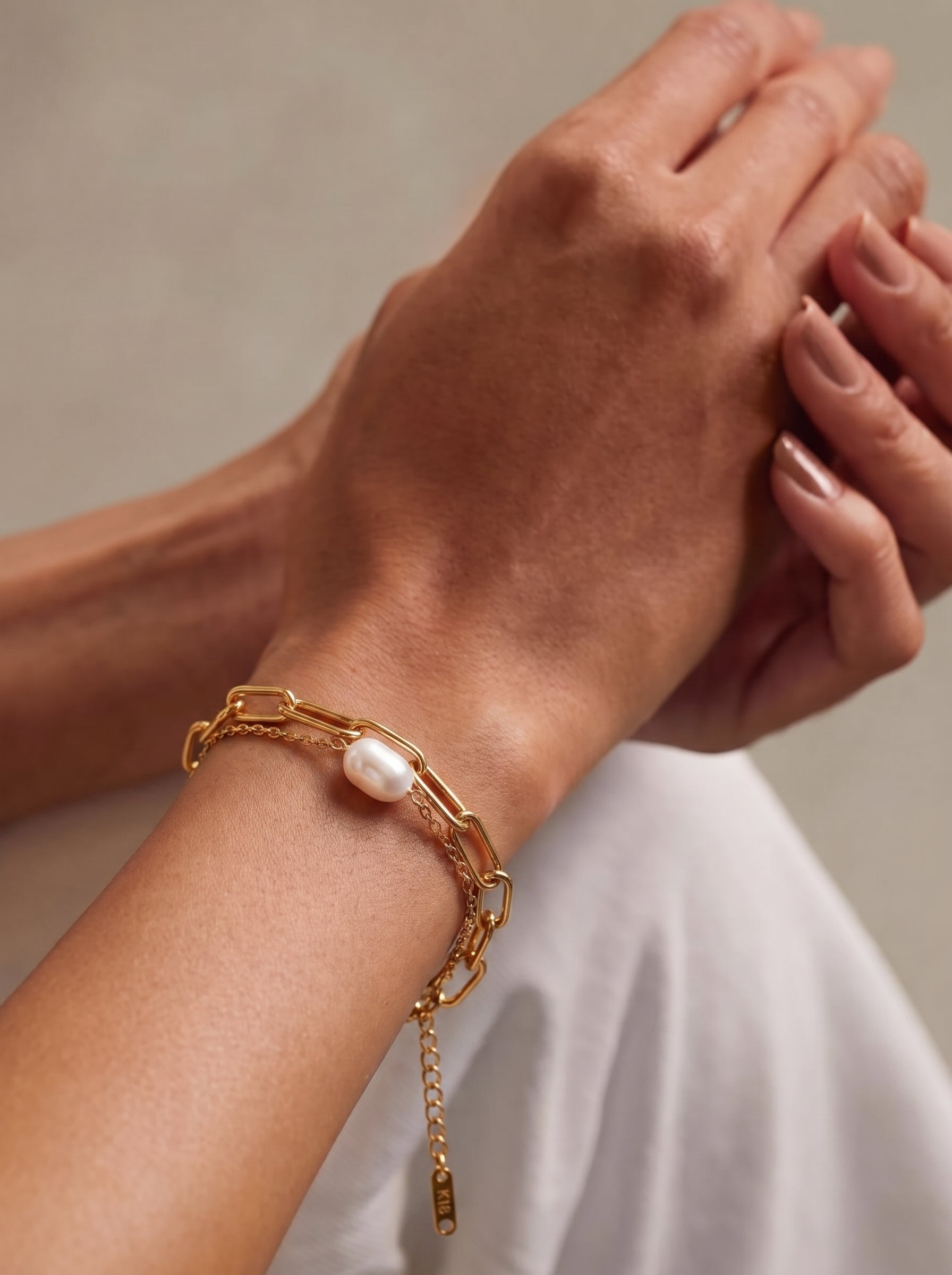
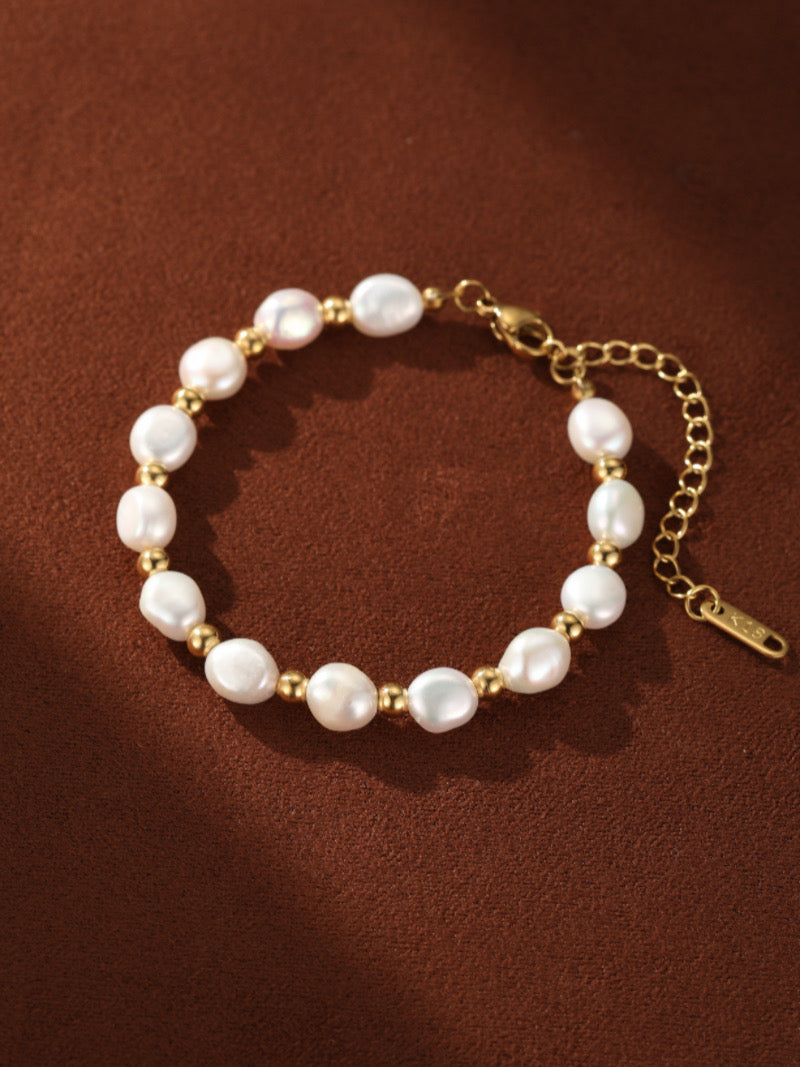
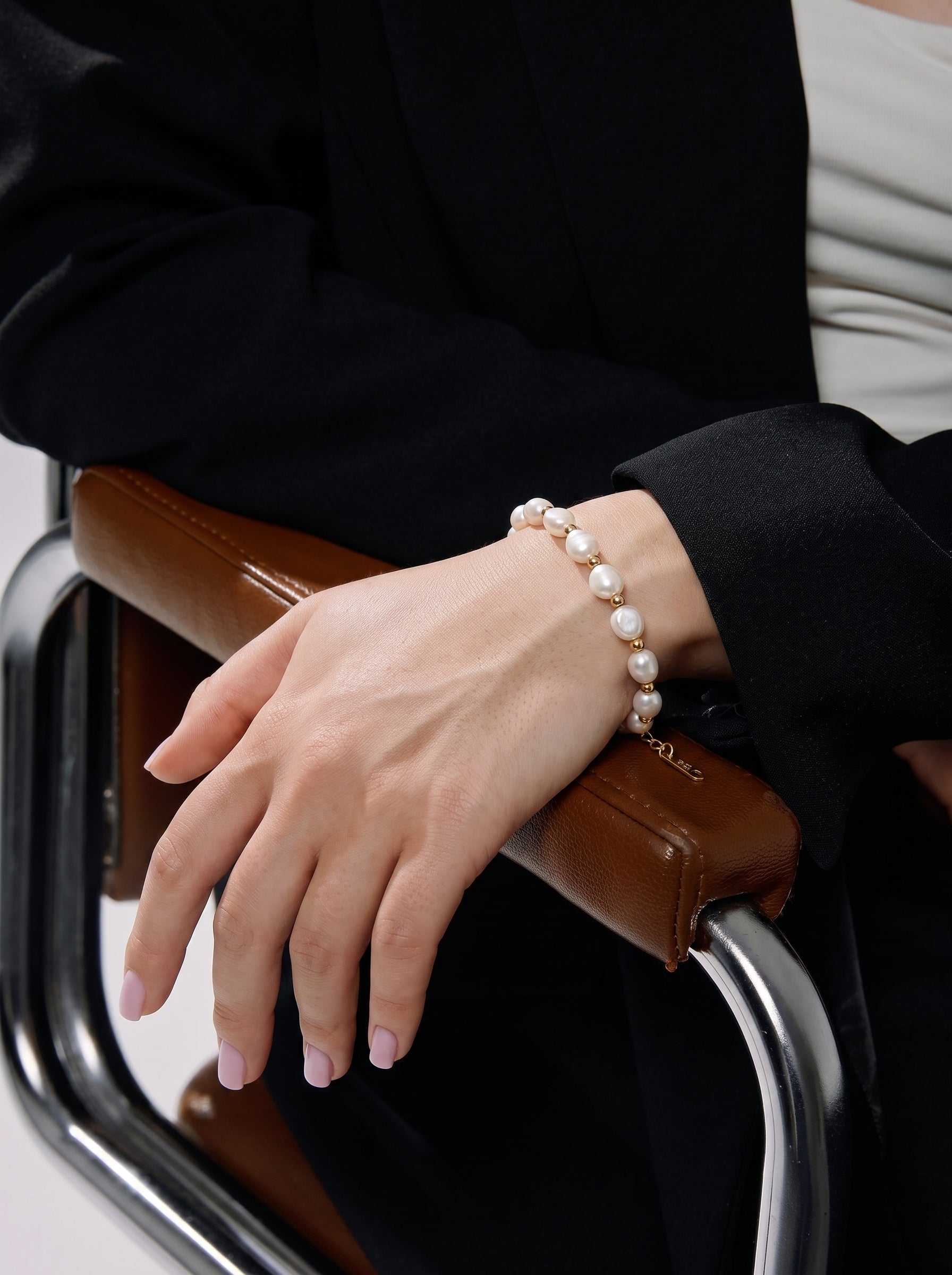
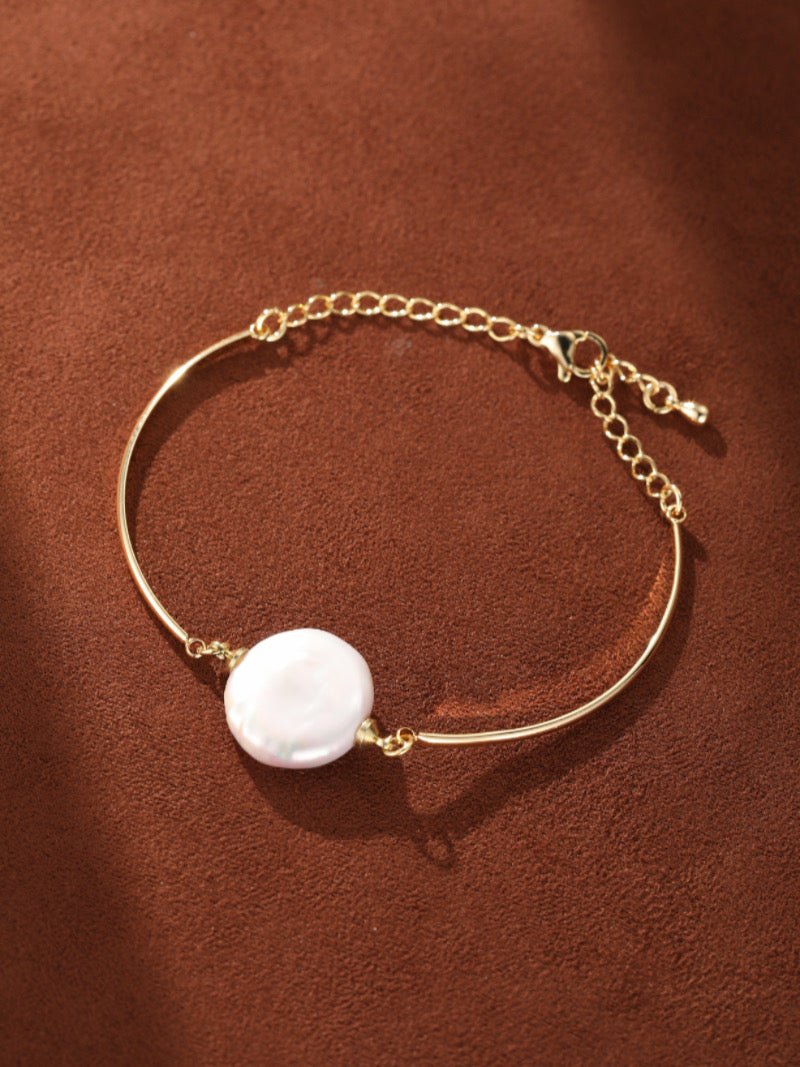
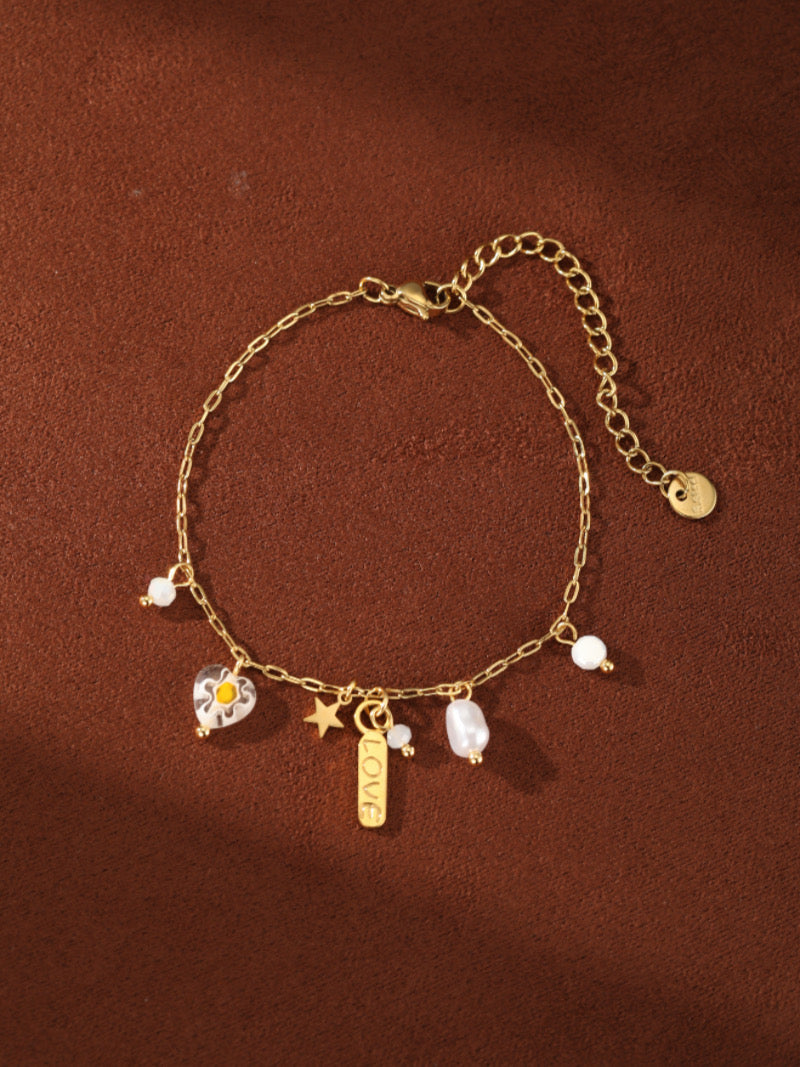
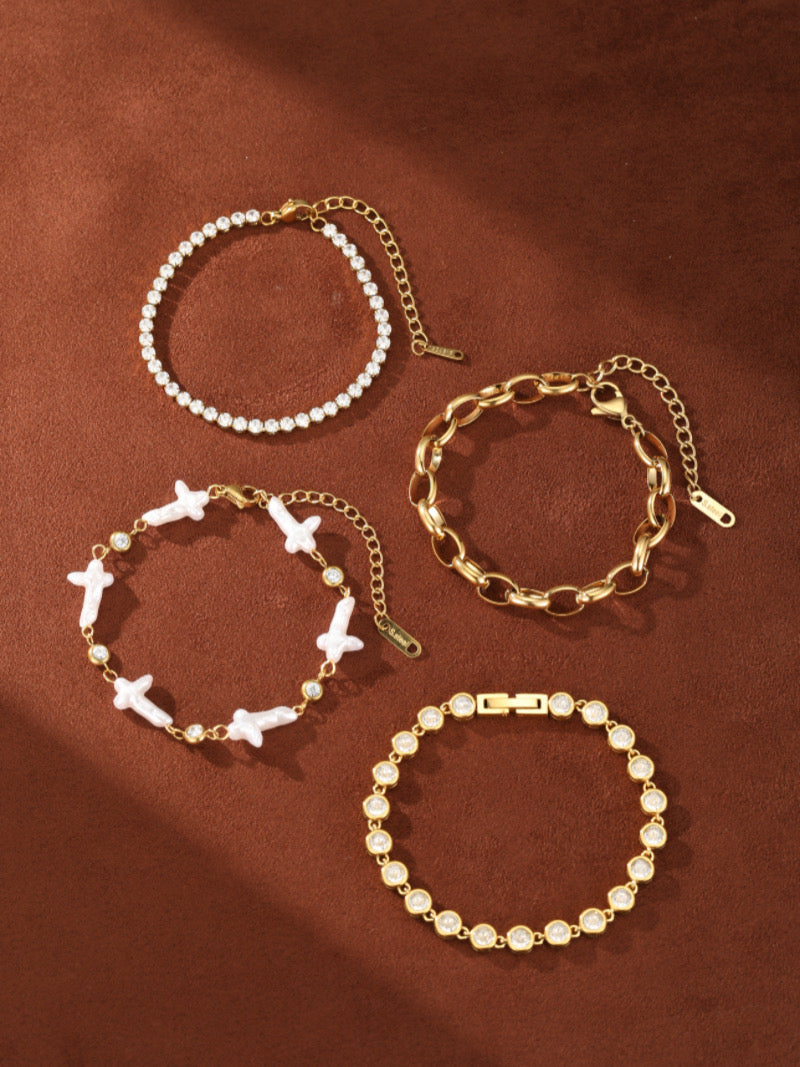
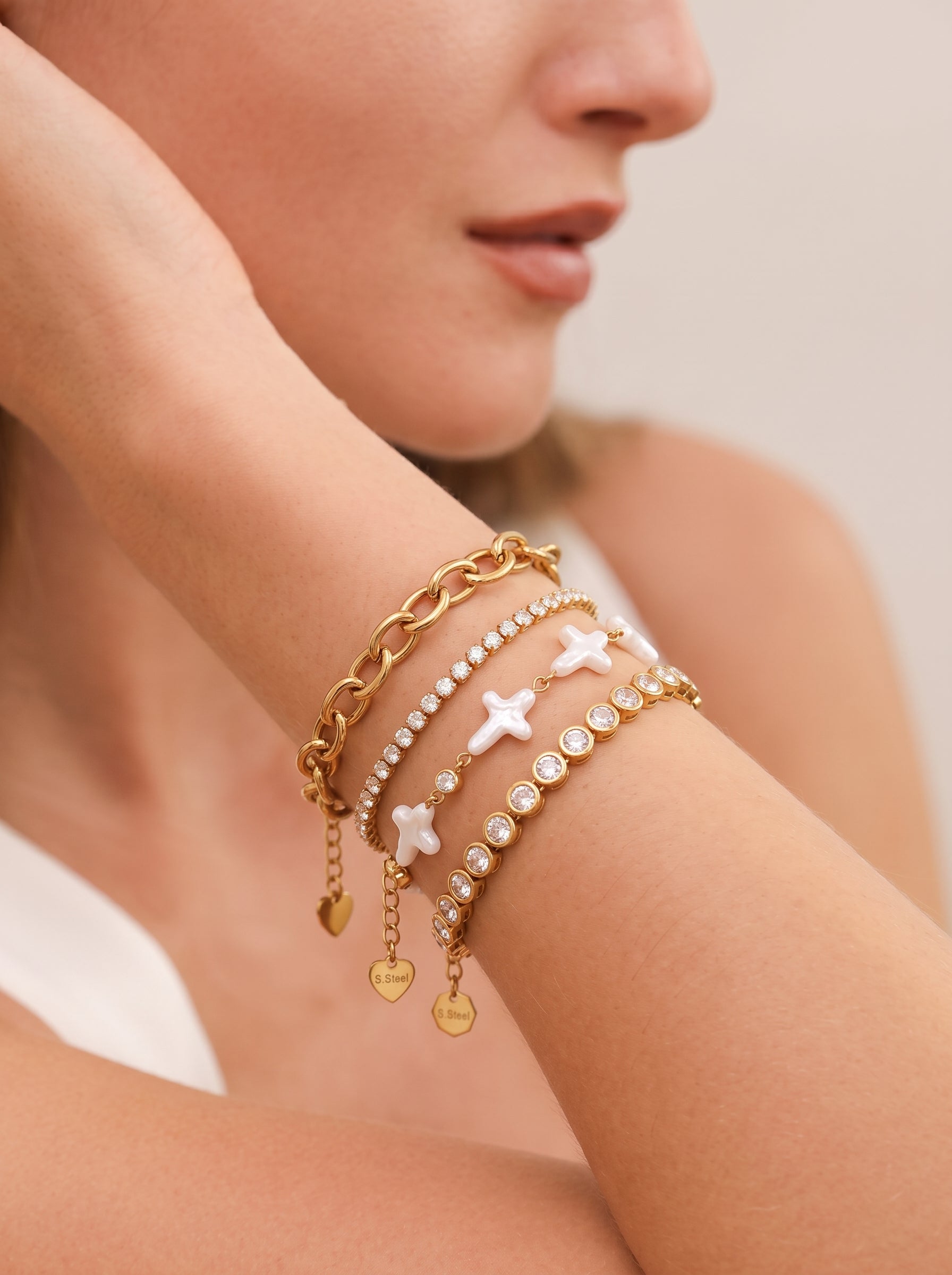
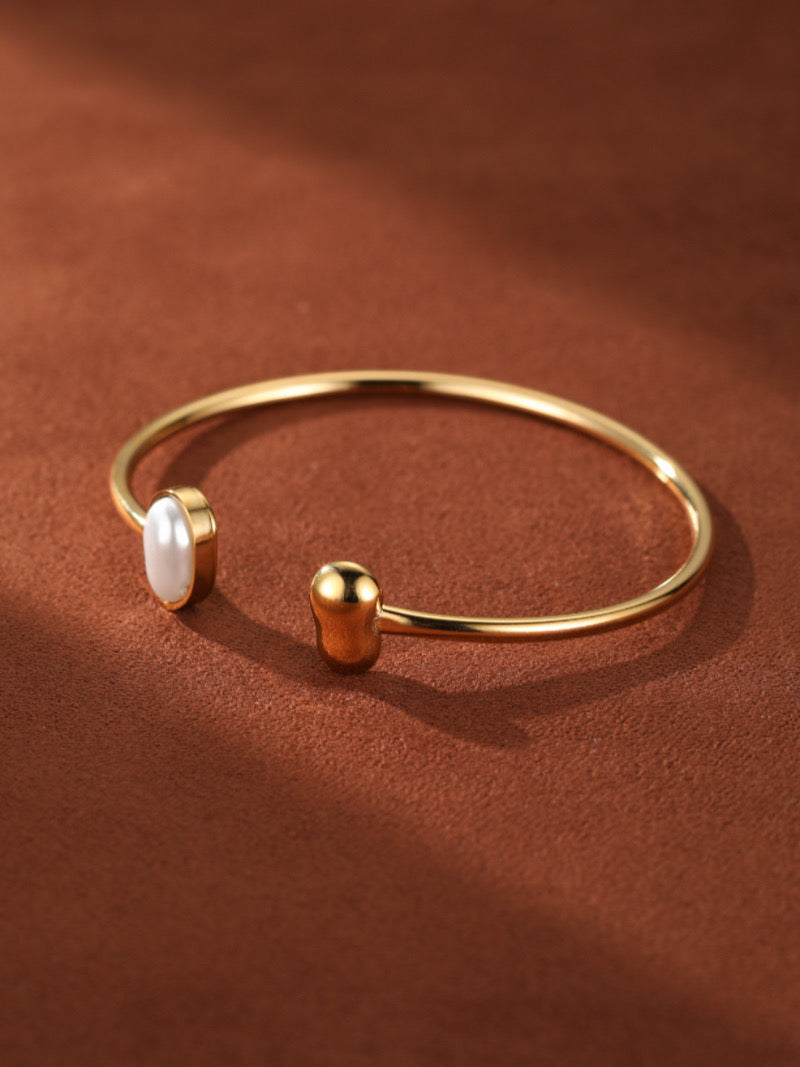
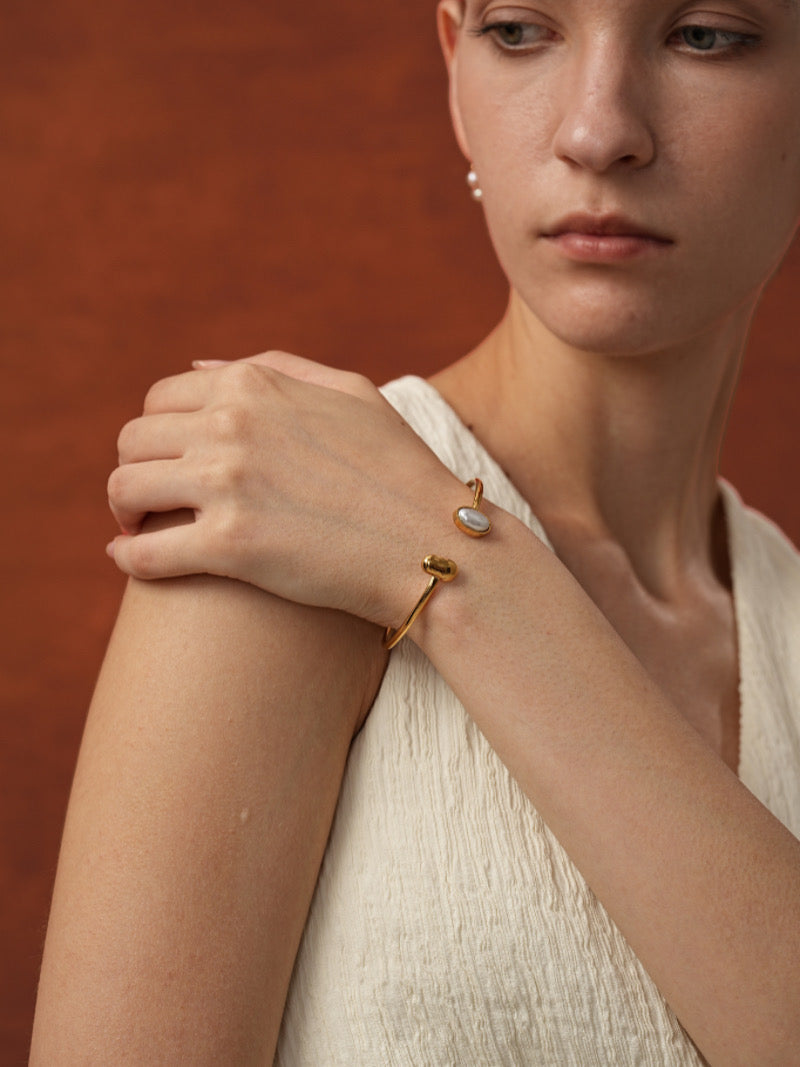
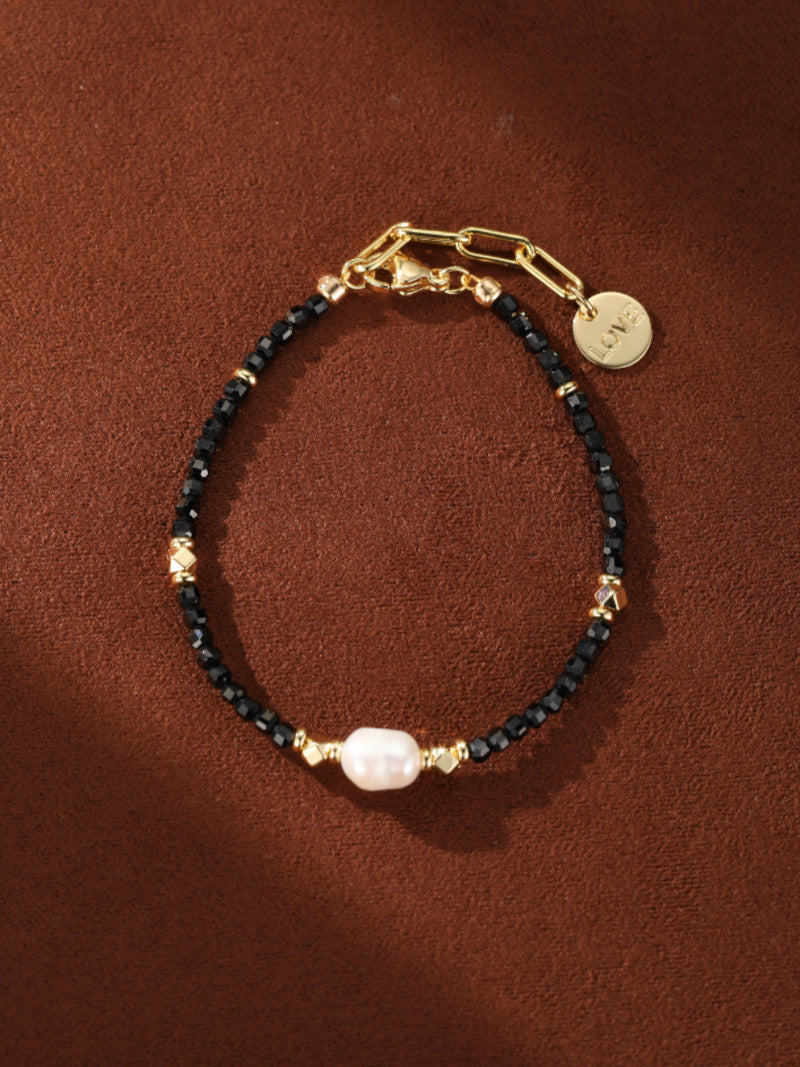
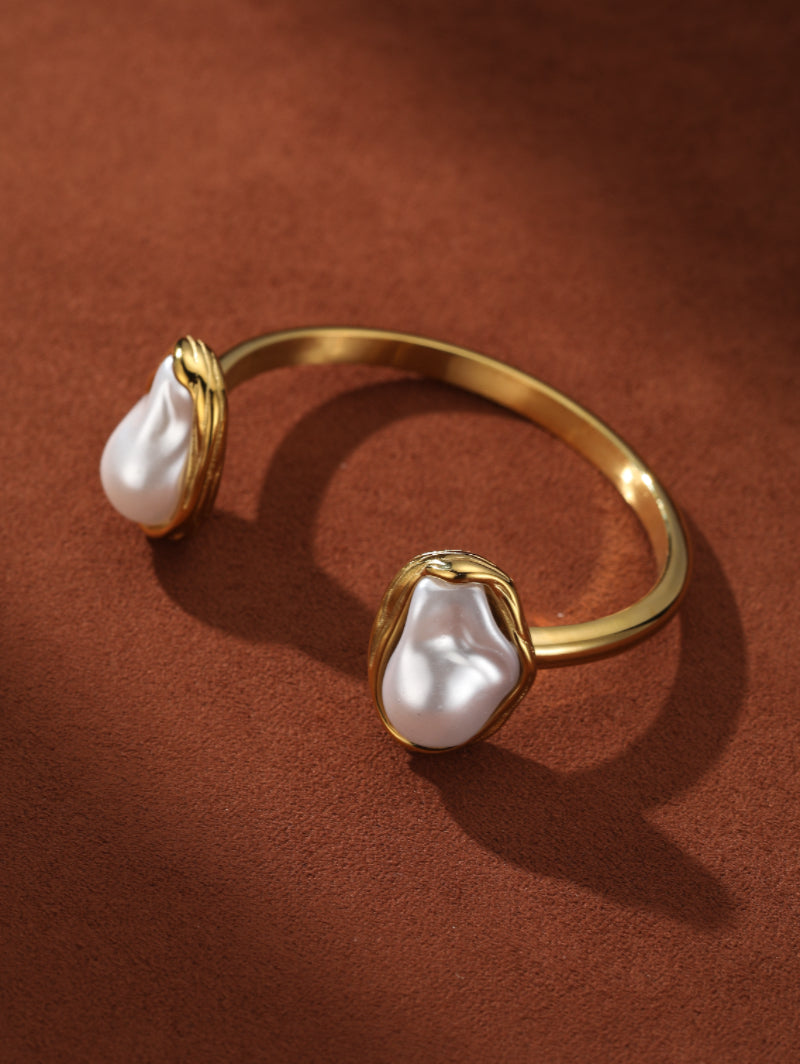
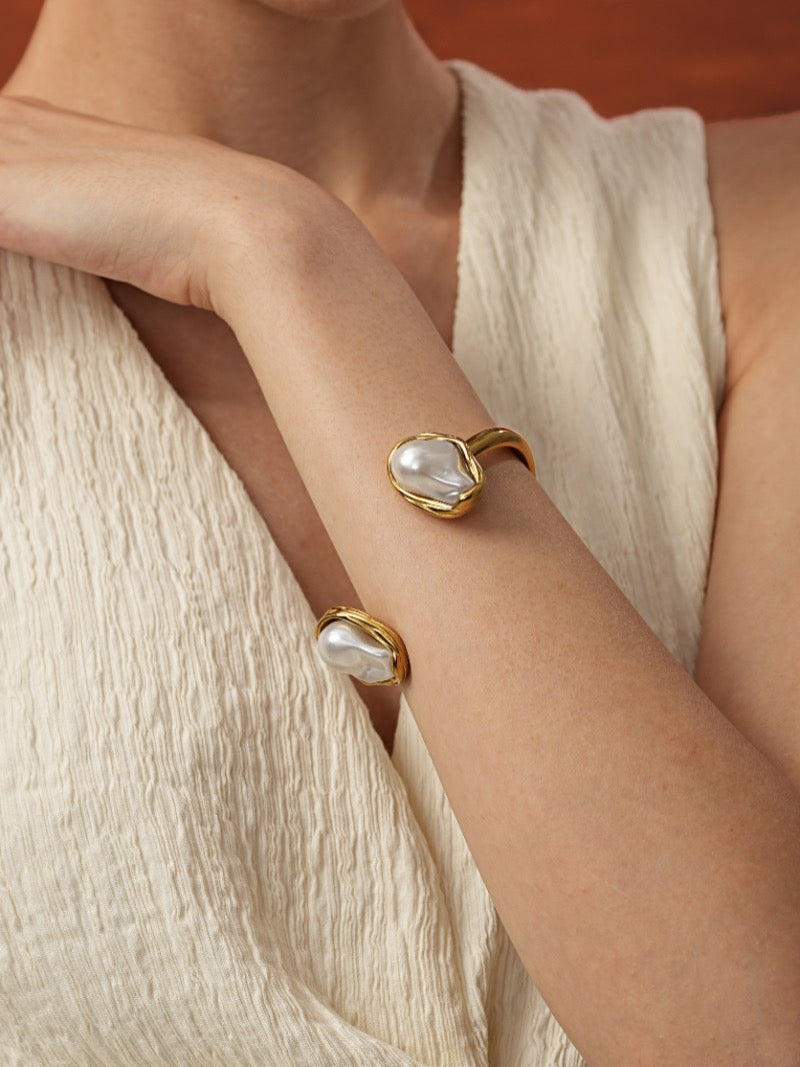
Irregular pearls strung close give a bracelet texture instead of repetition. Every bead has its own silhouette and catches light at its own angle, which is why a baroque strand looks alive on a wrist that never stops moving.
What is a baroque pearl bracelet?
A baroque pearl bracelet uses cultured pearls that are not round. Baroque is a shape classification rather than an origin or a quality grade, covering everything from slightly off-round nuggets to deeply irregular forms with visible ridges.
A baroque pearl is not a failed round pearl. It grew without a spherical nucleus to build around, which is why freshwater mussels produce baroques so readily.
Why does baroque work particularly well on a wrist?
Because a bracelet turns constantly. A matched round strand looks the same from every angle, which is elegant but static. A baroque strand presents a different face every time your hand moves.
That movement is the whole argument for irregular pearls, and the wrist is where you actually see it, since it sits in your own field of view all day.
Are baroque pearls lower quality?
No. Round pearls cost more because roundness is rare and matching is expensive, not because the nacre is better. Baroque pearls are judged on the same criteria: luster first, then surface cleanliness and nacre thickness.
Freshwater baroques are usually solid nacre with no bead nucleus inside, which makes them more durable than bead-nucleated pearls of the same size. On a bracelet, which takes constant contact, that matters.
What baroque shapes are there?
- Nugget — compact and rounded but visibly uneven. The most practical for a bracelet, since there are no protruding points to catch on a sleeve.
- Coin — flat and disc-like, lying close against the wrist and sliding easily under a cuff.
- Keshi — small, entirely solid nacre, formed without any nucleus. Often the highest luster of any pearl in a harvest.
How should a pearl bracelet fit?
With about half an inch of room past your wrist measurement. Loose enough to rotate, close enough that it does not slide over the hand. Measure just below the wrist bone. Irregular pearls vary in width, so allow an extra half inch on a heavily baroque strand.
Why buy a baroque pearl bracelet from Grande Lilith
Baroque is where the pearl trade often places lower-grade material, on the assumption that an irregular shape excuses poor luster. It does not.
- Grade stated separately from shape on every product page, so irregularity is not used to cover a dull pearl.
- Eight provenance markers in total, including origin and treatment.
- Sourcing named to place: Zhuji, Japan, French Polynesia.
- Nickel-free, lead-free and cadmium-free clasps and findings on gold, silver and stainless steel.
- Designed in Paris. Thirty days to change your mind, and every order arrives in a magnetic pouch.
Frequently asked questions
Will my baroque bracelet look like the photograph?
Close but not identical, because no two baroque pearls share a shape. Size, color and luster will match what is shown. The exact contours will be yours alone, which is the nature of the material rather than an inconsistency.
Do baroque pearls catch on clothing?
Nugget and coin shapes do not, since neither has protruding points. Deeply irregular pearls with ridges can snag on loose knitwear, so choose a smoother baroque if you wear a lot of wool.
Should baroque pearls be knotted between beads?
Yes, and it matters more here than with round pearls. Irregular surfaces press against each other at points rather than across a curve, so knots do more work keeping them from abrading.
How do you clean a baroque pearl bracelet?
Wipe it with a soft damp cloth after wearing. Irregular surfaces hold slightly more residue in their folds than a smooth round pearl, and a wrist collects more hand cream than anywhere else. Never use an ultrasonic cleaner.
Are baroque pearl bracelets good value?
They are among the best in pearl jewelry. You skip the roundness premium and, in freshwater baroques, get solid nacre rather than a thin layer over a bead. You pay for material and workmanship rather than for rarity of geometry.