




Pearl cuff bracelet
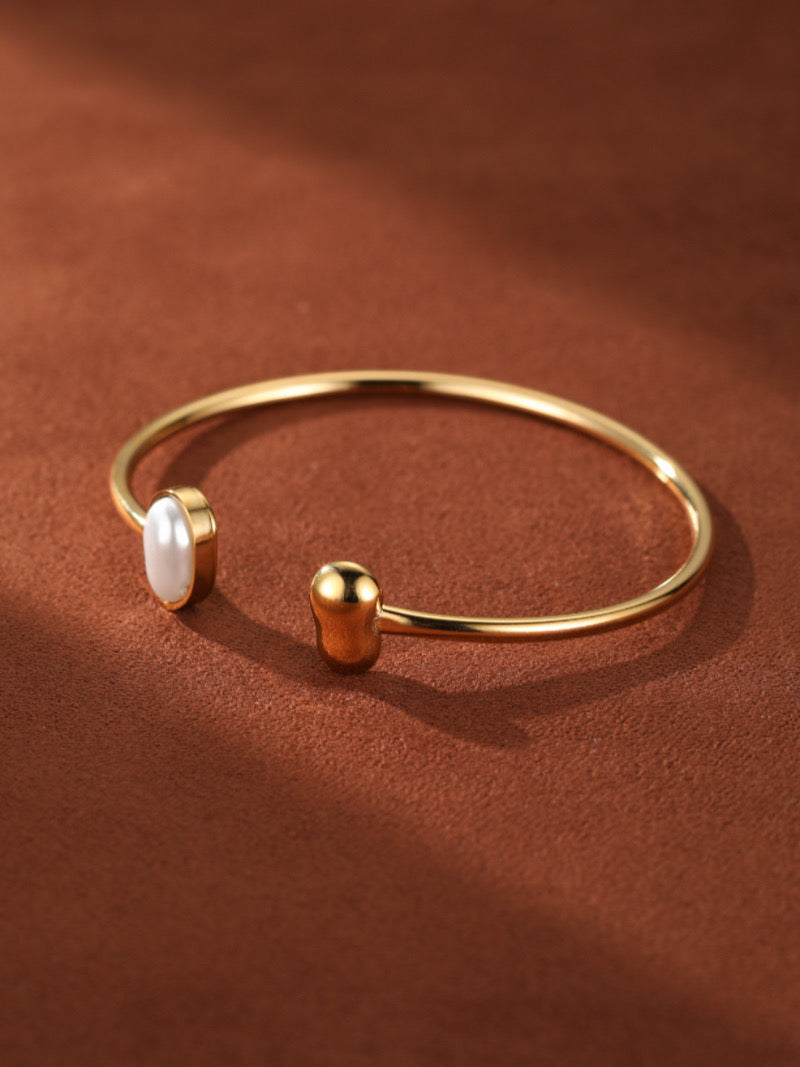
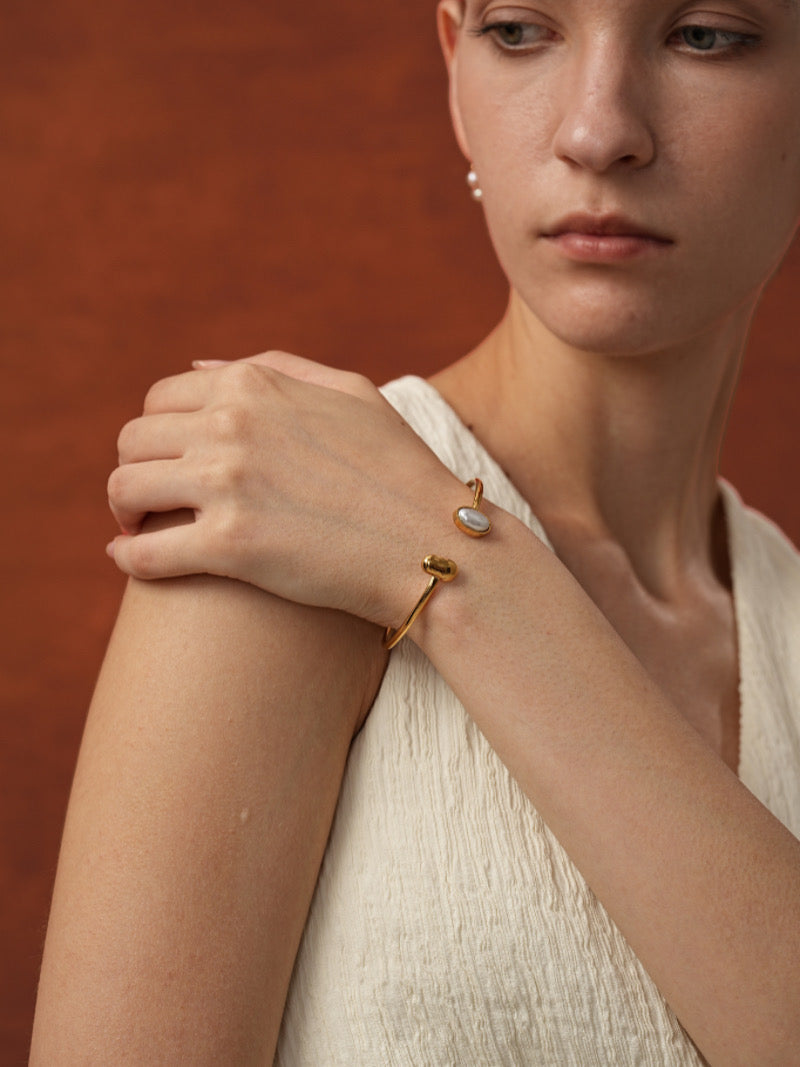
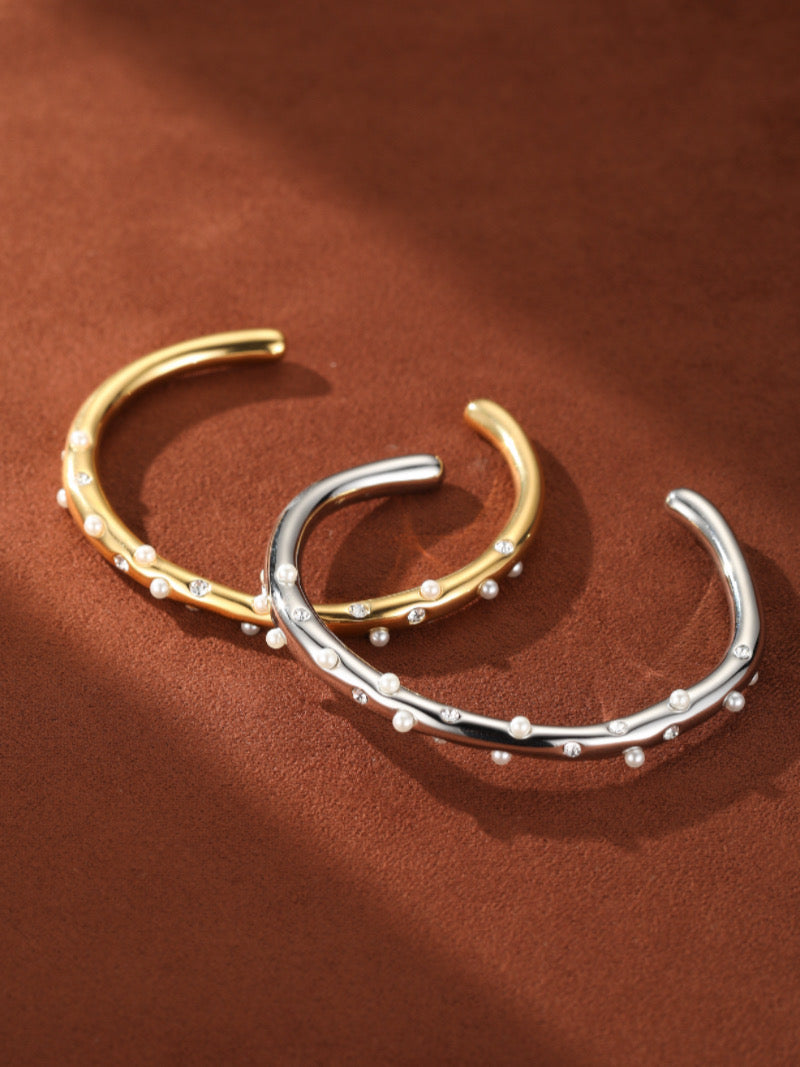
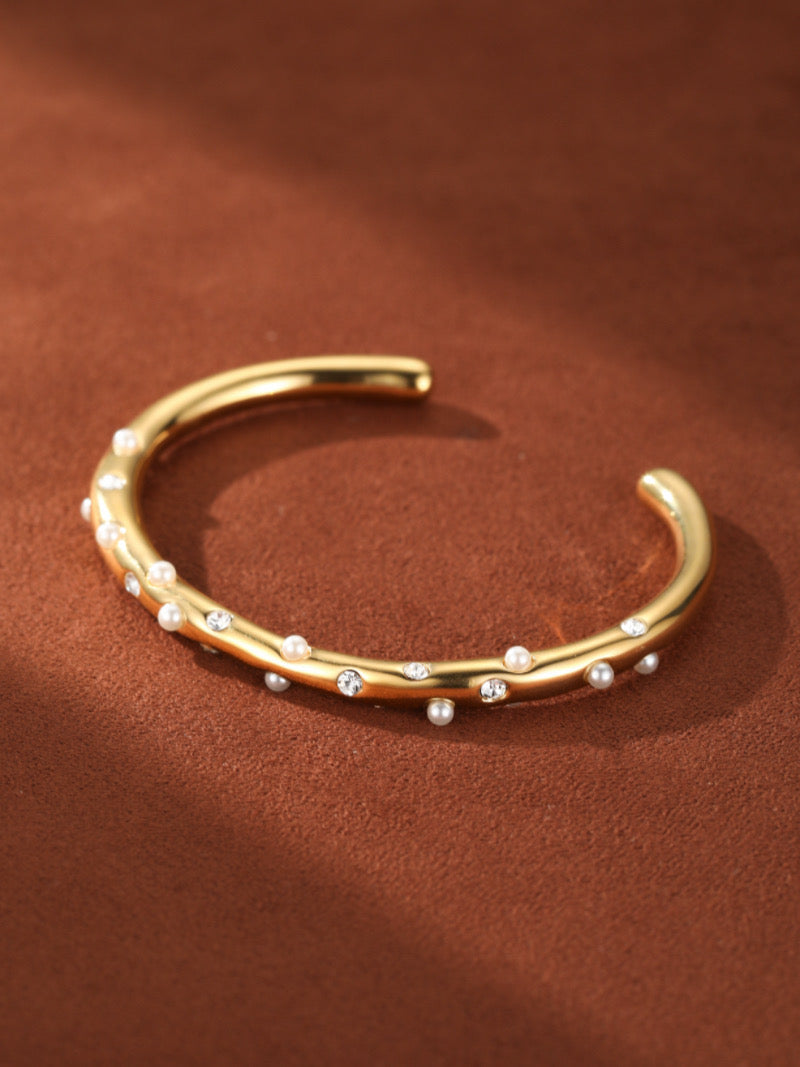
A cuff holds its own shape. No clasp to fasten one-handed, no strand to twist around — it slides on and stays where you put it. Sculpted metal with pearls set into the curve, in forms that read closer to an object than a bracelet.
Sort by
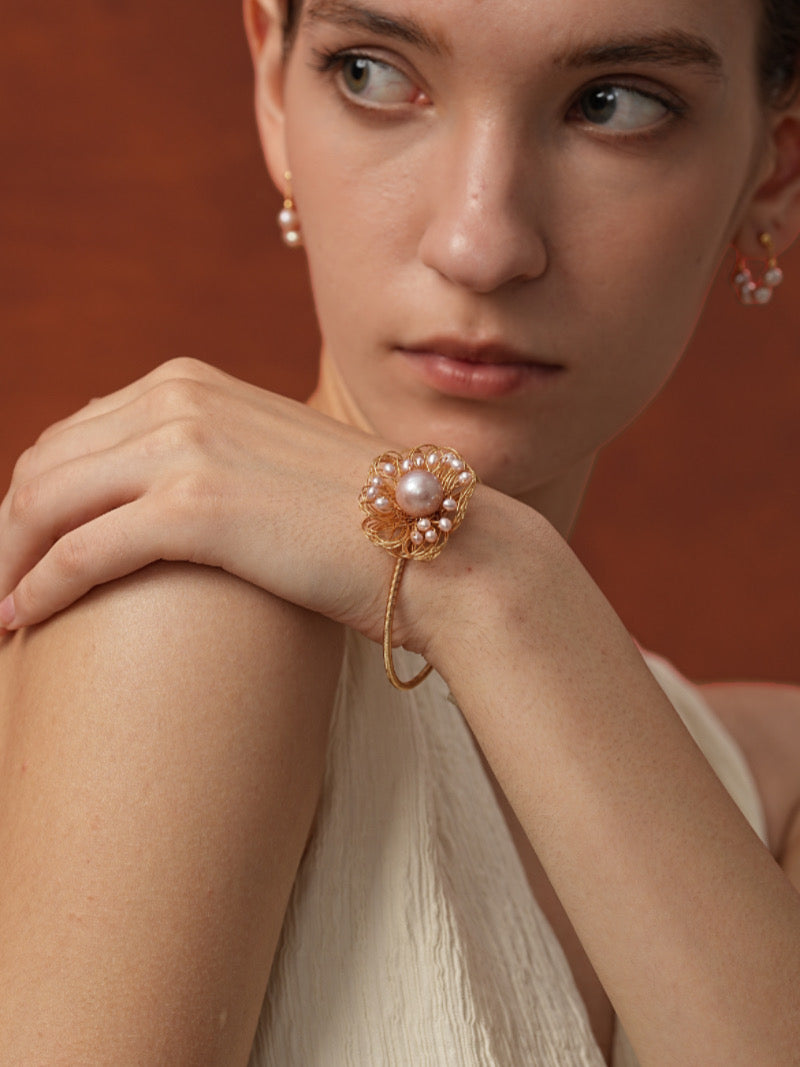
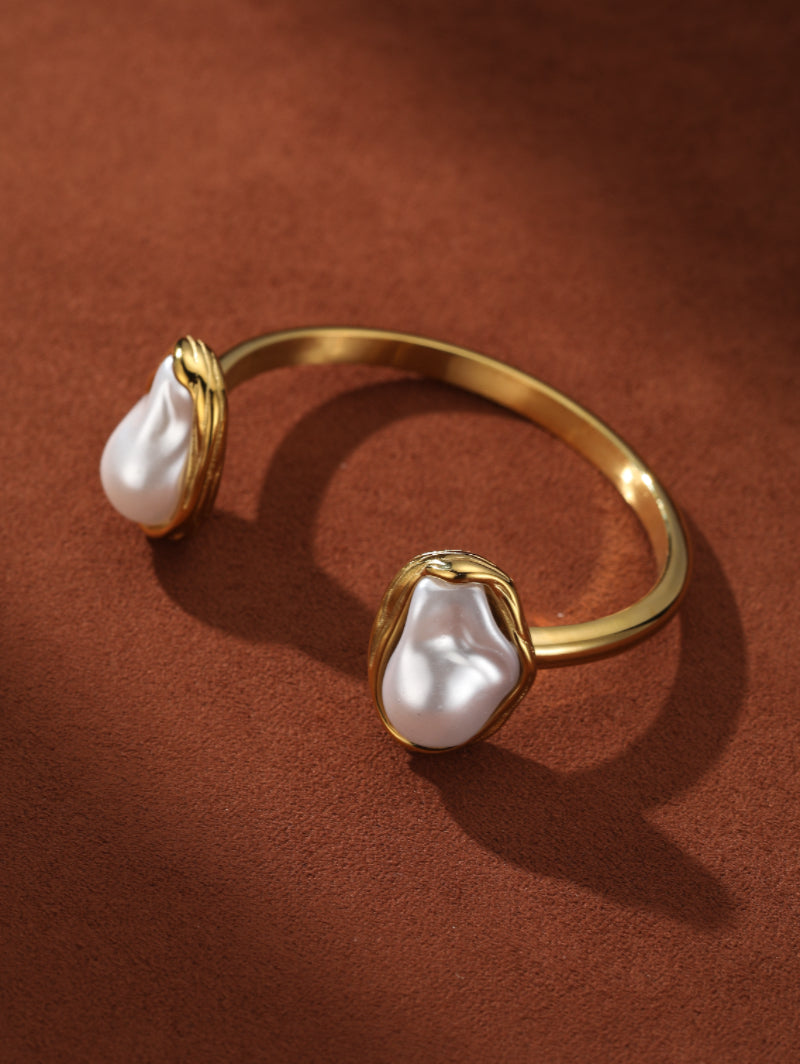
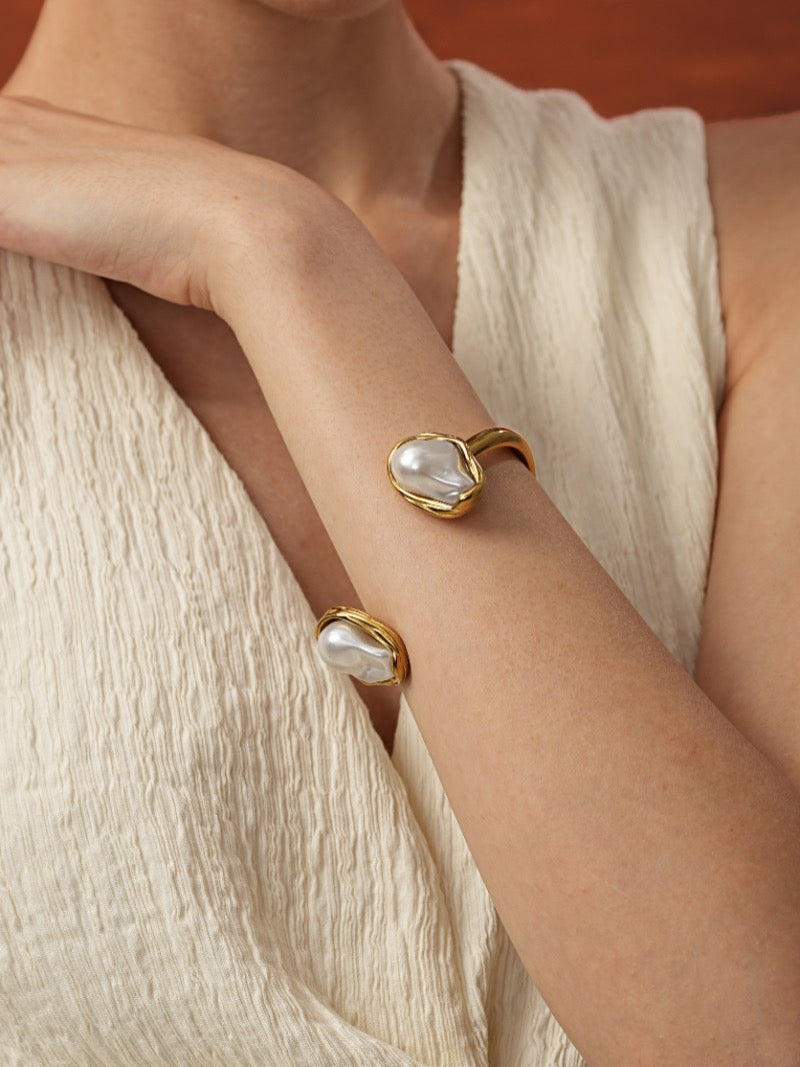
Pearl cuff bracelet
A cuff holds its own shape. There is no clasp to fasten one-handed and no strand to twist around, so it slides on and stays exactly where you put it. Of every bracelet construction, this is the one that behaves.
What is a pearl cuff bracelet?
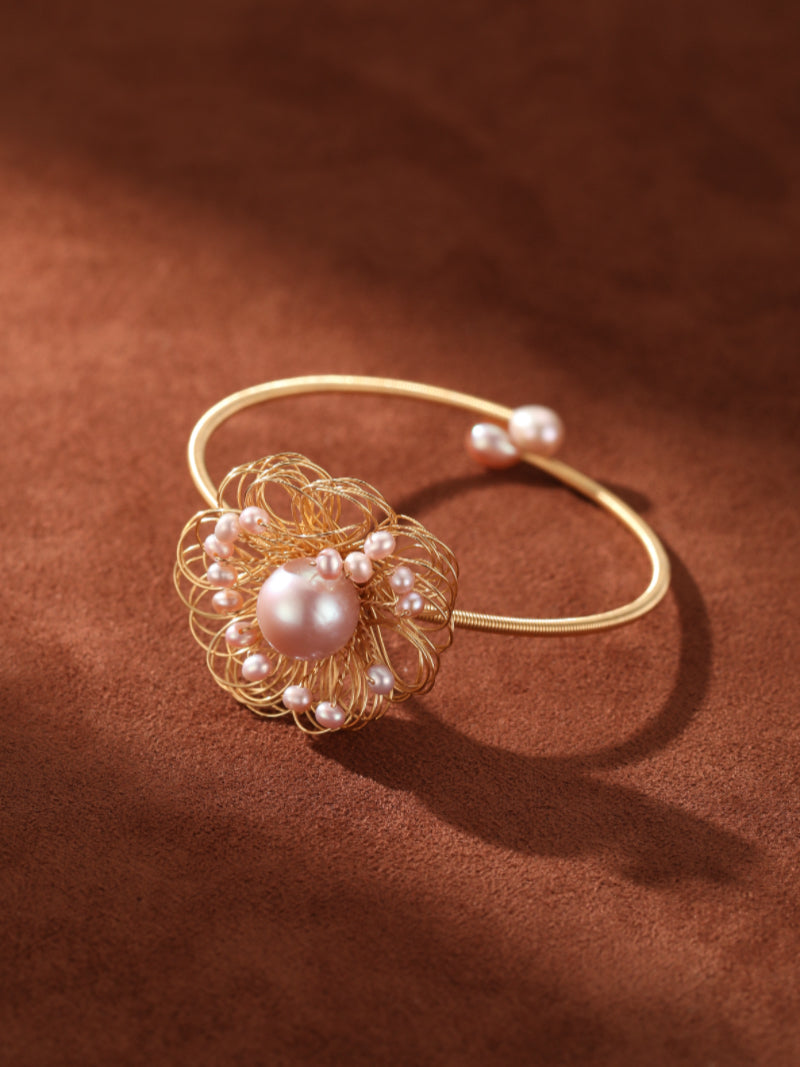
A pearl cuff is a rigid or semi-rigid band with an opening, rather than a closed circle or a flexible strand. Pearls are set into the metal itself, usually along the curve or at the terminals where the band ends.
Because the metal carries the structure, a cuff reads closer to an object than to a bracelet. It is the construction that gives a designer the most to work with.
Why choose a cuff over a chain or strand?
Three practical reasons, and one aesthetic one.
- No clasp to fasten one-handed, which is the single most annoying thing about bracelets.
- Nothing to twist, so the pearls stay facing outward rather than rotating under your wrist.
- An opening that adjusts, so fit is forgiving in a way a fixed length is not.
- And a shape that sits where you place it, so the composition on your wrist stays as you arranged it.
How should a cuff fit?
The opening should sit at the underside of your wrist, with a gap of roughly two to three centimetres. Close enough that it does not slide down over the hand when your arm hangs, open enough to put on without forcing.
Slide it on sideways through the gap rather than pulling it apart. Repeatedly opening and closing a cuff fatigues the metal at the curve, and that is what eventually loosens it.
Can a cuff be adjusted?
Gently, and rarely. Squeeze it slowly with both hands rather than bending it at one point, and adjust in small increments. Never adjust a cuff by pulling on the pearl end, since that stresses the setting rather than the band.
Which pearls suit a cuff?
Anything that reads well at a single point, since a cuff usually carries fewer pearls than a strand. Baroque pearls work particularly well, because a rigid geometric band and an irregular organic pearl set each other off.
Every pearl is a real cultured pearl, with type, origin, bodycolor, overtone, shape, size, grade and treatment stated on the product page.
Why buy a pearl cuff from Grande Lilith
- Eight provenance markers on every product page: type, origin, bodycolor, overtone, shape, size, grade and treatment.
- Sourcing named to place: Zhuji, Japan, French Polynesia.
- Partners vetted by our GIA-certified pearl specialist, on working conditions as well as quality.
- Nickel-free, lead-free and cadmium-free on gold, silver and stainless steel, on a piece worn against the skin all day.
- Designed in Paris. Thirty days to change your mind, and every order arrives in a magnetic pouch.
Frequently asked questions
Do cuffs come in sizes?
Most are made to fit a range rather than a specific measurement, which is why a cuff is the easiest bracelet to buy as a gift. Check the product page for the opening dimension if your wrist is at either end of the range.
Which way should the opening face?
Underneath, at the inside of the wrist. That keeps the decorated part of the band and the pearls facing outward, and it stops the terminals catching on a sleeve.
Can you stack cuffs?
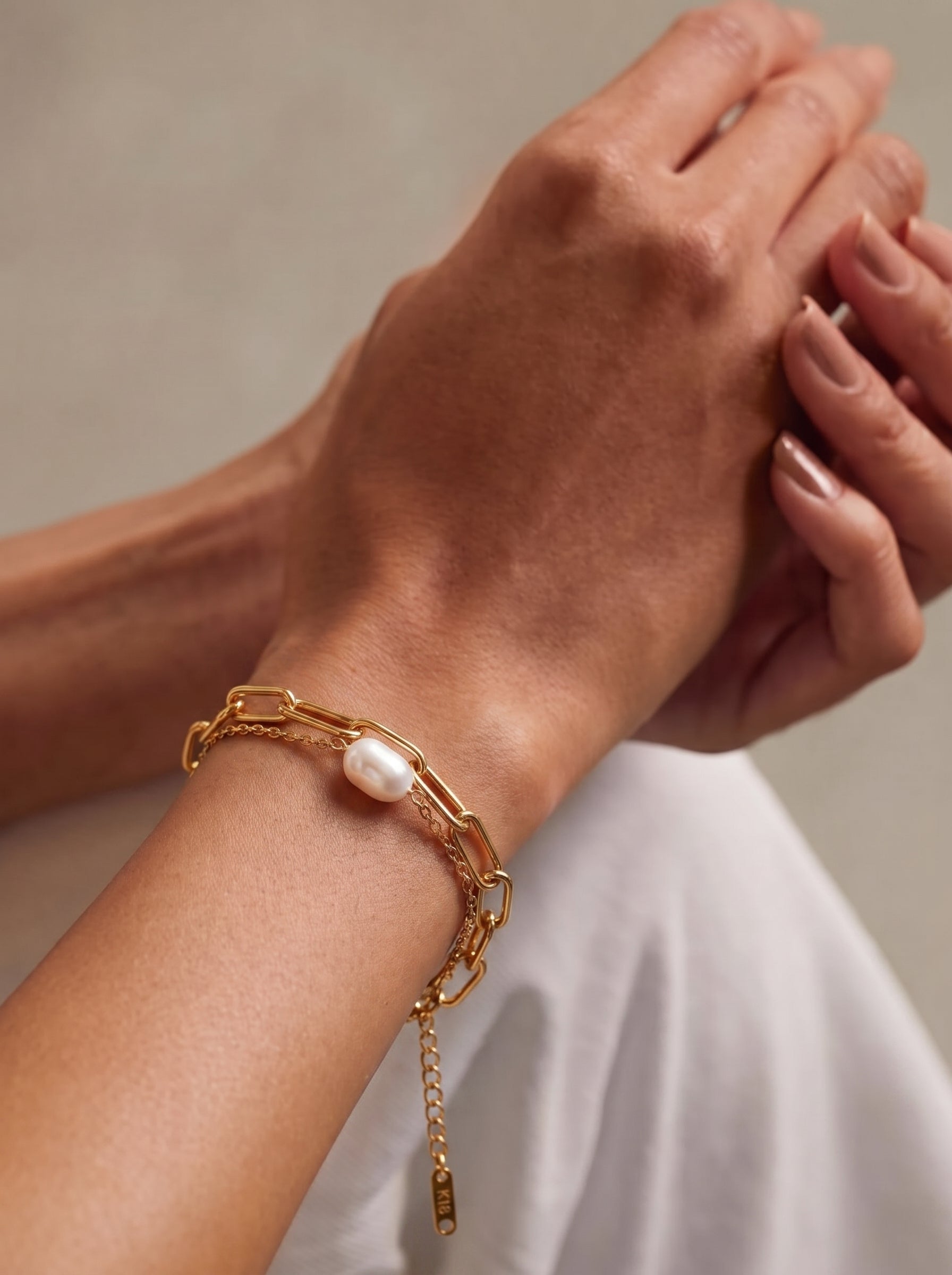
One cuff with a fine chain or a watch works well. Two rigid cuffs on the same wrist knock against each other and mark the metal, so stack a cuff with something flexible rather than with another cuff.
Will a cuff lose its shape?
Only if it is repeatedly forced open. Slide it on sideways through the gap rather than pulling the band apart each time, and it will hold its shape indefinitely.
Are cuffs comfortable to type in?
More than a strand, because nothing slides down onto the back of the hand. Wear it a little higher on the forearm if you spend long stretches at a keyboard, where a bracelet otherwise rests against the desk edge.