





Black pearl bracelet
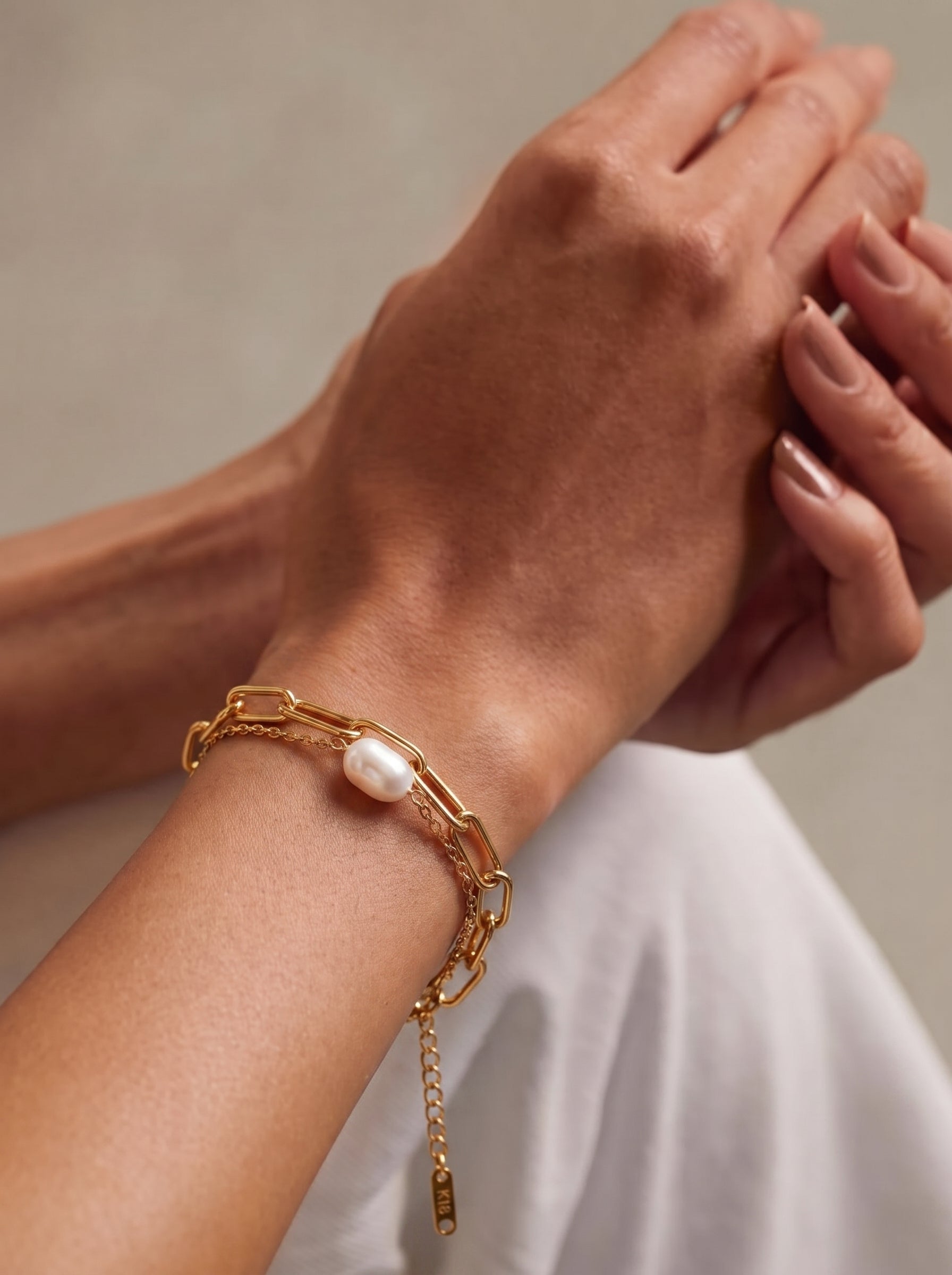
Dark pearls at the wrist, where you see them all day and nobody else has to. Strung close or spaced along a chain, with green and aubergine surfacing as your hand moves. The quietest way to wear a black pearl, and the one you notice most.
Sort by
Black pearl bracelet
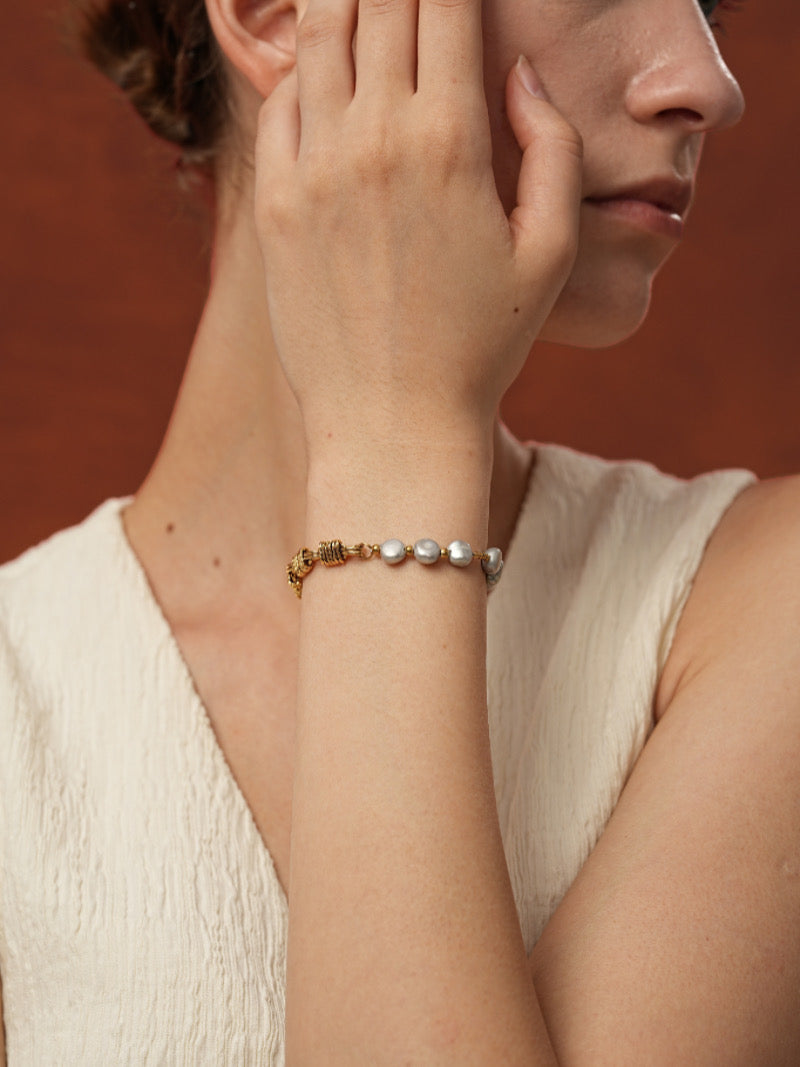
A black pearl bracelet is something you see all day and nobody else has to. The green and aubergine come to the surface every time your hand moves, which makes it the most private way to own a dark pearl.
What is a black pearl bracelet?
A black pearl bracelet uses cultured pearls with a dark bodycolor. The term covers a range rather than a single color: true black is rare, and most dark pearls are gray, green, aubergine or blue-gray, with a secondary overtone floating over the base.
That overtone is what makes a dark pearl worth looking at twice, and the wrist is where you look most often.
Are black pearls naturally black?
Tahitian pearls get their dark color naturally, from the black-lipped oyster that grows them. The color is in the nacre rather than on it. Other dark pearls sold as black are dyed or treated freshwater pearls, which is legitimate provided it is disclosed.
The two look similar in a photograph and differ substantially in price. Look at the drill hole: a dyed pearl often shows darkness pooling around it and reads flat elsewhere. We list bodycolor, overtone and treatment separately on every product page.
Why does a dark pearl suit a bracelet?
Two reasons. Movement, because your hands turn constantly and the overtone only reveals itself when the angle changes. And contrast, because a dark pearl reads clearly against a sleeve where a pale one can disappear.
Dark pearls also read slightly smaller than pale ones at the same diameter, since they absorb light rather than reflecting it. On a wrist that works in your favor, because the piece stays wearable at a size that would dominate elsewhere.
Which black pearl bracelet style should you choose?
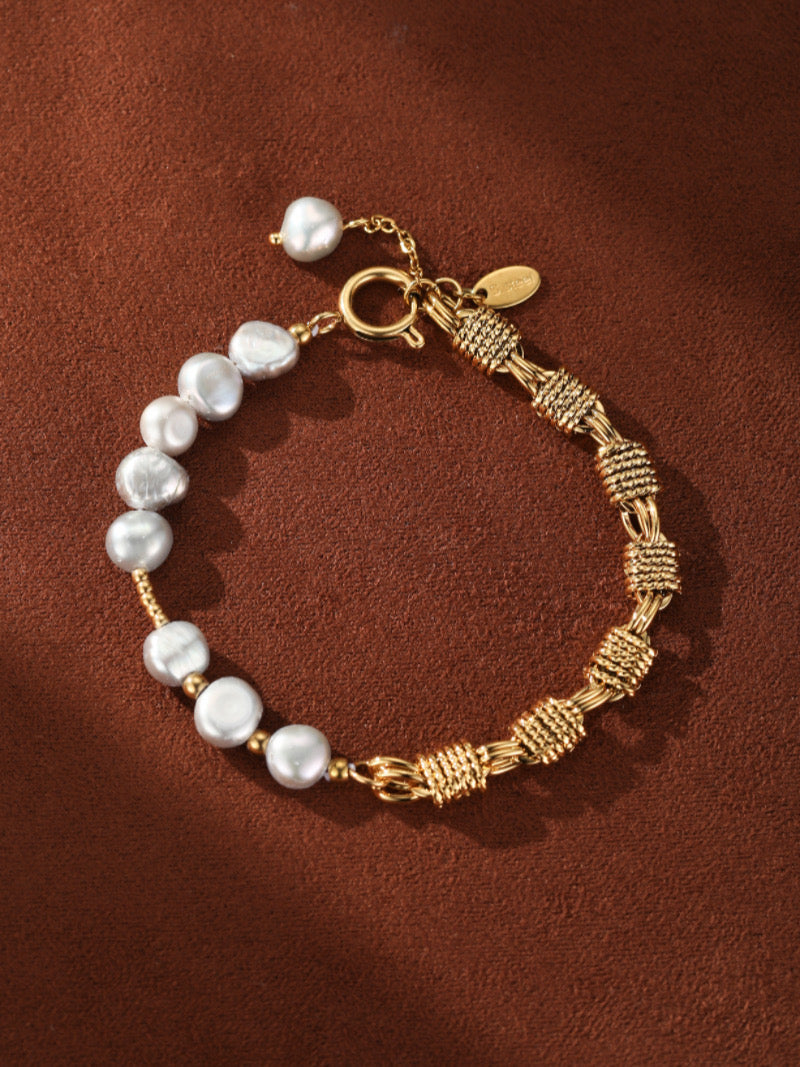
Continuous strands
Dark pearls strung close, so the color accumulates into a single band around the wrist. The strongest reading, and the one that suits bare arms.
Spaced chain bracelets
Pearls set at intervals along a chain, so each one has room to show its overtone individually. Lighter and easier to wear under a shirt cuff.
How should a pearl bracelet fit?
With about half an inch of room past your wrist measurement. Loose enough to rotate, close enough that it does not slide over the hand. Measure just below the wrist bone. Larger pearls take up more of the circumference, so allow an extra half inch on a heavy strand.
Why buy a black pearl bracelet from Grande Lilith
Dark pearls are where the industry is least transparent, because a dyed freshwater pearl photographs like a Tahitian and costs a fraction as much.
- Bodycolor, overtone and treatment listed separately, not merged into a single description.
- Tahitian pearls named to origin: French Polynesia. Never implied.
- Partners vetted by our GIA-certified pearl specialist, on working conditions as well as quality.
- Nickel-free, lead-free and cadmium-free clasps and findings on gold, silver and stainless steel.
- Designed in Paris. Thirty days to change your mind, and every order arrives in a magnetic pouch.
Frequently asked questions
Are black pearl bracelets formal?
Less than people expect. A dark pearl strand reads modern and works with bare arms and a rolled sleeve. It is scale that pushes a piece into evening territory, not color.
Do black pearls suit every skin tone?
Yes, though differently. Against fair skin the contrast is sharp and graphic. Against olive and deeper skin the overtone warms and the pearl reads softer. Neither is more correct.
Can you wear a black pearl bracelet every day?
Yes. Take it off before washing dishes or applying hand cream, and wipe it with a soft cloth afterwards. Tahitian nacre is thick, which makes it relatively forgiving for regular wear.
Do black pearls fade?
Naturally colored pearls do not, because the color is in the nacre. Dyed pearls can lose color over years of wear, which is another reason treatment disclosure matters at the point of purchase.
How do you stack a black pearl bracelet?
Let it lead. Dark pearls carry enough weight that a second beaded piece competes rather than complements. Pair it with a plain fine chain or a watch, and leave the other wrist bare.