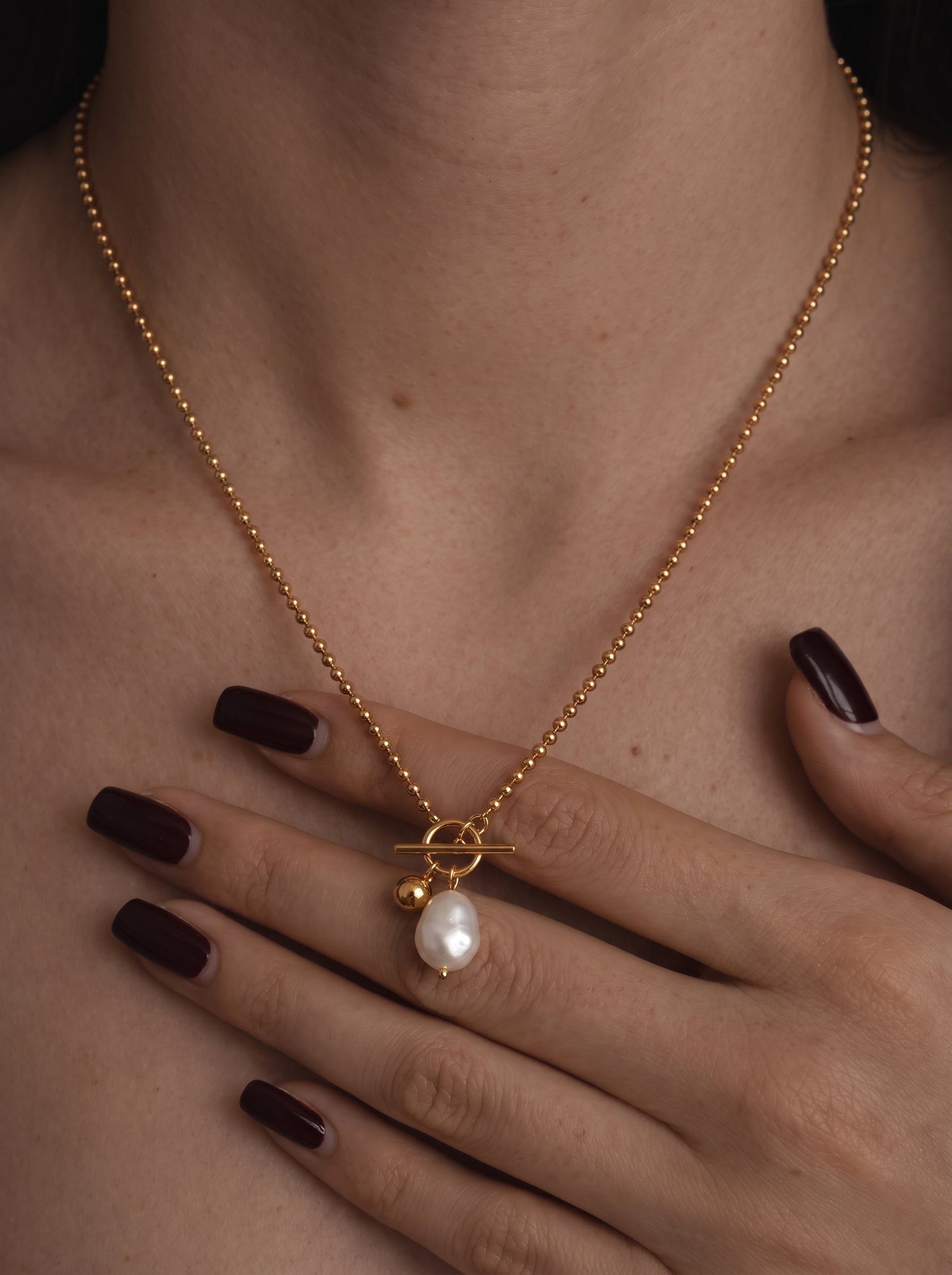
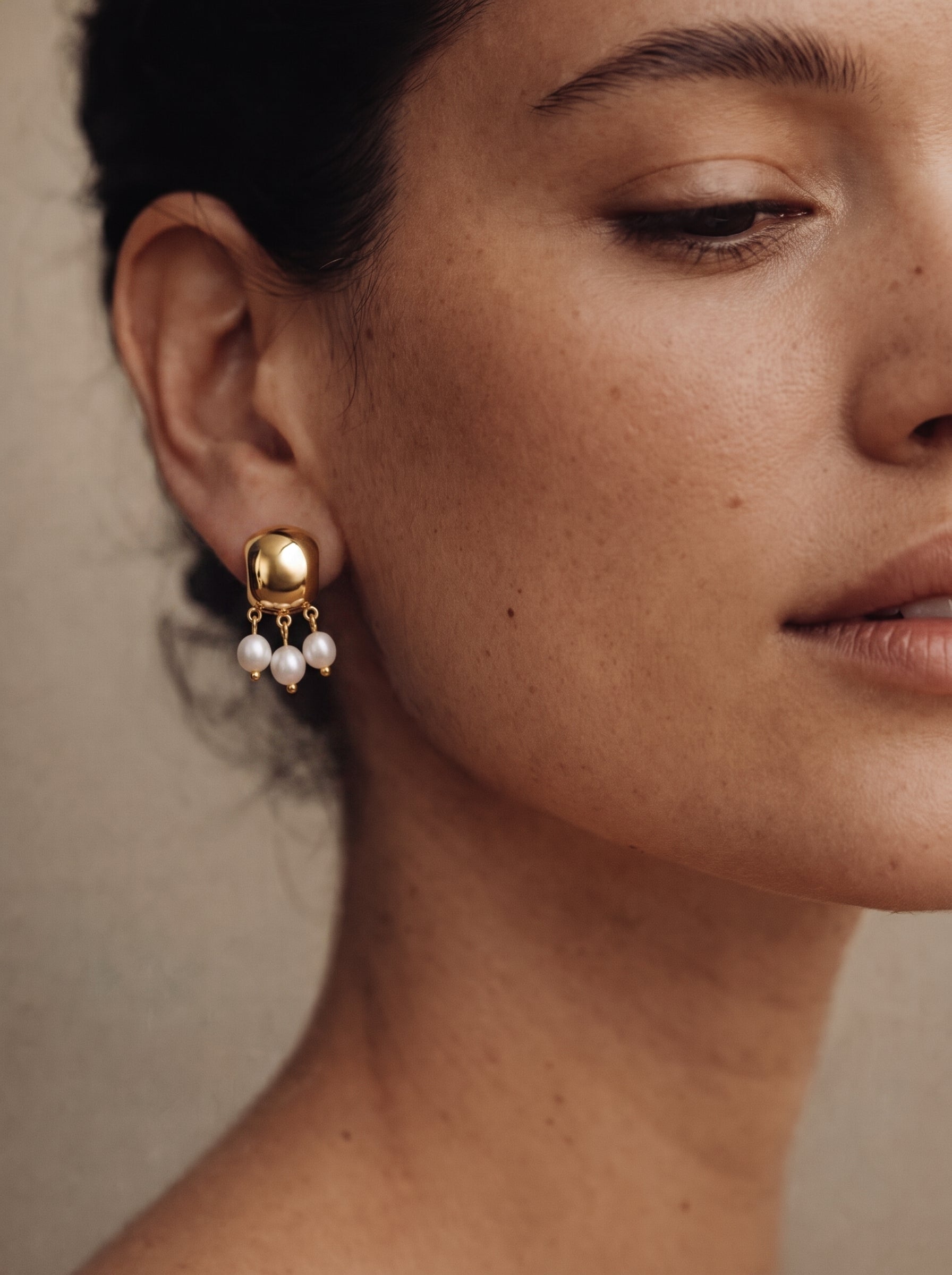
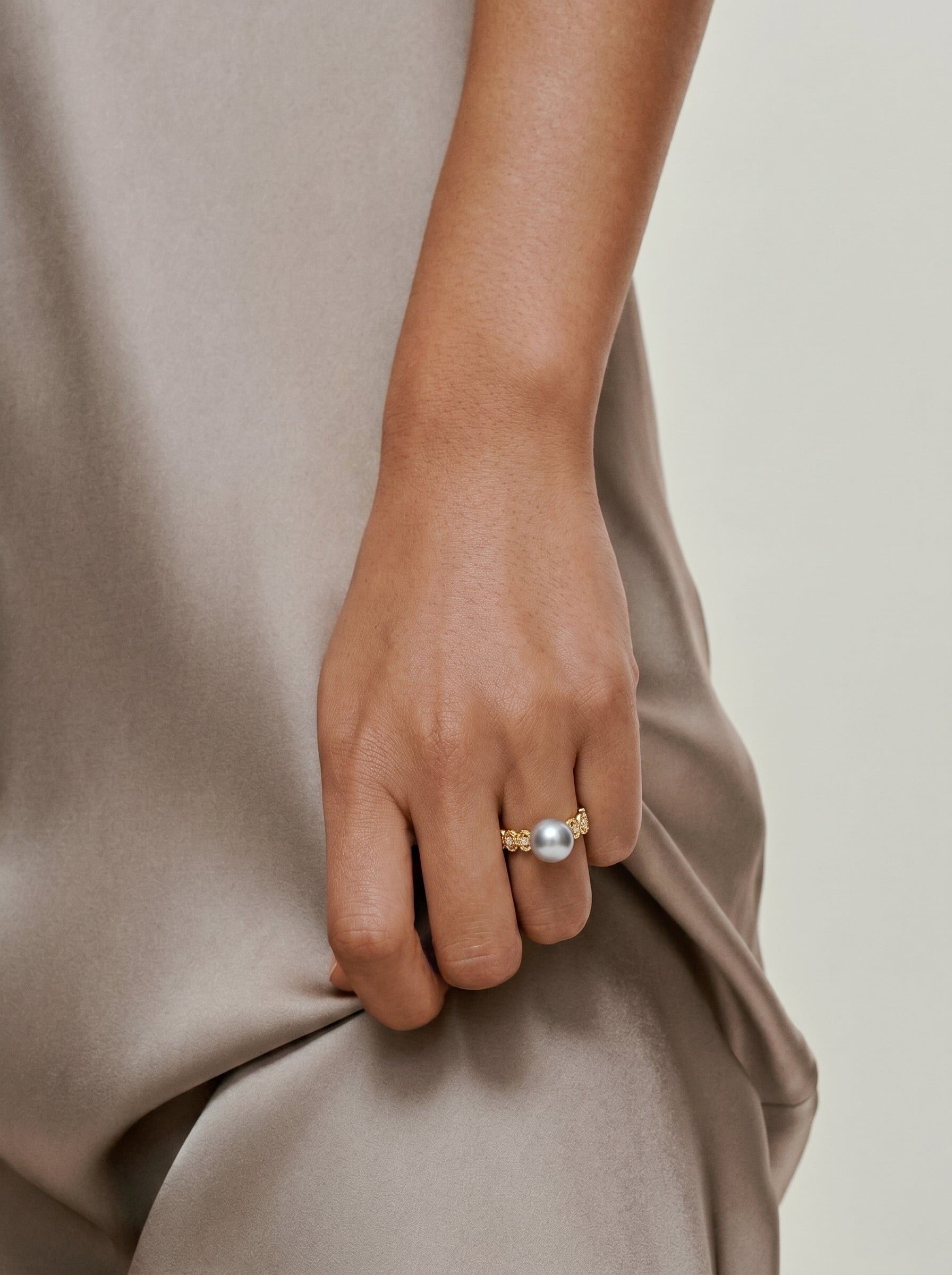
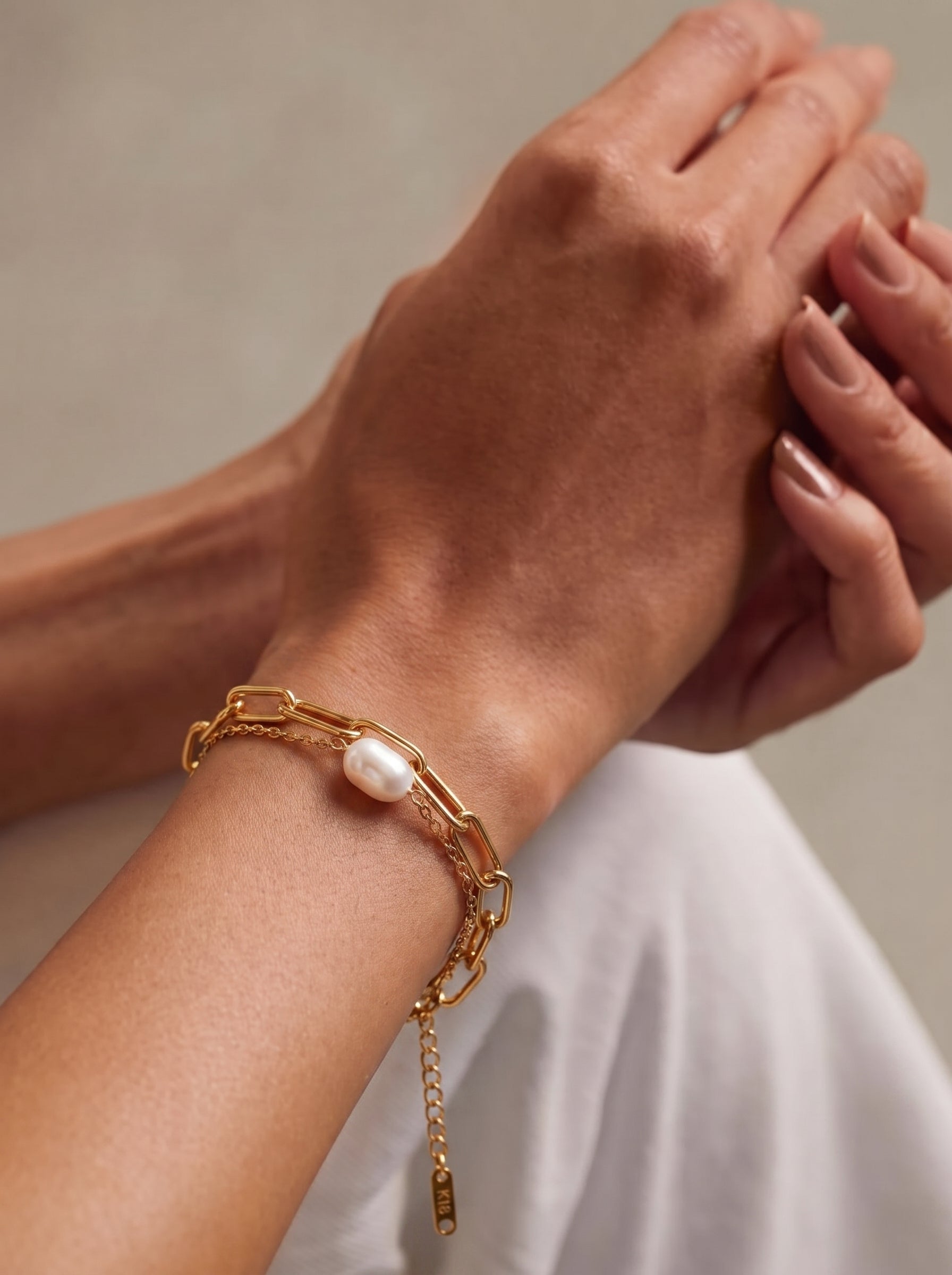
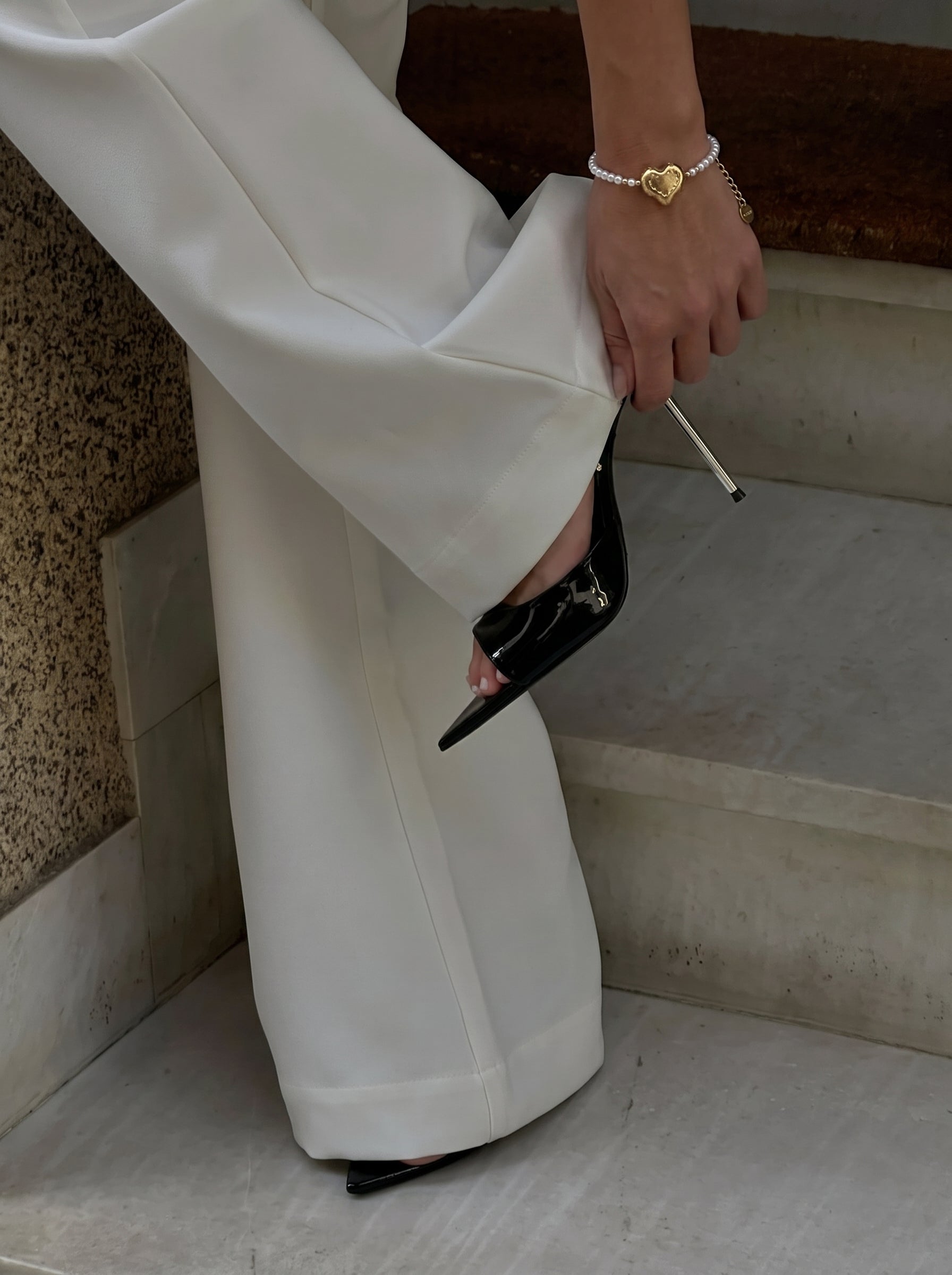
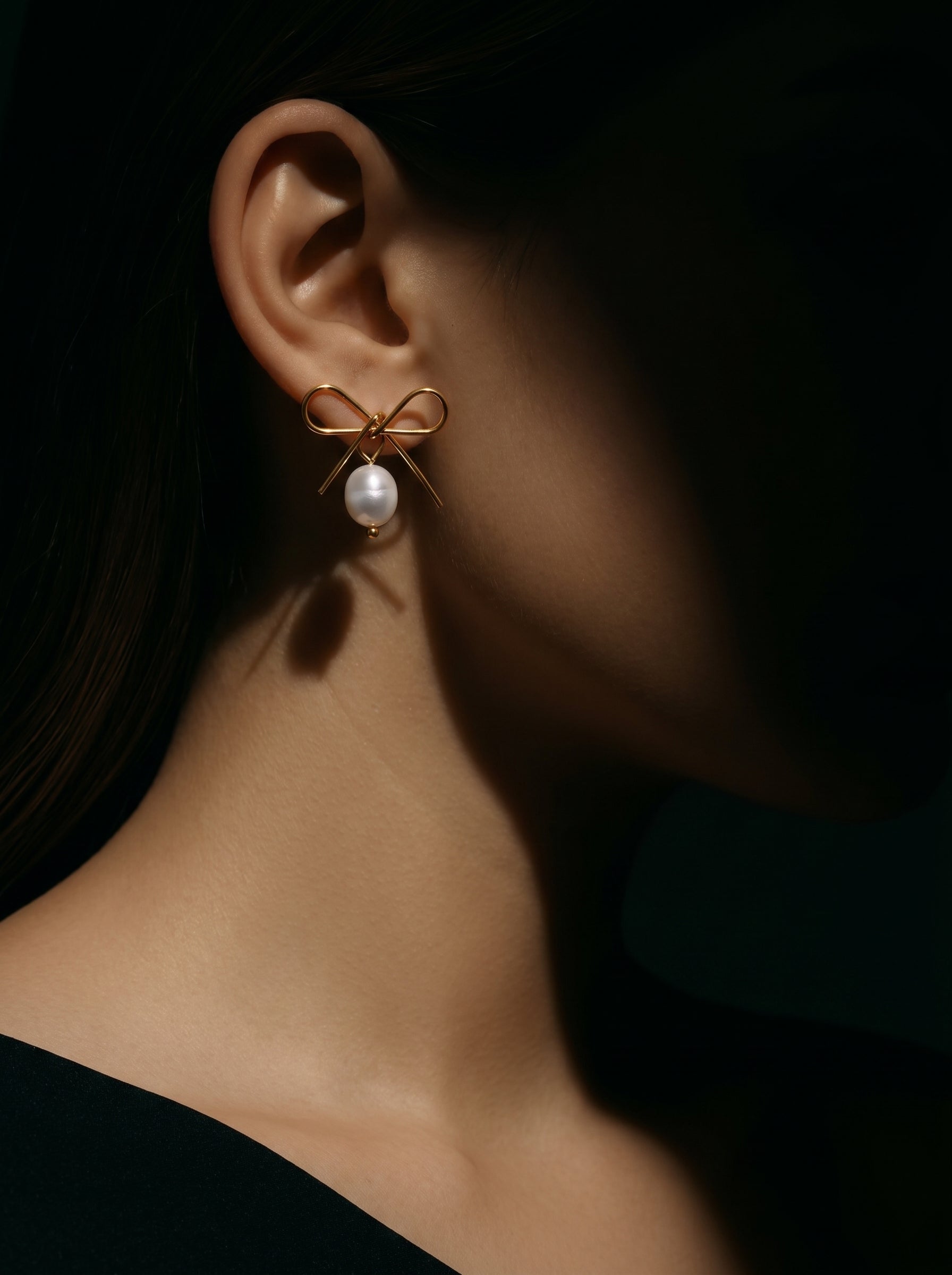
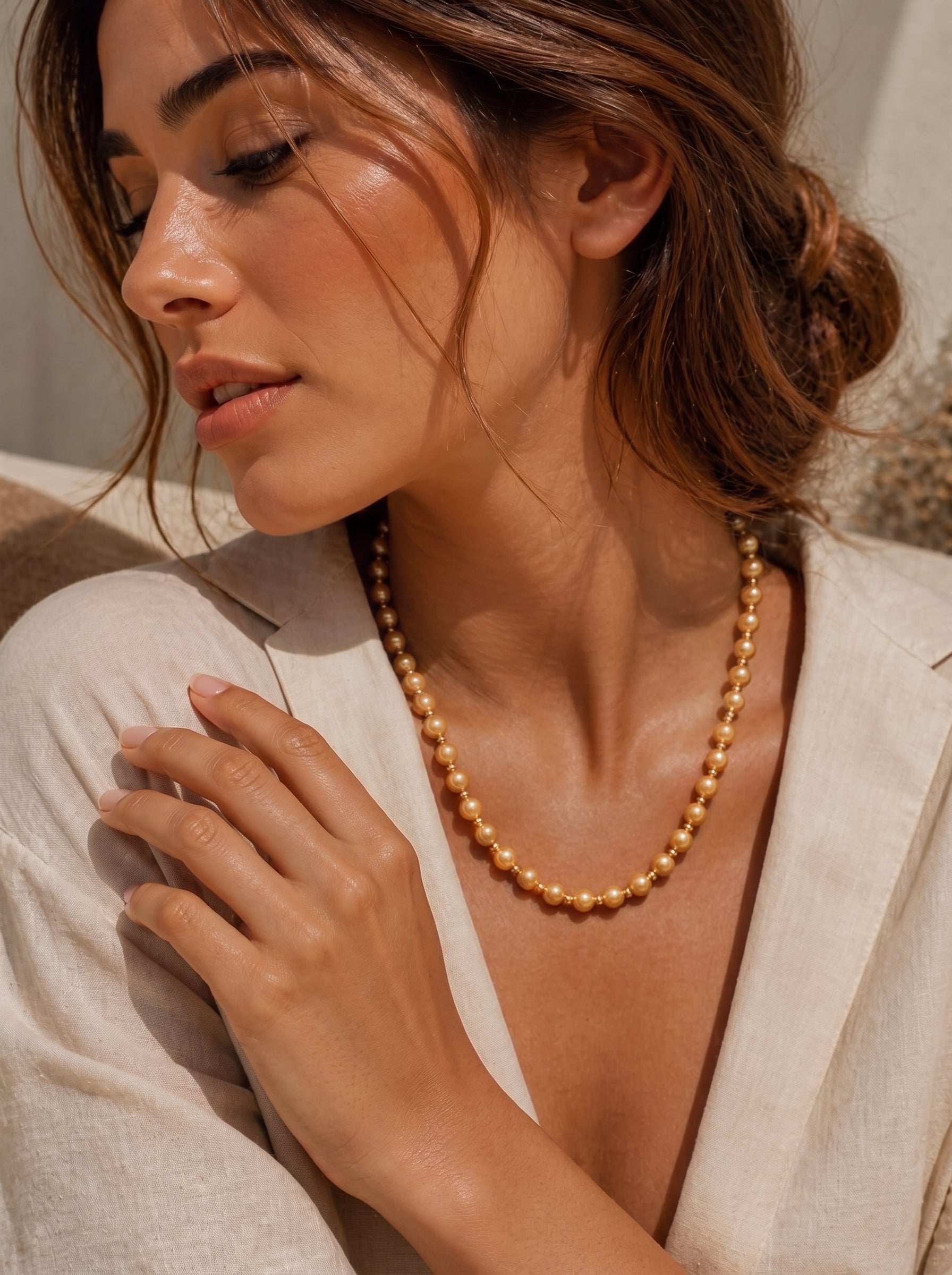
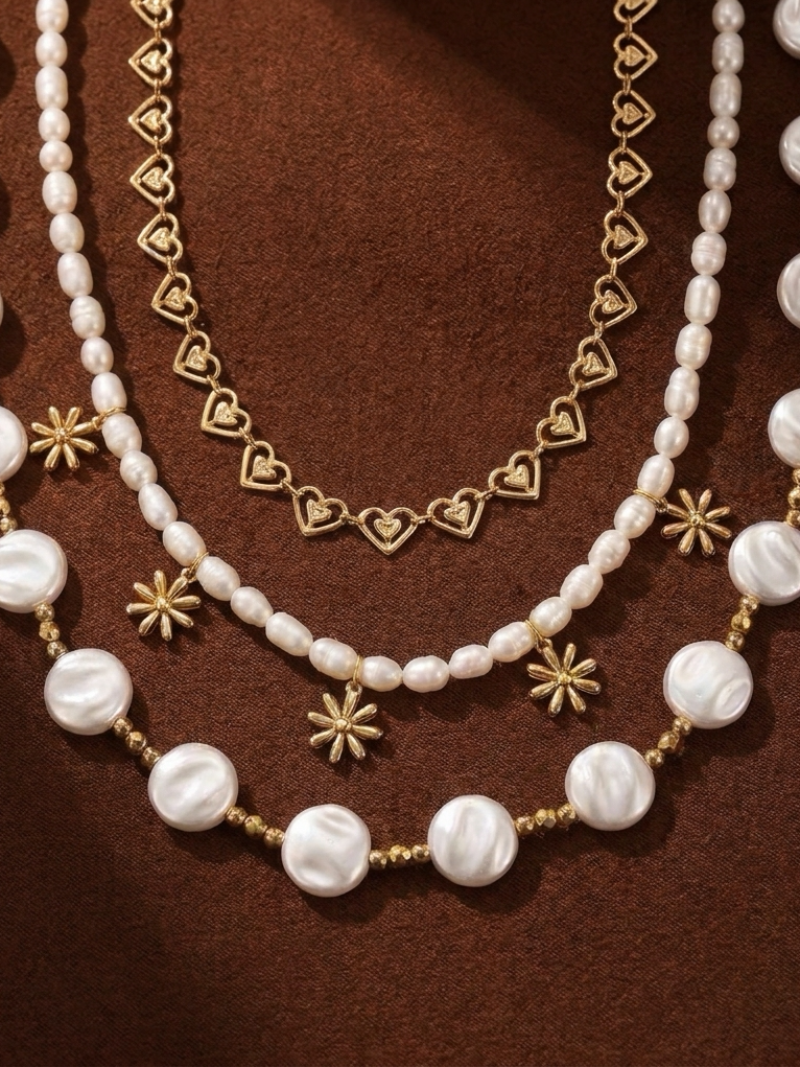
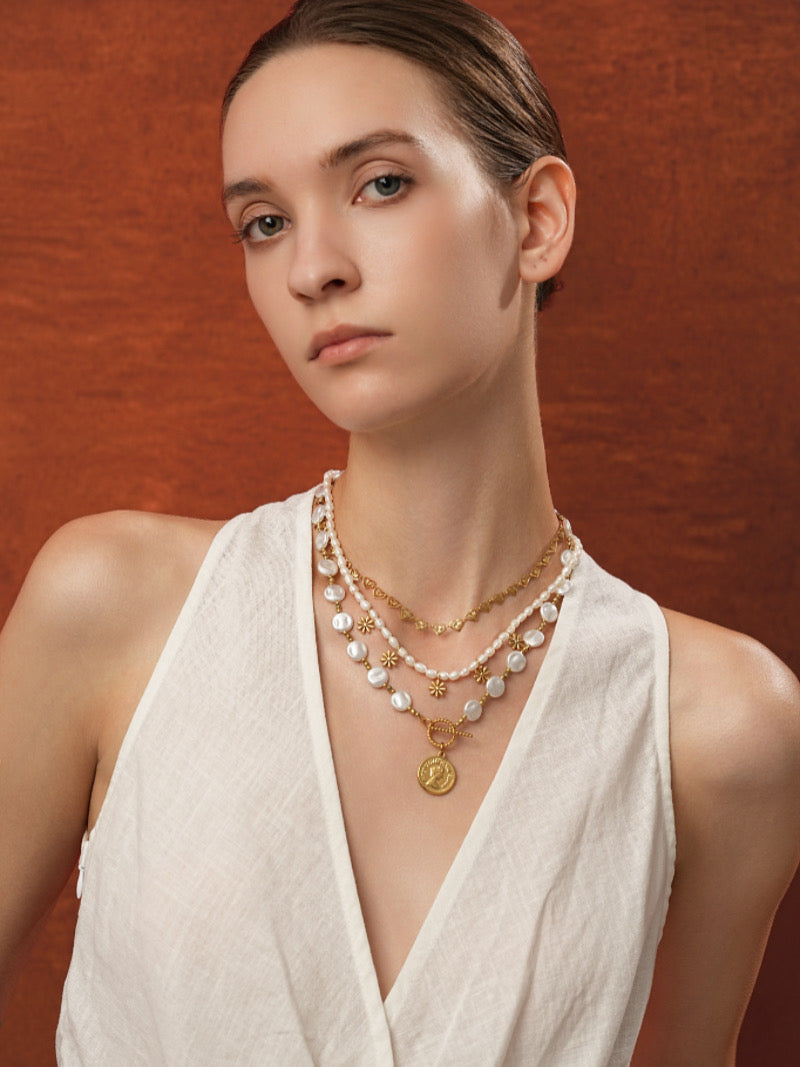
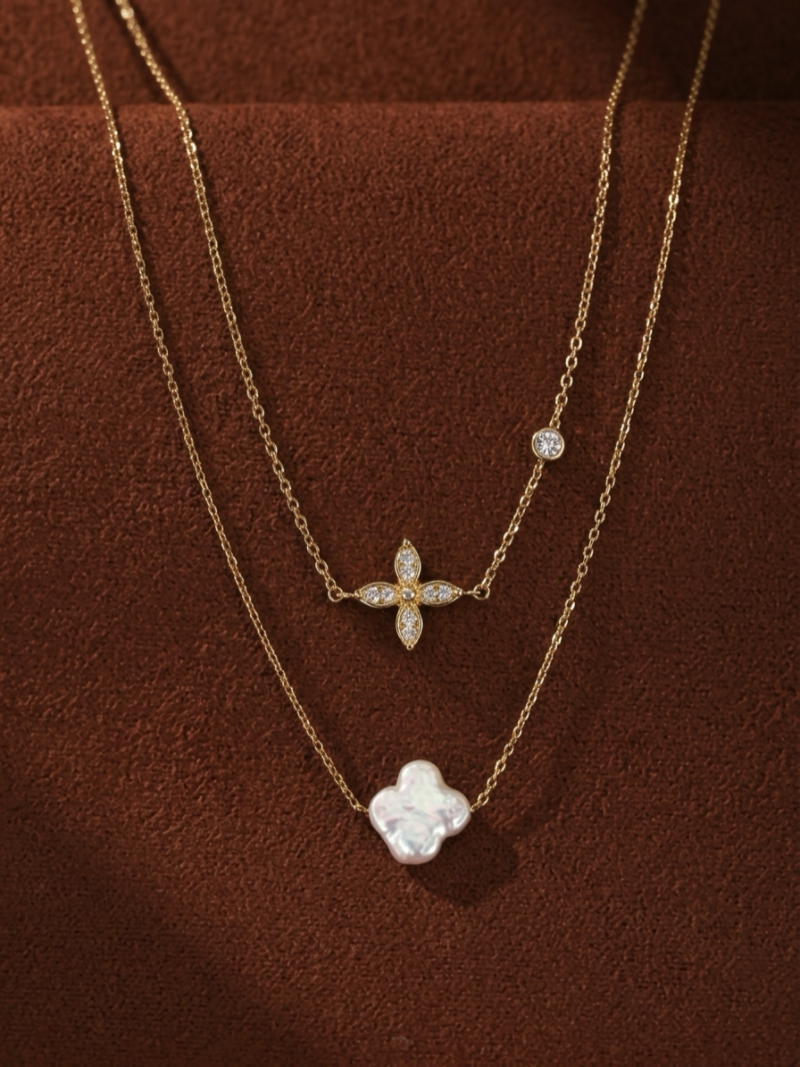
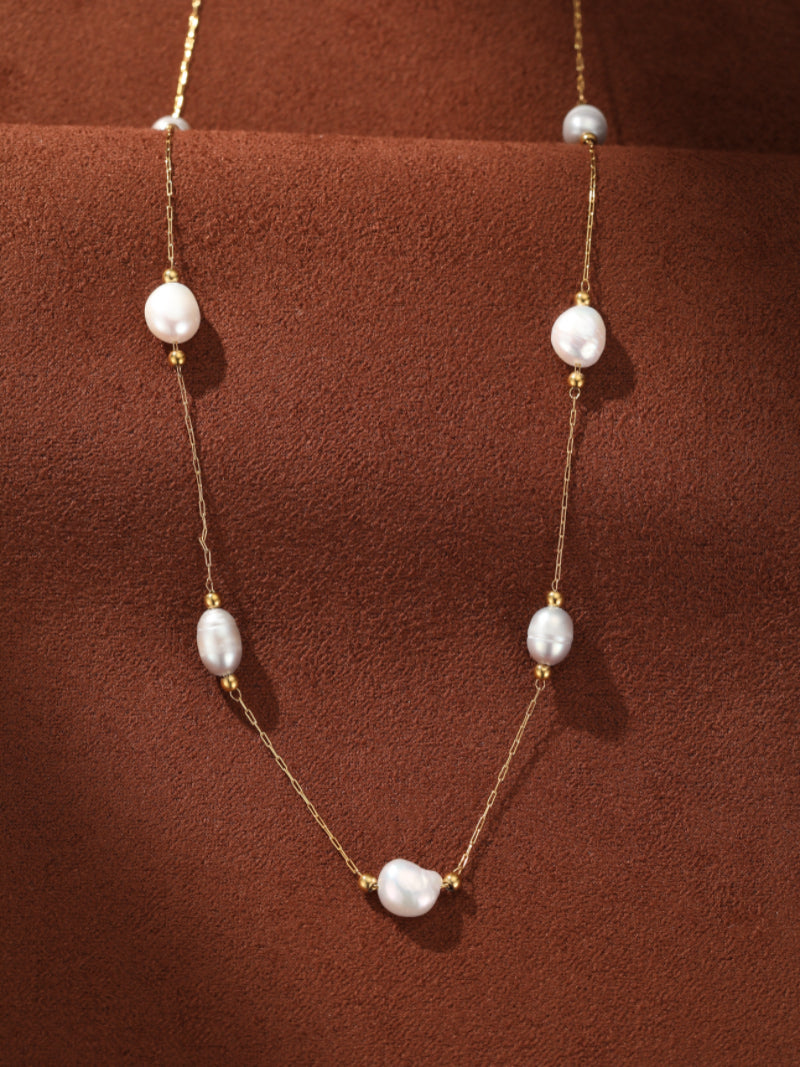
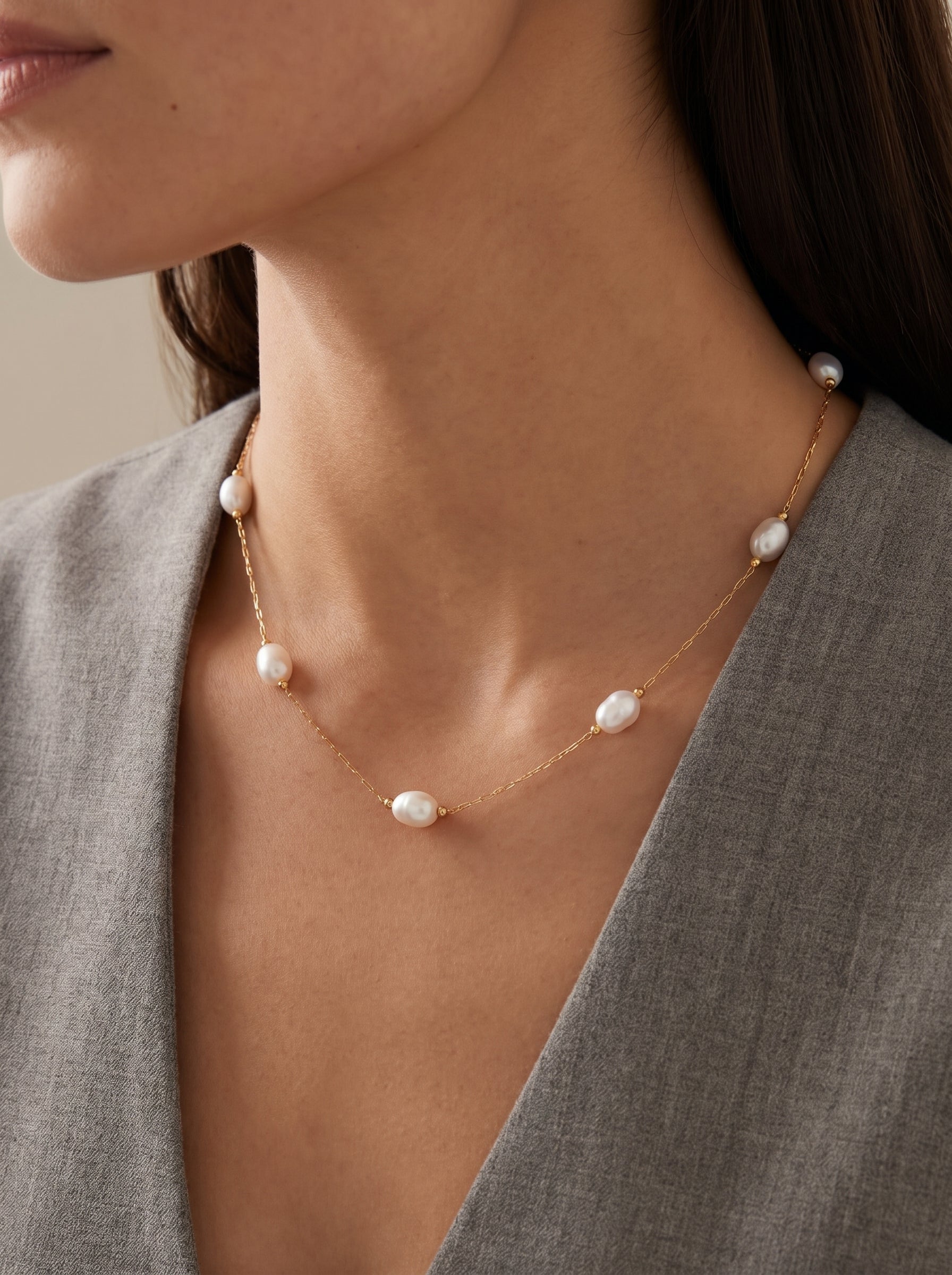
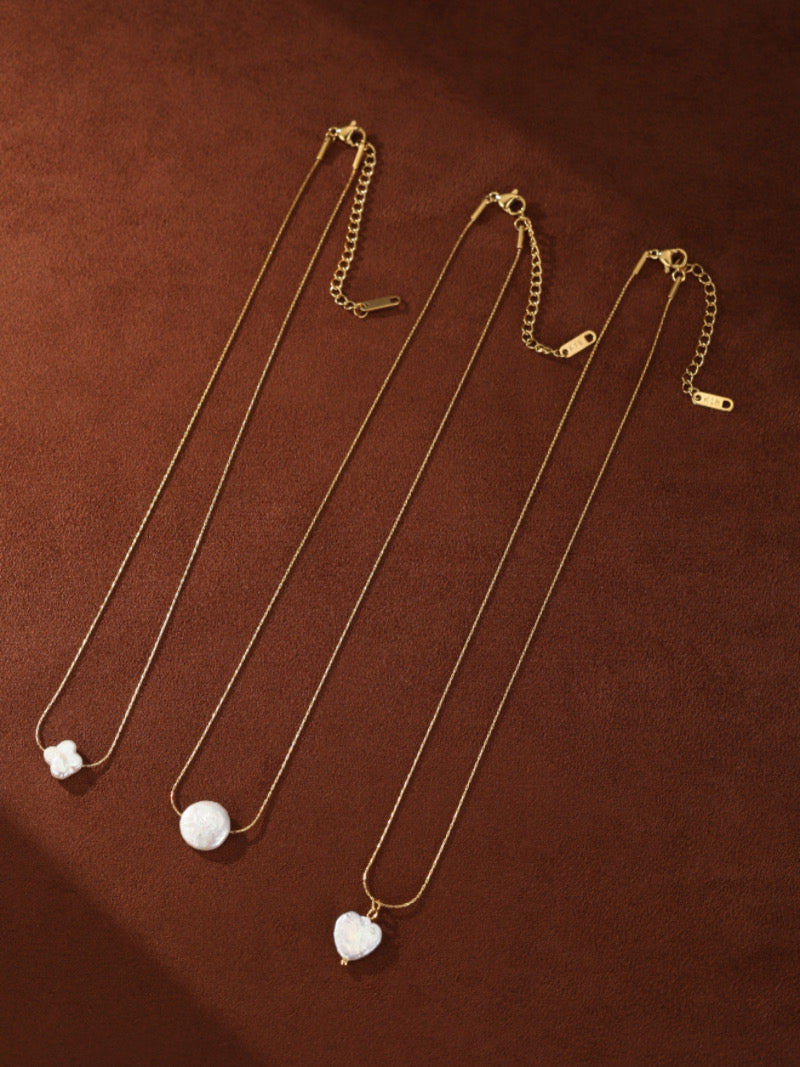
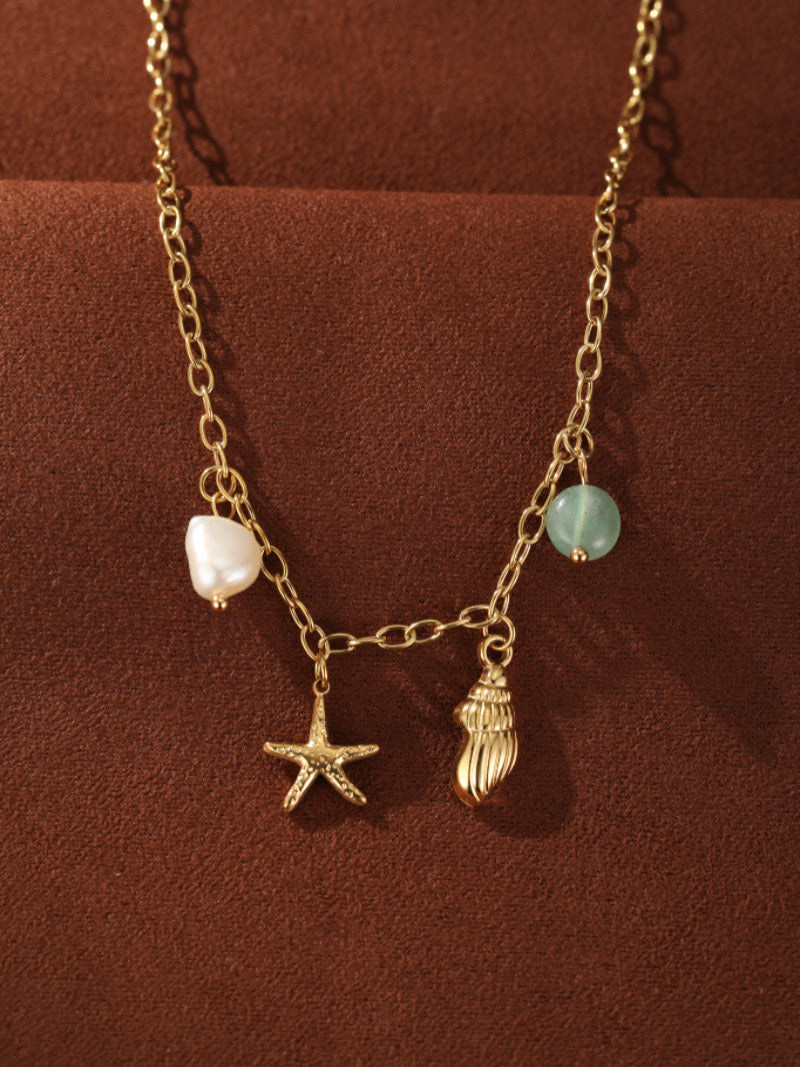
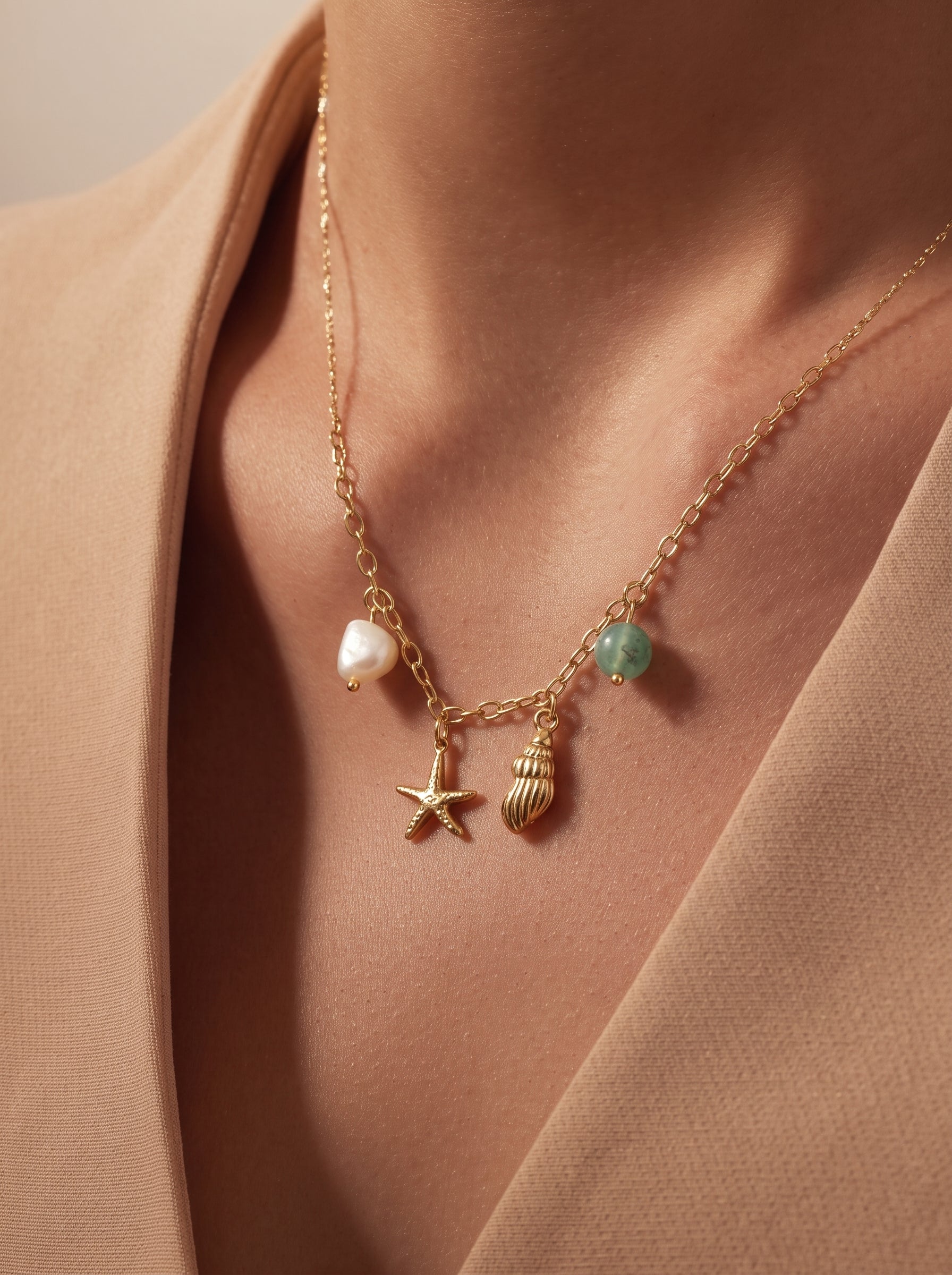
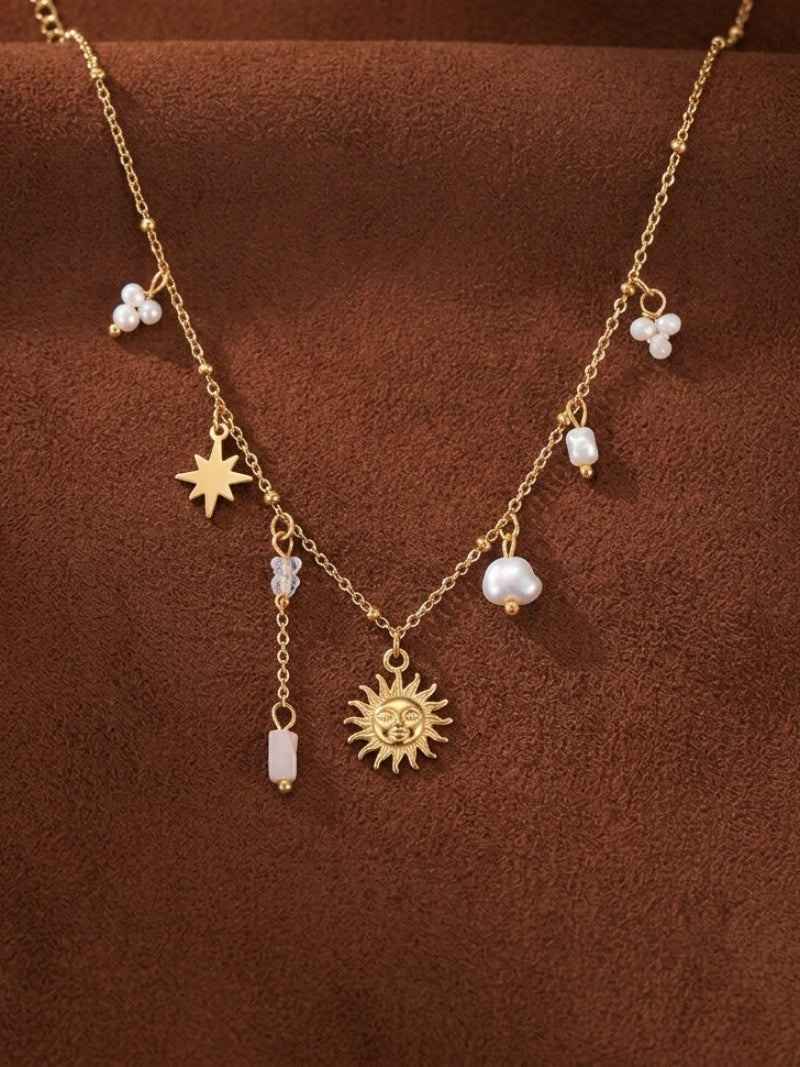
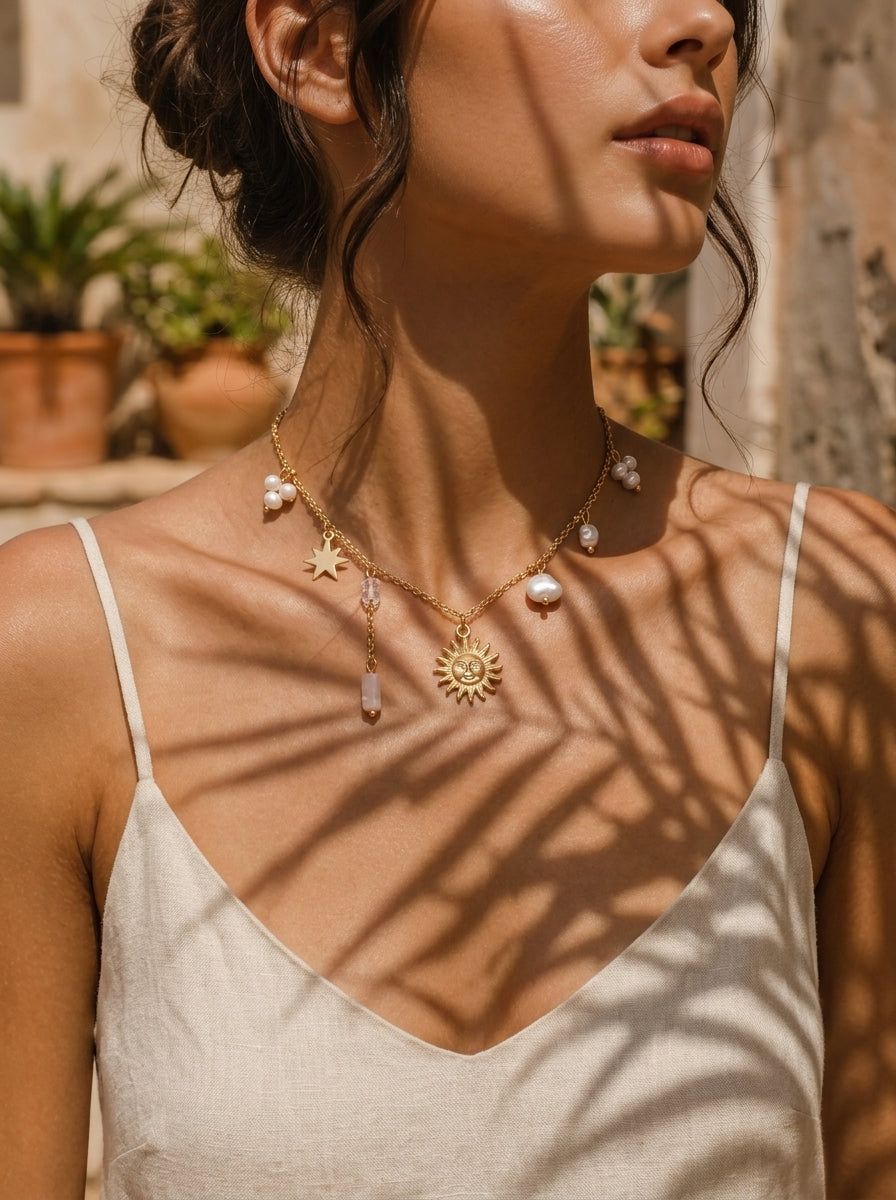
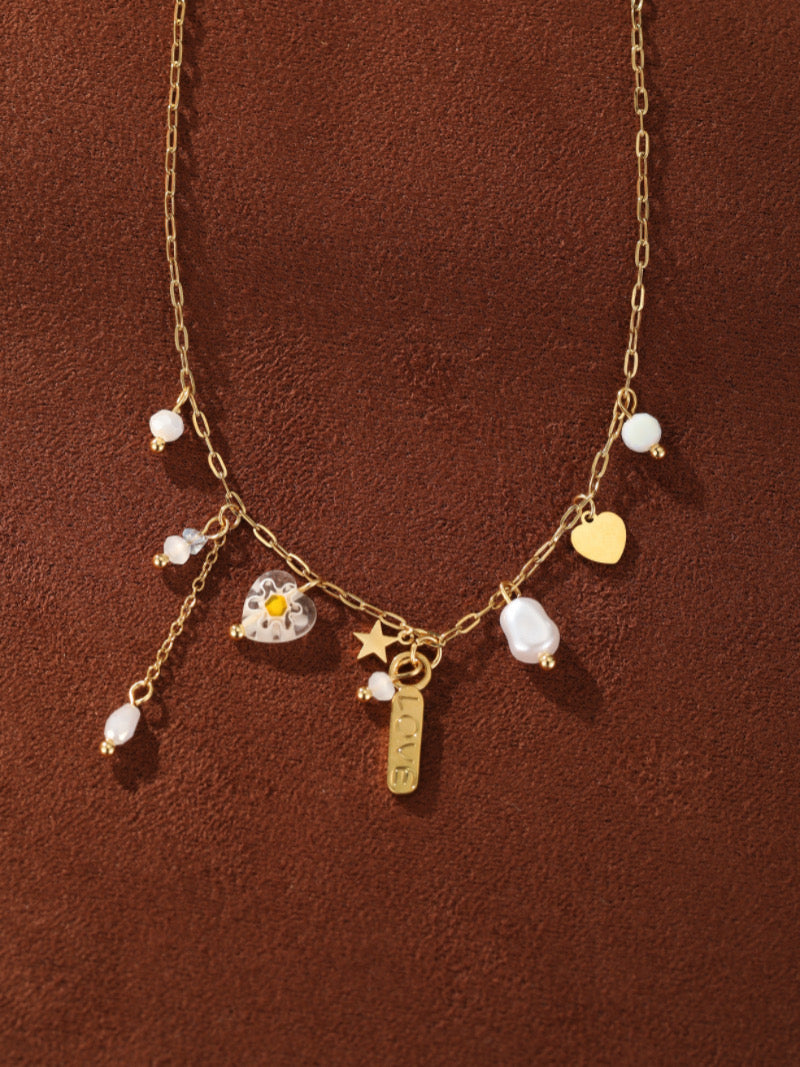
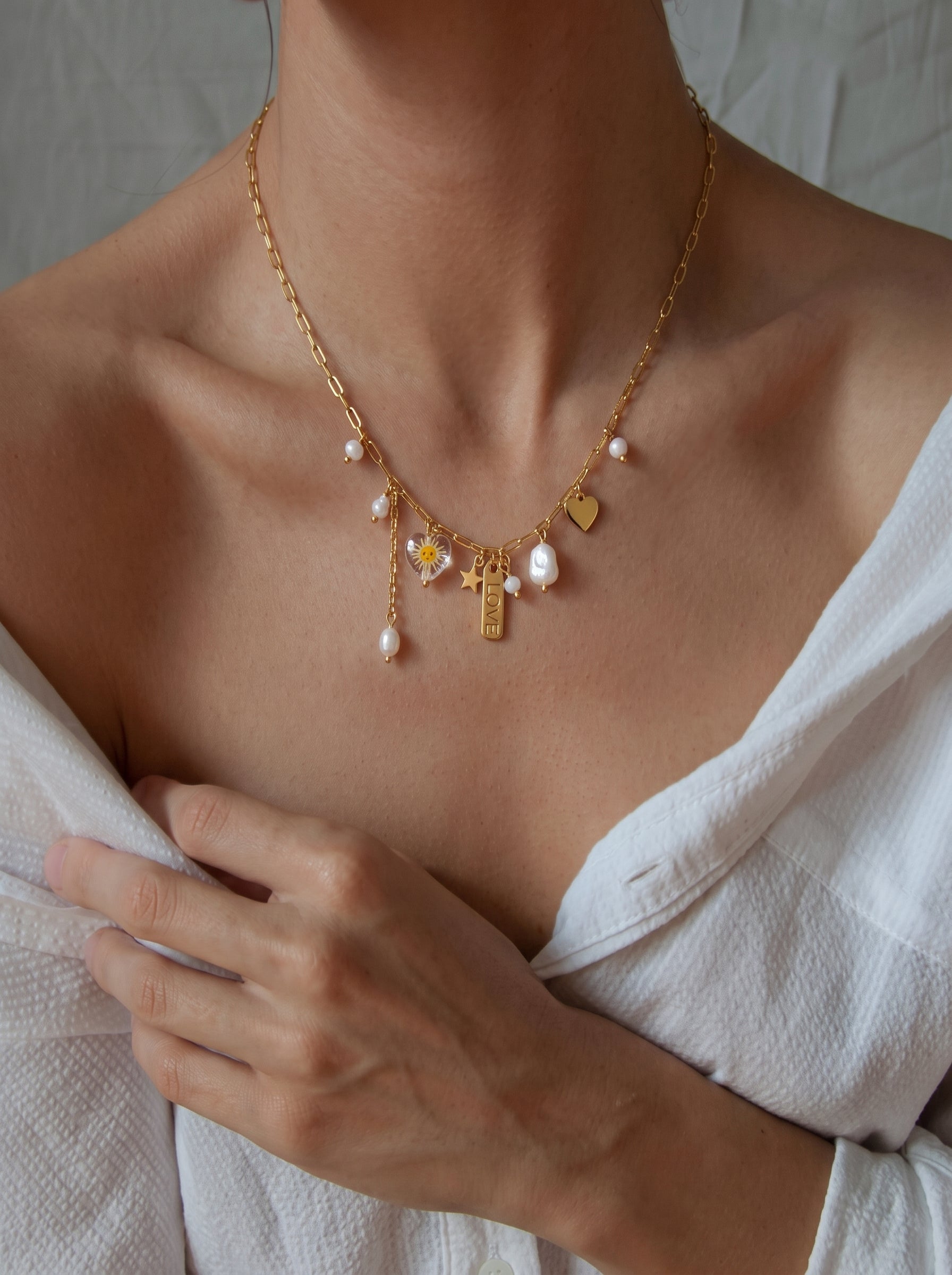
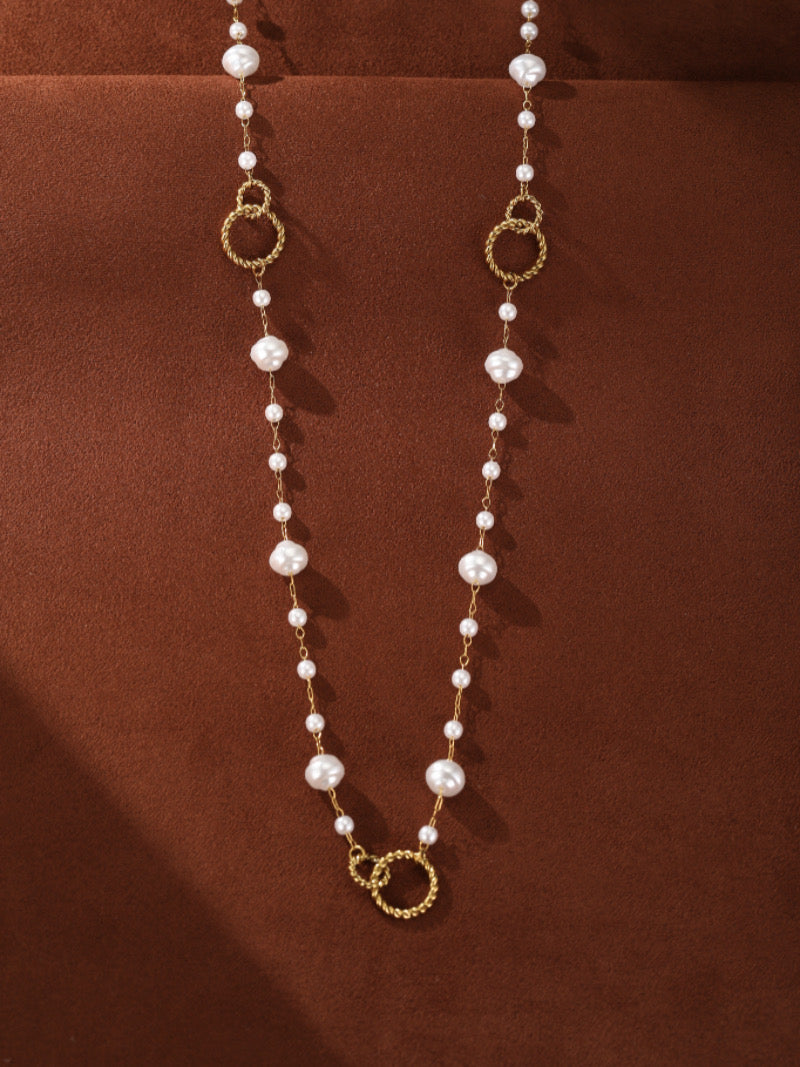
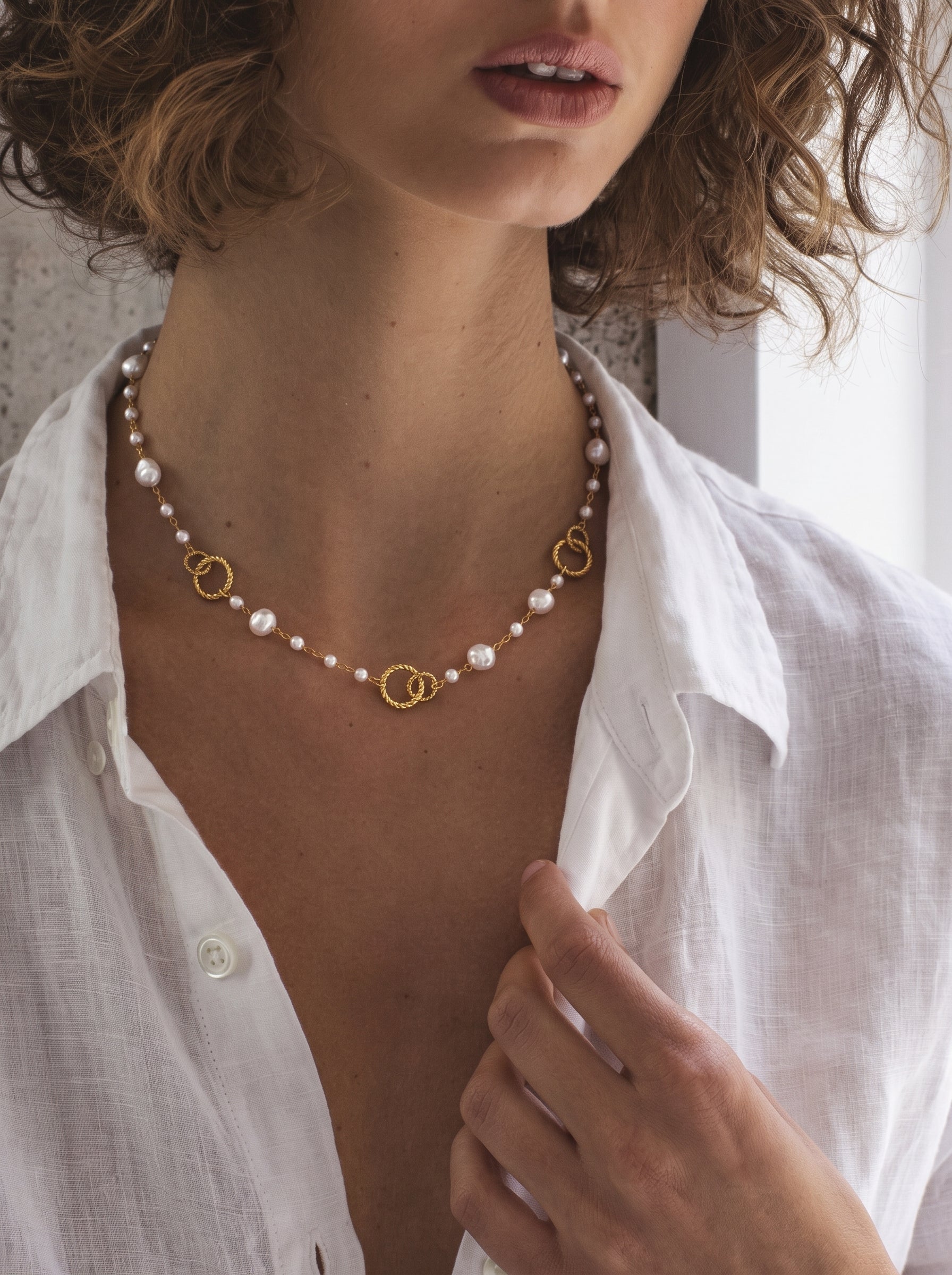
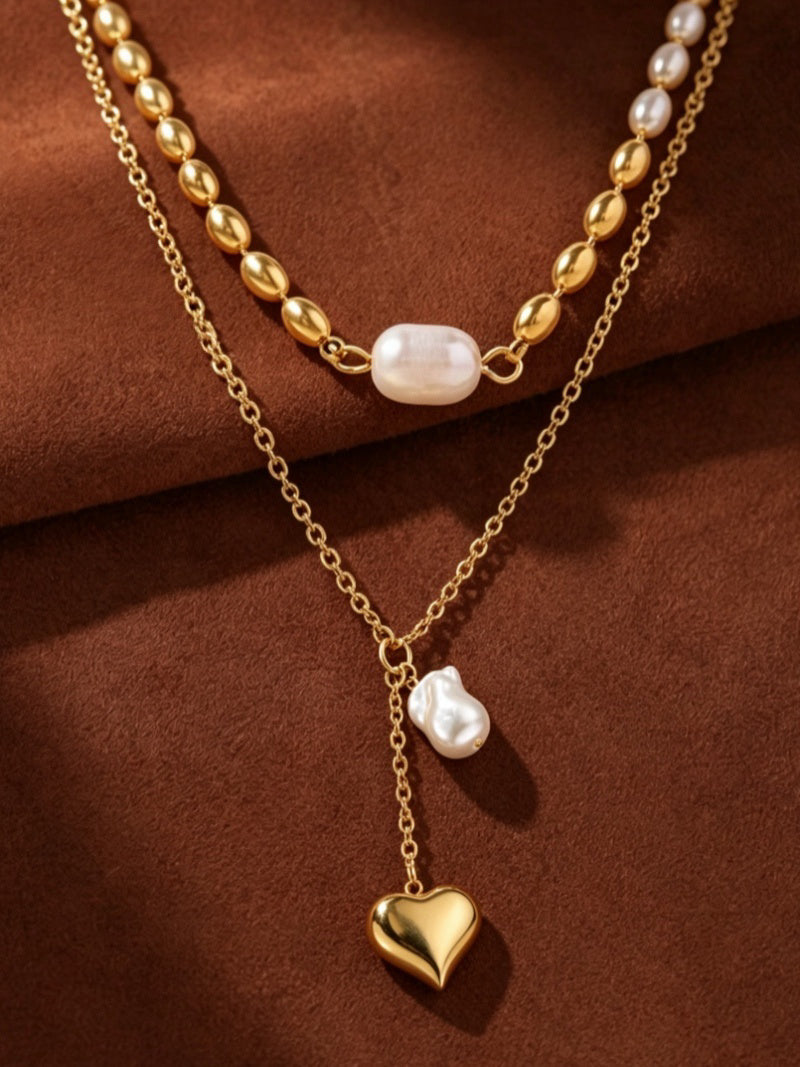
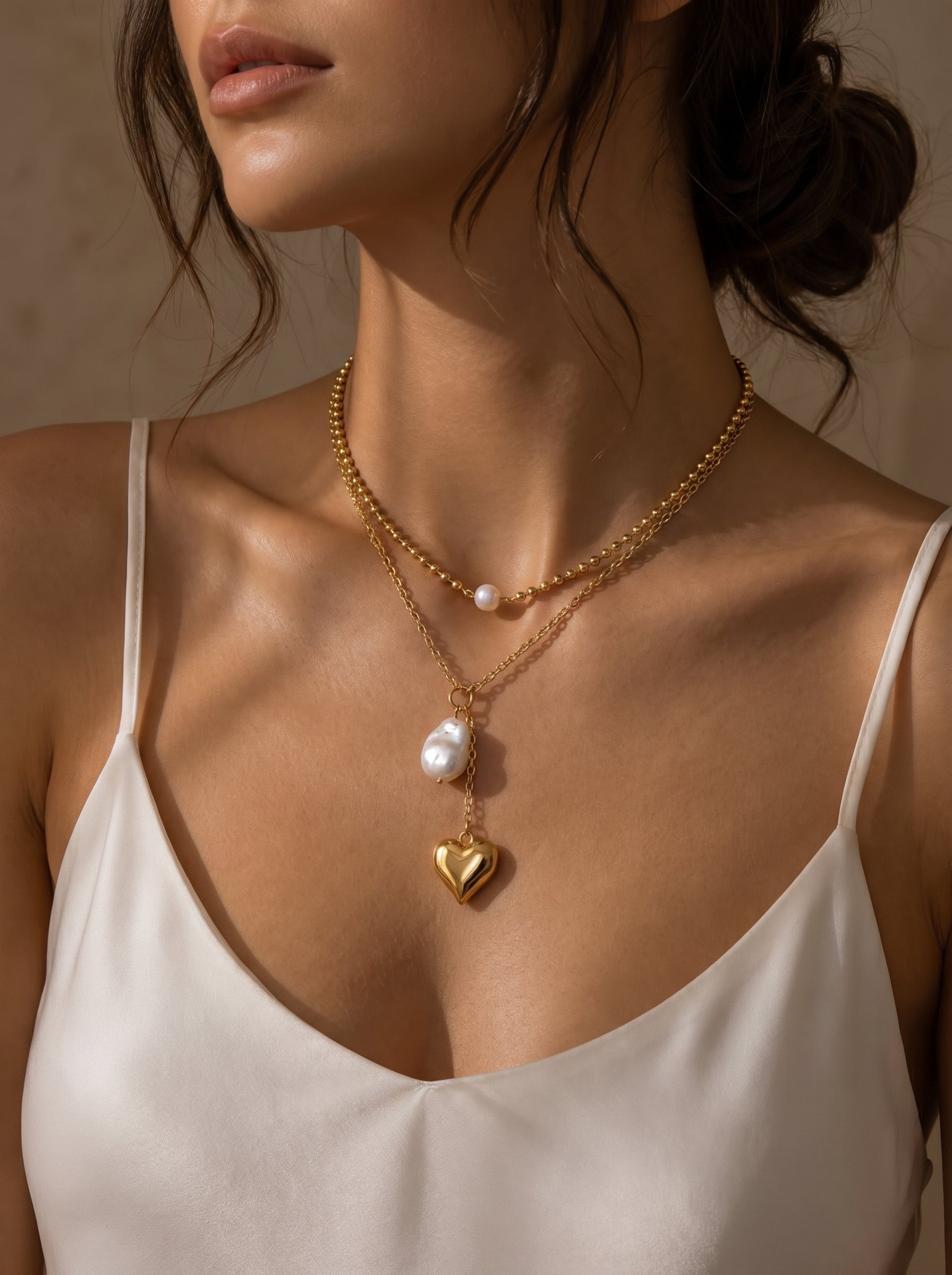
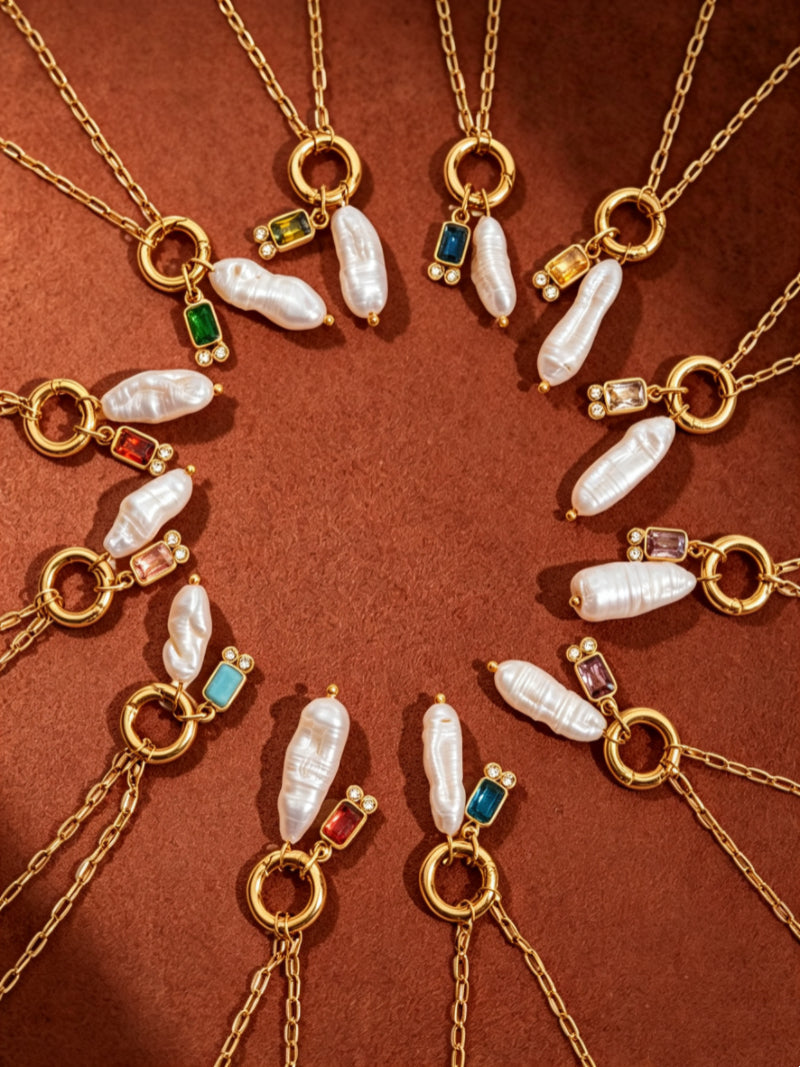
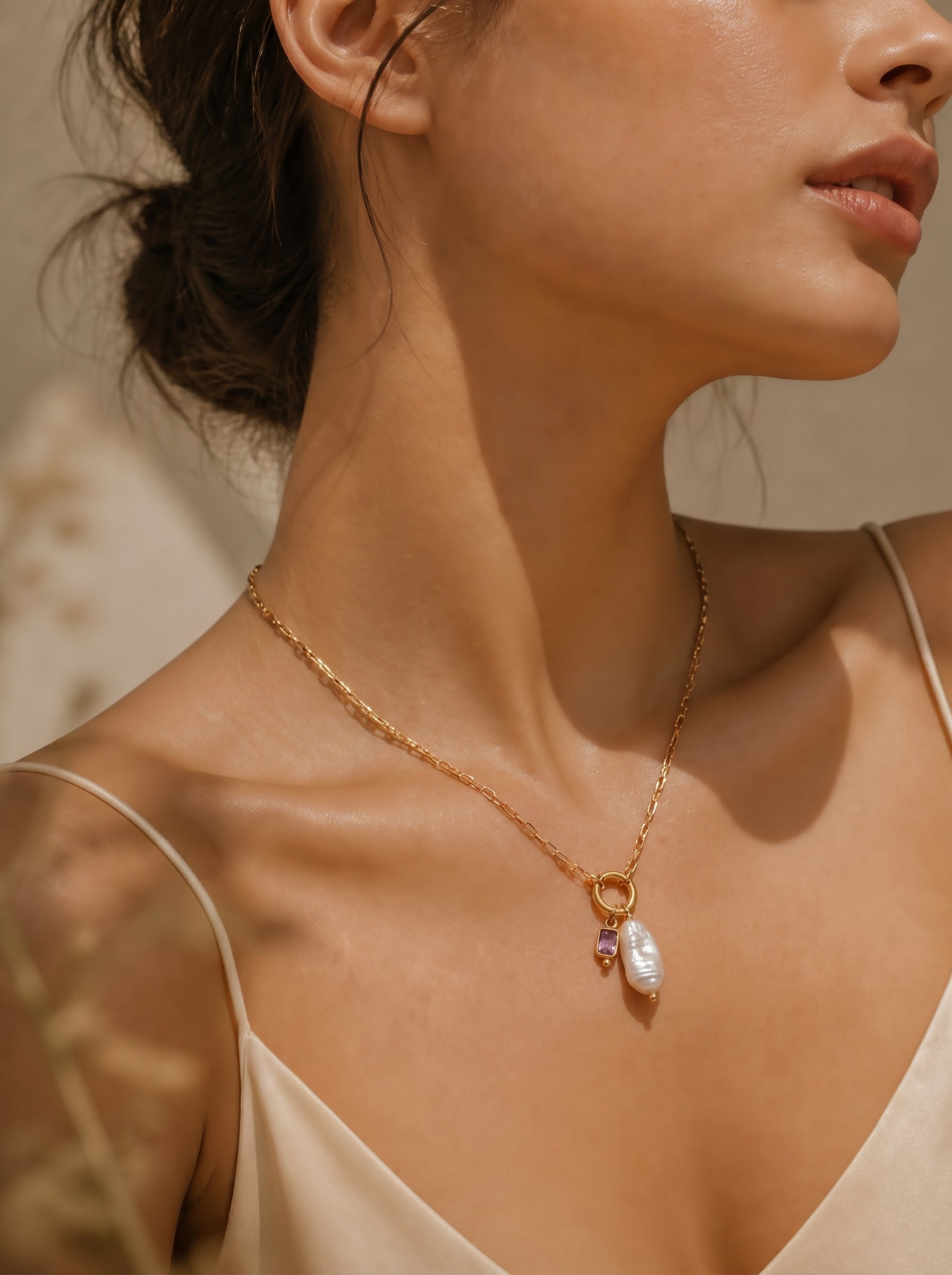
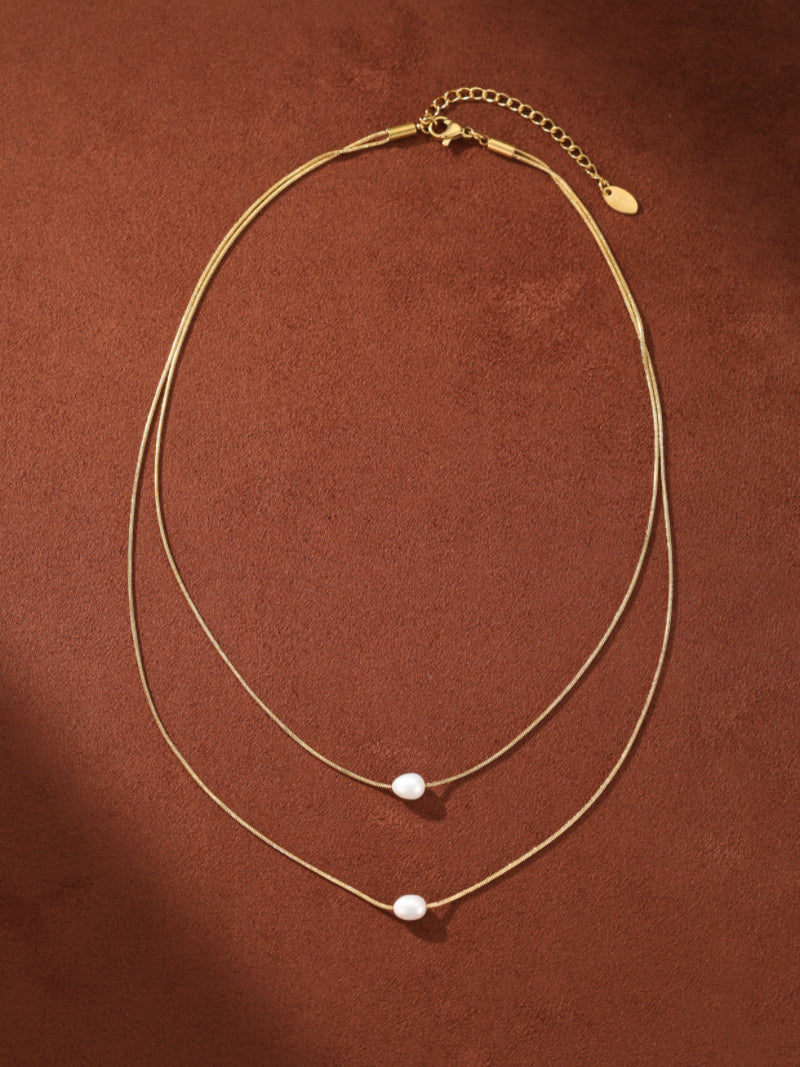
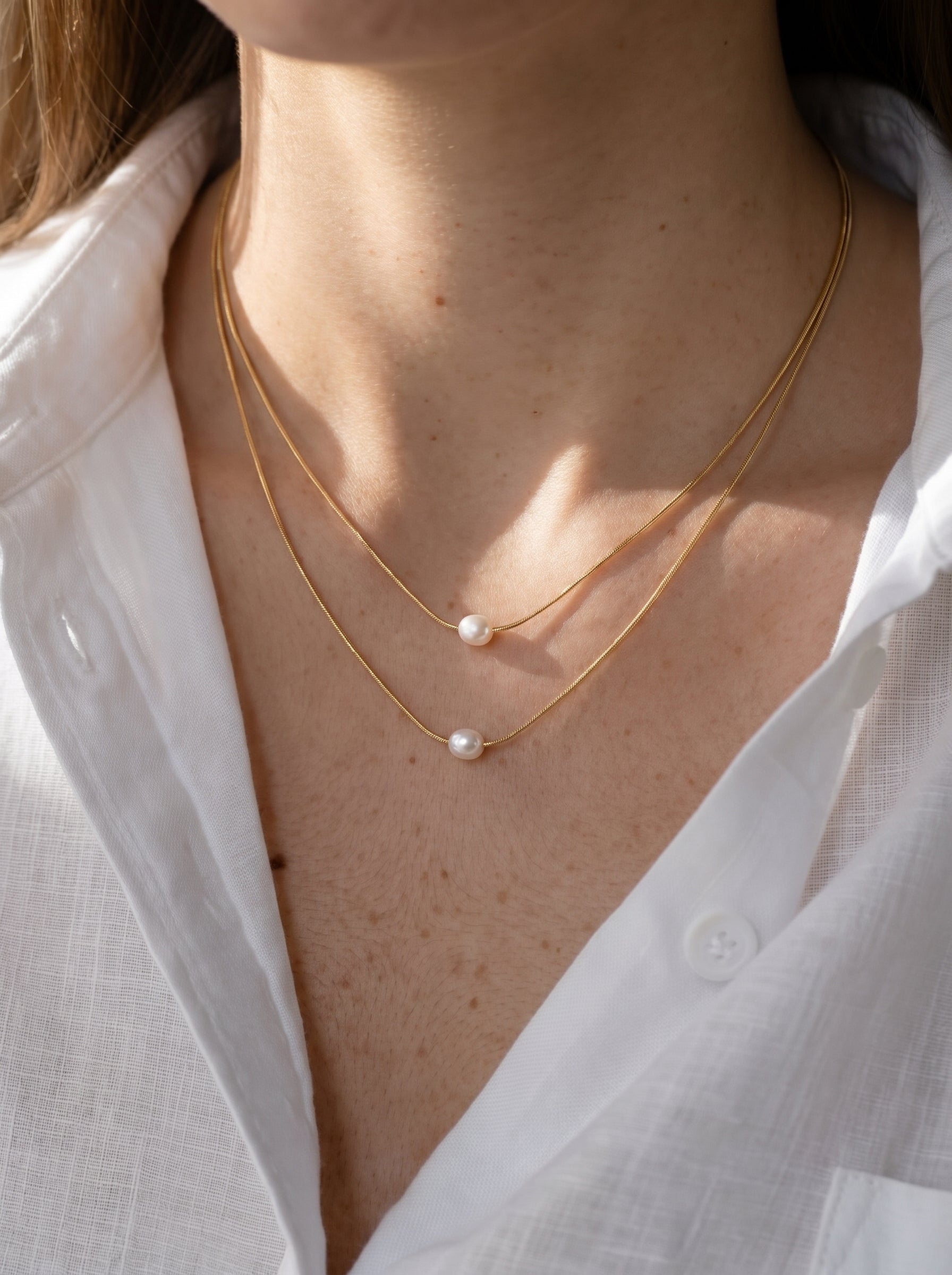
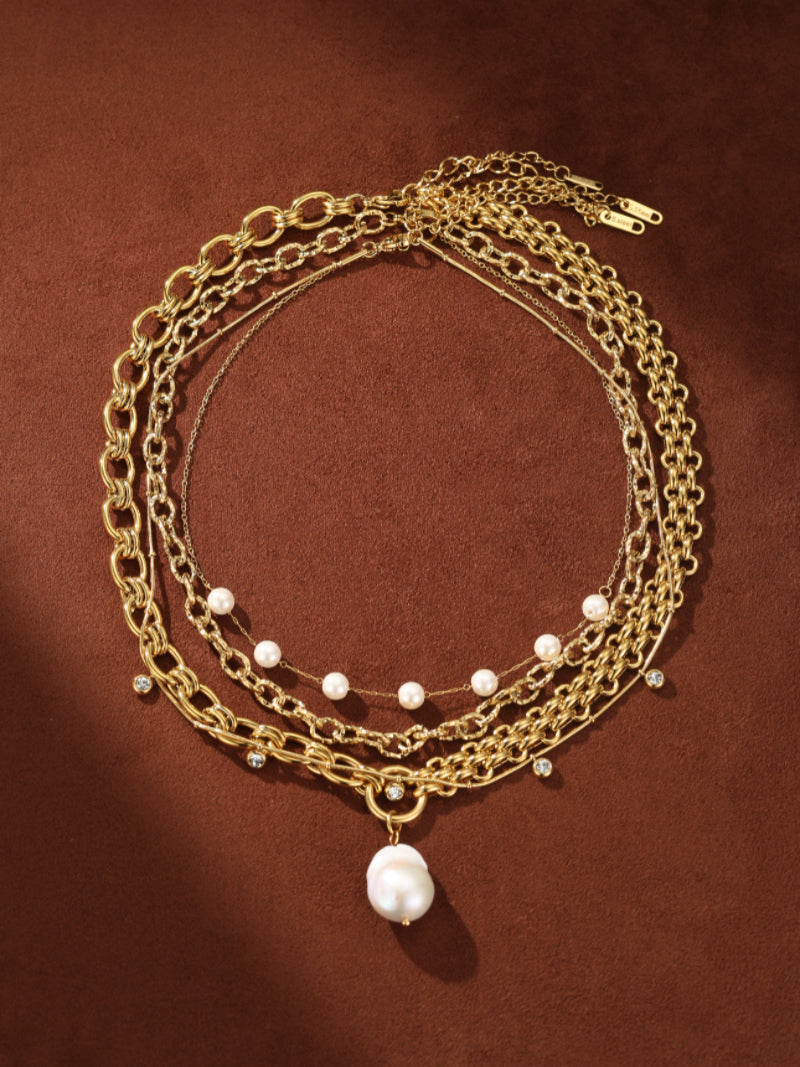
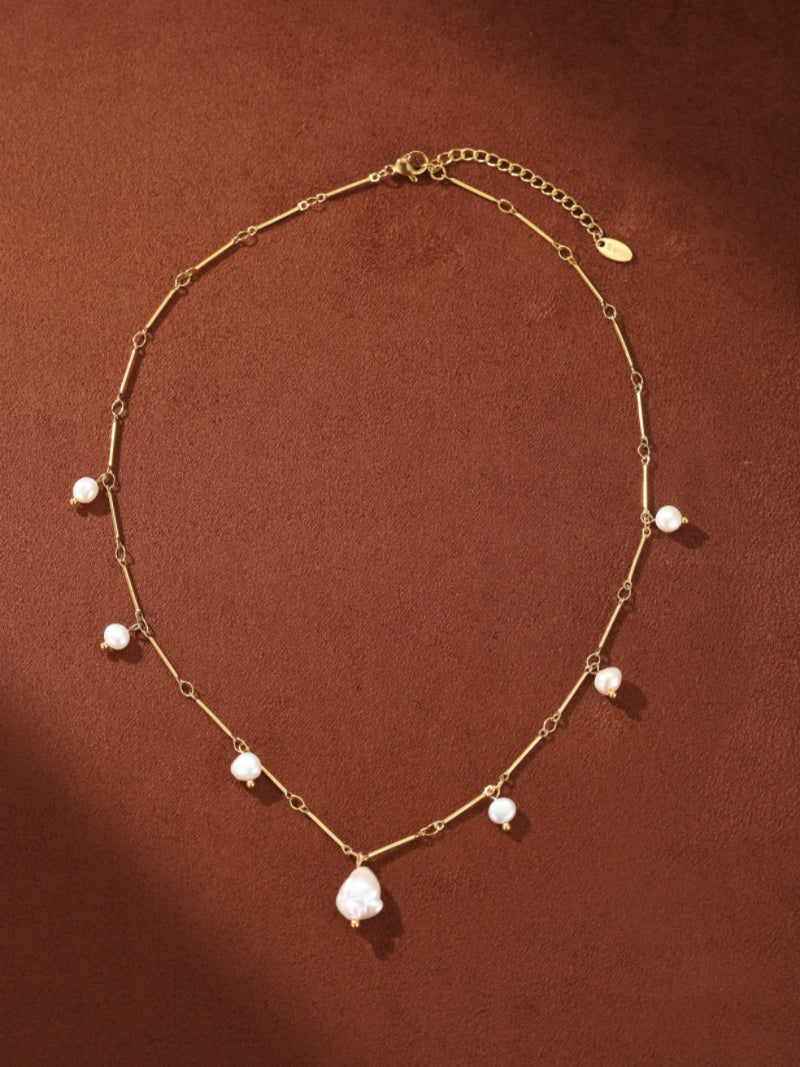
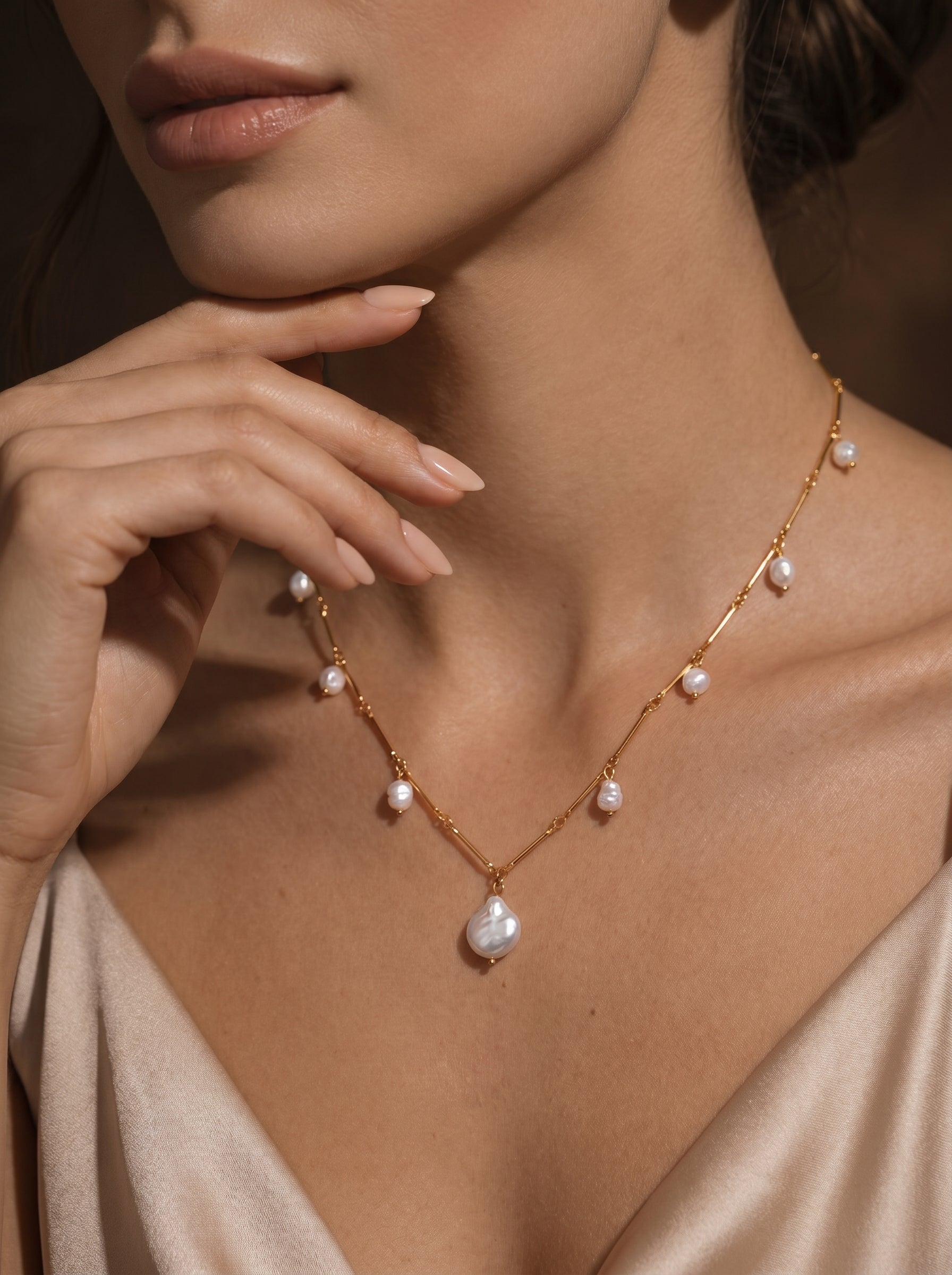
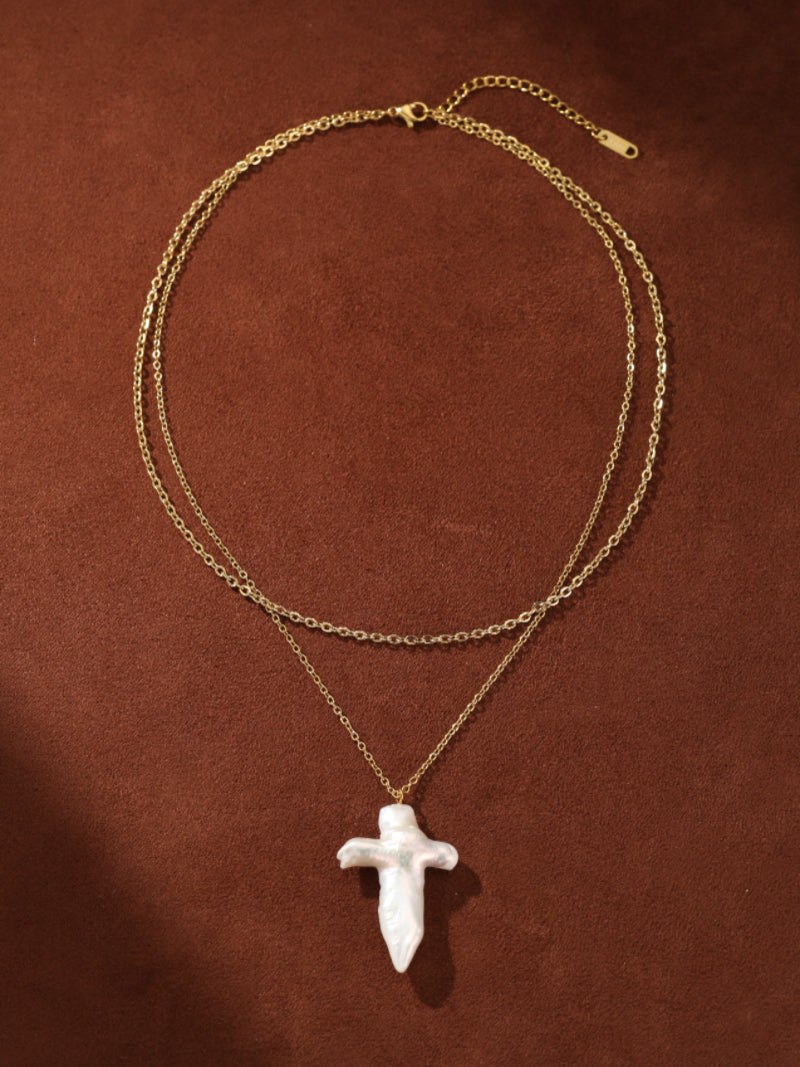
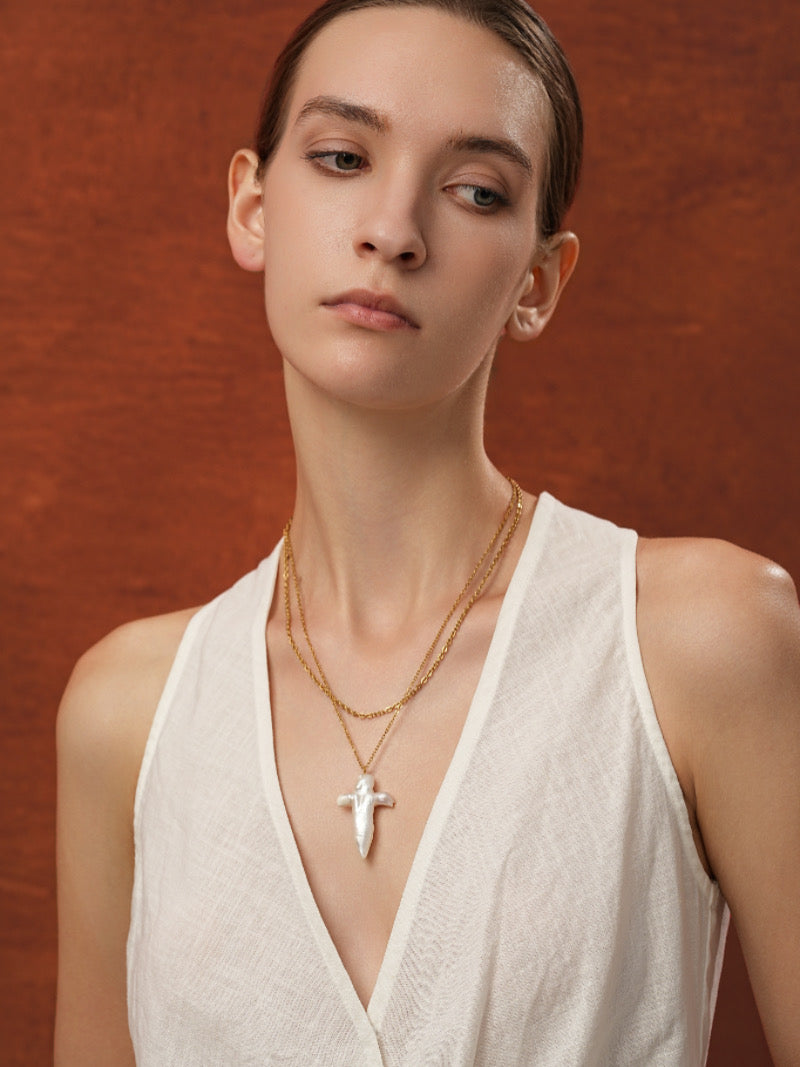
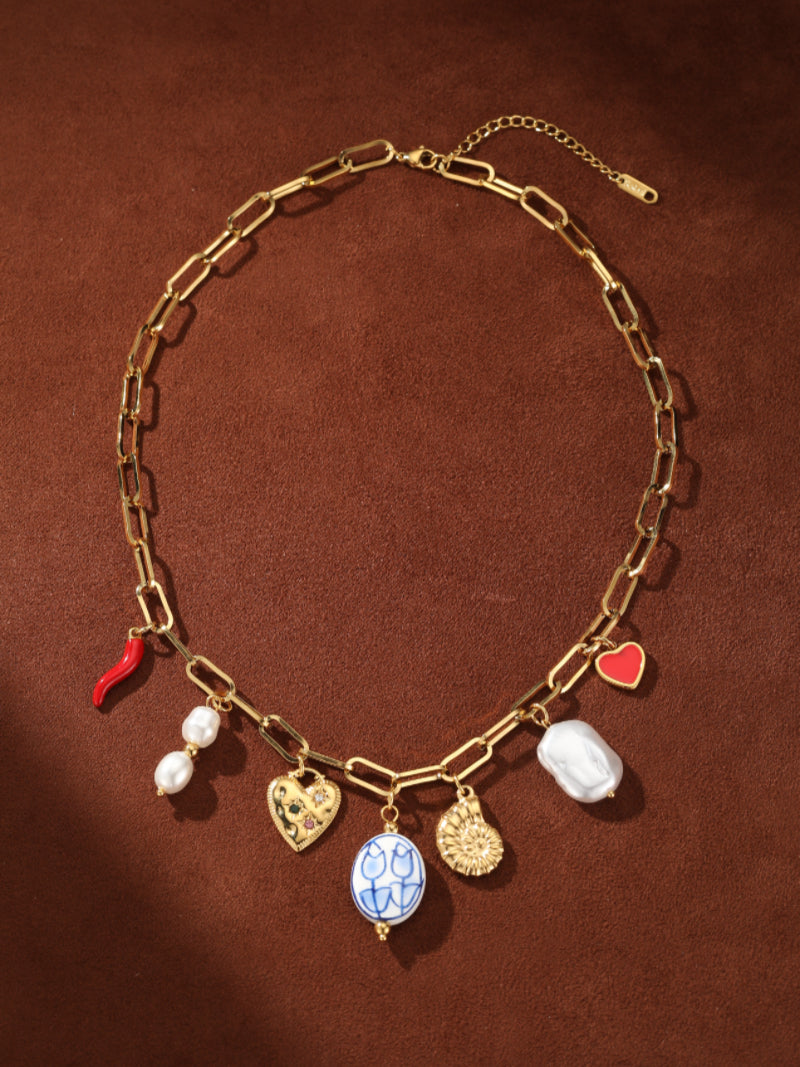
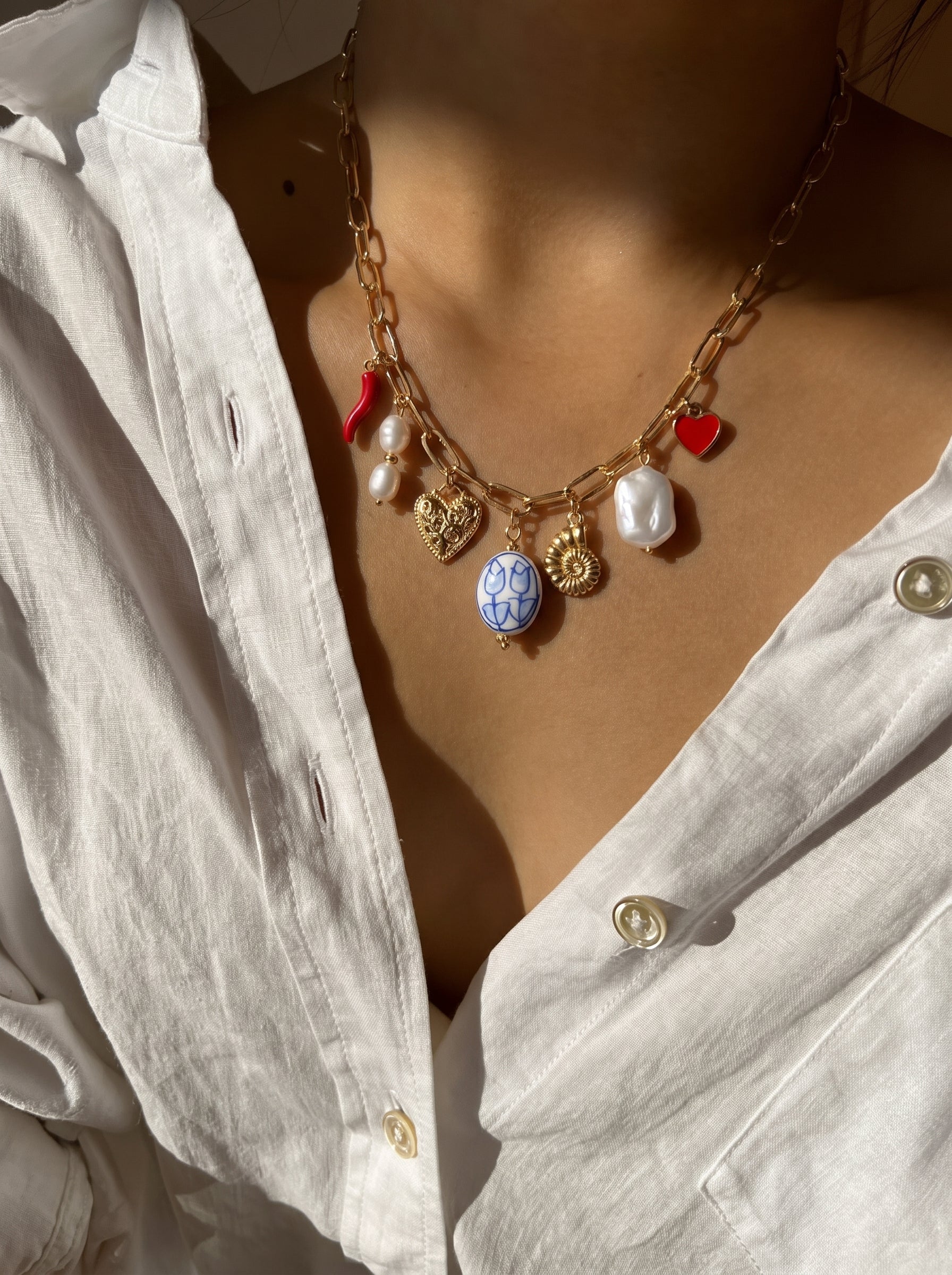
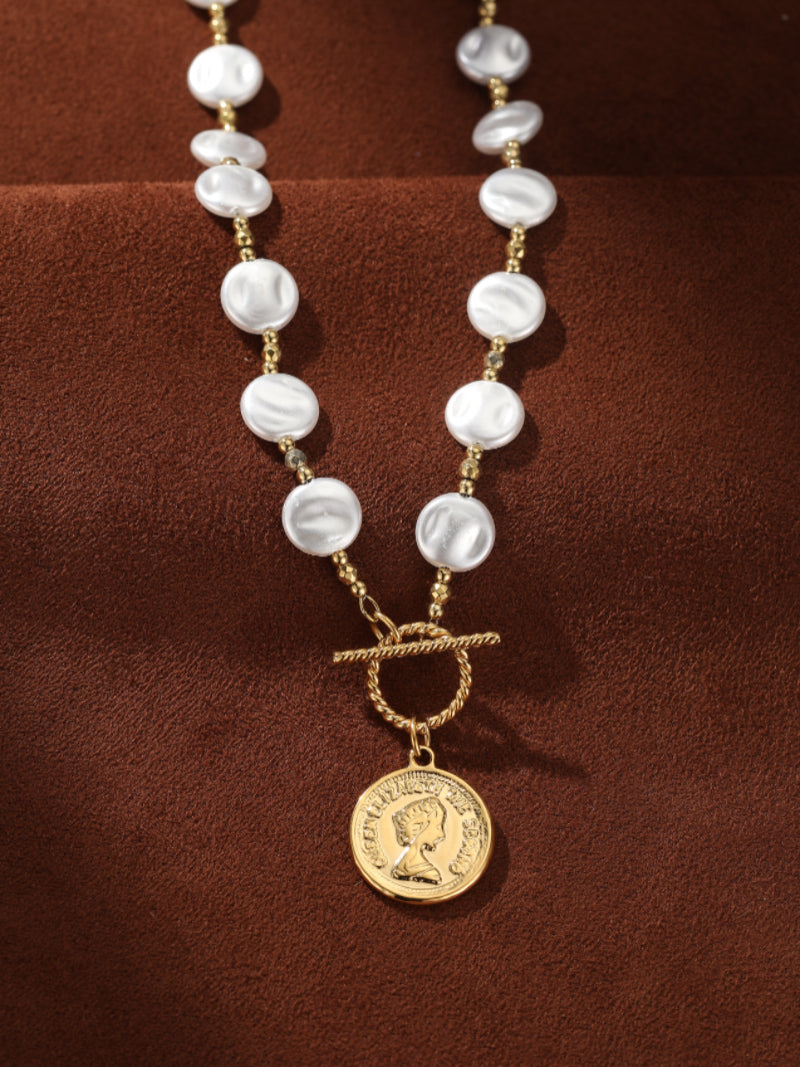
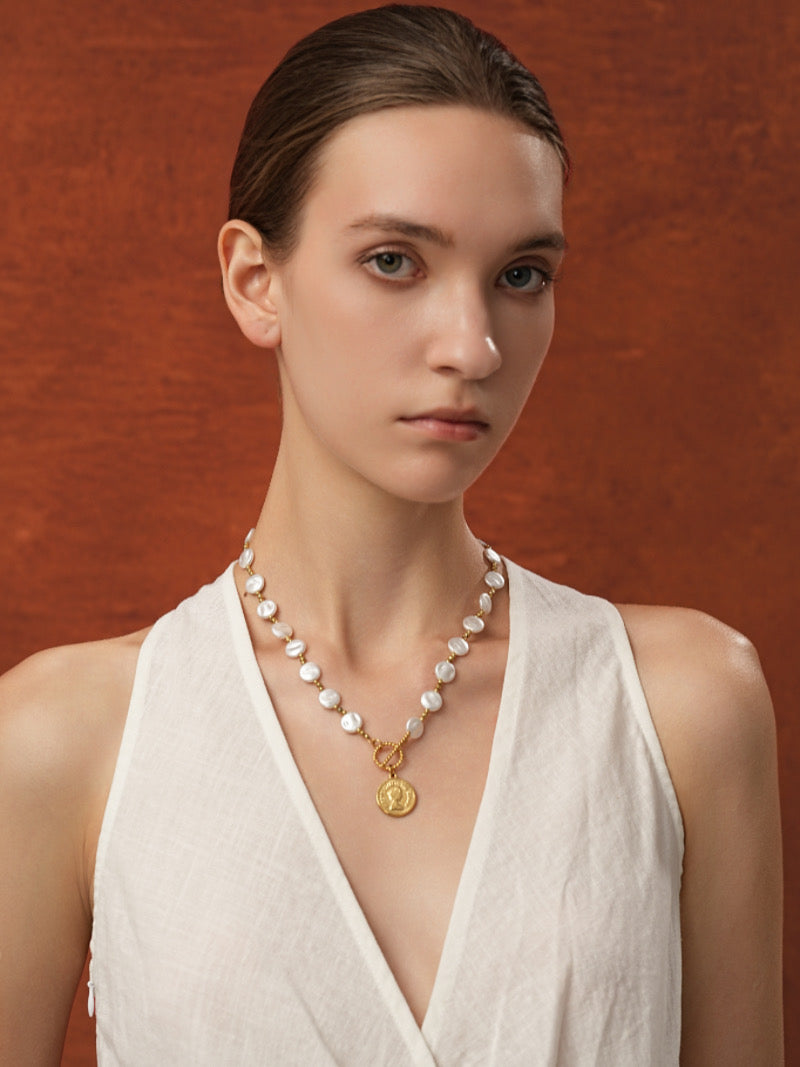
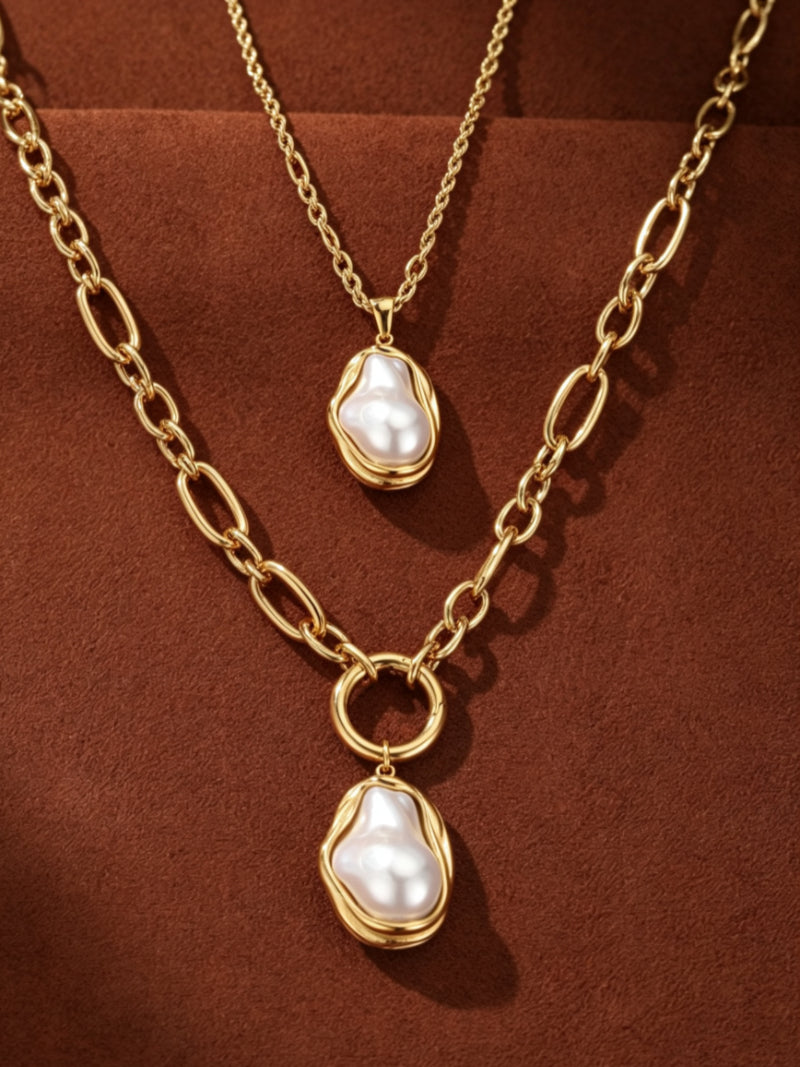
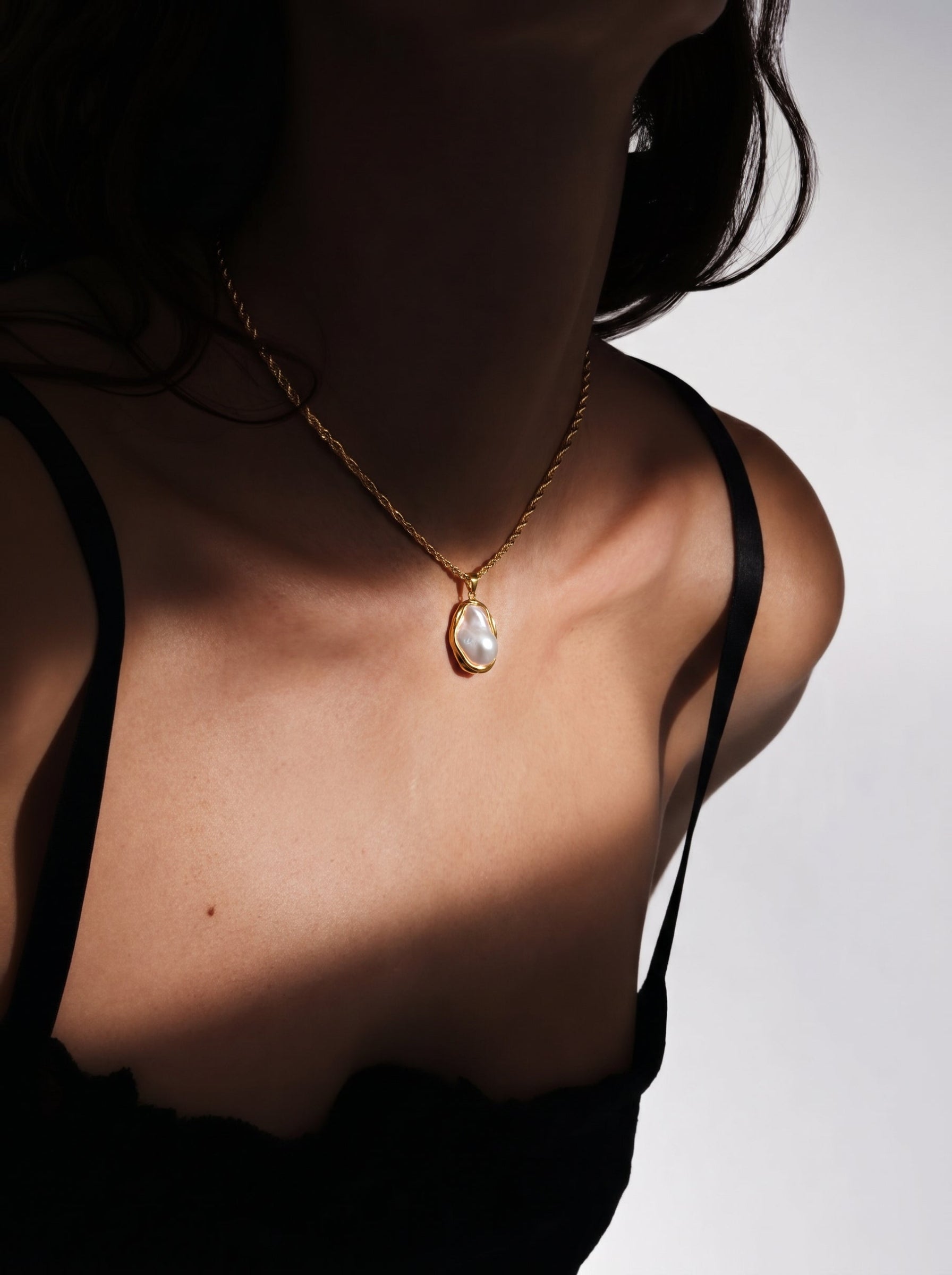
No two baroque pearls are the same shape, so no two of these necklaces hang quite alike. Irregular, organic, occasionally lopsided in a way that turns out to be the point. This is the pearl necklace for someone who does not want the obvious version.
What is a baroque pearl necklace?
A baroque pearl necklace uses cultured pearls that are not round. Baroque is a shape classification, not an origin or a quality grade, and it covers everything from a slightly off-round pearl to a deeply irregular one with visible ridges and folds.
A baroque pearl is not a defective round pearl. It is a pearl that grew without a spherical nucleus to build around, which is why freshwater pearls produce baroques so readily.
Are baroque pearls lower quality than round pearls?
No. Round pearls cost more because roundness is rare and because matching round pearls into a strand takes hundreds of candidates. Baroque pearls are judged on the same criteria as any pearl: luster first, then surface cleanliness and nacre thickness.
A baroque pearl with strong luster is a better pearl than a round one without it. Shape is preference. Luster is quality.
What baroque shapes are there?
- Nugget — compact and rounded but visibly uneven. The most common baroque and the easiest to string.
- Coin — flat and disc-like, catching light across a wide face rather than in a point.
- Stick and biwa — elongated and flat, giving strong vertical lines in a pendant.
- Keshi — small, entirely solid nacre, formed without any nucleus at all. Often the highest luster of any baroque.
Which baroque pearl necklace style should you choose?
Single baroque drops
One irregular pearl on a chain. Because the shape is unrepeatable, this is genuinely a piece nobody else owns in exactly that form. The most wearable way into baroque pearls.
Beaded baroque strands
Irregular pearls strung close, so the whole necklace has texture instead of repetition. Each pearl catches light at its own angle, which is why a baroque strand looks alive in a way a matched round strand does not.
Chunky baroque pendants
A large irregular pearl worn alone, where the scale and the shape do all the work. These read as design objects rather than as pearl jewelry.
Which pearls do we use?
Mostly freshwater pearls from Zhuji, China, which produce the widest range of baroque shapes because they grow without a bead nucleus. Every pearl is a real cultured pearl, with type, origin, bodycolor, overtone, shape, size, grade and treatment stated on the product page.
Why buy a baroque pearl necklace from Grande Lilith
Baroque is where the pearl trade often hides lower-grade material, on the assumption that an irregular shape excuses poor luster. It does not.
- Grade stated on every product page, alongside shape, so an irregular pearl is not sold as an excuse for a dull one.
- Eight provenance markers on every product page, including origin and treatment.
- Partners vetted by our GIA-certified pearl specialist, on working conditions as well as quality.
- Nickel-free, lead-free and cadmium-free settings on solid 18k gold, 925 sterling silver and stainless steel.
- Designed in Paris. Thirty days to change your mind, and every order arrives in a magnetic pouch.
Frequently asked questions
Why are baroque pearls cheaper than round ones?
Roundness is rare, and matching round pearls into a strand requires sorting through hundreds. Baroque pearls skip that cost entirely. The nacre is the same, and in solid-nacre freshwater baroques it is often thicker.
Will my baroque necklace look like the photograph?
It will be close but not identical, because no two baroque pearls share a shape. That variation is the nature of the material rather than an inconsistency, and it is why each piece is genuinely singular.
Are baroque pearls suitable for formal occasions?
Yes, and they read more contemporary than a matched round strand. A large baroque pendant is an evening piece. A baroque strand is less traditional than round pearls without being less dressed.
What is a keshi pearl?
A keshi pearl forms without any nucleus at all, making it entirely solid nacre. They are usually small and irregular, and they frequently show the highest luster of any pearl in a harvest because there is nothing but nacre to reflect light.
How do I care for a baroque pearl necklace?
The same as any pearl. Put it on after perfume and lotion have dried, wipe it with a soft damp cloth before storing, and keep it away from harder stones. Irregular surfaces trap slightly more residue, so wiping matters a little more here.