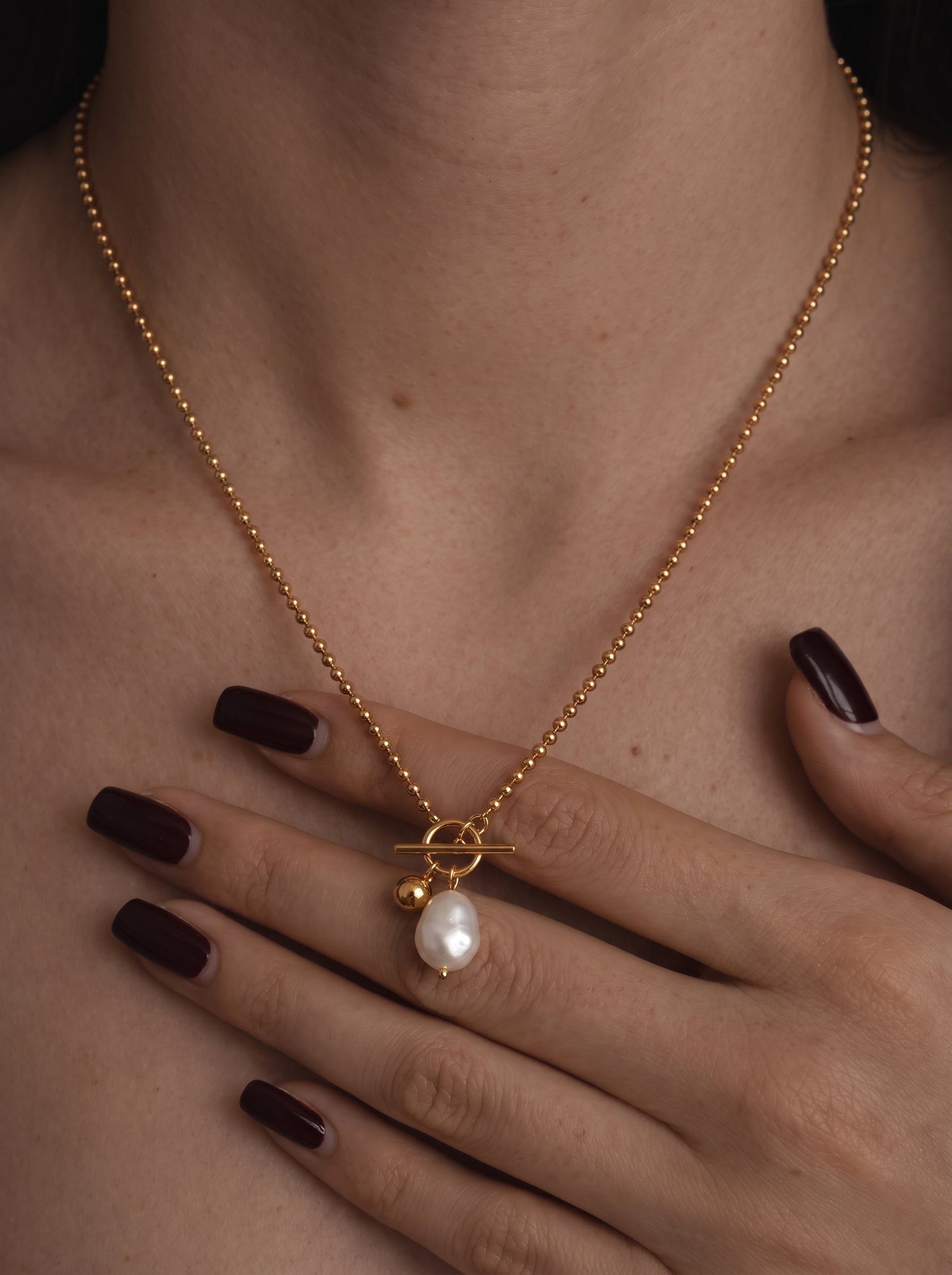
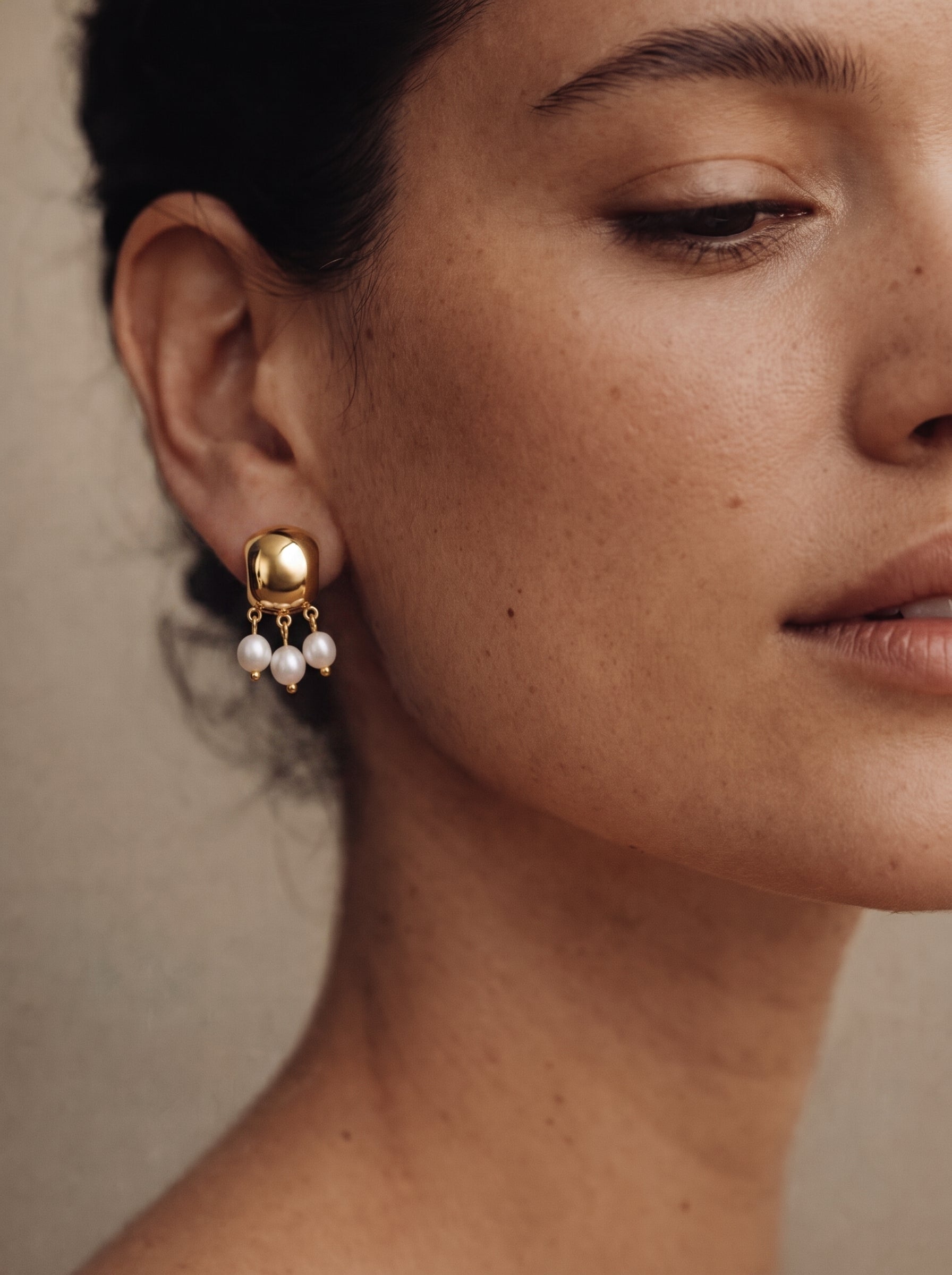
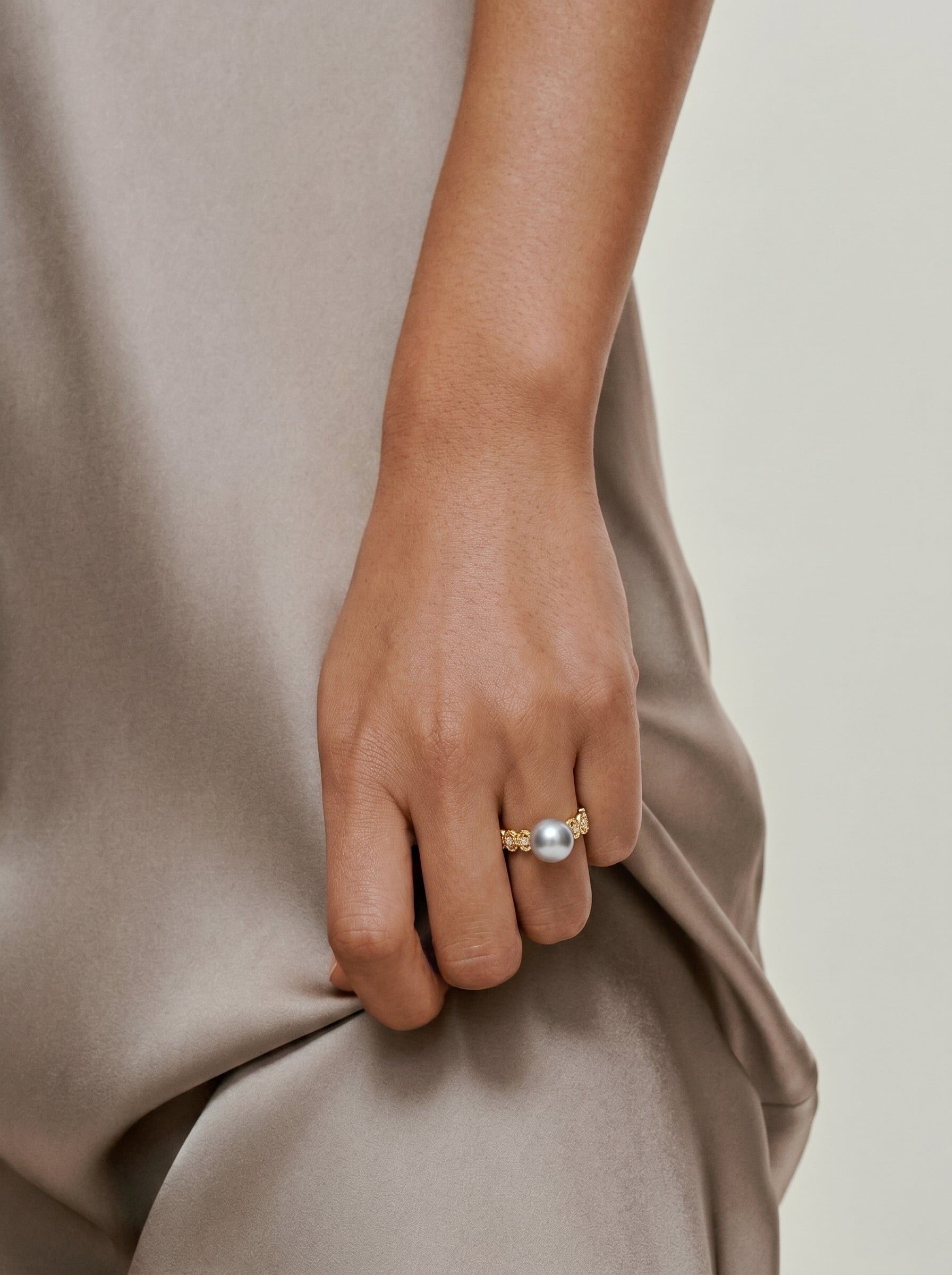
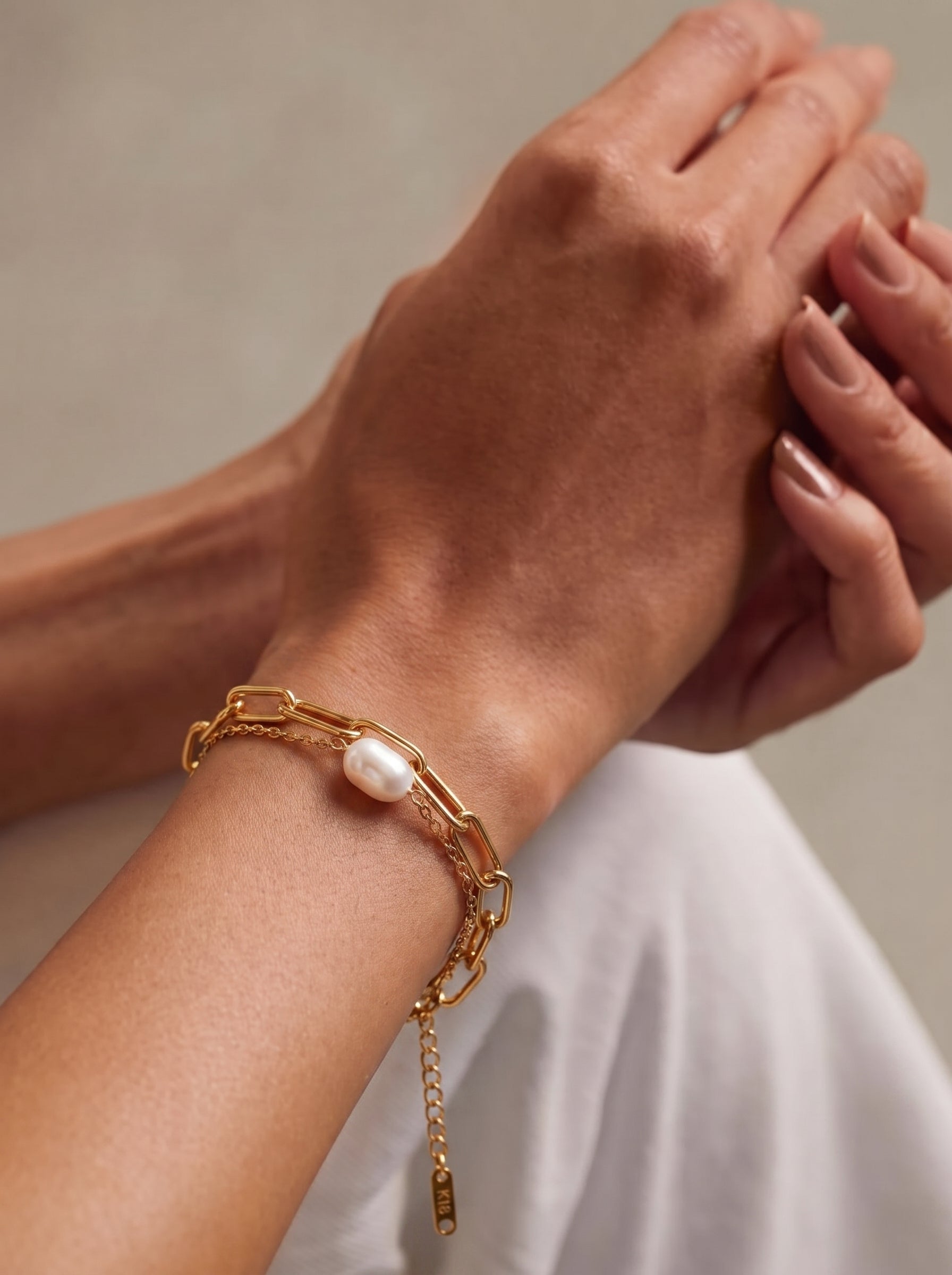
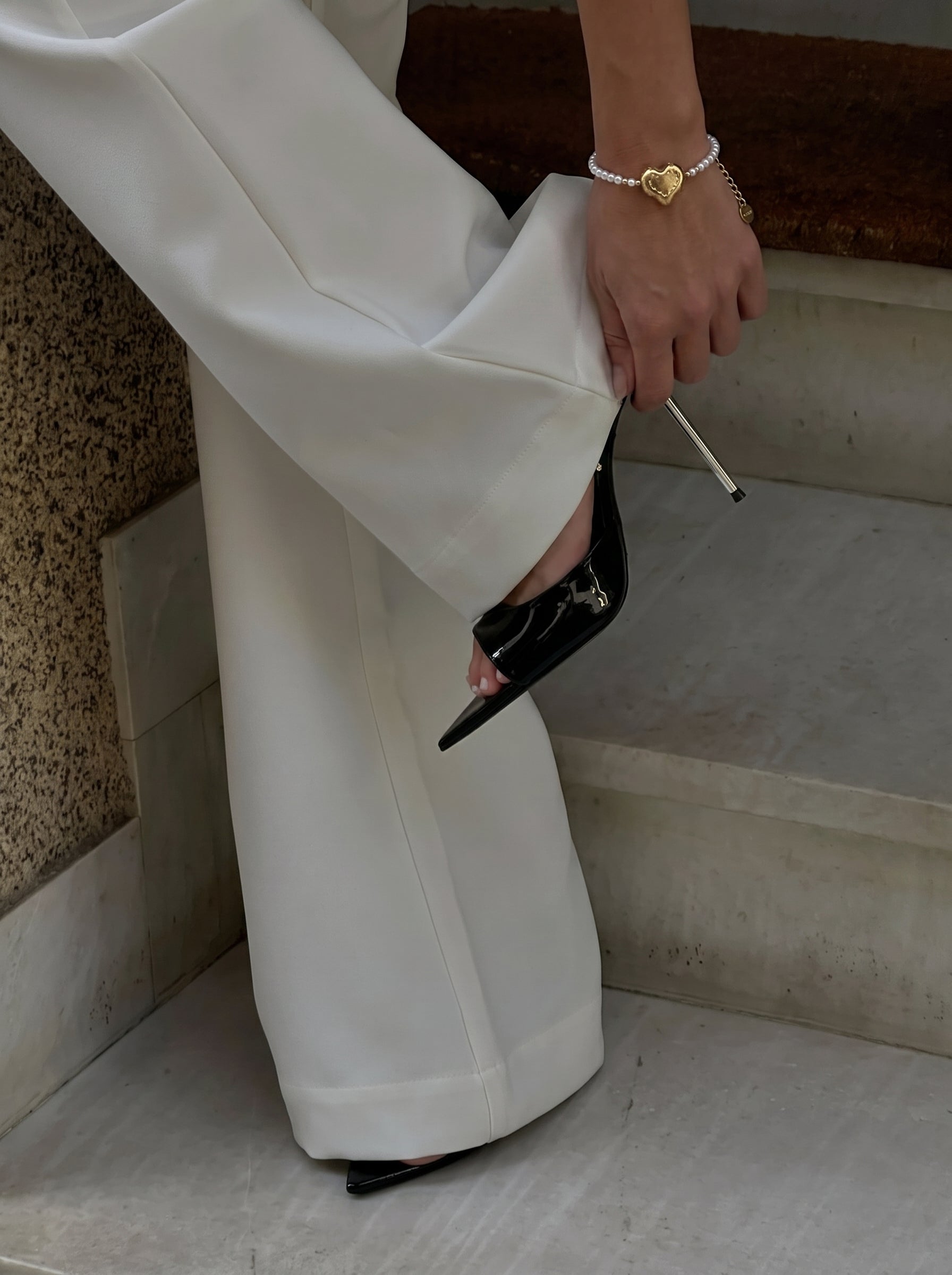
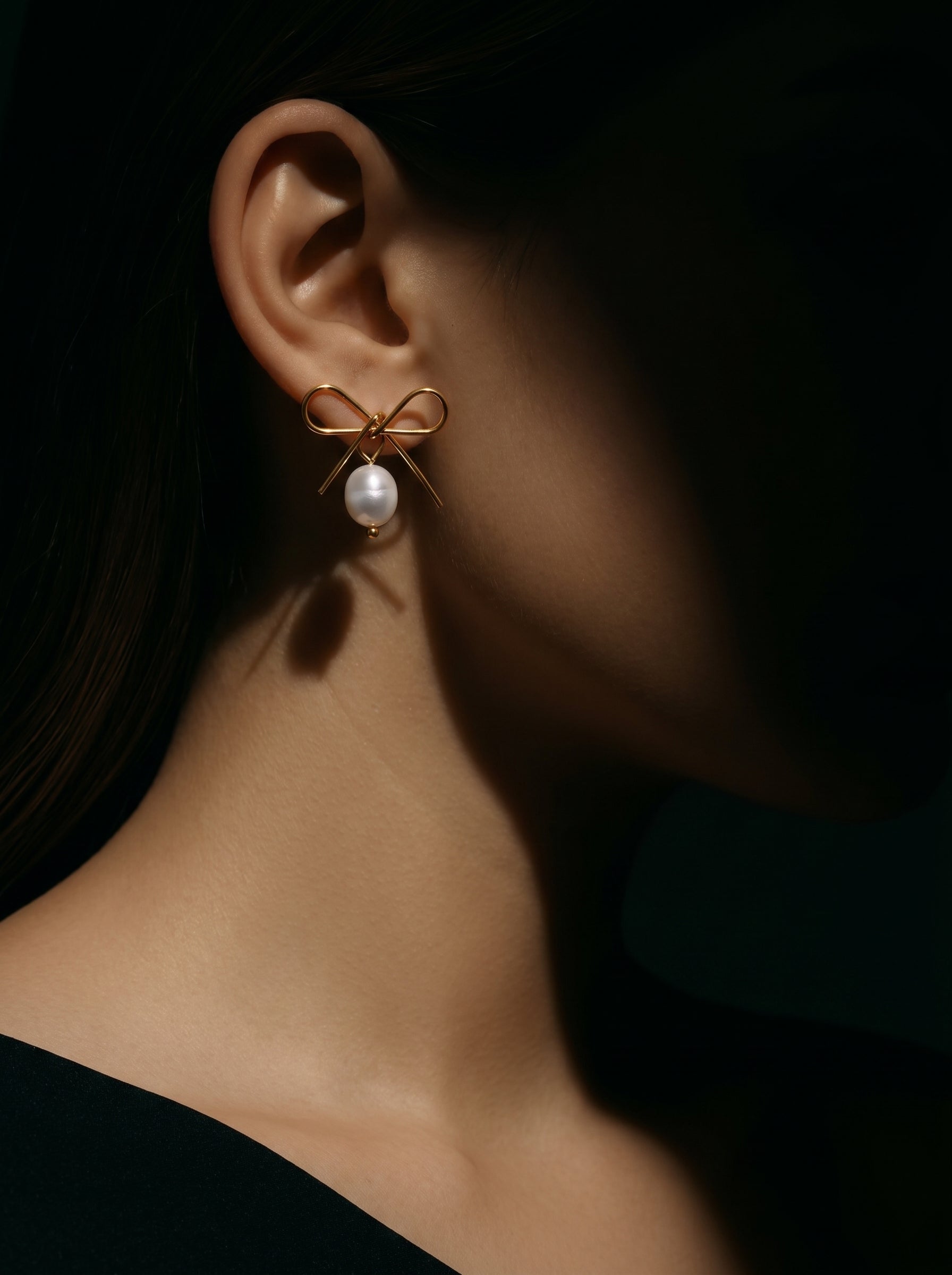
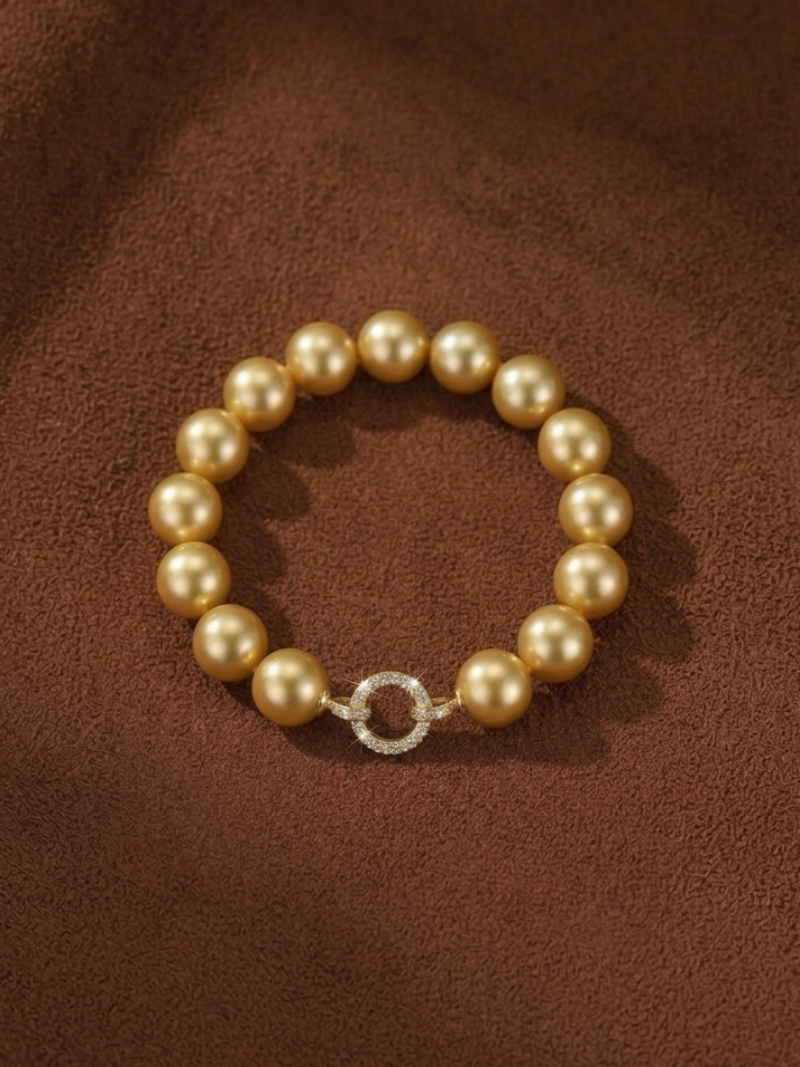
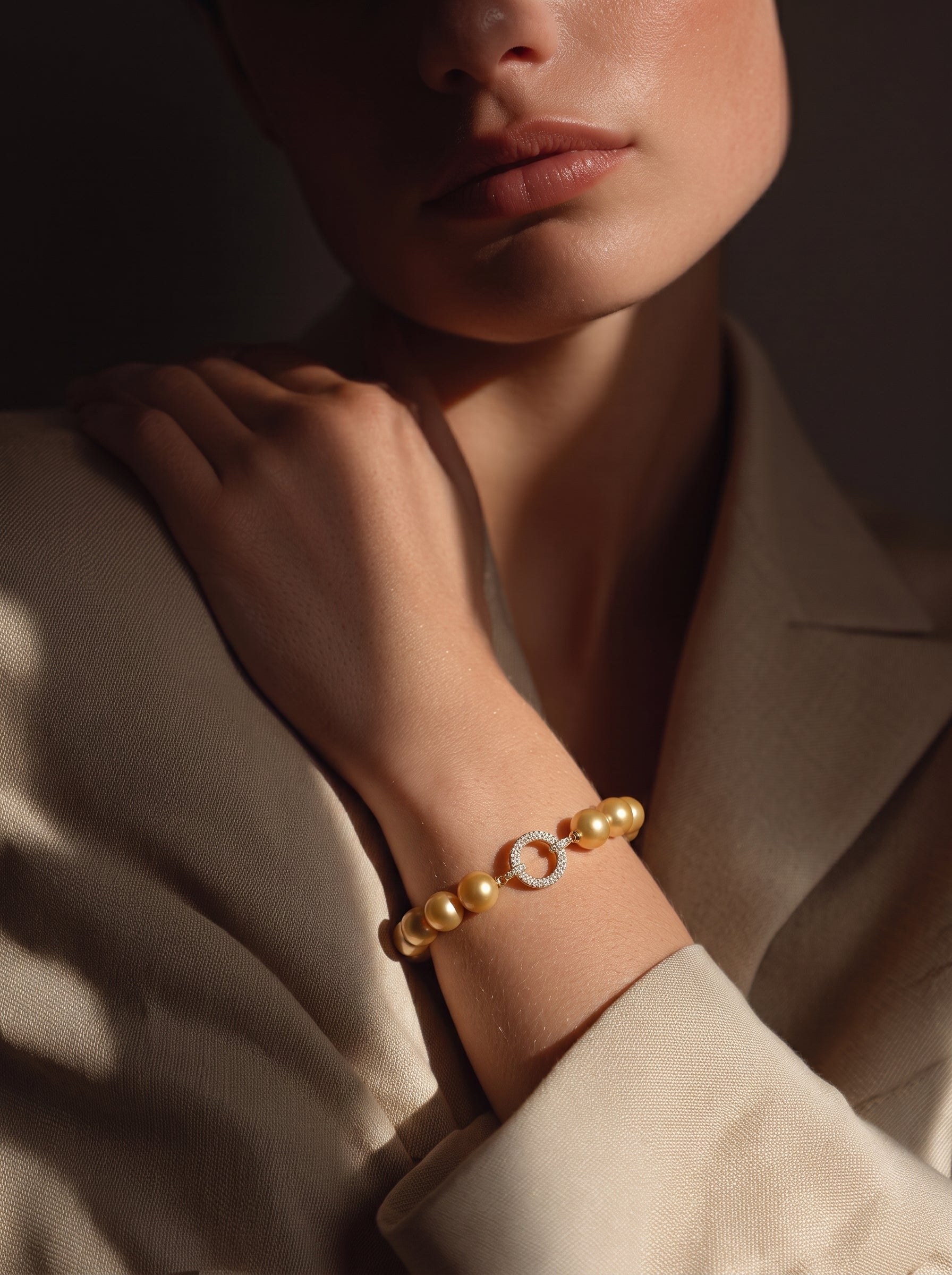
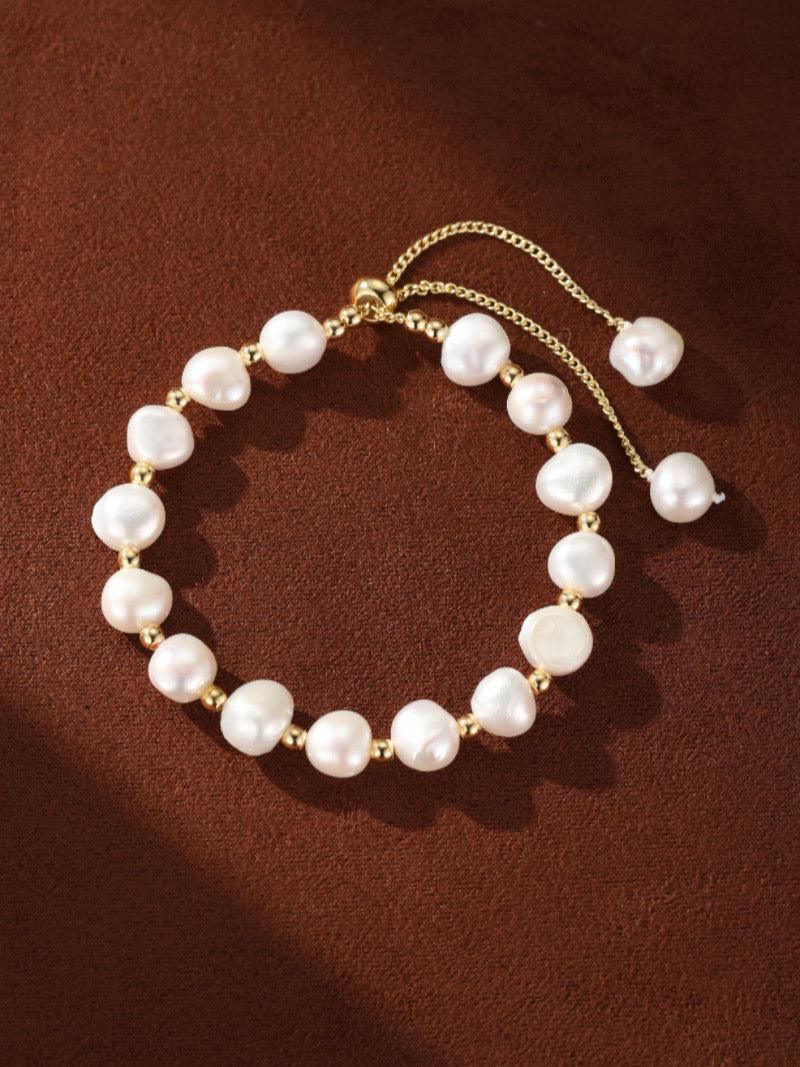
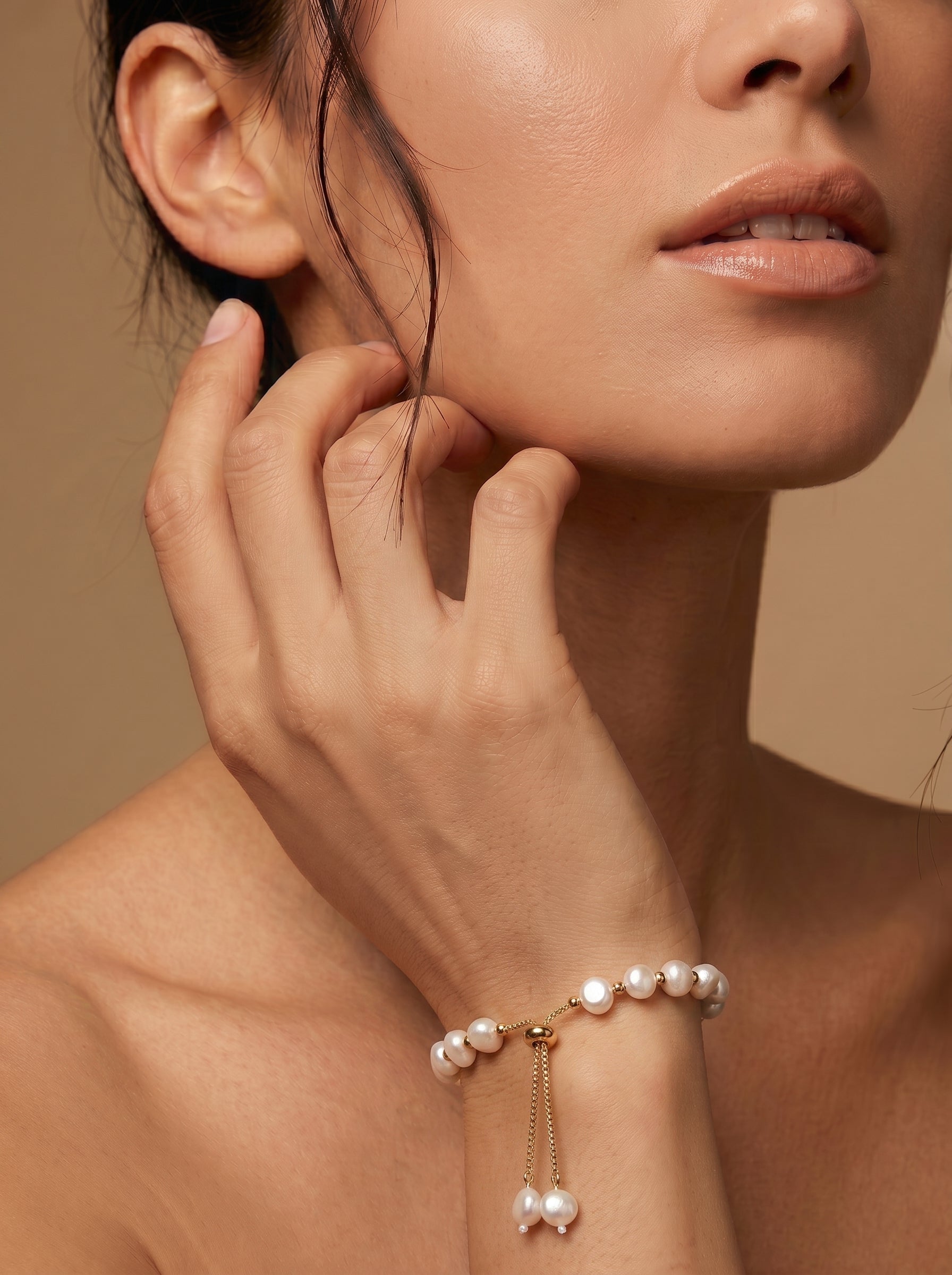
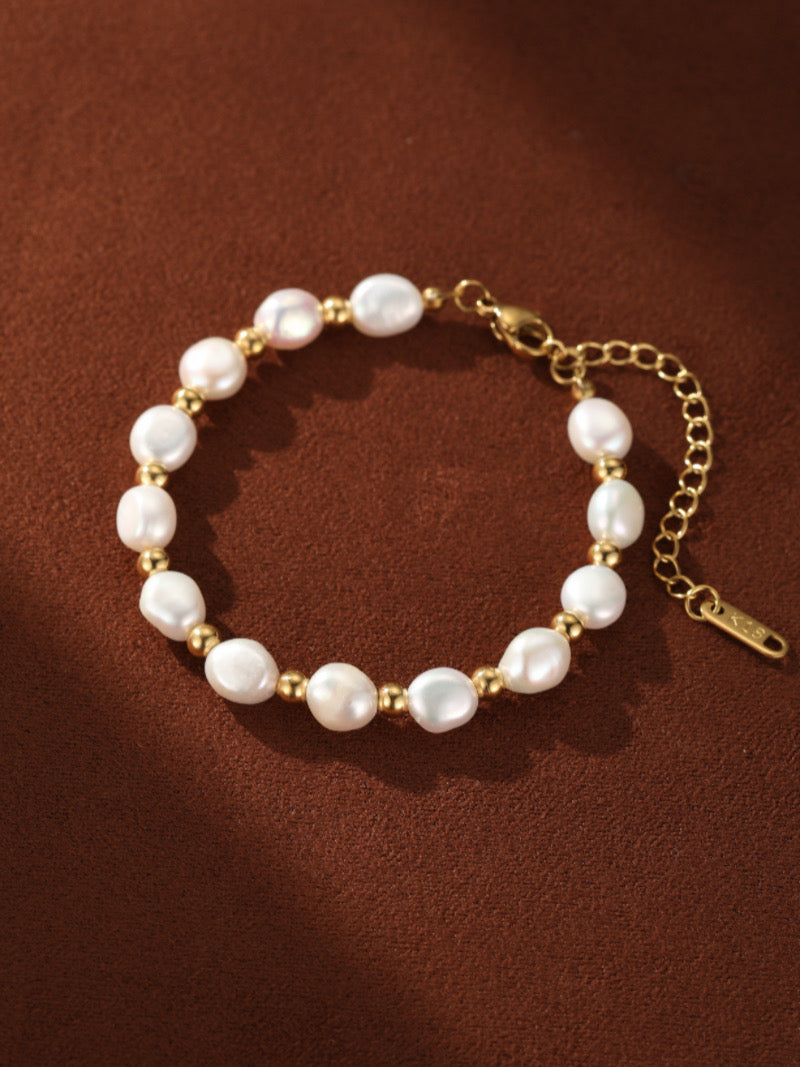
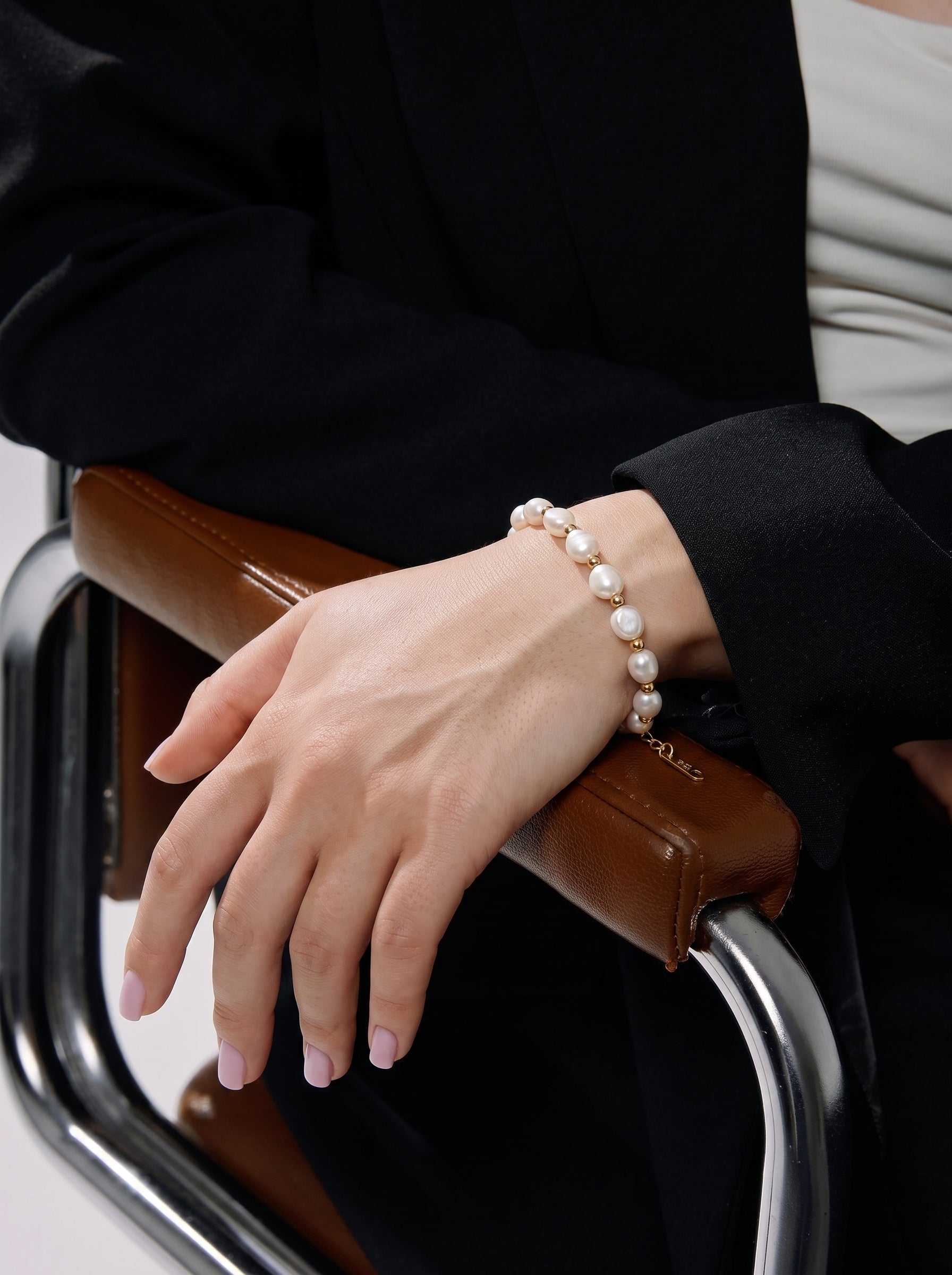
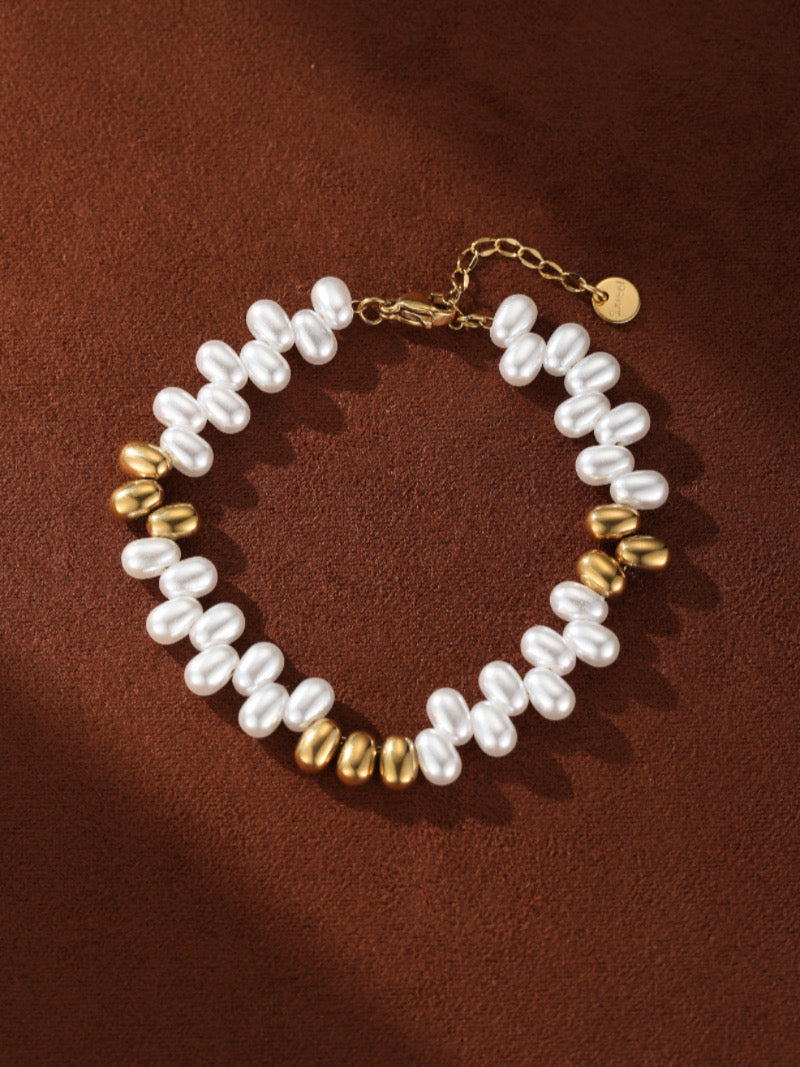
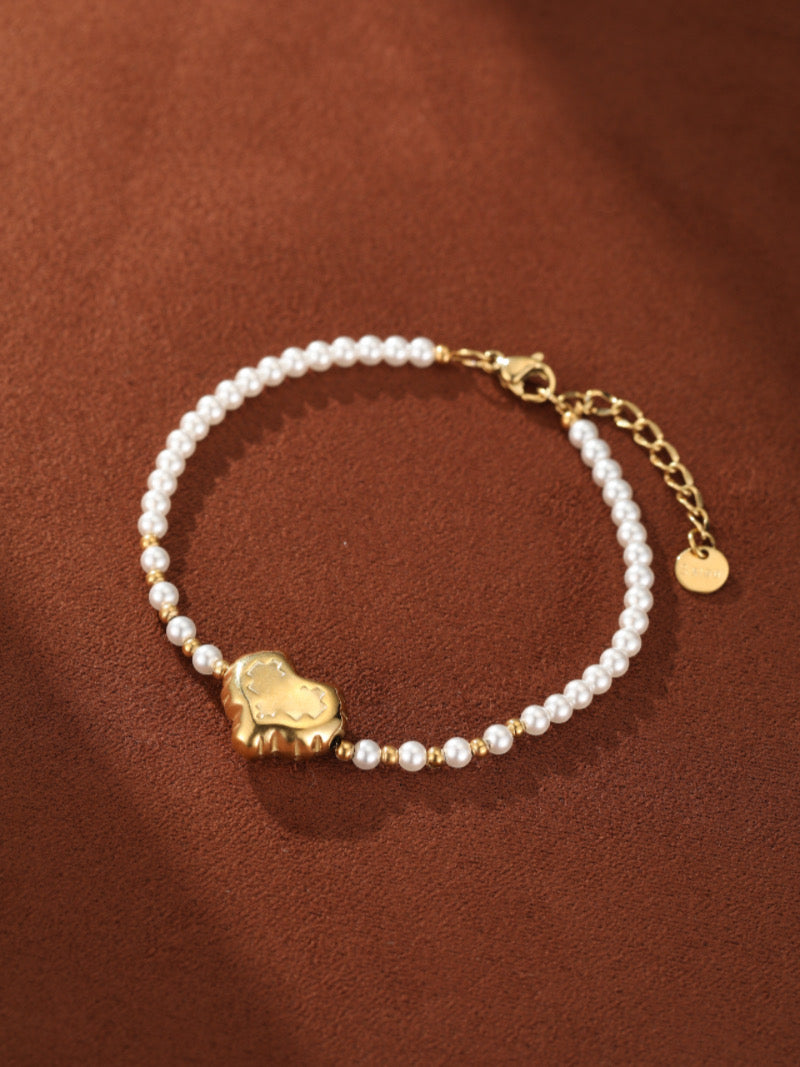
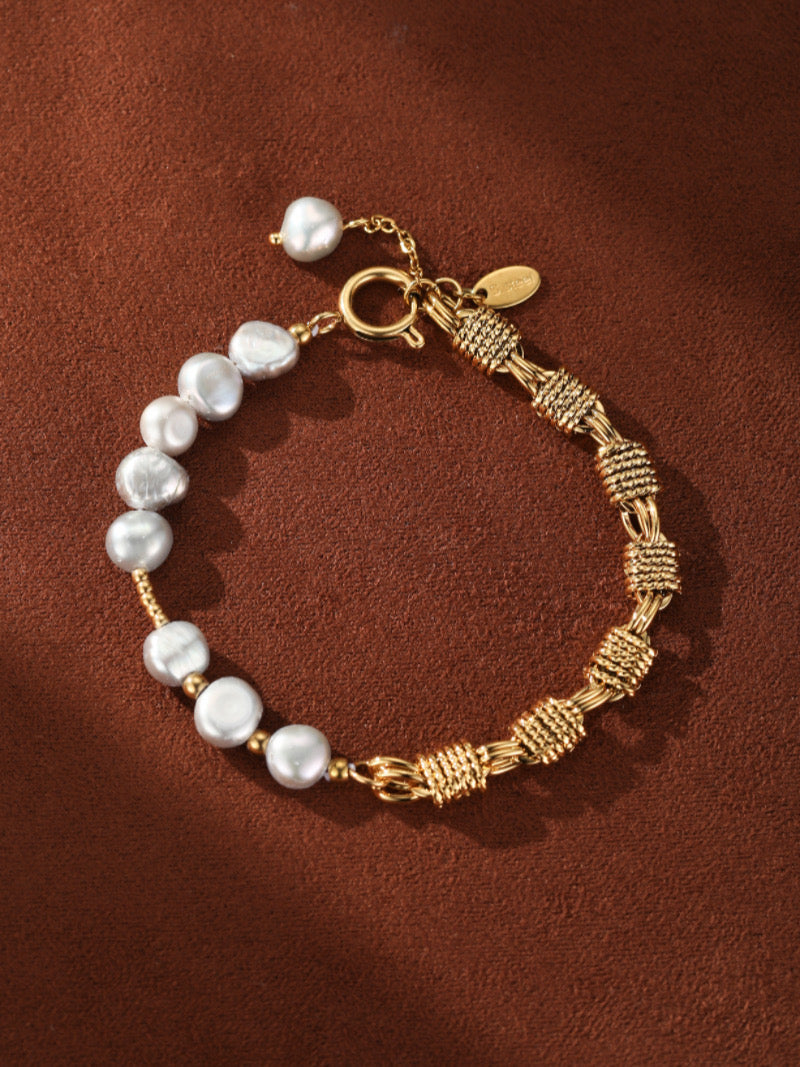
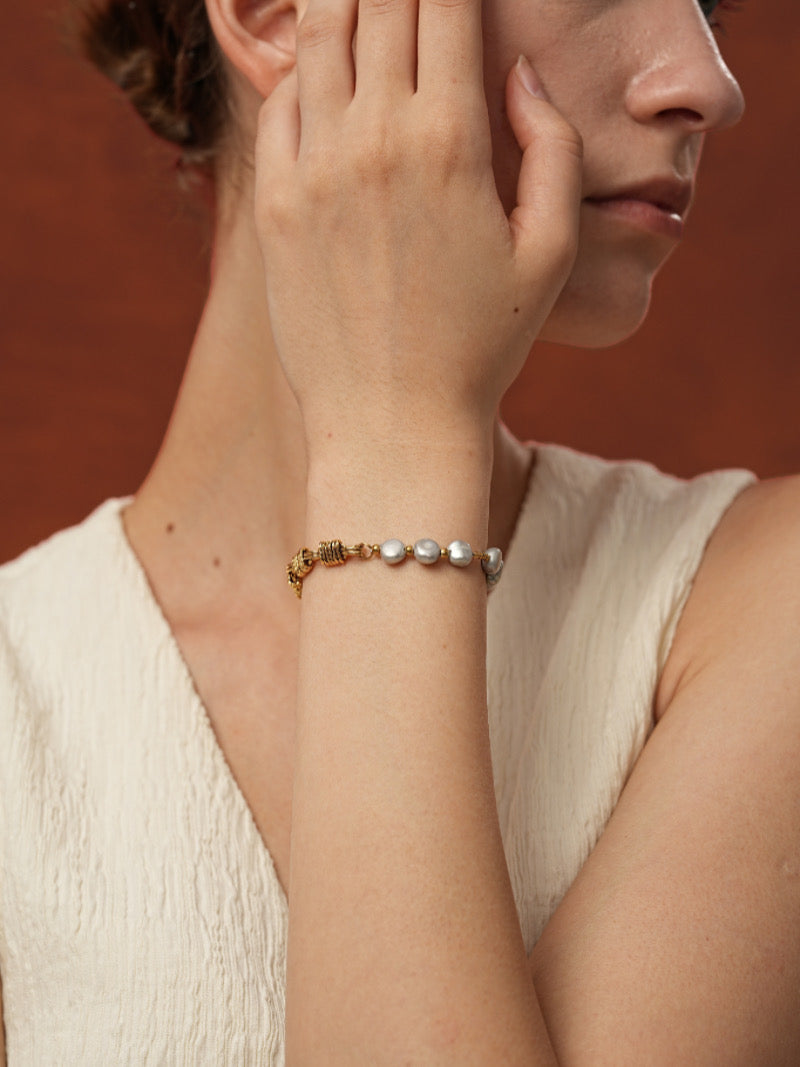
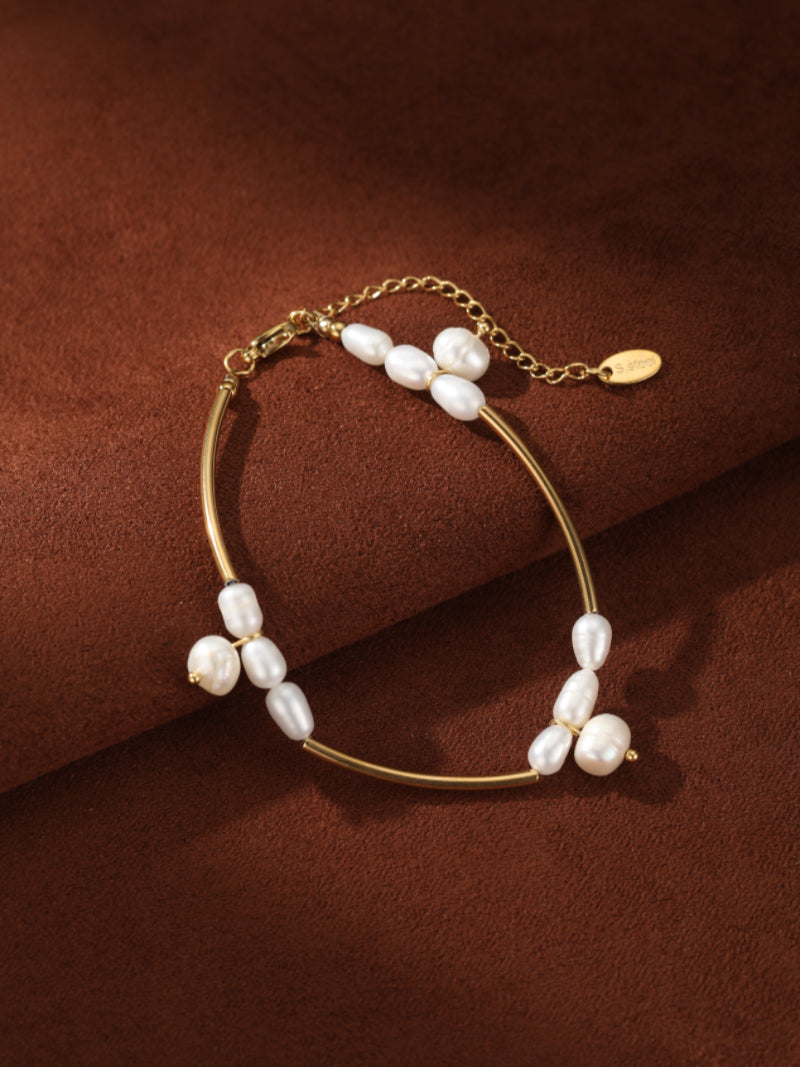
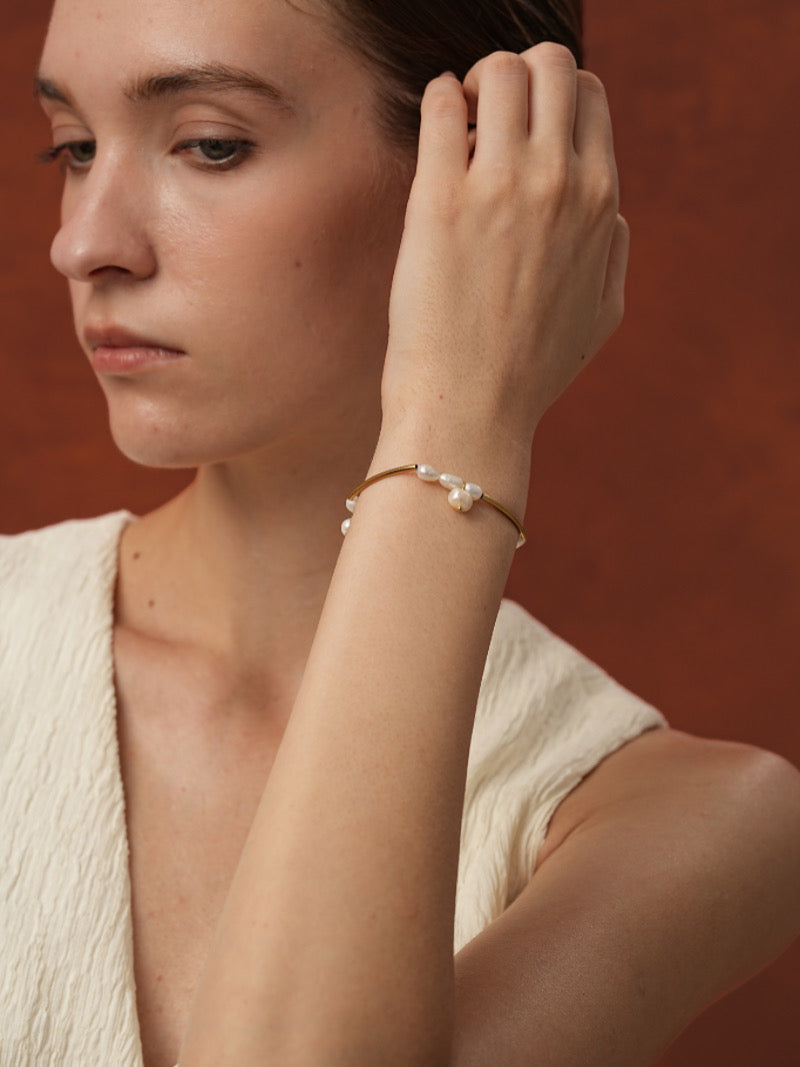
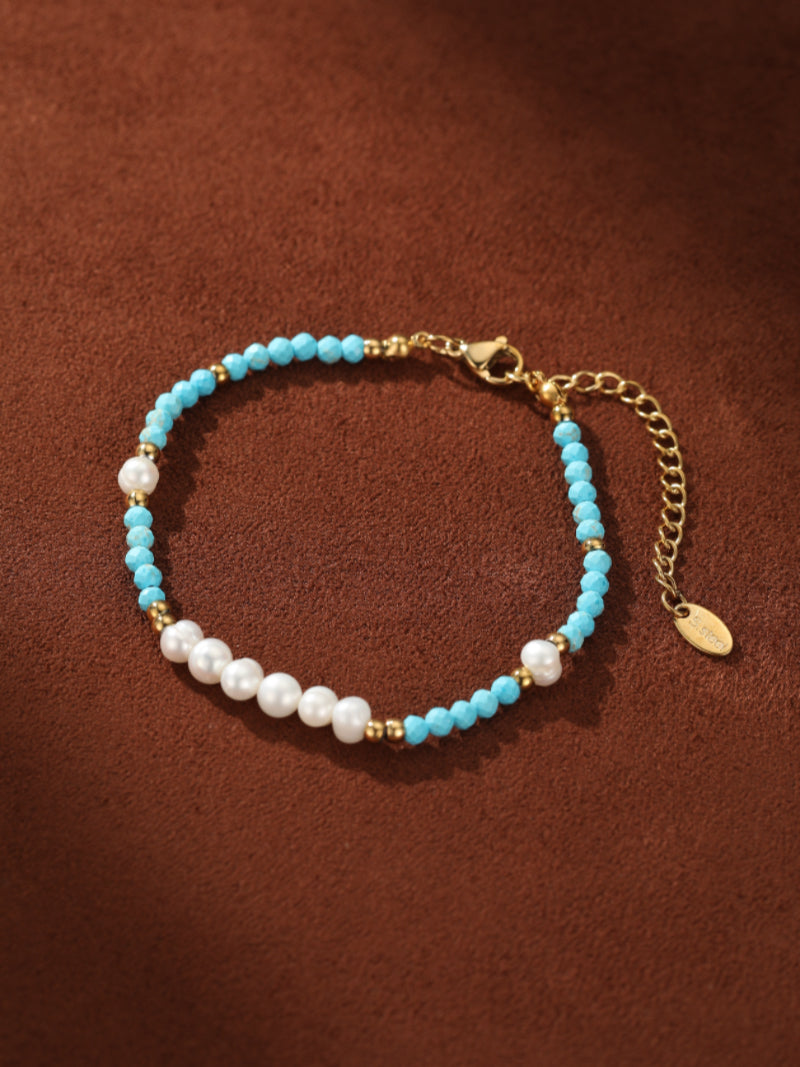
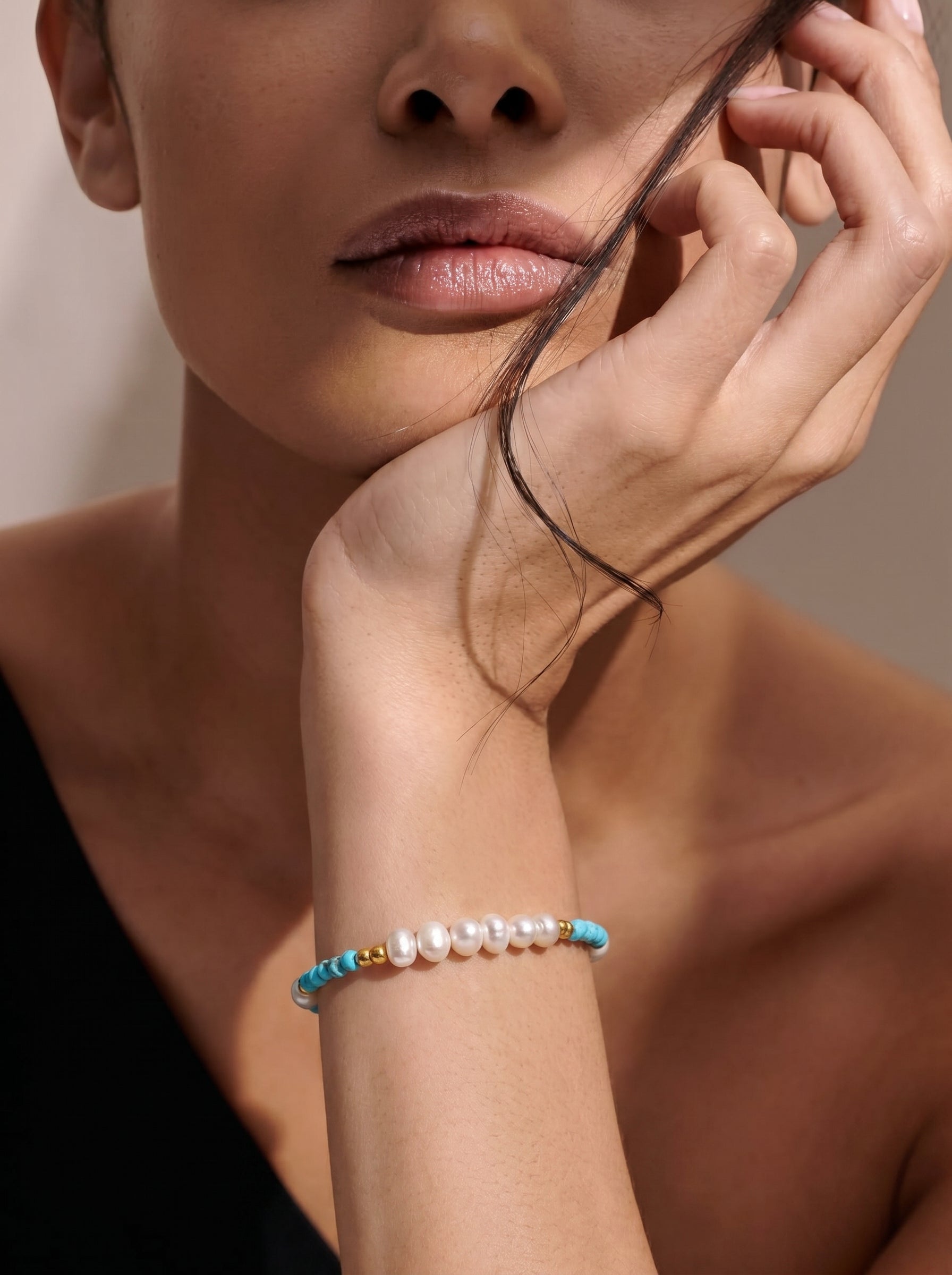
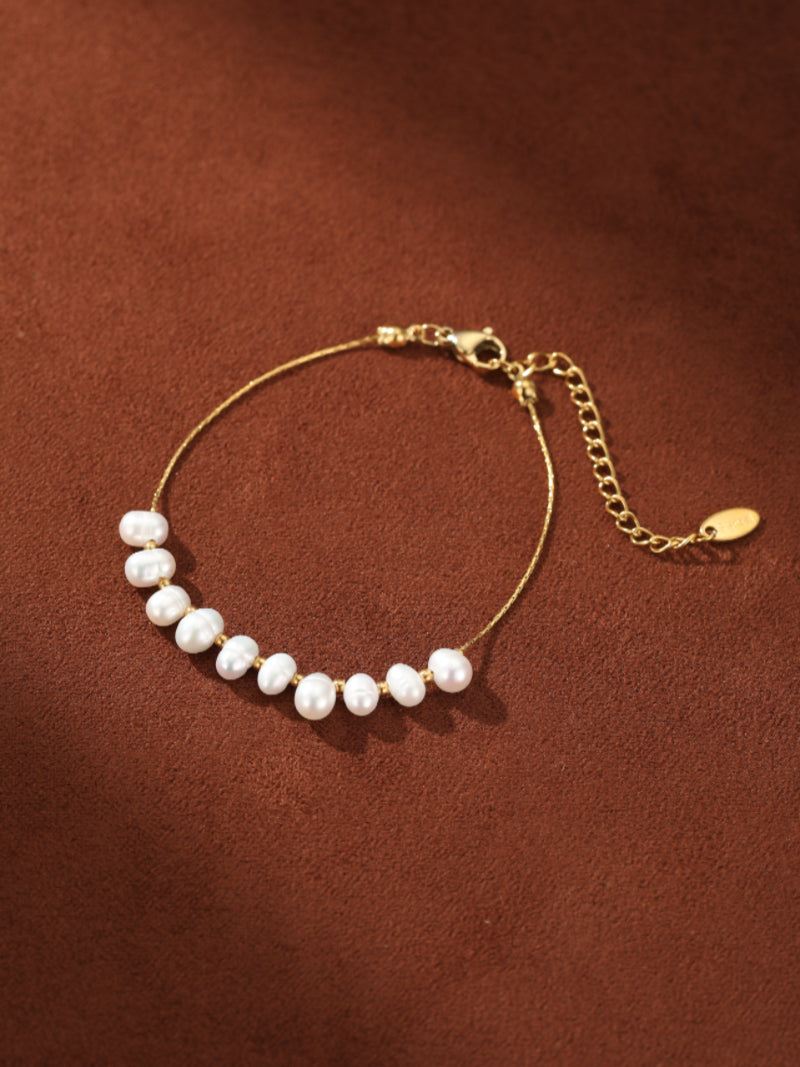
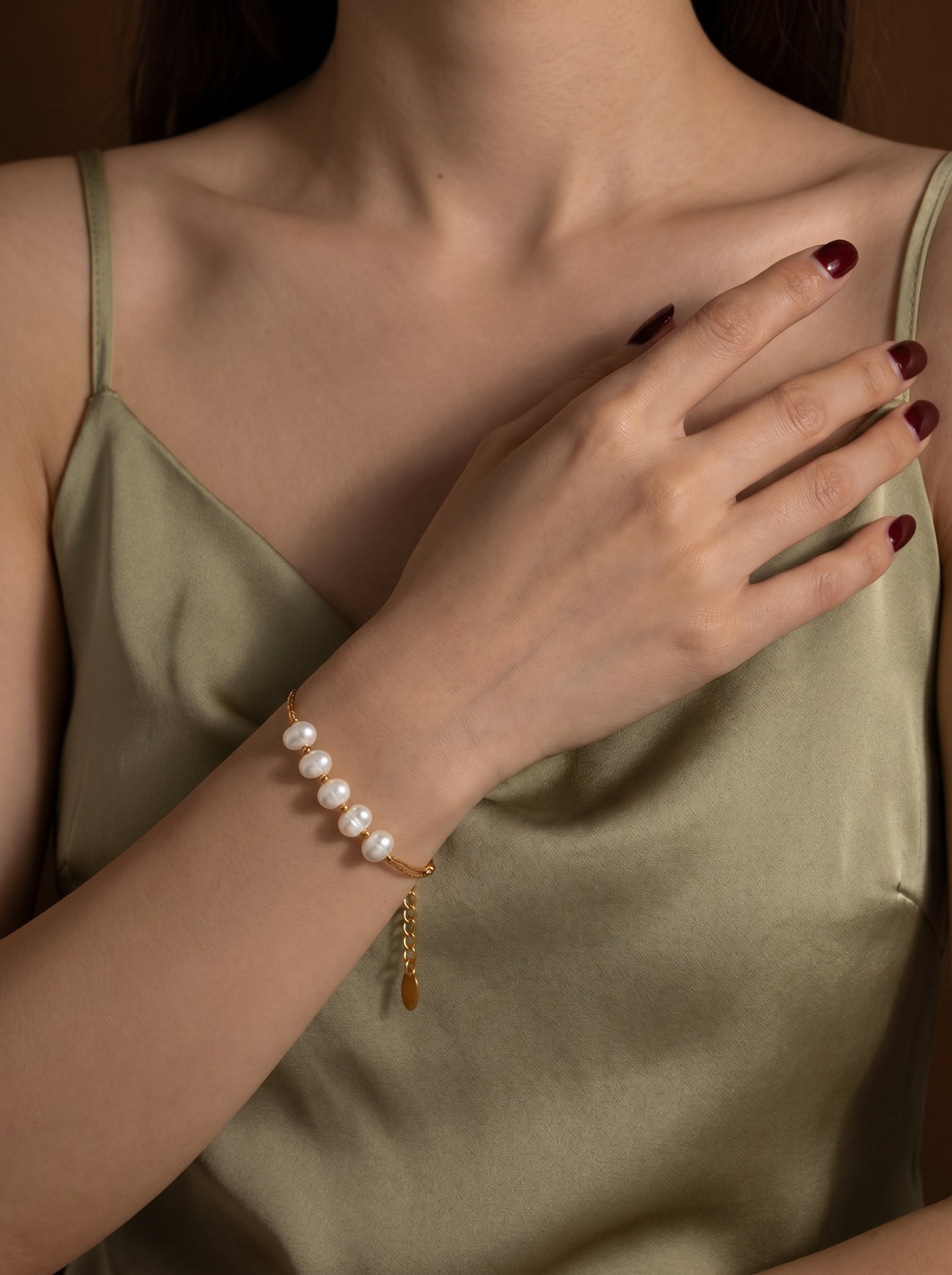
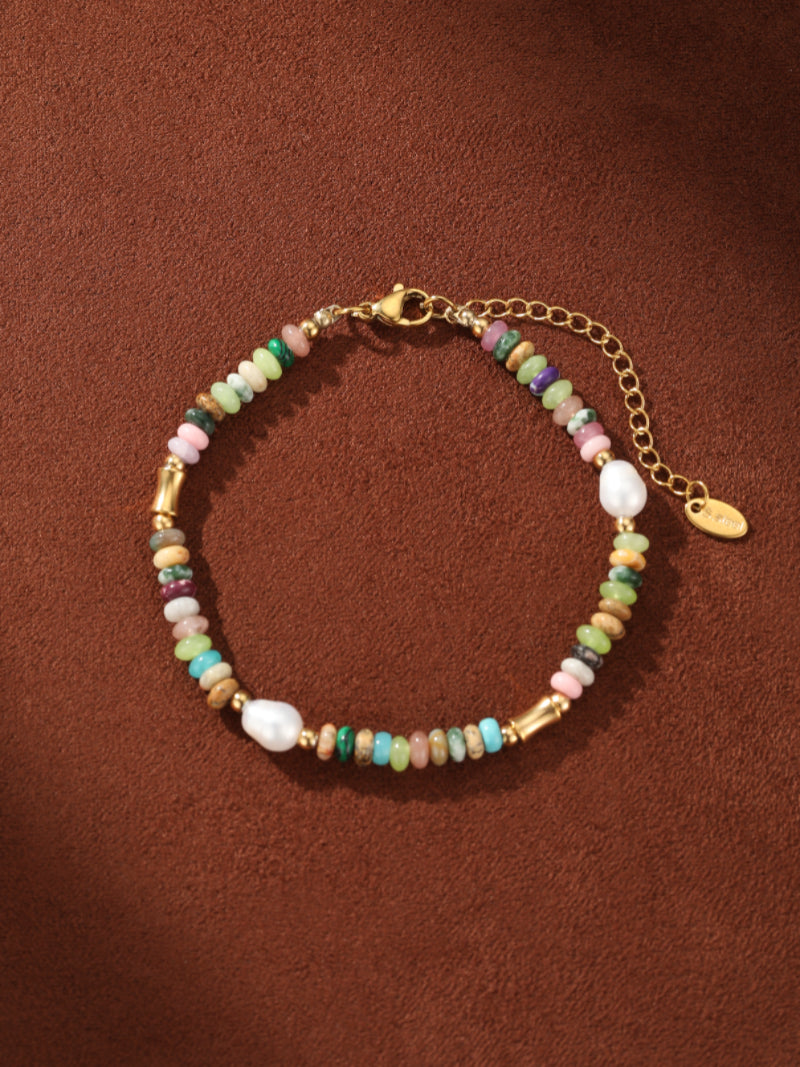
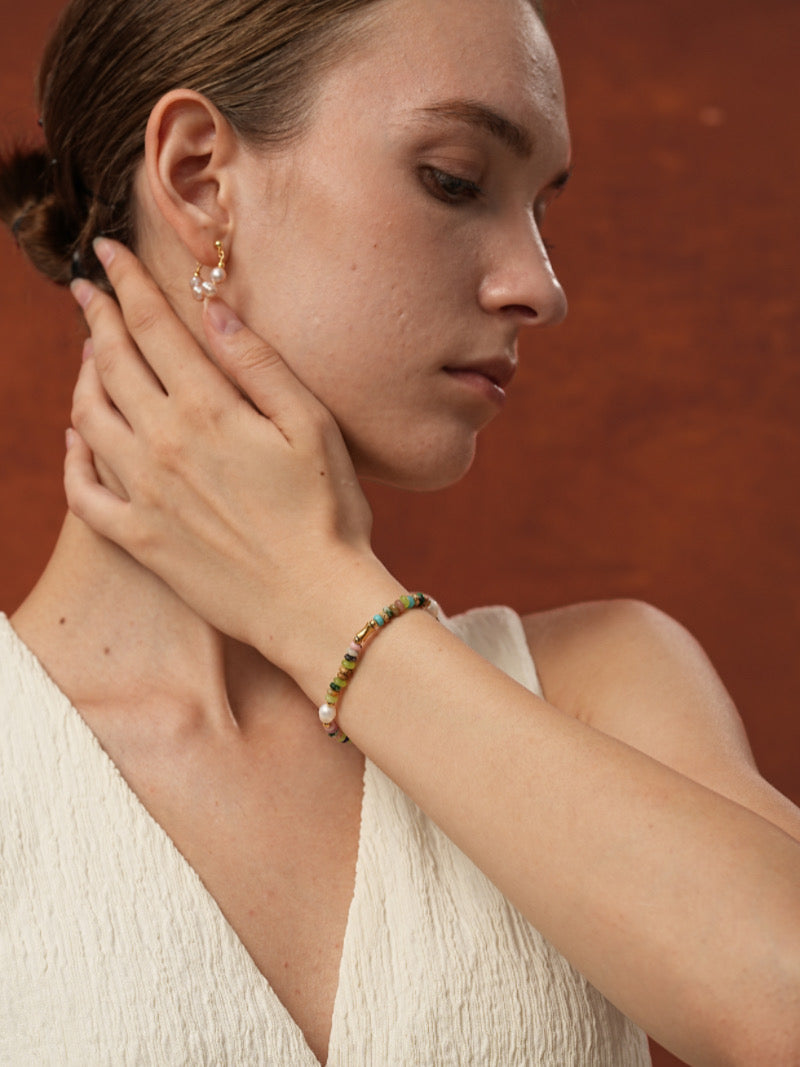
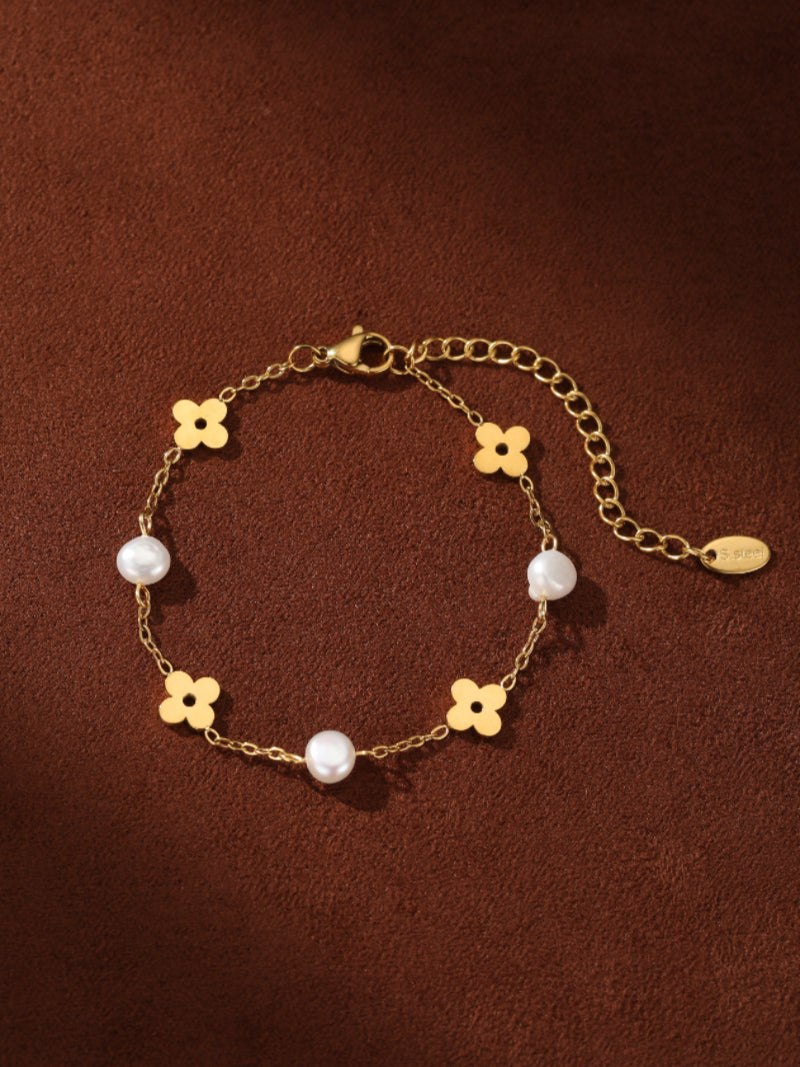
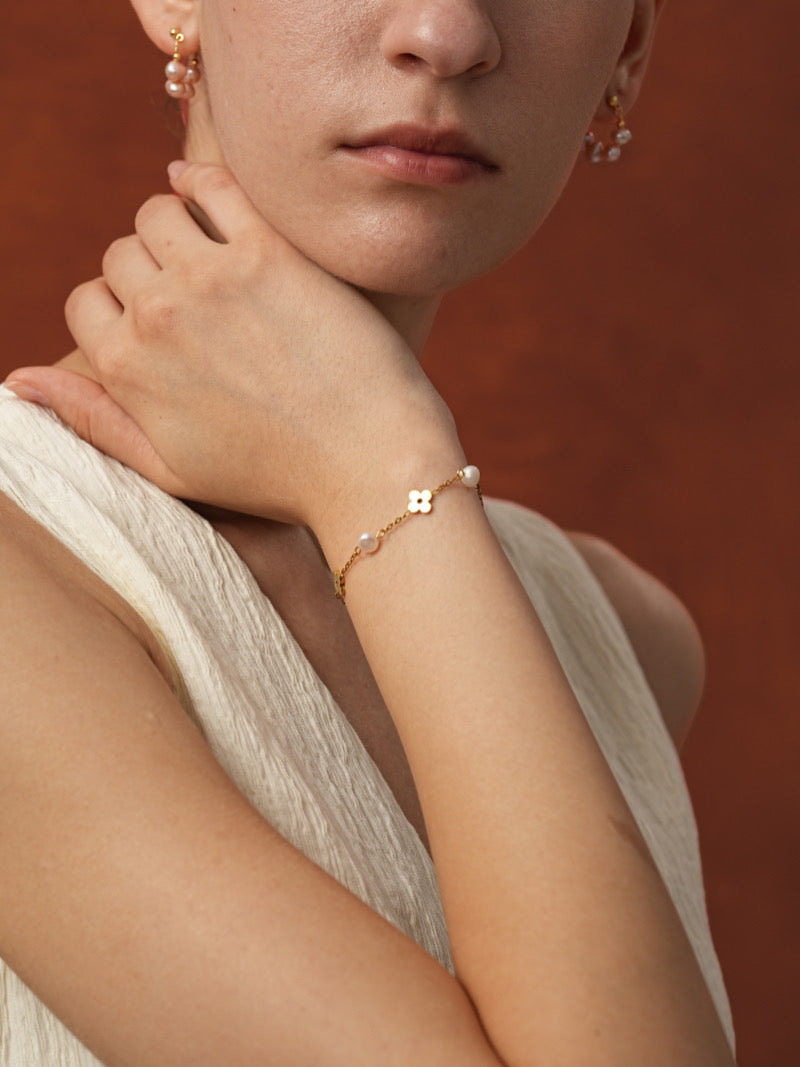
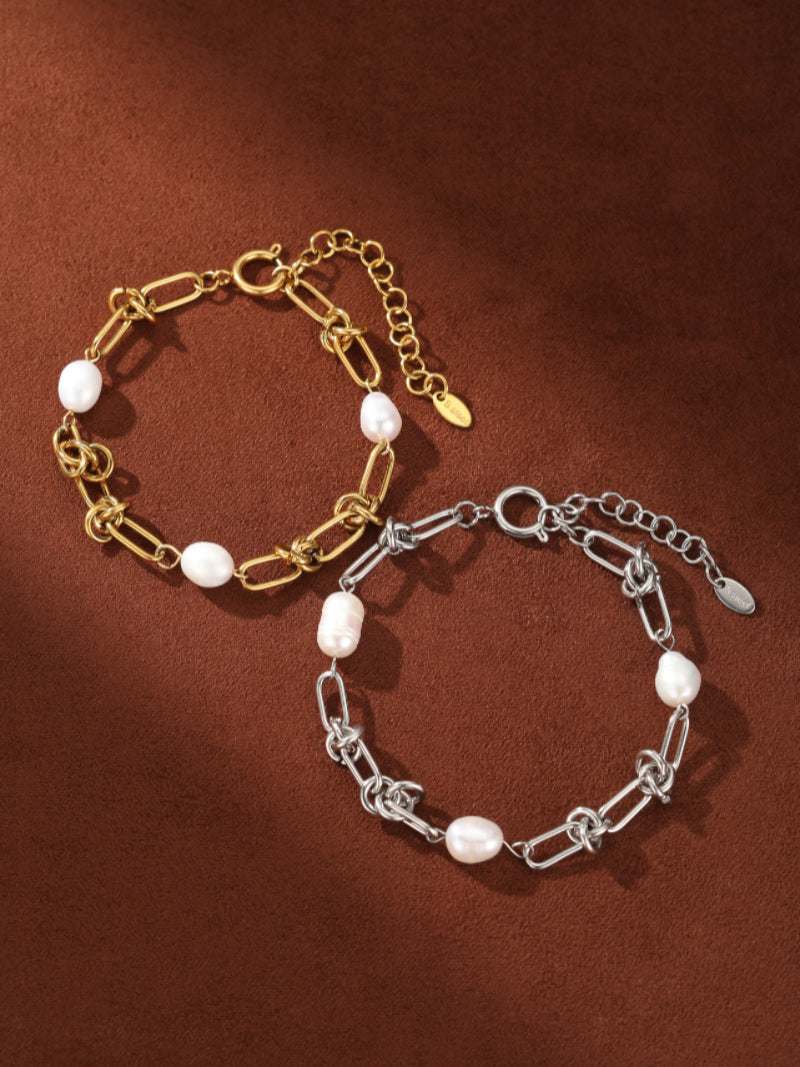
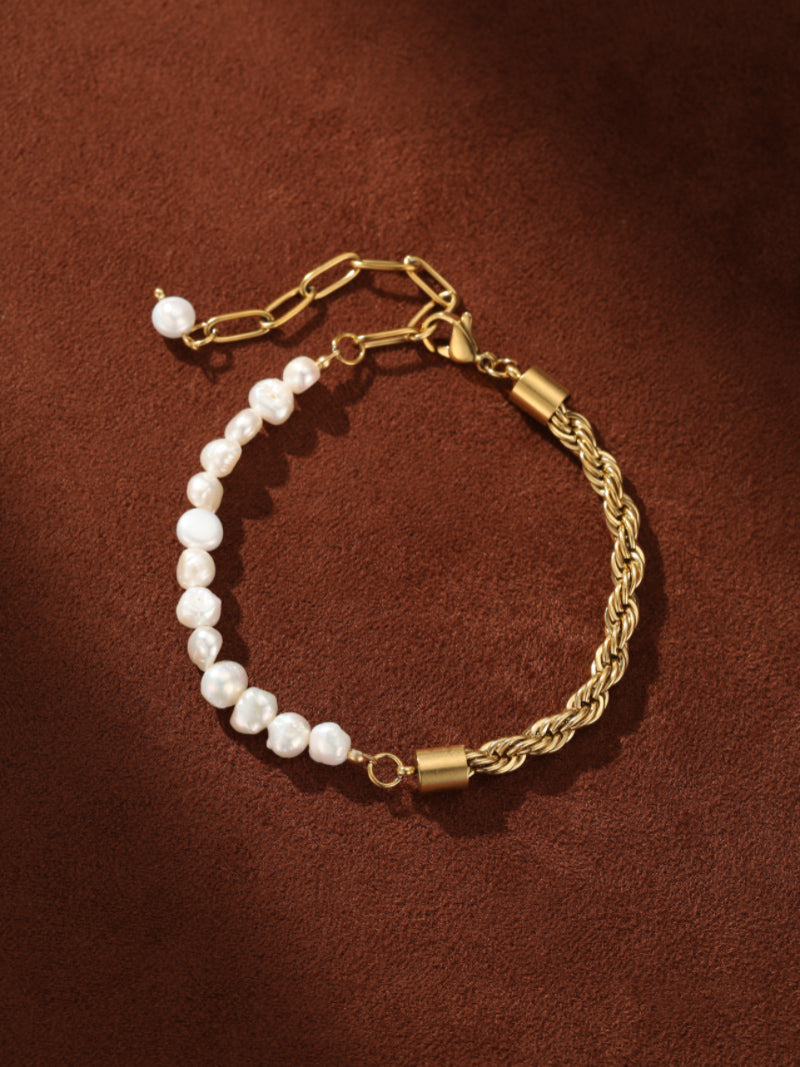
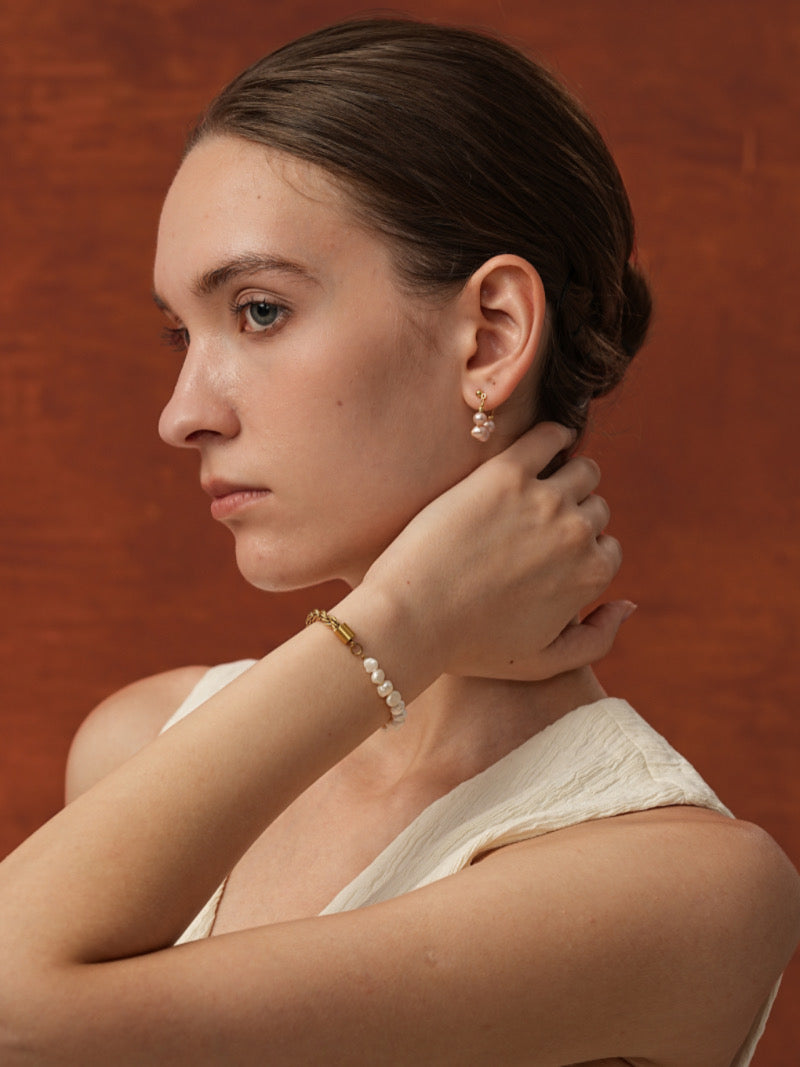
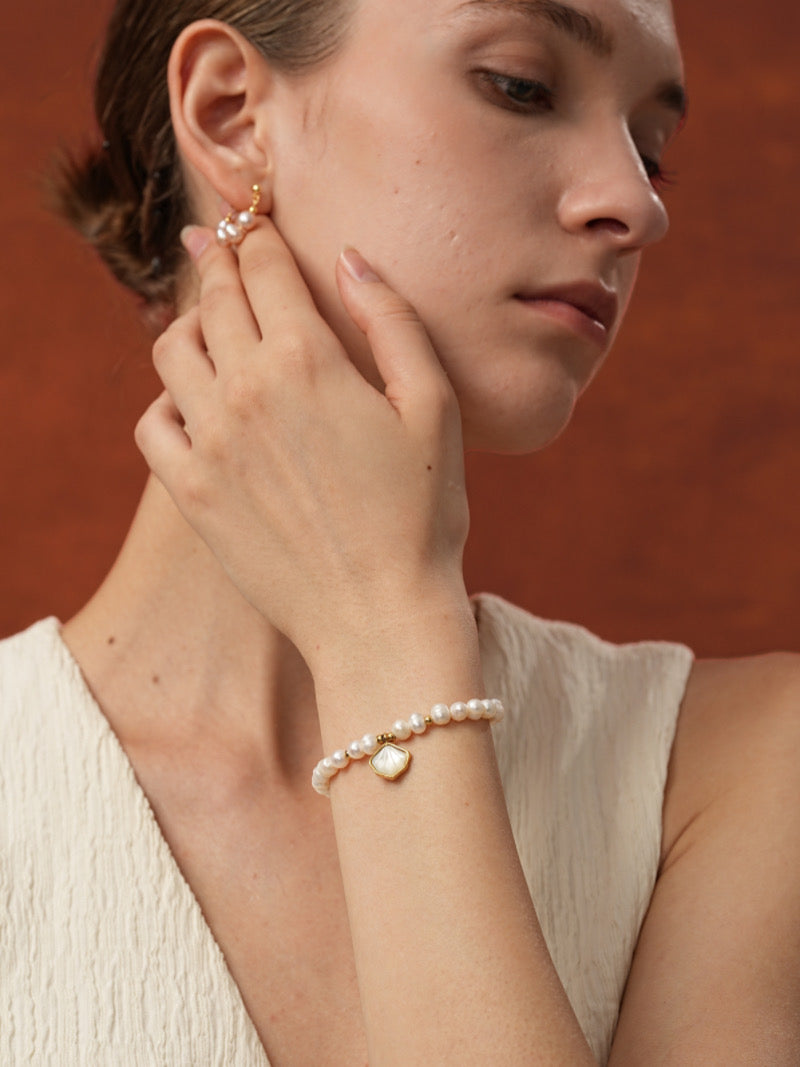
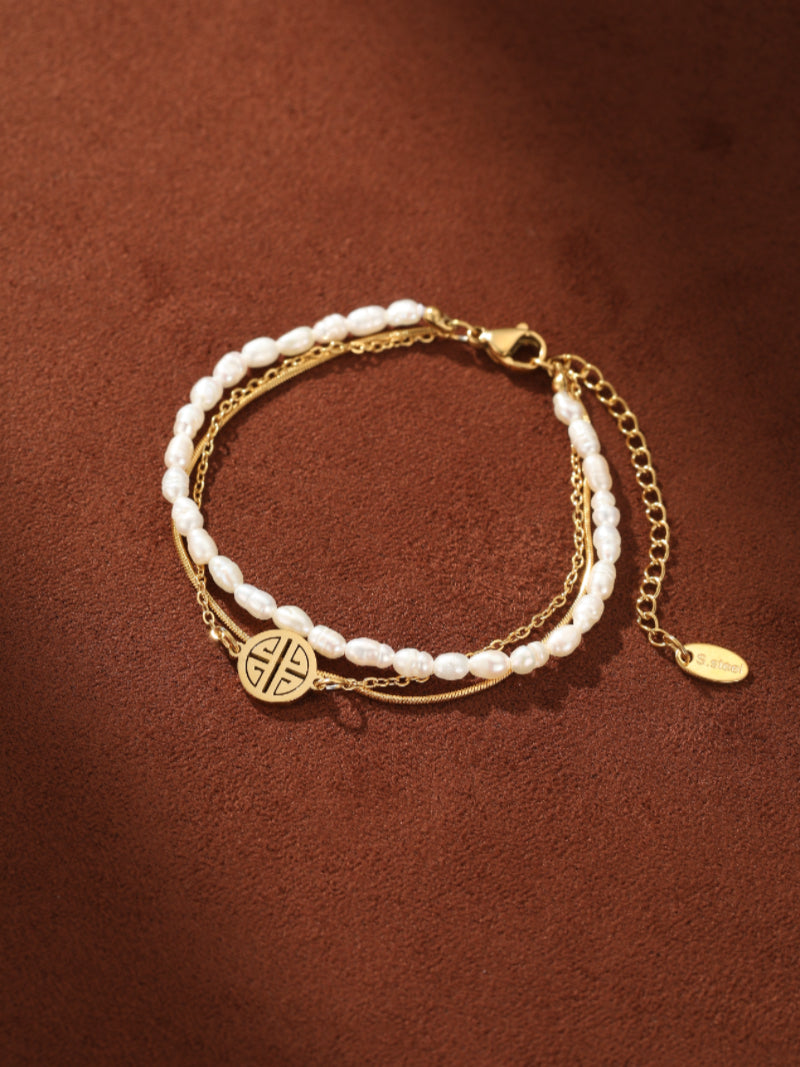
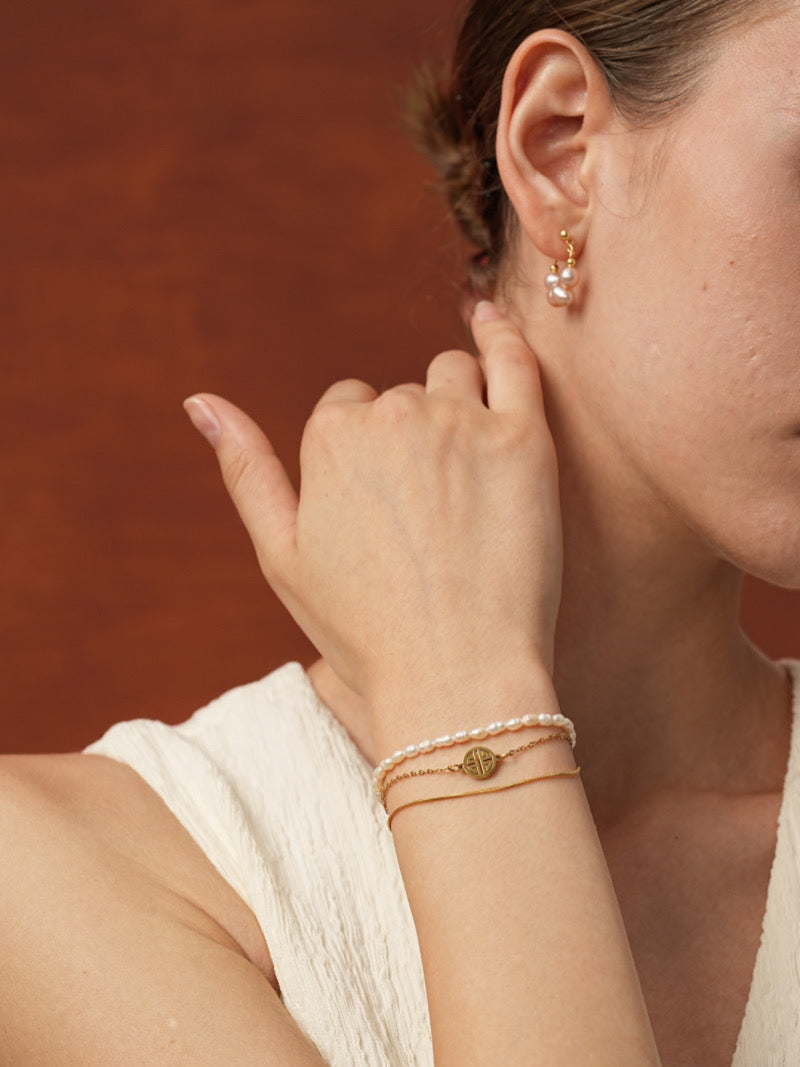
Pearls strung one after another, the way bracelets have been made for centuries. Some plain, some with charms. These are the ones that stack, and most people who buy one come back for a second.
What is a pearl bead bracelet?
A pearl bead bracelet is a strand of cultured pearls threaded onto silk, cord or elastic, rather than set individually into metal. The pearls sit against each other and the whole piece flexes with the wrist.
It is the oldest construction in pearl jewelry and still the most versatile, because a strand adapts to any wrist and layers with anything else you already wear.
Should pearls be knotted between beads?
On a strung bracelet, yes, and for two separate reasons. Knots keep the pearls from rubbing against each other, which matters because nacre is soft and adjacent beads abrade over years.
They also limit the damage if the thread breaks. A knotted strand loses one pearl. An unknotted one loses all of them across a floor.
Which bead bracelet style should you choose?
Plain strands
Pearls and nothing else. The most adaptable version, and the one that layers cleanly with a watch or a fine chain without competing with either.
Charm bracelets
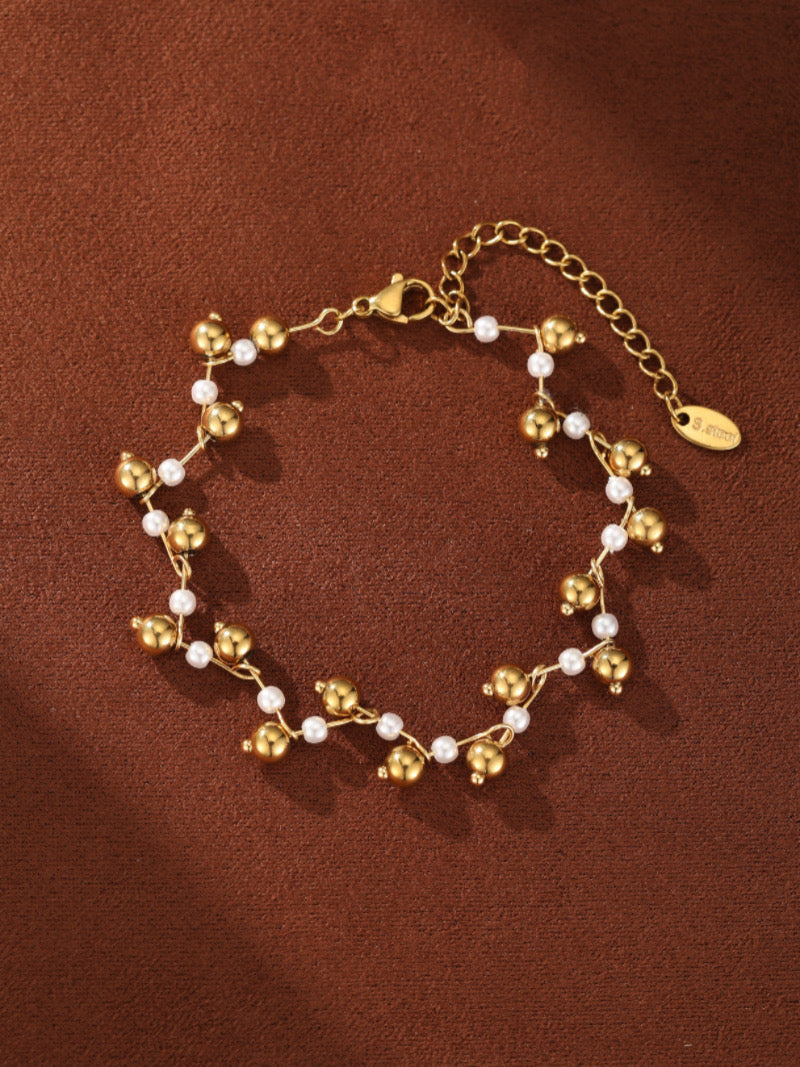
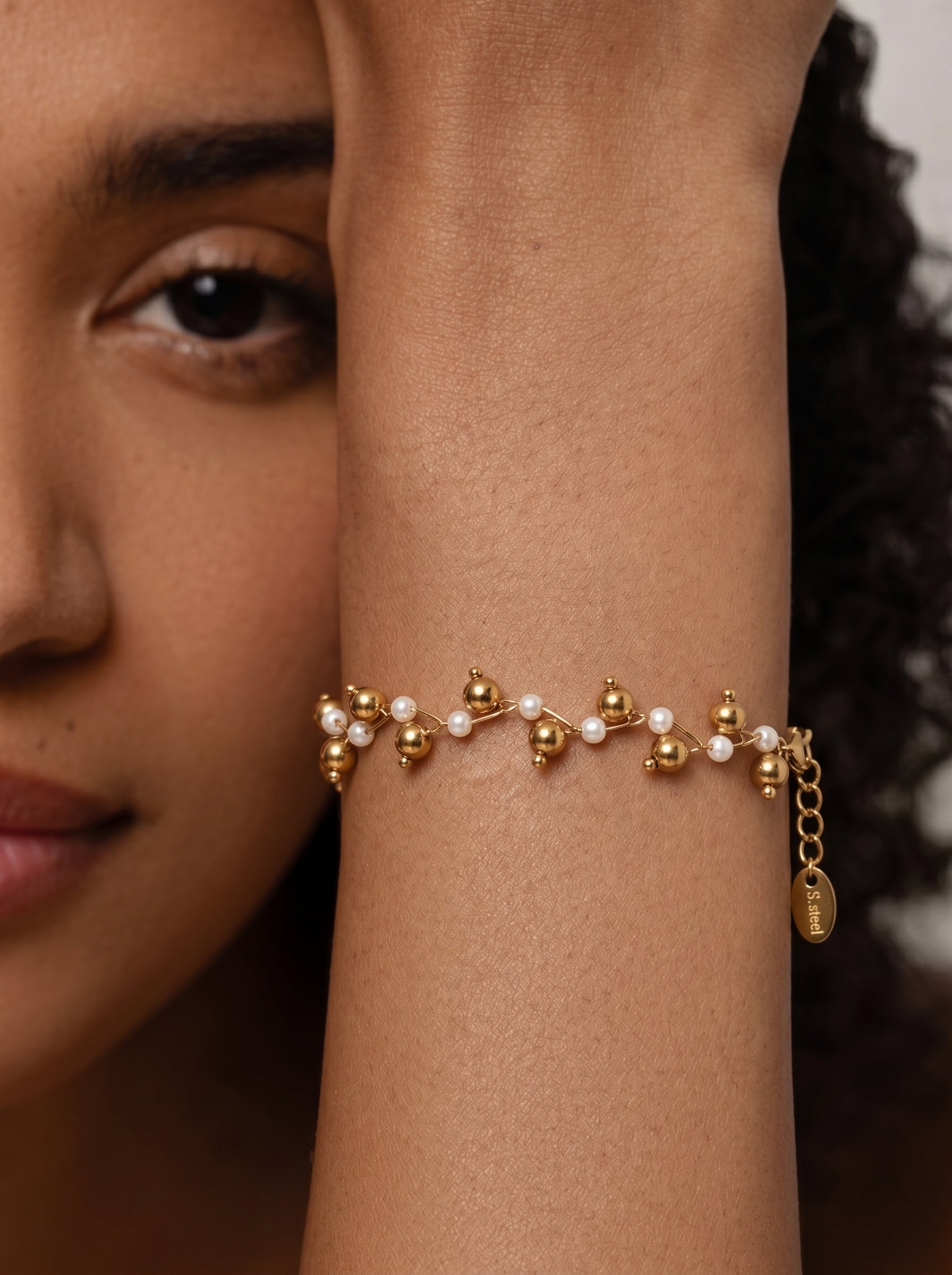
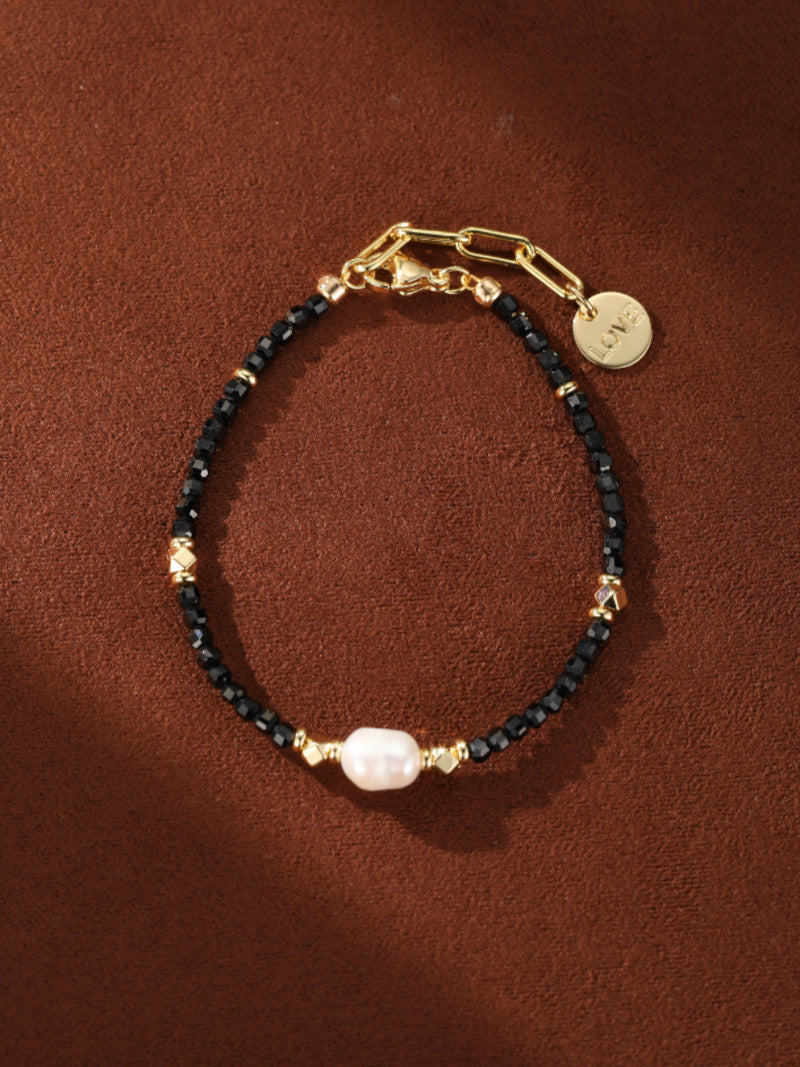
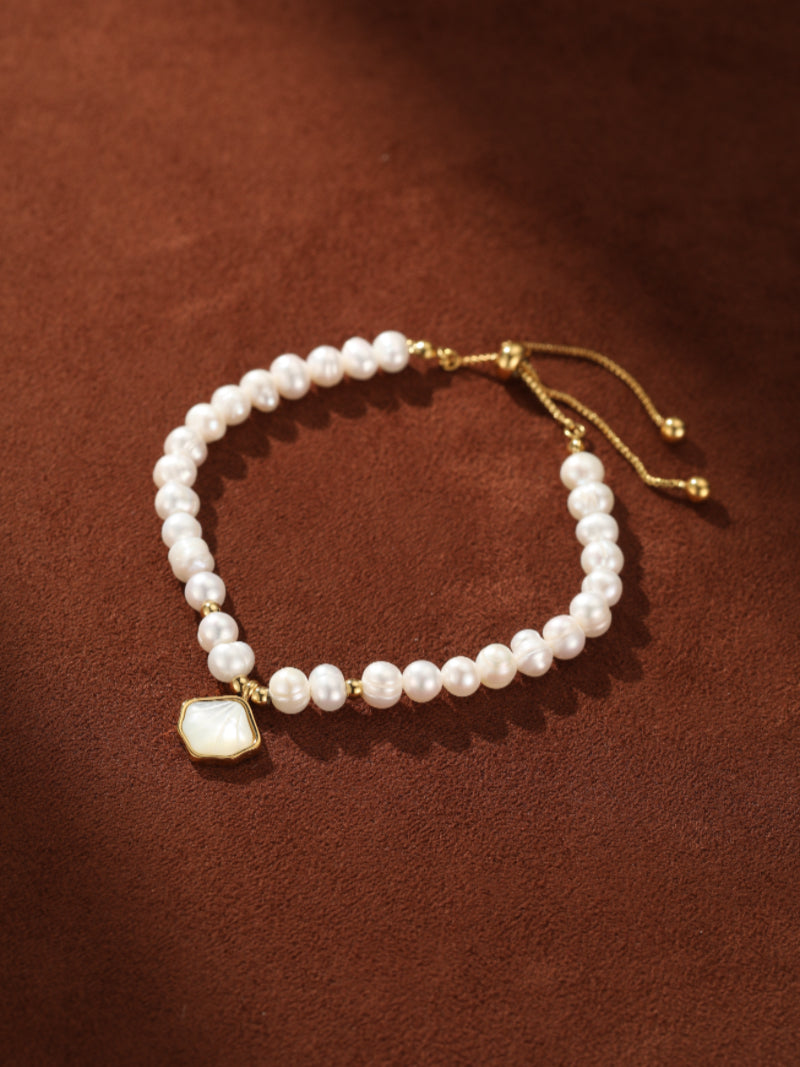
Pearls threaded alongside stars, crosses, shells and hearts. These read personal rather than formal, and they are the version most often given as gifts.
Mixed bead strands
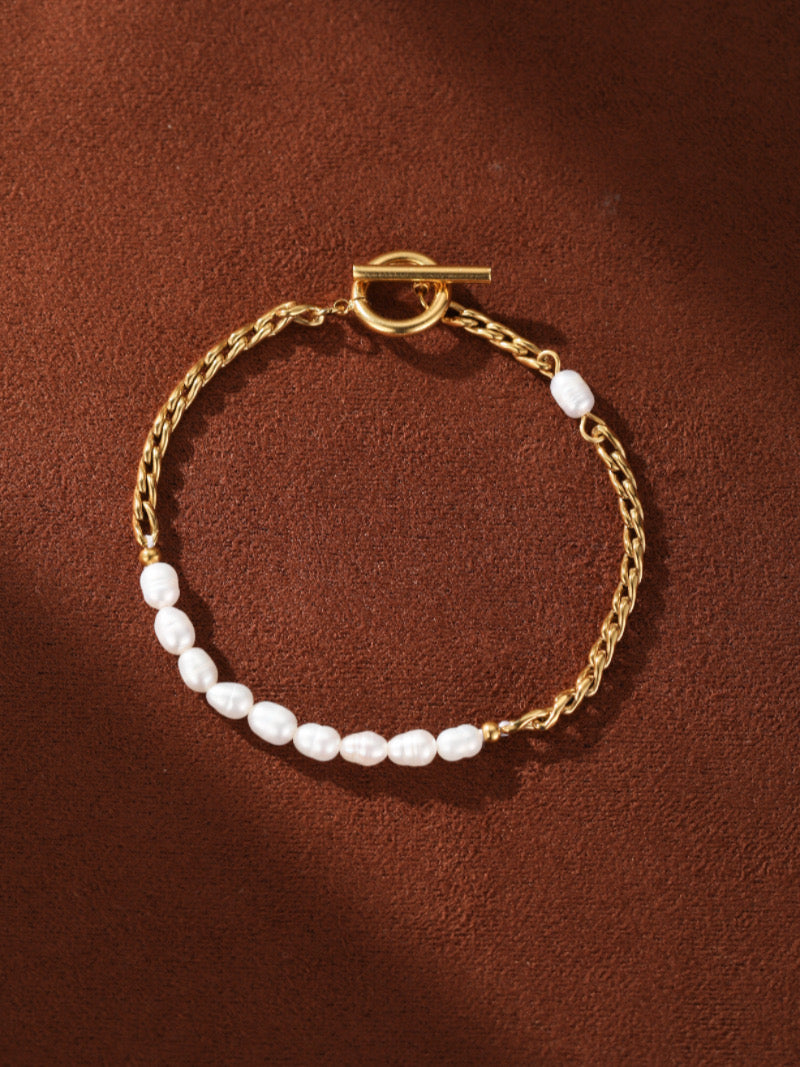
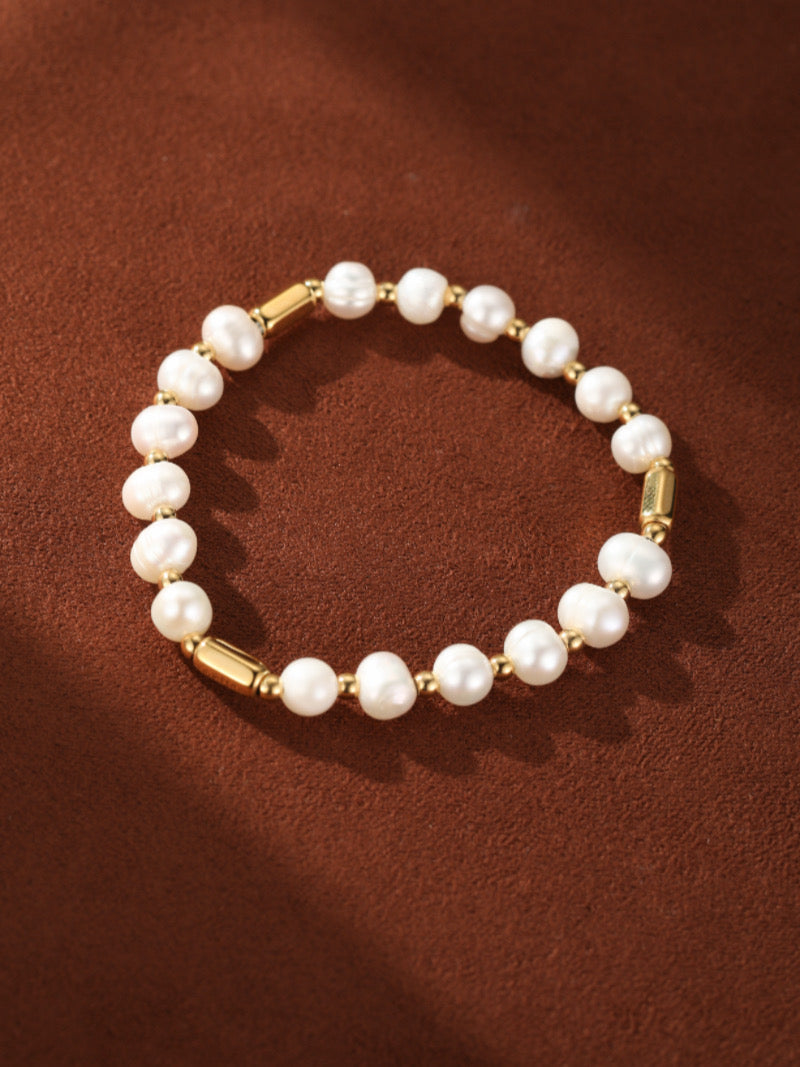
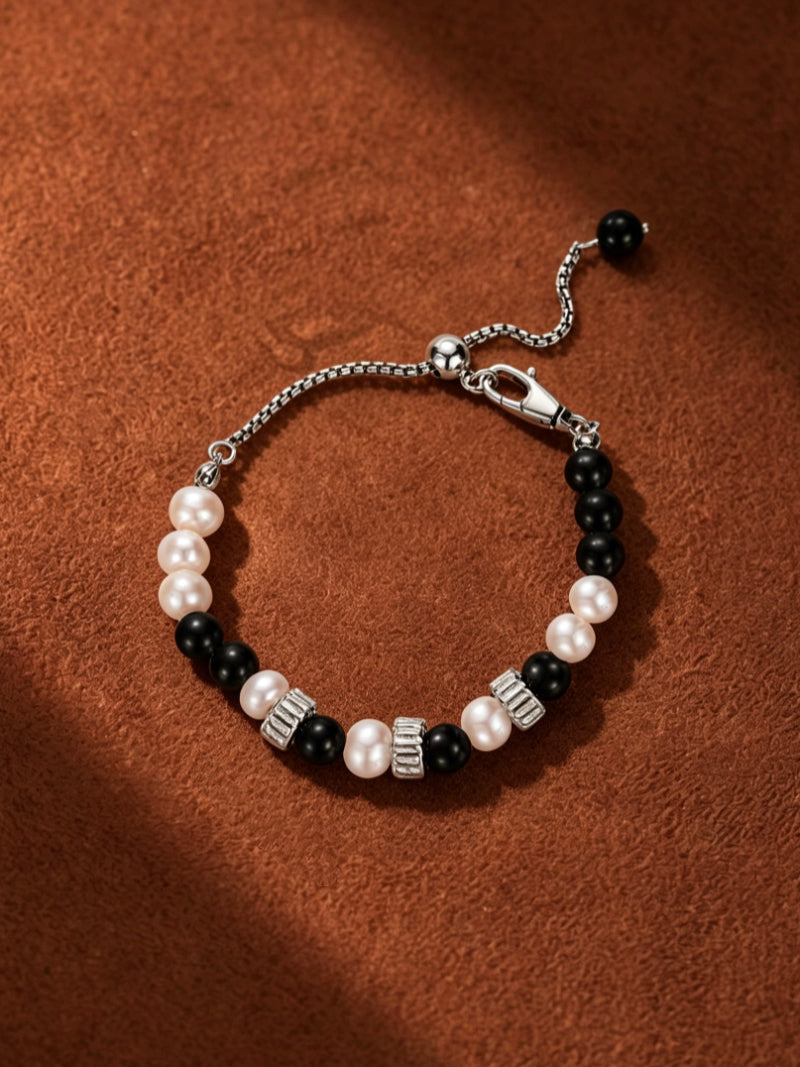
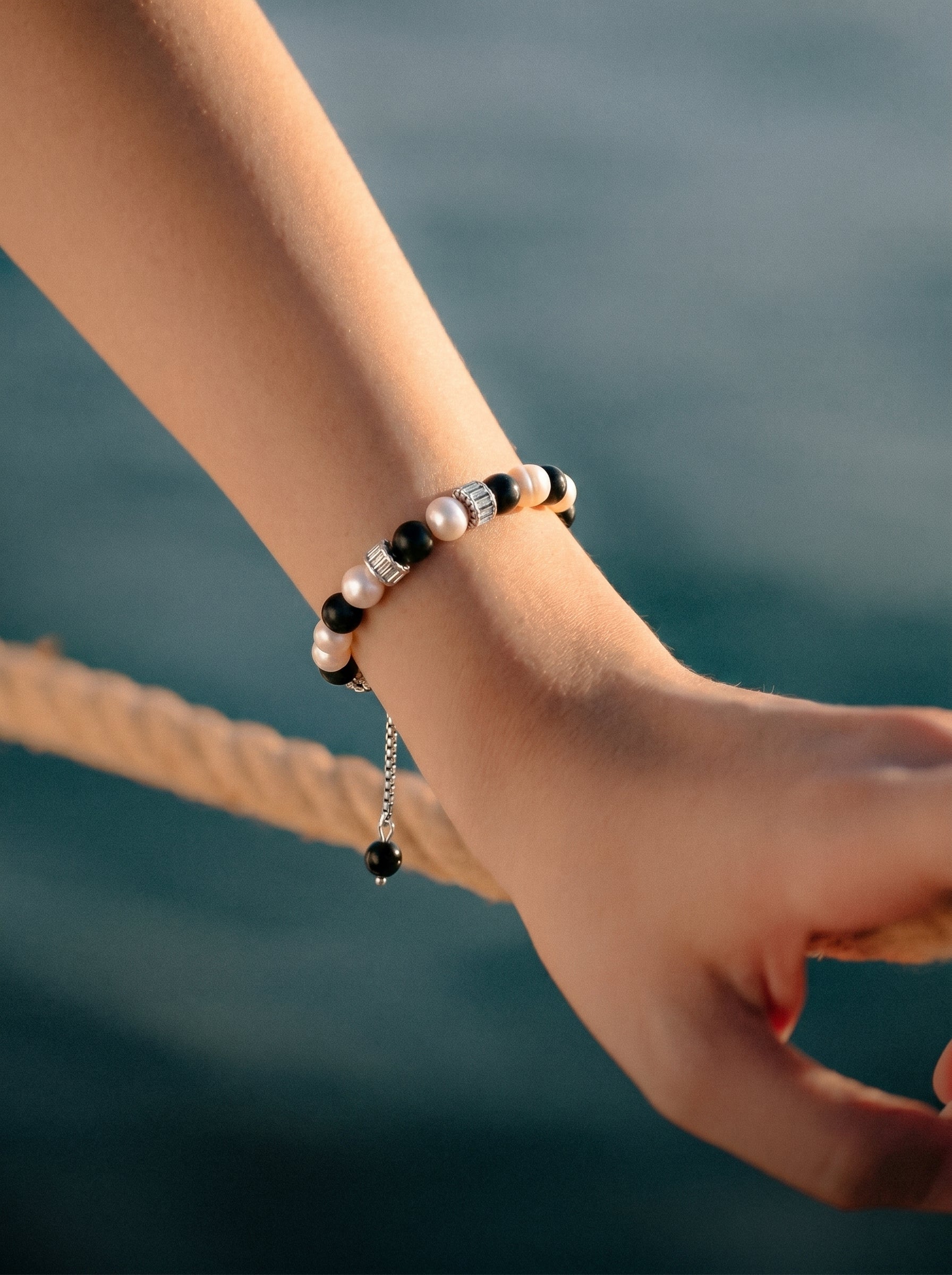
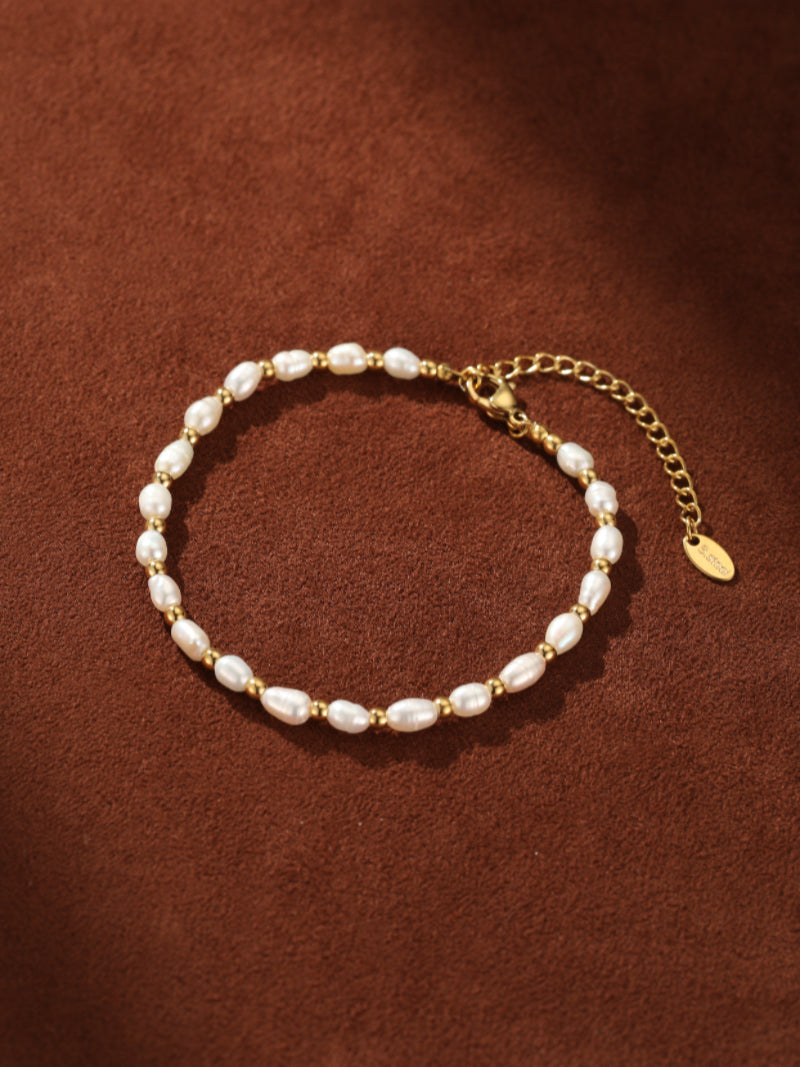
Pearls alongside metal beads or mother of pearl discs. The variation in shape and finish gives texture that a uniform strand does not.
How should a bead bracelet fit?
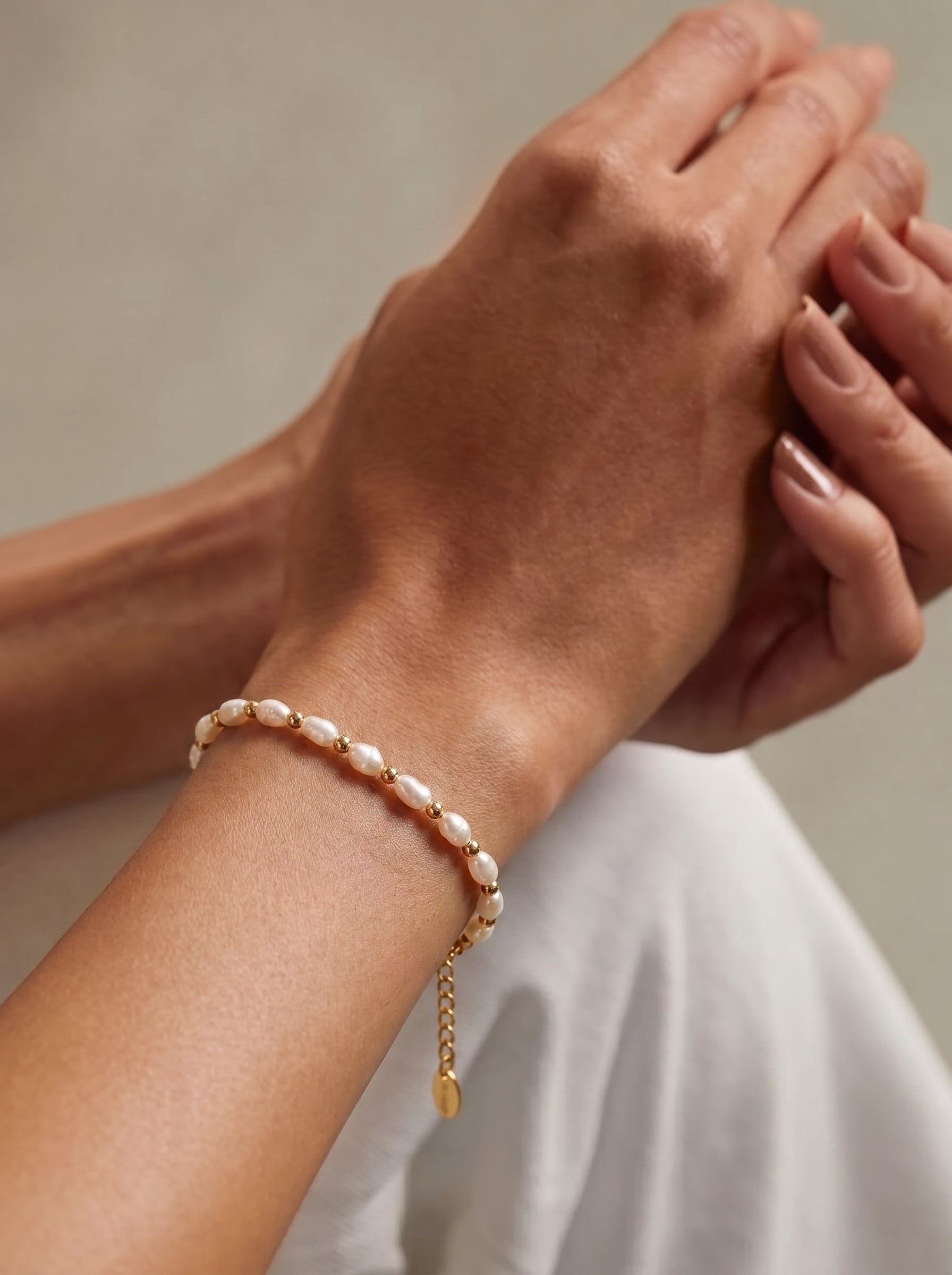
With about half an inch of room past your wrist measurement. Loose enough to rotate, close enough that it does not slide over the hand. Measure just below the wrist bone. Most women take 7 to 7.5 inches, and larger beads need an extra half inch because they take up more of the circumference.
How do you stack pearl bead bracelets?
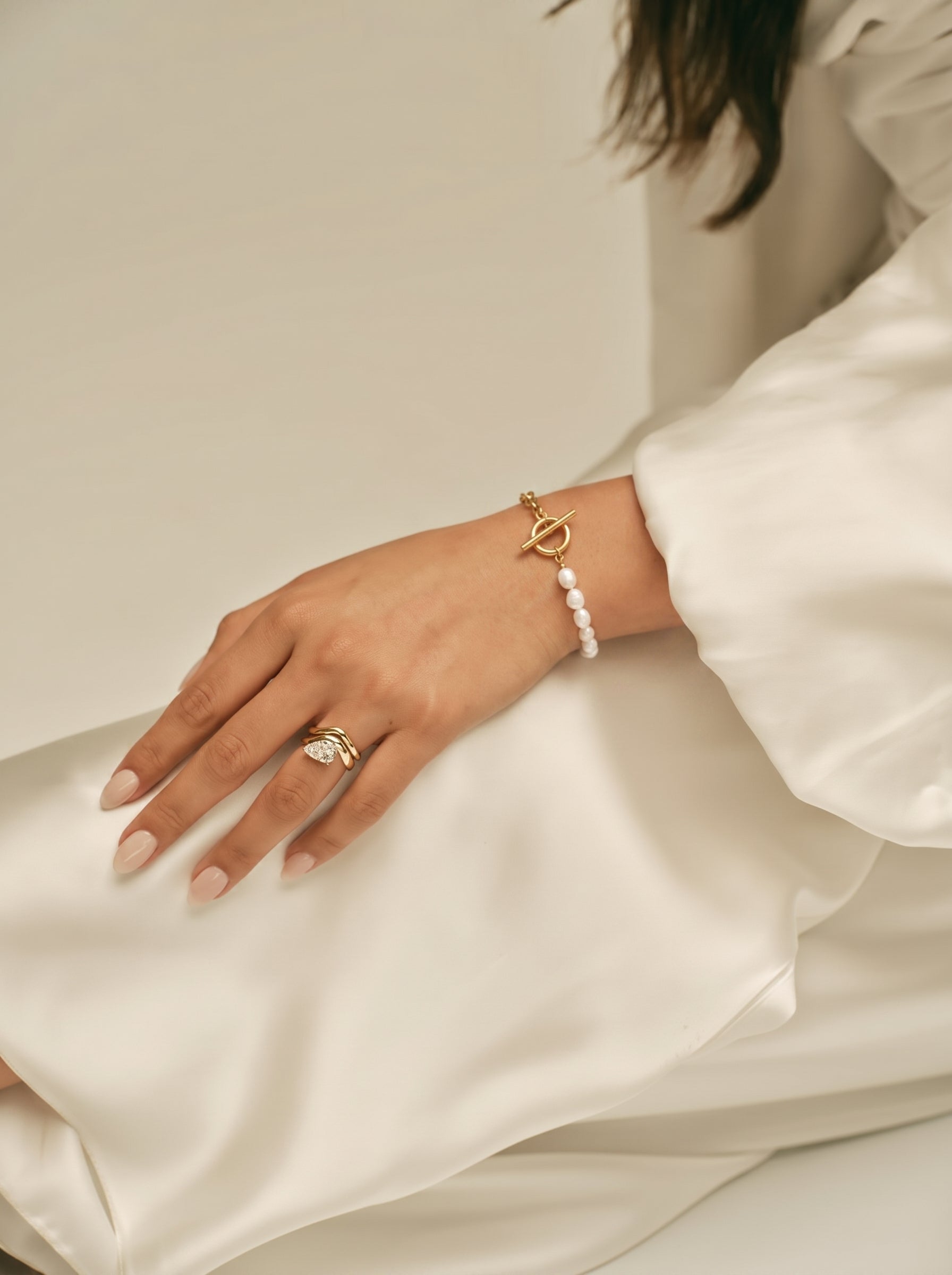
Keep one piece as the anchor and let the others sit quieter. A beaded strand stacks well with a fine chain and a watch. Avoid two chunky strands on the same wrist, since neither gets room to read.
Put the pearls furthest from your hand, so they take less contact from desks and bag straps than the metal pieces do.
Why buy a pearl bead bracelet from Grande Lilith
- Eight provenance markers on every product page: type, origin, bodycolor, overtone, shape, size, grade and treatment.
- Sourcing named to place: Zhuji, Japan, French Polynesia.
- Partners vetted by our GIA-certified pearl specialist, on working conditions as well as quality.
- Nickel-free, lead-free and cadmium-free clasps and findings on gold, silver and stainless steel.
- Designed in Paris. Thirty days to change your mind, and every order arrives in a magnetic pouch.
Frequently asked questions
How often do pearl bracelets need restringing?
Every few years with regular wear, sooner if worn daily or exposed to moisture. Silk stretches and weakens over time. If you can see thread between the pearls where the strand has loosened, it is time.
Can you wear a bead bracelet every day?
Yes, with two habits. Take it off before washing dishes or applying hand cream, since moisture weakens thread and detergent dulls nacre. If you work with your hands, a chain construction takes more contact than a strand does.
Are elastic pearl bracelets worse than clasped ones?
They are easier to put on and they fit a wider range of wrists. The trade-off is that elastic perishes faster than silk and cannot be knotted between beads, so the pearls sit directly against each other.
How many bracelets should you stack?
Two or three, varying in weight rather than repeating it. A beaded strand, a fine chain and a watch is a composition. Three beaded strands is a pile.
Is a bead bracelet a good gift?
One of the easiest, since wrist size is more forgiving than ring size and there is no neckline to consider. Charm styles read personal, which suits a gift better than a plain strand does.