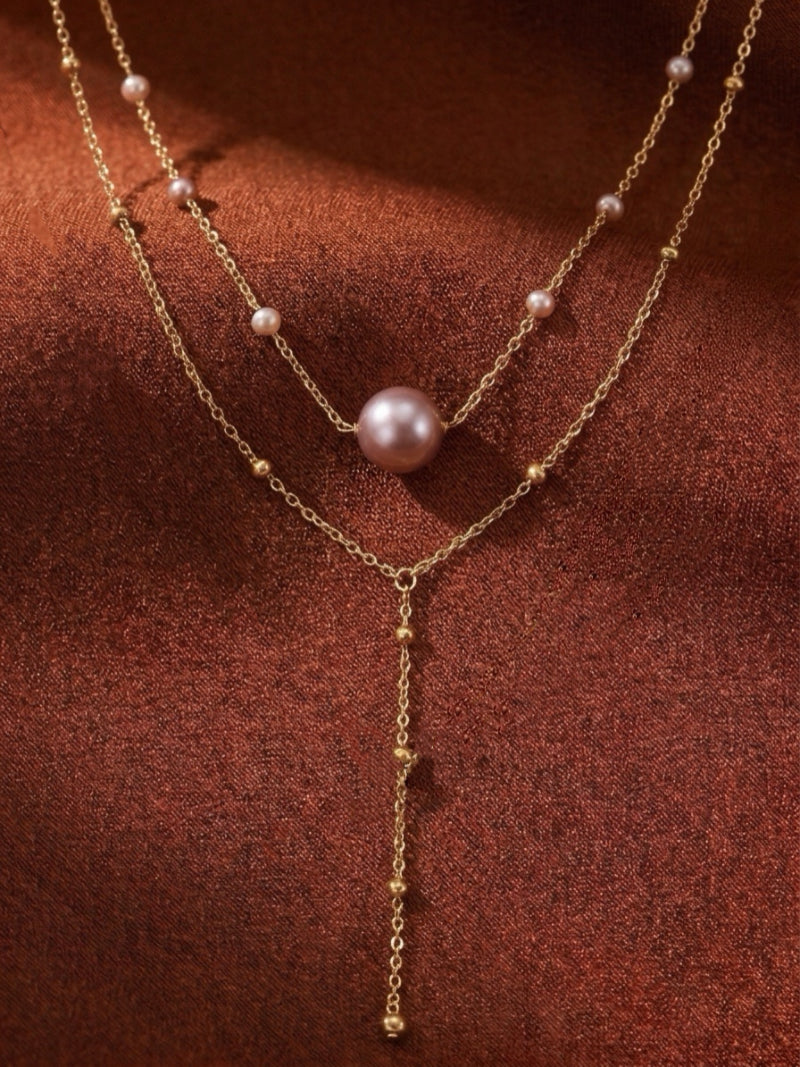
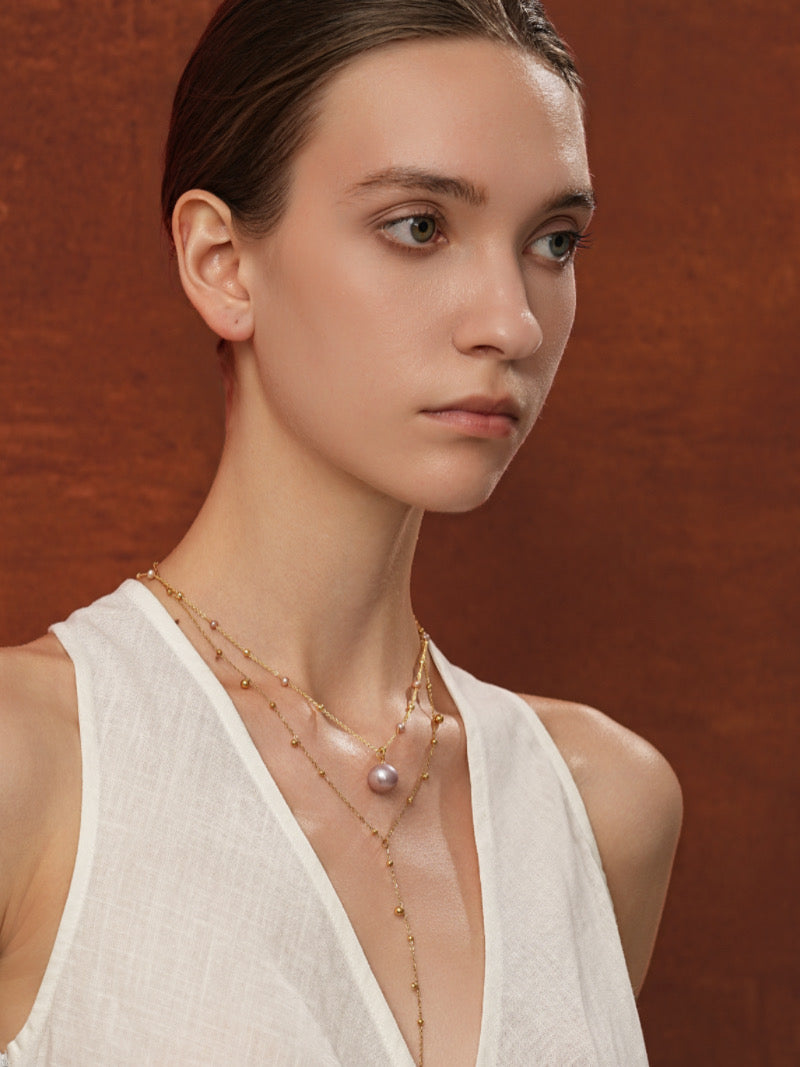
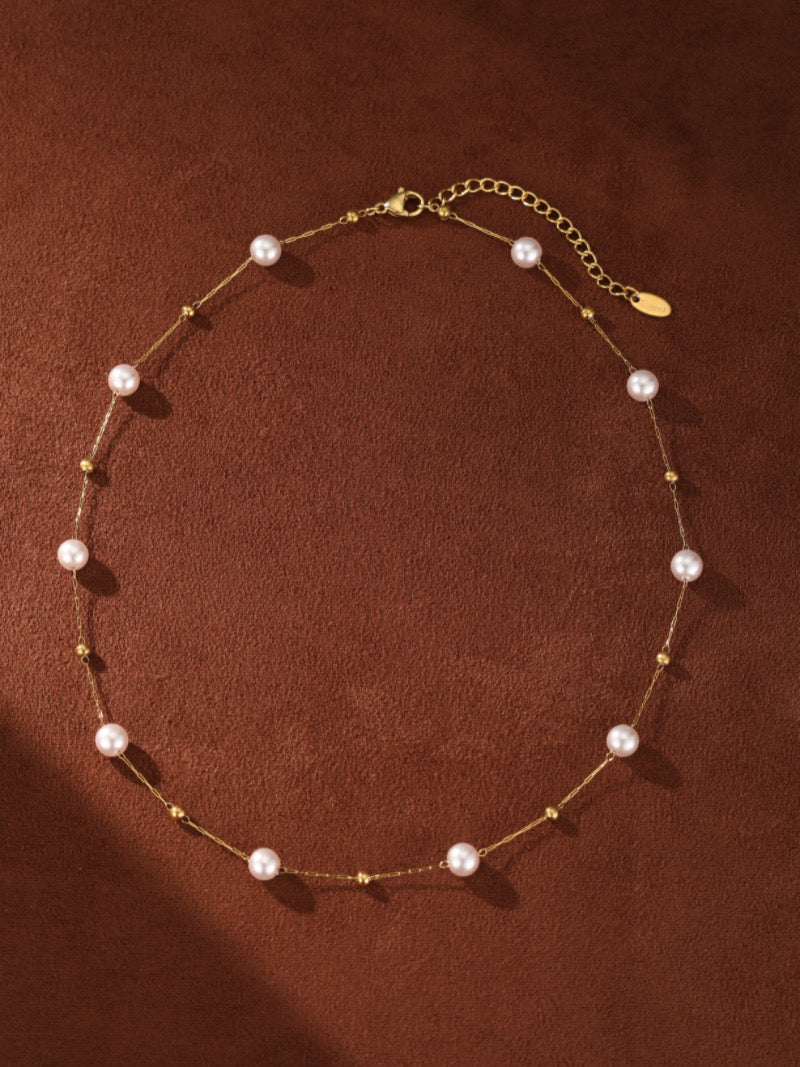
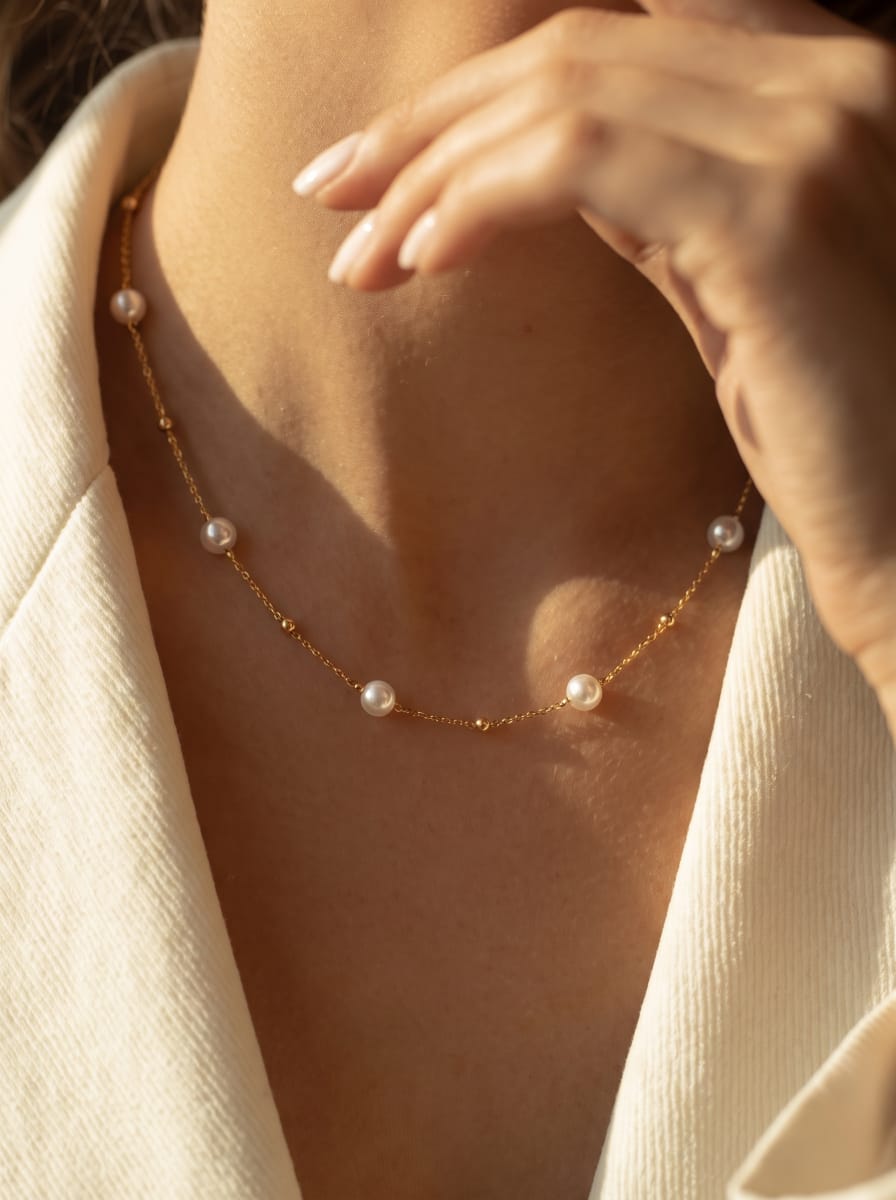
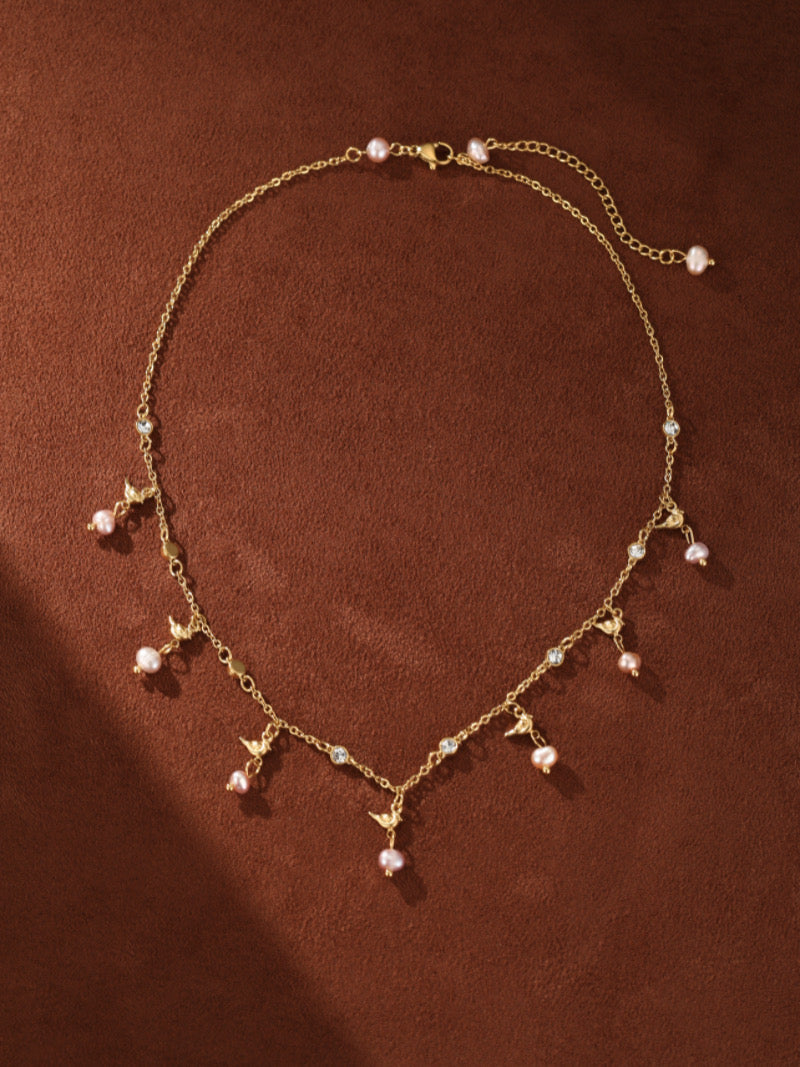
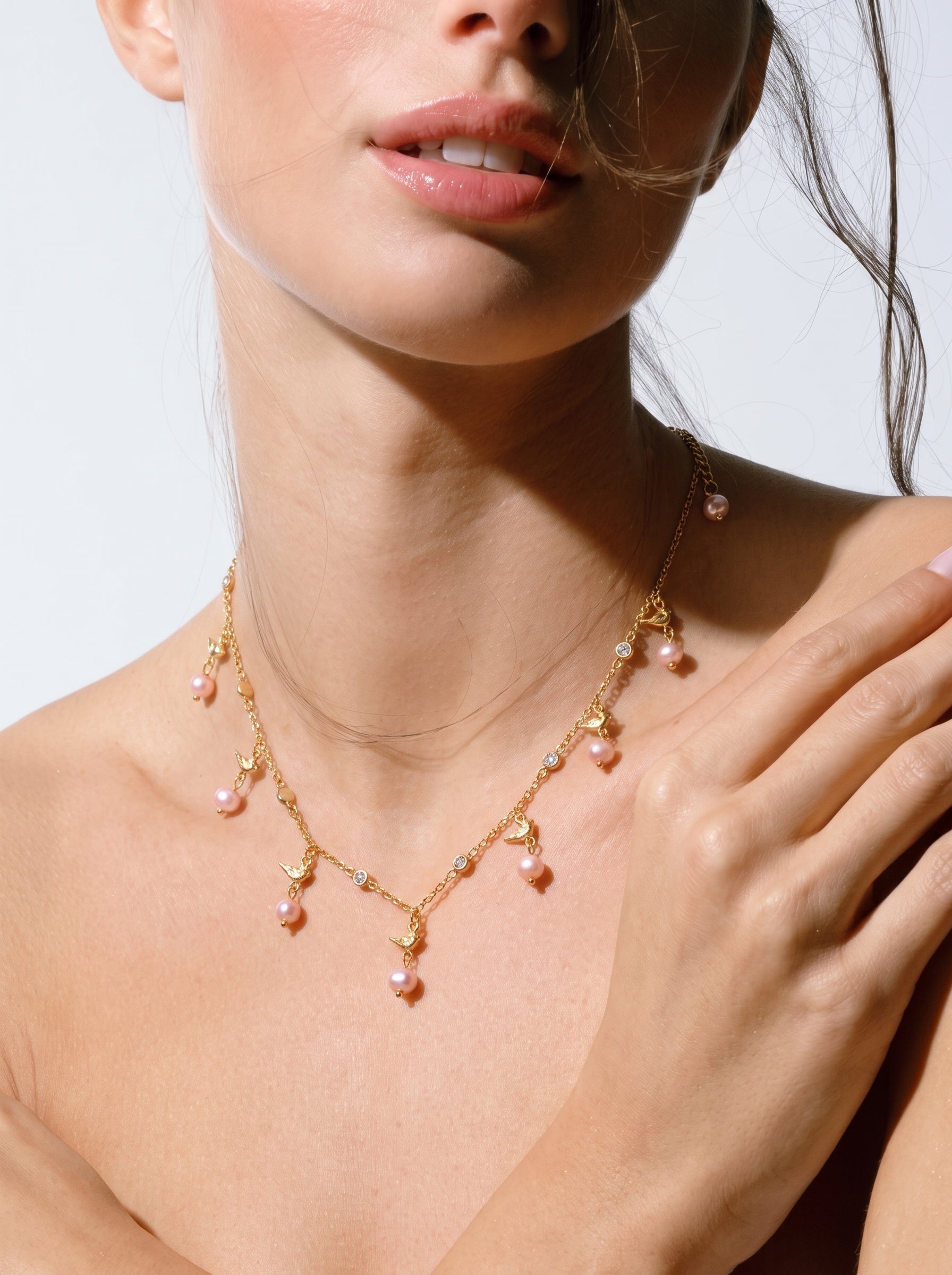
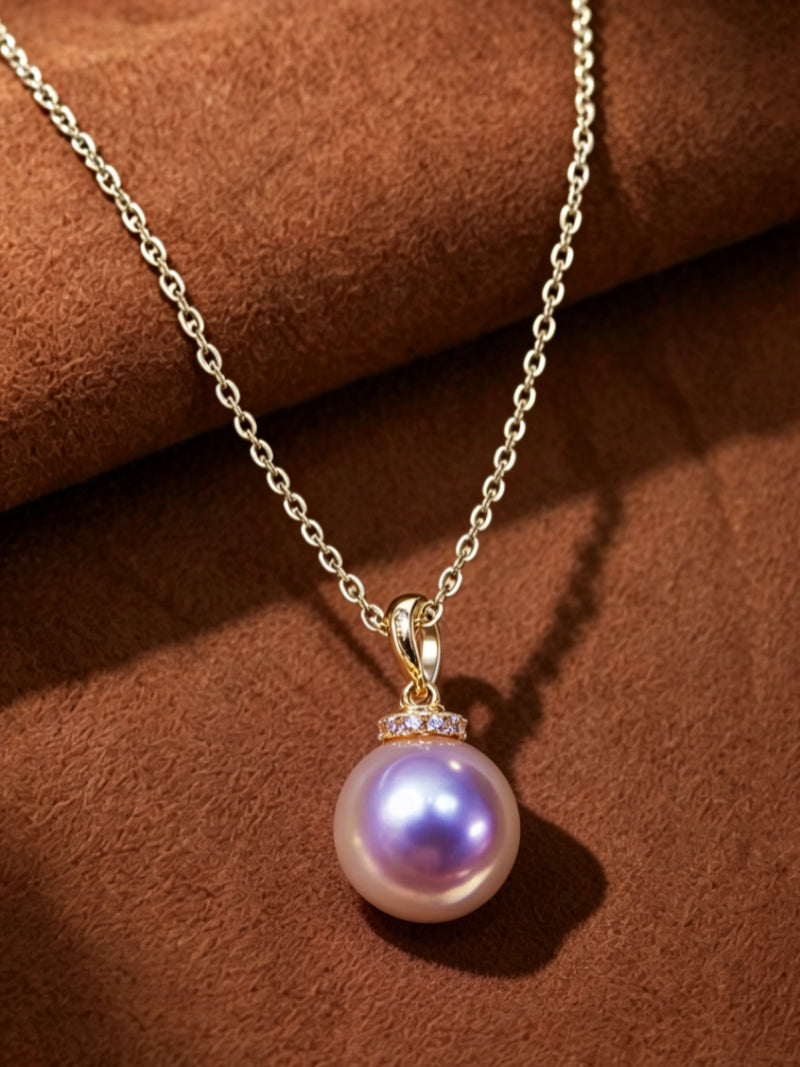
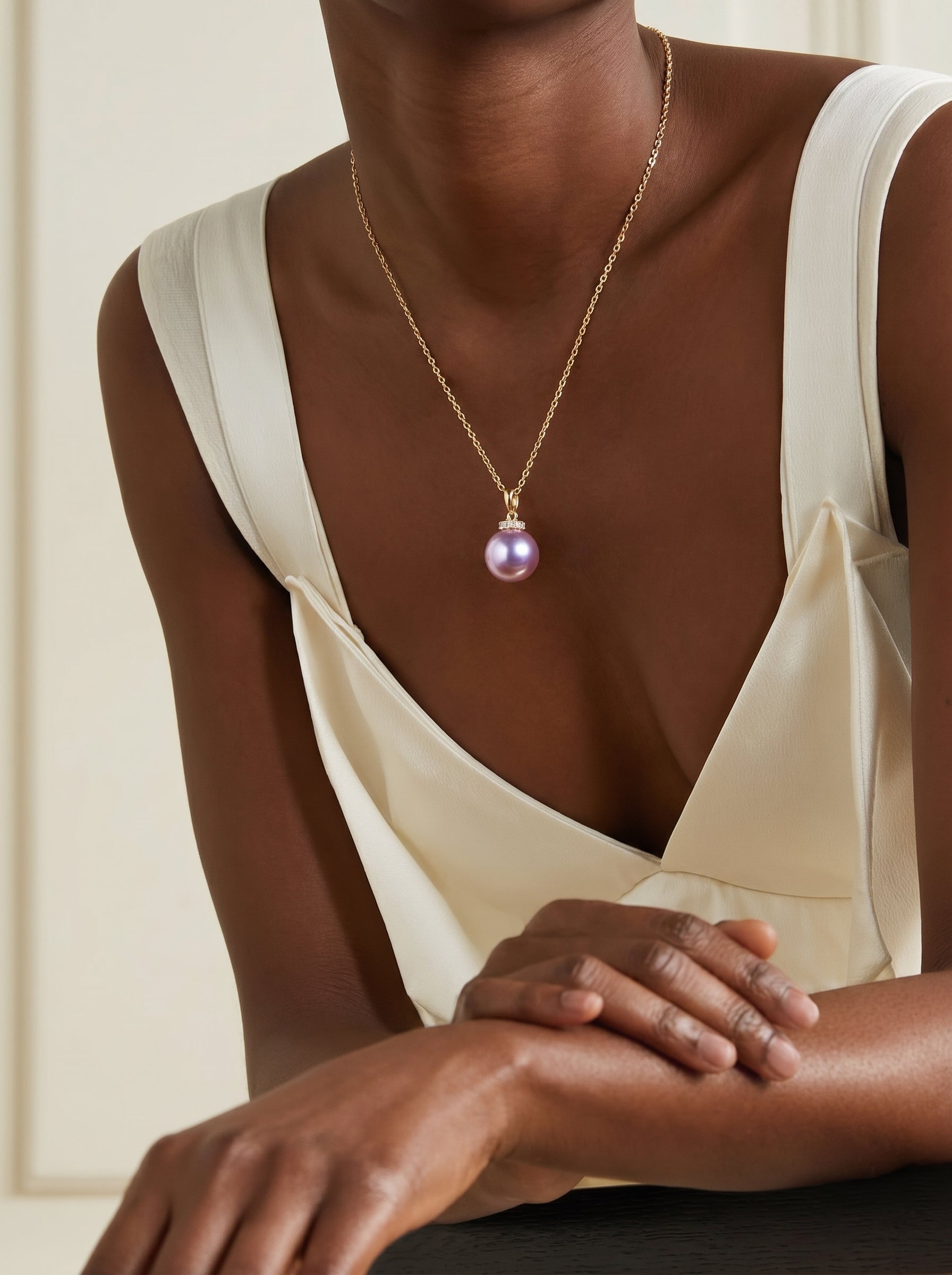
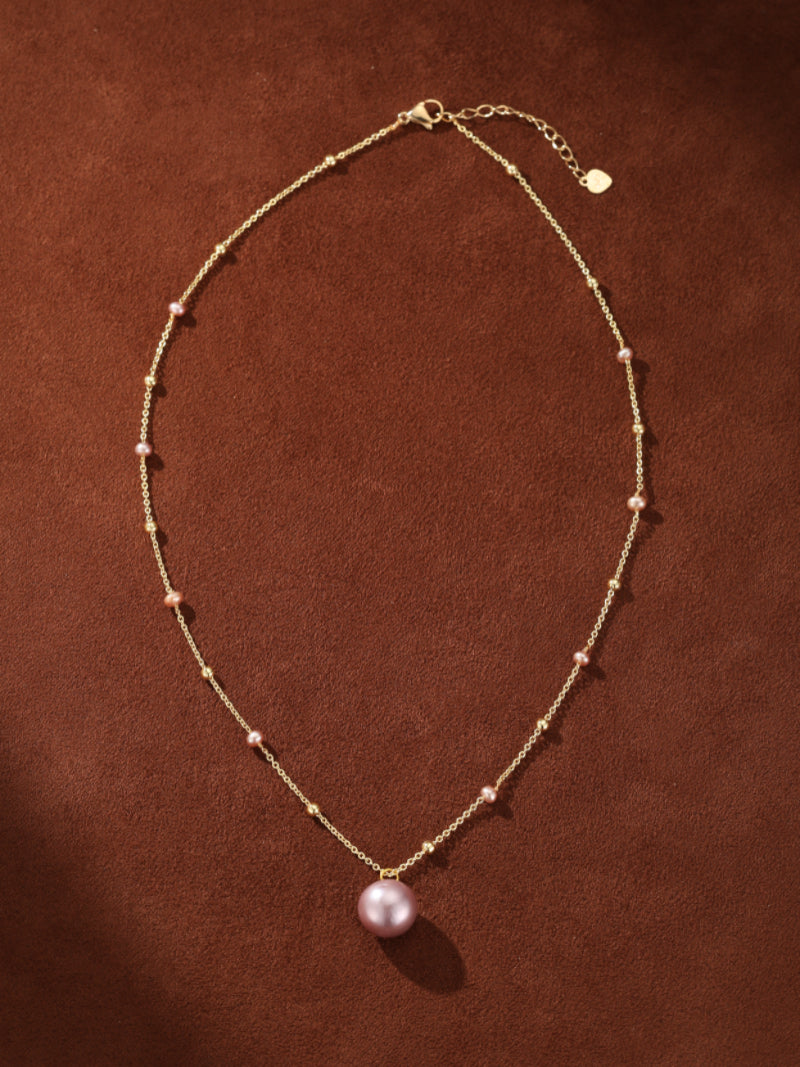
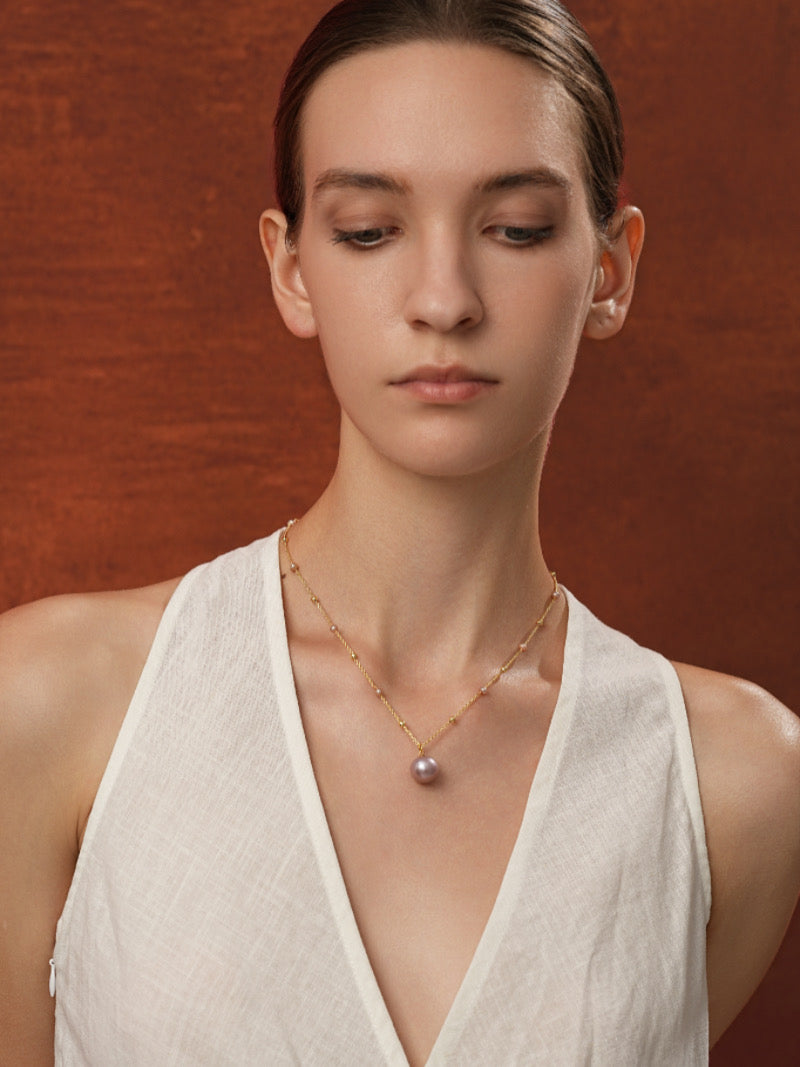
A pink pearl necklace does something white cannot. Where white contrasts against skin, pink warms it, which is why a pink pearl often looks better in person than it does on a screen. It is the color women choose once they have decided white feels too cool.
What is a pink pearl necklace?
A pink pearl necklace uses cultured pearls with a pink or peach bodycolor. The range runs from a pale blush through apricot to a deeper rose, and it is one of the colors freshwater mussels produce naturally without any treatment at all.
This is worth distinguishing from a white pearl with a rose overtone, which is a different thing. In that case the pearl is white underneath, with pink floating above it. In a pink pearl, the pink is the bodycolor itself.
Are pink pearls natural or dyed?
Both exist on the market. Freshwater mussels produce pink, peach and lavender naturally, and those pearls need no treatment. Freshwater pearls also take dye readily, so dyed pink pearls are common and legitimate provided the treatment is disclosed.
We list treatment as one of eight provenance markers on every product page, so you know which you are buying before it arrives rather than after.
Which skin tones suit pink pearls?
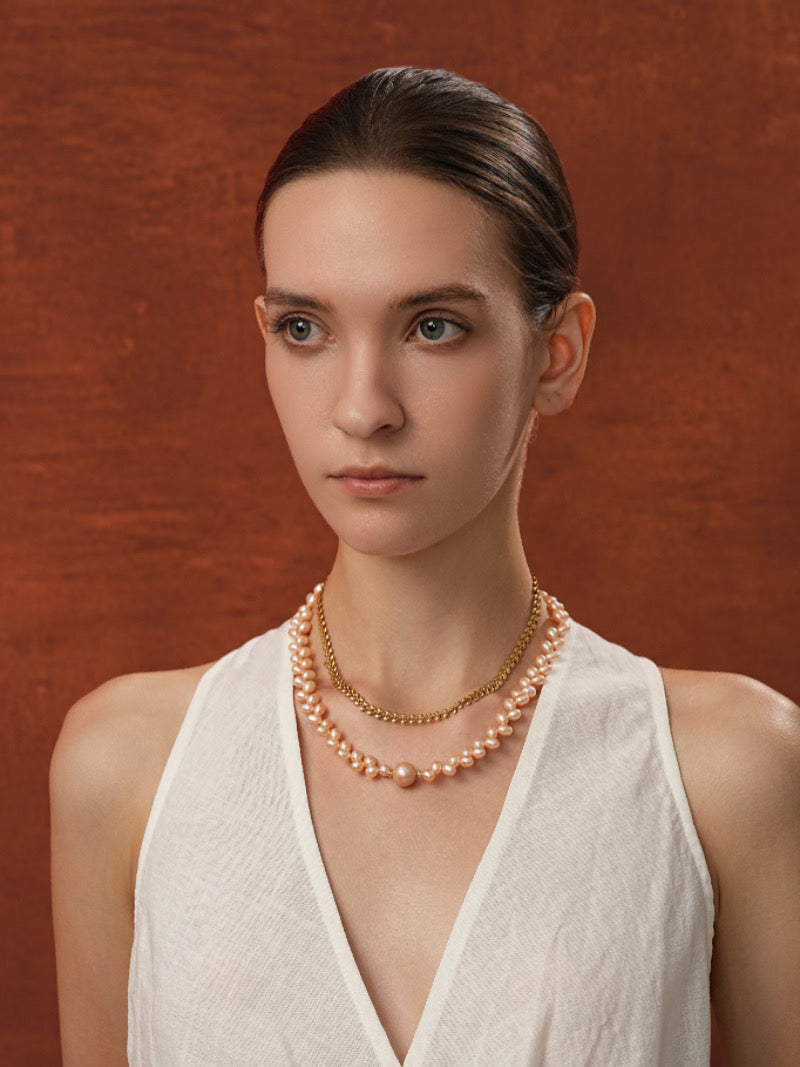
Almost all of them, but differently. Against fair skin a pink pearl reads soft and close in tone, so the necklace becomes a texture rather than a contrast. Against olive and deeper skin it lifts and warms, and the color separates more clearly.
If you have found white pearls slightly harsh against your face, this is the color to try next.
Which pink pearl necklace style should you choose?
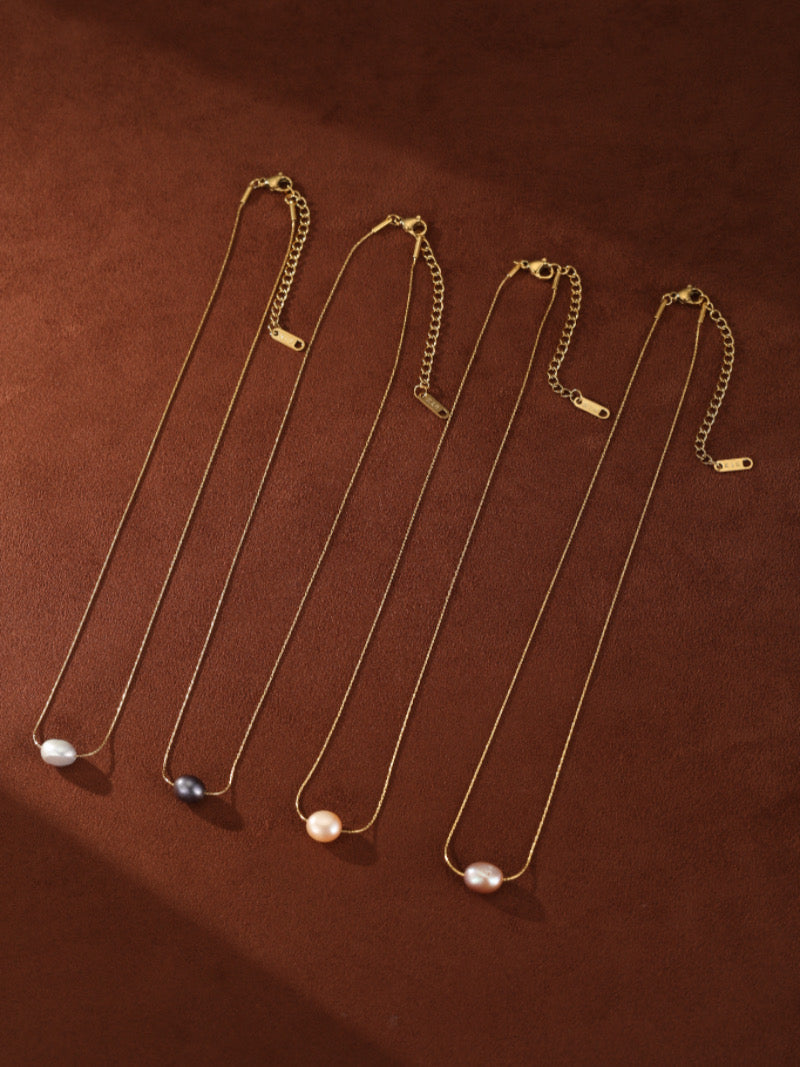
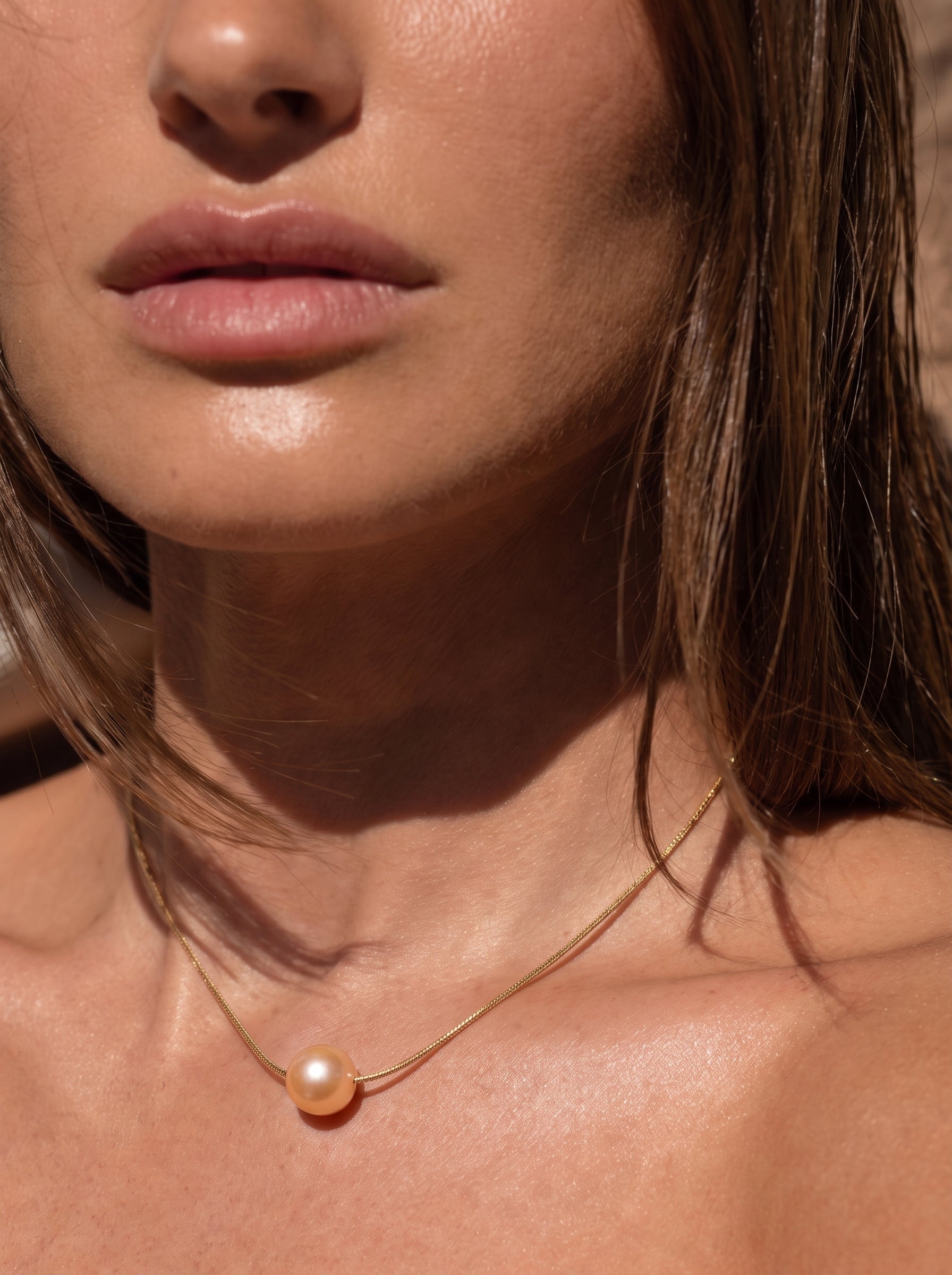
Single pendants
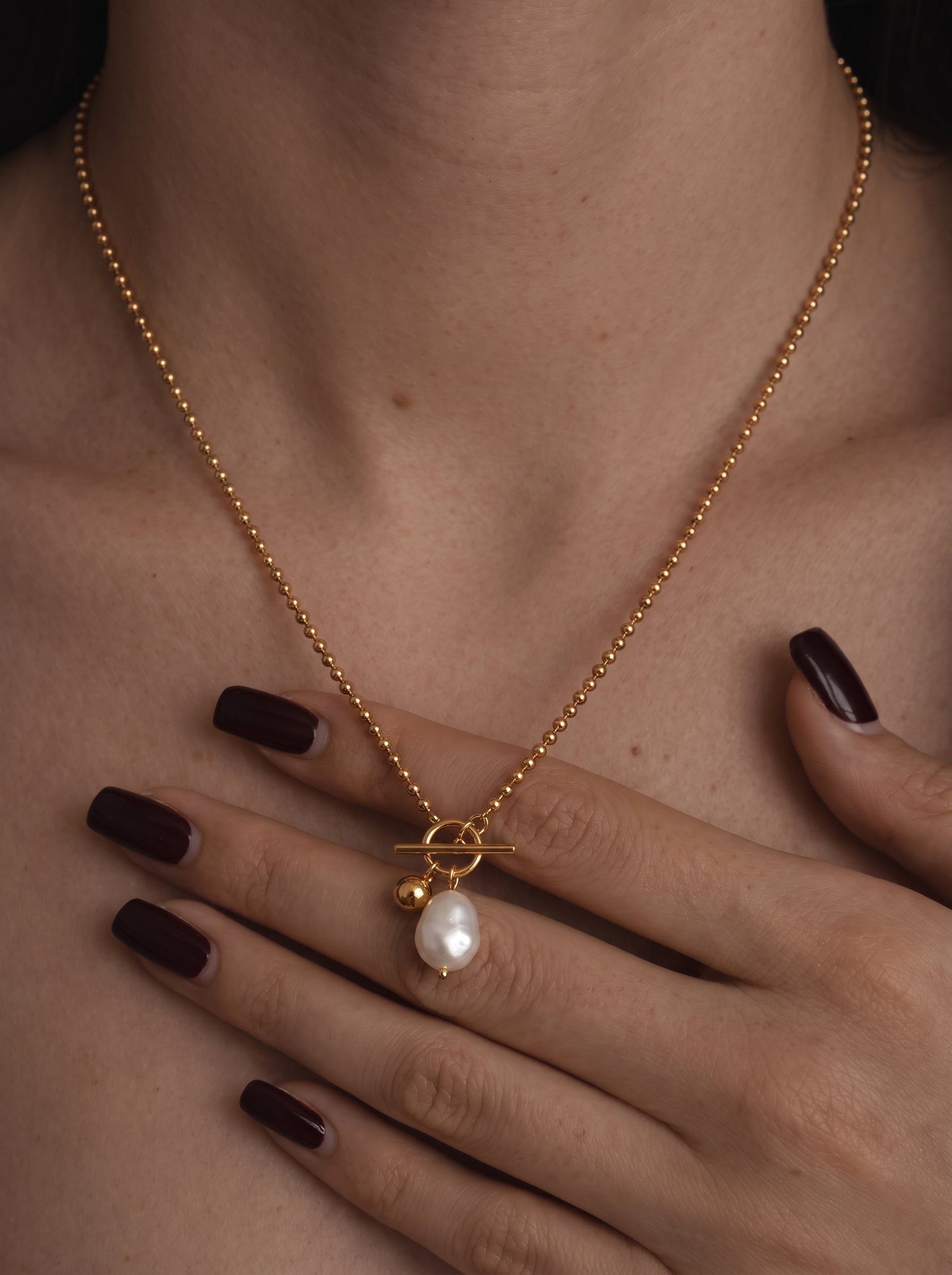
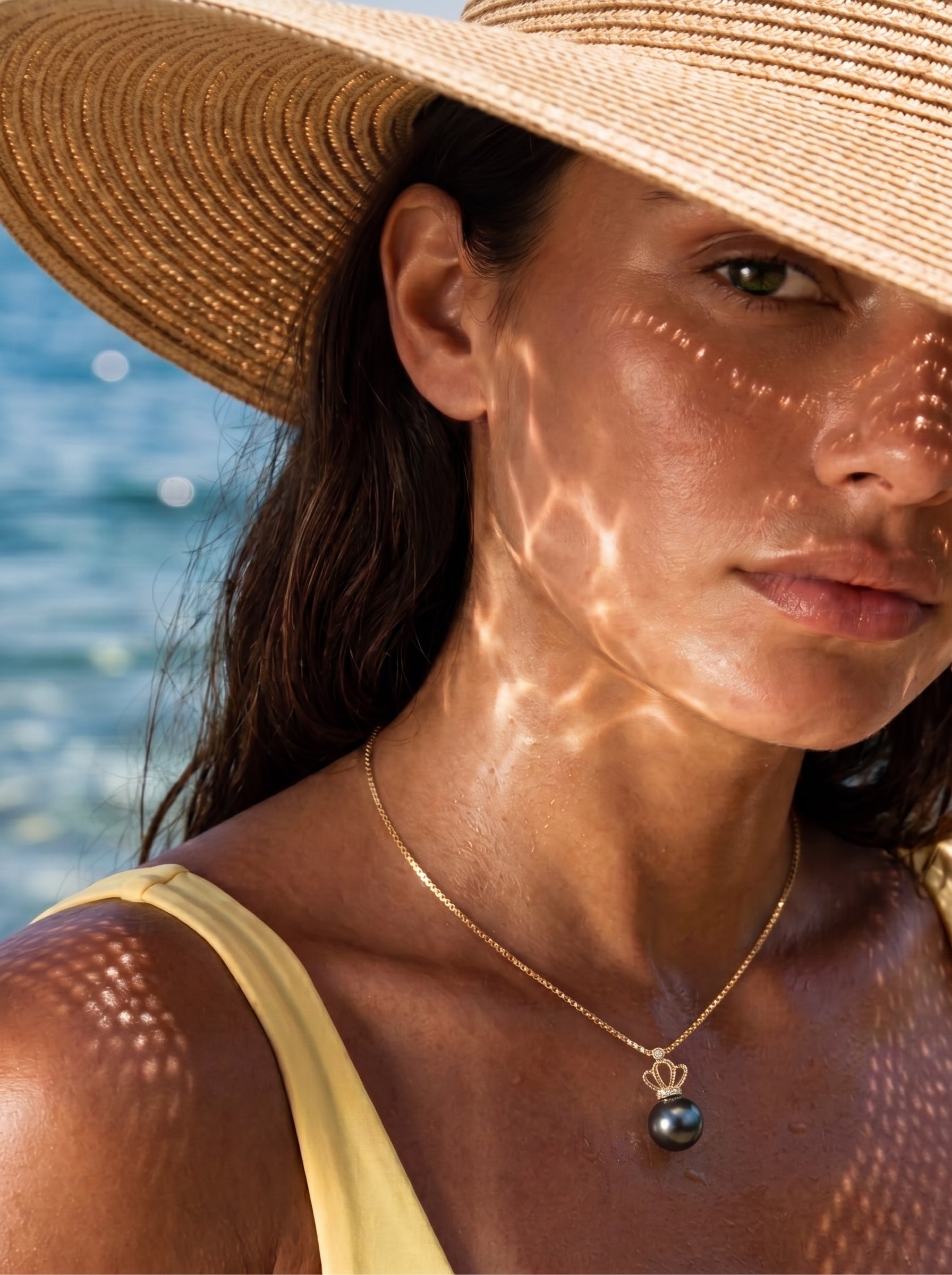
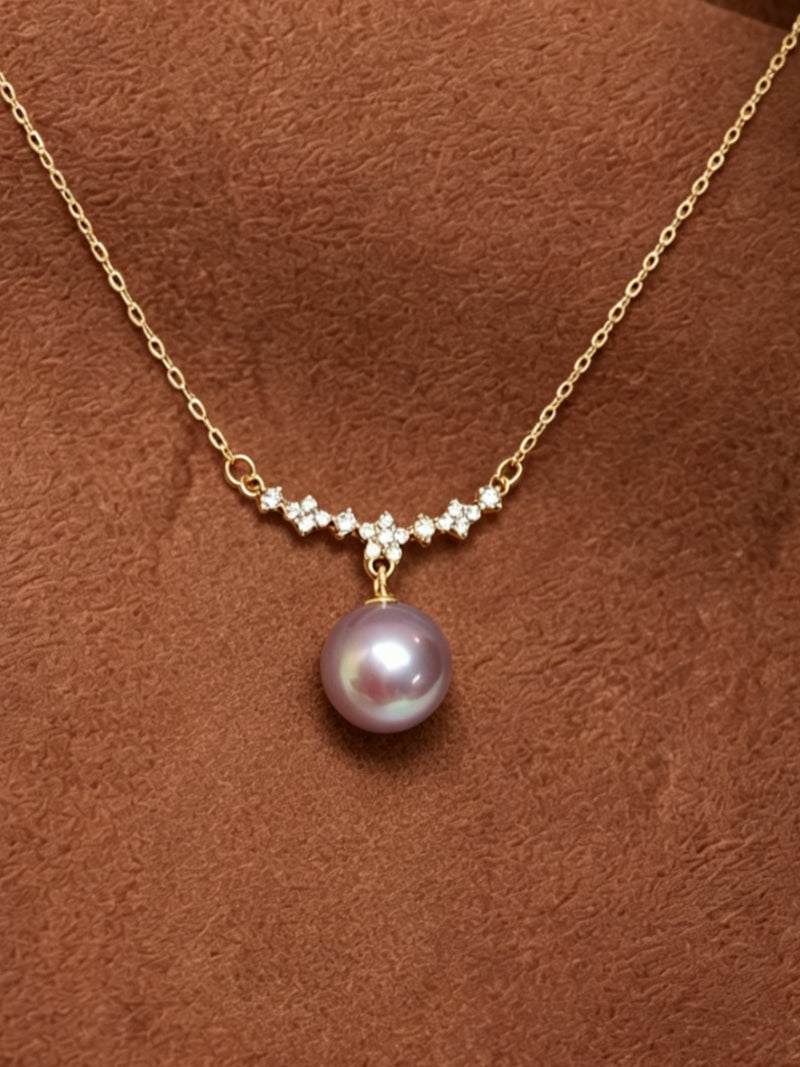
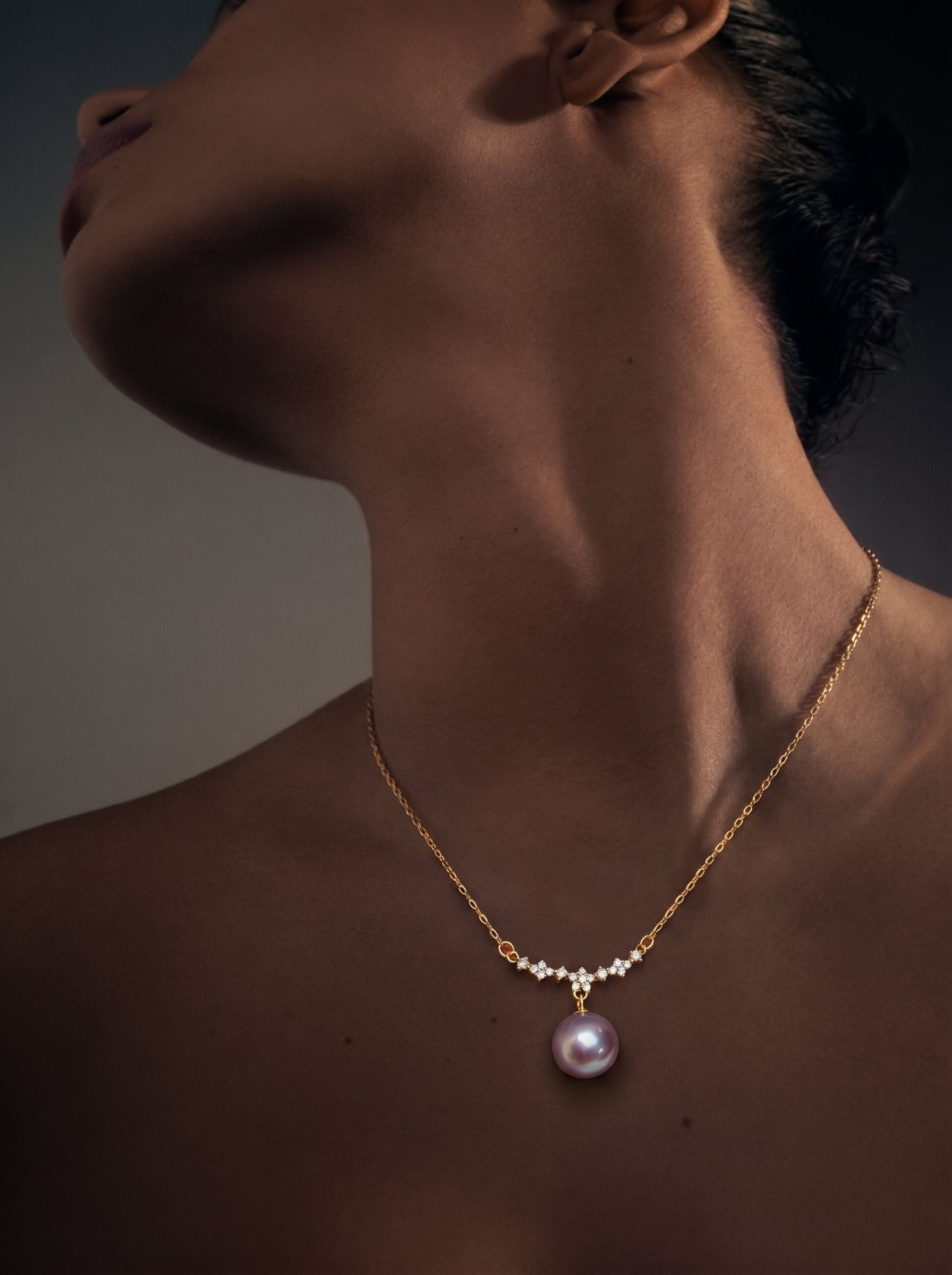
One pink pearl on a chain. The easiest way to introduce the color, and the version that works with a neutral wardrobe without asking anything of it.
Beaded strands
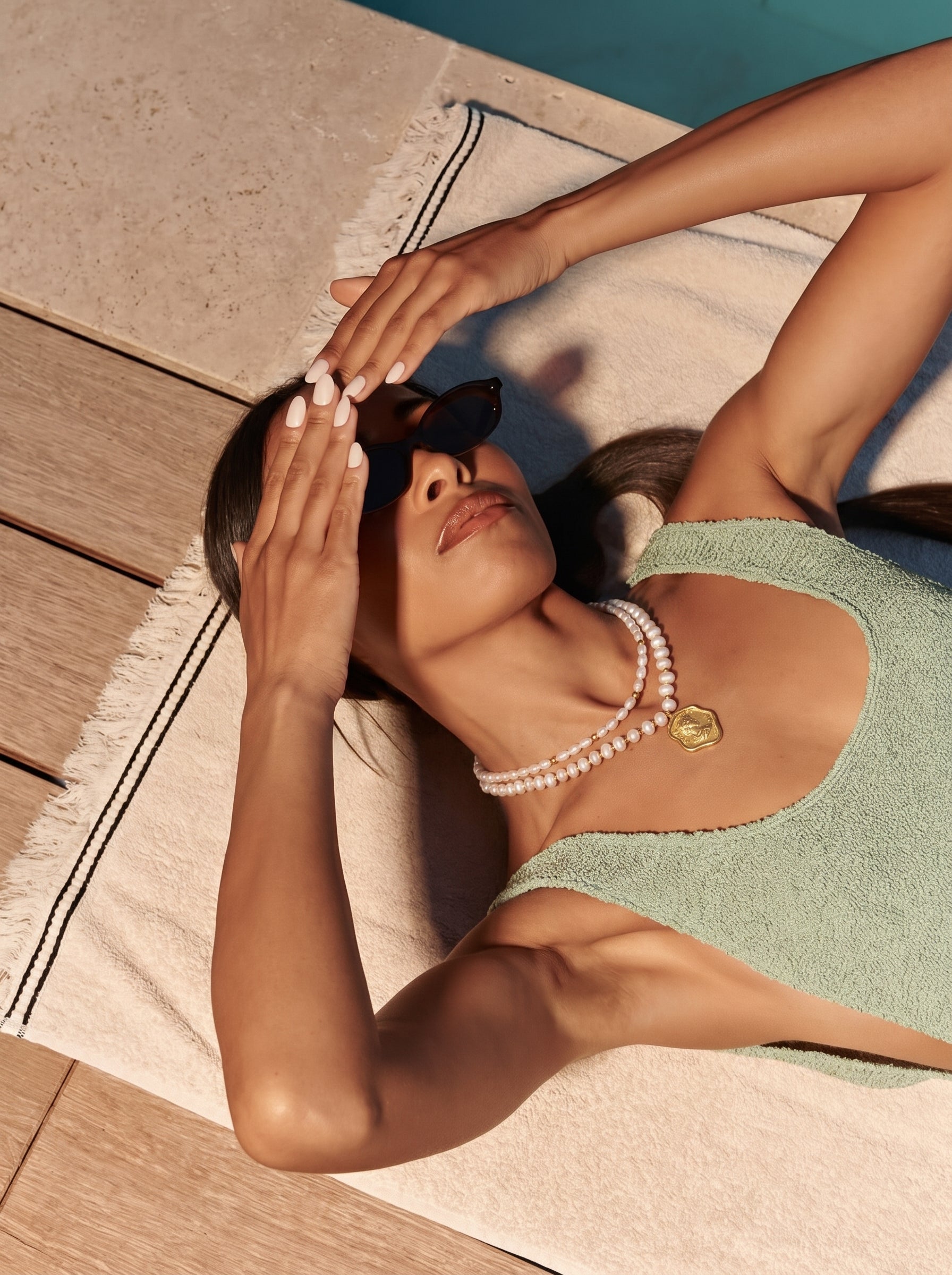
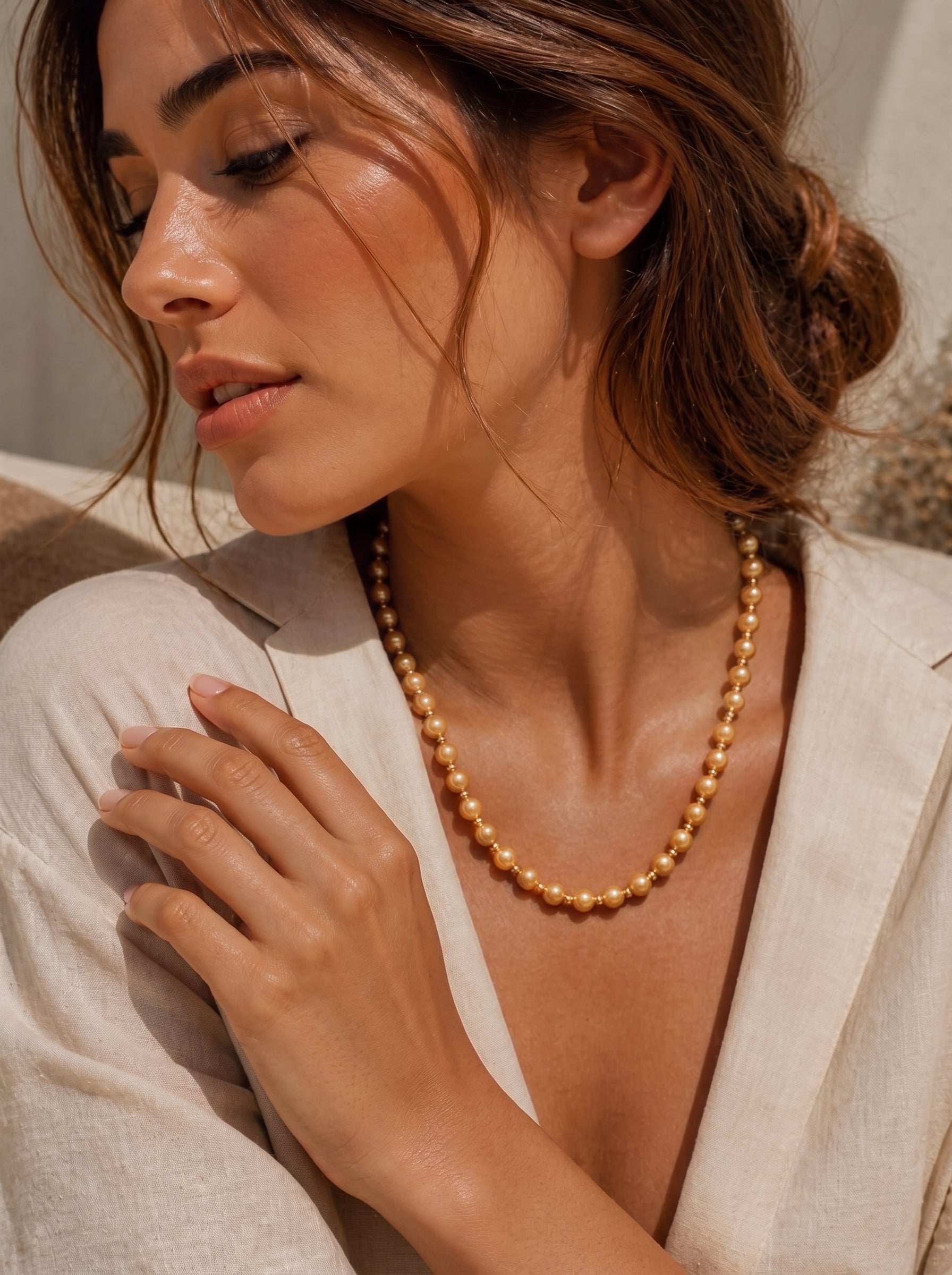
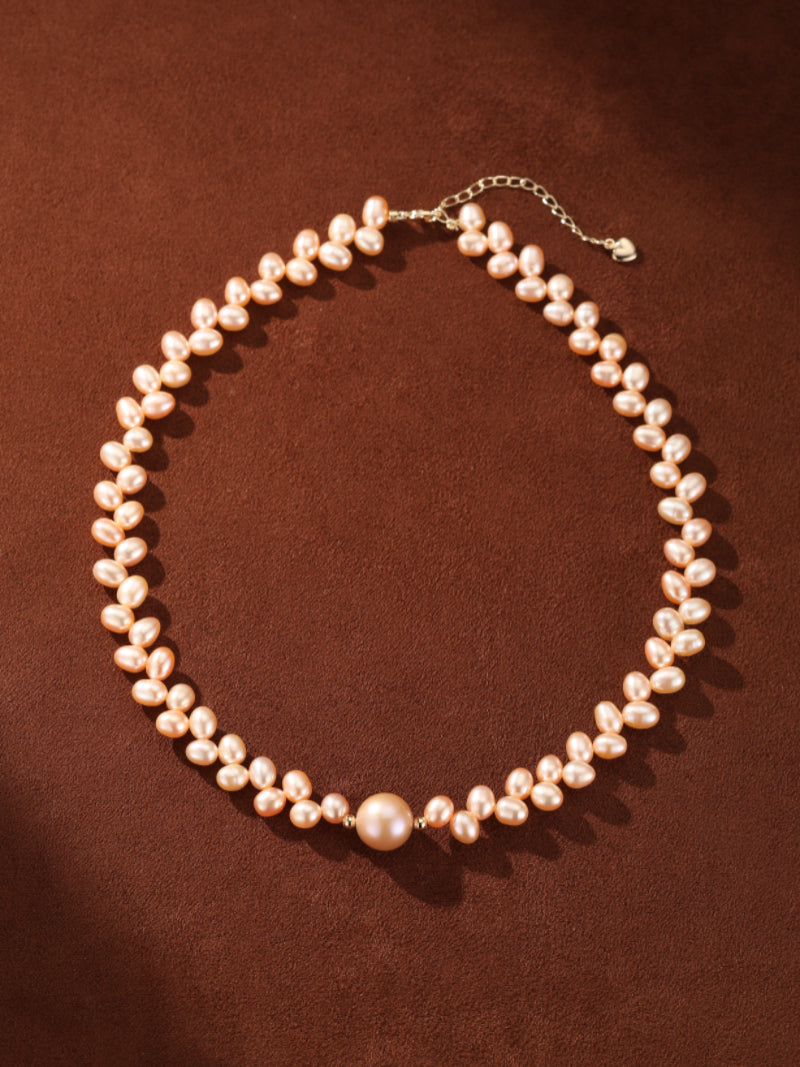
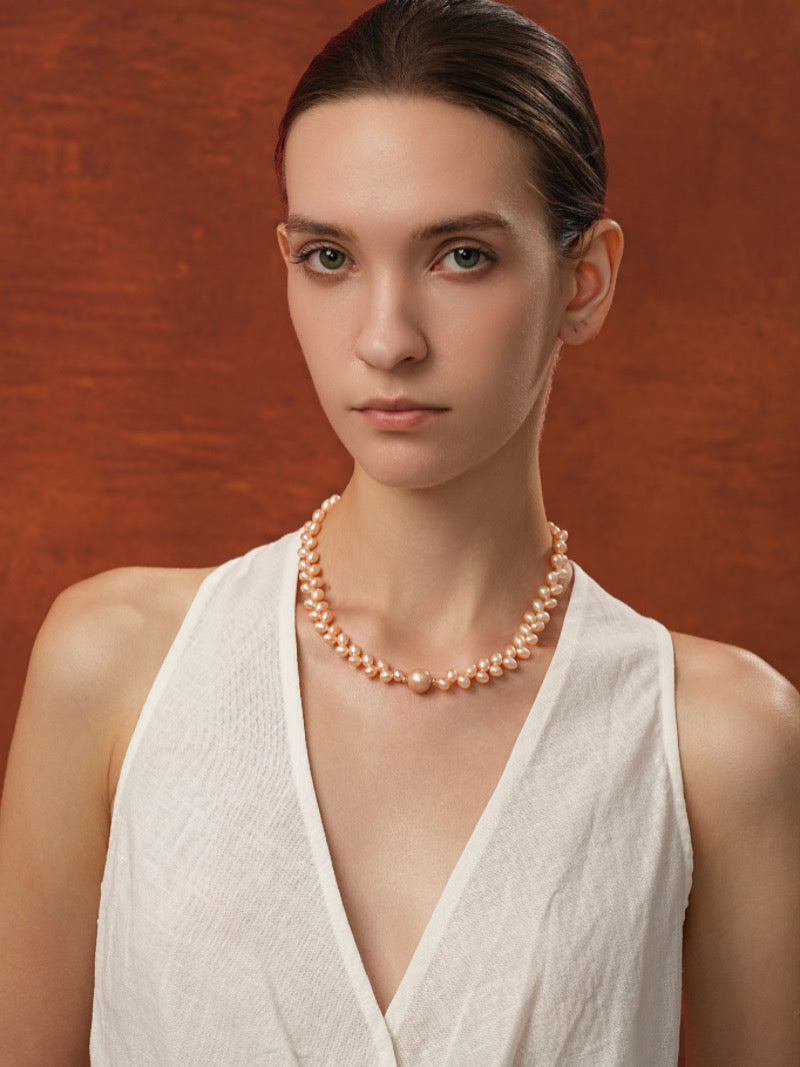
Pink pearls strung close, so the color accumulates and becomes the point of the necklace rather than an accent. This is where the warmth is most visible.
Mixed tone pieces
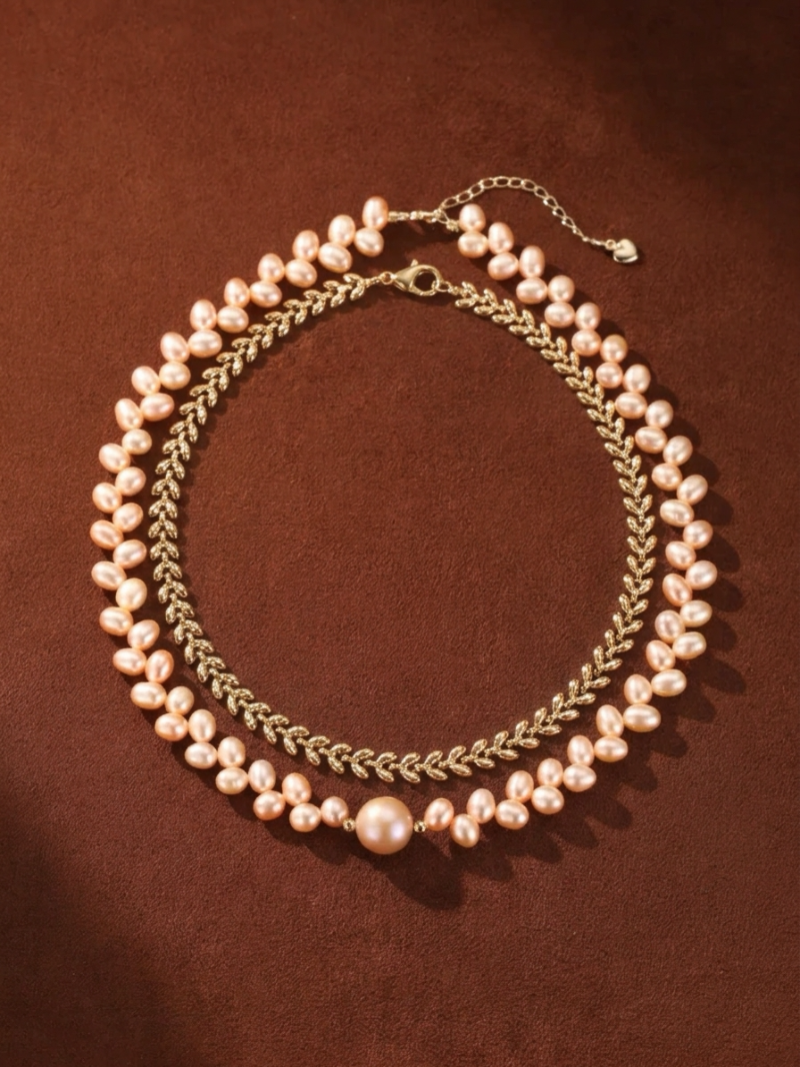
Pink pearls alongside white and peach, giving depth without any single color dominating. These read the most contemporary of the three and suit an everyday wardrobe best.
Why buy a pink pearl necklace from Grande Lilith
Pink is the pearl color where treatment disclosure matters most, because natural and dyed pink pearls sit side by side in the same price range and look similar in a photograph.
- Treatment stated on every product page, so natural color is never implied where dye has been used.
- Bodycolor and overtone listed as separate markers, so a pink pearl is not confused with a white pearl carrying rose overtone.
- Origin named: Zhuji, China, where our freshwater pearls are grown.
- Partners vetted by our GIA-certified pearl specialist, on working conditions as well as quality.
- Designed in Paris. Thirty days to change your mind, and every order arrives in a magnetic pouch.
Frequently asked questions
Are pink pearls rare?
Naturally pink freshwater pearls are common enough to be affordable and uncommon enough that most people do not own one. They are considerably more available than natural golden or dark pearls.
Do dyed pink pearls fade?
They can lose intensity over years of wear, particularly with repeated exposure to perfume and sunlight. Naturally colored pearls do not fade, because the color sits in the nacre rather than on it.
Is a pink pearl necklace too young?
That depends on the depth of the color. A pale blush reads soft and neutral at any age. A saturated bubblegum pink reads young, which is why our range stays in the blush to peach register rather than going brighter.
What metal suits pink pearls?
Gold reinforces the warmth and makes the pink read deeper. Silver and steel create contrast and keep the color cooler and cleaner. Neither is wrong, and it mainly depends on what the rest of your jewelry already is.
Can you wear a pink pearl necklace to work?
Yes. A blush or peach pearl sits within a neutral register and reads as warmth rather than as color. A single pendant is the most straightforward option for an office.