




Pearl tennis bracelet
Pearls set end to end in a single continuous line, the way a tennis bracelet is built. The result is a clean band of light around the wrist with no gaps and no clasp interrupting it. The most structured bracelet we make, and the one that looks best under a cuff.
Sort by
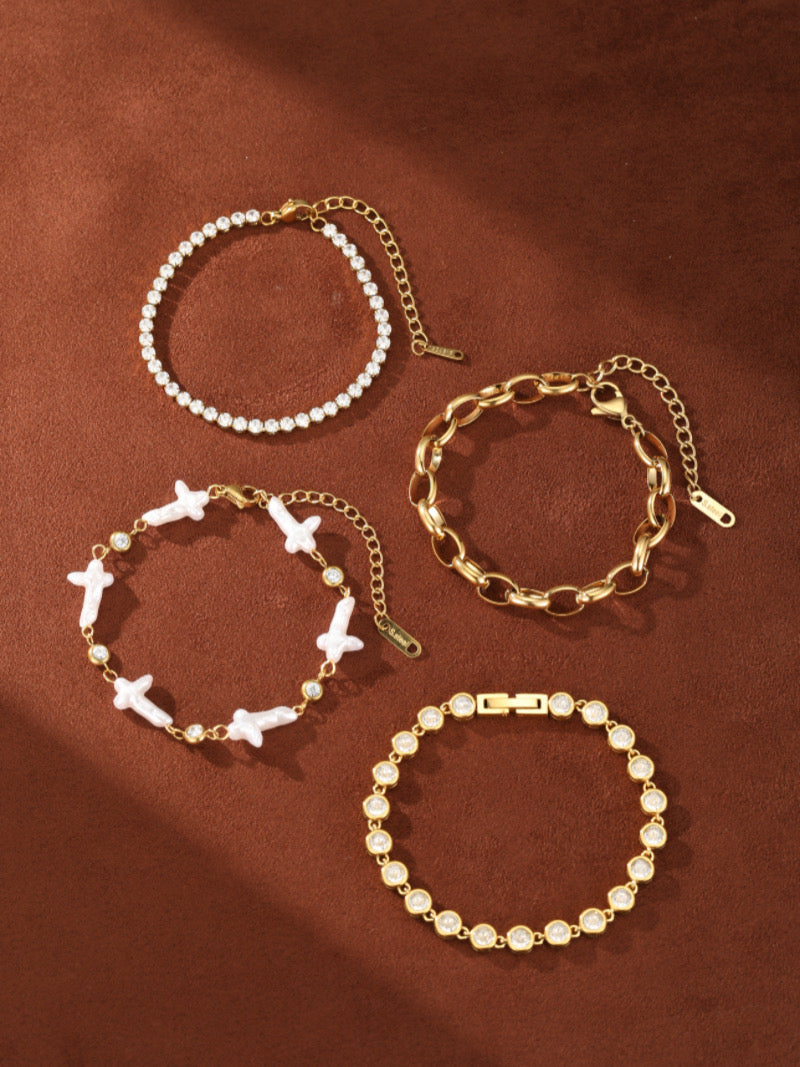
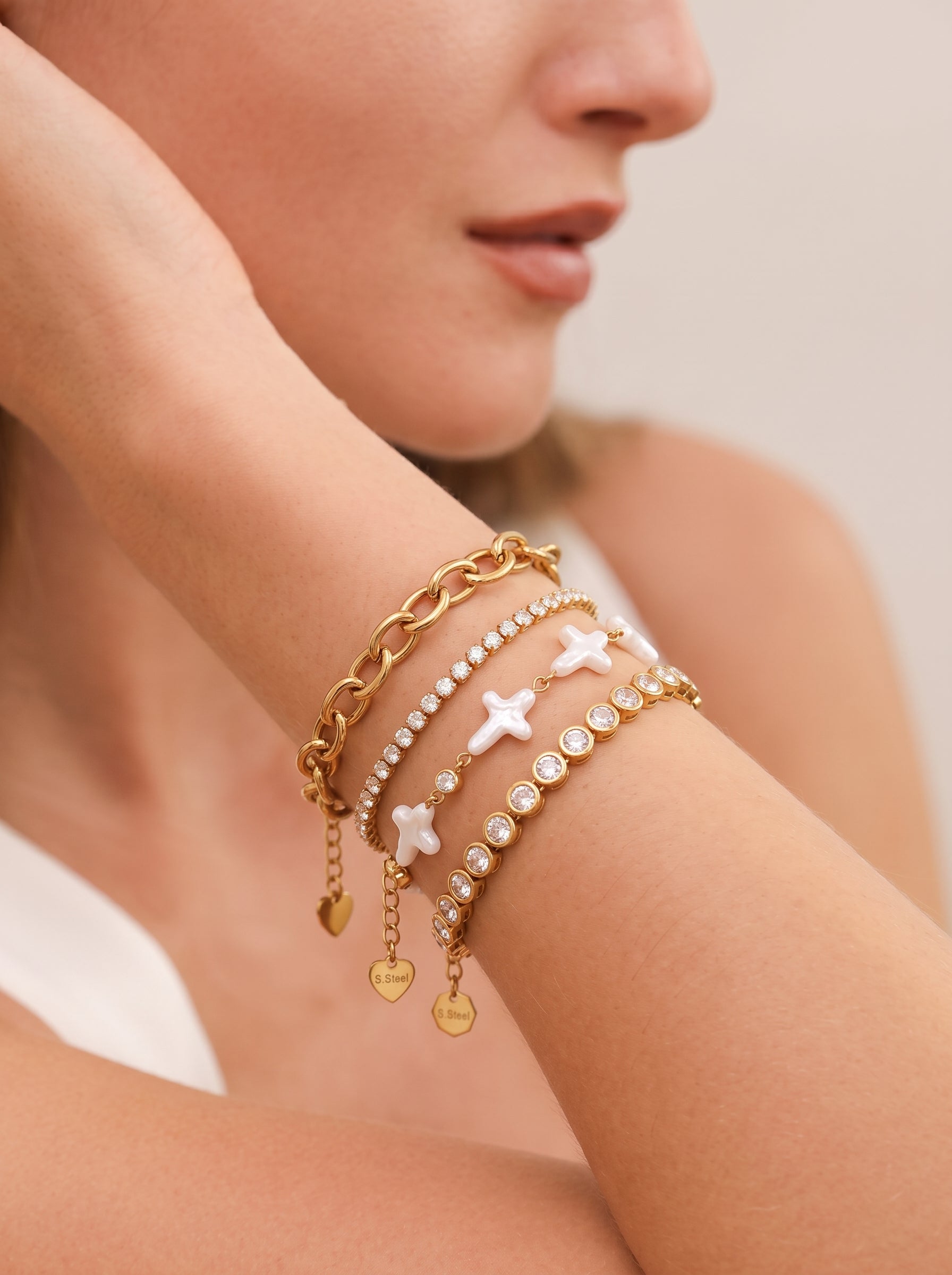
Pearl tennis bracelet
Pearls set end to end in one continuous line, with no gaps interrupting it. The result is a clean band of light around the wrist, and the most structured bracelet in pearl jewelry.
What is a pearl tennis bracelet?
A tennis bracelet is a flexible line of identically sized stones or pearls, each held in its own setting, running the full circumference of the wrist. Nothing interrupts the sequence, and the settings articulate so the piece follows the curve of the arm.
In pearls, that construction gives a different effect from a strung strand. Each pearl is held individually rather than threaded, so the line stays even and the pearls do not rub against each other.
Where does the name come from?
From a 1987 US Open match, when Chris Evert's diamond line bracelet broke mid-play and she asked officials to pause the game while she recovered it. The style has been called a tennis bracelet ever since.
Before that it was simply a line bracelet, which is still the more descriptive term.
Why does this construction suit pearls?
Two reasons. Individually set pearls cannot abrade each other, which matters because nacre is soft and a strung strand relies on knots to keep beads apart.
And a continuous line of matched pearls shows off consistency in a way a spaced design cannot. If the pearls agree on size, color and luster, this is the construction that proves it.
How should a tennis bracelet fit?
Closer than a beaded bracelet. About a quarter to half an inch past your wrist measurement, so it moves but does not slide down over the hand. A line bracelet that hangs loose loses the clean line that is its whole point.
Measure just below the wrist bone. Most women take 7 to 7.5 inches.
Why buy a pearl tennis bracelet from Grande Lilith
A continuous line is unforgiving. Every pearl sits next to a neighbor for comparison, so any variation in size, color or luster is visible at a glance.
- Eight provenance markers on every product page, including grade, which matters most where pearls are matched in sequence.
- Sourcing named to place: Zhuji, Japan, French Polynesia.
- Partners vetted by our GIA-certified pearl specialist, on working conditions as well as quality.
- Nickel-free, lead-free and cadmium-free settings and clasps on gold, silver and stainless steel.
- Designed in Paris. Thirty days to change your mind, and every order arrives in a magnetic pouch.
Frequently asked questions
Can you wear a pearl tennis bracelet every day?
Yes, and the individual settings make it more robust than a strung strand. Take it off before washing dishes or applying hand cream, and check the clasp periodically, since a line bracelet carries its weight at that single point.
Does it work under a shirt cuff?
Better than most bracelets, because the profile is low and even. There is no clasp bulk sitting proud of the line and no beads rolling out of position when a sleeve pushes against it.
What size pearls suit a tennis bracelet?
Smaller than you would choose for a strand. Between 4 and 7 mm keeps the line elegant and the bracelet flexible. Larger pearls in a continuous line start to look heavy on most wrists.
Is a tennis bracelet formal?
It reads more structured than a beaded strand, which some people read as formal. In pearls rather than diamonds it sits comfortably in an everyday register, particularly under a sleeve at work.
What should I check on the clasp?
That it closes with a definite click and that any safety catch engages. A line bracelet distributes no weight along its length, so the clasp carries everything, which is why the Chris Evert story exists at all.