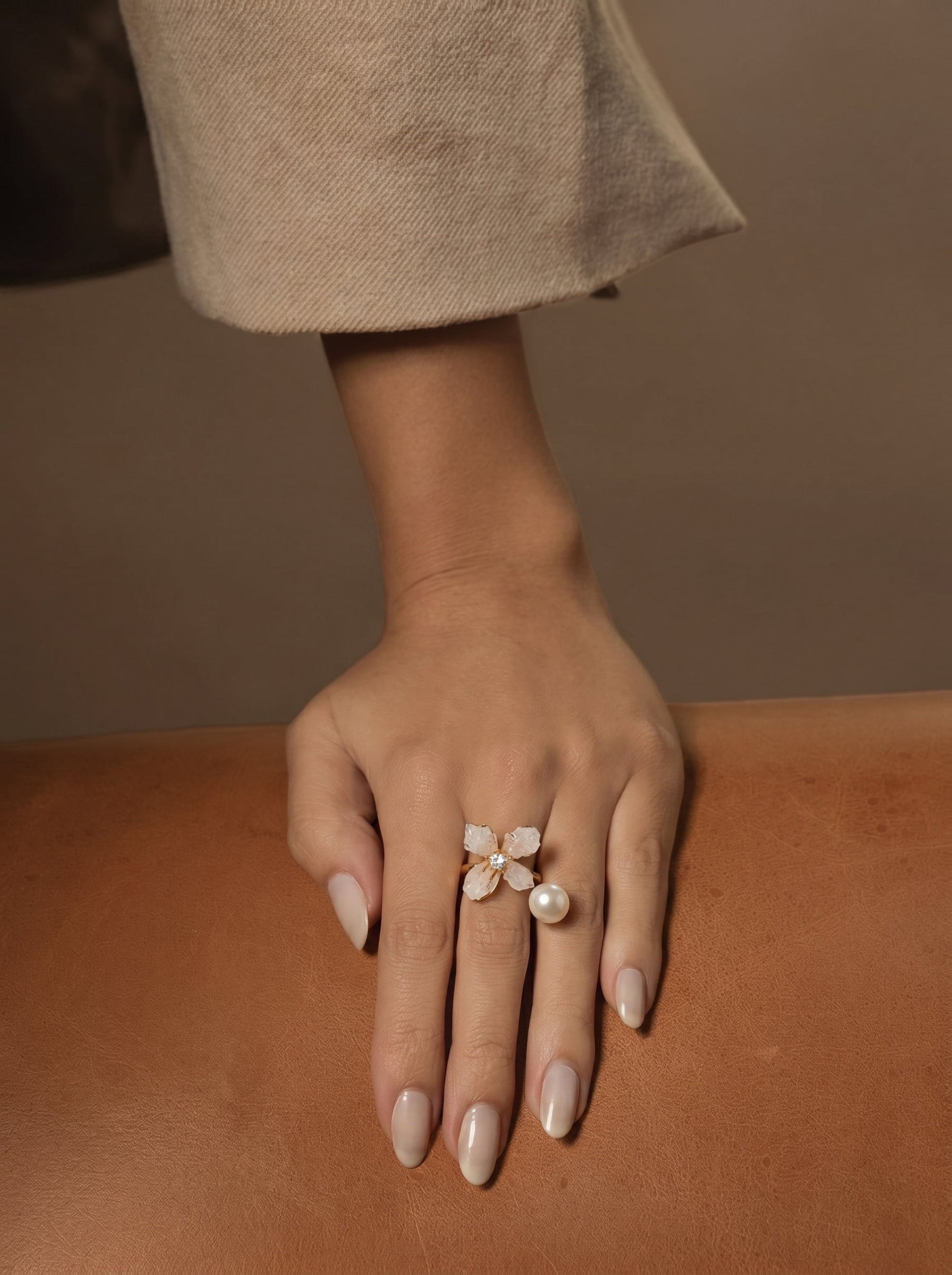
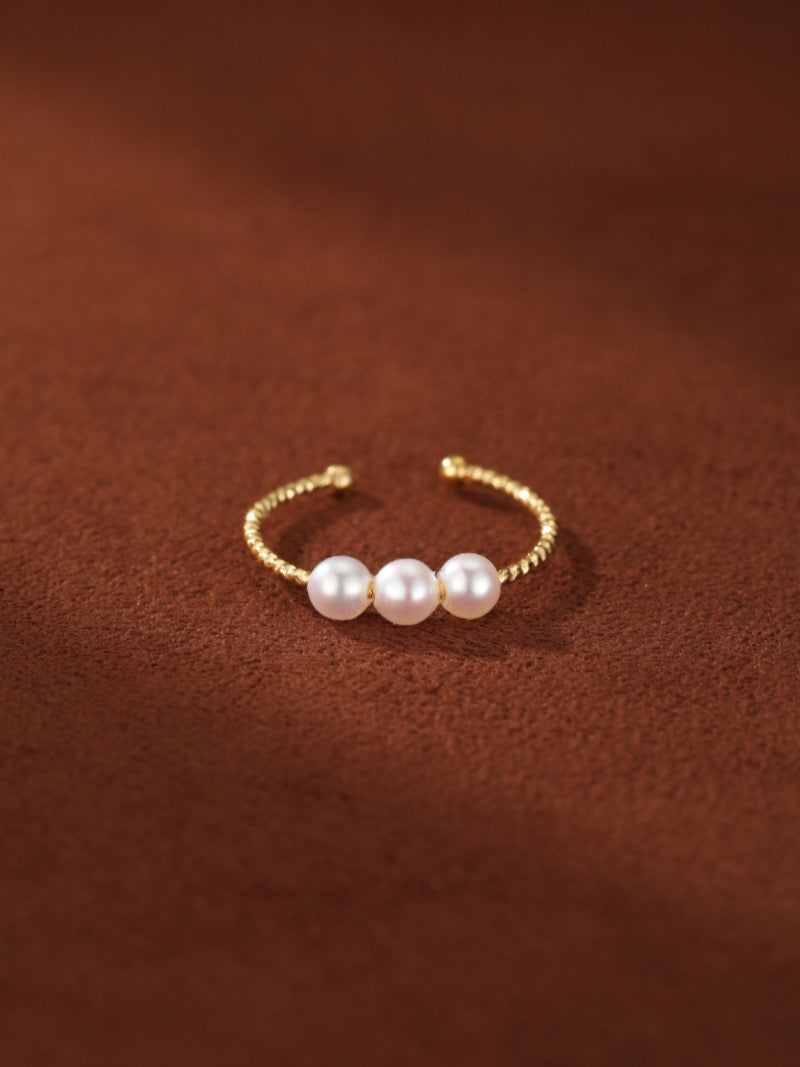
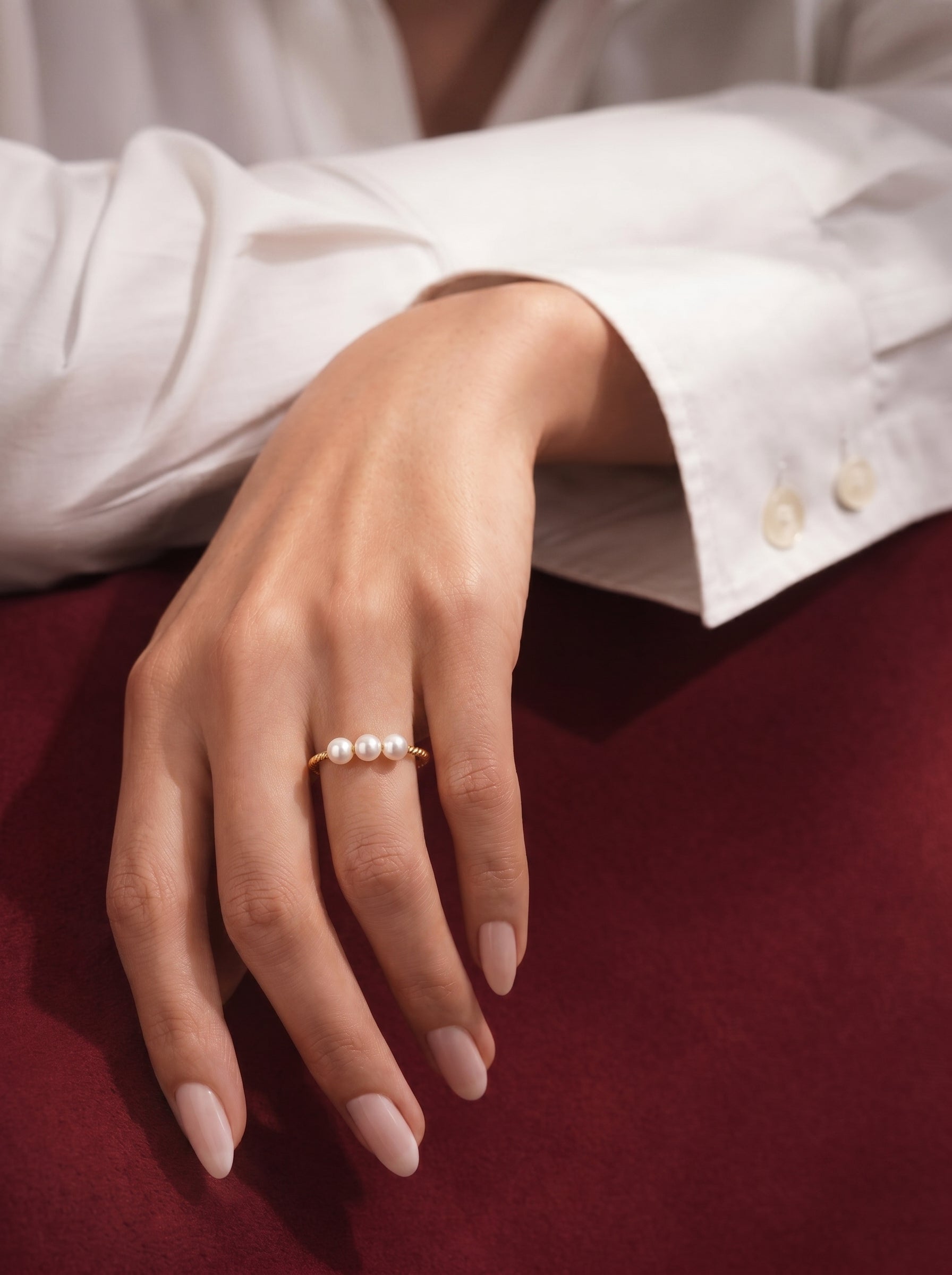
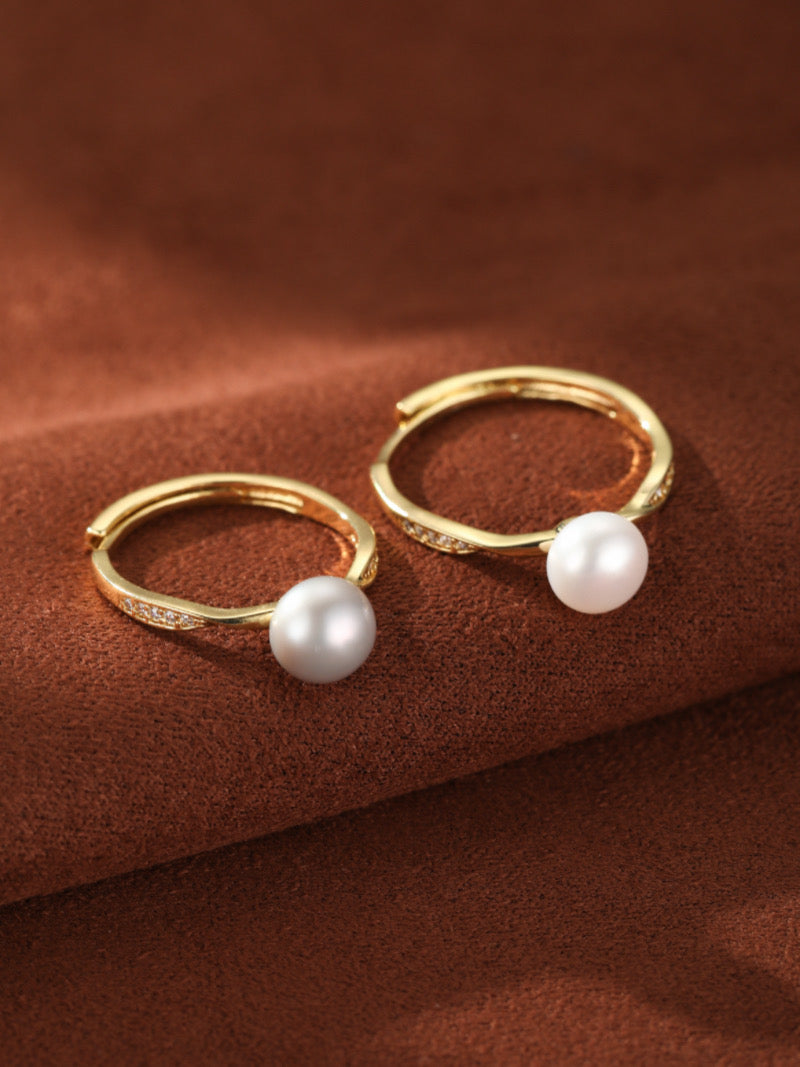
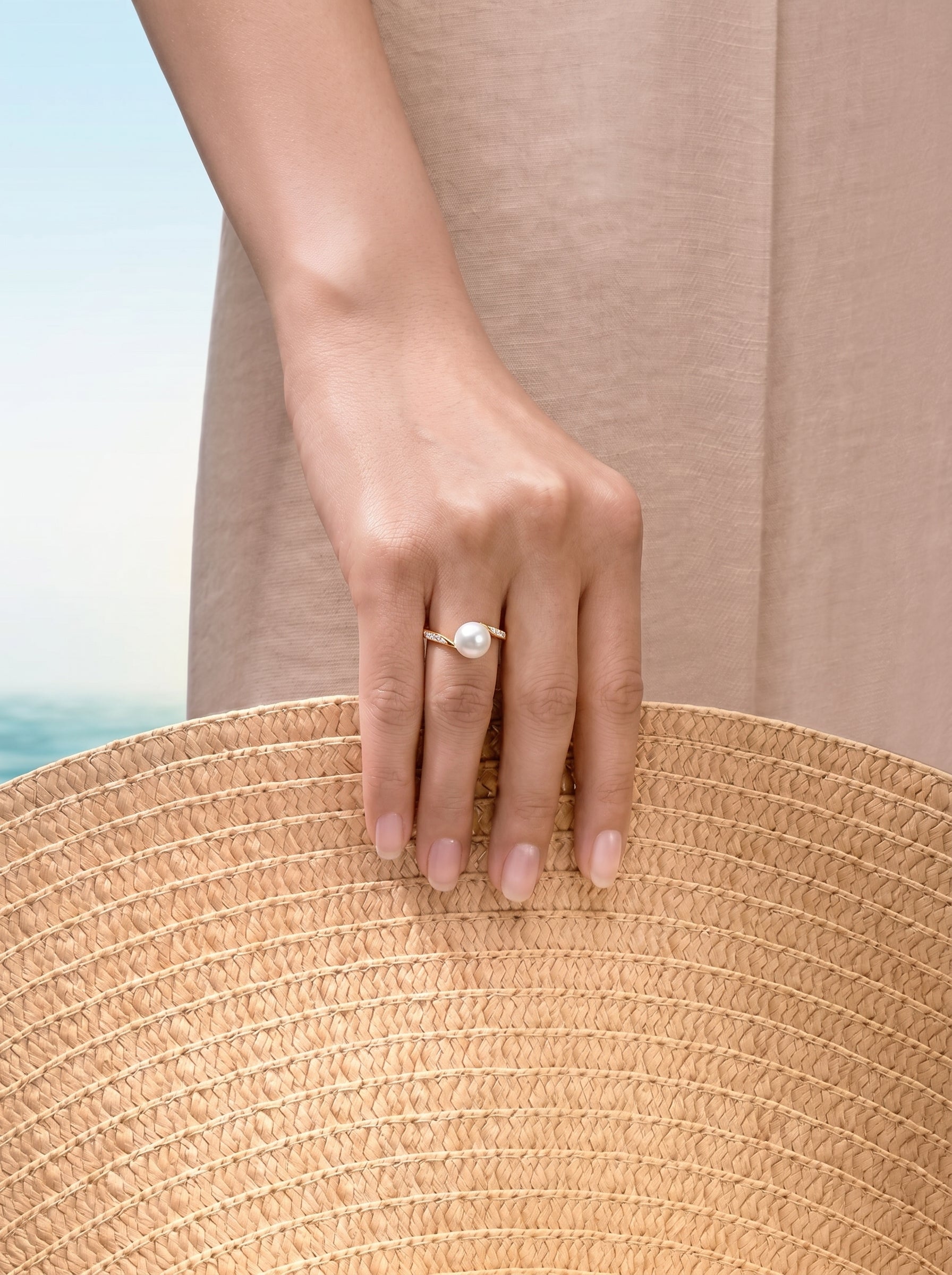
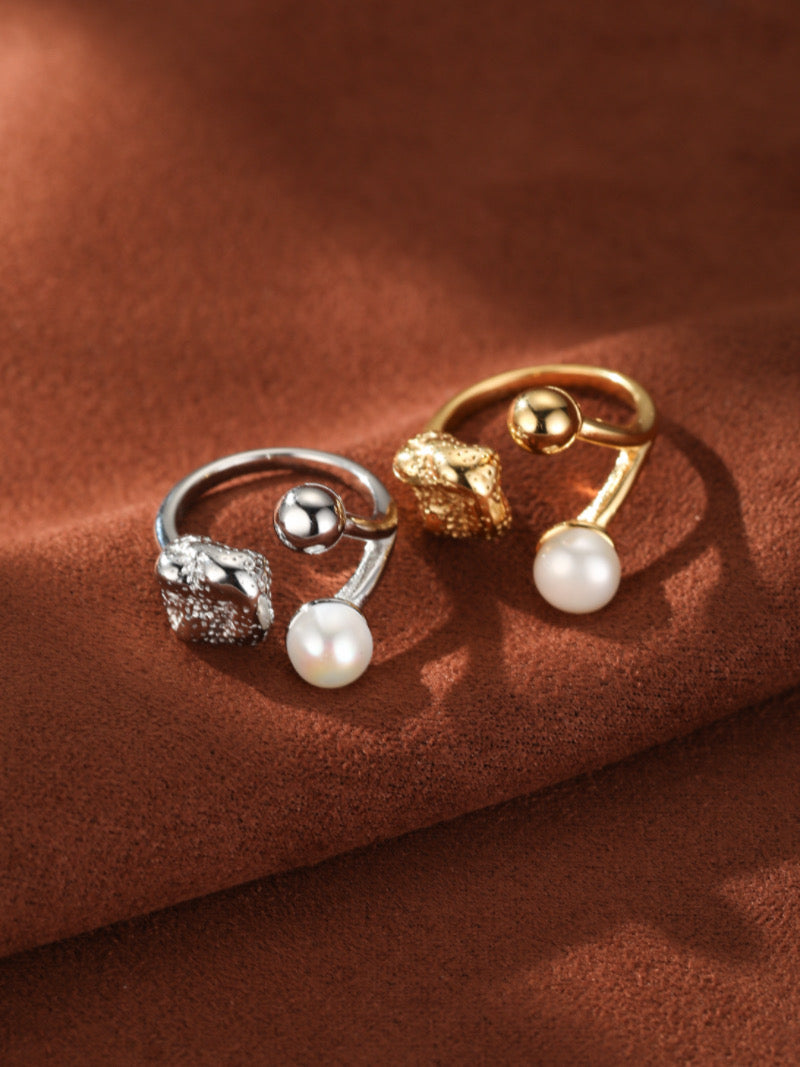
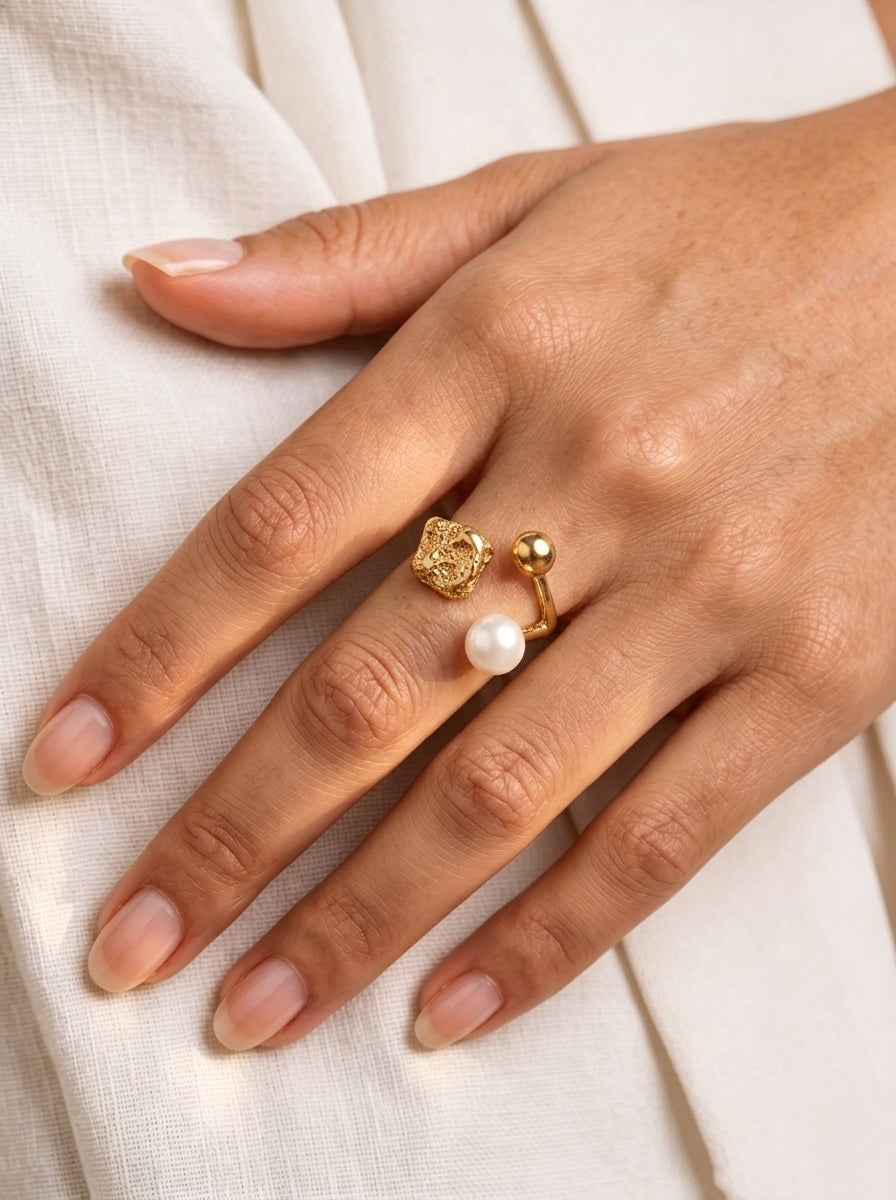
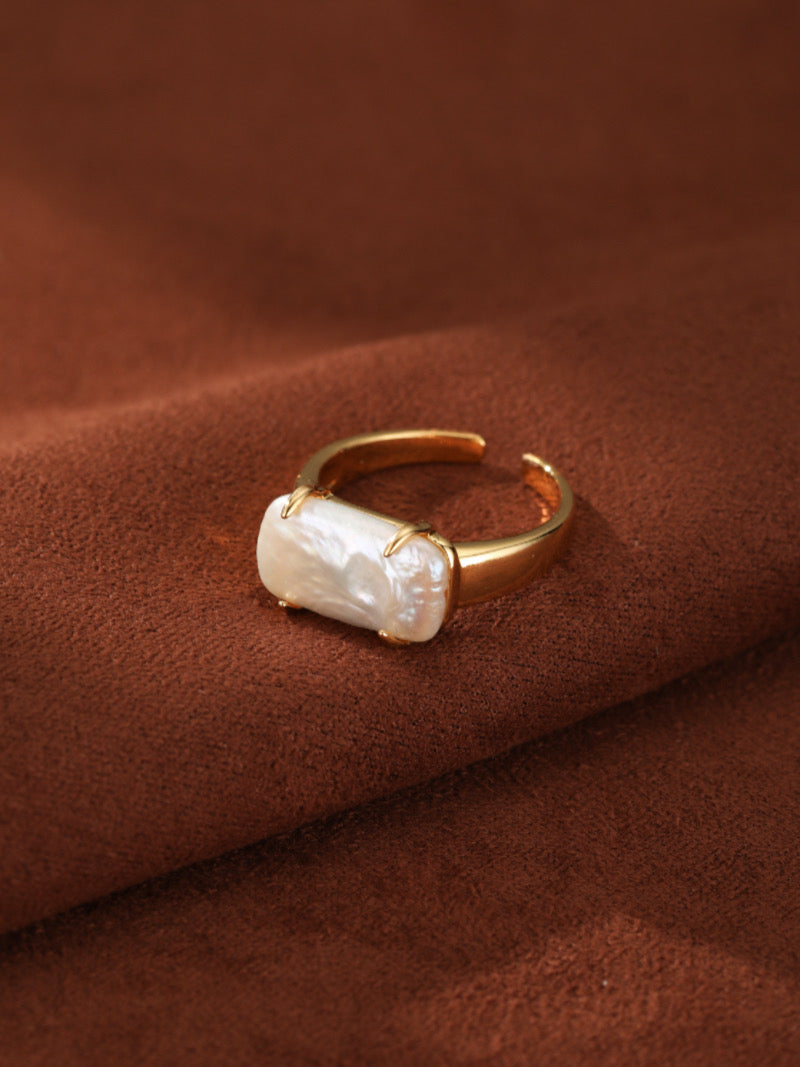
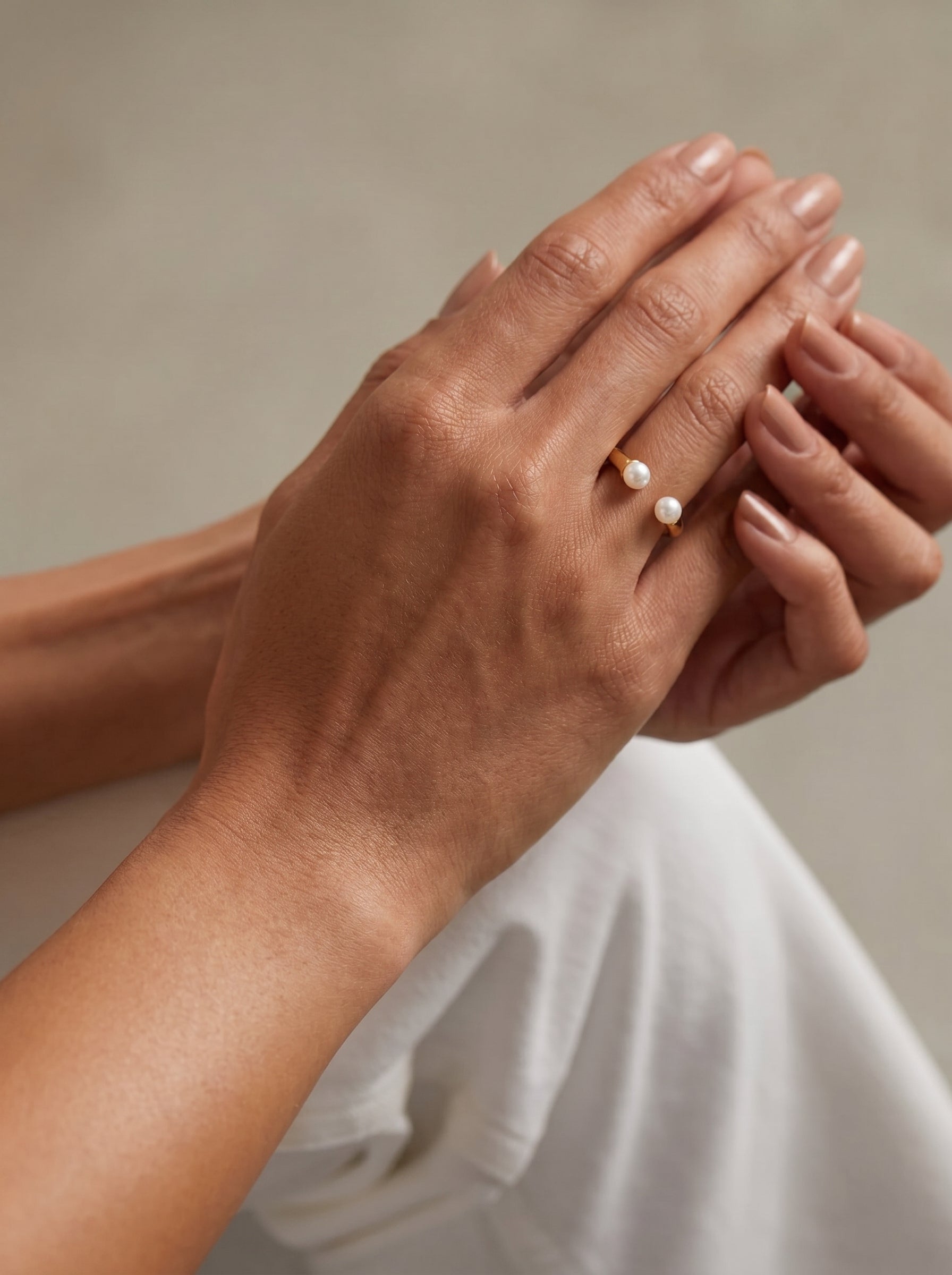
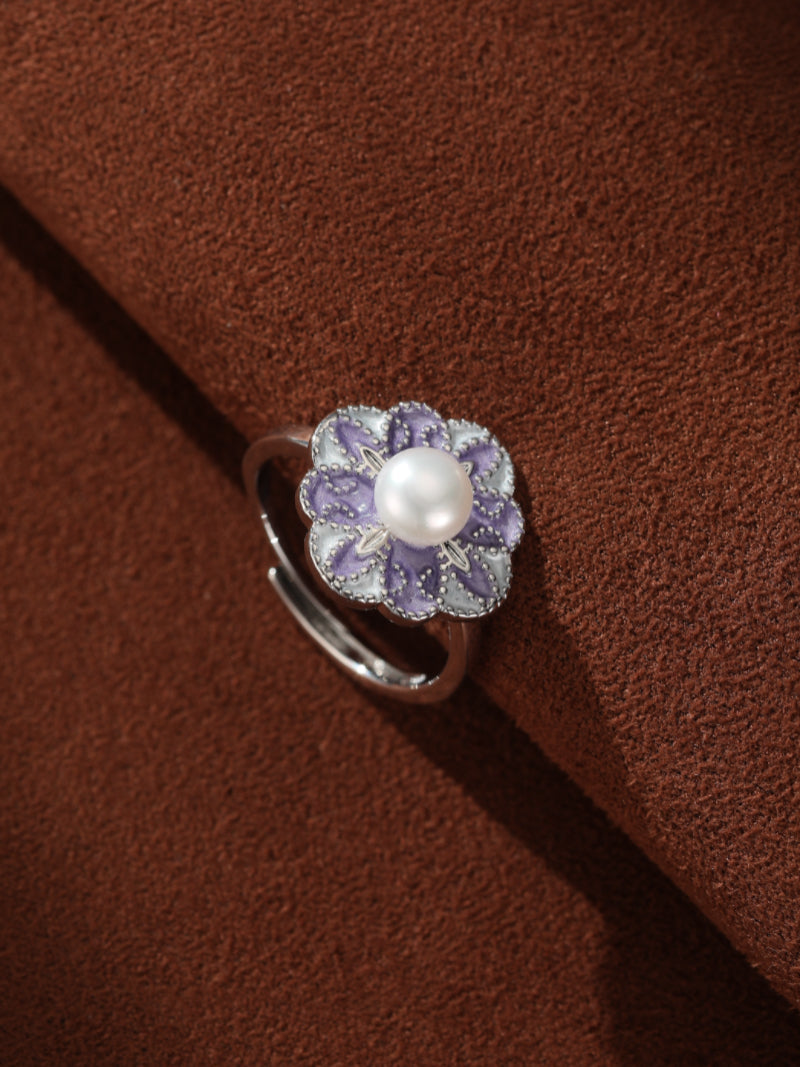
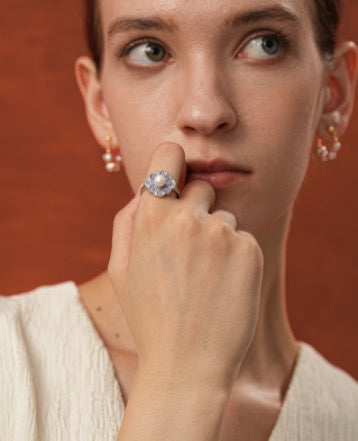
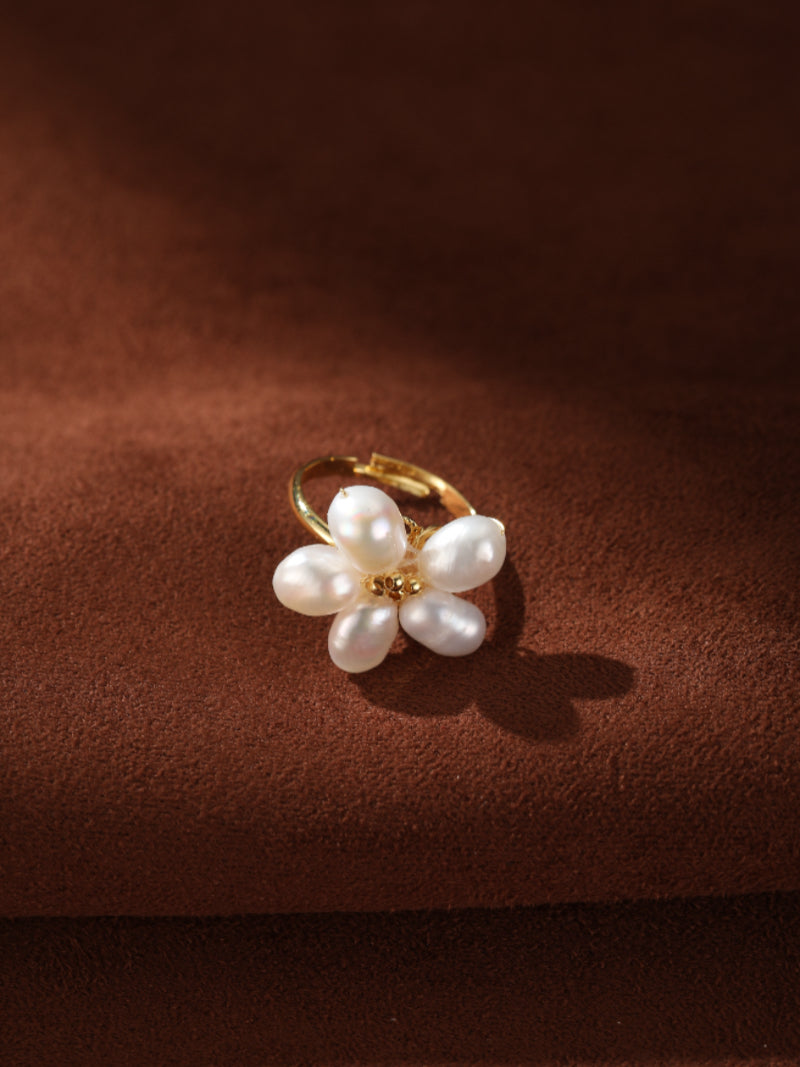
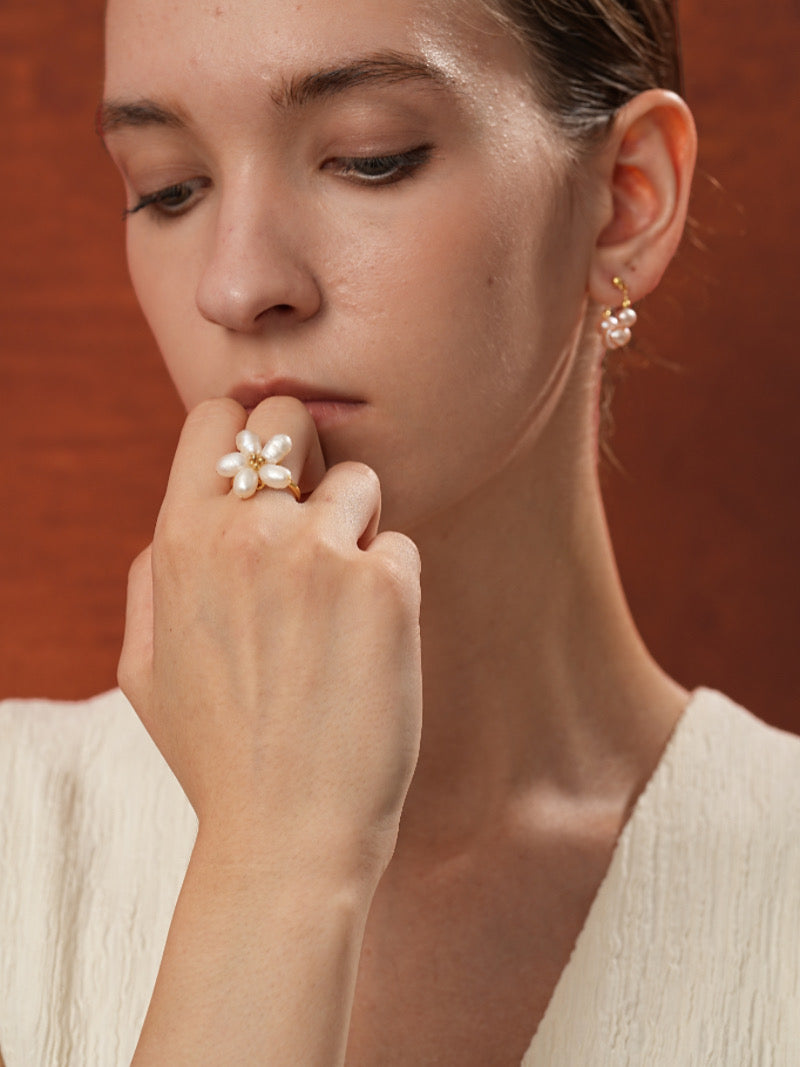
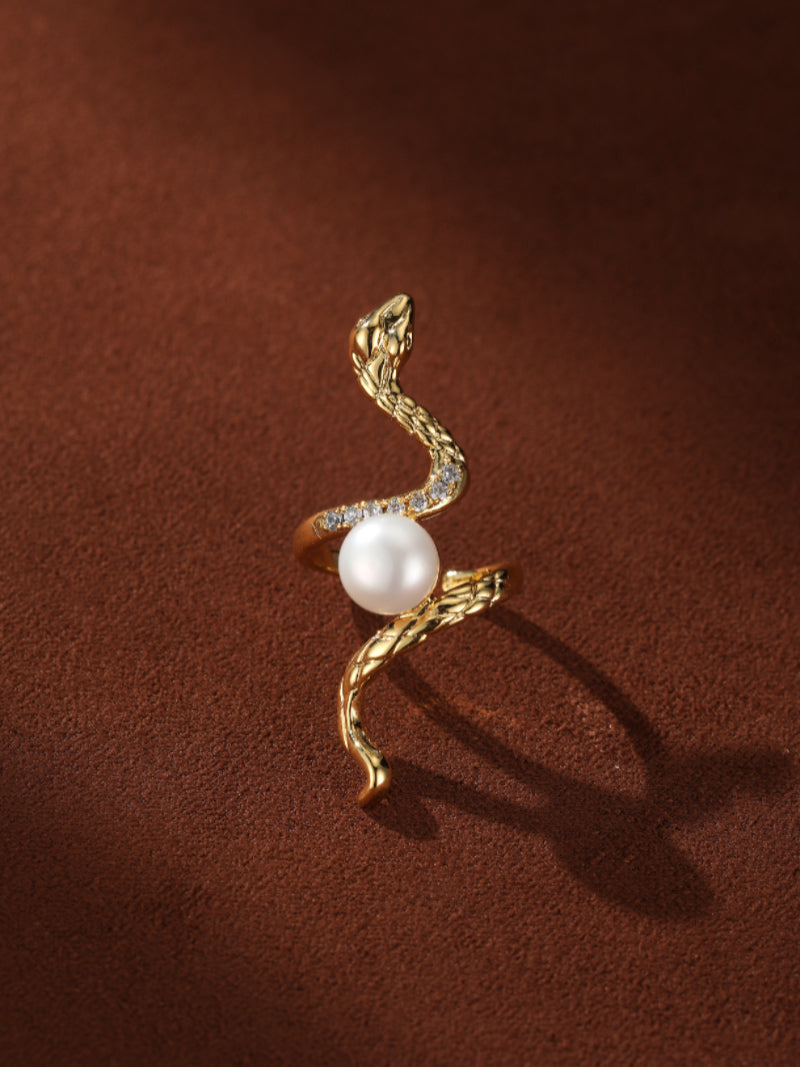
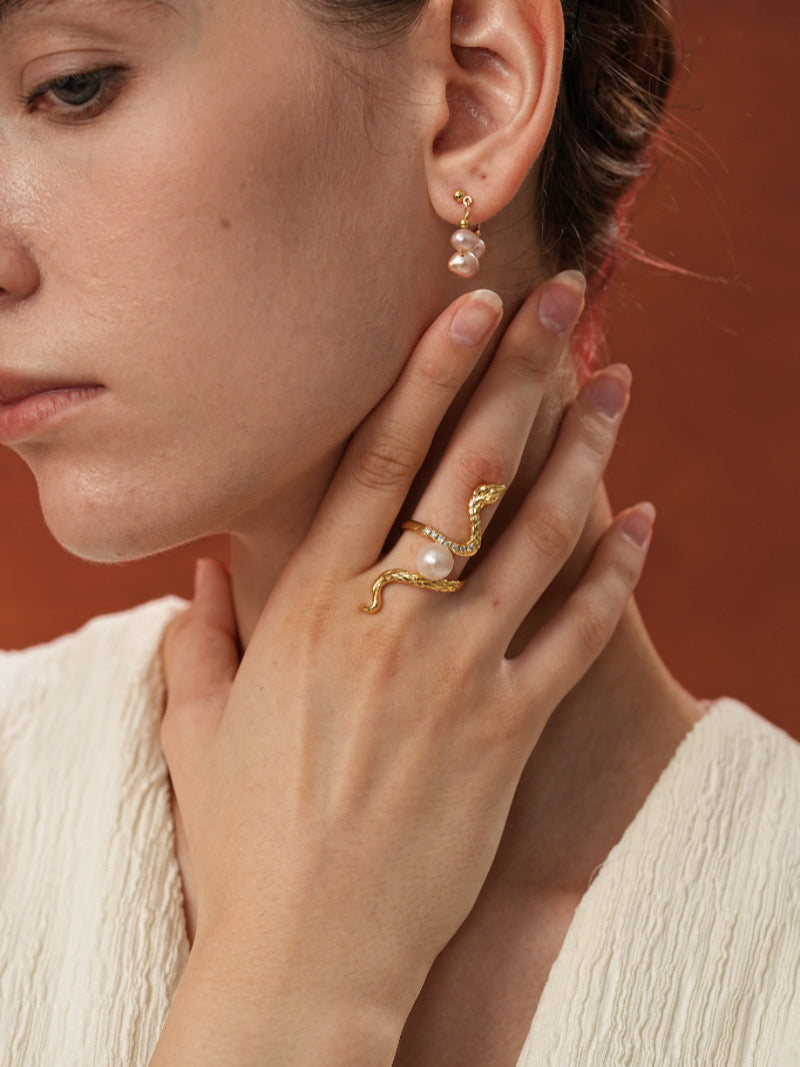
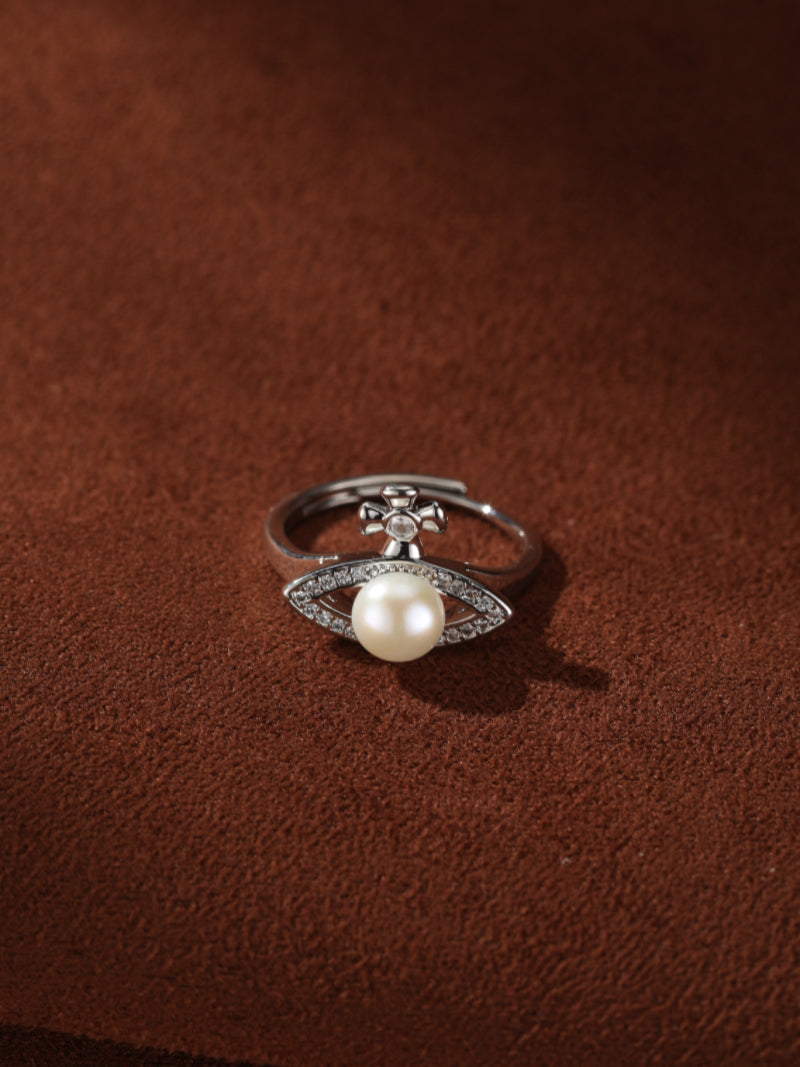
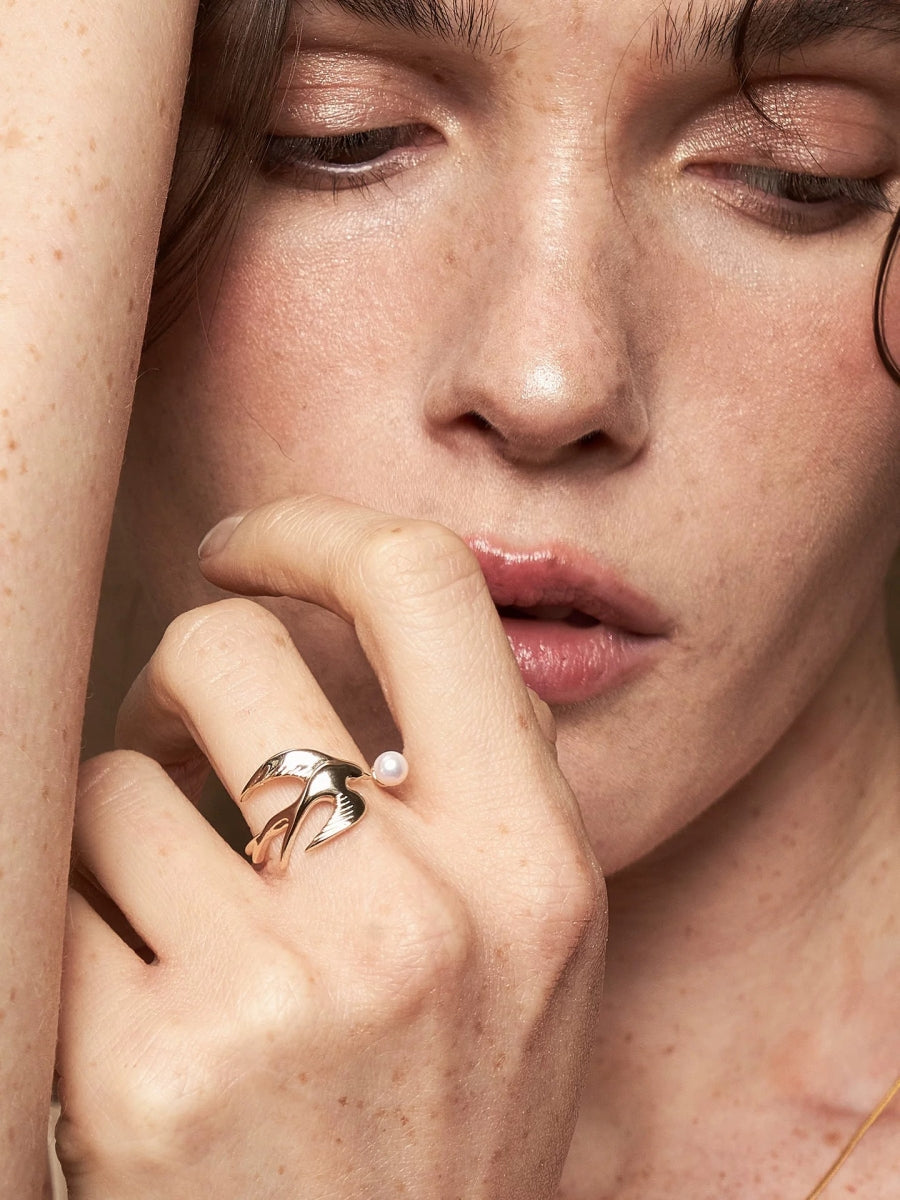
A pearl ring sits at hand height, in every gesture you make across a table. It is the piece people ask about most often, and the one that has to survive the most contact. This collection covers open cuffs, beaded bands and single settings across every pearl type and metal we work in.
What is a pearl ring?
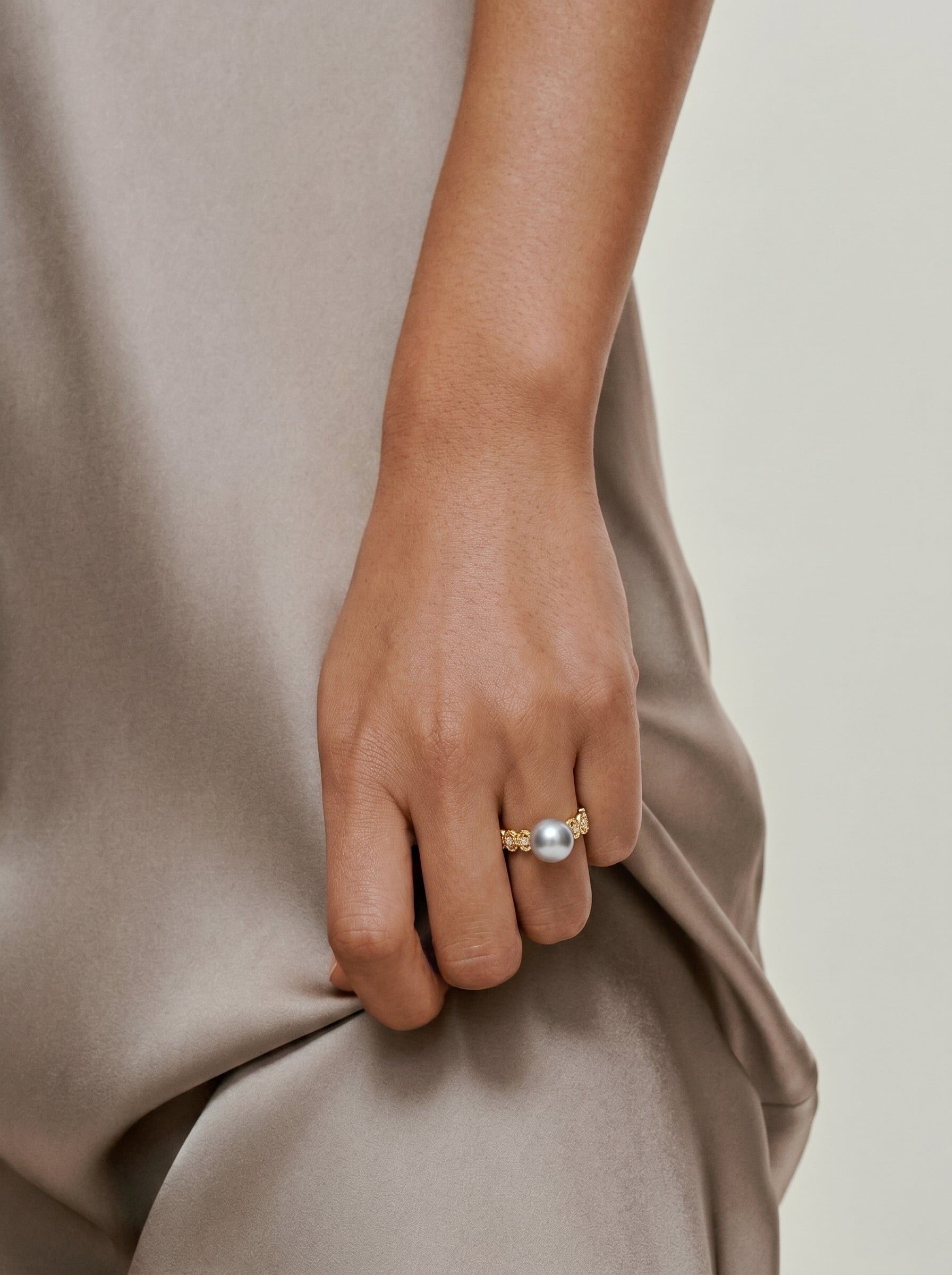
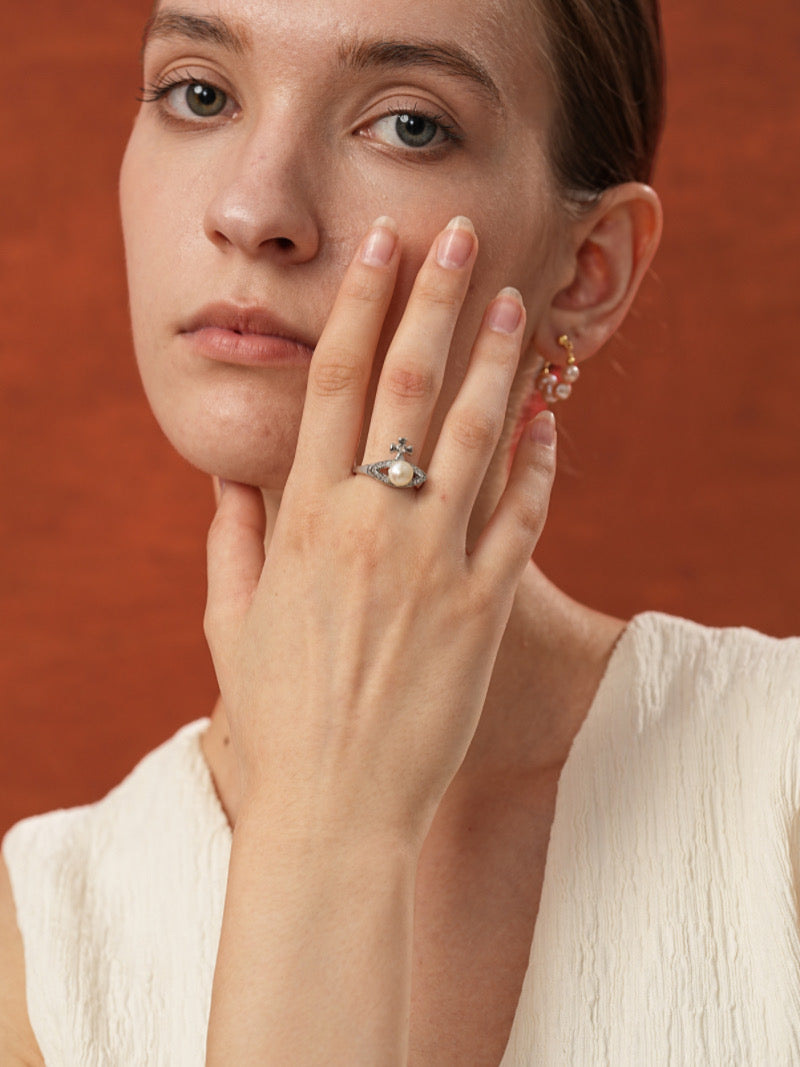
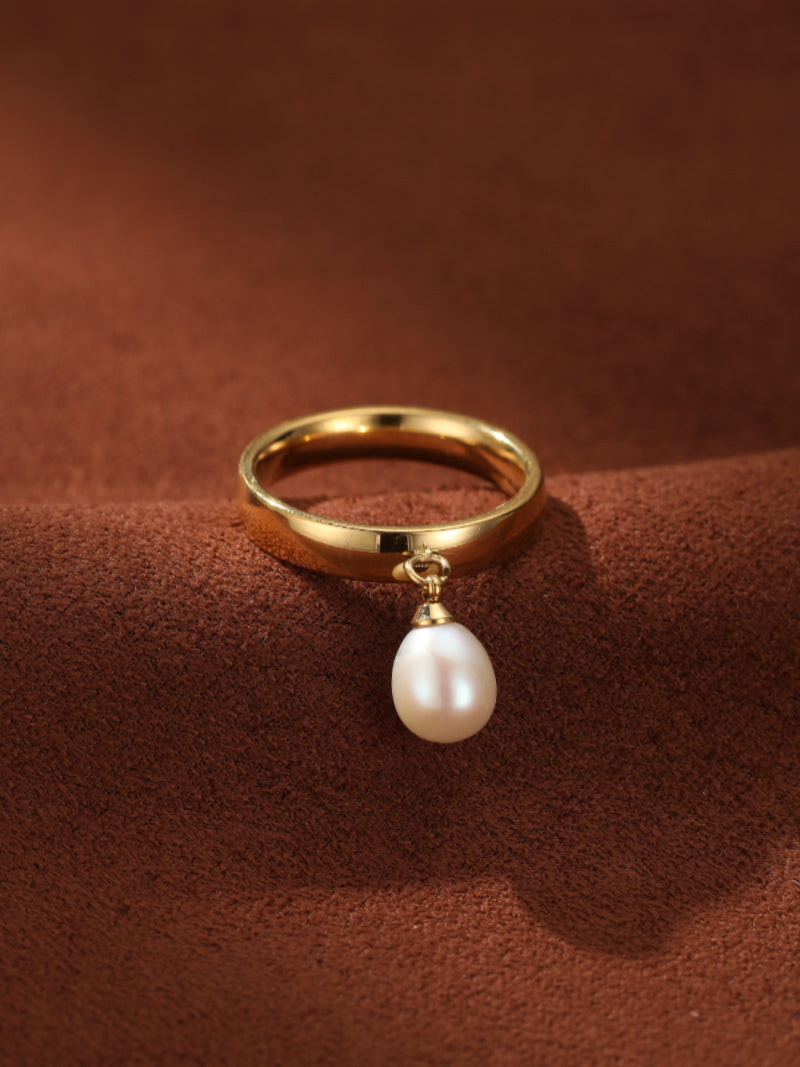
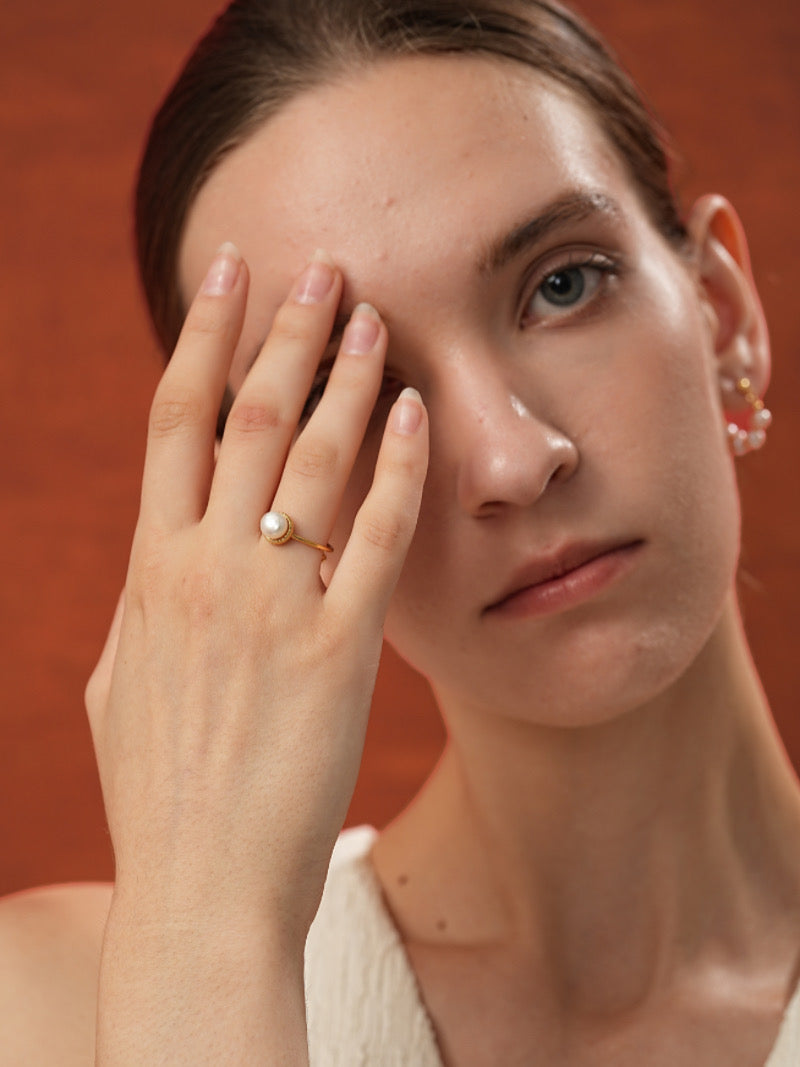
A pearl ring is any ring where a cultured pearl is the focal element, whether set alone on a band or worked into a sculpted form. The two decisions that matter most are setting height and band type, because together they determine whether the ring is something you wear daily or something you save.
Pearls rank 2.5 to 3 on the Mohs hardness scale, softer than almost anything else in a jewelry box. That is not a reason to avoid a pearl ring. It is a reason to choose a low setting and a band that suits your hands.
Which style of pearl ring should you choose?
Adjustable pearl ring
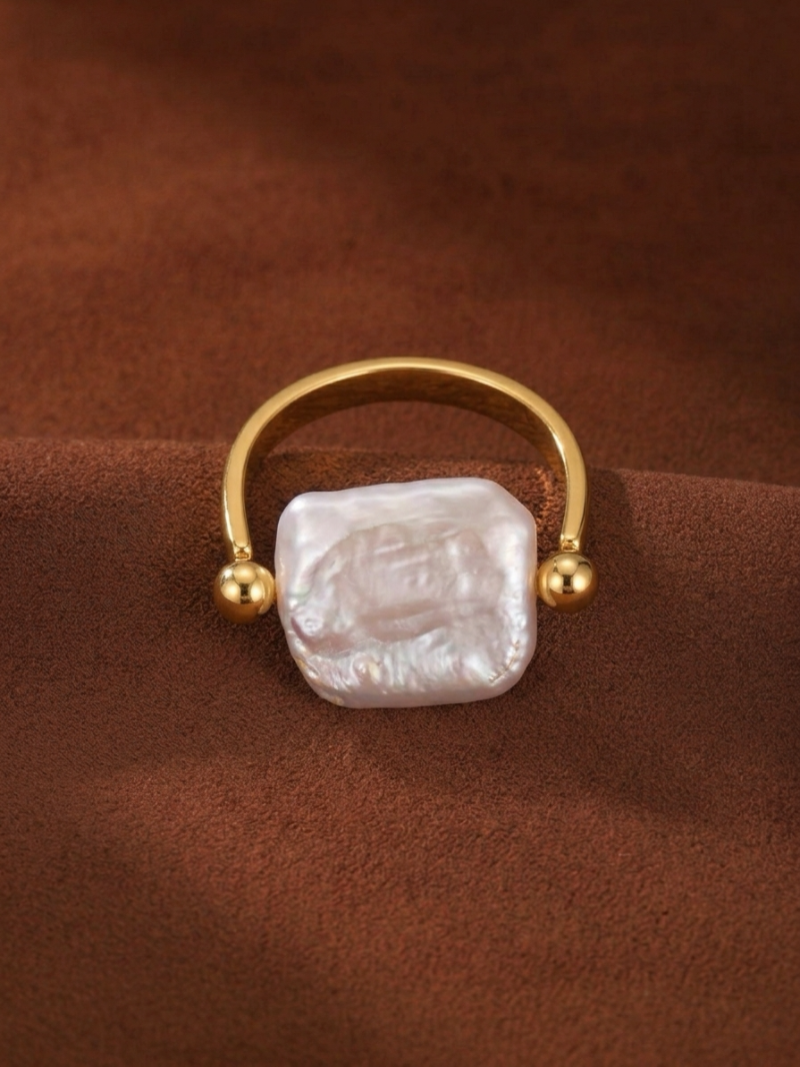
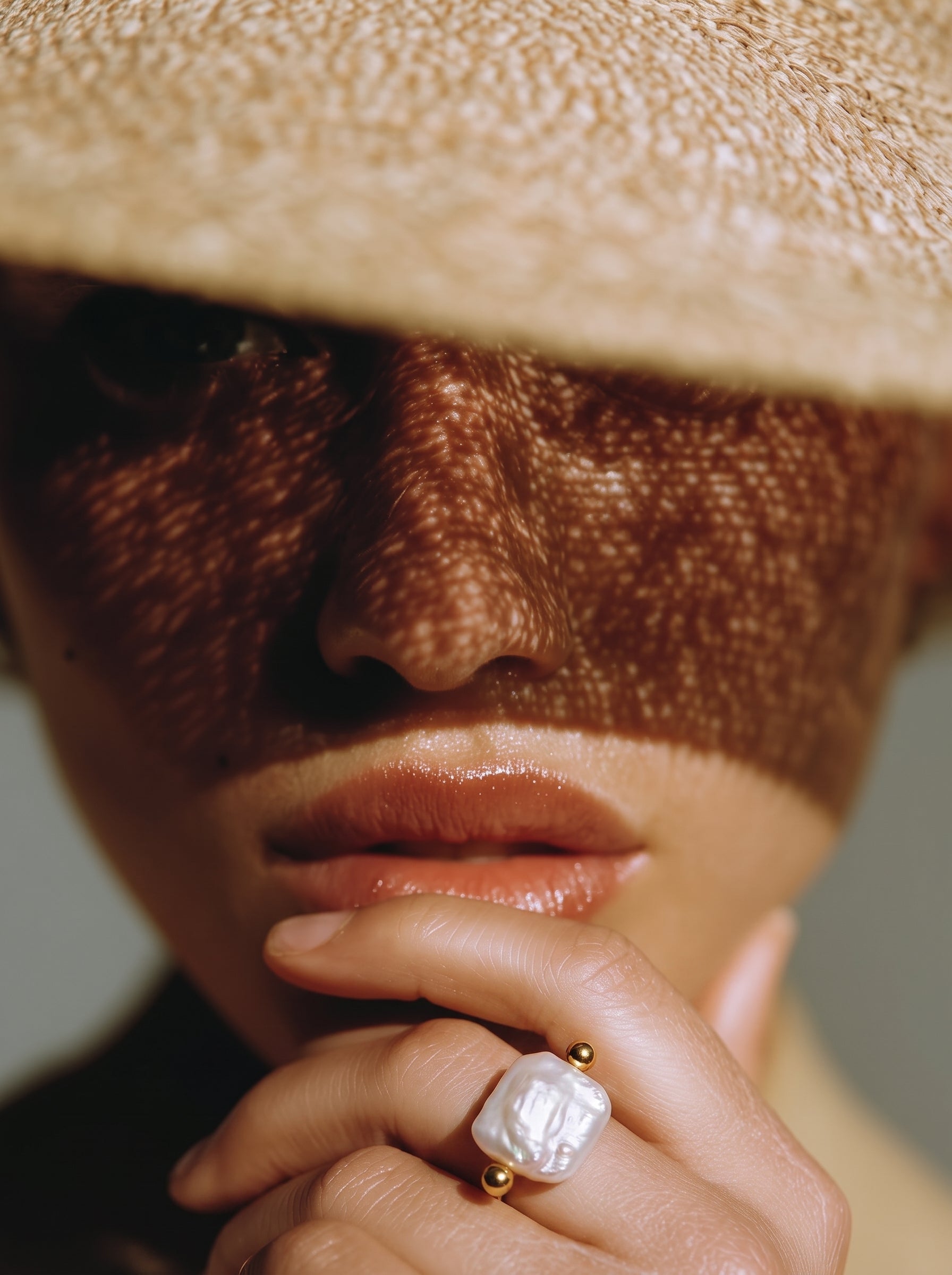
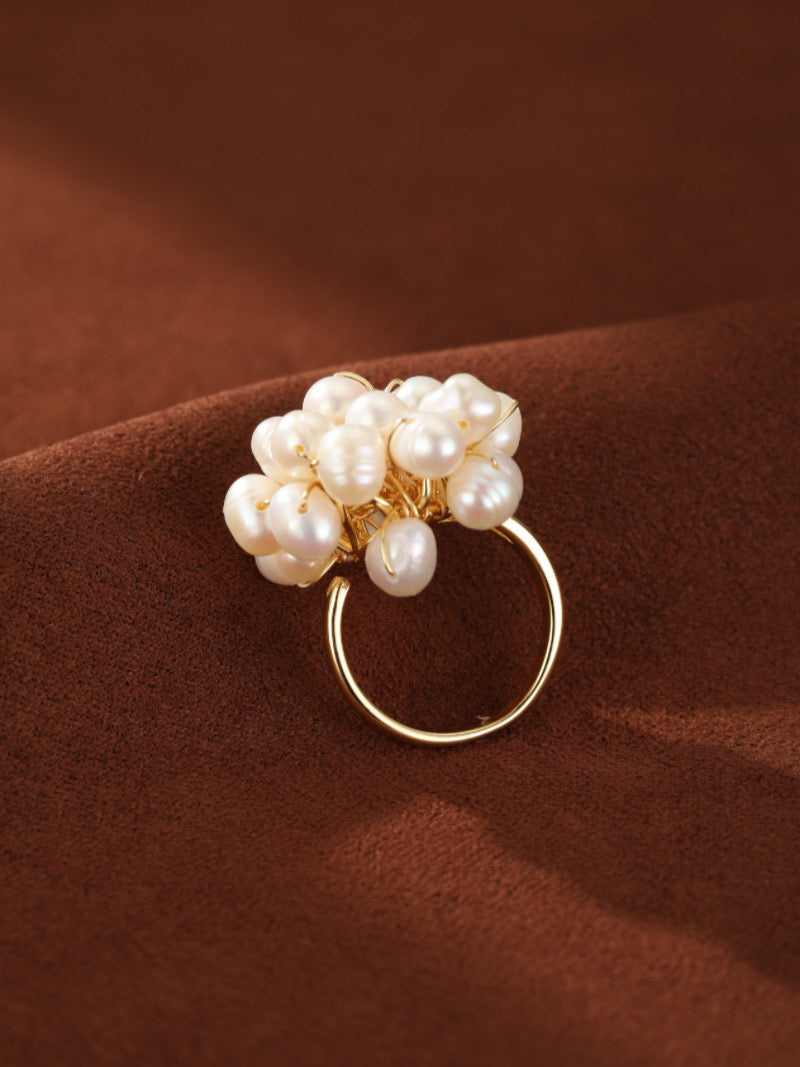
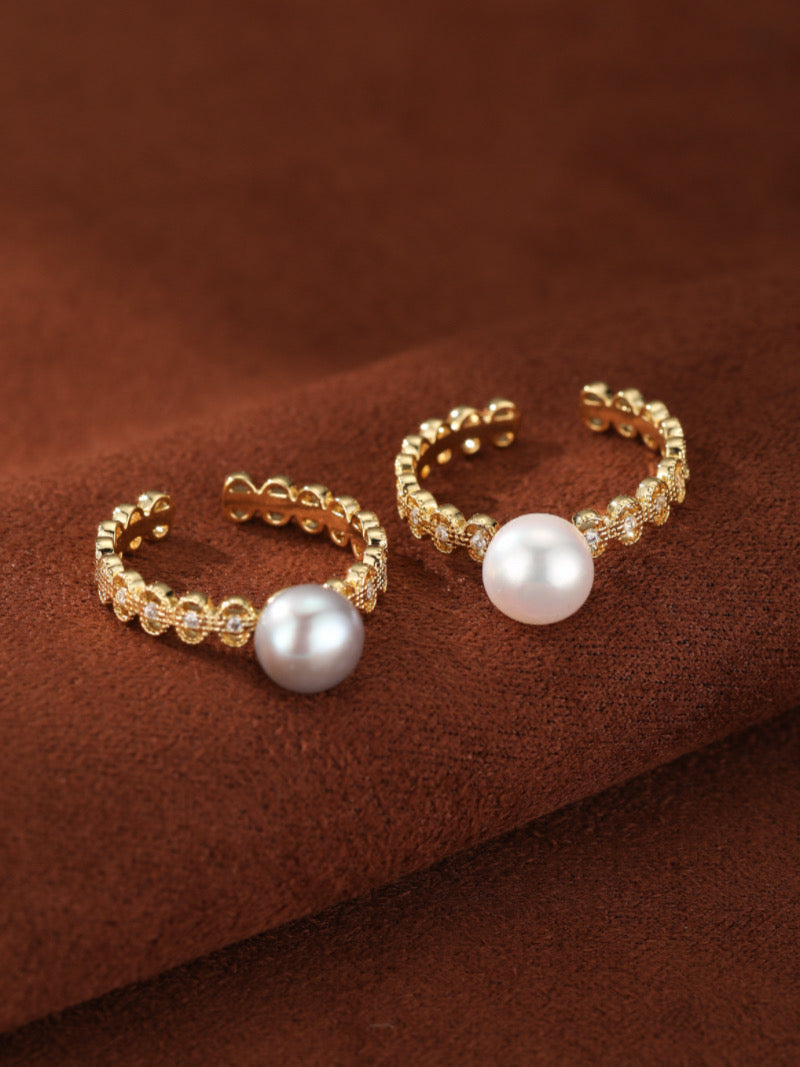
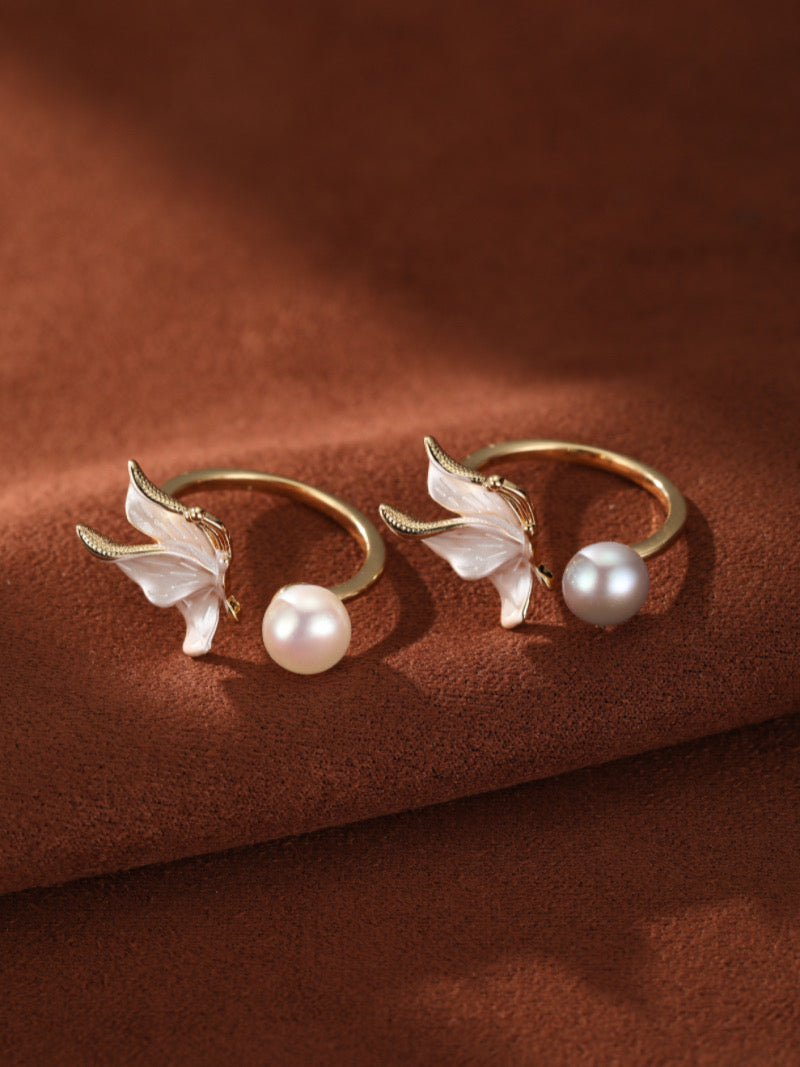
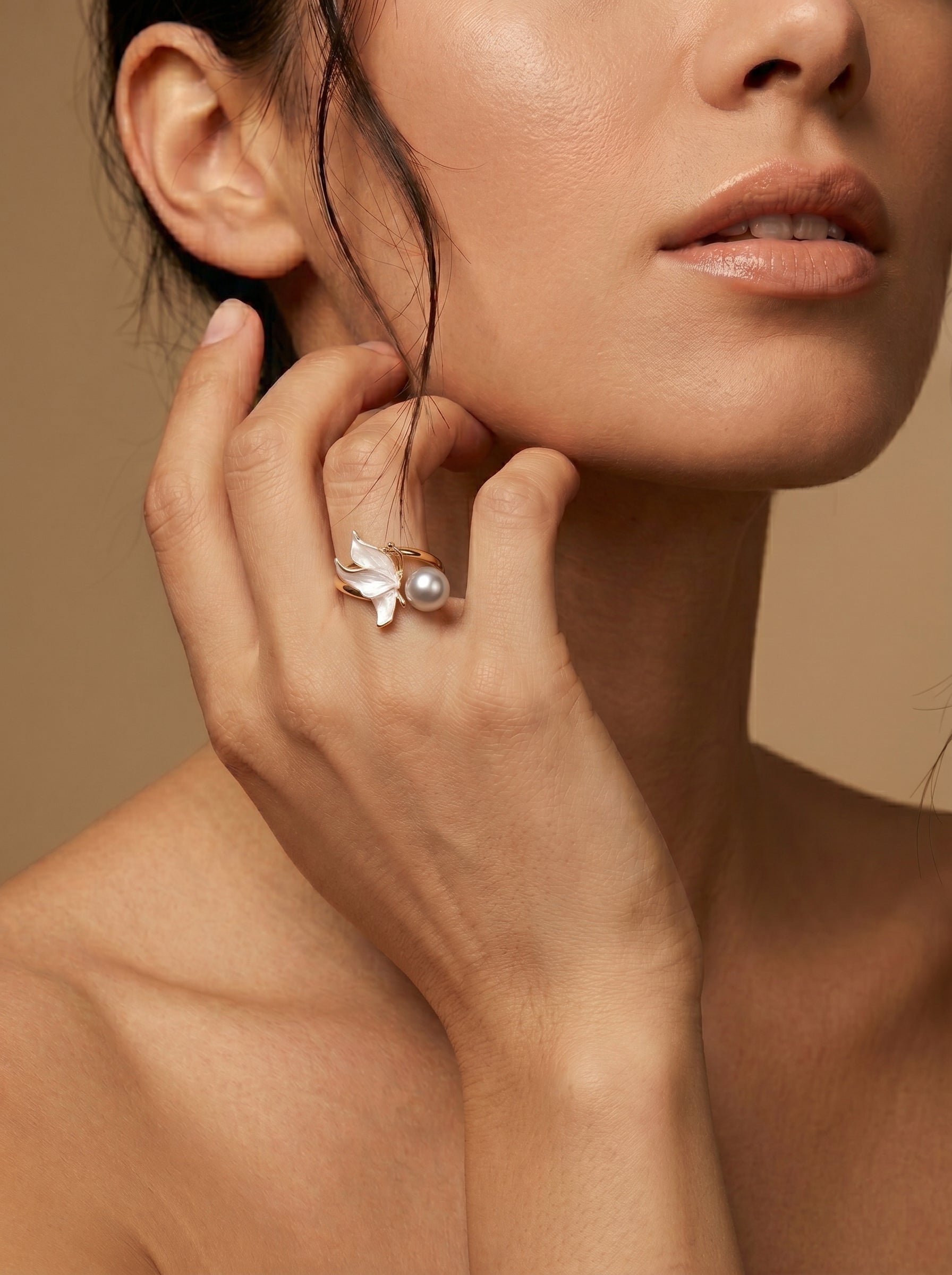
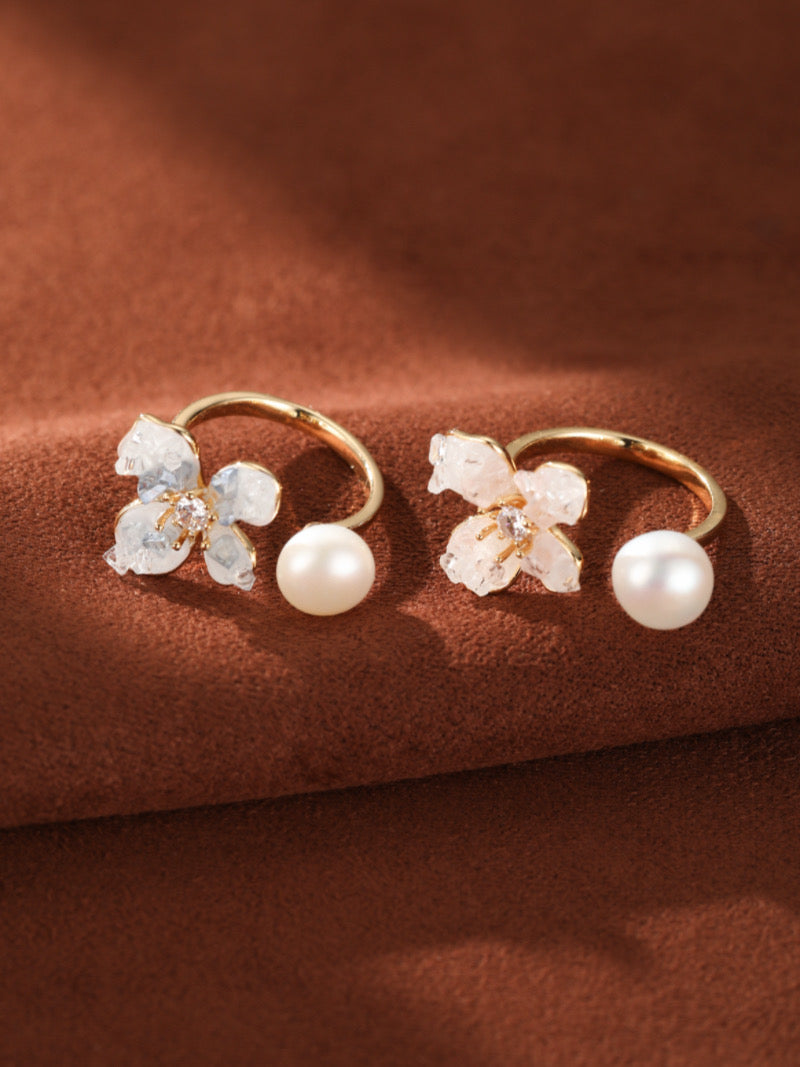
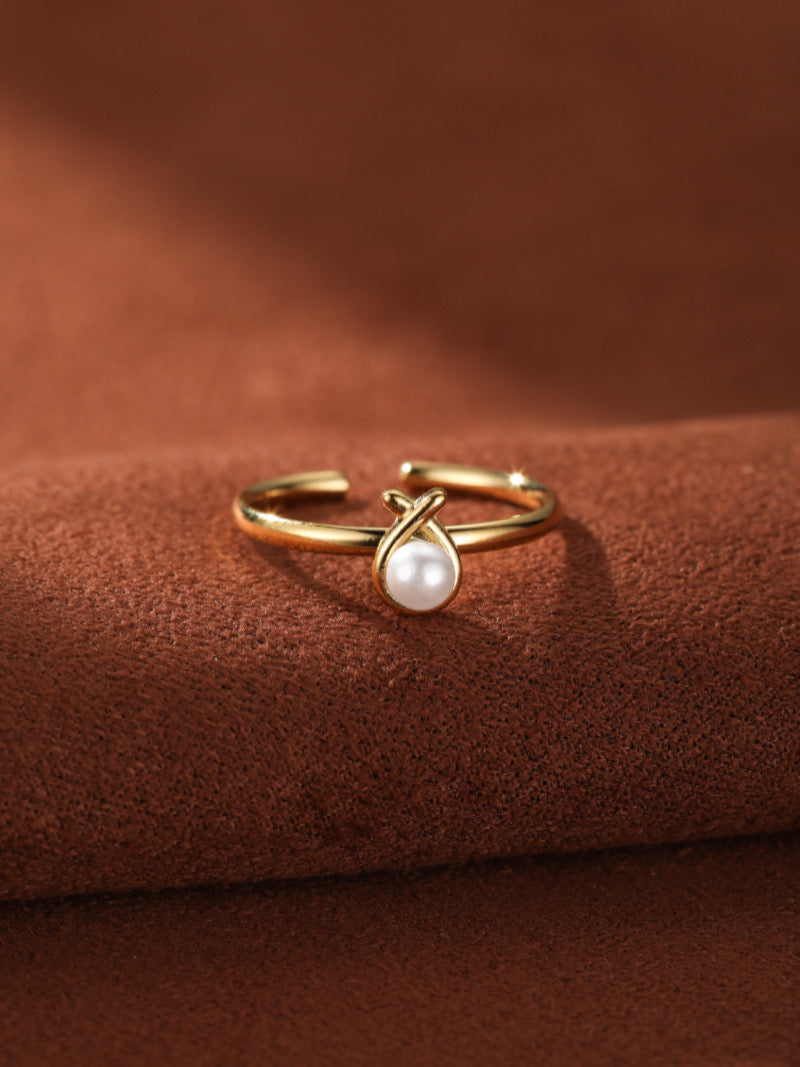
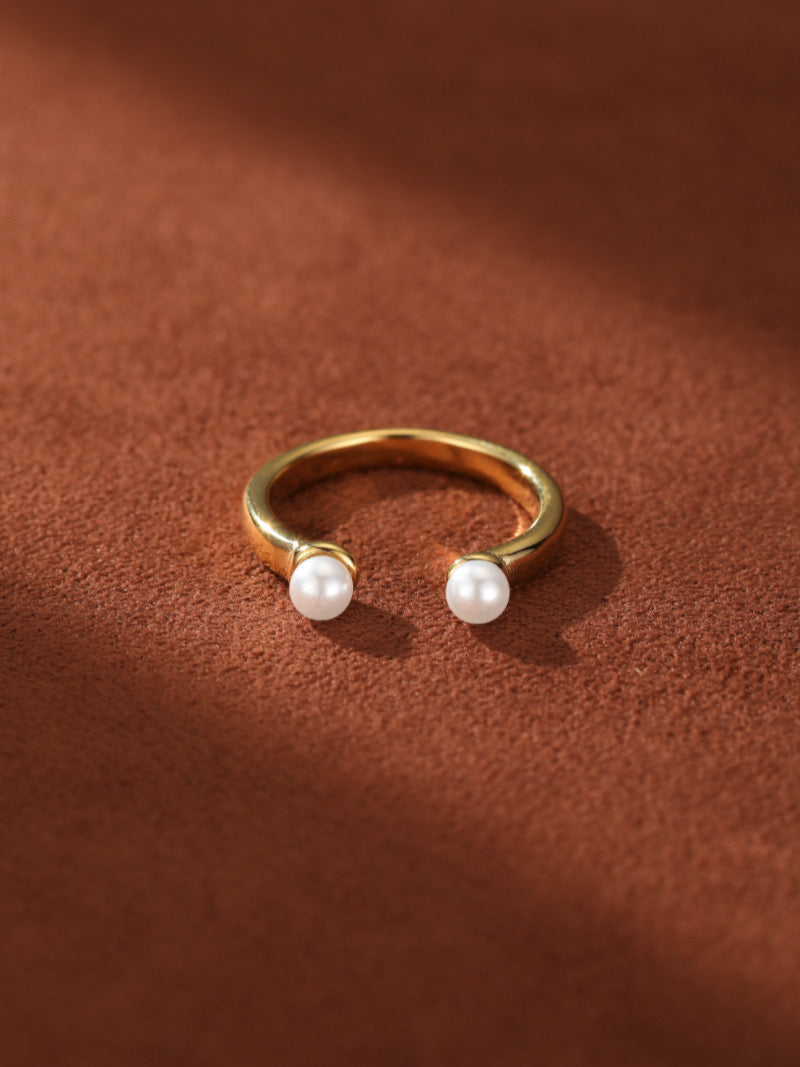
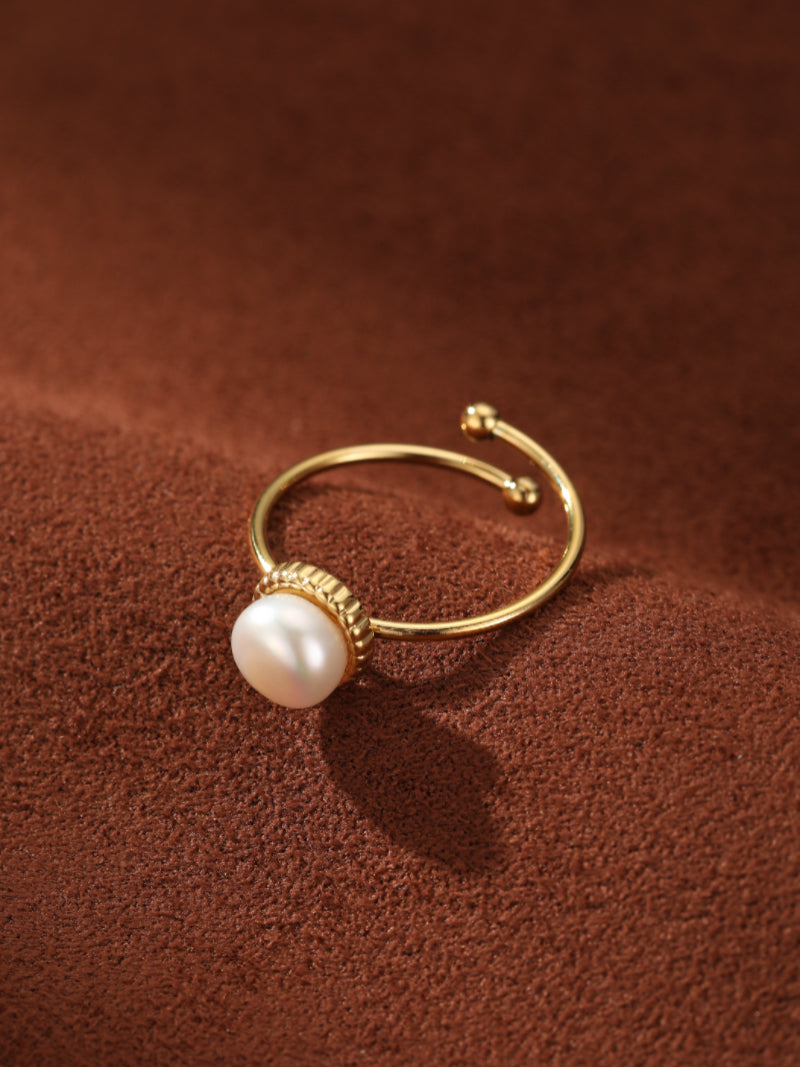
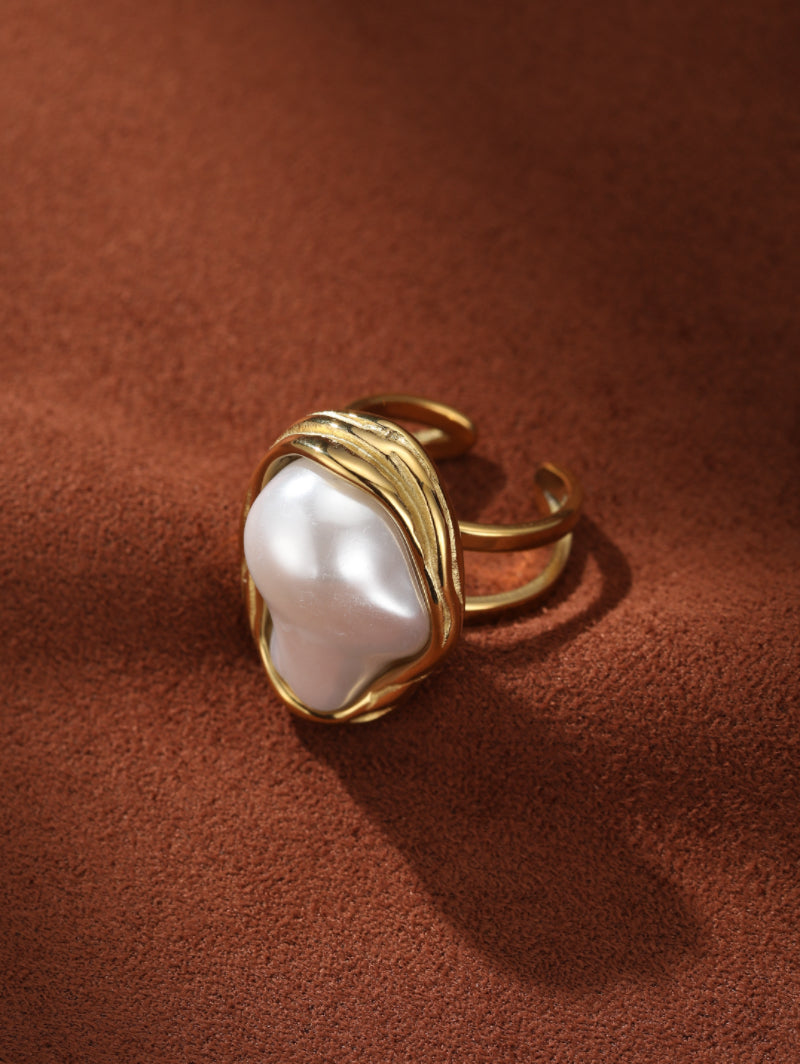
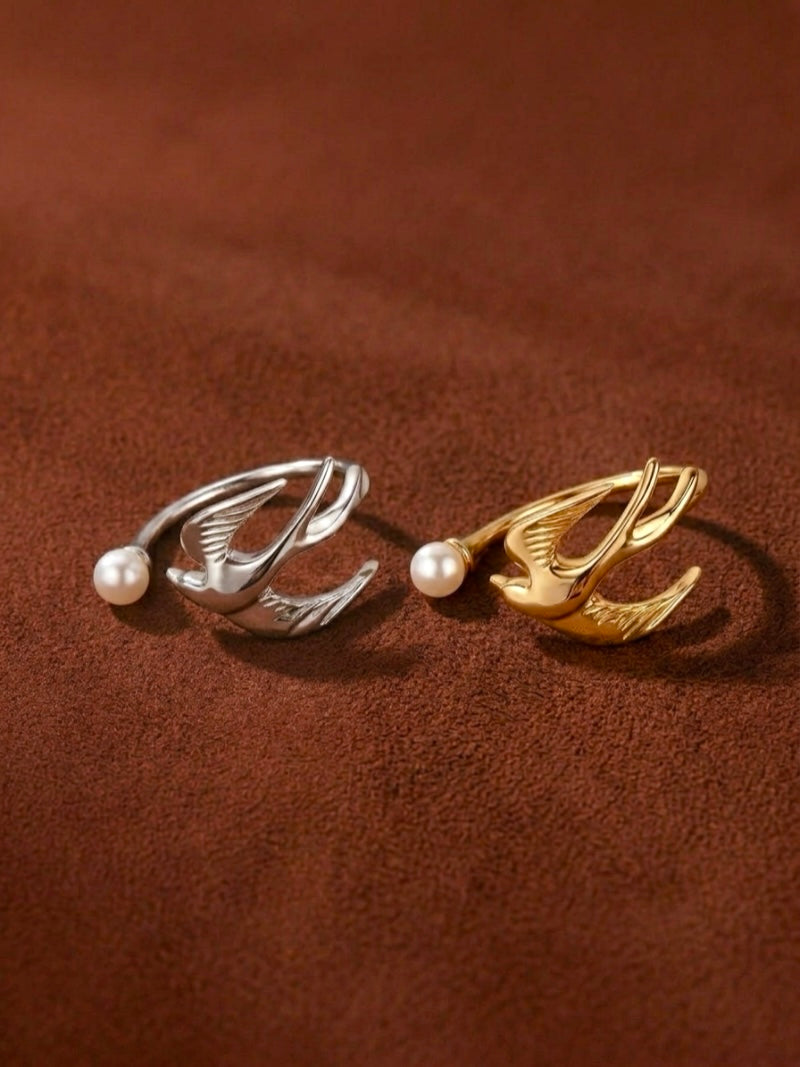
An adjustable pearl ring uses an open cuff band that curves around the finger rather than closing into a fixed circle. It solves the sizing problem entirely, moves between fingers, and is the safest choice if you are buying as a gift or between sizes.
Large pearl ring
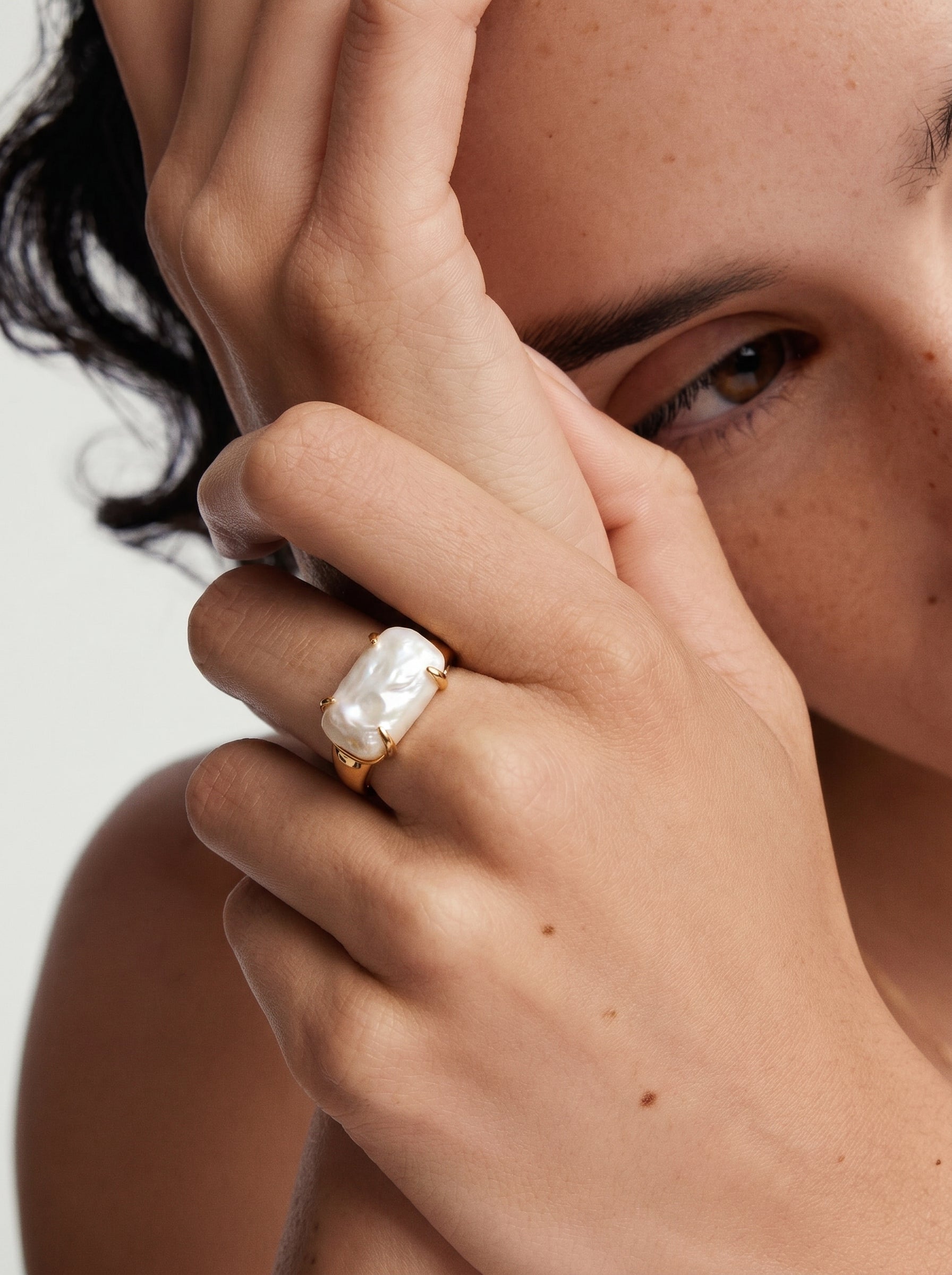
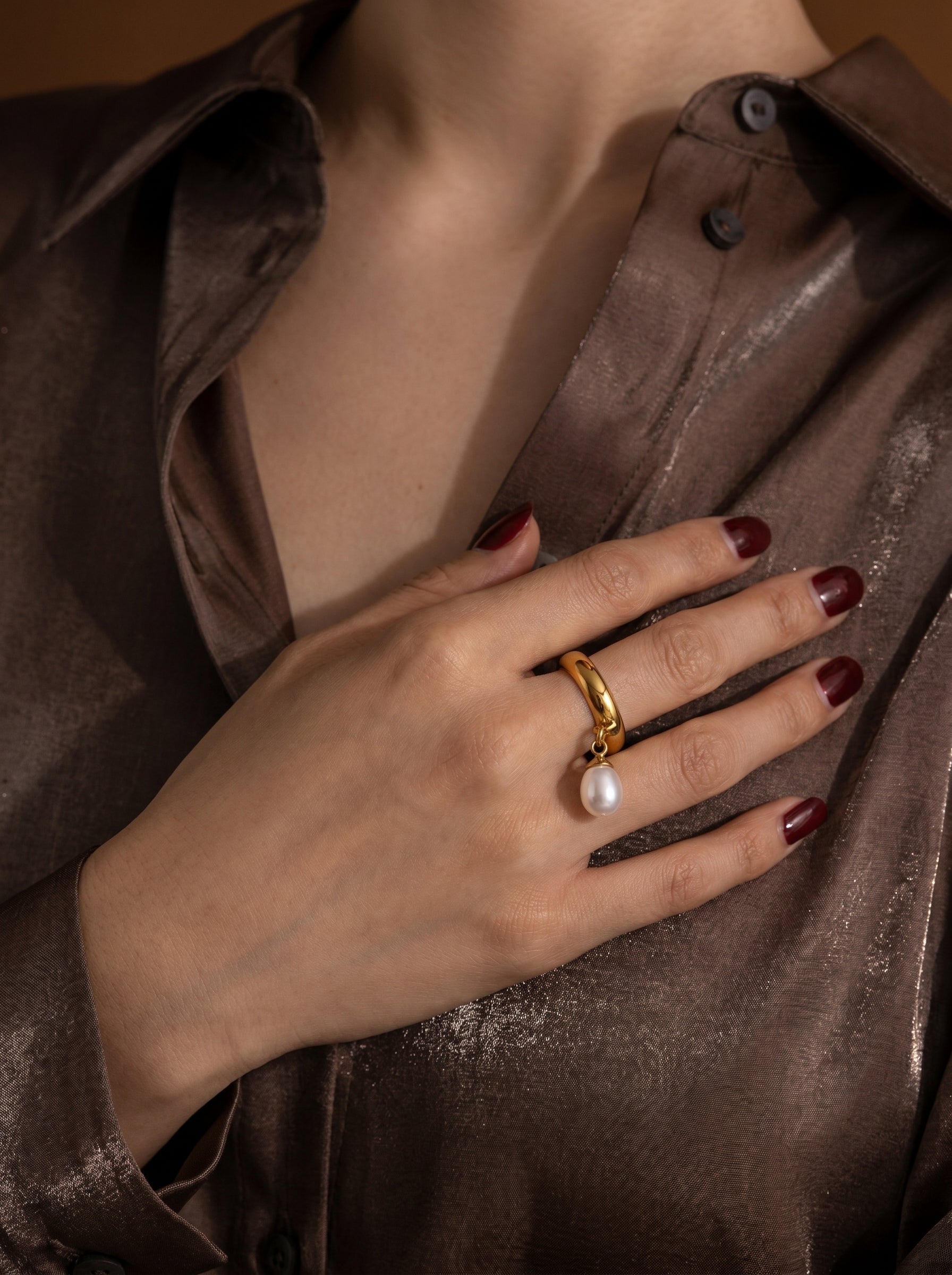
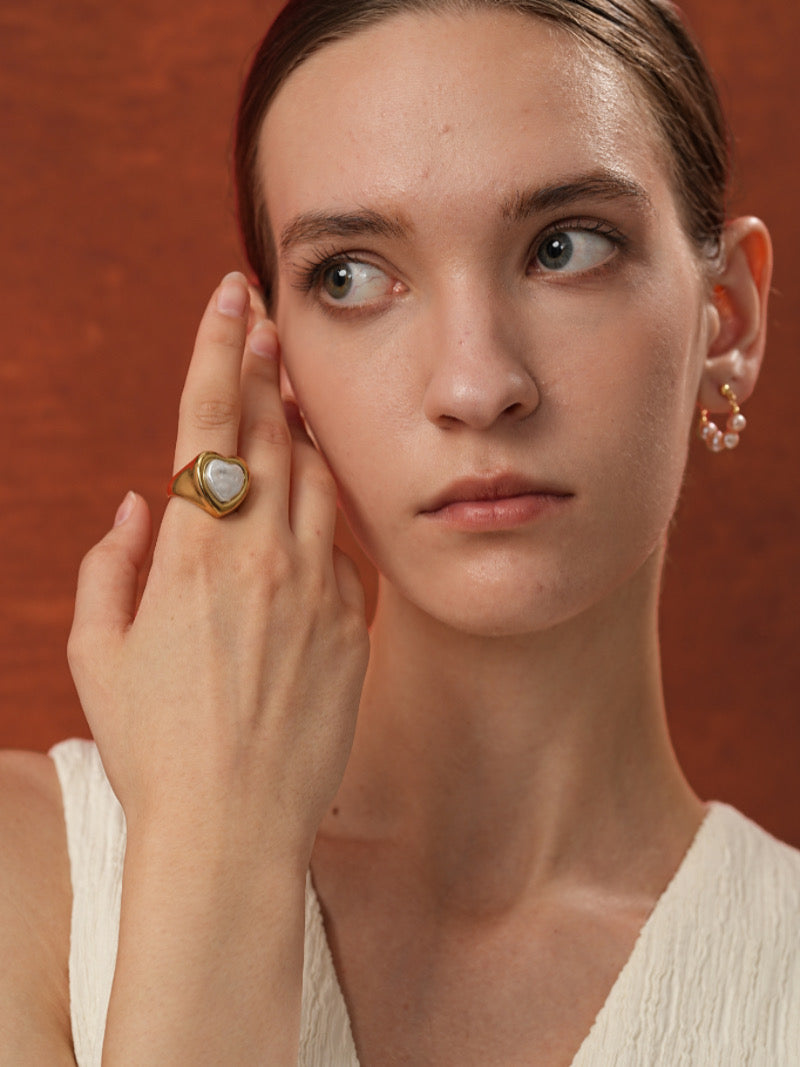
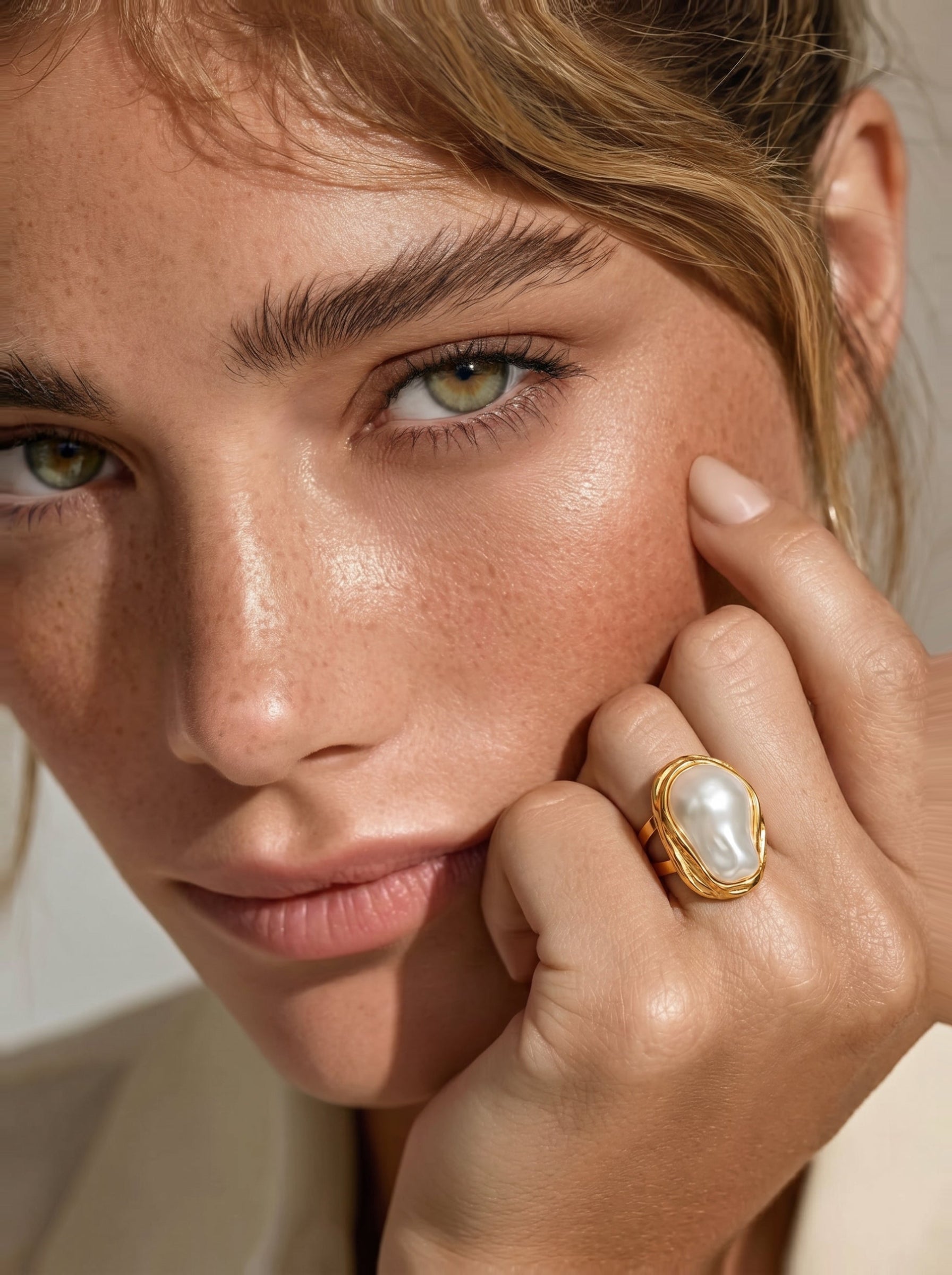
A large pearl ring uses a pearl of 10 mm or more and becomes the focal point of a hand. It needs no second ring beside it. Mabe pearls make this scale achievable, since a domed pearl covers more of a finger than a fully round one of the same weight.
Beaded and sculpted bands
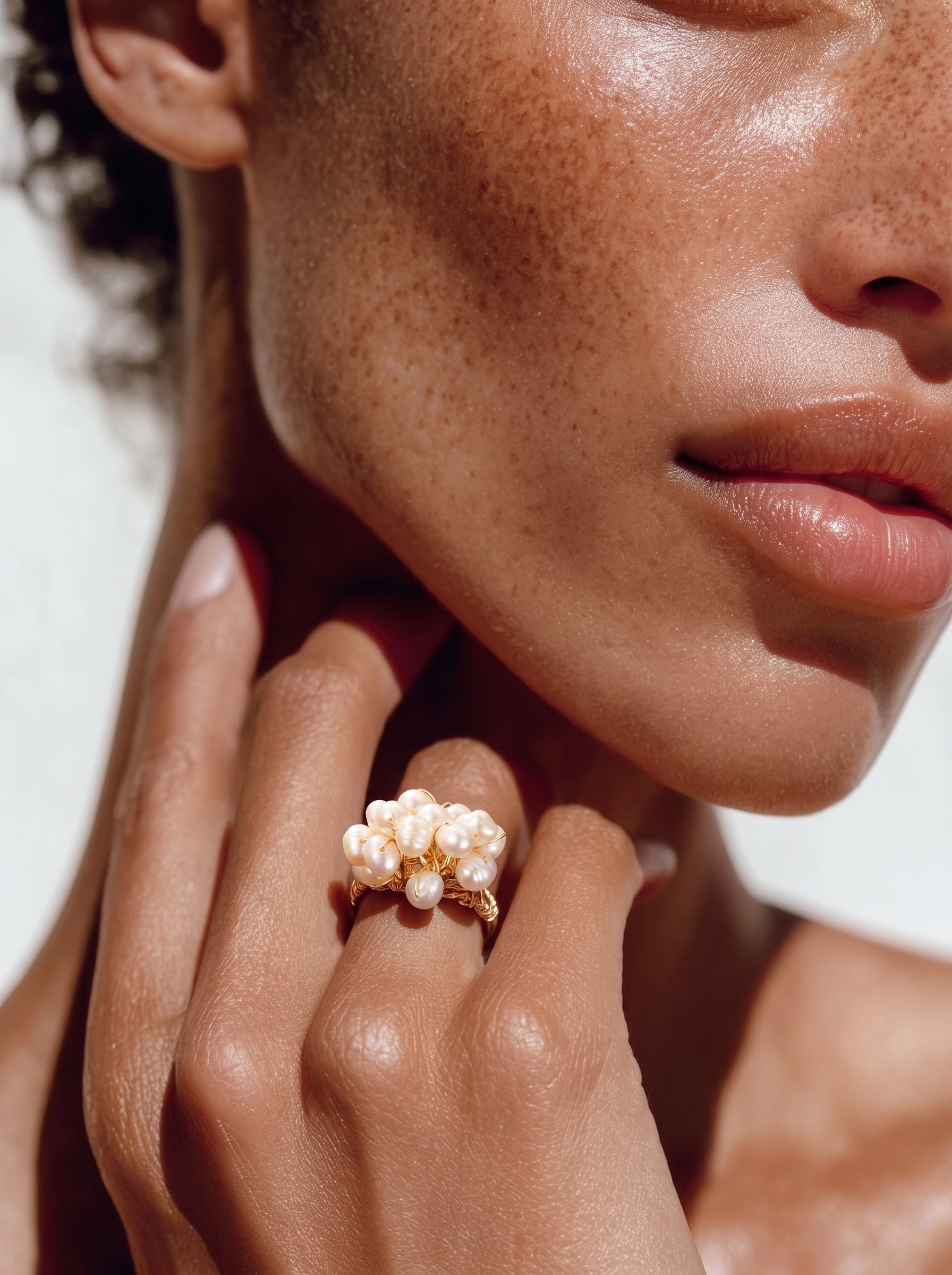
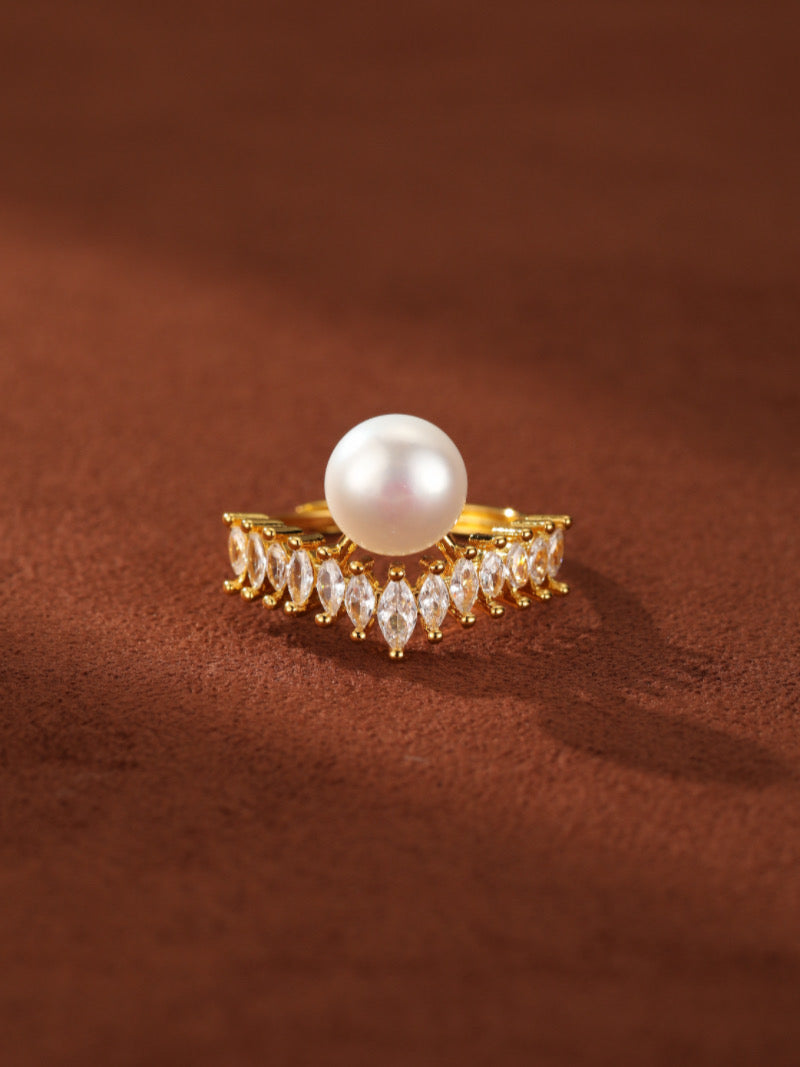
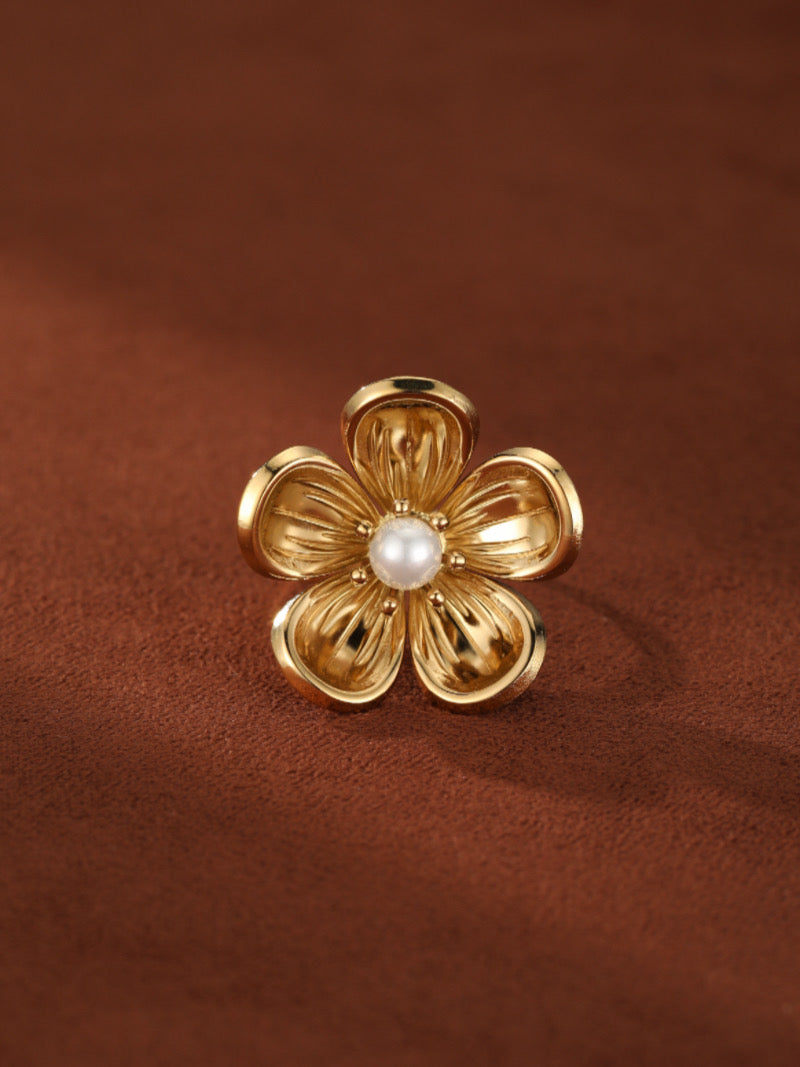
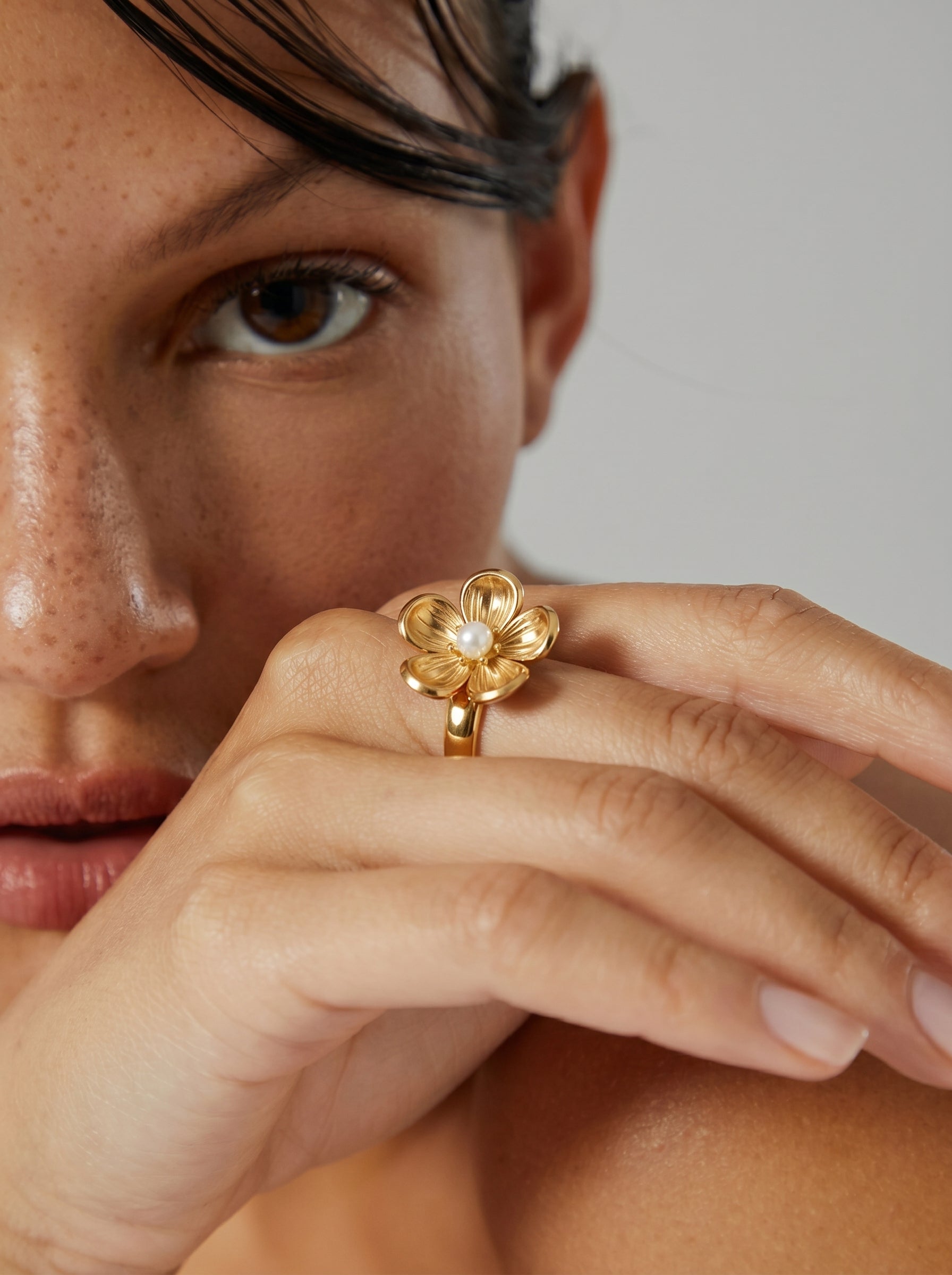
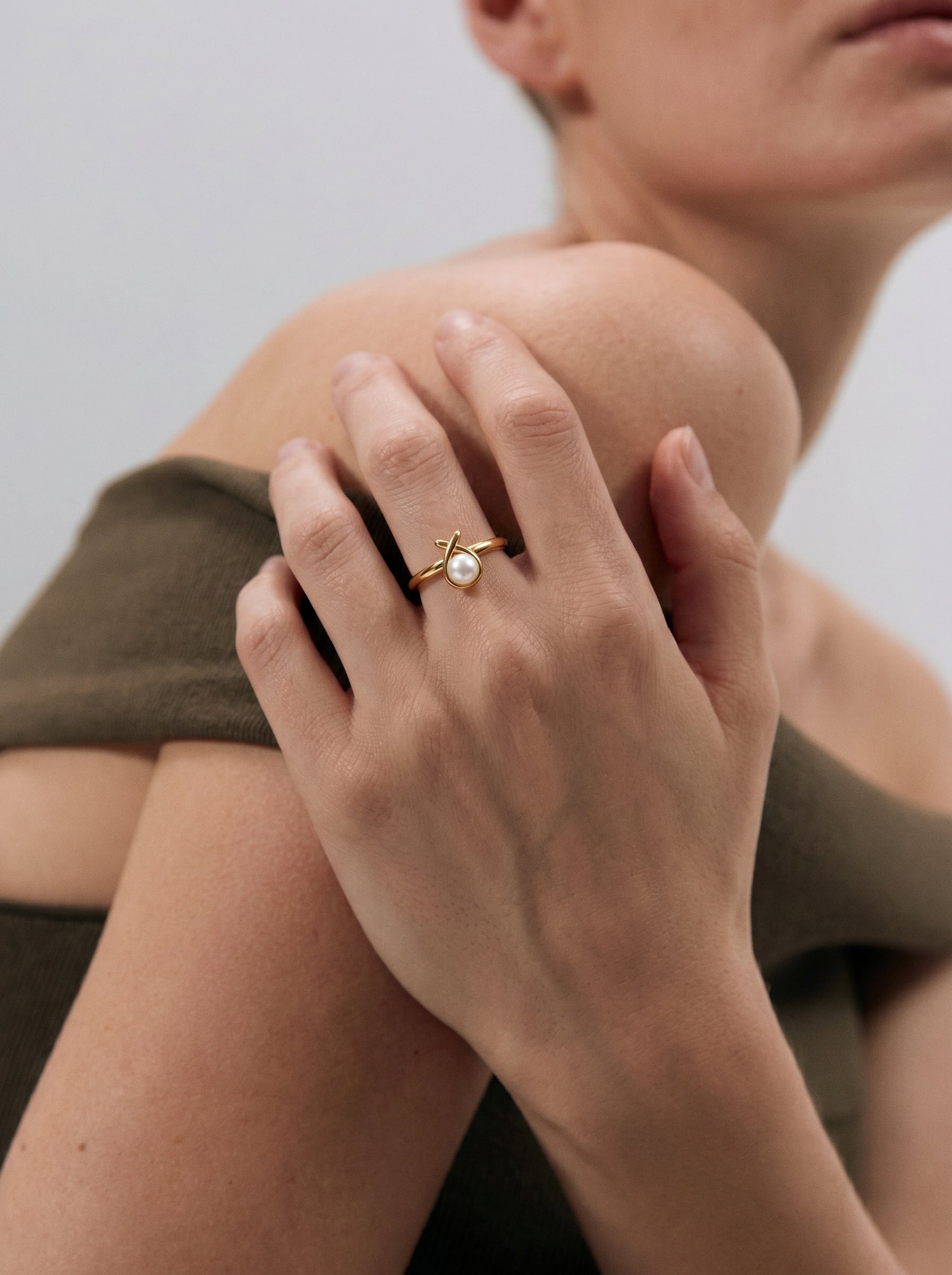
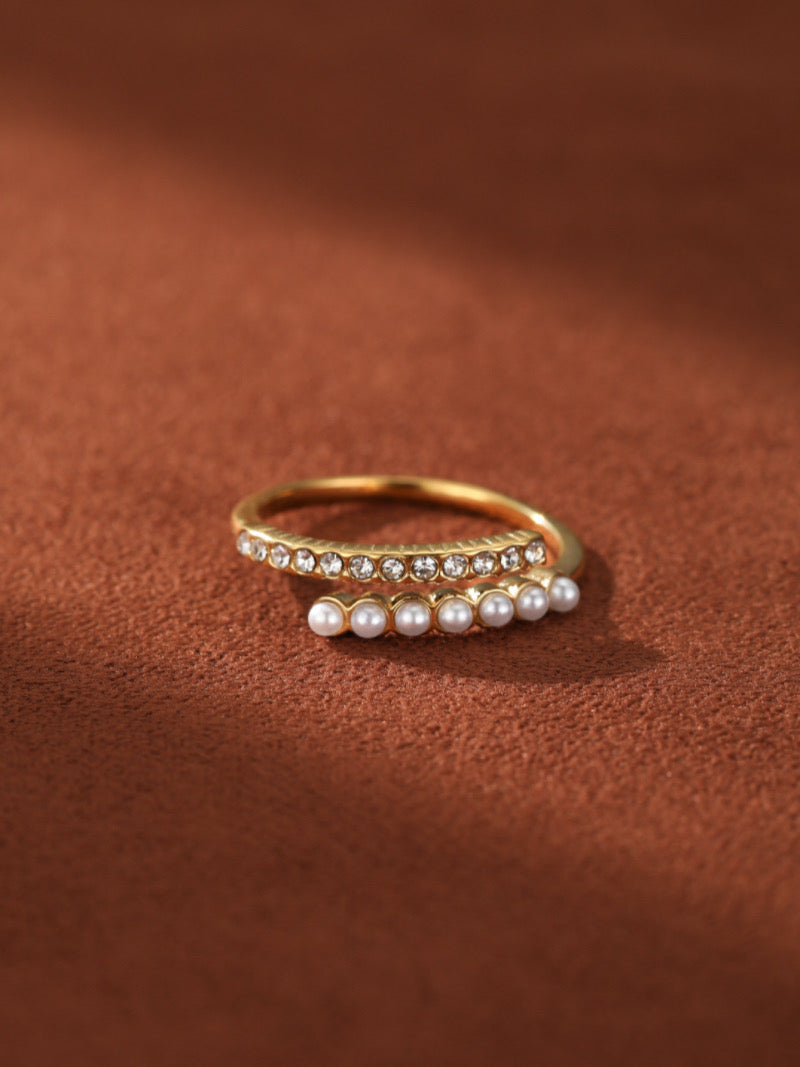
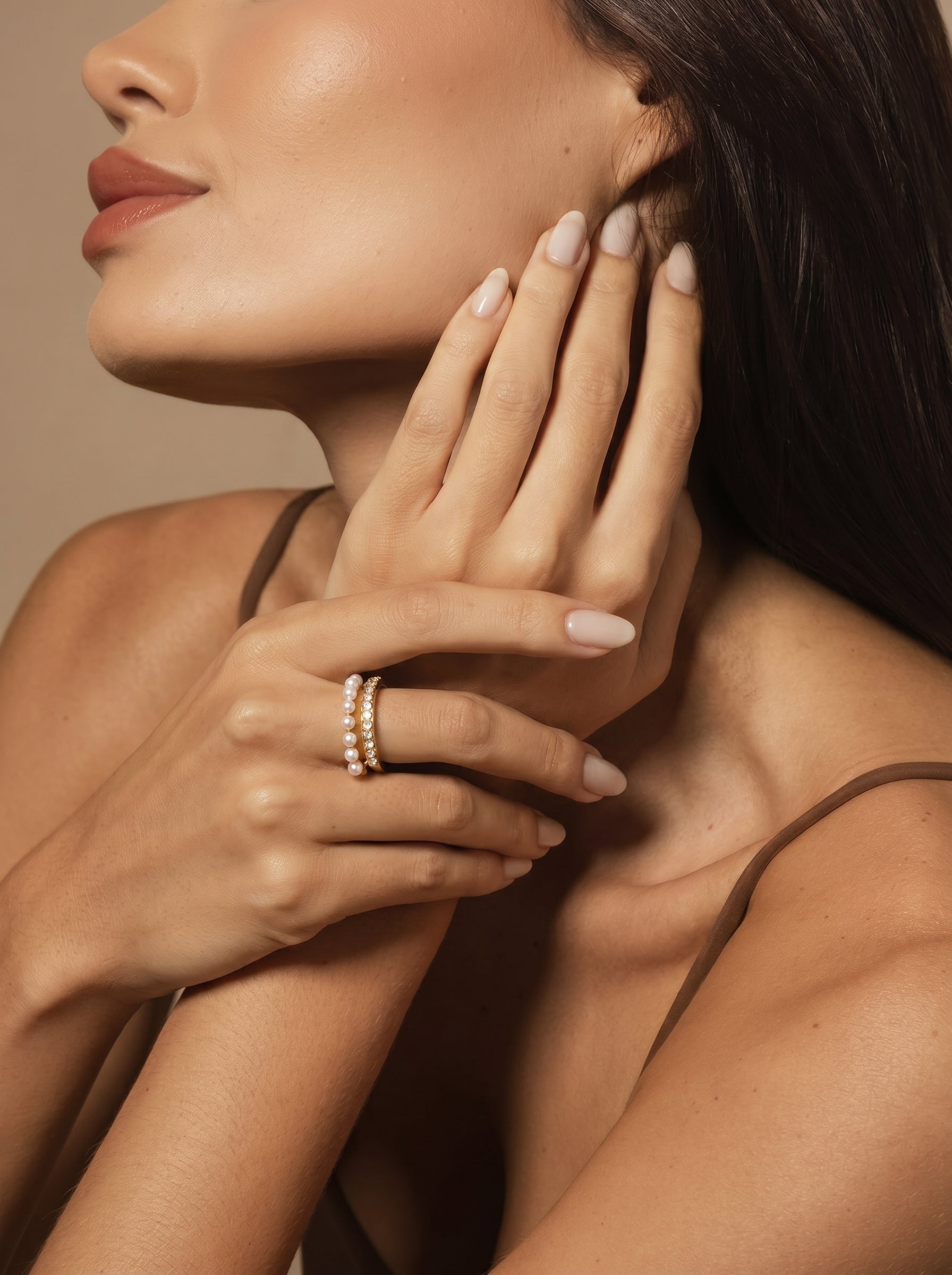
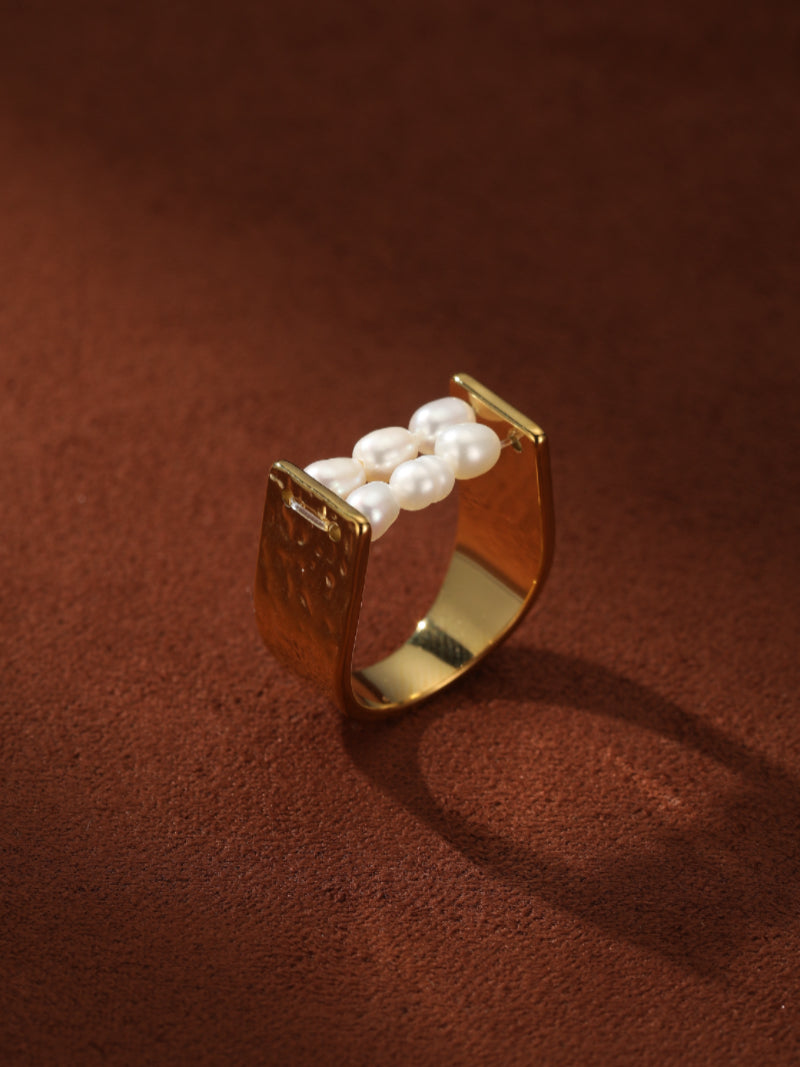
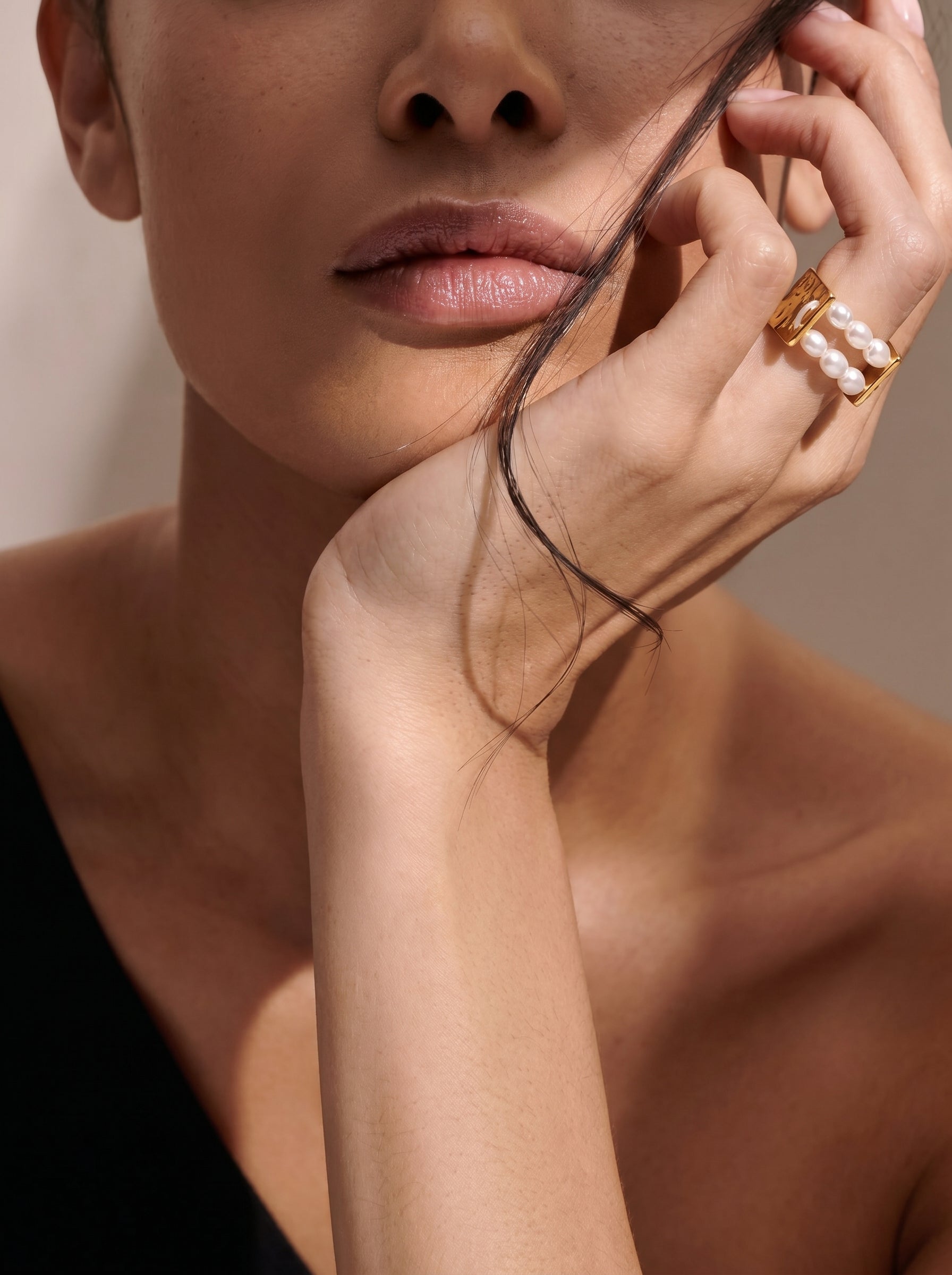
Beaded bands run small pearls around the finger instead of setting one on top. Sculpted forms build flowers, crowns, knots, crosses and snakes around the pearl. Both sit low and clear a keyboard, a door handle and a coat pocket.
Which type of pearl works best in a ring?
- Freshwater pearl ring — from Zhuji, China. Round and nugget shapes across the widest design range, and the most inventive corner of the collection.
- Akoya pearl ring — from Japan. A round white pearl set clean on a band, with nothing around it because it needs nothing.
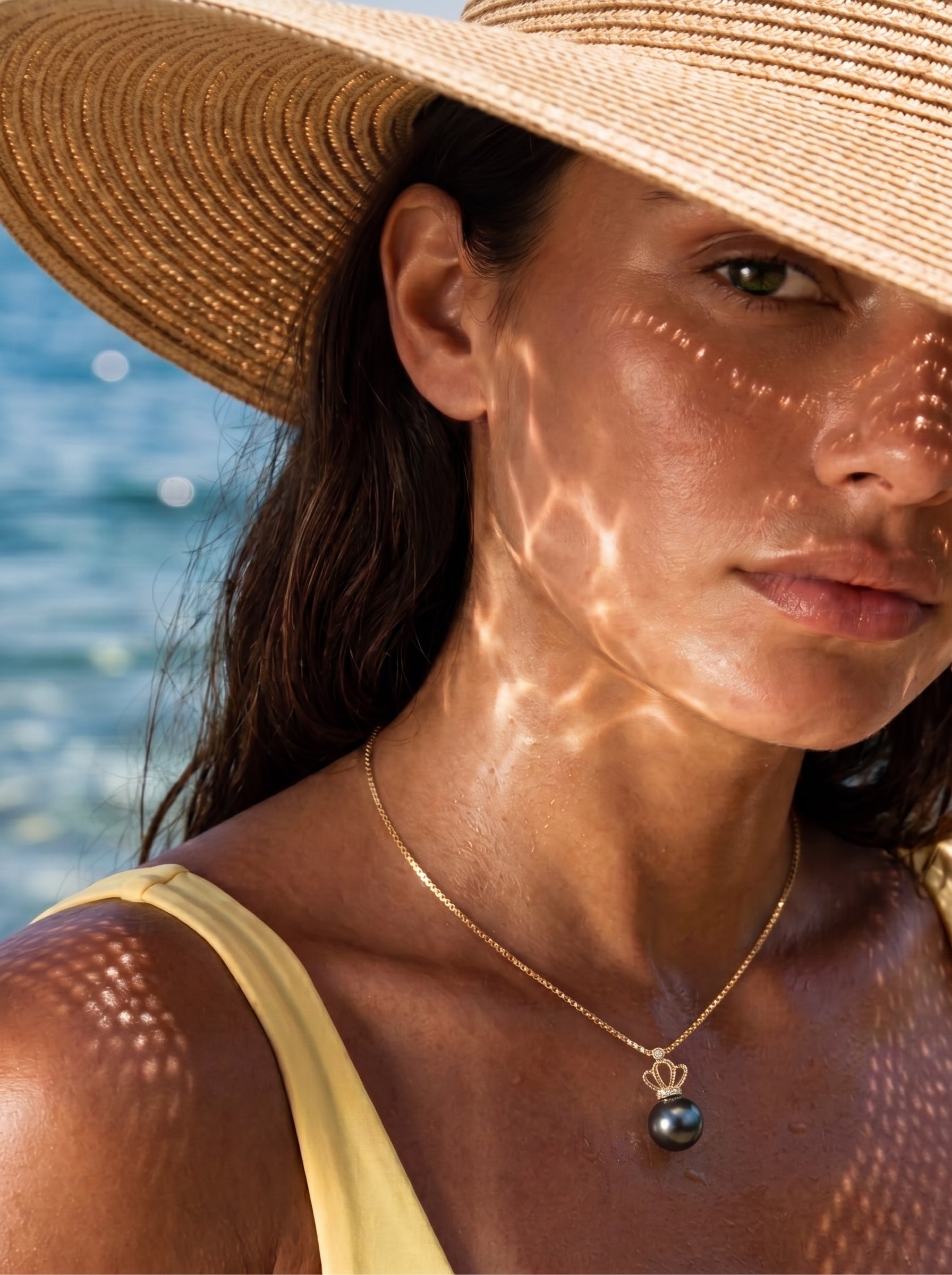
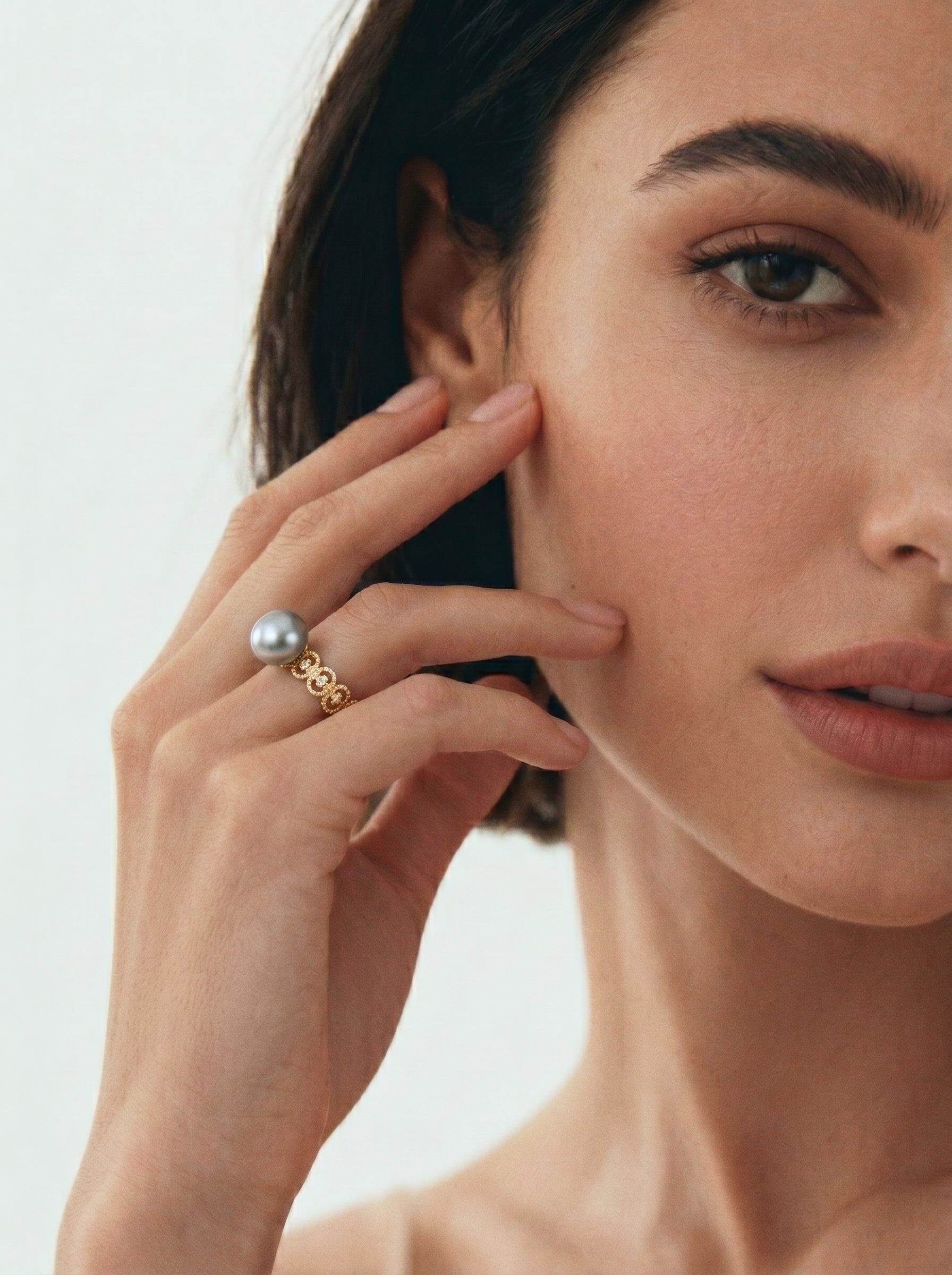
- Tahitian pearl ring — from French Polynesia. Large and dark, so one is plenty and nothing stacks beside it.
- Baroque pearl ring — irregular forms that look less like jewelry than like something found.
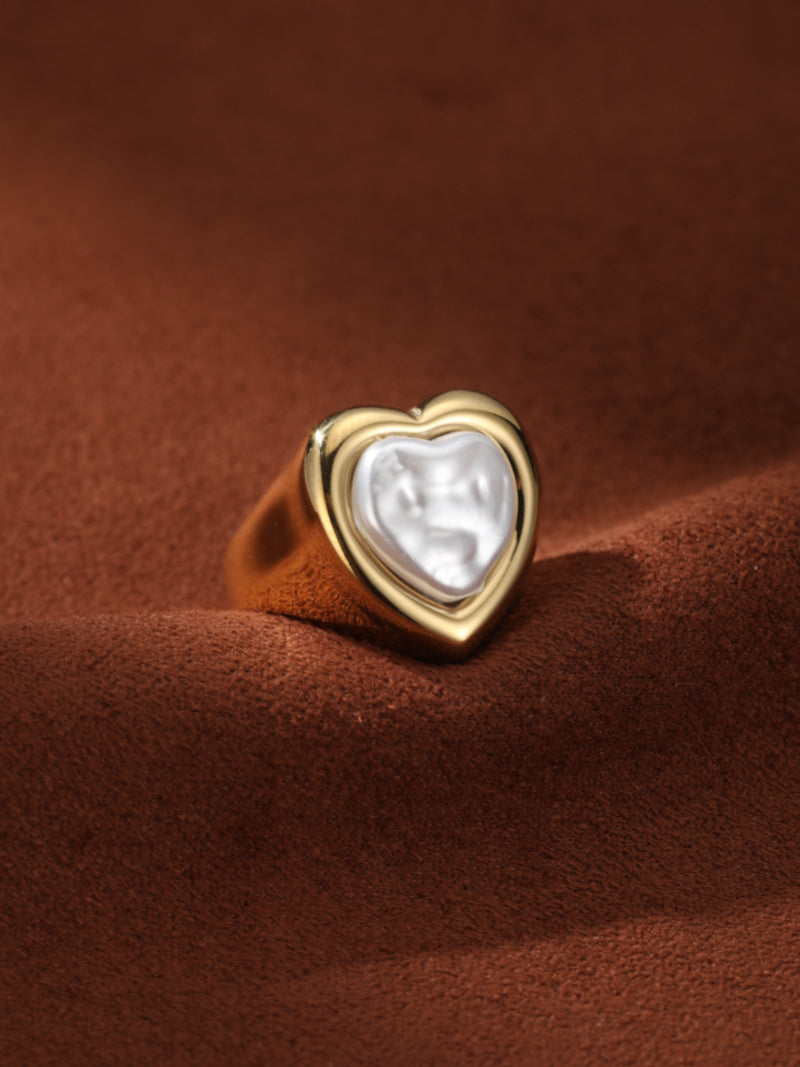
- Mabe pearl ring — a domed cultured pearl with a flat back. It sits close, never spins, and gives a plain hand real presence.
- Mother of pearl ring — polished shell cut into discs and petals, lying flat against the finger and covering more of it.
What color and metal should you choose?
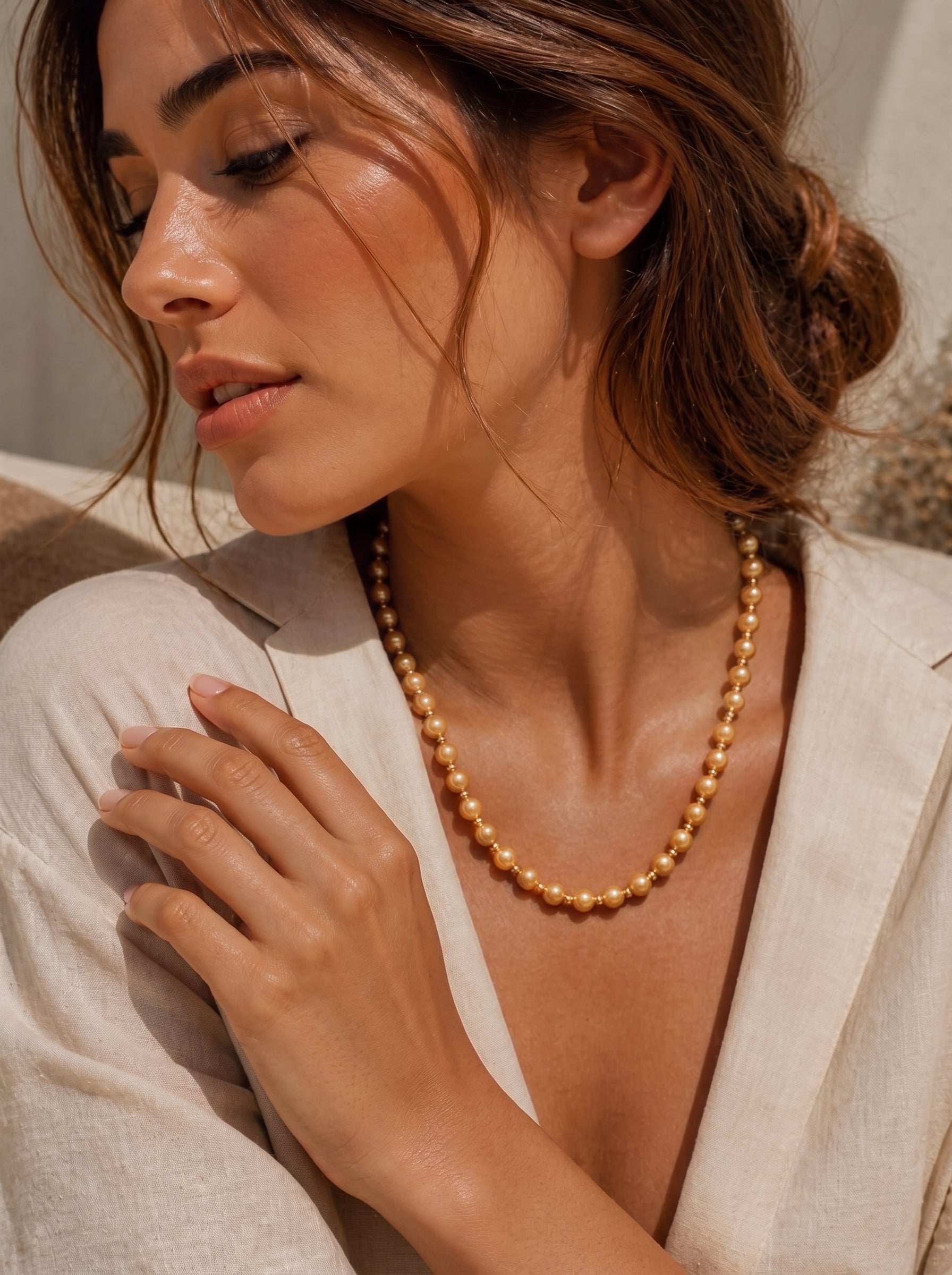
A white pearl ring reads clean against every skin tone, which is why it is the one people ask about. A black pearl ring does not share the frame with anything else. A pink pearl ring runs warmer than white and less expected. A golden pearl ring is rarer than all of them, and it shows.
A gold pearl ring in solid 18k gold will not thin at the shank or change color against skin, which is the whole argument for buying the ring rather than a version of it. A silver pearl ring in 925 sterling reads modern rather than inherited. A stainless steel pearl ring takes more daily contact than any other metal without losing its finish.
How to size a pearl ring
Most pearl rings cannot be resized after purchase, because the heat and solder used in resizing damage nacre. Check the size guide before ordering, or choose an adjustable cuff style. Measure at the end of the day, when fingers are at their largest.
Why buy a pearl ring from Grande Lilith
Most retailers tell you a pearl is real and stop there. We publish eight provenance markers on every product page: type, origin, bodycolor, overtone, shape, size, grade and treatment. Treatment is where the industry stays quiet, and where a buyer most needs the truth.
- Sourcing you can check: freshwater from Zhuji, Akoya from Japan, Tahitian from French Polynesia. Named, not implied.
- Partners vetted by our GIA-certified pearl specialist, on working conditions as well as quality.
- Settings kept low so the ring clears daily life, and nickel-free, lead-free and cadmium-free throughout.
- Designed in Paris, priced for a woman buying it for herself.
- Thirty days to change your mind, and every order arrives in a magnetic pouch.
Frequently asked questions
Can you wear a pearl ring every day?
Yes, with two habits. Take it off before hand washing, cleaning and lotion, and store it separately from harder stones. The damage comes from contact and chemistry rather than from wear itself, so a low setting and a sensible routine are enough.
Can a pearl ring be resized?
Usually not. Resizing requires heat and solder, both of which damage nacre. Check the size guide before ordering, or choose an adjustable open cuff style that moves between fingers.
What size pearl works best in a ring?
A 7 to 8 mm round pearl is the classic proportion and stays quiet on a hand. At 10 mm and above the pearl becomes the focal point and does not need a second ring beside it. Mabe pearls give you that scale while sitting closer to the finger.
Which finger should you wear a pearl ring on?
There is no rule. A large pearl reads best on the index or middle finger, where it has room. Smaller beaded and sculpted bands work on any finger and stack well with rings you already own.
Are pearl rings good for engagement?
Pearls are softer than diamonds or sapphires, so a pearl ring worn every day for decades will show wear a harder stone would not. Many people choose one anyway and keep it for occasions rather than constant wear. It is a preference, not a mistake.