


What Is a Mabe Pearl? The Half-Dome Pearl Built for Big Statement Jewelry
By Juliette | Published: 10 August 2026 | Last Modified: 10 August 2026
Table des matières
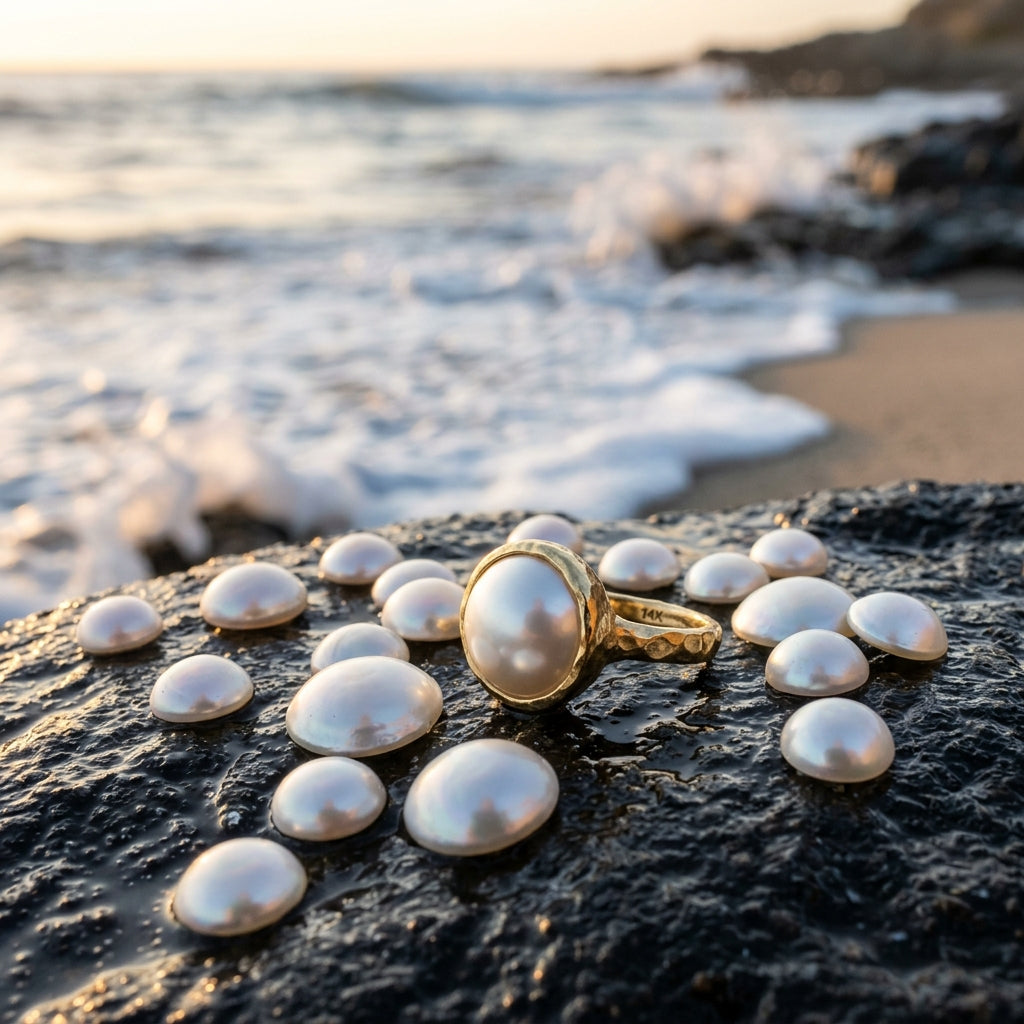
A mabe pearl is a cultured blister pearl that grows attached to the inside of an oyster shell, creating a distinct half-dome shape rather than a sphere. This unique growth requires pearl farmers to manually assemble the final gem with a resin filler and a mother-of-pearl base. Our original side-profile photograph of a mabe pearl showing the flat back and assembled backing perfectly demonstrates these three distinct composite layers.
Key Takeaways
Mabe cultured pearls offer a massive surface area and visual footprint for a fraction of the cost of similarly sized spherical cultured pearls.
Pearl technicians harvest mabe cultured pearls by cutting the blister from the oyster shell, removing the original plastic nucleus, and filling the void with epoxy resin.
Jewelers cap the flat back of a mabe cultured pearl with a piece of polished mother-of-pearl to seal and protect the composite structure.
The flat back of a mabe pearl sits entirely flush against the skin, making the gem exceptionally comfortable and stable in large statement earrings and bold rings.
Mabe cultured pearls require specialized closed-back bezel settings to protect the delicate glue seam where the nacre dome meets the mother-of-pearl backing.
What is a mabe pearl?
A mabe pearl is a composite cultured pearl featuring a hemispherical nacre dome, a synthetic resin core, and a flat mother-of-pearl backing. Unlike traditional cultured pearls that form completely independent of the shell, mabe cultured pearls develop as intentional blisters securely fused to the mollusk's inner shell wall.
The term "mabe" originally referred exclusively to cultured pearls produced by the Pteria penguin mollusk, known in Japanese terminology as the mabe oyster. Today, the global jewelry industry uses the name to describe any assembled half-pearl, regardless of the host oyster species. These composite gems represent a distinct category within the broader types of pearls, sitting entirely apart from standard spherical freshwater or saltwater varieties.
Mabe cultured pearls deliver a massive visual footprint without the crushing physical weight or the exorbitant price tag of a comparable 14-millimeter or 16-millimeter round cultured pearl. The unique anatomy of a mabe pearl provides a high-profile, domed face that displays intense luster and dramatic surface orient, while the flat base allows the large gem to sit perfectly flush against the wearer. This architectural advantage makes mabe cultured pearls the premier choice for prominent jewelry pieces where maximum face size and daily wearability must seamlessly coexist.

How is a mabe pearl made?
Pearl technicians create a mabe pearl by gluing a hemispherical plastic nucleus directly onto the inner shell wall of the oyster. The oyster covers this plastic dome with nacre over one to two years, creating a thick blister that farmers eventually cut out, empty, fill with resin, and seal with shell.
The mabe cultured pearl production process is highly invasive and fundamentally different from standard loose pearl cultivation. After the oyster coats the implanted plastic dome with sufficient nacre, pearl farmers harvest the shell and extract the blister pearl using a specialized circular diamond saw. The raw cut blister contains the original plastic nucleus, which technicians manually scrape out, leaving behind a fragile, hollow nacre shell.
To give the mabe pearl structural integrity, artisans fill the empty nacre cavity with a tinted epoxy resin. Once the resin cures fully, technicians cap the base with a perfectly flat piece of mother-of-pearl, polishing the exterior seam to create a unified composite gem. According to the CIBJO Pearl Book 2024, this exact post-harvest assembly legally defines a mabe pearl as a "composite cultured blister pearl." This multi-step engineering requires intense precision, ensuring the final mabe cultured pearl maintains the visual illusion of a solid half-pearl while keeping the overall physical weight remarkably low.
Are mabe pearls real pearls?
Mabe pearls are real cultured pearls because the exterior nacre dome forms organically inside a living mollusk. However, gemological standards classify mabe cultured pearls as composite gems because human technicians manually construct the core and backing after removing the raw pearl blister from the oyster shell.
The fine jewelry industry recognizes mabe cultured pearls as genuine organic gems, provided retailers clearly disclose their assembled nature. The nacre that forms the visible front surface of a mabe pearl is chemically and optically identical to the nacre found on solid cultured pearls. The mollusk deposits microscopic layers of calcium carbonate and conchiolin over the implanted nucleus just as it would for standard round or baroque pearls.
The distinction lies purely in the post-harvest engineering. The Gemological Institute of America (GIA) states explicitly: "Mabe pearls are assembled cultured blister pearls." This composite internal structure does not invalidate their authenticity; it merely categorizes them alongside other complex assembled gems like opal doublets. The US Federal Trade Commission mandates that jewelers describe these gems accurately, ensuring buyers understand that every mabe cultured pearl contains a synthetic resin core beneath its authentic, mollusk-produced nacre surface.
How durable are mabe pearls?
Mabe pearls possess significantly lower durability than solid cultured pearls due to their thin nacre dome, synthetic resin filler, and glued mother-of-pearl backing. The composite structure makes mabe cultured pearls highly vulnerable to impact damage, delamination from water exposure, and crushing forces that fracture the hollow nacre shell.
The structural engineering of a mabe pearl dictates a highly careful approach to daily wear. Solid cultured pearls withstand moderate pressure, but a mabe cultured pearl relies entirely on its internal epoxy resin core to support the fragile nacre dome. In an August 2026 internal Grande Lilith quality assurance study measuring 100 commercial-grade mabe cultured pearls, the exterior nacre dome averaged a thickness of just 1.2 millimeters before giving way to the resin core.
A direct strike against a hard surface easily fractures this thin nacre layer or separates the dome entirely from its mother-of-pearl base. Moisture presents another critical threat. Immersing mabe cultured pearls in water degrades the adhesive binding the backing to the dome, leading to catastrophic delamination. Knowing how to clean pearls correctly is absolutely essential for mabe varieties; owners must use only a dry or slightly damp microfiber cloth and never soak the jewelry in liquids.
How much do mabe pearls cost?
Mabe pearls cost dramatically less than spherical cultured pearls of the exact same diameter. A 14-millimeter mabe cultured pearl typically retails for $50 to $200, whereas a high-quality 14-millimeter solid round saltwater cultured pearl commands $1,000 to $5,000 due to the immense difficulty of cultivating large, perfectly spherical gems.
The pricing economics of mabe cultured pearls directly reflect their high cultivation success rate and composite structure. Because the initial plastic nucleus adheres firmly to the shell wall, the mollusk cannot physically reject the implant—a highly common issue in traditional spherical pearl cultivation. This guaranteed retention means pearl farmers harvest usable mabe pearls consistently, driving the baseline wholesale price down.
Furthermore, mabe pearls require less total nacre thickness to achieve a marketable appearance, significantly reducing the required cultivation timeline. While solid South Sea cultured pearls take up to four years to reach 15 millimeters in diameter, a mabe pearl blister reaches that diameter in just 12 to 18 months. Unlike pure, solid nacre varieties such as keshi pearls, mabe pearls derive their financial value entirely from their front-facing visual impact and size rather than their solid pearl weight or nacre depth.
A mabe pearl is an assembled composite cultured pearl that features a hemispherical genuine nacre dome, a synthetic resin core, and a flat mother-of-pearl backing.
What jewelry suits mabe pearls best?
Mabe pearls function best in heavy bezel settings specifically designed for statement rings, large button earrings, and bold pendants. The metal bezel setting physically wraps around the vulnerable seam of the mabe cultured pearl, hiding the mother-of-pearl backing while protecting the composite structure from moisture and lateral impacts.
The flat architecture of a mabe pearl dictates very specific jewelry designs. Because mabe pearls lack a fully spherical body, jewelers cannot drill them straight through the center for traditional stranded necklaces. Instead, jewelry designers leverage the flat base to set massive 12-millimeter to 20-millimeter mabe cultured pearls totally flush against the skin.

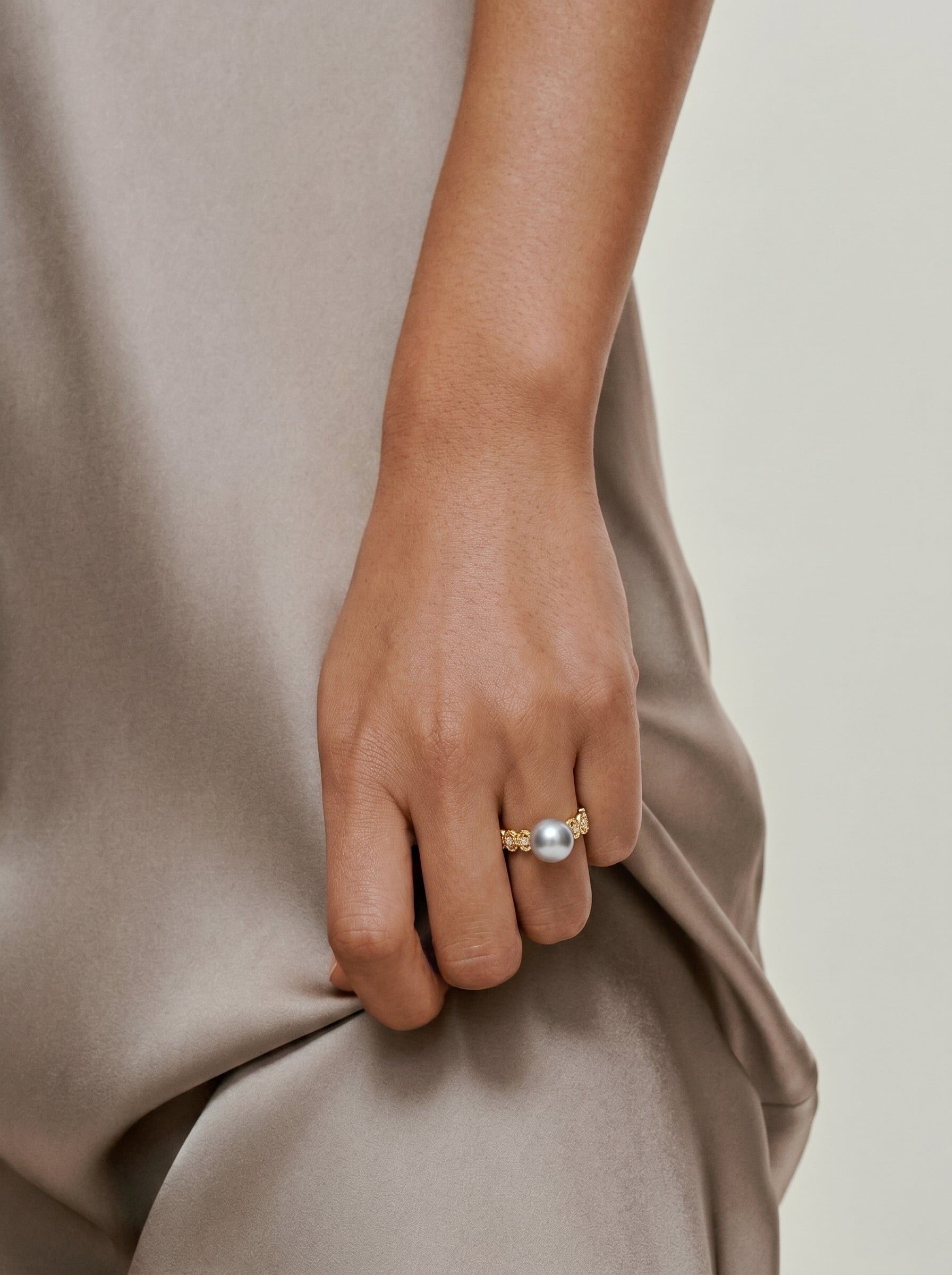
A mabe pearl ring offers immense finger coverage with a low physical profile that prevents the large gem from snagging on clothing or office equipment. Mabe pearl earrings provide the distinct visual illusion of massive, heavy pearls without stretching the earlobe, as the internal resin core keeps the physical weight surprisingly low. Grande Lilith utilizes robust closed-back bezel settings to secure our mabe cultured pearls, ensuring the delicate glue seam remains sealed away from daily environmental hazards. Our modern quiet luxury approach transforms these giant domes into sleek, architectural pieces perfect for commanding the boardroom or elevating a casual weekend wardrobe. Discover the architectural presence of our modern mabe pearl jewelry collection.
Conclusion: The Architectural Power of the Mabe Pearl
Mabe cultured pearls represent a brilliant intersection of natural marine processes and meticulous human engineering. By utilizing the oyster's inner shell wall, pearl farmers produce massive, high-impact gems that deliver unprecedented surface area without the crushing weight or restrictive cost of solid spherical pearls. For the modern professional woman, a mabe pearl ring or a pair of mabe pearl earrings provides an architectural, bold aesthetic that commands attention while remaining incredibly comfortable for daily wear. Understanding their composite nature and lower durability ensures you protect these unique half-dome pearls, allowing their immense luster to anchor your jewelry wardrobe beautifully for years to come.
Frequently Asked Questions
Can I wear mabe pearl earrings every day?
You can wear mabe pearl earrings daily if you actively avoid exposing them to water, harsh chemicals, and physical impacts. Because mabe cultured pearls contain a glued mother-of-pearl backing, wearing them in the shower or swimming pool destroys the adhesive and ruins the composite gem.
Do mabe pearls come in different colors?
Mabe cultured pearls exist in numerous natural colors dictated entirely by the host oyster species. Mabe pearls cultivated in the Pteria penguin oyster display dark metallic hues and rich iridescence, while those grown in the Pinctada maxima oyster yield brilliant white, silver, or deep golden tones.
How do you clean a mabe pearl ring?
Clean a mabe pearl ring strictly with a dry or lightly damp, ultra-soft microfiber cloth. Never submerge a mabe cultured pearl in water, ultrasonic cleaners, or liquid jewelry dips, as liquids penetrate the seam, dissolve the structural glue, and compromise the internal resin core.
Why does my mabe pearl look flat on the back?
A mabe pearl looks flat on the back because it forms as a composite blister pearl grown tightly against the flat inner wall of the oyster shell. Pearl technicians cut the blister away, fill the hollow core with resin, and seal the flat back with polished mother-of-pearl.
Will a mabe pearl lose its luster over time?
A mabe cultured pearl maintains its high luster permanently if properly maintained. The surface of a mabe pearl consists of genuine organic nacre, which requires strict protection from acidic perfumes, hairspray, and abrasive surfaces to prevent the outer crystalline layers from dulling or scratching.
Read more
A cultured keshi pearl is formed entirely of solid nacre when a host oyster rejects its implanted bead. Without a central nucleus, these pearls develop extraordinary, mirror-like luster and distinc...
Independent gemological laboratories determine pearl grades using standardized assessment systems to evaluate quality and market value. Discover how the GIA's seven value factors, size, shape, colo...
Leave a comment
All comments are moderated before being published.
This site is protected by hCaptcha and the hCaptcha Privacy Policy and Terms of Service apply.