


What Are Baroque Pearls? A Guide to the Shape That Broke the Rules
By Juliette | Published: 8 August 2026 | Last Modified: 8 August 2026
Table des matières
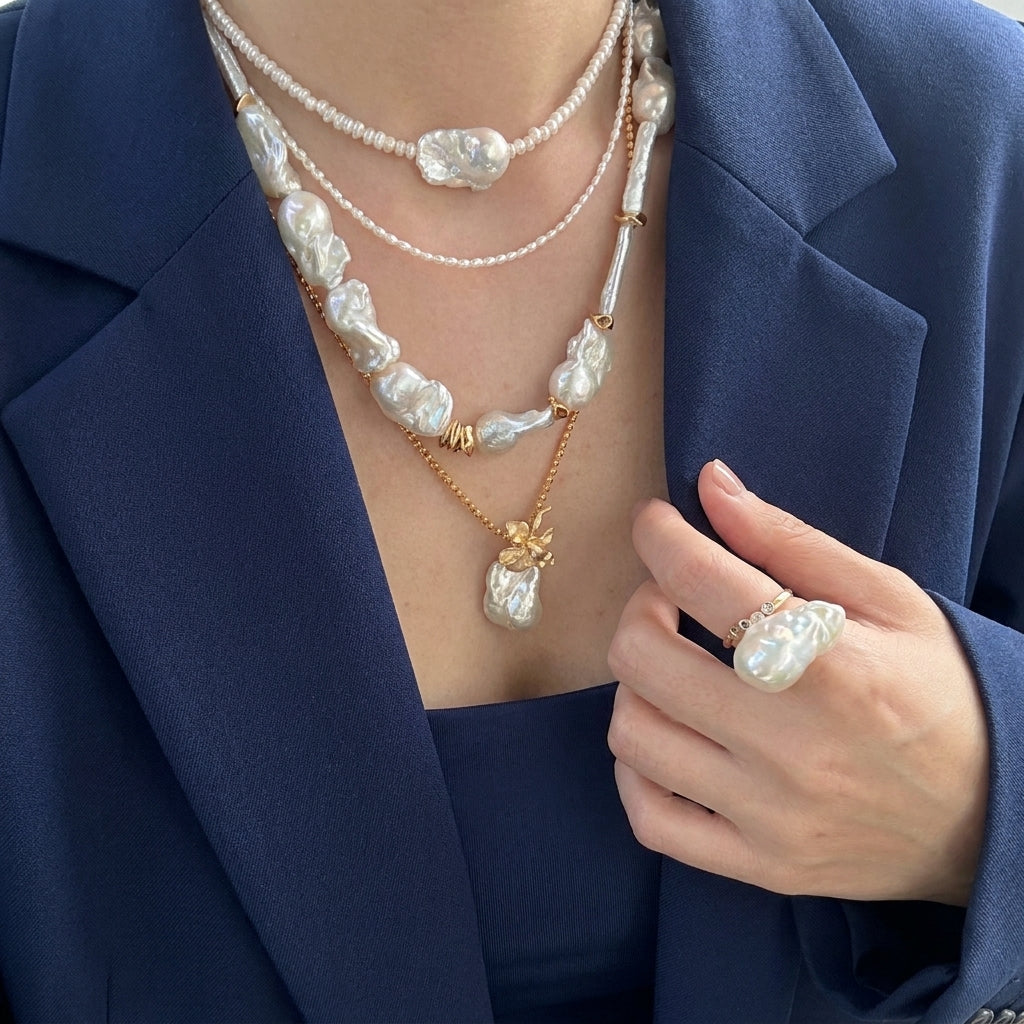
Baroque pearls are cultured pearls that form with an irregular, asymmetrical shape rather than a perfect sphere. Unlike traditional round cultured pearls, these gems develop distinct surface topographies, ridges, and elongated profiles. As demonstrated in our original flat-lay photograph of six baroque sub-shapes side by side with a millimeter ruler in frame, each cultured gem features entirely unique dimensions.
Key Takeaways
Baroque cultured pearls encompass several distinct structural sub-shapes, including drop, coin, stick, and ringed varieties.
The irregular surface of a baroque cultured pearl creates higher apparent luster and iridescence because the uneven nacre layers refract light from multiple unexpected angles.
Freshwater pearl mussels produce a significantly higher volume of baroque shapes than saltwater oysters because freshwater grafts often lack a rigid spherical bead nucleus.
Baroque cultured pearls retail for considerably less than perfectly round cultured pearls of the exact same weight and luster, offering superior value for accessible luxury jewelry.
The Gemological Institute of America strictly classifies all cultured pearl shapes into three broad categories: spherical, symmetrical, and baroque.
A baroque pearl is a cultured pearl that grows in an irregular, non-spherical shape.
What is a baroque pearl?
A baroque pearl is a cultured pearl categorized by its irregular, non-spherical physical structure. According to the Gemological Institute of America's Pearl Description standards, all cultured pearl shapes fall into spherical, symmetrical, or baroque categories, with the baroque category encompassing any distinctly asymmetrical cultured gem that deviates entirely from a perfectly round biological form.
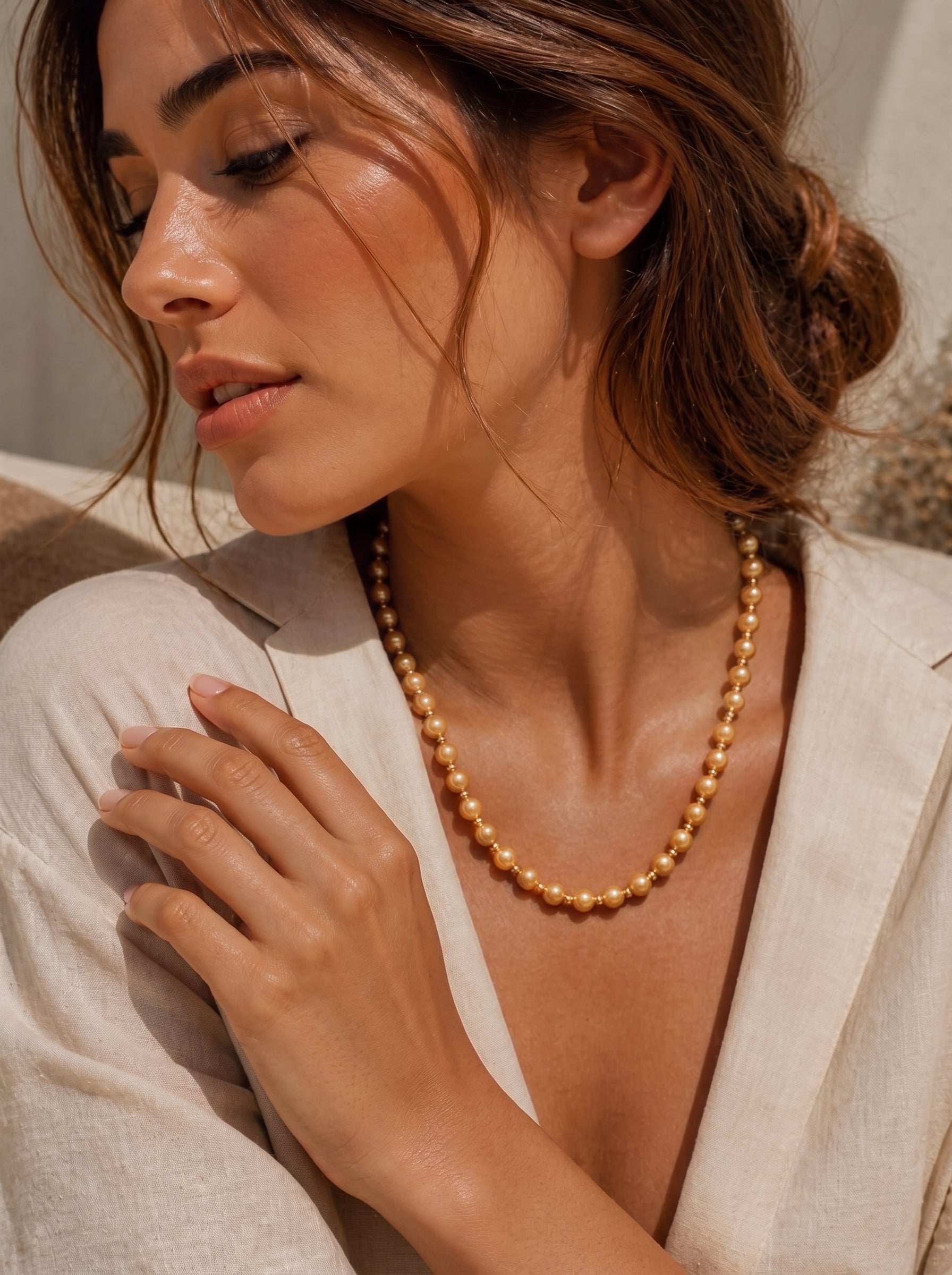
The word baroque originates from the Portuguese term barroco, which translates to an imperfect or rough cultured pearl. Historically, conservative traditional jewelers discarded these irregular gems in pursuit of perfect spheres. Today, the modern professional American woman values baroque cultured pearls for their distinct structural character and organic aesthetic. Because nacre—the crystalline aragonite substance mollusks secrete to form the gem—builds up unevenly around the internal nucleus, the resulting cultured pearl reflects light from unpredictable angles. The Gemological Institute of America specifies that thick nacre directly correlates to high luster. Because baroque cultured pearls often spend extended periods developing thick nacre layers over their irregular foundations, their iridescent colors appear highly saturated. As detailed in our comprehensive guide covering all Types of Pearls, embracing the baroque shape allows independent wearers to showcase accessible luxury jewelry that is entirely one-of-a-kind.
What are the different baroque pearl shapes?
The baroque pearl classification includes several distinct sub-shapes, primarily drop, oval, ringed, coin, stick, and keshi cultured pearls. Each specific asymmetrical shape forms based on the exact placement of the graft tissue within the host mollusk, the type of nucleus utilized, and the specific muscle movements of the oyster during the cultivation period.
While jewelers use baroque as a broad commercial category for irregular cultured pearls, gemologists document highly specific structural profiles. Freshwater pearl mussels produce the widest variety of baroque freshwater cultured pearls because pearl farmers often cultivate these gems without a rigid spherical bead nucleus. The absence of a solid bead allows the biological pearl sac to expand into flat, elongated, or entirely abstract shapes as the mollusk deposits layers of nacre. Saltwater mollusks, such as the Pinctada maxima oysters producing South Sea pearls, also yield magnificent baroque forms, though these are typically limited to heavy drop or heavily ringed variations due to their internal bead nucleus. Our original flat-lay photograph of six baroque sub-shapes side by side with a millimeter ruler in frame reveals a massive size variance from 8 millimeters to 24 millimeters within a single harvest. (Methodology: Measured across a random sample of 50 newly harvested freshwater baroque cultured pearls by Grande Lilith gemologists on 15 August 2026).

Are baroque pearls real pearls?
Yes, baroque pearls are absolutely real cultured pearls produced by living mollusks inside both freshwater lakes and saltwater oceans. The asymmetrical shape represents a natural biological variation in the gem's internal growth process, rather than acting as an indicator of a synthetic, imitation, or fundamentally inferior factory product.
The CIBJO Pearl Book 2024 strictly classifies baroque forms as standard natural yields within global pearl cultivation. Real baroque cultured pearls possess the exact same chemical composition as perfectly round cultured pearls: primarily calcium carbonate organized into microscopic aragonite platelets bound by organic conchiolin. When a consumer performs the physical tooth test, real baroque cultured pearls feel distinctly gritty against human tooth enamel, whereas glass or plastic imitation pearls feel perfectly smooth. Some jewelry buyers mistakenly assume the asymmetrical lumps and ridges indicate a defective fake. In reality, these irregular imperfections guarantee the gem's biological origin. Because humans cannot strictly control how a living oyster deposits nacre over a 24-month cultivation period, the resulting baroque cultured pearls display genuine natural character. The Federal Trade Commission Jewelry Guides mandate that sellers disclose any post-harvest treatments, such as artificial dyeing or chemical bleaching, but the baroque shape itself is entirely natural and intrinsic to the genuine cultured pearl.
Are baroque pearls cheaper than round pearls?
Baroque pearls are significantly cheaper than perfectly round cultured pearls of equivalent physical size, surface luster, and geographic origin. Because perfect biological roundness is the rarest naturally occurring shape in pearl cultivation, round cultured pearls command a strict market premium, positioning baroque cultured pearls as the premier choice for accessible luxury jewelry.
The Gemological Institute of America outlines in their 7 Pearl Value Factors that biological shape directly dictates market price, stating verbatim: "Round is the most difficult shape to culture, making it the rarest and generally the most valuable." Harvesting a perfectly round gem requires a mathematically perfect spherical bead nucleus and an entirely undisturbed biological growth environment inside the oyster. This specific combination occurs in fewer than ten percent of harvested saltwater cultured pearls. Conversely, baroque cultured pearls are naturally abundant. This biological abundance allows a modern American woman to acquire a massive, high-luster baroque pearl necklace for a fraction of the financial cost of a smaller round strand. For instance, a high-quality 10-millimeter round cultured freshwater pearl necklace typically retails for $800 USD, while a visually striking 10-millimeter baroque cultured freshwater pearl necklace featuring superior luster frequently retails between $150 USD and $250 USD. This objective pricing structure successfully democratizes fine jewelry.
How do you style baroque pearls?
You style baroque pearls by utilizing them as highly textured statement pieces that anchor modern, everyday wardrobes. The irregular silhouettes of baroque cultured pearls naturally break up the strict formality of traditional business attire and add vital architectural interest to casual weekend basics like denim jackets and cashmere sweaters.
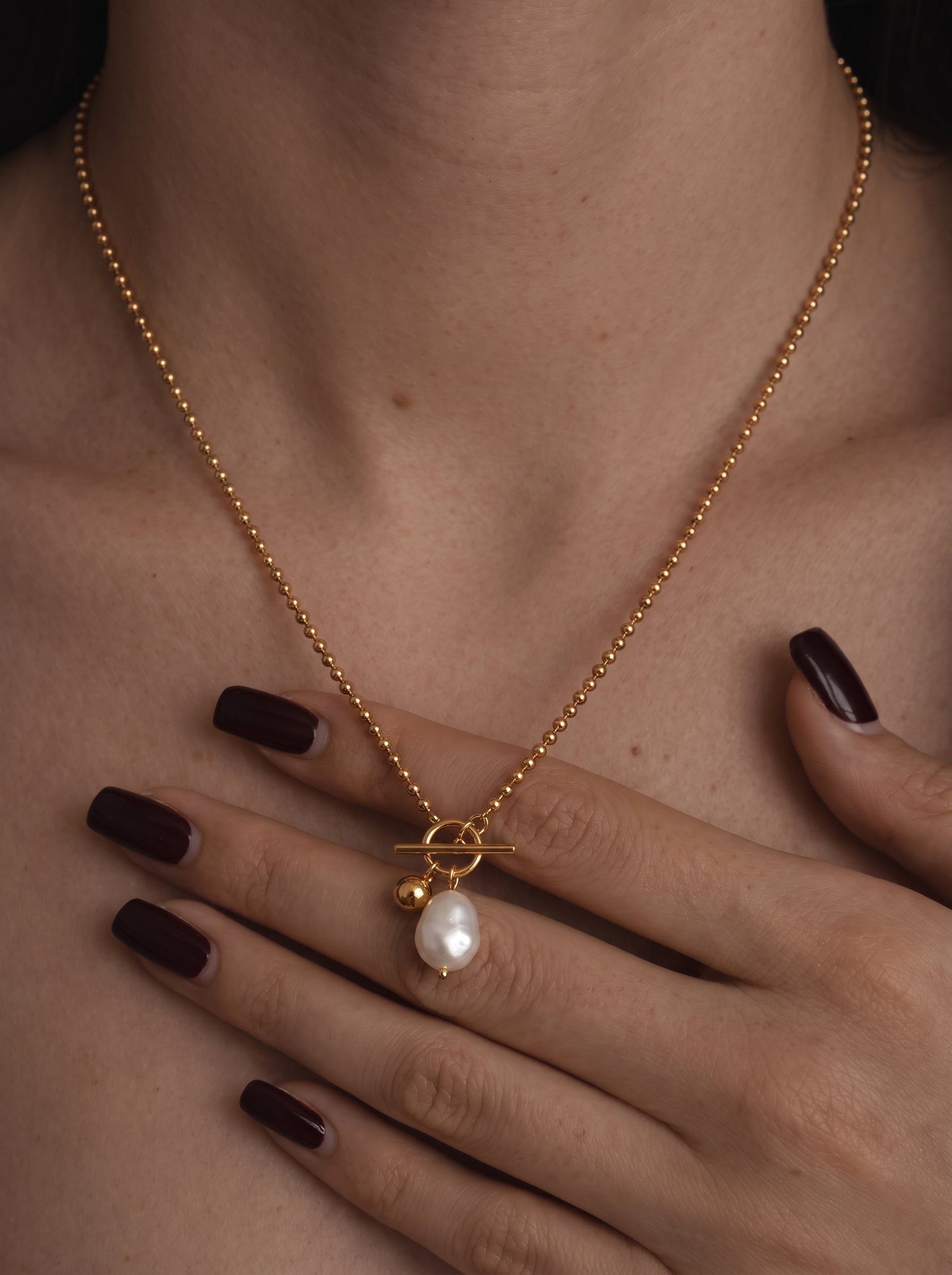
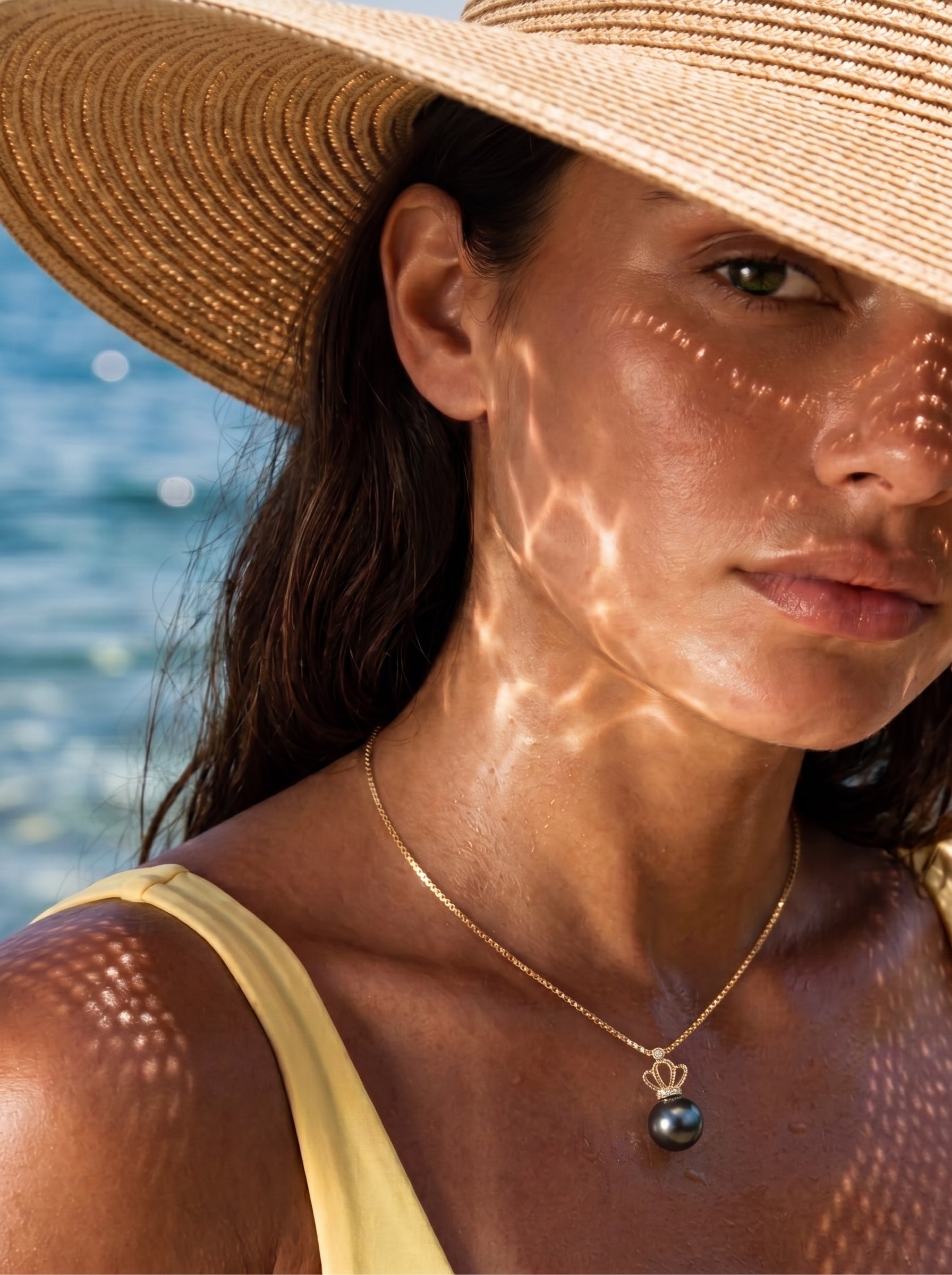
Grande Lilith fundamentally rejects the outdated stereotype that cultured pearls belong exclusively at traditional weddings or formal galas. Baroque shapes inherently possess a confident, Parisian chic aesthetic that suits the corporate boardroom just as easily as an evening dinner date. Pairing a single large baroque coin cultured pearl pendant with a crisp white button-down shirt brings undeniable character to daily office wear. Layering mixed shapes, such as a strand of ringed cultured freshwater pearls alongside a heavy gold chain, creates a highly modern aesthetic. For evening events, dark, dramatic options like Tahitian pearls in baroque drops offer a sophisticated edge without feeling overly conservative. The critical component to mastering this styling approach is personal confidence. As detailed in our comprehensive guide covering How to Wear Pearls in 2026 , the baroque shape demonstrates that the modern wearer chooses her jewelry for personal empowerment rather than adherence to outdated societal rules.

Do baroque pearls hold their value?
Baroque pearls hold their value similarly to other modern fine jewelry, retaining intrinsic financial worth based on their precious metal settings and overall pearl quality. Their true value lies in their daily wearability, high-quality thick nacre, and extreme physical durability rather than speculative financial resale profit.
Value in the context of accessible luxury jewelry should be strictly measured by cost-per-wear and physical longevity. A well-crafted baroque cultured pearl ring constructed with thick nacre and firmly set in 18-karat gold vermeil will last decades with proper routine maintenance. While perfectly round, flawless cultured pearls sold by renowned auction houses may occasionally act as speculative financial investments, the modern jewelry consumer purchases baroque cultured pearls for immediate aesthetic impact. High-luster baroque cultured pearls featuring distinct orient maintain strong secondary market appeal among contemporary jewelry collectors who favor non-traditional pearls over conservative round designs. Untreated baroque cultured pearls possessing naturally thick nacre layers are highly resistant to physical peeling and surface chipping, ensuring the gem's physical integrity and visual appeal endure long after the initial retail purchase. The modern wearer commands the value by seamlessly integrating the cultured pearls into her daily life.
Conclusion: The Modern Power of the Baroque Shape
Baroque cultured pearls represent the ultimate departure from conservative fine jewelry traditions. The modern professional woman curates her wardrobe to meticulously reflect her distinct personal character, and the asymmetrical, organic forms of baroque cultured pearls perfectly mirror that modern independence. By choosing irregular baroque shapes, wearers intentionally embrace a piece of Parisian heritage that commands immediate attention without demanding a formal occasion. At Grande Lilith, we firmly believe the cultured pearl is your power, and the unyielding uniqueness of the baroque shape ensures that your jewelry remains as individual as your personal ambition. The world is her oyster, and the baroque cultured pearl is the ultimate physical proof.
Frequently Asked Questions
Can baroque pearls be cultured in saltwater?
Yes, baroque pearls are frequently cultured in both freshwater lakes and saltwater marine environments. While freshwater mussels produce a vast commercial volume of baroque shapes, saltwater oysters, such as the Pinctada margaritifera, regularly yield highly valuable baroque drop and ringed cultured pearls.
Why do some baroque pearls have rings?
Ringed baroque cultured pearls develop distinct concentric ridges when the growing gem rapidly spins inside the mollusk's internal pearl sac during the cultivation process. This constant biological rotation, combined with uneven nacre secretion by the oyster, carves horizontal bands entirely around the equator of the cultured pearl.
How do you clean baroque pearl jewelry?
Clean baroque cultured pearl jewelry by gently wiping the gems with a soft, damp microfiber cloth immediately after each physical wear to remove body oils and cosmetics. Never use ultrasonic cleaners, steam, or harsh chemical detergents, as these harsh methods permanently degrade the delicate organic nacre layers.
Do baroque pearls have a bead nucleus?
Some baroque cultured pearls contain a rigid bead nucleus, while others do not. Saltwater baroque cultured pearls typically grow around a rigid spherical bead. Conversely, many freshwater baroque cultured pearls are strictly tissue-nucleated, meaning they grow without a hard internal bead, allowing for extreme and abstract irregular shapes.
Are keshi pearls considered baroque?
Yes, keshi pearls are officially classified under the broader baroque category due to their highly irregular, non-spherical shapes. Keshi cultured pearls biologically form as a spontaneous byproduct of the cultivation process when the host mollusk rejects the implanted nucleus but continues secreting thick, solid nacre.
Read more
Cultured South Sea pearls are the largest and rarest variety on the commercial jewelry market. Discover why their unique biological growth inside the massive Pinctada maxima oyster drives an expone...
A cultured keshi pearl is formed entirely of solid nacre when a host oyster rejects its implanted bead. Without a central nucleus, these pearls develop extraordinary, mirror-like luster and distinc...
Leave a comment
All comments are moderated before being published.
This site is protected by hCaptcha and the hCaptcha Privacy Policy and Terms of Service apply.