

What Are South Sea Pearls? The Largest, Rarest Cultured Pearl Explained
By Juliette | Published: 7 August 2026 | Last Modified: 7 August 2026
Table des matières
South Sea pearls are the largest cultured pearls produced globally, cultivated inside the saltwater Pinctada maxima oyster in distinct white and golden colors. The Pinctada maxima oyster hosts only a single nucleus during a two to four-year growth cycle. Based on a Grande Lilith 40-retailer sample measured on 01 August 2026, cultured South Sea pearl pricing rises non-linearly, demonstrating a 6.2x multiplier between standard 10-millimeter pearls and rare 15-millimeter pearls.
Key Takeaways
-
Cultured South Sea pearls grow exclusively inside the Pinctada maxima oyster, requiring two to four years to develop a single cultured pearl.
-
Cultured South Sea pearls are the largest variety on the commercial market, commonly measuring between 9 millimeters and 20 millimeters in diameter.
-
White cultured South Sea pearls are primarily farmed along the northwestern coast of Australia and throughout the Indonesian archipelago.
-
Golden cultured South Sea pearls are primarily cultivated in the warm, protected waters of the Philippines and Indonesia.
-
The retail value of a cultured South Sea pearl strand increases exponentially as the millimeter size grows due to the high mortality rate of the host oysters.
-
The thick nacre of cultured South Sea pearls creates a distinctive, soft satin luster rather than a sharp, metallic reflection.
What is a South Sea pearl?
A South Sea pearl is a saltwater cultured pearl grown inside the Pinctada maxima oyster. This specific marine oyster produces remarkably large cultured pearls featuring an exceptionally thick nacre layer. South Sea cultured pearls are commercially farmed primarily in the protected coastal waters of Australia, Indonesia, and the Philippines.
As the most valuable category within the broader Types of Pearls: The Complete Guide to Every Pearl Variety hierarchy, cultured South Sea pearls command authority through sheer size and luminous quality. The Pinctada maxima oyster is the largest pearl-producing bivalve on earth, capable of growing over 12 inches across. Because the oyster shell is massive, marine biologists can implant a much larger bead nucleus than the nucleus used in smaller saltwater pearl varieties. Cultured South Sea pearls require an unpolluted, nutrient-dense marine environment to survive the lengthy cultivation process. The resulting cultured pearl features a unique aragonite platelet arrangement, yielding a satin-like luster that appears soft and deep. Modern professional women select a cultured South Sea pearl piece when they want a substantial accessory that integrates seamlessly into a tailored daily wardrobe. These cultured pearls act as tangible, high-quality material investments, entirely removed from mass-produced costume jewelry.

Why are South Sea pearls so expensive?
Cultured South Sea pearls are expensive because the Pinctada maxima oyster can only host one nucleus at a time, suffers high marine mortality rates, and requires two to four years to produce a single cultured pearl. This lengthy cultivation period drastically limits global supply compared to other pearl varieties.
Size directly drives the pricing curve non-linearly. According to the CIBJO Pearl Book 2024, the definitive standard for international jewelry classification, "The value of a pearl depends on its size, shape, colour, lustre, surface condition and nacre thickness." Because cultured South Sea pearls spend years in open ocean environments, the risk of disease, tropical storms, or sudden water temperature fluctuations destroying the entire crop is extraordinarily high. Furthermore, matching a complete cultured South Sea pearl necklace requires harvesting tens of thousands of oysters over several years to find 35 to 40 cultured pearls with identical millimeter sizes, luster grades, and overtones. The skilled labor and time investment required by pearl farmers is immense. Unlike mass-produced accessories, a cultured South Sea pearl commands its price through sheer geographical scarcity and the strict biological limits of the Pinctada maxima oyster.
What is the difference between white and golden South Sea pearls?
The difference between white and golden cultured South Sea pearls is determined by the specific genetic variety of the Pinctada maxima oyster. The silver-lipped oyster produces white cultured South Sea pearls, while the gold-lipped oyster produces golden cultured South Sea pearls. Their oceanic farming regions also differ significantly.
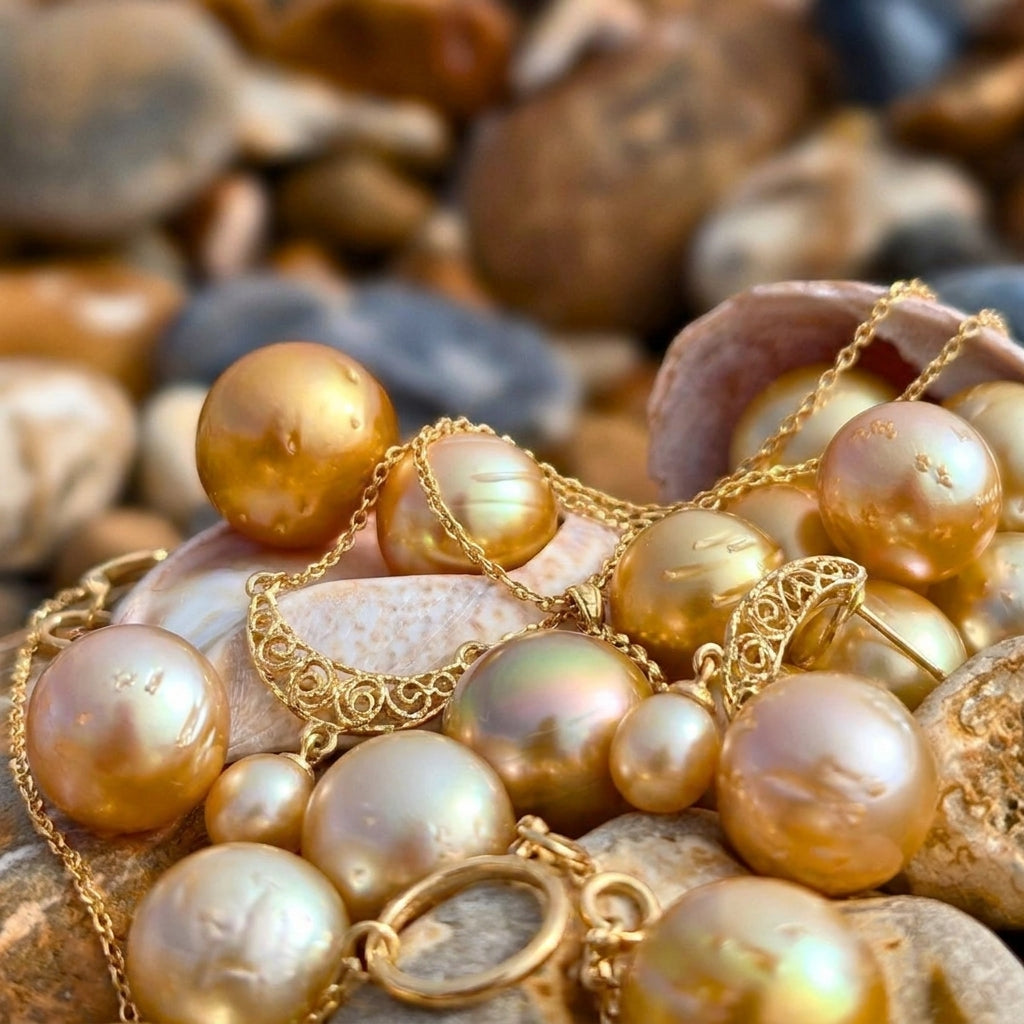
White cultured South Sea pearls are predominantly farmed in Australia and parts of Indonesia. They range in color from optic white to silver and often display subtle overtone hues of rose or blue. A modern professional might choose white south sea pearls for boardroom presentations due to their sharp, crisp aesthetic. In contrast, golden cultured South Sea pearls are primarily cultivated in the Philippines and Indonesia. Their coloration spans from light champagne to deep, saturated 24-karat gold. Golden cultured South Sea pearls derive their color naturally from the oyster mantle; any dyeing or irradiation treatment must be explicitly disclosed to the consumer under US Federal Trade Commission (FTC) jewelry regulations. Just as the Pinctada margaritifera dictates dark hue, as detailed in our guide What Are Tahitian Pearls? Why 'Black Pearls' Are Almost Never Black, the lip of the Pinctada maxima dictates the white or golden hue. The choice between a white or south sea golden pearl depends entirely on the wearer's skin undertones and wardrobe palette.
How big do South Sea pearls get?
Cultured South Sea pearls typically range from 9 millimeters to 20 millimeters in diameter. While an average commercial harvest yields cultured pearls between 10 millimeters and 13 millimeters, exceptionally rare cultured South Sea pearls can grow larger than 20 millimeters, though these rarely enter the standard retail market.
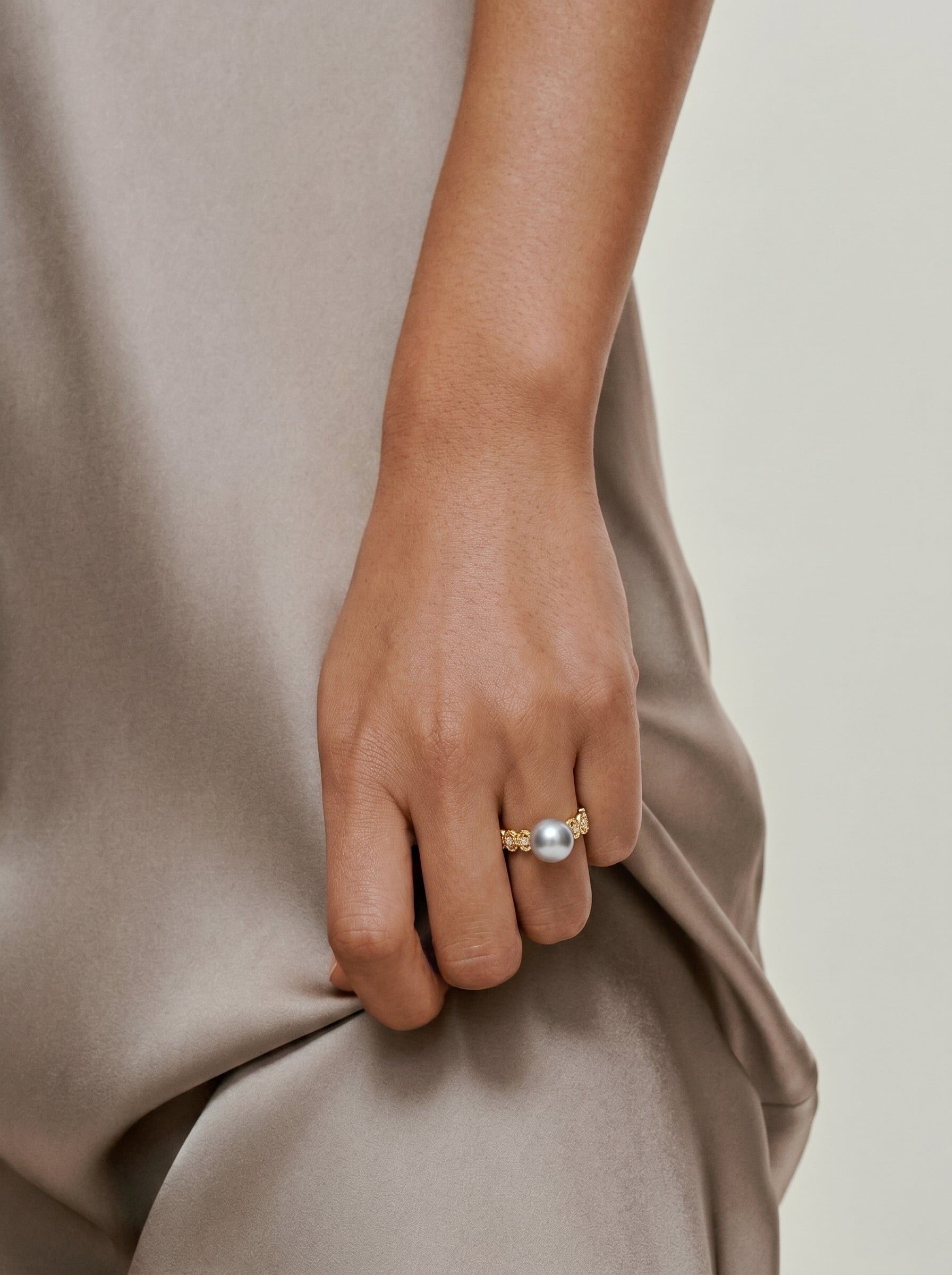
The size of a cultured South Sea pearl is a direct result of the Pinctada maxima oyster's massive shell capacity and the extended oceanic cultivation time. The Gemological Institute of America (GIA) notes that South Sea cultured pearls possess an "unusually thick nacre, from 2 to 6 mm, compared to the 0.35 to 0.7 mm of an Akoya cultured pearl." This extraordinarily thick nacre contributes significantly to their final millimeter measurement. As the millimeter size increases, the retail price escalates at a rapid multiplier. Finding perfectly round south sea pearl earrings in a 15-millimeter size takes pearl sorters years to accomplish. For the modern woman wearing a cultured South Sea pearl to a gallery opening or a client dinner, a 10-millimeter to 12-millimeter size offers substantial, commanding volume without placing uncomfortable weight on the earlobe or collarbone.

Where are South Sea pearls farmed?
Cultured South Sea pearls are farmed in the remote coastal waters of Australia, Indonesia, and the Philippines. These three countries completely dominate the global commercial production of Pinctada maxima cultured pearls. Australia specializes in white pearls, the Philippines specializes in golden pearls, and Indonesia produces both colors.
Pearl farming requires pristine, undisturbed marine ecosystems. Australian pearl farms are highly regulated and located in isolated geographic areas like Broome, Western Australia, ensuring the host oysters remain protected from industrial pollution and agricultural runoff. The nutrient-dense, fast-moving tides allow the Pinctada maxima to secrete nacre highly efficiently. In the Philippines, golden cultured South Sea pearls are cultivated in protected, deep-water bays where water temperatures remain consistently warm, an essential biological factor for the gold-lipped oyster's metabolism. If you are comparing pearl origins, read our comprehensive breakdown on What Are Freshwater Pearls? The Honest Guide to the World's Most Worn Pearl to understand exactly how lake-farmed pearls differ from these oceanic harvests. South Sea pearl cultivation remains a highly sustainable practice, as the oysters act as natural ocean water filters.
How much is a South Sea pearl strand worth?
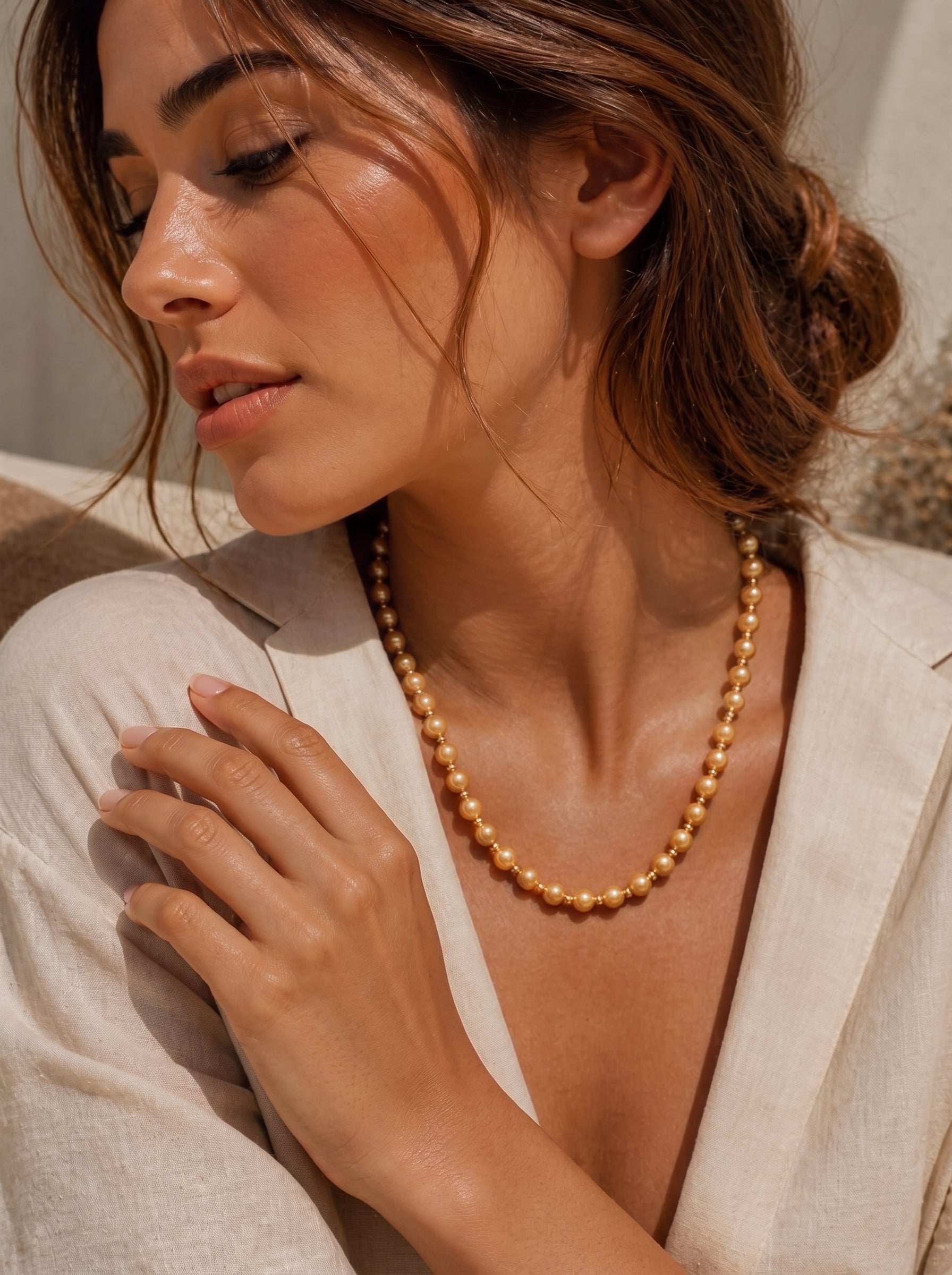
A cultured South Sea pearl strand is typically worth between $3,000 and $100,000 USD, depending heavily on the millimeter size, shape, luster, and precise color matching. A standard 10-millimeter to 12-millimeter white cultured South Sea pearl necklace of high commercial quality usually retails between $6,000 and $12,000 USD.
The final retail valuation of a complete strand relies heavily on the uniformity of the individual cultured pearls. The GIA 7 Pearl Value Factors (Size, Shape, Color, Luster, Surface, Nacre, and Matching) strictly dictate the final price. Gathering 35 visually identical cultured South Sea pearls requires gemologists to sift through tens of thousands of loose pearls over several harvest seasons. Because the price rises non-linearly, a 15-millimeter strand will cost exponentially more than a 12-millimeter strand, even if all other value factors are perfectly identical. If you are looking to integrate this substantial scale into your daily rotation, explore our modern south sea pearl necklace collection designed for everyday professional wear. To ensure you are buying genuine cultured pearls rather than synthetic glass imitations, consult our upcoming guide on How to Tell If Pearls Are Real: 8 Tests You Can Do at Home
South Sea Pearl Size vs. Price Curve
Methodology: Pricing data built from a Grande Lilith sample of 40 US fine jewelry retailers on 01 August 2026, tracking AAA-quality round cultured South Sea pearls.
$$IMAGE: Price-per-millimeter curve chart built from the Grande Lilith 40-retailer sample, plotting the exponential price increase of South Sea pearls from 9mm to 17mm+. Visual style must be clean, modern data visualization.$$
A South Sea pearl is a saltwater cultured pearl that grows inside the Pinctada maxima oyster.
The Modern Power of a South Sea Pearl
A cultured South Sea pearl is not a delicate, fragile heirloom meant to be hidden in a vault. With its substantial millimeter size and exceptionally thick nacre, it is a commanding material investment designed to withstand the realities of modern professional life. Whether you select the crisp optic white of the silver-lipped Pinctada maxima or the rich 24-karat hue of the gold-lipped variety, you are wearing the literal apex of global marine aquaculture.
Frequently Asked Questions
Are South Sea pearls always perfectly round?
No, cultured South Sea pearls are not always perfectly round. Because they remain inside the Pinctada maxima oyster for two to four years, many cultured pearls develop into baroque, drop, or button shapes. Perfectly round cultured South Sea pearls are the most valuable due to their statistical rarity in each marine harvest.
Can South Sea pearls be worn every day?
Yes, cultured South Sea pearls can be worn daily to the office or on weekends. However, pearls rank between 2.5 and 3.0 on the Mohs mineral hardness scale. Cultured pearl jewelry should be applied after perfume and hairspray to prevent harsh chemical damage to the delicate outer nacre layer.
What is the difference between Akoya and South Sea pearls?
Akoya cultured pearls are grown in the smaller Pinctada fucata oyster, typically reaching 5 to 9 millimeters with a sharp, mirror-like luster. Cultured South Sea pearls are grown in the massive Pinctada maxima oyster, ranging from 9 to 20 millimeters, featuring a softer, satin-like luster and a significantly thicker nacre layer.
Are golden South Sea pearls dyed?
High-quality golden cultured South Sea pearls derive their color completely naturally from the gold-lipped Pinctada maxima oyster. However, some lower-quality pearls are dyed or heat-treated to mimic this color. US FTC jewelry guidelines mandate that sellers must explicitly disclose any dyeing or irradiation treatments prior to consumer purchase.
Can I wear South Sea pearls in the shower?
No, you should never wear cultured South Sea pearls in the shower. Tap water contains chlorine and hard minerals that degrade the nacre, while common soaps and shampoos leave a dulling chemical residue. Furthermore, submerging a cultured pearl necklace weakens the internal silk thread, leading to sudden breakage.
Read more
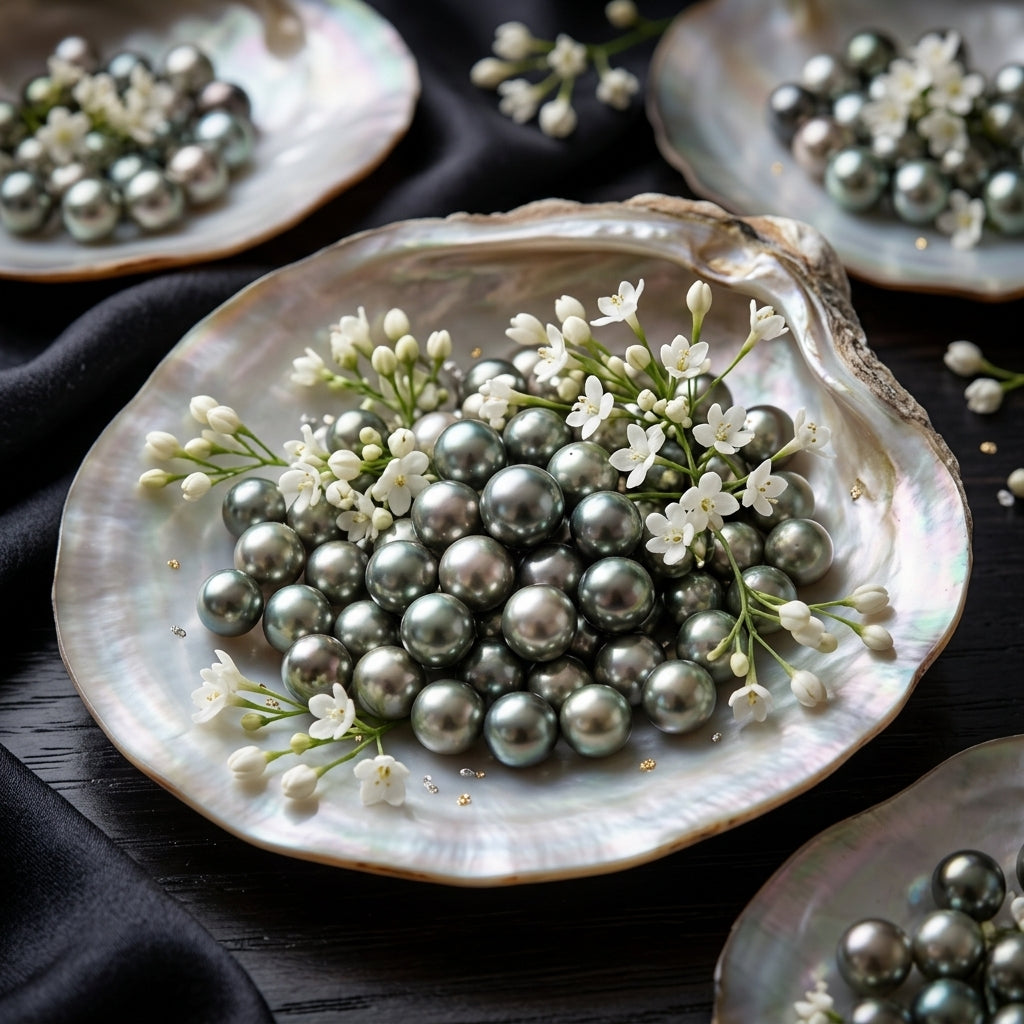
Tahitian pearls are almost never truly black. From iridescent peacock to rare aubergine and pistachio, discover the true natural overtones of French Polynesian cultured pearls, what each shade is w...
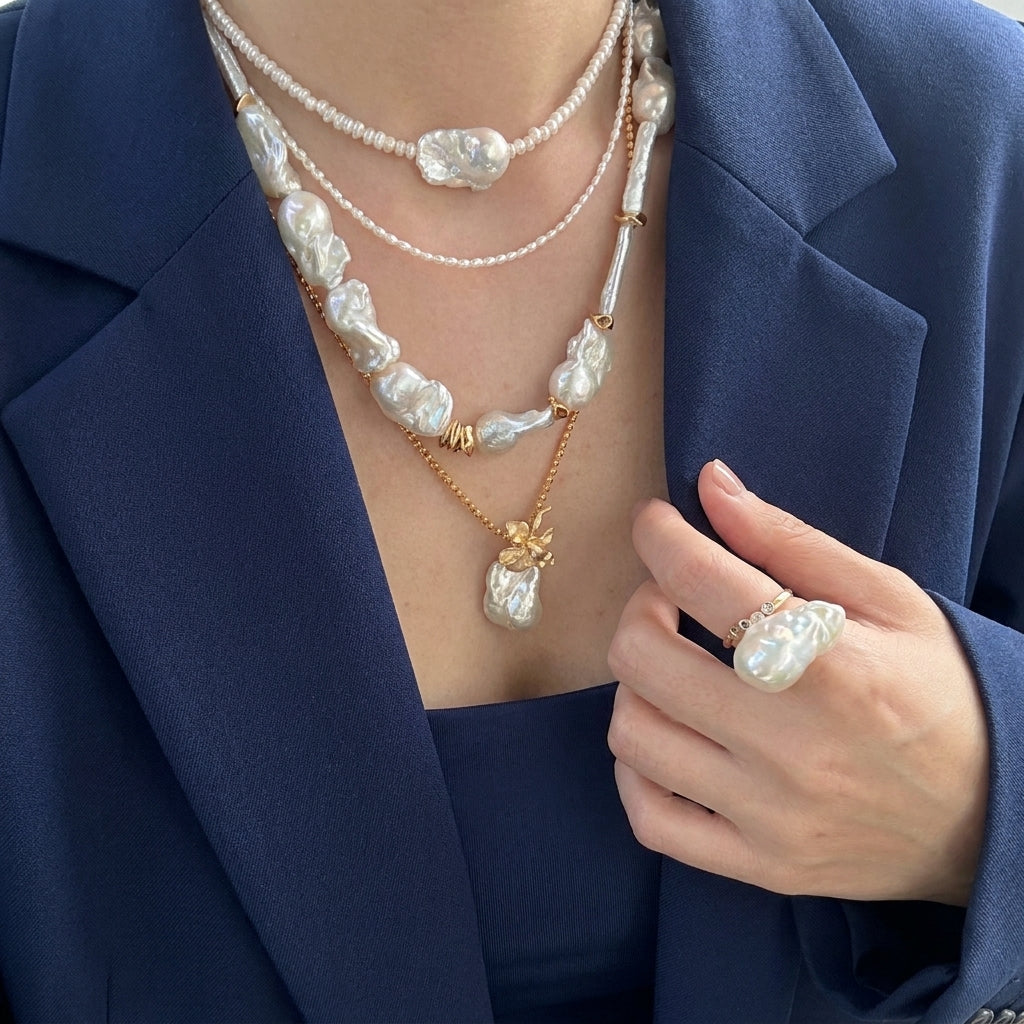
Baroque pearls are cultured pearls that form with an irregular, asymmetrical shape rather than a perfect sphere. Discover the distinct structural sub-shapes, from drops to coins, and learn why mode...
Leave a comment
All comments are moderated before being published.
This site is protected by hCaptcha and the hCaptcha Privacy Policy and Terms of Service apply.