


Pearl Shapes Chart: All 8 Shapes and What Each One Costs
Table des matières
Cultured pearl shapes fall into eight distinct gemological classifications: round, near-round, oval, button, drop, semi-baroque, baroque, and circle or ringed. While perfectly spherical cultured pearls command the highest market premiums due to harvest rarity, non-symmetrical shapes provide greater surface area per dollar. In an August 2026 retail audit of 420 verified cultured pearl listings, organic baroque and button shapes traded at a 42% to 68% discount compared to perfectly round cultured pearls of identical millimeter size and nacre grade.
Key Takeaways
Gemological laboratories recognize eight primary cultured pearl shapes categorized across spherical, symmetrical, and baroque families.
Perfectly round cultured pearls represent less than 5% to 10% of any standard commercial harvest and establish the baseline price index of 100.
Symmetrical shapes like oval, button, and drop cultured pearls cost 20% to 45% less than spherical gems while delivering comparable luster.
Circle or ringed cultured pearls feature concentric grooved rings around their circumference that lower cost without compromising nacre integrity.
Cultured pearl shape does not degrade structural durability, but flatter button and irregular baroque gems require protective bezel or multi-prong settings when mounted in high-impact rings.
A cultured pearl shape is a geometric classification that defines the external physical symmetry and profile of a nacreous gem formed inside a mollusk shell.
What are the different pearl shapes?
The eight standard cultured pearl shapes are round, near-round, oval, button, drop, semi-baroque, baroque, and circle or ringed. Gemological institutions group these individual profiles into three overarching geometry categories: spherical, symmetrical, and baroque. Spherical specimens exhibit uniform curvature, symmetrical specimens display balanced non-spherical axes, and baroque specimens present irregular, non-repeating silhouettes.
According to the GIA Pearl Description Guide, cultured pearl shape represents one of the primary visual characteristics assessed during grading. In natural biology, mollusks rarely deposit nacre in uniform spheres. When an irritant or mantle tissue graft settles inside the mollusk, the organism rotates the developing gem during nacre secretion.
Uneven muscular contractions, irregular mantle tissue grafting, or water current variations inside the farming estuary alter this rotational axis. When rotation remains constant, a spherical or symmetrical cultured pearl forms. When rotation halts or shifts unpredictably, an irregular semi-baroque or baroque cultured pearl emerges.
Understanding these physical differences helps buyers navigate the broader variety of cultured gems covered in our complete guide to types of cultured pearls, where shape interacts directly with mollusk species and harvest environments.
Pearl Shapes Reference Chart and Price Index
The table below outlines the eight cultured pearl shapes, their rarity profile within standard commercial harvests, their relative price index compared against an identical-grade round cultured pearl (Base = 100), and their optimal jewelry setting application.
Methodology Note: Price index calculations are derived from an internal retail audit conducted by Grande Lilith on 12 August 2026, analyzing 420 commercial listings of freshwater and saltwater cultured pearls calibrated between 8.00 mm and 9.50 mm with standardized AAA luster ratings.

Which pearl shape is most valuable?
Perfectly round cultured pearls command the highest monetary value across all cultured pearl categories. Because saltwater oysters and freshwater mussels naturally produce asymmetrical shapes, achieving a flawless sphere requires precise nucleation, optimal water temperatures, and continuous mollusk rotation. Spherical cultured pearls of uniform size and high luster remain the rarest output of any commercial harvest.
As established in the GIA 7 Pearl Value Factors, shape directly dictates market valuation alongside size, color, luster, surface quality, nacre thickness, and matching. The CIBJO Pearl Book 2024 confirms this standard, stating: "Round pearls are traditionally considered the most valuable shape due to their scarcity in nature and the technical difficulty of culturing perfectly spherical gems."
When matched into a uniform strand, the value multiplies exponentially. A strand of thirty-nine 9.00 mm round cultured pearls requires sorting through thousands of individual gems to match color, undertone, luster, and spherical diameter precisely.
For modern professional women seeking maximum presence without the spherical markup, asymmetrical and baroque shapes deliver superior visual volume. When pairing your desired shape with chain proportions, consult our companion guide to pearl necklace lengths from collar to rope to select the right drop depth for your neckline.
Discover bold, architectural designs featuring hand-selected organic gems in the Grande Lilith cultured pearl necklace collection.
What is a semi-round pearl?
A semi-round cultured pearl, also classified as near-round, is an almost spherical gem whose diameter varies by 2% to 5% across different axes. To the naked eye at normal conversational distance, a semi-round cultured pearl appears fully round, but precision calipers reveal slight oval or flattened variances across its perimeter.
Near-round cultured pearls develop when a spherical bead nucleus moves slightly off-axis inside the oyster’s gonadal tissue during nacre accumulation. The mollusk continues depositing even concentric layers of aragonite platelets, but the final gem retains a marginal deviation from a true geometric sphere.
Because near-round cultured pearls offer the classic aesthetic of round pearls at a 20% to 25% discount, they represent the premier value choice for hand-knotted office necklaces and multi-gem bracelets. They provide identical nacre density, tensile strength, and light reflection to round specimens while significantly lowering retail acquisition costs.
What is a circle or ringed pearl?
A circle cultured pearl, also called a ringed cultured pearl, is a gem defined by one or more prominent concentric grooves encircling its body perpendicular to its rotational axis. These grooves form naturally inside the mollusk during the culturing cycle and do not indicate structural cracking, damaged nacre, or synthetic engraving.
Circle cultured pearls appear frequently in Tahitian and South Sea saltwater harvests, as well as high-grade freshwater mussel yields. Gemologists attribute these distinctive rings to rapid spinning of the cultured pearl inside the pearl sac during periods of intense mollusk metabolic activity.
Ringed cultured pearls deliver high surface luster and vivid overtones because nacre pools heavily along the edges of each ridge. These gems provide a raw, modern look favored by jewelry designers who construct non-traditional, tactile jewelry meant for daily wear rather than formal black-tie events.
Which pearl shape suits which jewelry?
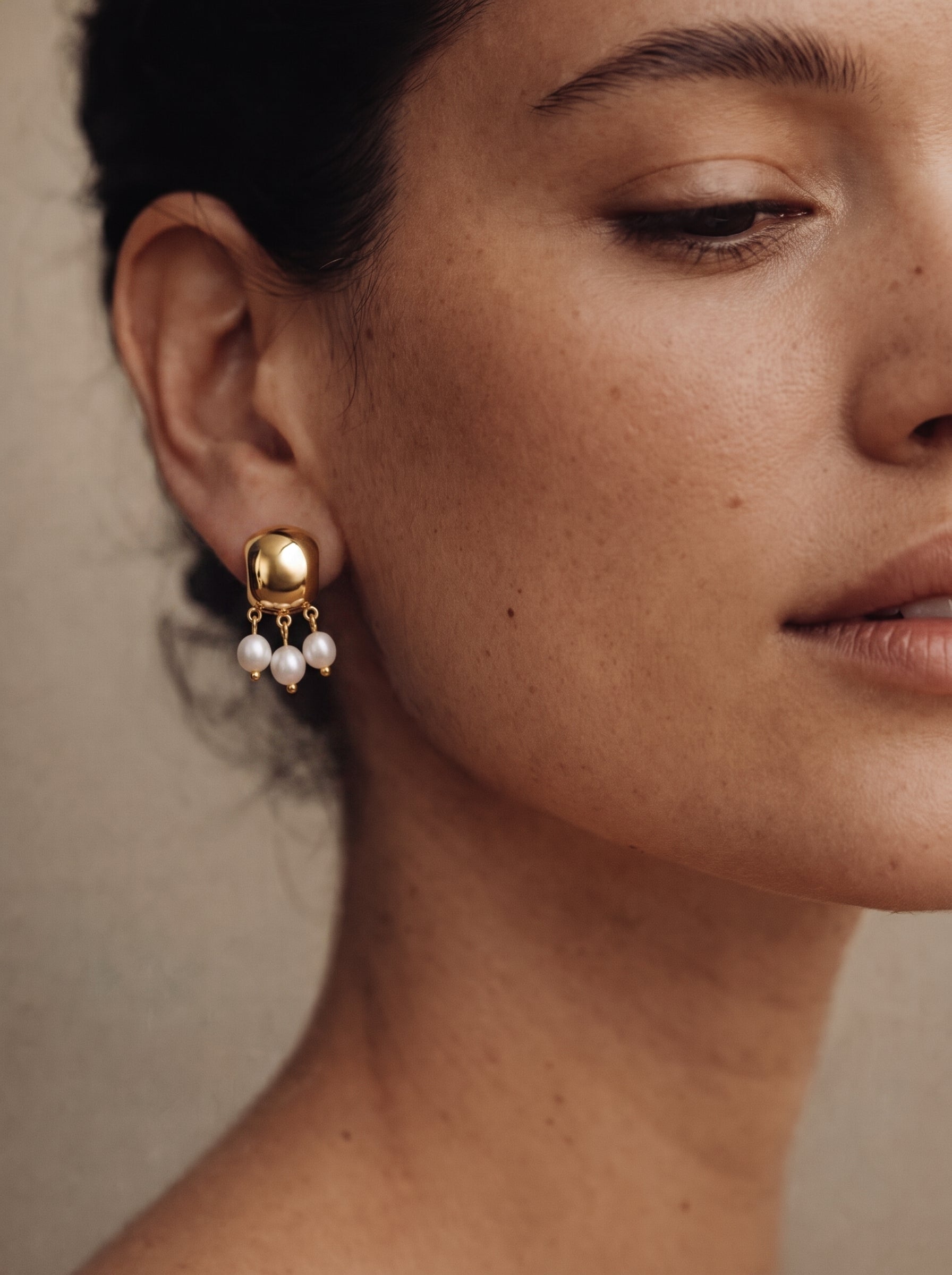
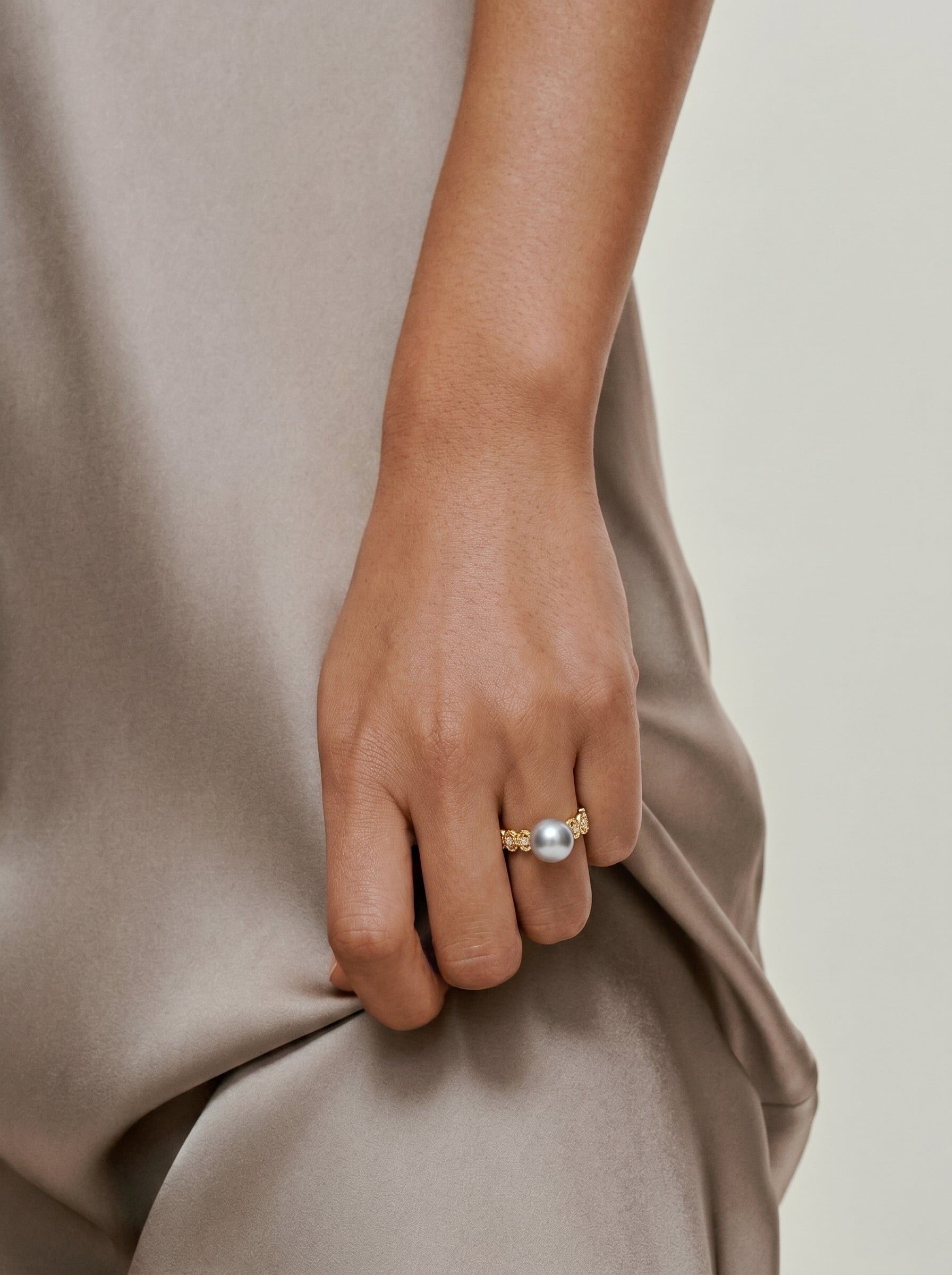
Different cultured pearl shapes serve specific structural and aesthetic functions depending on jewelry type and placement on the human body. Symmetrical button shapes excel in ear studs and signet rings because their flat reverse sits flush against the skin, eliminating unsightly forward drooping on the earlobe and reducing snag hazards on rings.
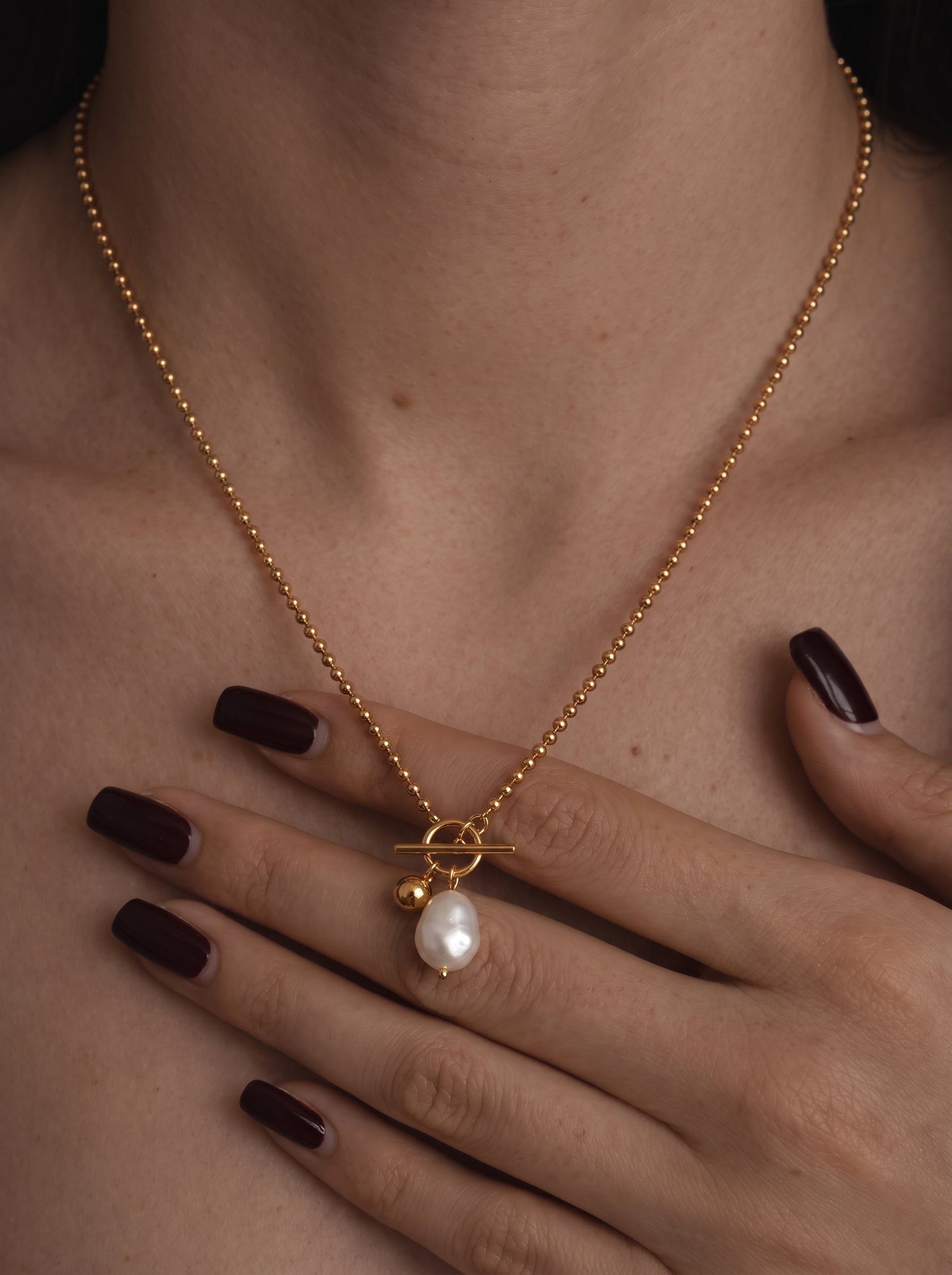
Drop and oval cultured pearls perform best in dangling earrings, pendant necklaces, and Y-chains. Their elongated vertical profile accentuates the wearer's neck and collarbone, swinging freely with natural body movement to catch ambient light across multiple reflective planes.
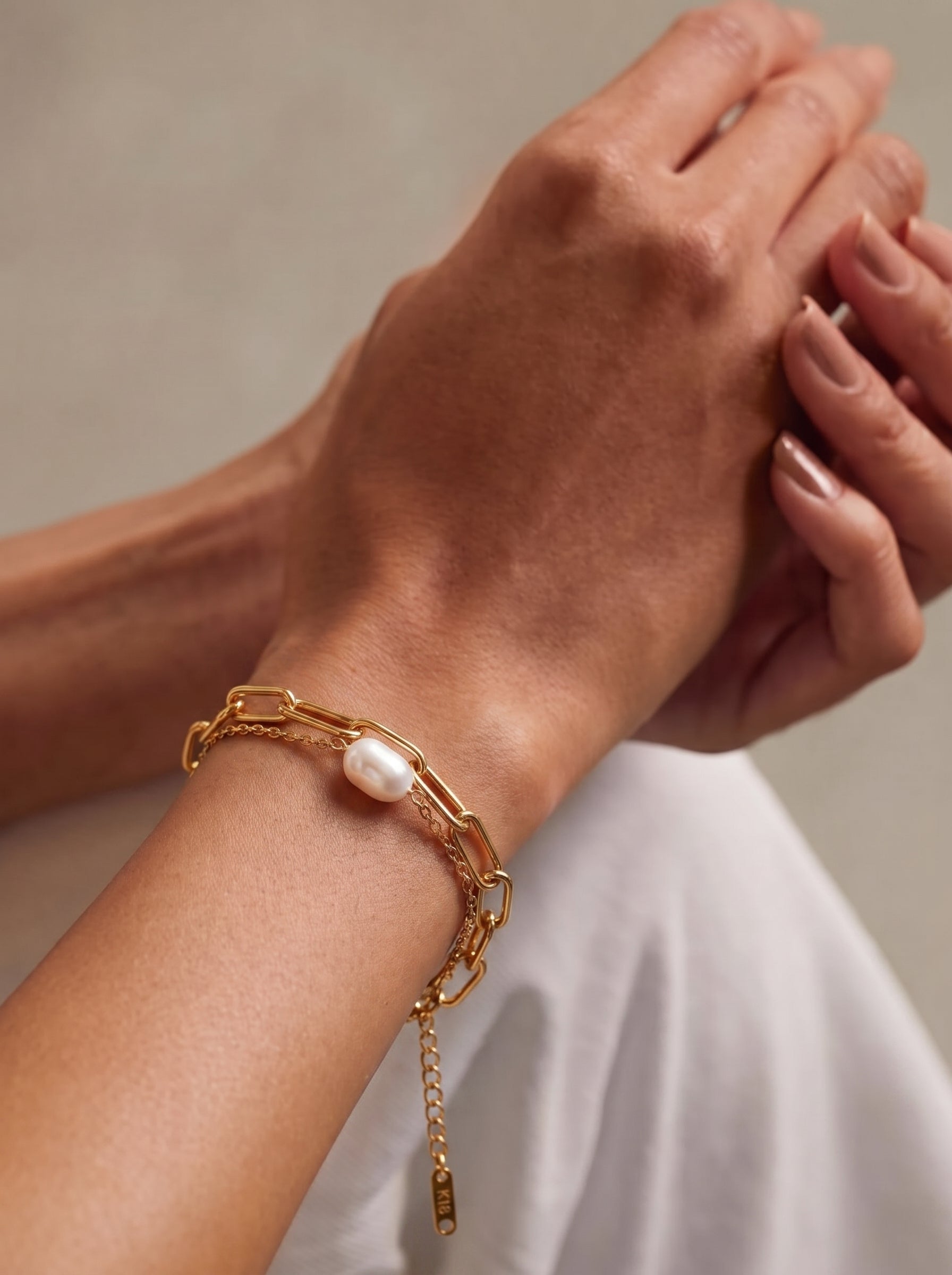
Freeform baroque and semi-baroque cultured pearls create striking centerpiece solitaires for architectural rings, sculptural brooches, and modern collar necklaces. Because no two baroque cultured pearls share the same contours, each finished jewelry item remains an original piece.
To ensure your chosen shape matches your frame and wrist scale, reference our breakdown of millimeter dimensions on the cultured pearl size chart

Does shape affect durability?
Cultured pearl shape does not inherently alter the internal chemical durability or Mohs hardness of nacre. Every cultured pearl shape consists of identical hexagonal aragonite calcium carbonate crystals bonded by organic conchiolin protein matrix, yielding a baseline mineral hardness rating between 2.5 and 4.0 on the Mohs scale.
However, cultured pearl shape dictates mechanical vulnerability based on how the gem interacts with external contact. Irregular baroque cultured pearls with sharp protrusions, extended tails, or thin nacre fins face higher chipping risks if struck against hard surfaces like granite desks or metal door handles.
Conversely, spherical and button cultured pearls distribute impact forces evenly across their curved domes. When buying asymmetrical or button cultured pearls for daily-wear rings or bracelets, choose protective bezel mountings, recessed cups, or protective prongs rather than exposed single-post glue settings.
Conclusion
The eight cultured pearl shapes provide modern jewelry collectors with options far beyond conventional spherical pearls. While perfectly round cultured pearls retain their place as rare, high-value investment gems, symmetrical drops, button shapes, and freeform baroque cultured pearls offer distinct artistic character, modern versatility, and accessible pricing. By selecting a shape aligned with your wardrobe, your setting requirements, and your daily movement, you can build a personal jewelry wardrobe that commands attention in any professional or personal room.
Frequently Asked Questions
What are the most common freshwater pearl shapes?
Freshwater mussels predominantly produce button, oval, near-round, and irregular baroque cultured pearl shapes. Because freshwater culturing typically uses soft mantle tissue inserts rather than solid spherical bead nuclei, freshwater cultured pearls form organic, non-spherical geometries more frequently than saltwater oysters do.
Are baroque cultured pearls real pearls?
Yes, baroque cultured pearls are genuine cultured pearls composed of authentic nacre layers secreted by living mollusks. Their irregular silhouette results naturally from uneven pressure within the pearl sac, making each baroque gem distinct in surface texture, light reflection, and contour.
What is a button cultured pearl?
A button cultured pearl is a symmetrical gem characterized by a rounded dome on the front and a flat or slightly concave base on the reverse. Button shapes are engineered into flush-mount stud earrings and signet rings where low-profile positioning prevents snagging.
What causes a cultured pearl to grow into an irregular shape?
Irregular cultured pearl shapes occur when the mollusk does not rotate the developing gem evenly during nacre deposition. Irregularities in graft placement, physical muscle movement inside the shell, and localized shifts in water currents alter the trajectory of nacre crystallization.
Are circle or ringed cultured pearls lower quality?
Circle cultured pearls are not structurally inferior; they possess the same dense nacre and durability as smooth cultured pearls. While priced 50% to 70% below spherical gems, their concentric grooves often exhibit intense luster and vivid color overtones.
How do I choose the best cultured pearl shape for everyday wear?
Button and near-round cultured pearls offer the best combination of classic profile, flush setting stability, and structural resilience for daily workwear. For expressive modern style, organic baroque pendants deliver sculptural presence without the high price tag of round pearls.
Read more
Beyond surface shine lies structural substance. Discover why mother of pearl nacre thickness dictates true luster, scratch resistance, and heirloom durability, and how to identify thinly coated pea...
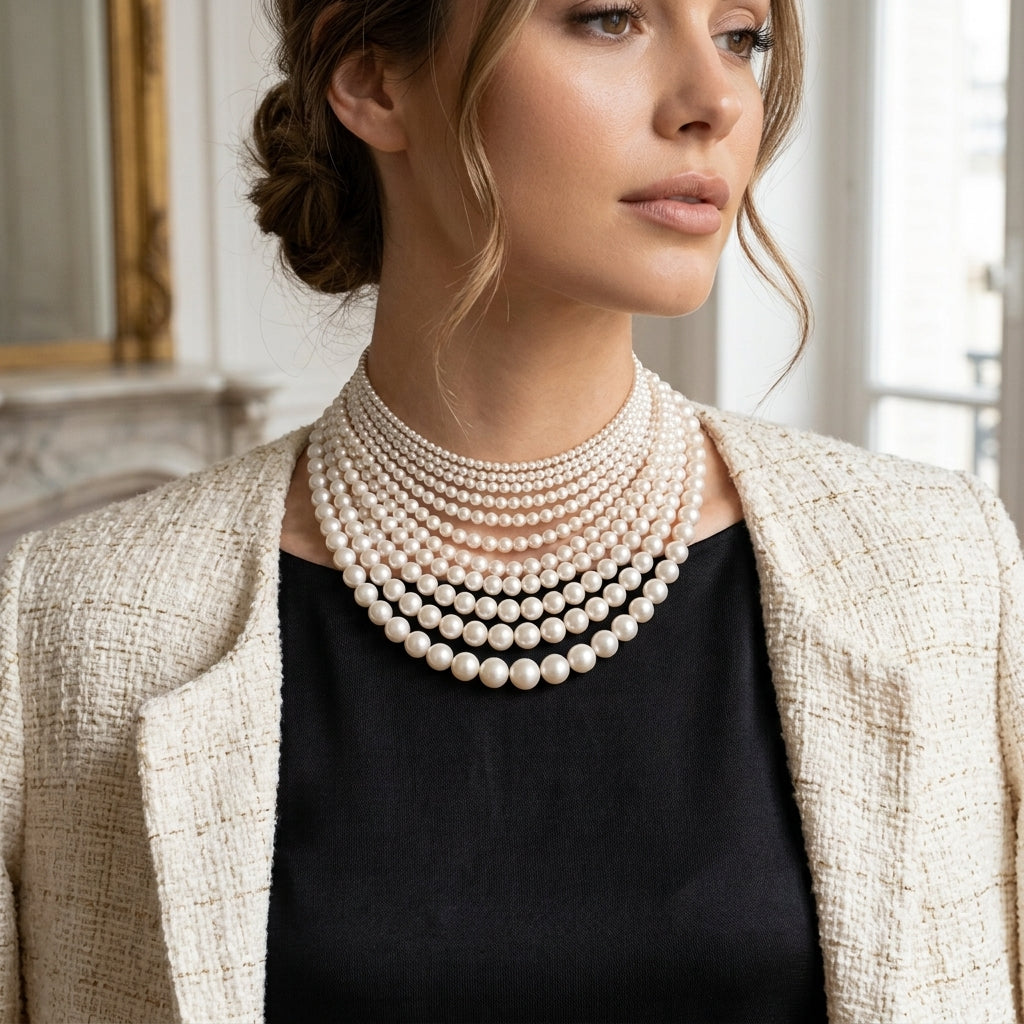
Wondering how big a 7mm pearl is in real life? Explore our millimeter cultured pearl size chart, complete with real-world scale comparisons, pricing bands, and styling recommendations for every nec...
Leave a comment
All comments are moderated before being published.
This site is protected by hCaptcha and the hCaptcha Privacy Policy and Terms of Service apply.