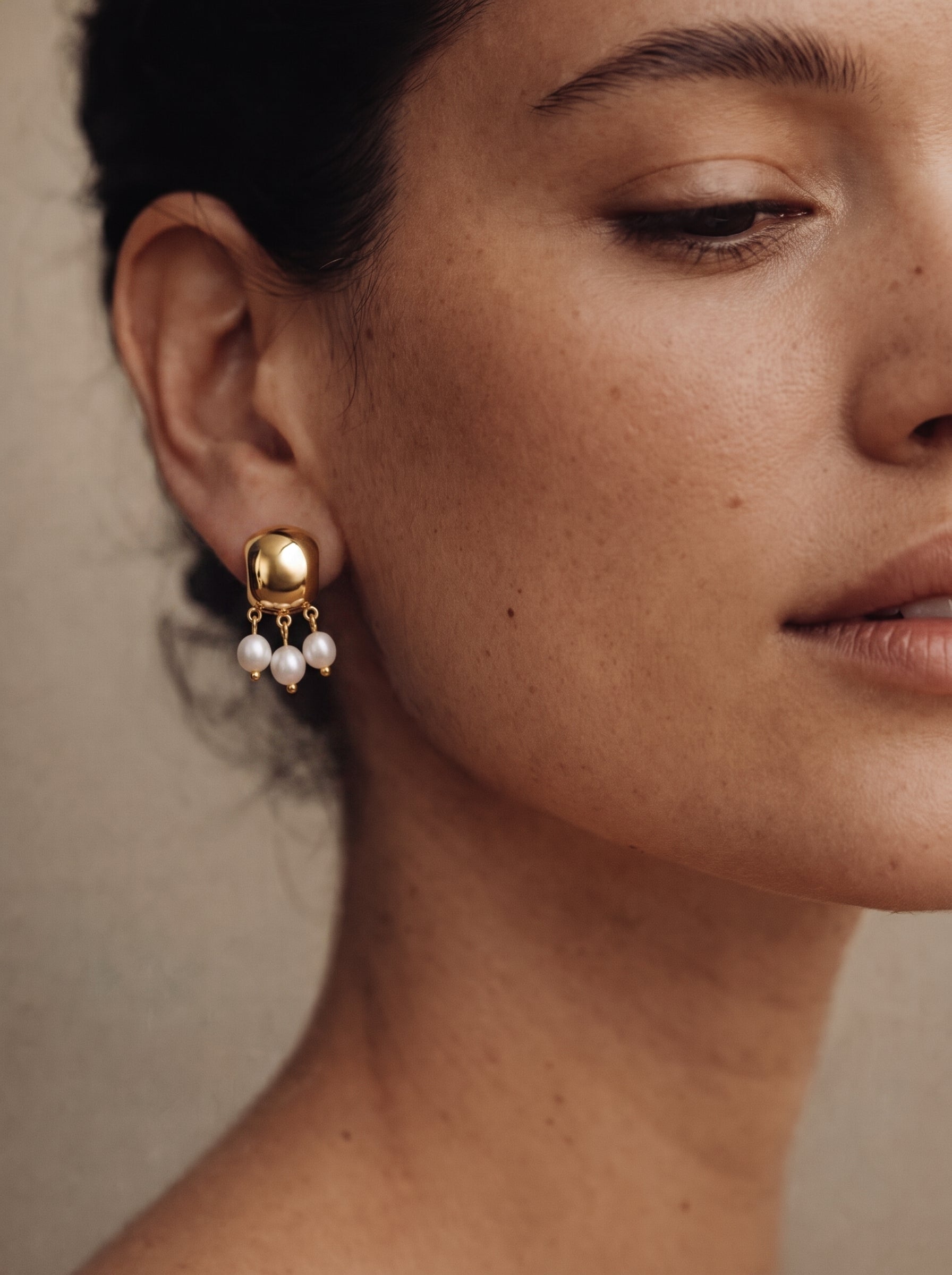
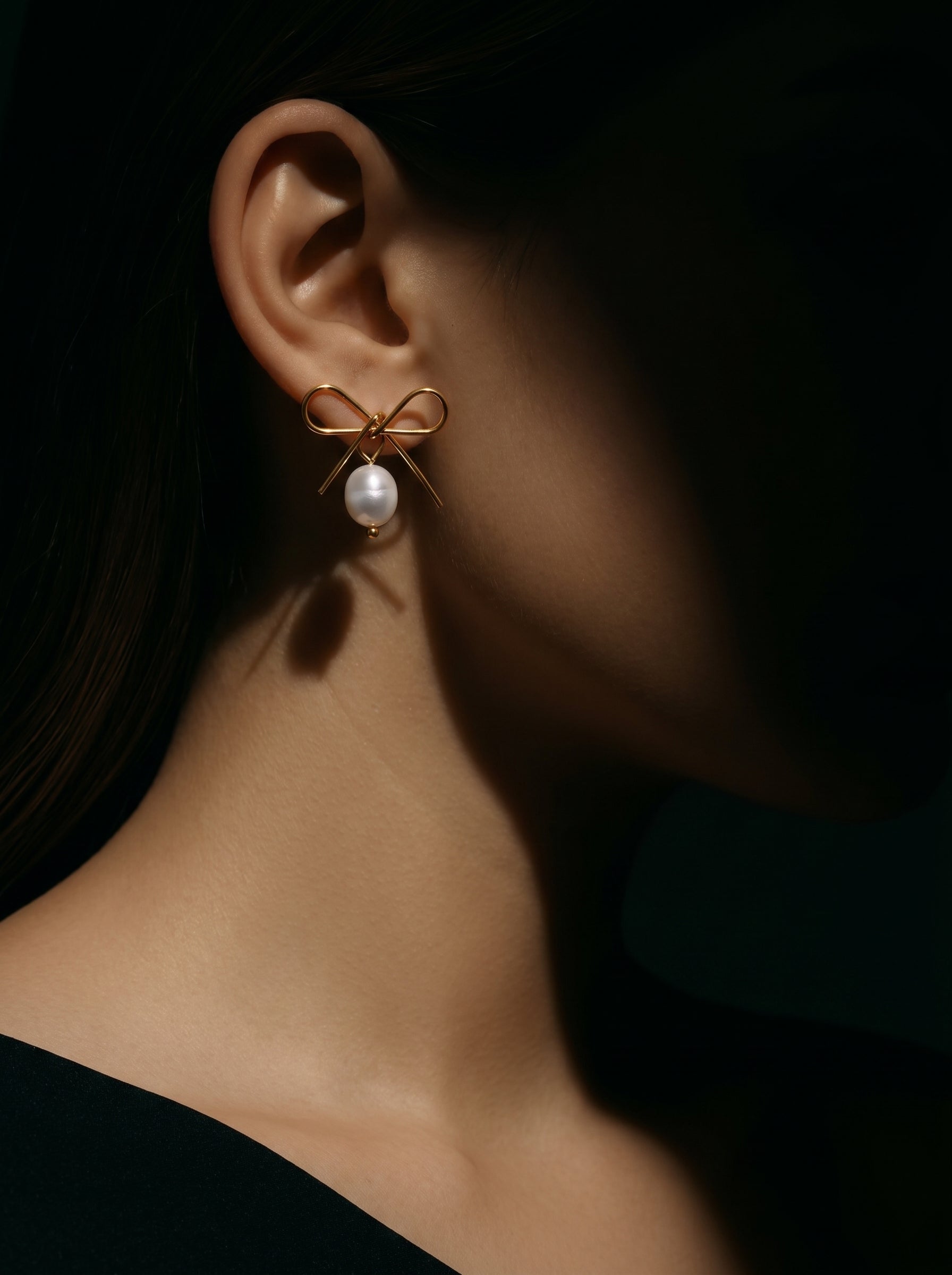
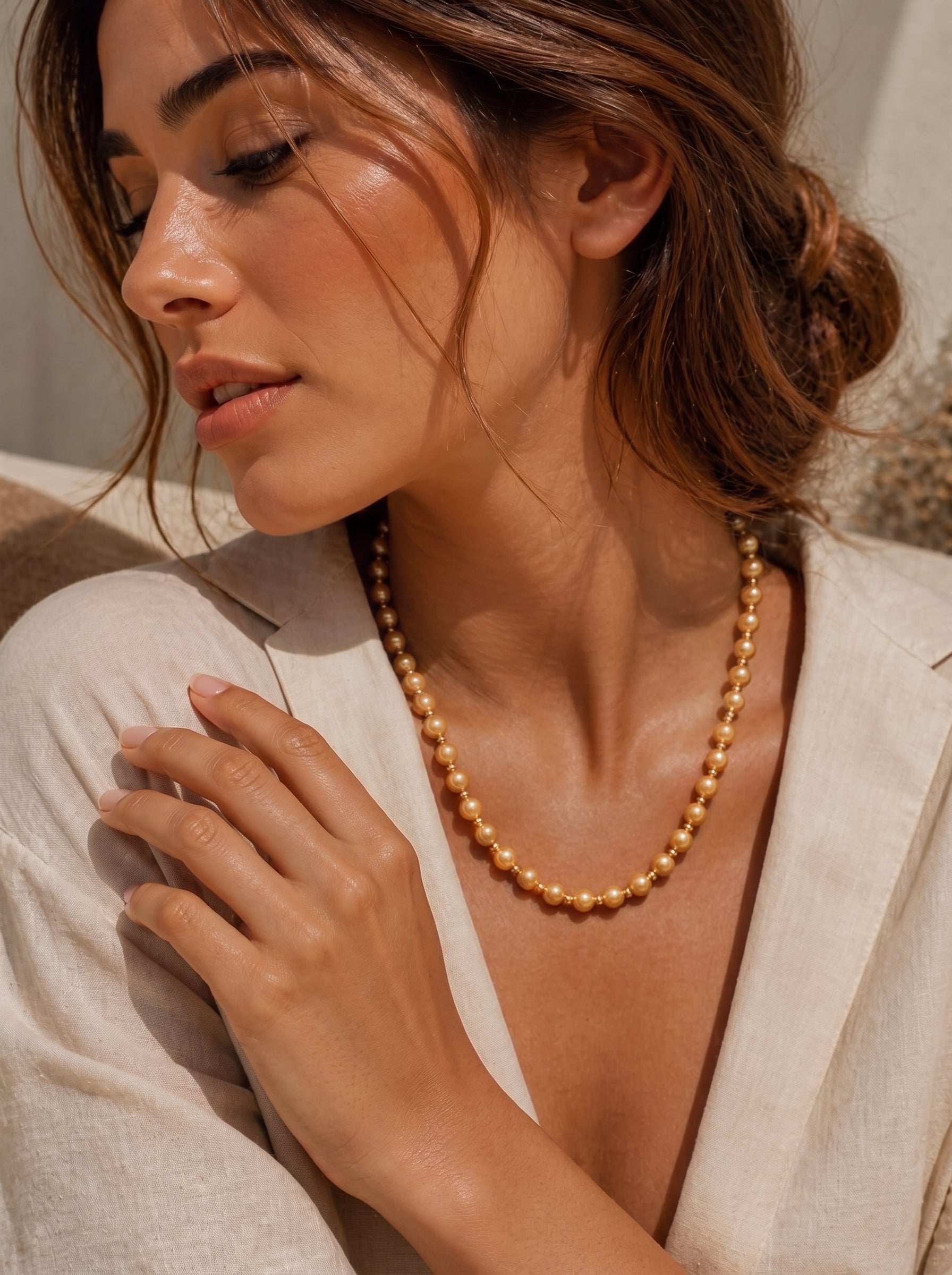
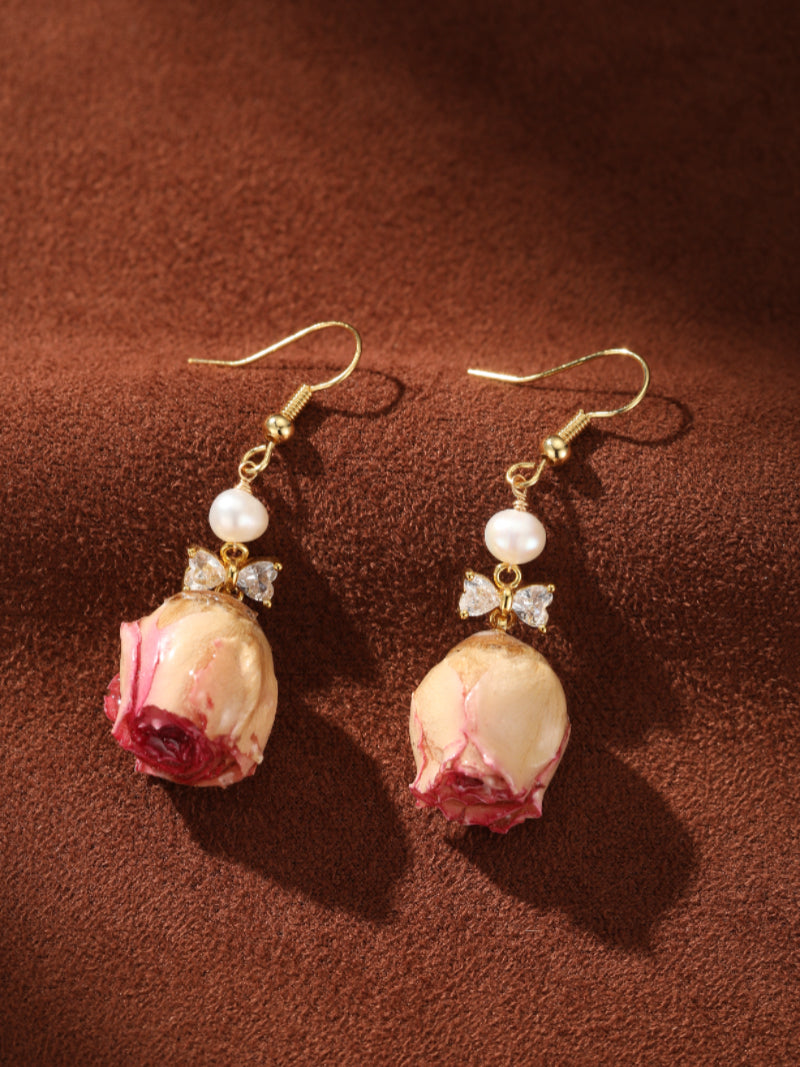
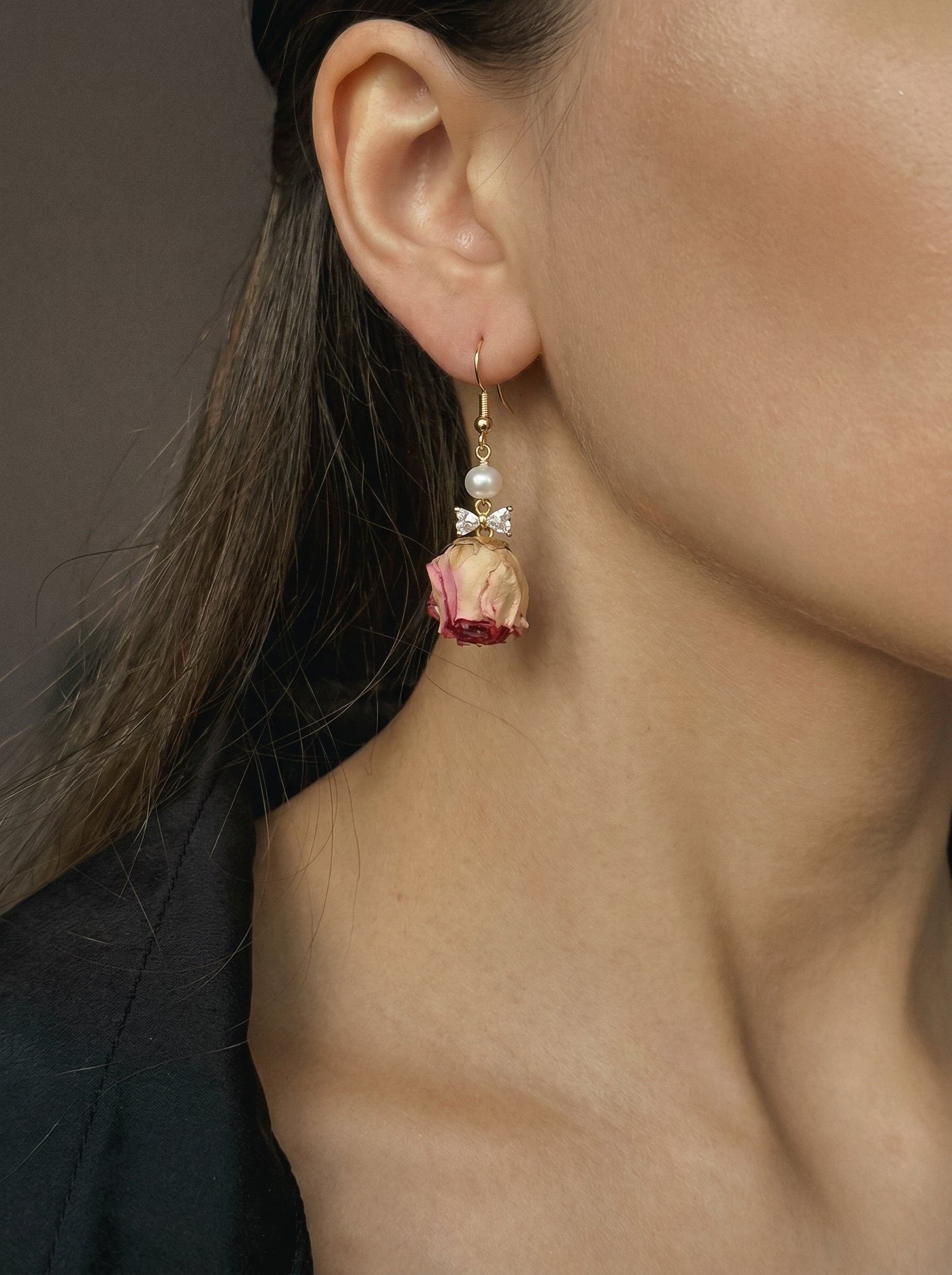
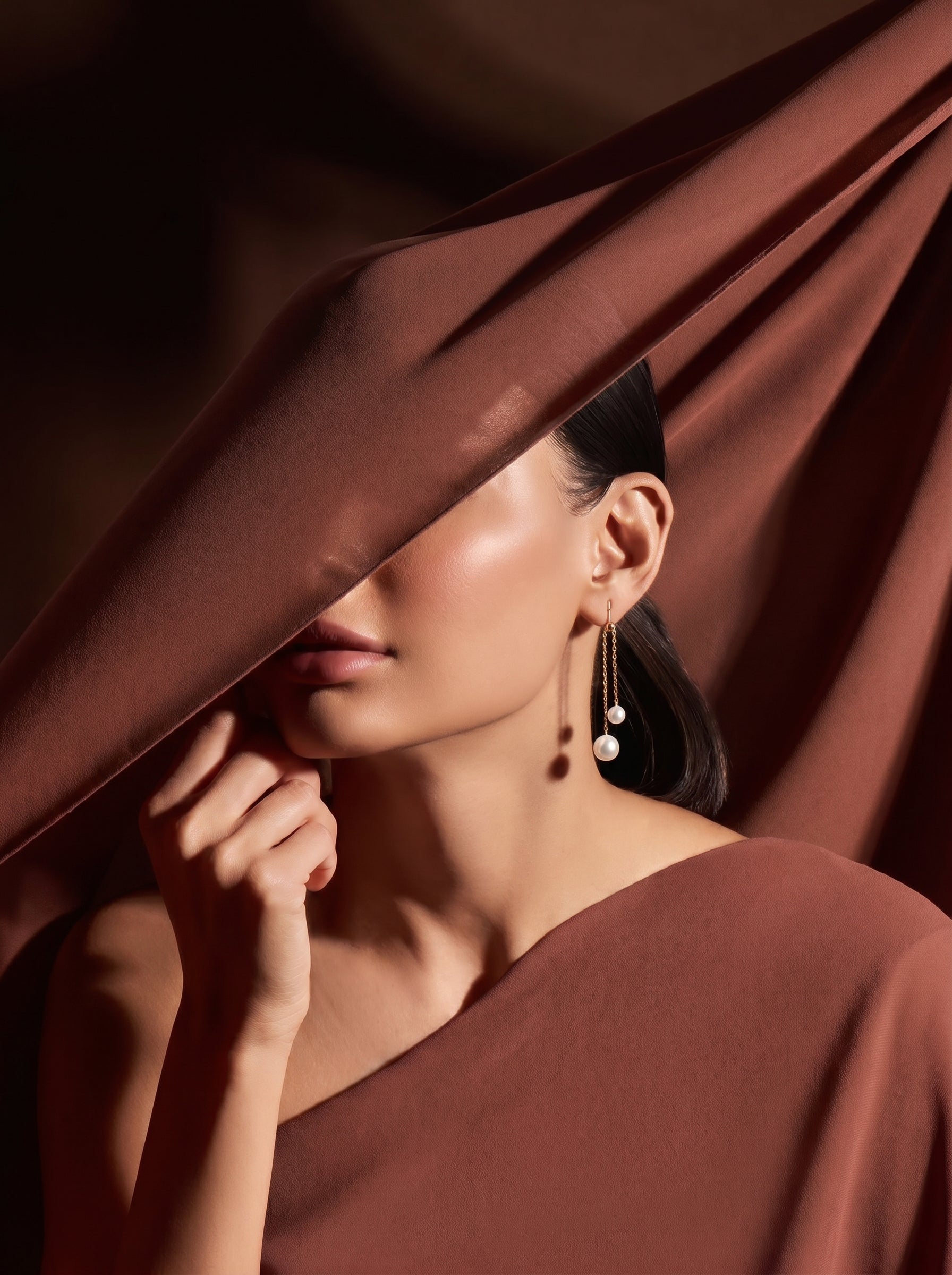
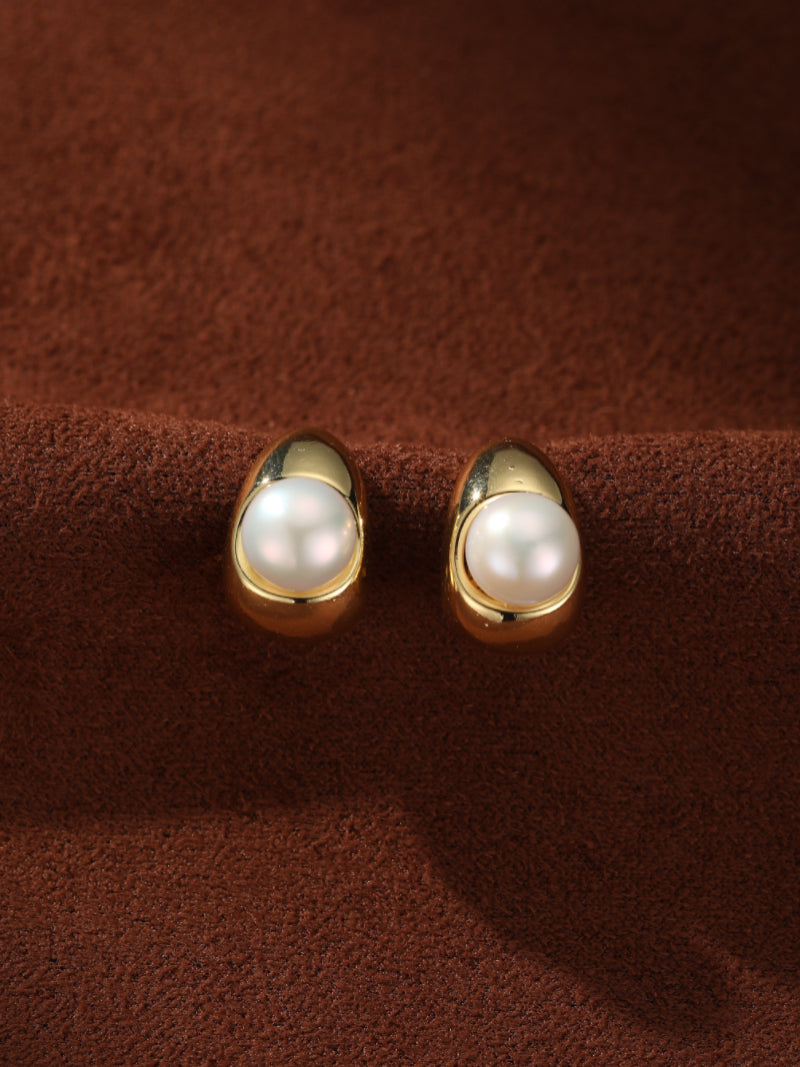
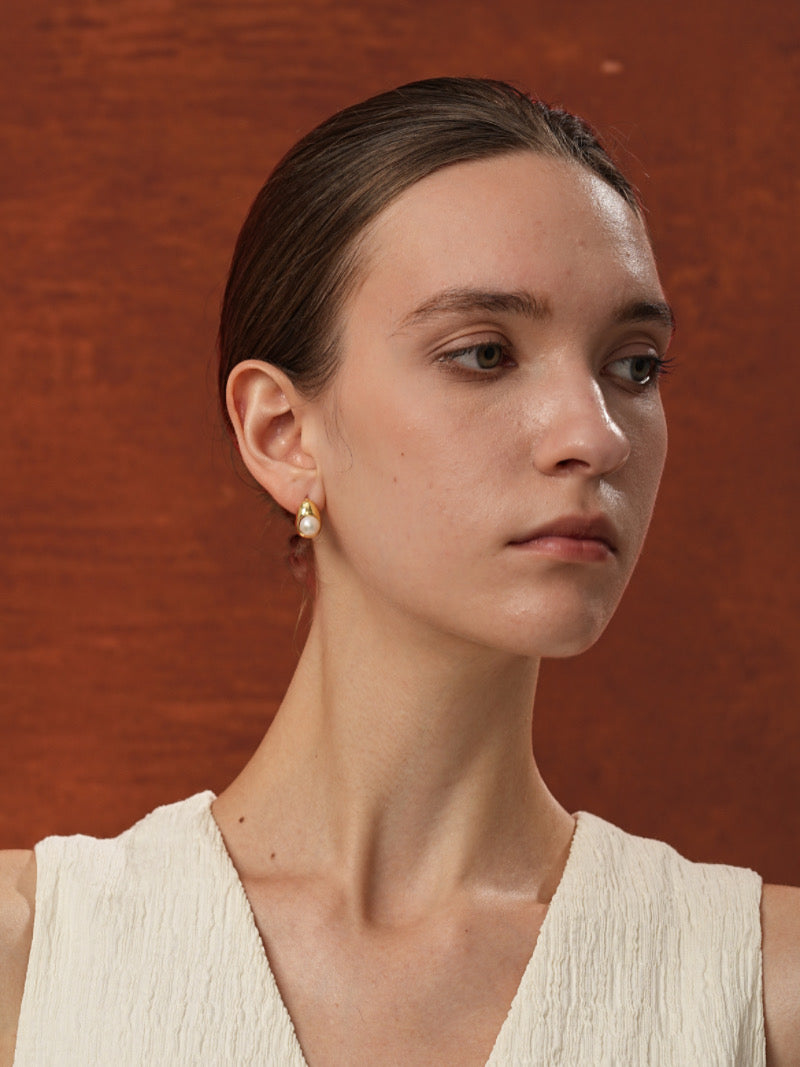
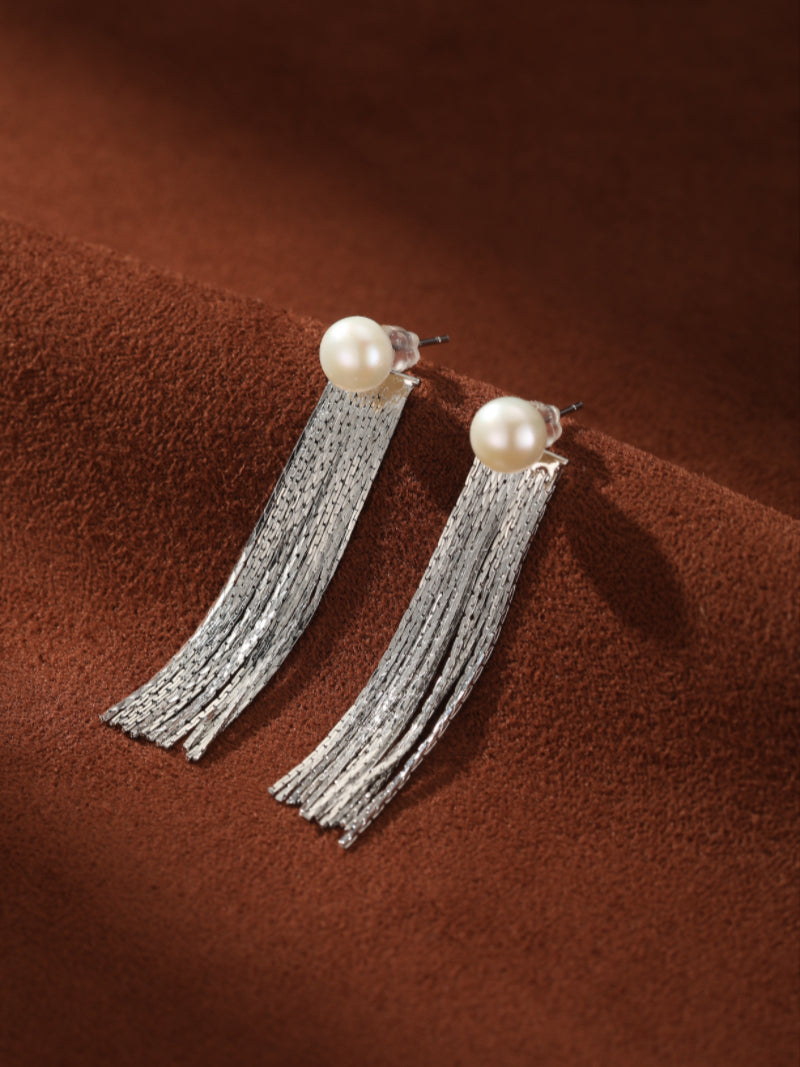
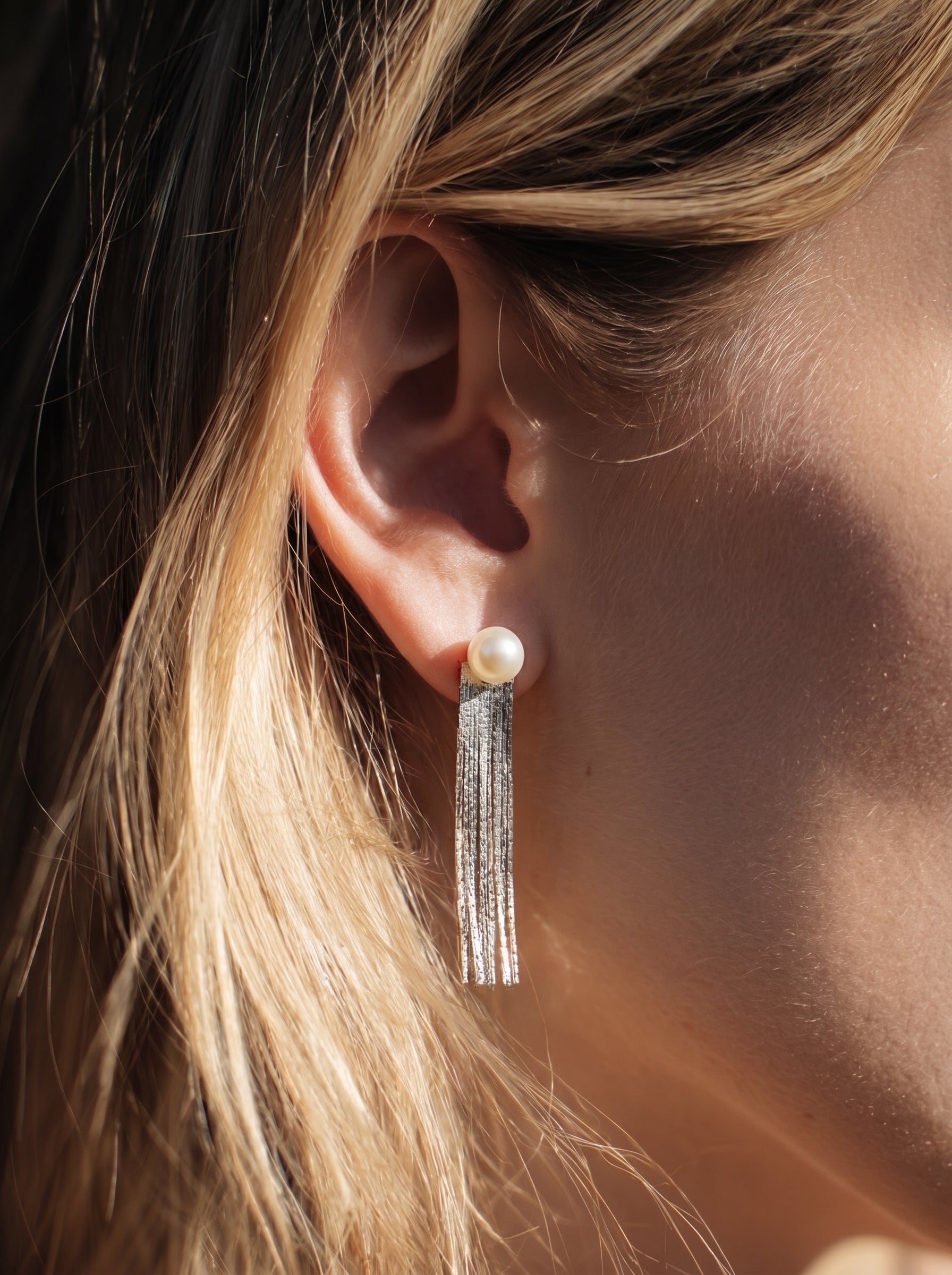
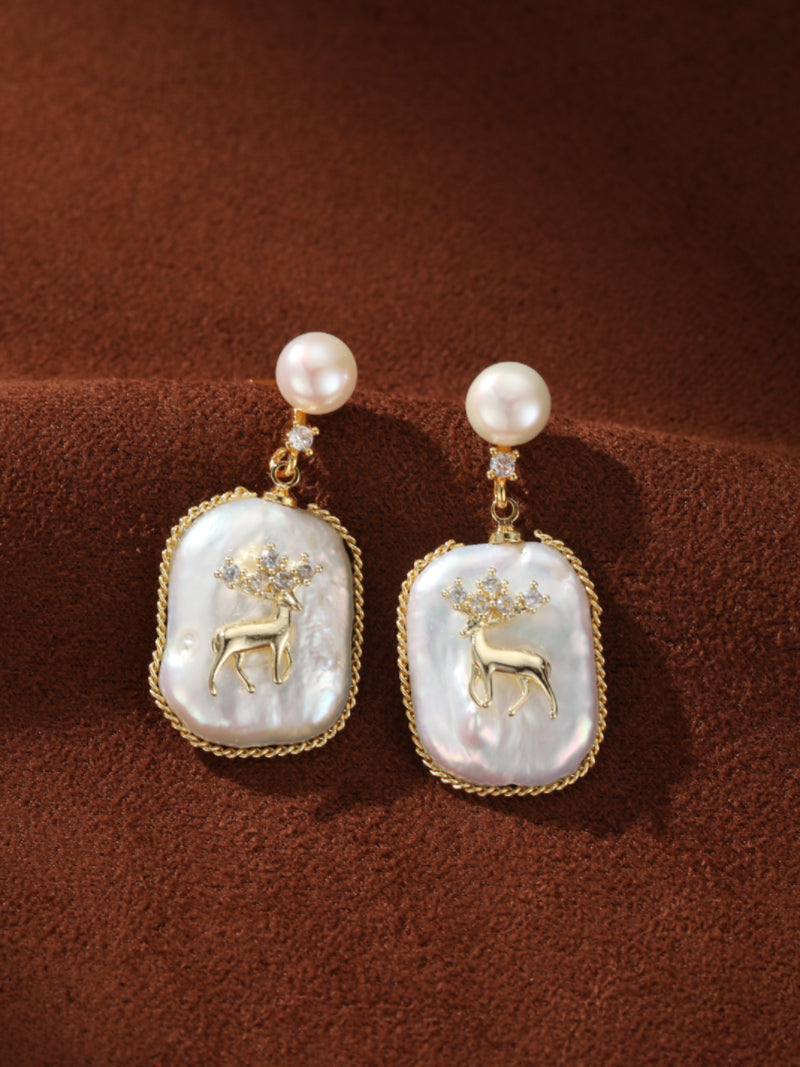
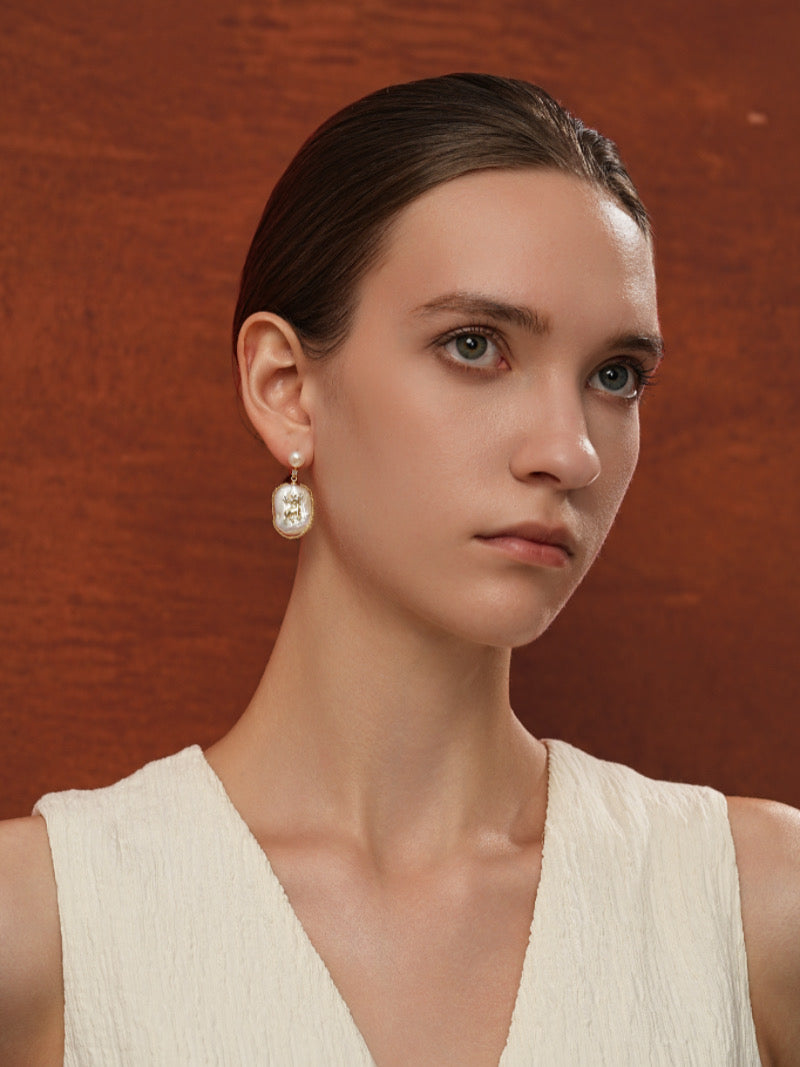
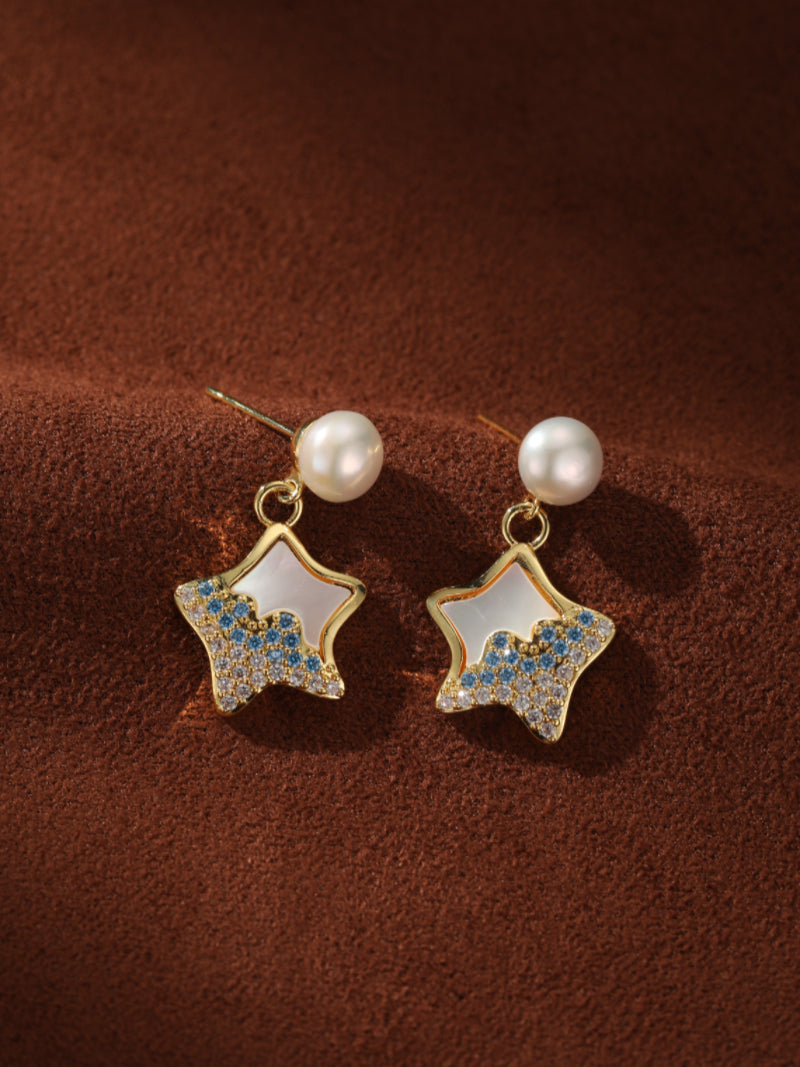
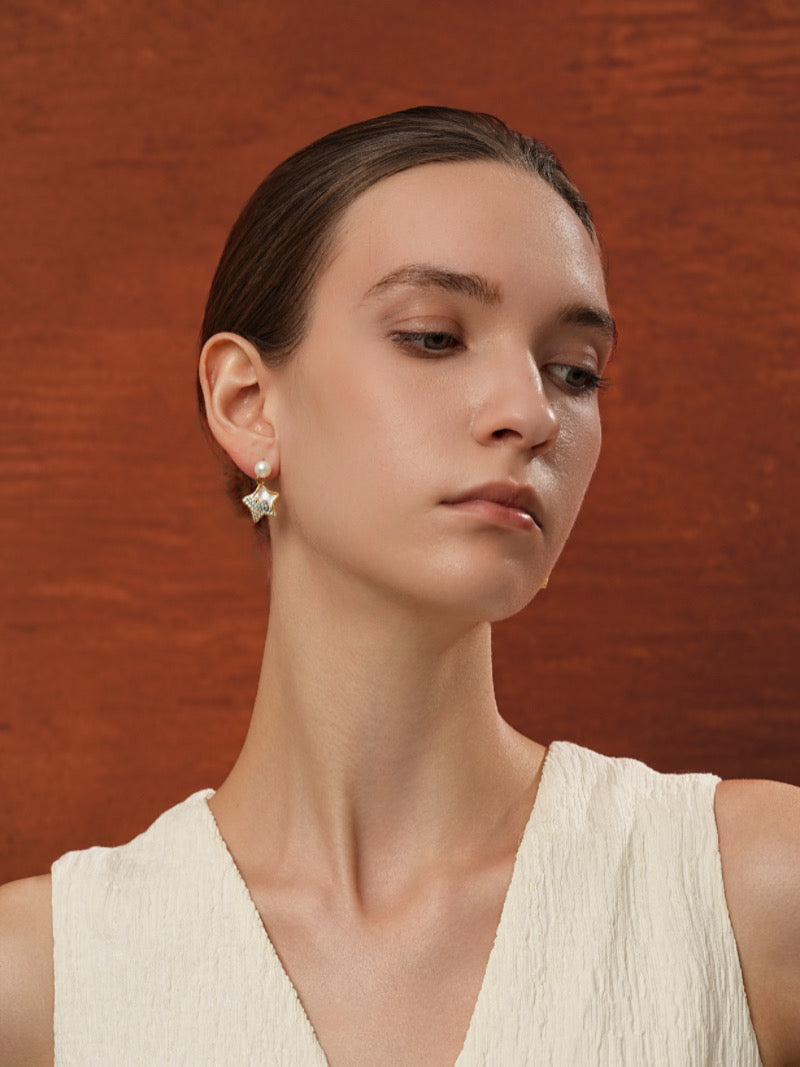
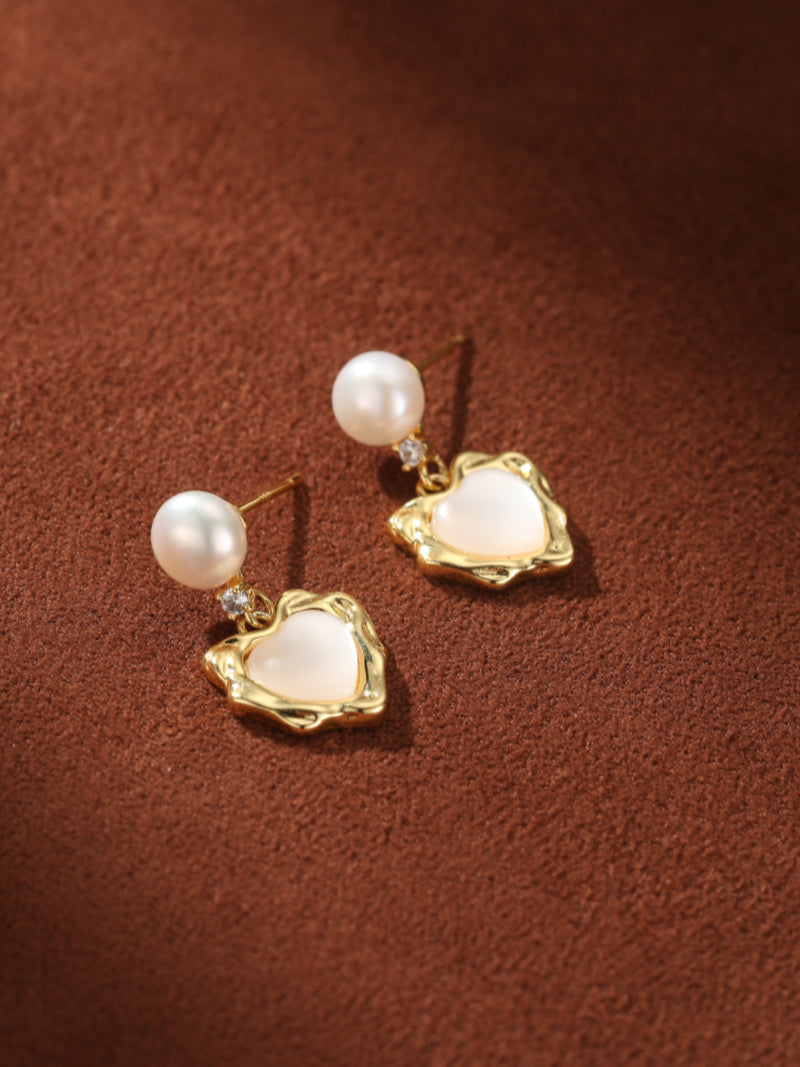
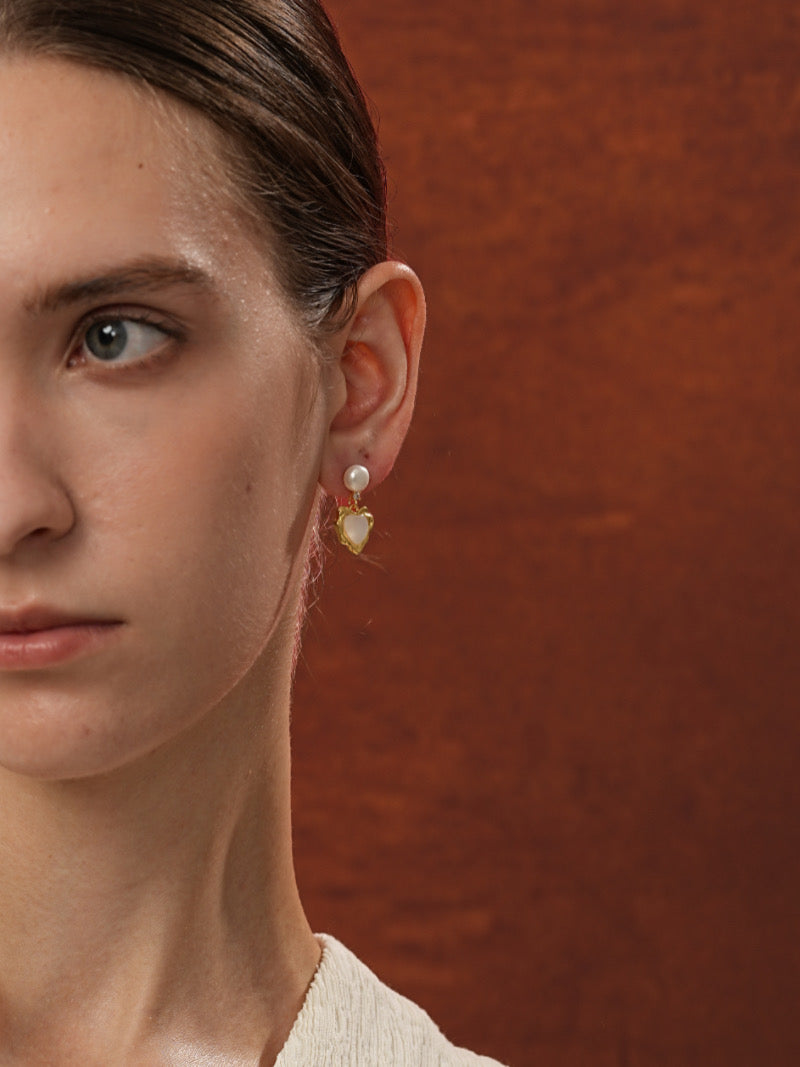
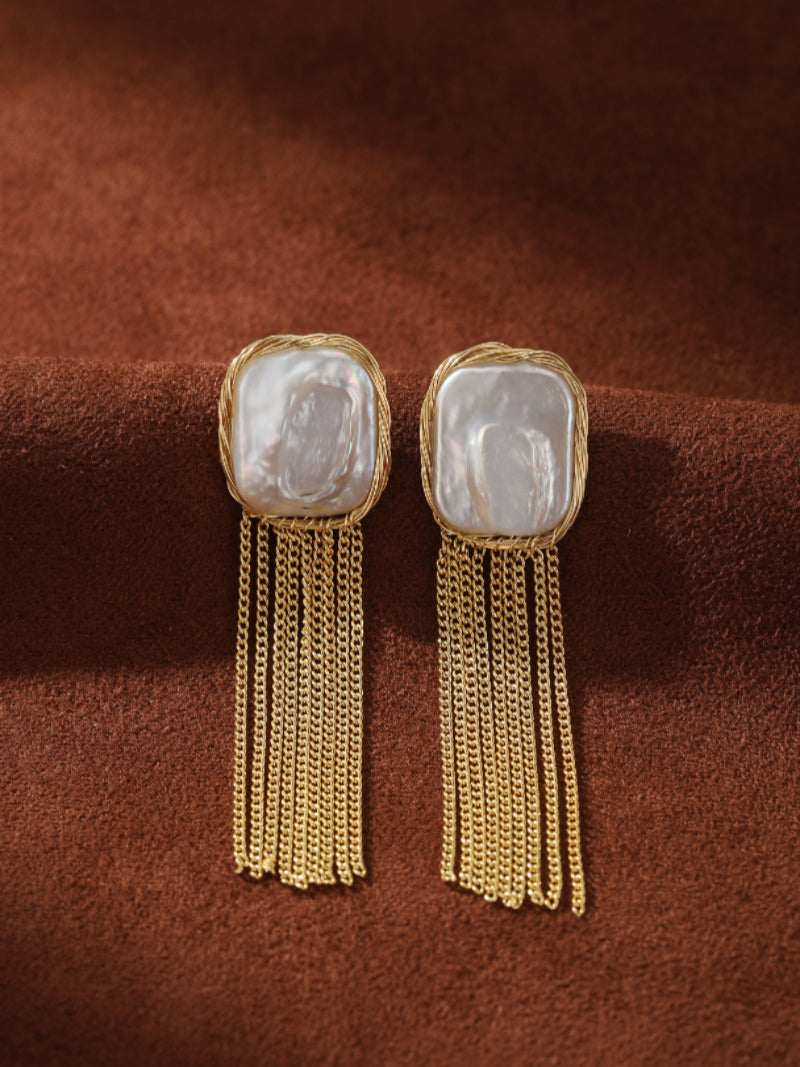
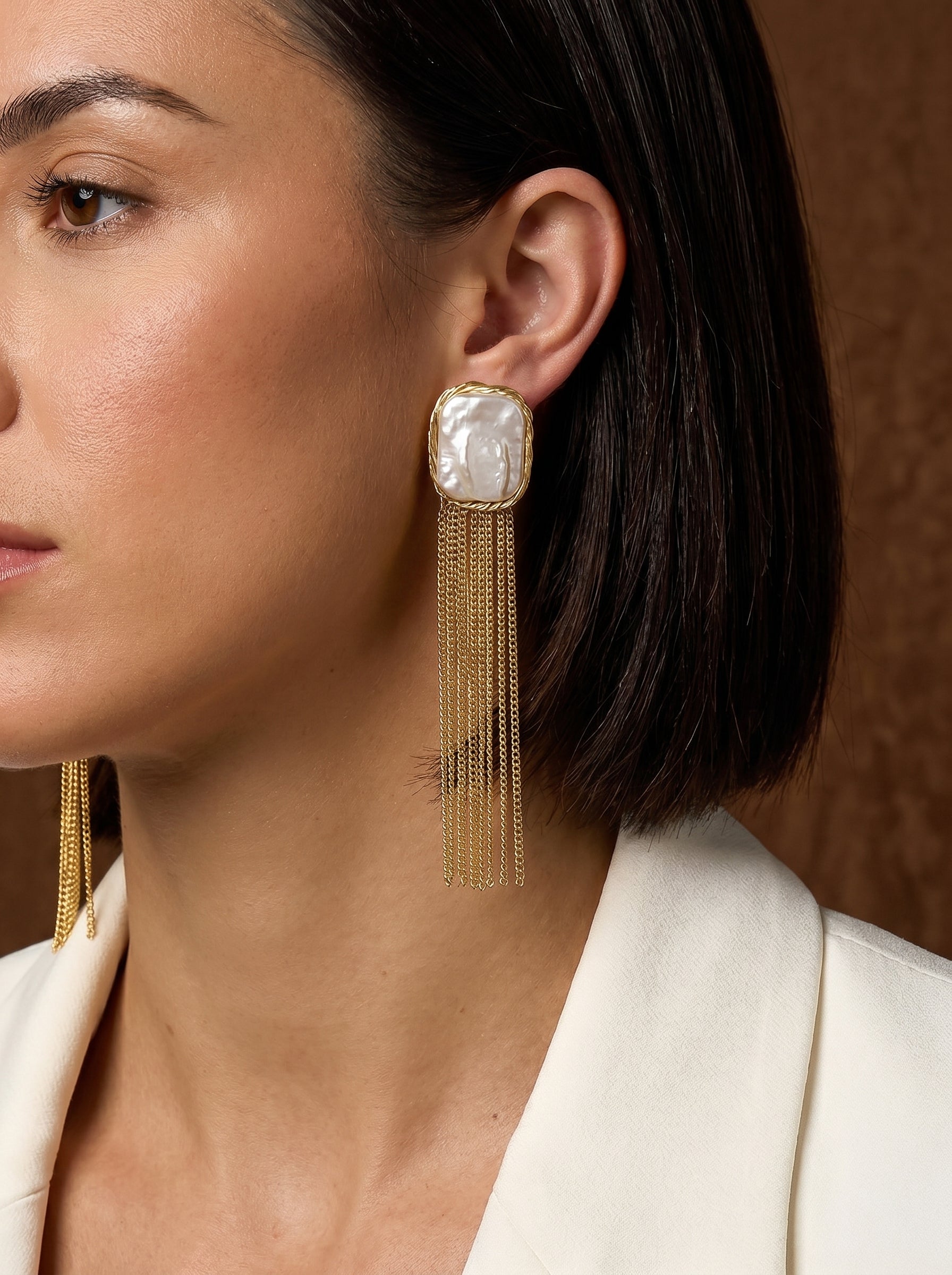
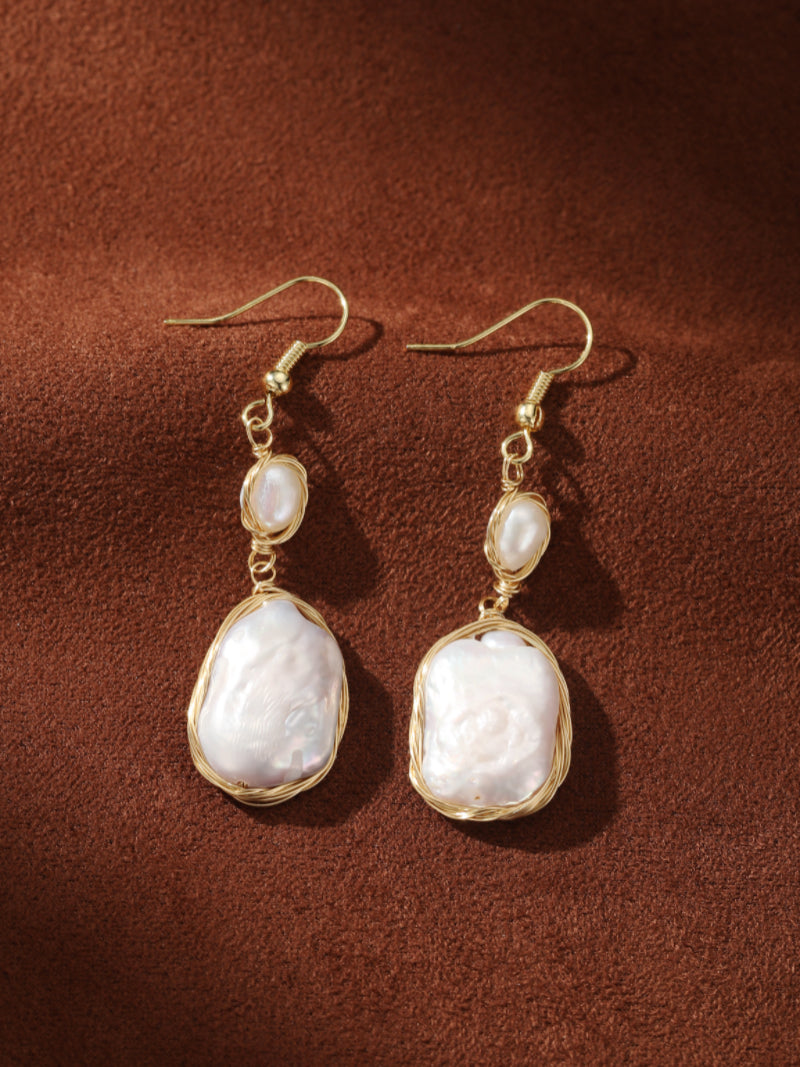
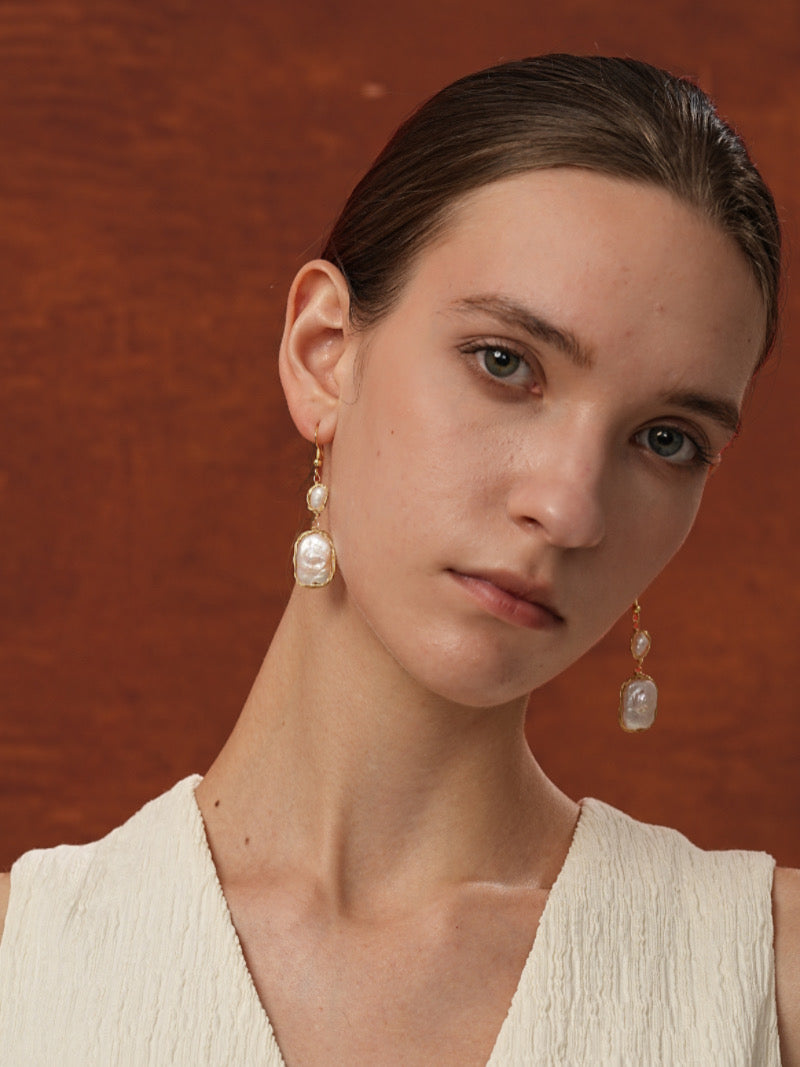
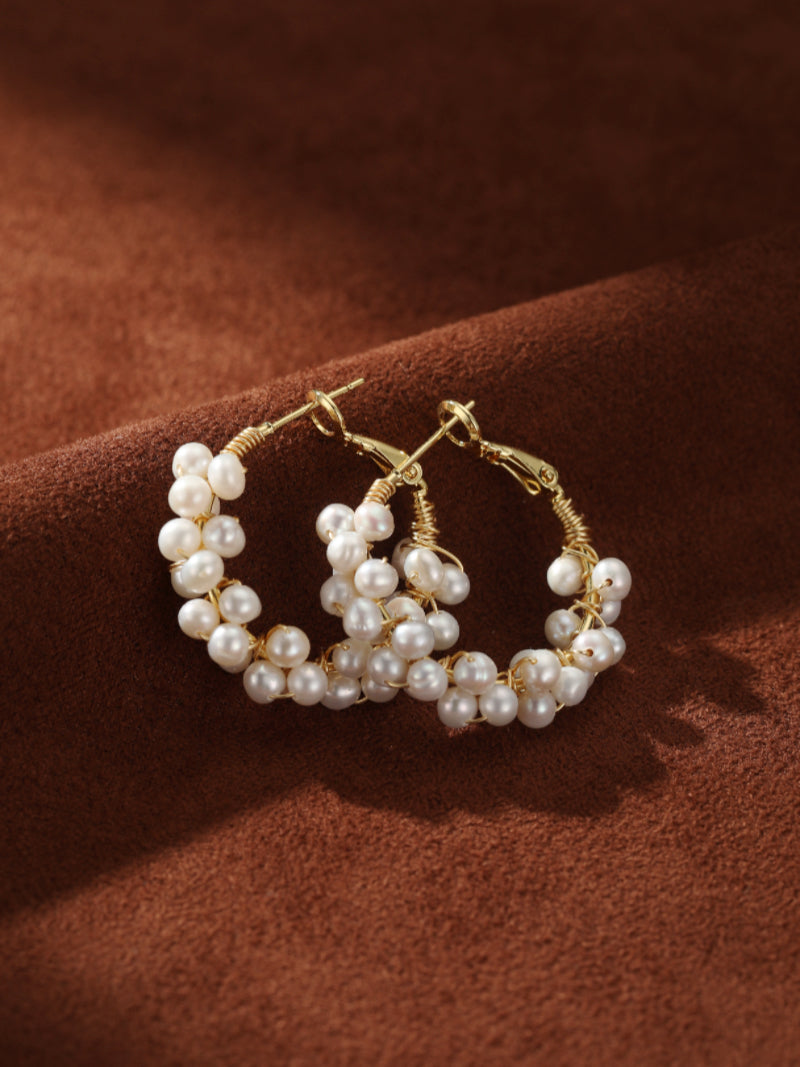
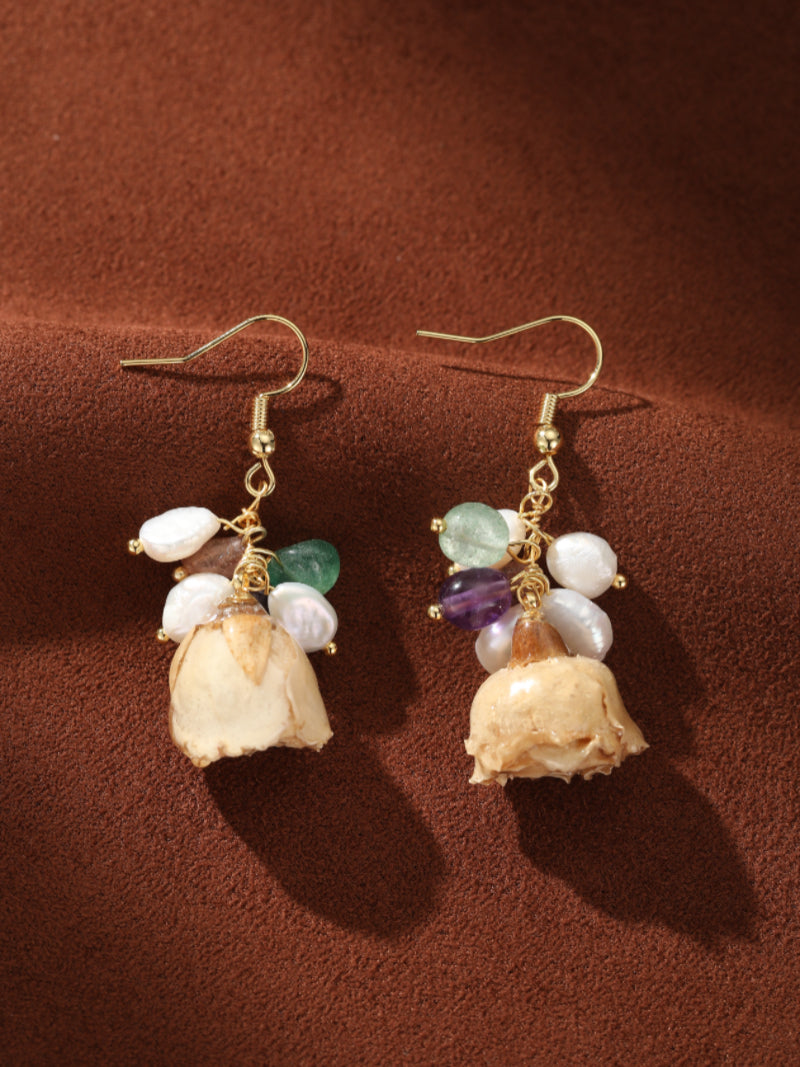
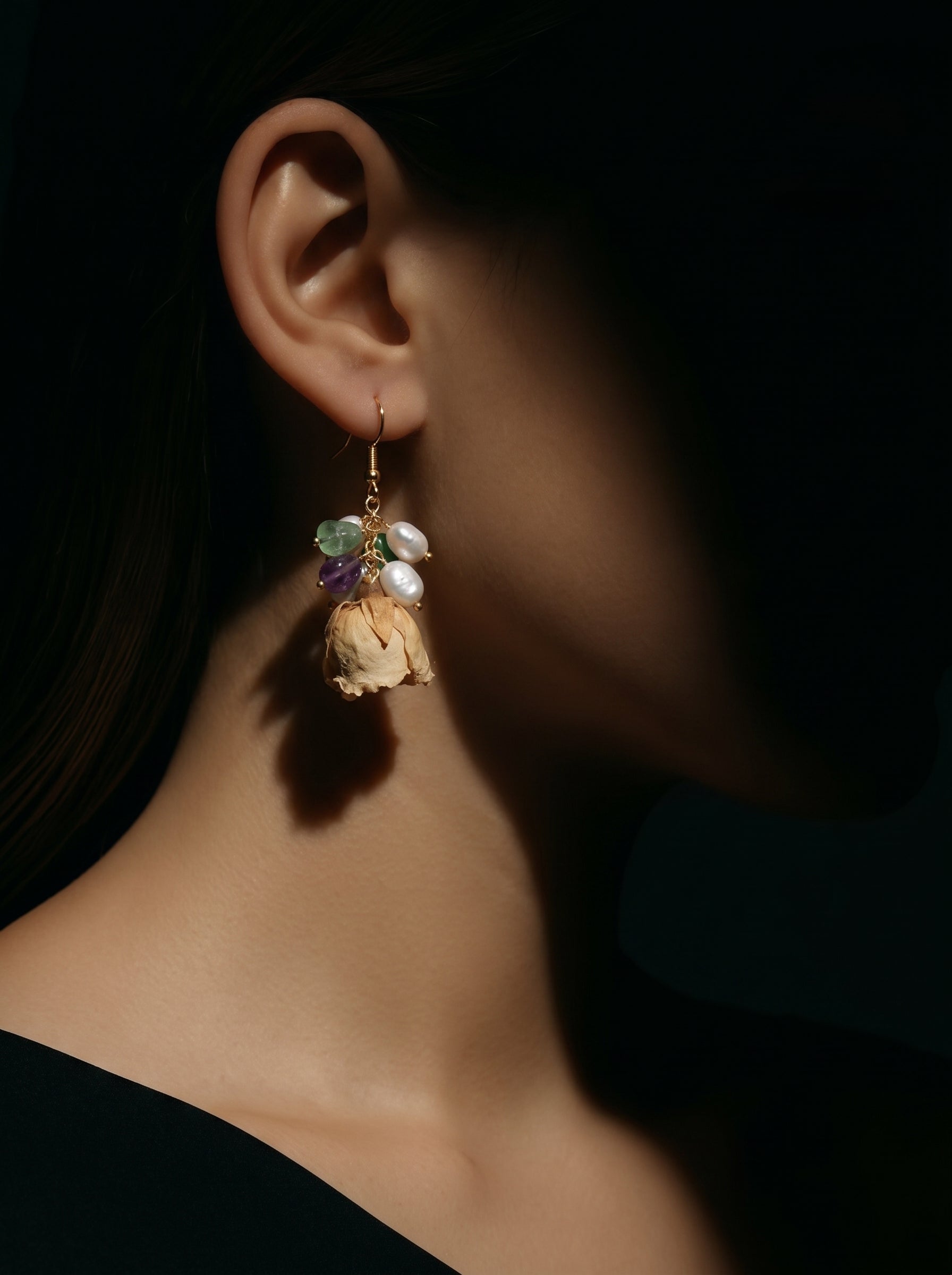
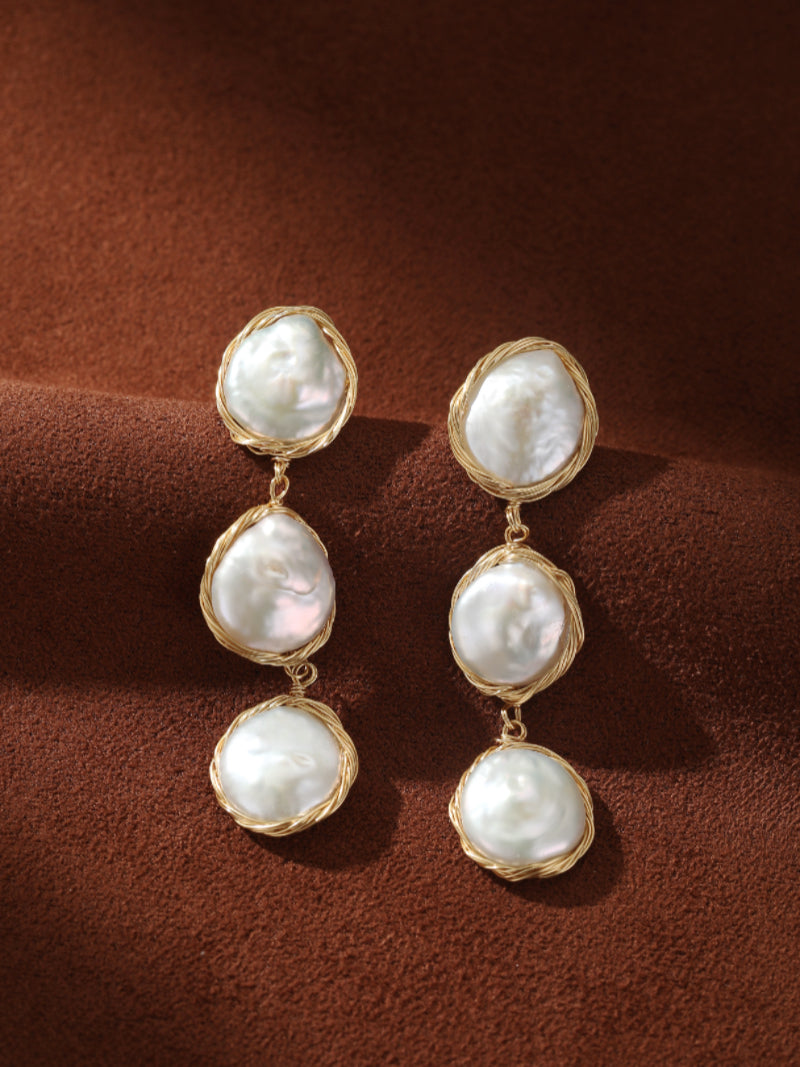
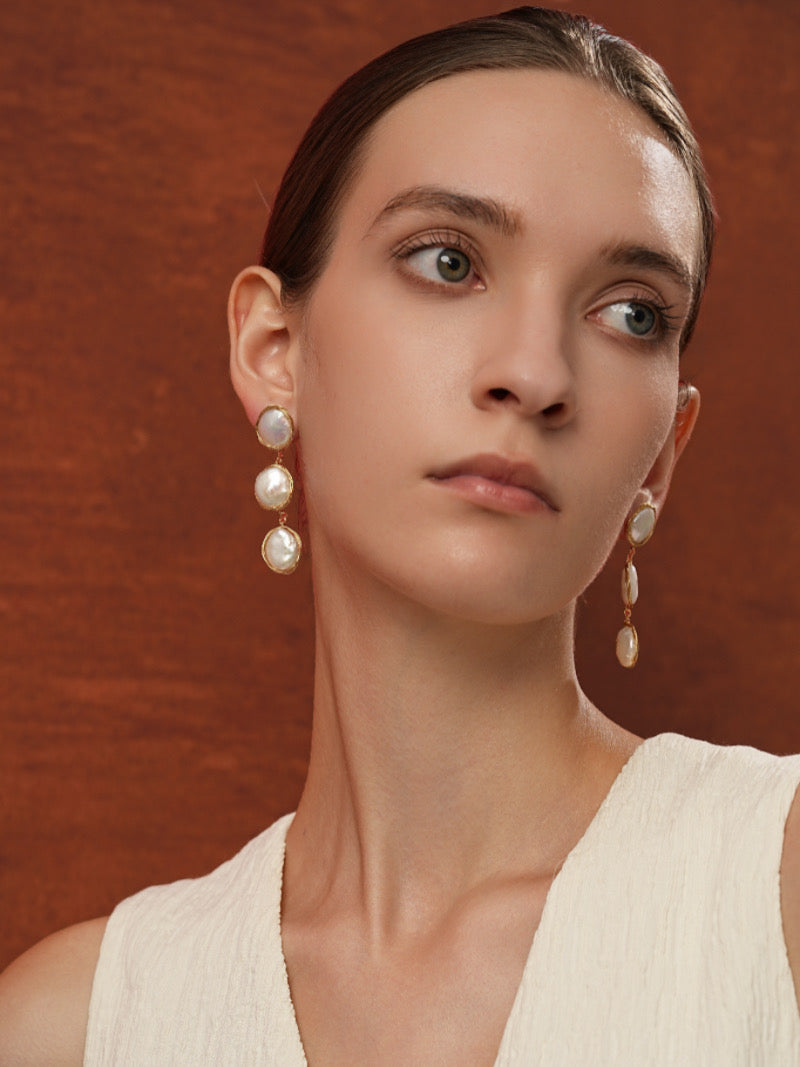
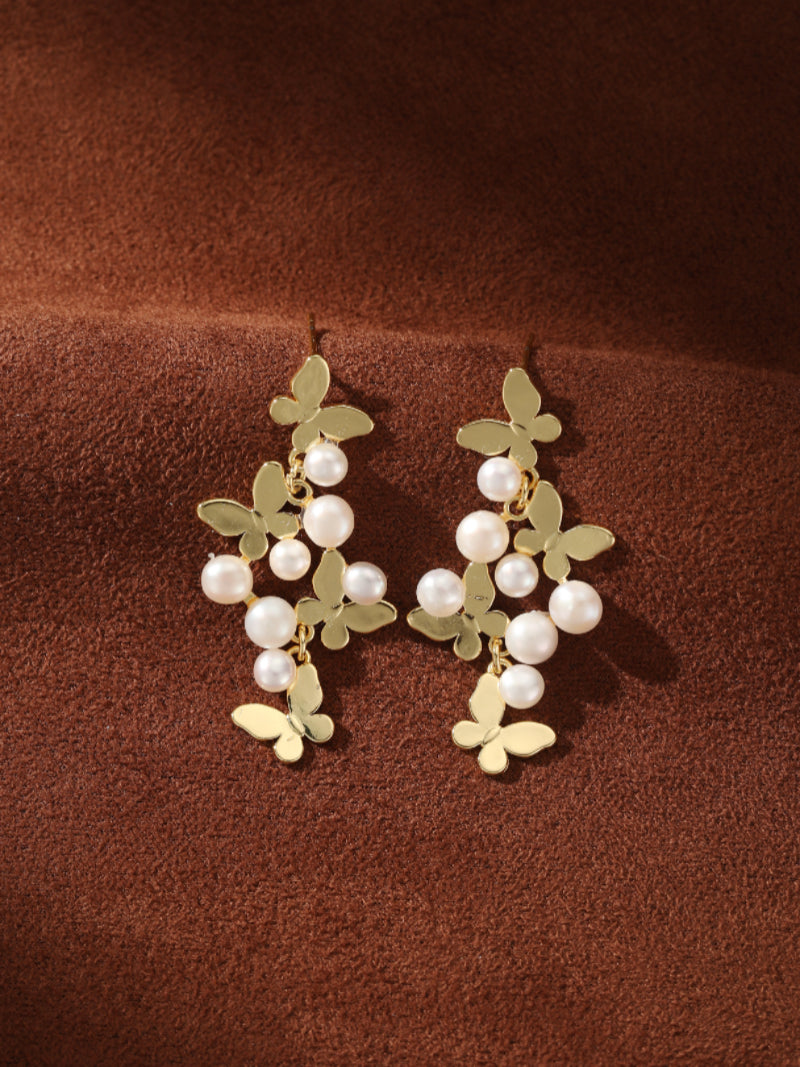
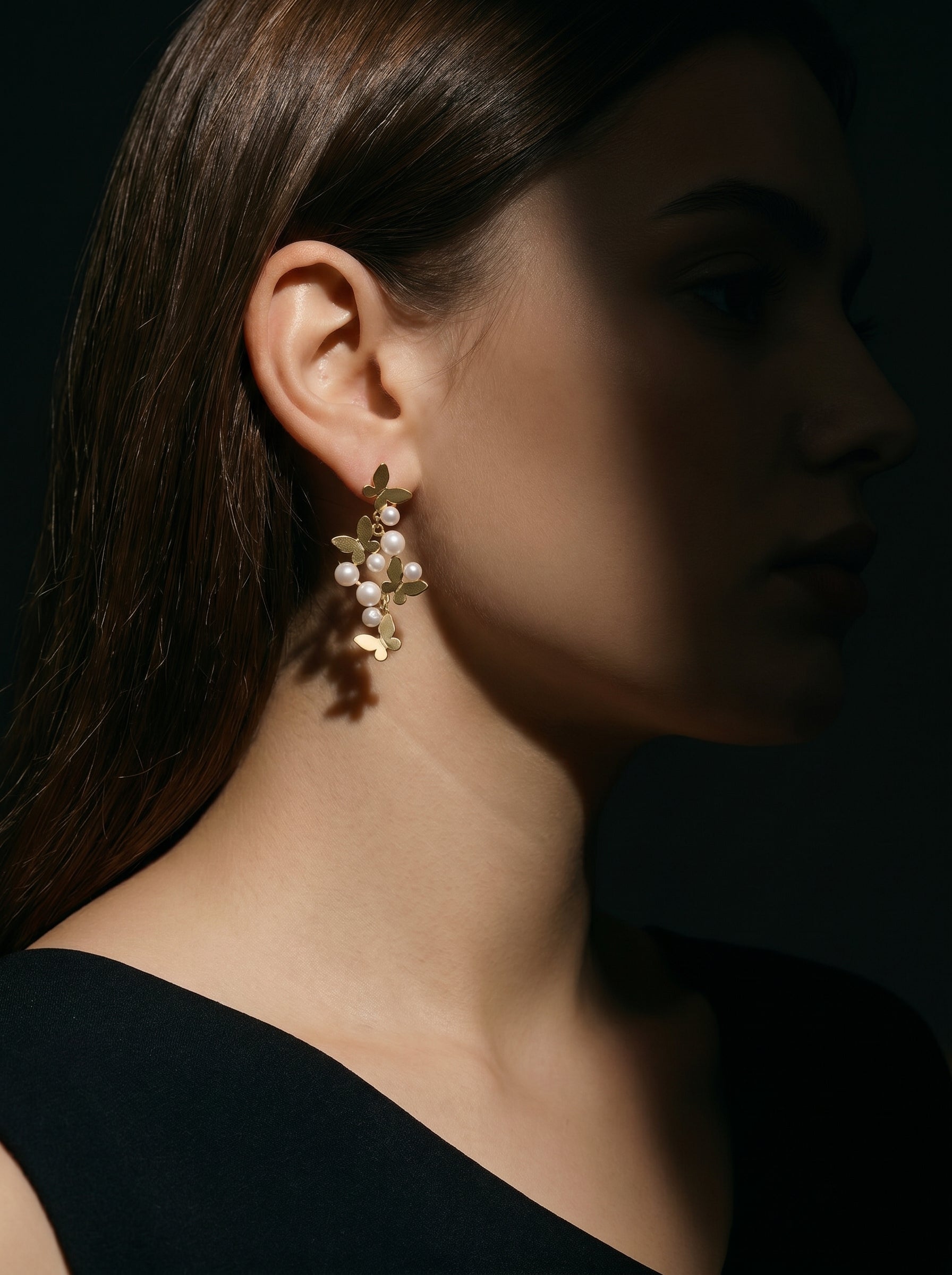
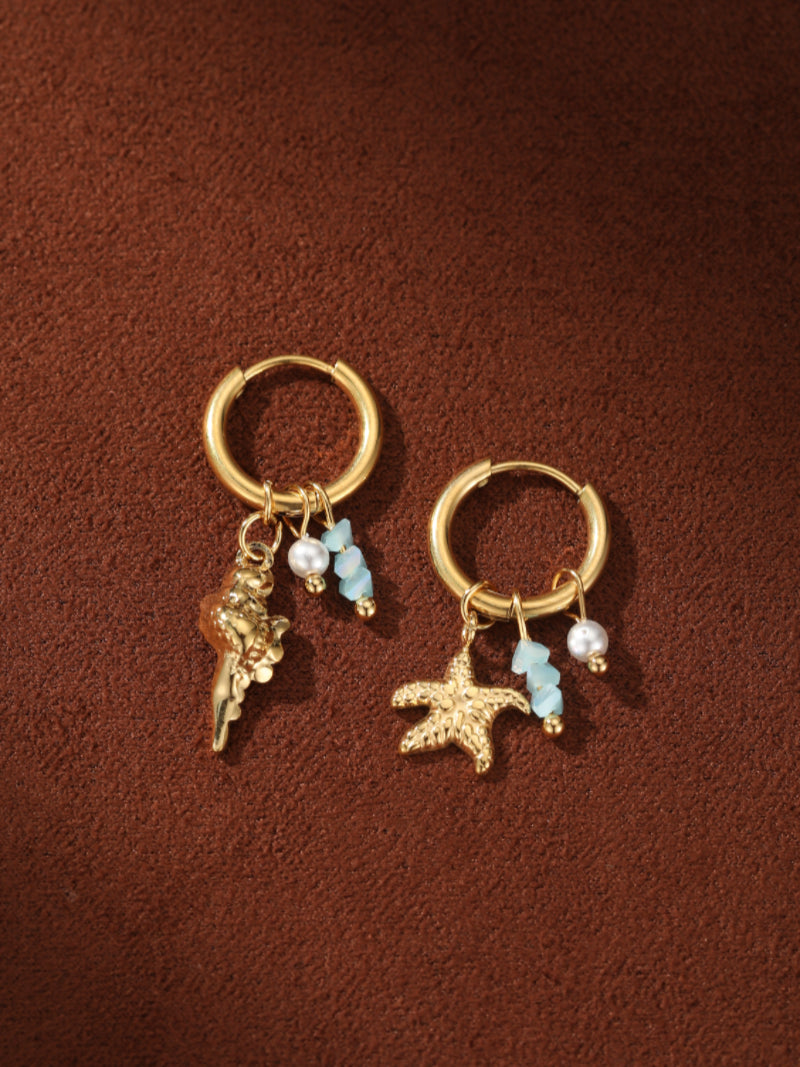
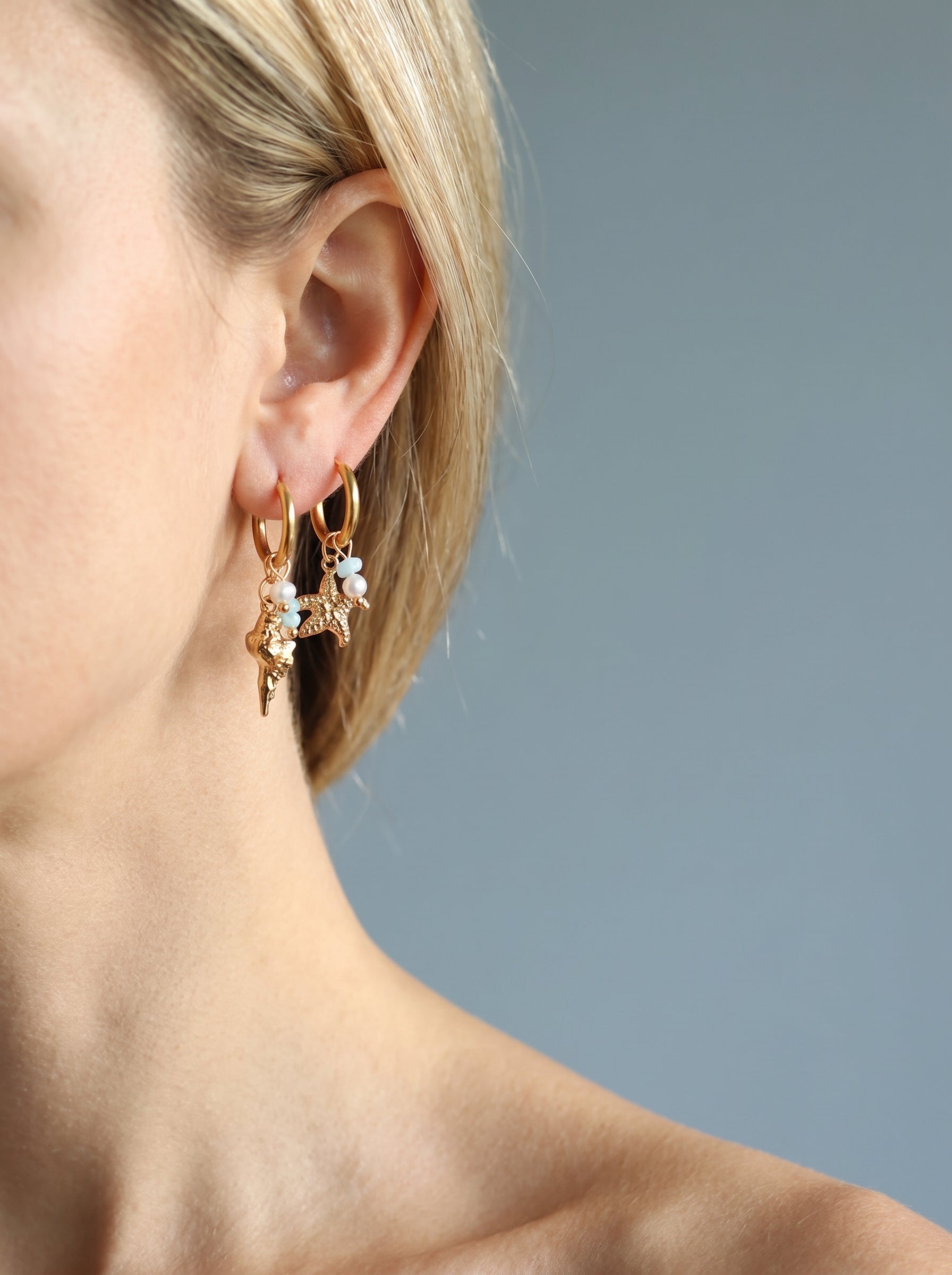
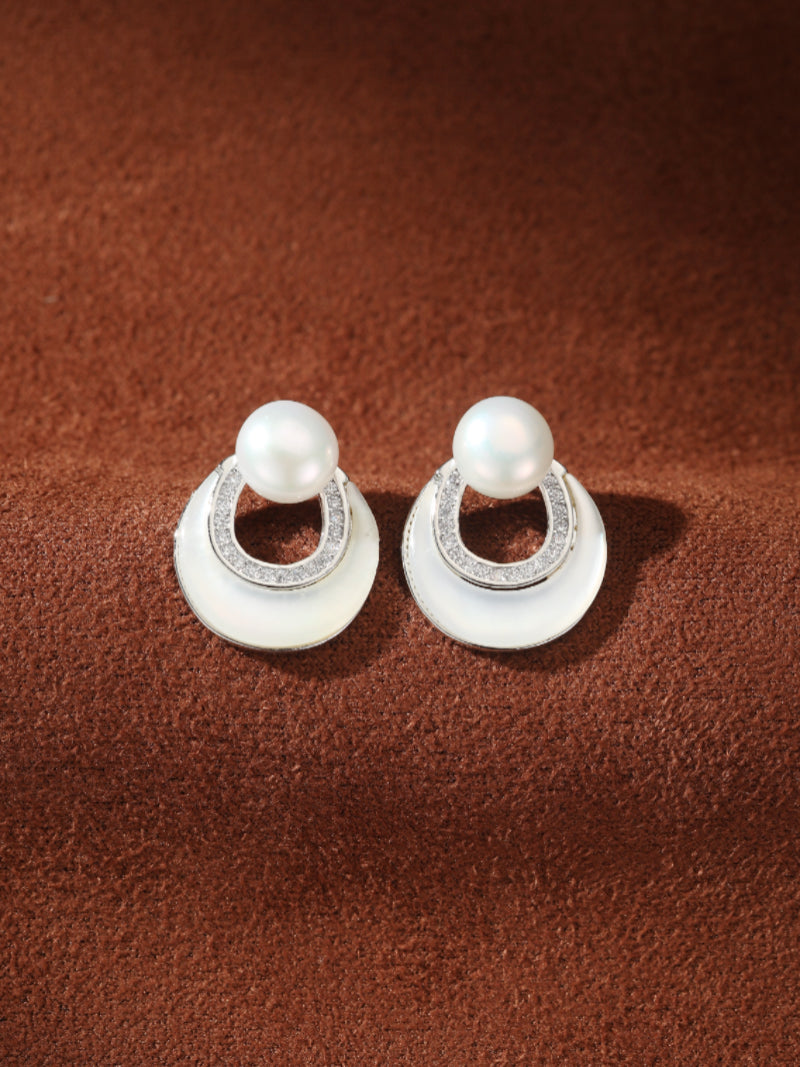
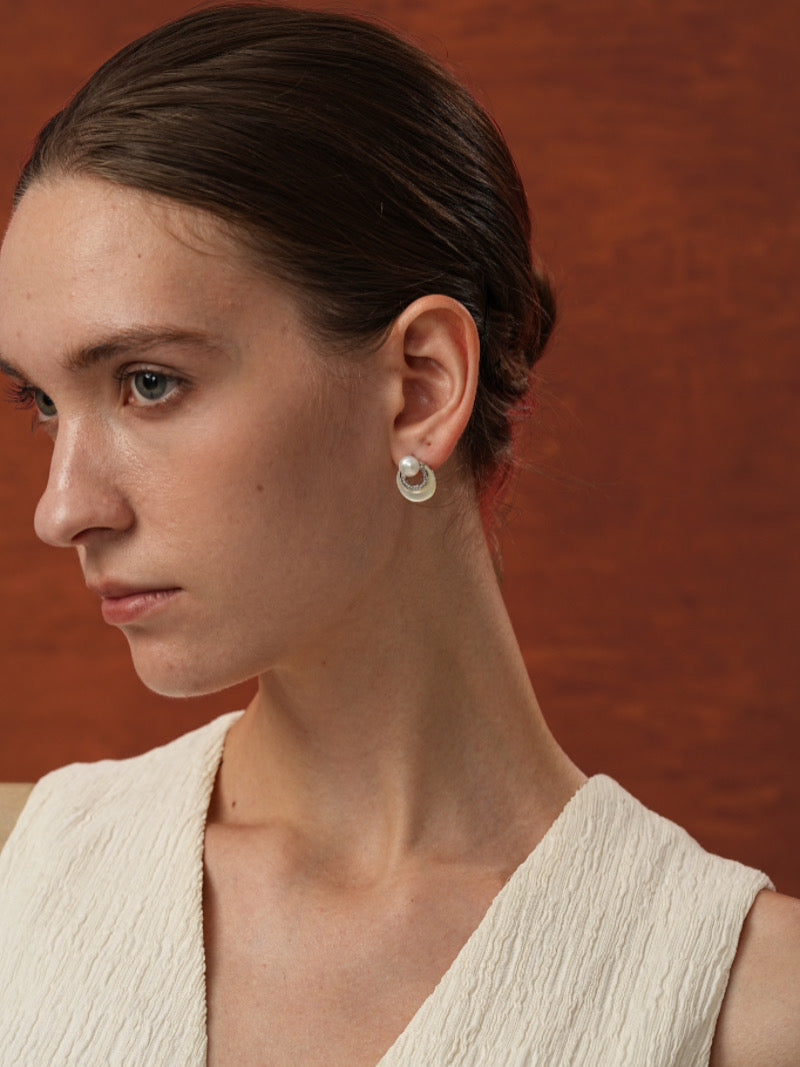
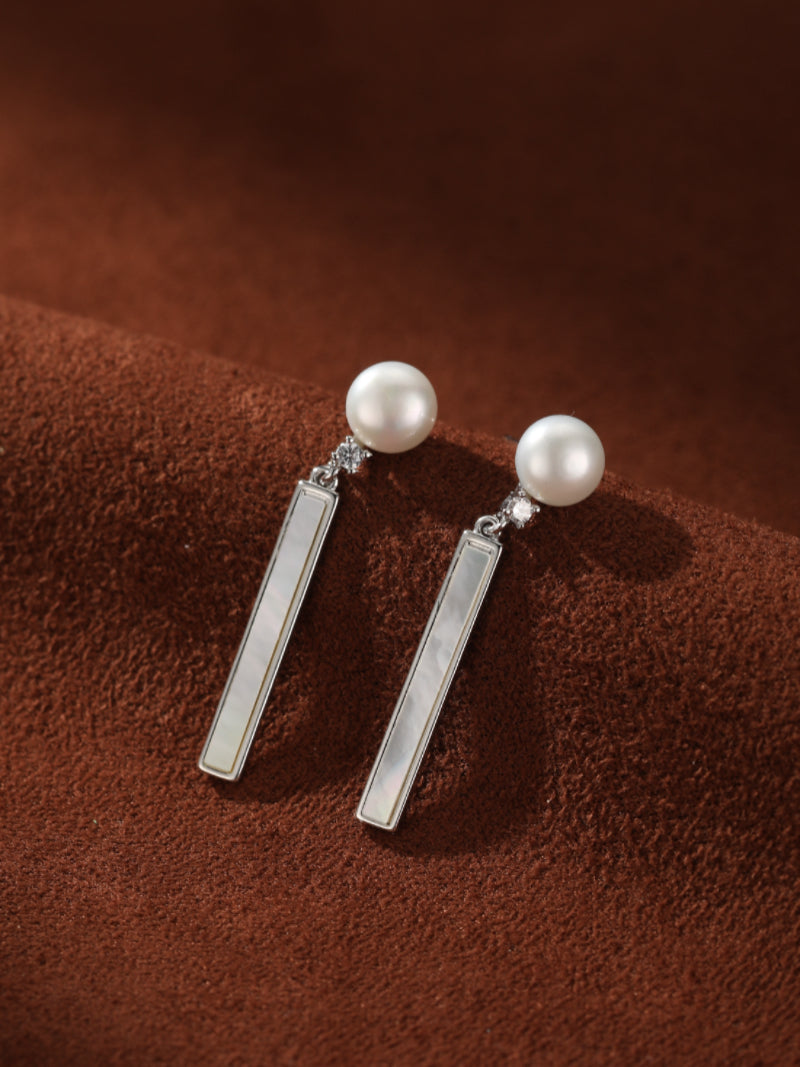
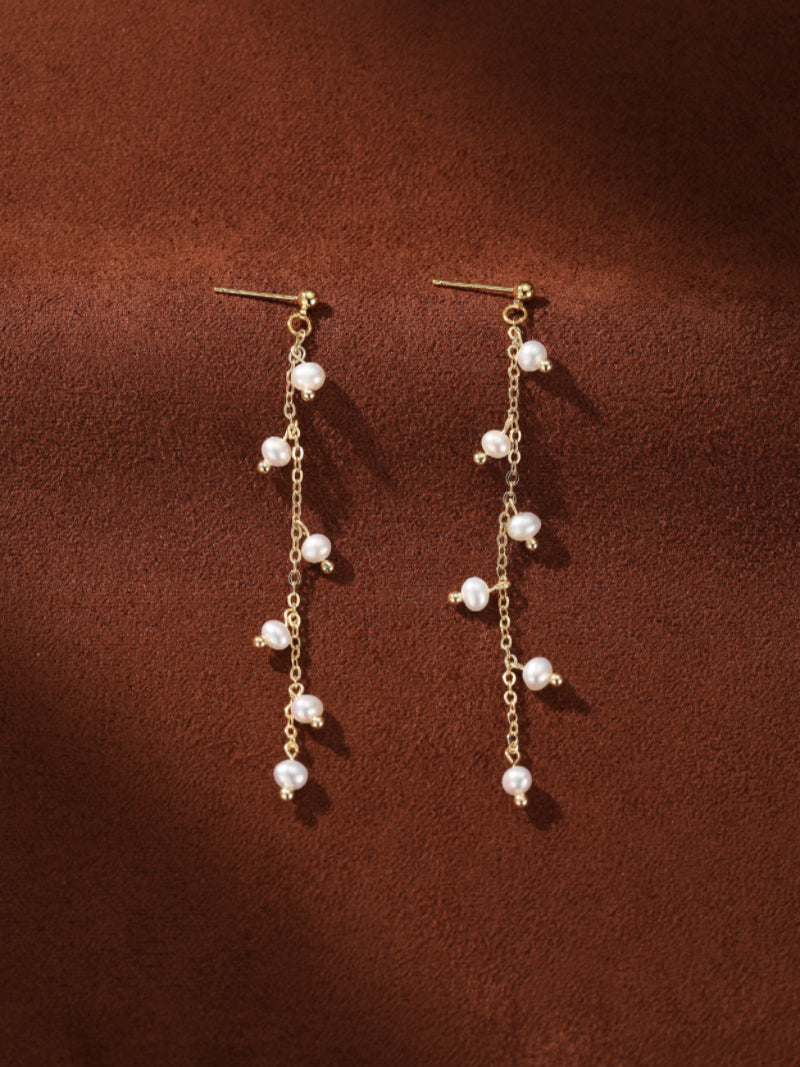
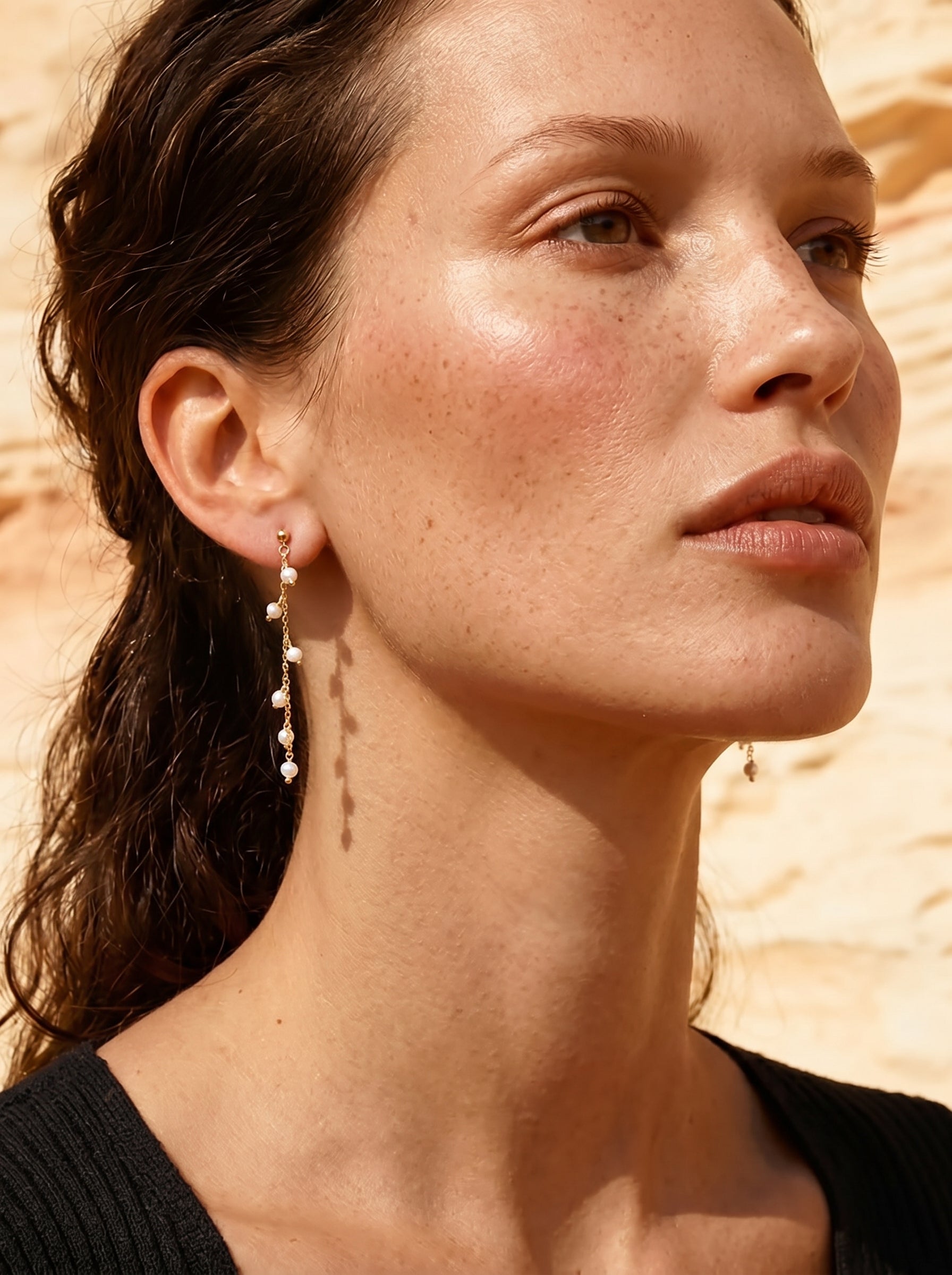
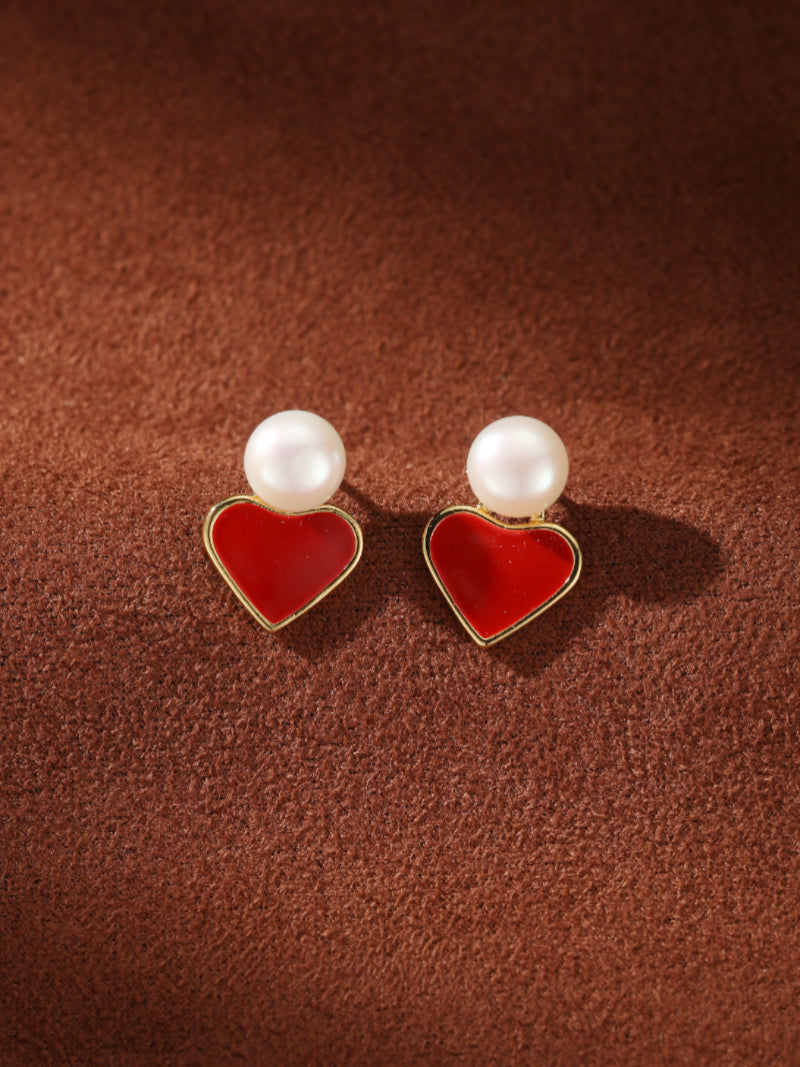
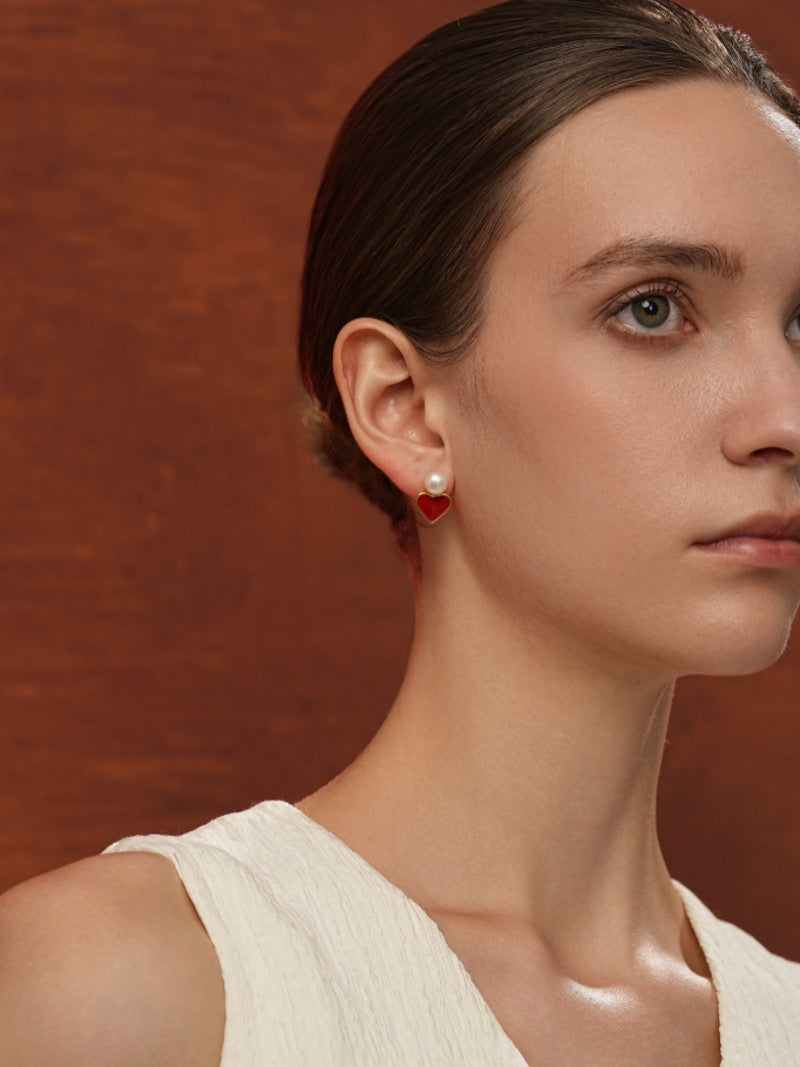
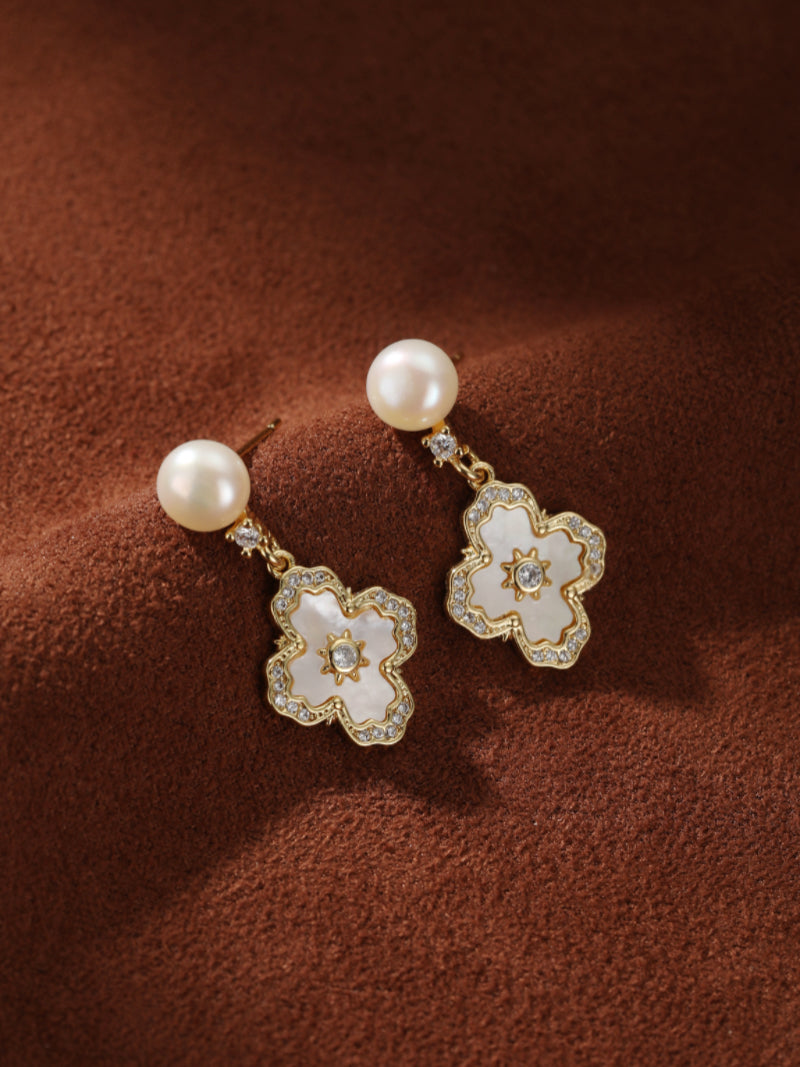
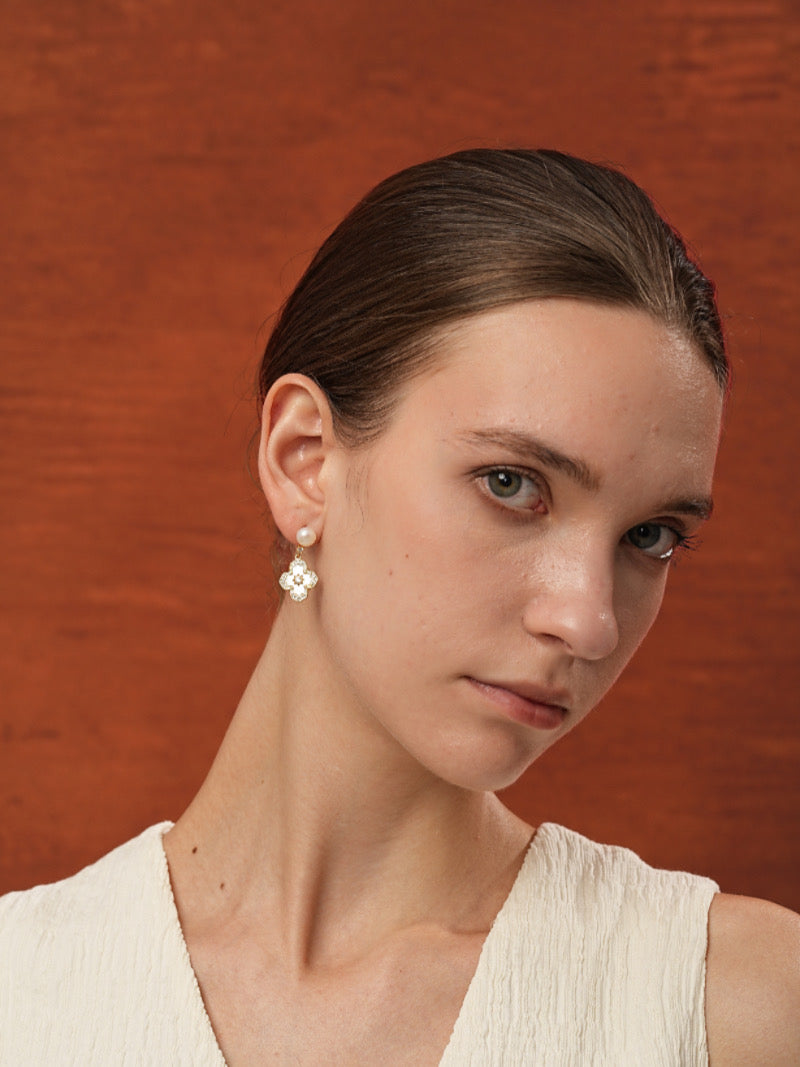
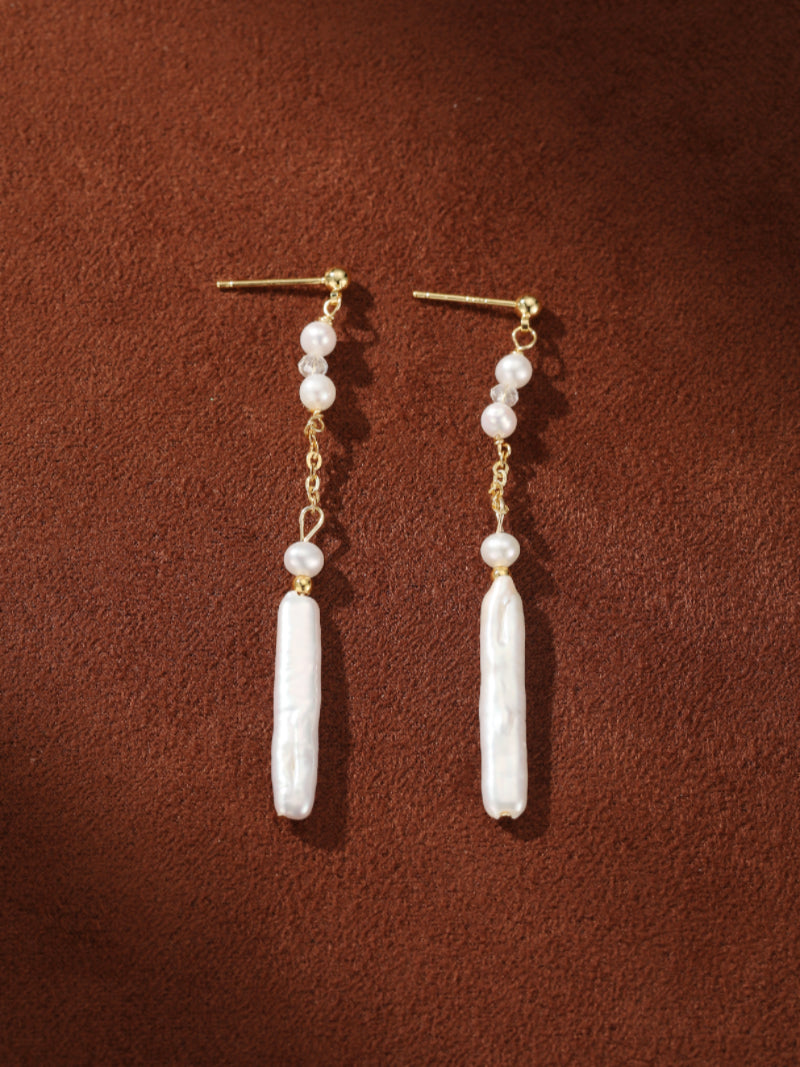
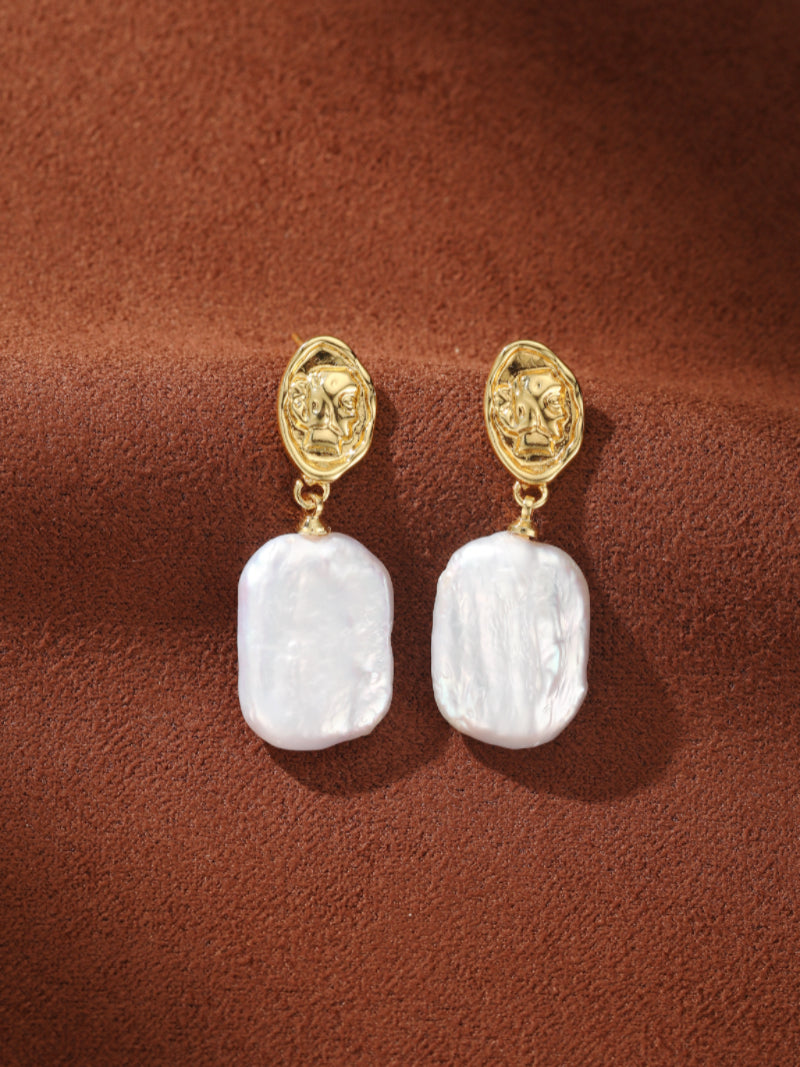
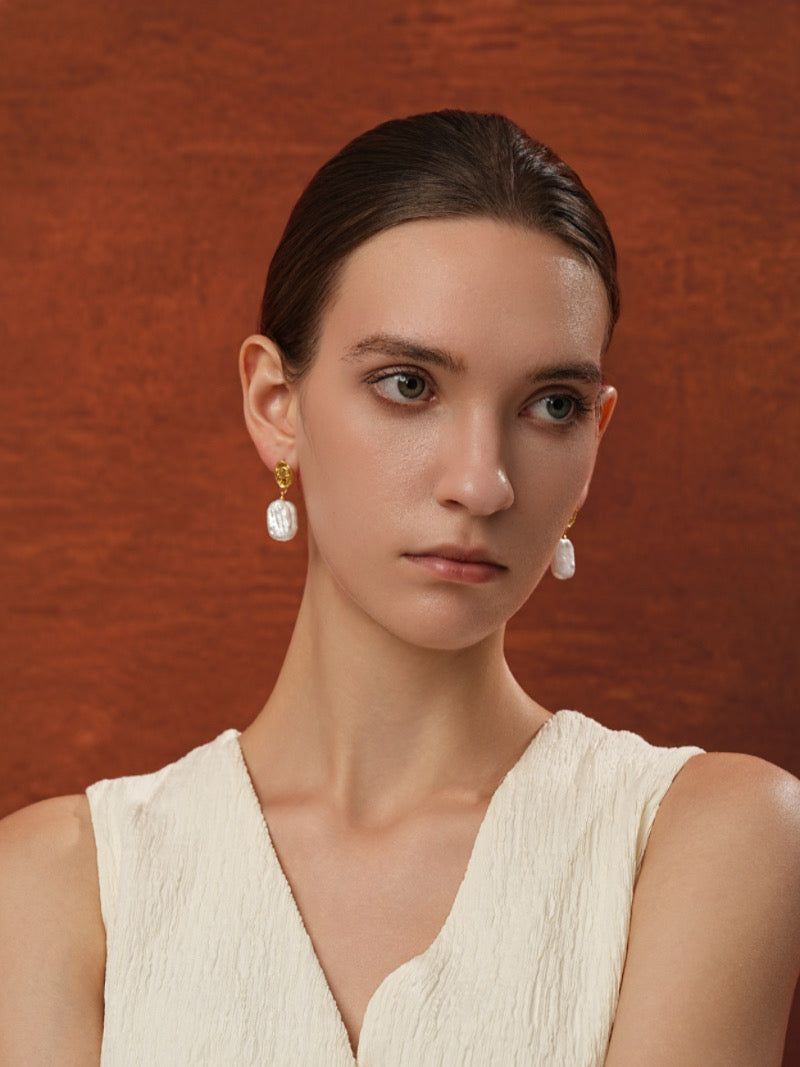
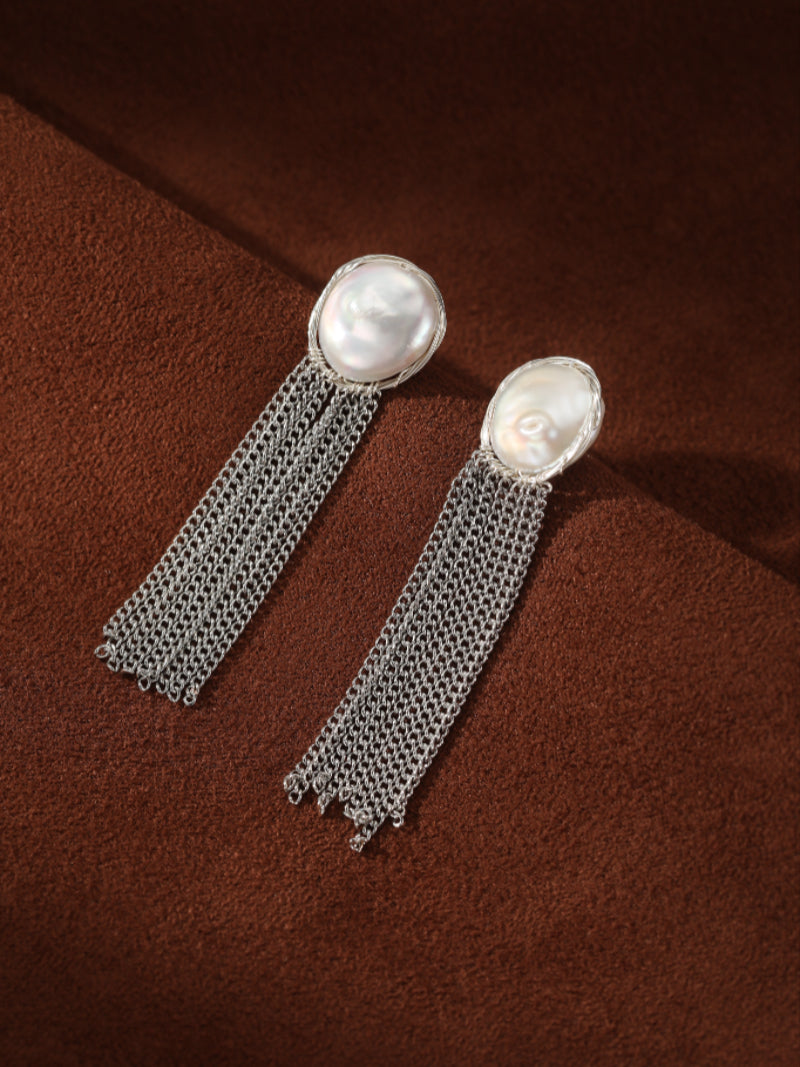
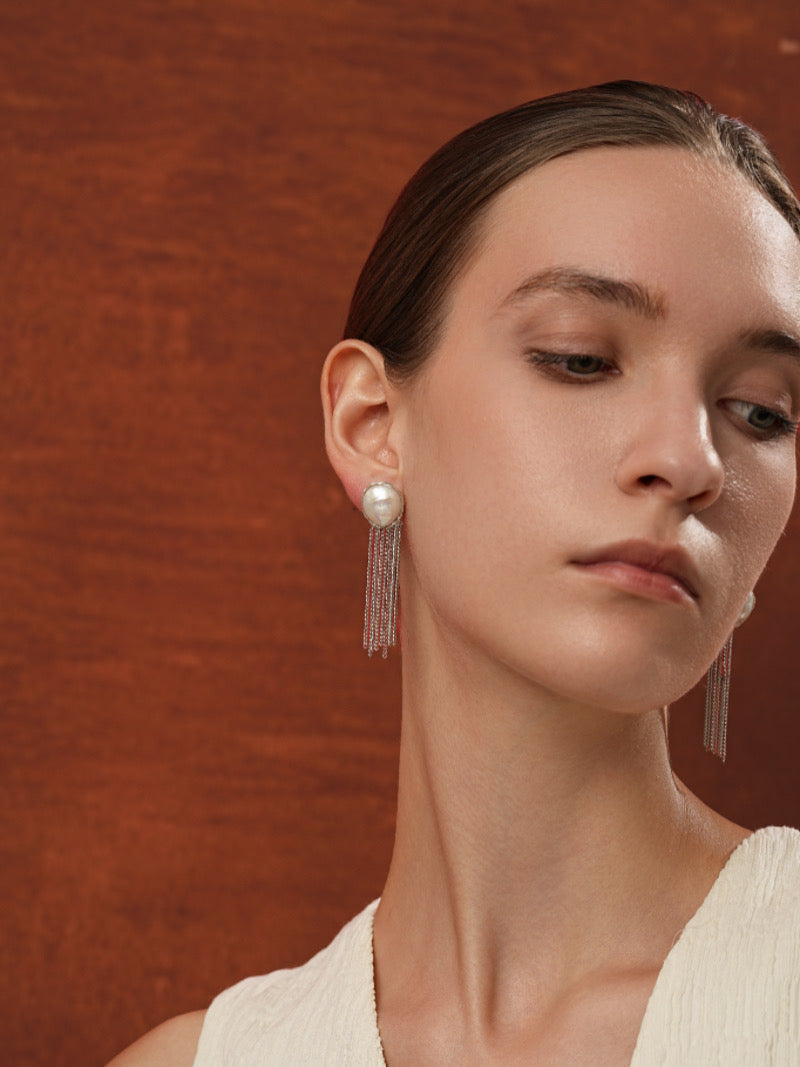
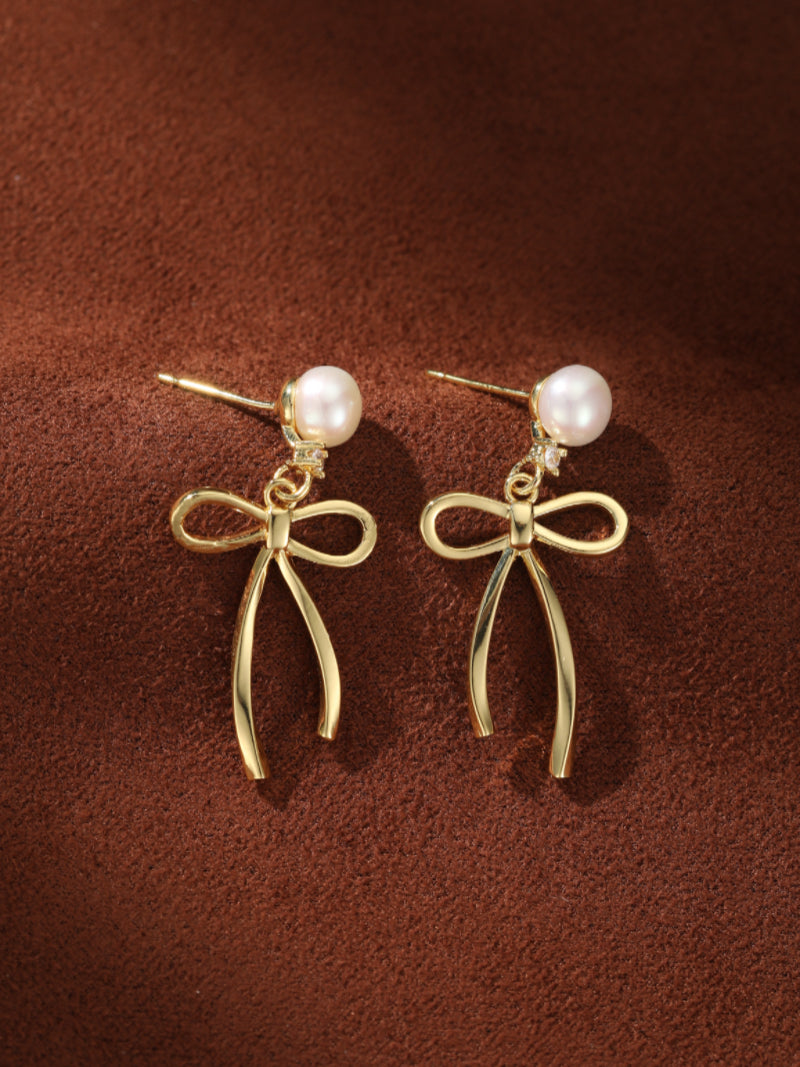
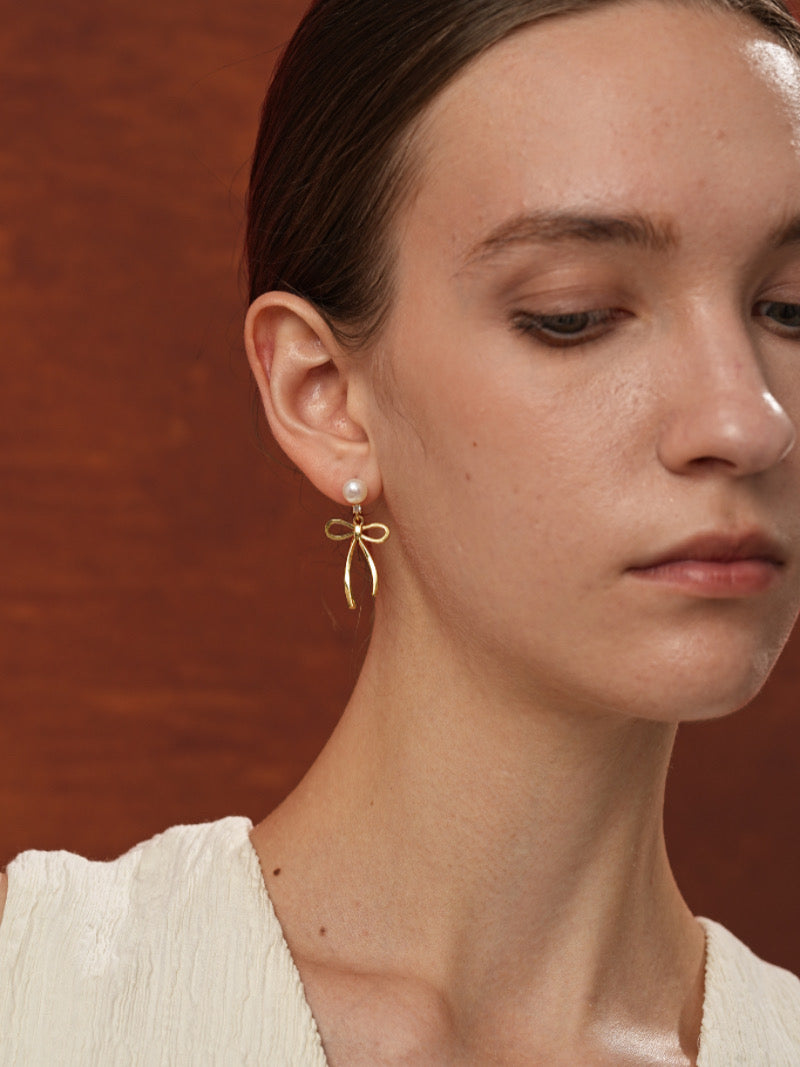
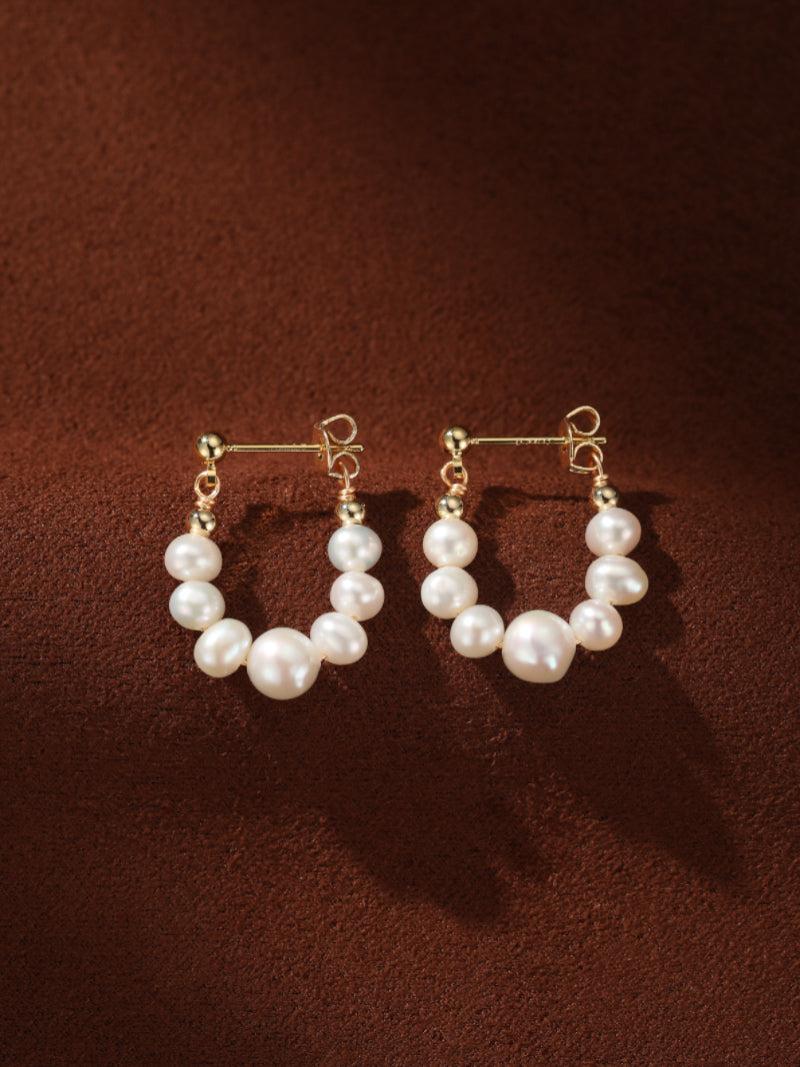
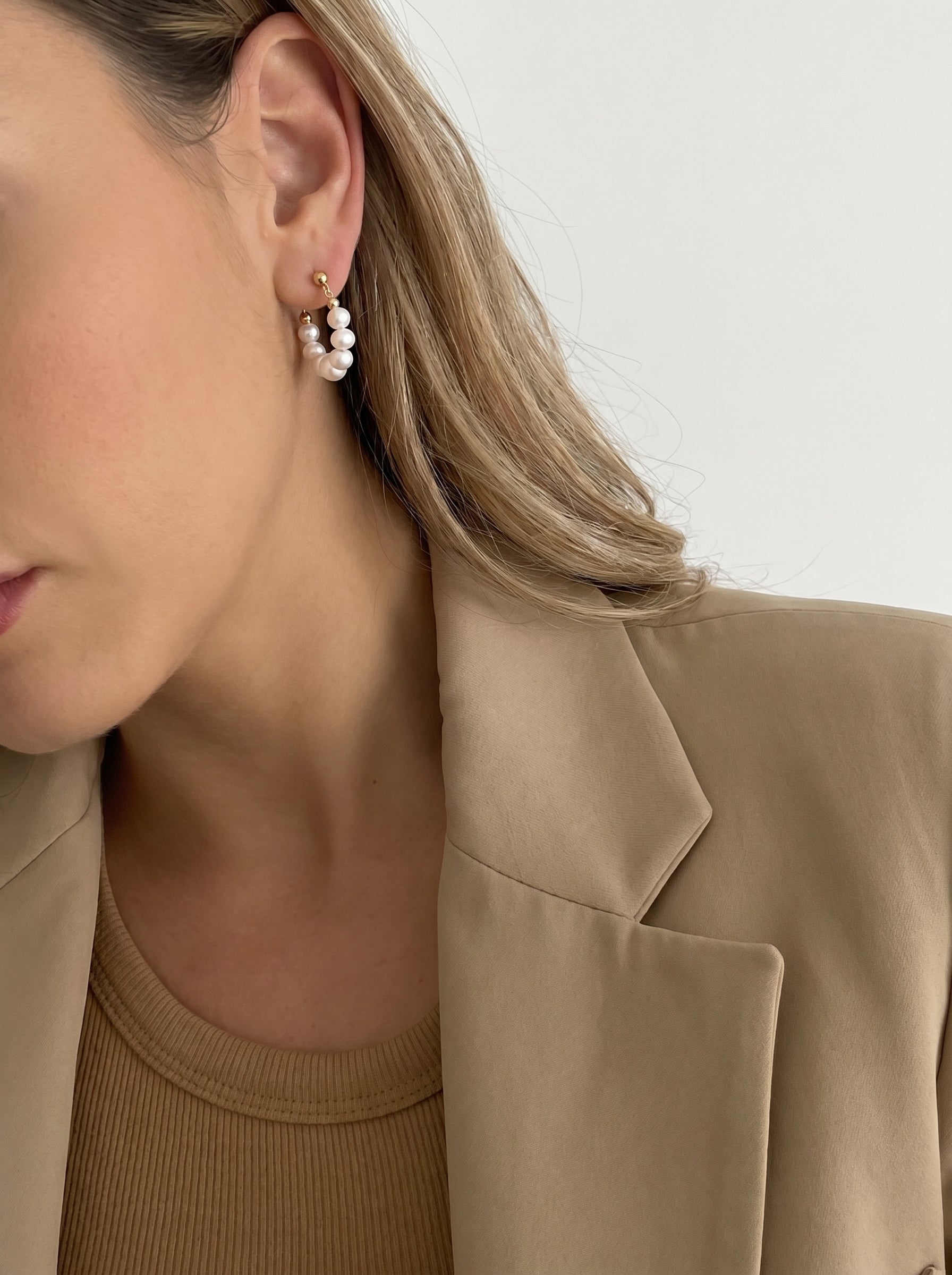
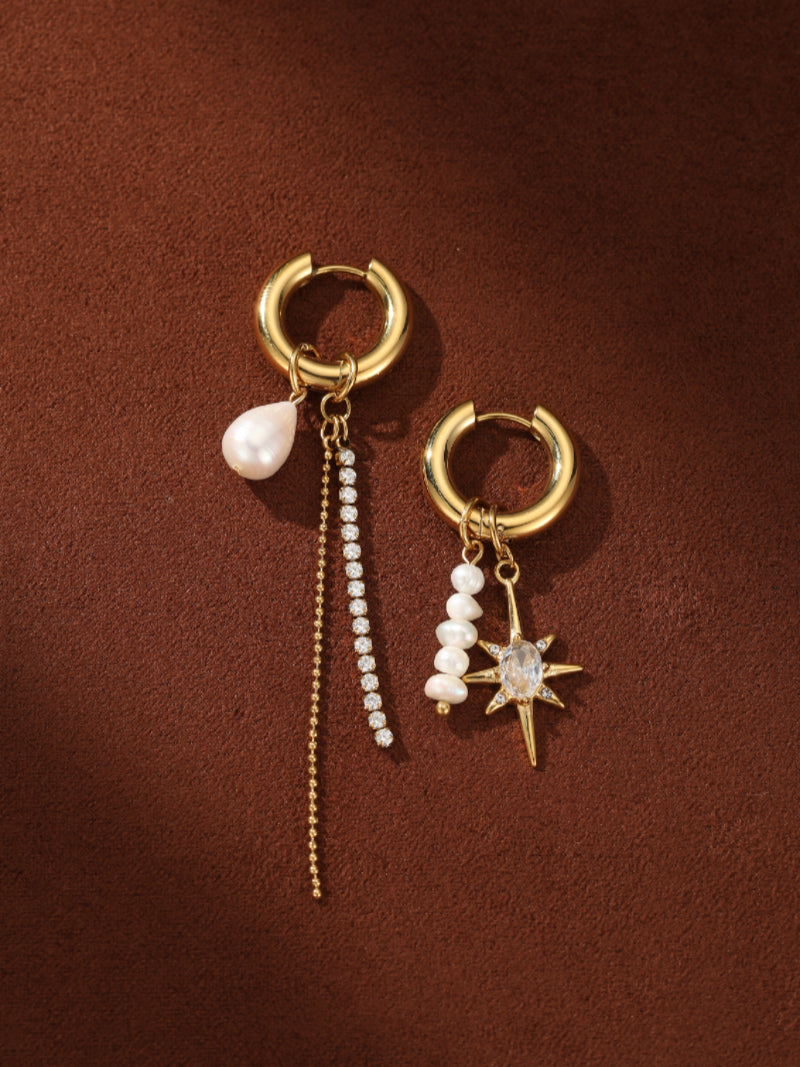
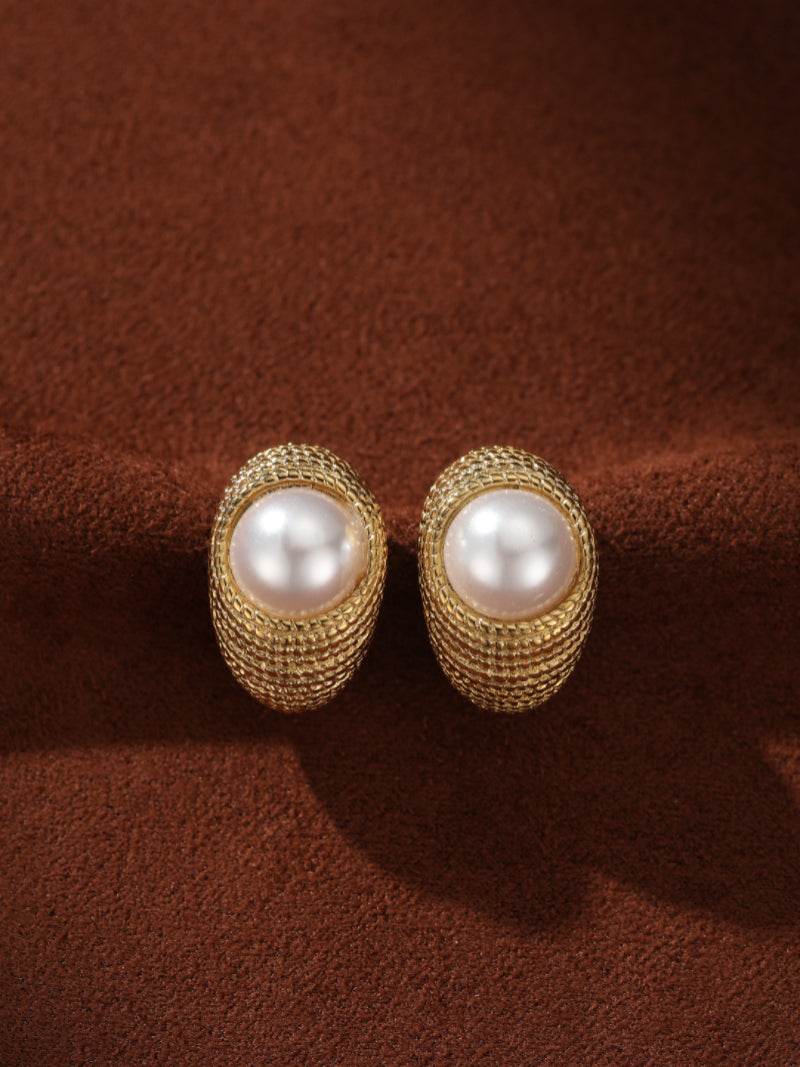
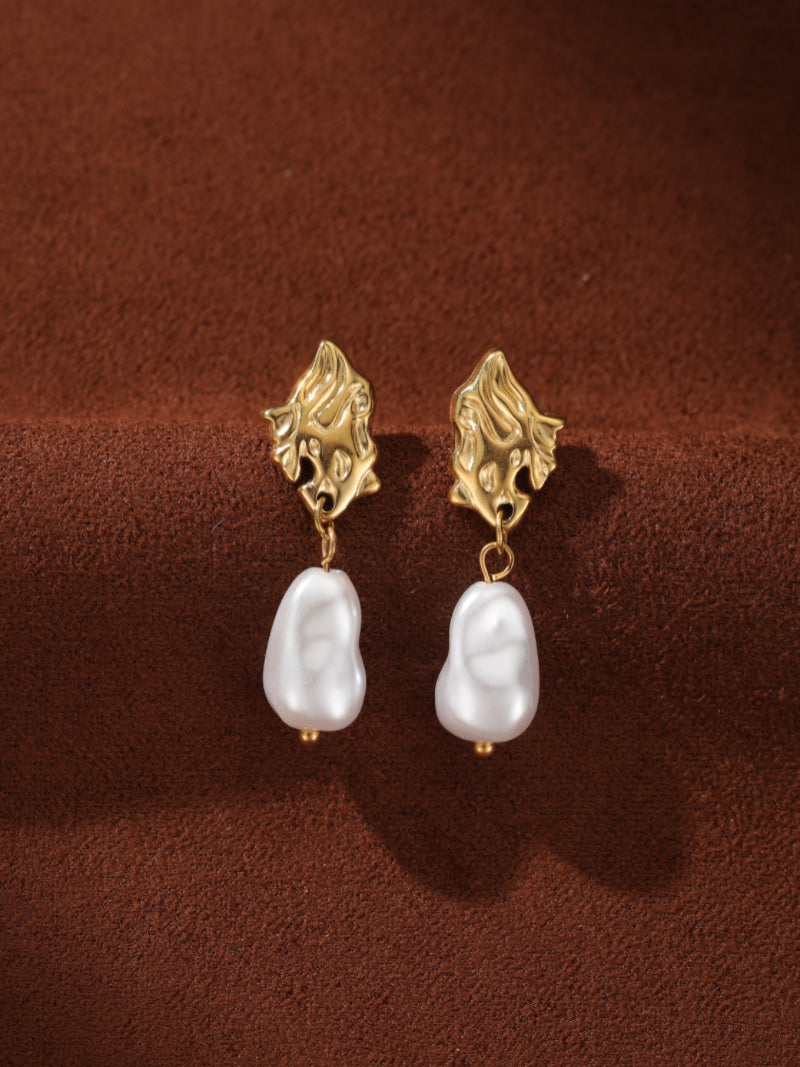
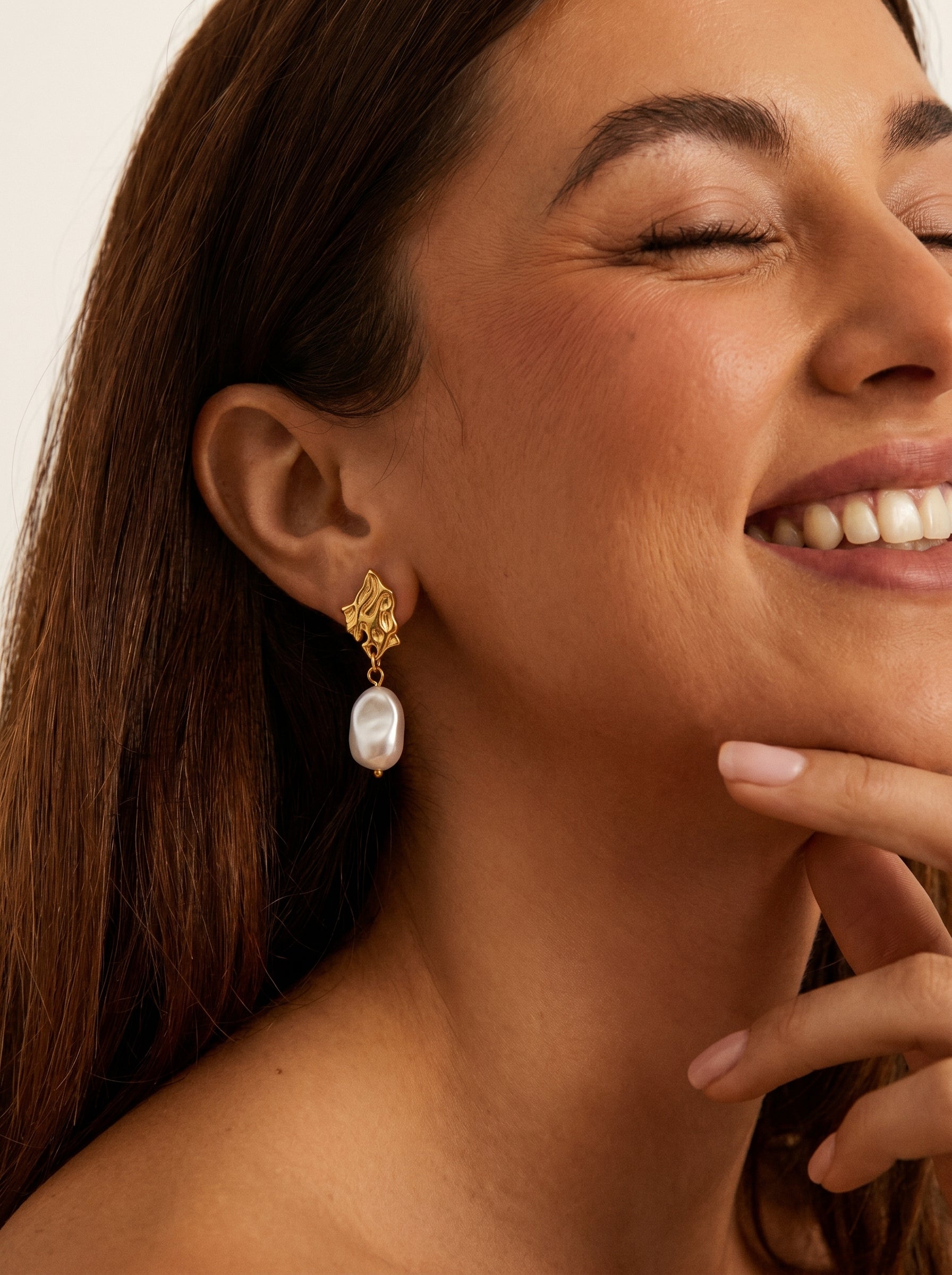
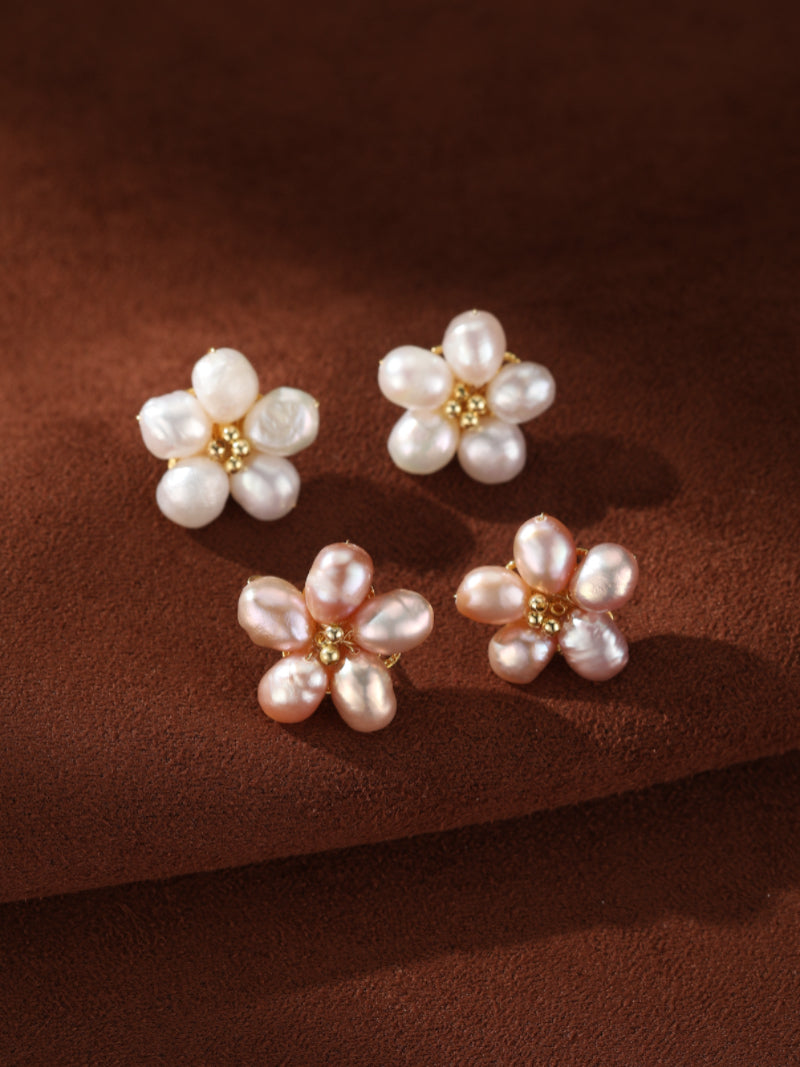
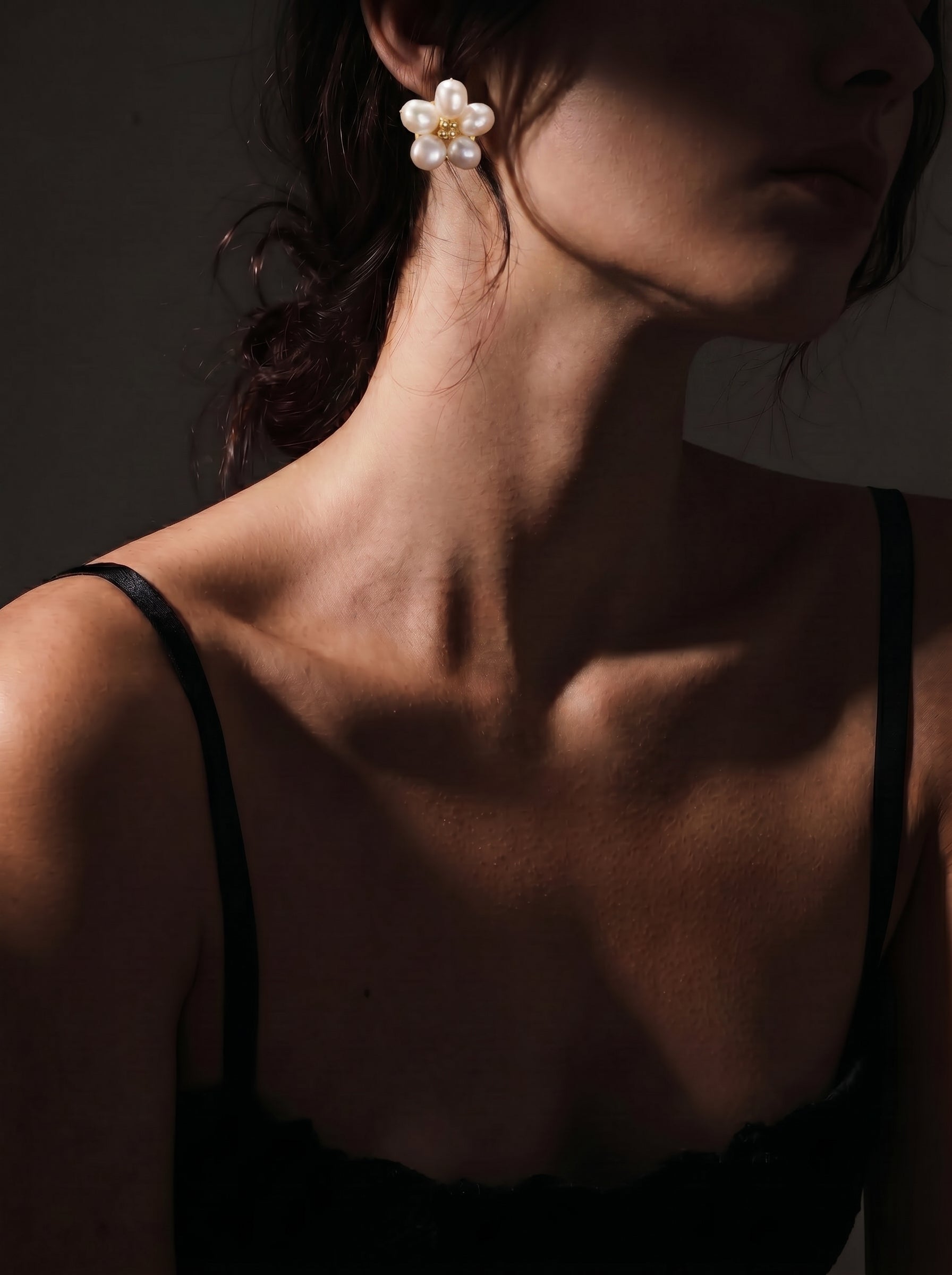
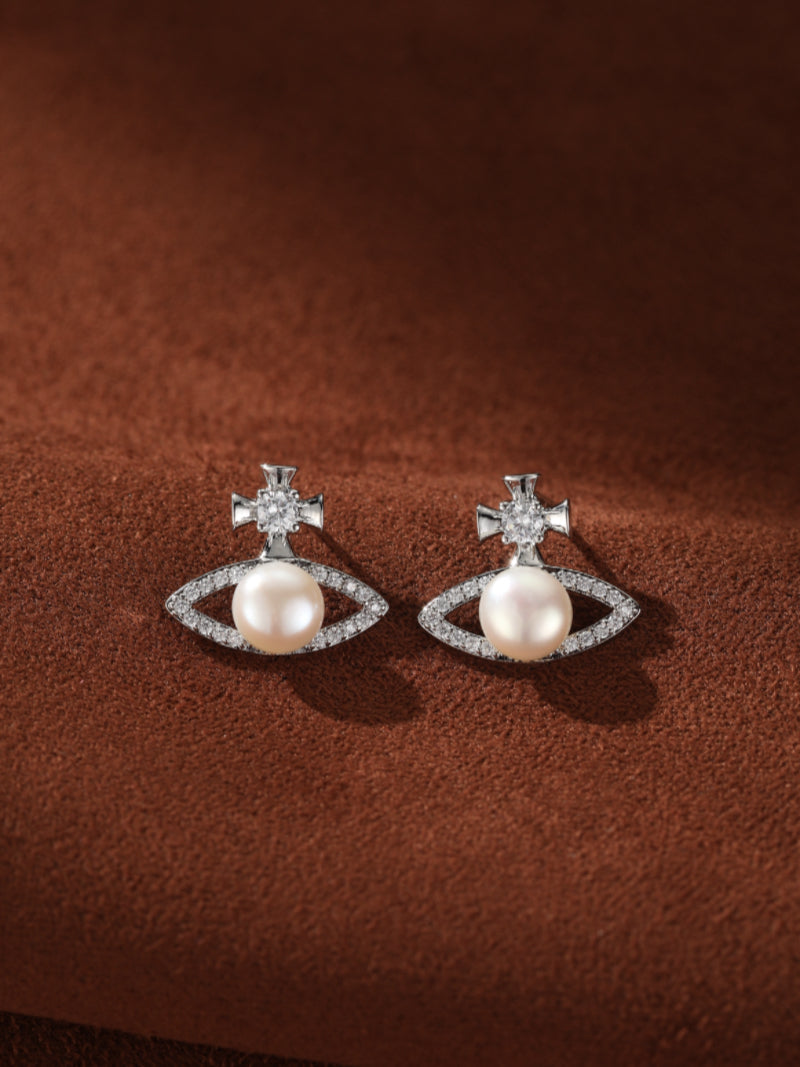
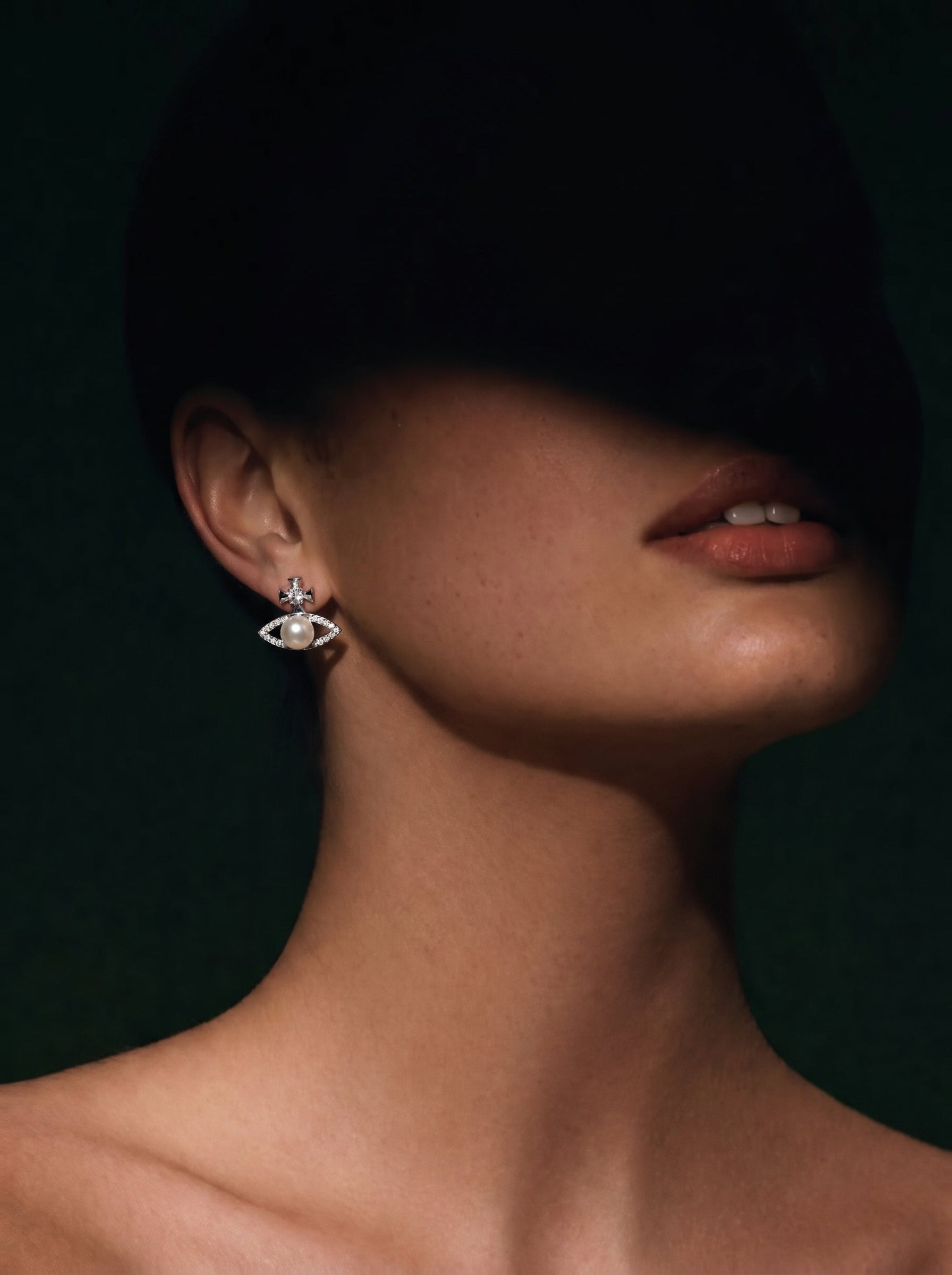
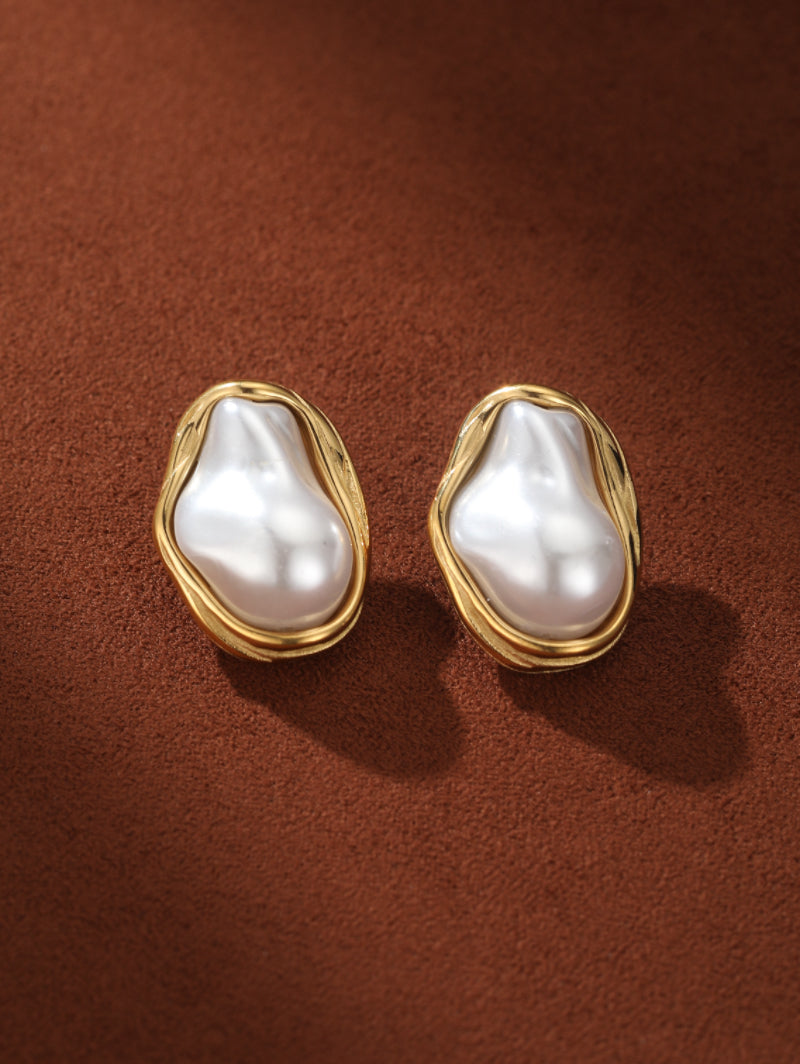
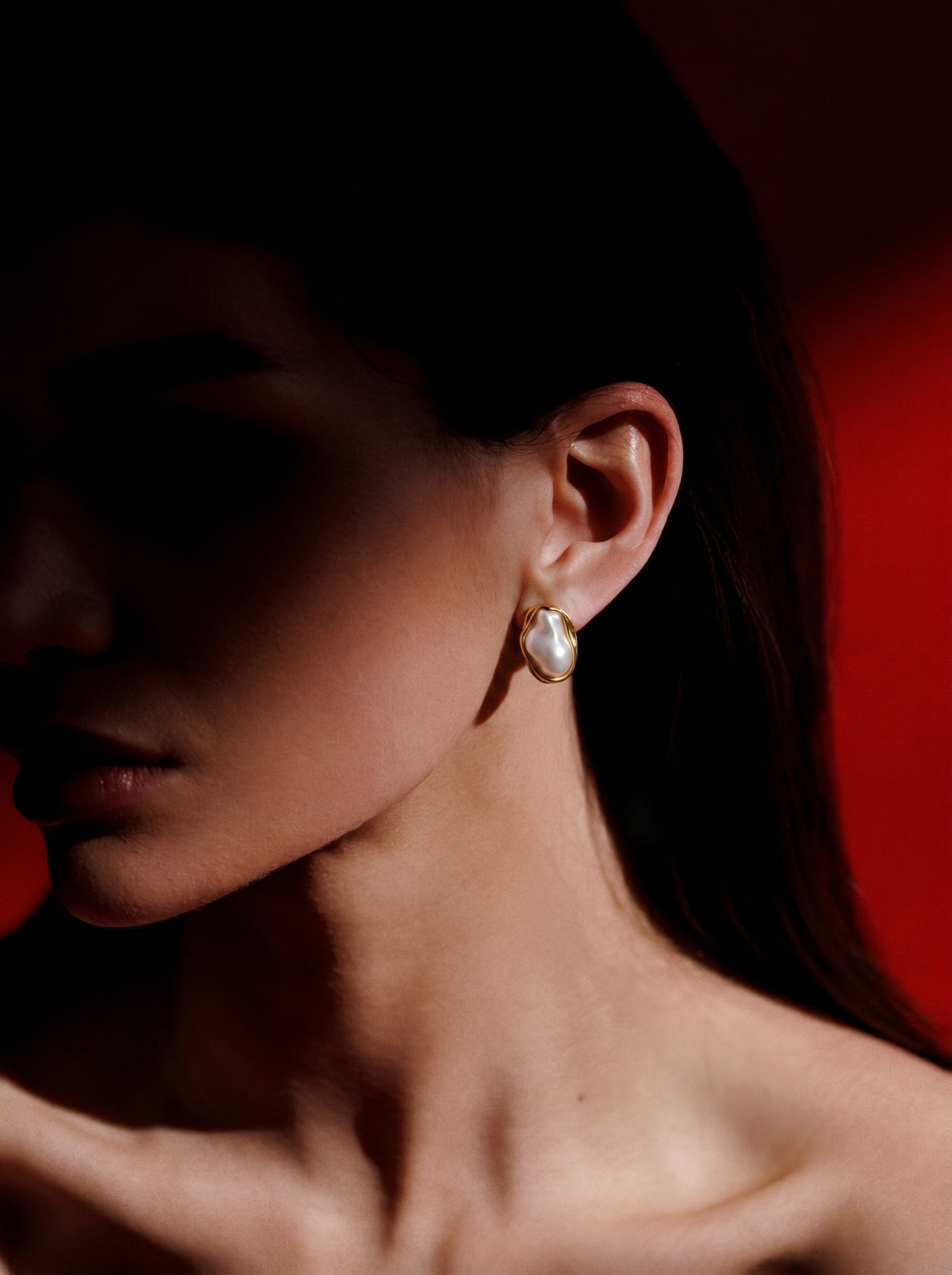
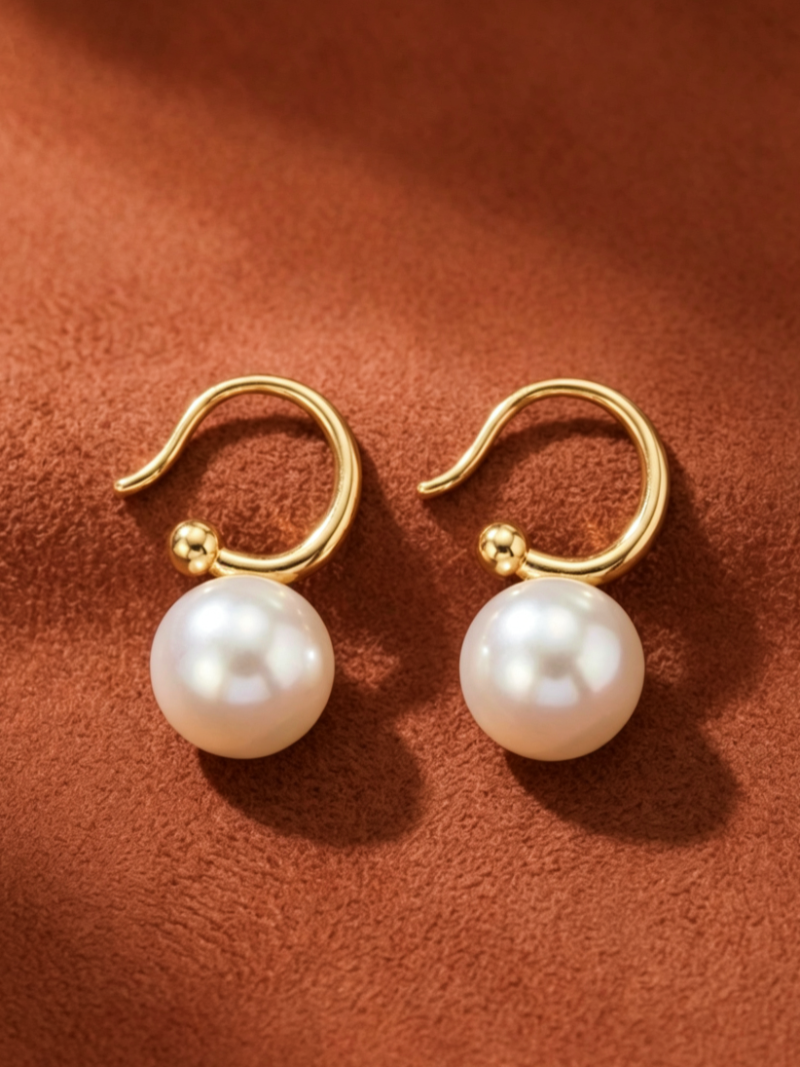
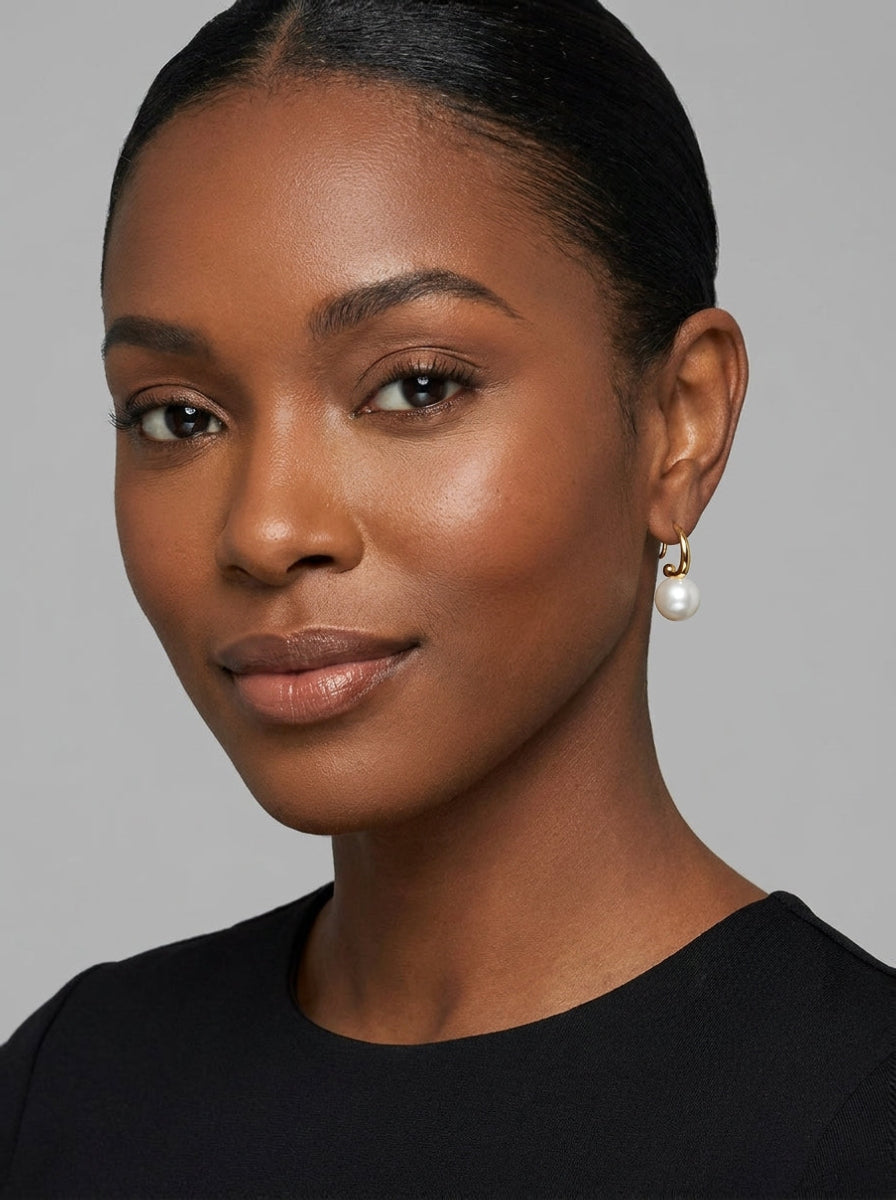
White pearl earrings are the pair you put in without checking the mirror twice. They work with a navy suit, a white shirt, a black dress and everything between them, which is why they are the pearl earring most women own.
What are white pearl earrings?
White pearl earrings use cultured pearls with a white bodycolor, which is the base color of the pearl itself. White is not a single shade: it ranges from cool bright white through cream, and it usually carries a secondary overtone of rose, silver or ivory floating above the bodycolor.
That overtone decides whether the earring reads warm or cool against your complexion, and it matters more here than anywhere else because nothing sits closer to your face.
Which white pearl overtone suits you?
- Rose overtone — a pink cast over white. Warms noticeably under candlelight and flatters fair and pink-toned complexions.
- Silver overtone — cool and crisp. Reads modern, and sits well with silver-toned metal and a cool wardrobe.
- Ivory and cream — the warmest register. Suits olive and golden complexions and pairs naturally with gold.
We list bodycolor and overtone as two separate markers on every product page, rather than describing everything simply as white.
Which white pearl earring style should you choose?
Studs
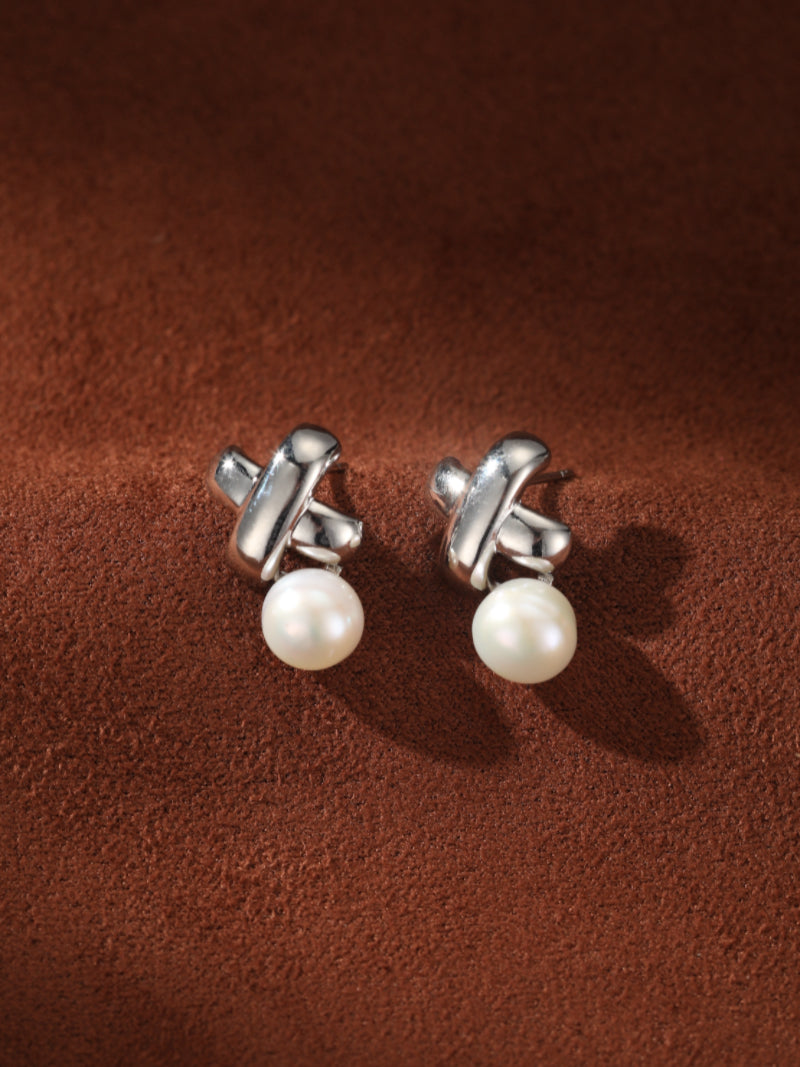
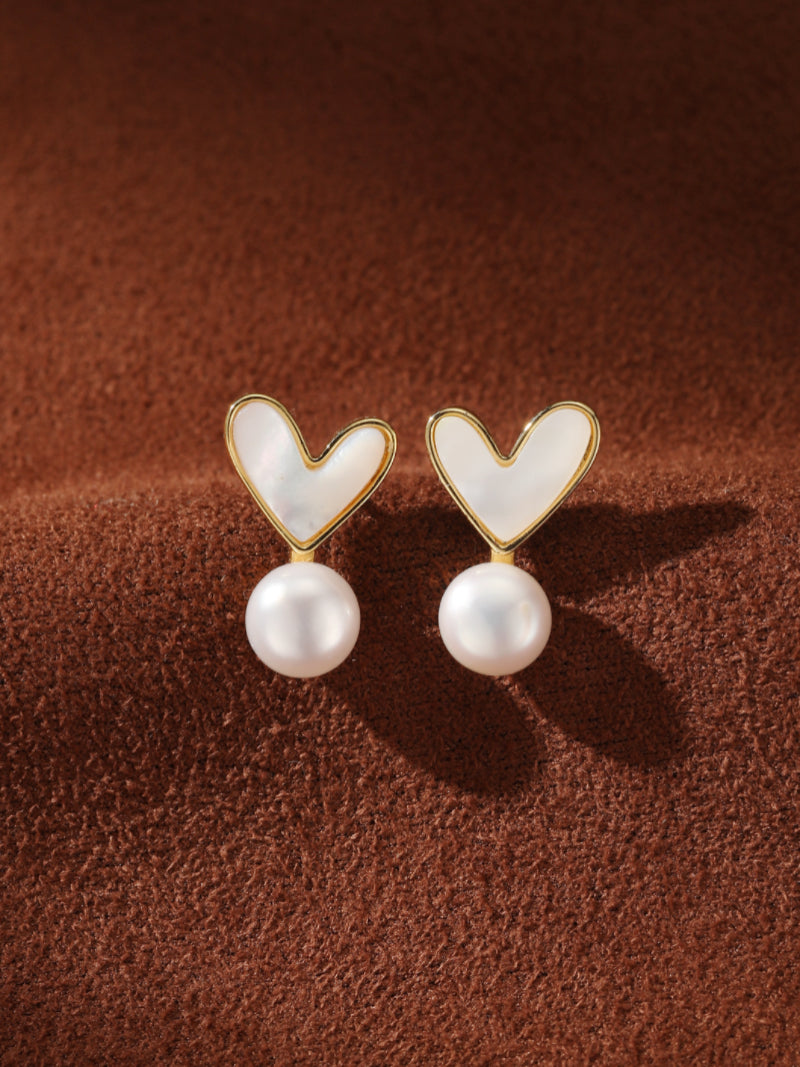
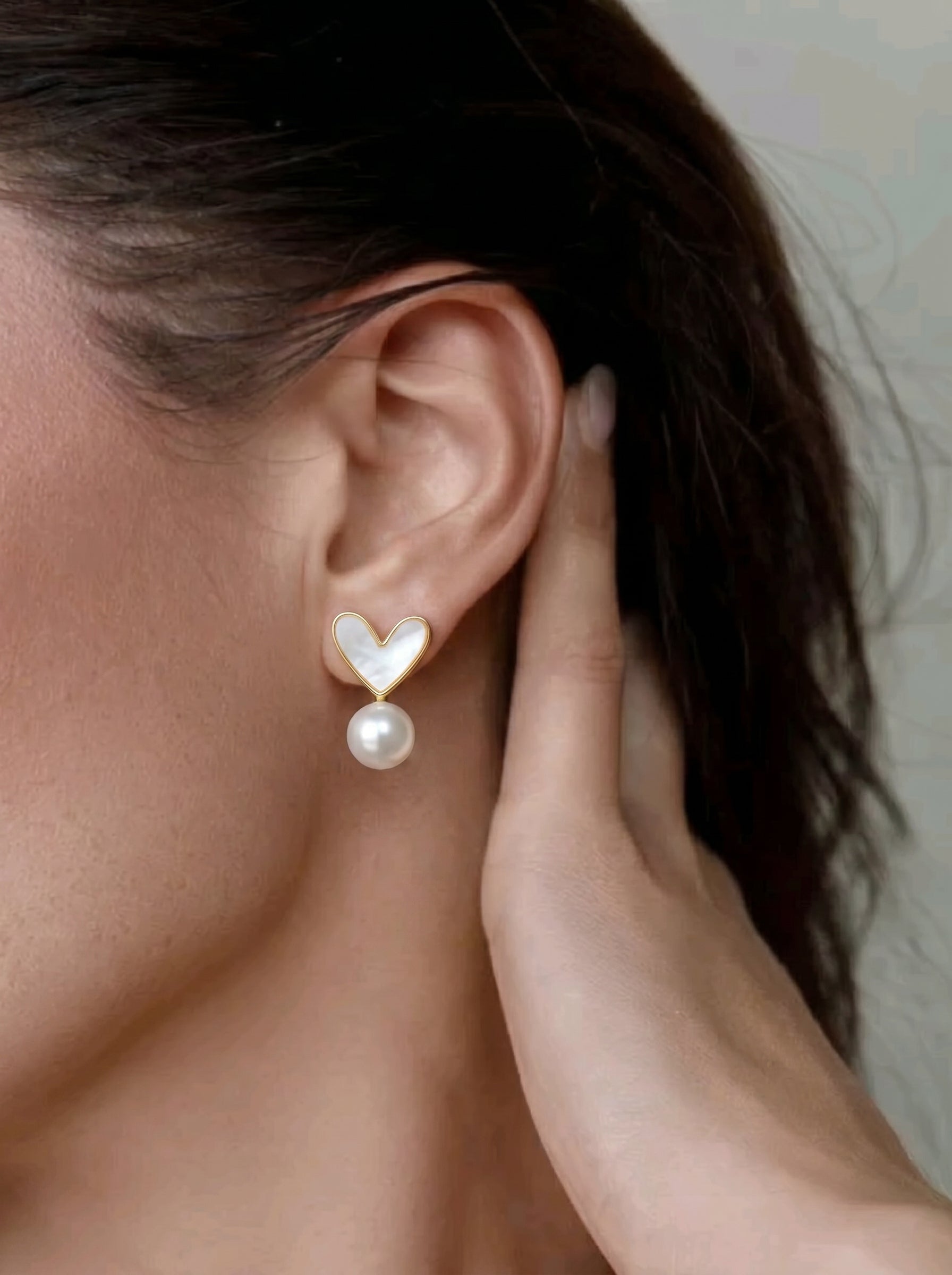
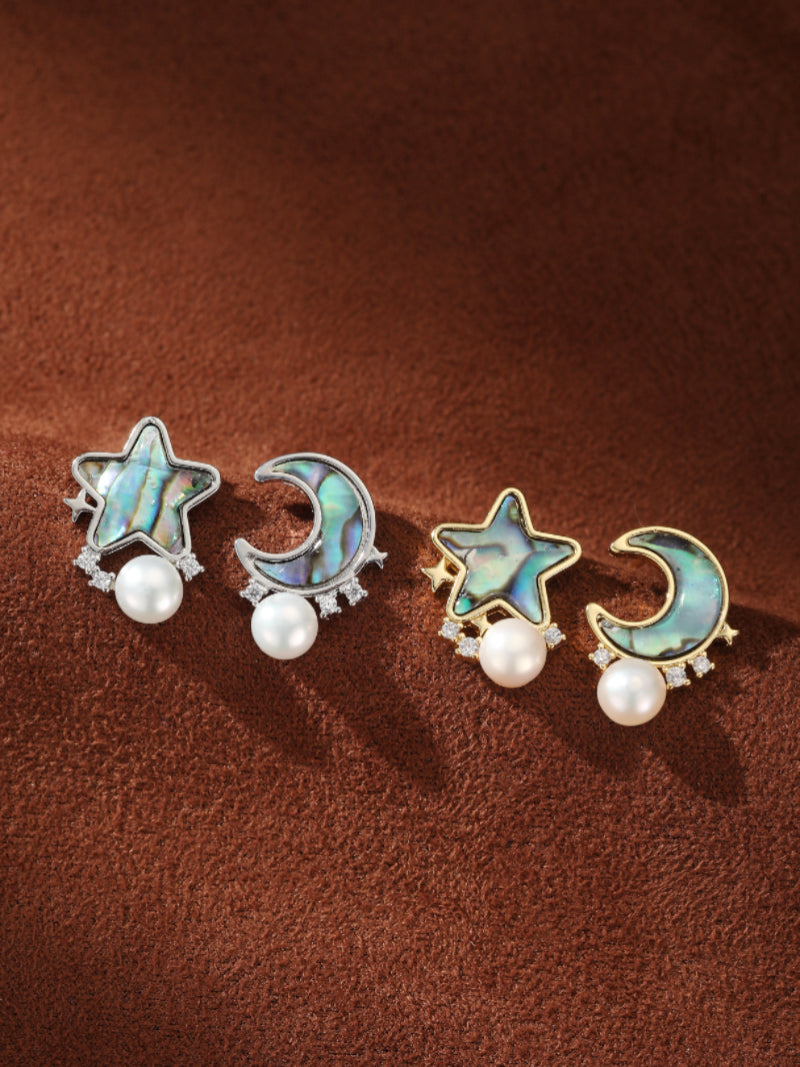
The pair to buy first. A round or button pearl between 7 and 8 mm sits flush against the lobe, clears a phone and a scarf, and survives a full working week without thought.
Hoops
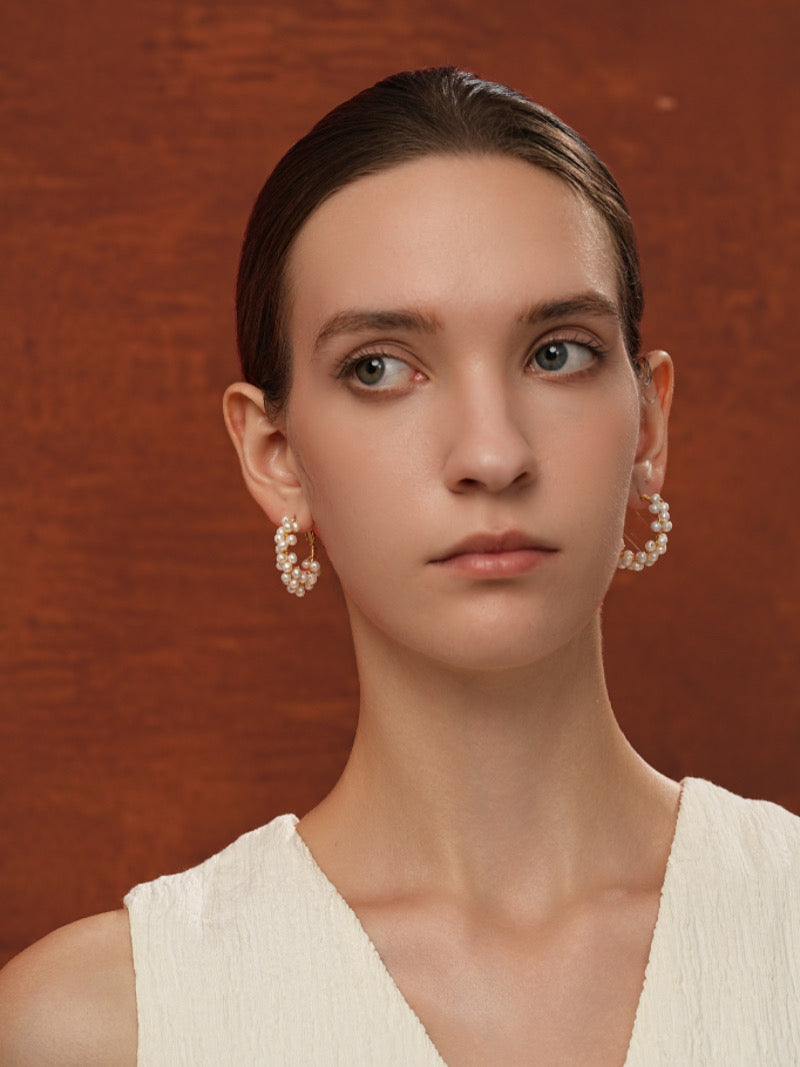
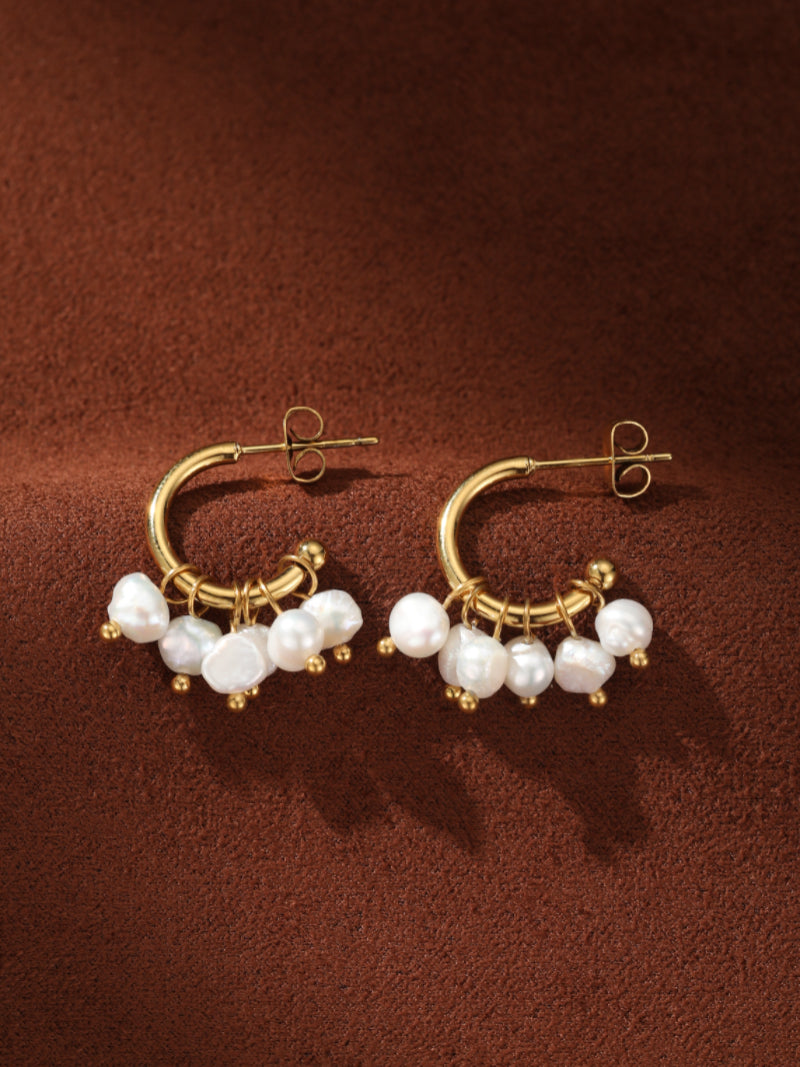
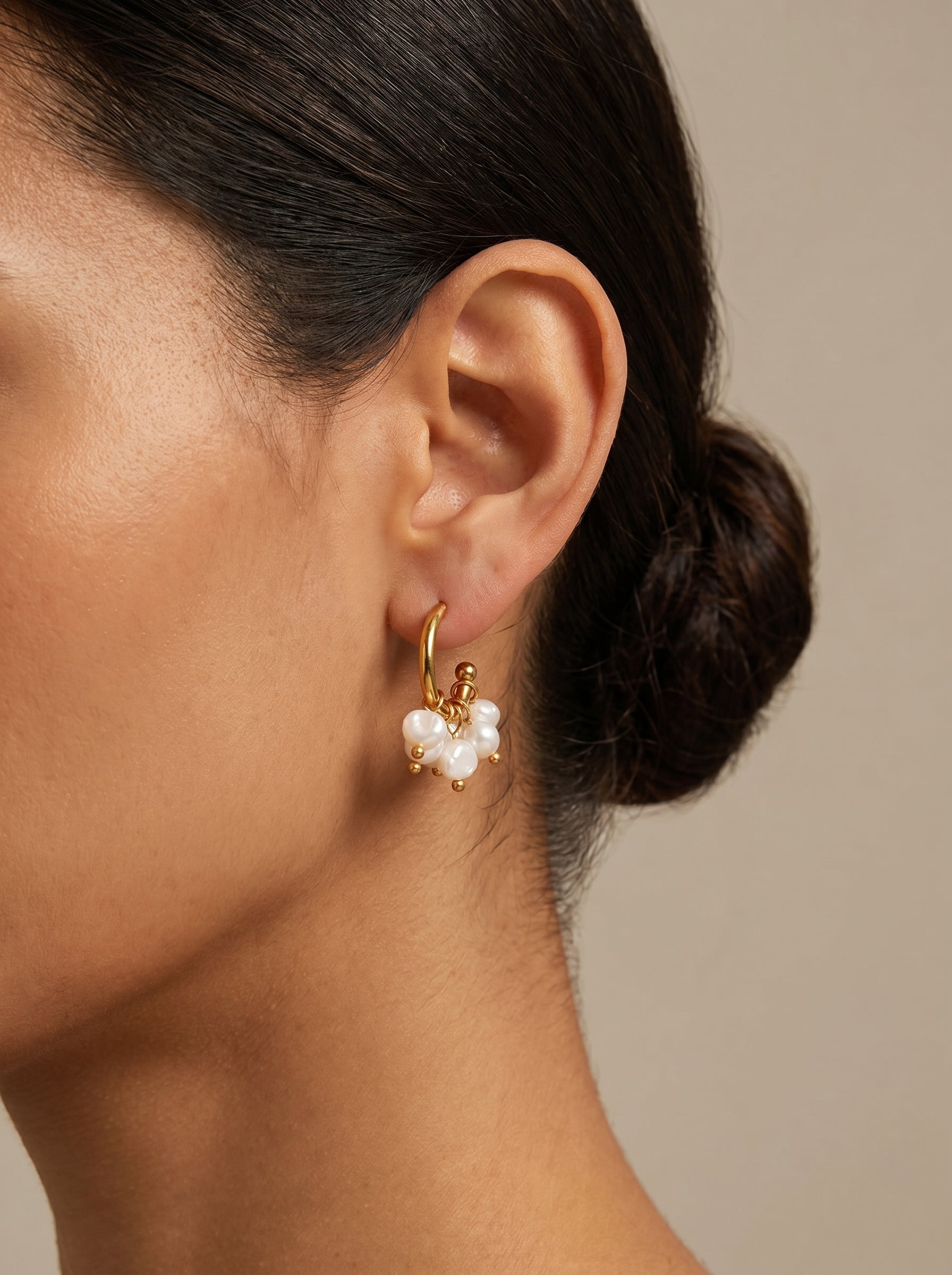
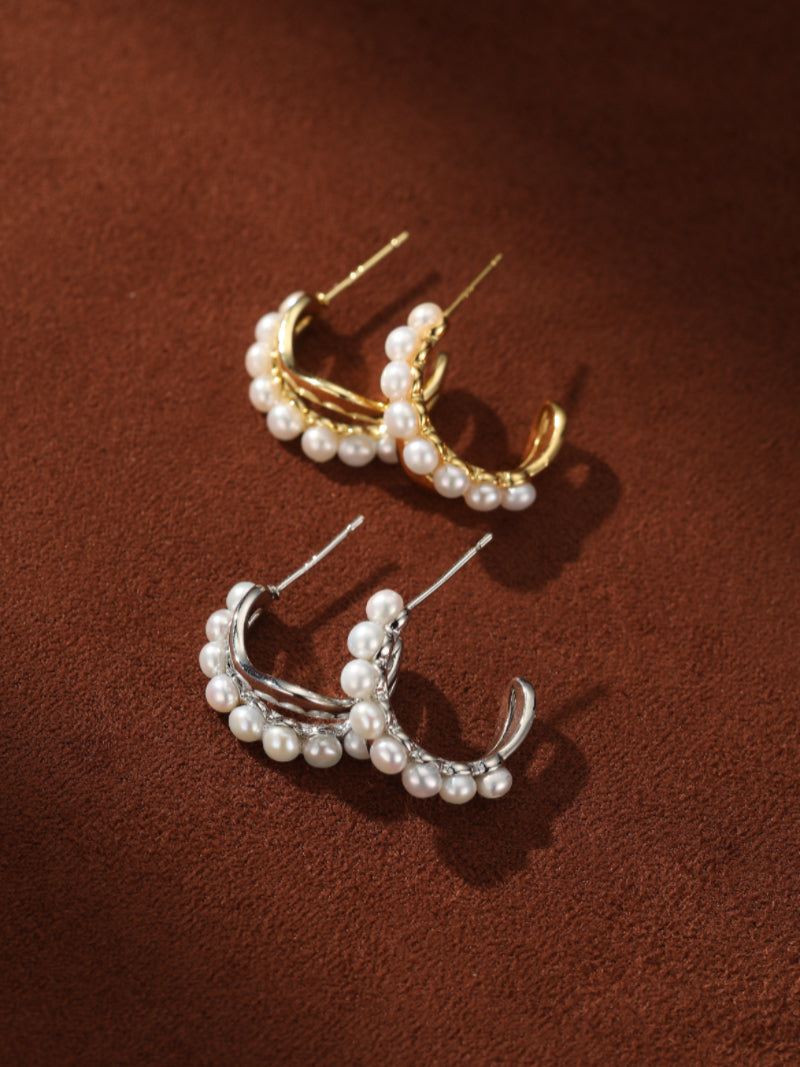
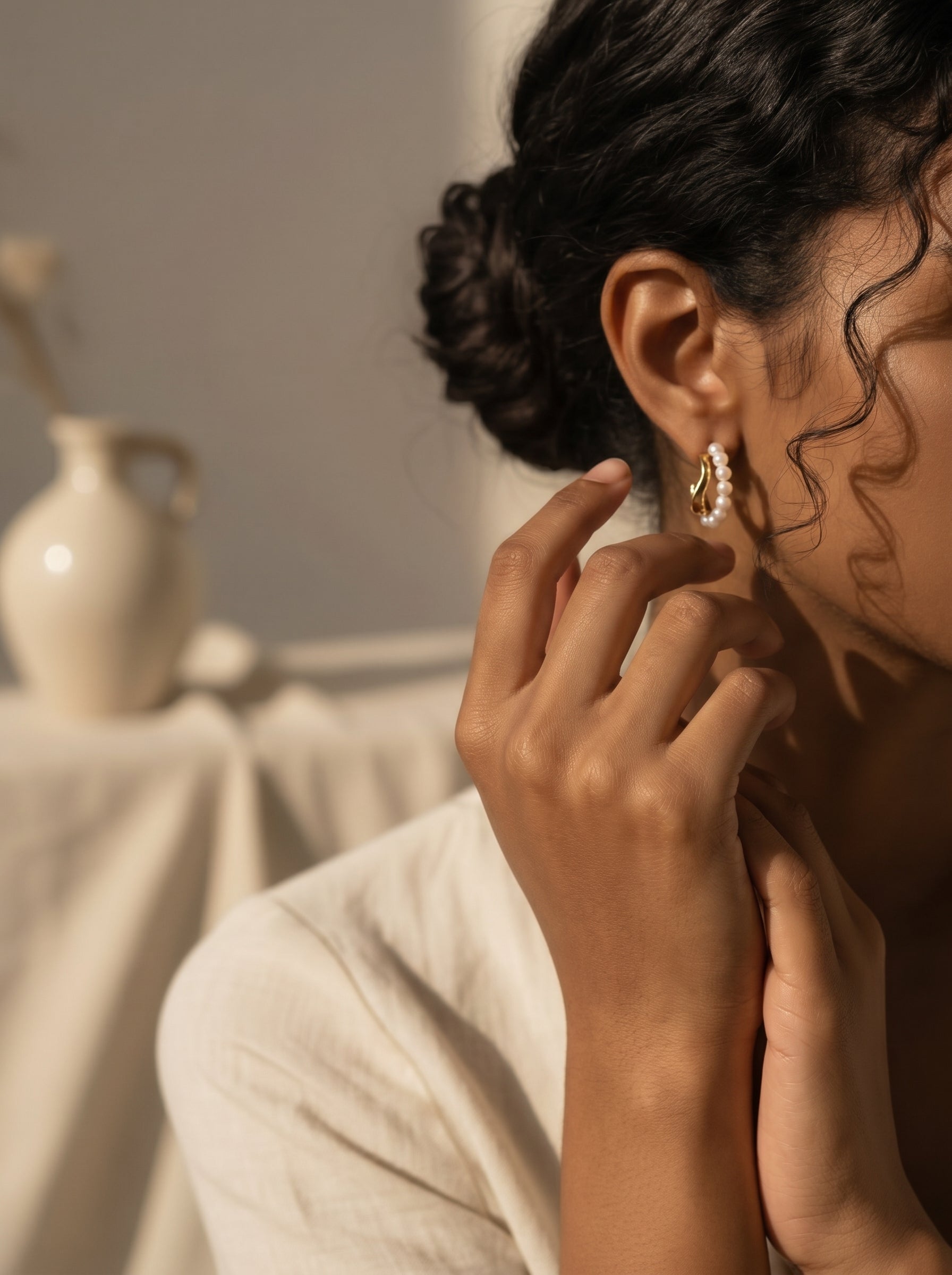
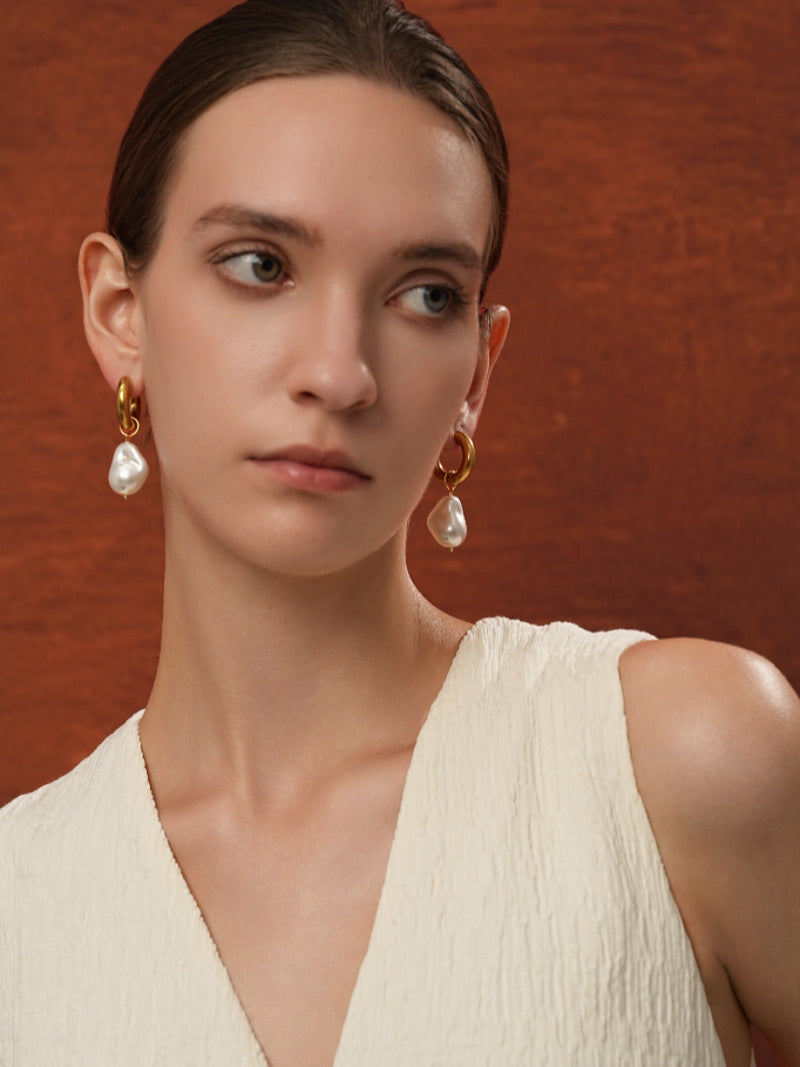
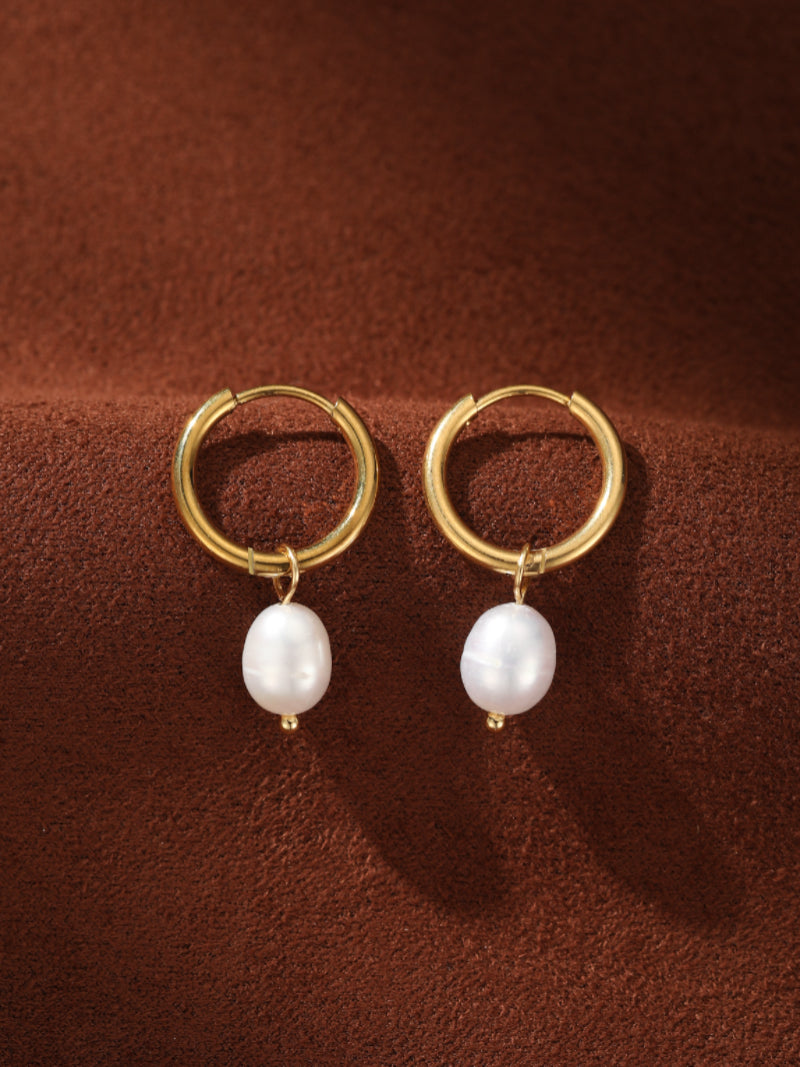
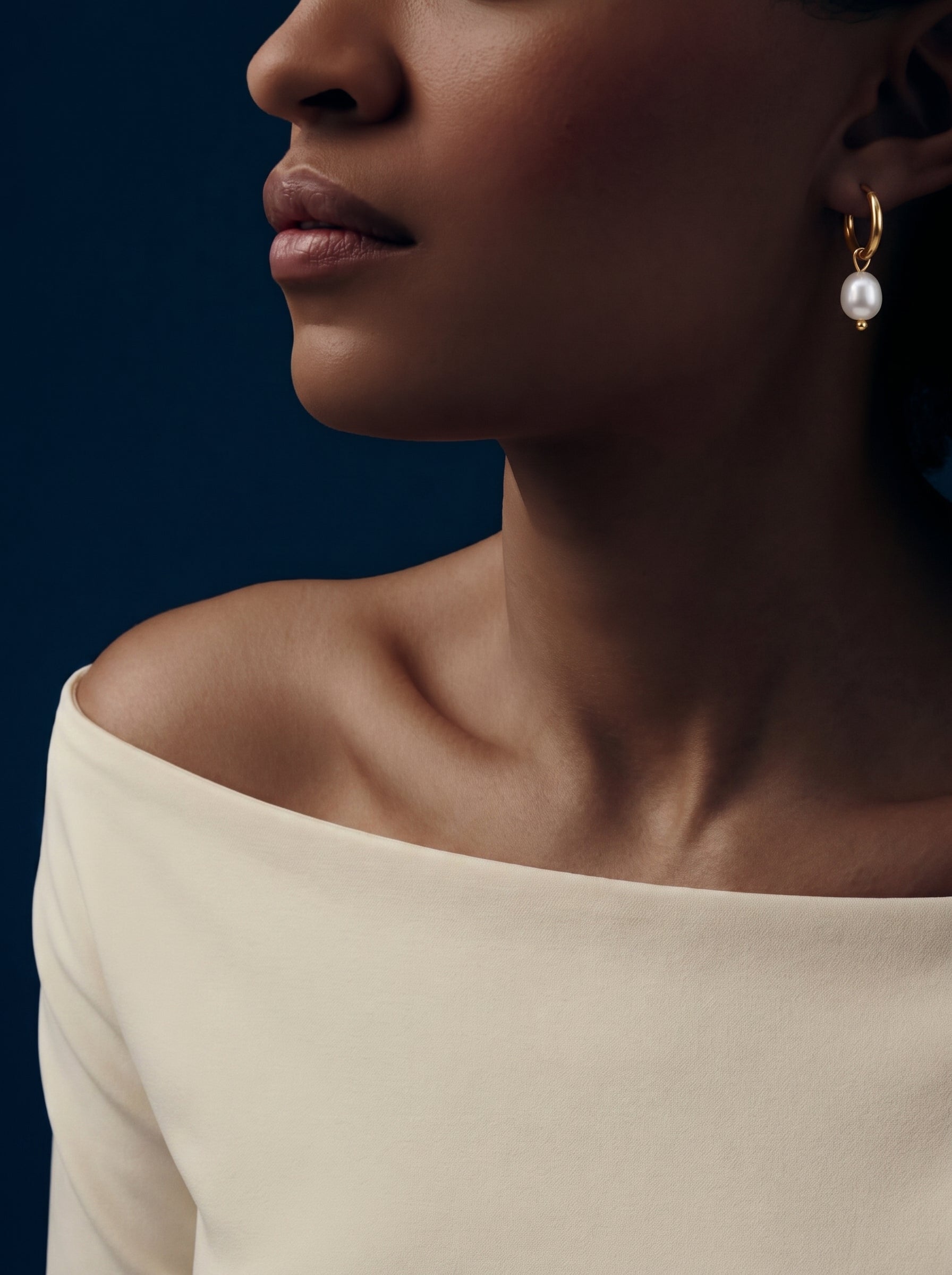
A white pearl at the curve catches light every time you turn your head. Small huggies suit daily wear. Larger hoops give an ear structure without asking anything of the rest of your outfit.
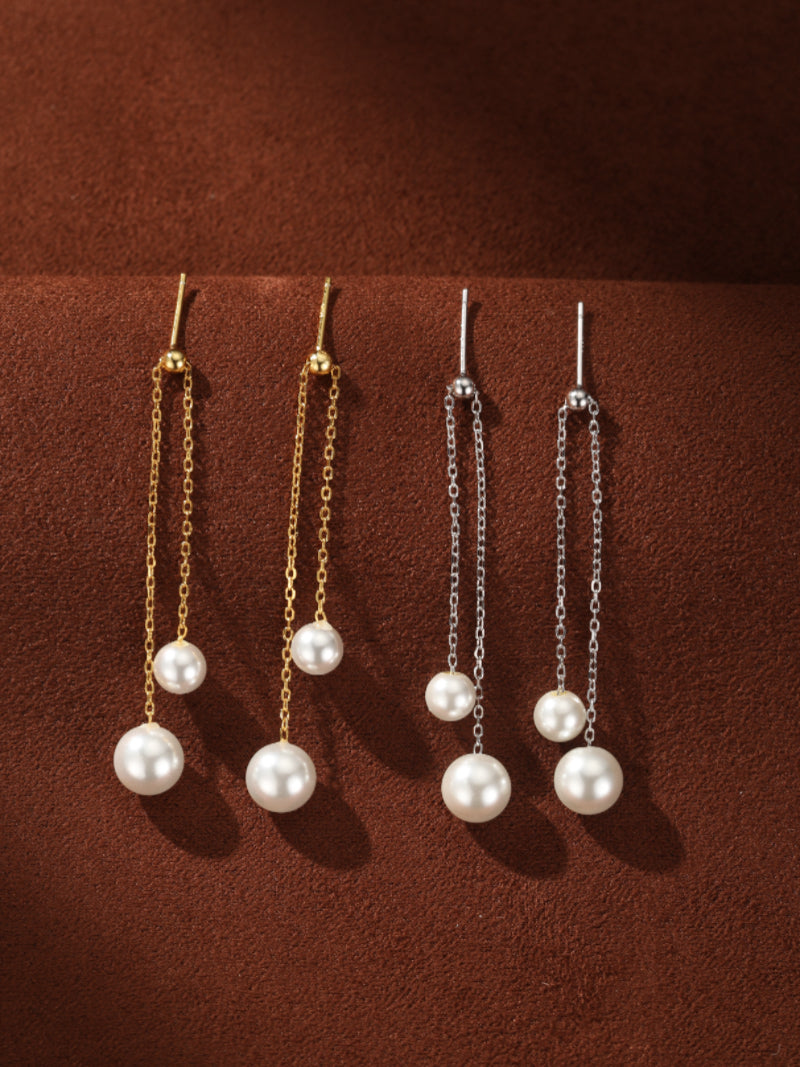
Drops and dangles
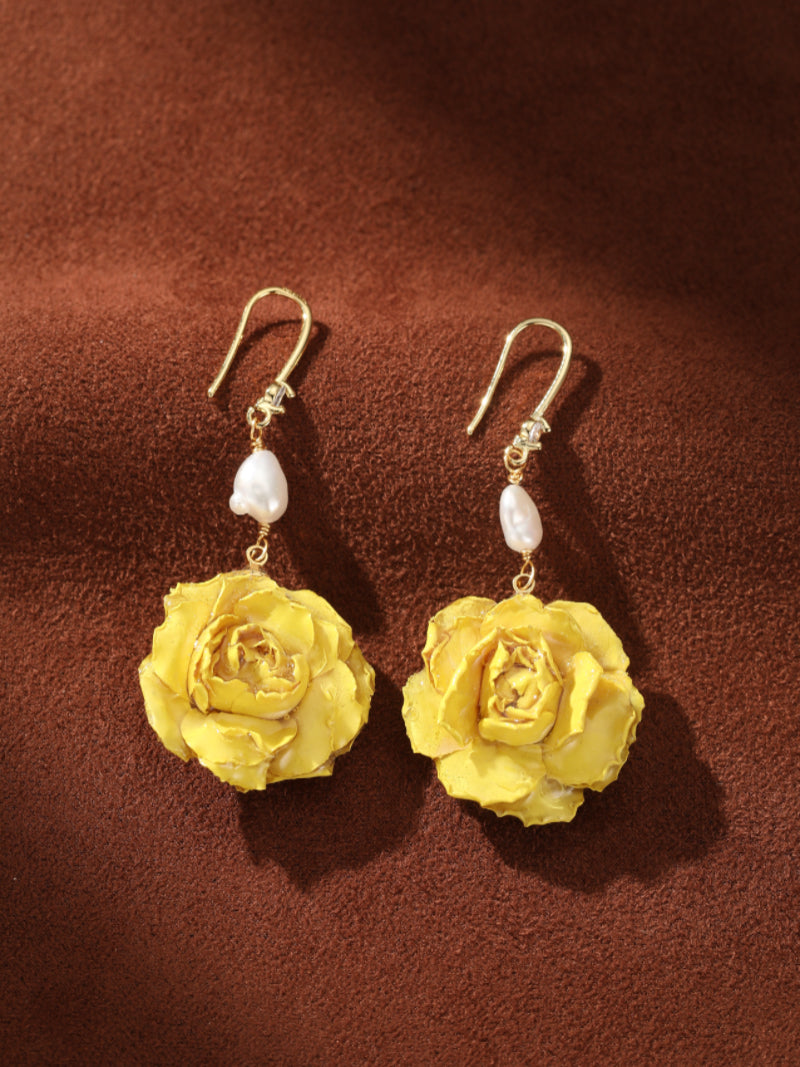
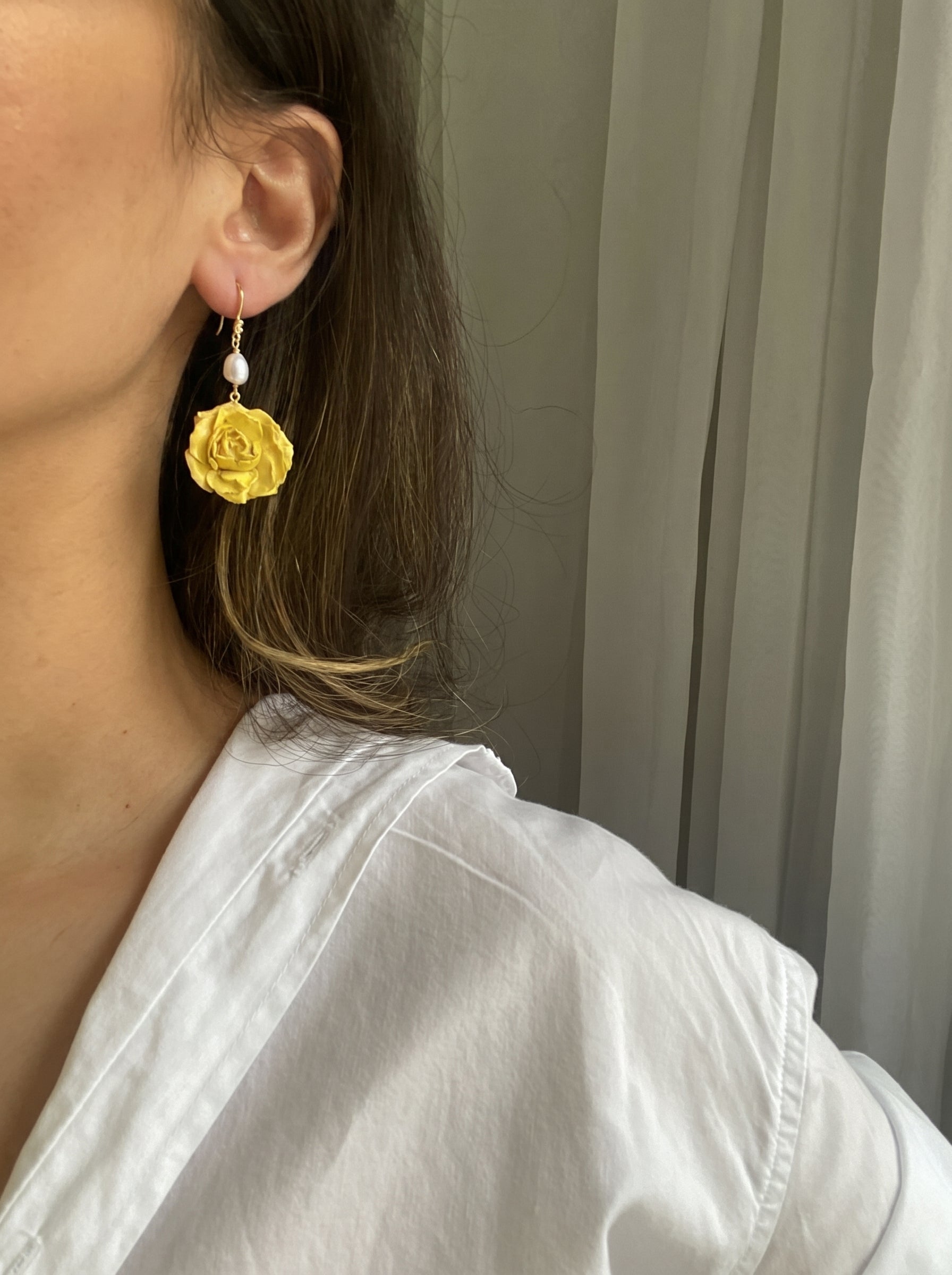
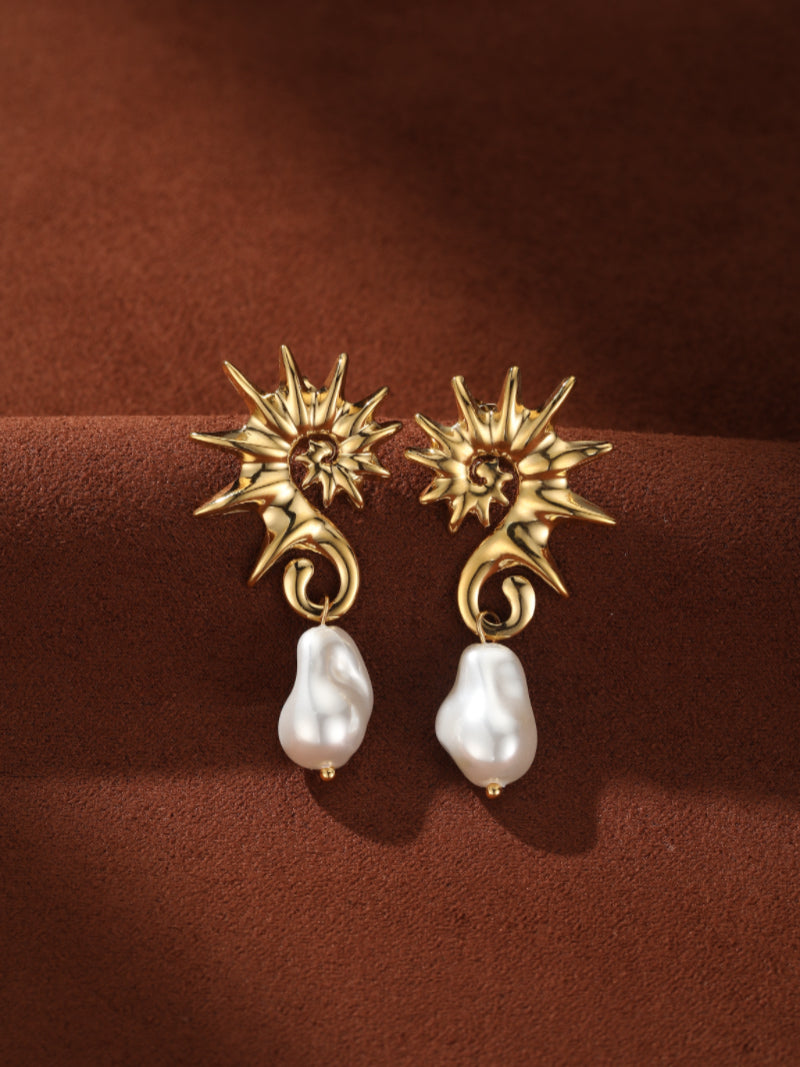
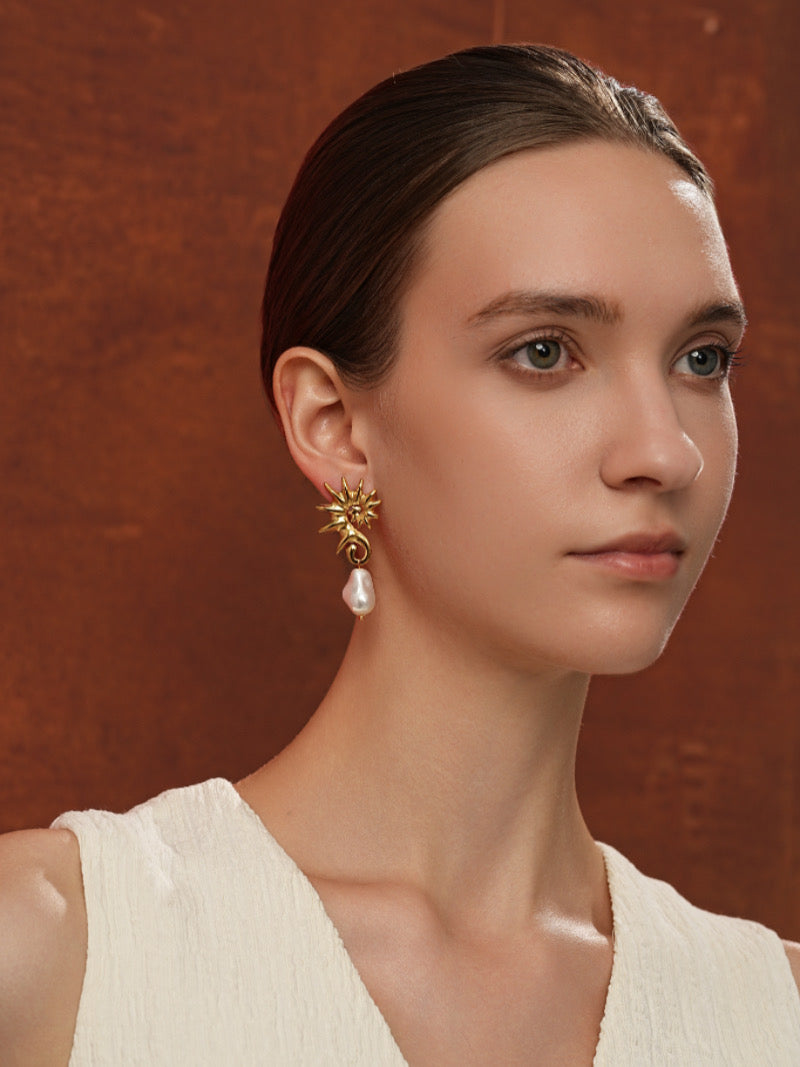
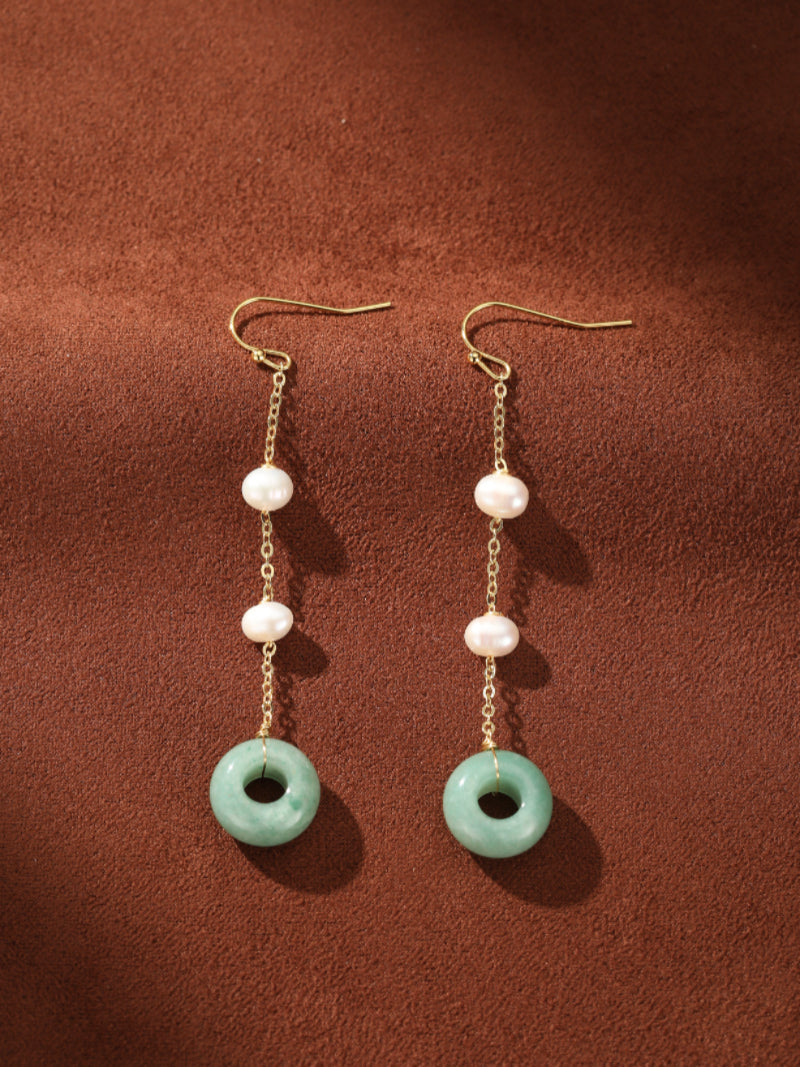
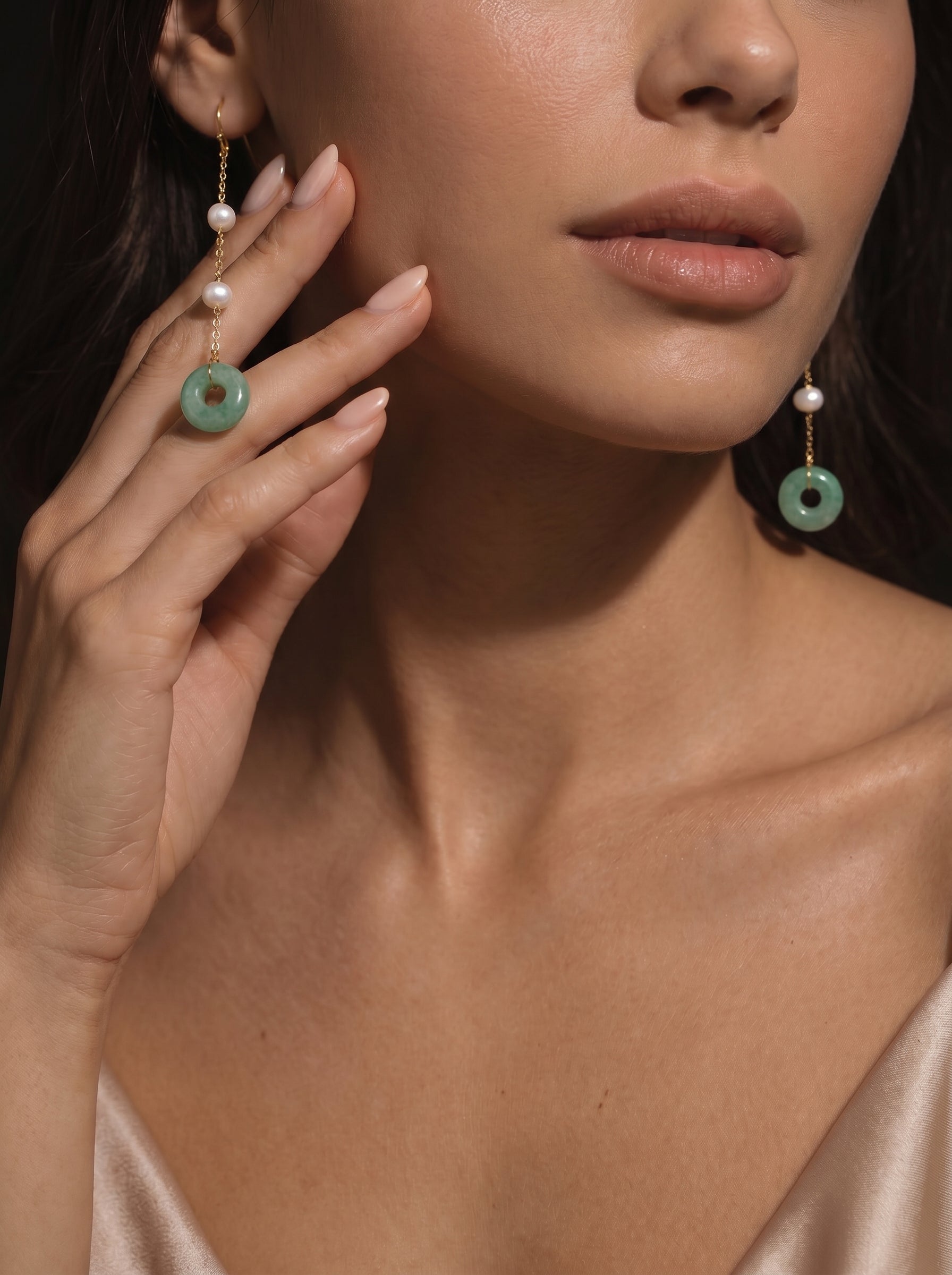
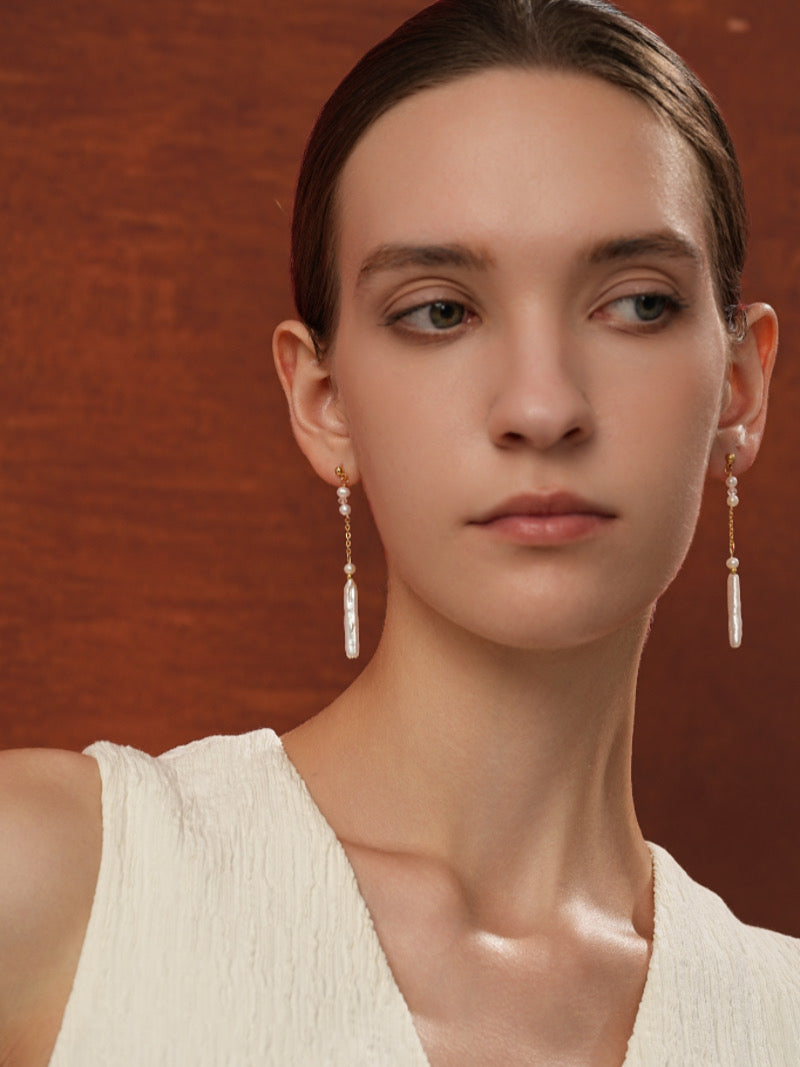
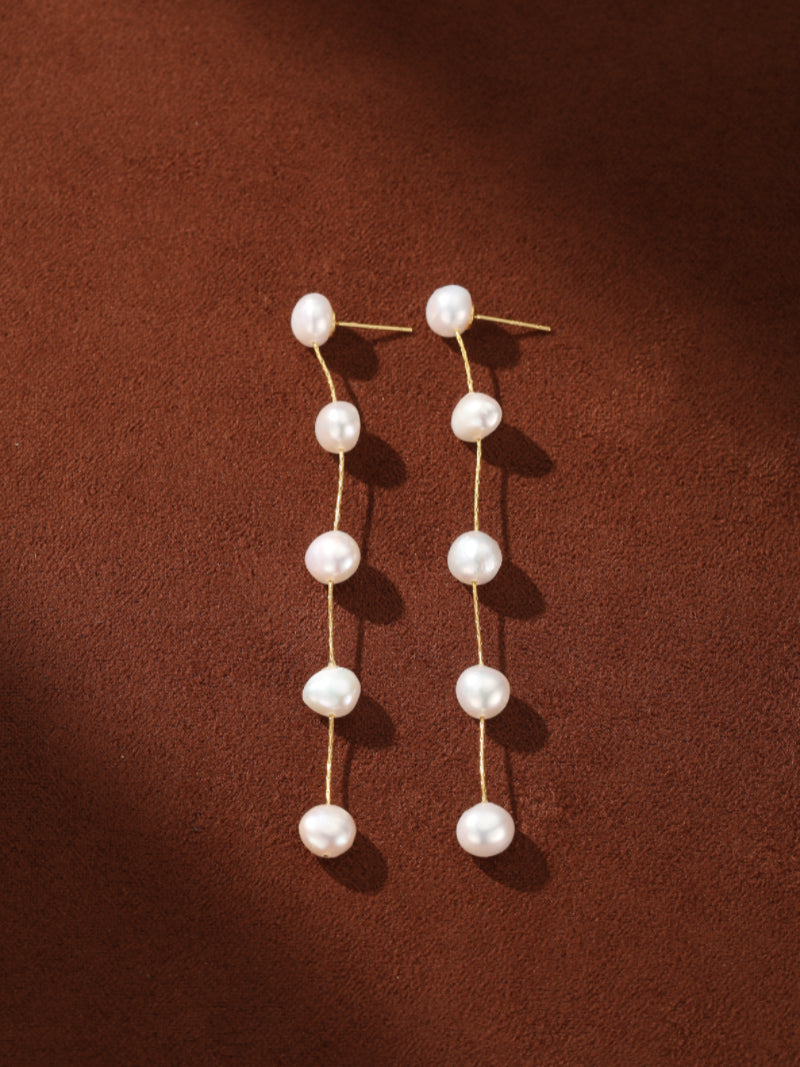
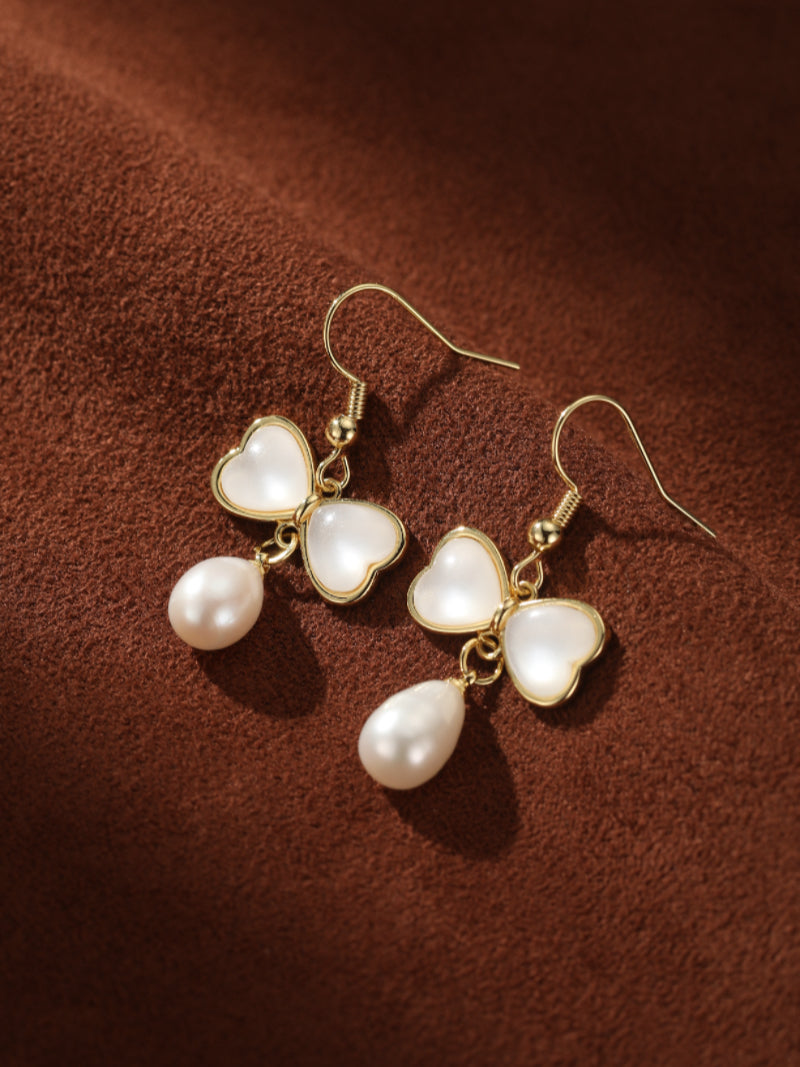
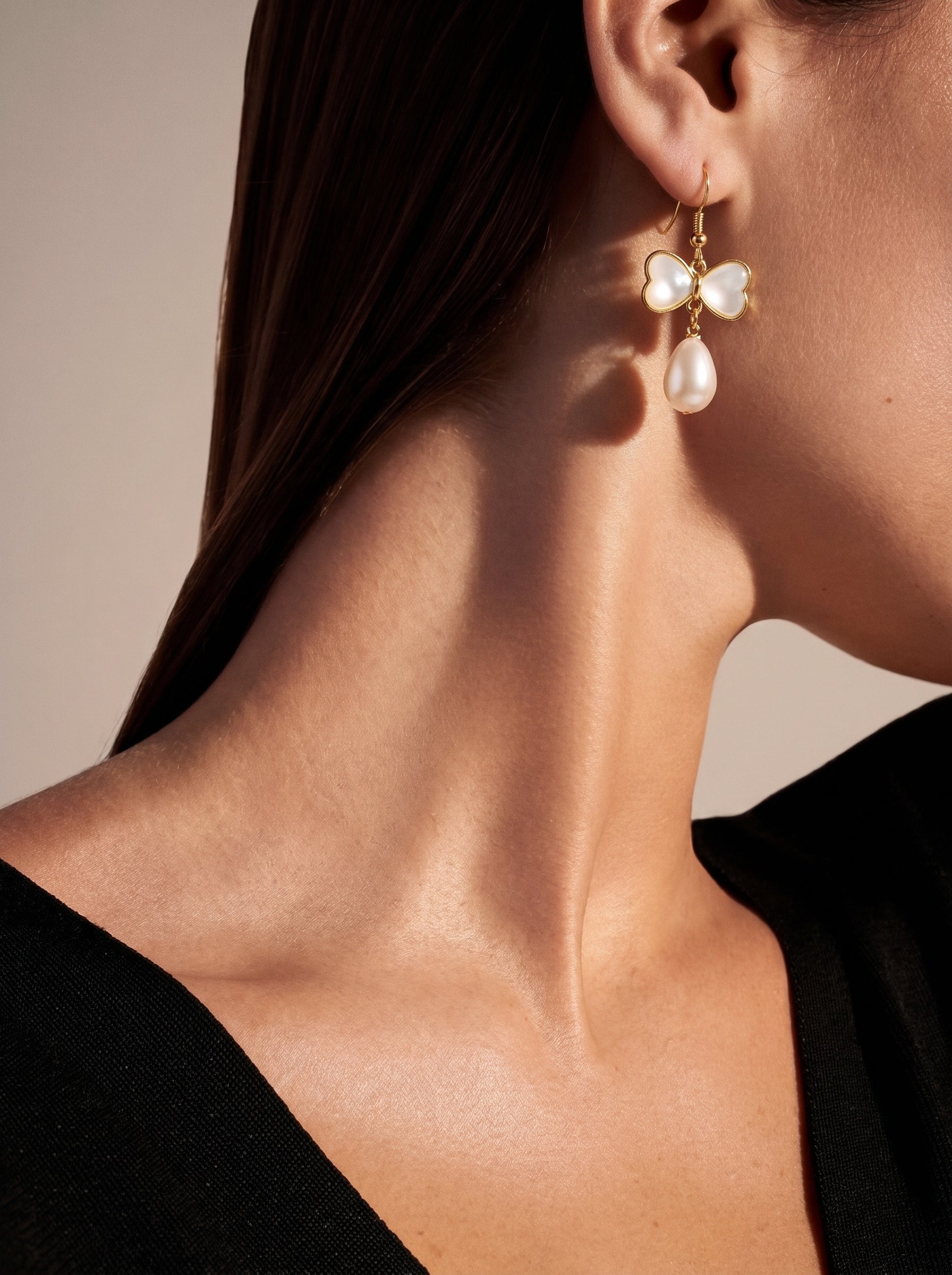
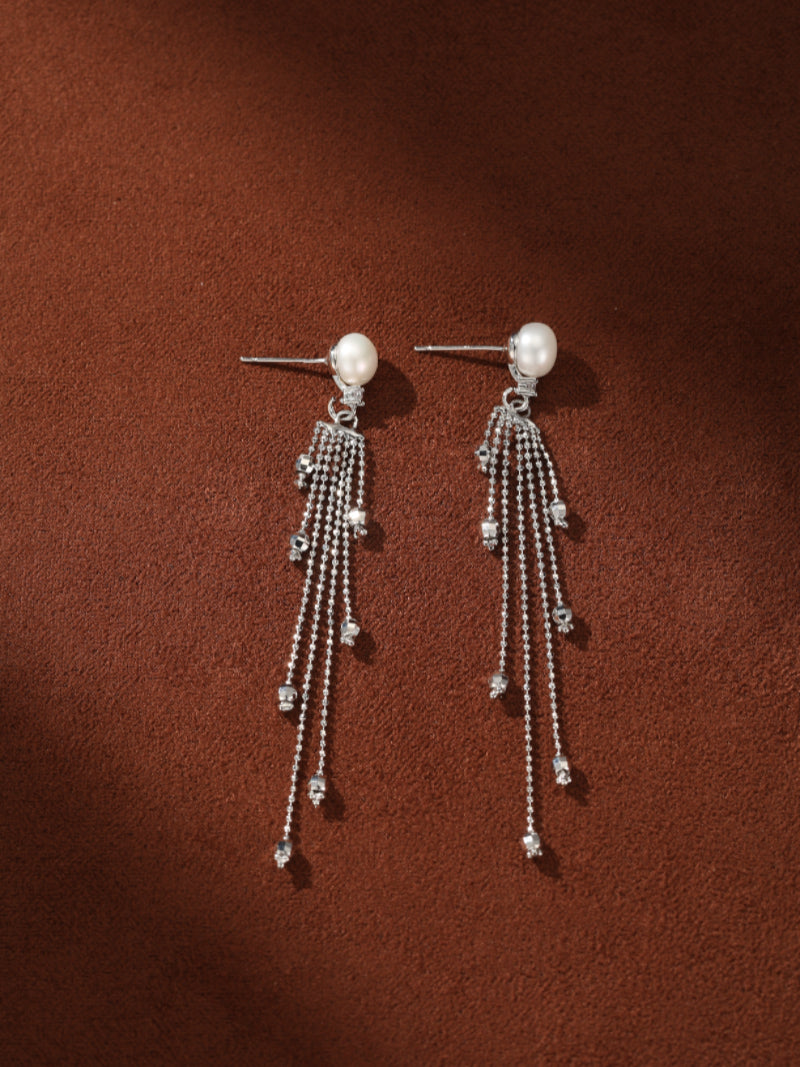
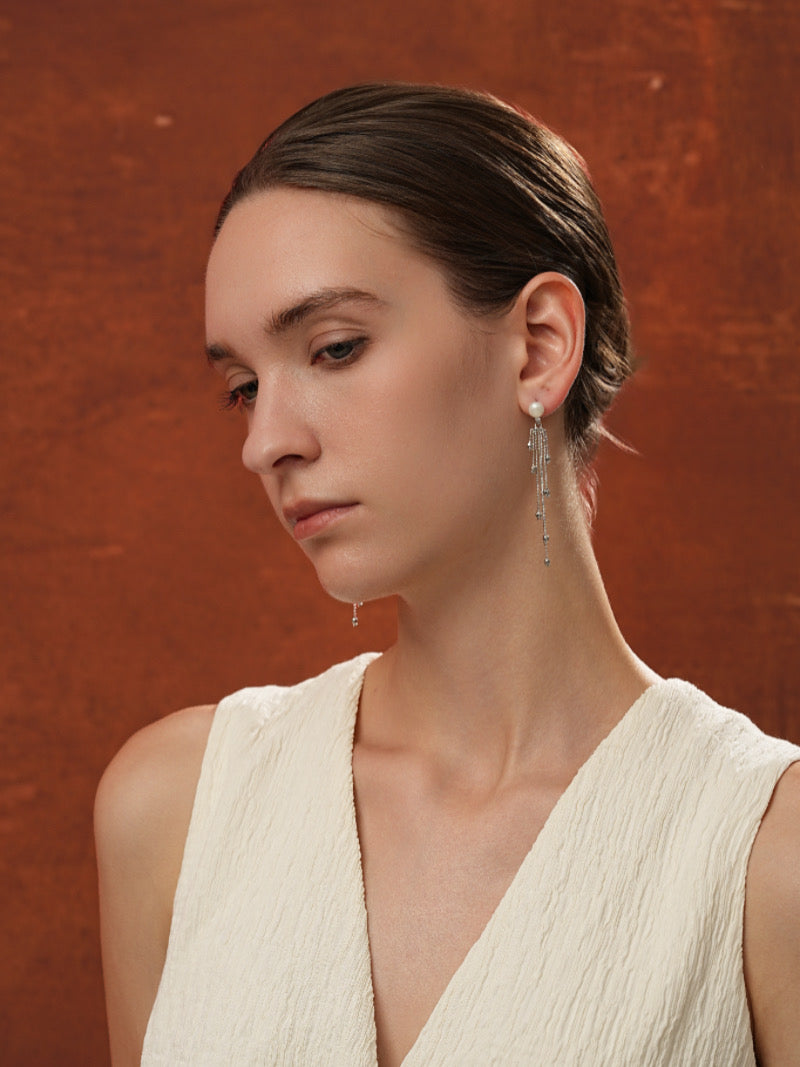
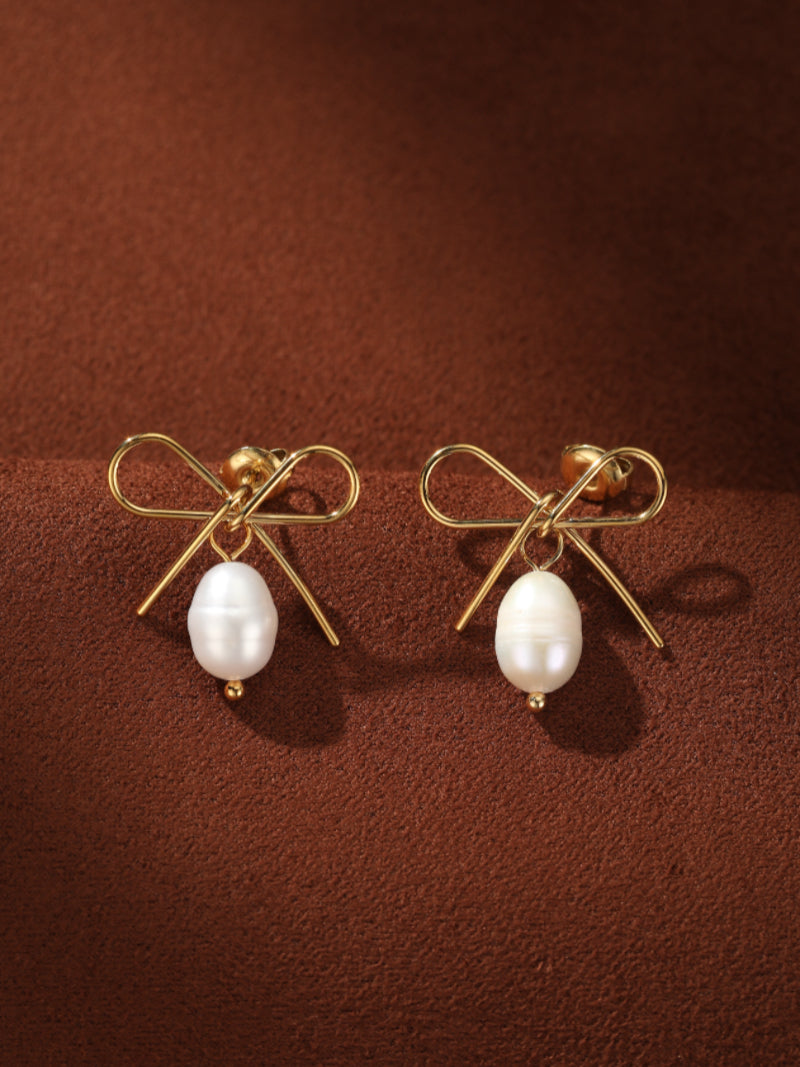
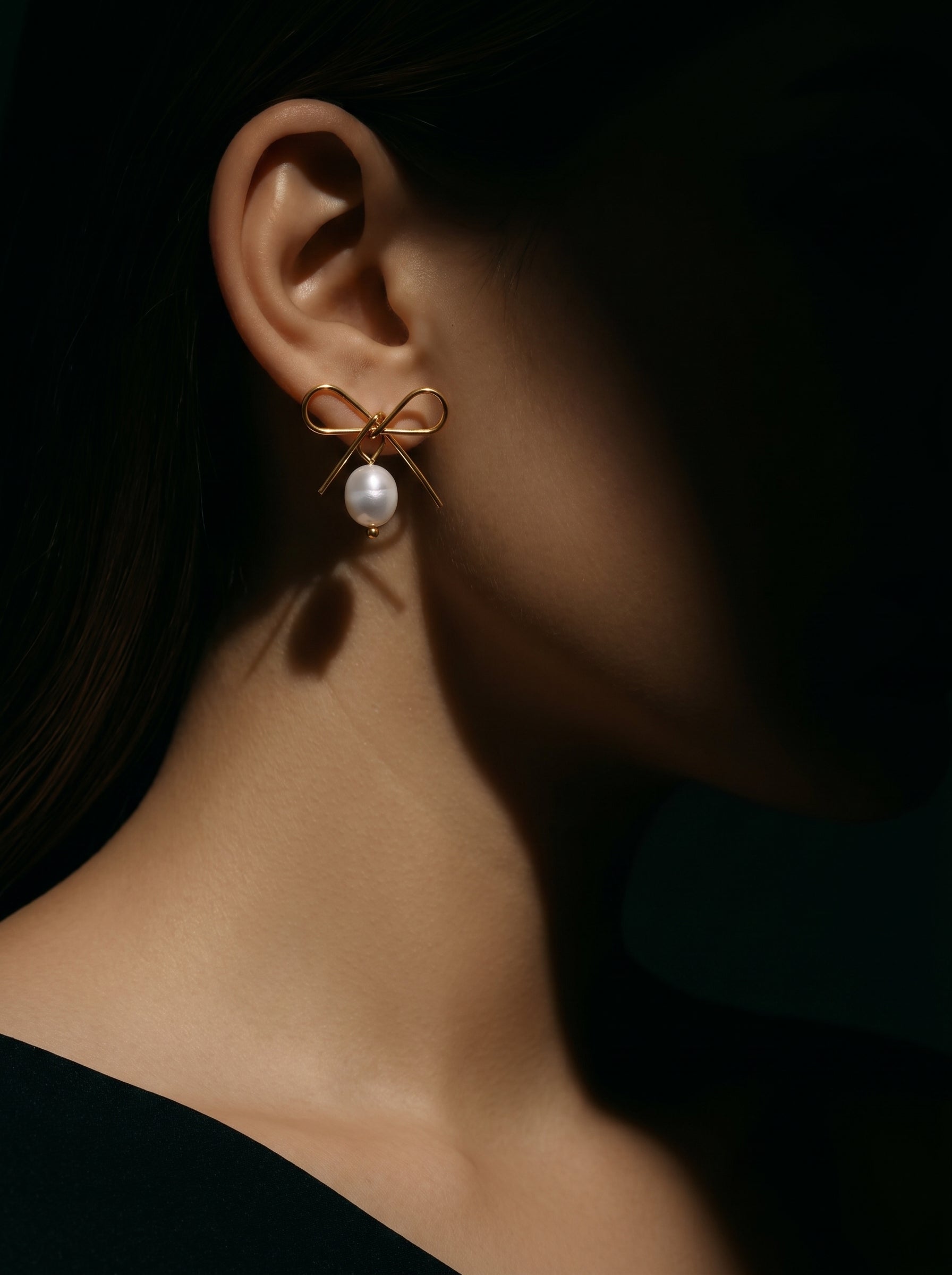
A drop hangs without swinging and adds length quietly. A dangle moves as you do and catches light on the way. Both read differently in white than in a dark pearl: softer, and closer to classic.
Which pearl types come in white?
Almost all of them. Freshwater pearls from Zhuji give the widest choice of shapes and sizes. Akoya pearls from Japan give the sharpest mirror luster, so a small Akoya still reads across a table. South Sea pearls give the largest white pearls grown, with a soft satin glow.
Every pearl is a real cultured pearl, with type, origin, bodycolor, overtone, shape, size, grade and treatment stated on the product page.
Why buy white pearl earrings from Grande Lilith
White is the most commoditized color in the pearl market. Almost everyone sells white pearl earrings, and almost nobody tells you which white.
- Bodycolor and overtone listed as separate markers, so you know whether the white is cool, rose or cream before it arrives.
- Eight provenance markers in total, including grade and treatment.
- Sourcing named to place: Zhuji, Japan, French Polynesia.
- Nickel-free, lead-free and cadmium-free posts and fastenings, with hypoallergenic stainless steel across the range.
- Designed in Paris. Thirty days to change your mind, and every order arrives in a magnetic pouch.
Frequently asked questions
What size white pearl earrings should I buy?
Between 7 and 8 mm for studs, which is the classic proportion and suits almost every face and occasion. Below 7 mm the pearl reads as a detail. Above 10 mm it becomes the focal point of a face.
Do white pearls turn yellow?
They can over decades, if repeatedly exposed to hairspray, perfume and cosmetics without cleaning. Earrings sit near where hair products are applied, so wiping them with a soft cloth after wear matters more here than for other pieces.
Are whiter pearls better quality?
No. Color is preference. Quality is luster first, then surface cleanliness and nacre thickness. A cream pearl with sharp luster is a better pearl than a bright white one without it.
Are white pearls bleached?
Most Akoya pearls on the market are bleached and polished as standard industry practice, and many freshwater pearls are as well. This is accepted and does not affect authenticity. What matters is that it is stated, which is why treatment appears on every product page.
How many pairs of white pearl earrings do you need?
One pair of studs covers most of a wardrobe. A second pair usually solves a different problem rather than the same one: a hoop for weekends, a drop for evening, or a smaller size for a second piercing.