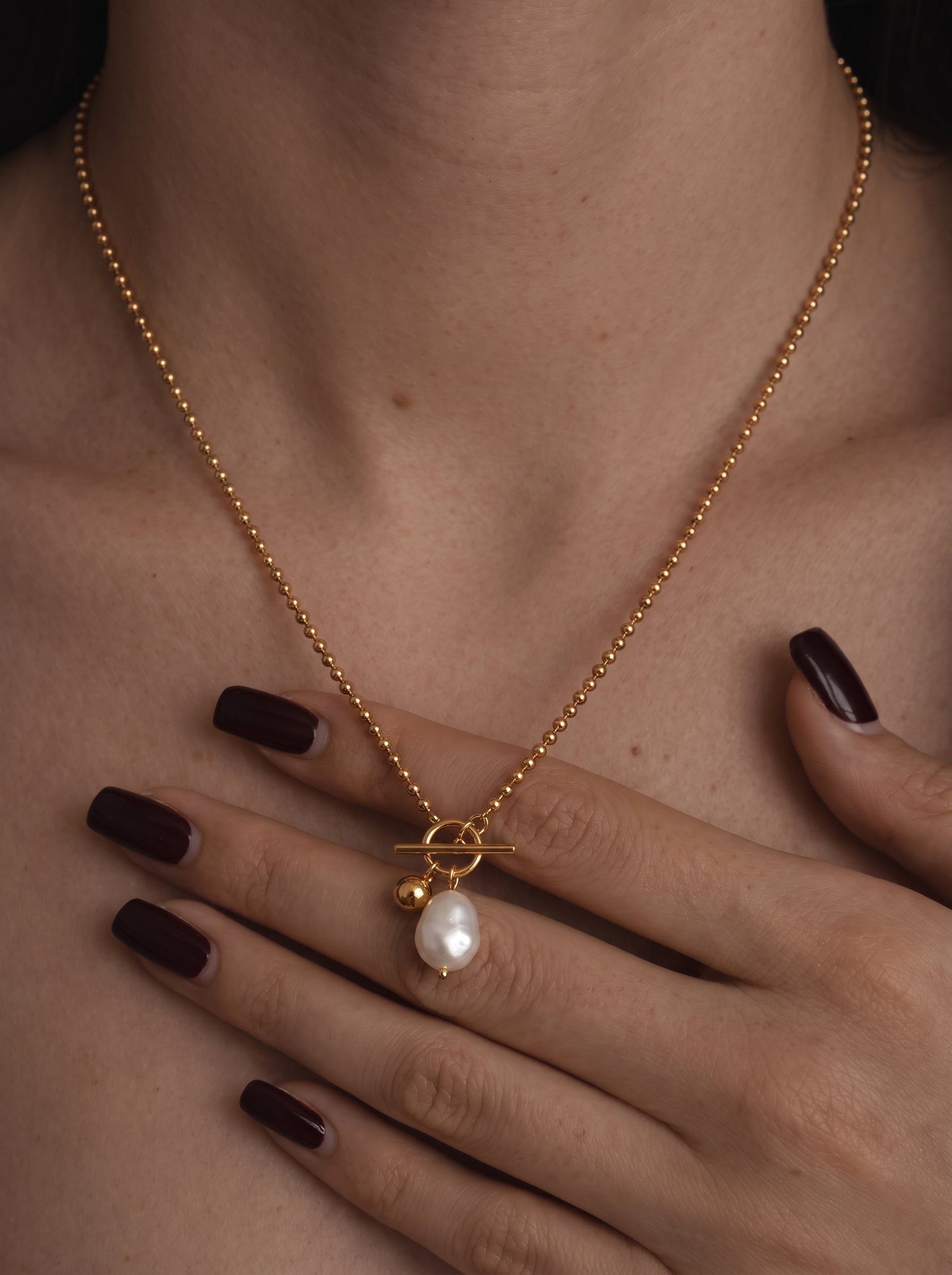
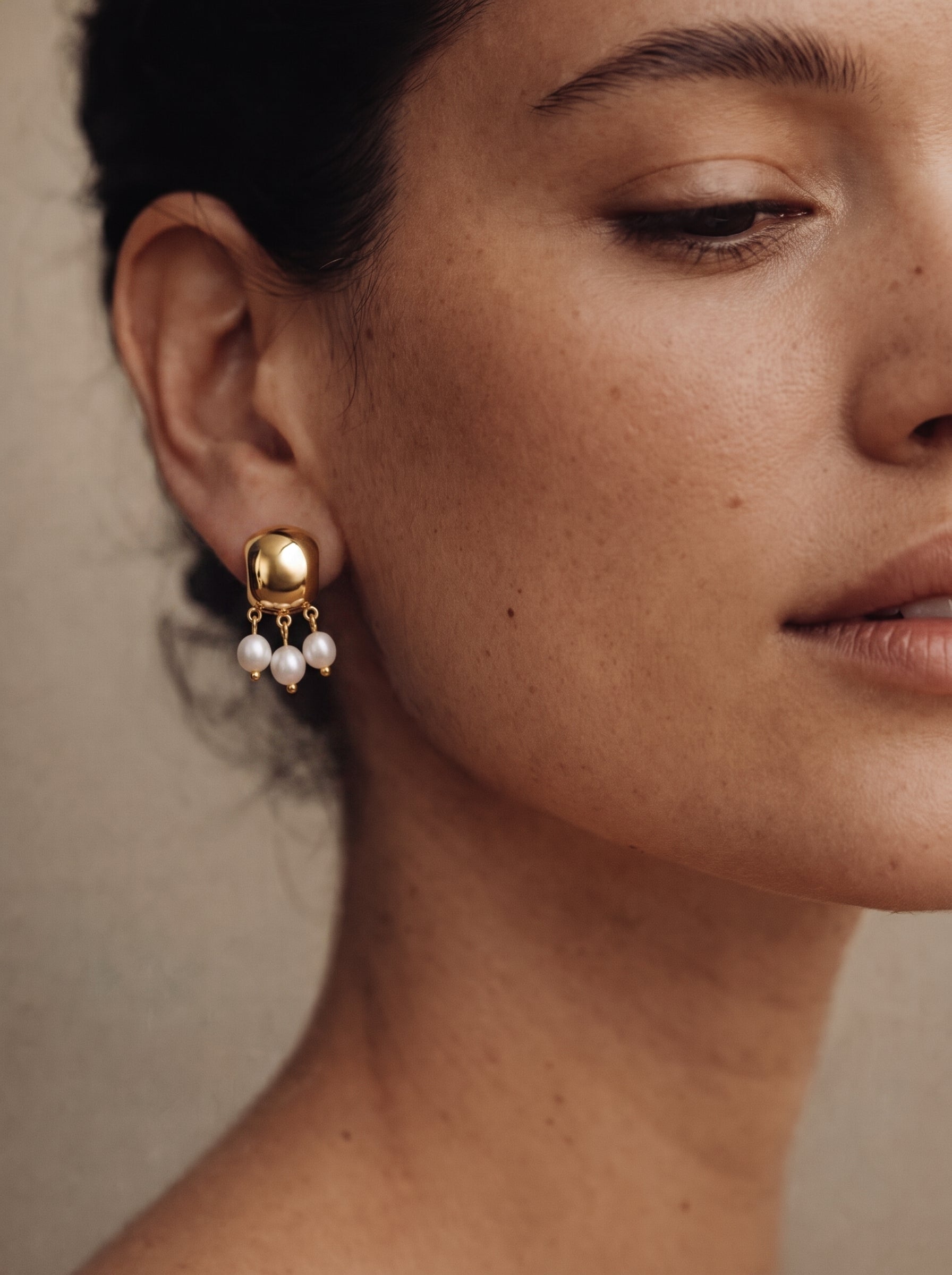
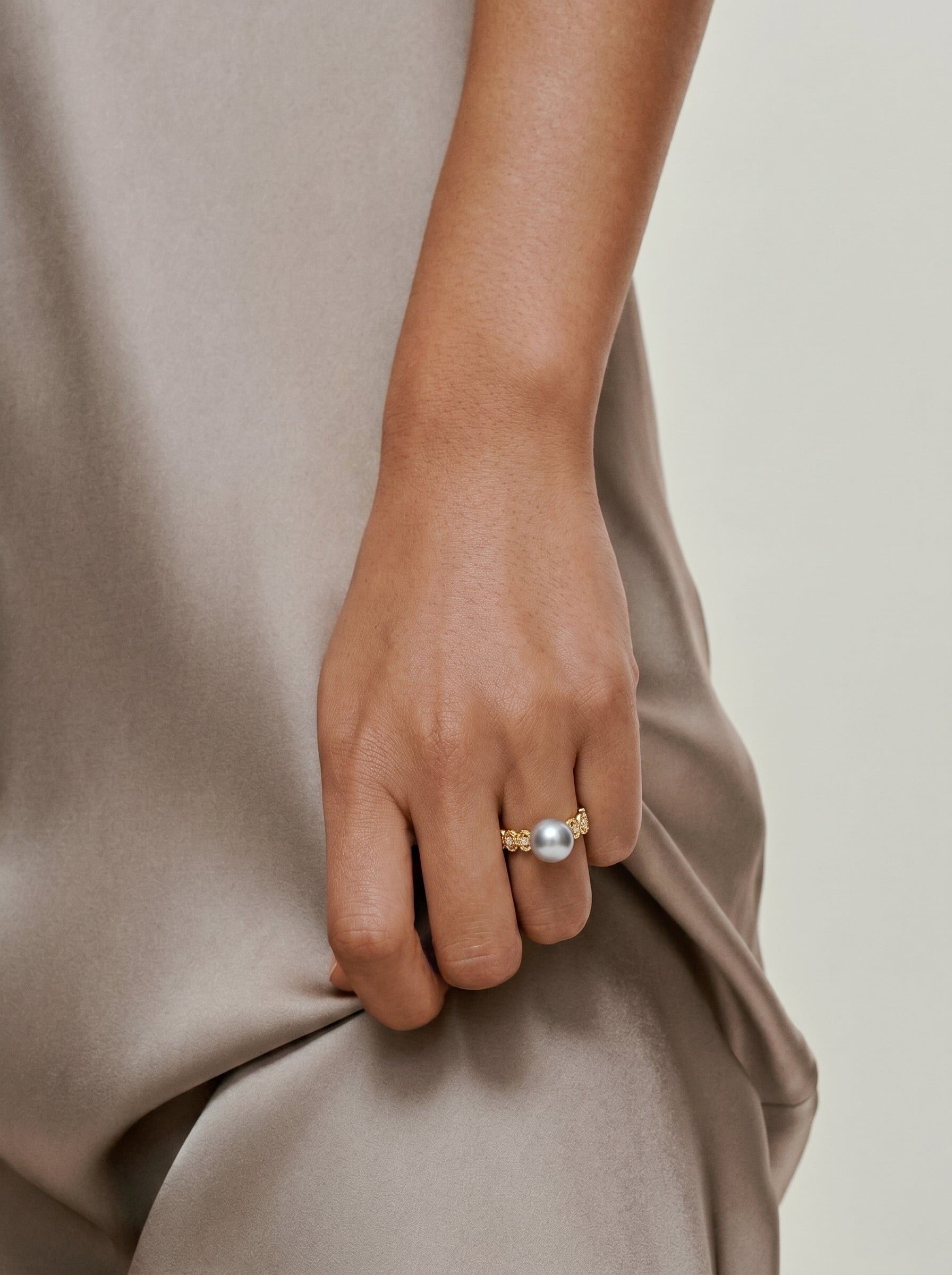
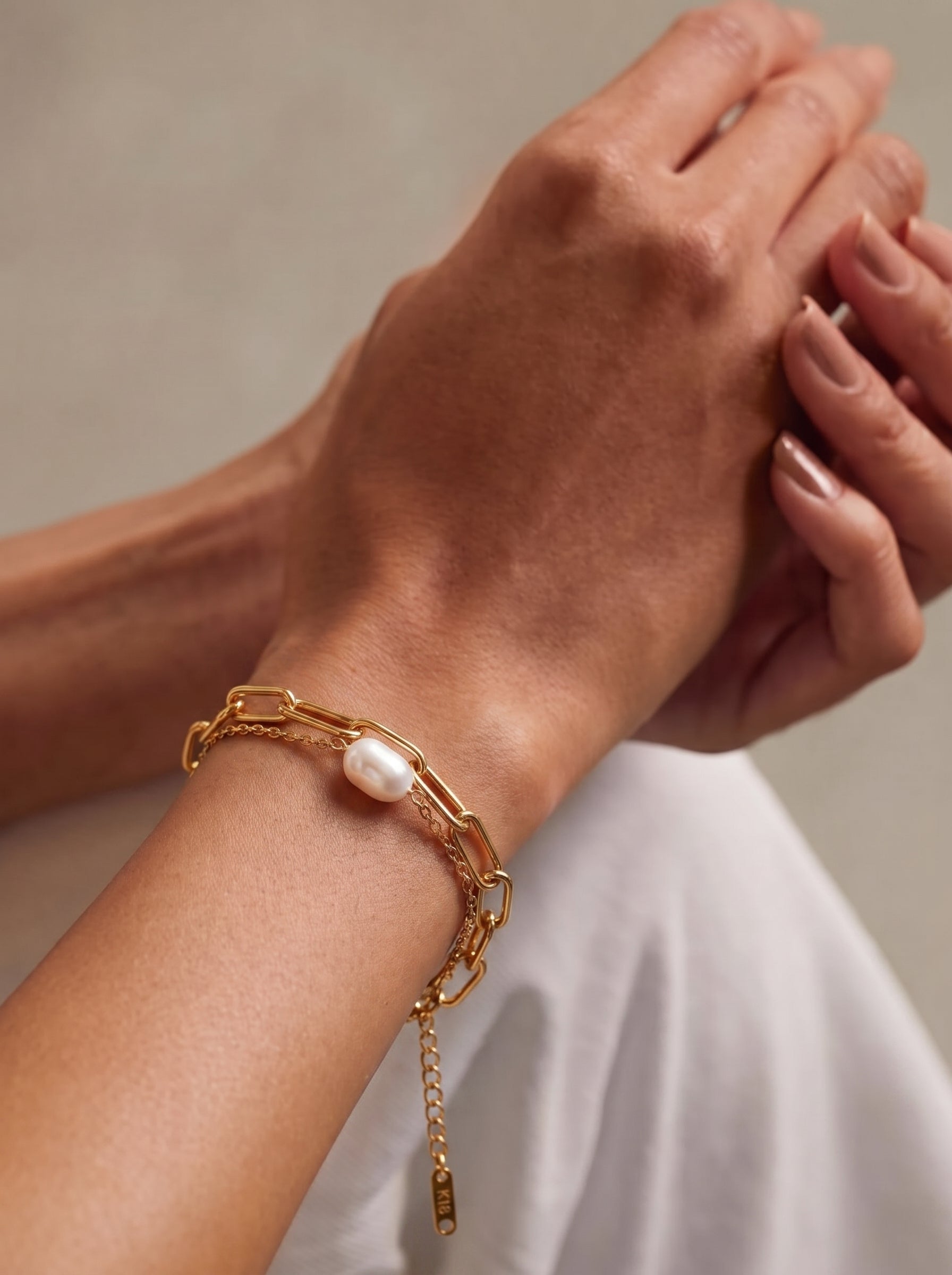
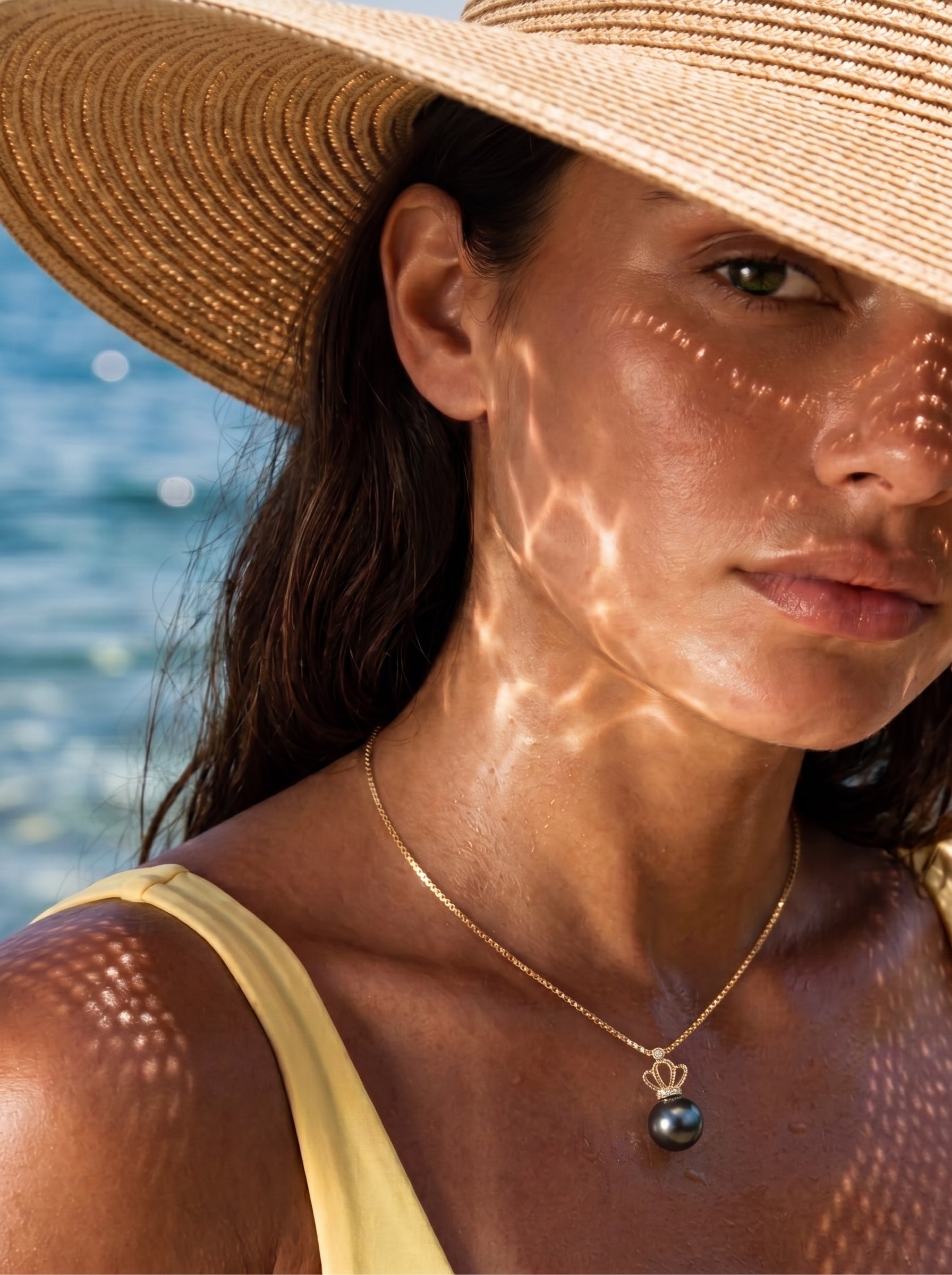
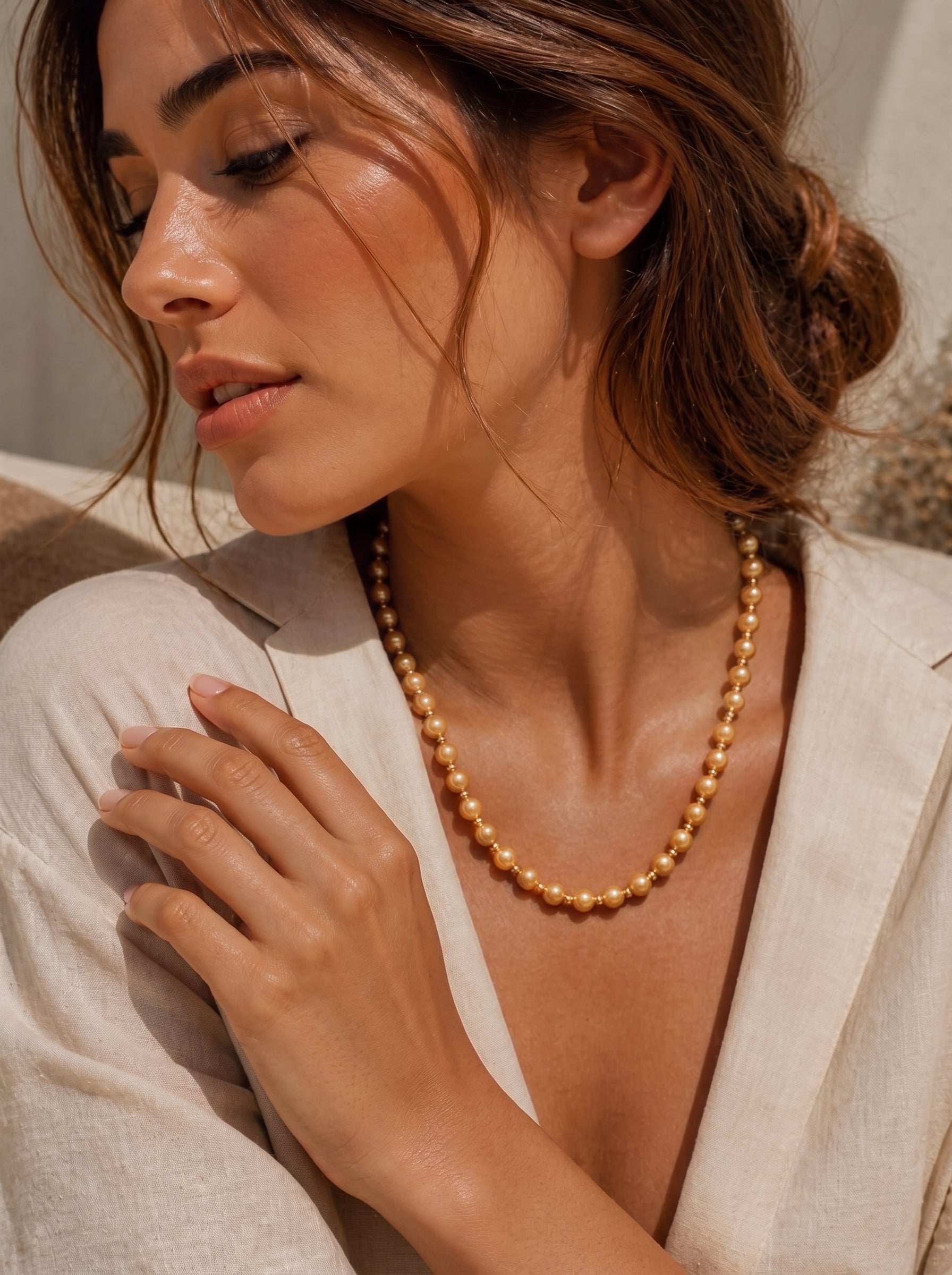
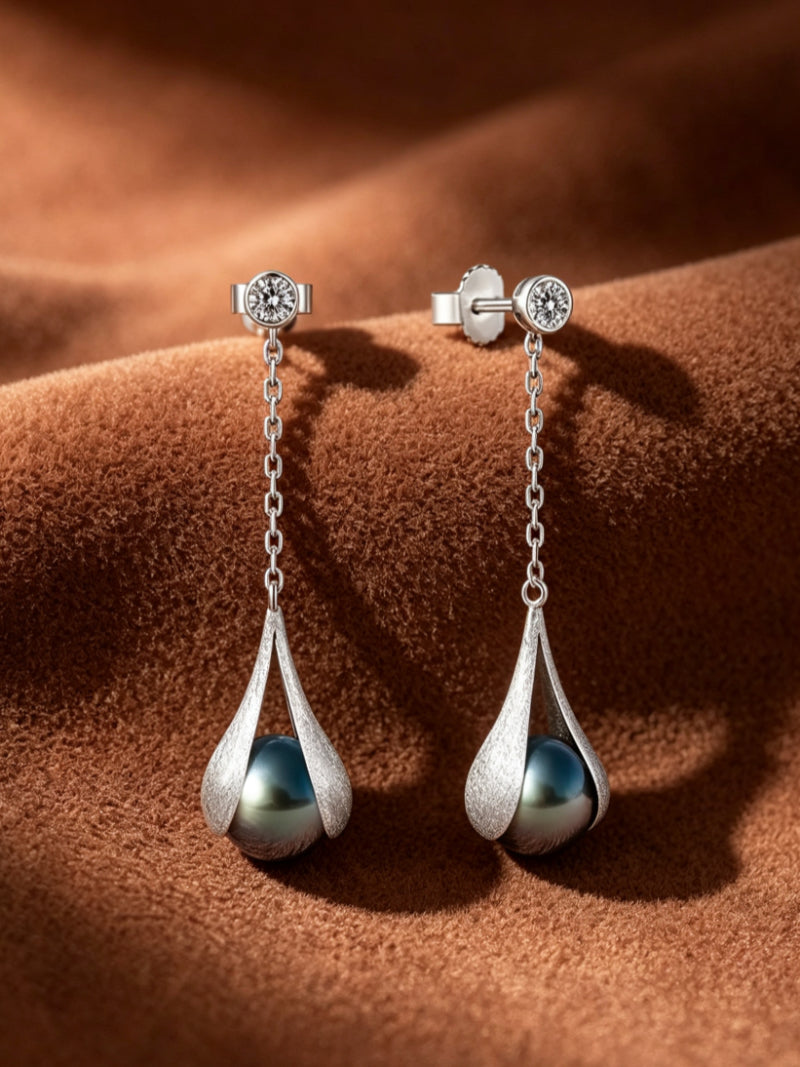
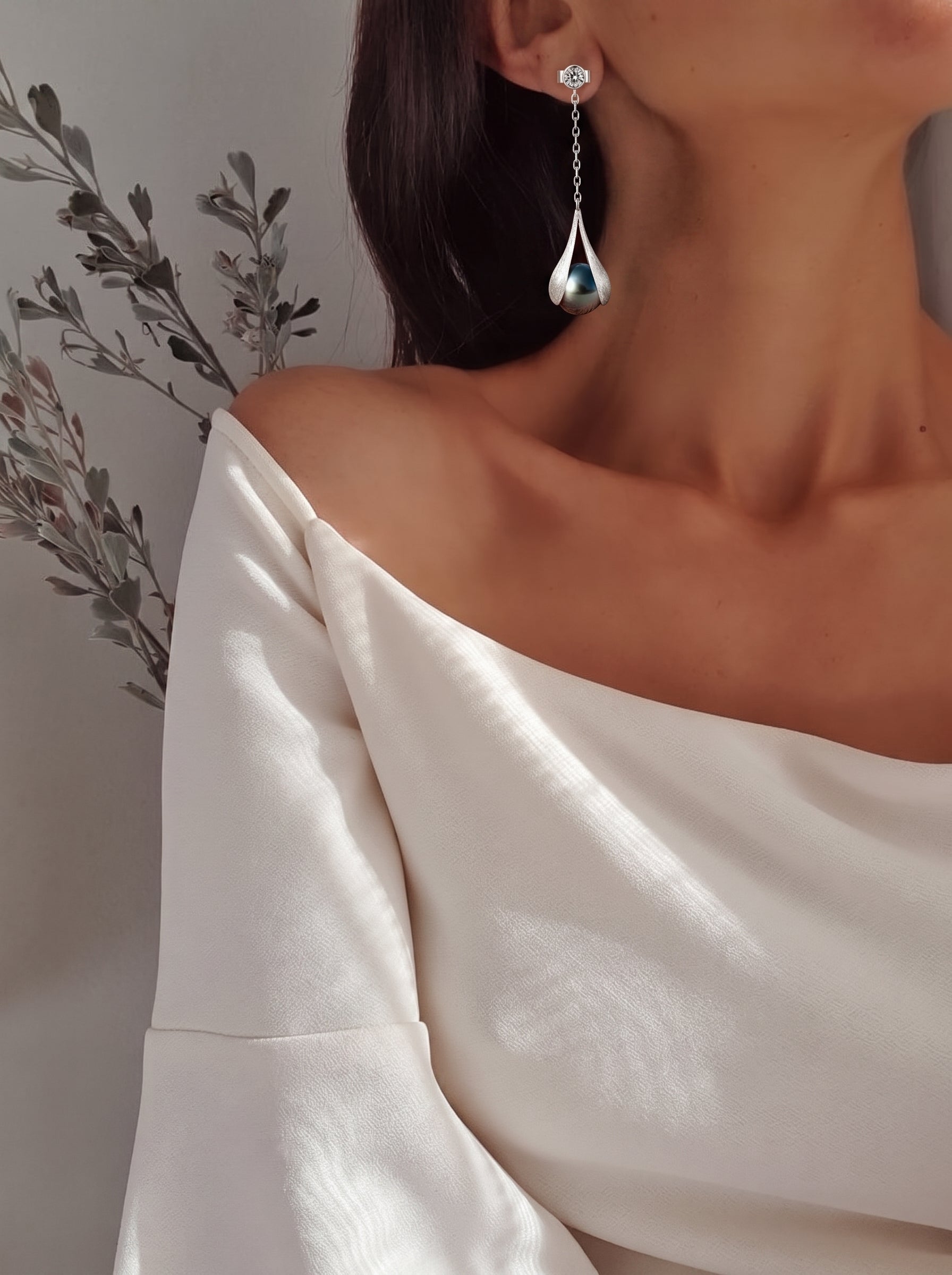
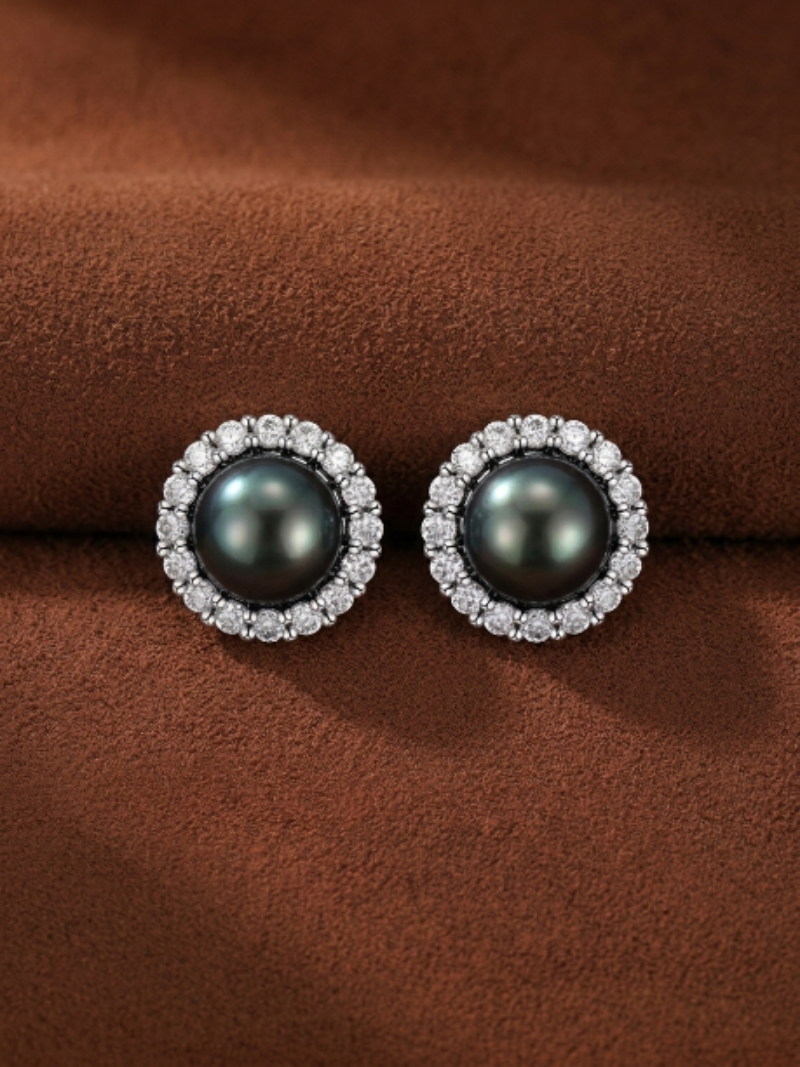
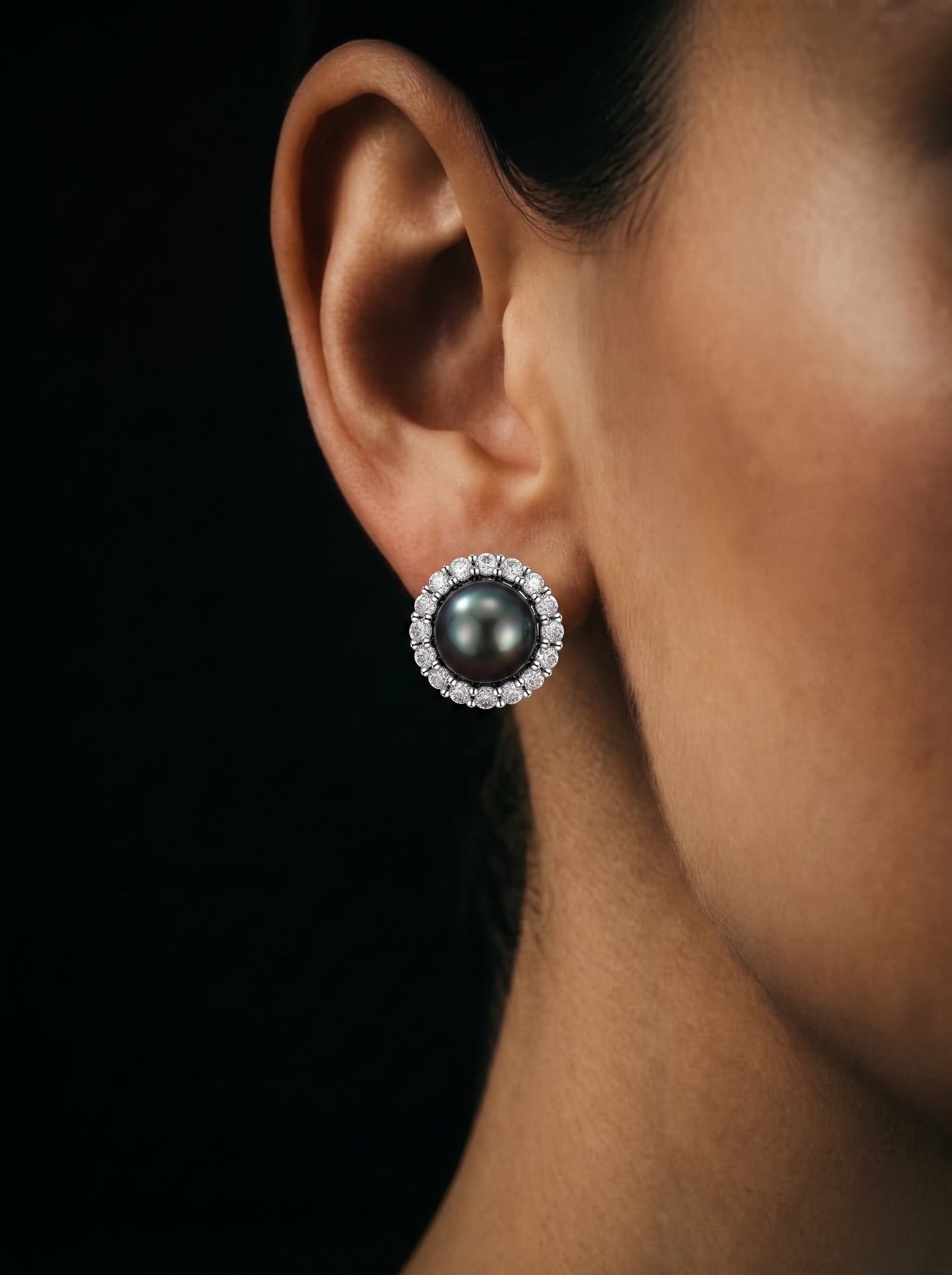
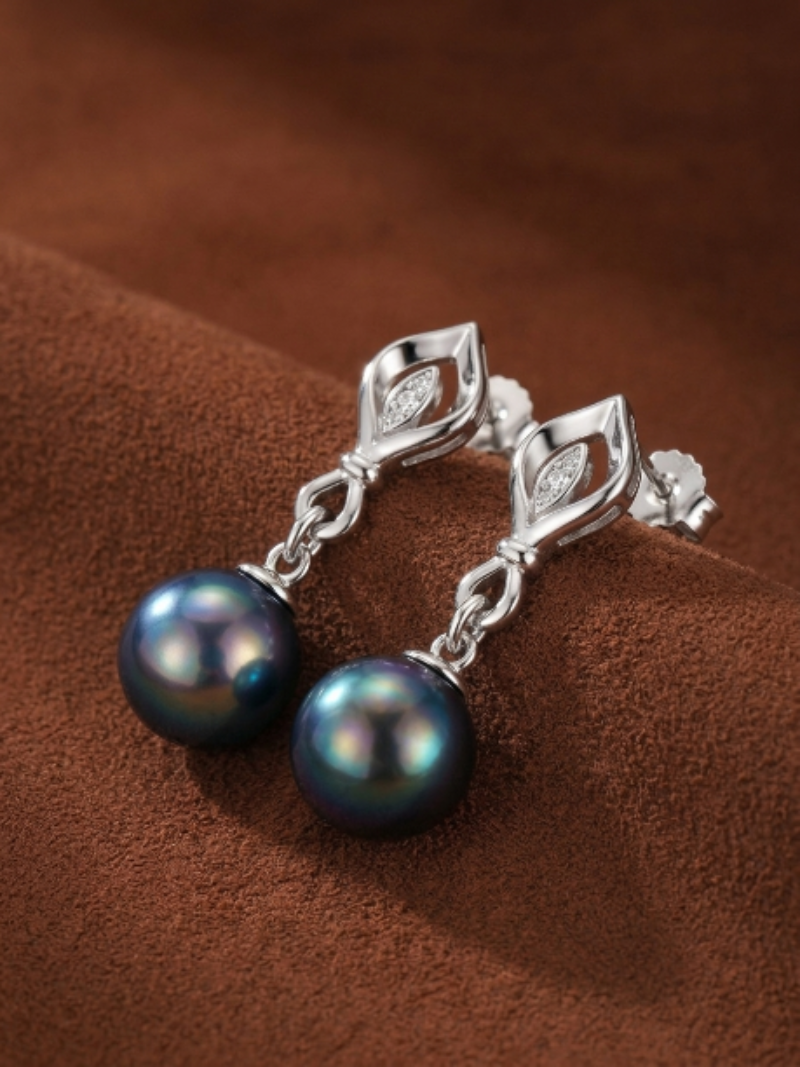
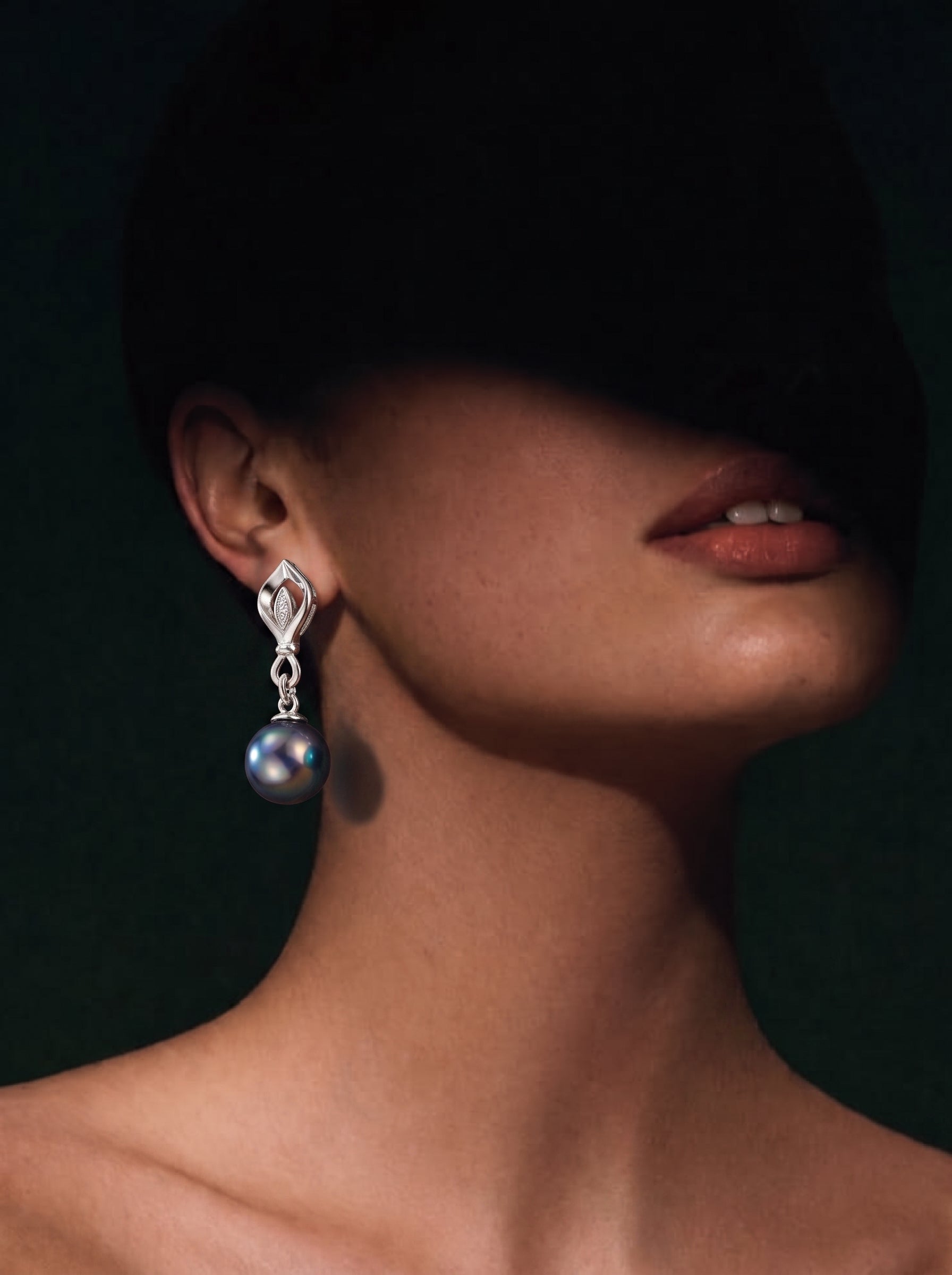
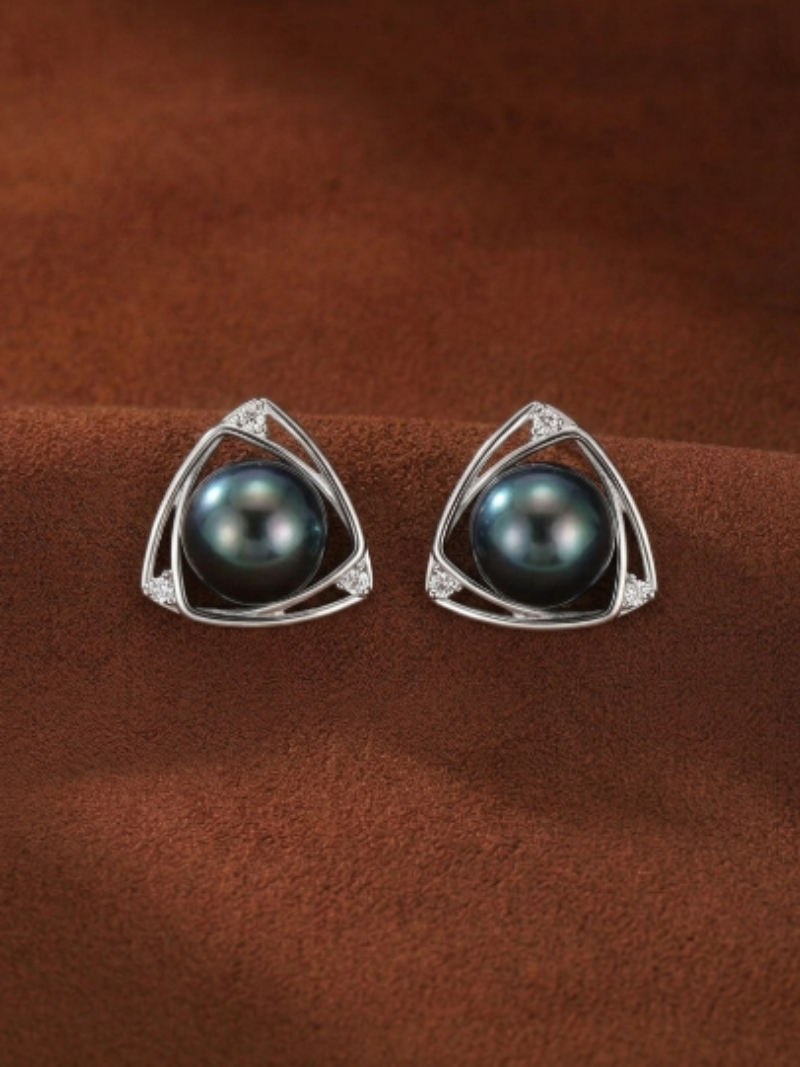
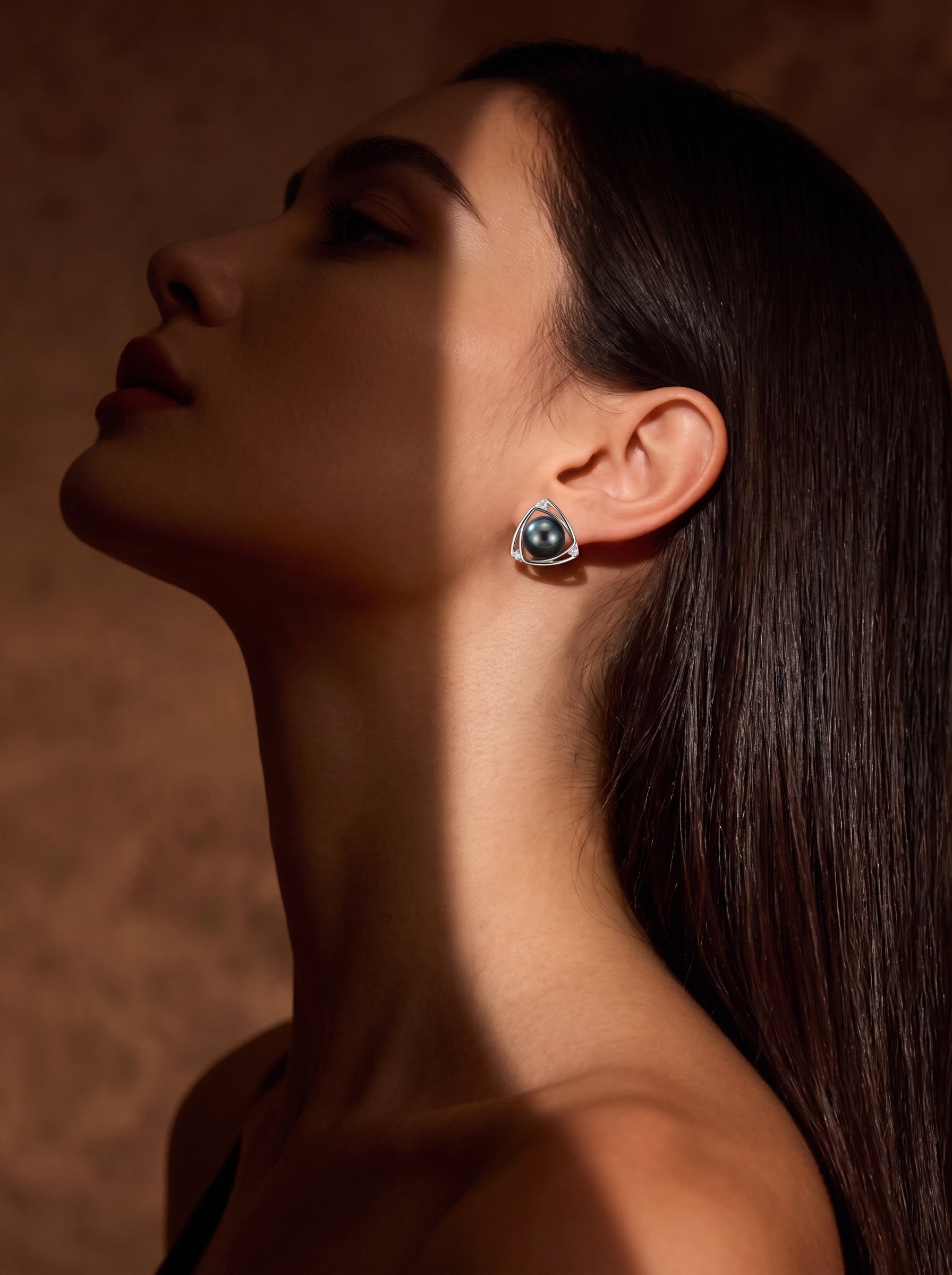
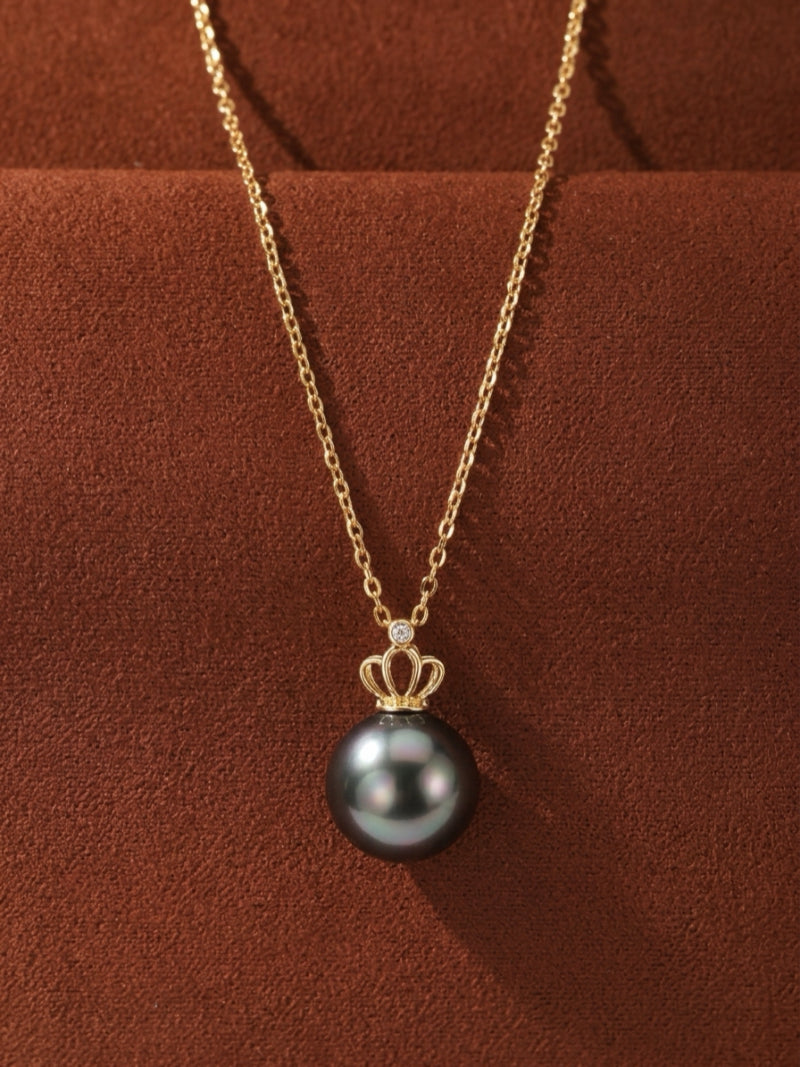
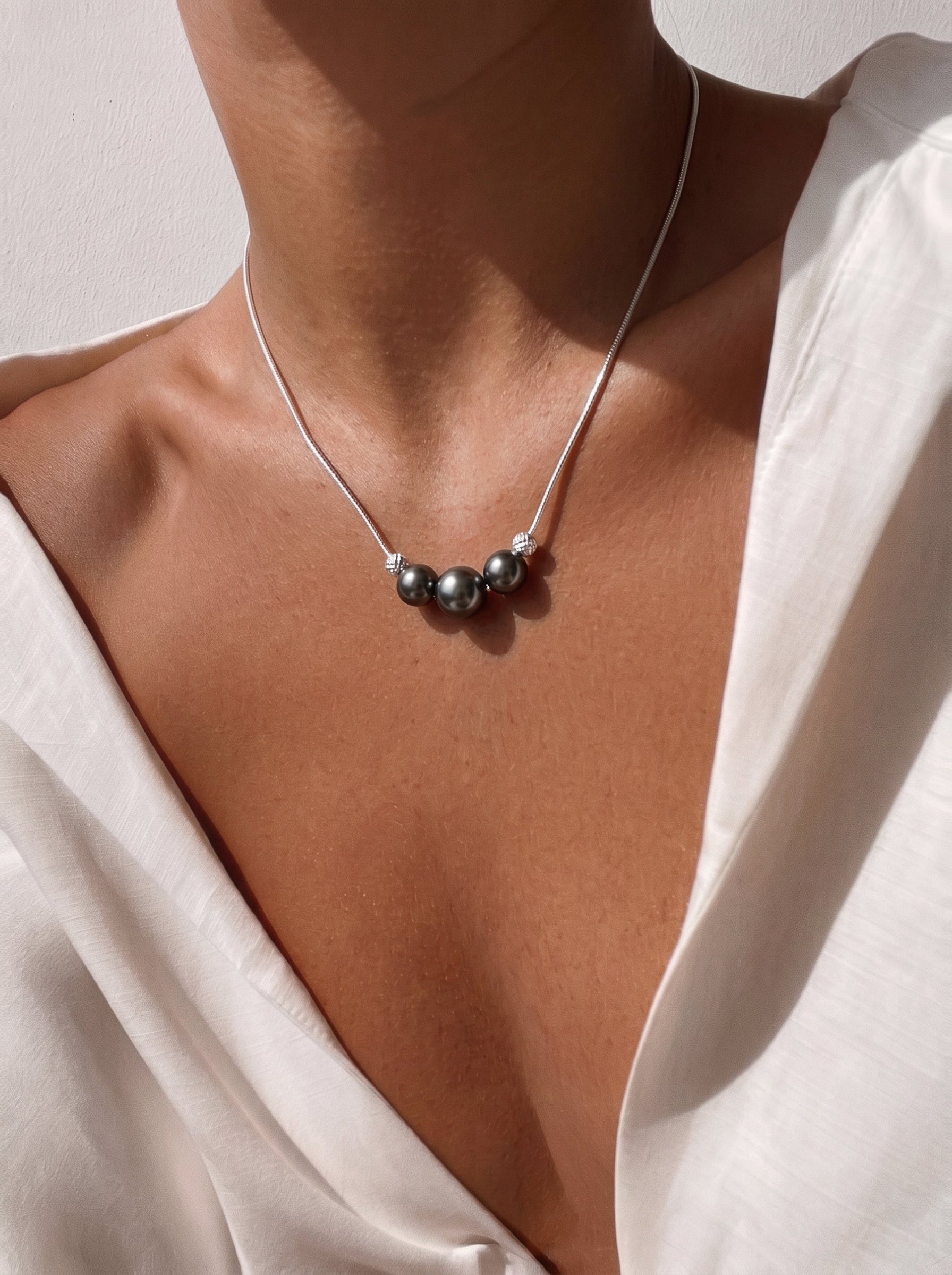
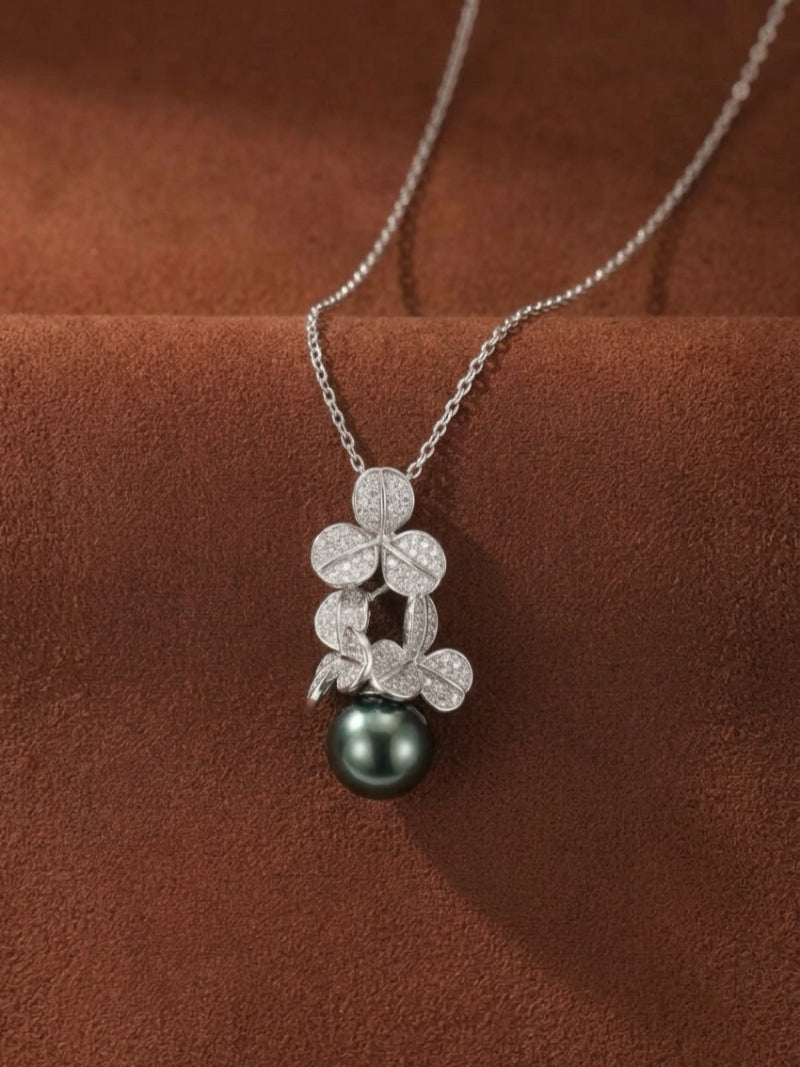
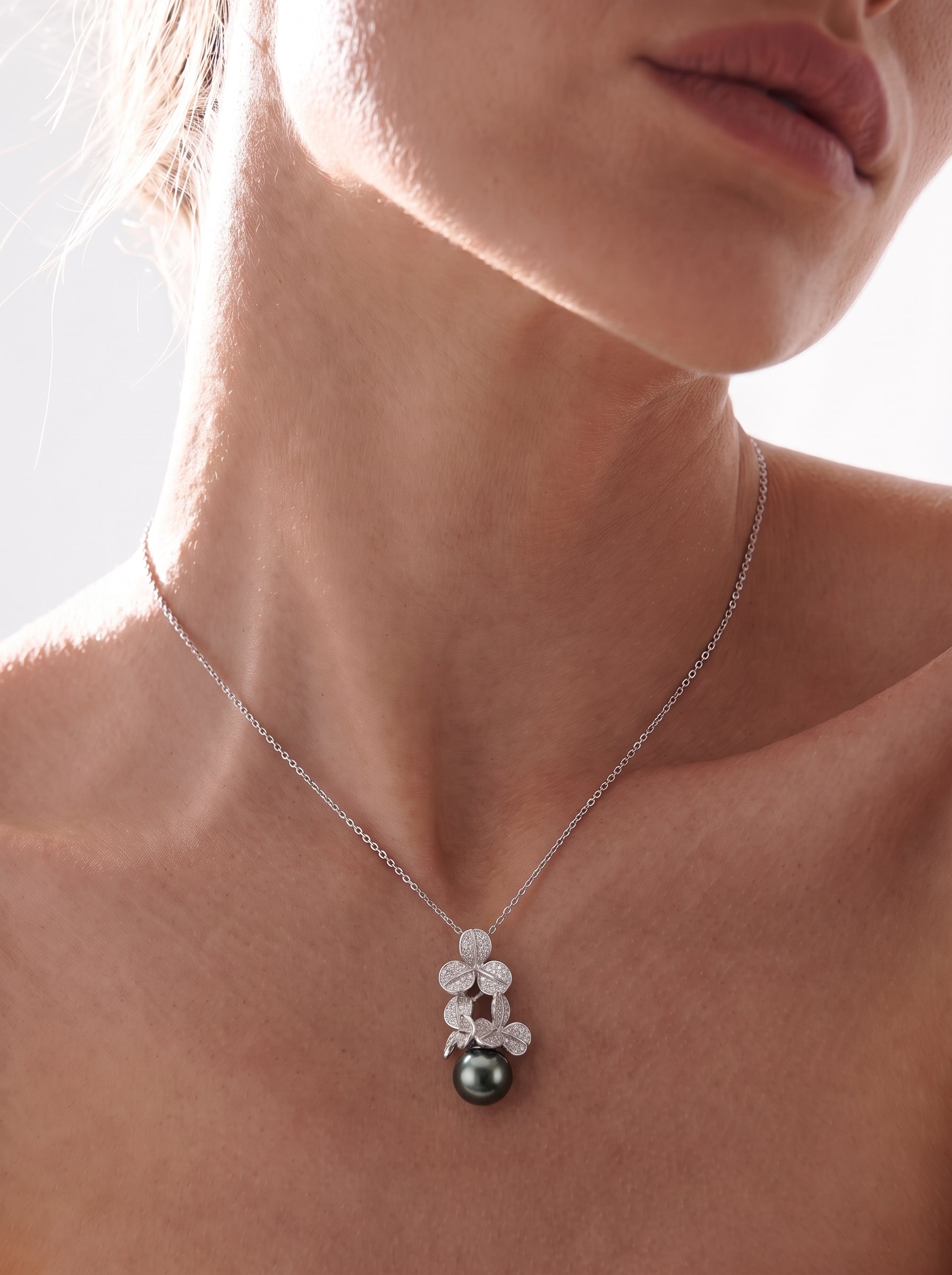
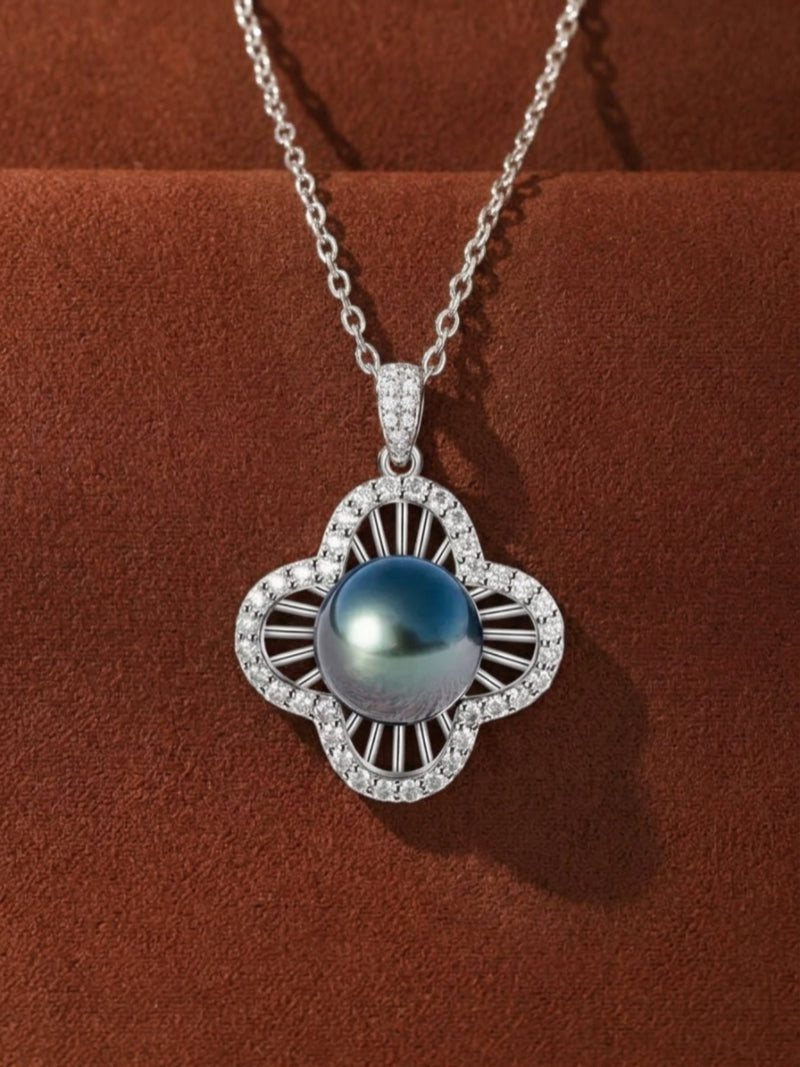
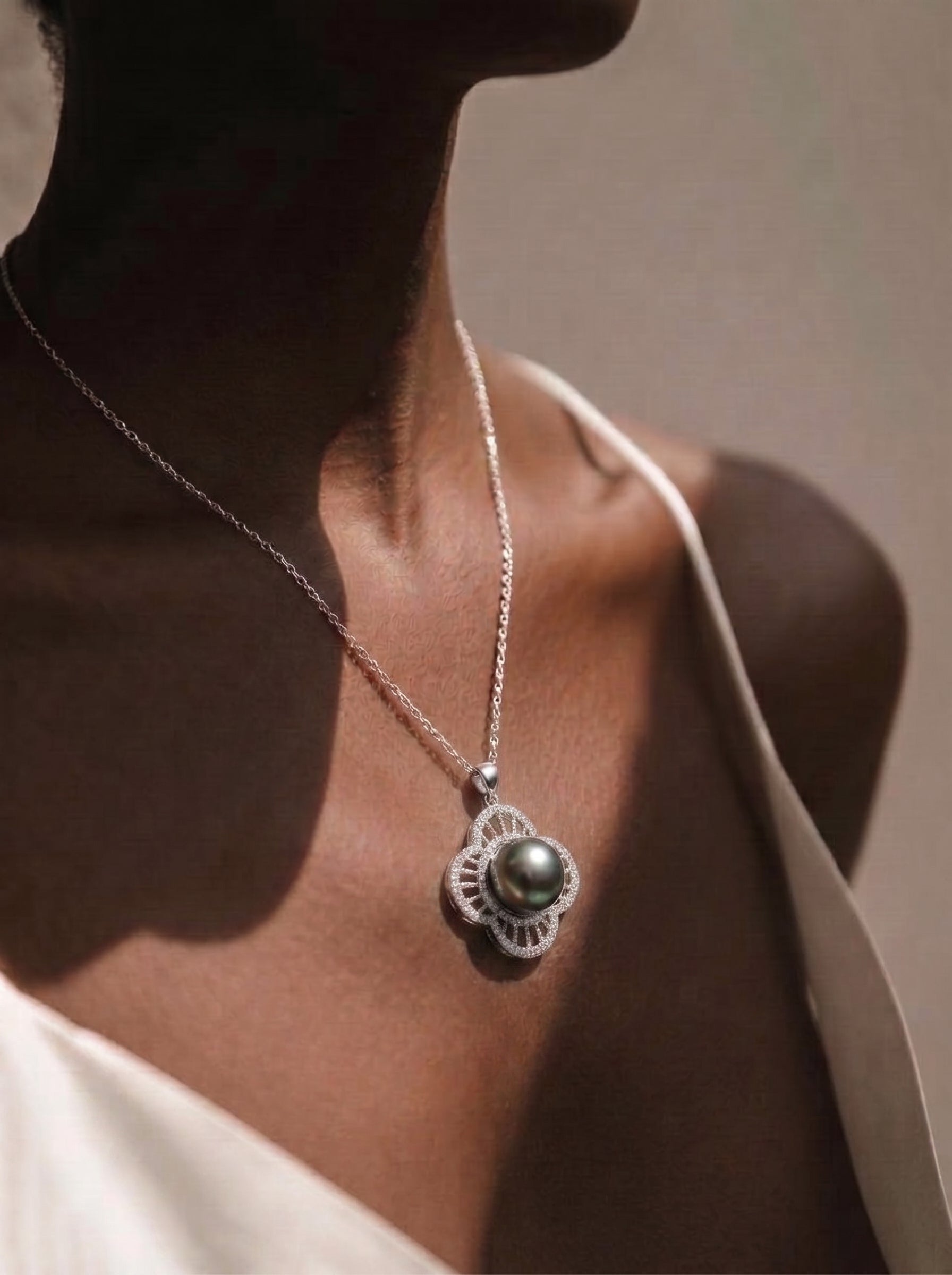
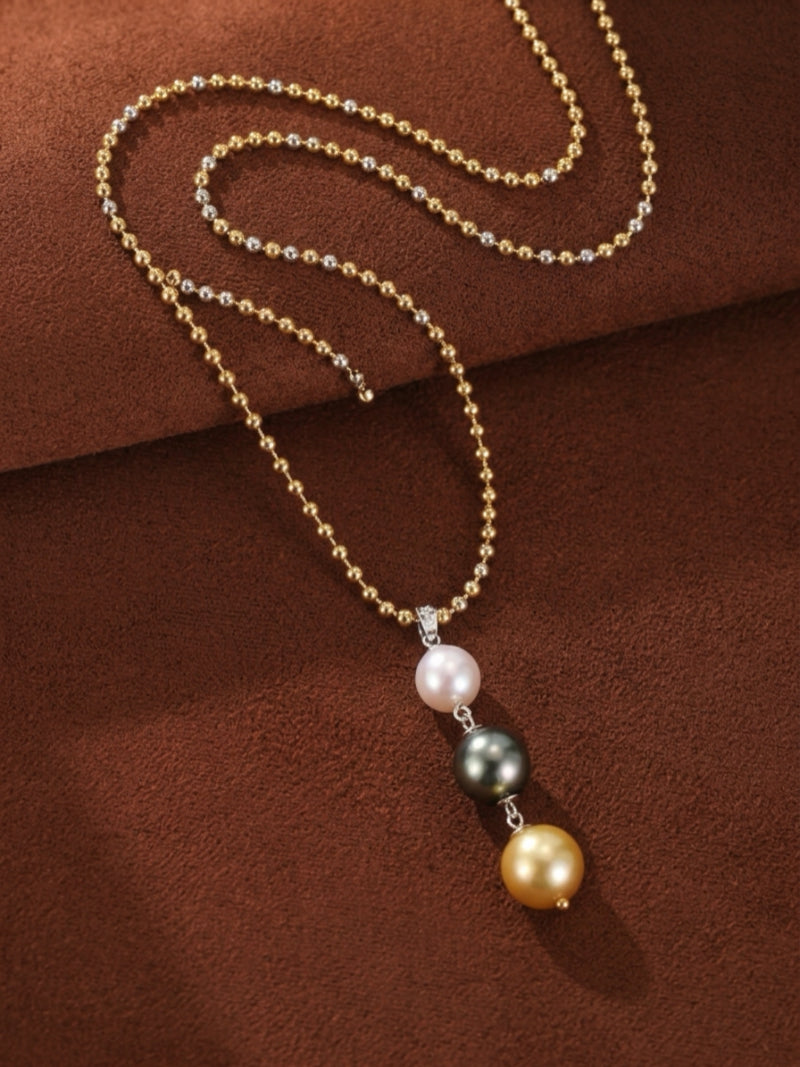
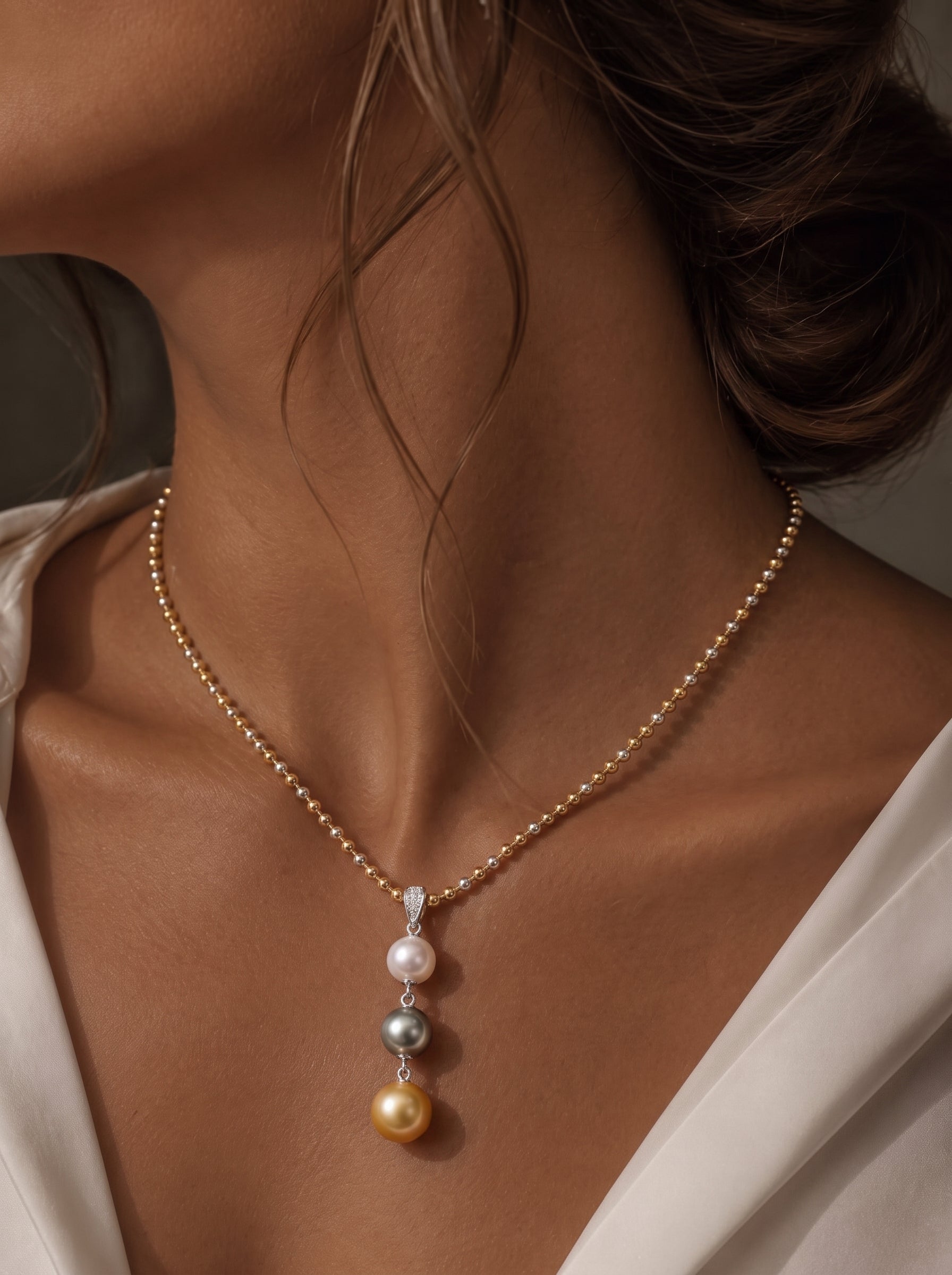
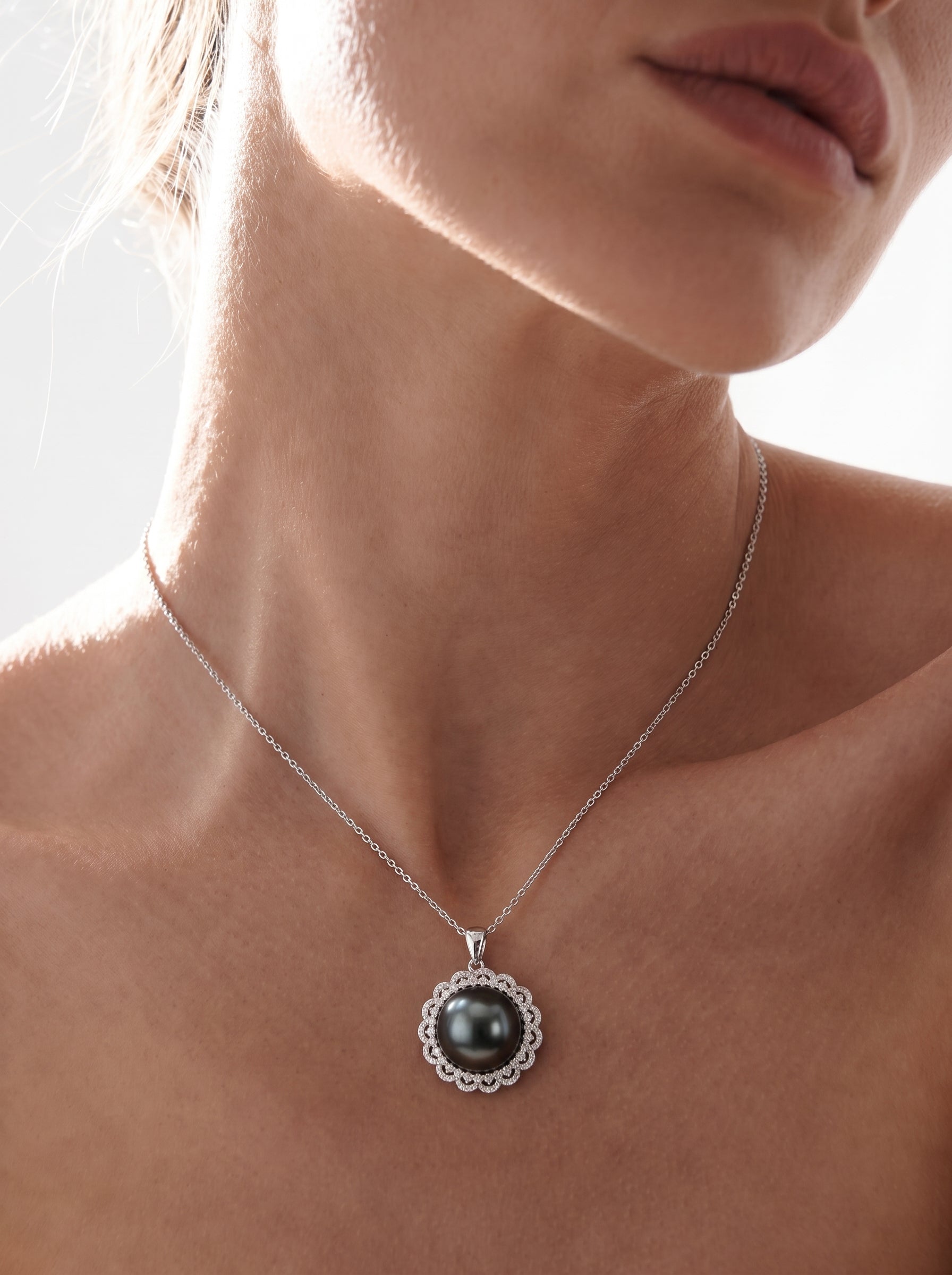
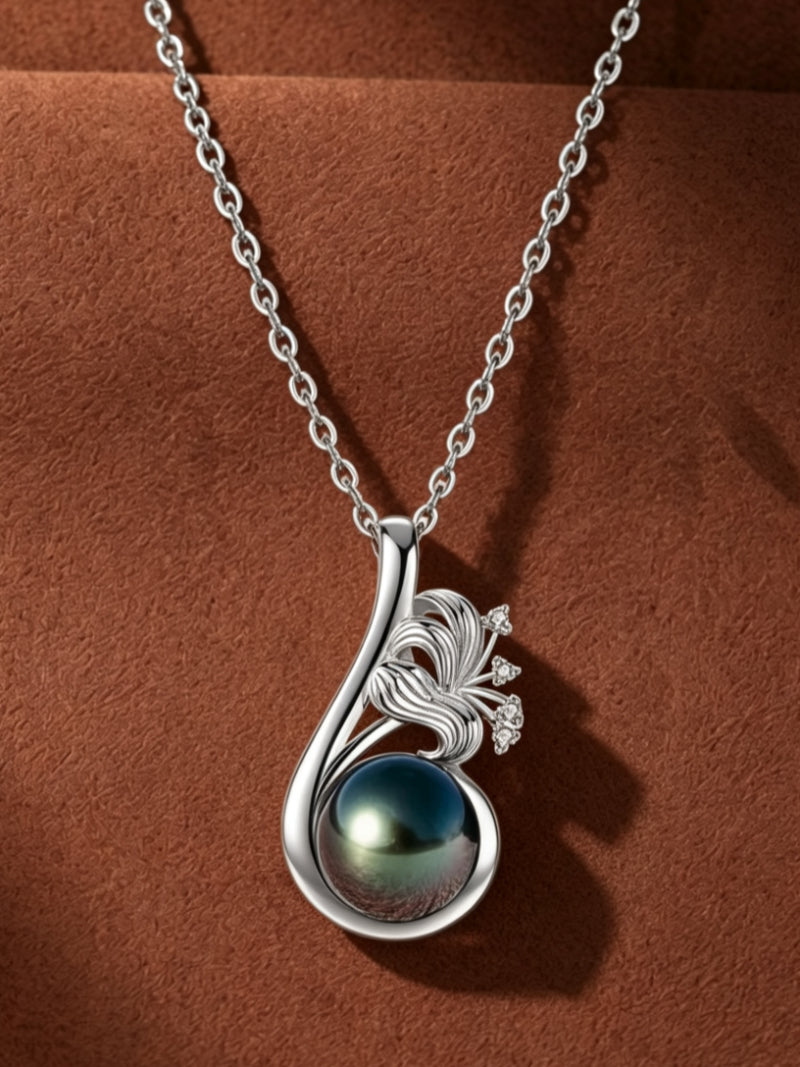
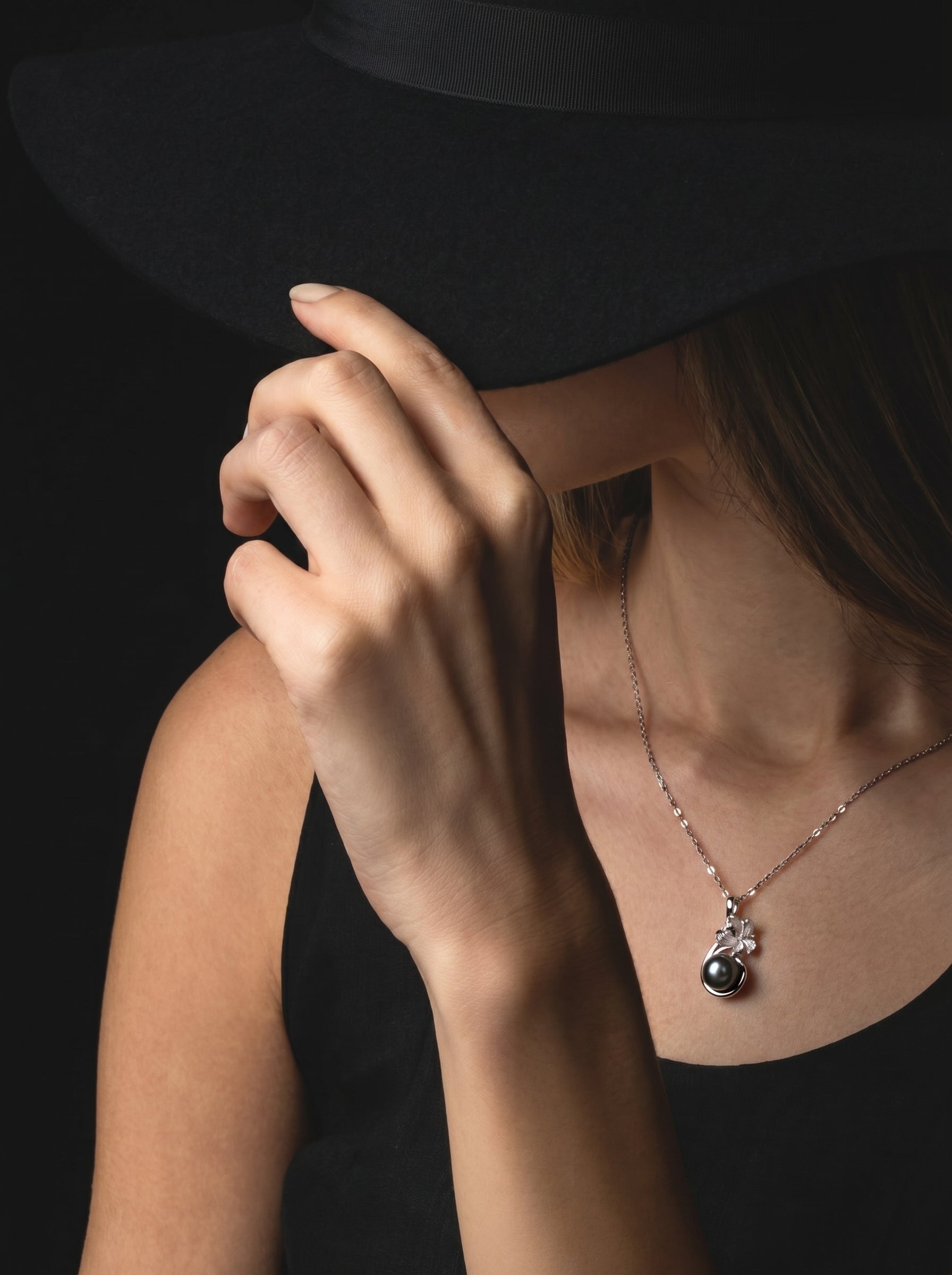
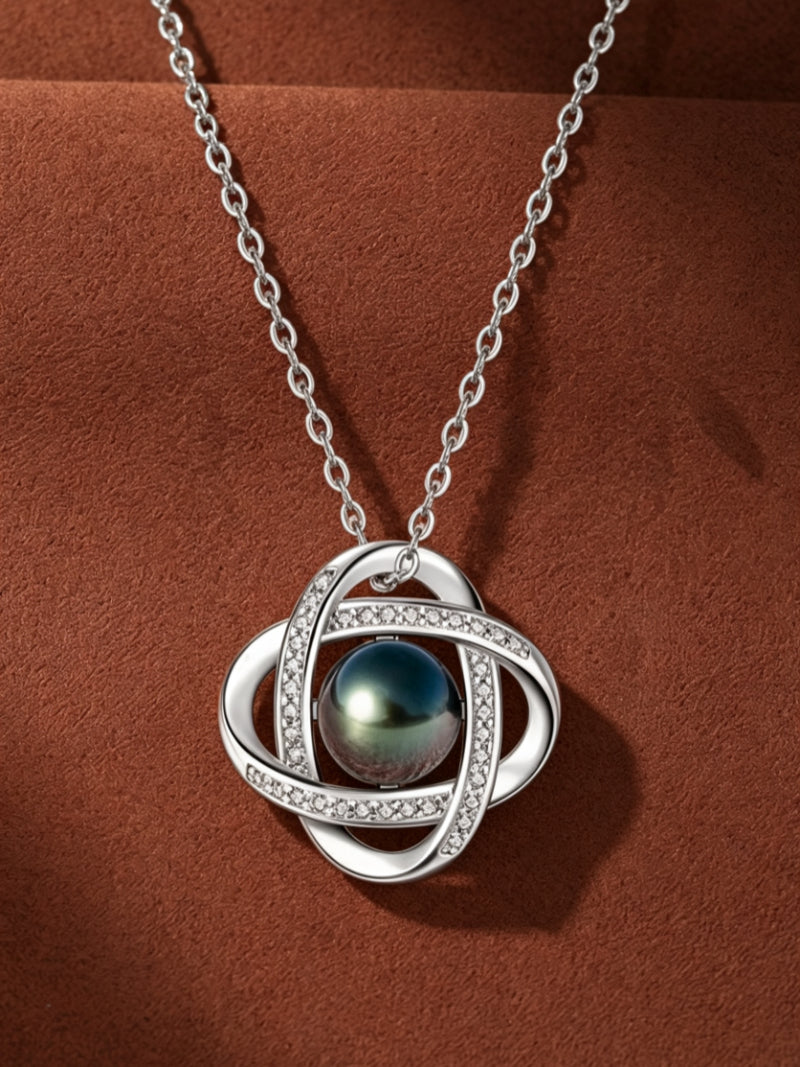
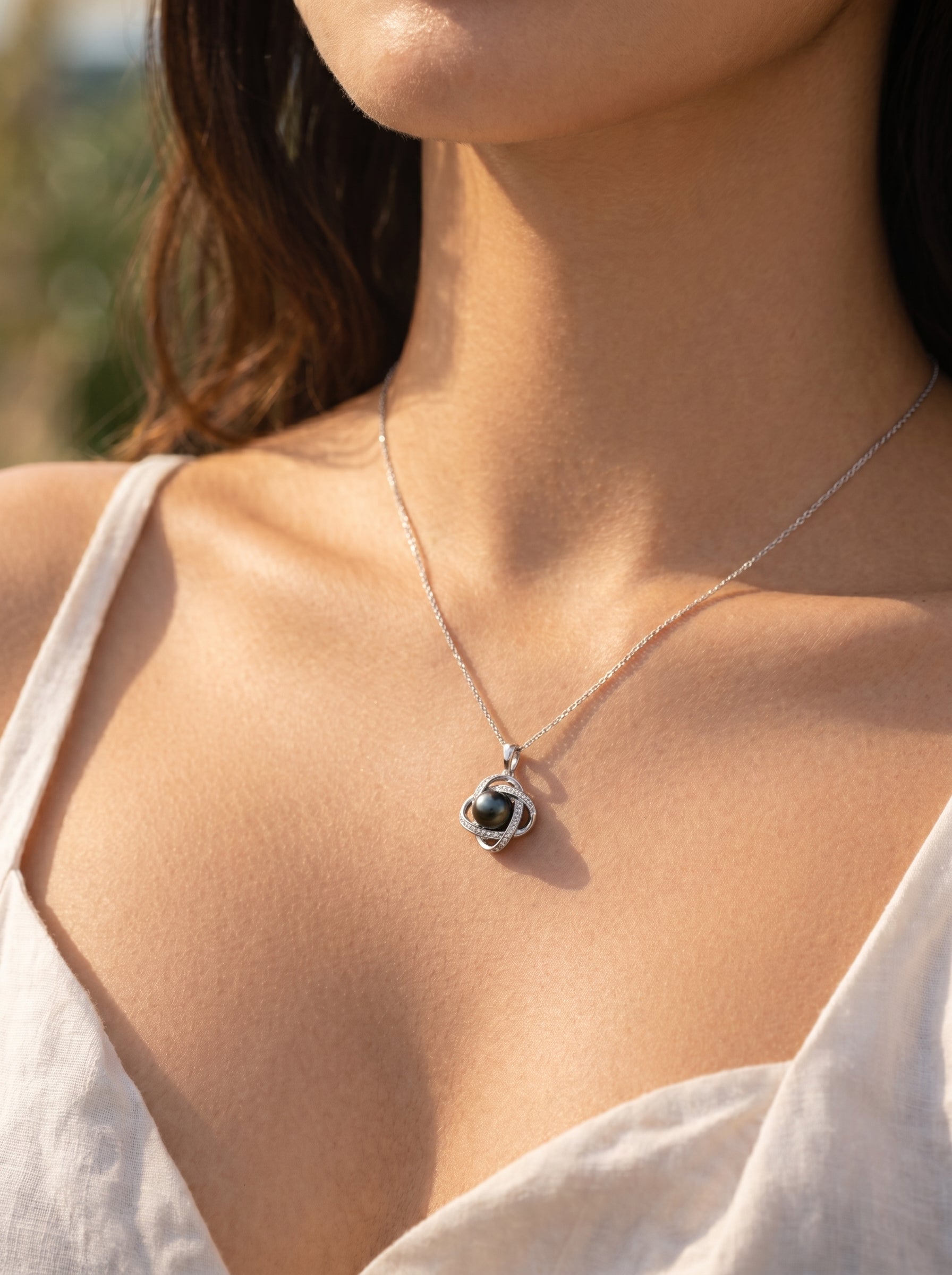
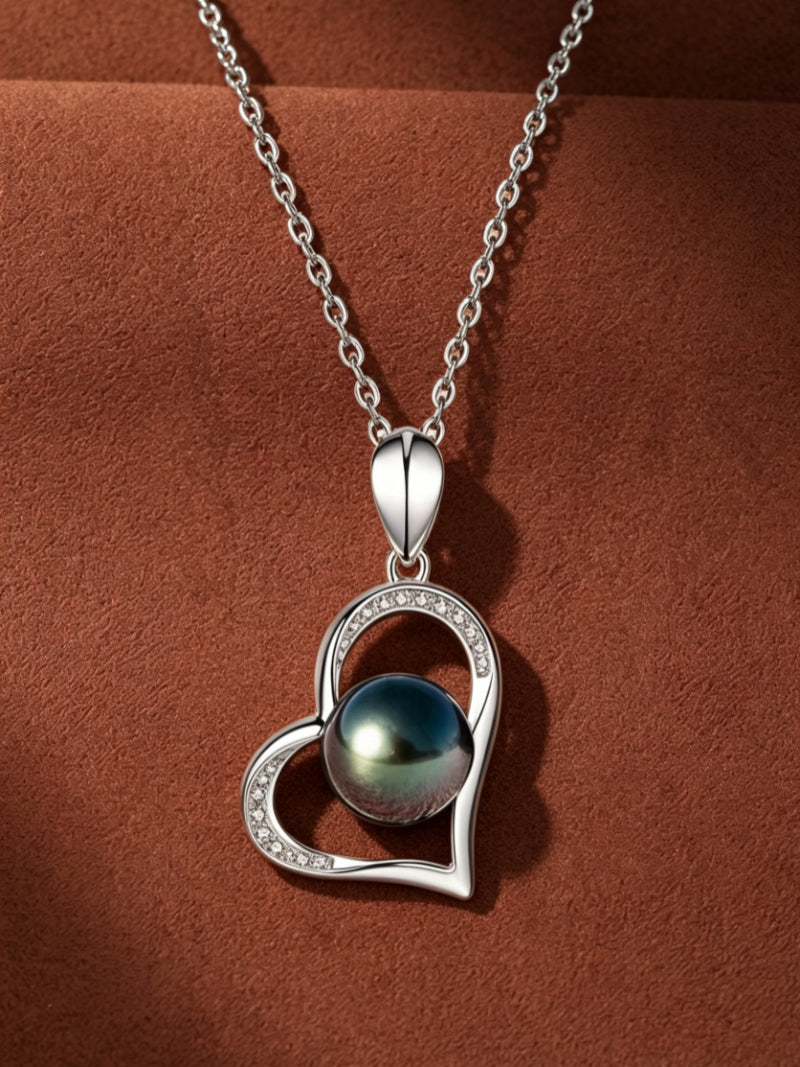
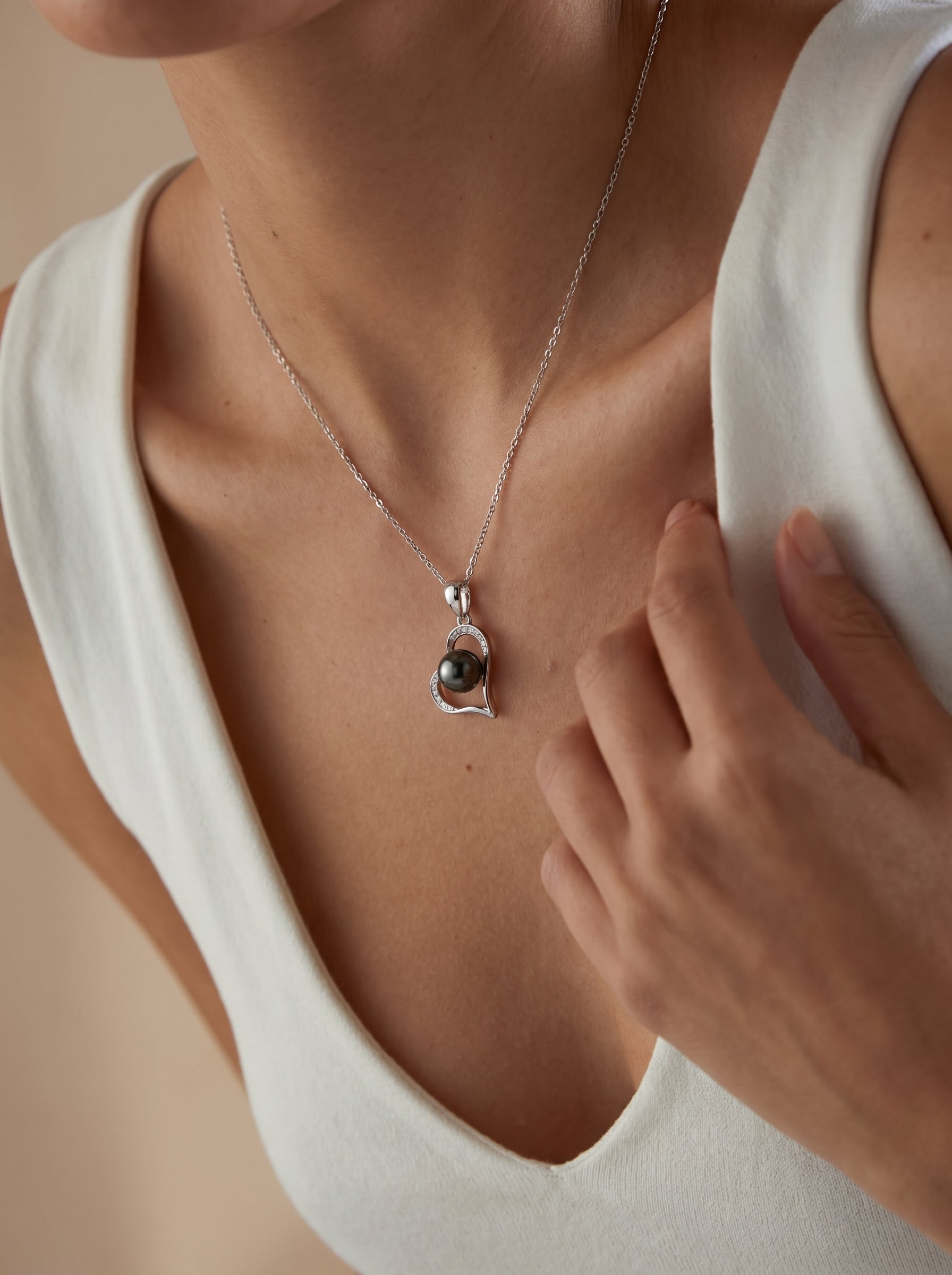
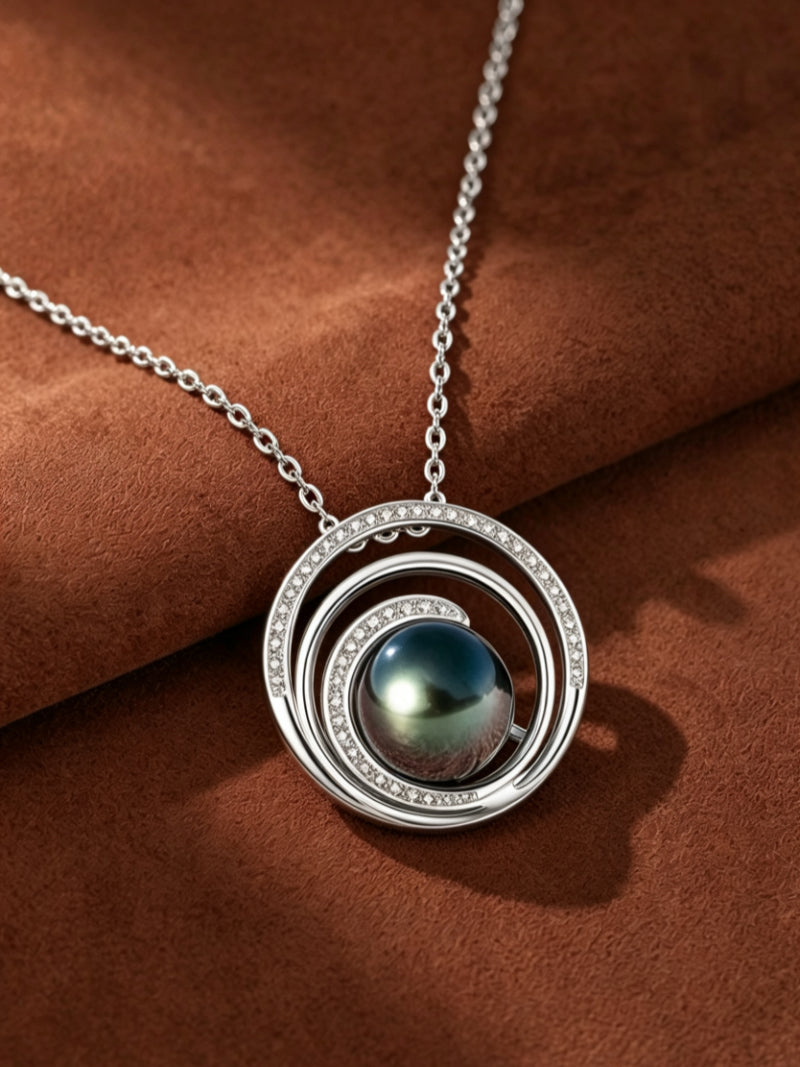
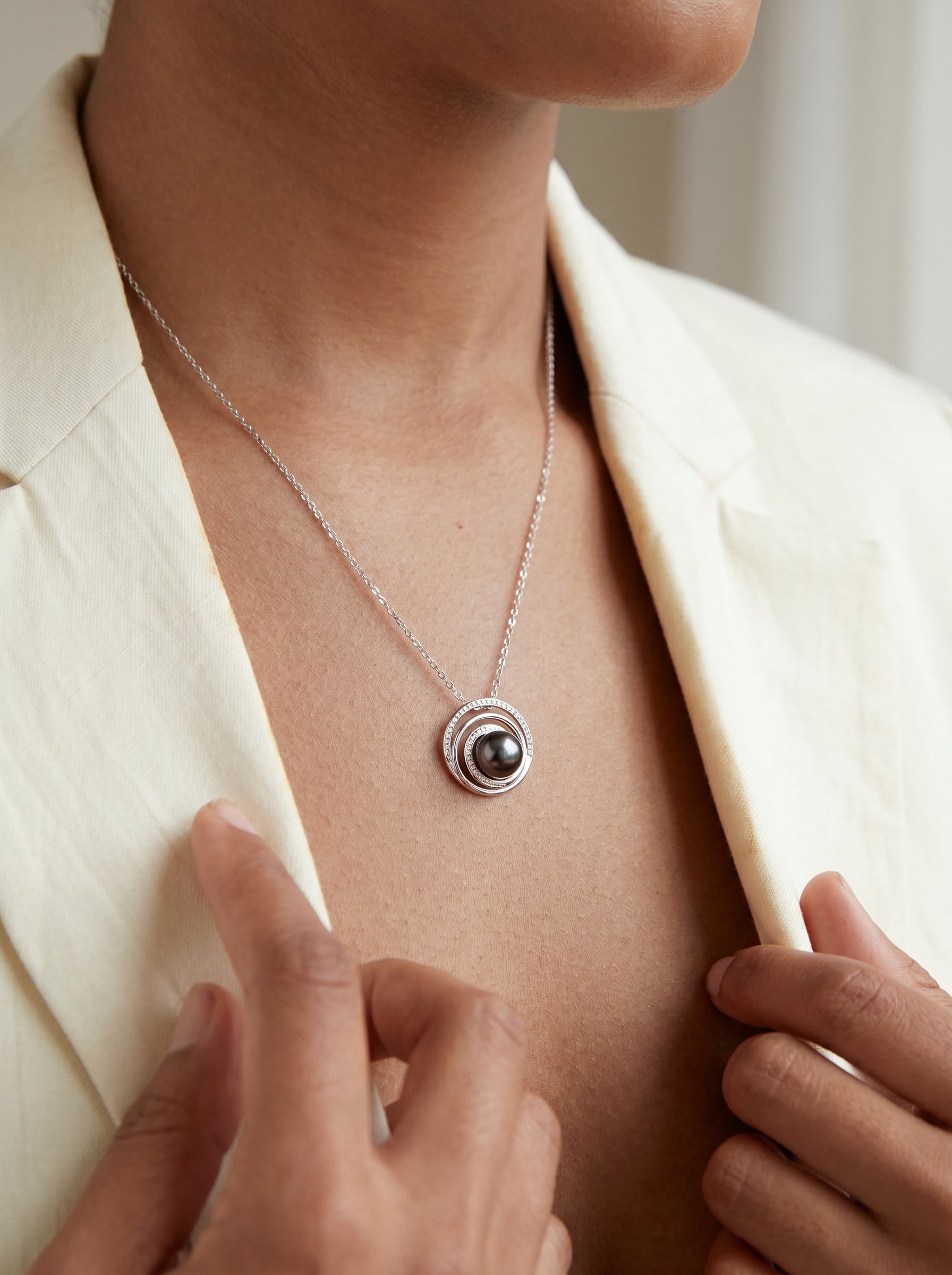
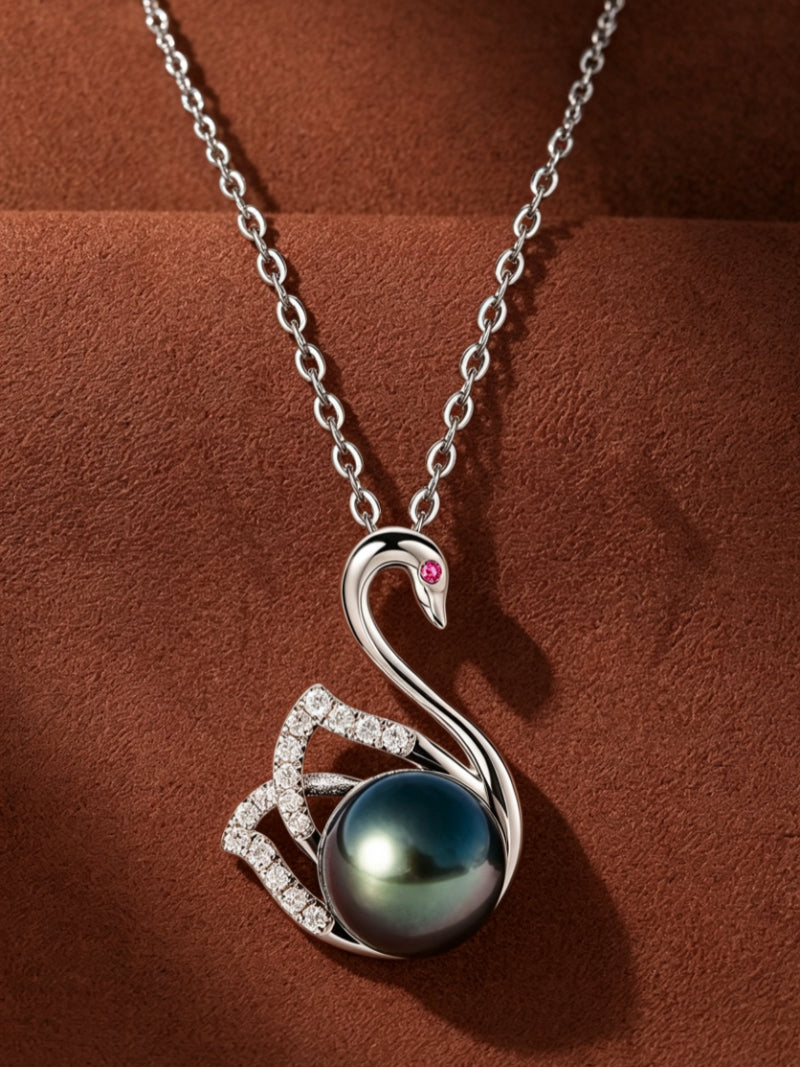
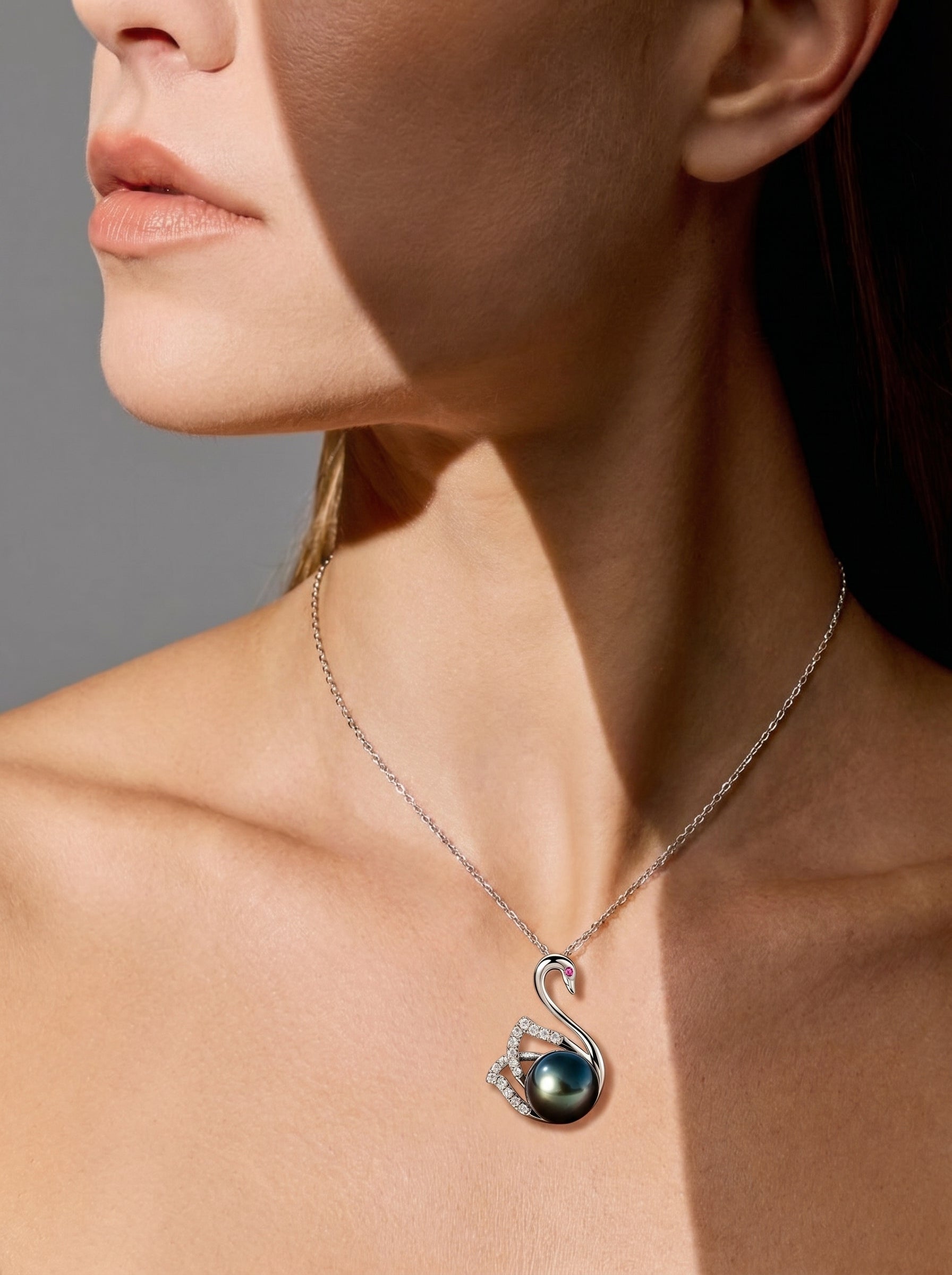
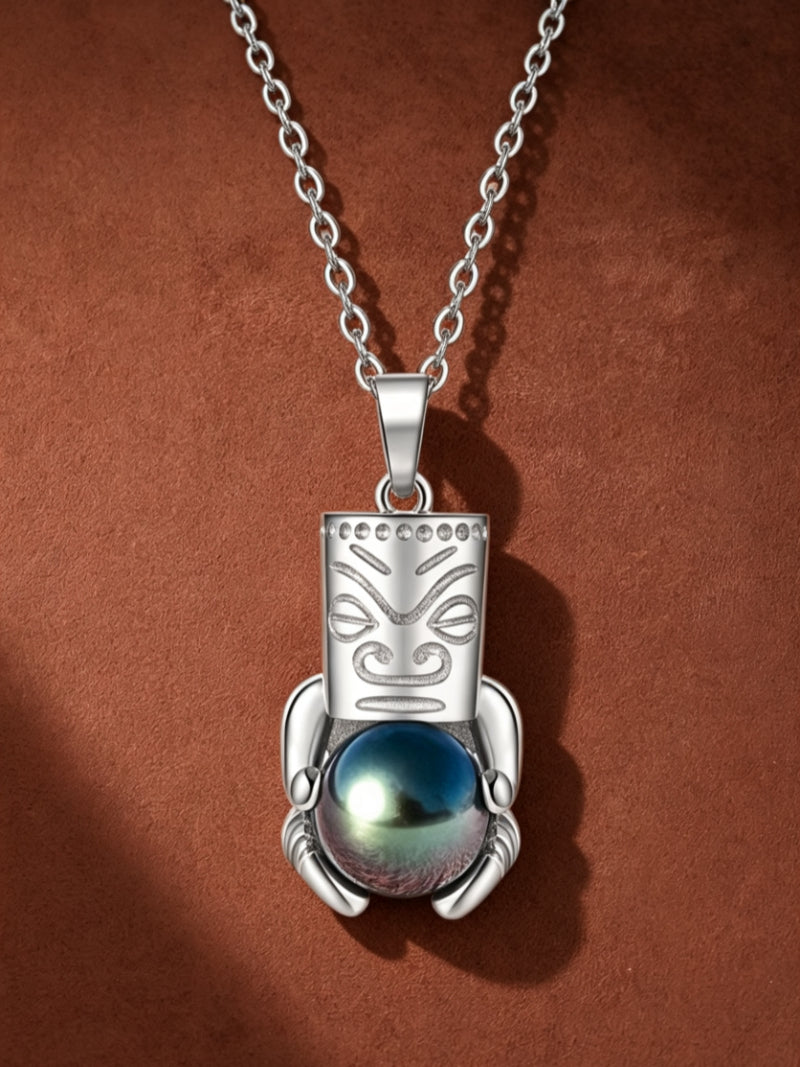
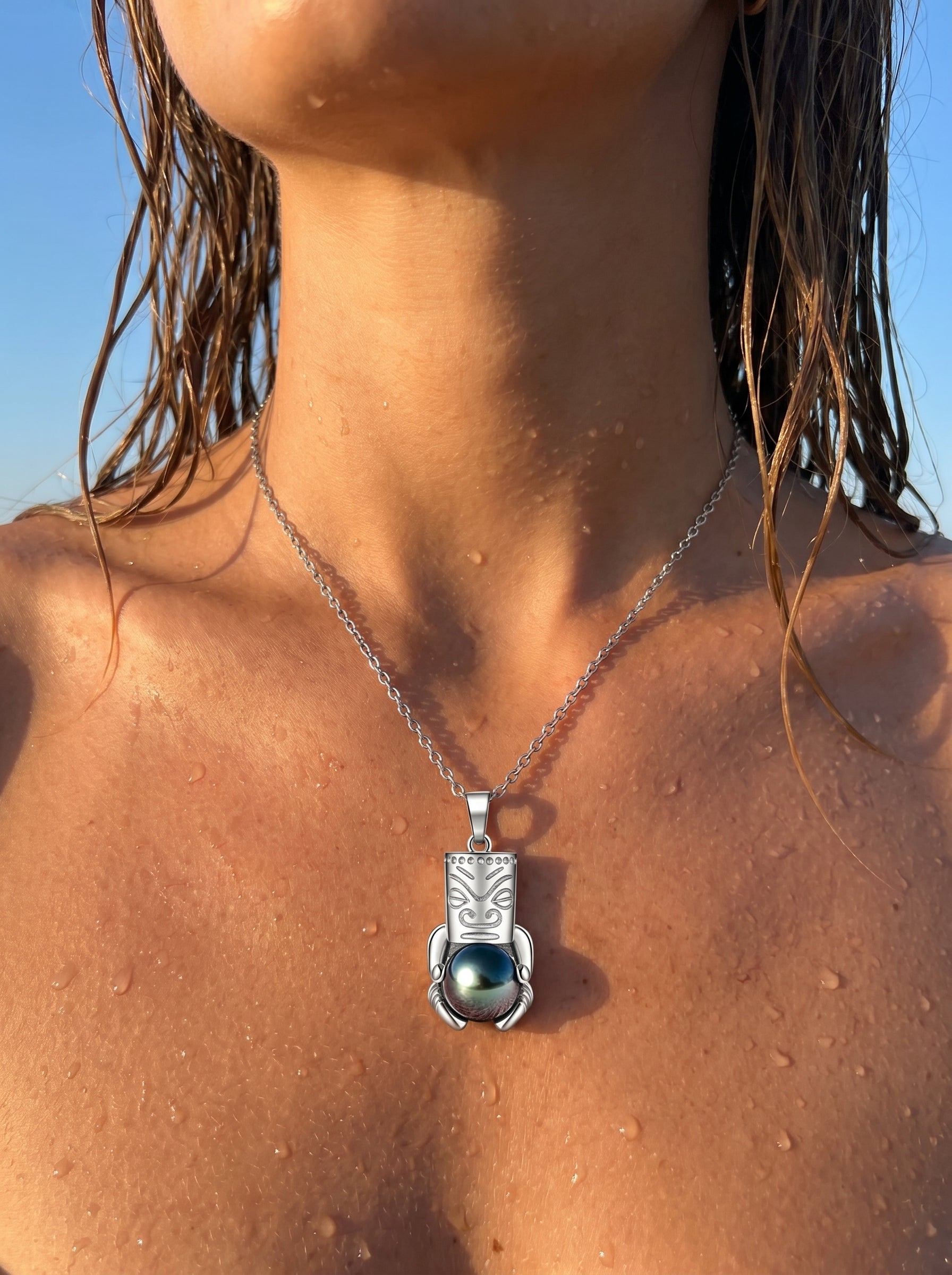
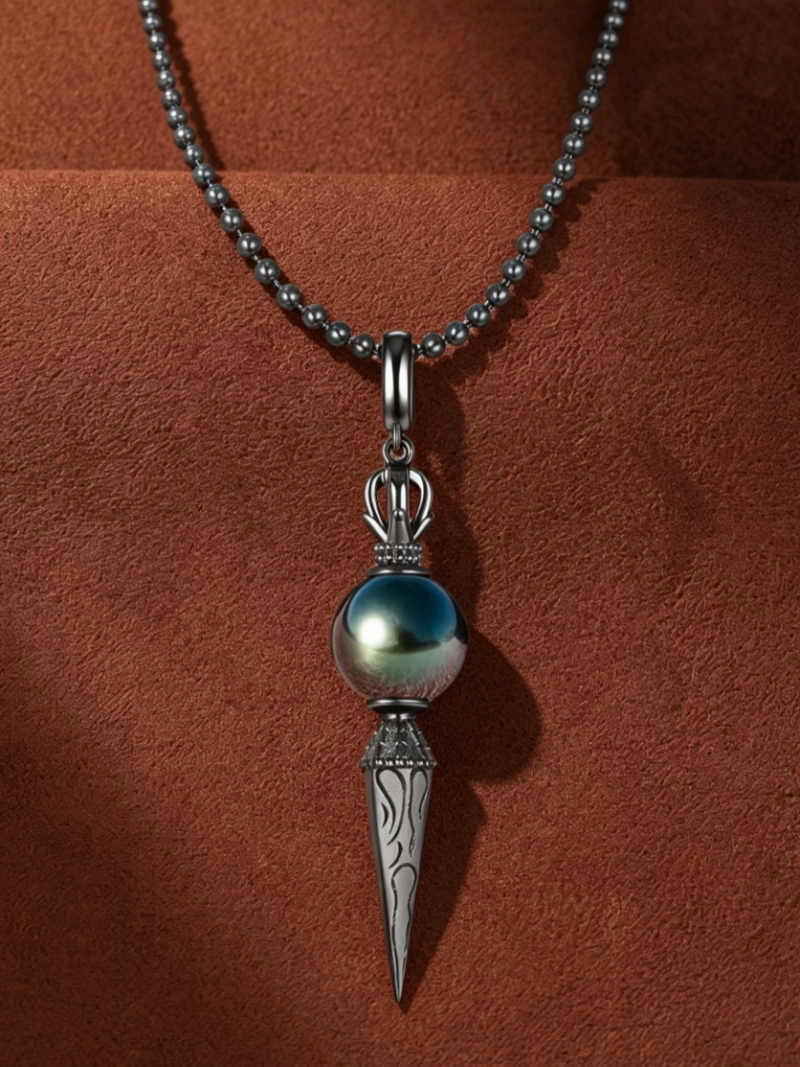
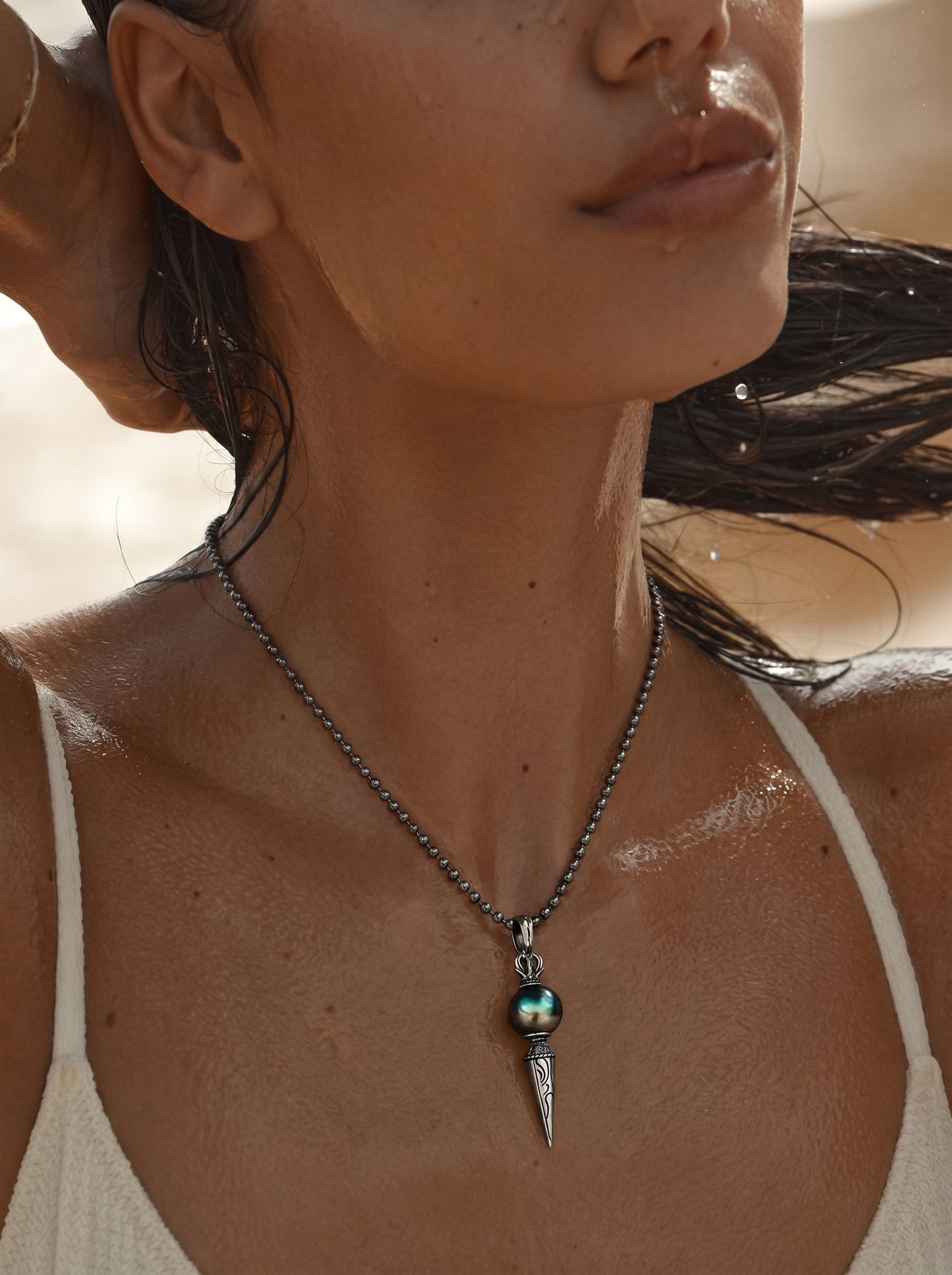
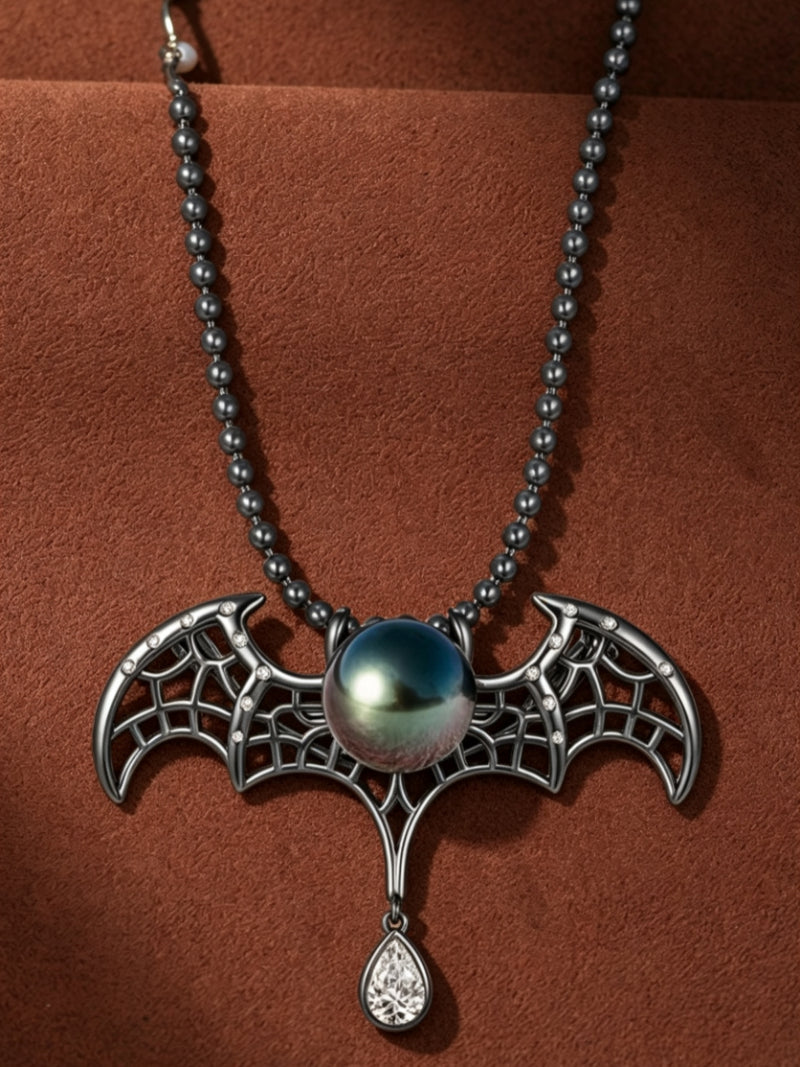
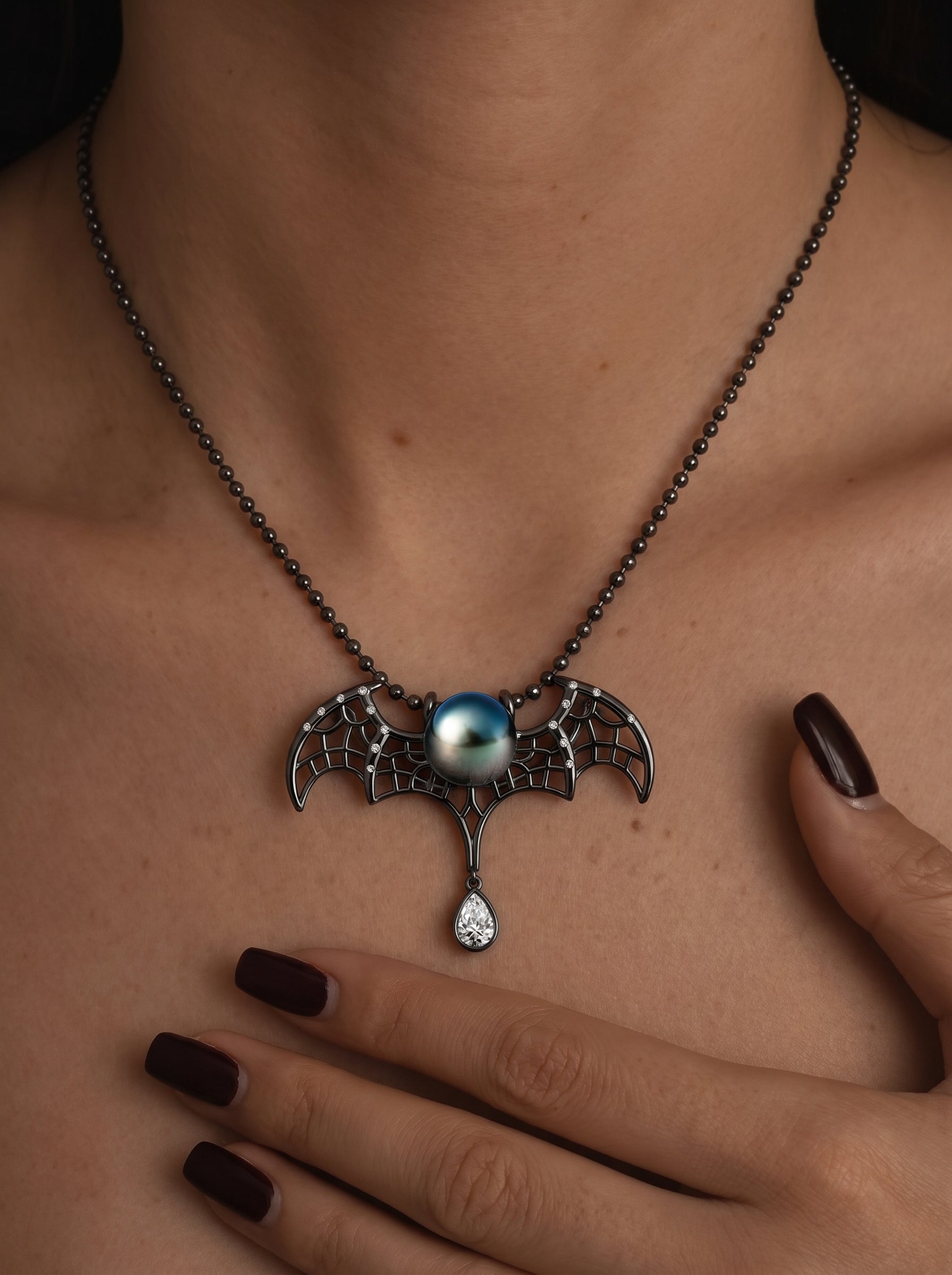
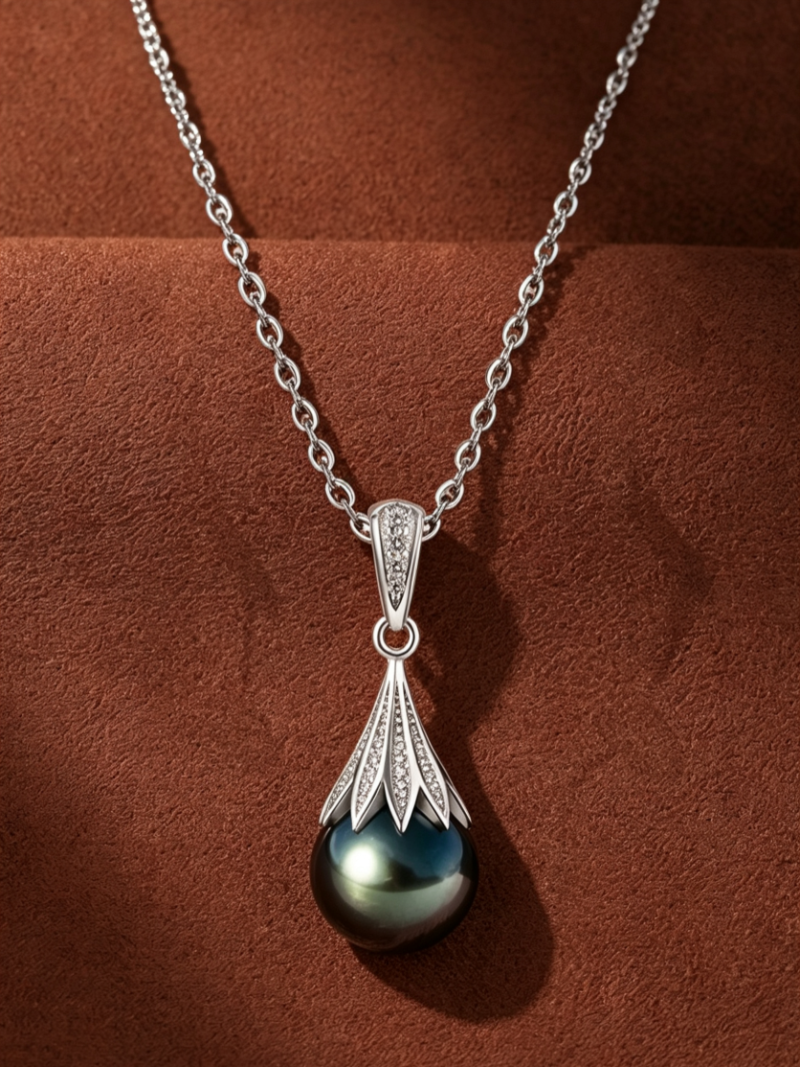
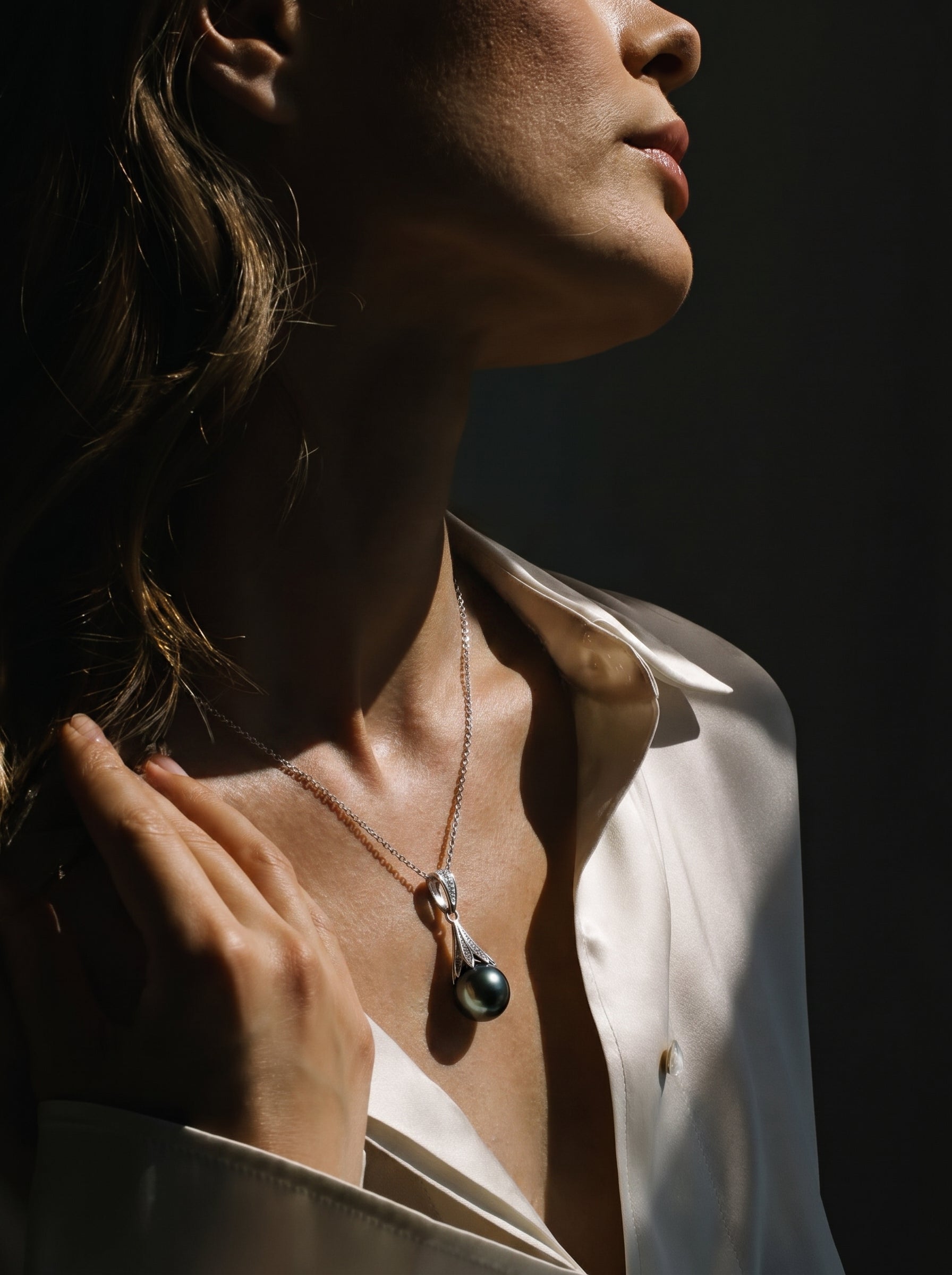
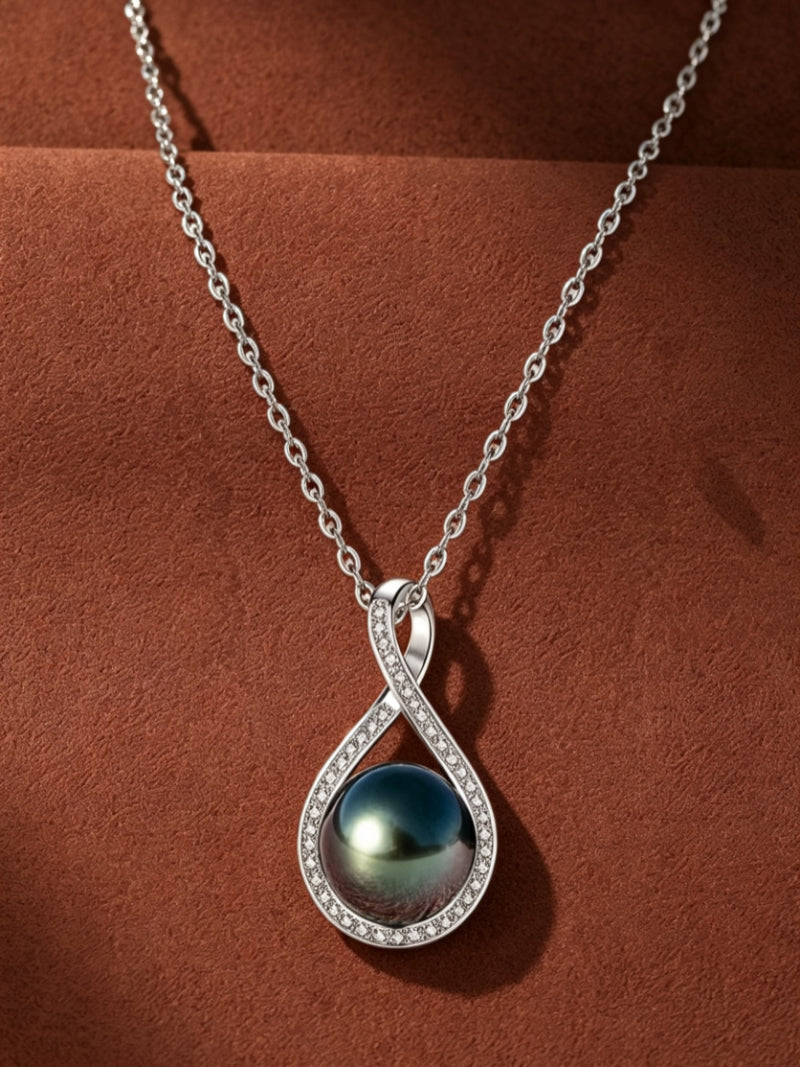
Dark pearls from the lagoons of French Polynesia, in green, silver, aubergine and peacock. The color belongs to the oyster. Nobody adds it, and no two pearls are dark in quite the same way.
What is a Tahitian pearl?
A Tahitian pearl is a cultured pearl grown in the black-lipped oyster, Pinctada margaritifera. The oyster's own nacre is dark, so the pearl it produces is dark from the inside out.
They are grown only in French Polynesia and the Cook Islands, which is why the supply is limited and the price reflects it. Sizes run 8 to 16 mm, considerably larger than Akoya, because the host oyster is larger.
Are Tahitian pearls actually black?
Rarely. True black is uncommon. Most Tahitian pearls are gray, green, aubergine or blue-gray, with a secondary overtone floating over the bodycolor and shifting as the pearl turns.
That movement is the thing to look for. It is what distinguishes a Tahitian pearl from a dyed one, and it is why a dark pearl rewards a second look in a way a flat black bead does not.
How do you tell a Tahitian pearl from a dyed one?
Look at the drill hole first. A dyed pearl usually shows darkness pooling visibly around it and reads flat and uniform elsewhere. A Tahitian pearl shows color that shifts as it turns, with an overtone reading separately from the bodycolor underneath.
This matters commercially, because dyed freshwater pearls are widely sold as black pearls and cost a fraction as much. We list bodycolor, overtone and treatment as three separate markers on every product page.
What colors do Tahitian pearls come in?
- Peacock — a green overtone over dark bodycolor. The most sought-after and the highest priced within the category.
- Aubergine — a purple-toned overtone that warms considerably under evening light.
- Silver and blue-gray — the coolest register, and the easiest to wear with a cool wardrobe.
- Pistachio and green — lighter and more unusual, and the ones people ask about most.
Why are Tahitian pearls expensive?
Limited geography, a larger oyster over a longer growing cycle, and a low proportion of gem-grade results. Then add the difficulty of matching color across multiple pearls, since overtone is harder to match than size or shape.
A single pearl on a chain skips the matching cost entirely, which is why it is the most accessible way into the category.
Why buy Tahitian pearls from Grande Lilith
Tahitian is the pearl category with the widest gap between what is claimed and what is sold.
- Origin named: French Polynesia. Not "Tahitian-style" or "black pearl" without qualification.
- Bodycolor, overtone and treatment listed separately, not collapsed into one word.
- Partners vetted by our GIA-certified pearl specialist, on working conditions as well as quality.
- Nickel-free, lead-free and cadmium-free settings on solid 18k gold, 925 sterling silver and stainless steel.
- Designed in Paris. Thirty days to change your mind, and every order arrives in a magnetic pouch.
Frequently asked questions
Is a Tahitian pearl the same as a black pearl?
Not quite. All Tahitian pearls are dark, but not all dark pearls are Tahitian. The term black pearl is used commercially for dyed freshwater pearls as well, which is why origin and treatment need to be stated rather than assumed.
Do Tahitian pearls fade?
Naturally colored pearls do not, because the color is in the nacre rather than on it. Dyed pearls can lose color over years, which is another reason treatment disclosure matters at the point of purchase.
Are Tahitian pearls durable?
More than most. Tahitian nacre is thick, so it cannot wear through to the shell bead the way a thin layer can. They are still soft compared with stones, so the usual habits apply.
What size Tahitian pearl should I buy?
Between 9 and 11 mm is the most wearable range. Below 9 mm the scale advantage over other pearl types disappears. Above 12 mm the piece becomes an occasion one rather than a daily one.
When do Tahitian pearls look their best?
Under warm low light. Restaurant and candlelight bring the green and aubergine overtones forward considerably, where daylight tends to flatten them into gray. This is why dark pearls suit evening better than midday.