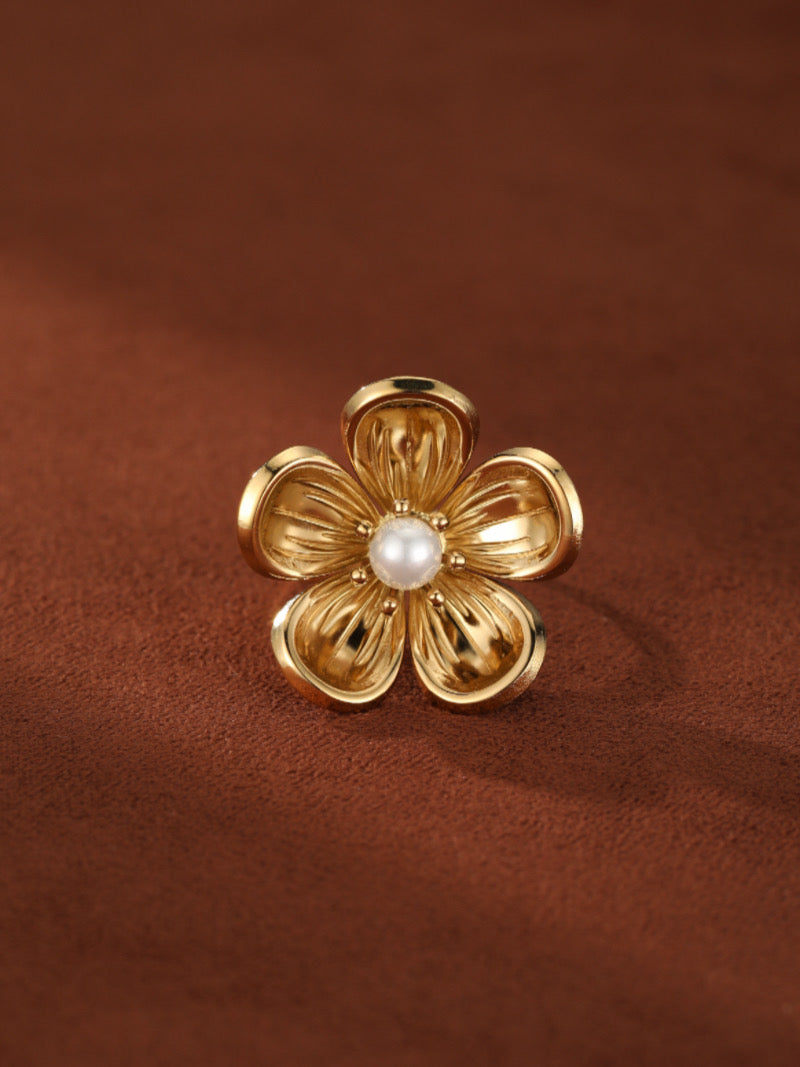
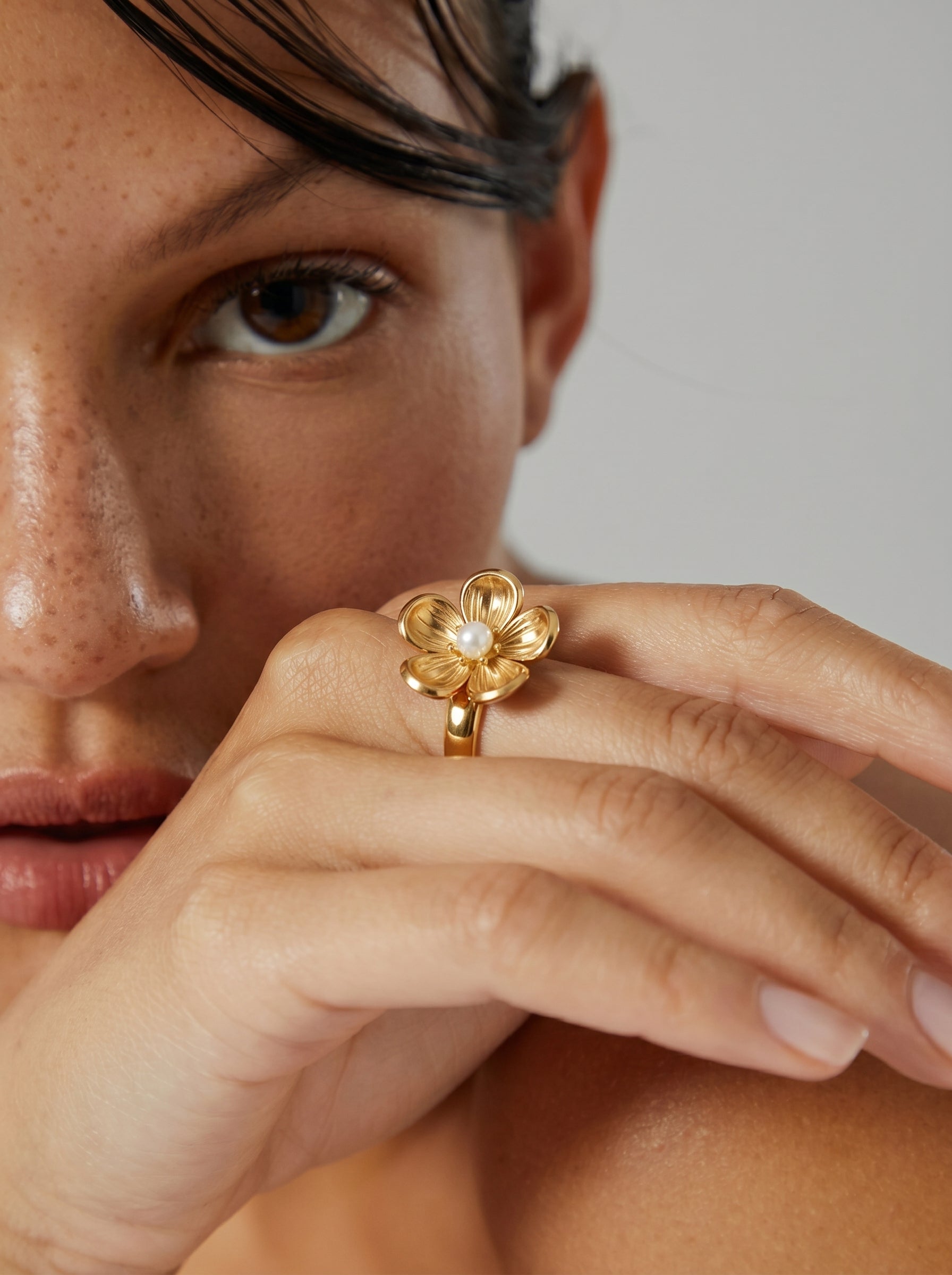
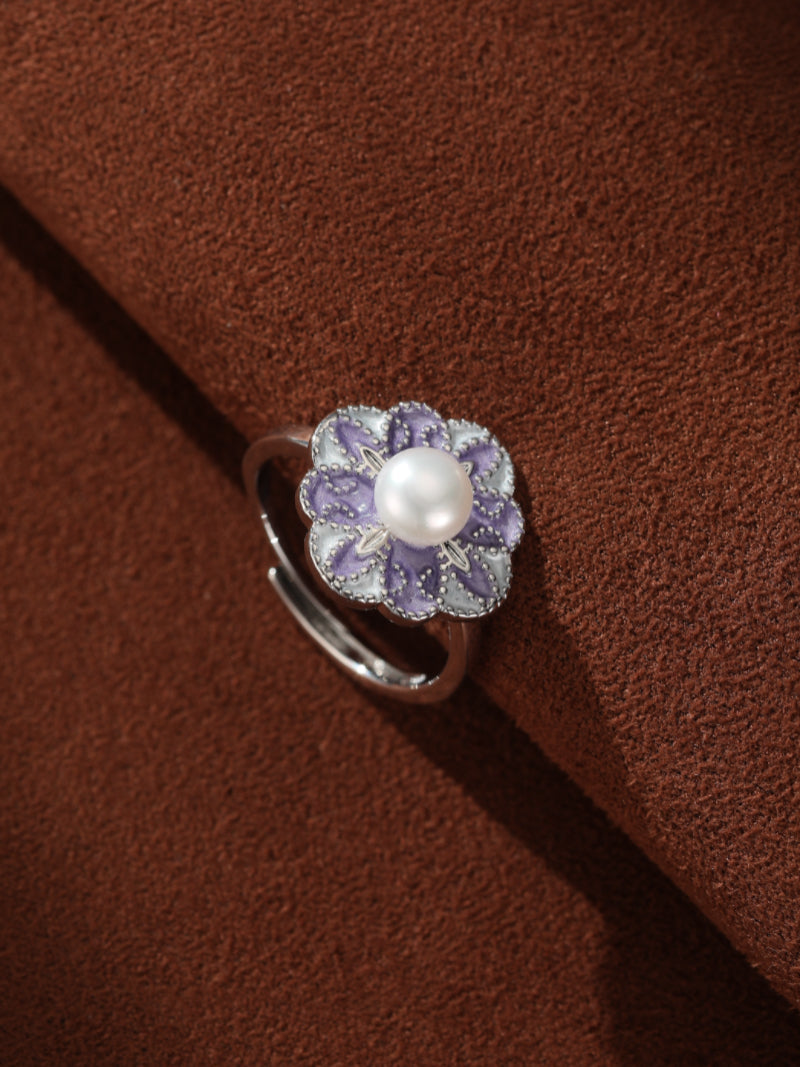
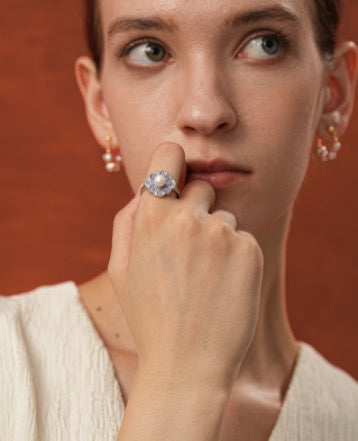
A ring takes more daily contact than any other piece of jewelry. Door handles, keyboards, coat pockets, hand washing. Stainless steel is the metal that survives all of it without a maintenance routine.
What is a stainless steel pearl ring?
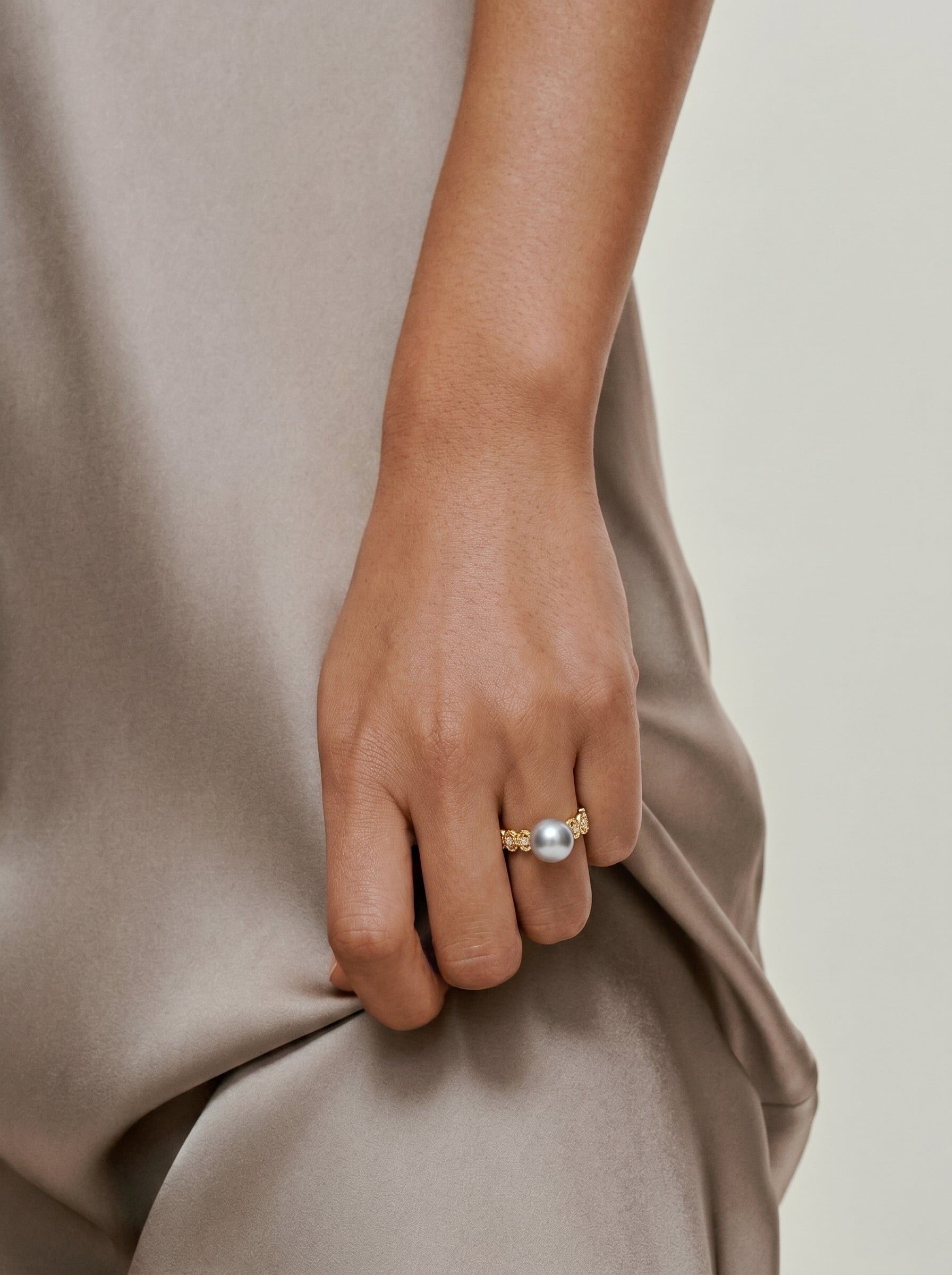
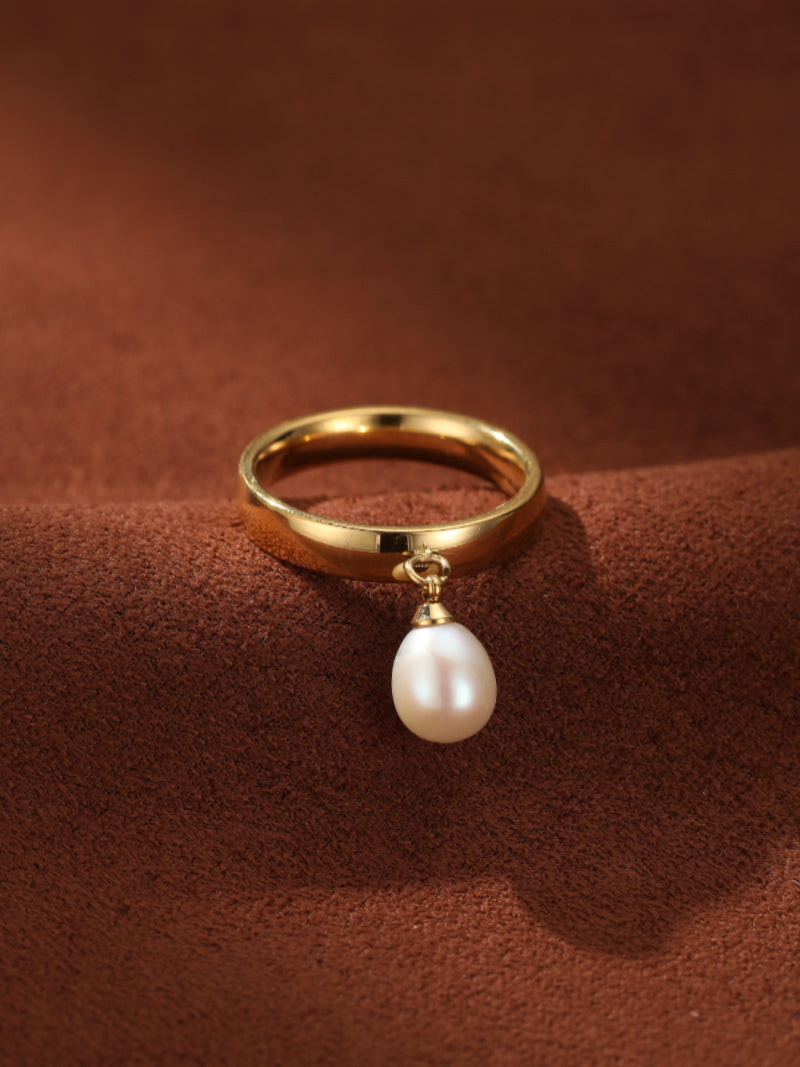
A stainless steel pearl ring sets a cultured pearl on a steel band rather than gold or silver. Jewelry-grade stainless steel is an alloy of iron and chromium, and the chromium forms a thin oxide layer that reforms whenever the surface is scratched.
That self-repairing surface is why steel does not tarnish like silver or wear through like plating. On a ring, where the shank rubs constantly against adjacent fingers, it is the property that matters most.
Why is the shank the part that matters?
The shank is the band underneath your finger, and it is where a ring wears fastest. It rubs against neighboring fingers all day and takes the pressure of anything you grip.
On a plated ring this is where the base metal shows through first, usually within two or three years of regular wear. Steel has no layer to lose, so the shank simply stays as it is.
How should a pearl ring be set and sized?
Low. Pearls rank 2.5 to 3 on the Mohs hardness scale, softer than almost anything else in a jewelry box, so a raised setting takes more impact than nacre comfortably absorbs.
Most pearl rings cannot be resized after purchase, because the heat and solder used in resizing damage nacre. Check the size guide before ordering, measure at the end of the day when fingers are largest, or choose an adjustable open cuff.
Which steel pearl ring style should you choose?
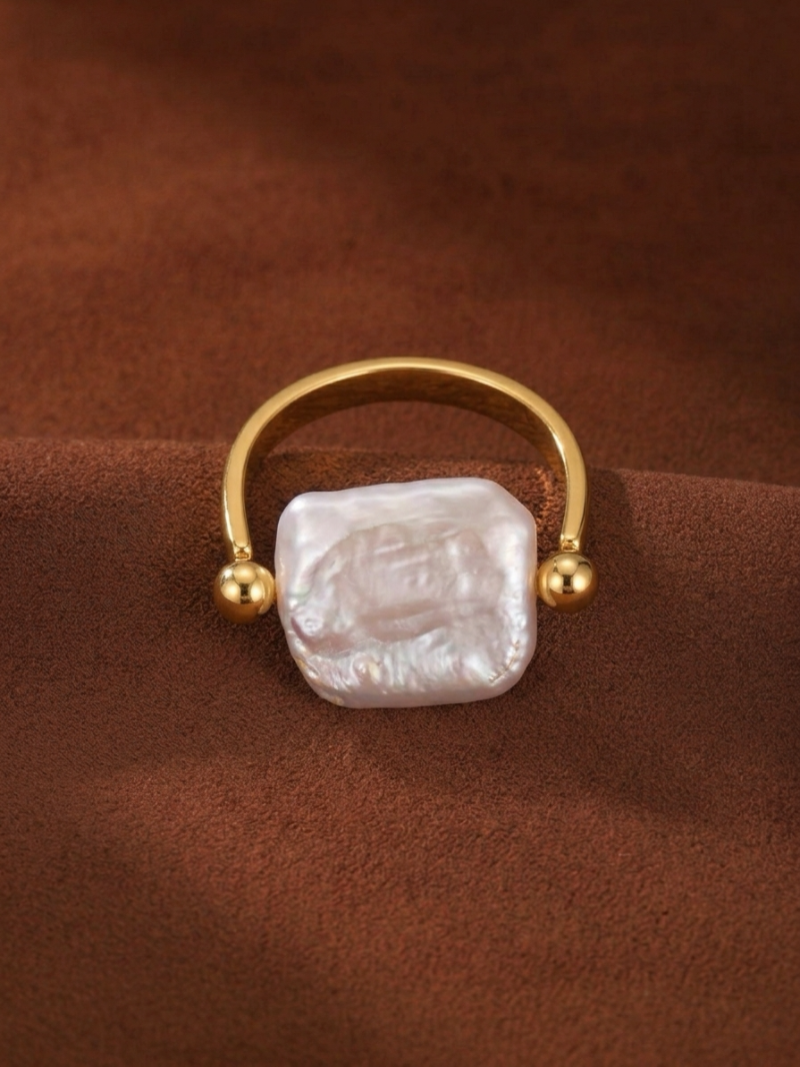
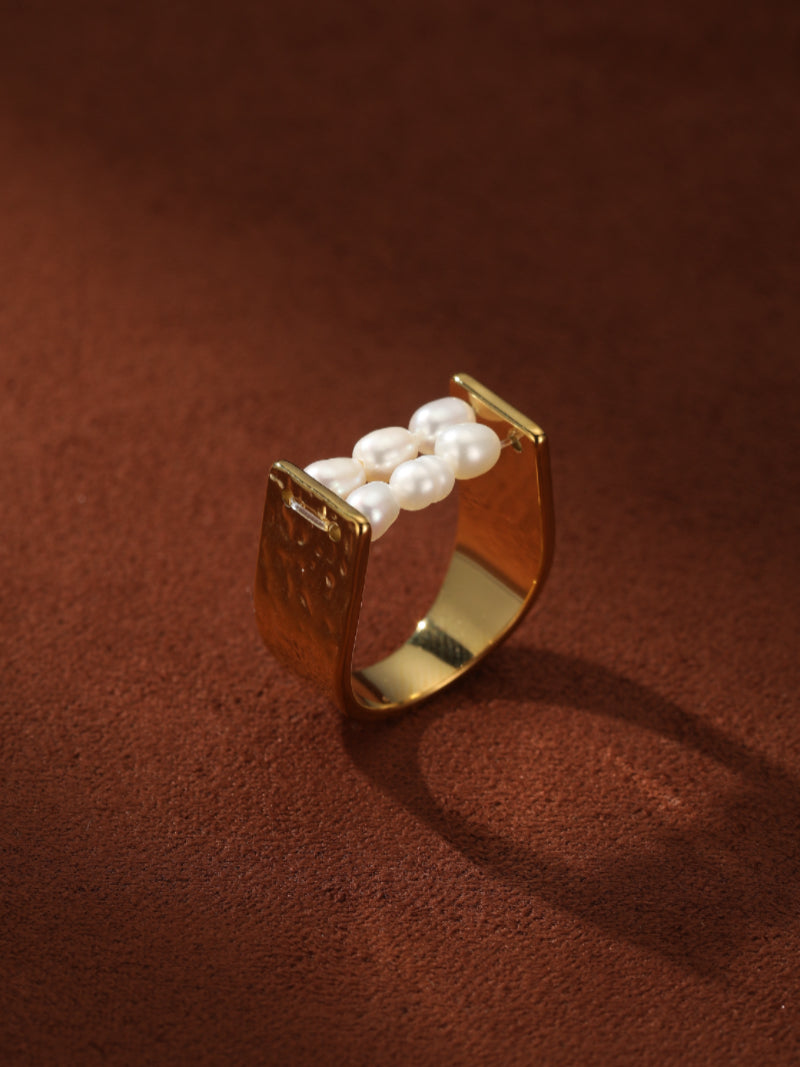
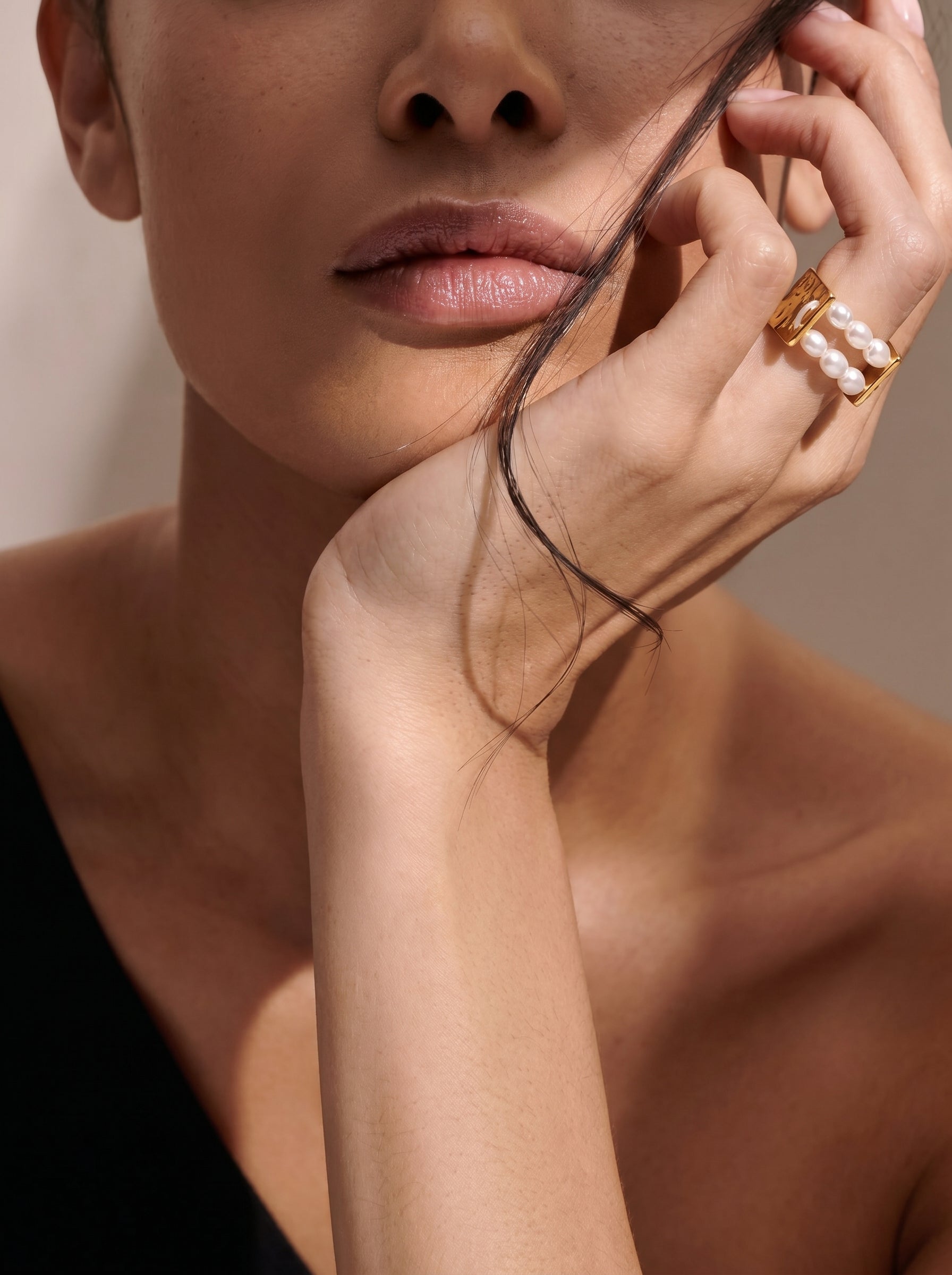
Open cuff rings
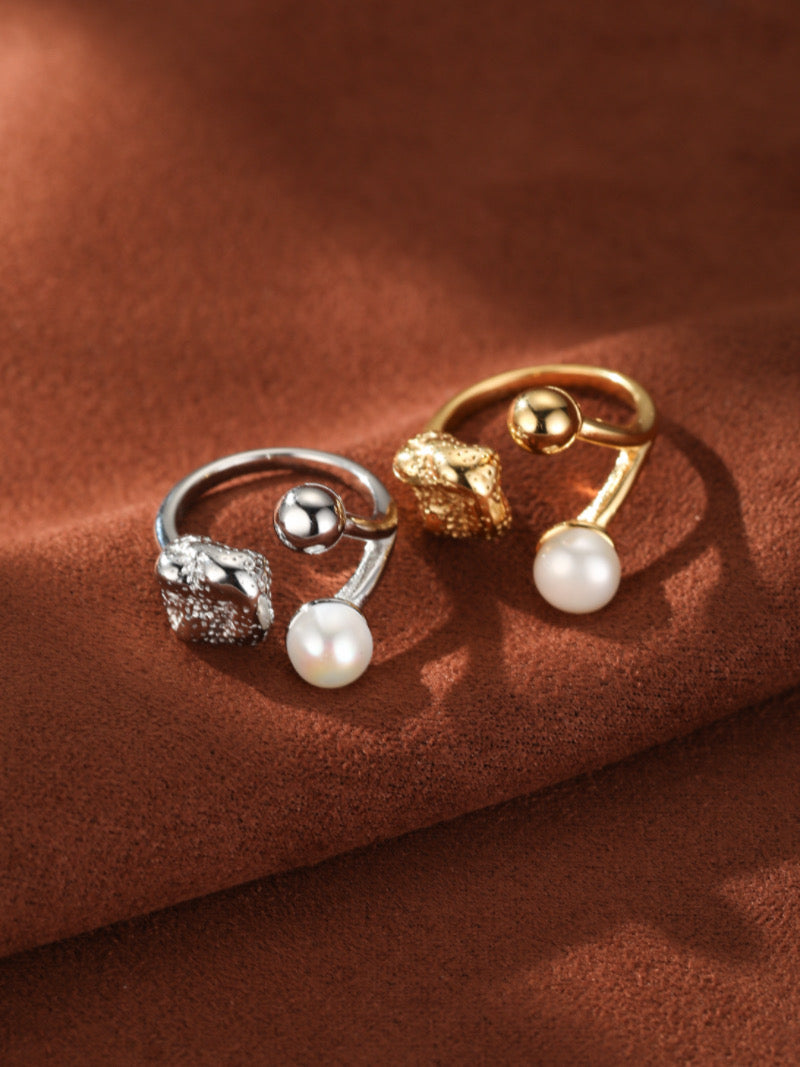
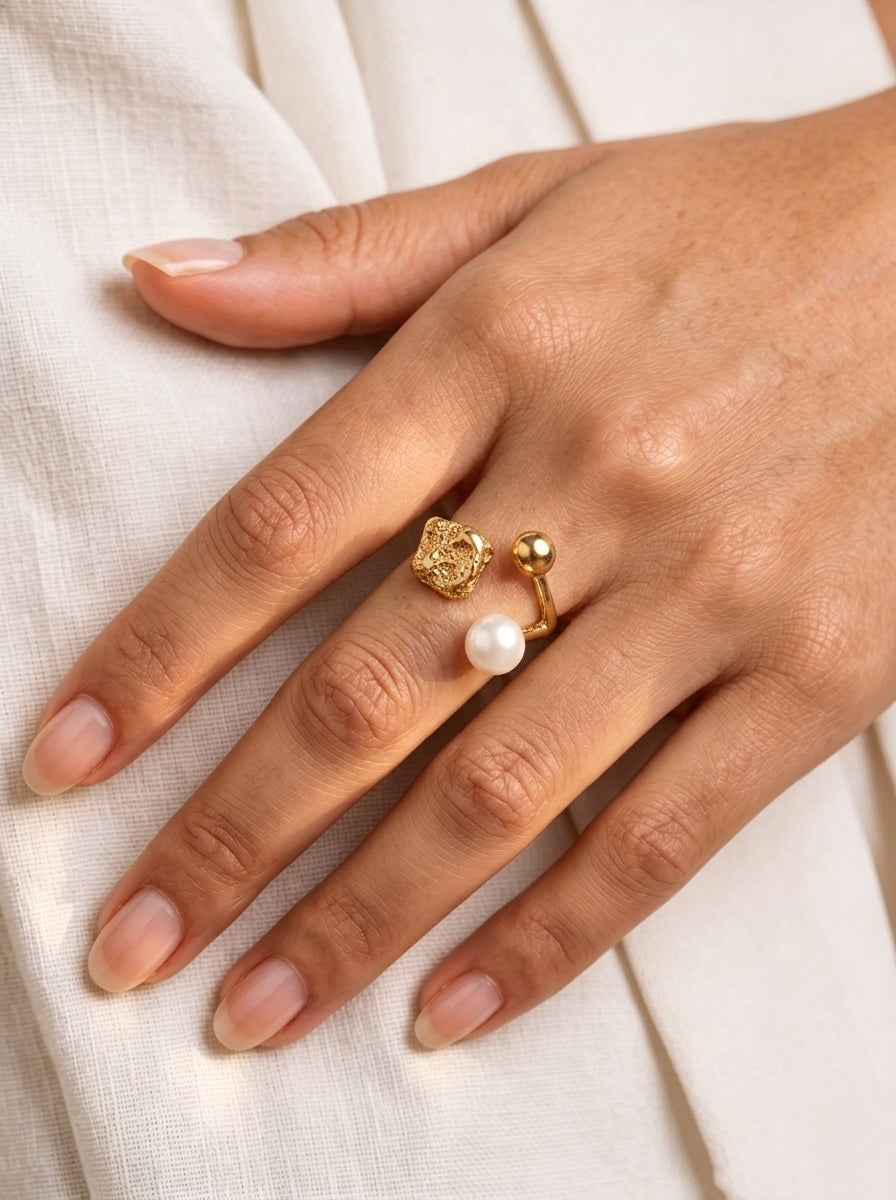
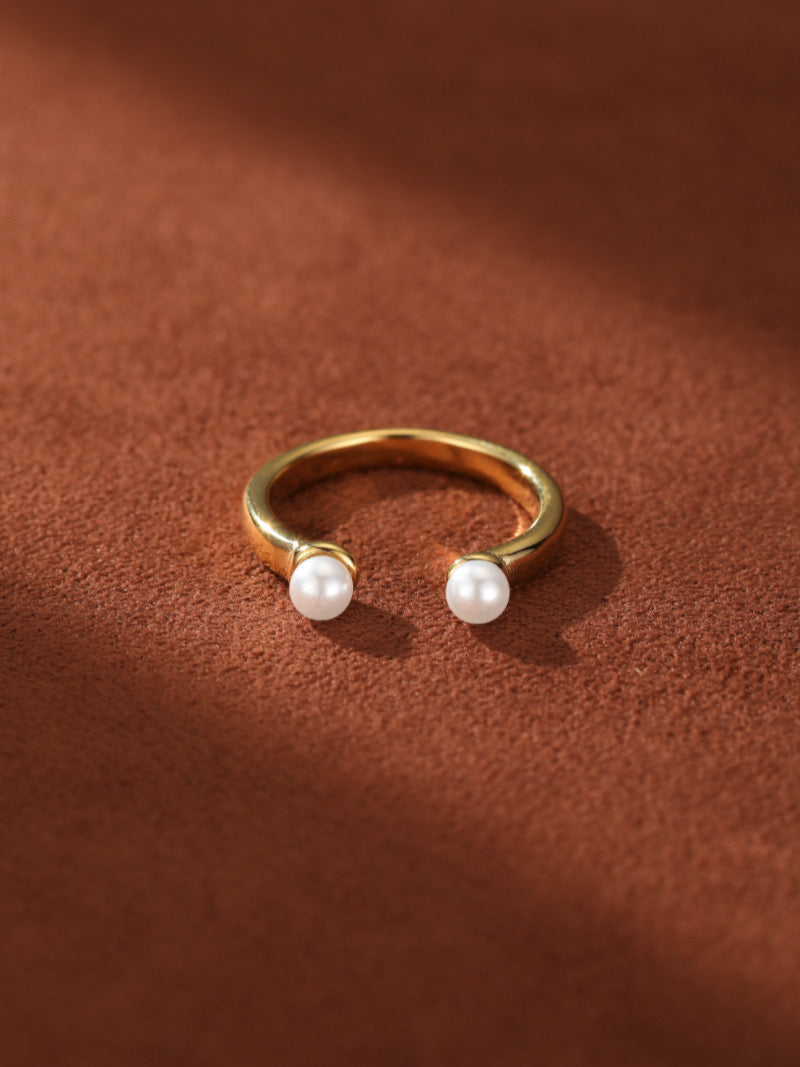
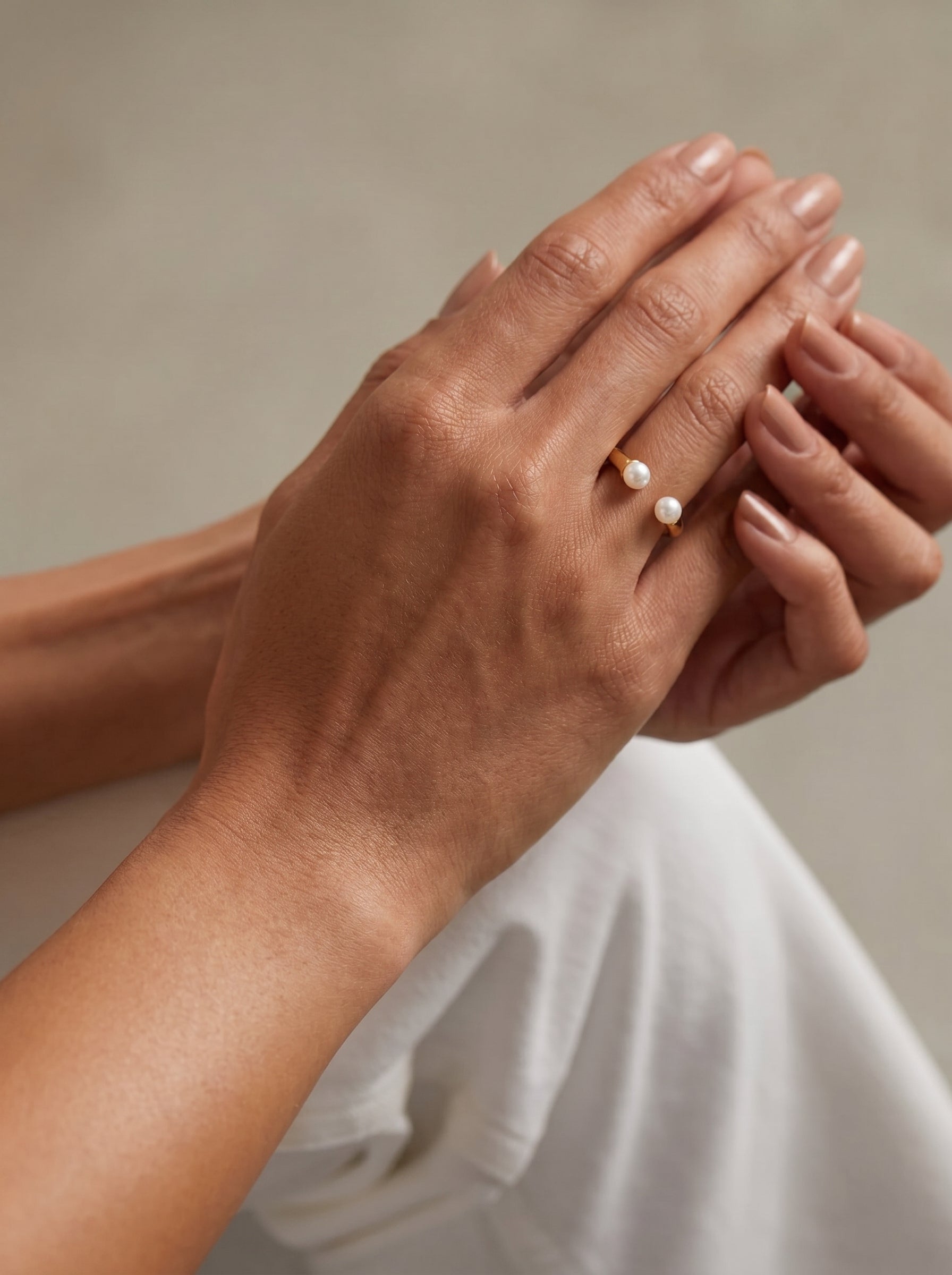
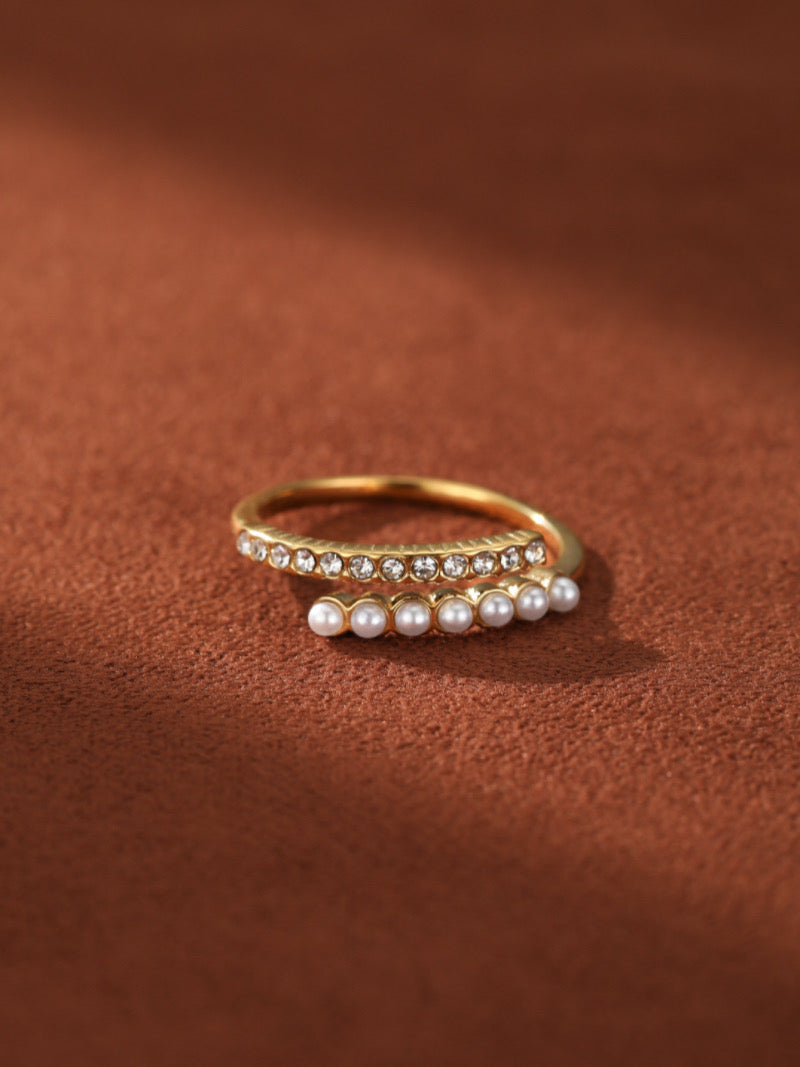
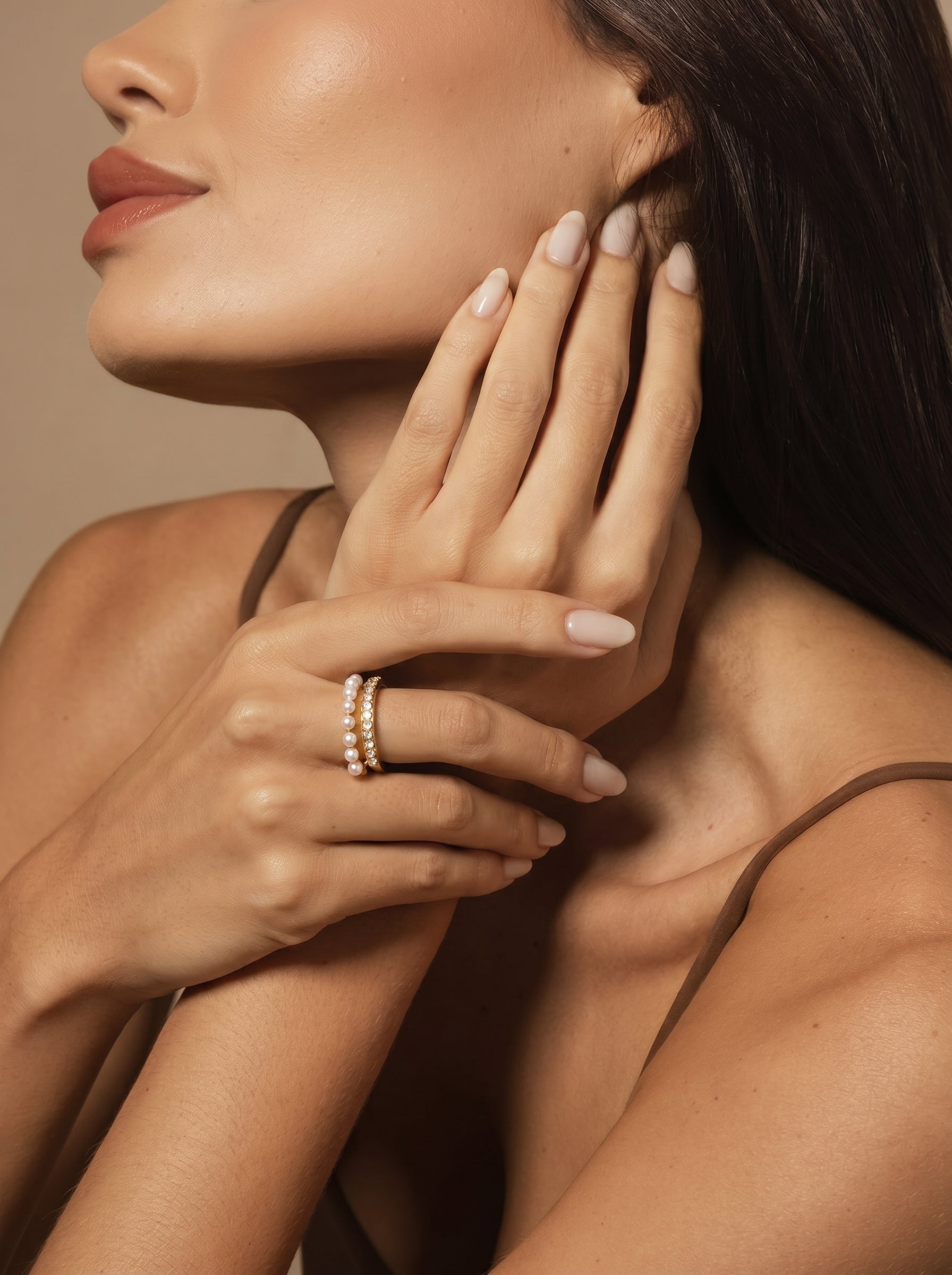
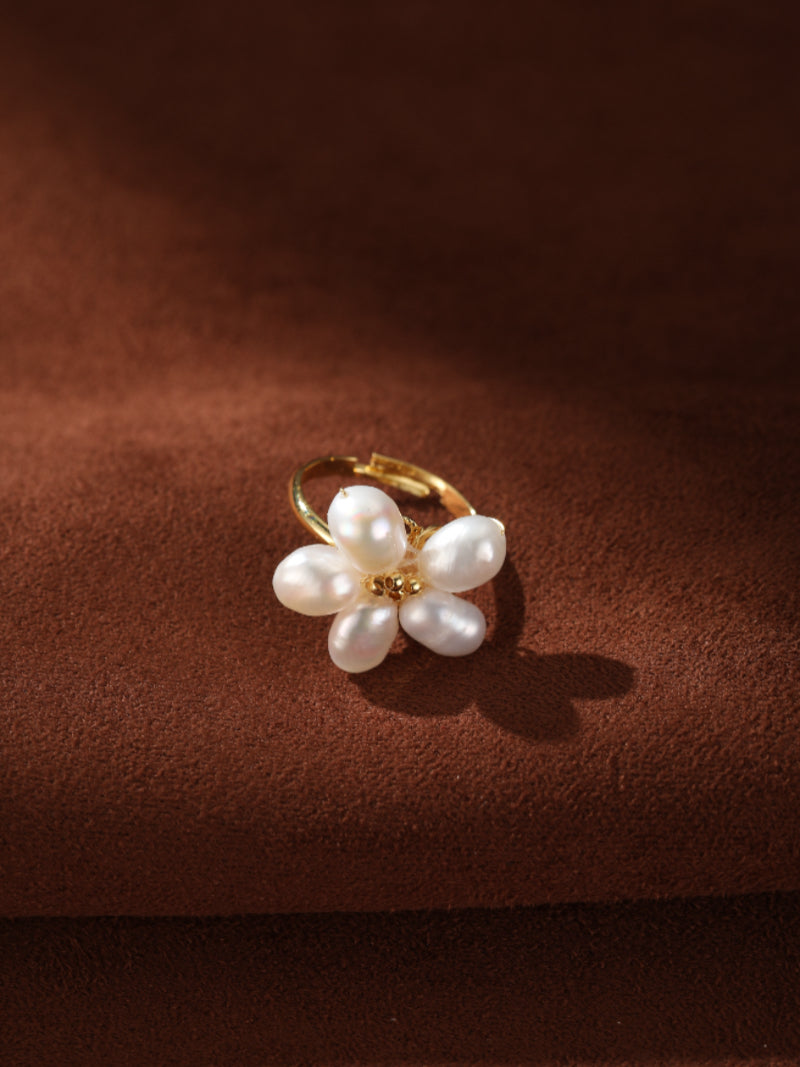
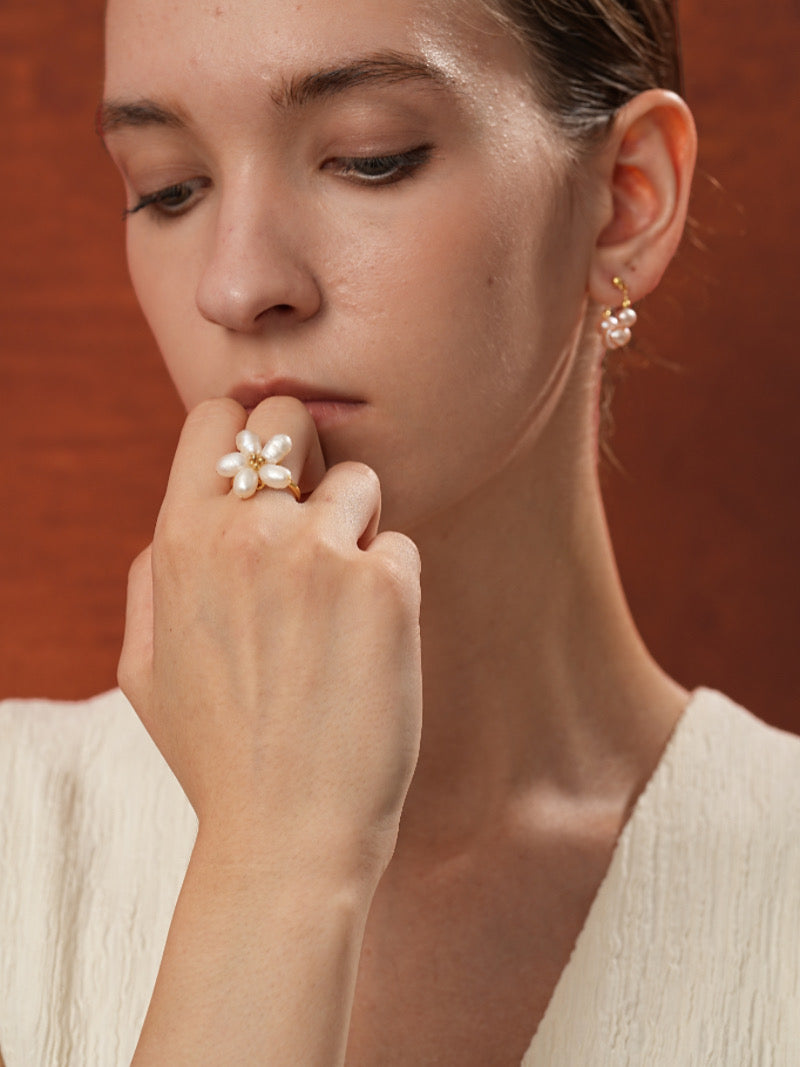
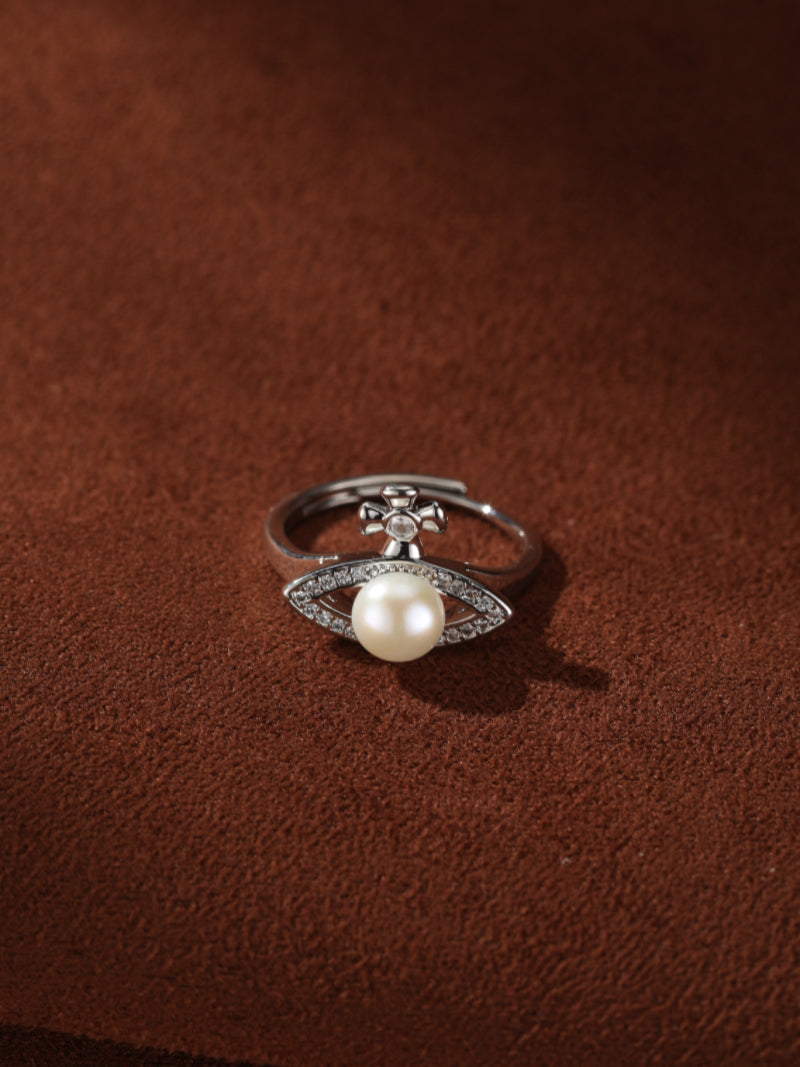
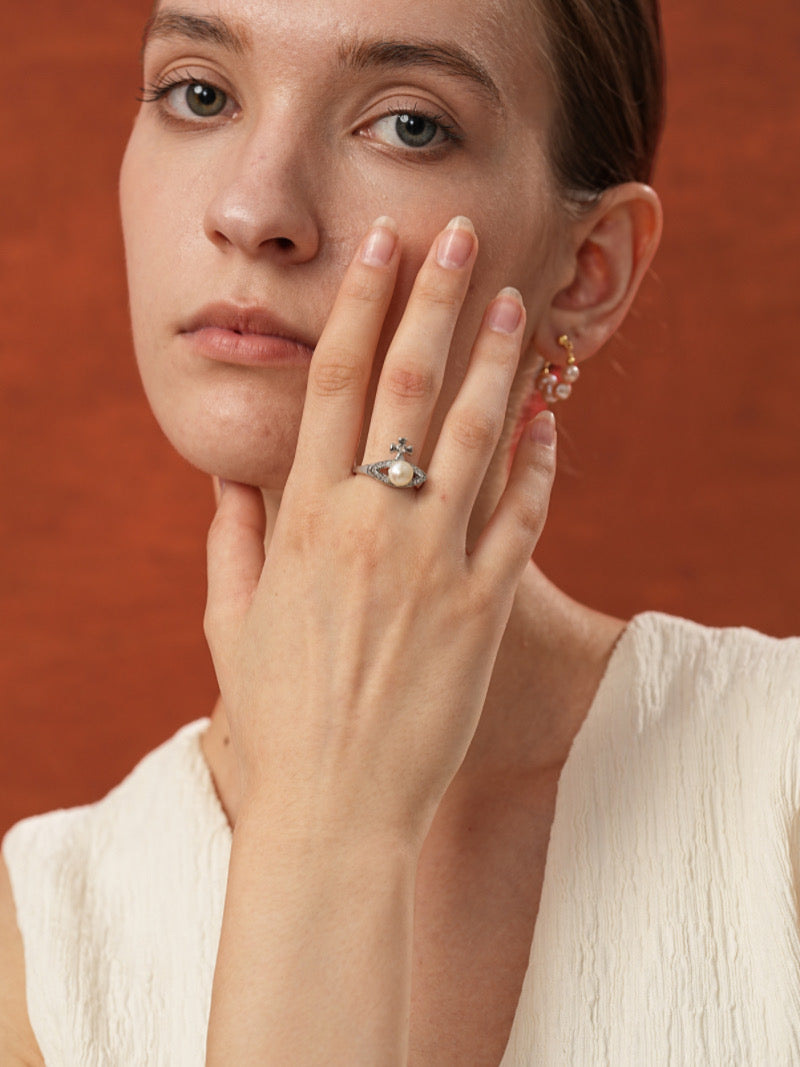
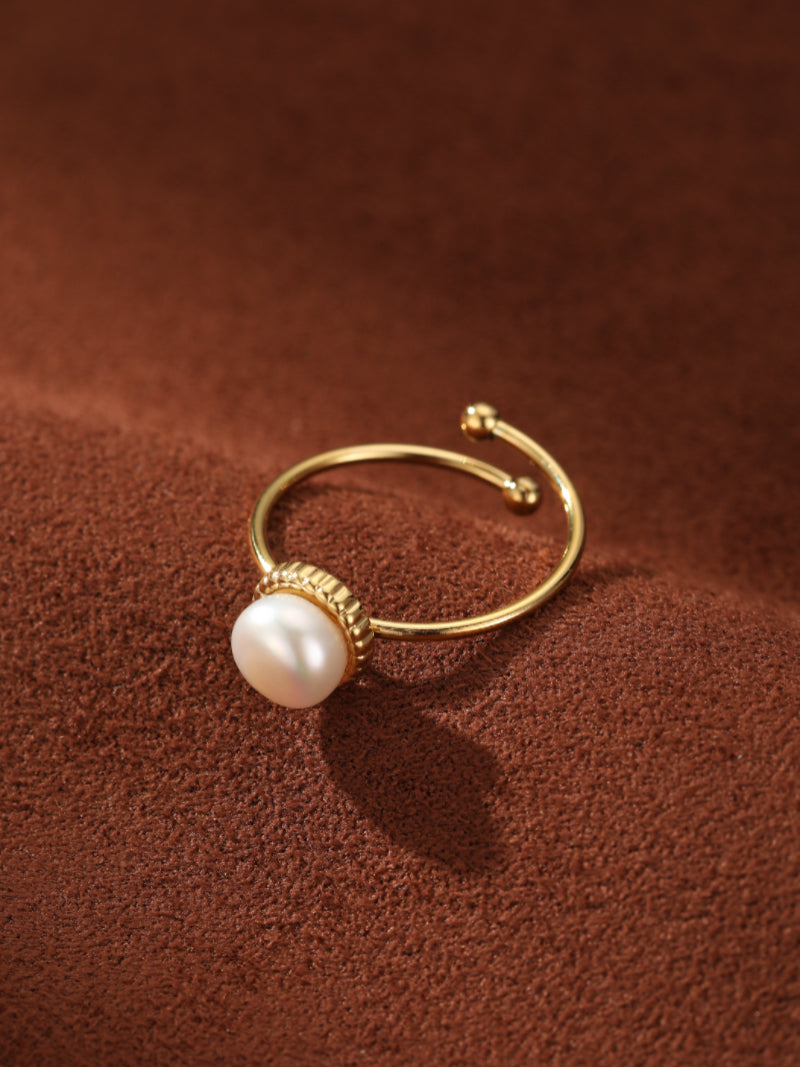
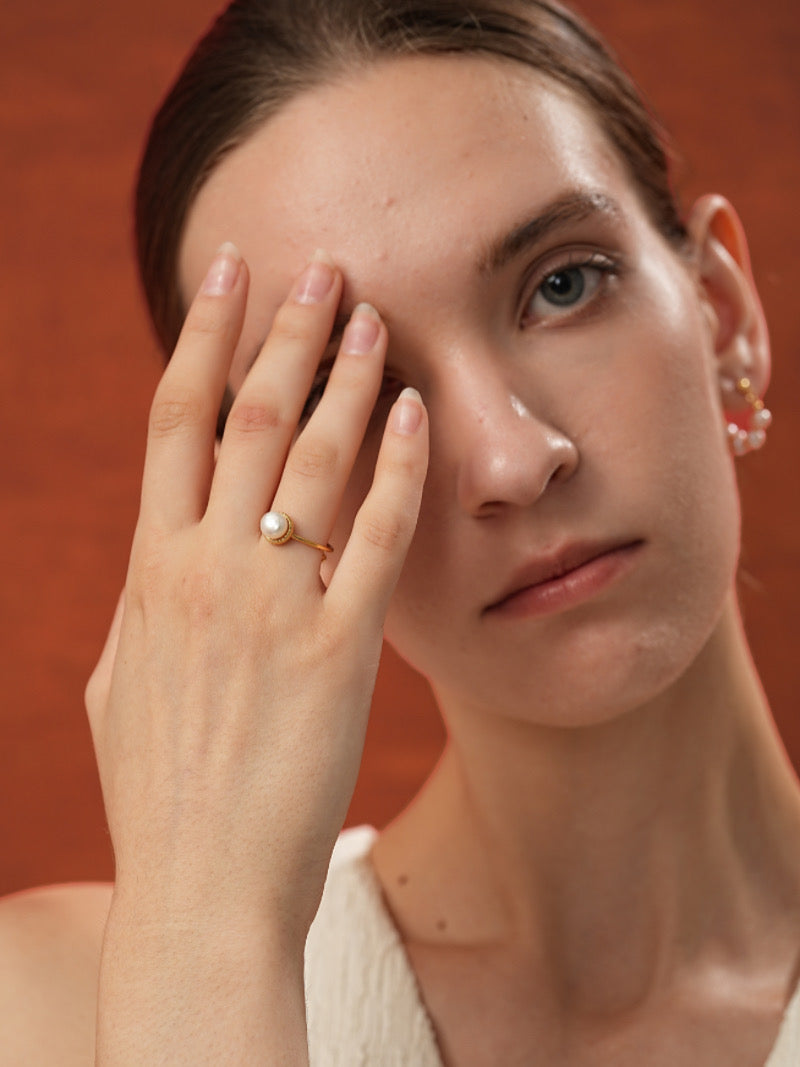
A band that curves around the finger rather than closing into a circle. It solves sizing entirely and moves between fingers, which matters given that pearl rings cannot usually be resized.
Sculpted bands
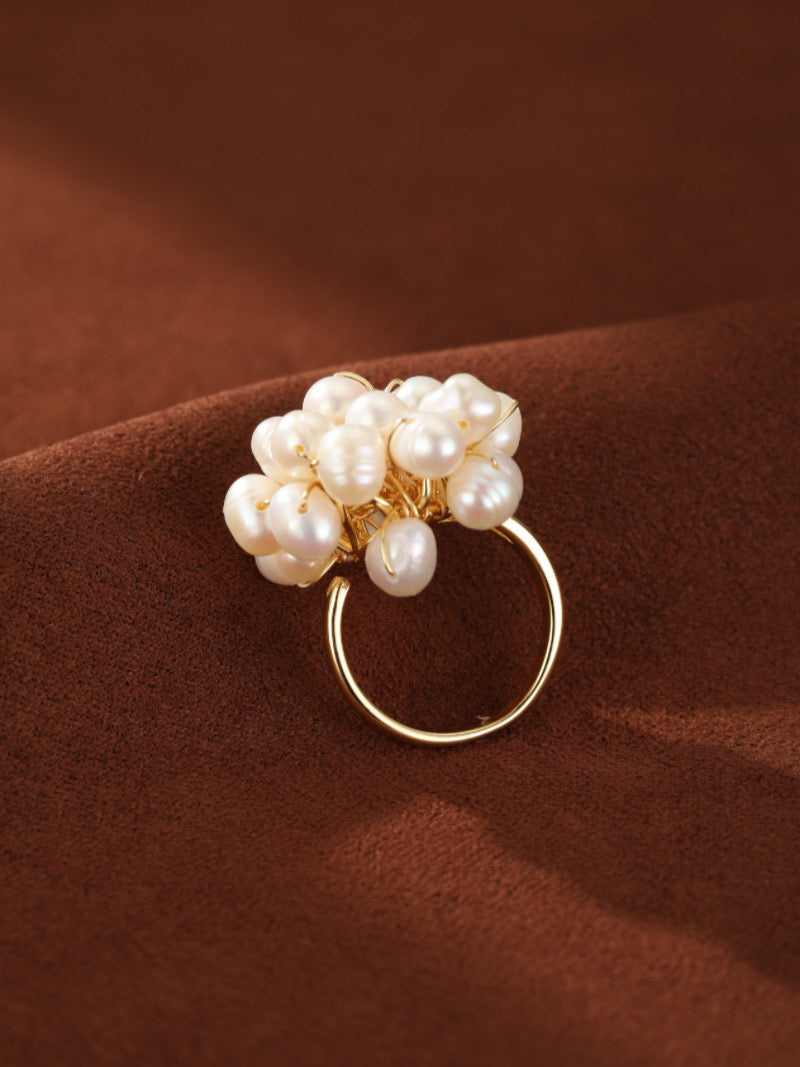
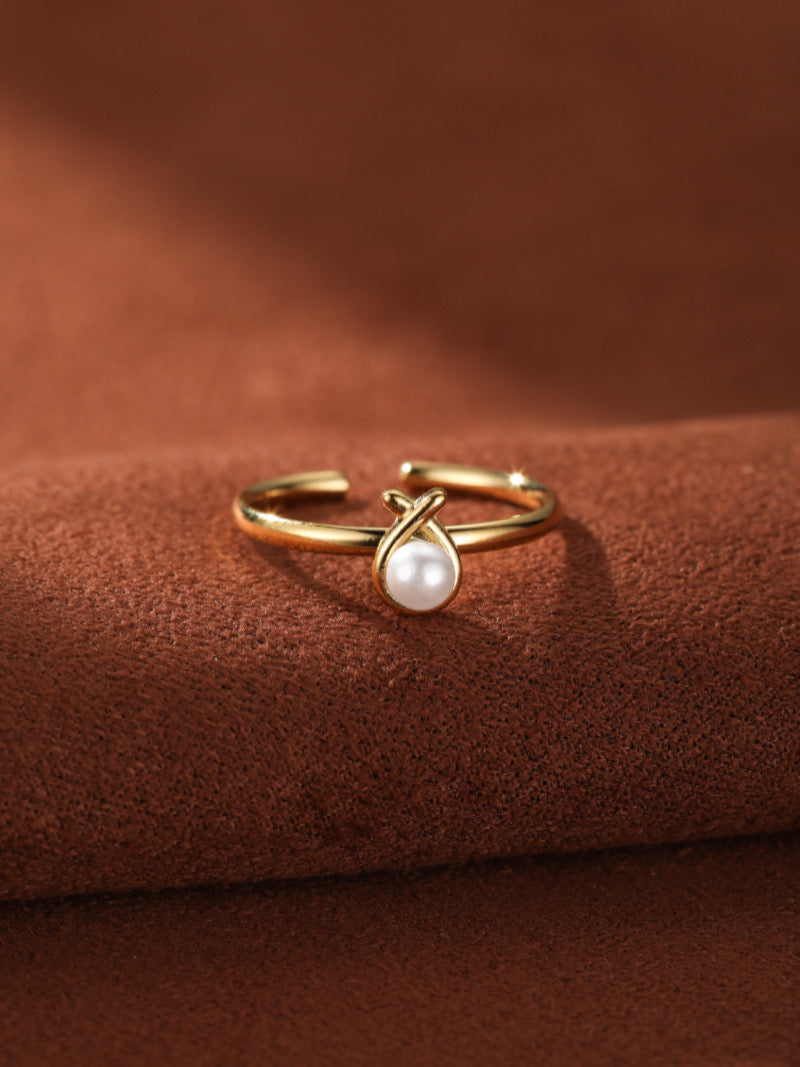
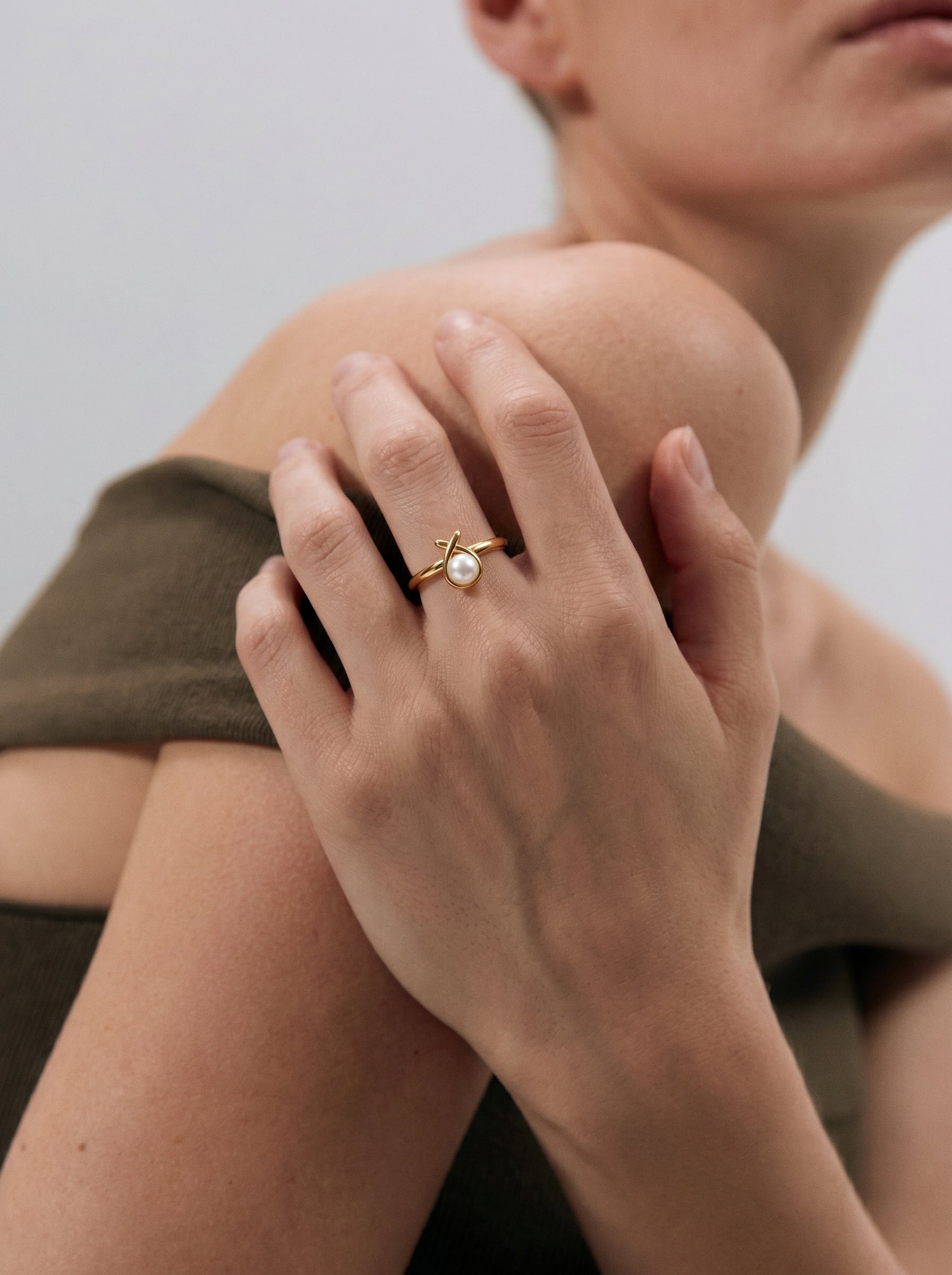
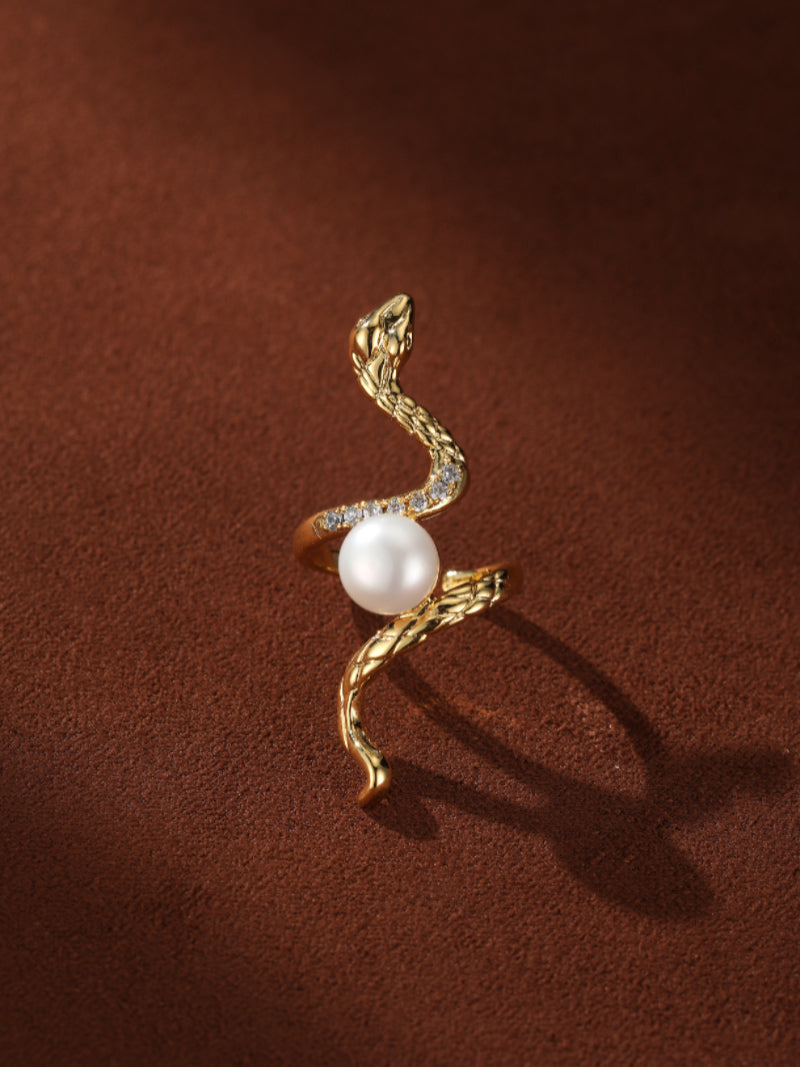
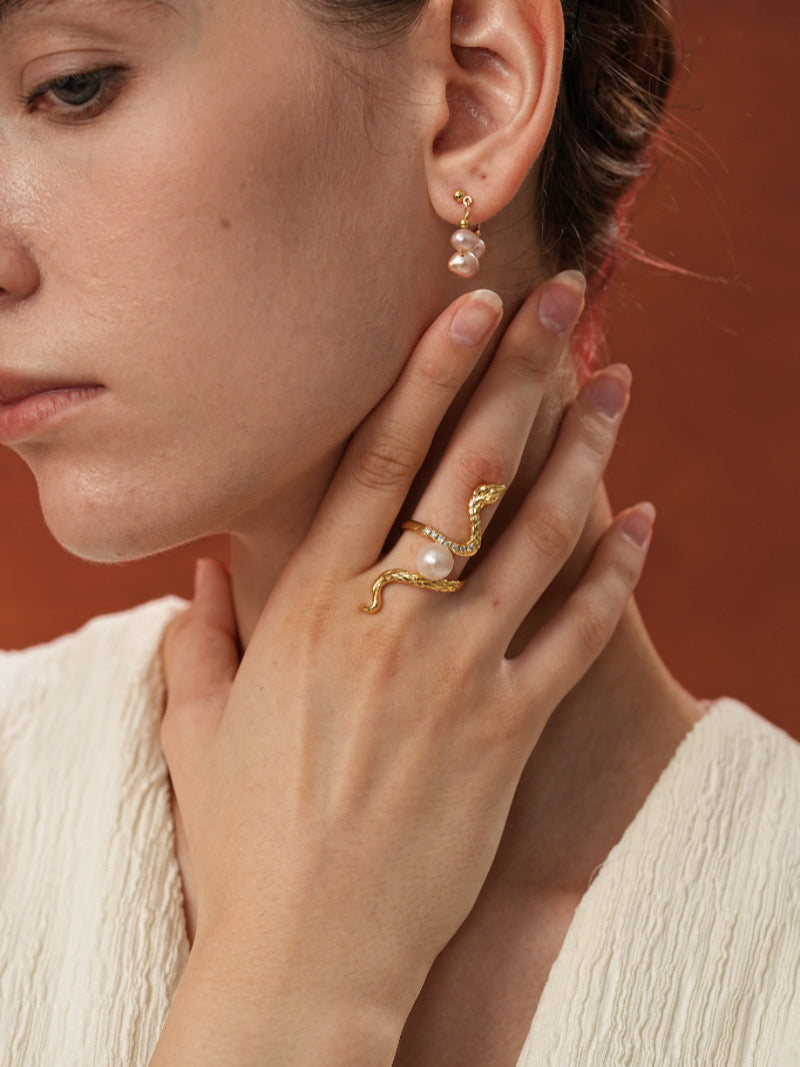
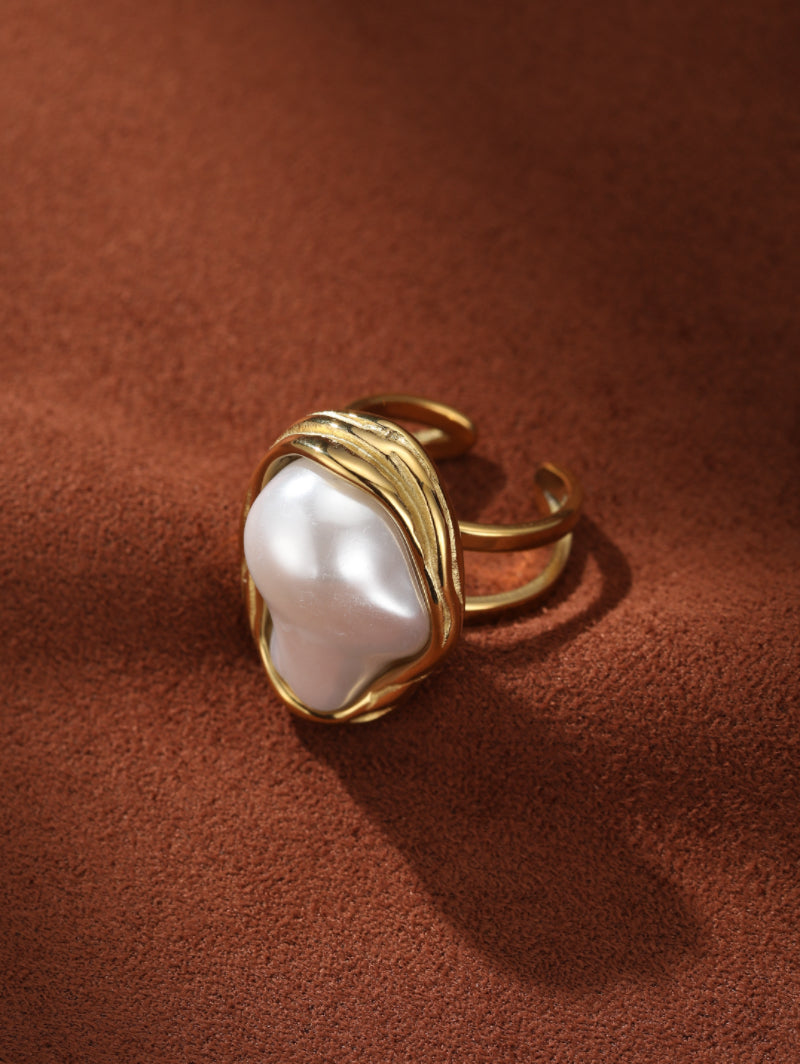
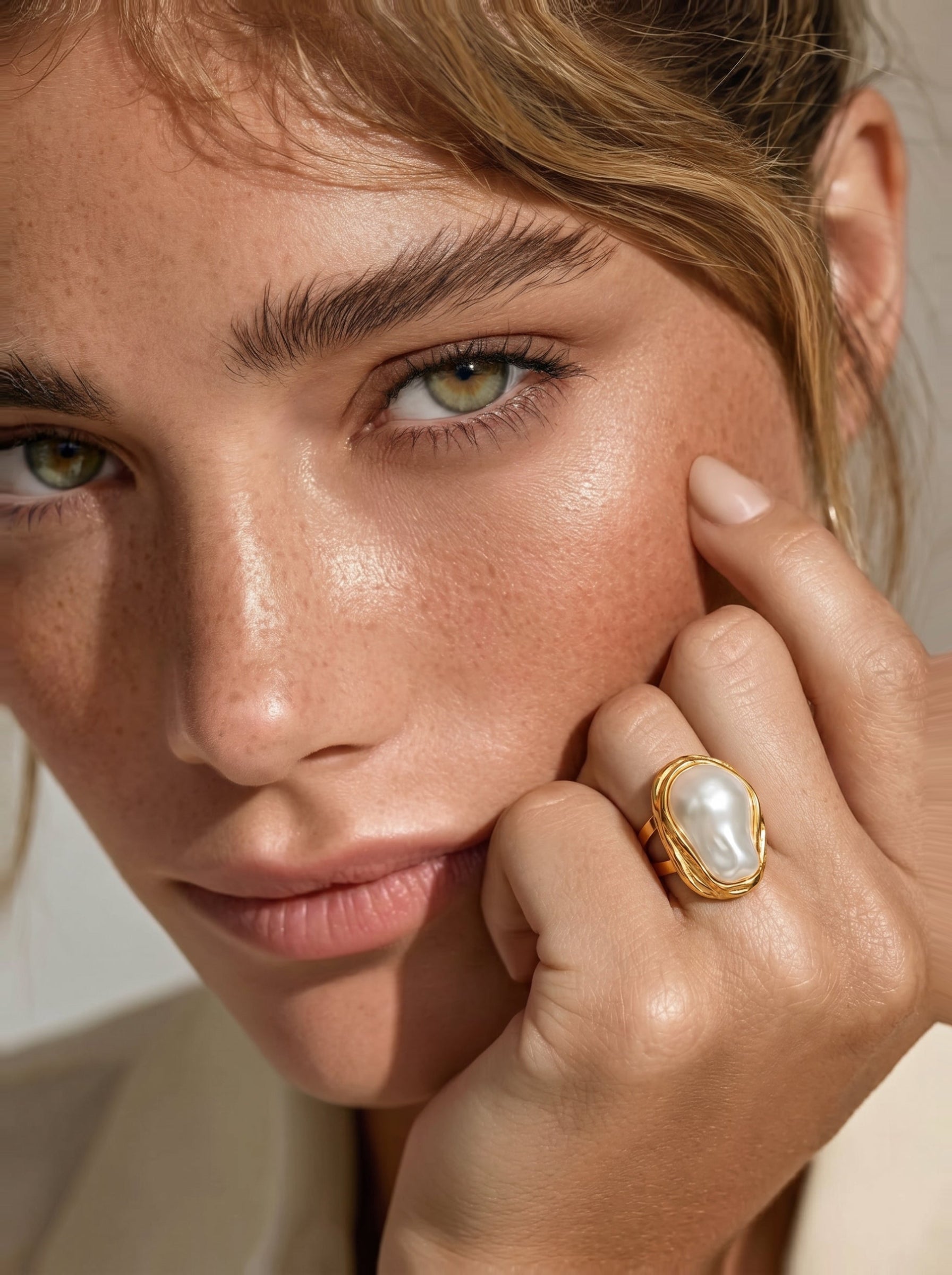
Worked steel forms built around the pearl. Steel is harder than gold or silver, so a fine sculpted detail holds its edge rather than softening over years of wear.
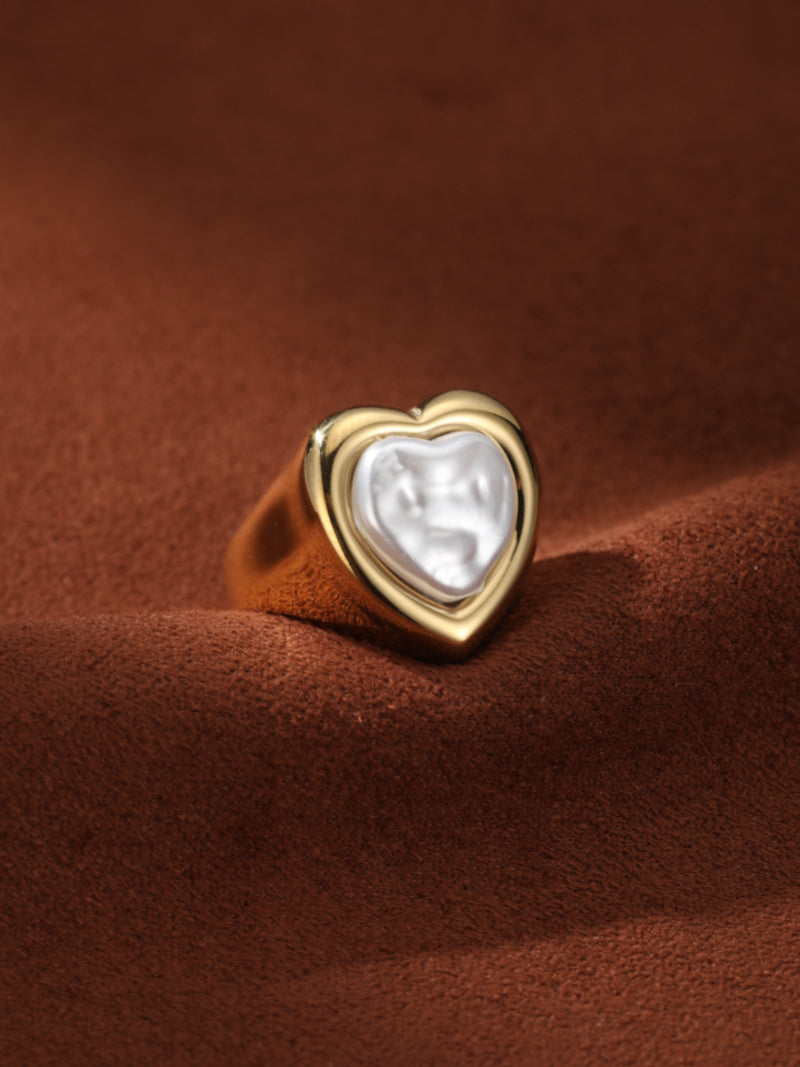
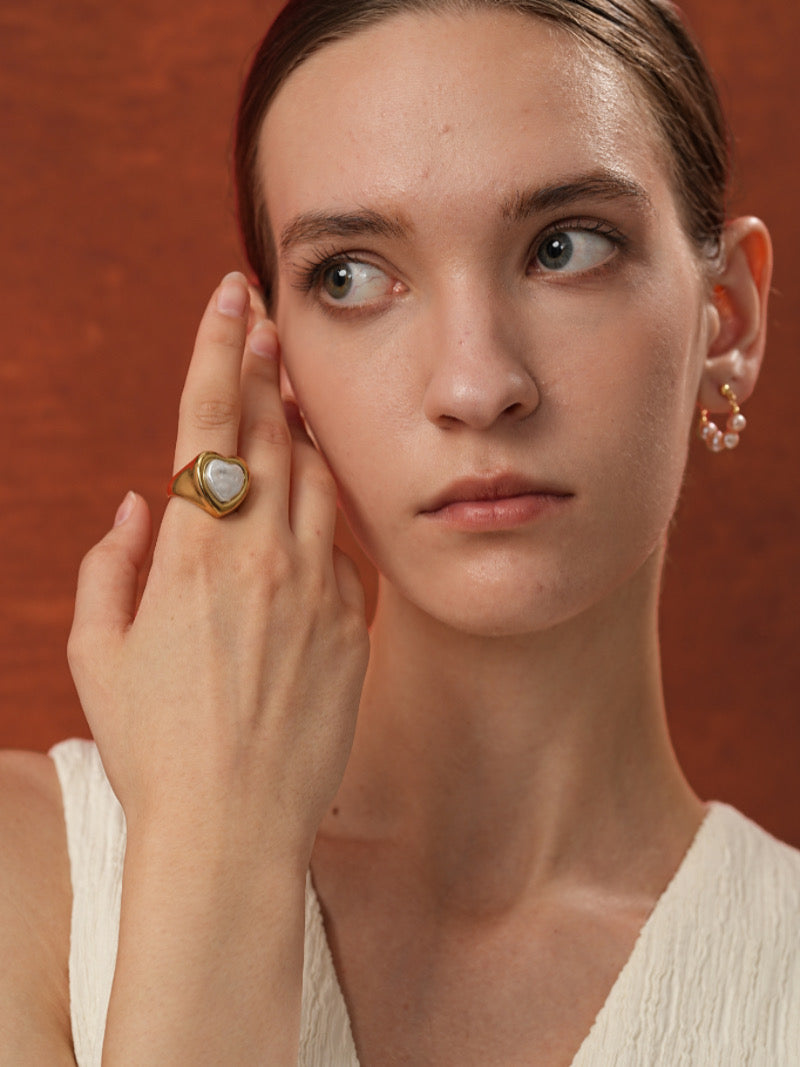
Low single settings
One pearl set close to the band. The most practical construction for a ring you never take off, since nothing stands proud enough to catch.
Why buy a stainless steel pearl ring from Grande Lilith
- Solid steel, not steel-cored plating, so the shank cannot wear through.
- Eight provenance markers on the pearl: type, origin, bodycolor, overtone, shape, size, grade and treatment.
- Sourcing named to place: Zhuji, Japan, French Polynesia.
- Settings kept low so the ring clears daily life, and nickel-free, lead-free and cadmium-free throughout.
- Designed in Paris. Thirty days to change your mind, and every order arrives in a magnetic pouch.
Frequently asked questions
Will a steel ring turn my finger green?
No. Discoloration comes from copper in an alloy reacting with skin, and stainless steel contains none. This is one of the practical advantages steel has over sterling silver on a ring.
Can a steel pearl ring be resized?
Steel is difficult to resize even without a pearl, and the pearl rules it out entirely since heat damages nacre. Choose an adjustable open cuff if you are between sizes or buying as a gift.
Can you wear a steel pearl ring every day?
The metal, yes, with no routine at all. The pearl still sets the habits: off before hand washing, cleaning and lotion, and stored away from harder stones.
Does steel scratch?
It picks up fine surface marks like any metal, but it resists them better than gold or silver because it is harder. The oxide layer also reforms over a scratch, so the finish does not degrade the way a plated one does.
How do I know my ring size?
Measure at the end of the day, when fingers are at their largest, and in a warm room rather than a cold one. If you are between two sizes, size up. A ring that will not pass the knuckle is a bigger problem than one that turns slightly.