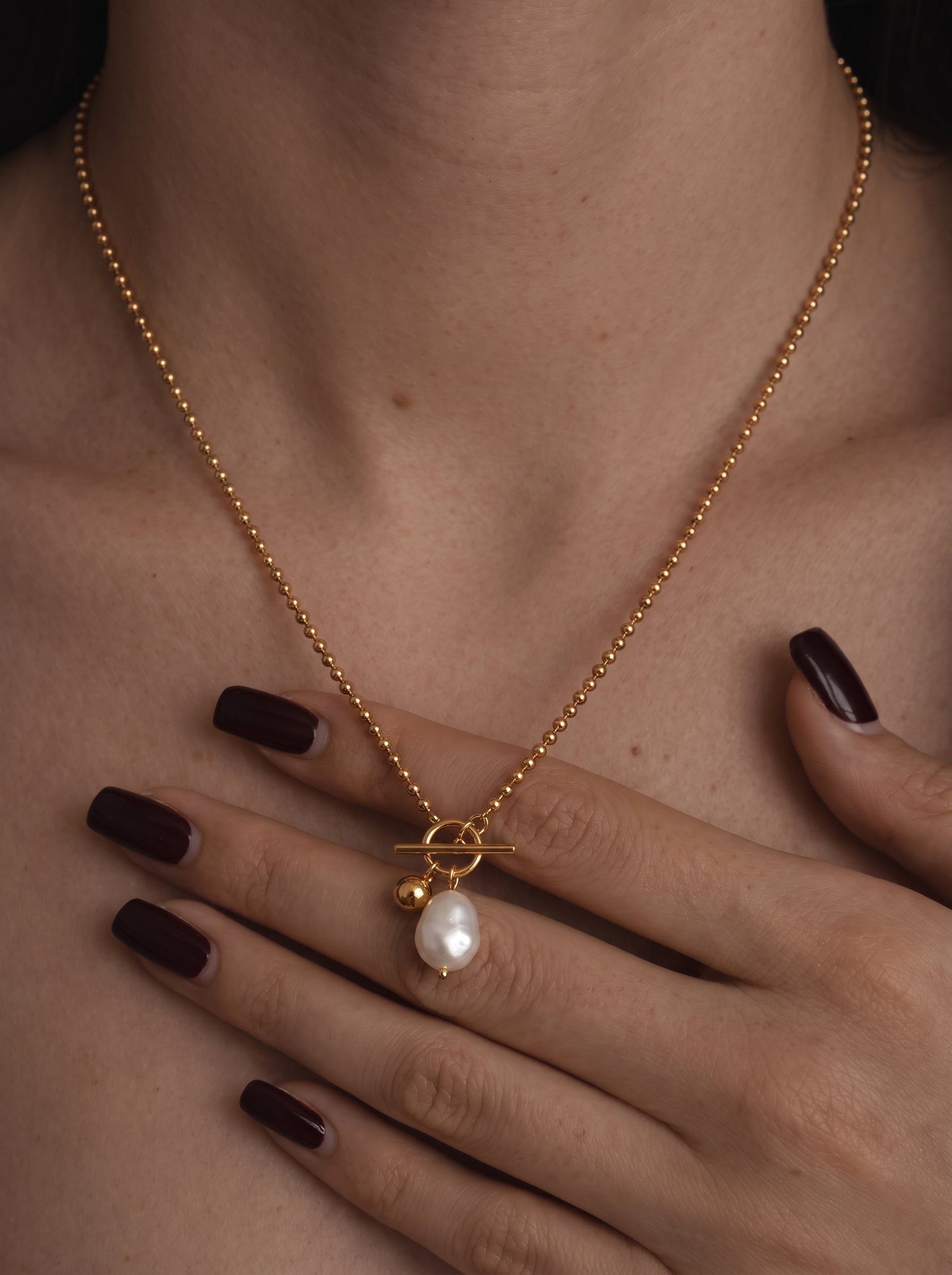
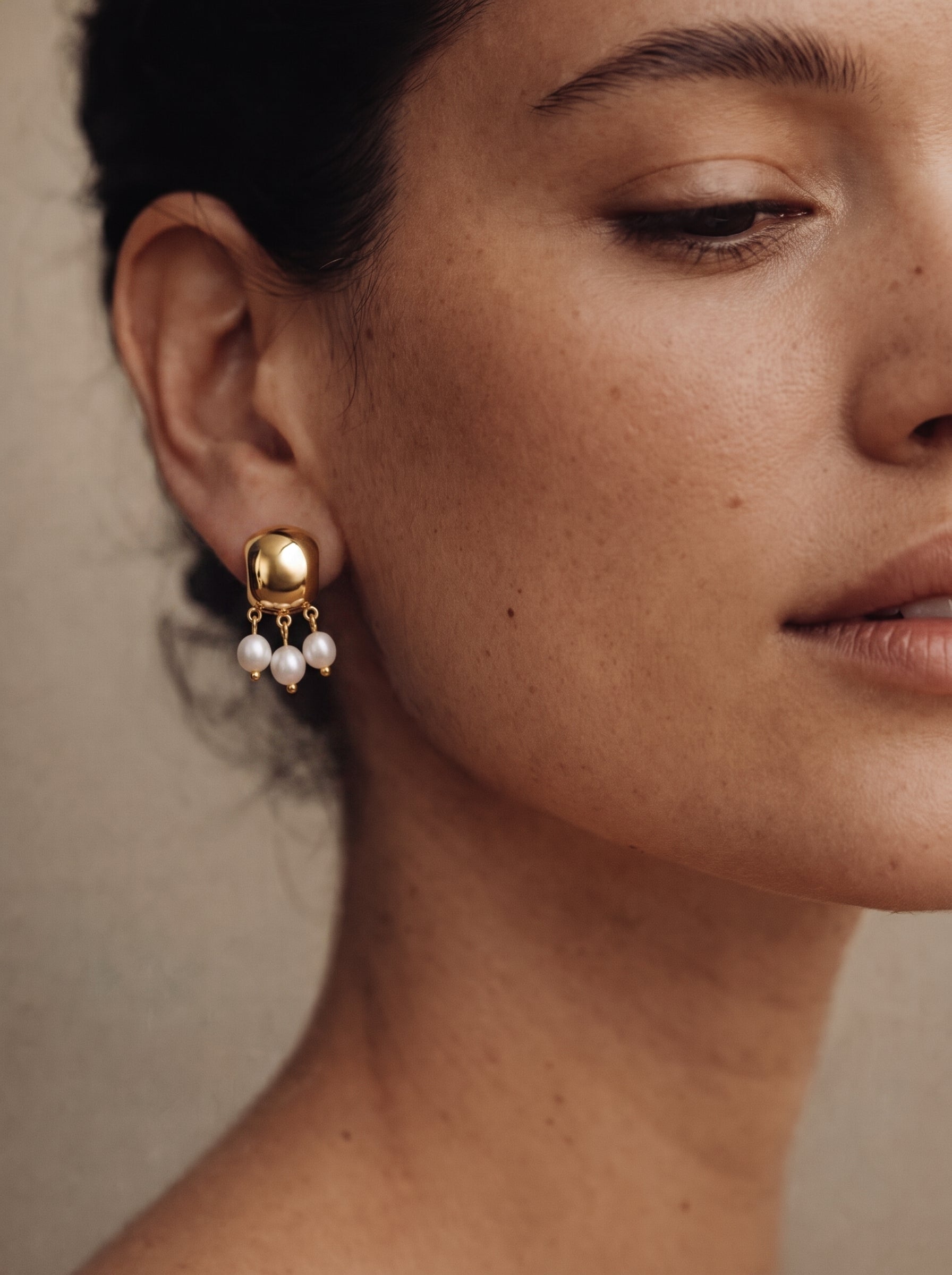
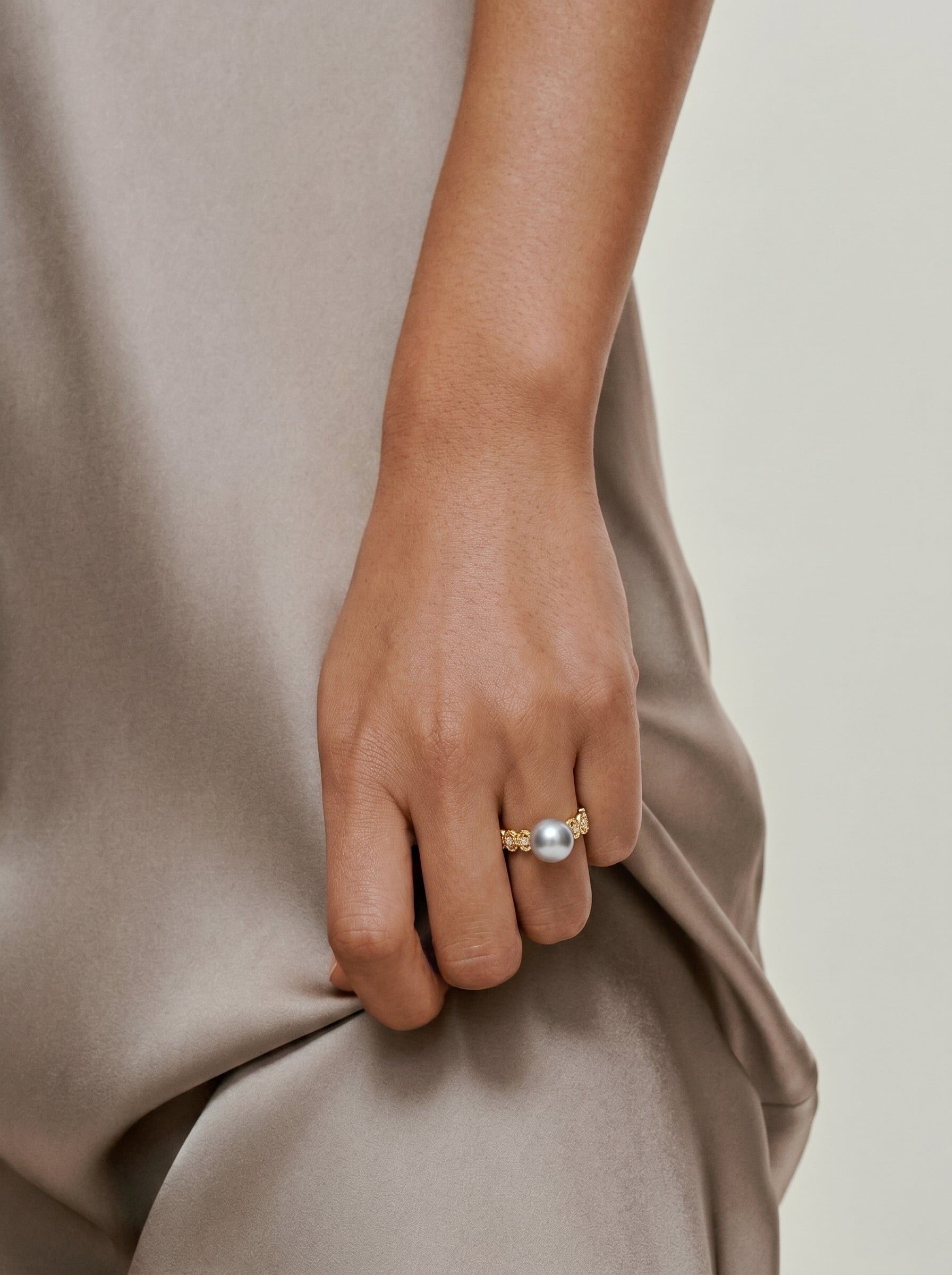
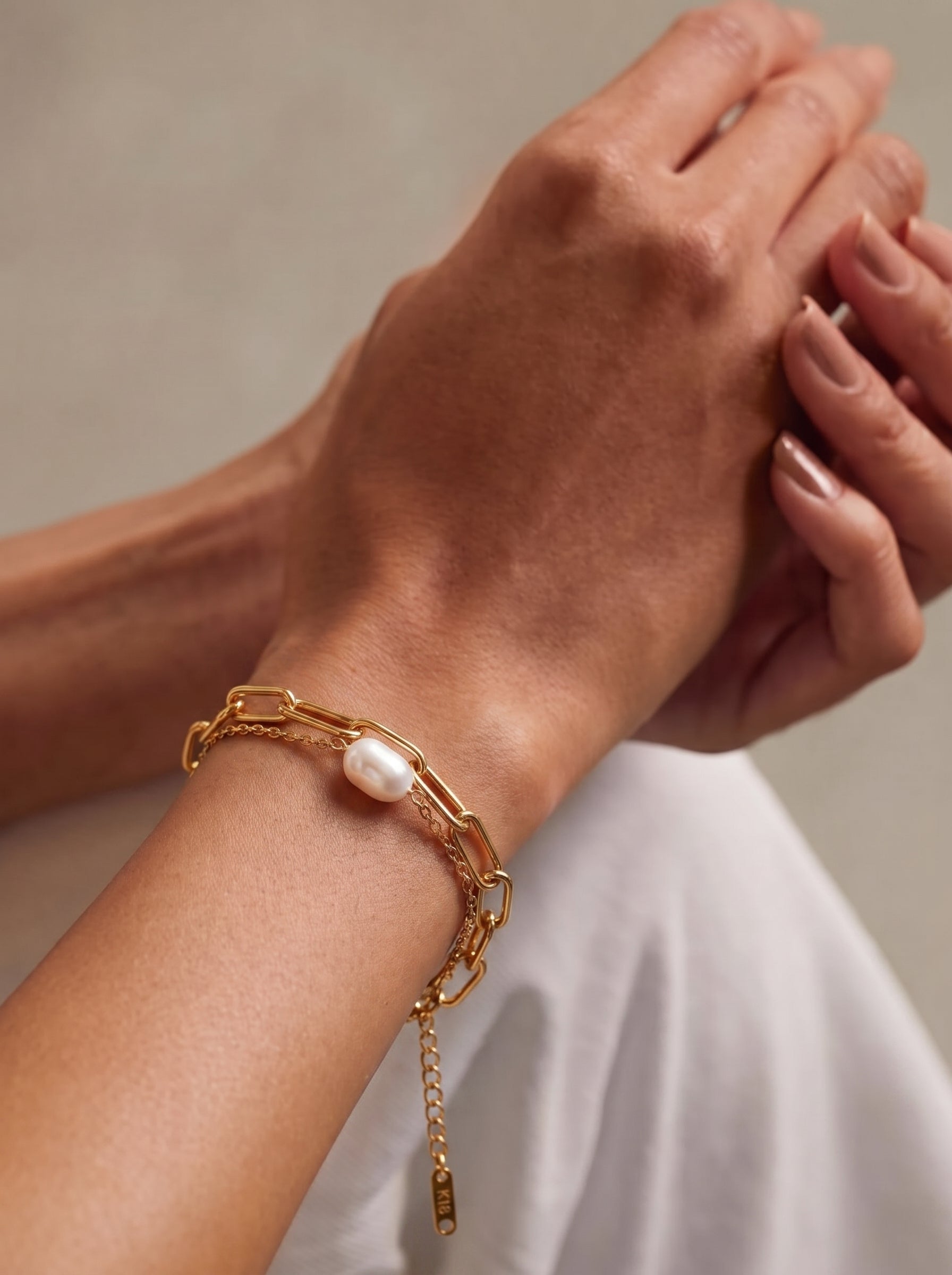
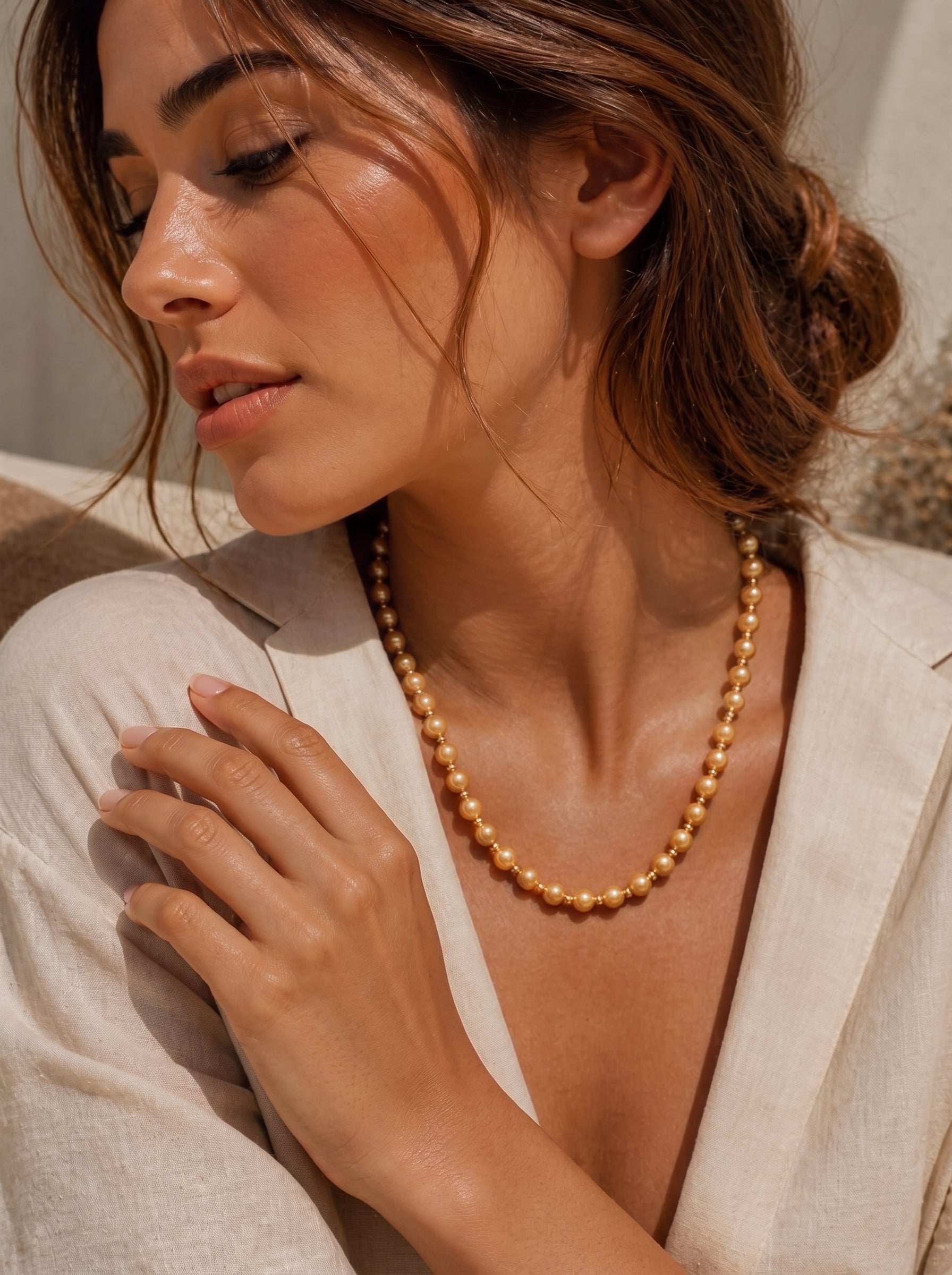
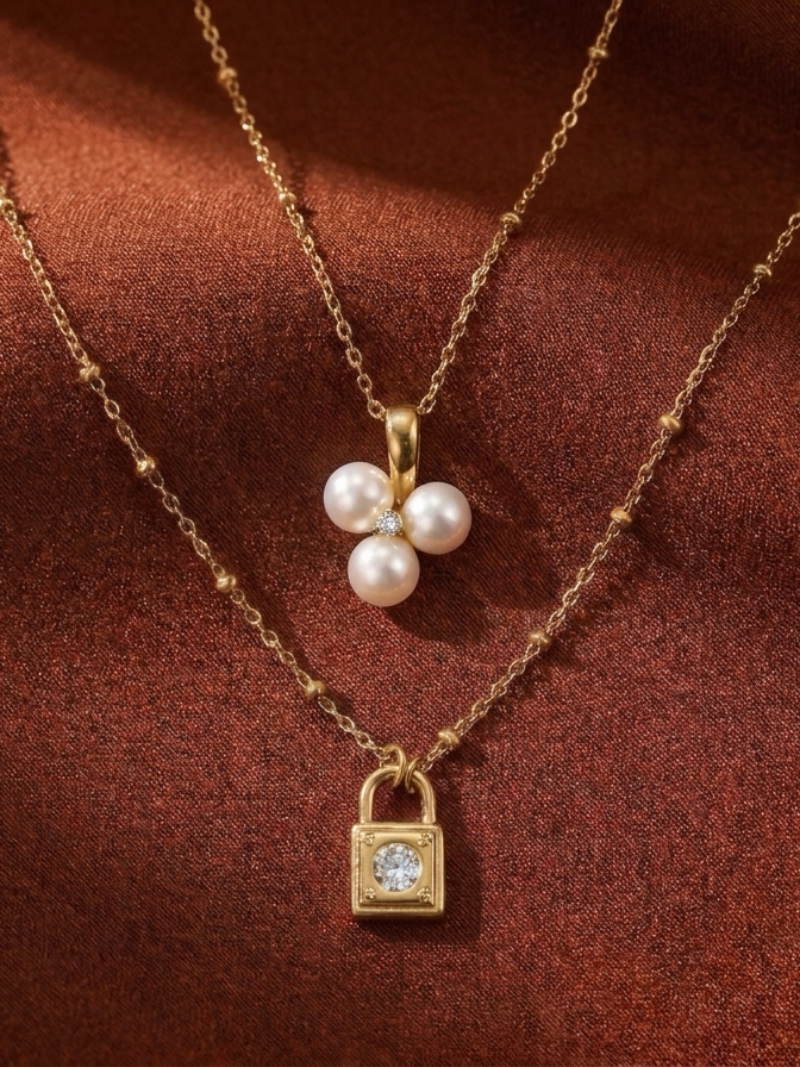
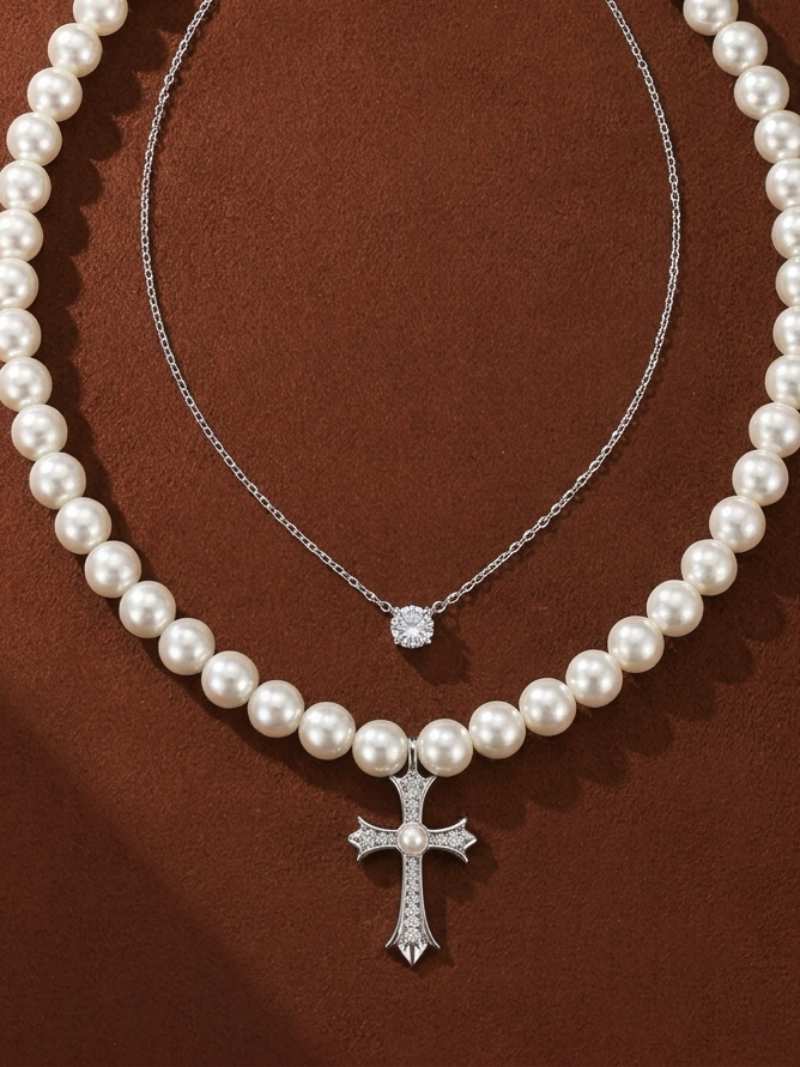
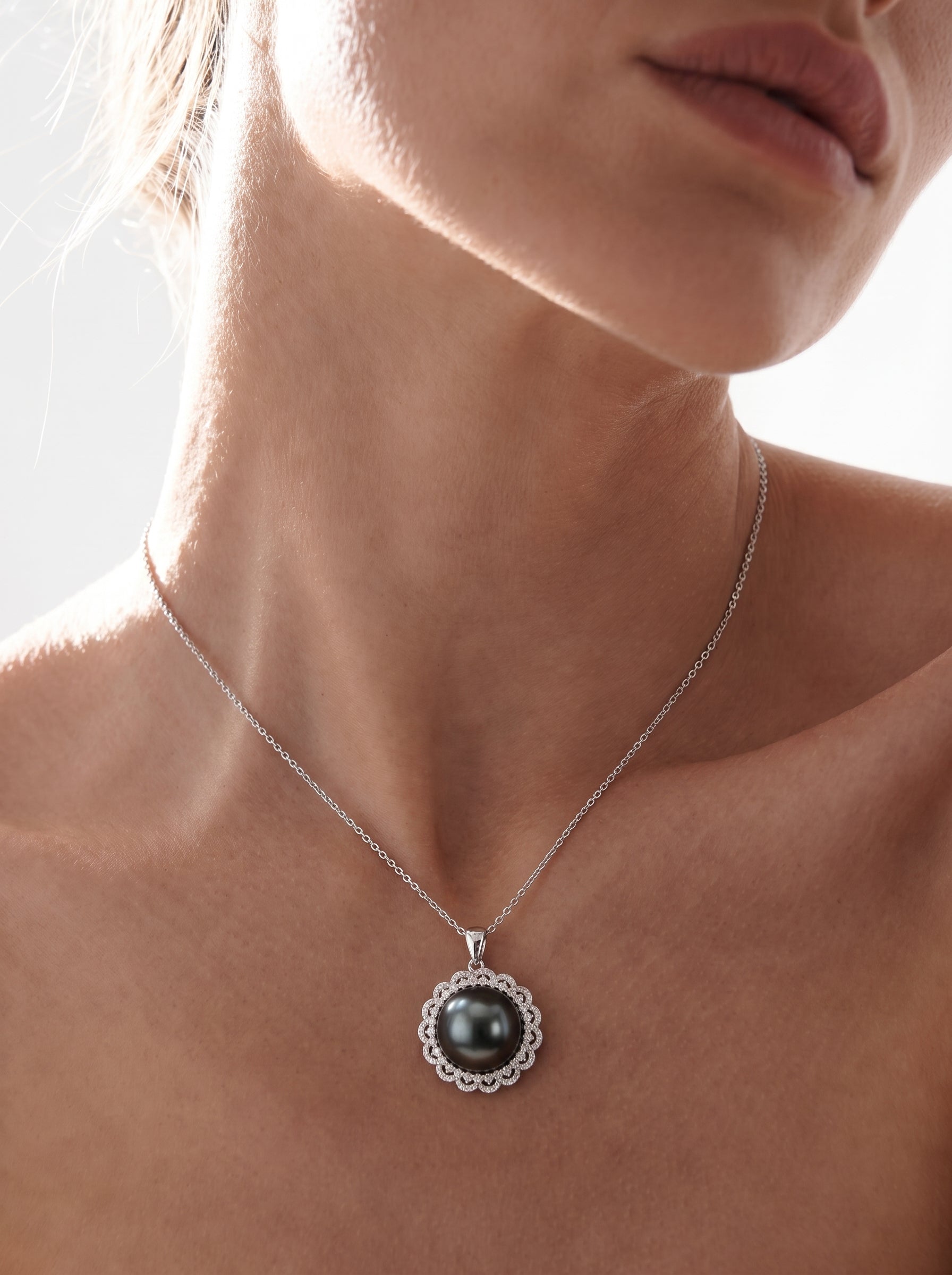
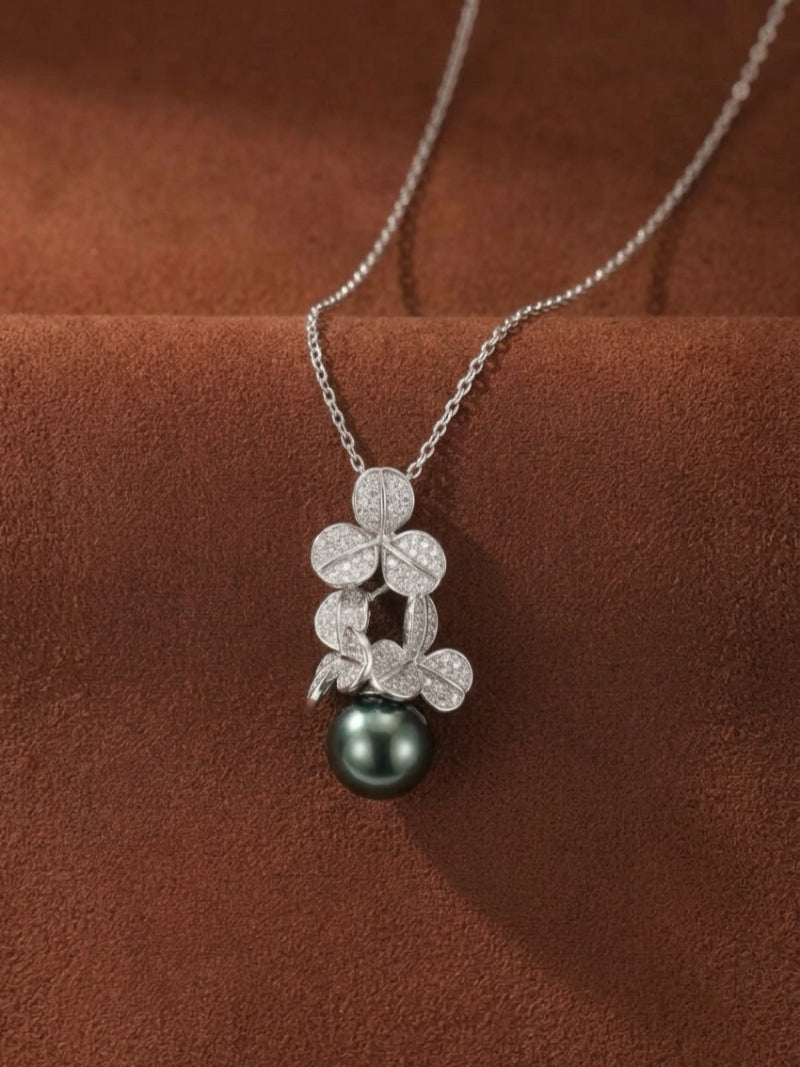
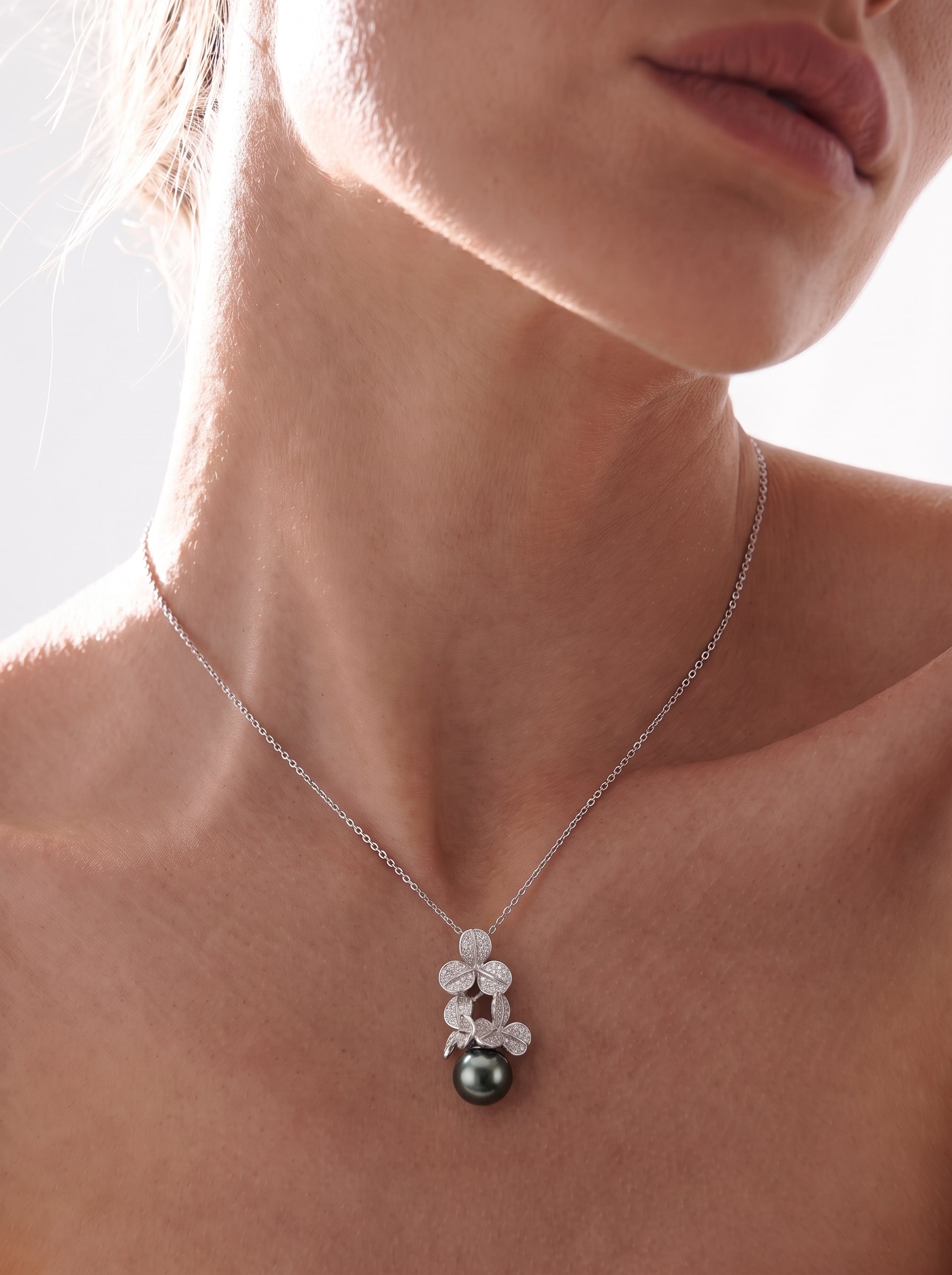
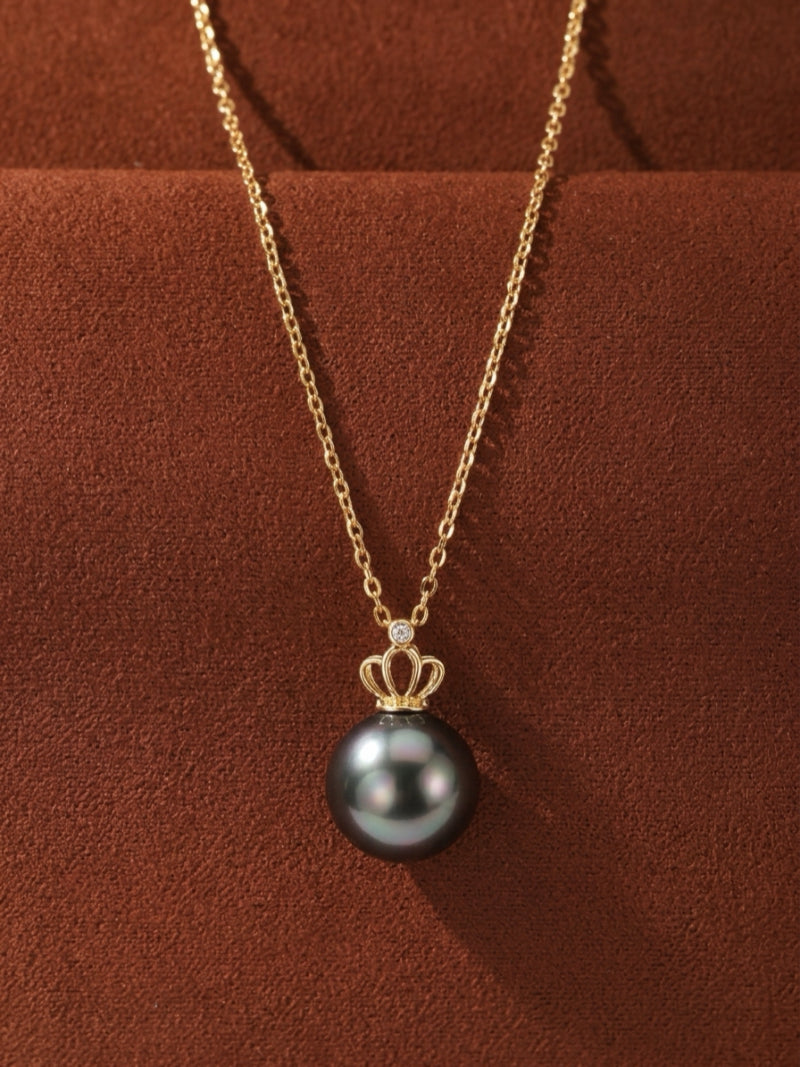
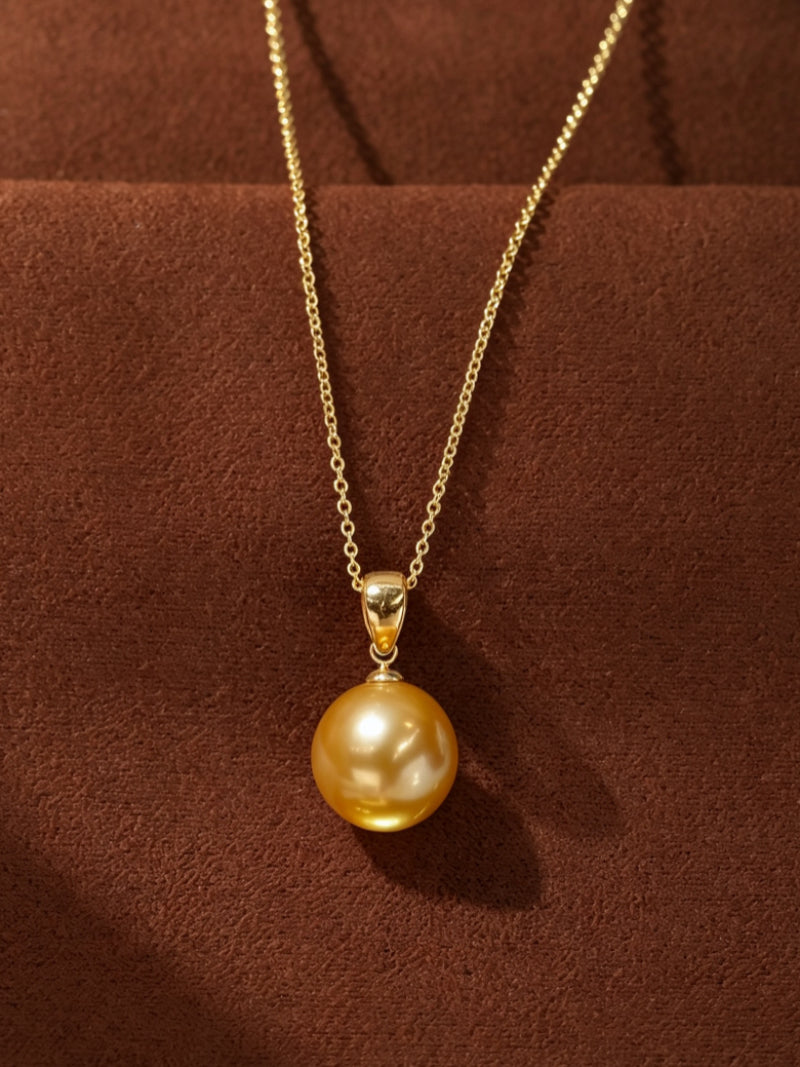
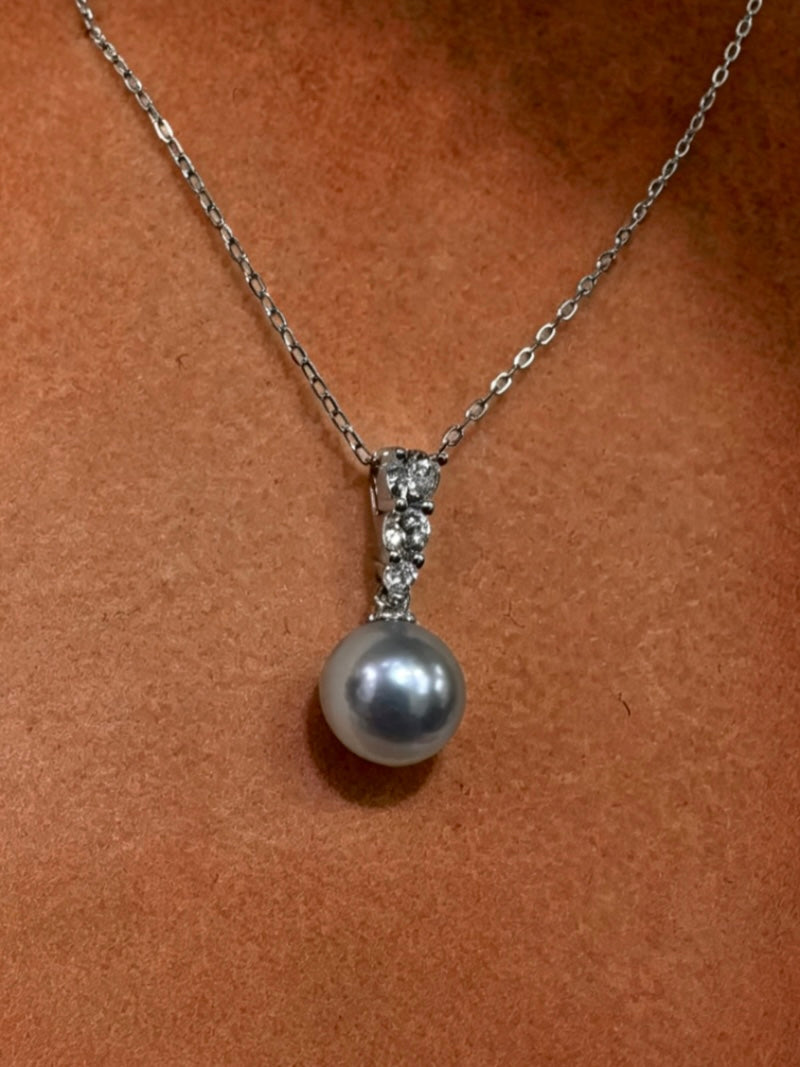
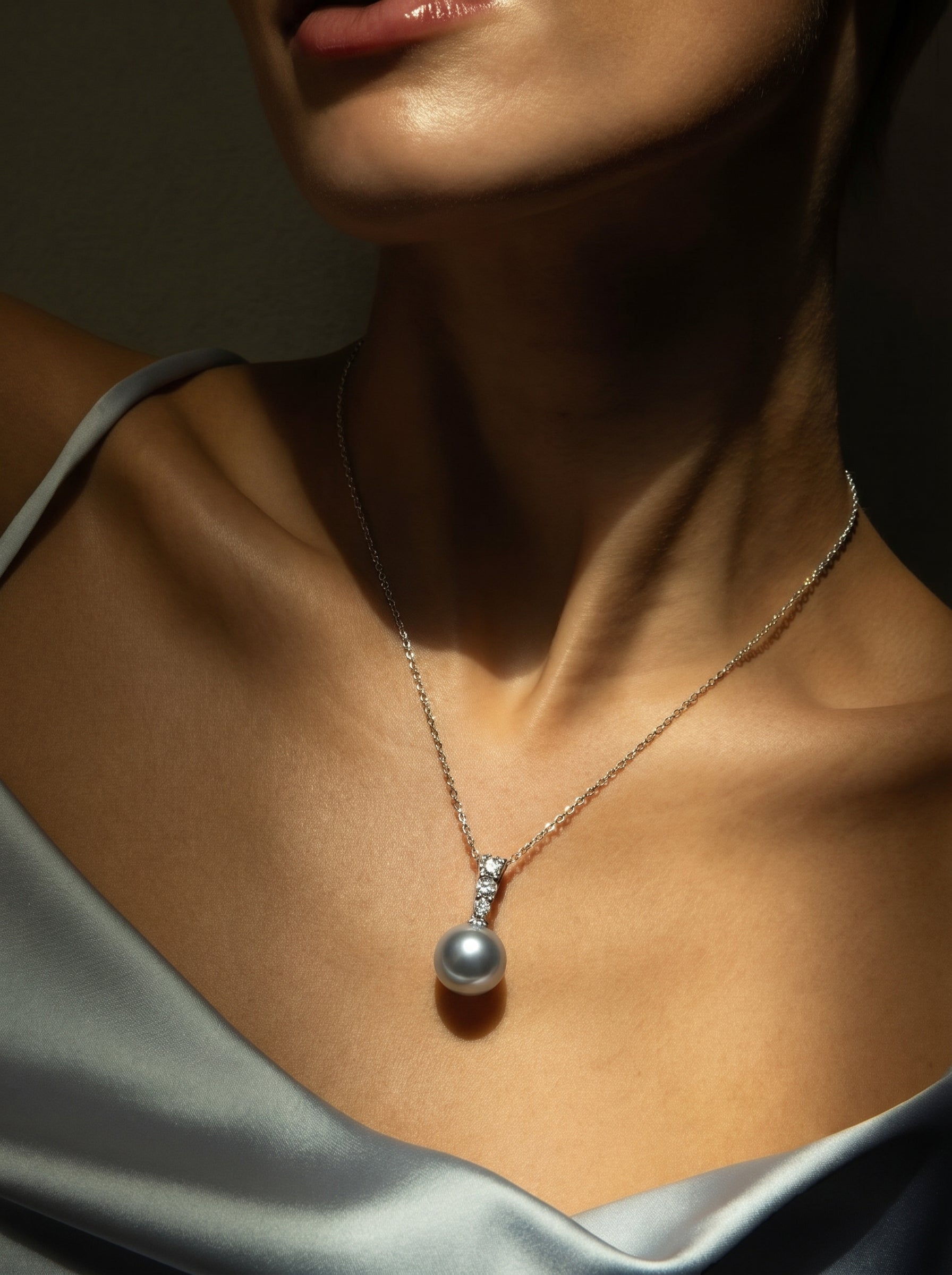
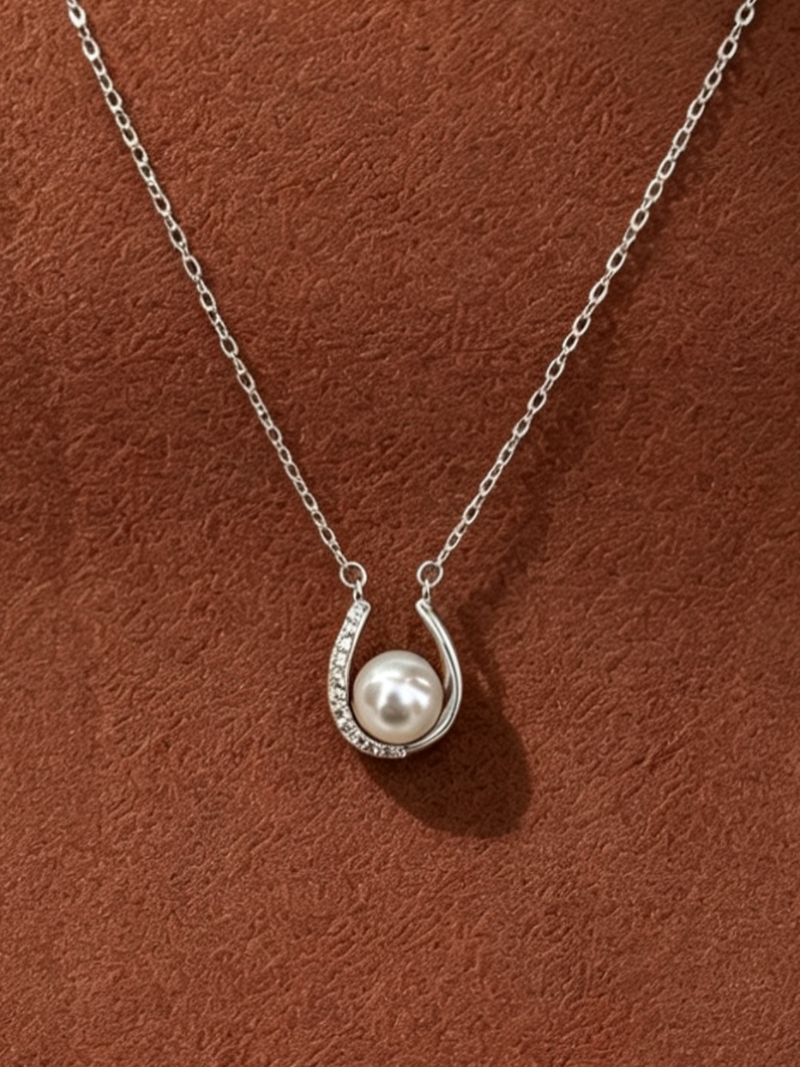
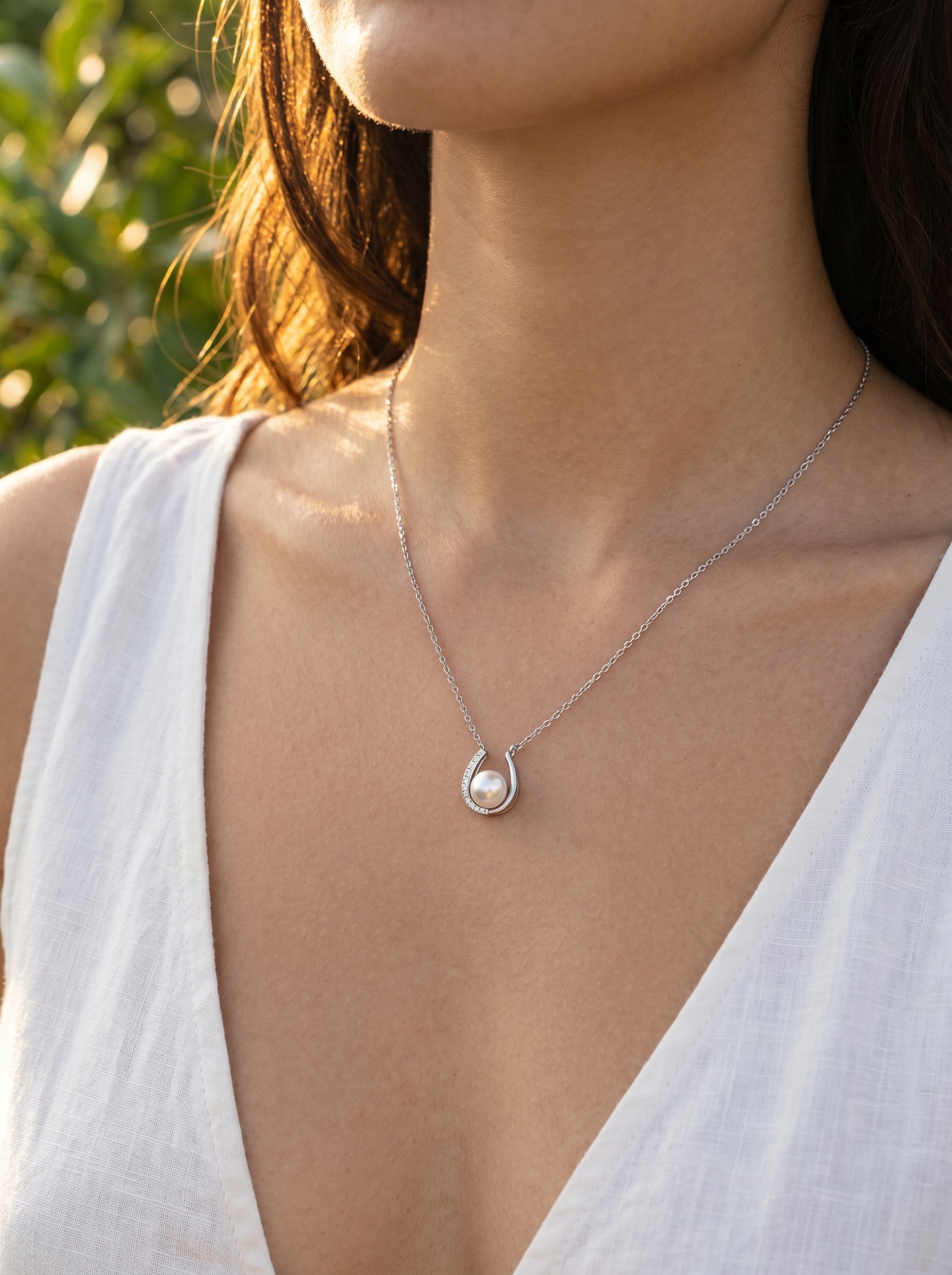
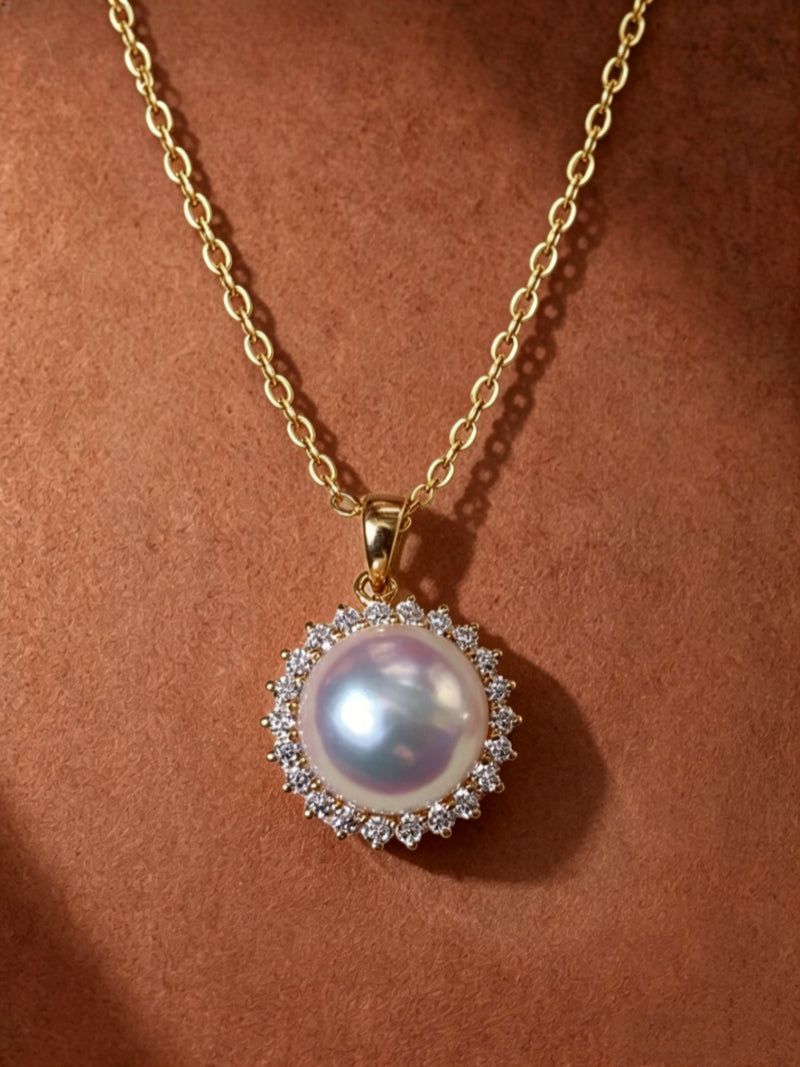
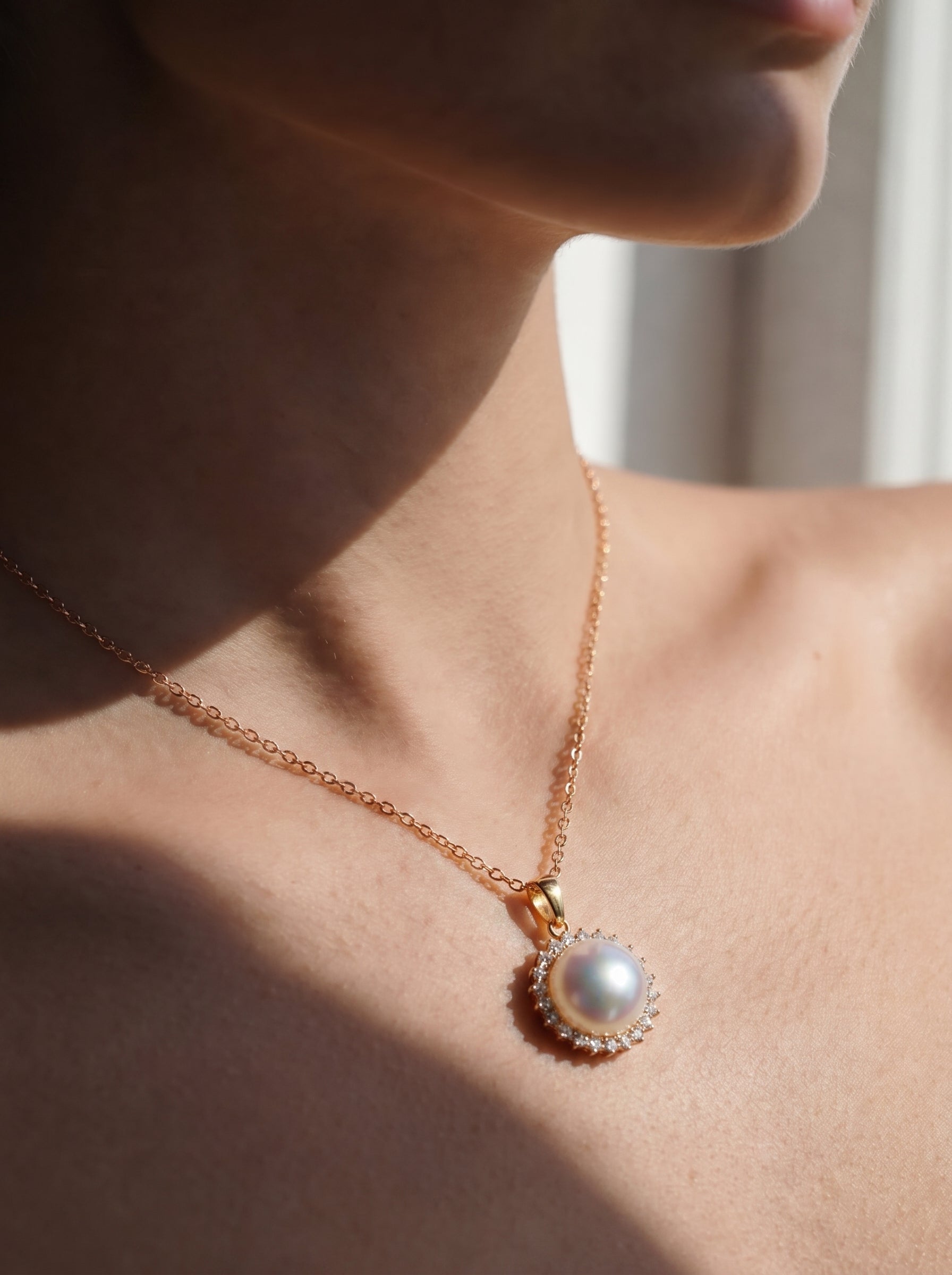
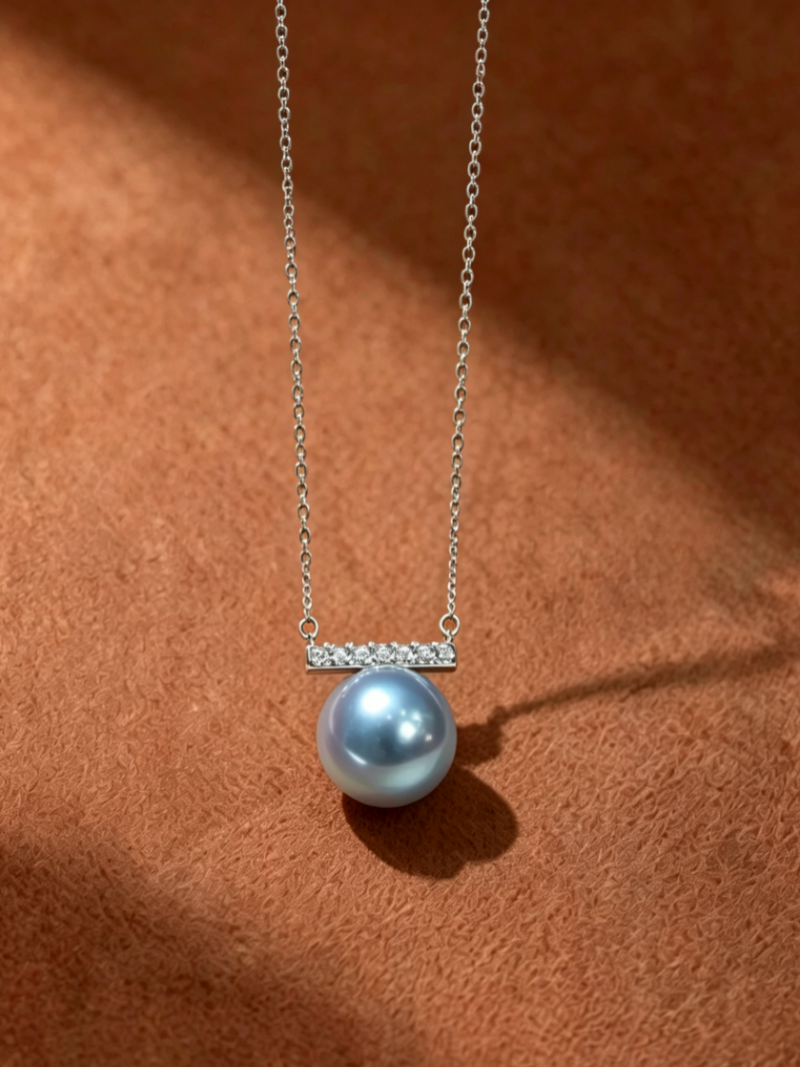
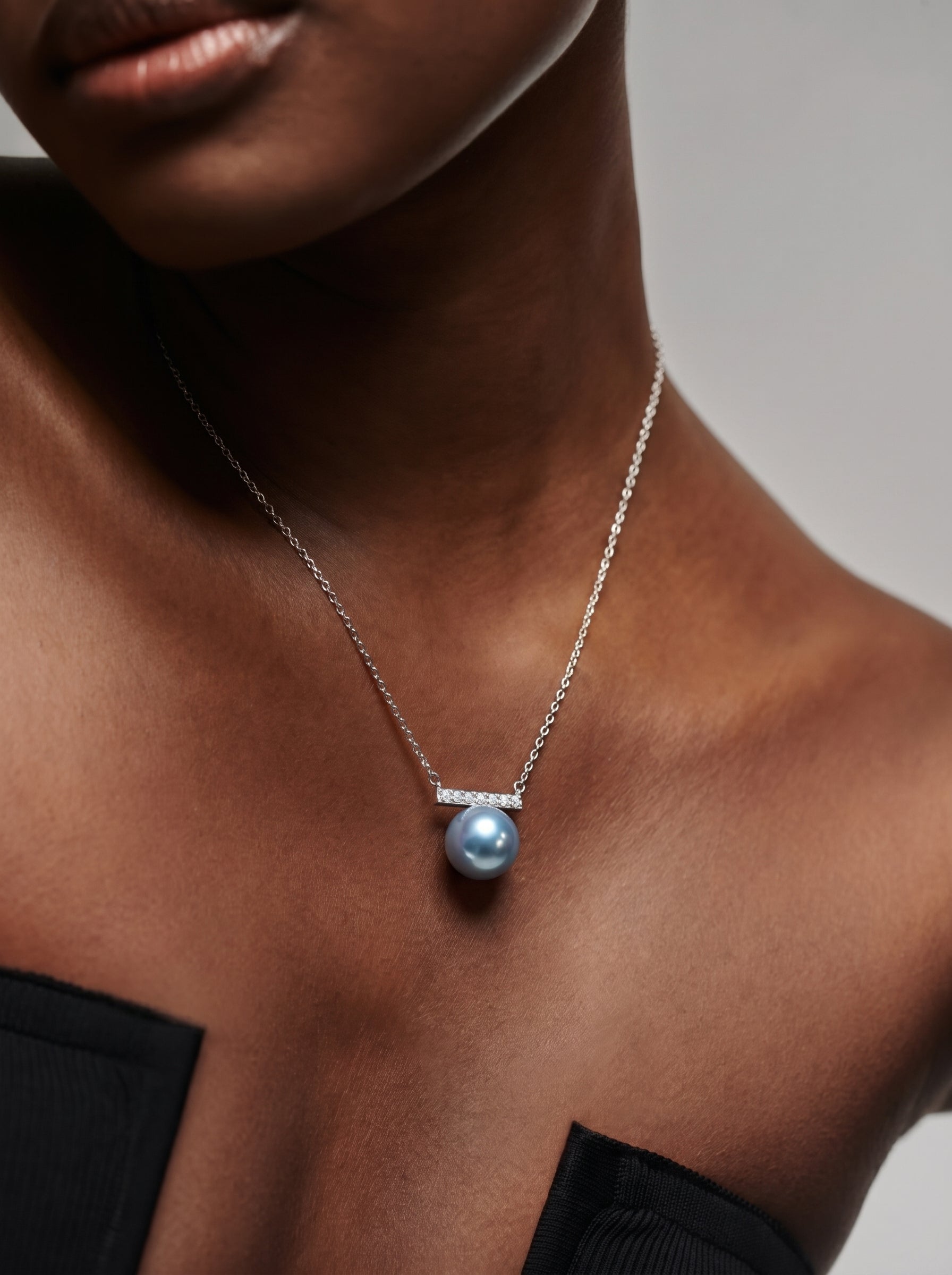
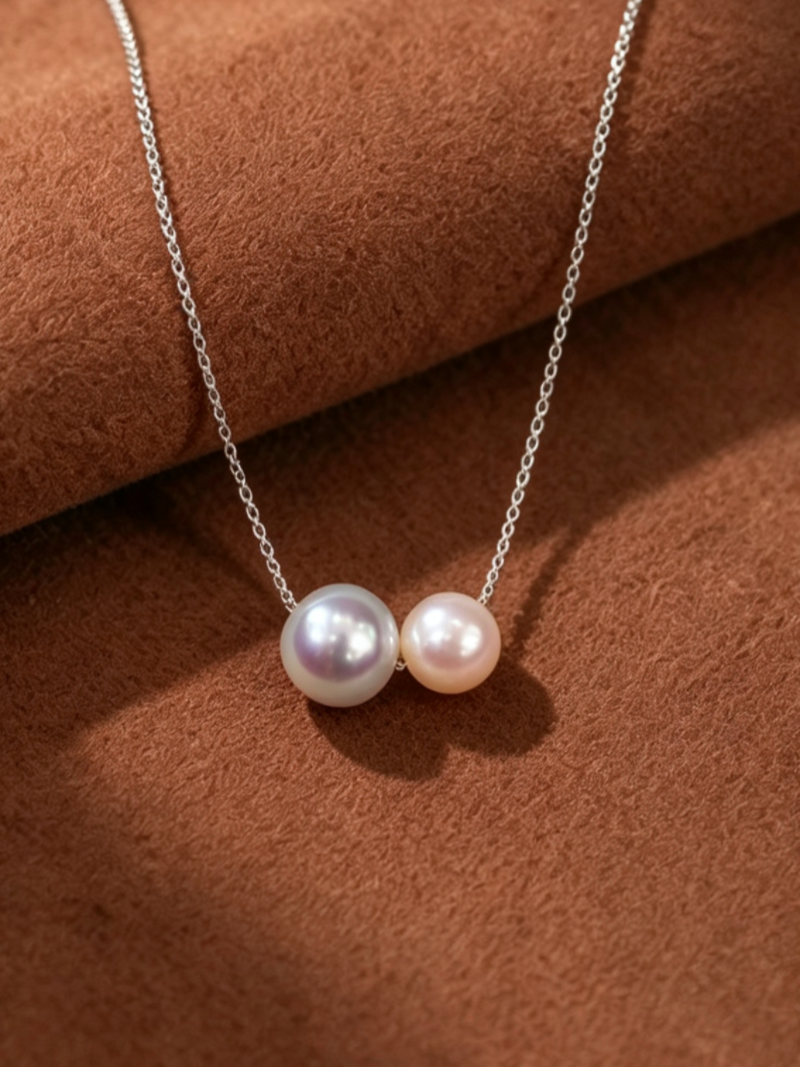
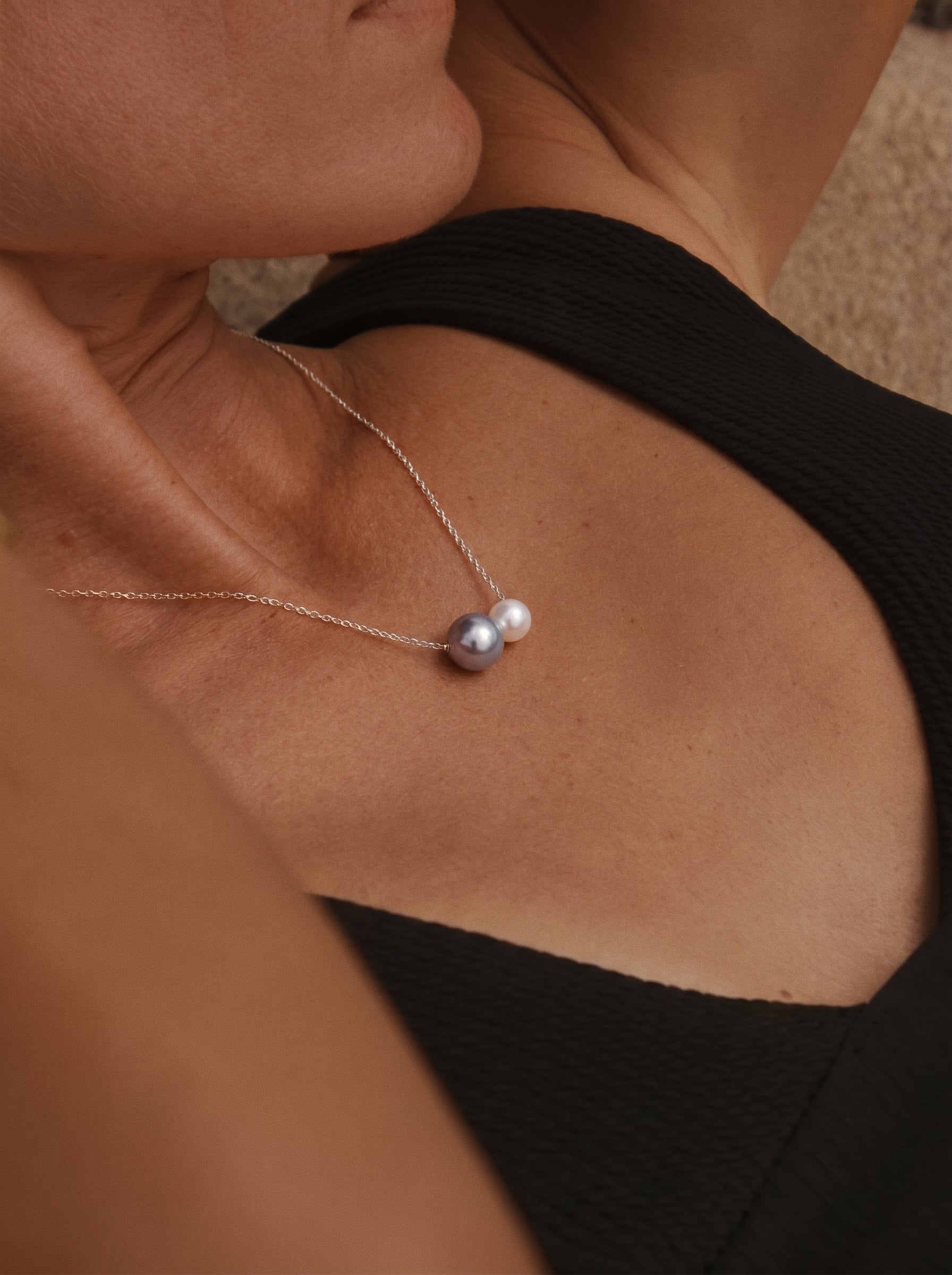
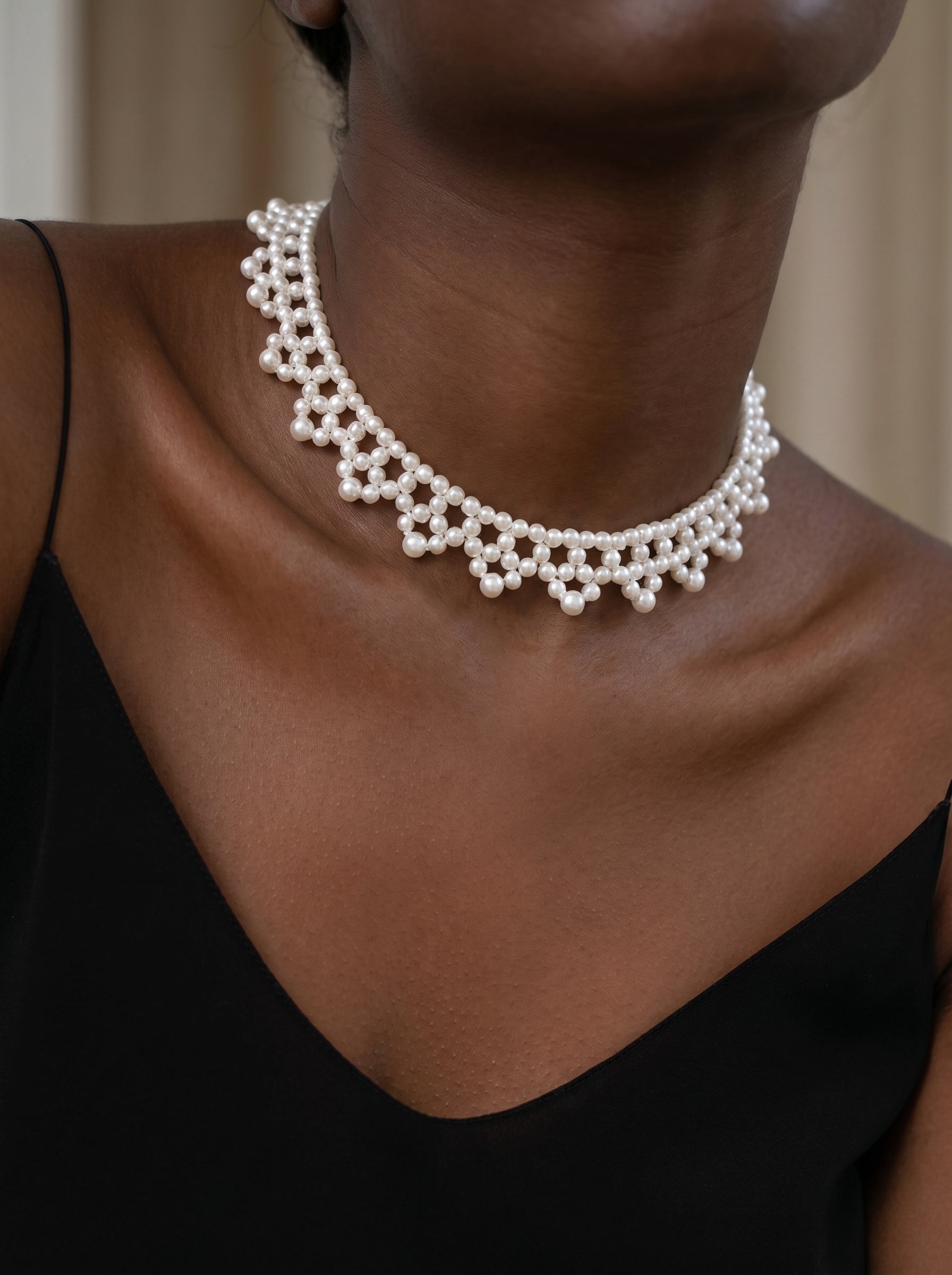
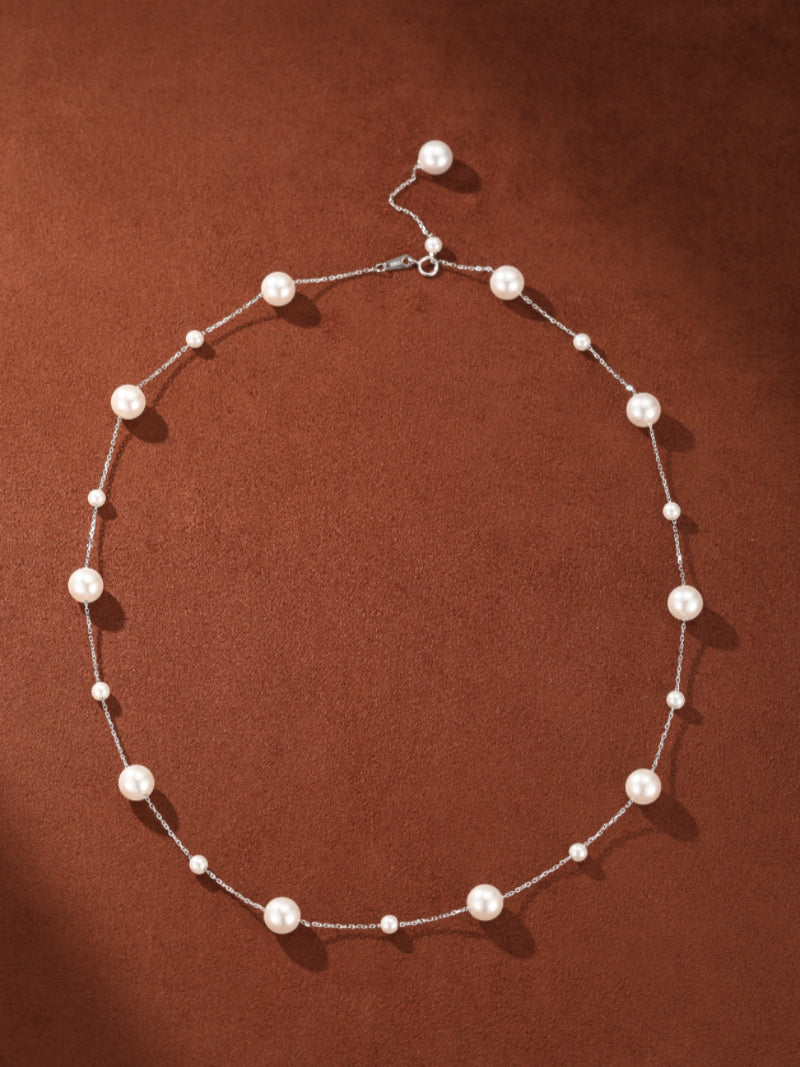
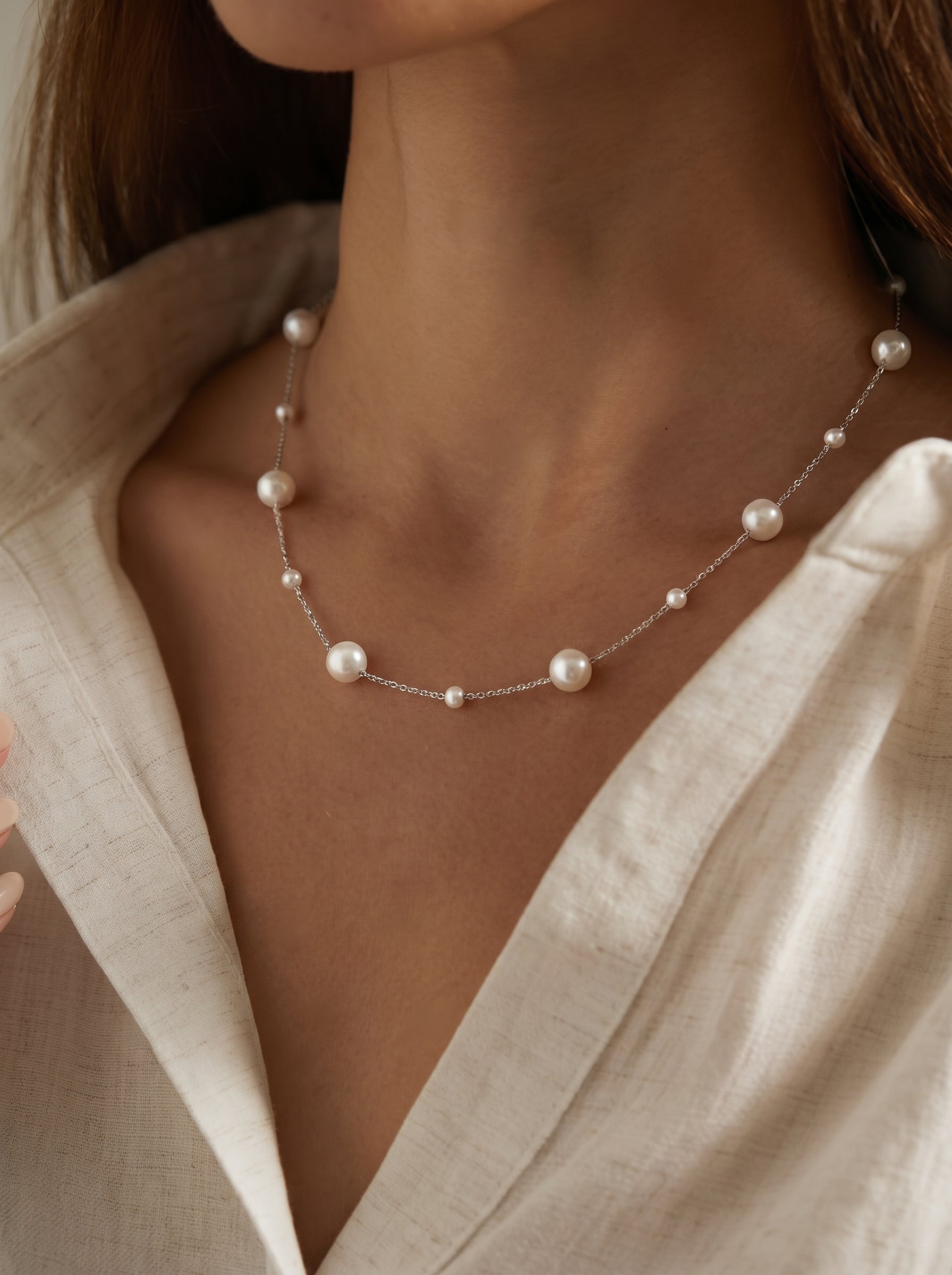
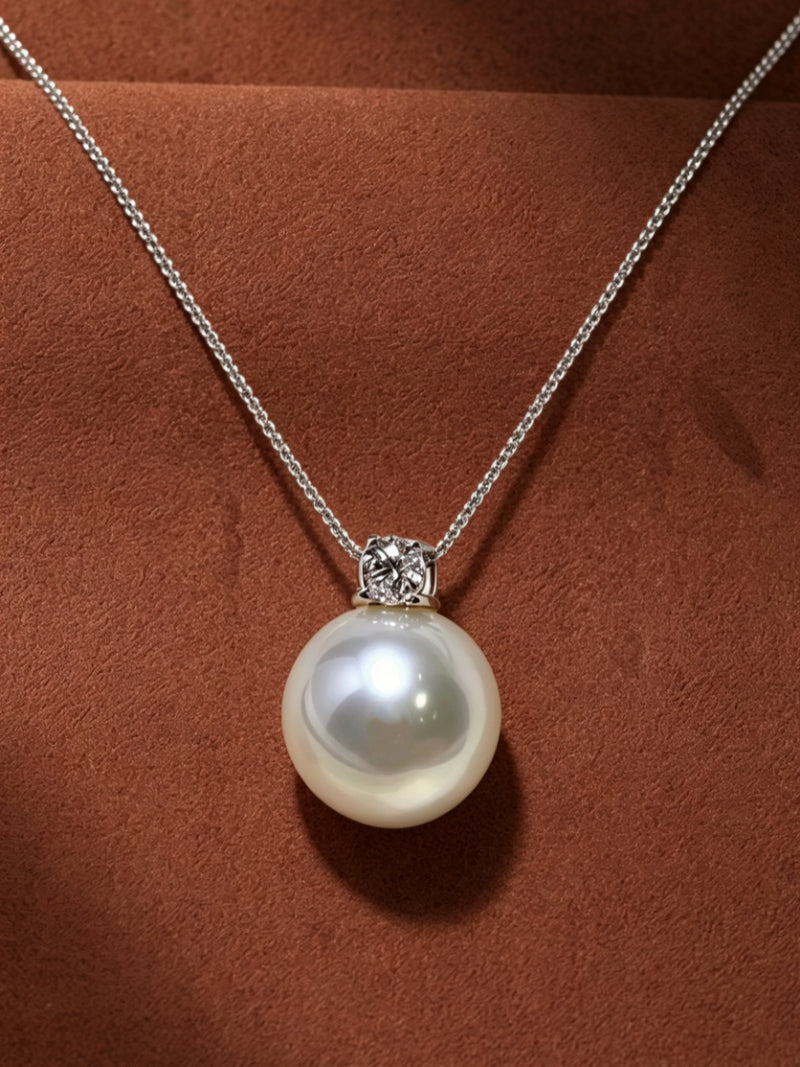
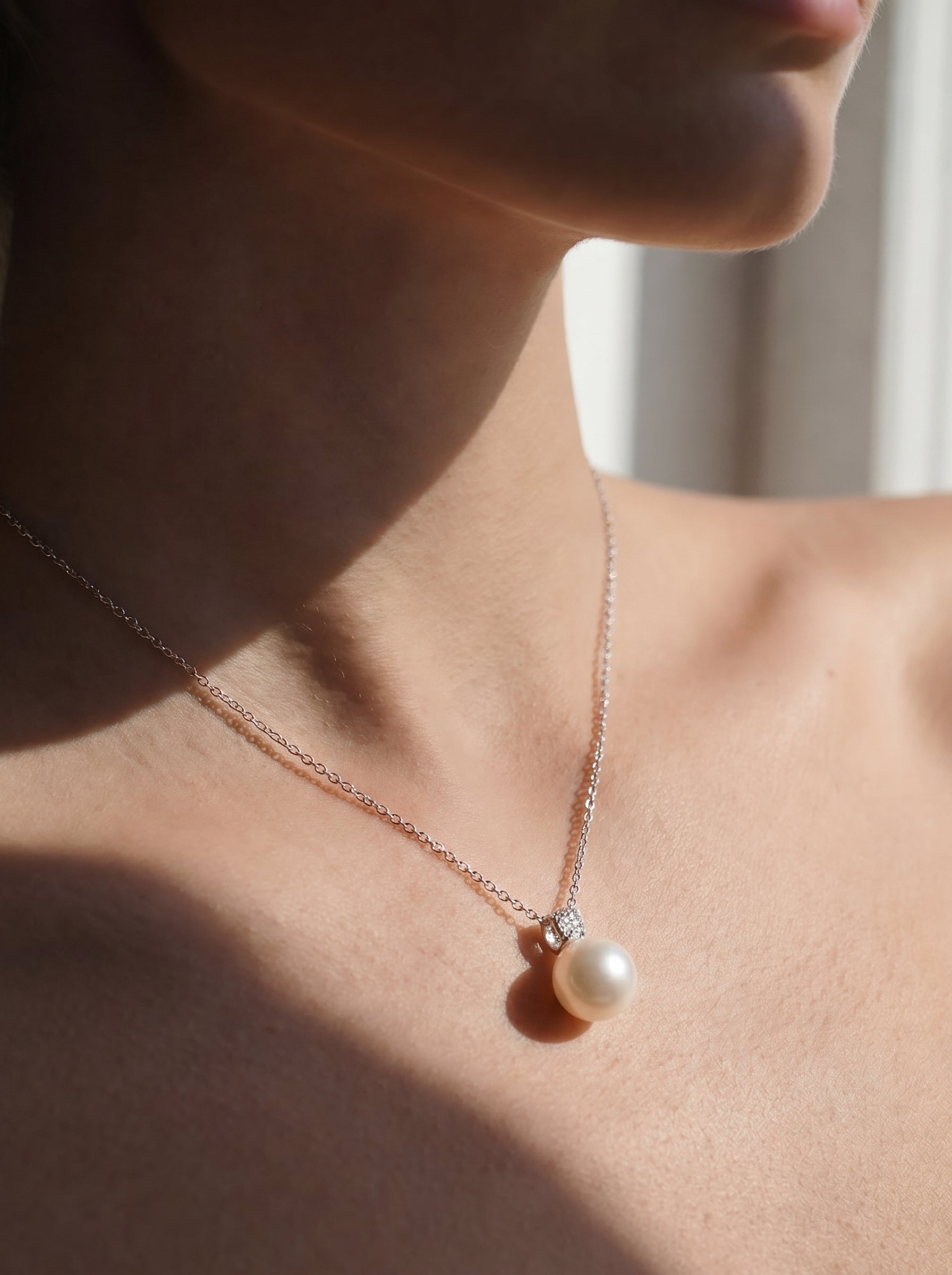
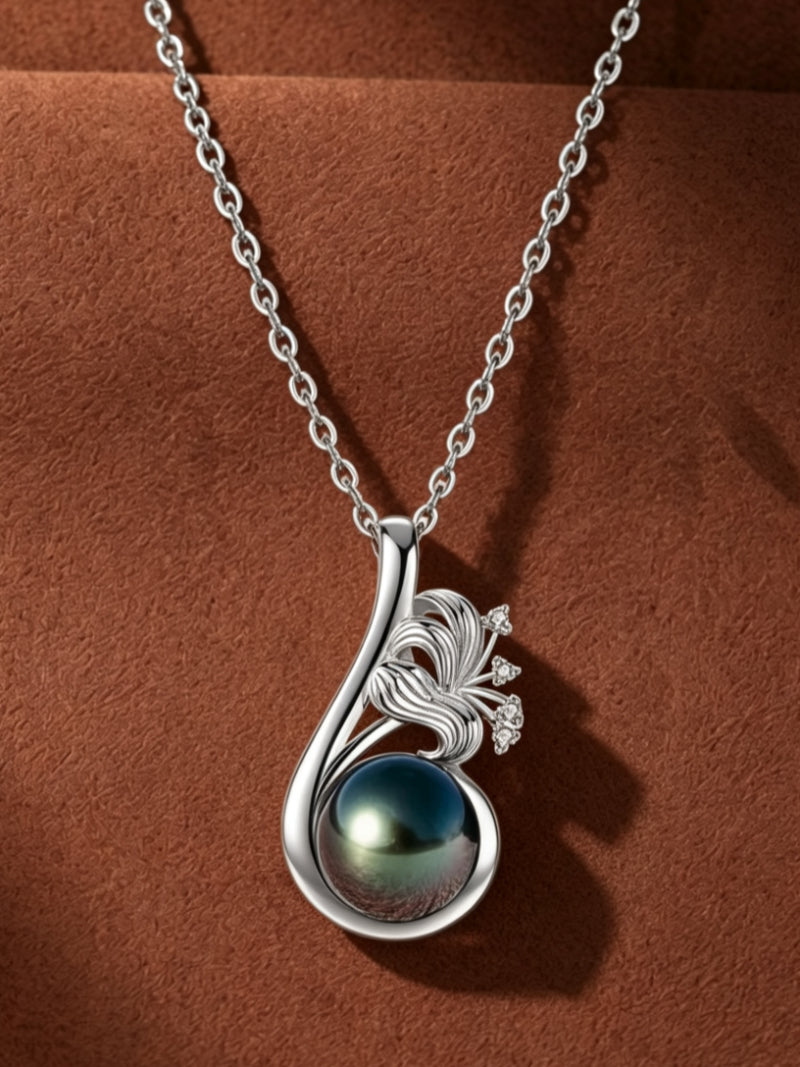
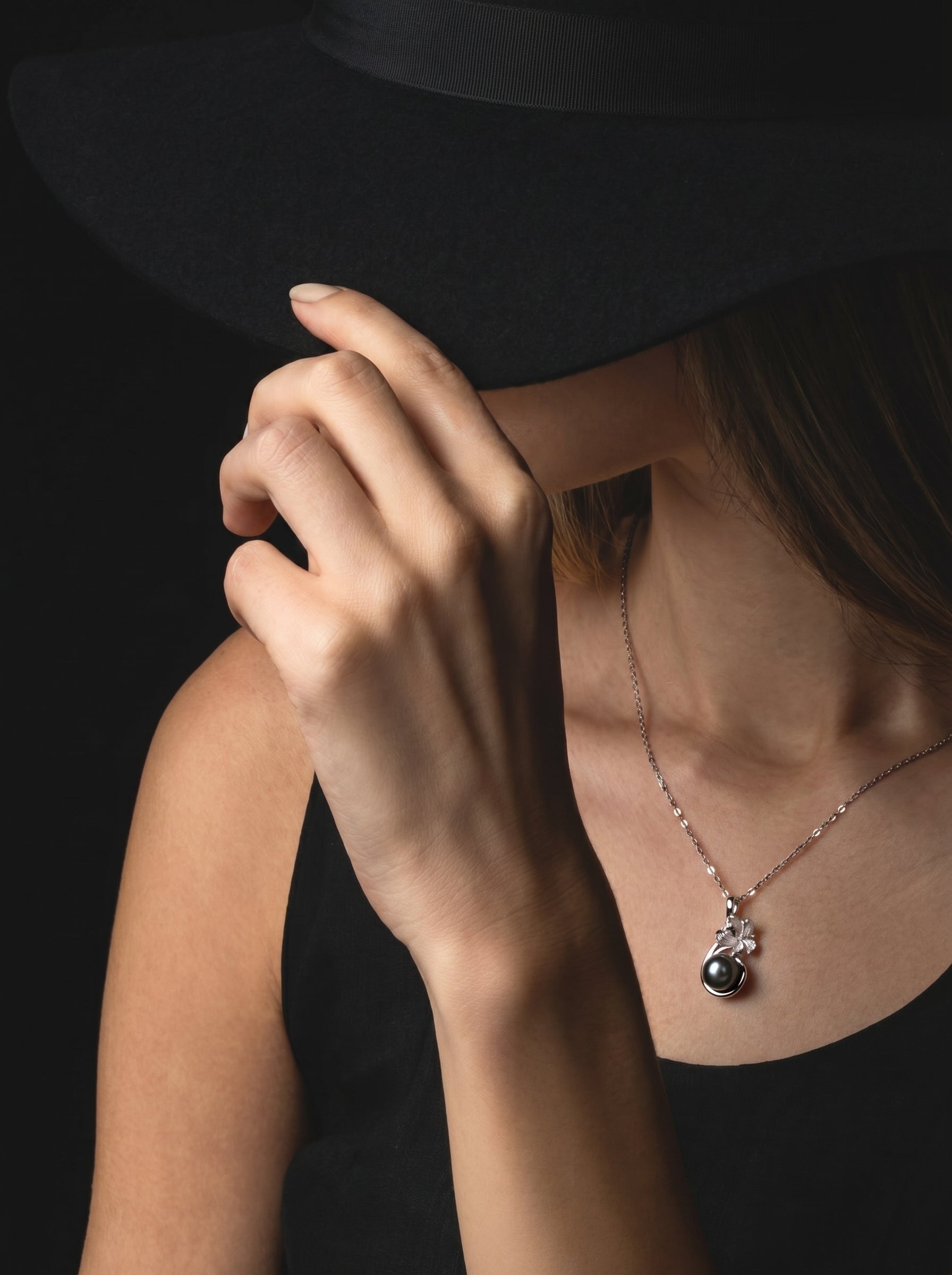
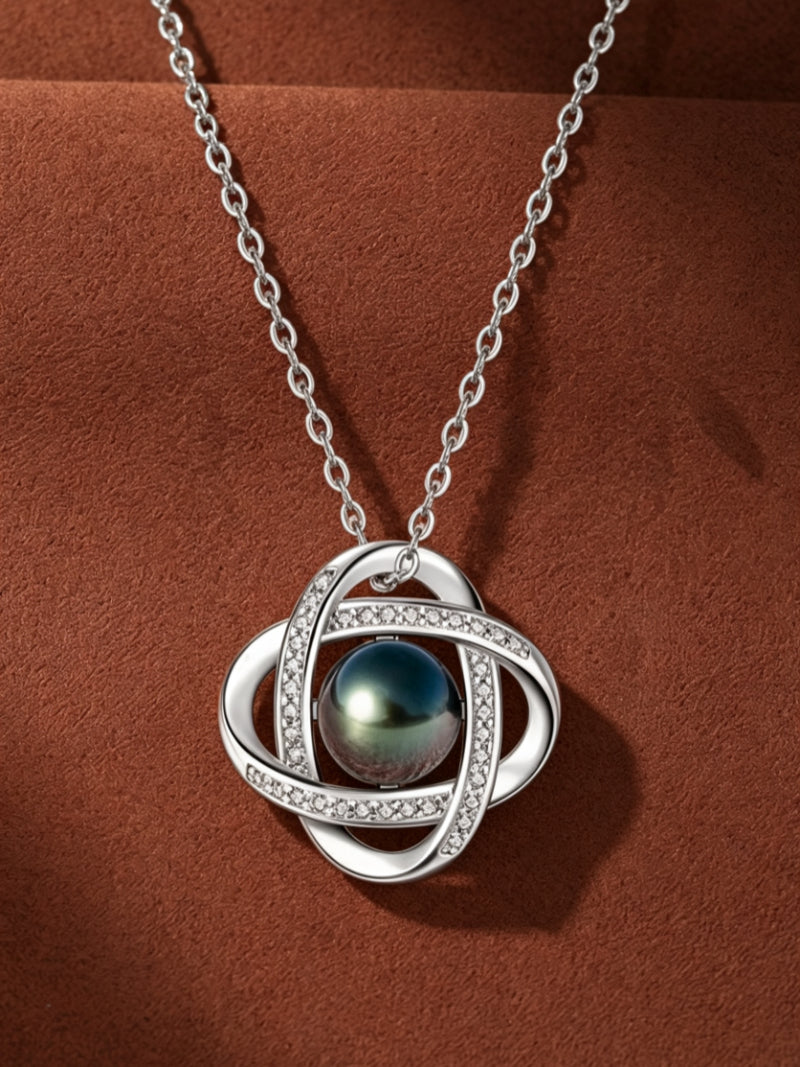
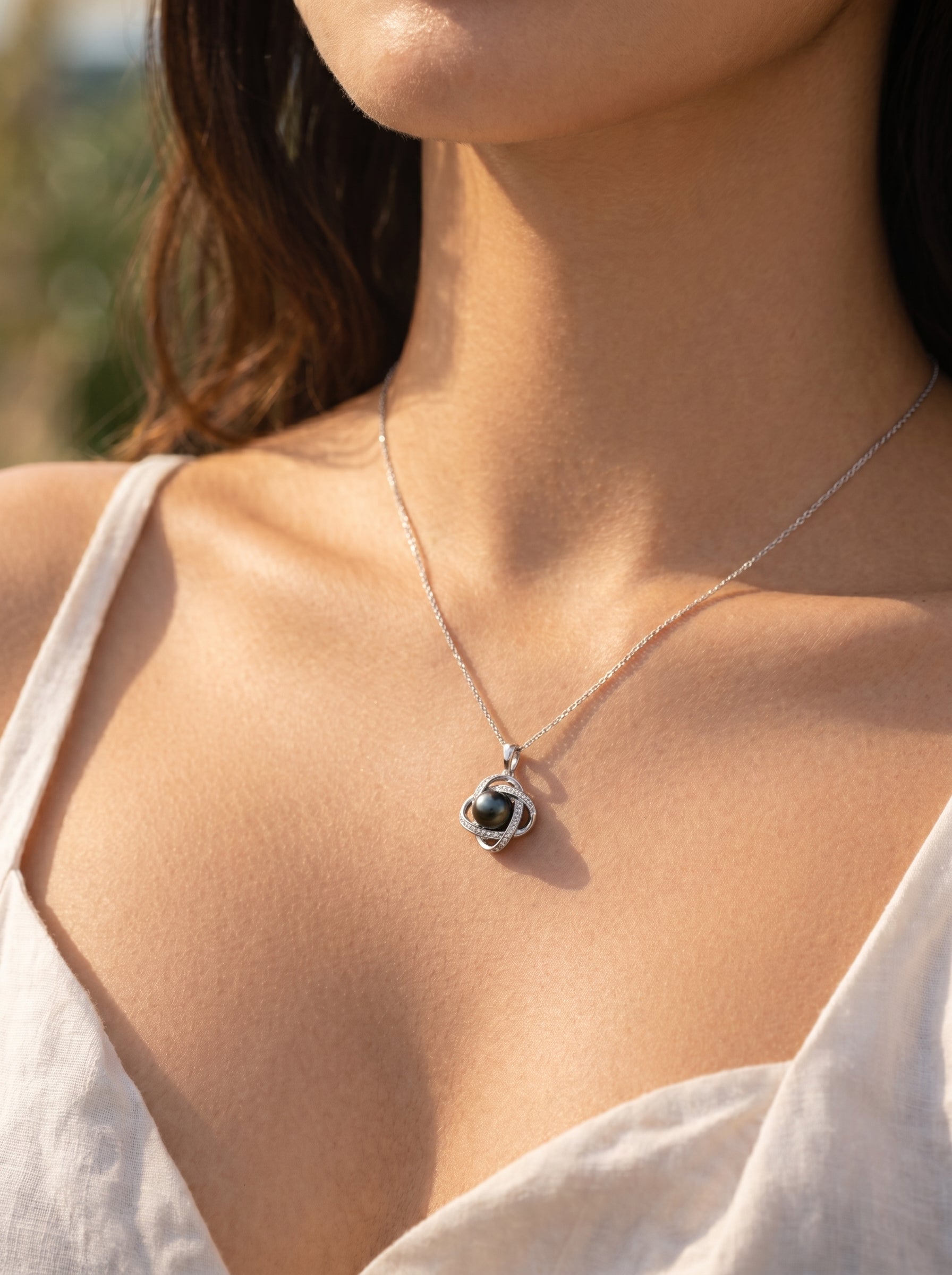
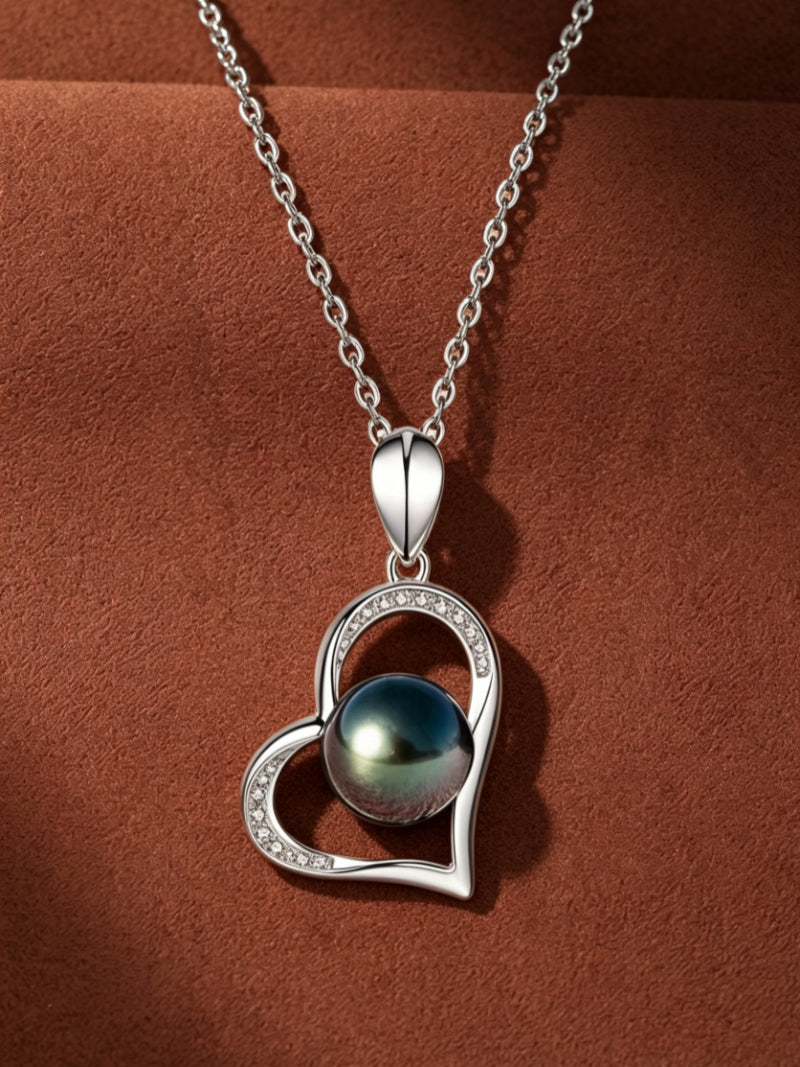
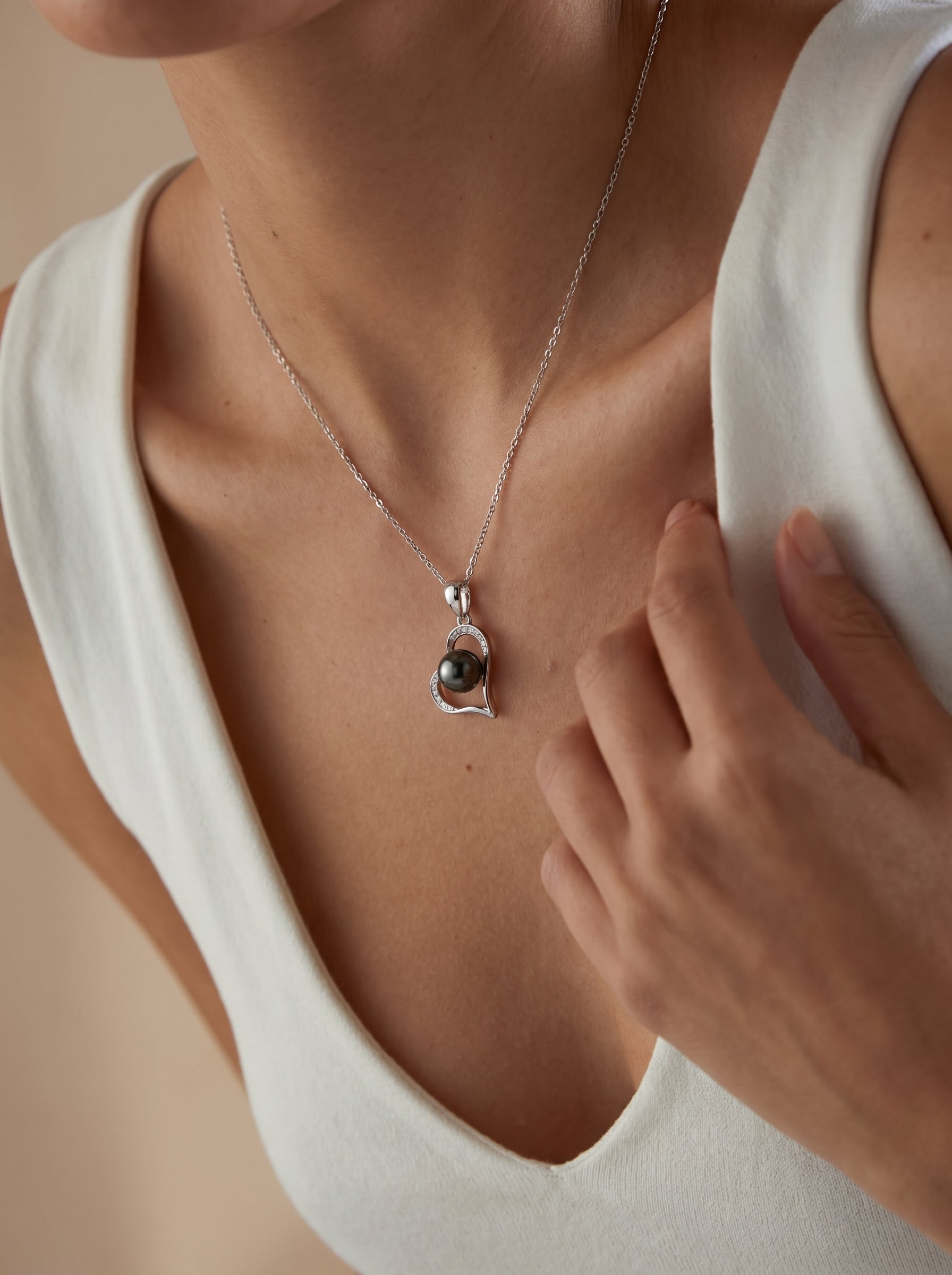
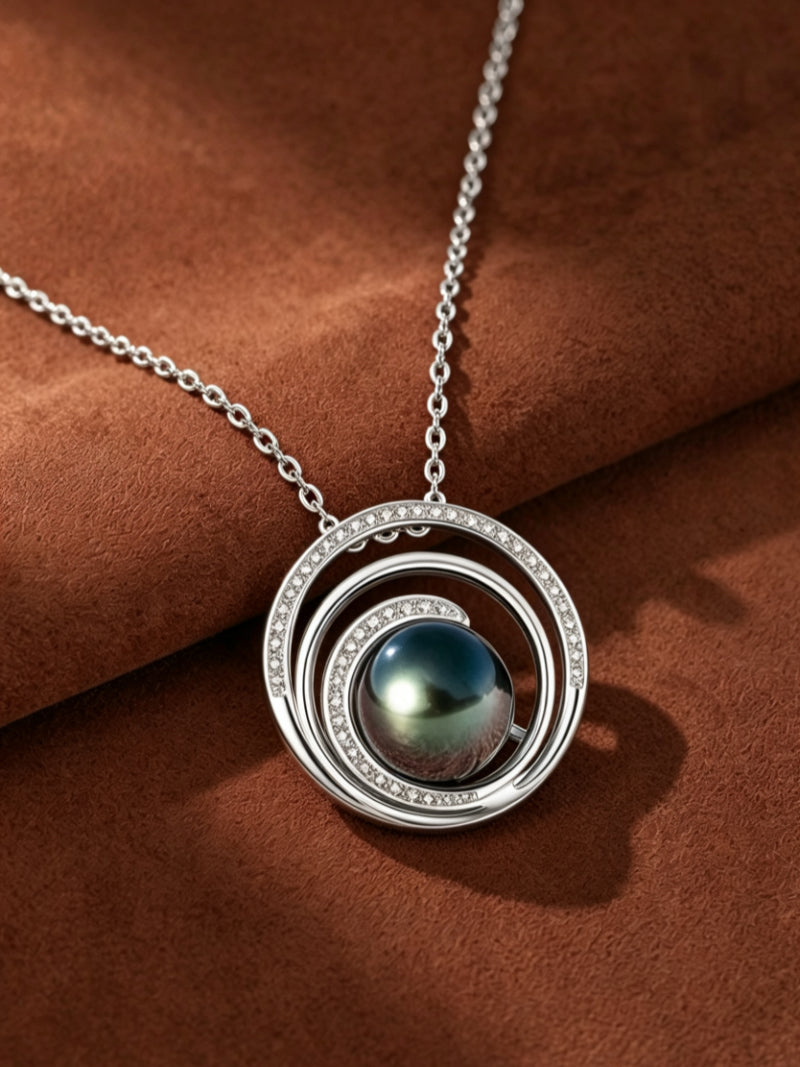
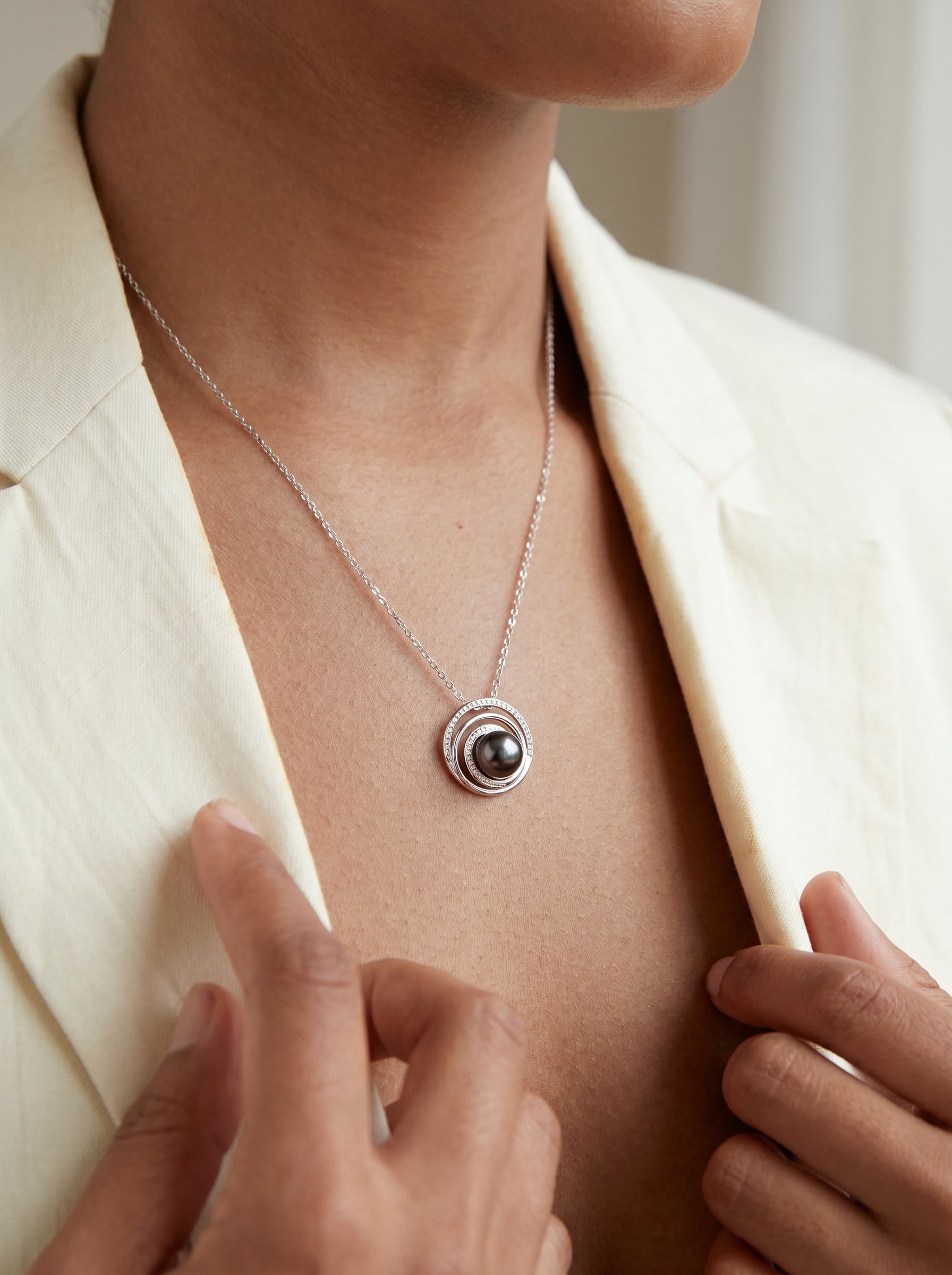
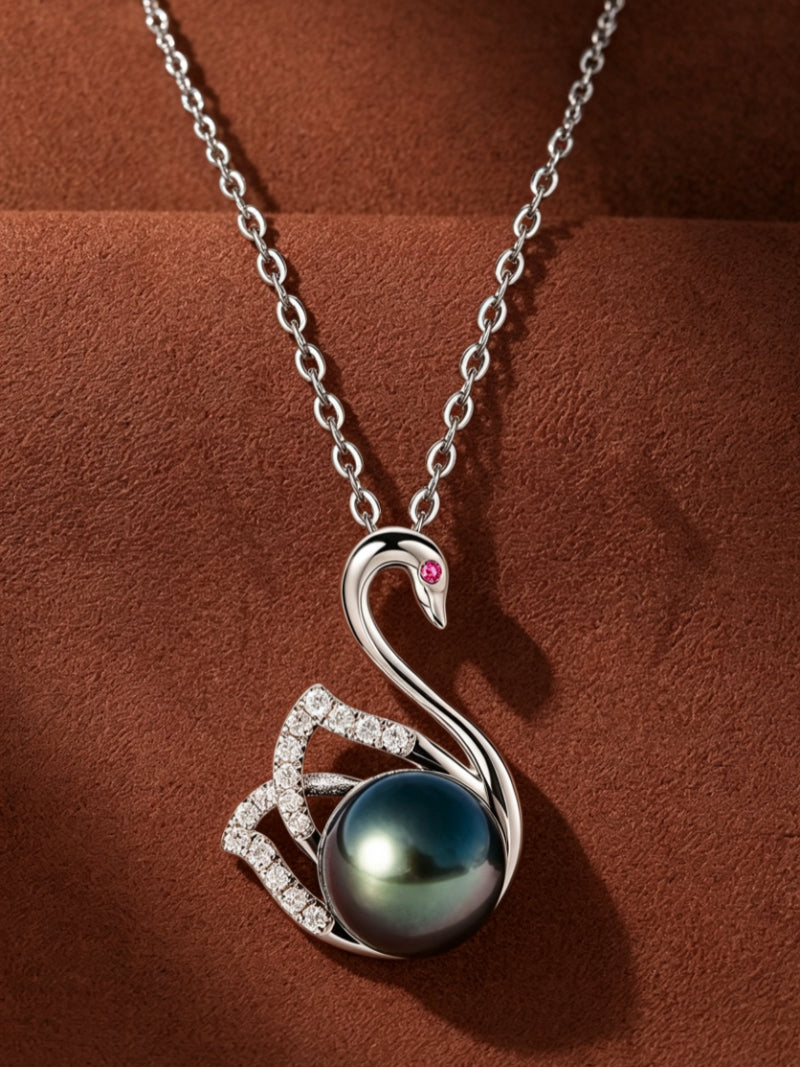
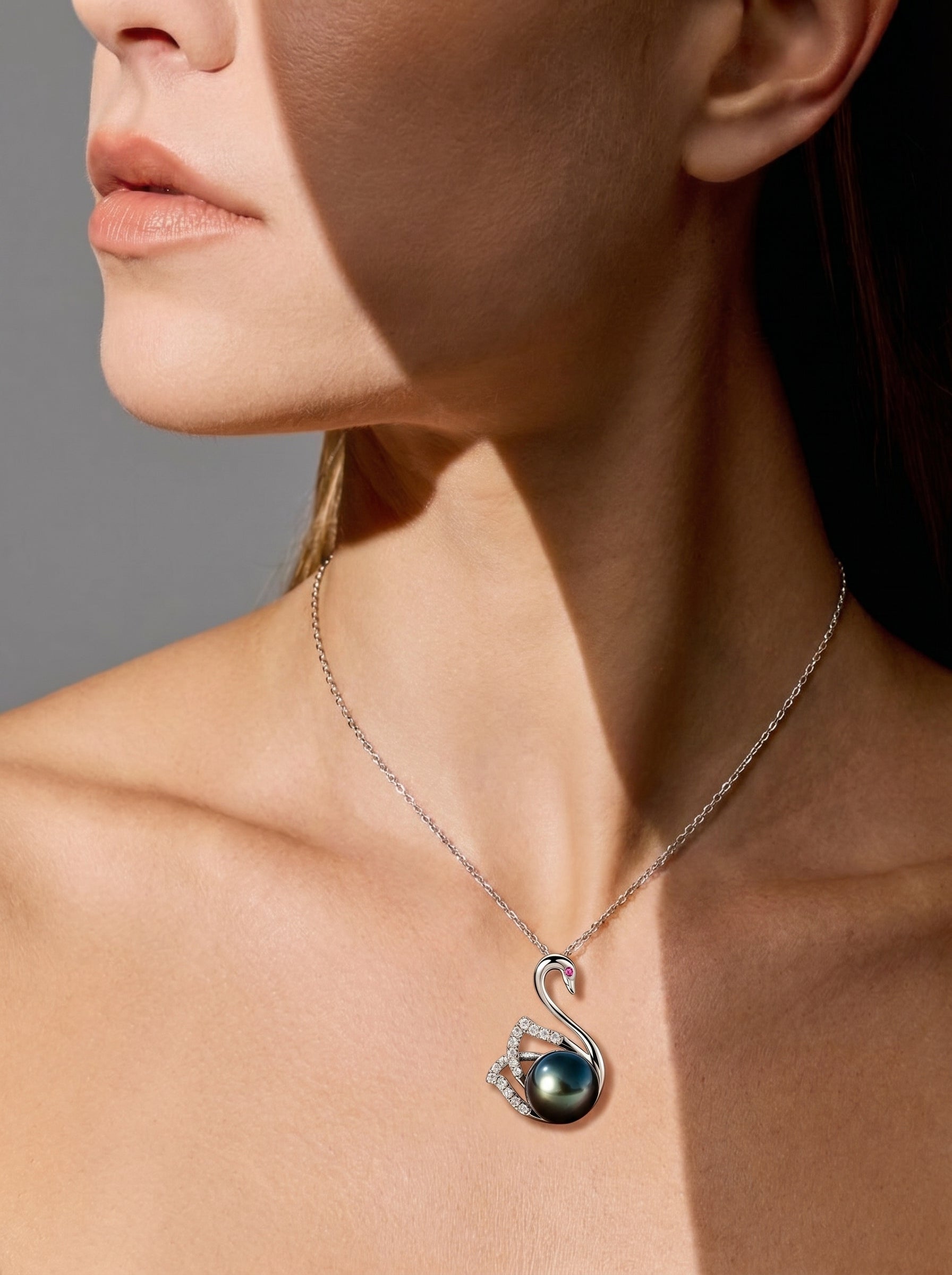
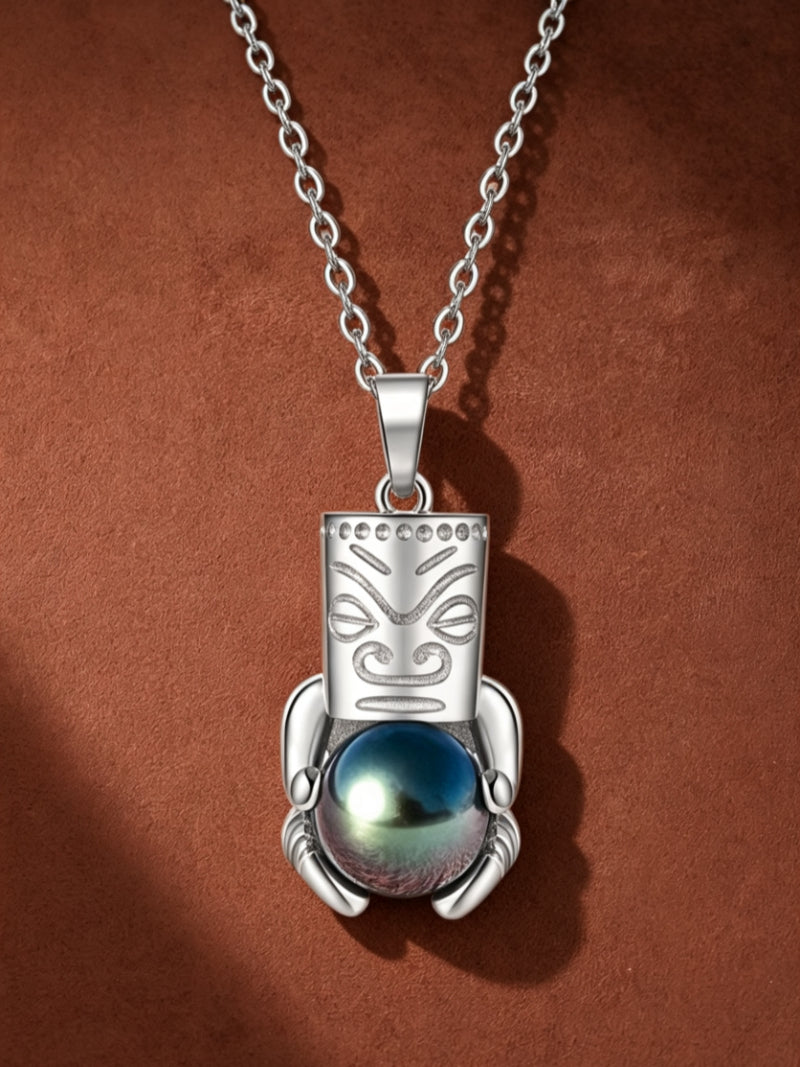
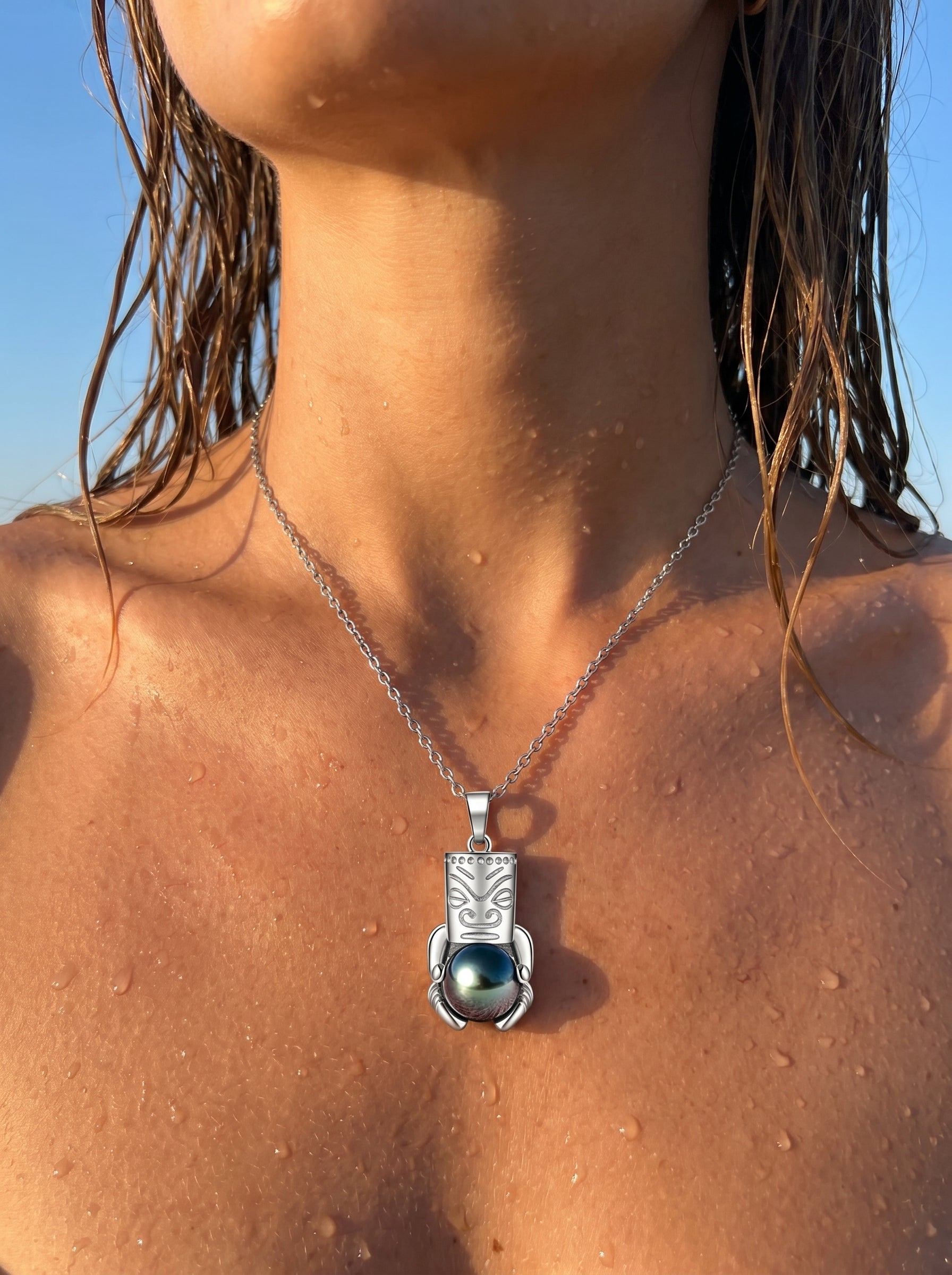
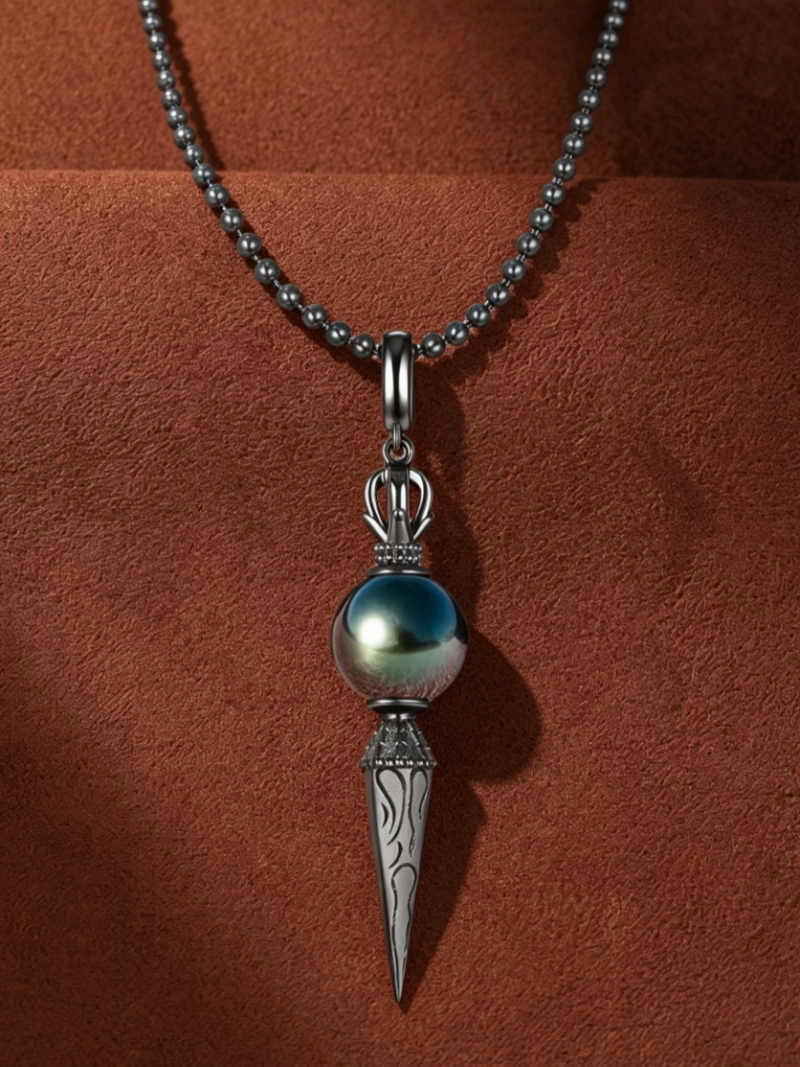
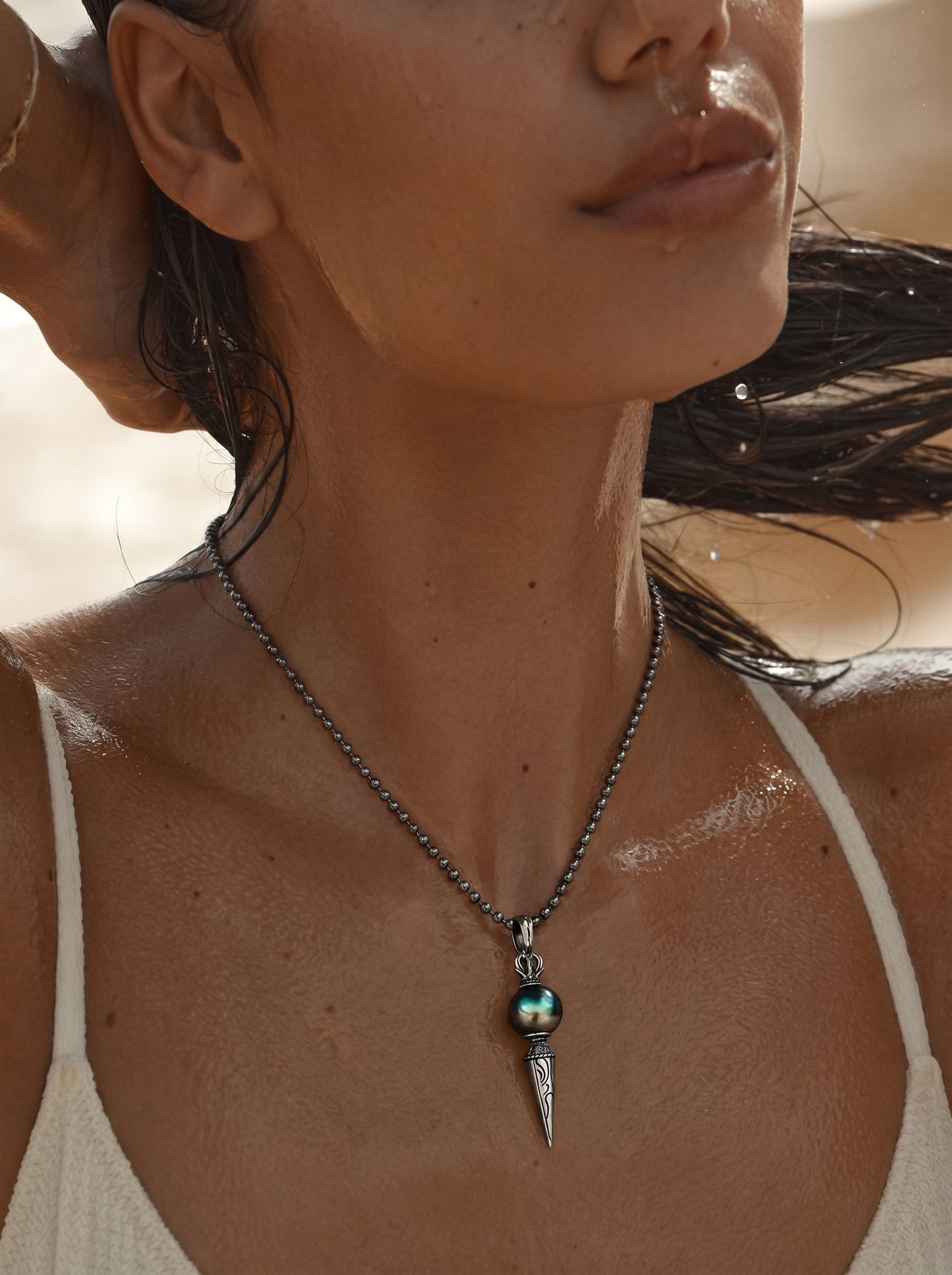
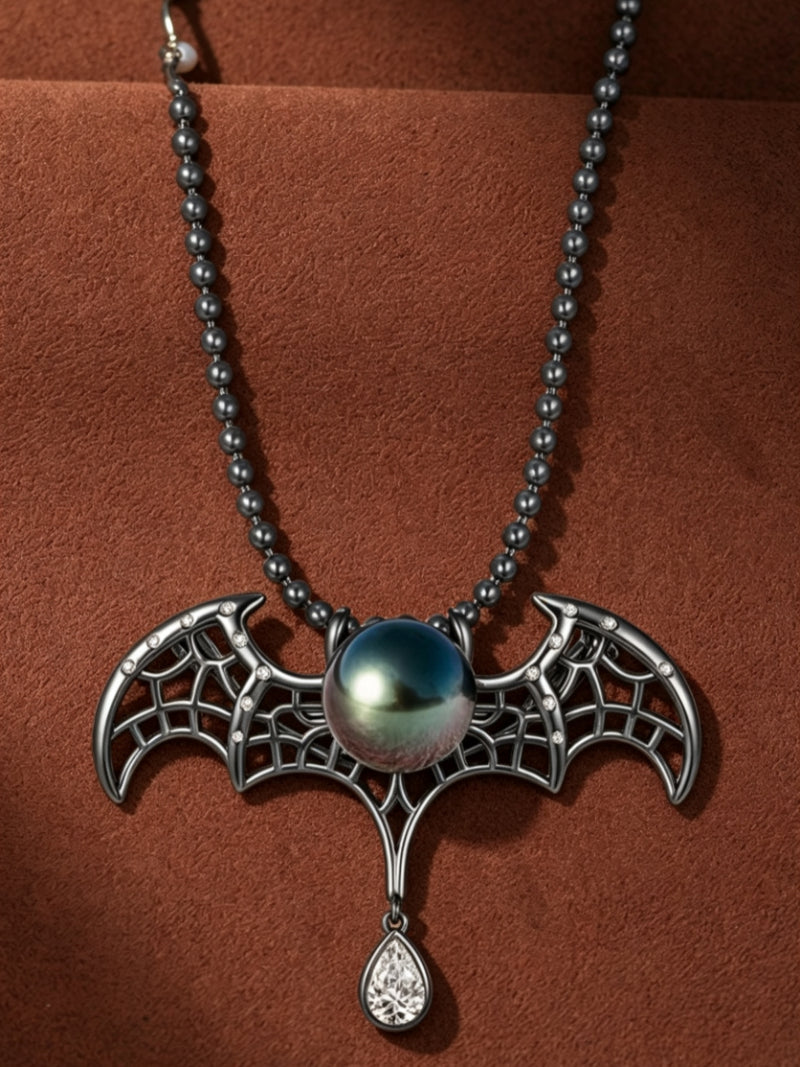
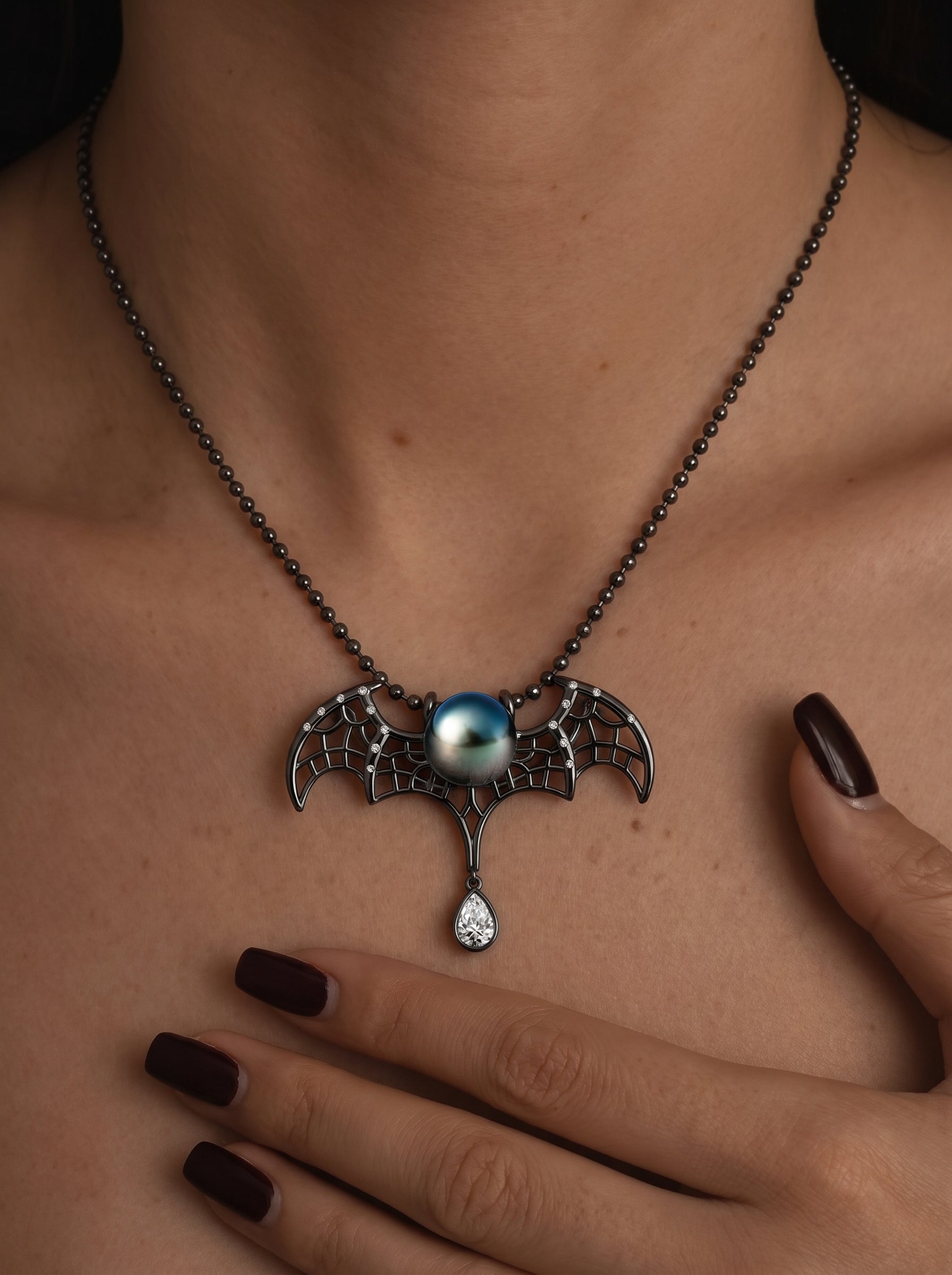
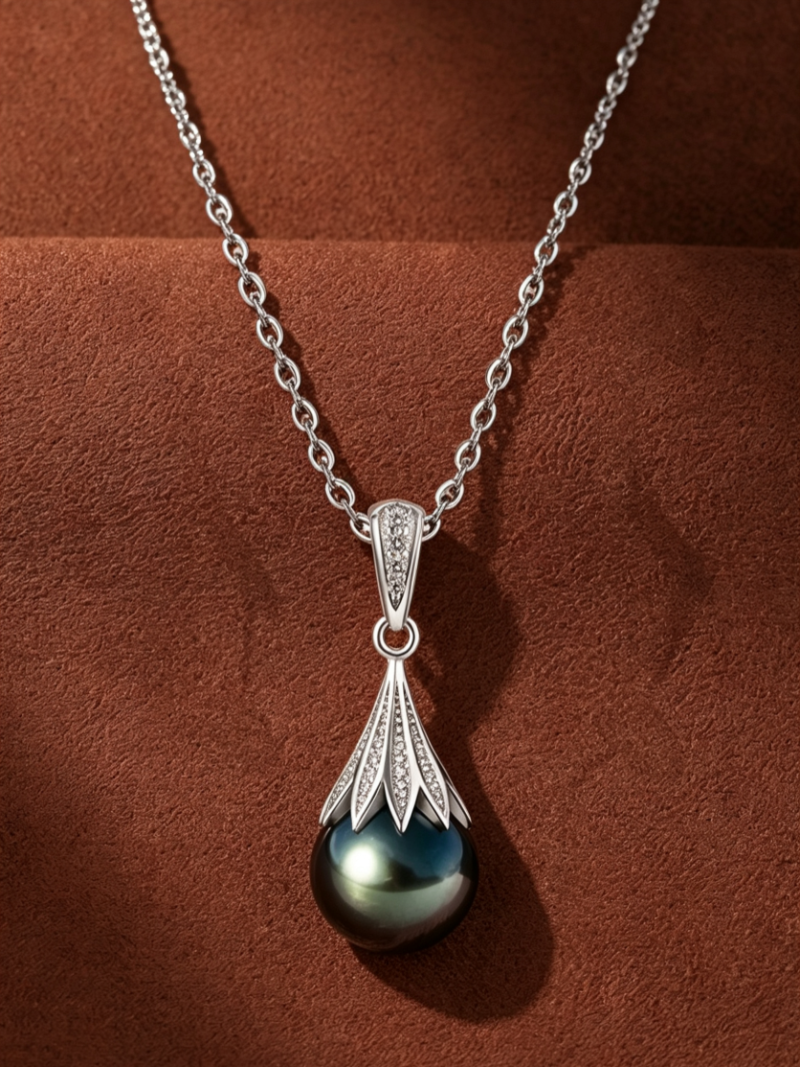
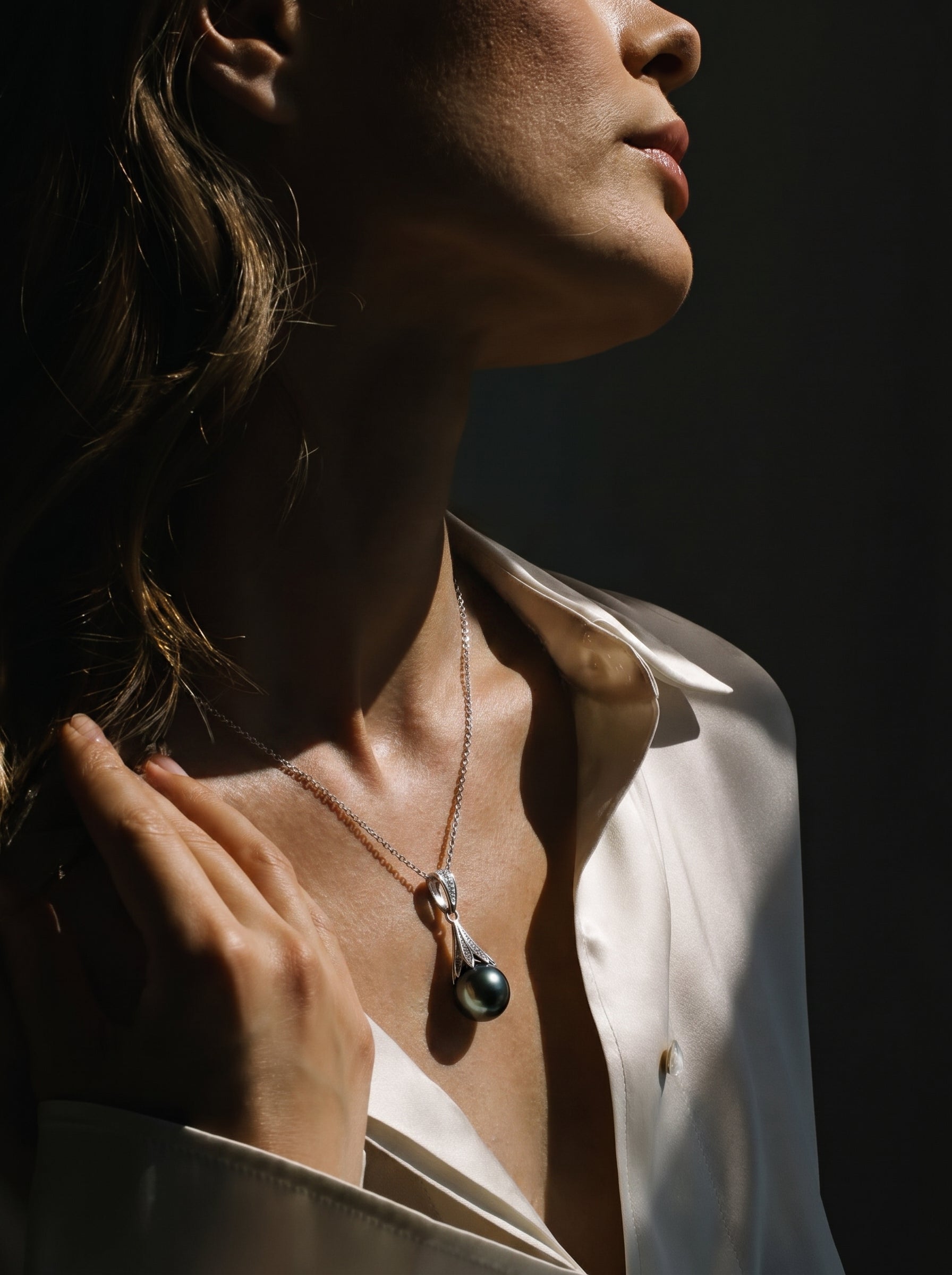
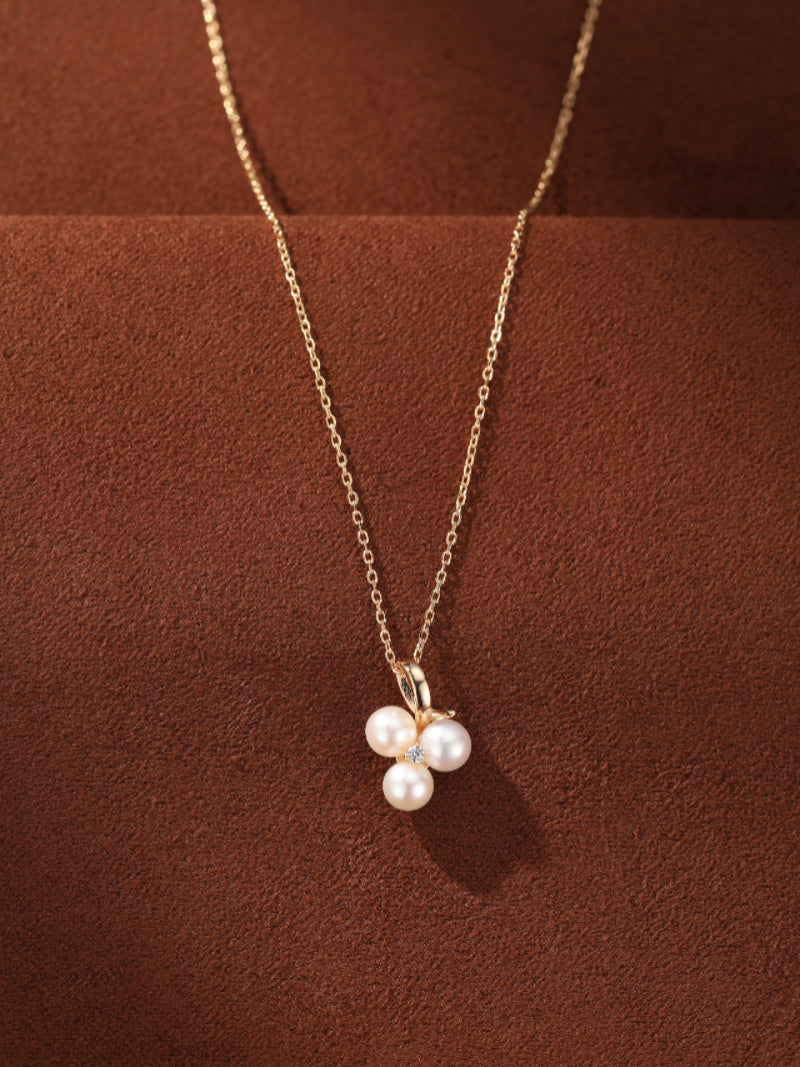
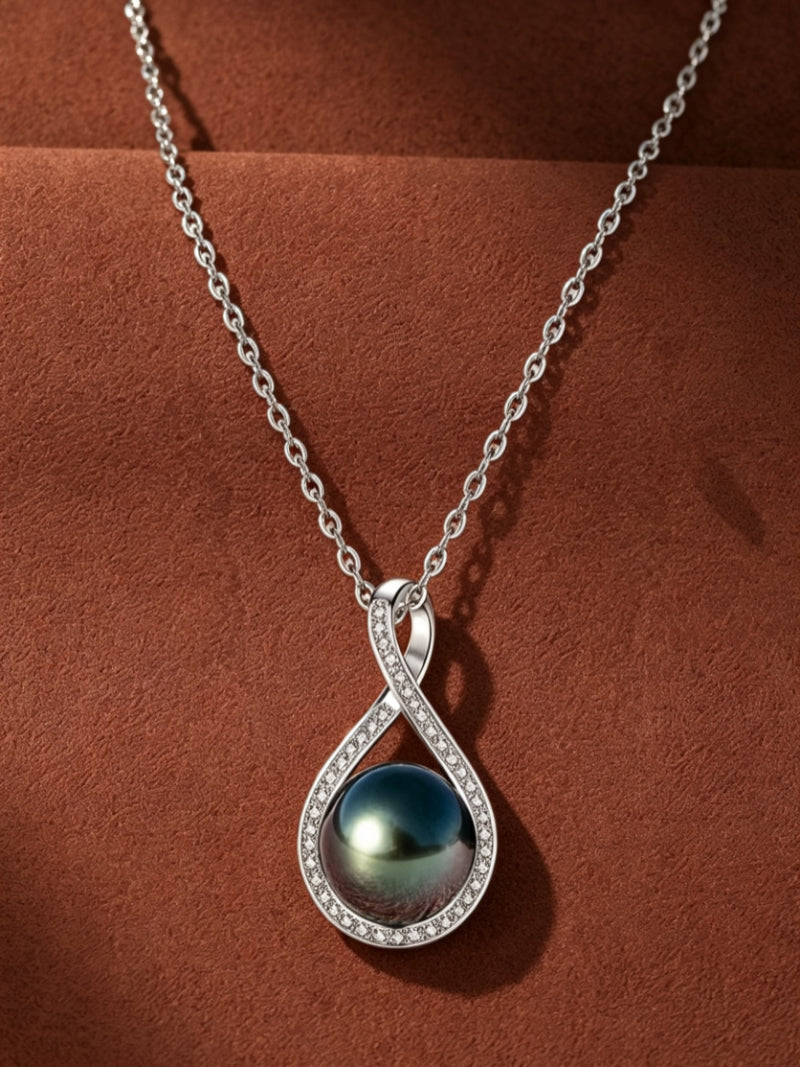
Silver does the opposite of gold to a pearl. Where a warm metal softens the luster and blends into the nacre, 925 sterling silver sharpens the reflection and keeps the chain line precise. If your watch is steel and your wardrobe runs cool, this is the collection that will look right on you.
What is a silver pearl necklace?
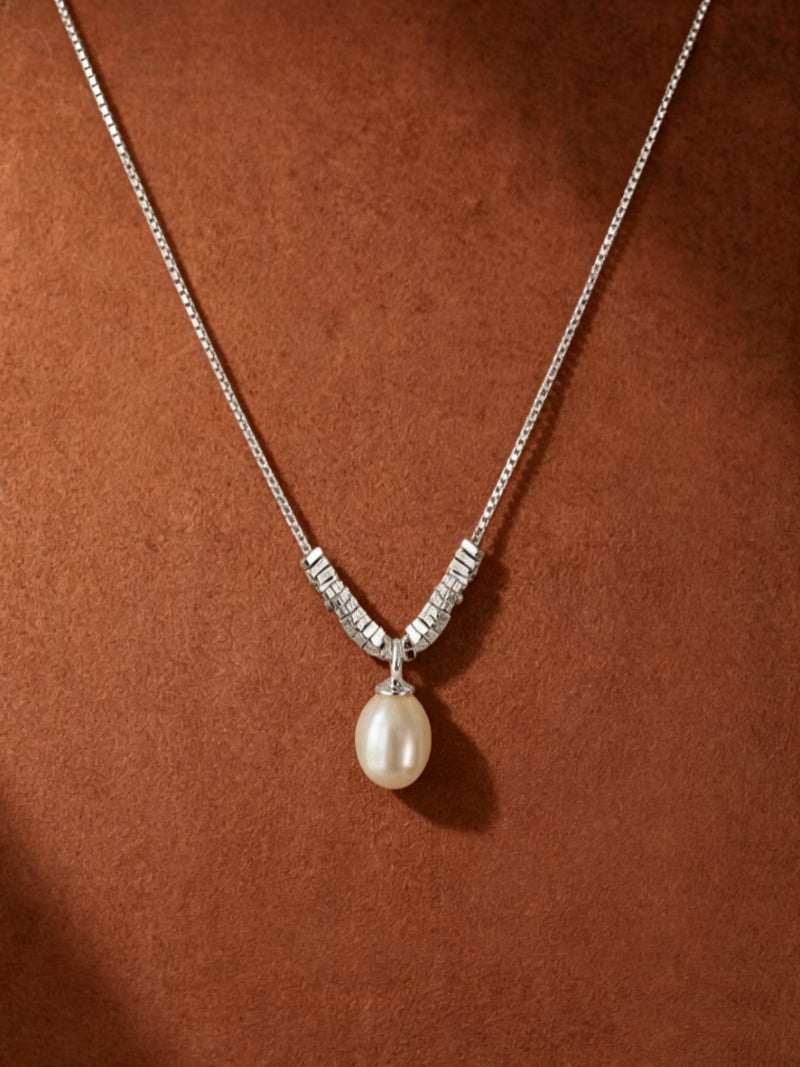
A silver pearl necklace sets cultured pearls in silver rather than in gold, steel or a plated base. In this collection that means 925 sterling silver, an alloy of 92.5 percent pure silver with copper added for strength, since pure silver is too soft to hold a setting.
Under the FTC Jewelry Guides, only alloys of at least 925 parts per thousand may be described as sterling. That standard is what the number refers to, and it is stated on every product page.
Why does silver sharpen a pearl's luster?
Because it reflects a cooler, more neutral light back onto the nacre. Gold pushes cream and rose tones forward and blurs the boundary between metal and pearl. Silver holds the pearl at a slight distance, so the edge of the reflection reads crisper.
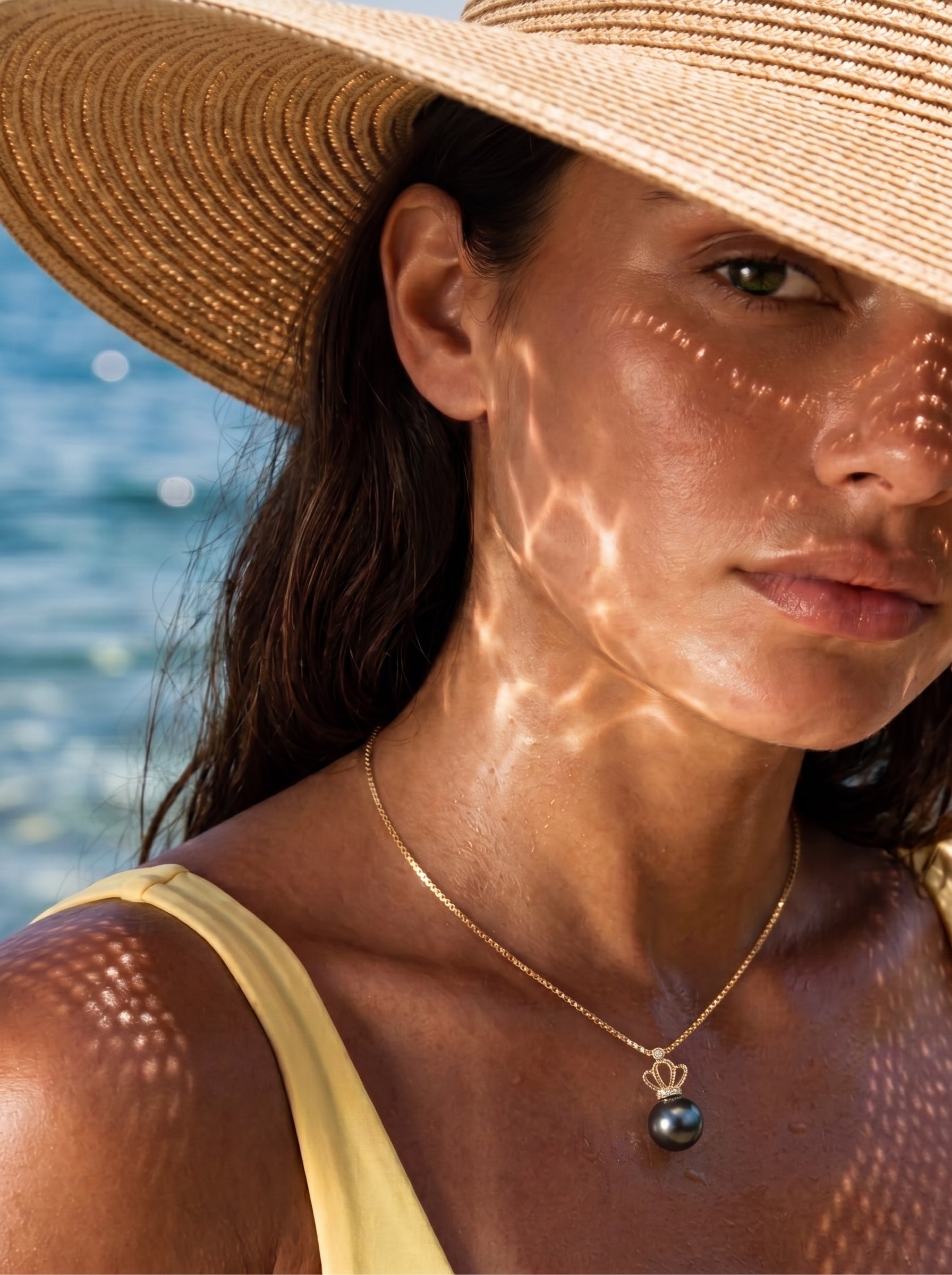
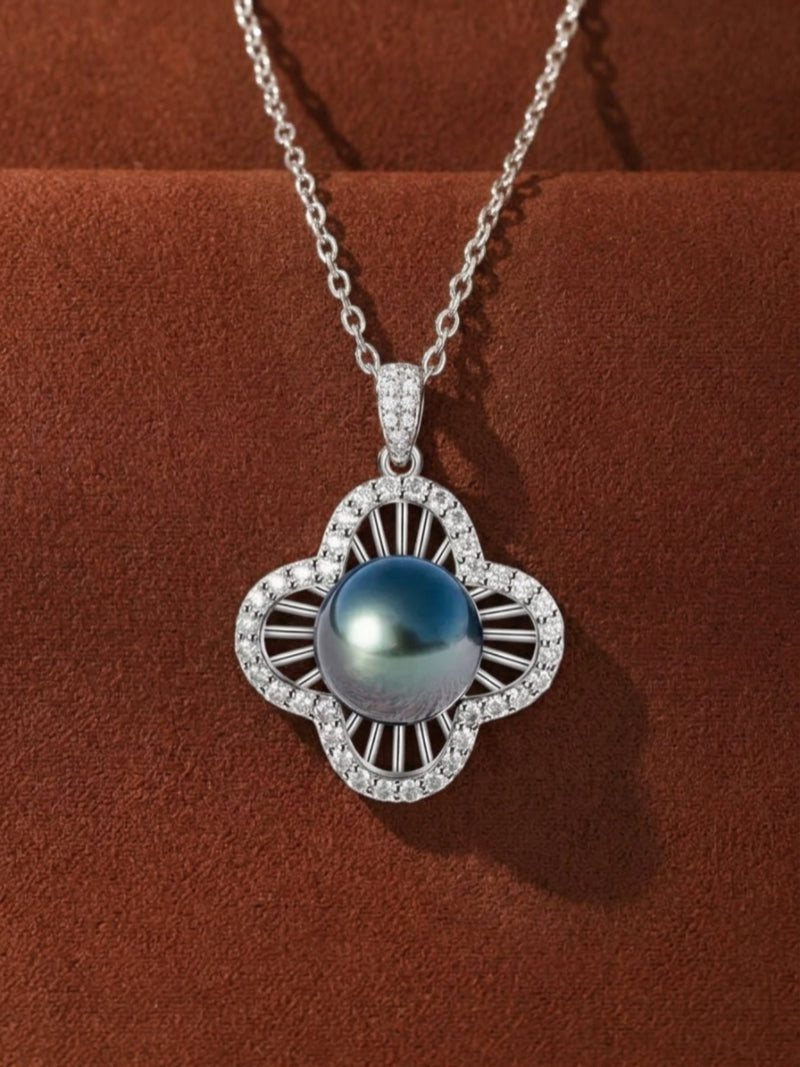
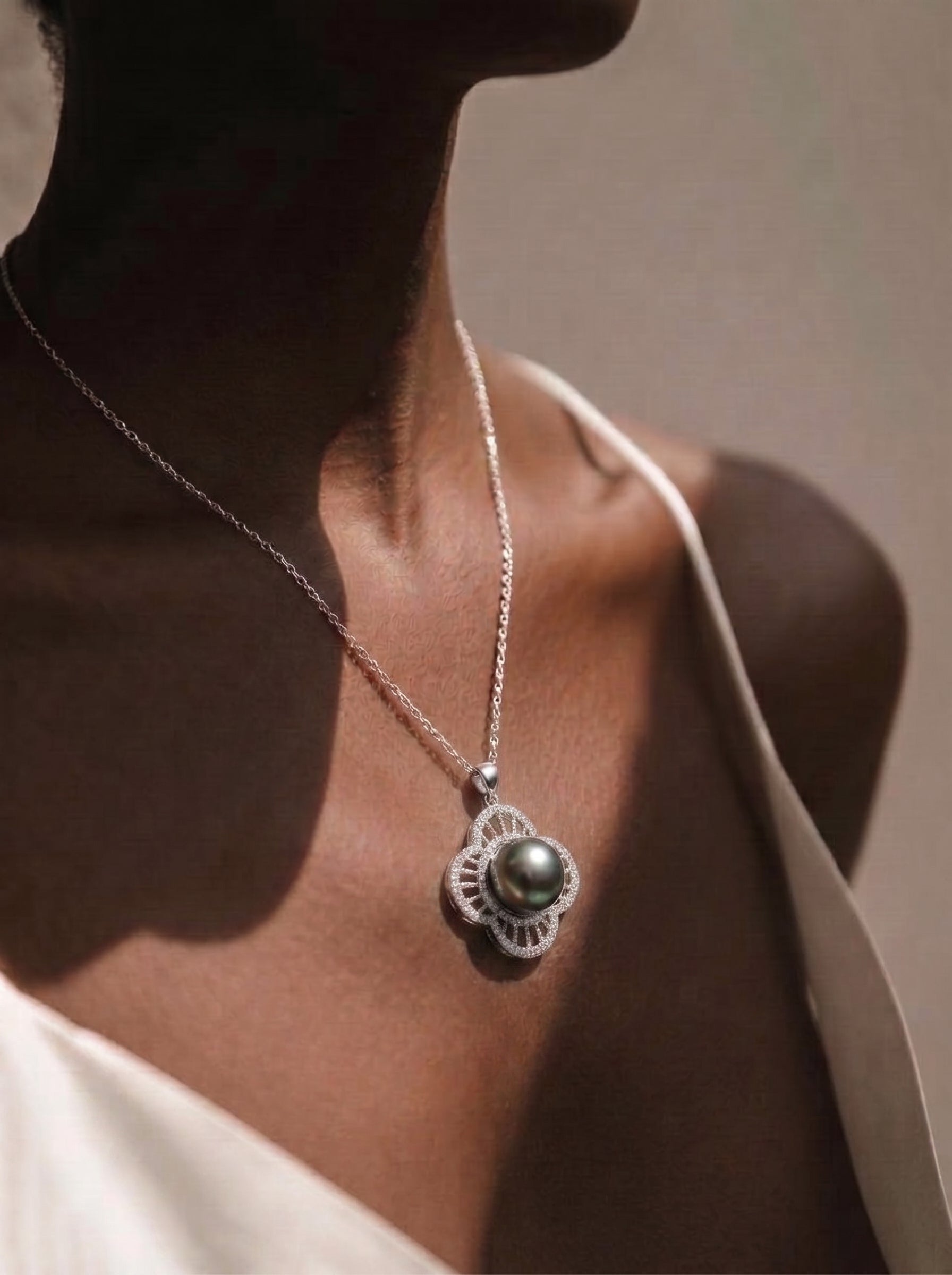
This is most useful with Akoya and white pearls, where sharp luster is the whole point. It is also why a silver setting makes a dark Tahitian pearl look more graphic and less warm.
Does sterling silver tarnish?
Yes, and it is normal. Silver reacts with sulfur in air and darkens over time. That tarnish is a surface layer and it polishes off with a soft silver cloth in a minute.
What matters with a pearl necklace is how you remove it. Never use a silver dip or an ultrasonic cleaner, since both destroy nacre. Polish the chain with a dry cloth, avoid the pearls entirely, and store the necklace in its pouch where less air reaches it.
Which silver pearl necklace style should you choose?
Single pendants
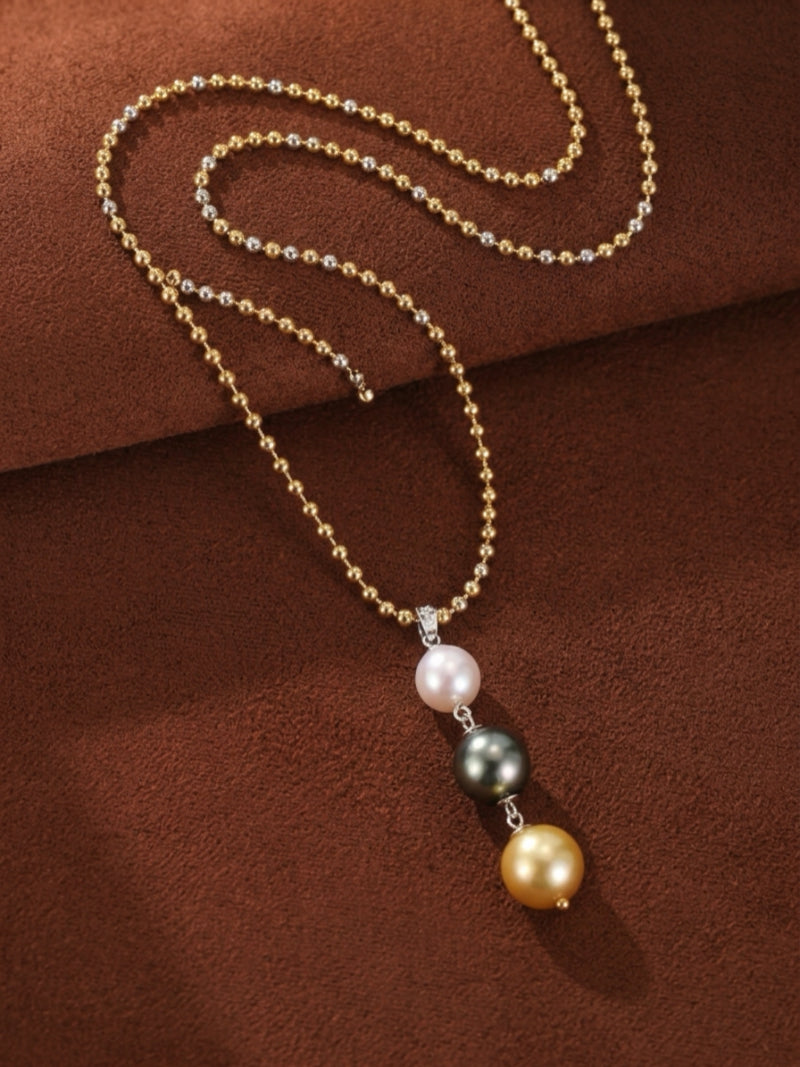
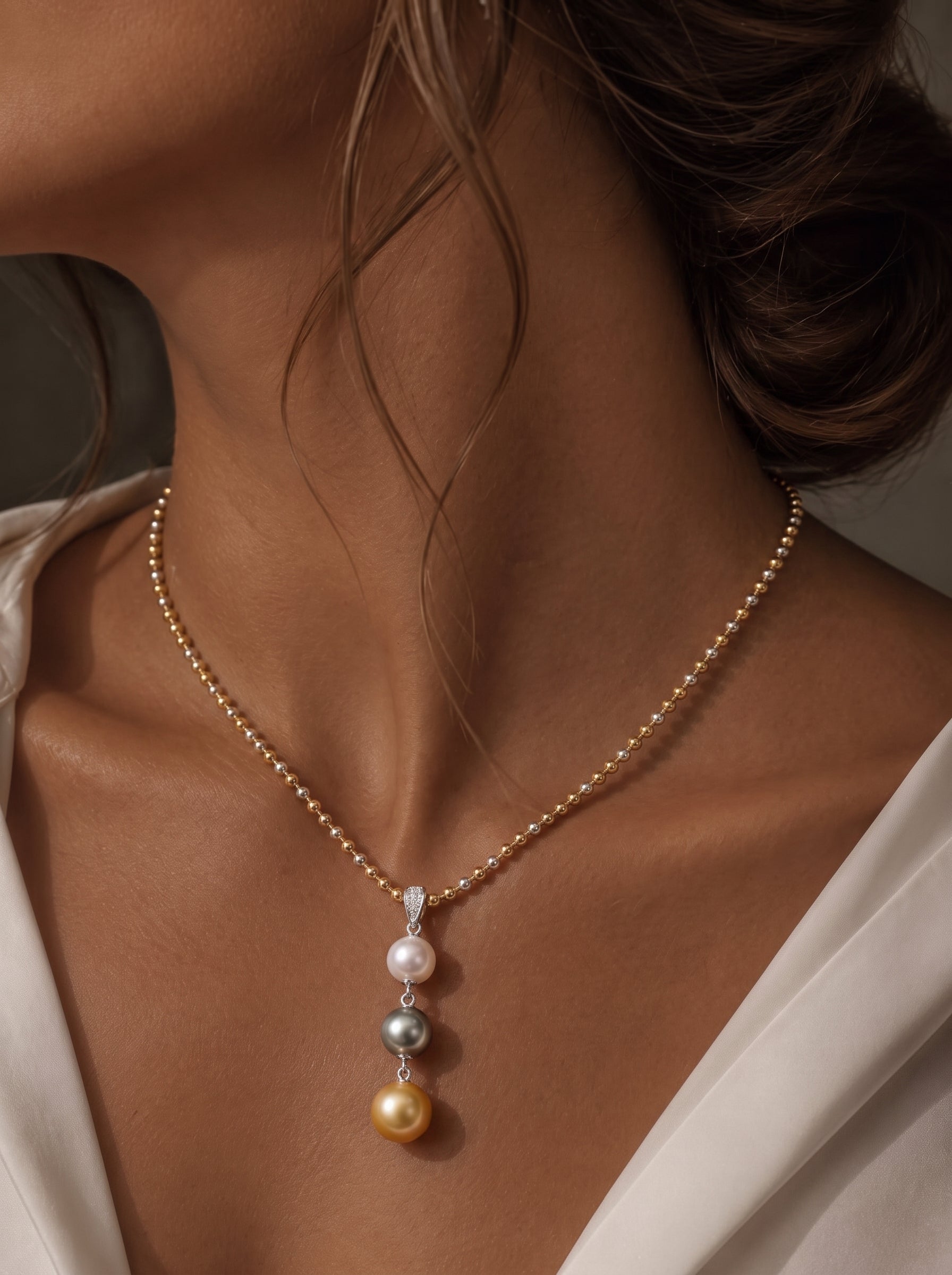
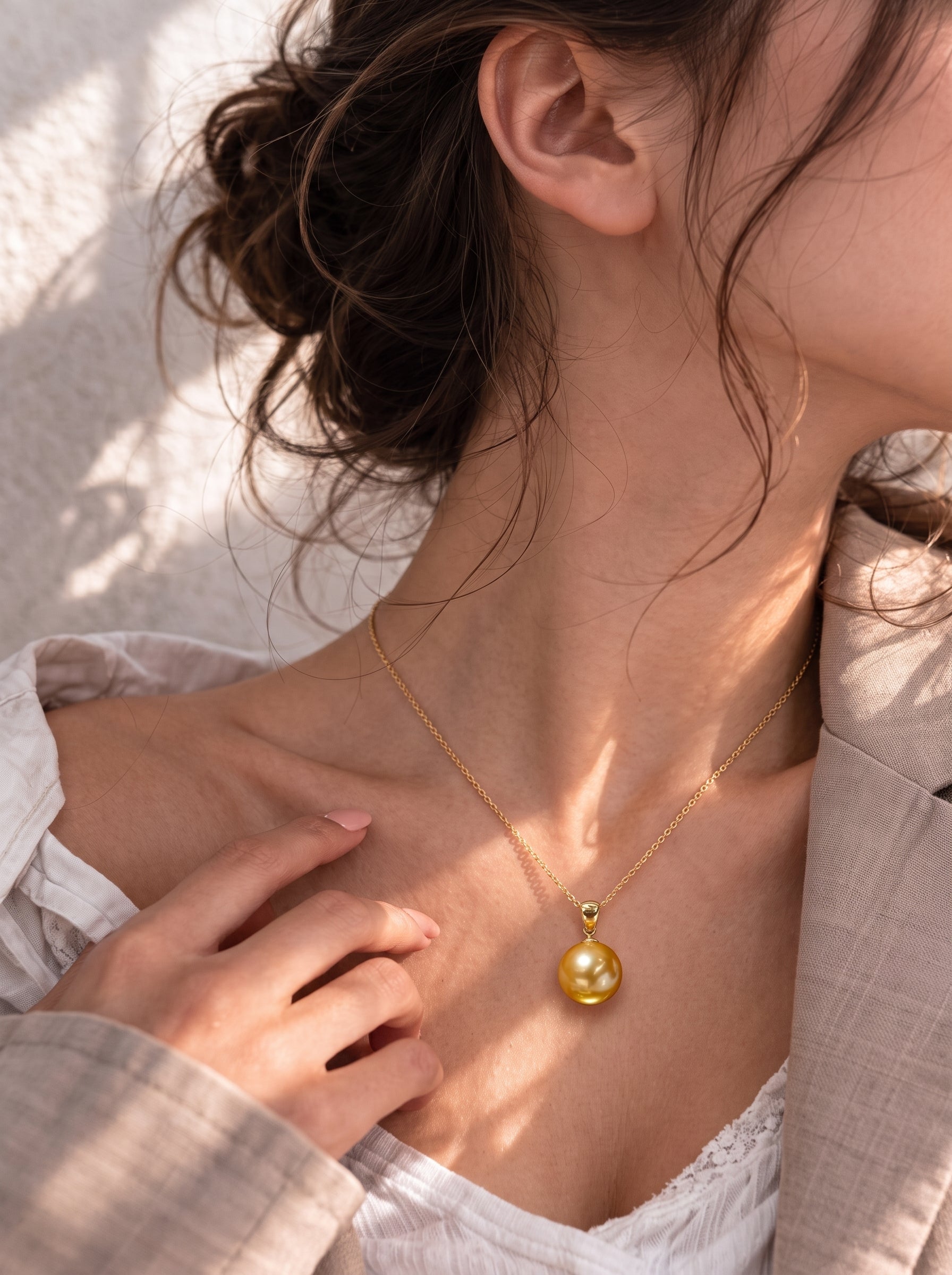
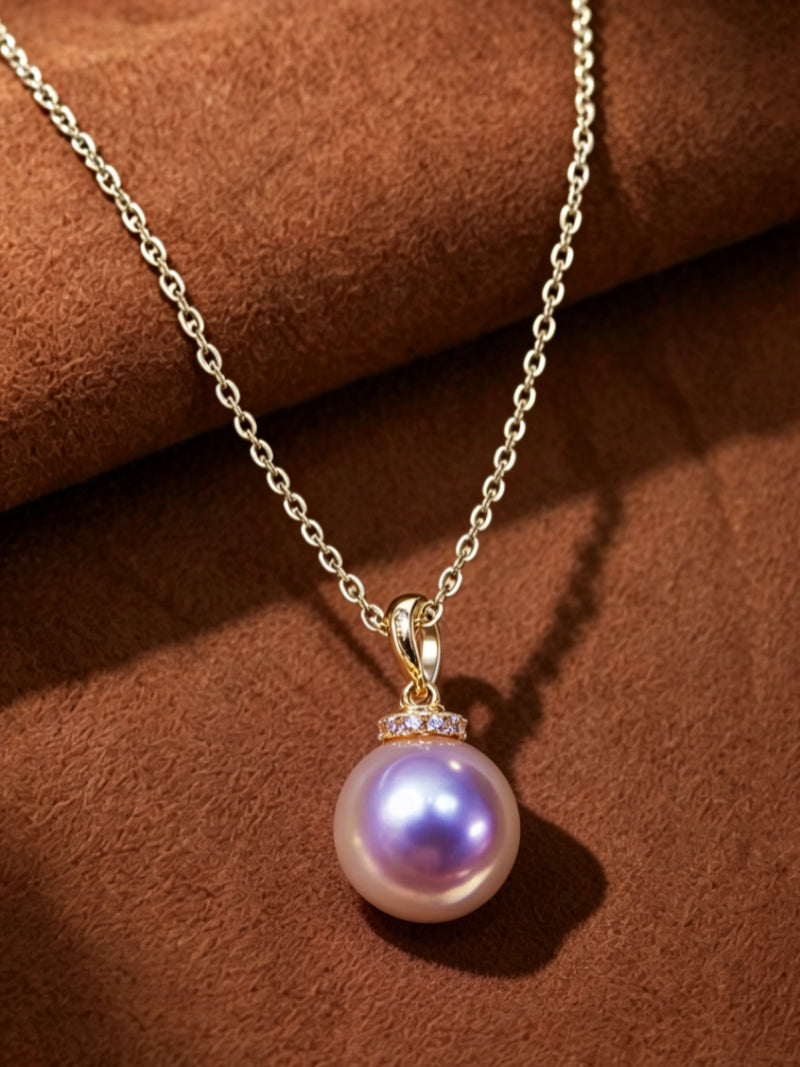
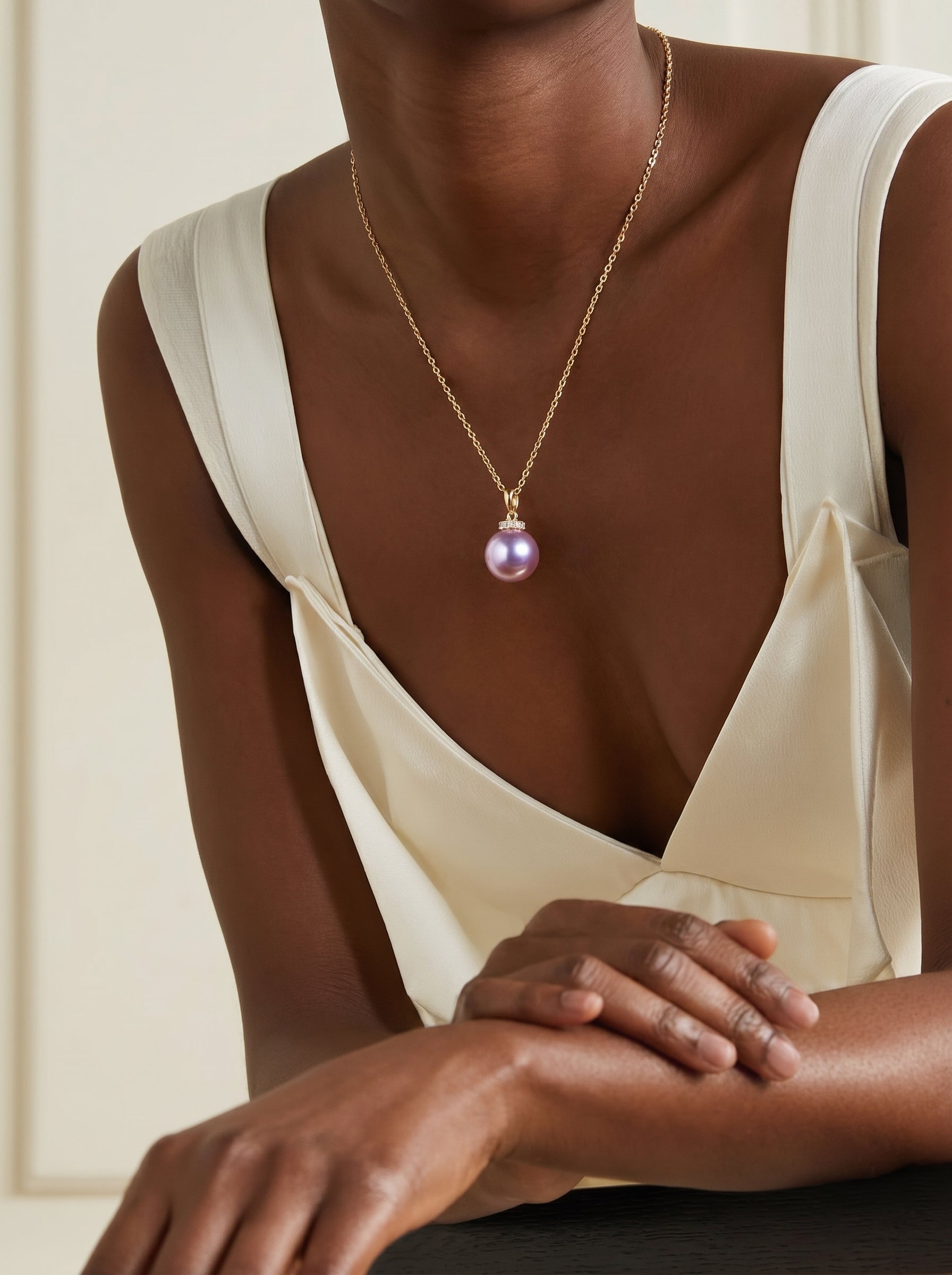
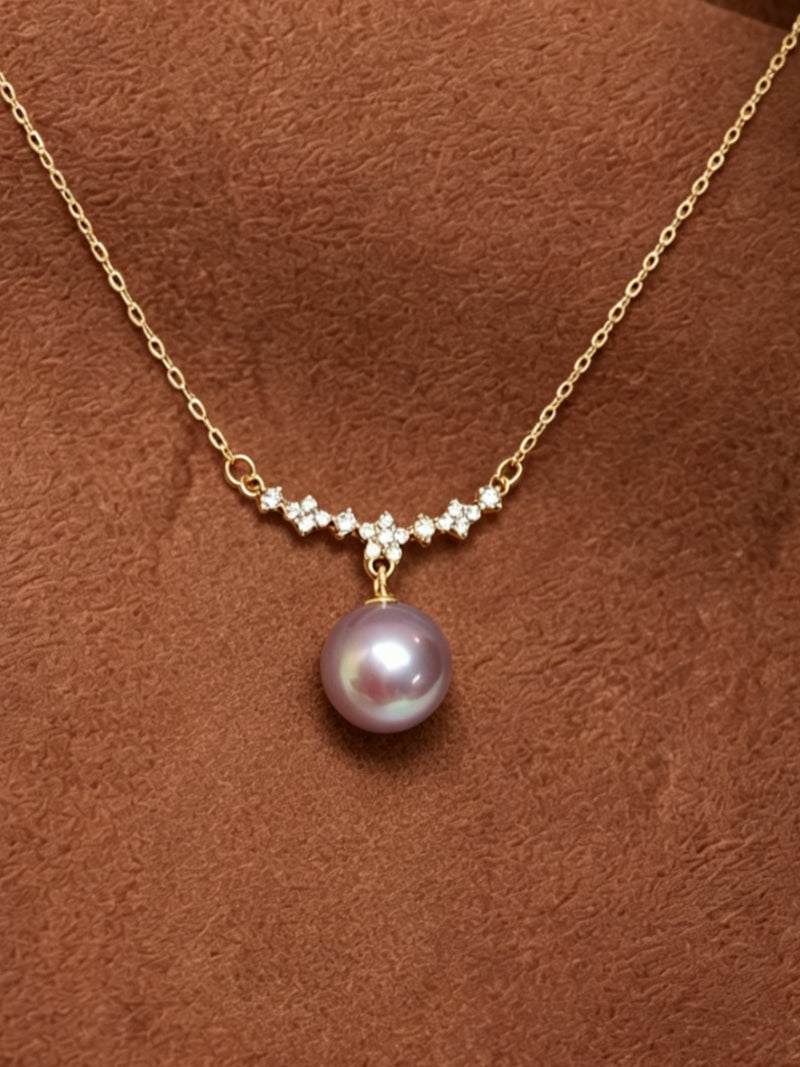
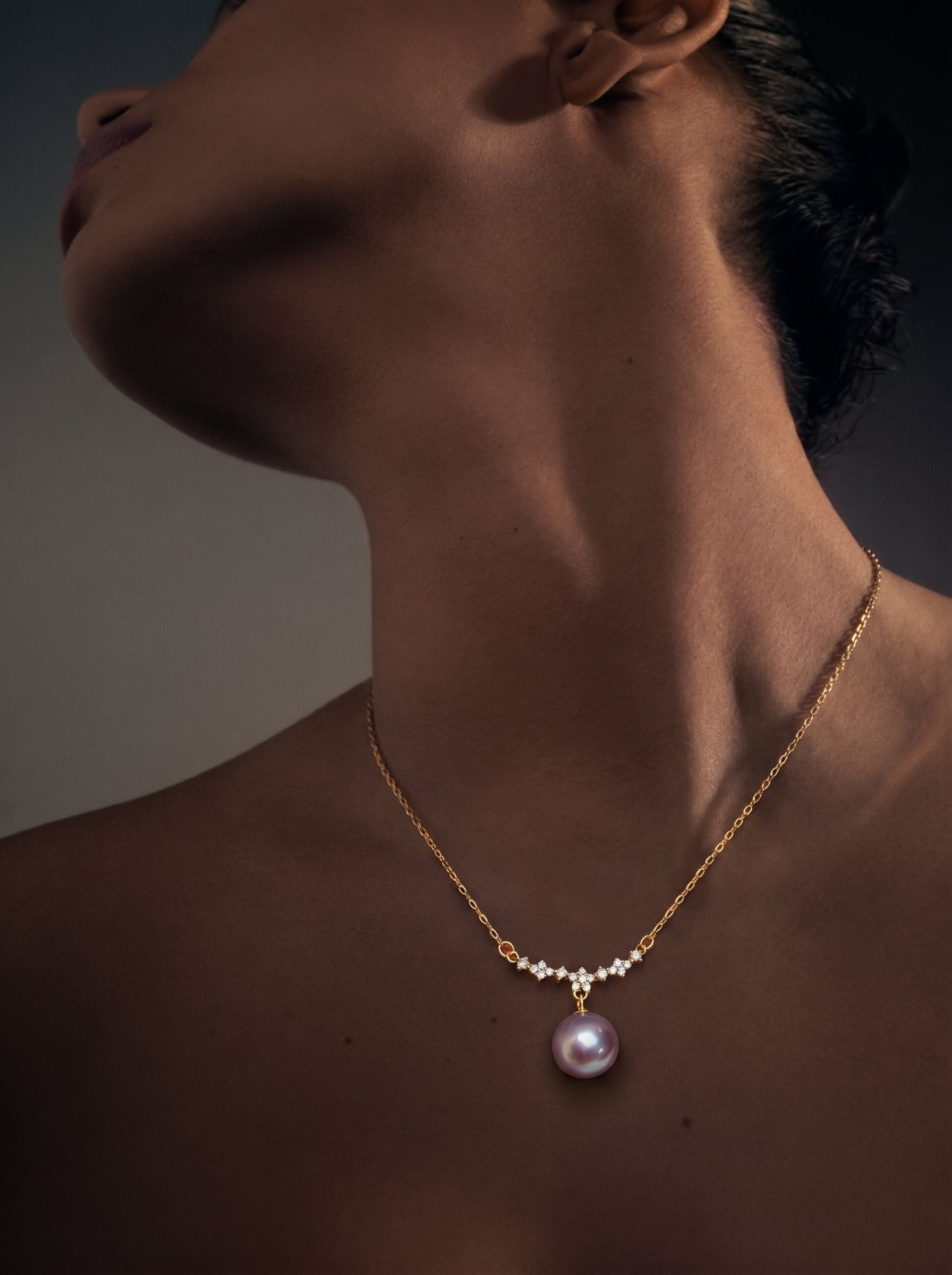
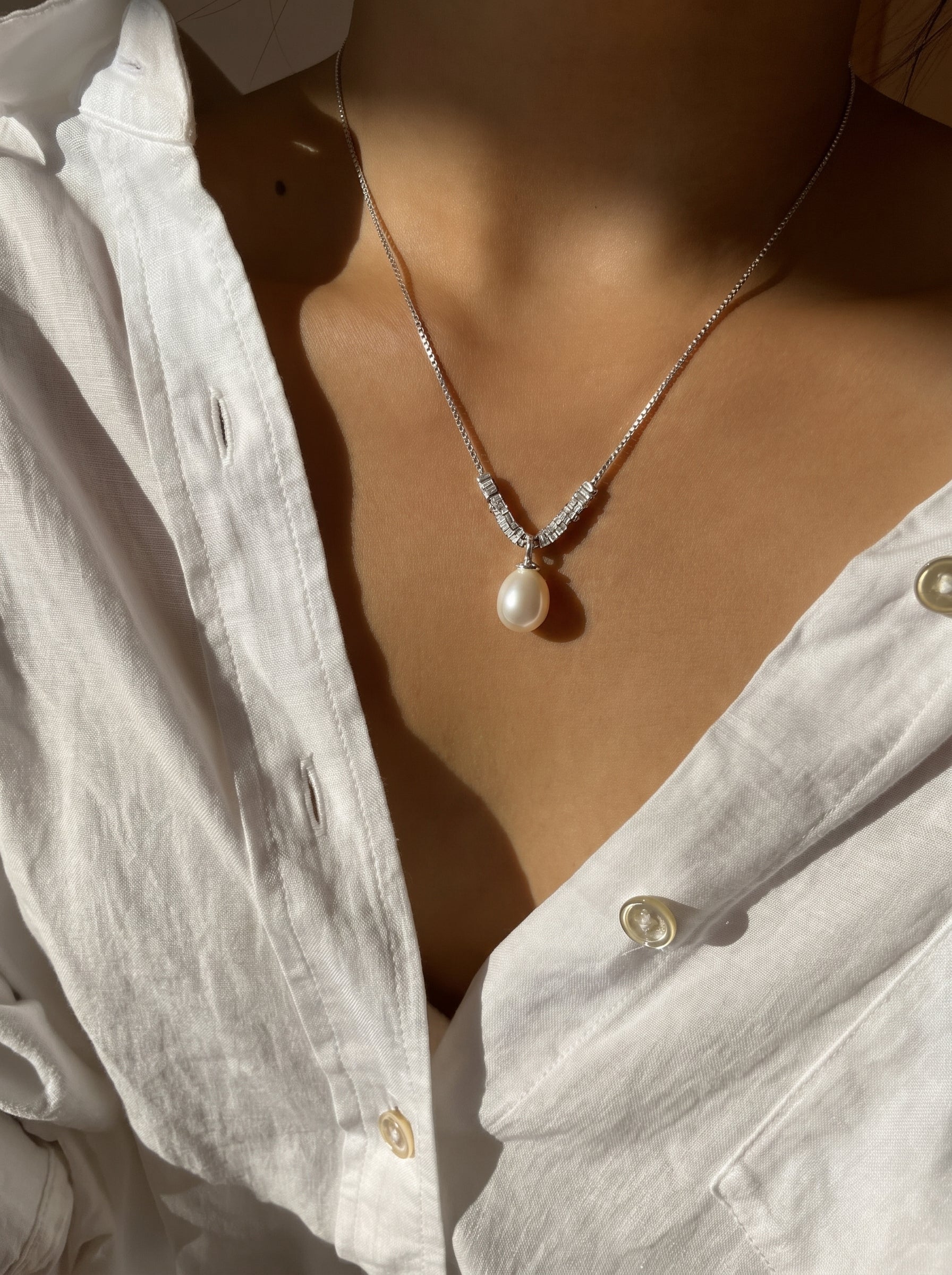
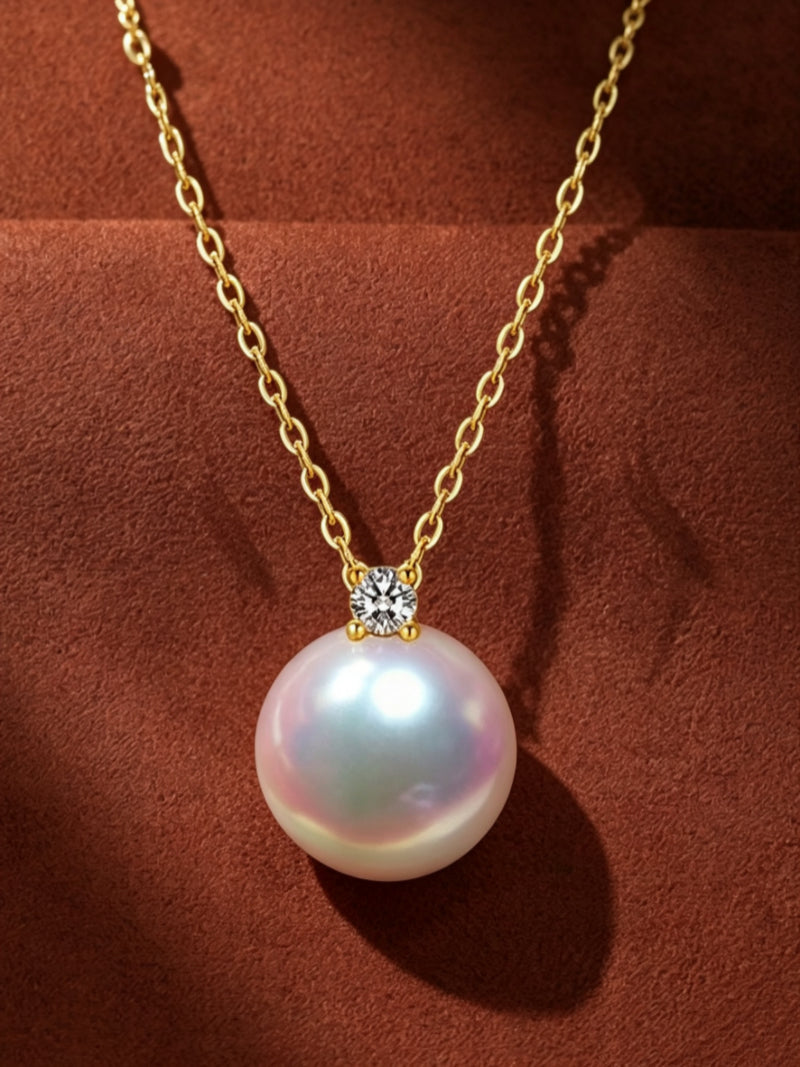
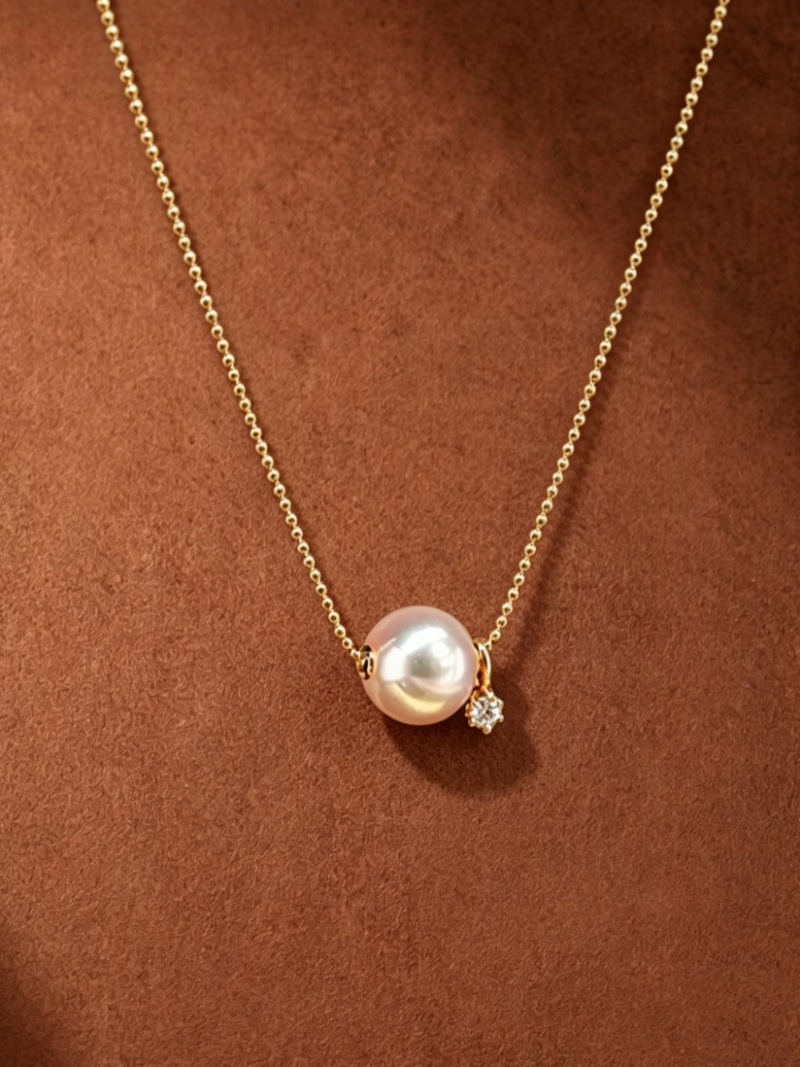
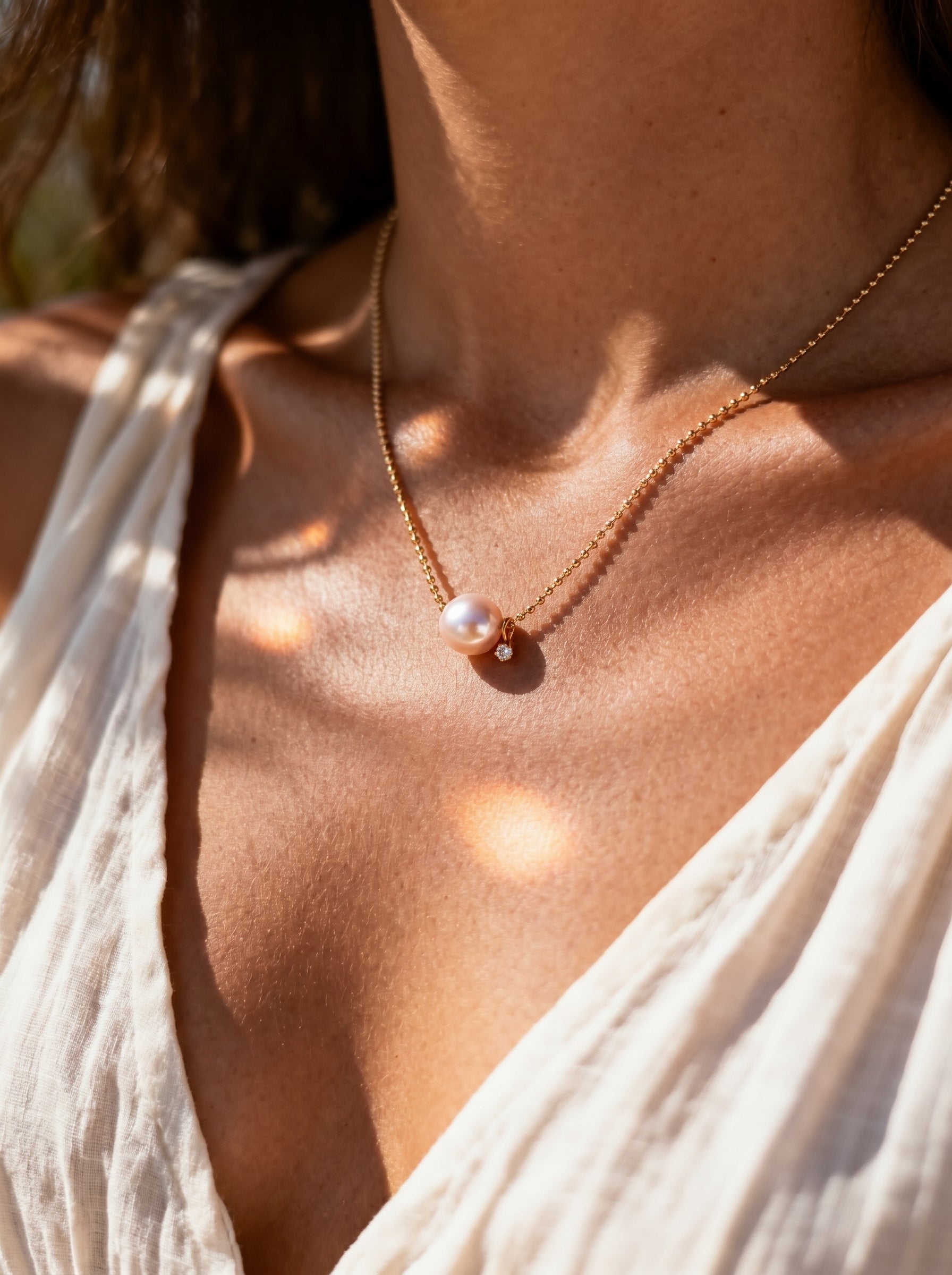
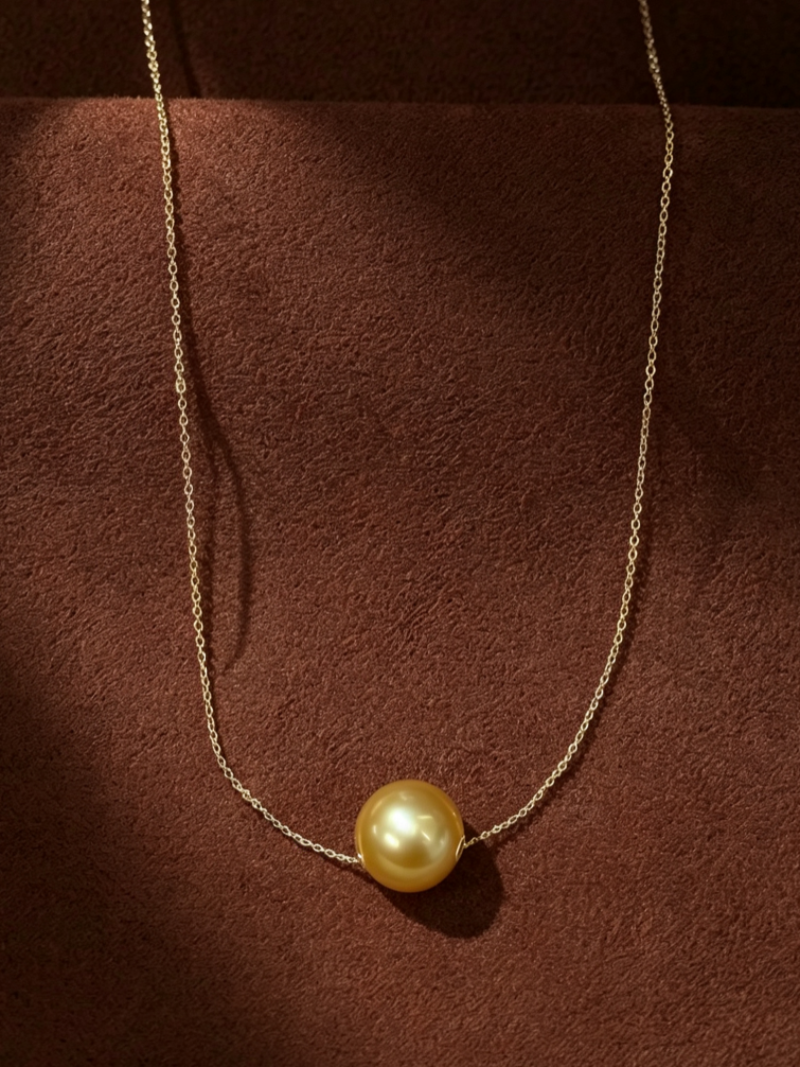
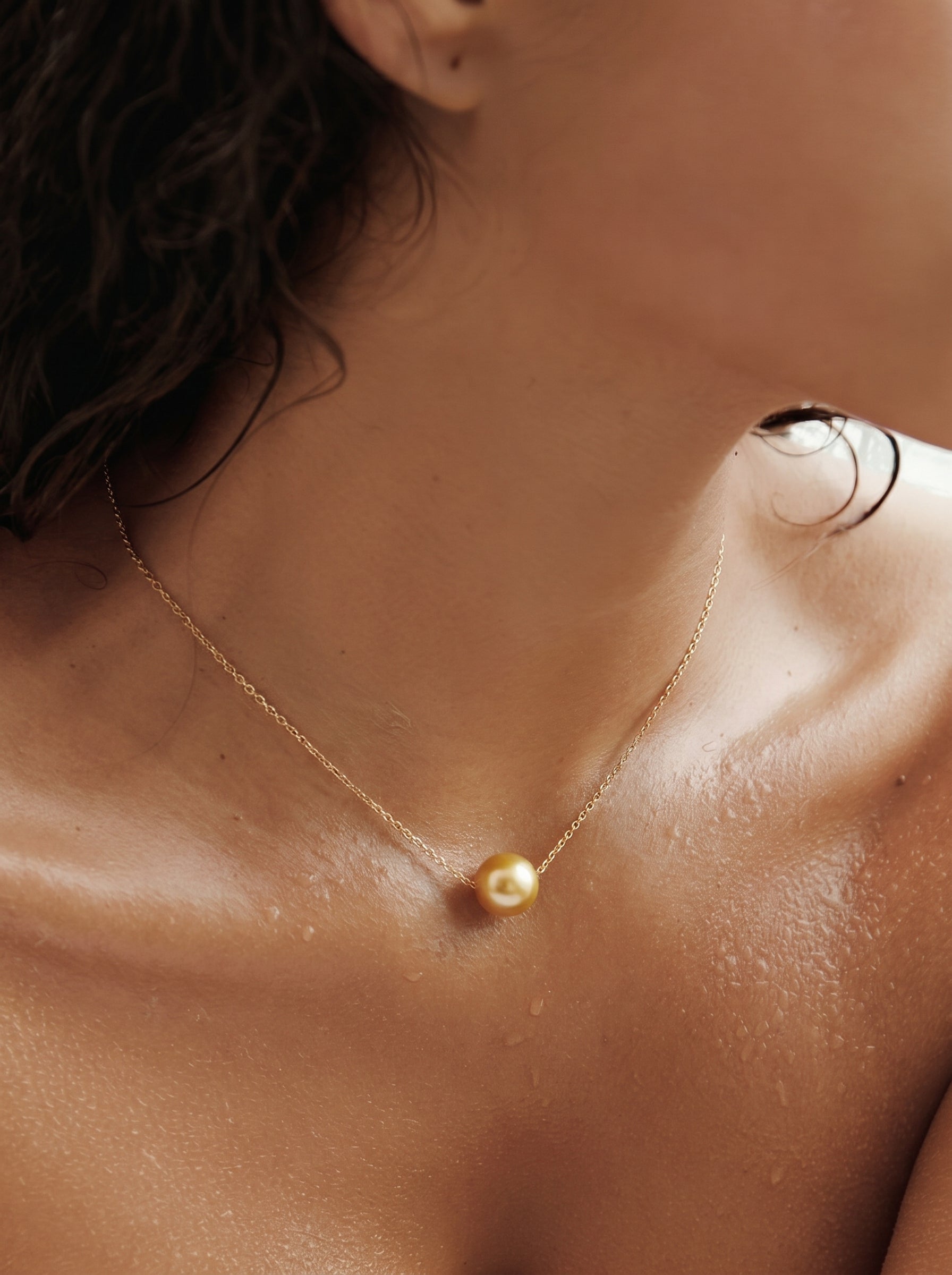
One pearl on a sterling chain. The most versatile piece here and the one that pairs most naturally with a steel watch or platinum-toned rings you already wear.
Floating strands
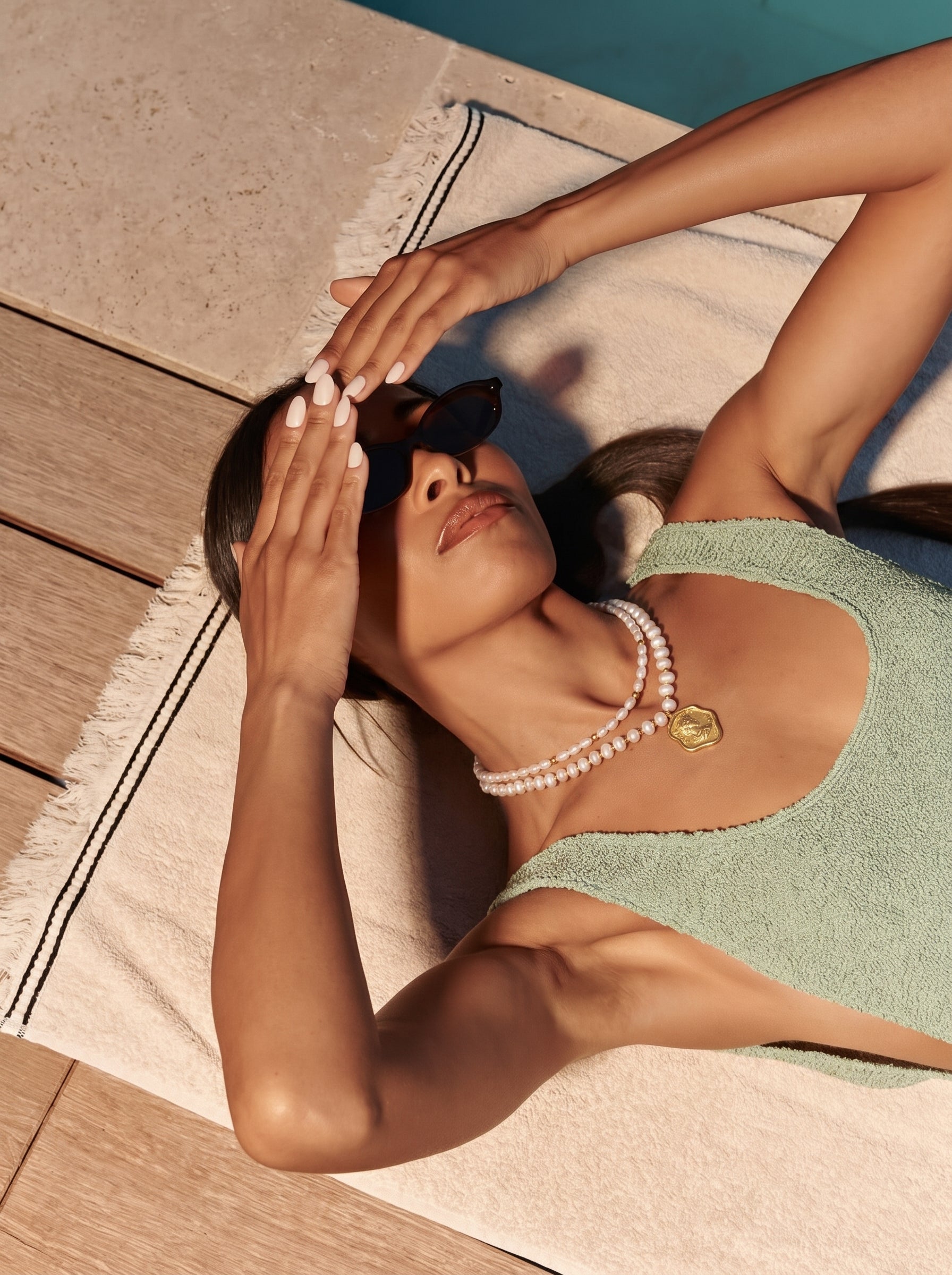
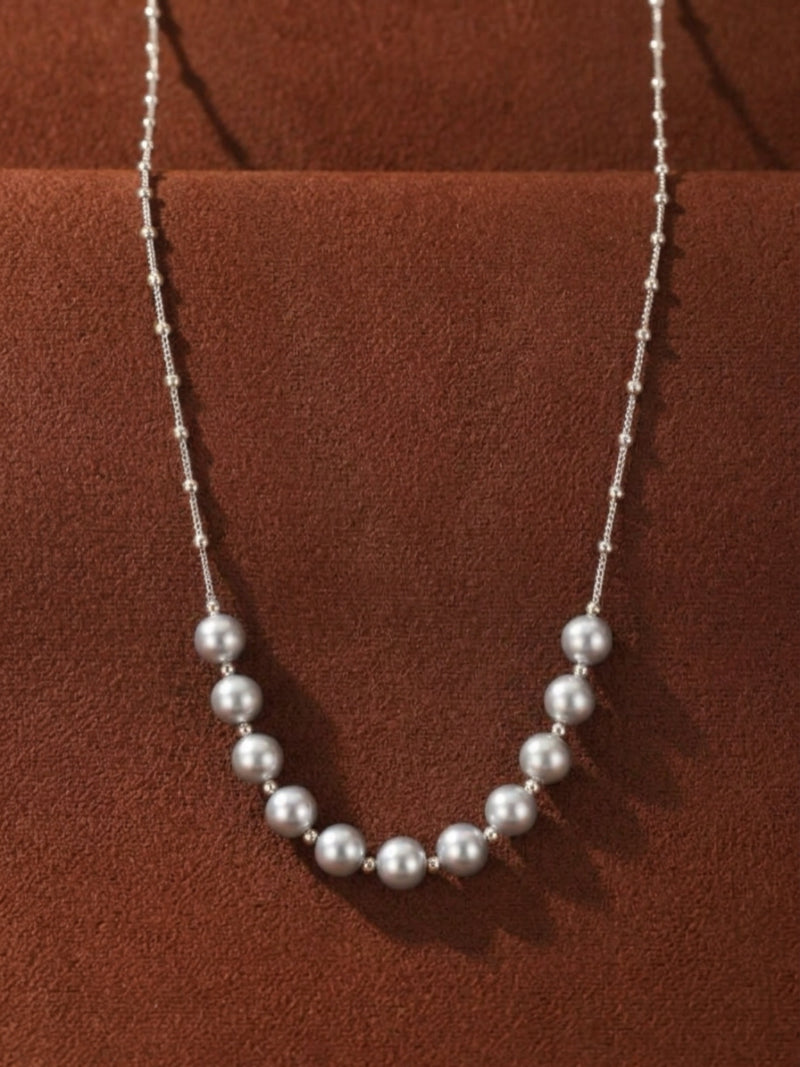
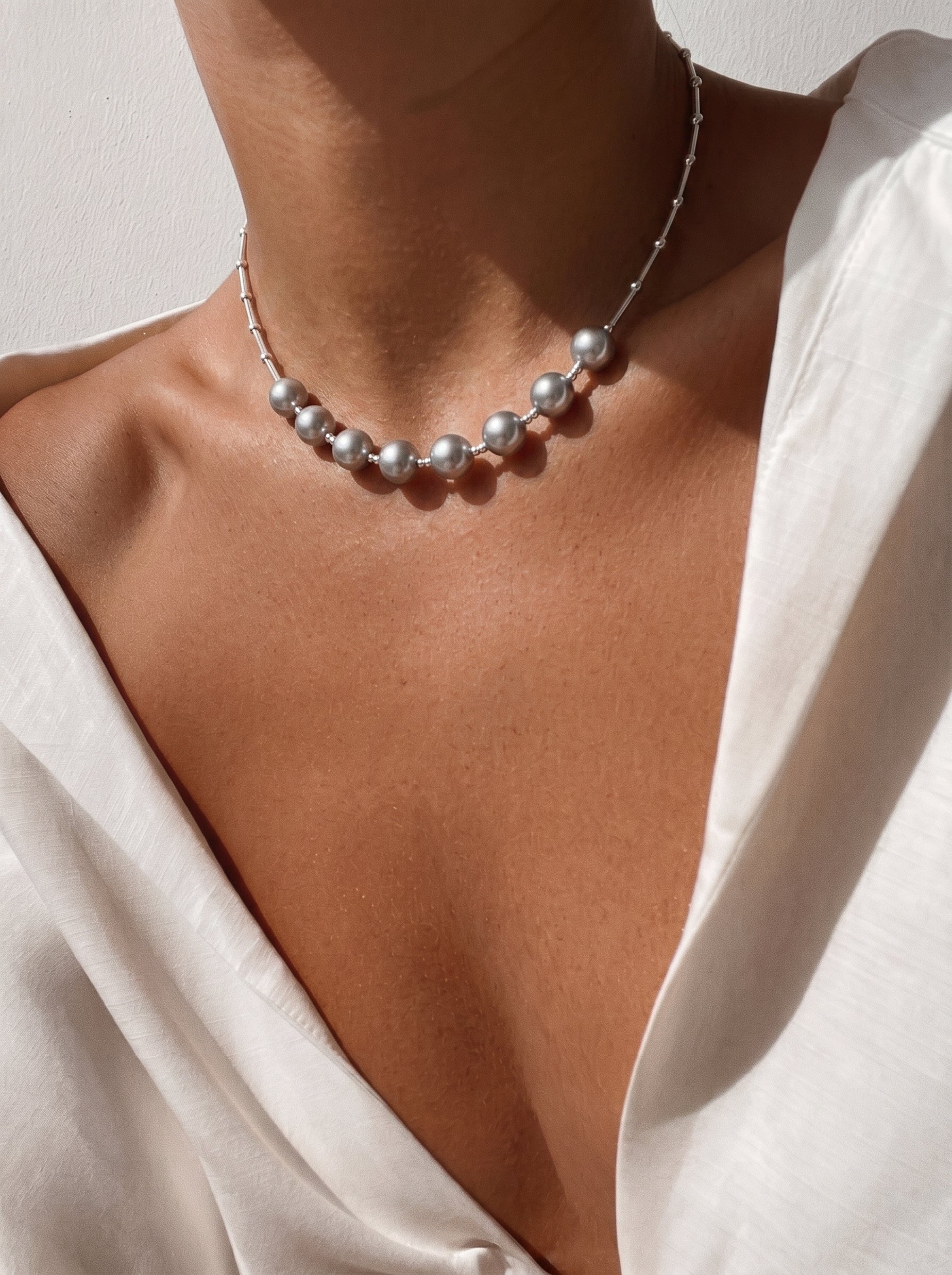
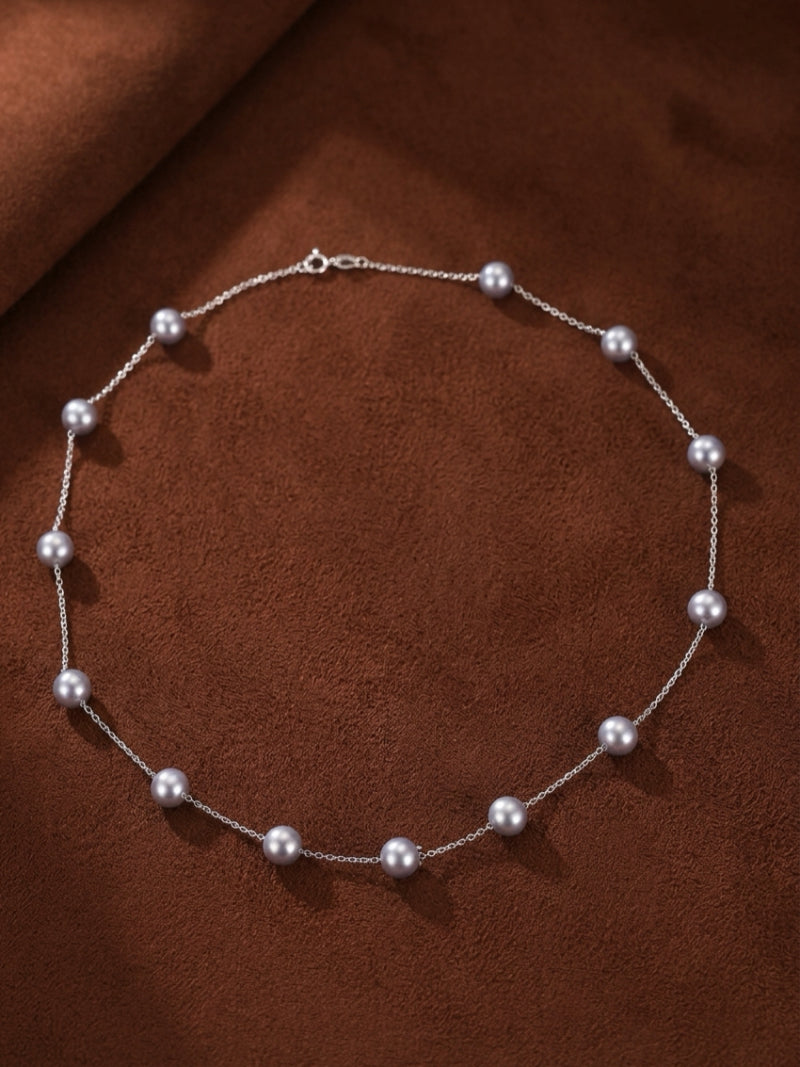
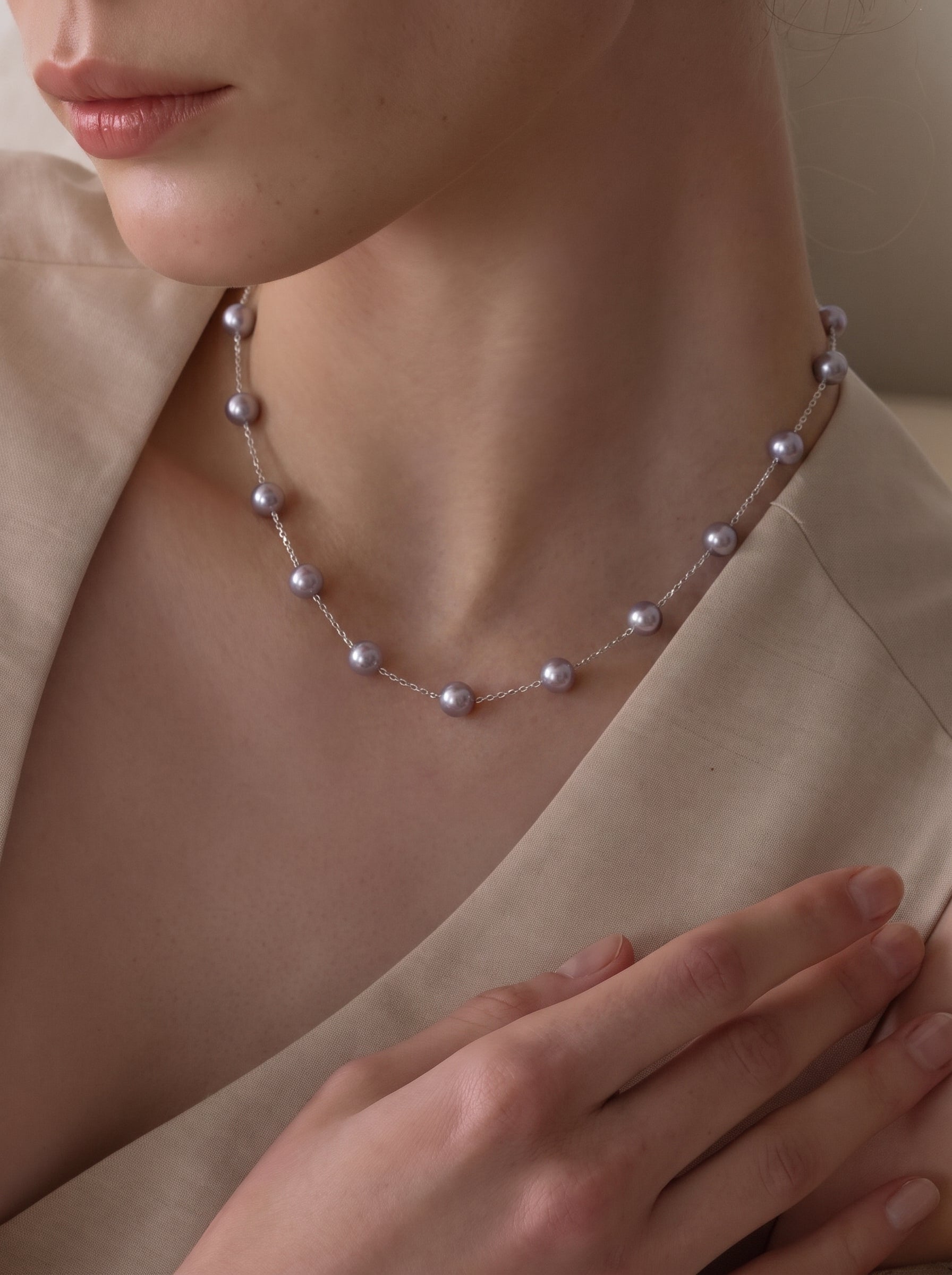
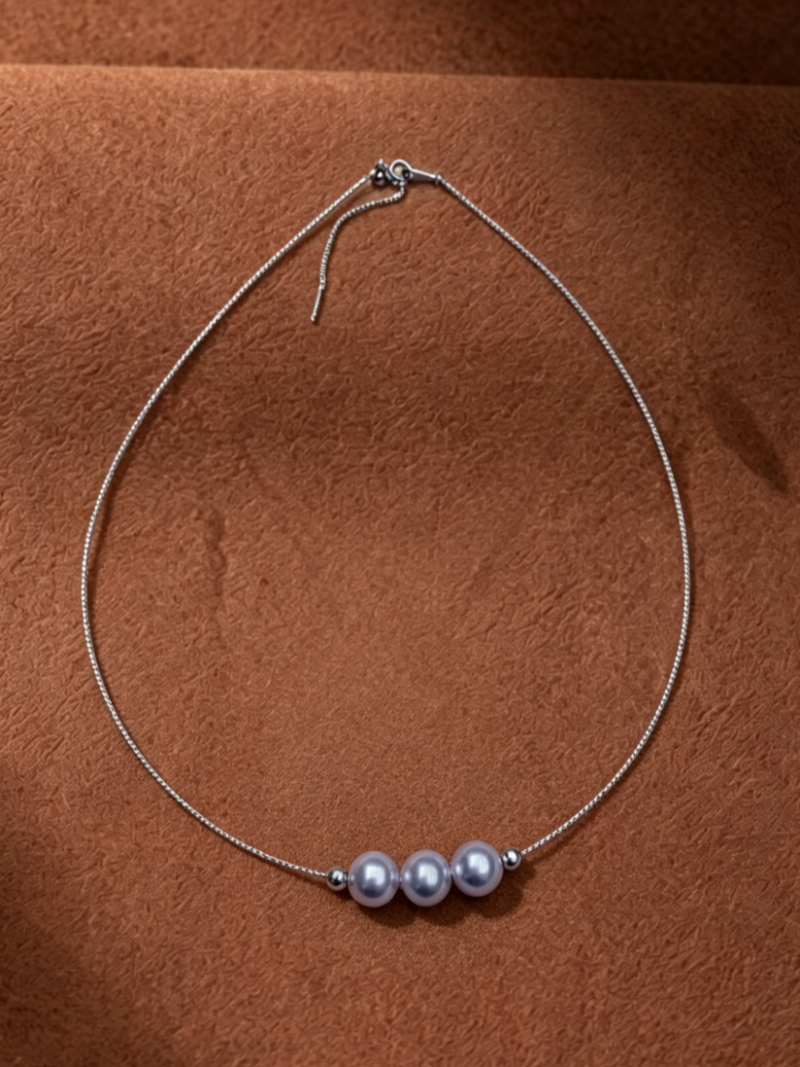
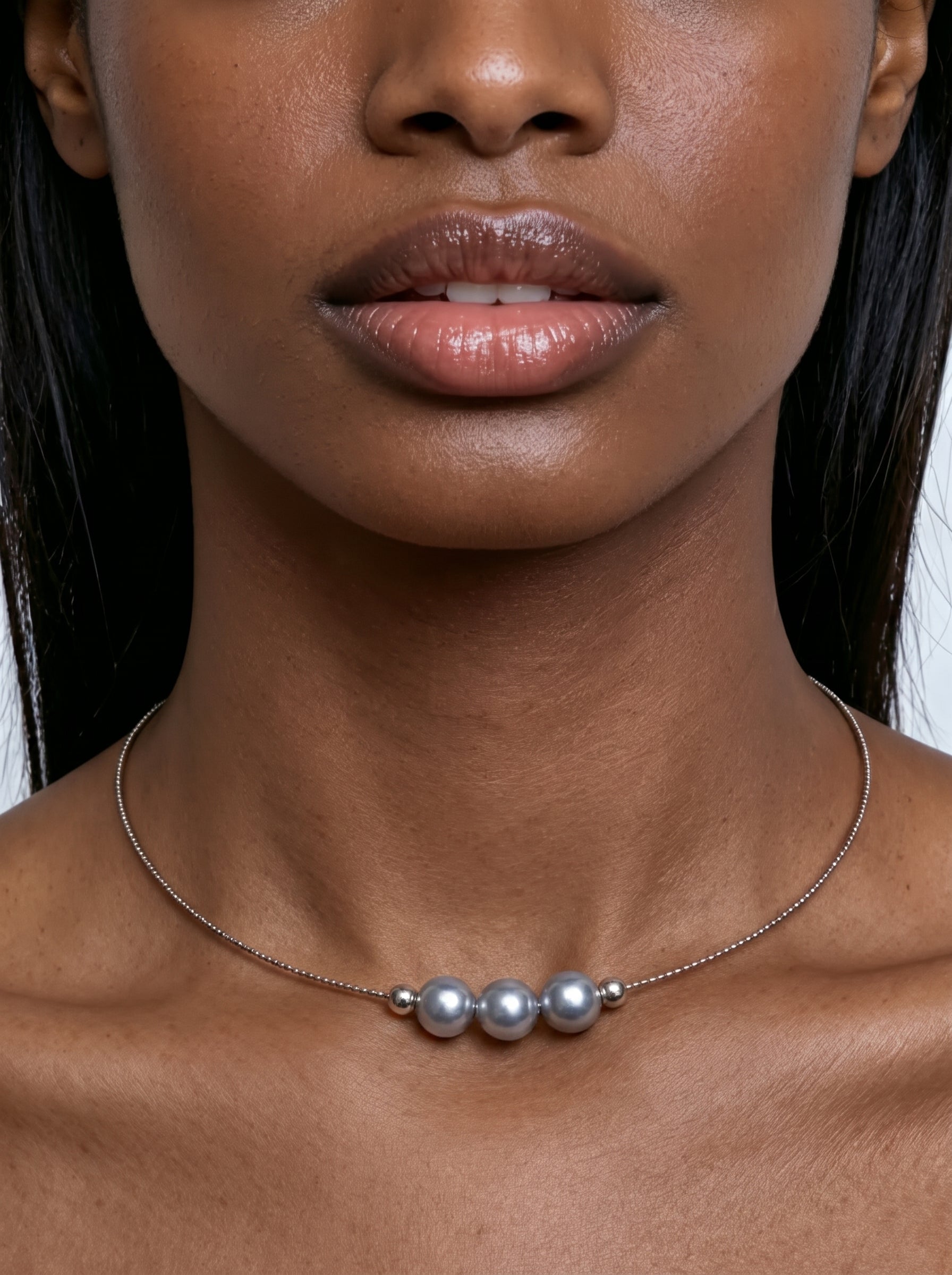
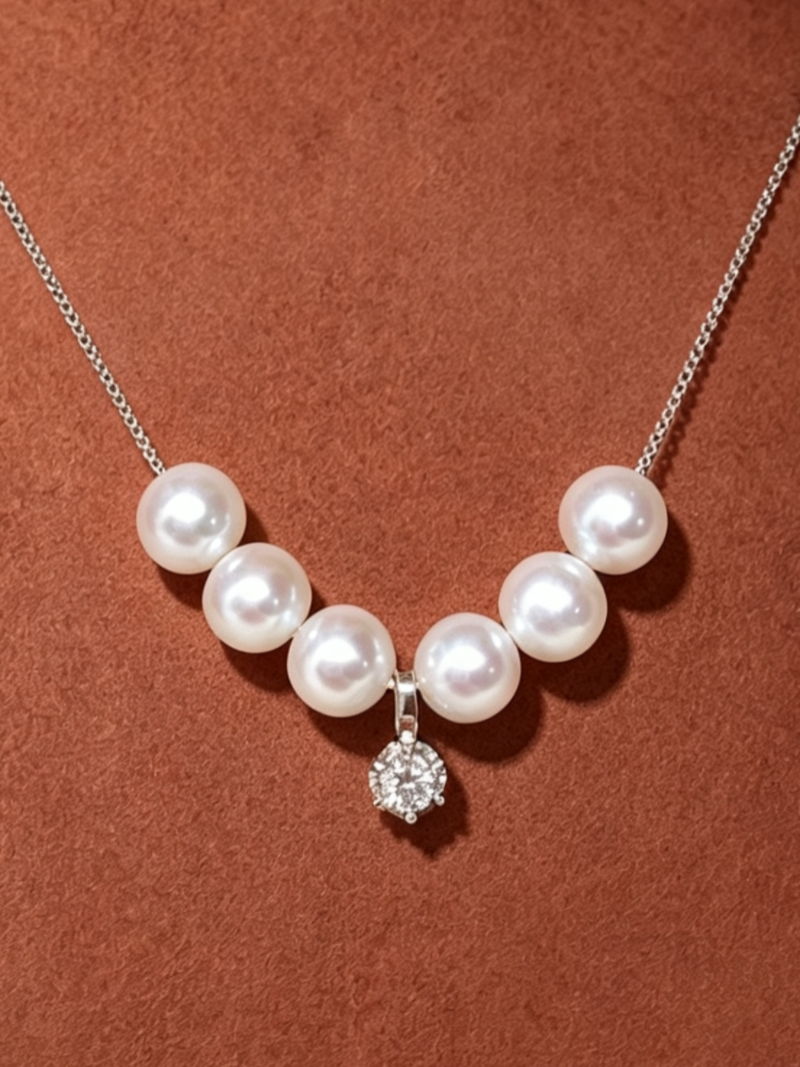
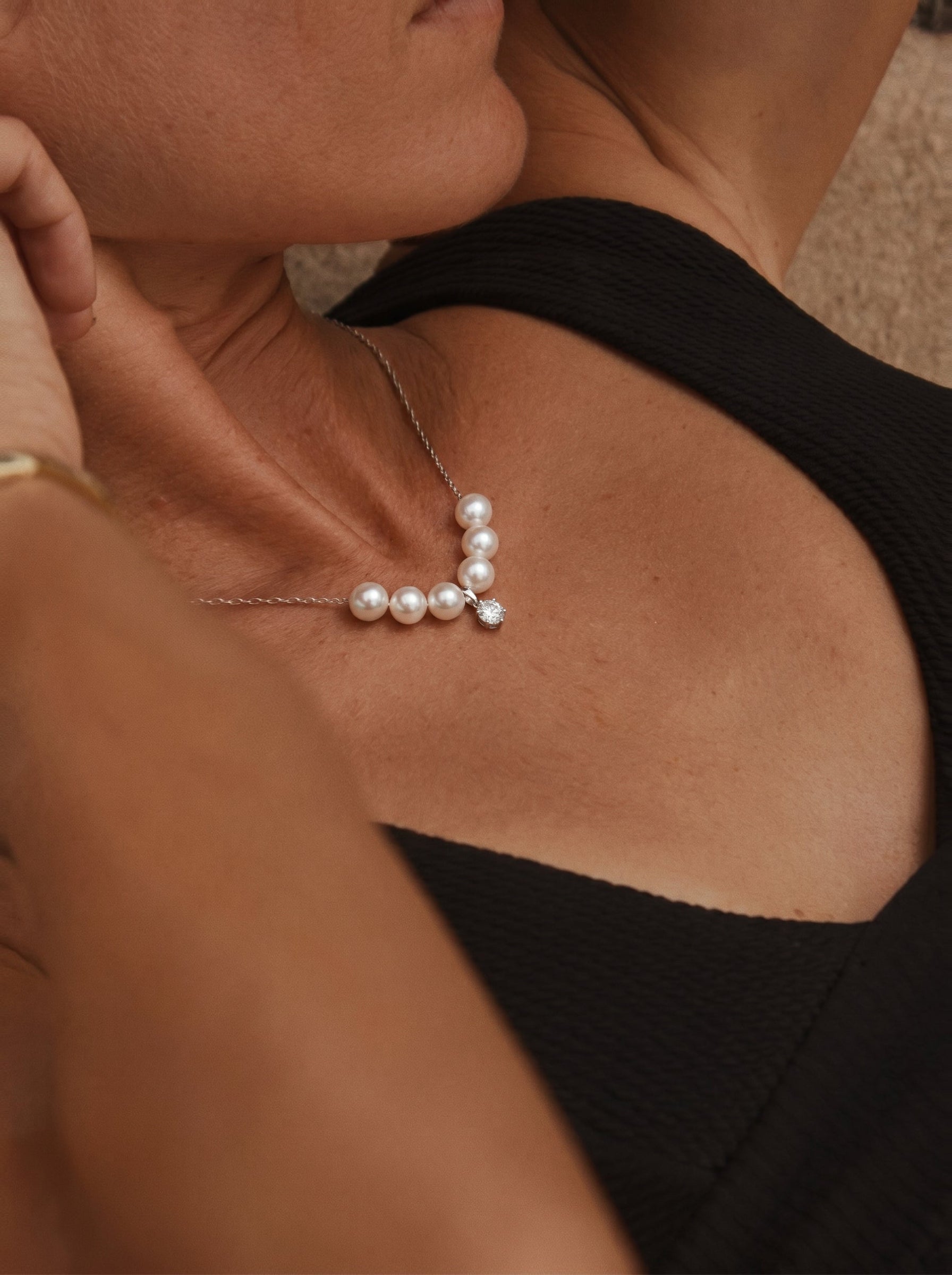
Pearls spaced along a fine silver chain so they appear to rest directly on the skin. Silver suits this construction better than gold, because a cool chain reads as almost invisible while a gold one competes.
Layered lengths
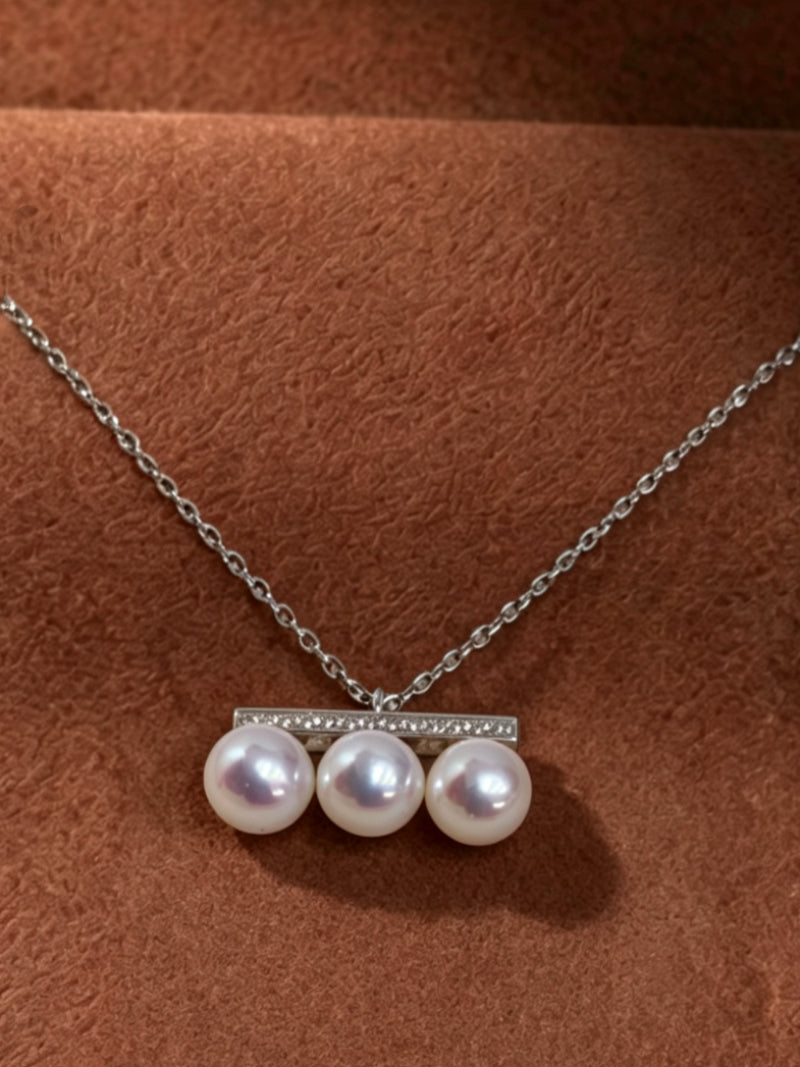
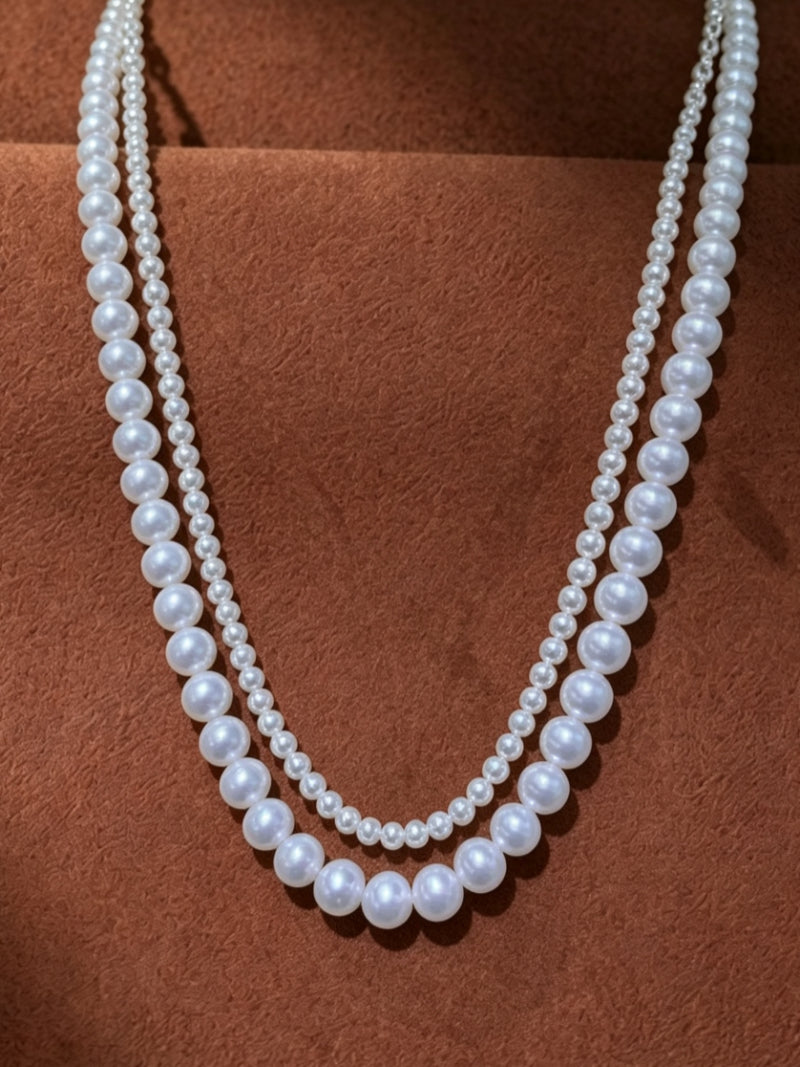
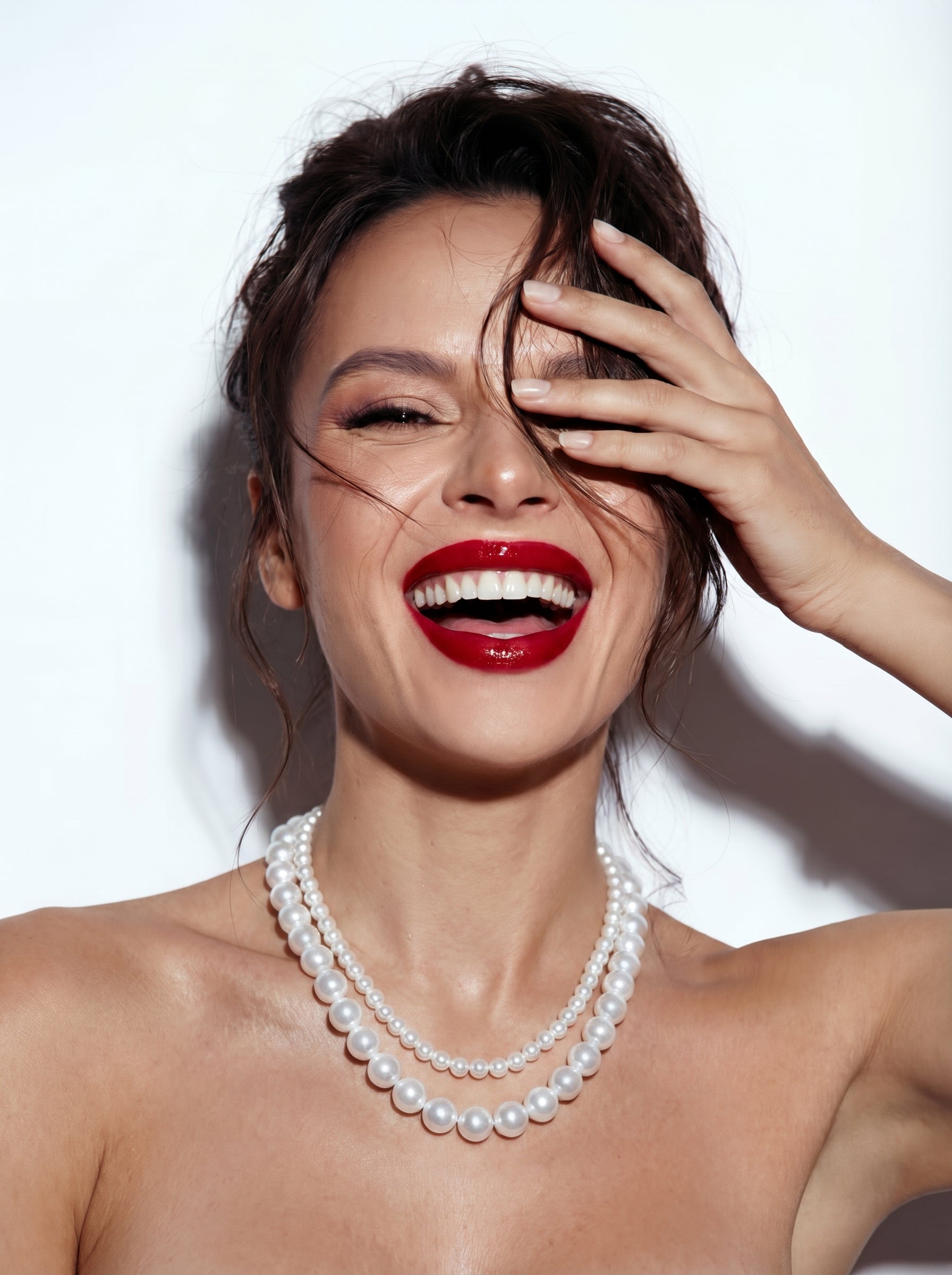
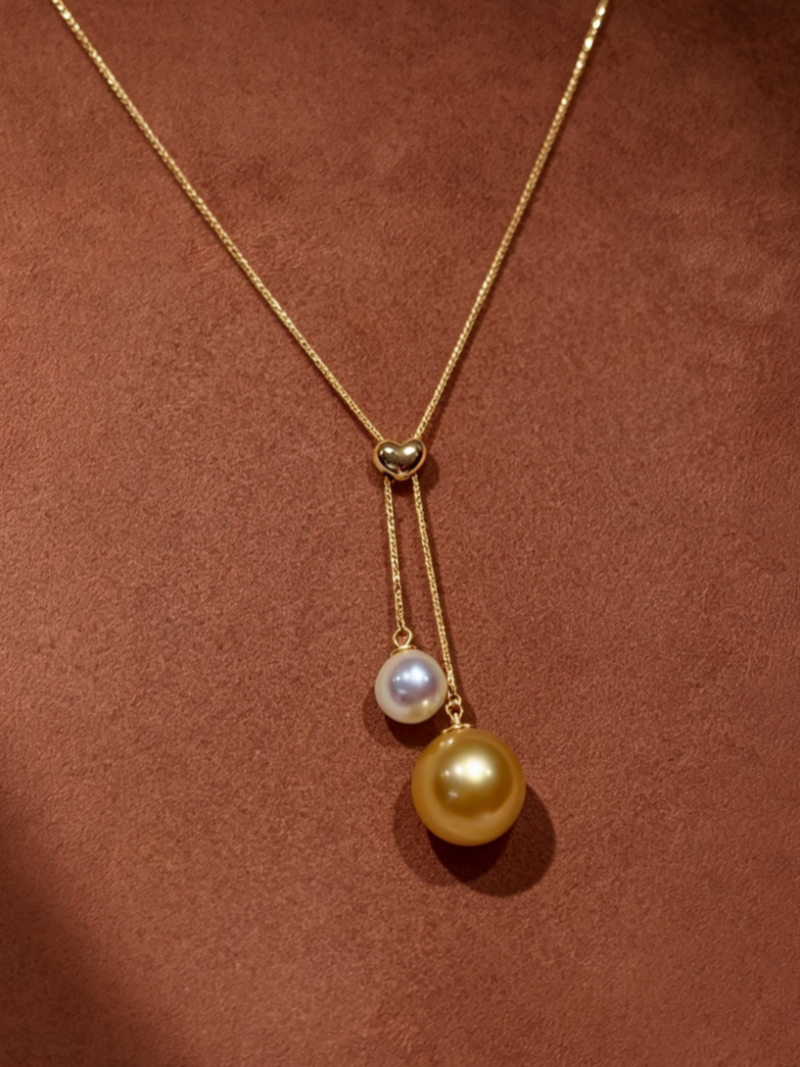
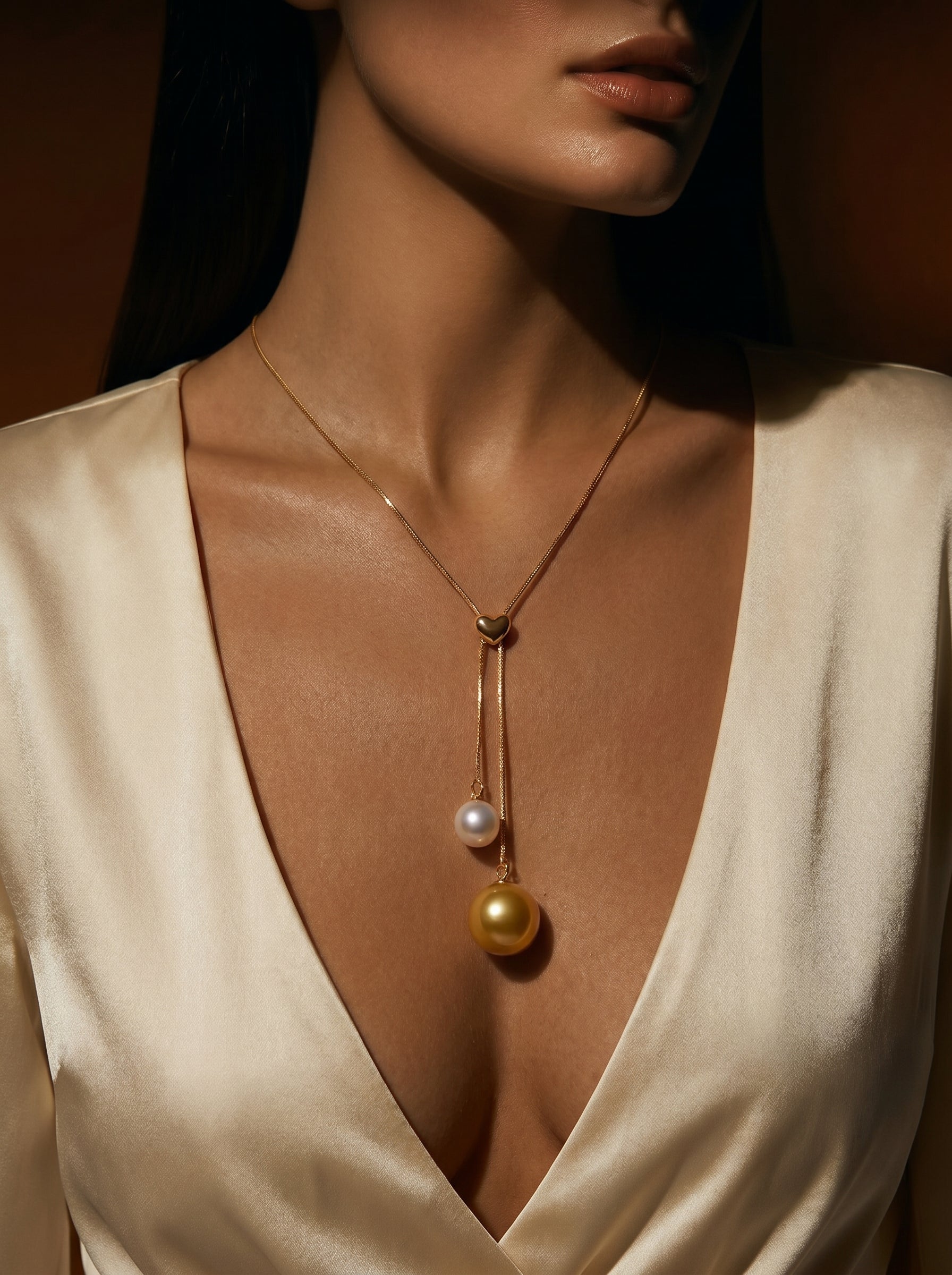
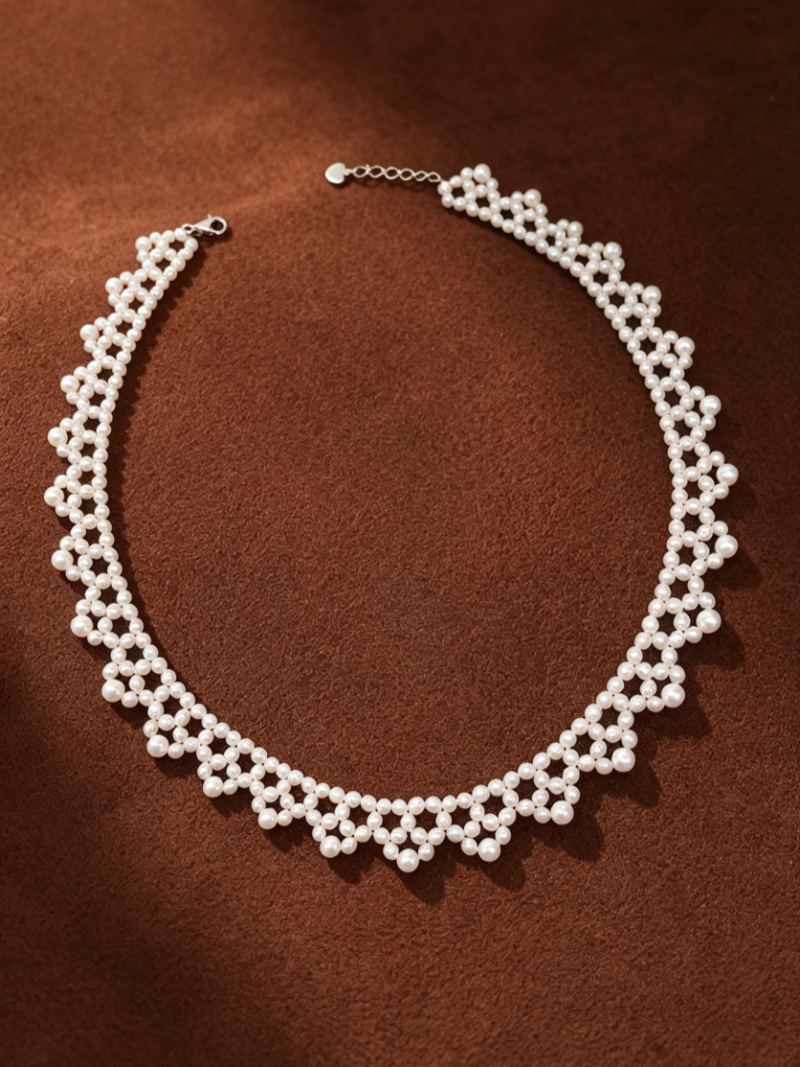
Two or three strands balanced on one clasp. Sterling keeps multiple chain lines distinct from each other, where warm metal tends to blur them into a single mass.
Why buy a silver pearl necklace from Grande Lilith
Silver is where a great deal of plated and silver-toned base metal is sold as if it were the real thing.
- 925 sterling silver throughout, not silver plating over a base metal.
- Eight provenance markers on the pearl as well: type, origin, bodycolor, overtone, shape, size, grade and treatment.
- Sourcing named to place: Zhuji, Japan, French Polynesia.
- Partners vetted by our GIA-certified pearl specialist, on working conditions as well as quality.
- Nickel-free, lead-free and cadmium-free throughout. Designed in Paris, with thirty days to change your mind.
Frequently asked questions
How do you clean a sterling silver pearl necklace?
Polish the metal with a dry silver cloth and keep it away from the pearls. Never use a liquid silver dip, a polishing paste or an ultrasonic cleaner. All three strip nacre, and the damage cannot be reversed.
Is sterling silver good for sensitive skin?
Generally yes, since the alloy is silver and copper rather than nickel. Reactions to silver jewelry are usually caused by nickel in a cheaper alloy or in the plating. Our pieces are nickel-free in every metal.
Silver or gold with pearls?
Silver sharpens the luster and reads modern. Gold warms the pearl and reads classic. The more useful question is what your other jewelry already is, since consistency looks more deliberate than either metal on its own.
Will the silver turn my skin green?
Occasionally, and it is harmless. The copper in the alloy can react with skin acidity and moisture, most often in humid weather. Keeping the piece clean and dry prevents it, and it washes off.
How should I store a silver pearl necklace?
In the pouch it arrives in, where less air reaches the silver and the pearls are protected from harder pieces. Avoid airtight plastic bags, since nacre needs some humidity and can dry out over years of sealed storage.