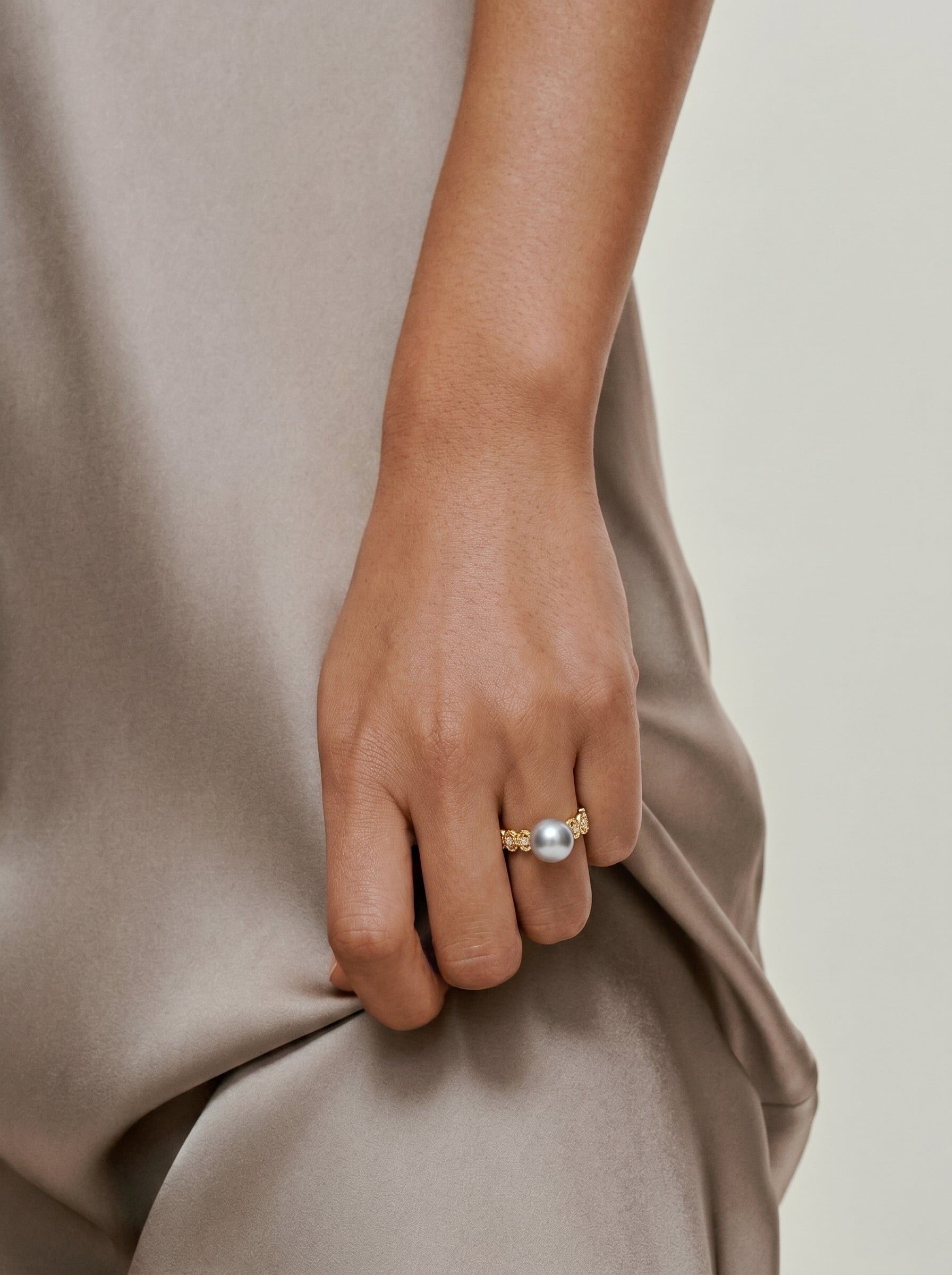
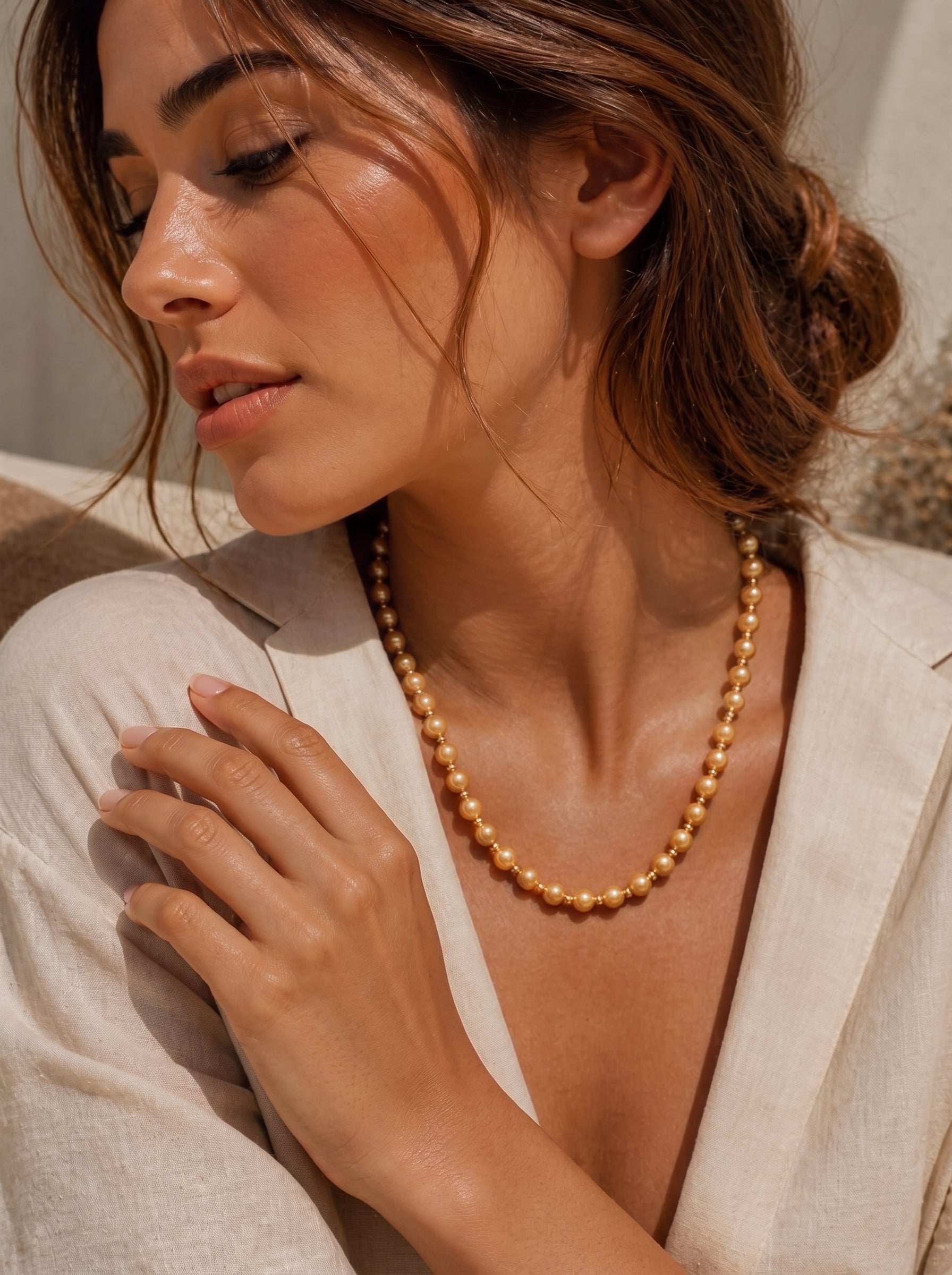
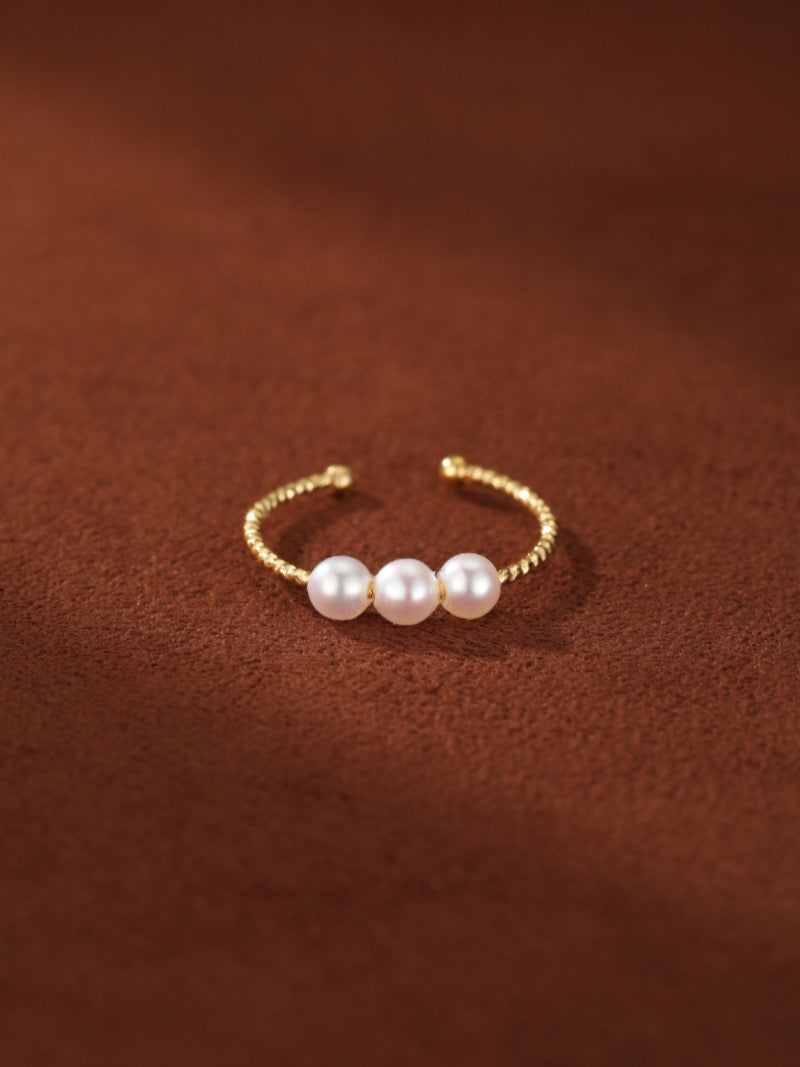
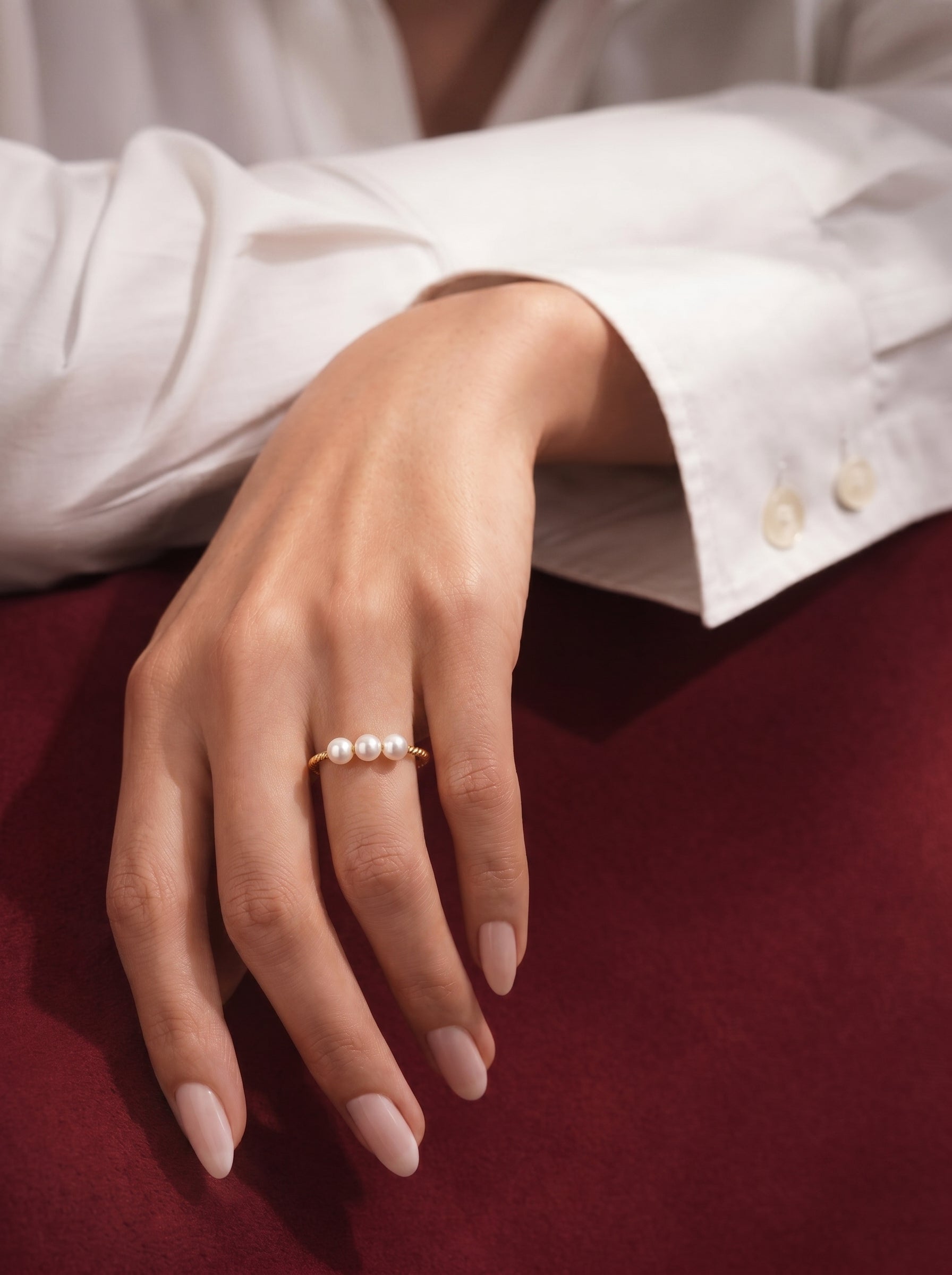
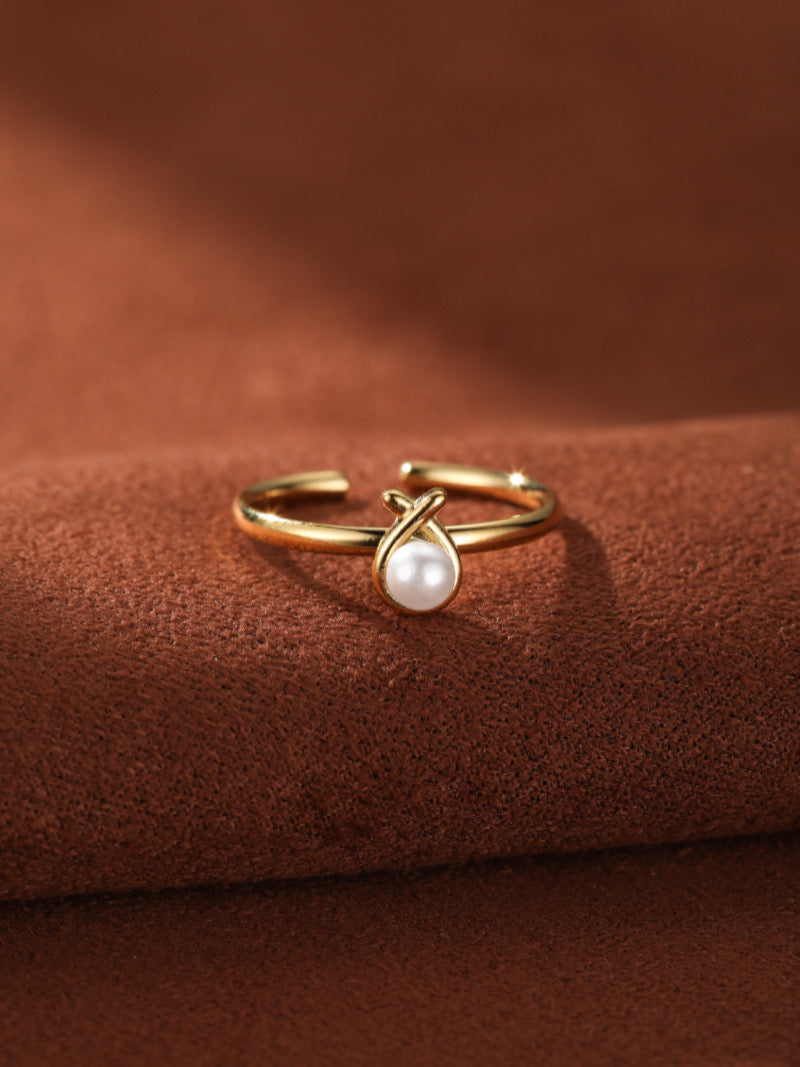
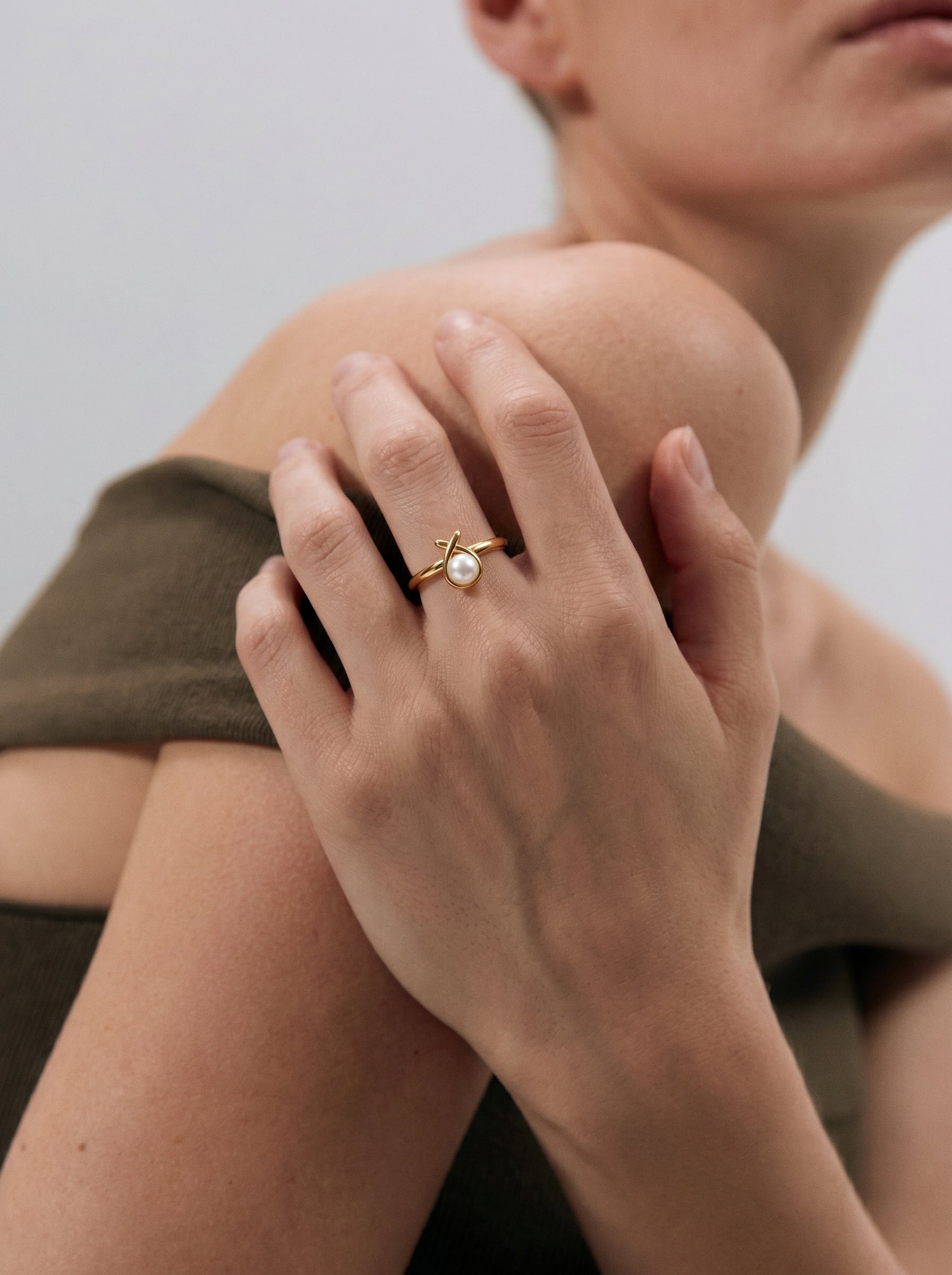
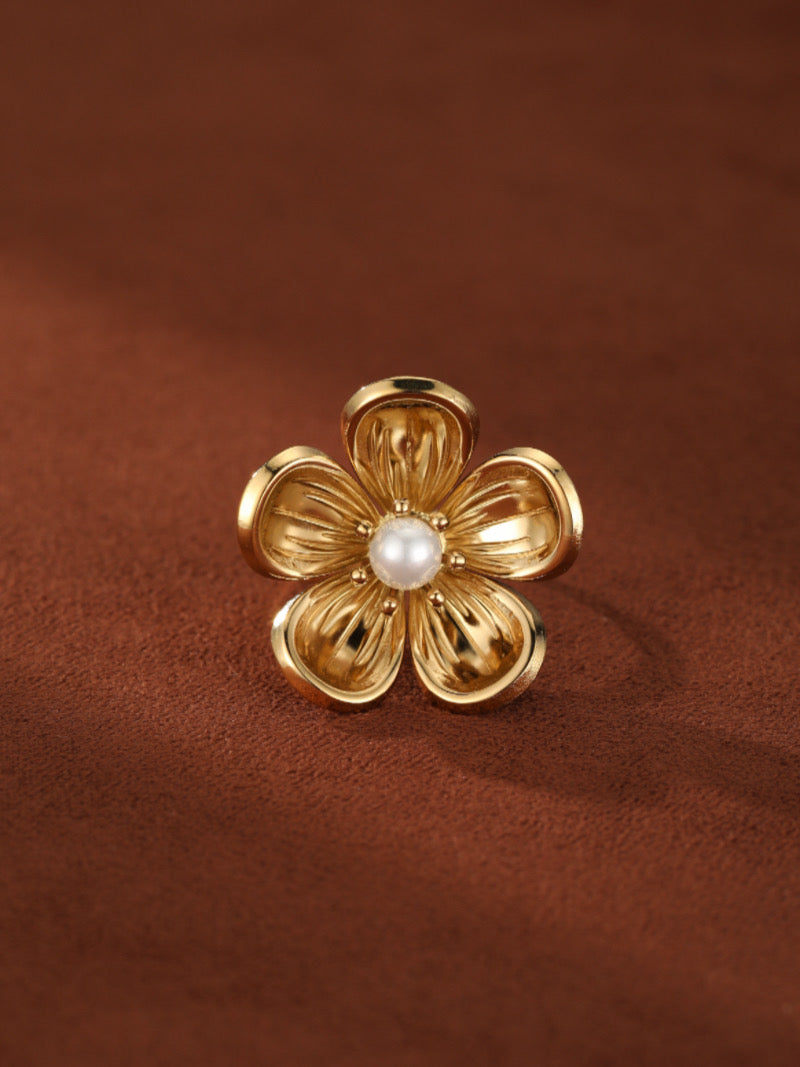
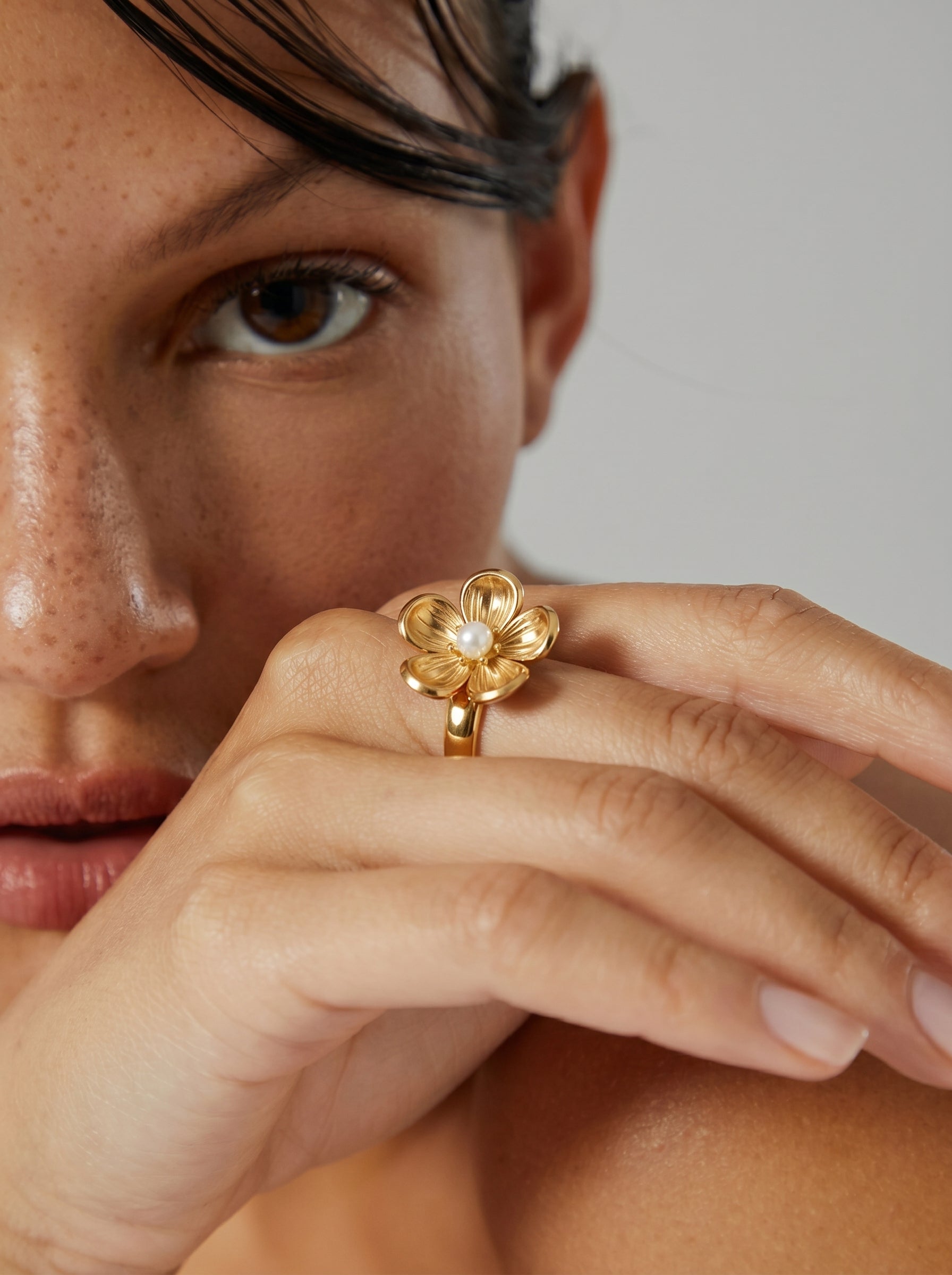
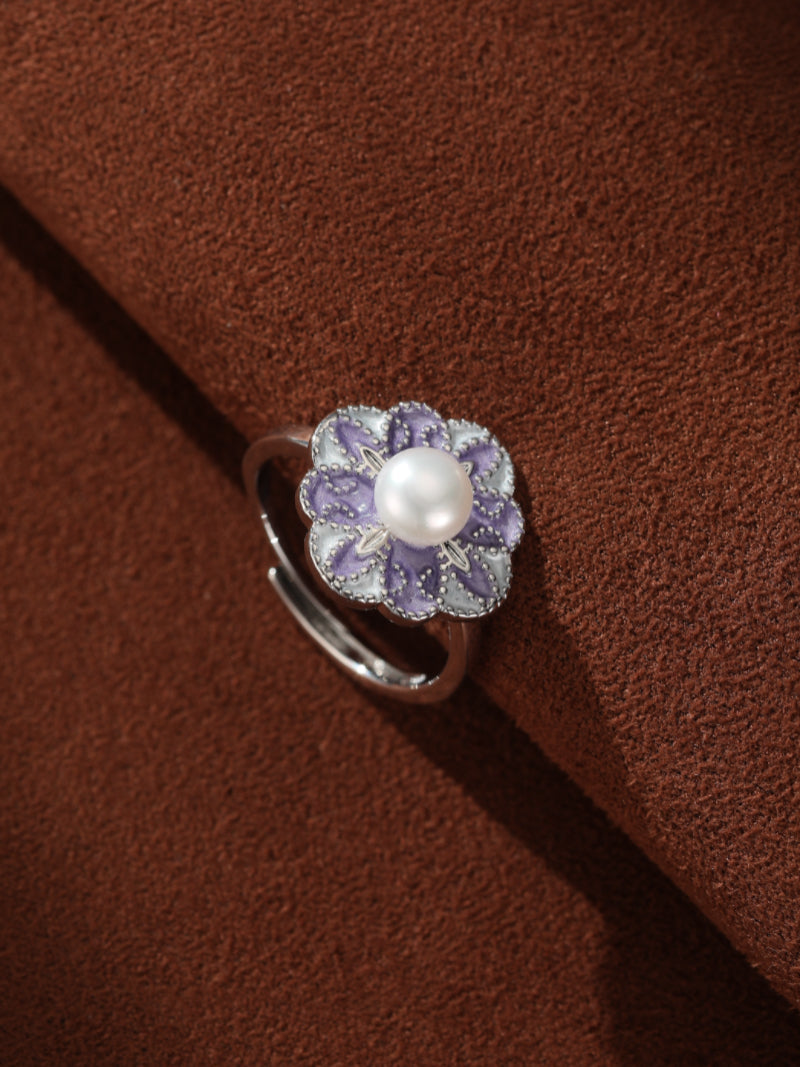
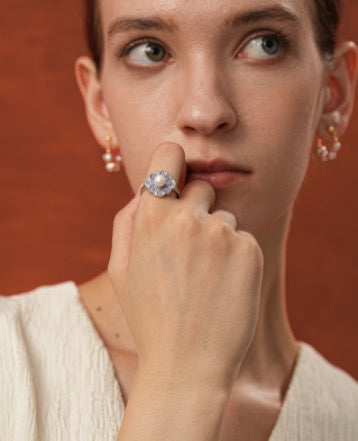
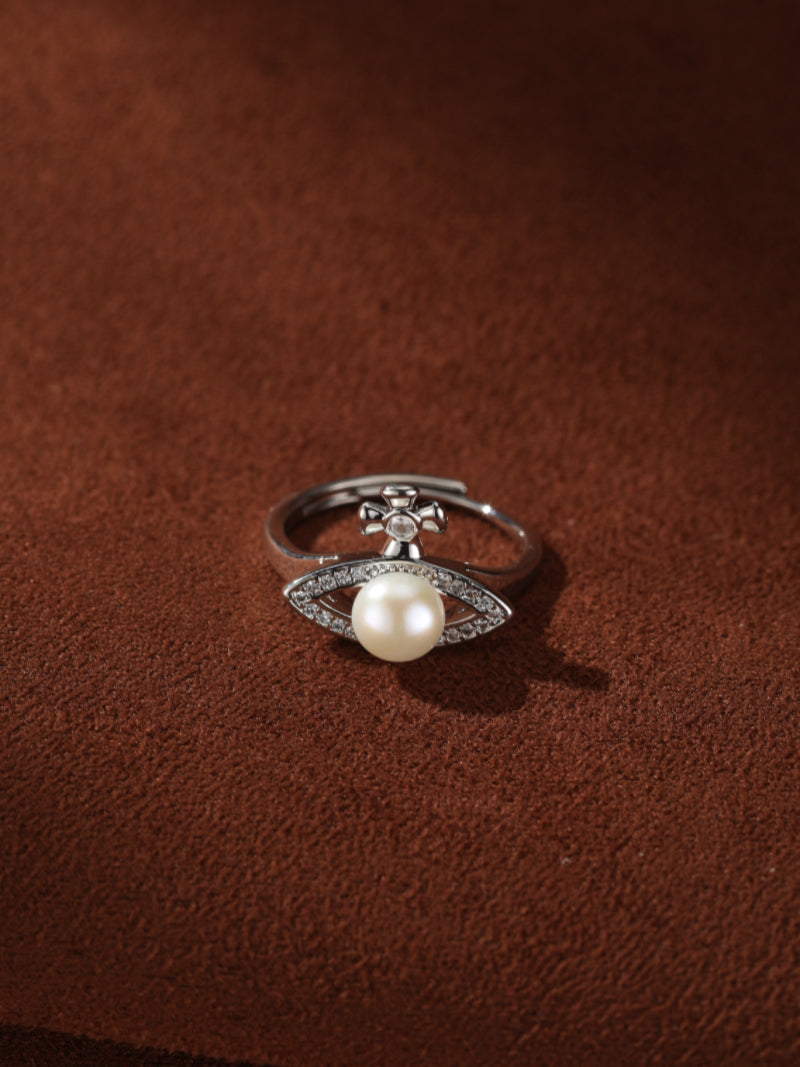
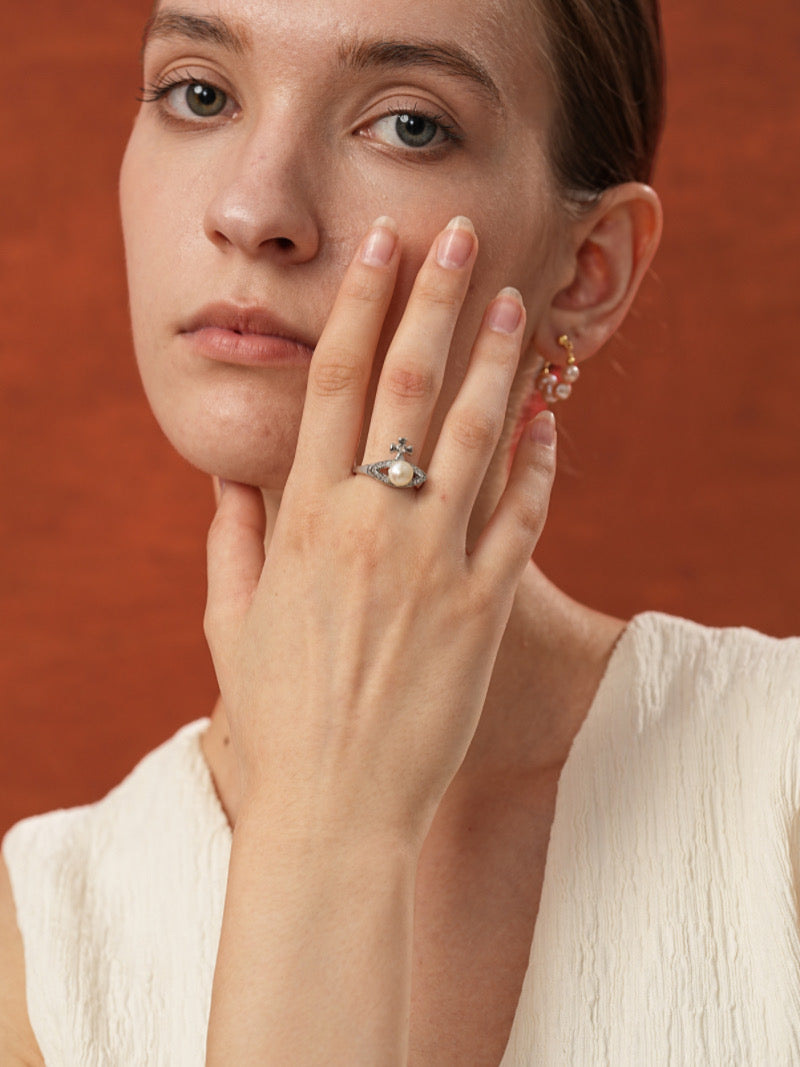
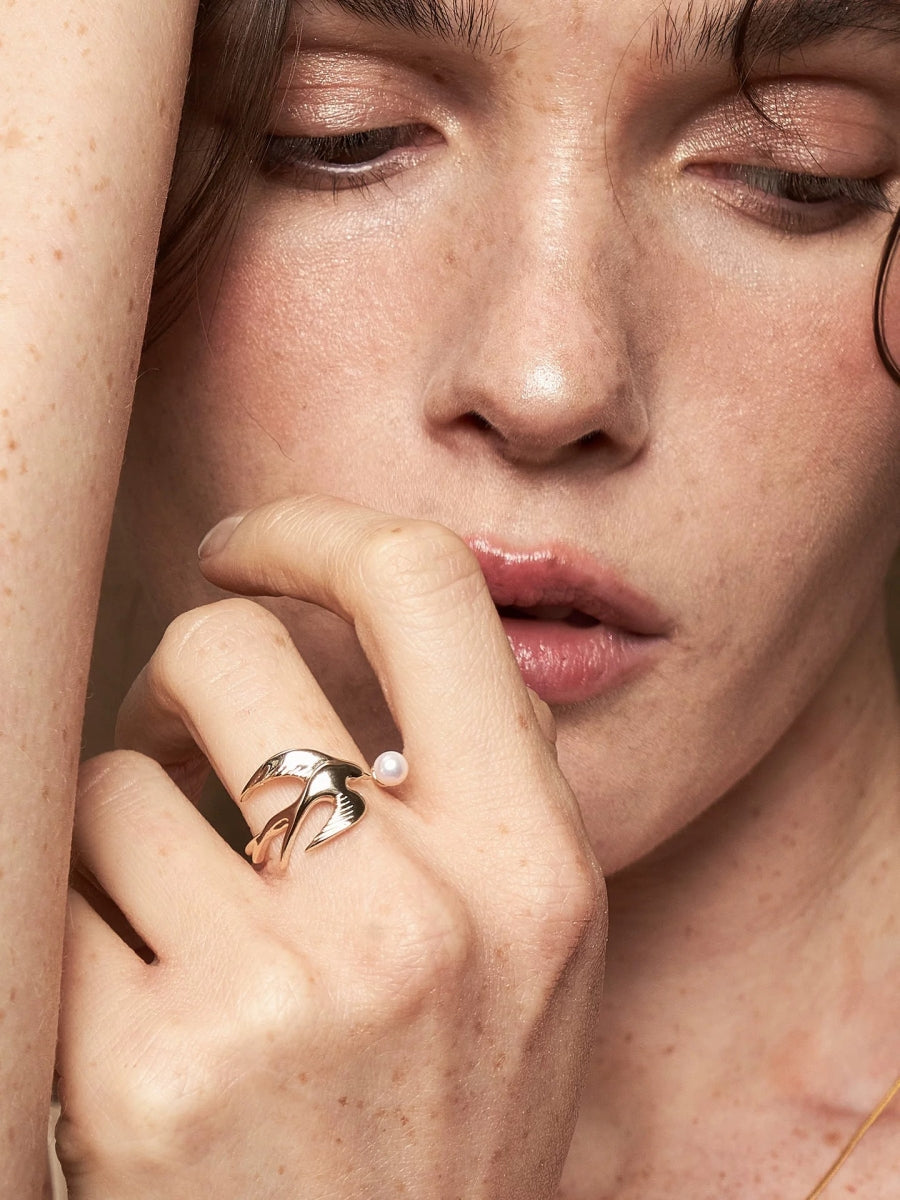
A round pearl set clean on a band, with nothing around it because it needs nothing. This is the ring that reads as a decision rather than as a gift, and the one that goes with every other ring you already wear.
What is a round pearl ring?
A round pearl ring uses a cultured pearl classified as round or near-round. Roundness is measured as the variation between a pearl's largest and smallest diameter, and a pearl is graded round when that variation stays under two percent.
Fewer than one in a hundred cultured pearls reaches that standard, which is why round pearls cost more than any other shape.
Why is a single round pearl good value?
Because most of the price of round pearls is matching, and a ring needs only one. A strand requires dozens of pearls to agree on size, color and overtone, which takes sorting through hundreds of candidates.
A ring skips all of that. You are paying for the pearl itself rather than for the work of finding its siblings, which makes a single round pearl ring the most efficient way to own a genuinely round pearl.
Does a round pearl work well on a hand?
Visually, better than anything. A sphere reads correctly from every angle, and a hand is seen from many. There is no orientation to get right and no flat side to end up facing the wrong way.
Practically, it projects further from the band than a button or Mabe pearl, so it catches on pockets and sleeves more. That is the trade-off, and it is why setting height matters here.
How should a pearl ring be set and sized?
Low. Pearls rank 2.5 to 3 on the Mohs hardness scale, softer than almost anything else in a jewelry box, so a raised setting takes more impact than nacre comfortably absorbs.
Most pearl rings cannot be resized after purchase, because the heat and solder used in resizing damage nacre. Measure at the end of the day when fingers are largest, and if you are between two sizes, size up.
Why buy a round pearl ring from Grande Lilith
Round is the shape people pay a premium for, which makes it the shape most loosely described. Near-round is routinely sold as round, and on a single pearl there is nothing beside it to reveal the difference.
- Shape stated as one of eight provenance markers on every product page, alongside grade rather than merged with it.
- Sourcing named to place: Zhuji, Japan, French Polynesia.
- Partners vetted by our GIA-certified pearl specialist, on working conditions as well as quality.
- Settings kept low so the ring clears daily life, and nickel-free, lead-free and cadmium-free throughout.
- Designed in Paris. Thirty days to change your mind, and every order arrives in a magnetic pouch.
Frequently asked questions
What is the difference between round and near-round?
Round means under two percent variation between the largest and smallest diameter. Near-round allows more. On a single pearl the difference is hard to see without something to compare against, which is exactly why the shape should be stated rather than assumed.
What size round pearl suits a ring?
A 7 to 8 mm pearl is the classic proportion and stays quiet on a hand. At 10 mm and above the pearl becomes the focal point and does not need a second ring beside it.
Can you wear a round pearl ring every day?
Yes, with two habits. Take it off before hand washing, cleaning and lotion, and store it separately from harder stones. A round pearl projects more than other shapes, so a low setting matters more here.
Will the pearl spin in its setting?
It should not, but a round pearl is the shape most capable of it if a setting loosens over many years. If yours starts to turn, stop wearing it until it is reset rather than pressing it back into place.
Are round pearls better than baroque or button?
Rarer, not better. Quality is luster first, then surface cleanliness and nacre thickness. A button pearl with strong luster is a better pearl than a round one without it, and it sits lower on a hand.