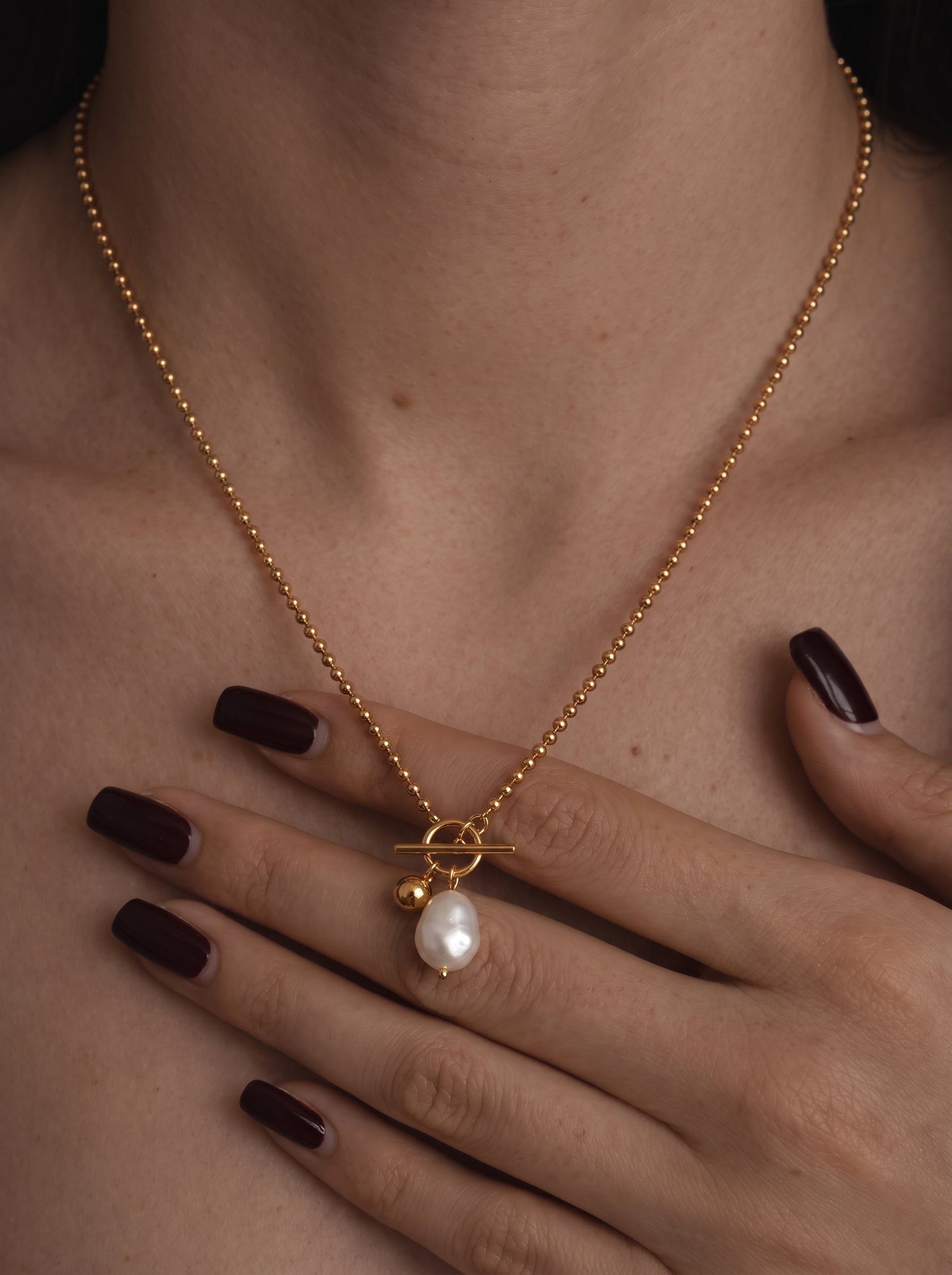
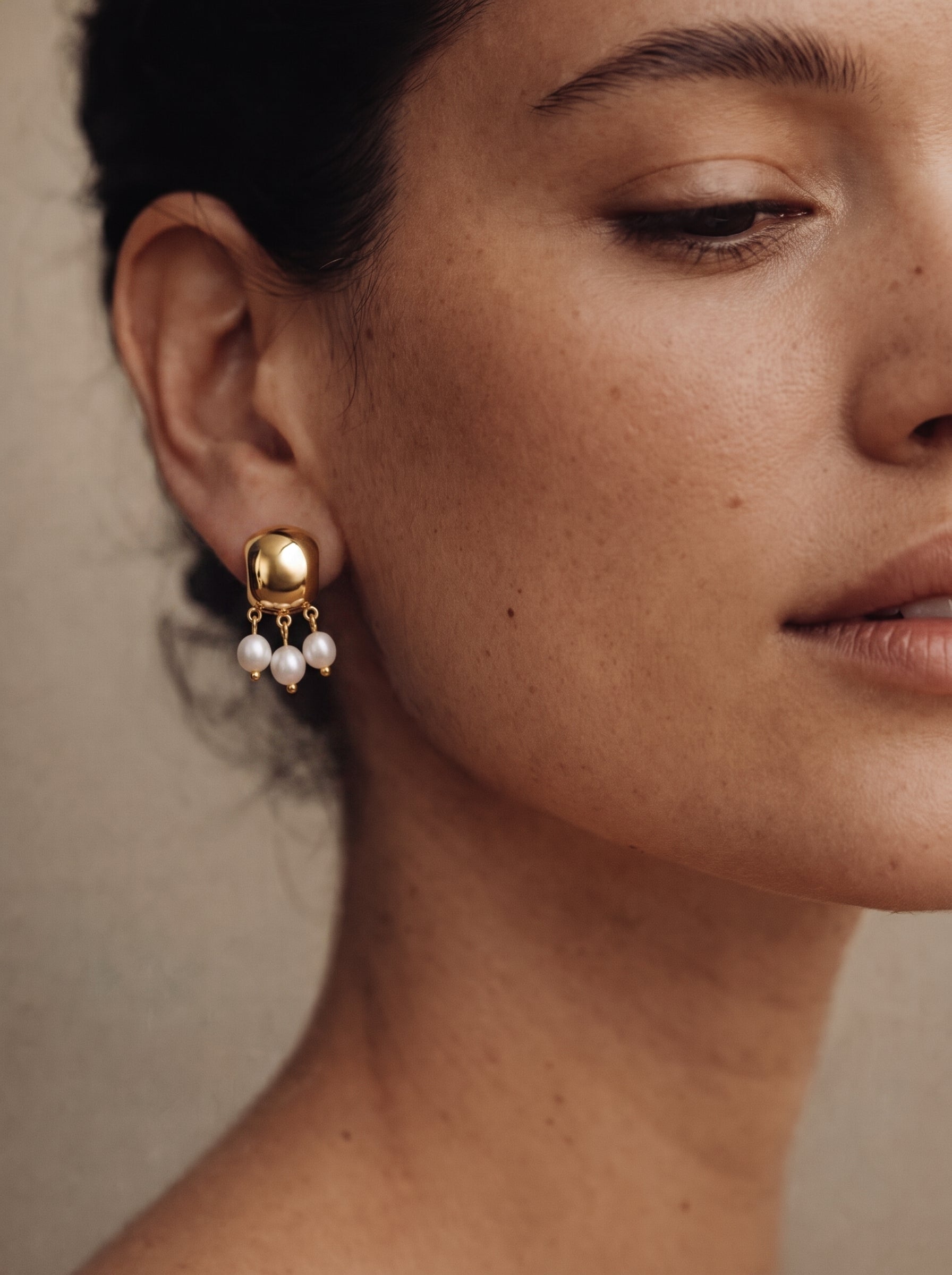
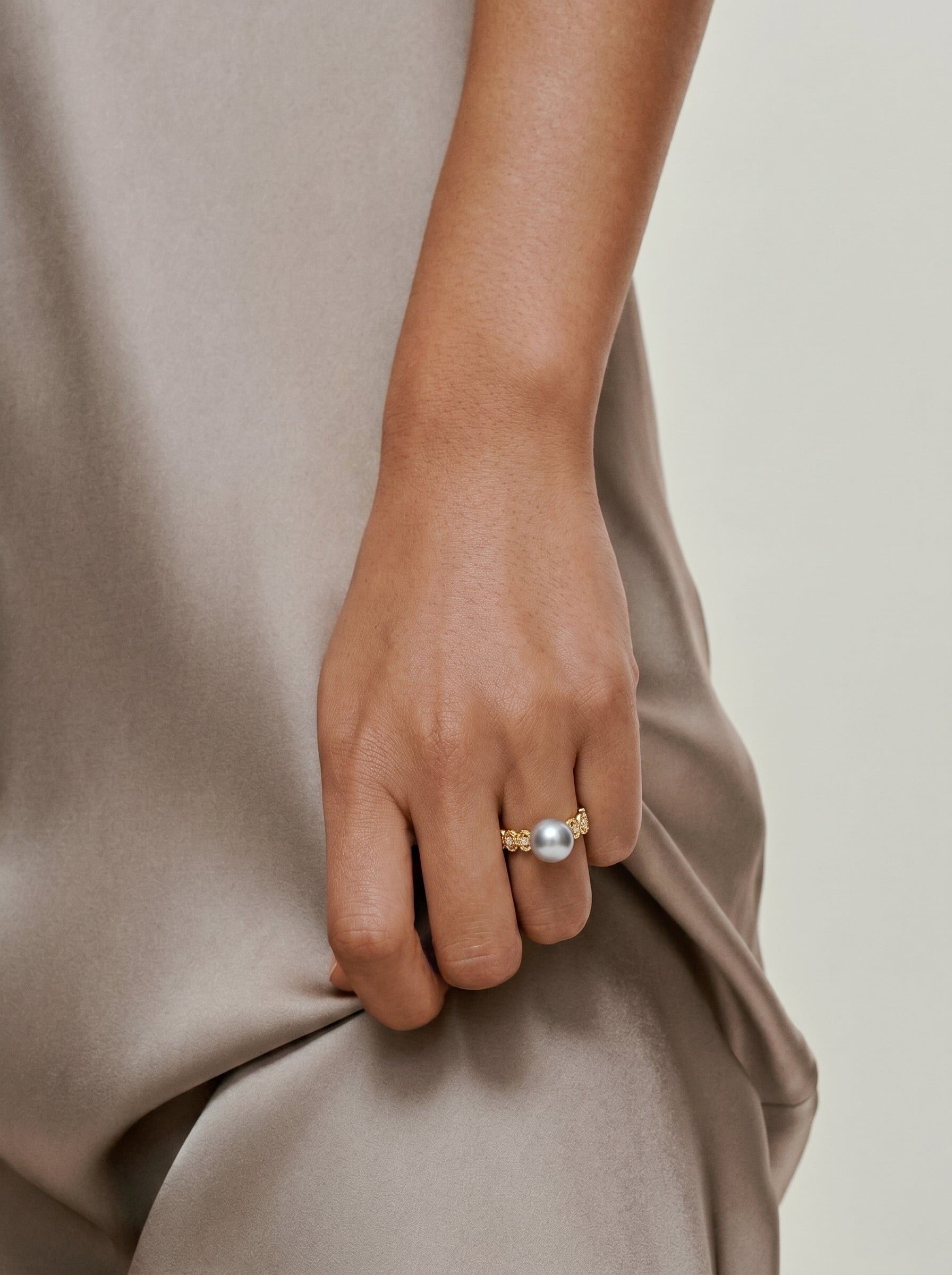
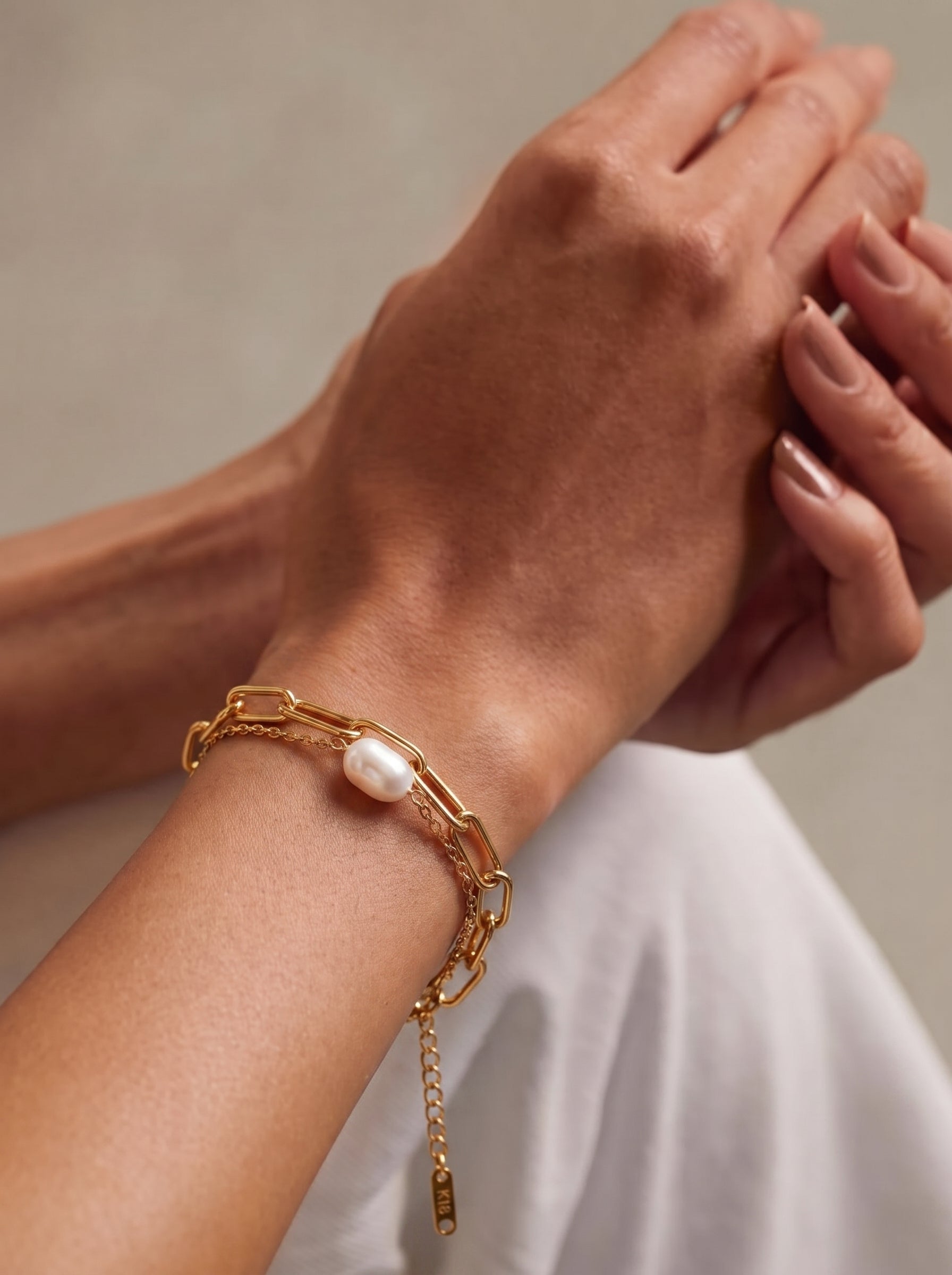
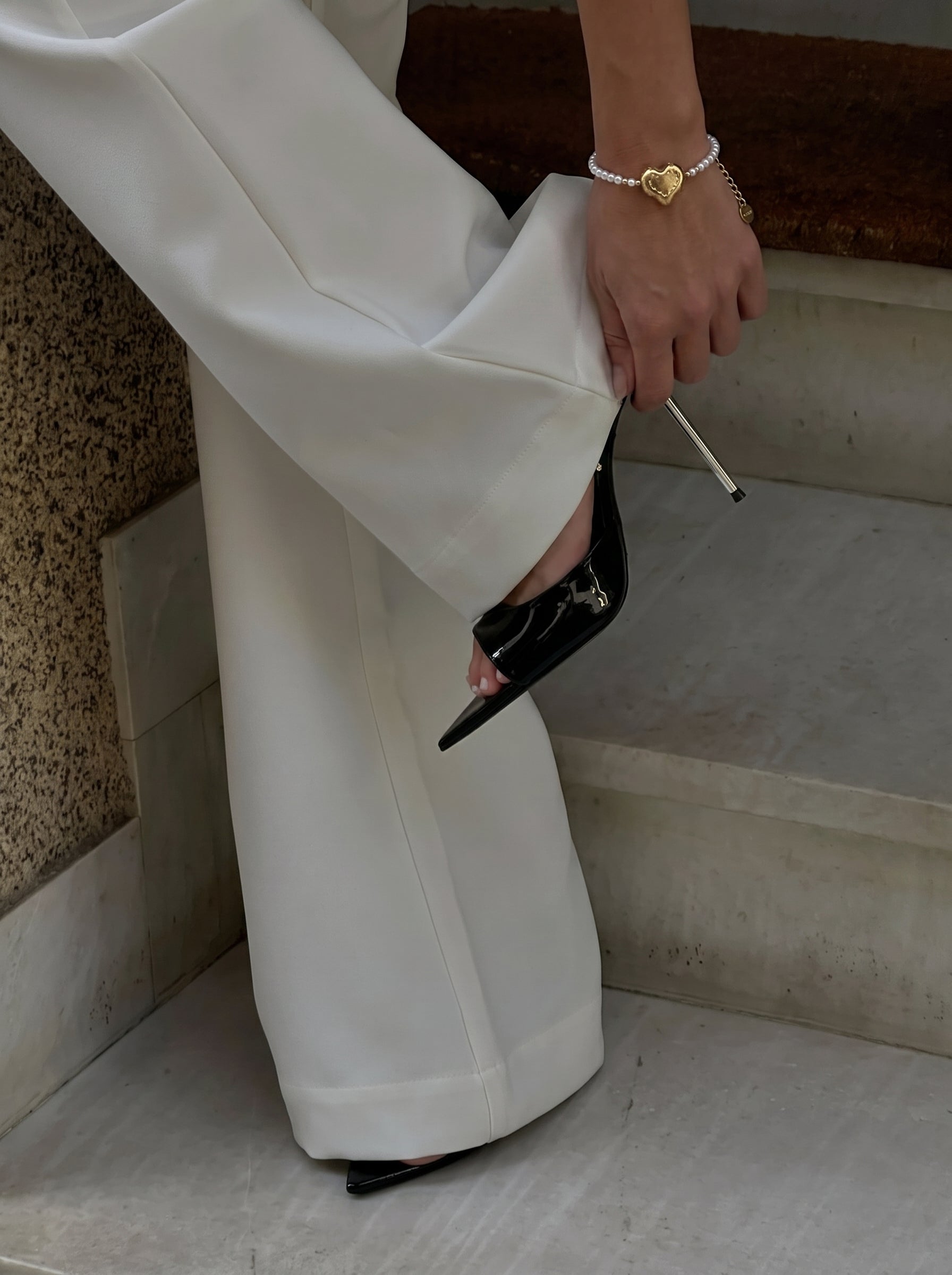
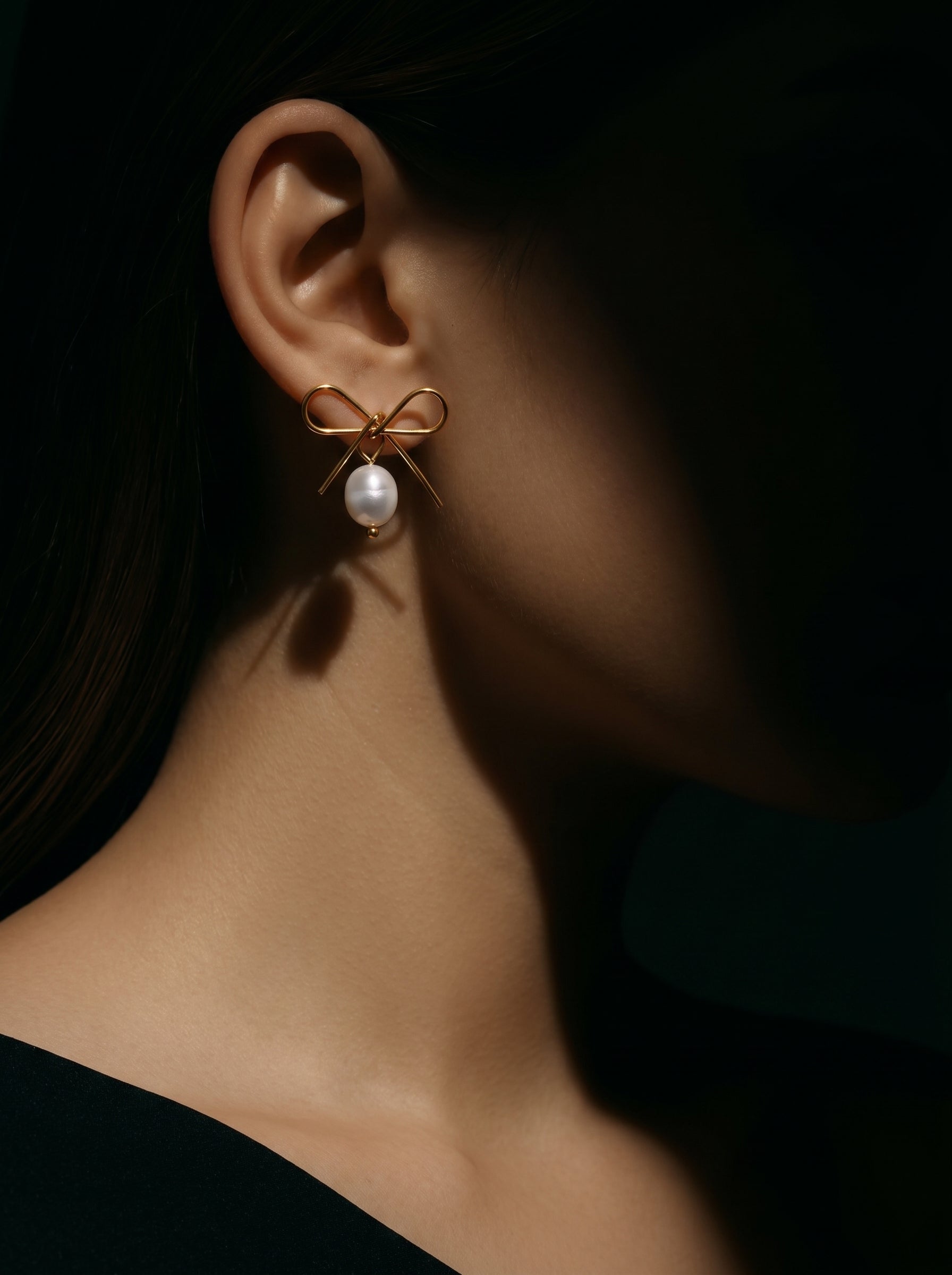
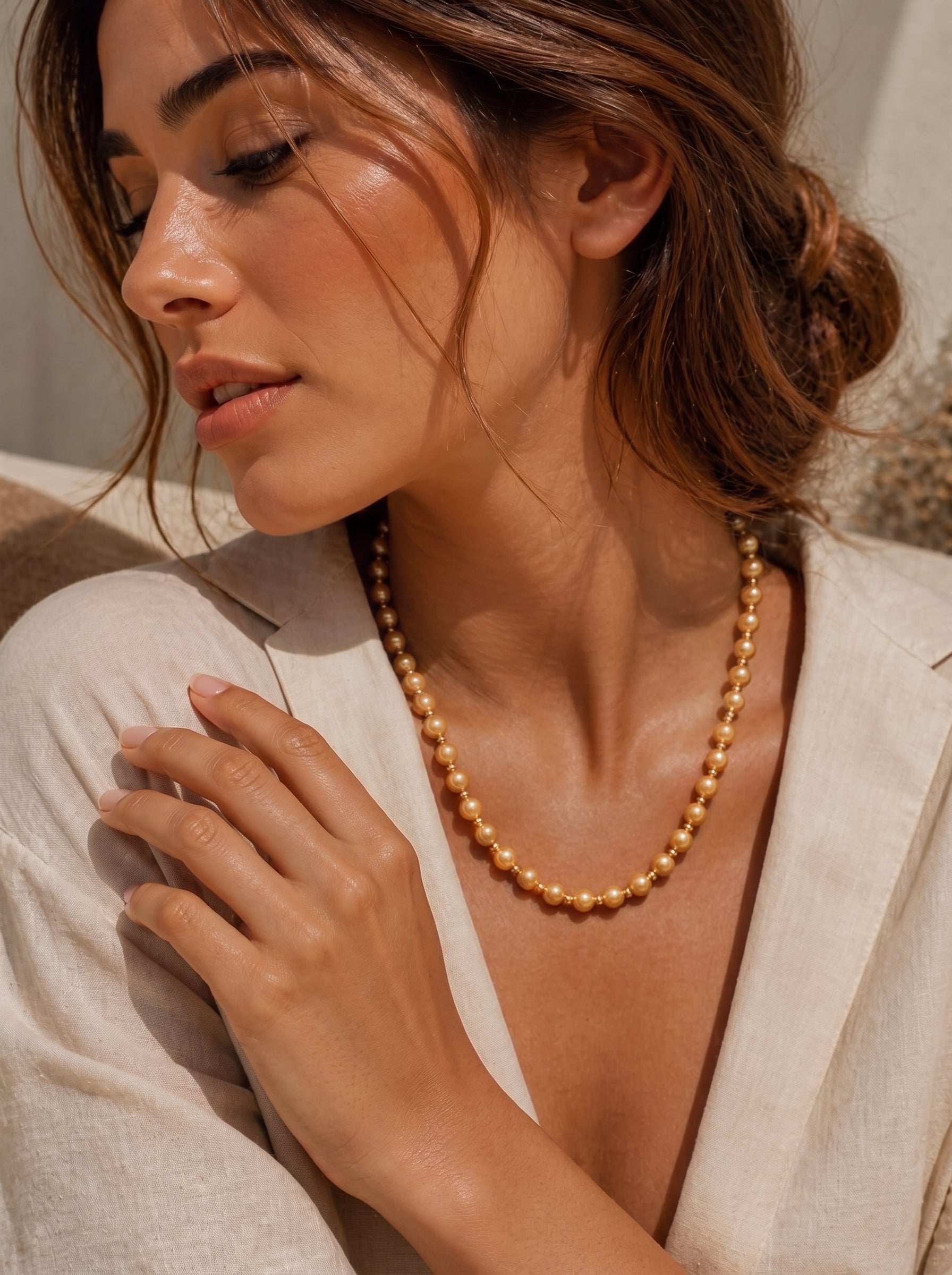
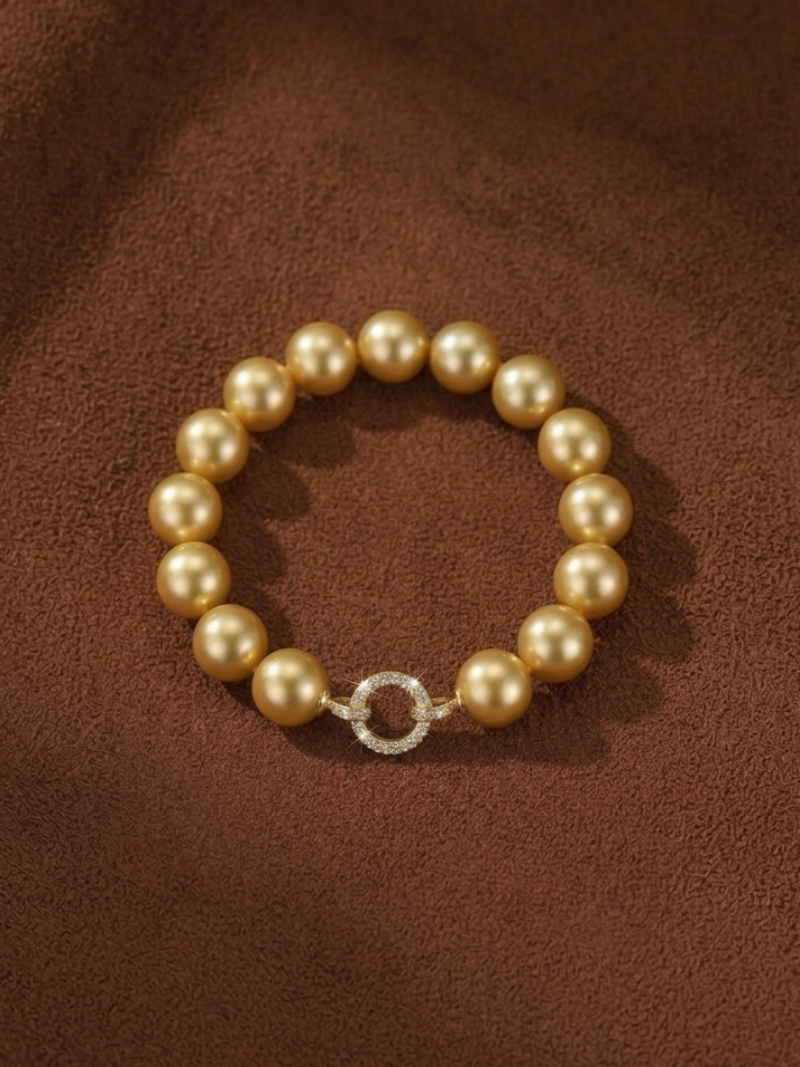
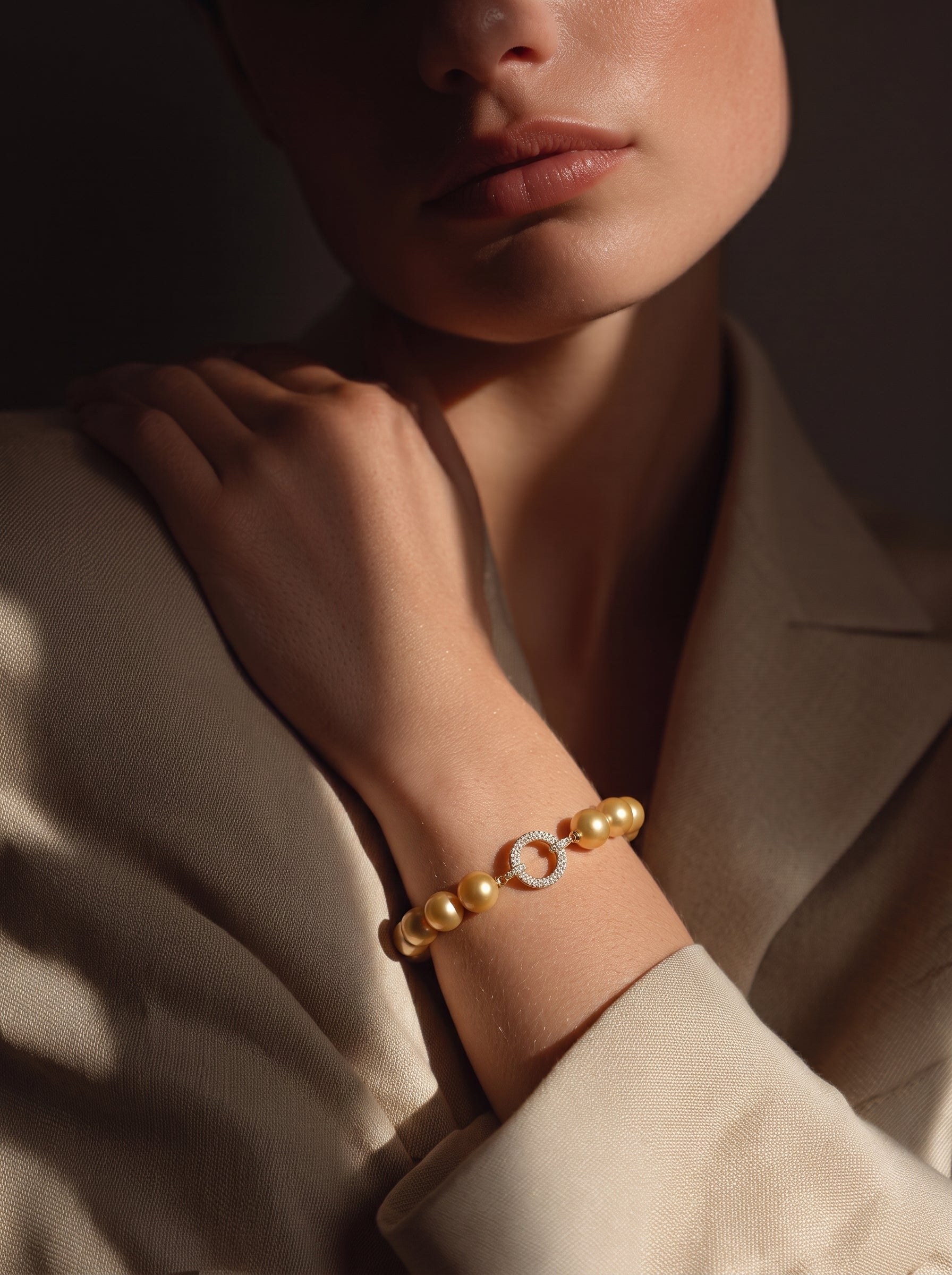
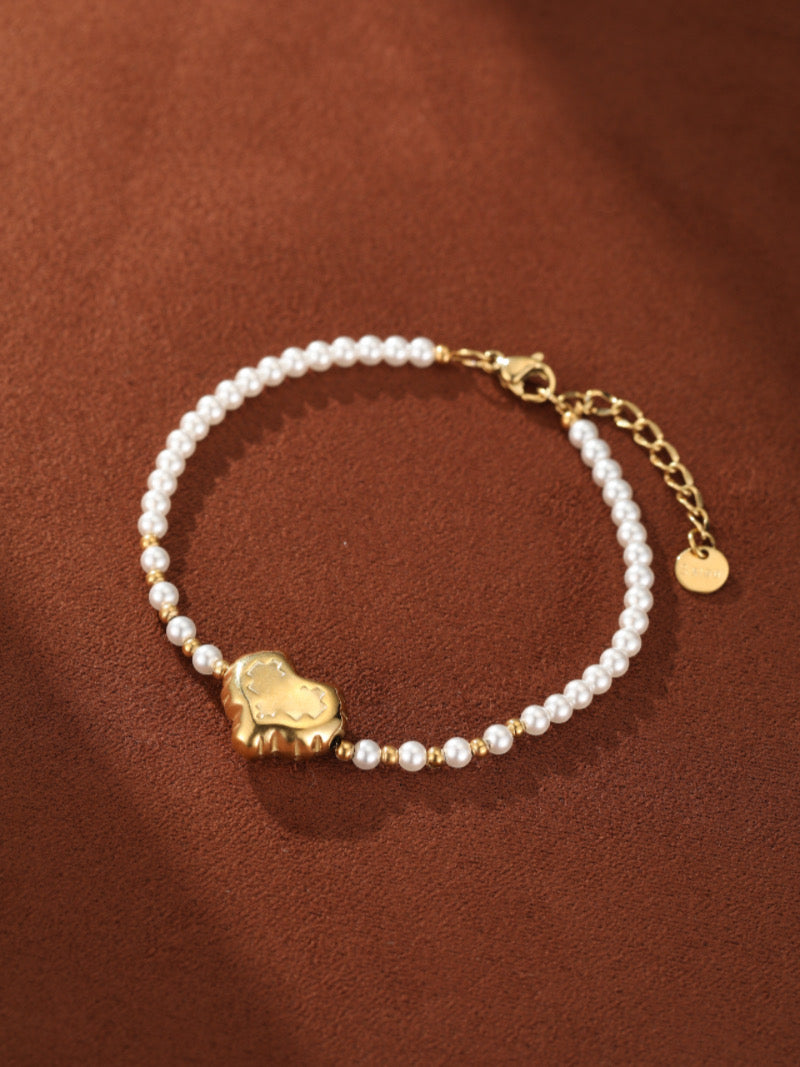
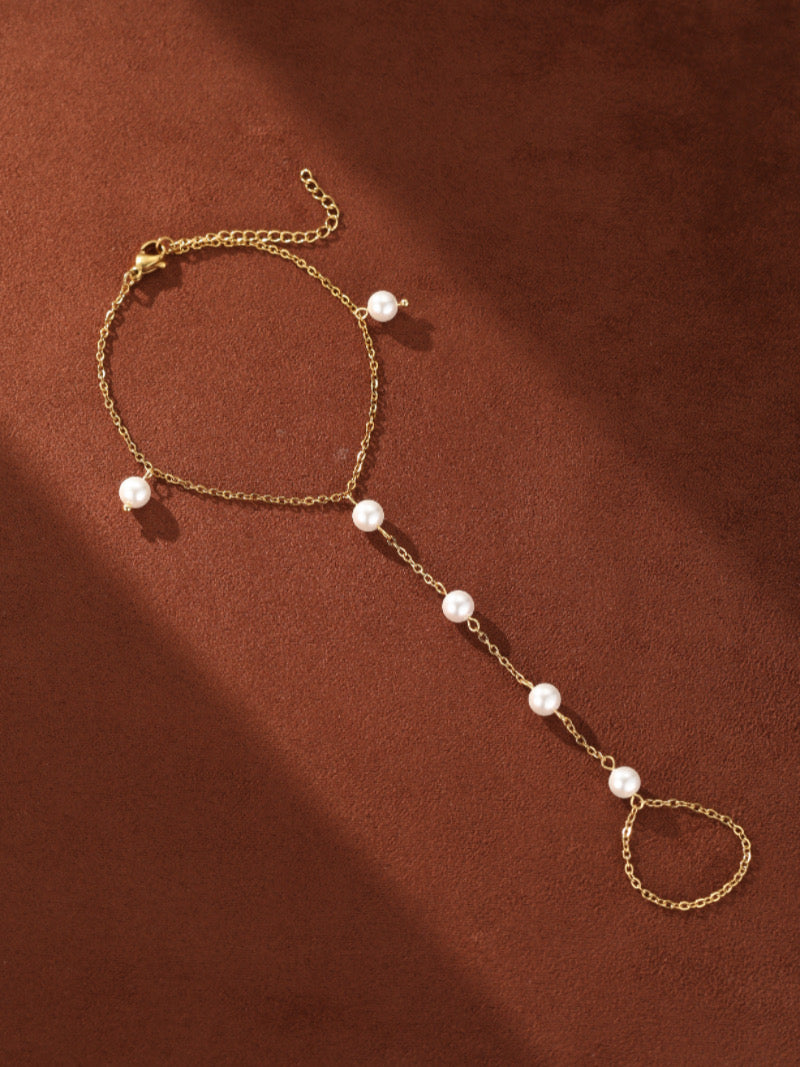
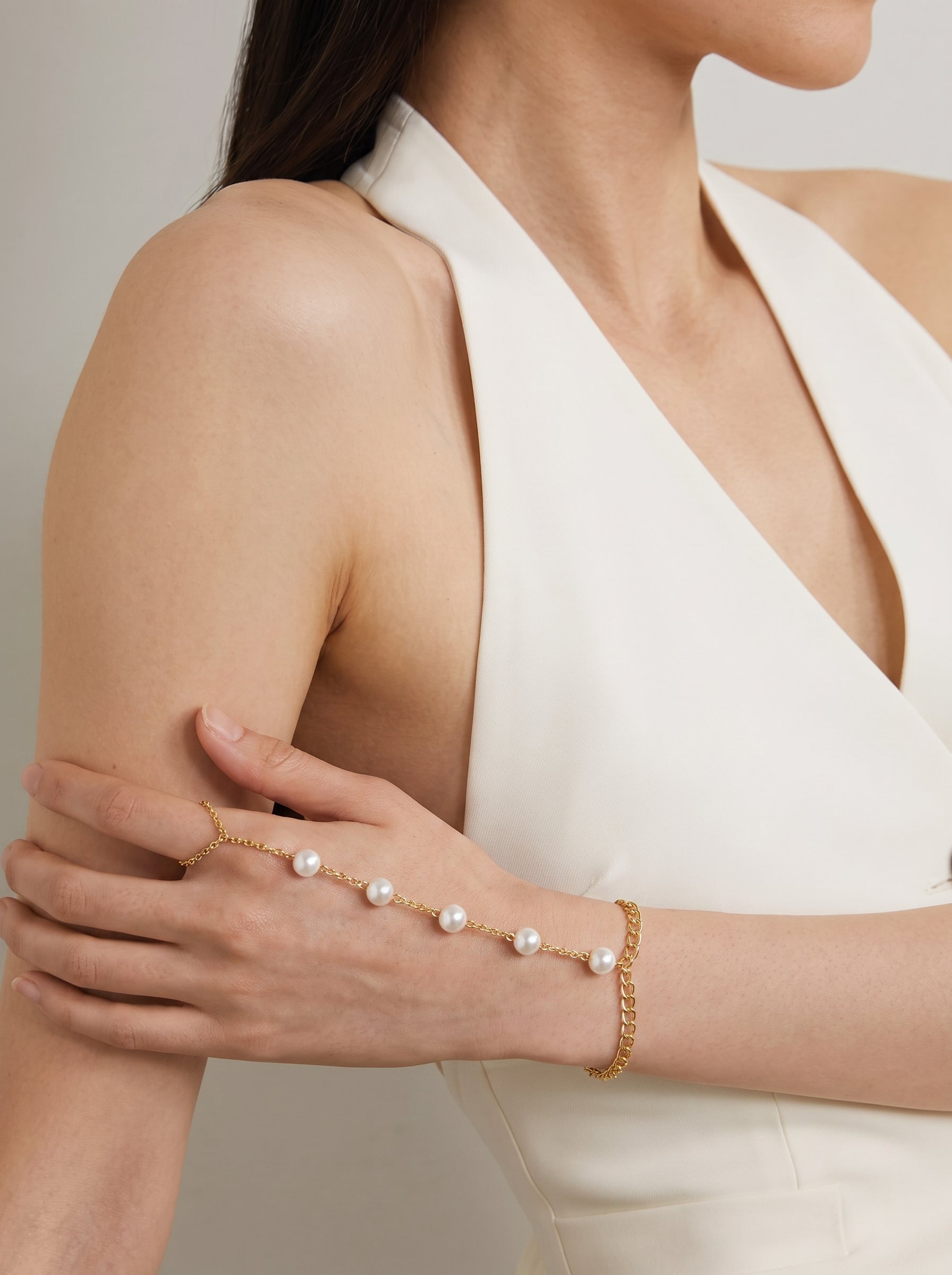
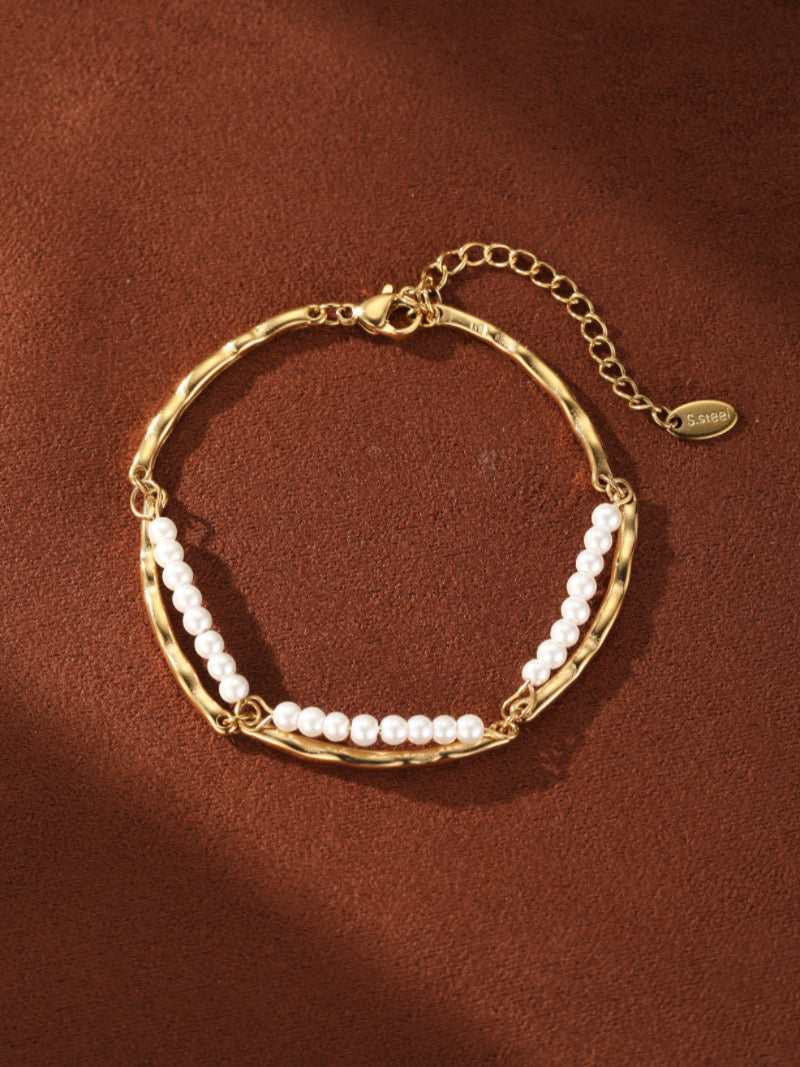
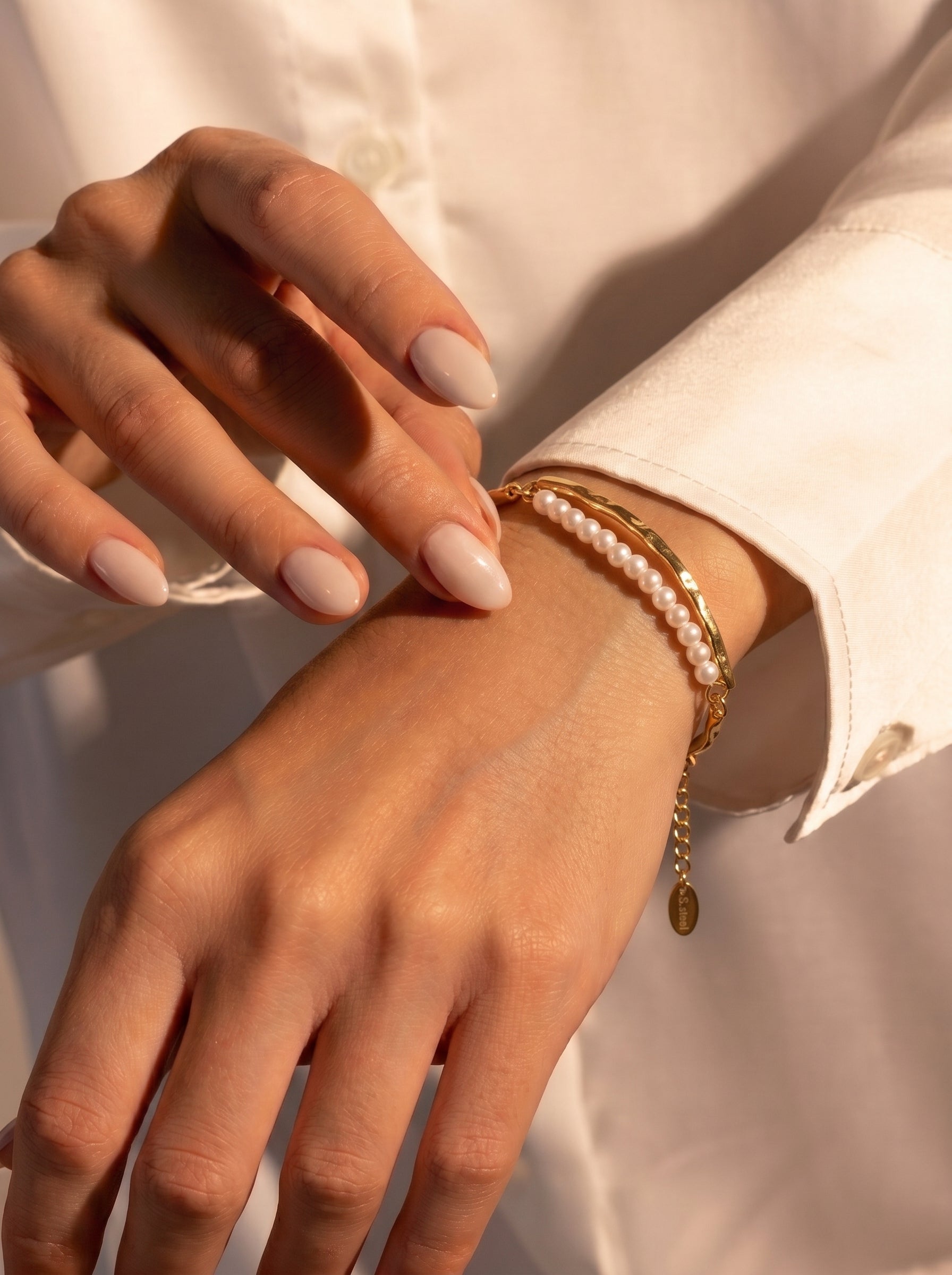
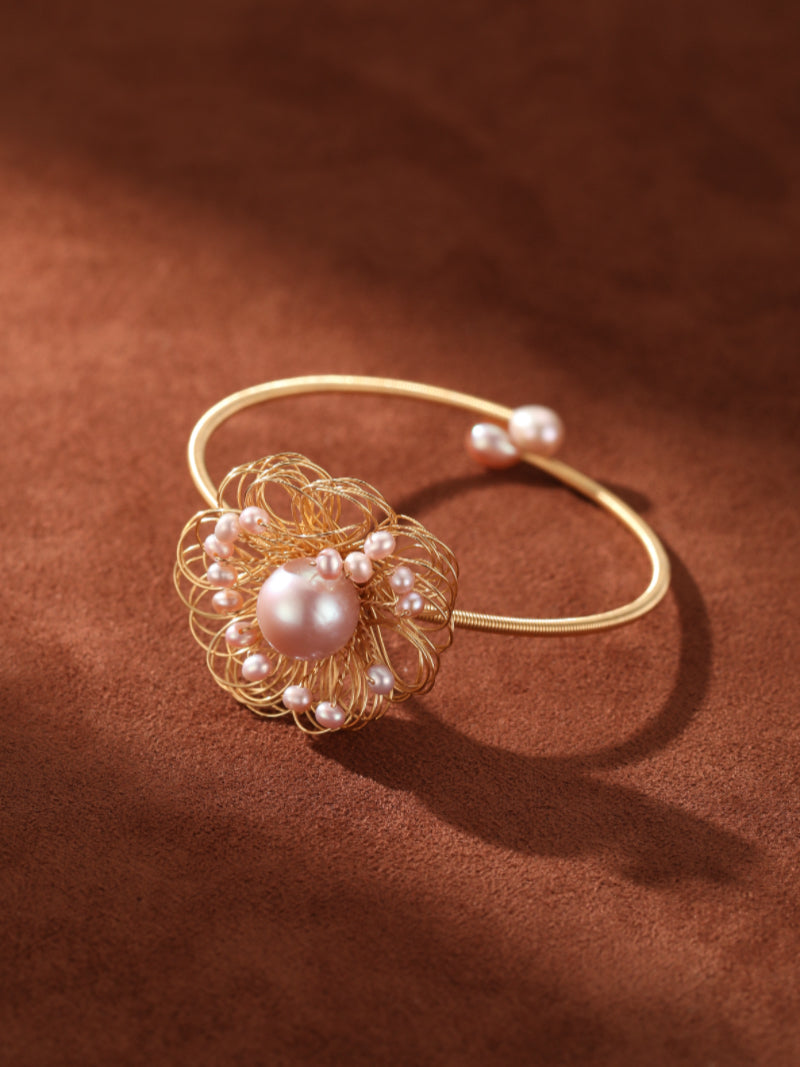
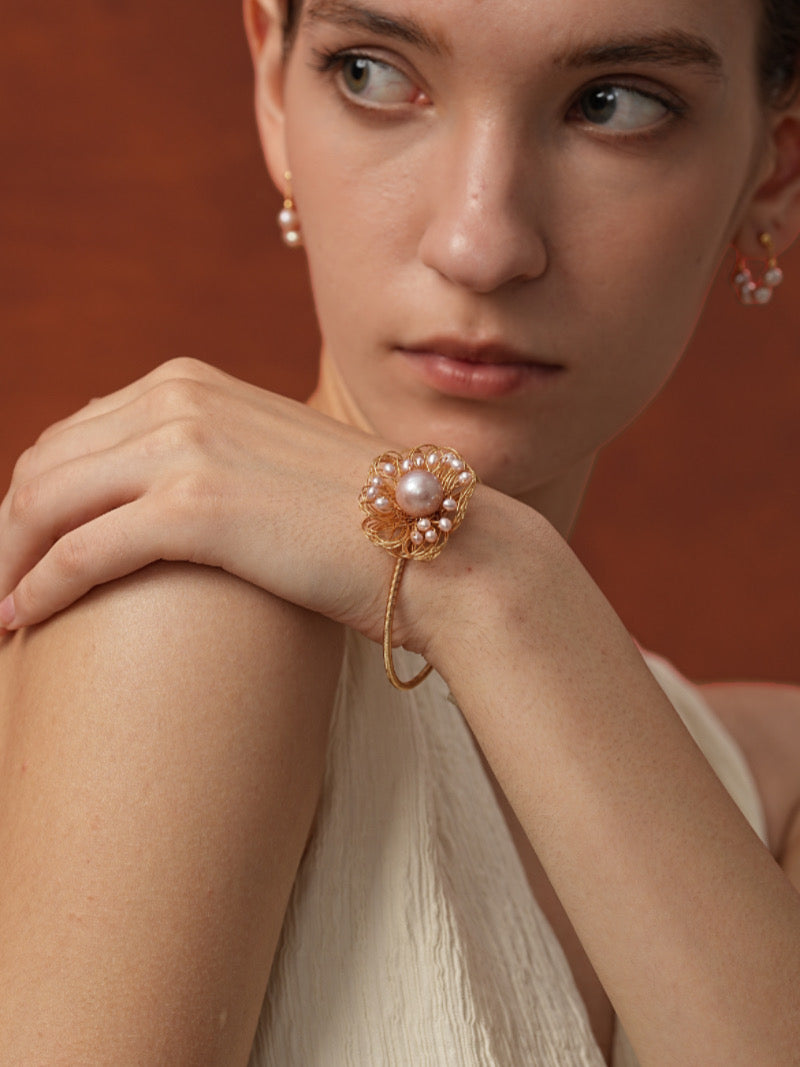
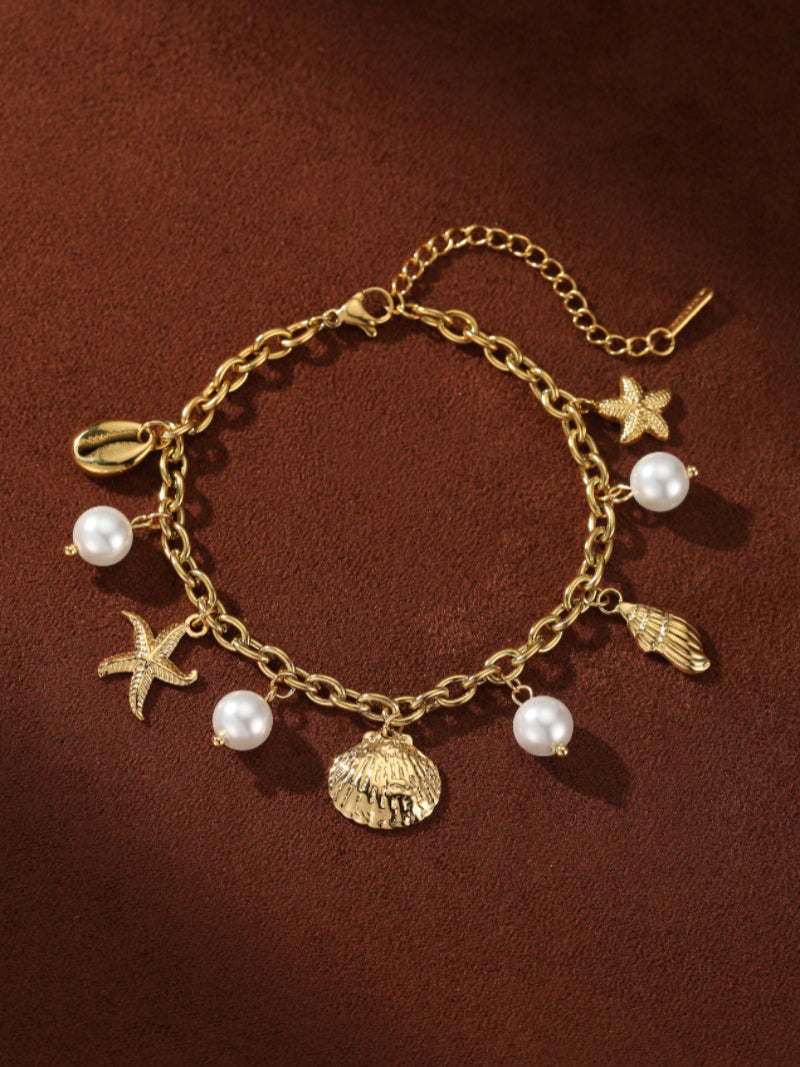
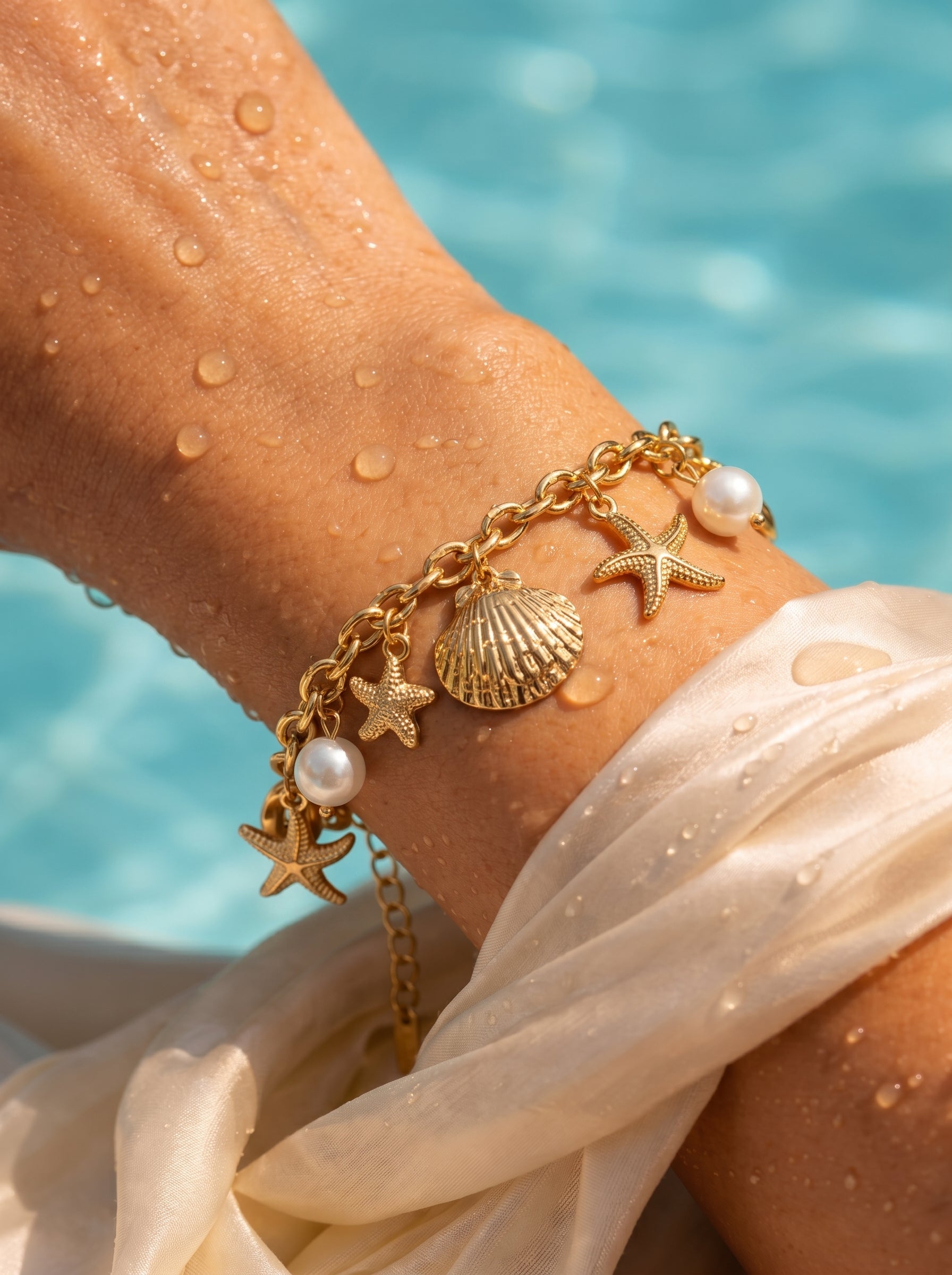
Round pearls in an even line around the wrist. They sit flat against the skin and turn without catching, so the bracelet holds its shape through a day of typing, reaching and putting a coat on.
What is a round pearl bracelet?
A round pearl bracelet uses cultured pearls classified as round or near-round. Roundness is measured as the variation between a pearl's largest and smallest diameter, and a pearl is graded round when that variation stays under two percent.
Fewer than one in a hundred cultured pearls reaches that standard, which is why round pearls cost more than any other shape.
Why does roundness matter on a bracelet?
Because a bracelet rotates constantly and a sphere reads correctly from every angle. An irregular pearl presents a different face each time your hand moves, which is either the point or a problem depending on what you wanted.
Round pearls also roll rather than catch. Against a sleeve or a desk edge, a smooth sphere slides where an angular shape snags.
Why are round pearl bracelets more expensive?
Scarcity and matching, in that order. A mollusk does not produce a sphere reliably, so round pearls come from a much larger harvest. Then, for a strand, dozens of round pearls have to be sorted until enough agree on size, color and overtone.
Most of the price of a matched strand is in the sorting rather than the growing. A bracelet needs fewer pearls than a necklace, which is why it is the least expensive way to own a matched round strand.
Which round pearl bracelet style should you choose?
Continuous strands
Round pearls strung close, drawing an unbroken line around the wrist. The classic reading, and the construction where matching quality is most visible.
Spaced chain bracelets
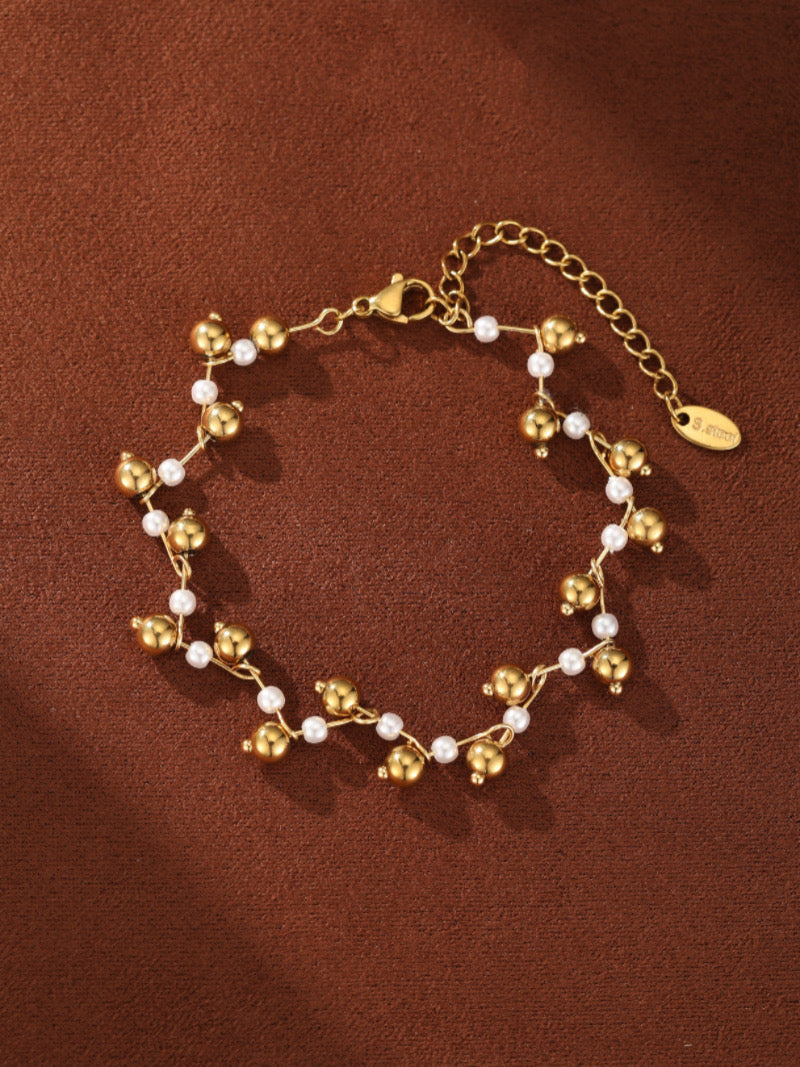
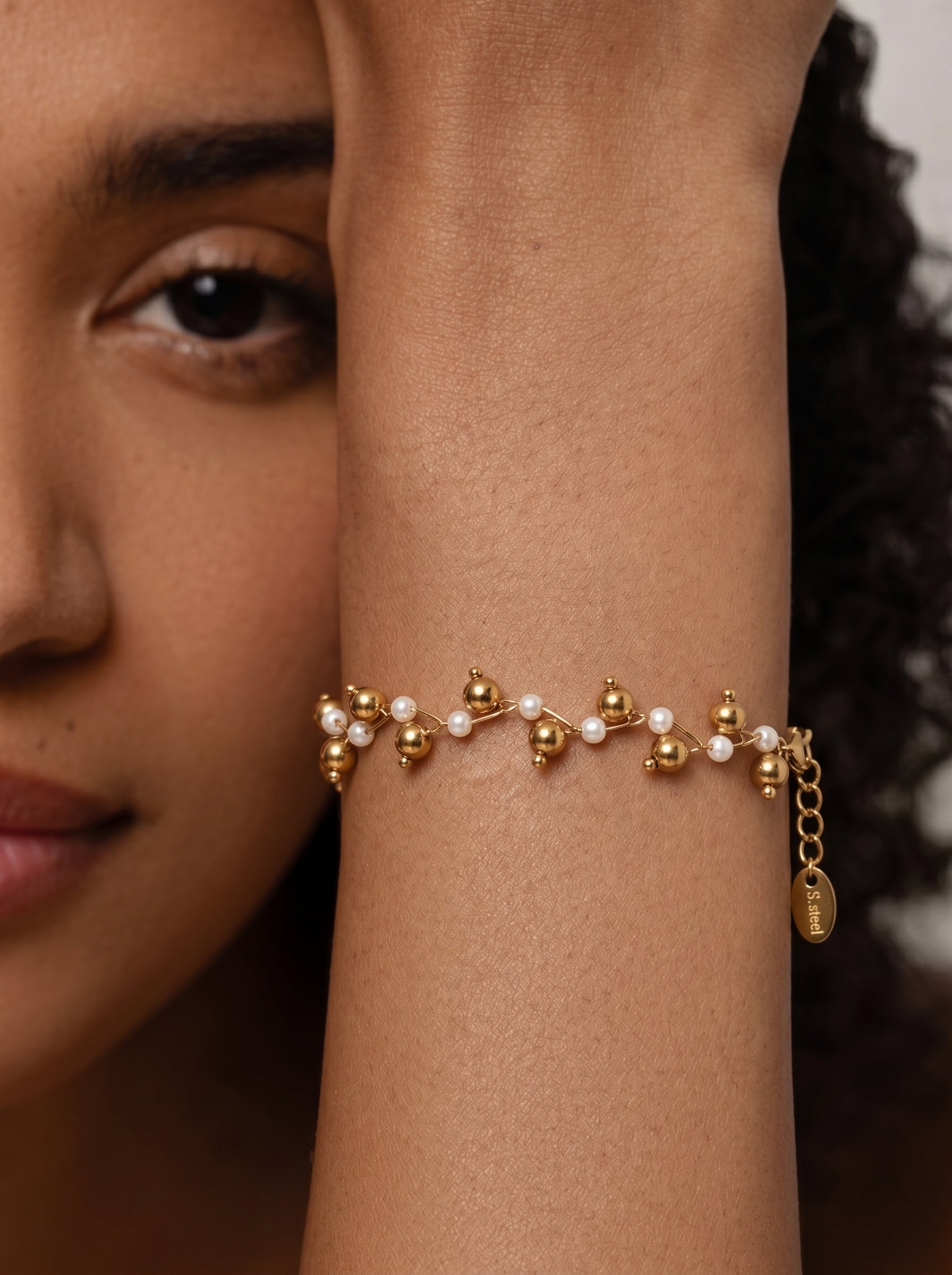
Pearls set at intervals along a fine chain so each one reads individually. Lighter, easier under a shirt cuff, and it lets a smaller number of well-matched pearls carry the piece.
How should a pearl bracelet fit?
With about half an inch of room past your wrist measurement. Loose enough to rotate, close enough that it does not slide over the hand. Measure just below the wrist bone. Most women take 7 to 7.5 inches.
Why buy a round pearl bracelet from Grande Lilith
Round is the shape people pay a premium for, which makes it the shape most loosely described. Near-round is routinely sold as round.
- Shape stated as one of eight provenance markers on every product page, alongside grade rather than merged with it.
- Sourcing named to place: Zhuji, Japan, French Polynesia.
- Partners vetted by our GIA-certified pearl specialist, on working conditions as well as quality.
- Nickel-free, lead-free and cadmium-free clasps and findings on gold, silver and stainless steel.
- Designed in Paris. Thirty days to change your mind, and every order arrives in a magnetic pouch.
Frequently asked questions
How do you check that a strand is well matched?
Lay it flat on a white surface and look along the strand rather than at it. Size steps, color shifts and dull pearls become obvious from that angle in a way they never are in a photograph taken from the front.
What is the difference between round and near-round?
Round means under two percent variation between the largest and smallest diameter. Near-round allows more. The difference is invisible to most people at normal viewing distance but significant in price.
Should the pearls be knotted between beads?
On a strung bracelet, yes. Knots stop the pearls rubbing against each other and limit the loss if the thread breaks. Bracelets set on chain do not need it, since each pearl is held individually.
Are round pearls better than baroque?
Rarer, not better. Quality is luster first, then surface cleanliness and nacre thickness. A baroque pearl with strong luster is a better pearl than a round one without it.
Can you wear a round pearl bracelet every day?
Yes, with two habits. Take it off before washing dishes or applying hand cream, and wipe it with a soft damp cloth afterwards. Hand cream is the main cause of dulling on any wrist piece.