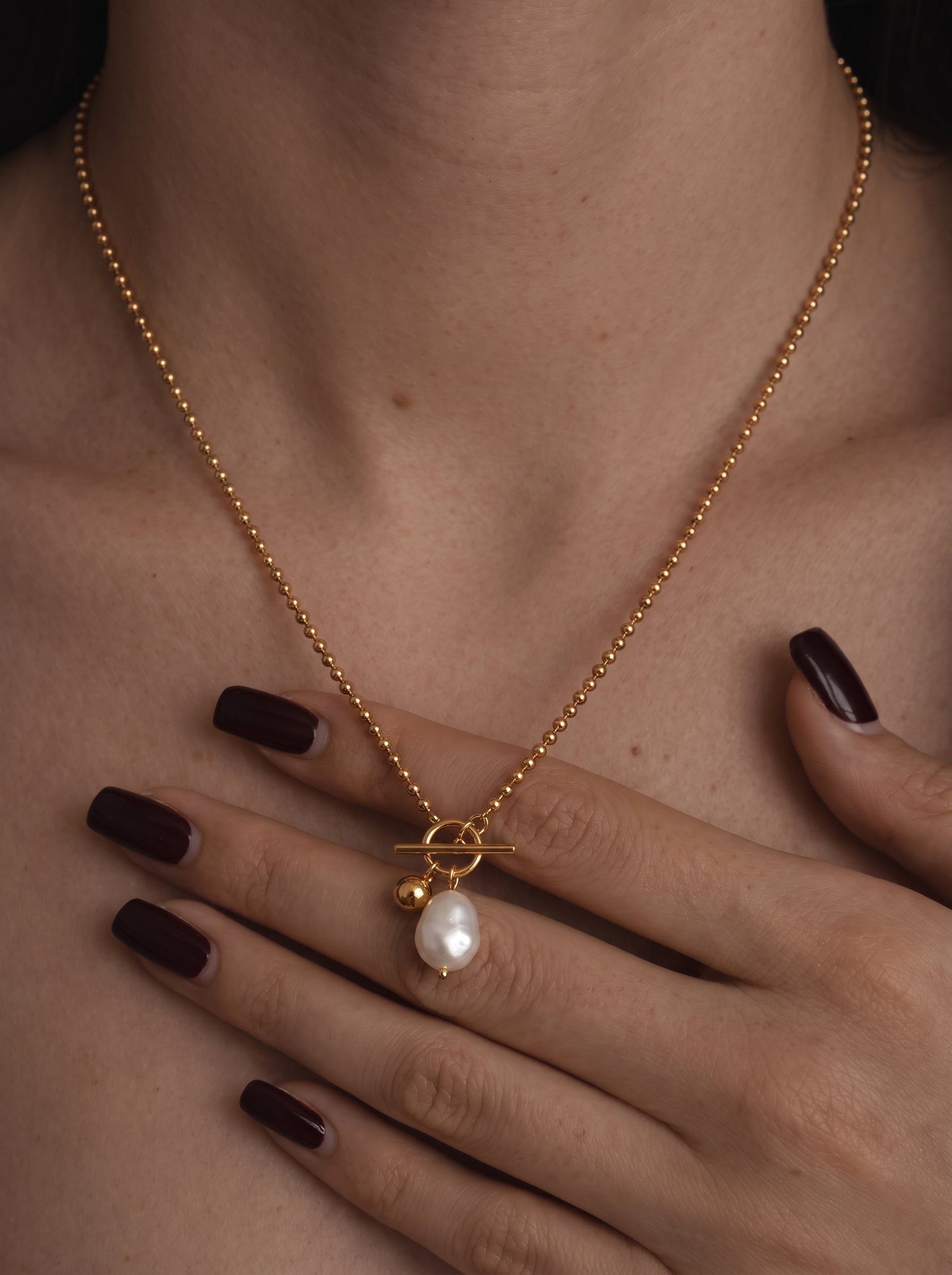
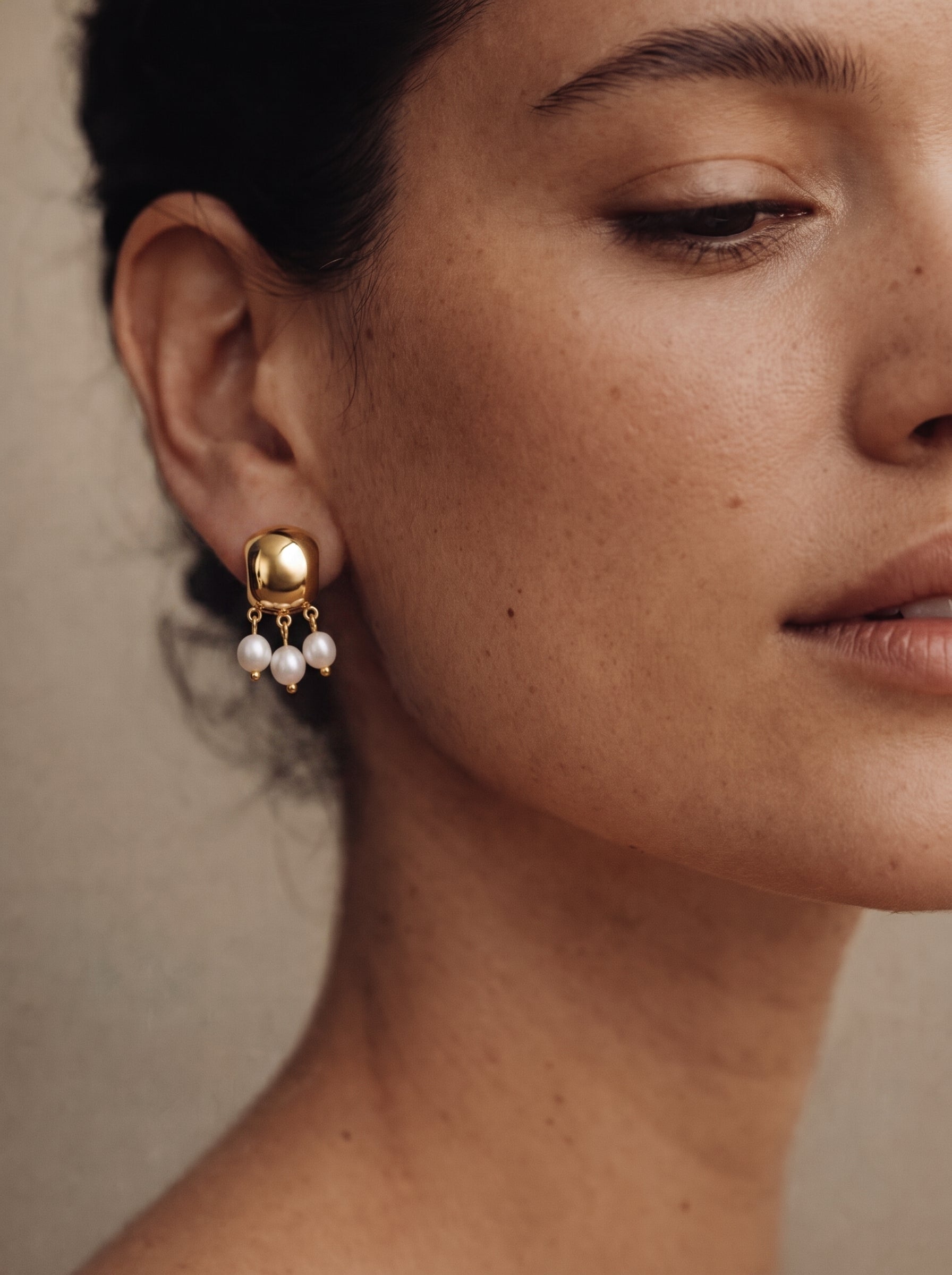
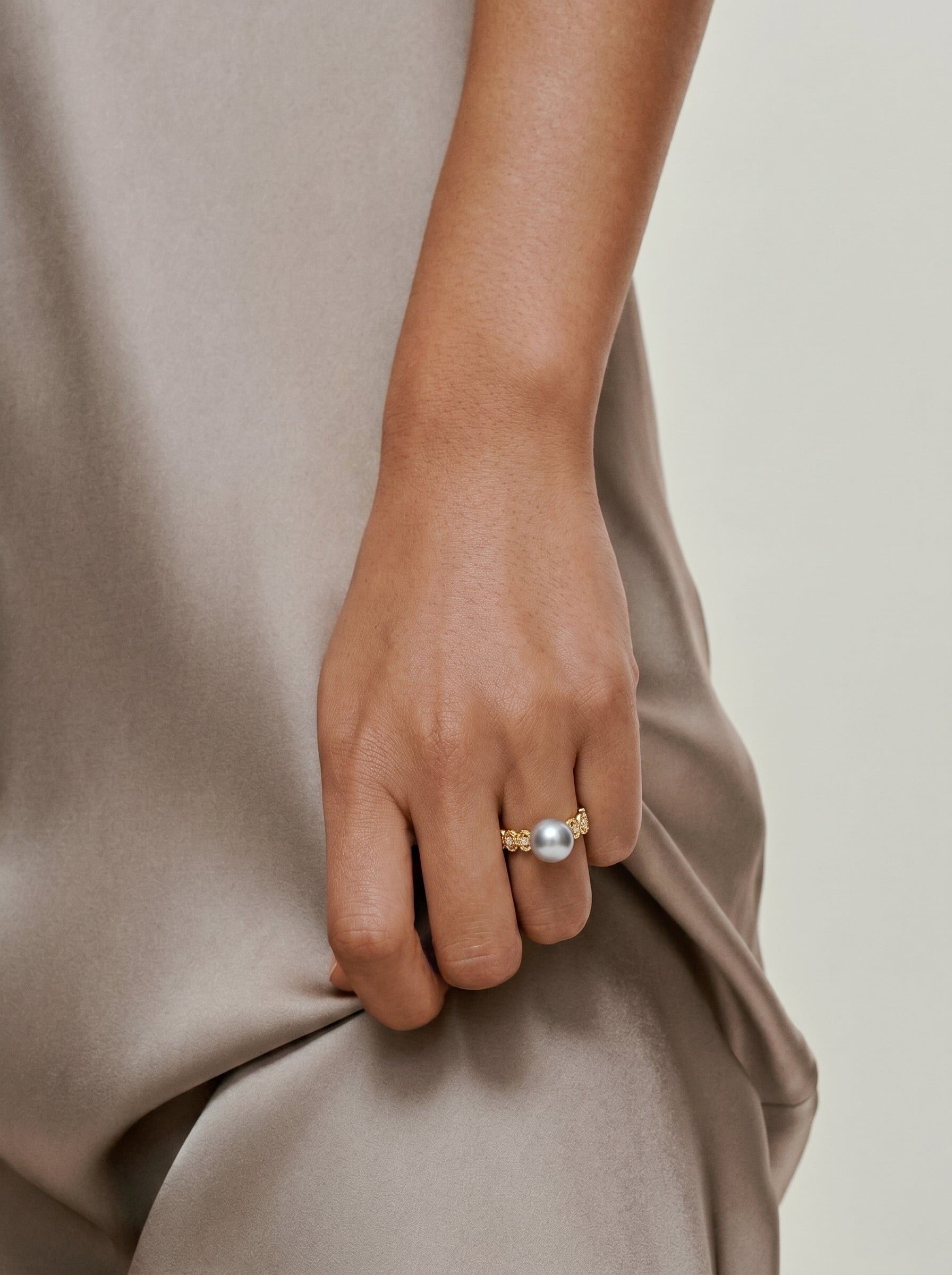
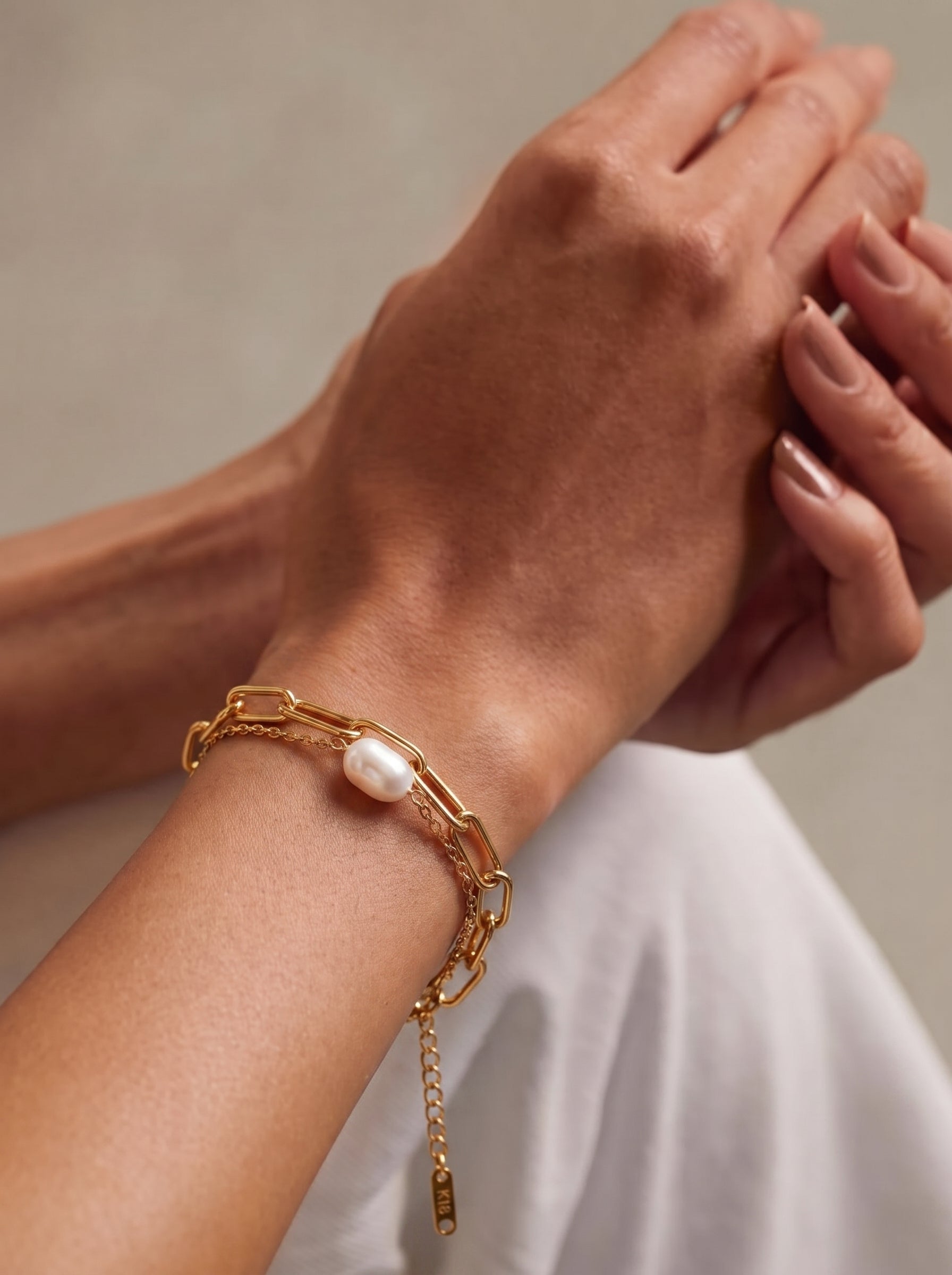
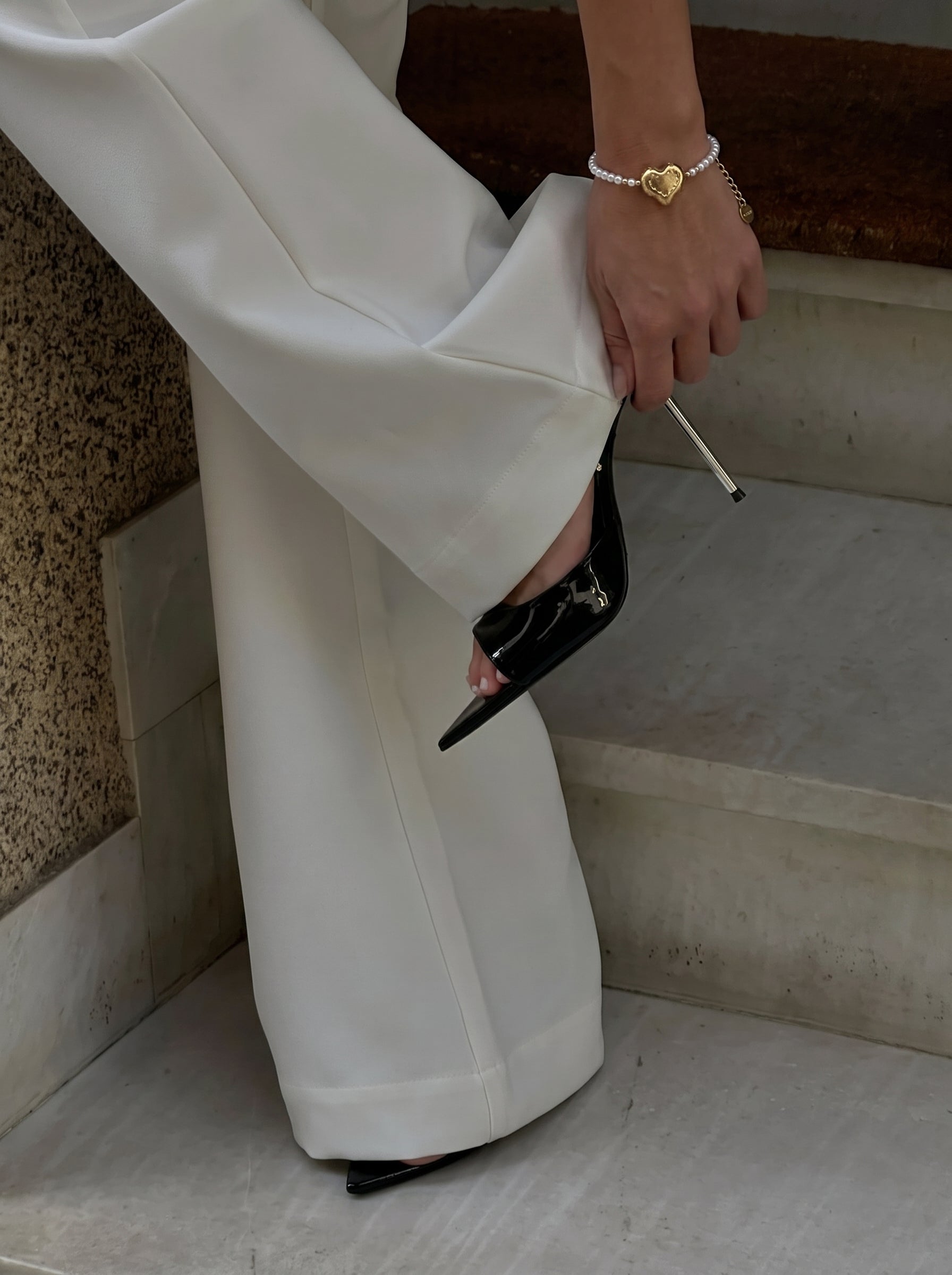
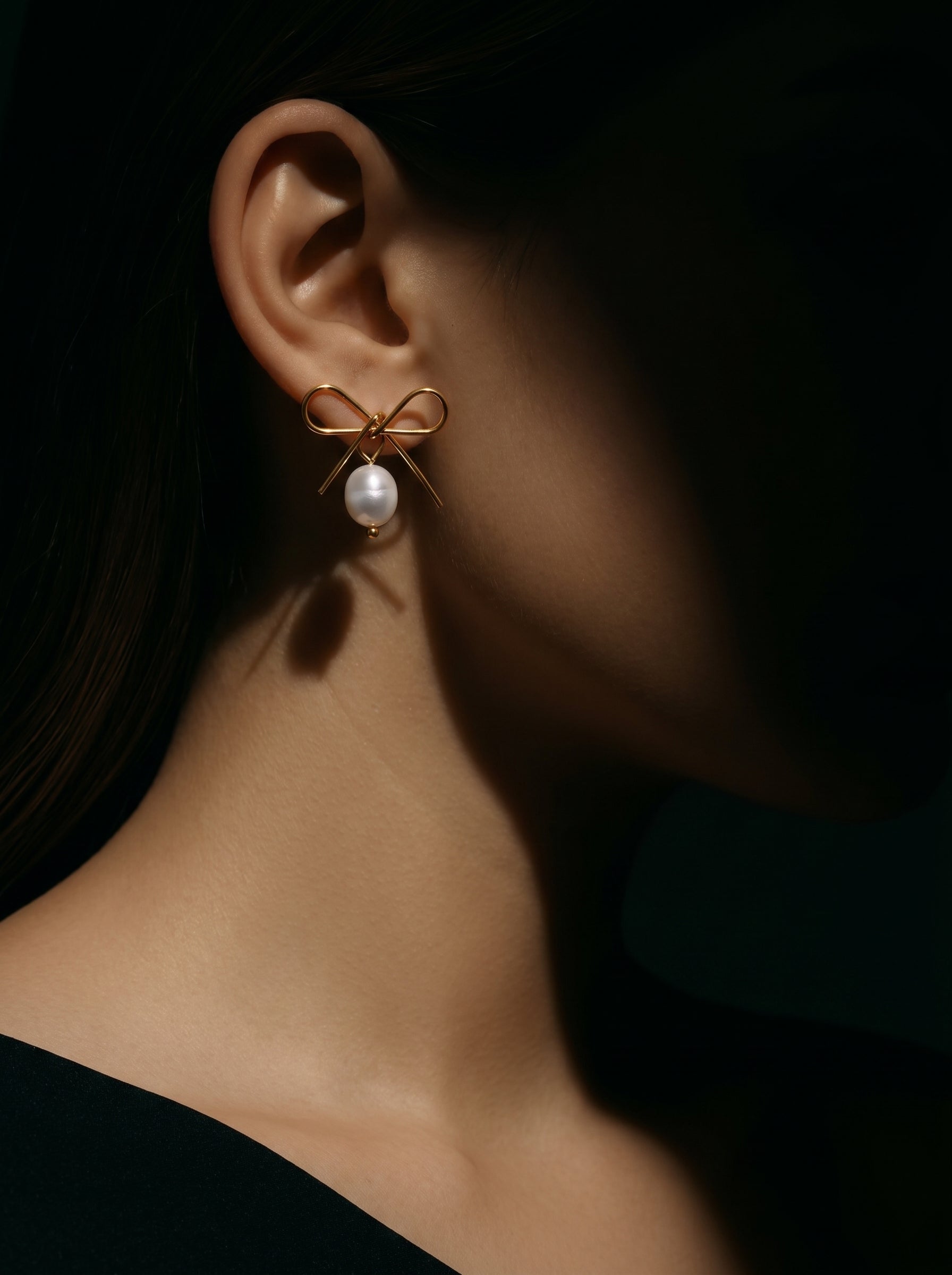
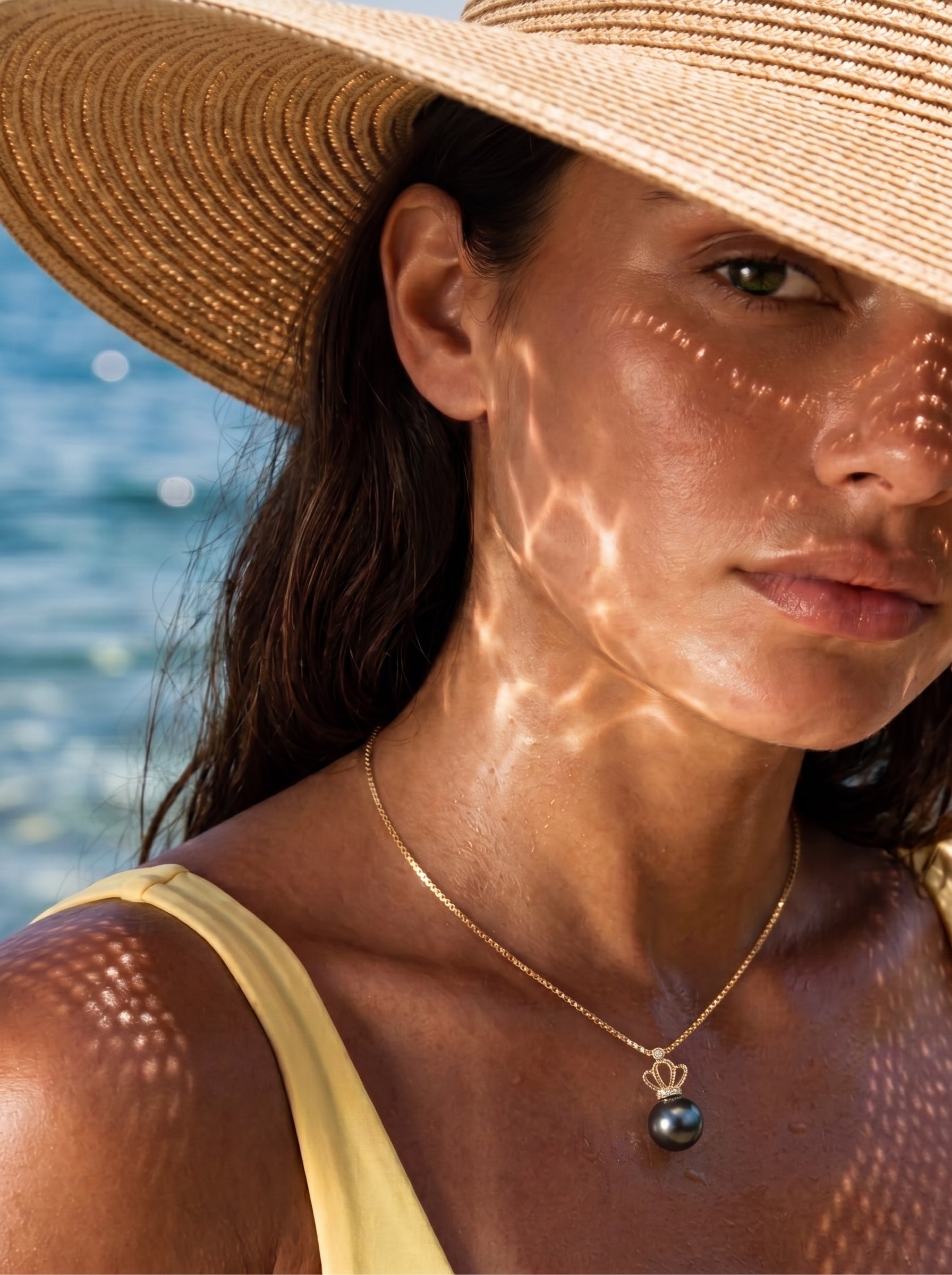
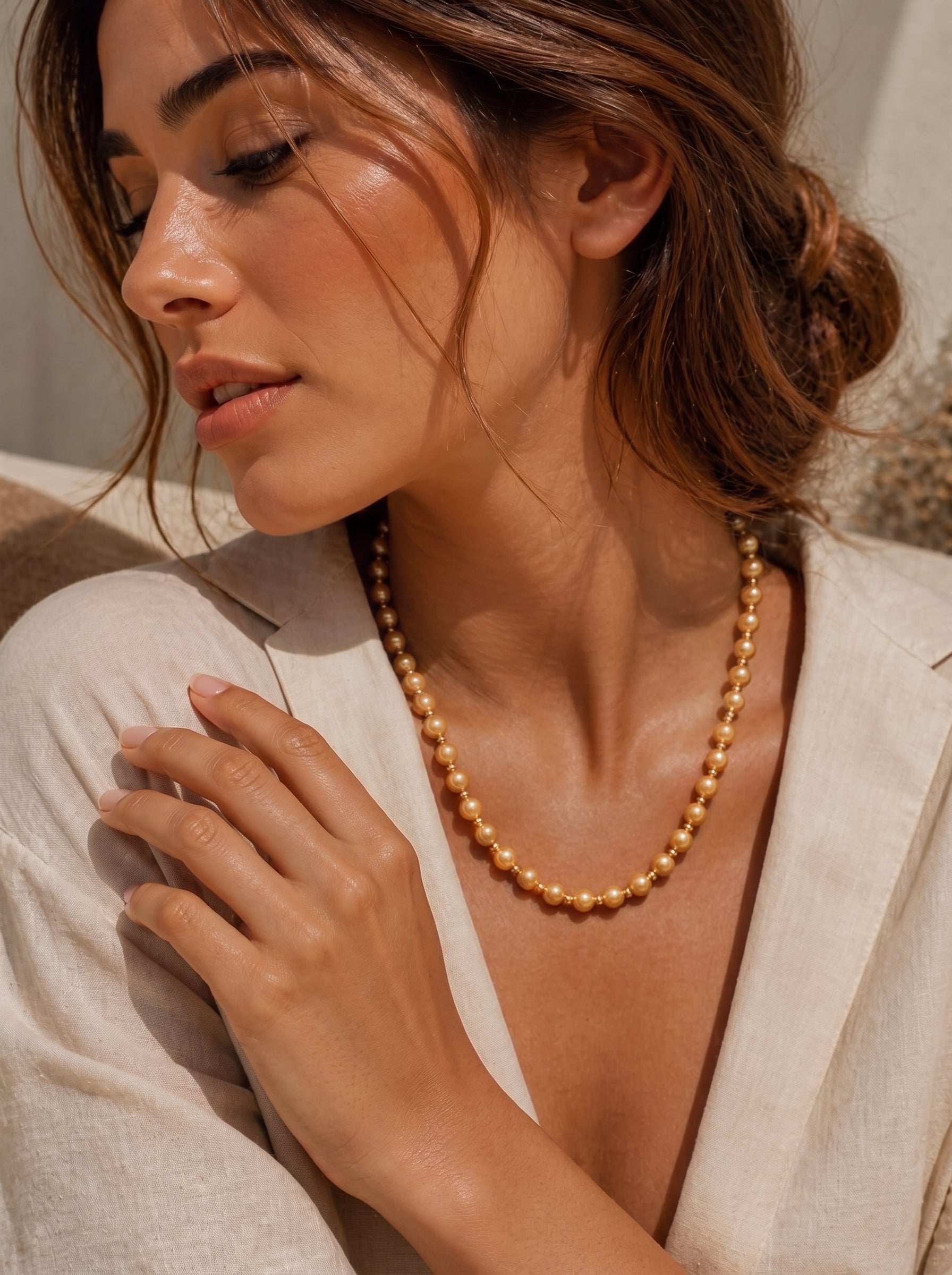
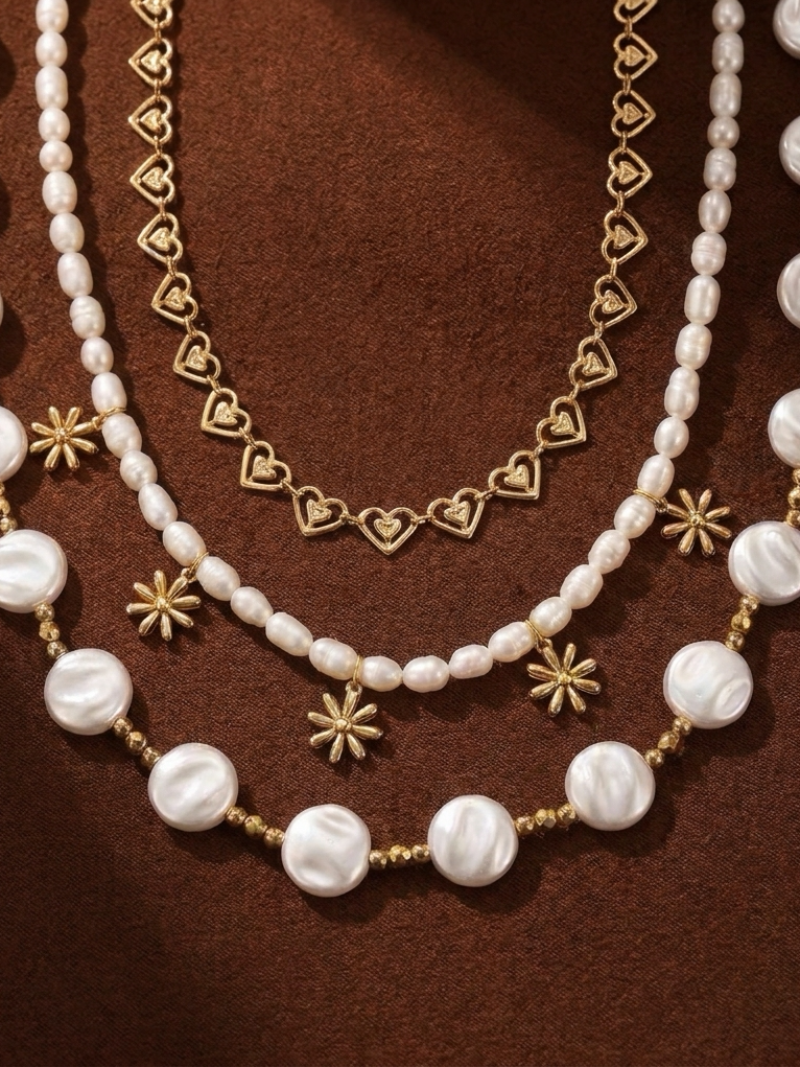
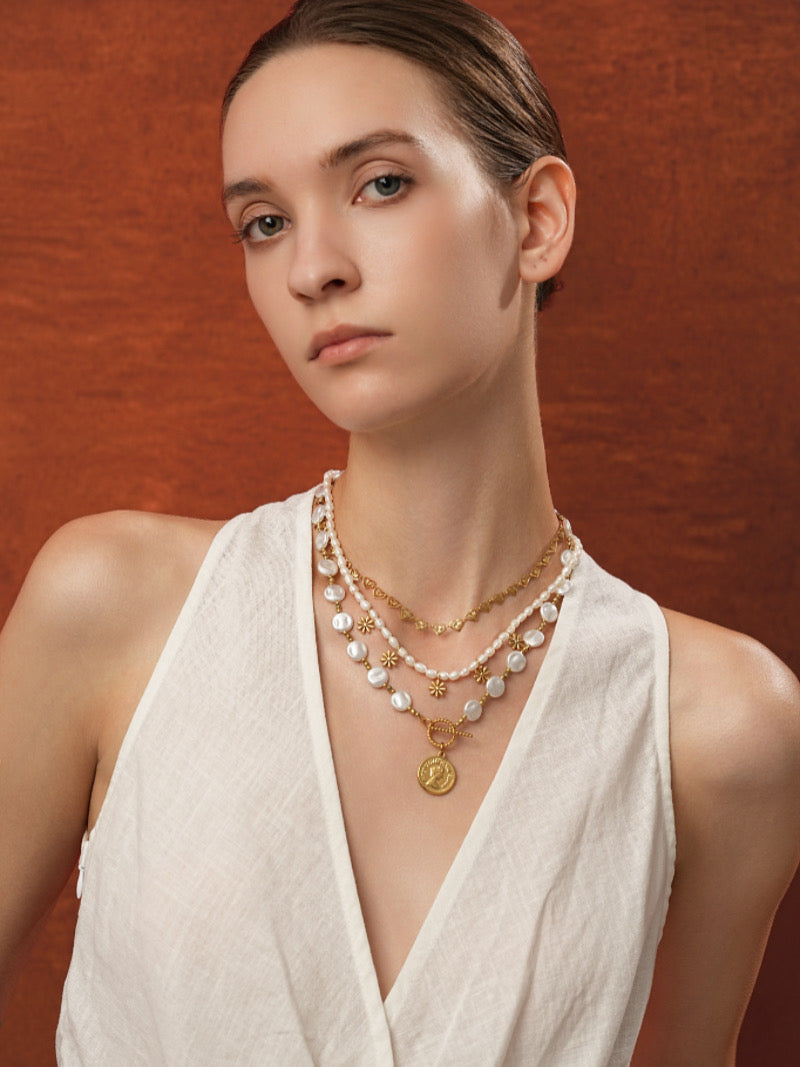
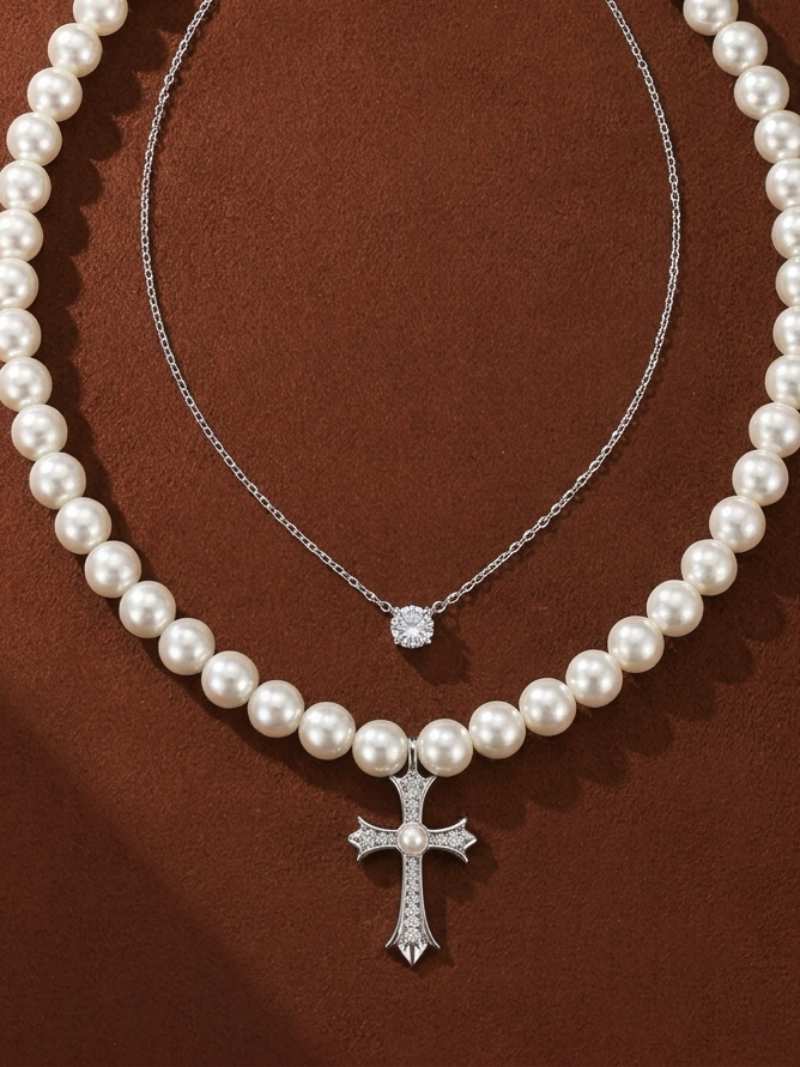
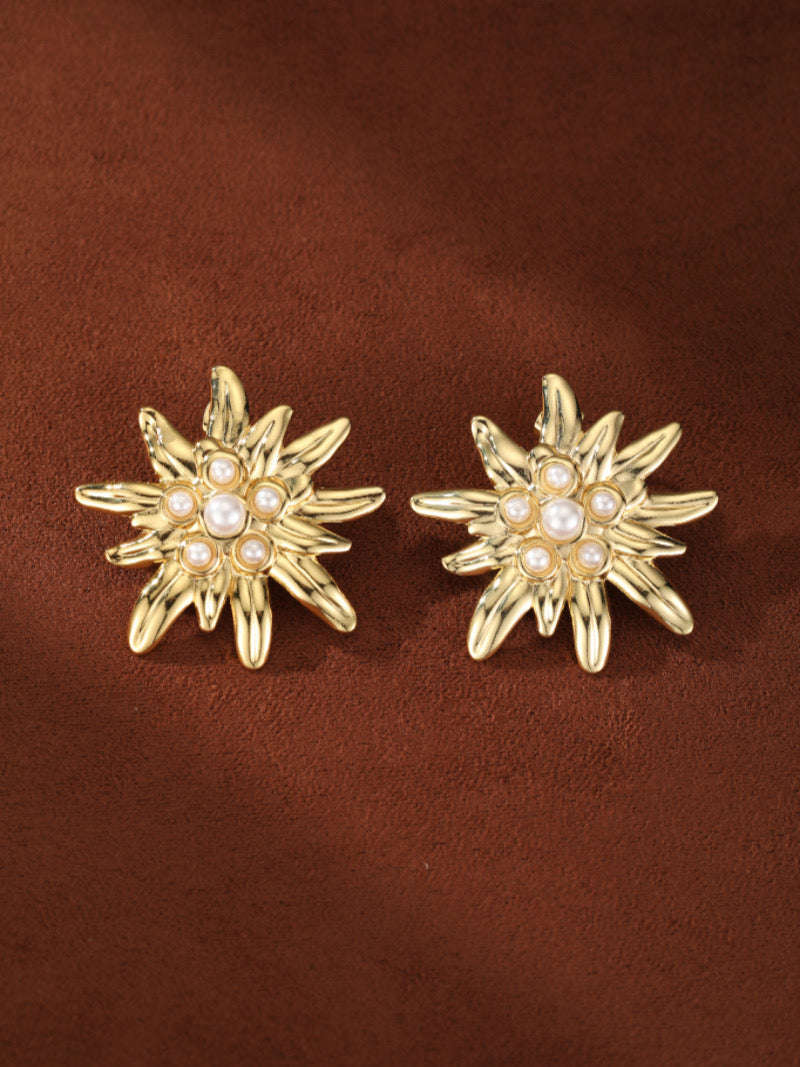
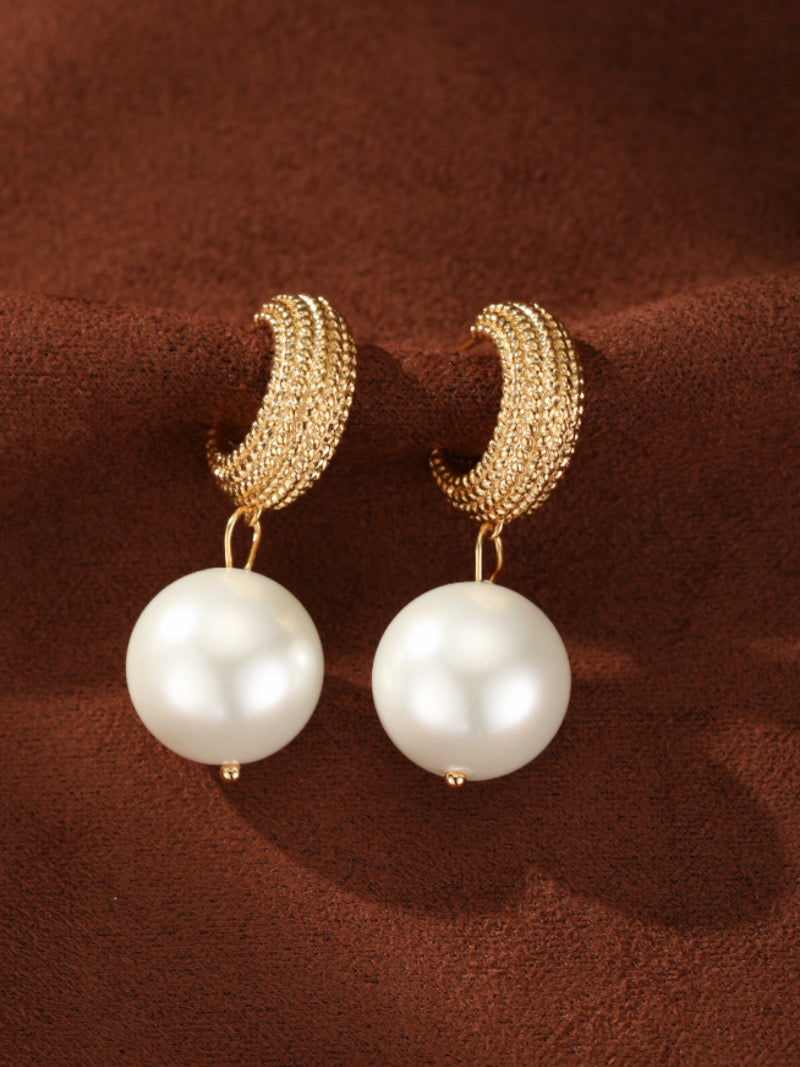
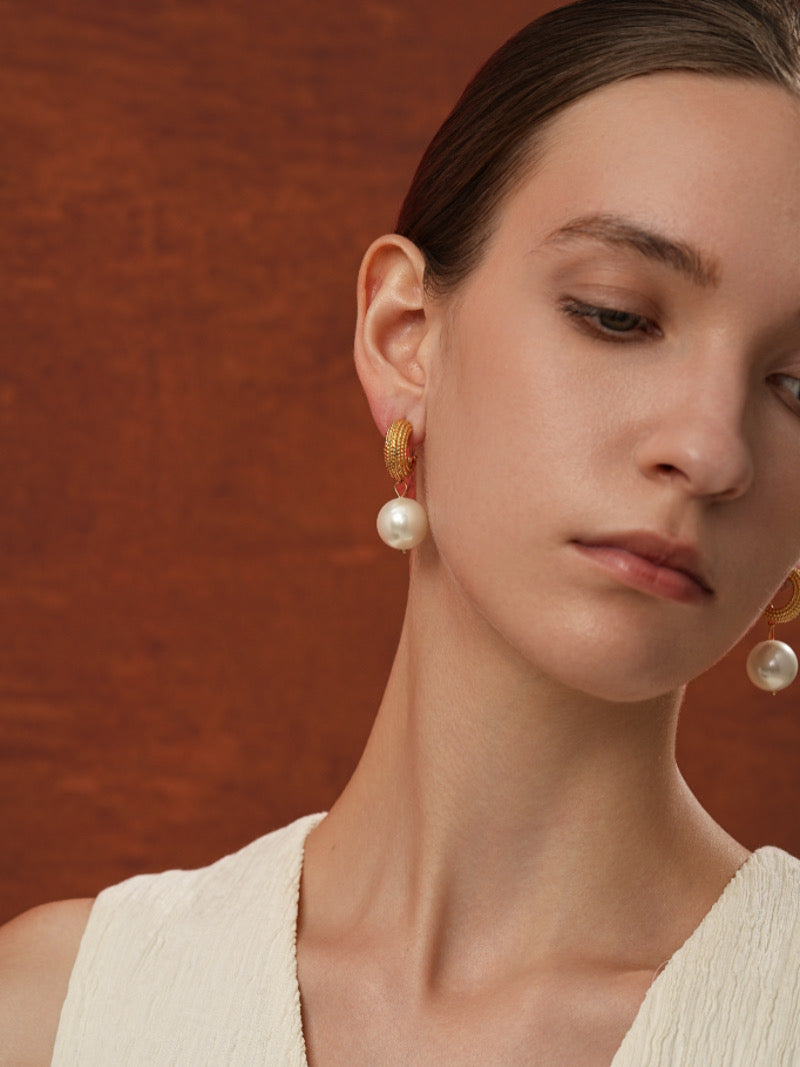
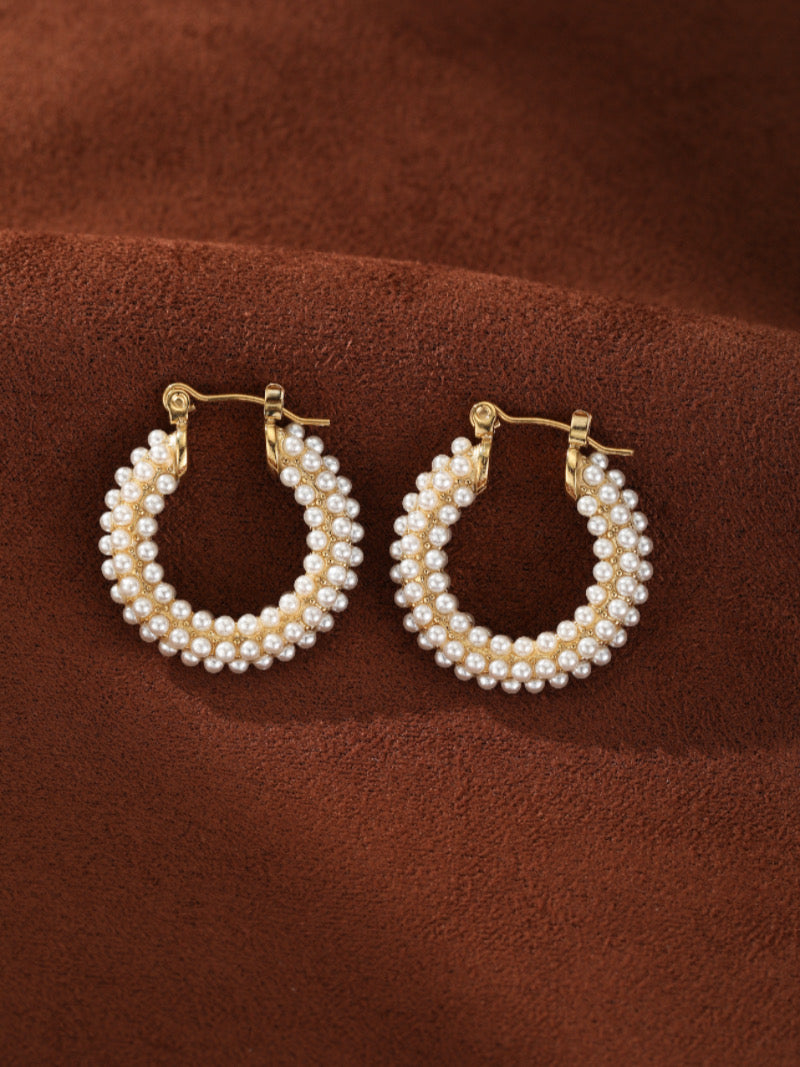
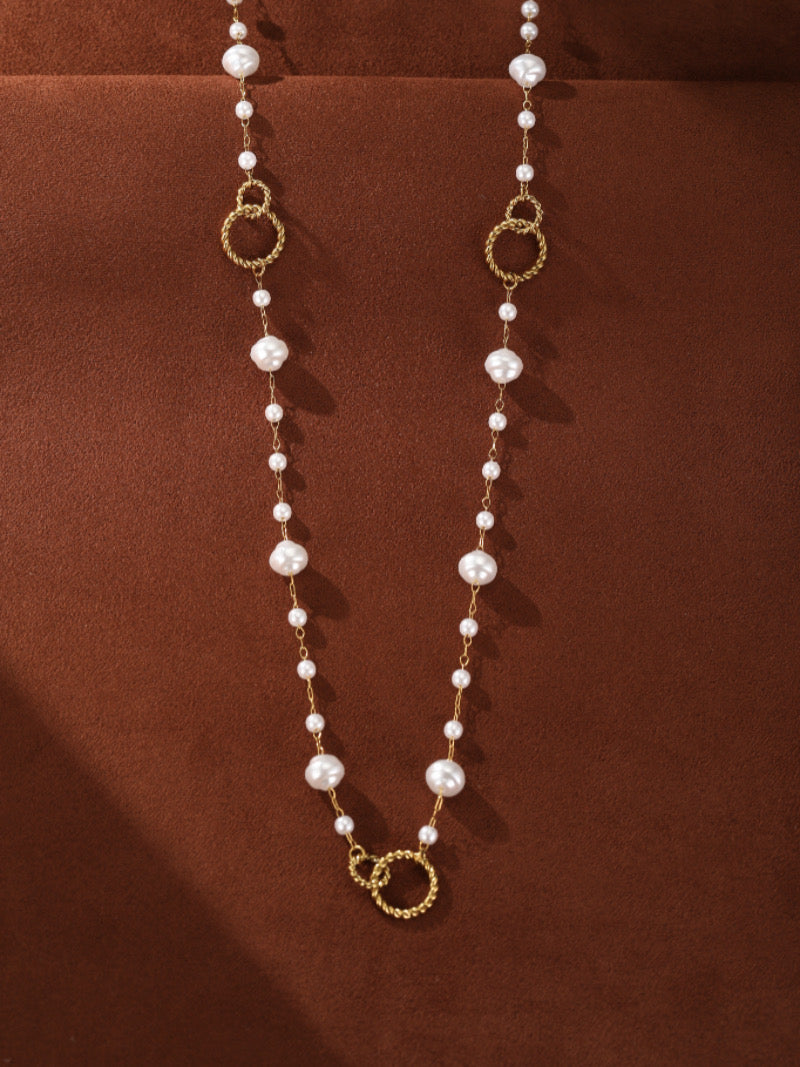
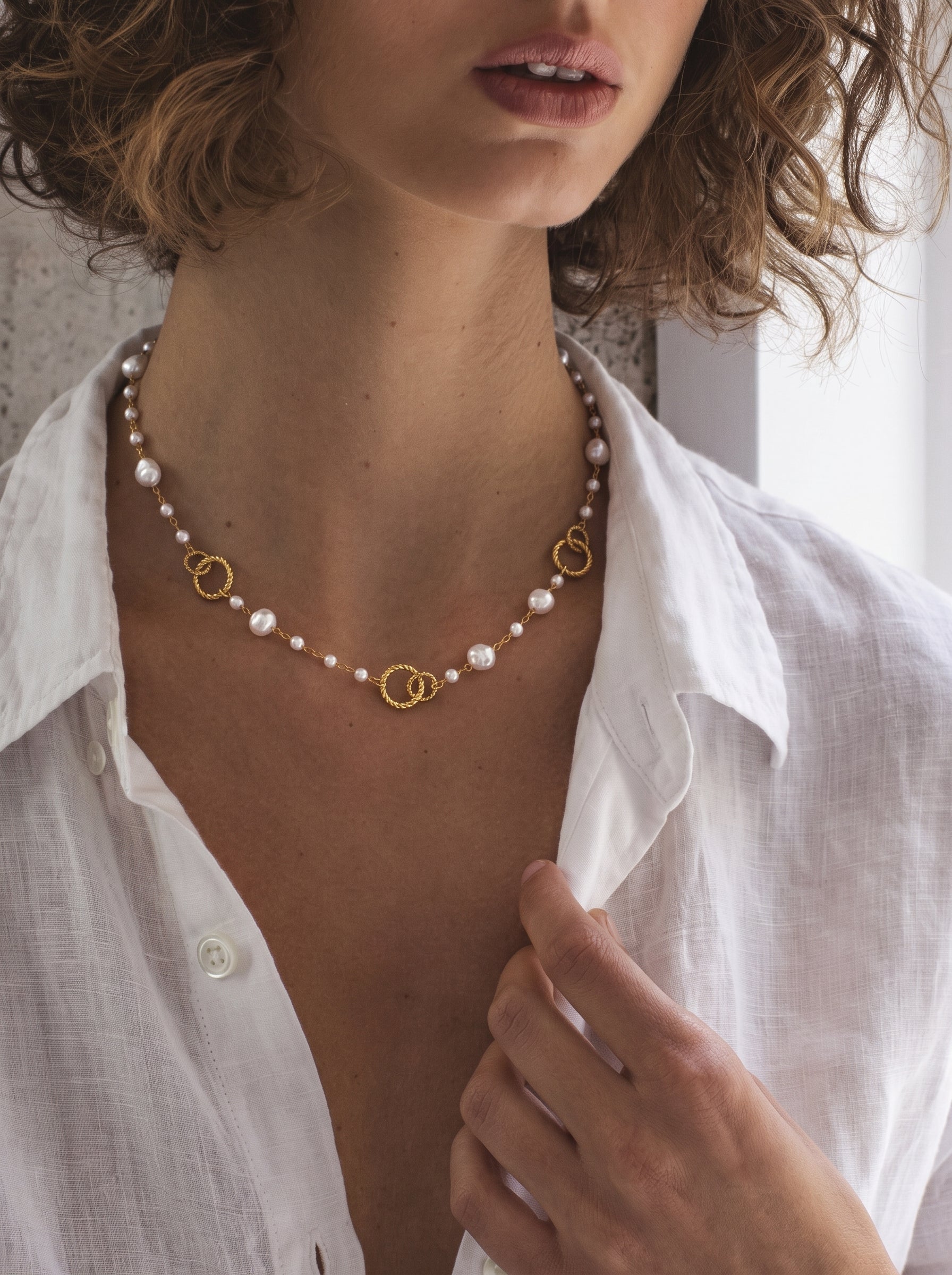
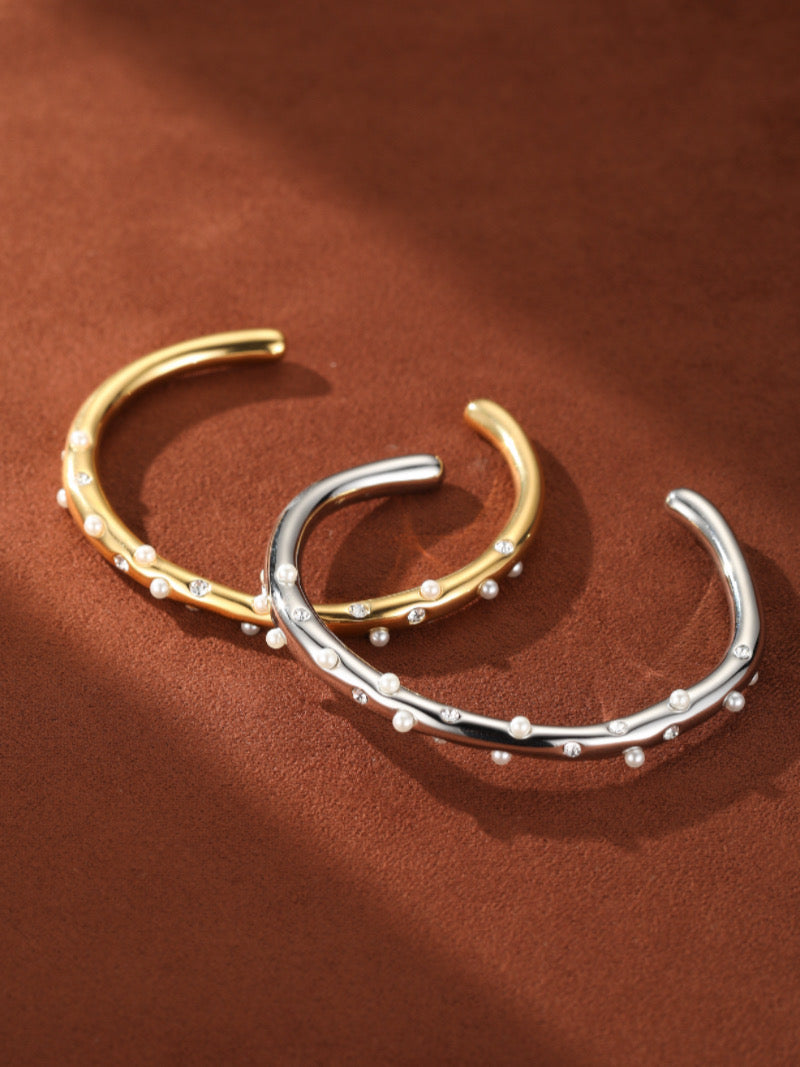
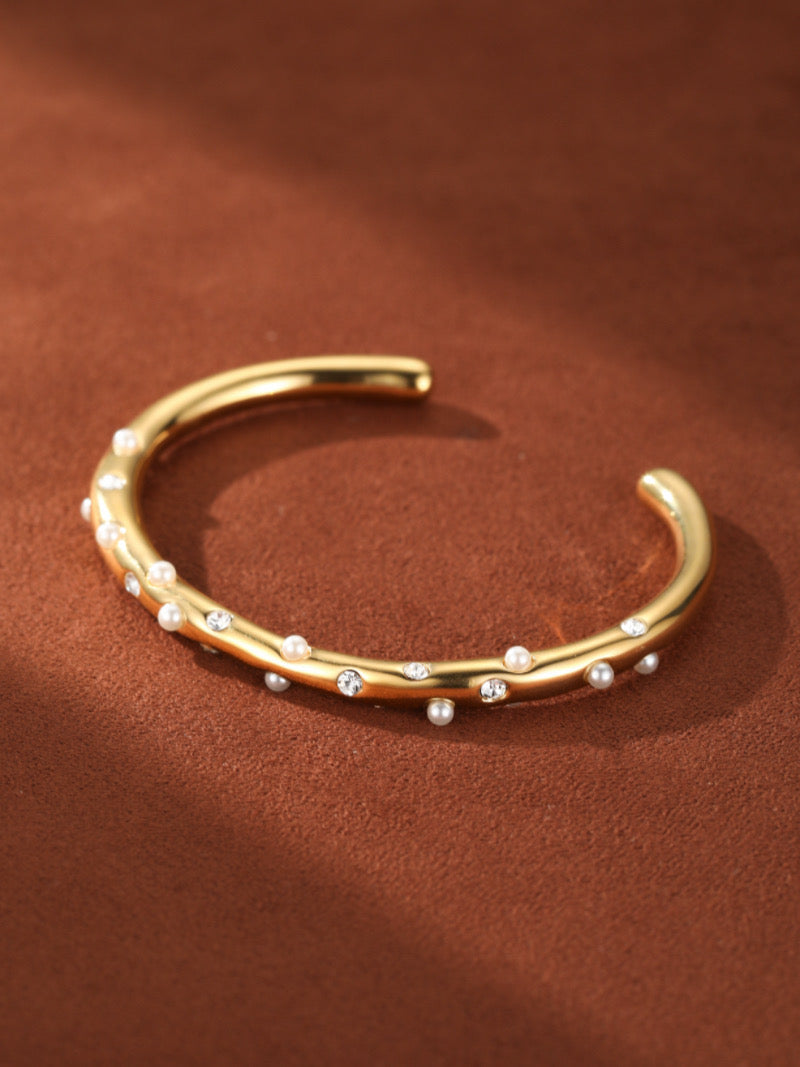
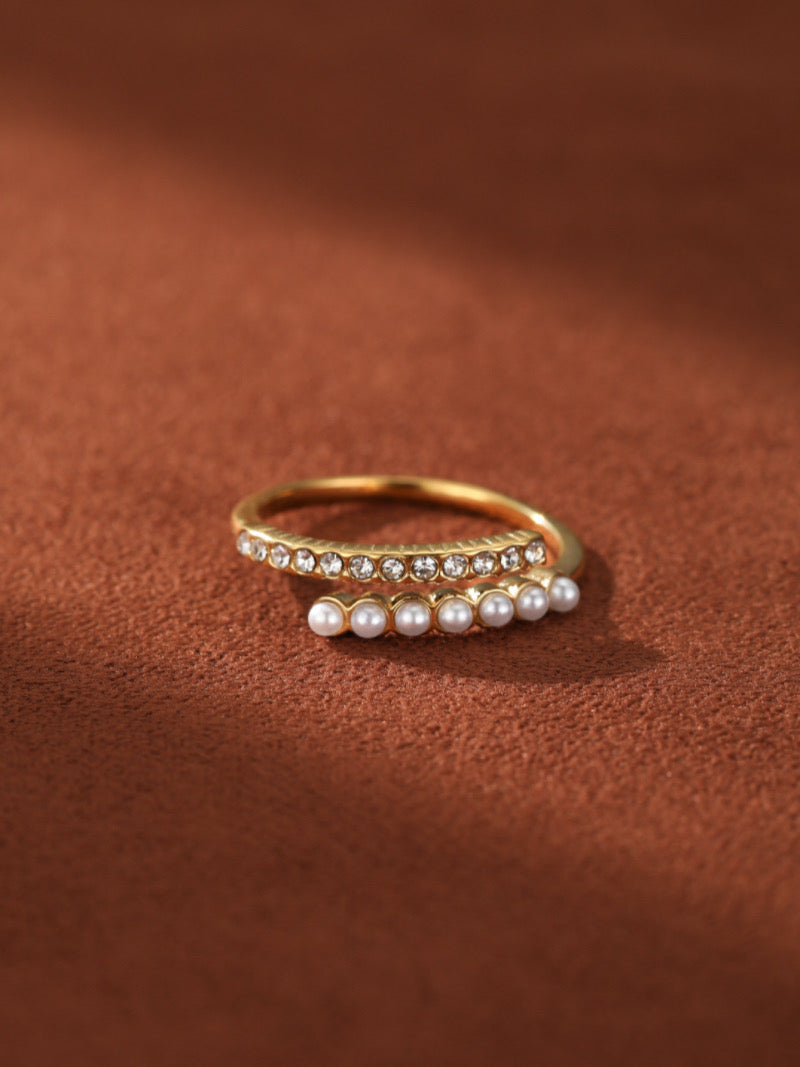
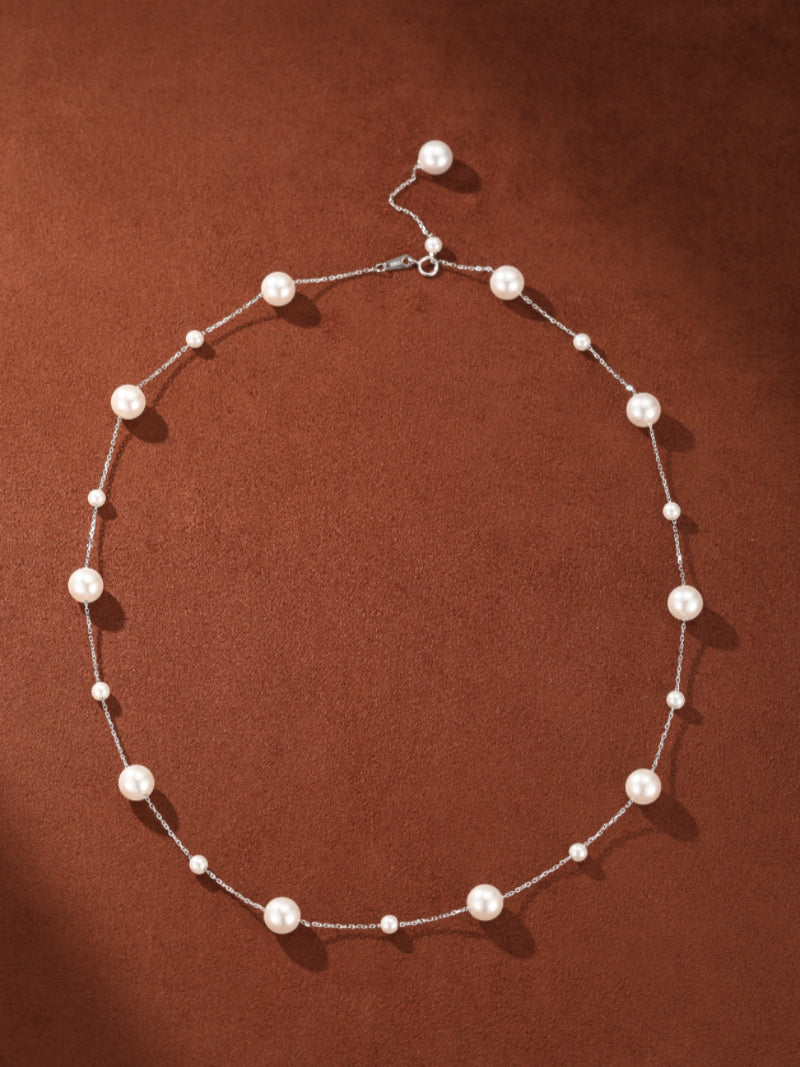
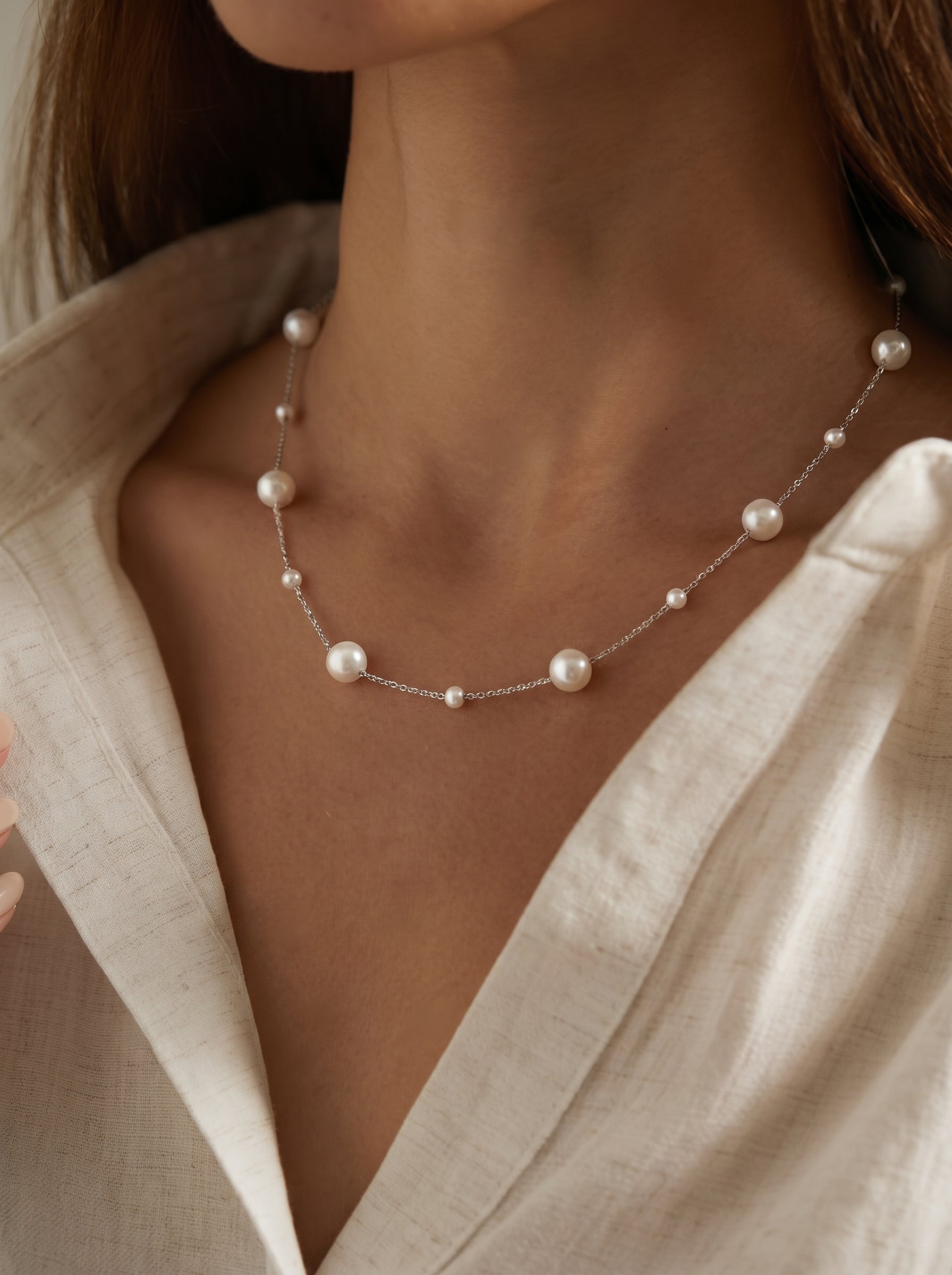
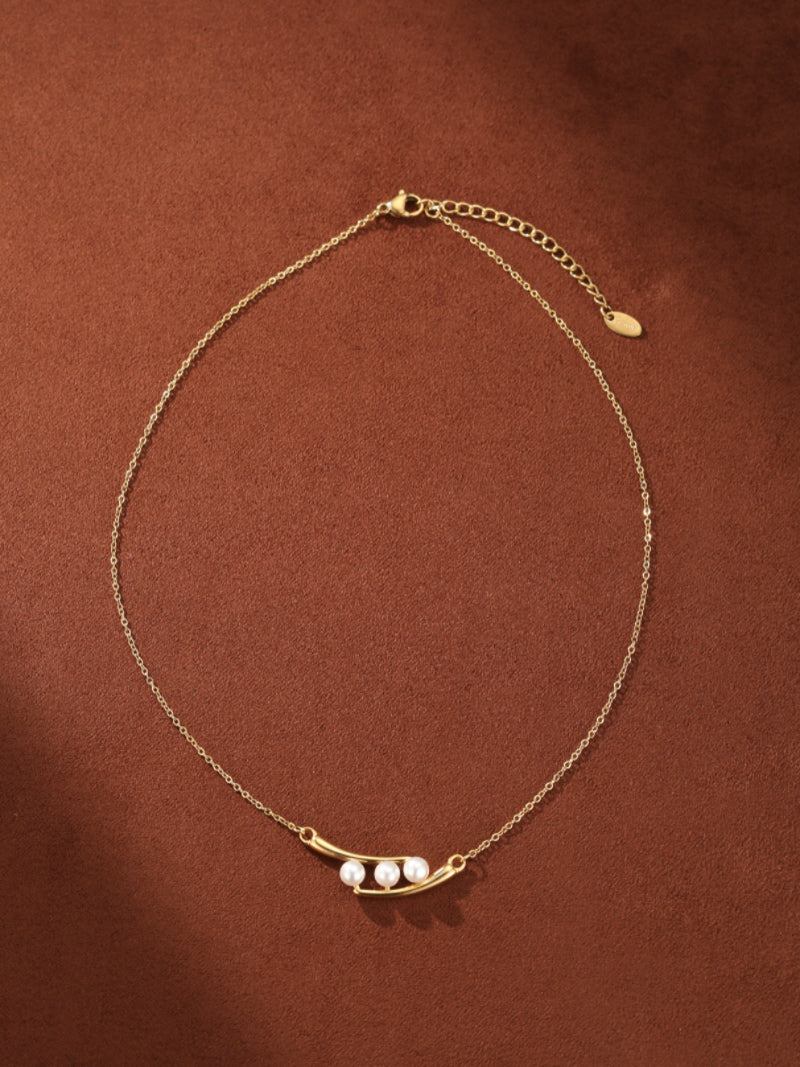
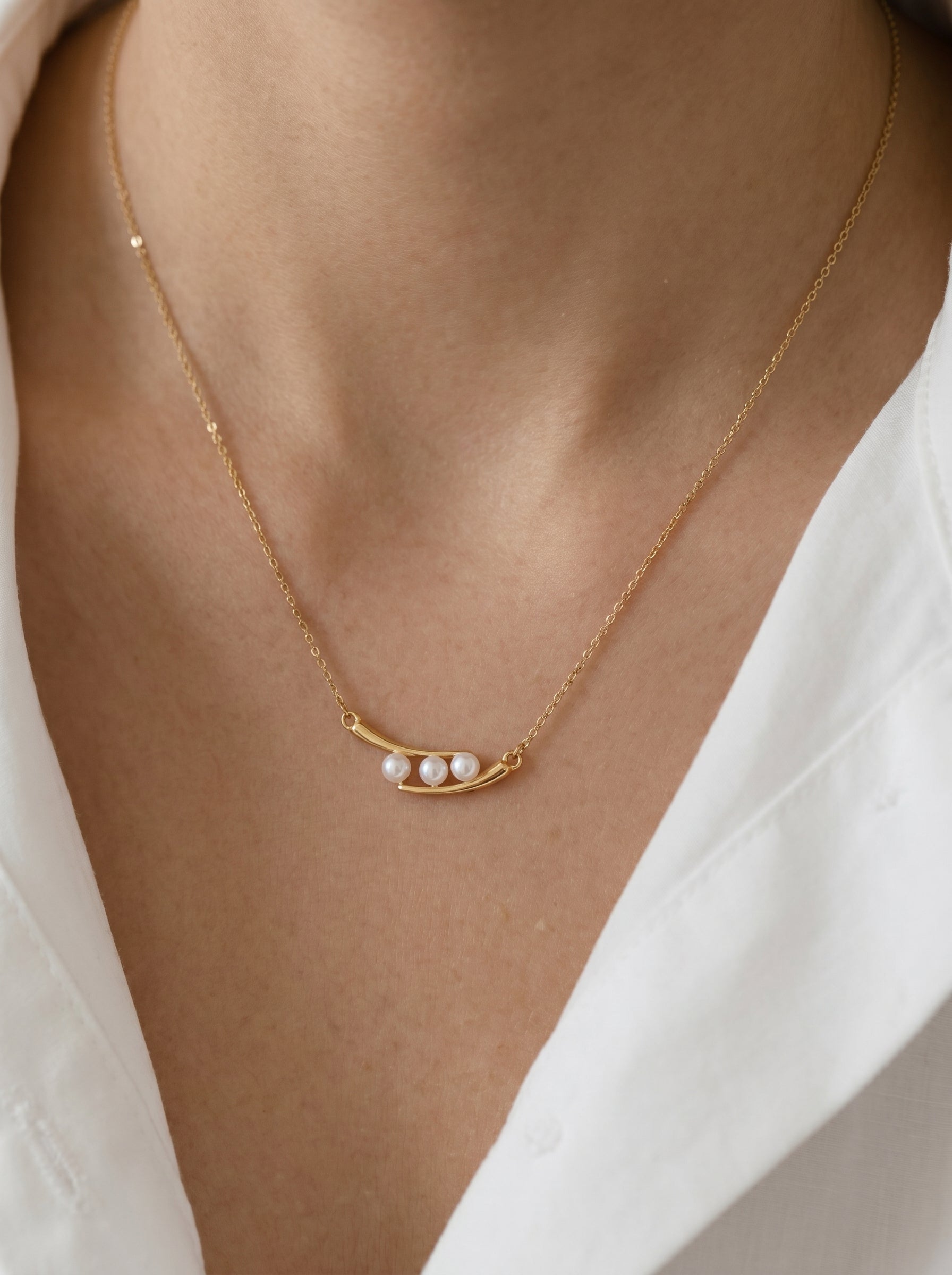
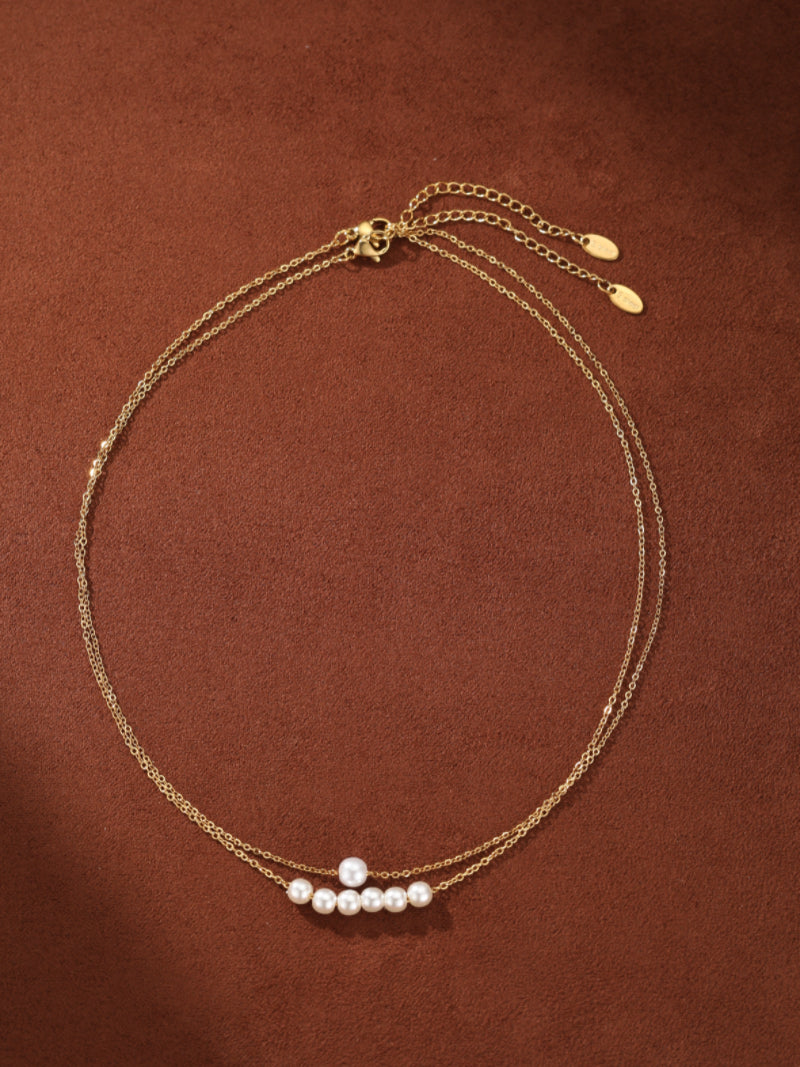
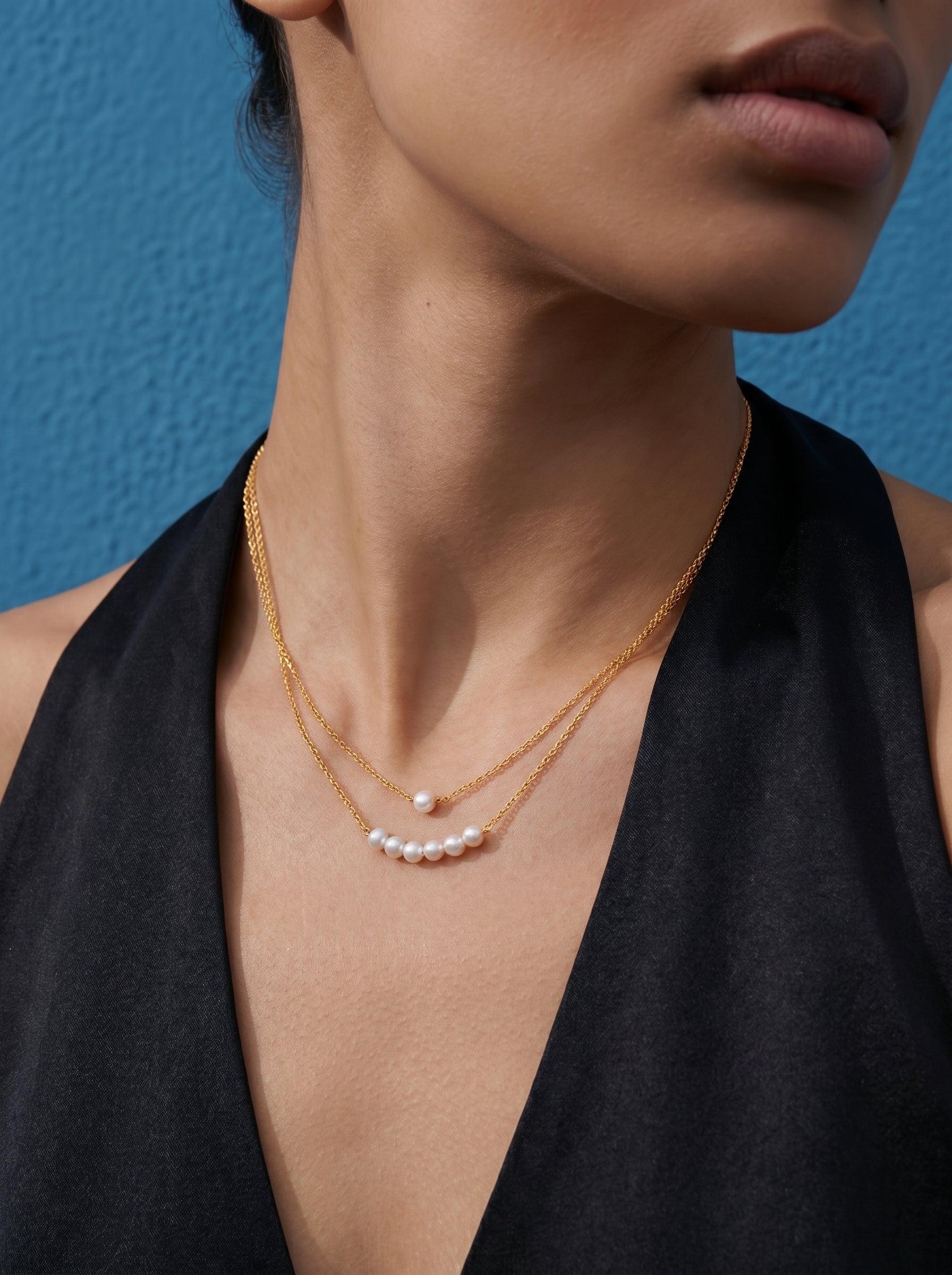
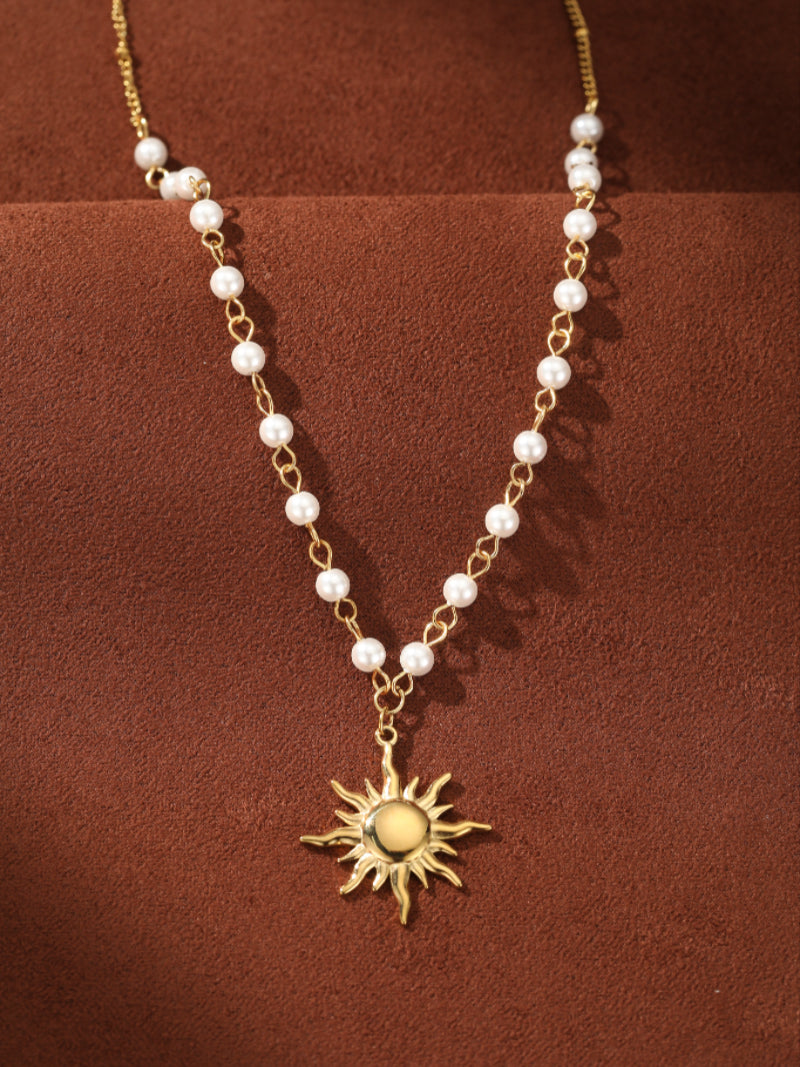
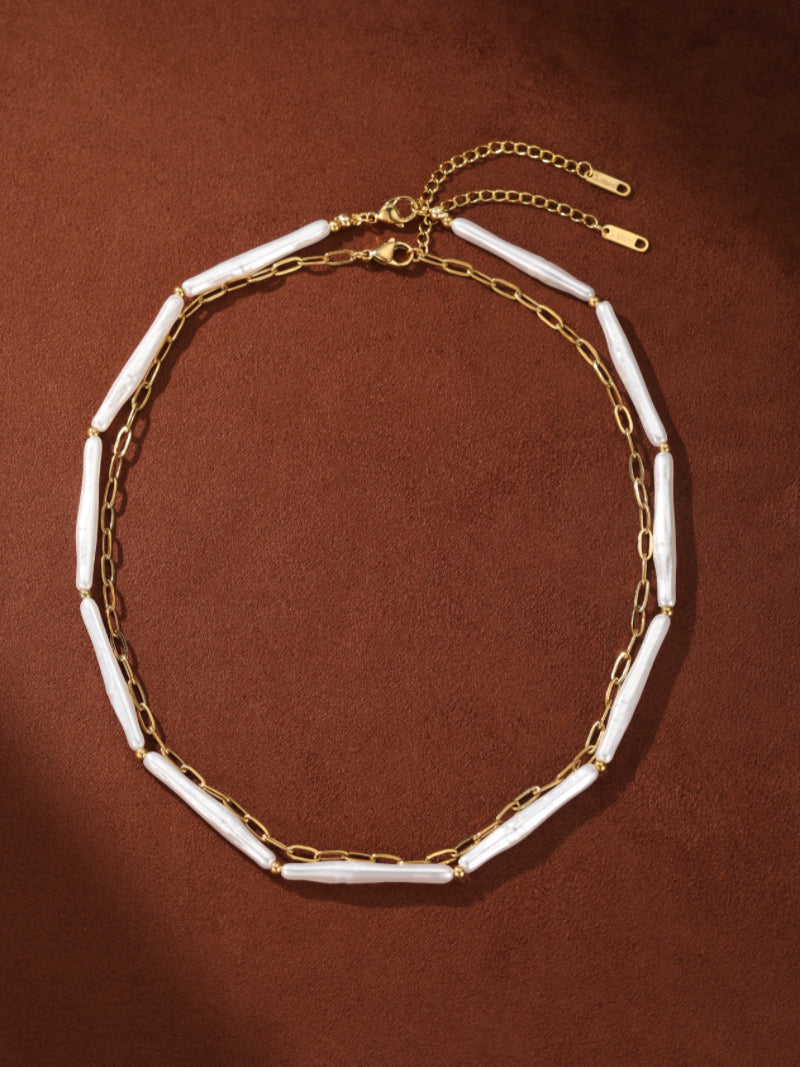
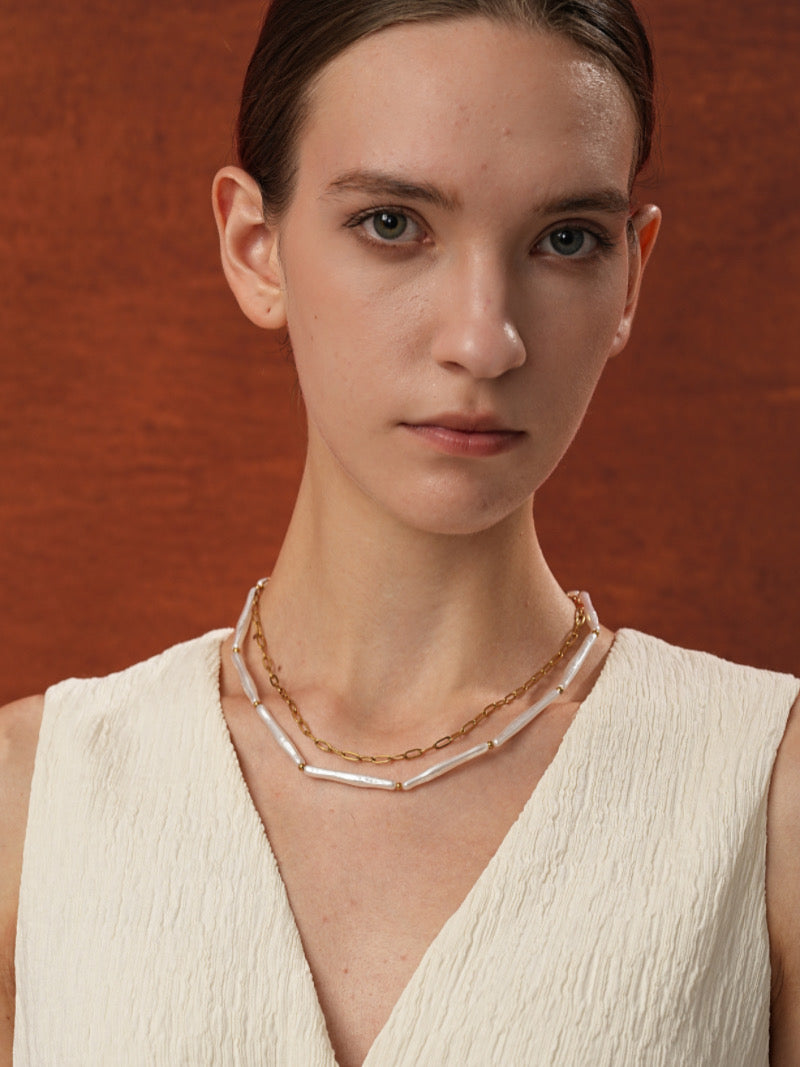
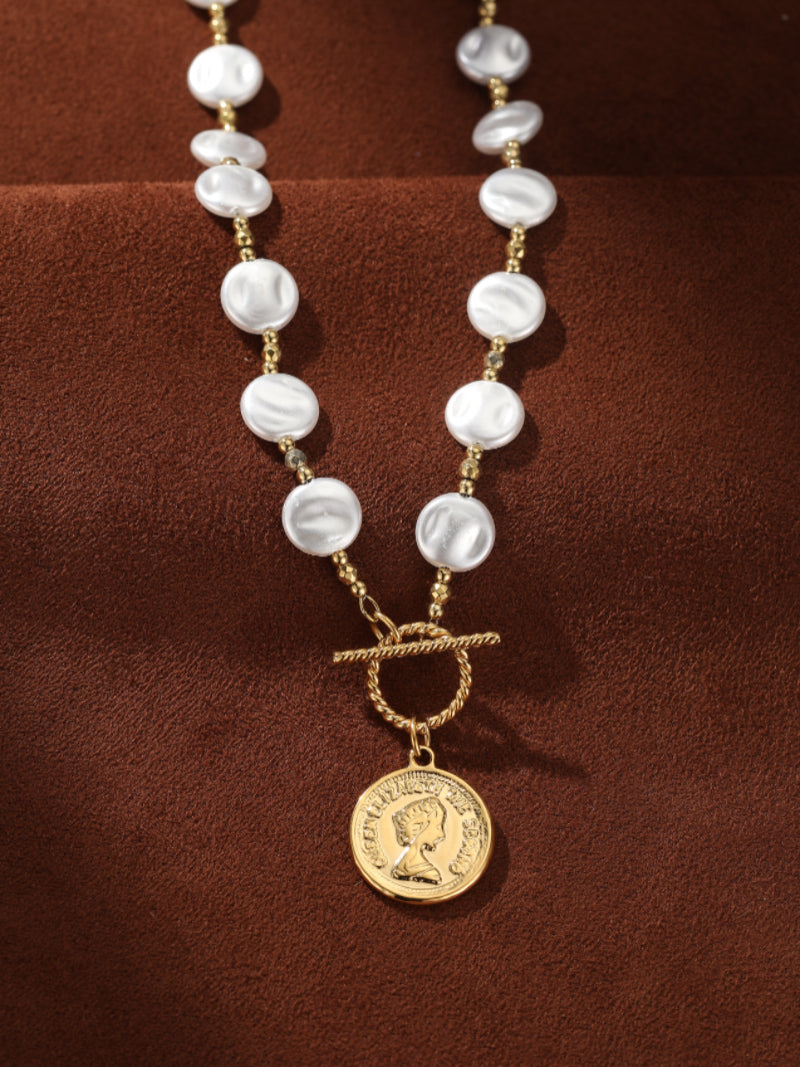
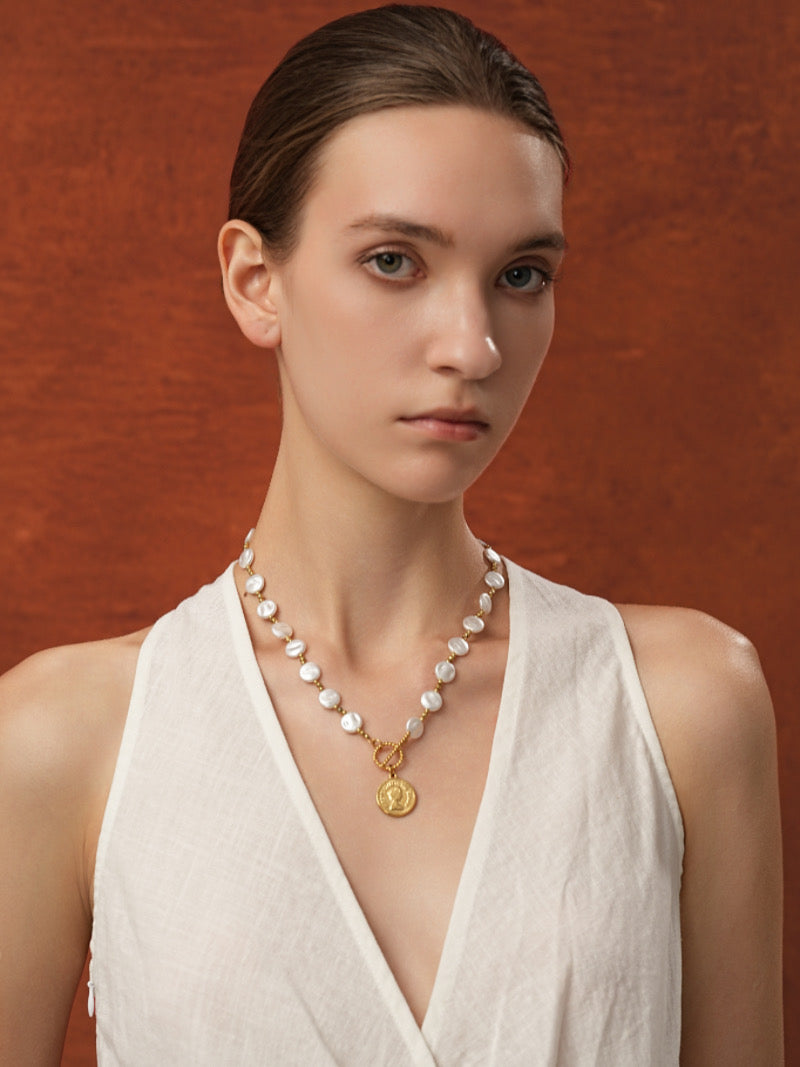
Imitation pearls, and we say so plainly. We use them where a design needs color that matches bead for bead, or a length that has to stay light on the neck. Every piece here is labeled as imitation on its product page, because the alternative is letting you find out later.
What is an imitation pearl?
An imitation pearl is a bead of glass, shell or plastic coated to look like nacre. It is manufactured rather than grown, and no mollusk is involved at any stage.
Under the FTC Jewelry Guides, an imitation pearl must be clearly disclosed as such, and it may not be described as a pearl or a cultured pearl without qualification. We follow that on every product page, in the title as well as the detail.
Why do we use imitation pearls at all?
Two reasons, both structural rather than financial.
- Color matching — a design that runs forty identical beads down a chain cannot be made from cultured pearls without an enormous sorting cost, because no two grow identical.
- Weight — a very long strand or a large chunky piece in solid nacre becomes heavy on the neck. A lighter bead makes those proportions wearable.
Where neither applies, we use cultured pearls.
How do imitation and cultured pearls differ?
In how they are made and in how they behave. A cultured pearl is nacre laid down in microscopic overlapping platelets, which is why it feels slightly gritty against a tooth and why its luster has depth. An imitation is a smooth coating on a smooth bead.
The practical difference is longevity. Nacre is the surface itself, so it can be polished and it does not peel. A coating can wear at friction points over time, most often at the drill hole.
Which imitation pearl styles work best?
Long floating strands
Length is where the weight advantage matters most. A long rope you can double or knot stays comfortable all evening in a way a solid nacre equivalent would not.
Layered and chunky chains
Coin links and heavy chain with matched beads. These are design-led pieces where the metal carries the character and the beads provide rhythm.
Motif studs and hoops
Flowers, butterflies and suns where several beads have to agree exactly. A visible size or color step between two beads in a small setting is more noticeable than in a long strand.
Why buy imitation pearls from Grande Lilith
Because we tell you. A great many retailers use imitation beads without saying so, or describe them with words like shell pearl and faux pearl that a shopper is not required to decode.
- Labeled imitation in the product title, not buried in a specification table.
- Never mixed into a cultured pearl piece without disclosure.
- Nickel-free, lead-free and cadmium-free settings on gold, silver and stainless steel.
- Designed in Paris. Thirty days to change your mind, and every order arrives in a magnetic pouch.
Frequently asked questions
Are imitation pearls the same as fake pearls?
Imitation is the correct term and the one the FTC Jewelry Guides use. Fake implies deception, which only applies when a seller passes an imitation off as a cultured pearl. Sold as what it is, an imitation pearl is a legitimate material.
How can you tell an imitation from a real pearl?
Rub it lightly against the edge of a front tooth. A cultured pearl feels gritty, because nacre is built from overlapping crystal platelets. An imitation feels smooth. Imitations also warm up faster in the hand.
How long do imitation pearls last?
Years, with reasonable care, but not decades. The coating can wear at friction points, most often around the drill hole. Keeping them away from perfume and wiping them after wear extends that considerably.
Is it worth buying imitation pearls?
For a specific length or a design that needs matched beads, yes. For something you intend to wear for decades, cultured pearls are the better purchase, and we would rather say that here than sell you the wrong thing.
What is a shell pearl?
A shell pearl is an imitation with a bead core made from ground shell, coated to resemble nacre. It is not a cultured pearl, despite the name, and it should be disclosed as an imitation.