


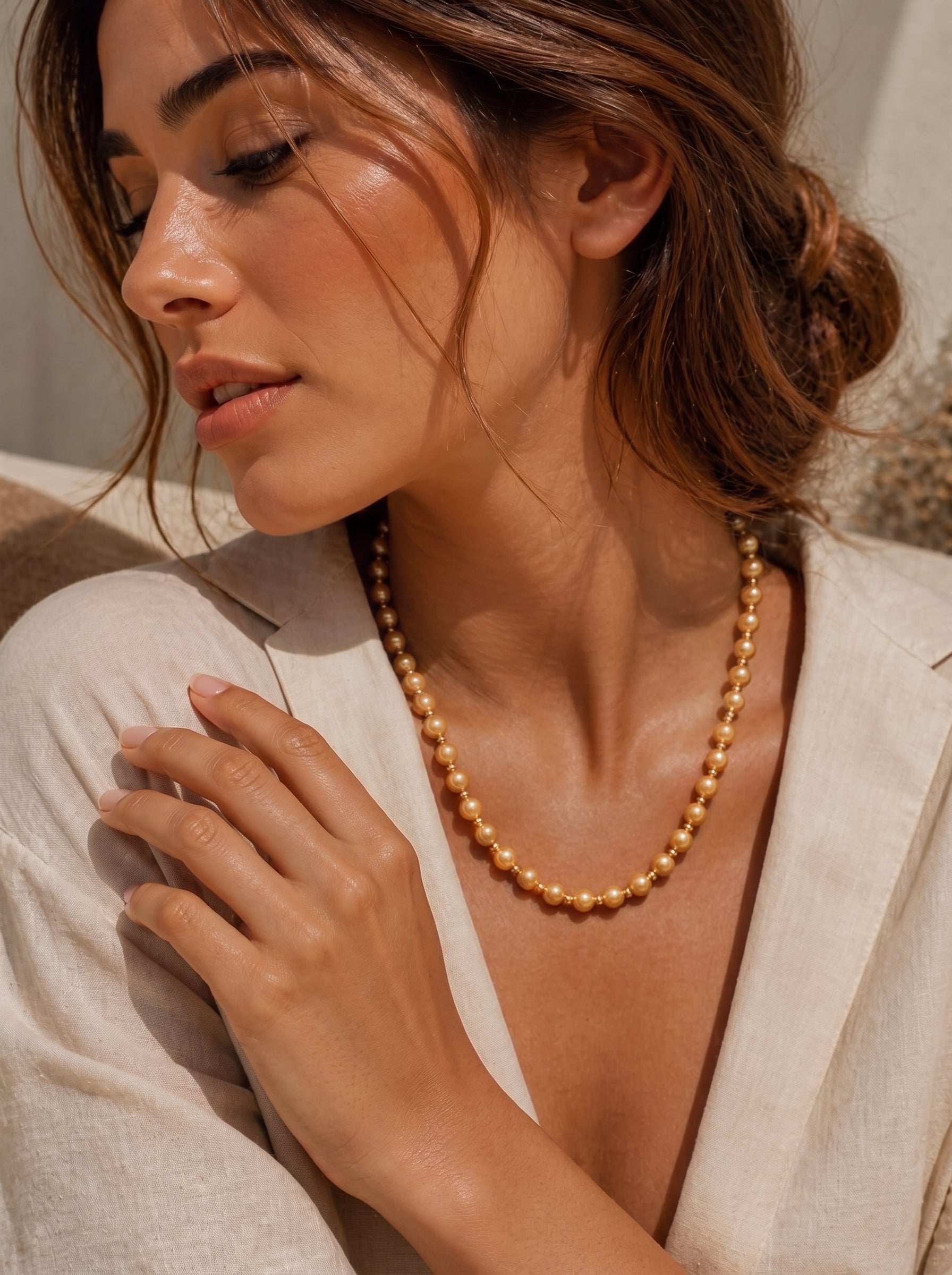
Freshwater pearl necklace
Single pendants, layered chains, floating strands and beaded ropes. Chunky coins, curved bars, hearts and flowers. Freshwater pearls give us more shapes to work with than any other pearl, so this is the deepest necklace collection on the site. There is a version of almost anything you are picturing.
Sort by
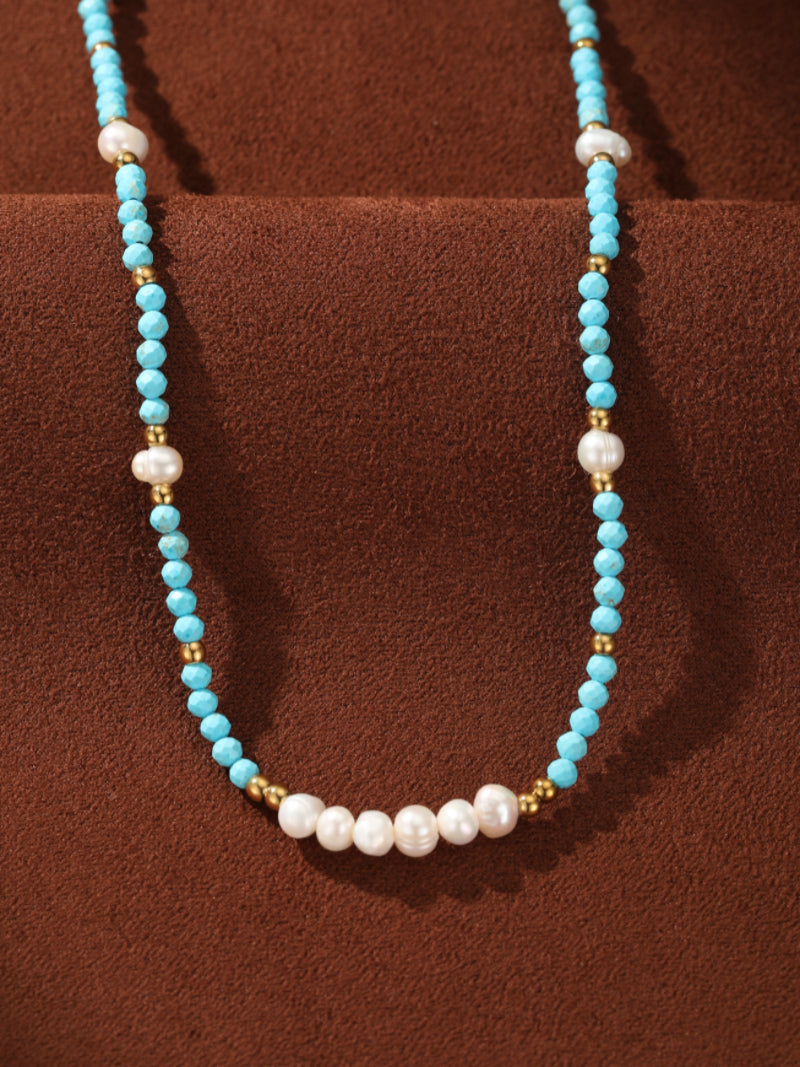
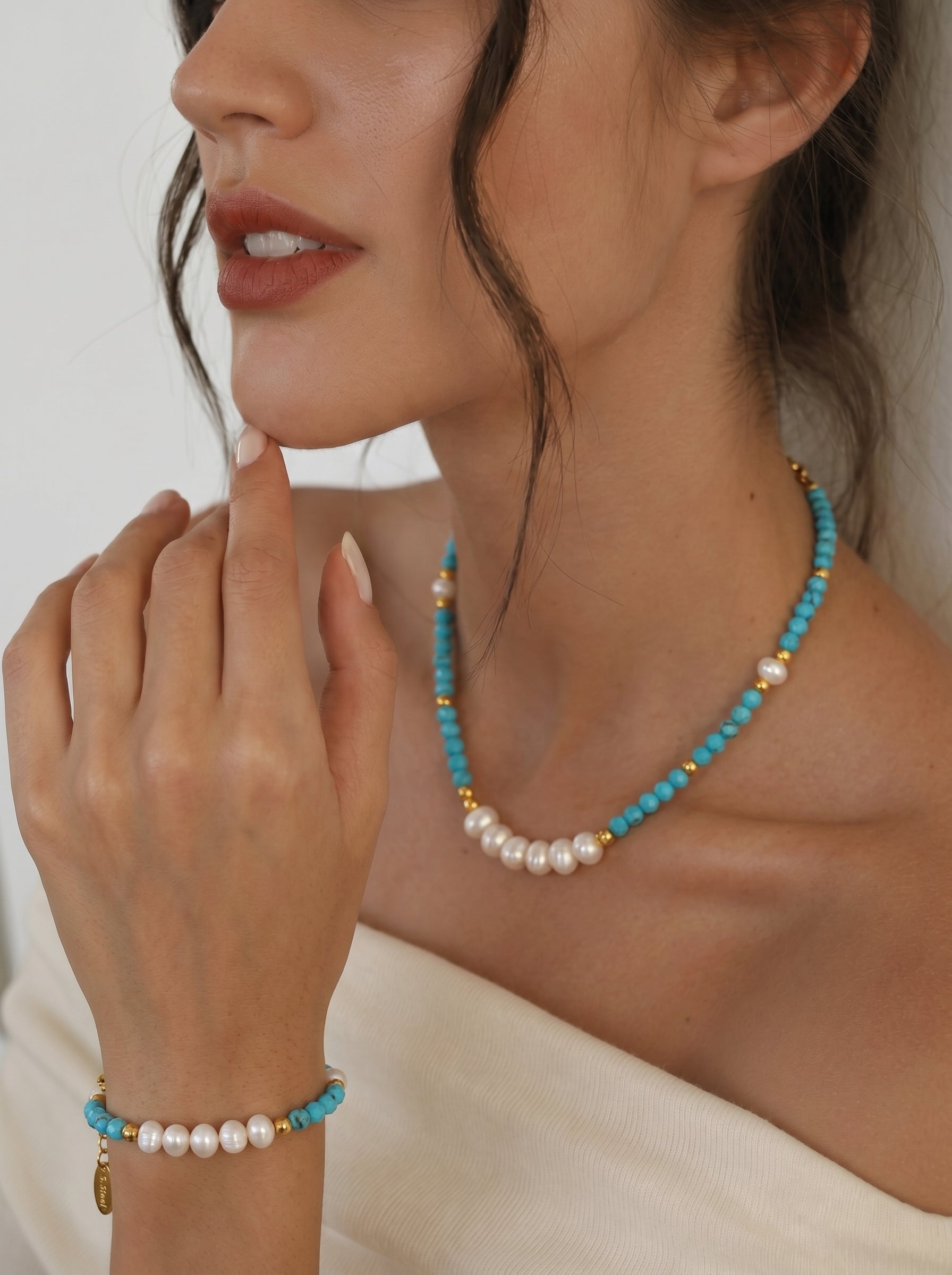
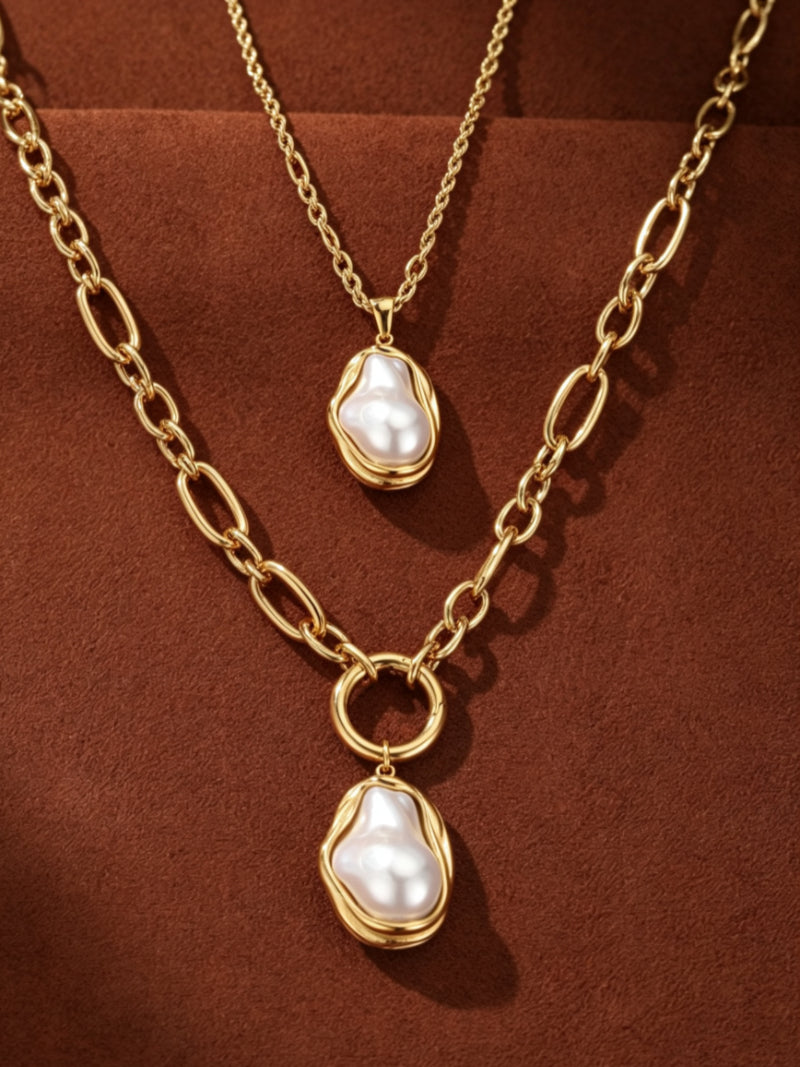
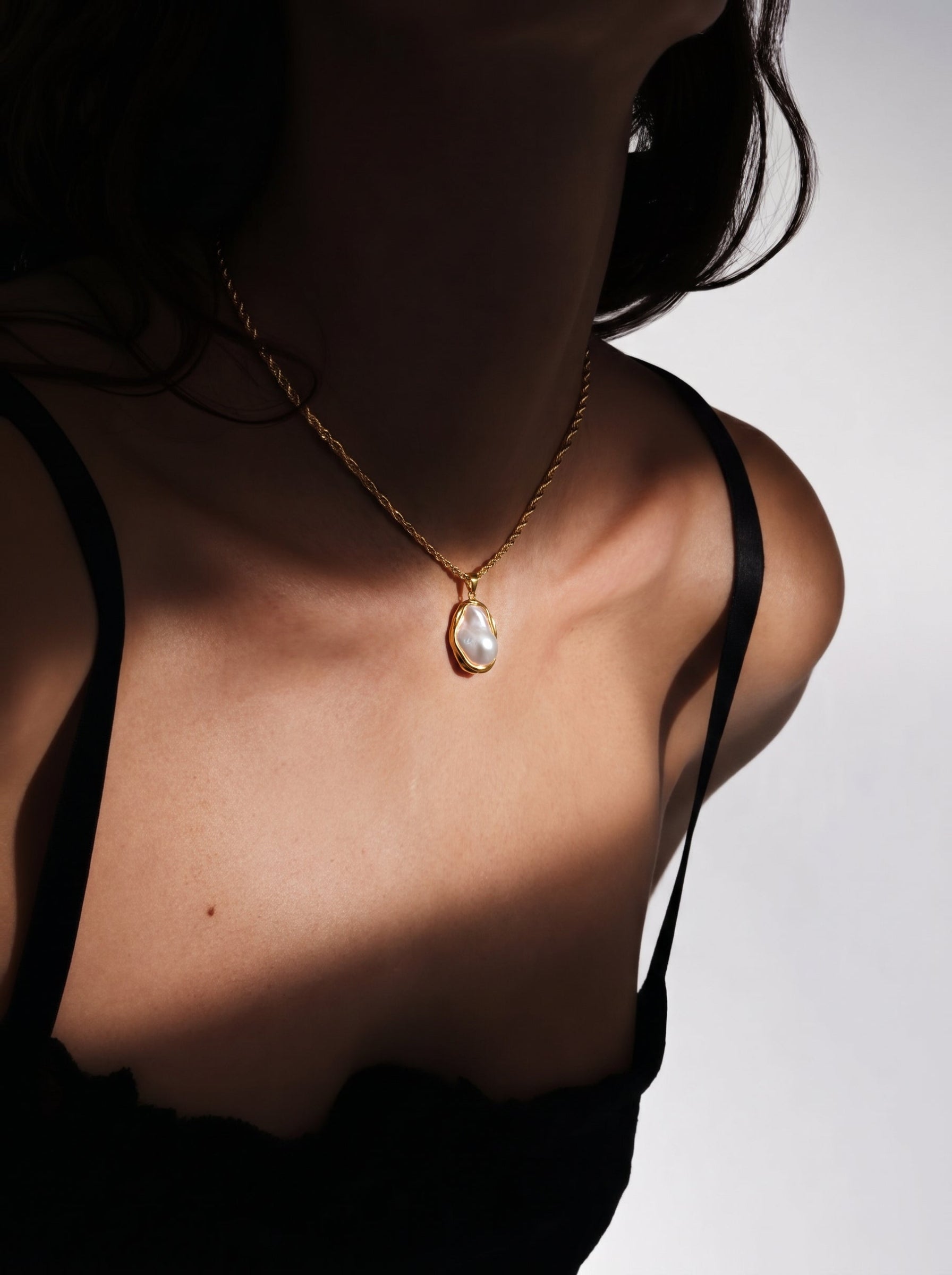
Freshwater pearl necklace
A freshwater pearl necklace is where most collections begin, and where a lot of them stay. Freshwater pearls come in more shapes and colors than any other cultured pearl, and they cost less than all of them. Ours are grown in Zhuji, China, and we name the source because you should be able to check it.
What is a freshwater pearl necklace?
A freshwater pearl necklace uses cultured pearls grown inside freshwater mussels rather than saltwater oysters. A technician inserts a small piece of mantle tissue into the mussel, and the animal deposits nacre around it for two to six years. The result is a real cultured pearl, not an imitation.
Most freshwater pearls are grown without a bead nucleus, which means they are solid nacre through to the center. Akoya and South Sea pearls are bead-nucleated, with a nacre layer over a shell bead. That difference explains almost everything else about how freshwater pearls look and behave.
Are freshwater pearls real pearls?
Yes. Freshwater pearls are real cultured pearls. The difference from a saltwater pearl is the mollusk and the water, not the authenticity. Under the FTC Jewelry Guides they may be described as cultured pearls without qualification, and we label every one that way.
A well-grown freshwater pearl with strong luster outperforms a poorly grown Akoya. Judge the pearl in front of you rather than the category it belongs to.
Why do freshwater pearls come in so many shapes?
Because there is nothing round at the core. With no bead nucleus to build around, the mussel produces ovals, drops, buttons, seed shapes and baroques as readily as spheres. That is the practical reason freshwater necklaces offer more variety than any other pearl type.
- Round — holds an unbroken line at the collarbone. The classic reading.
- Baroque — irregular, so no two necklaces hang alike. Reads as a design decision.
- Seed — tiny pearls strung densely, giving texture up close and a soft line from across a room.
- Drop — tapered at the top and weighted at the base, following the line of a neckline.
Which freshwater pearl necklace style suits you?
Pendant and single pearl styles
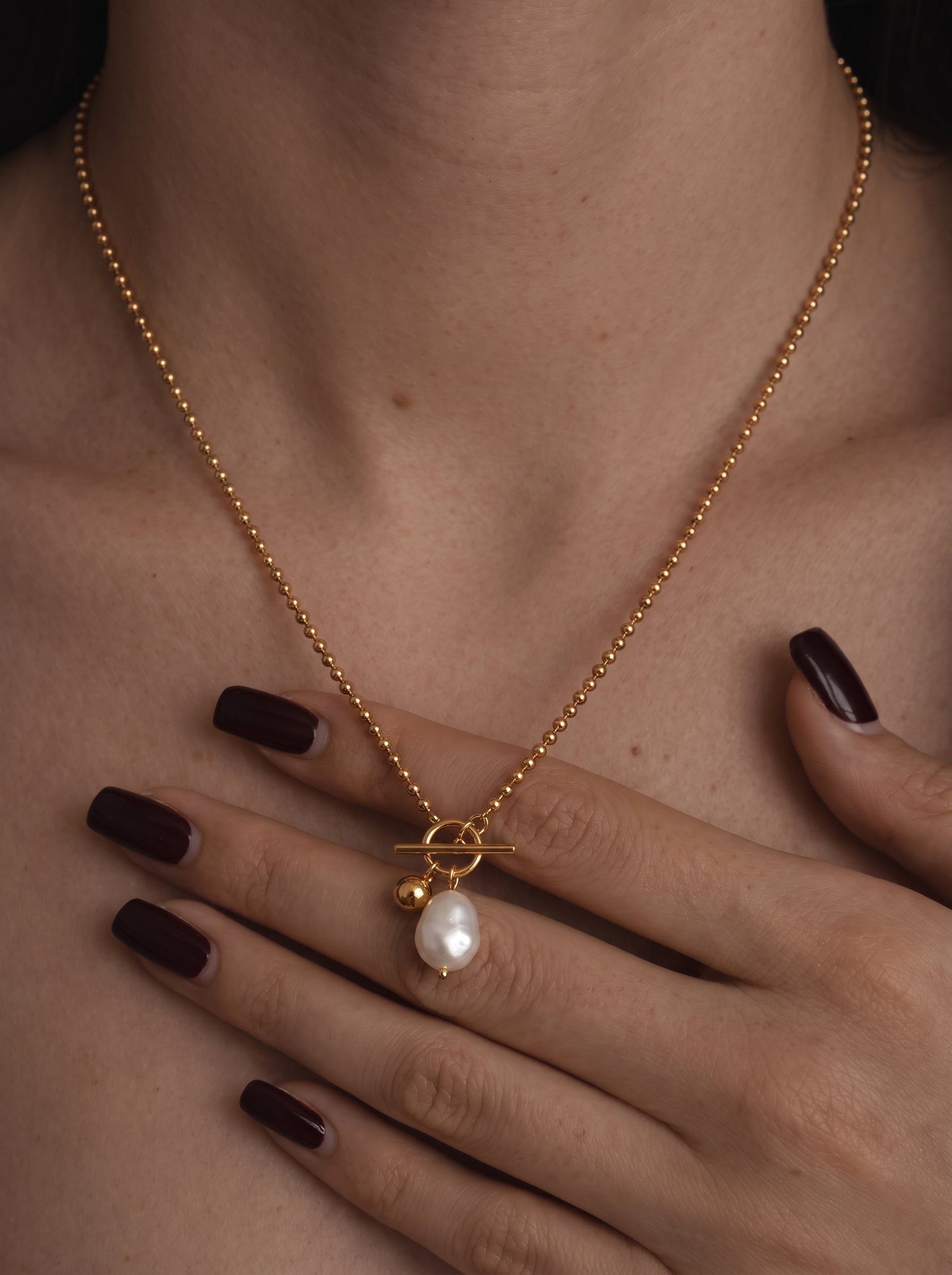
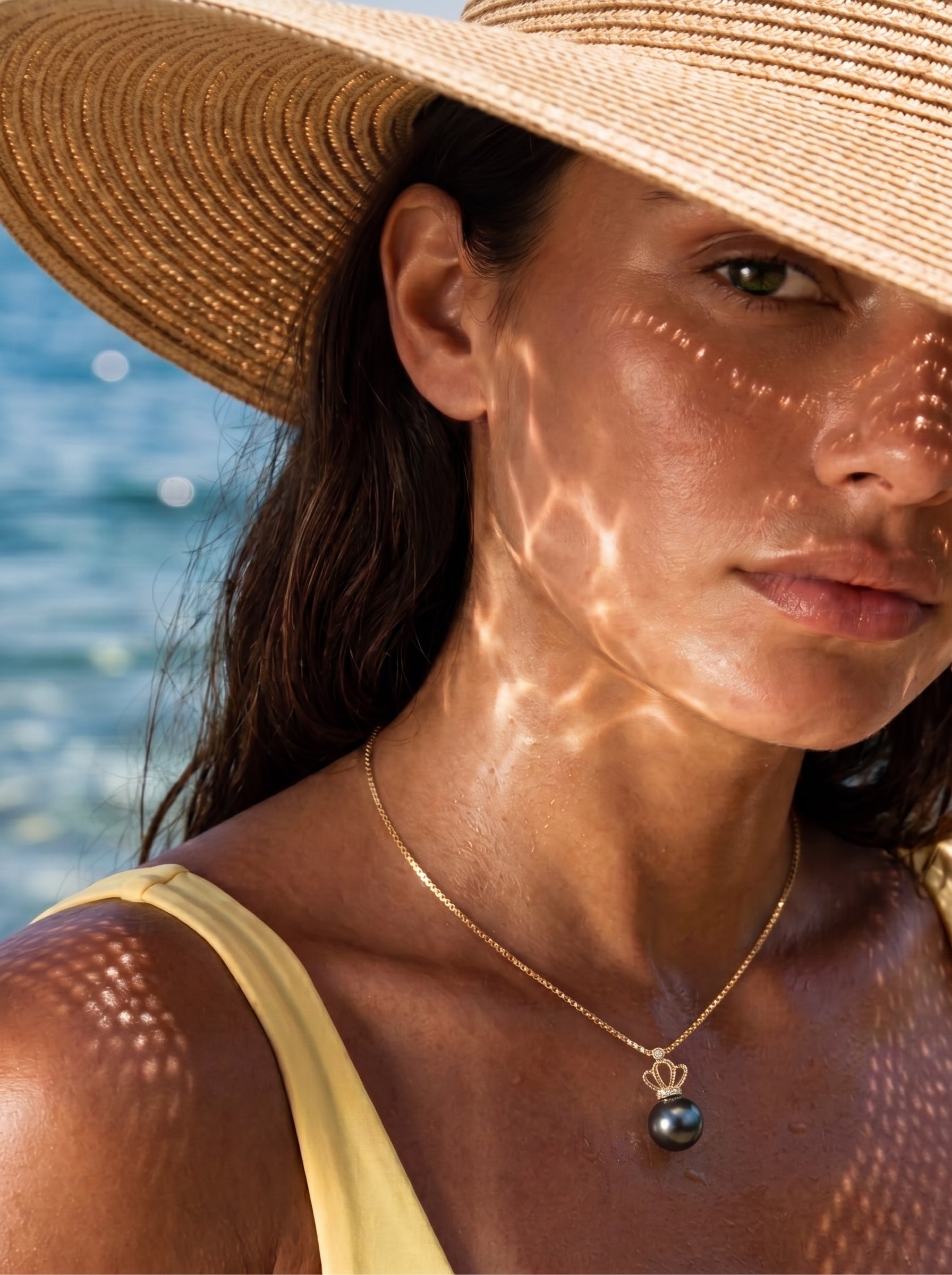
One pearl on a chain, sitting where the eye already goes. This is the piece most women buy first and keep wearing after everything else has been swapped out. It layers under a shirt, over a knit, and beside chains you already own.
Beaded strands and long ropes
Freshwater pearls are the most affordable way to own a full strand. A long rope can be worn straight, doubled at the collarbone, or knotted once and left, giving three necklaces from one piece.
Layered and floating styles
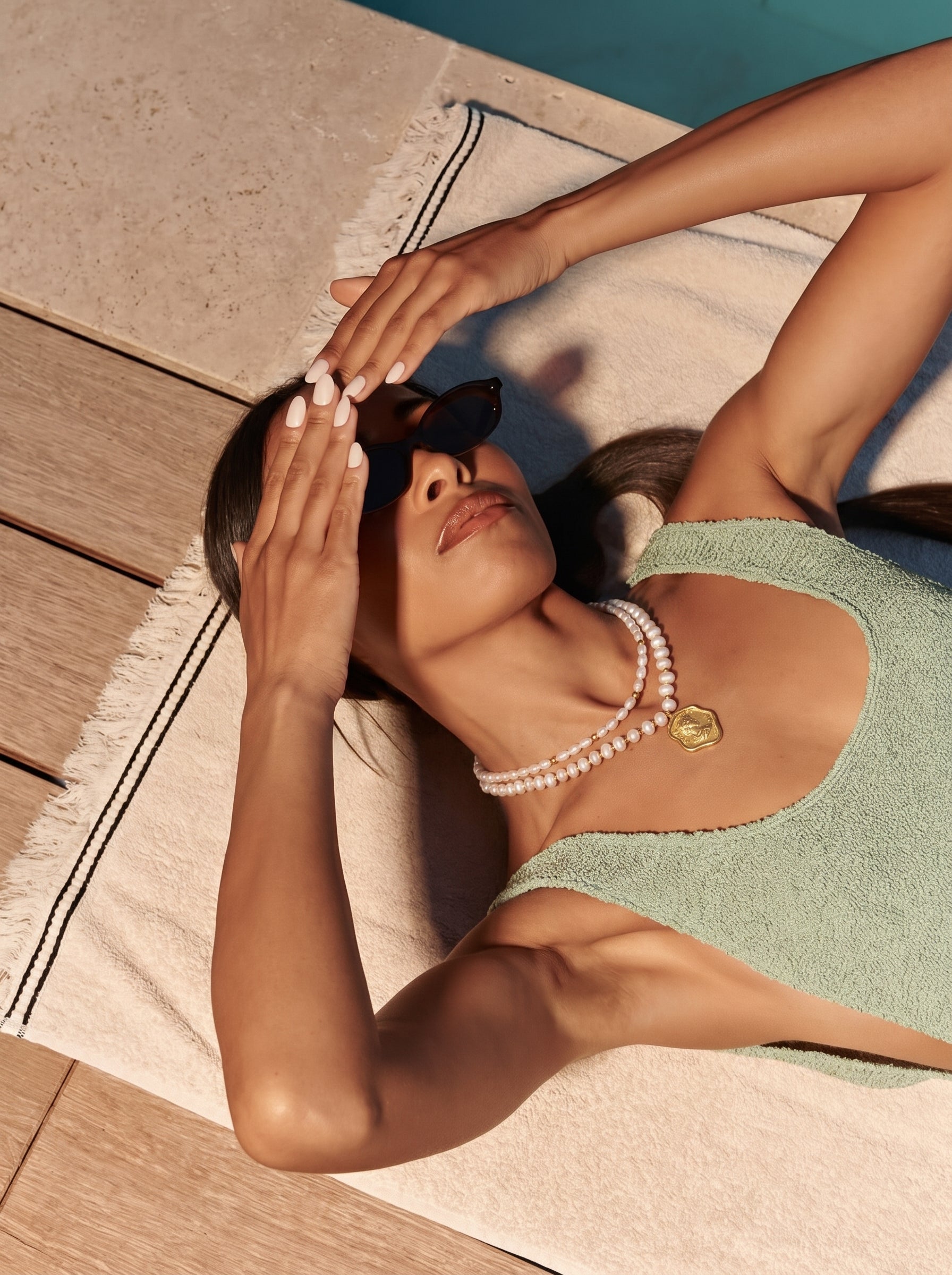
Layered pieces give you two or three lengths already balanced on one clasp. Floating strands space pearls along a fine chain so they appear to sit directly on the skin. Both make an outfit look considered without asking you to work out proportions.
What colors do freshwater pearls come in?
White, cream, pink, peach and lavender all occur without treatment in freshwater pearls, which is a range no other cultured pearl matches. Freshwater pearls also take dye well, and that is precisely why treatment disclosure matters. We state treatment on every product page as one of eight provenance markers, rather than leaving it unsaid.
Why buy a freshwater pearl necklace from Grande Lilith
Freshwater pearls are the most widely sold and most loosely described pearls on the market. That is where the disclosure gap sits, and where we do things differently.
- Origin named: Zhuji, China. Not "responsibly sourced" or "ethically selected" without a place attached.
- Eight provenance markers on every product page: type, origin, bodycolor, overtone, shape, size, grade and treatment.
- Partners vetted by our GIA-certified pearl specialist, on working conditions as well as quality.
- Nickel-free, lead-free and cadmium-free settings on gold, silver and stainless steel.
- Designed in Paris. Thirty days to change your mind, and every order arrives in a magnetic pouch.
Frequently asked questions
Are freshwater pearls worth buying?
Yes. They are real cultured pearls with thick nacre, available in more shapes and colors than any other type, at a price that lets you own more than one. If you want the classic round white strand, Akoya is the closer match. For everything else, freshwater gives you more.
How can you tell a freshwater pearl from an Akoya?
Akoya pearls are consistently round with a sharp mirror-like reflection. Freshwater pearls are rarely perfectly round and their luster is softer and deeper, because the pearl is solid nacre rather than a thin layer over a bead.
Do freshwater pearls last?
They last longer than most bead-nucleated pearls, because solid nacre cannot wear through to a shell core. Keep them away from perfume, hairspray and cleaning products, wipe them with a soft damp cloth, and store them where air circulates.
What length freshwater pearl necklace should I buy?
Sixteen to eighteen inches is the most adaptable. It falls at or just below the collarbone and works with a crew neck, an open collar and a blazer without adjustment. Choose longer only if you know which necklines you will pair it with.
Are dyed freshwater pearls still real pearls?
Yes, dyeing changes color but not authenticity. What matters is that the treatment is disclosed. A dyed pearl sold as naturally colored is a misrepresentation, which is why treatment appears on every one of our product pages.