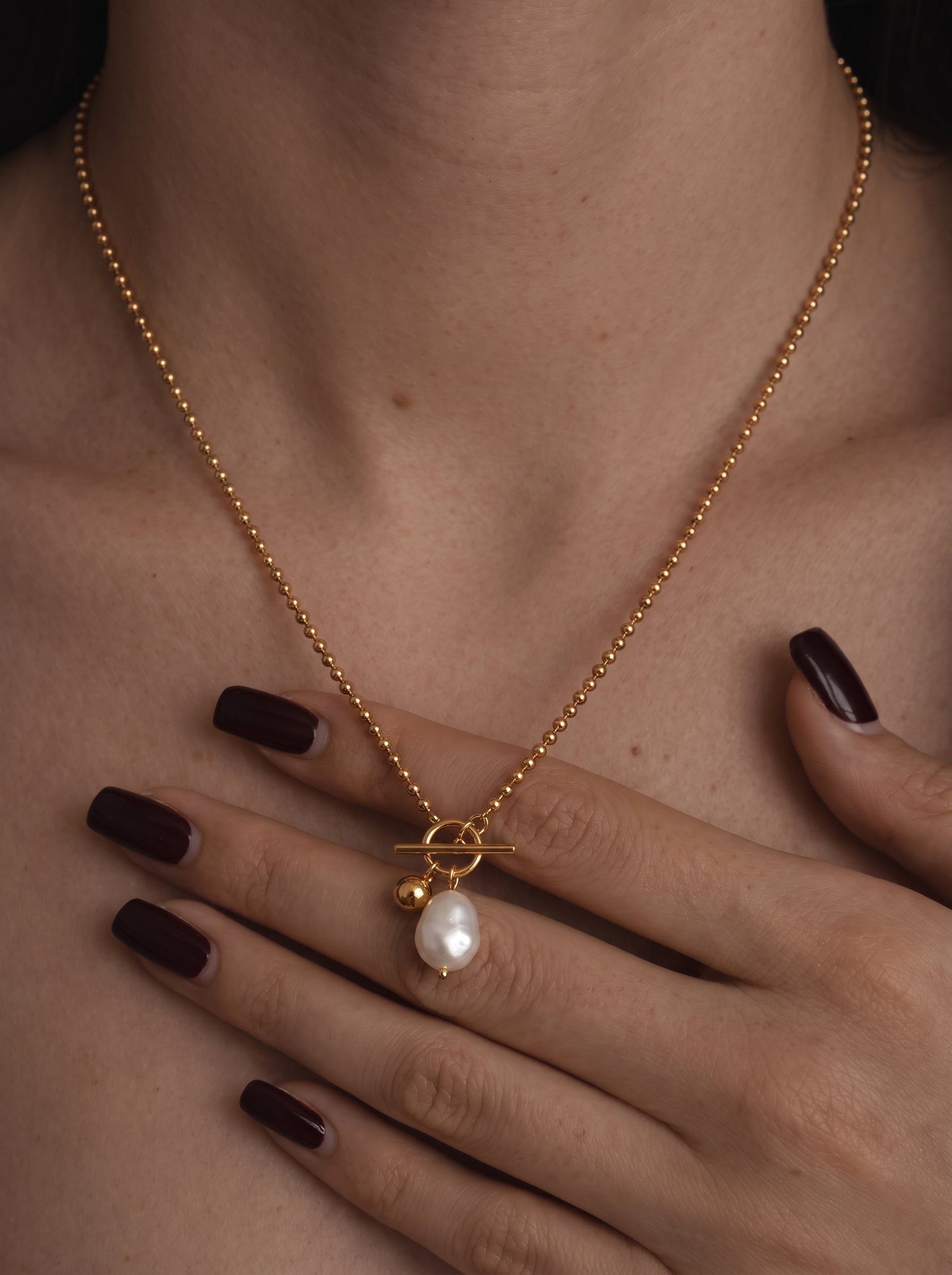
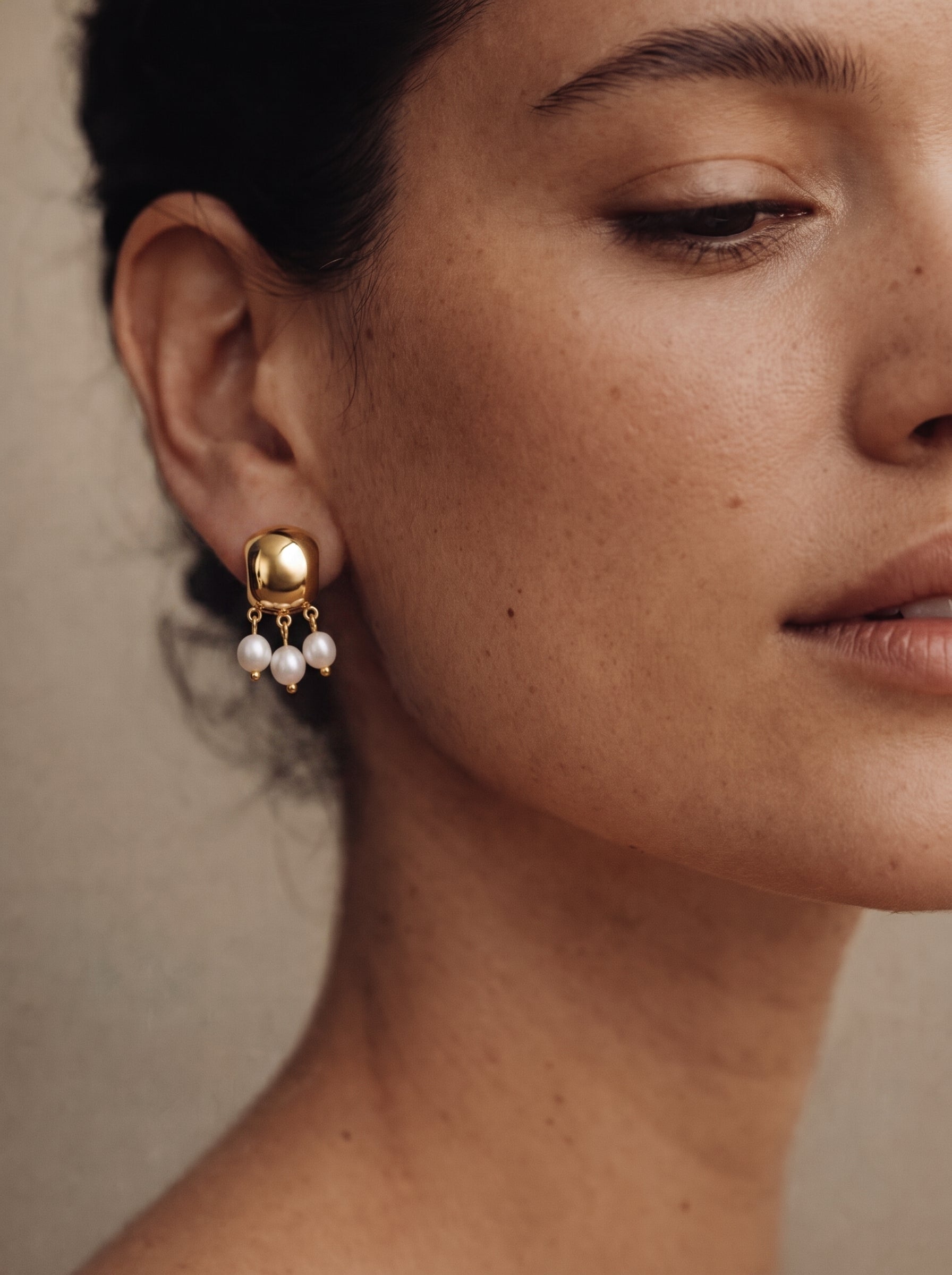
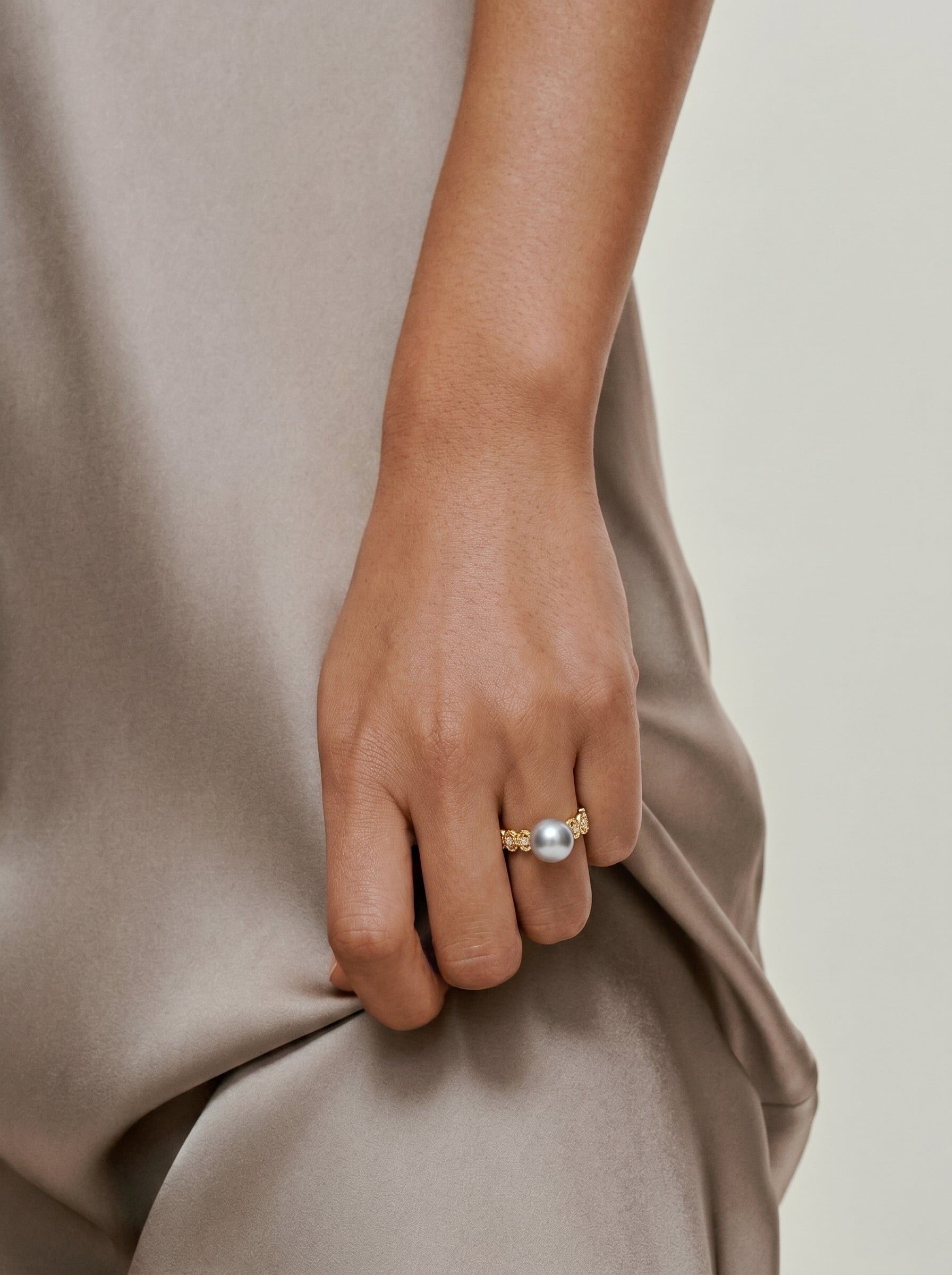
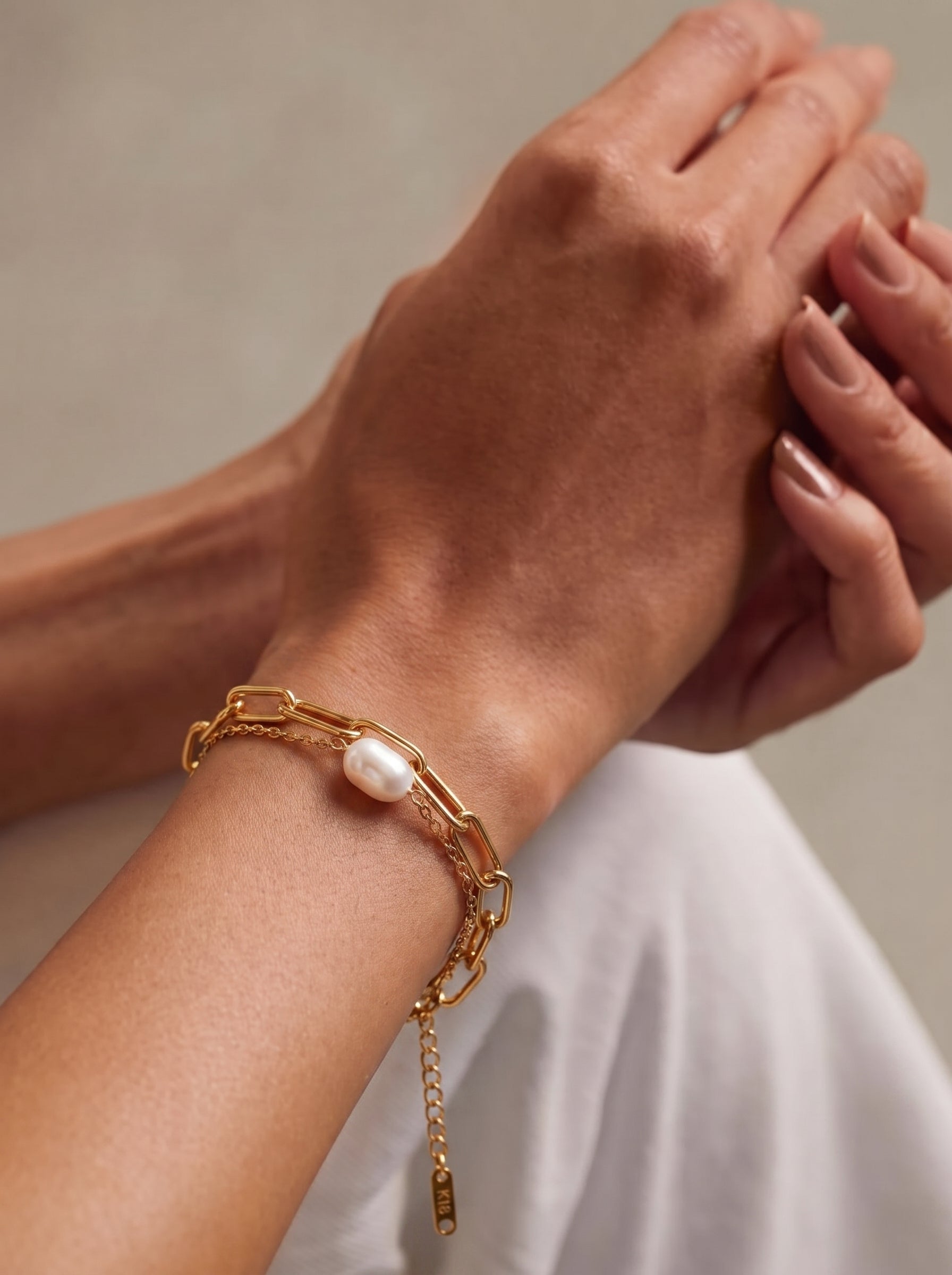
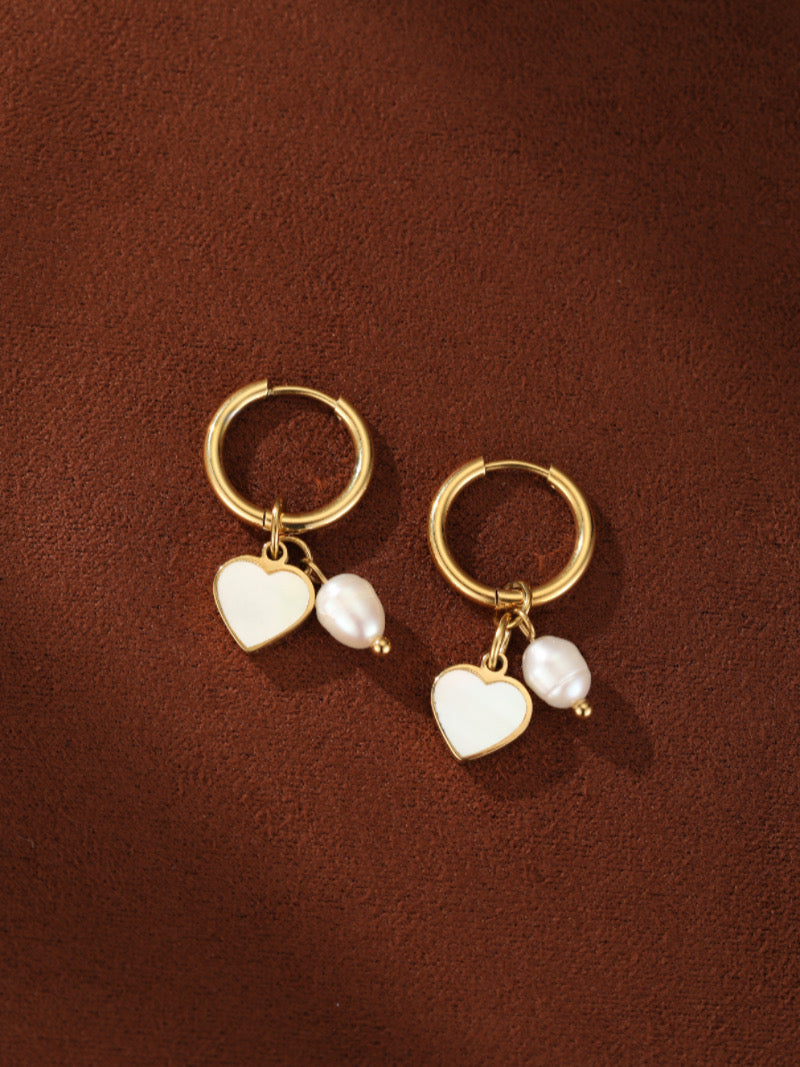
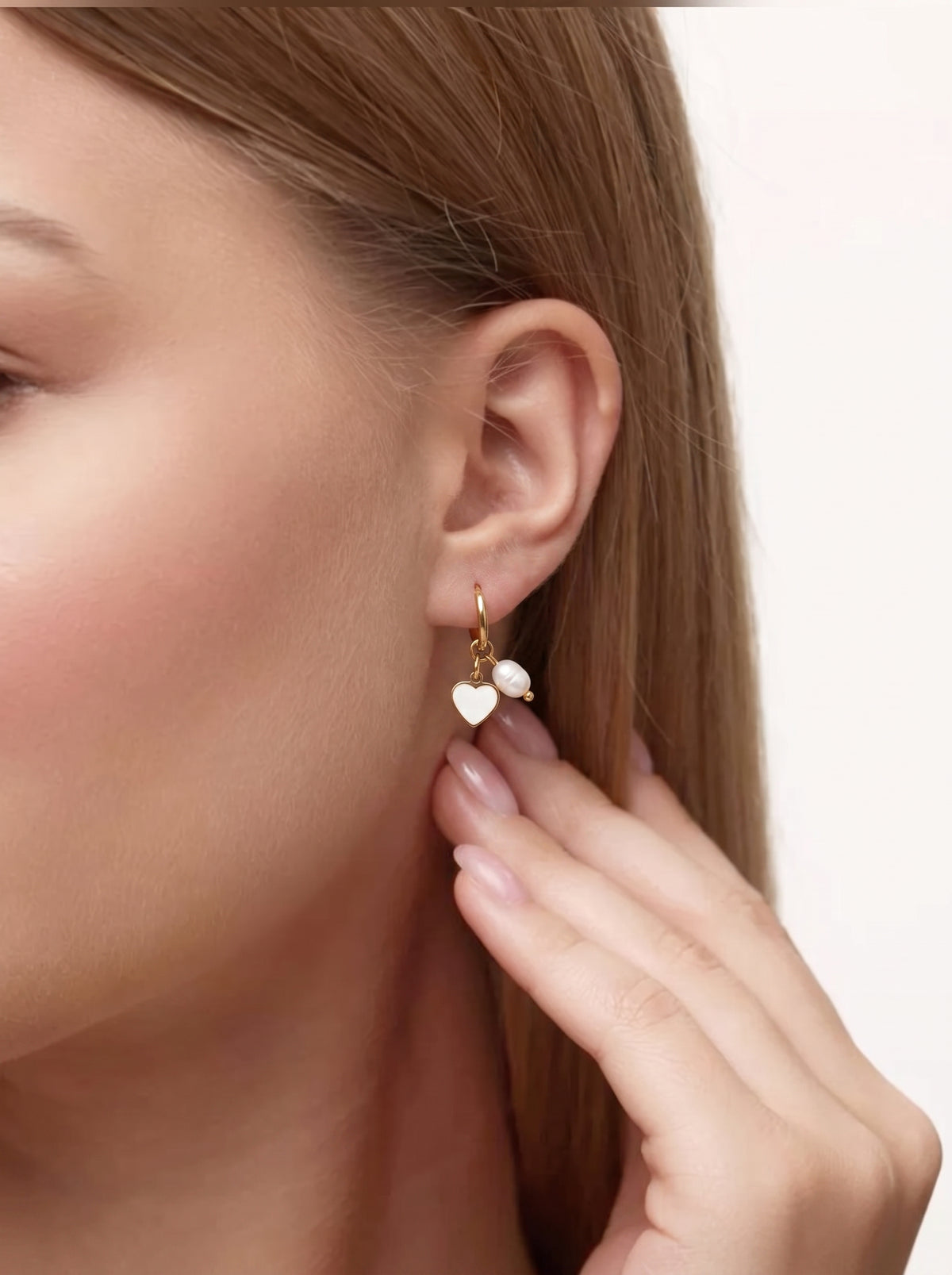
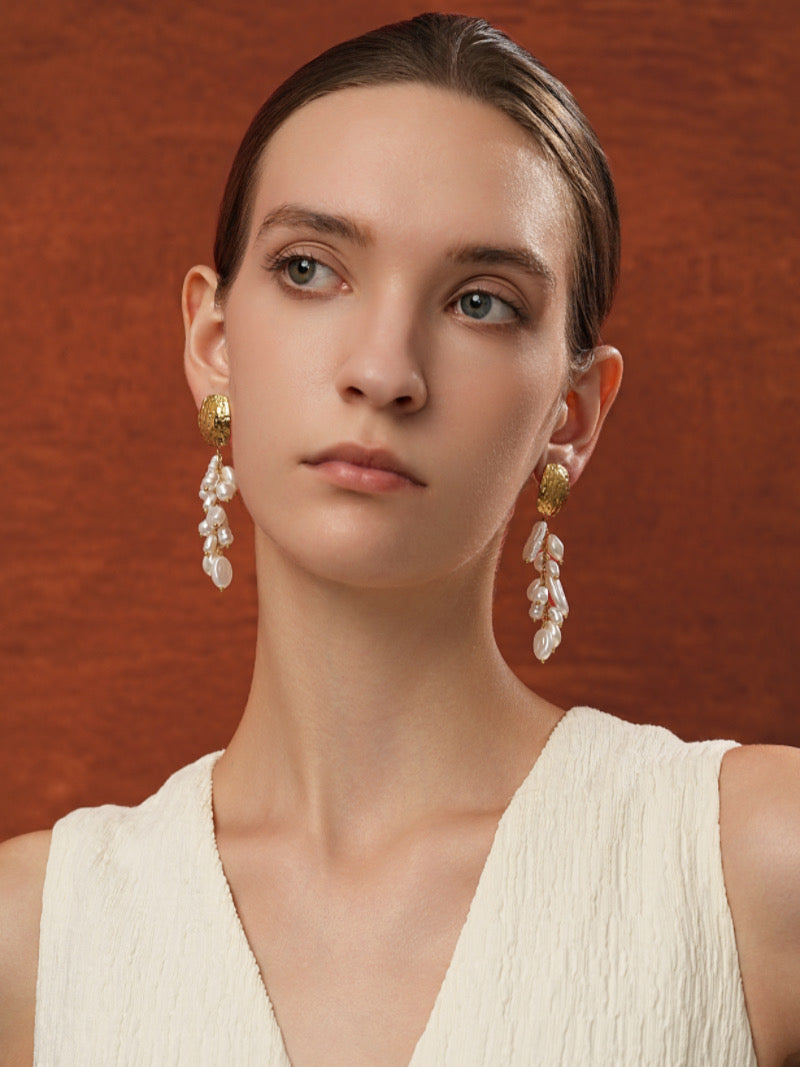
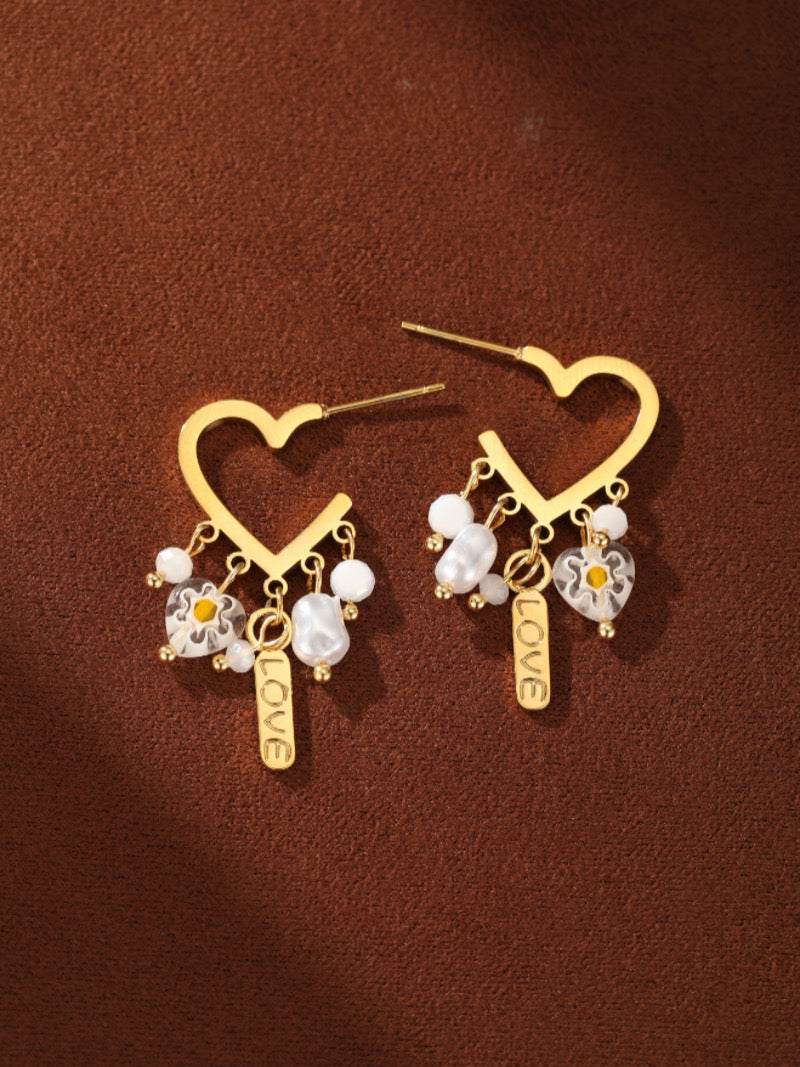
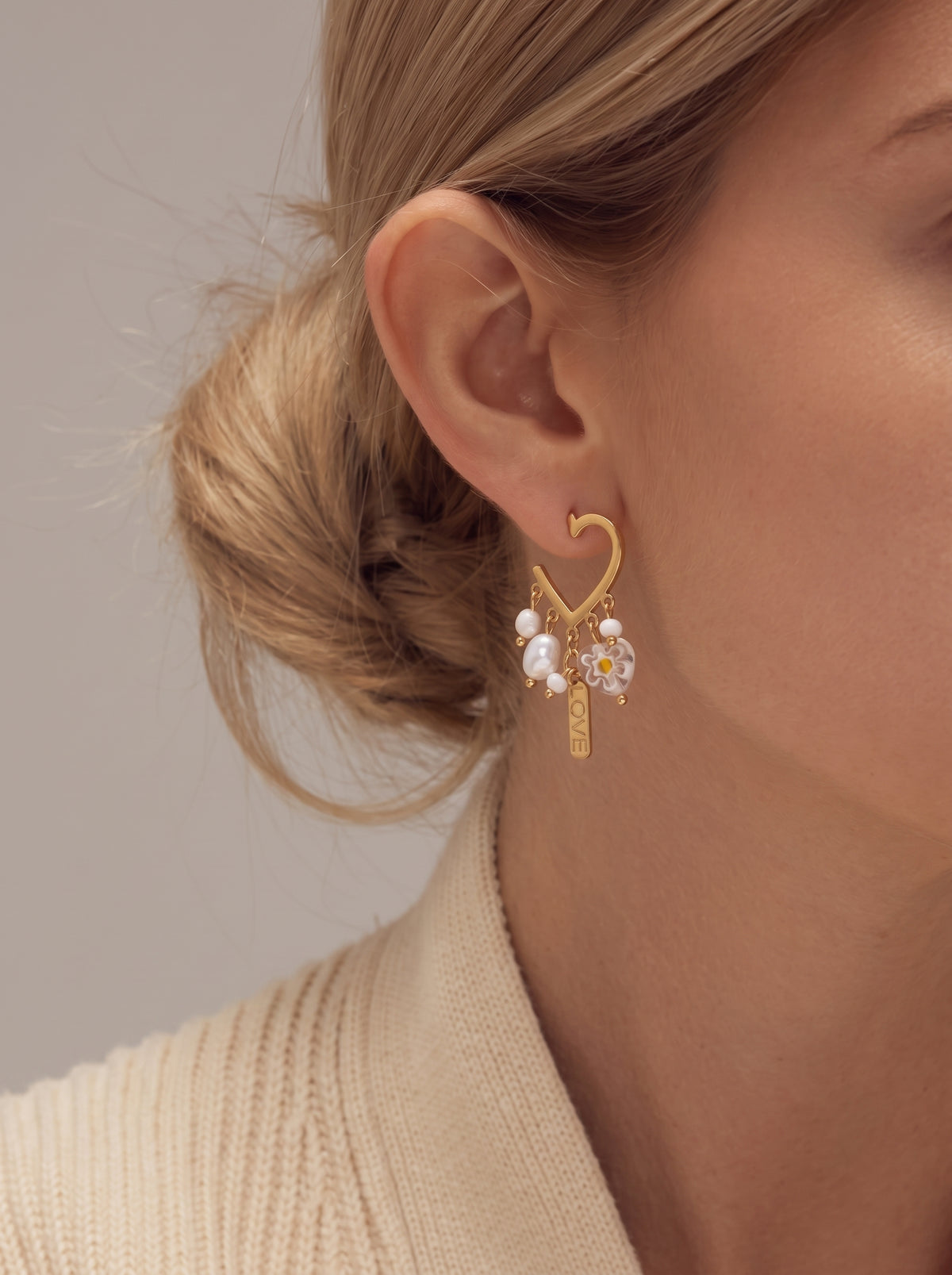
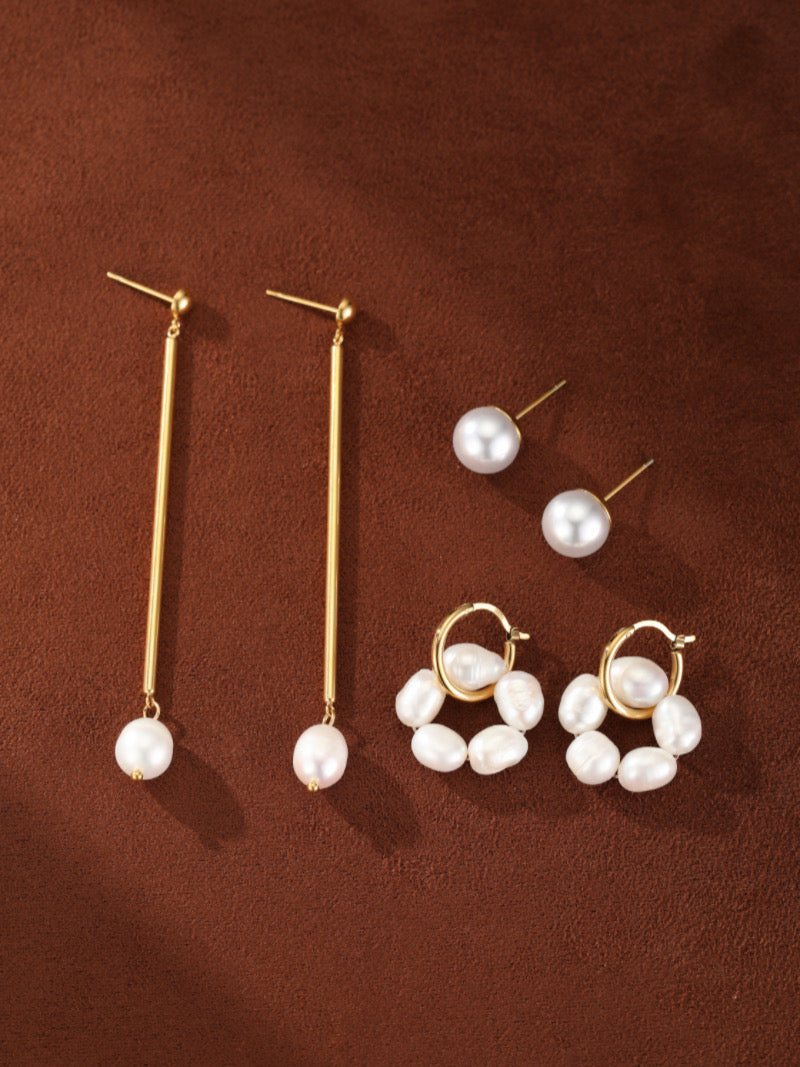
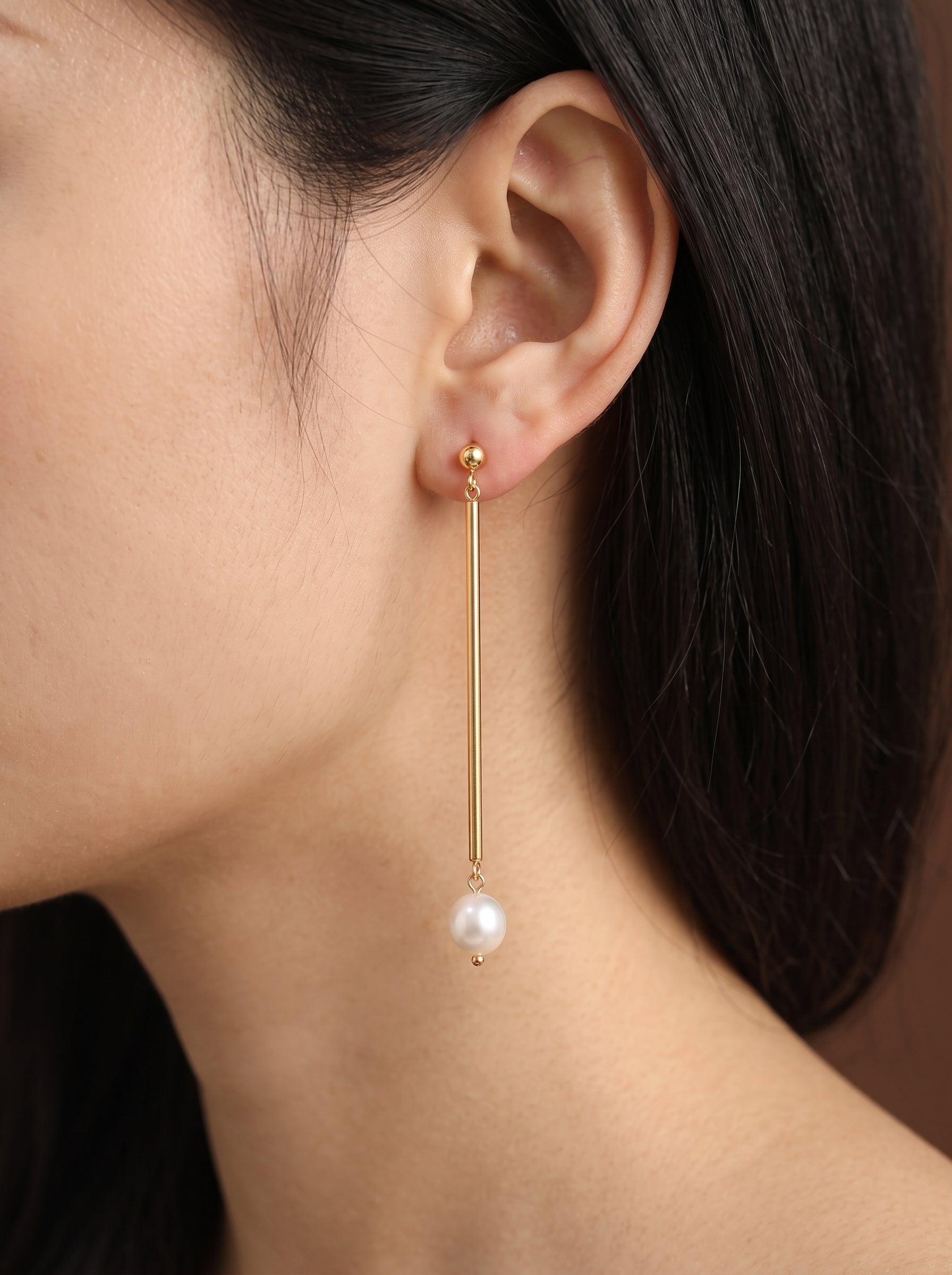
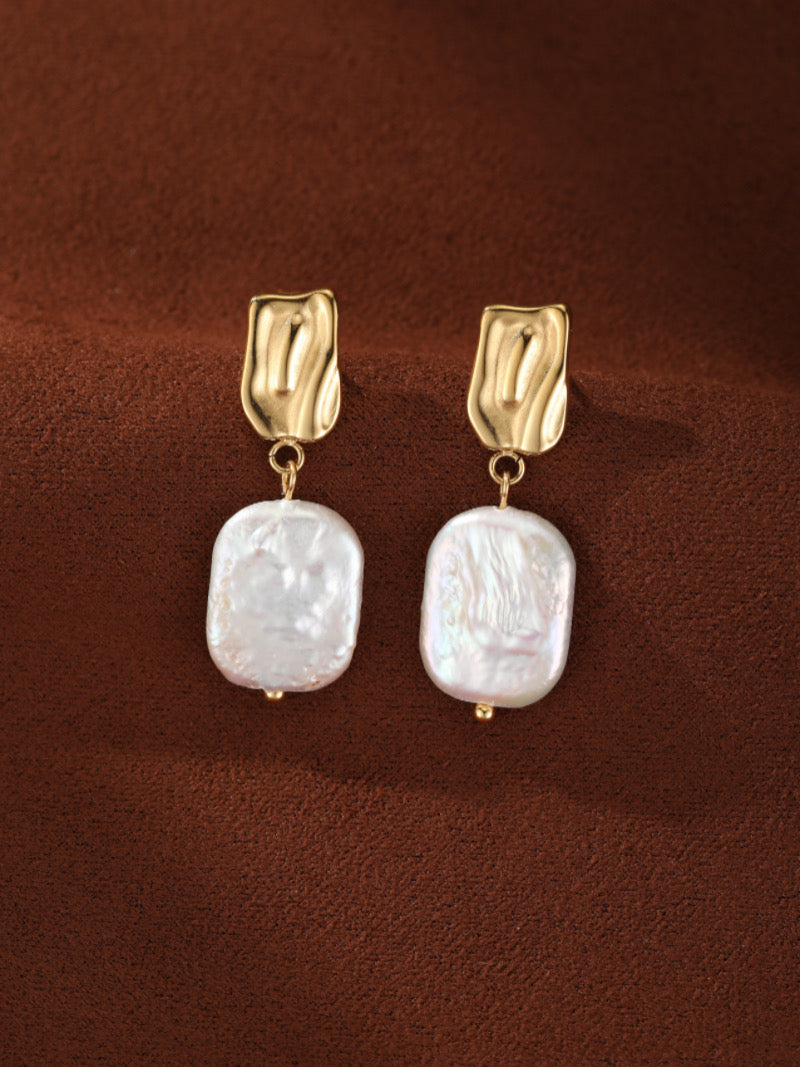
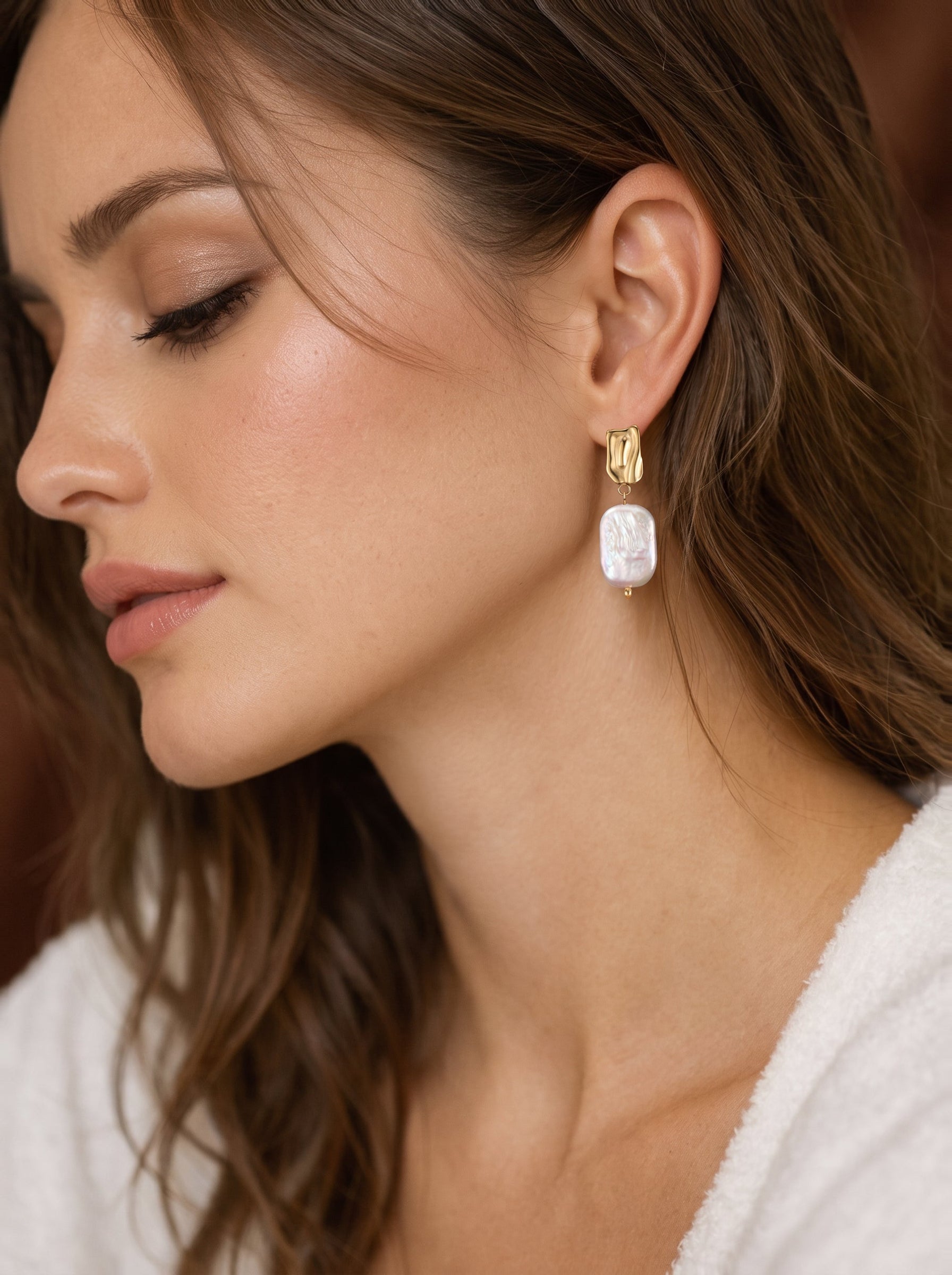
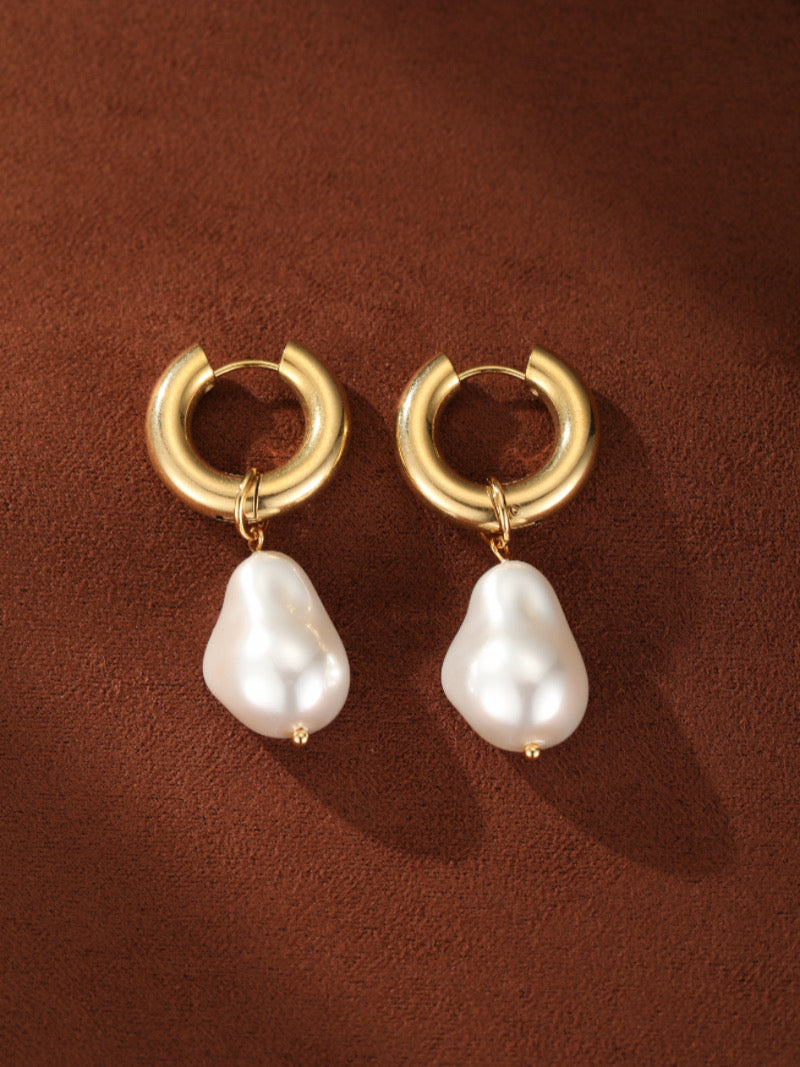
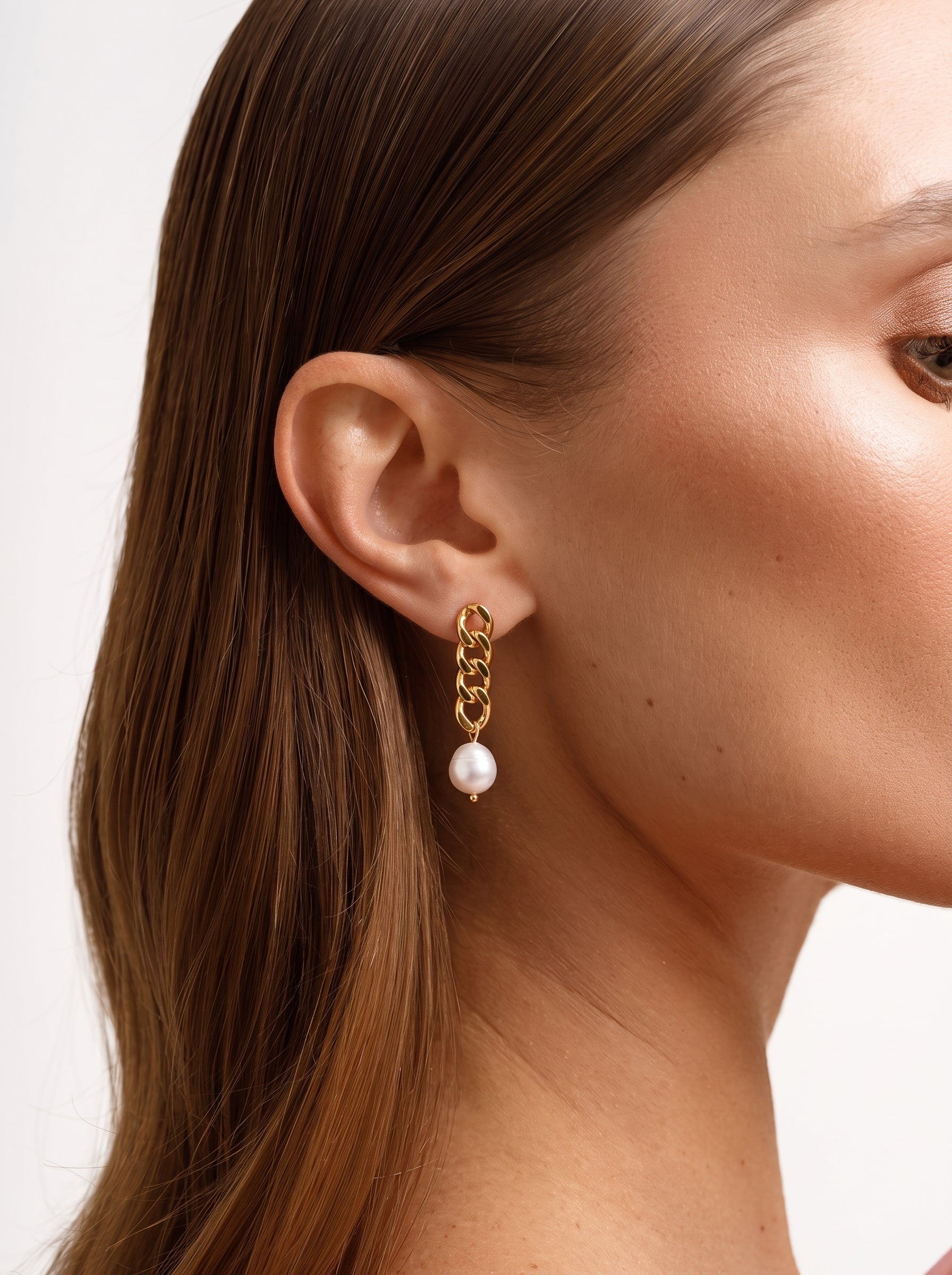
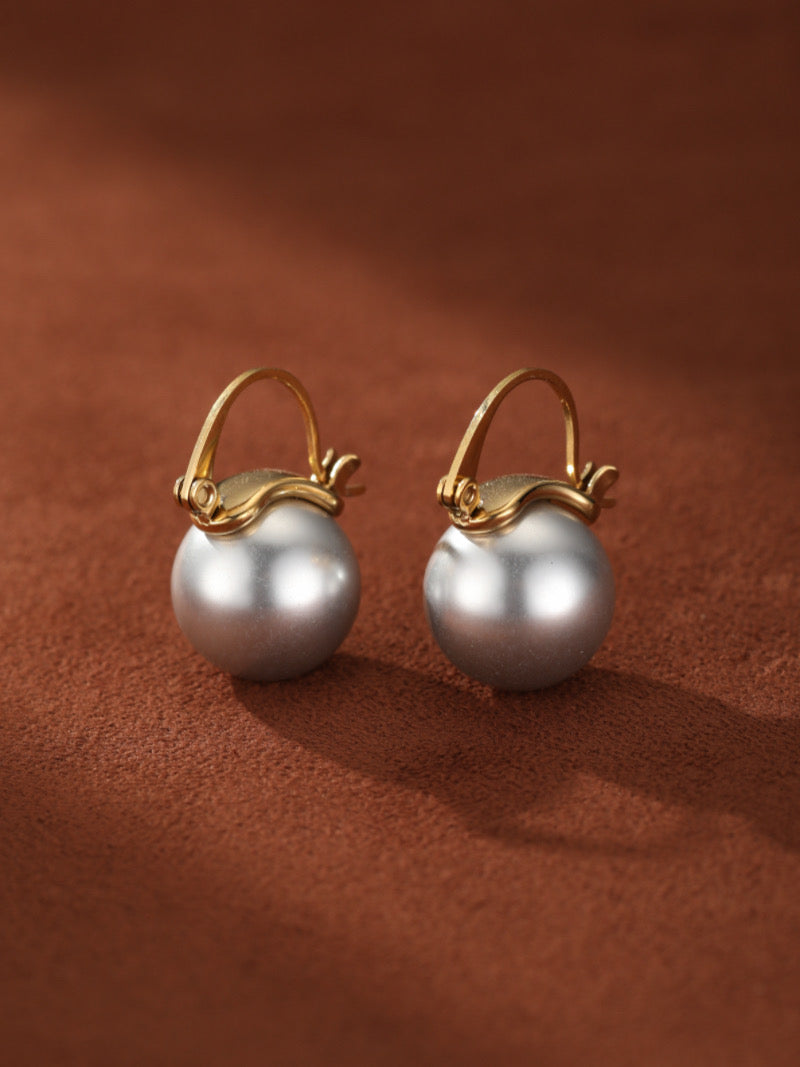
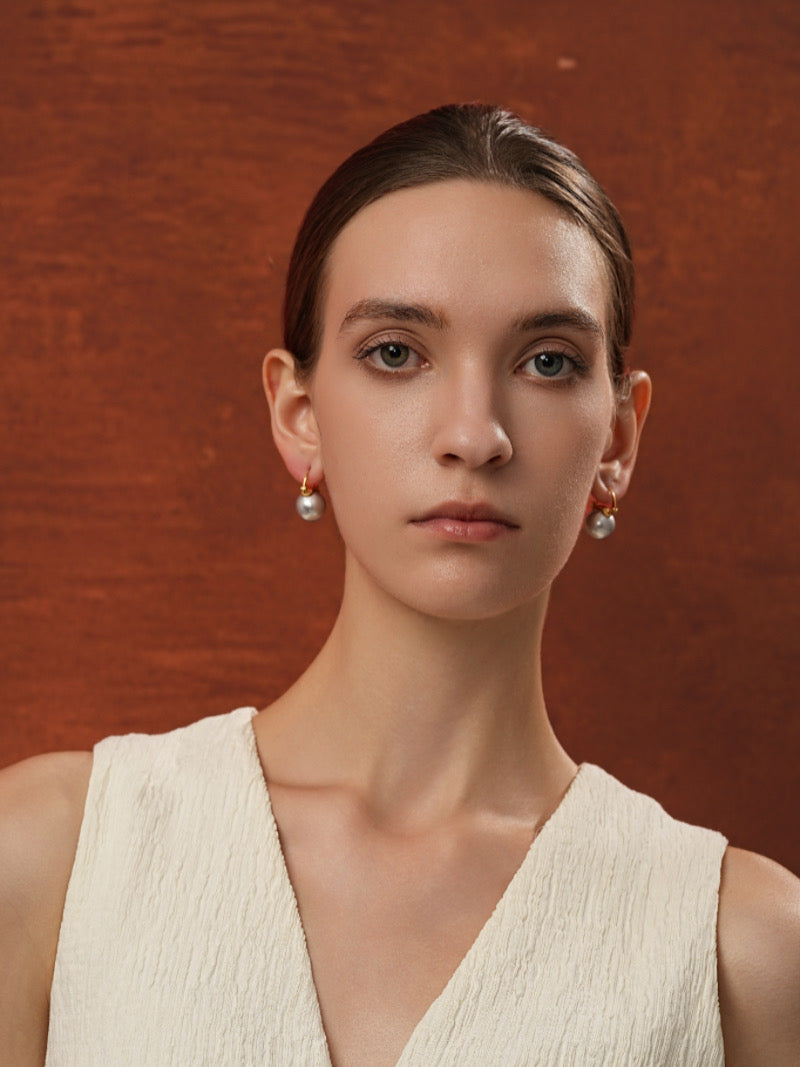
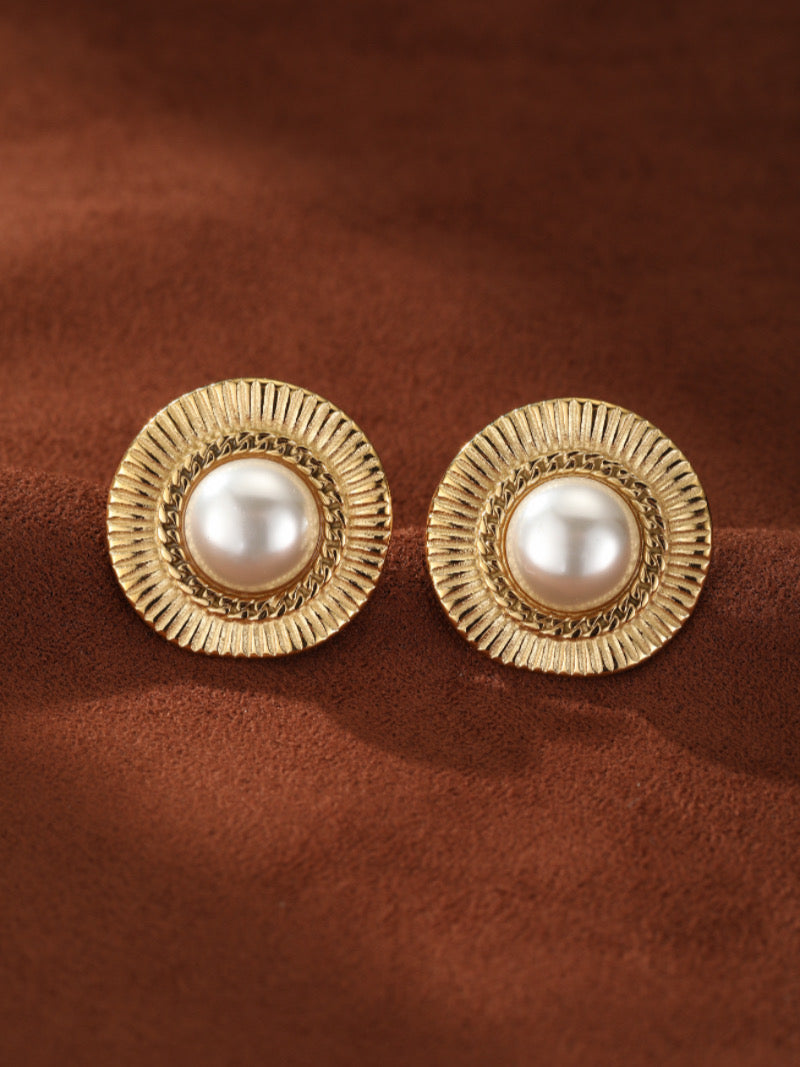
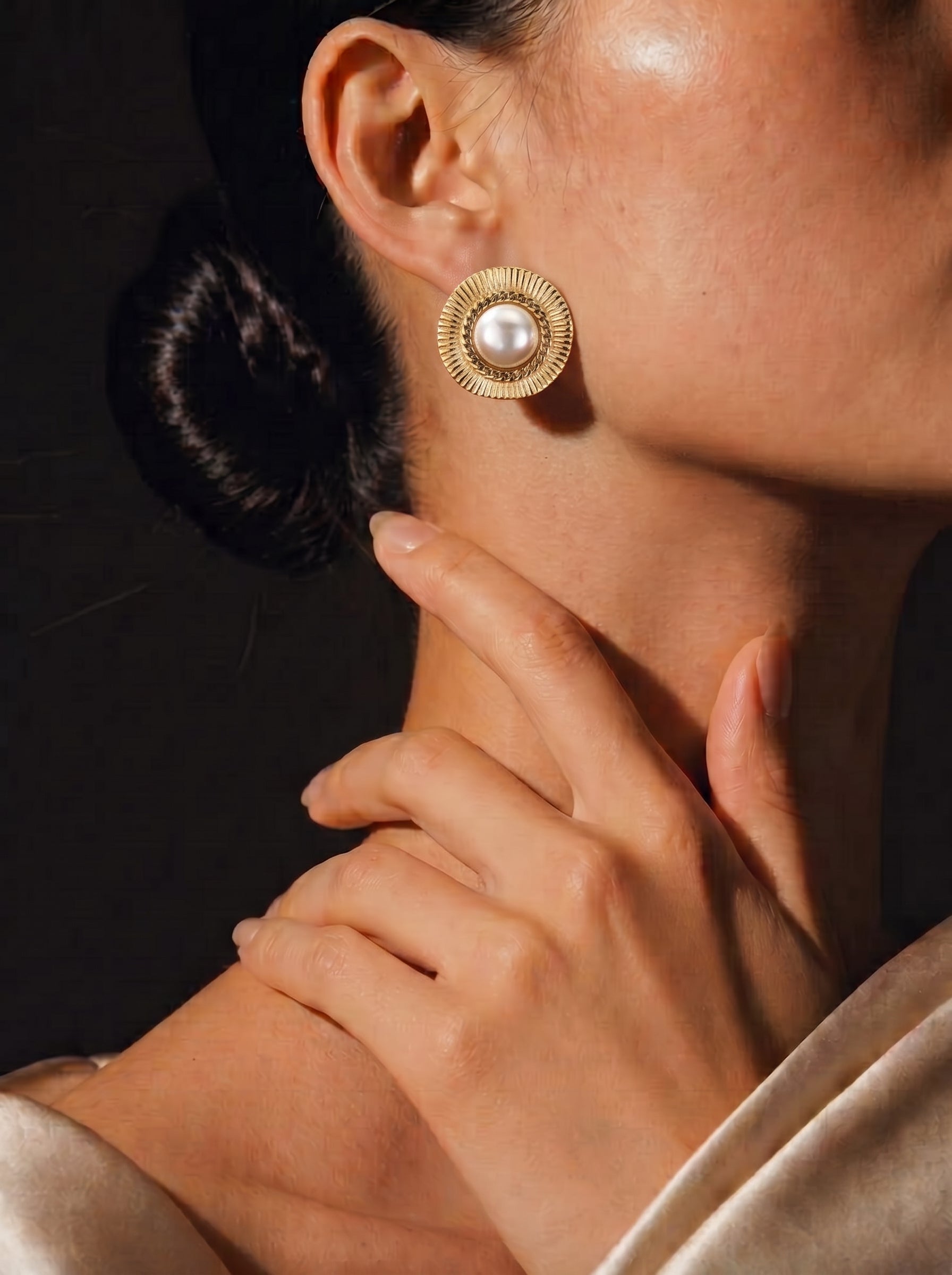
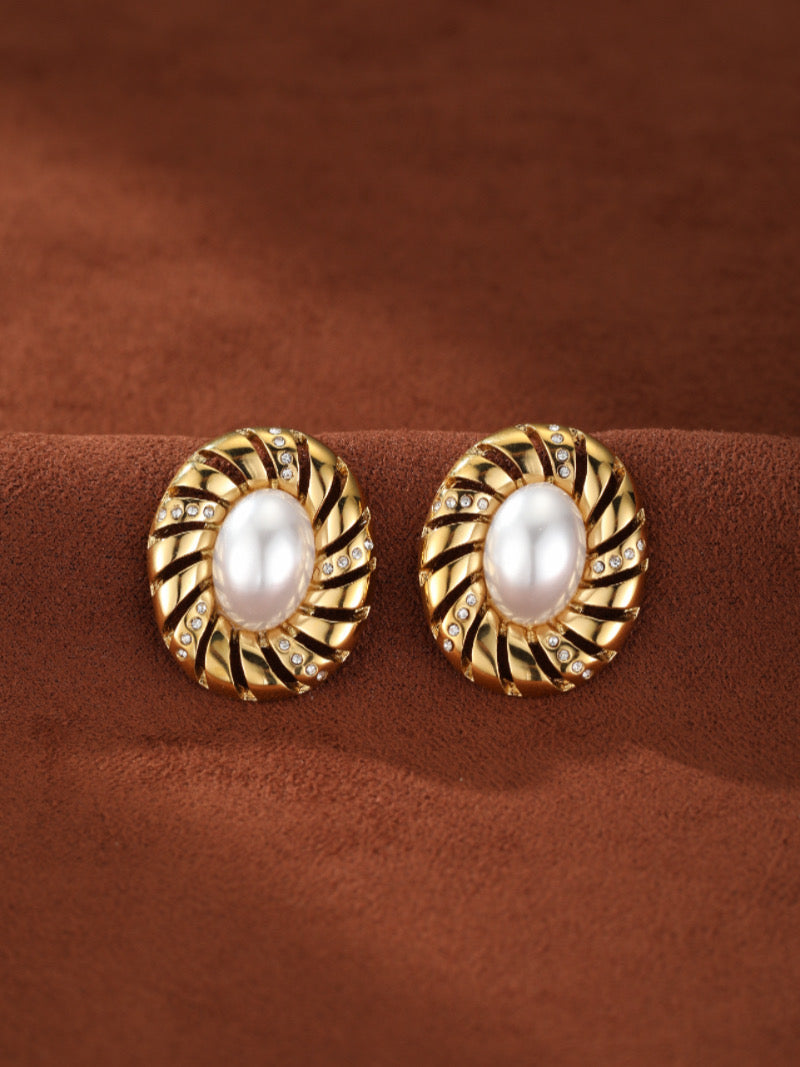
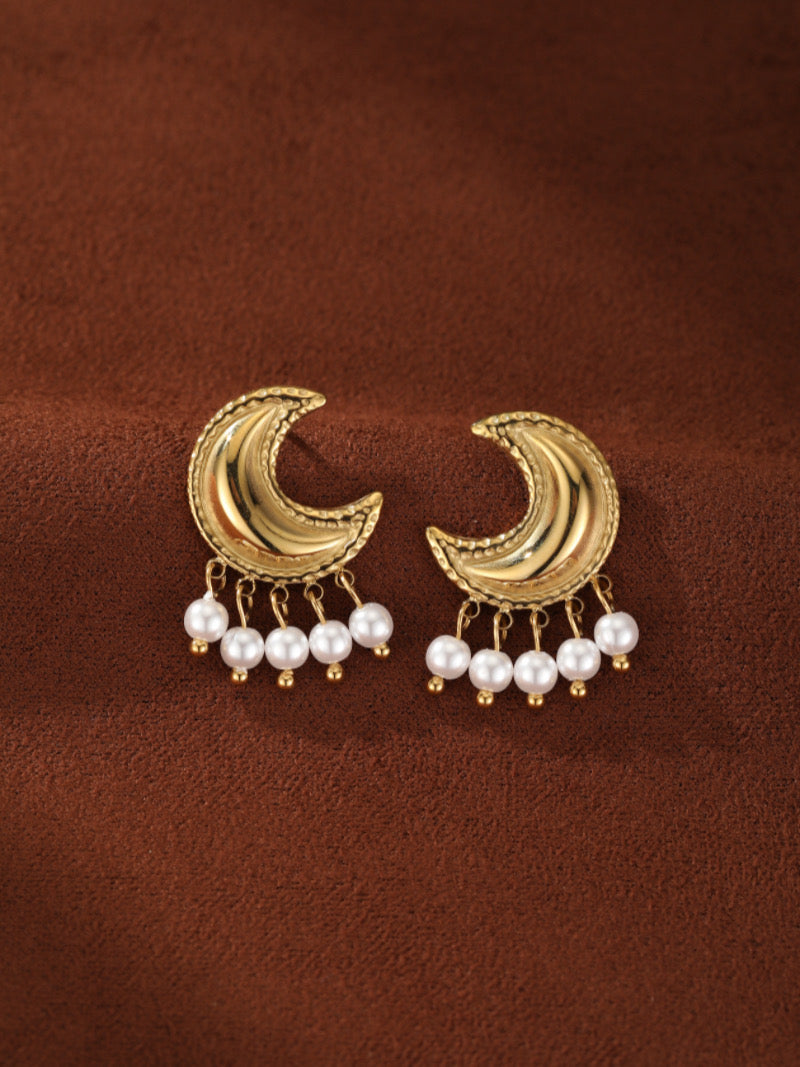
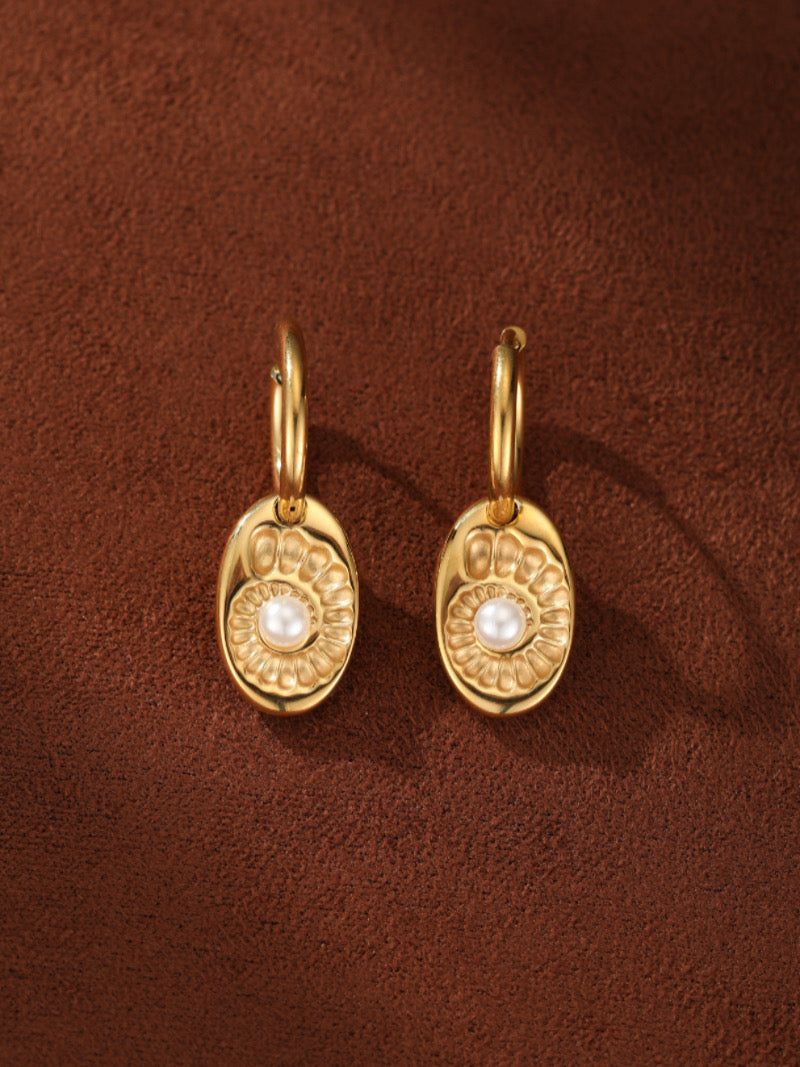
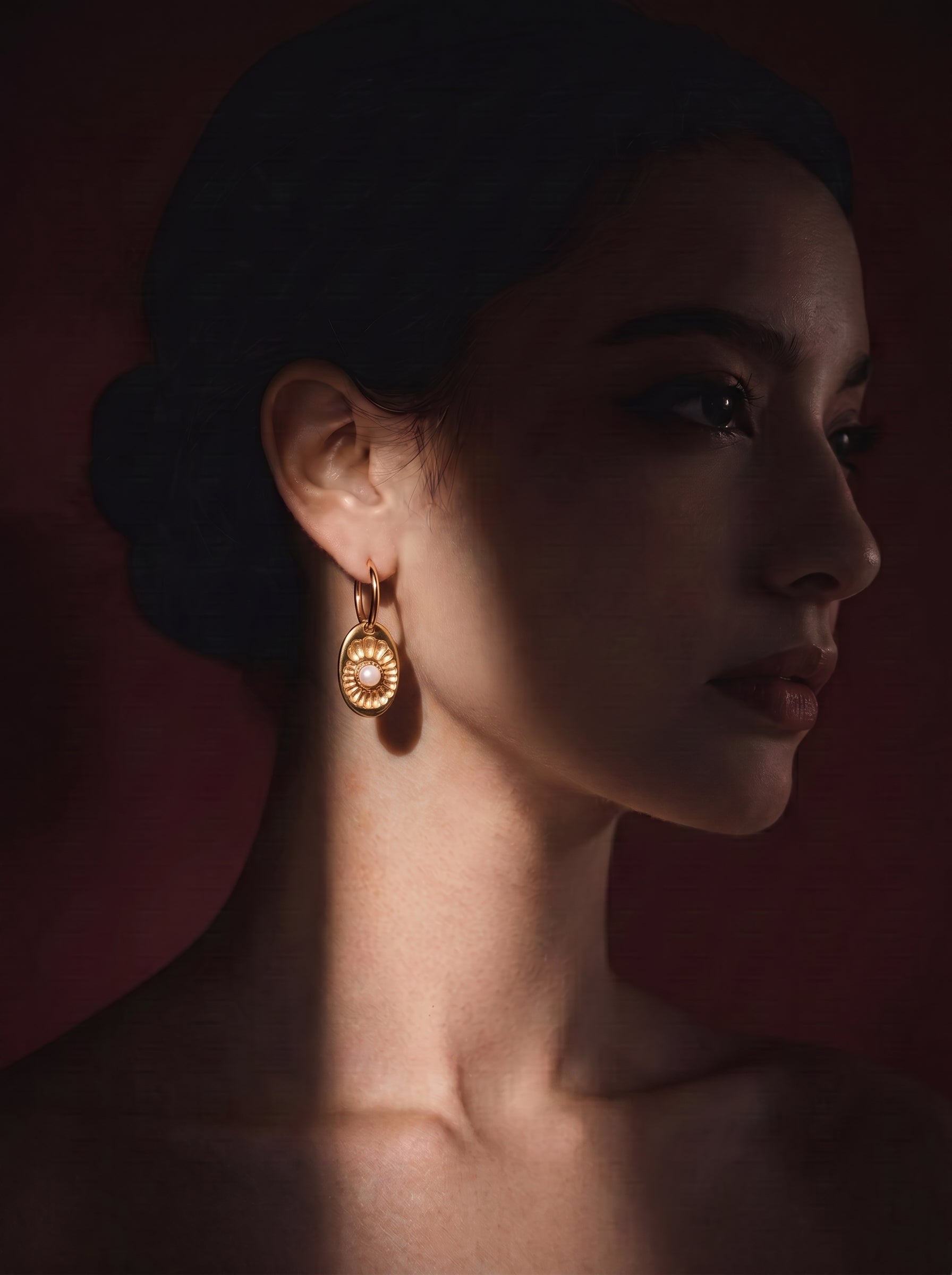
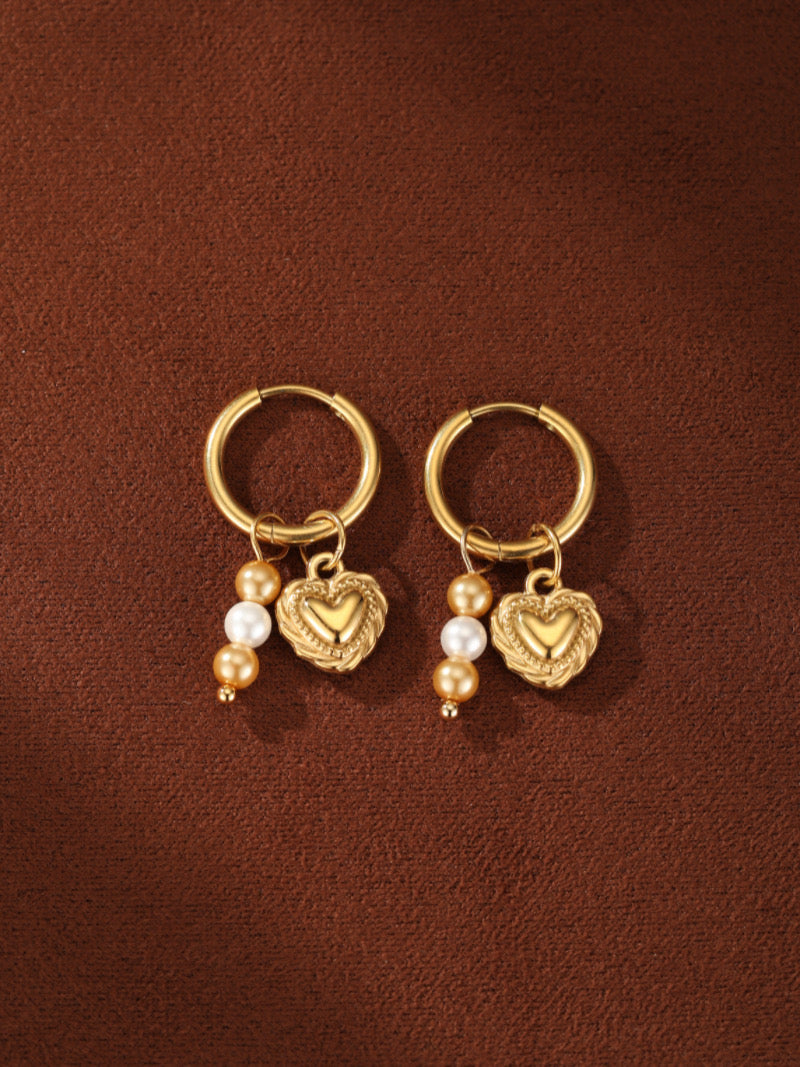
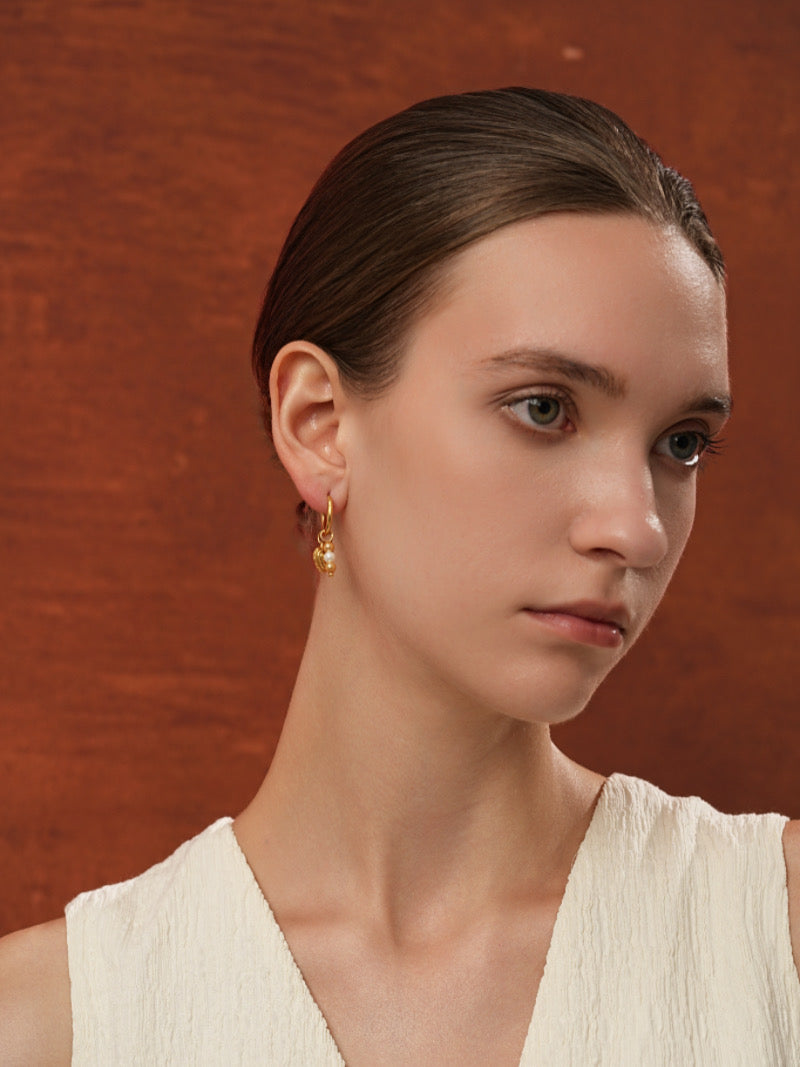
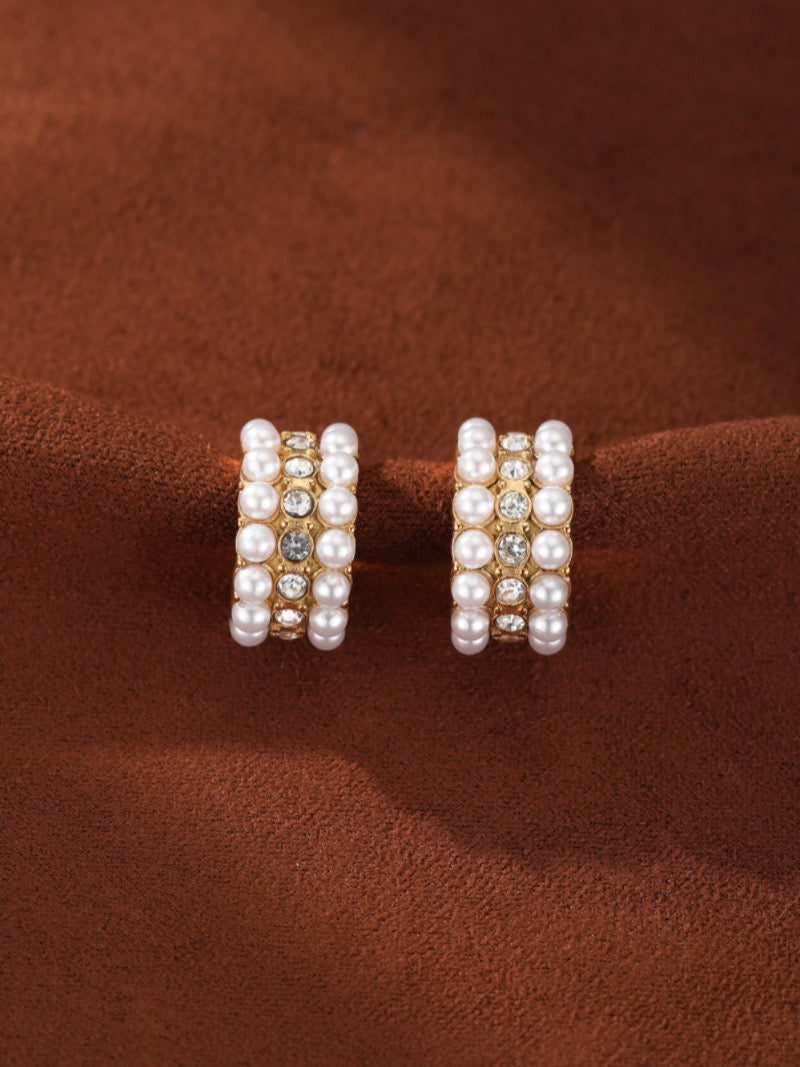
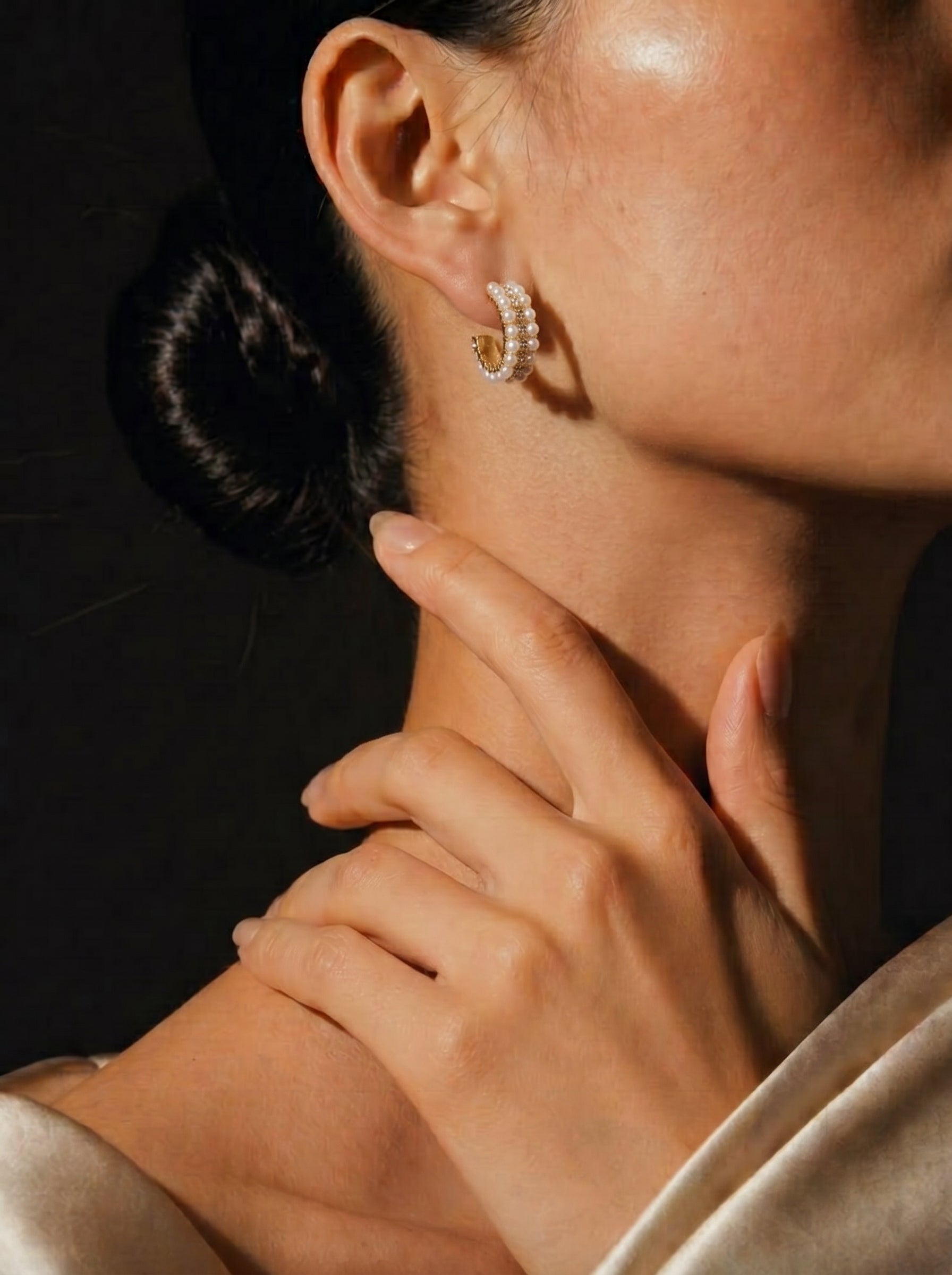
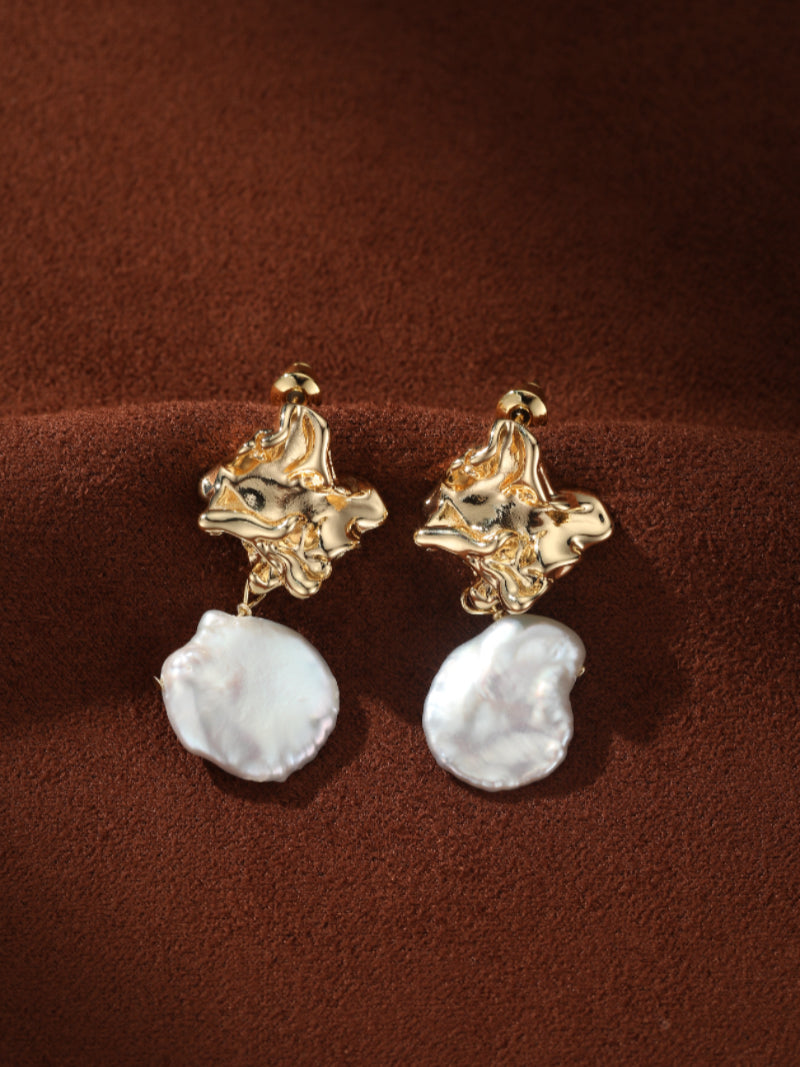
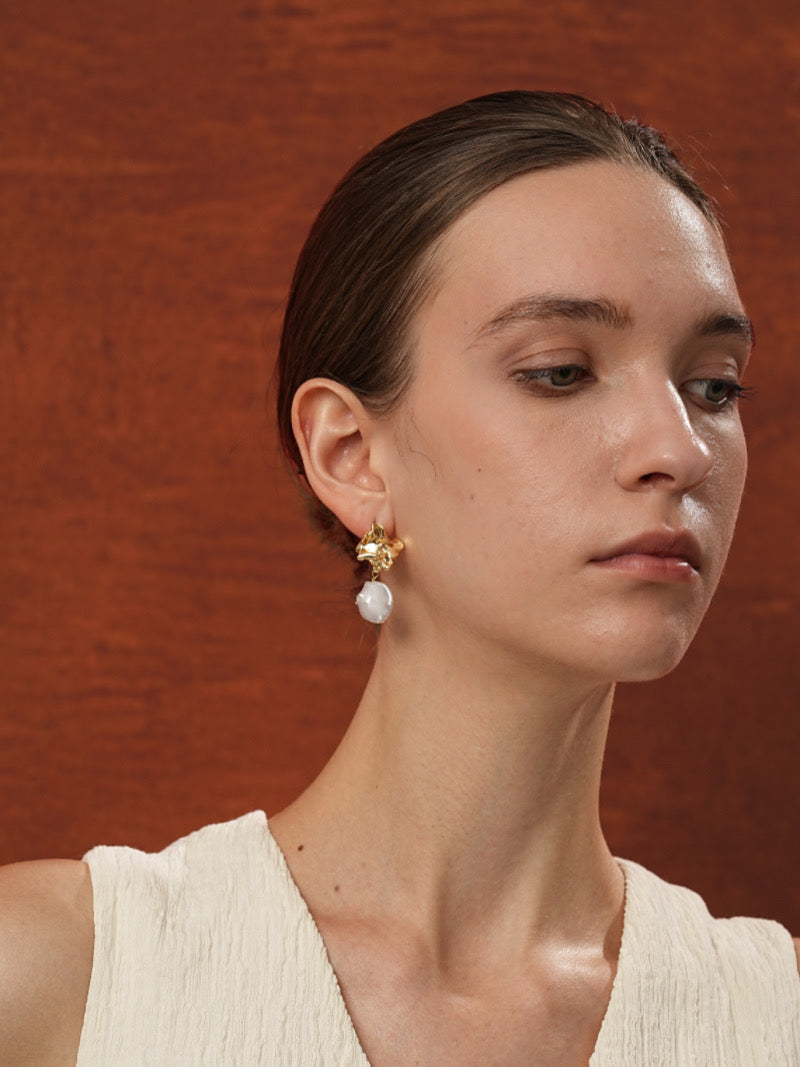
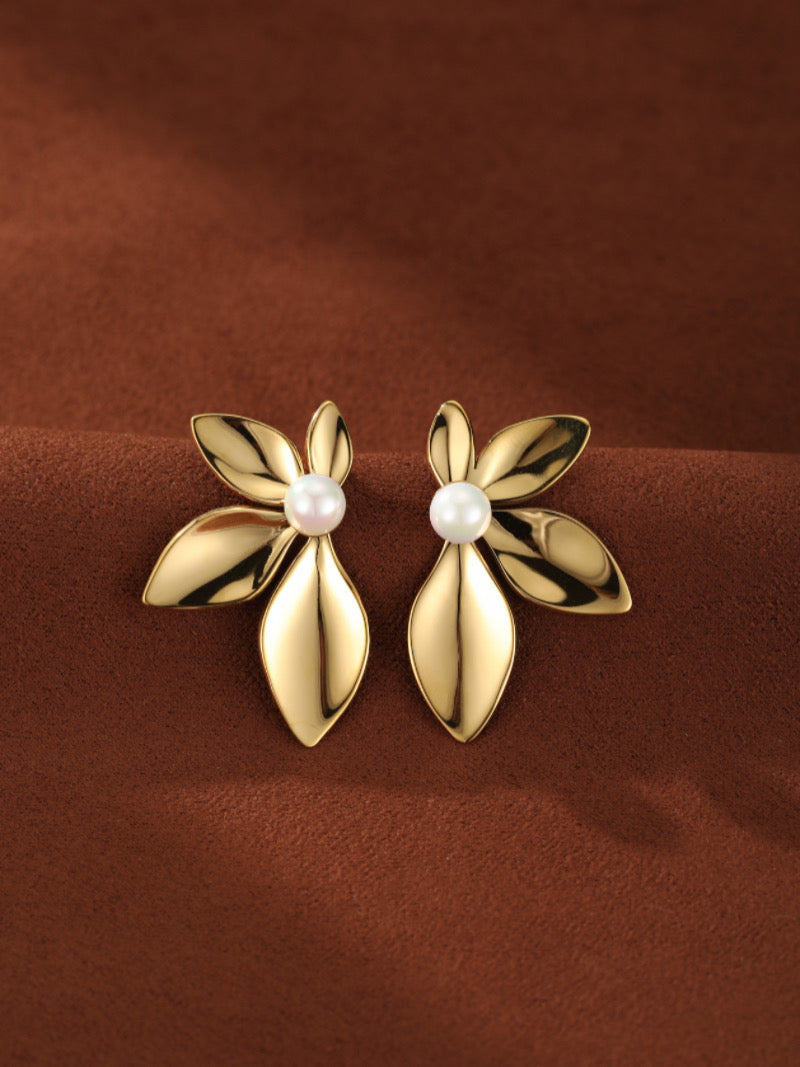
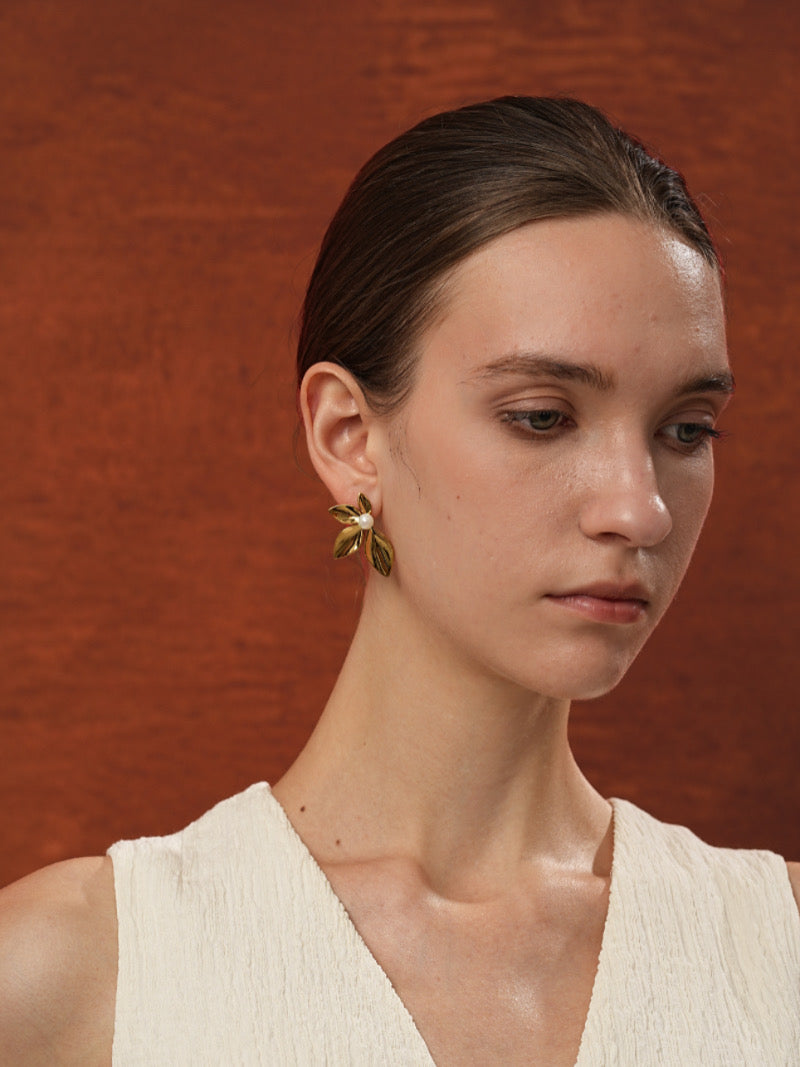
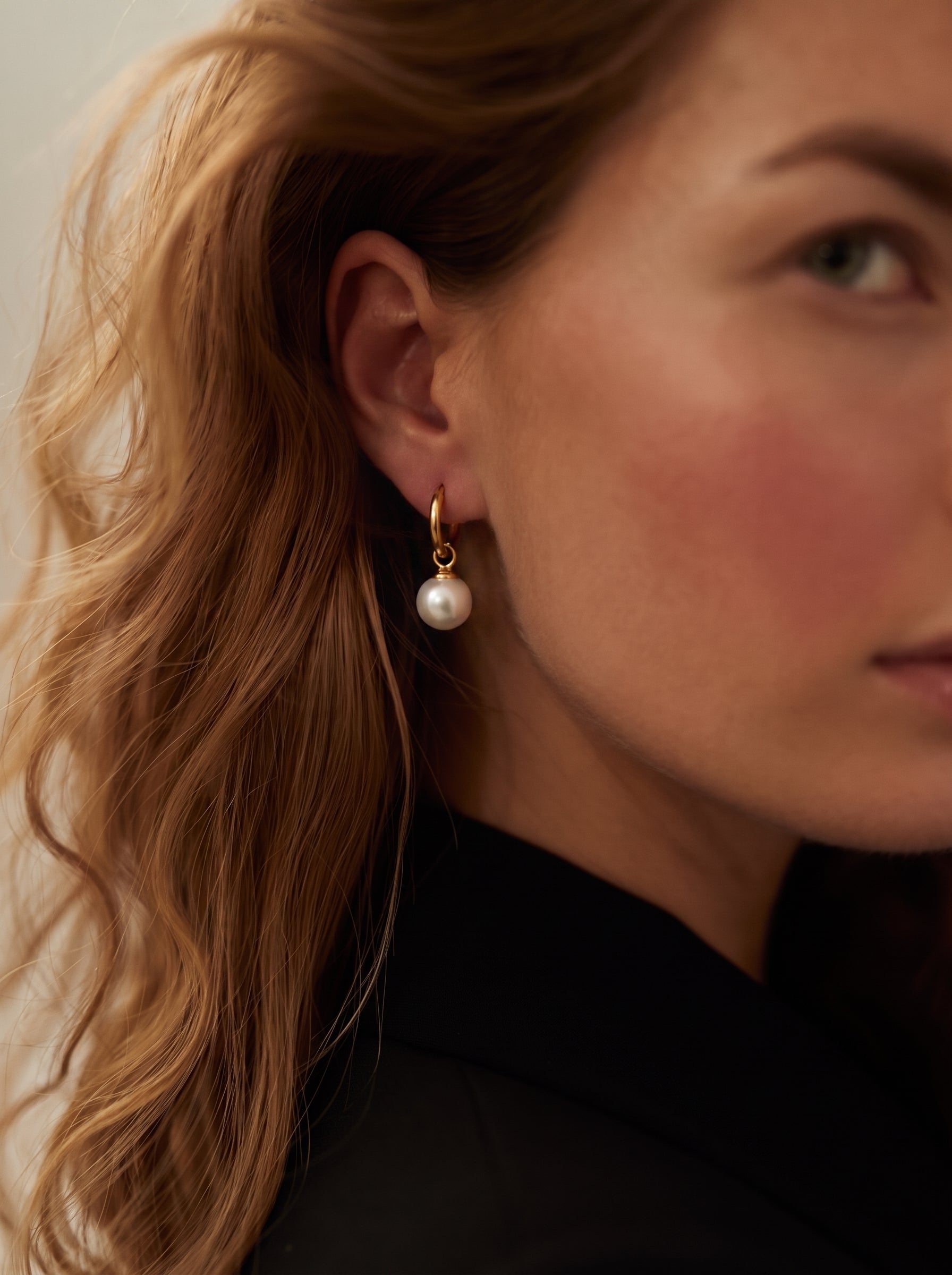
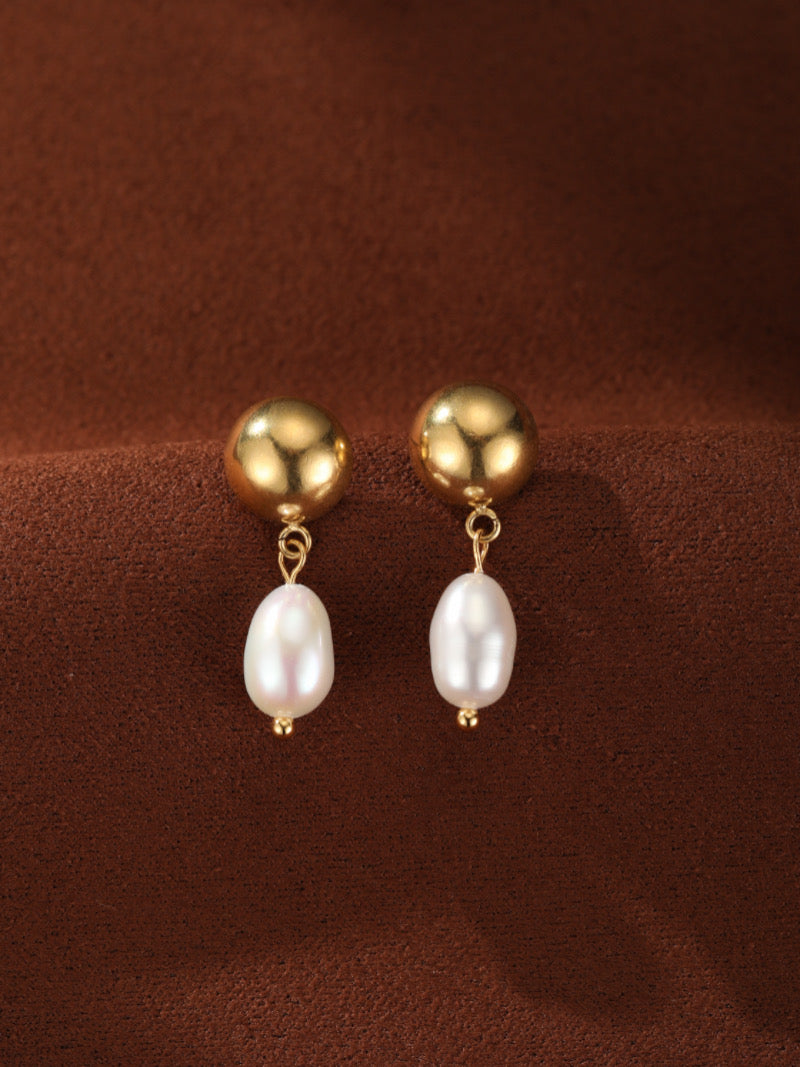
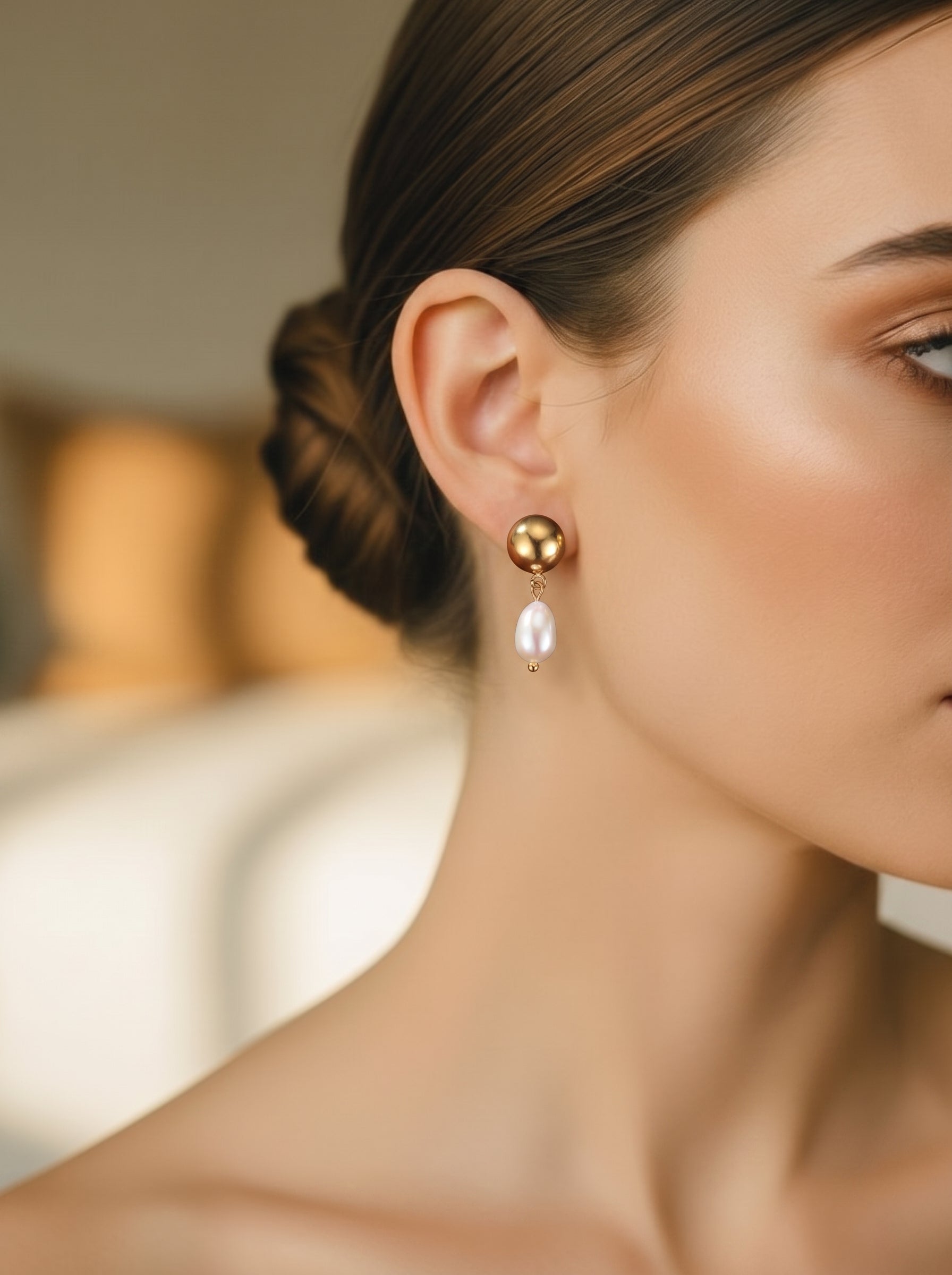
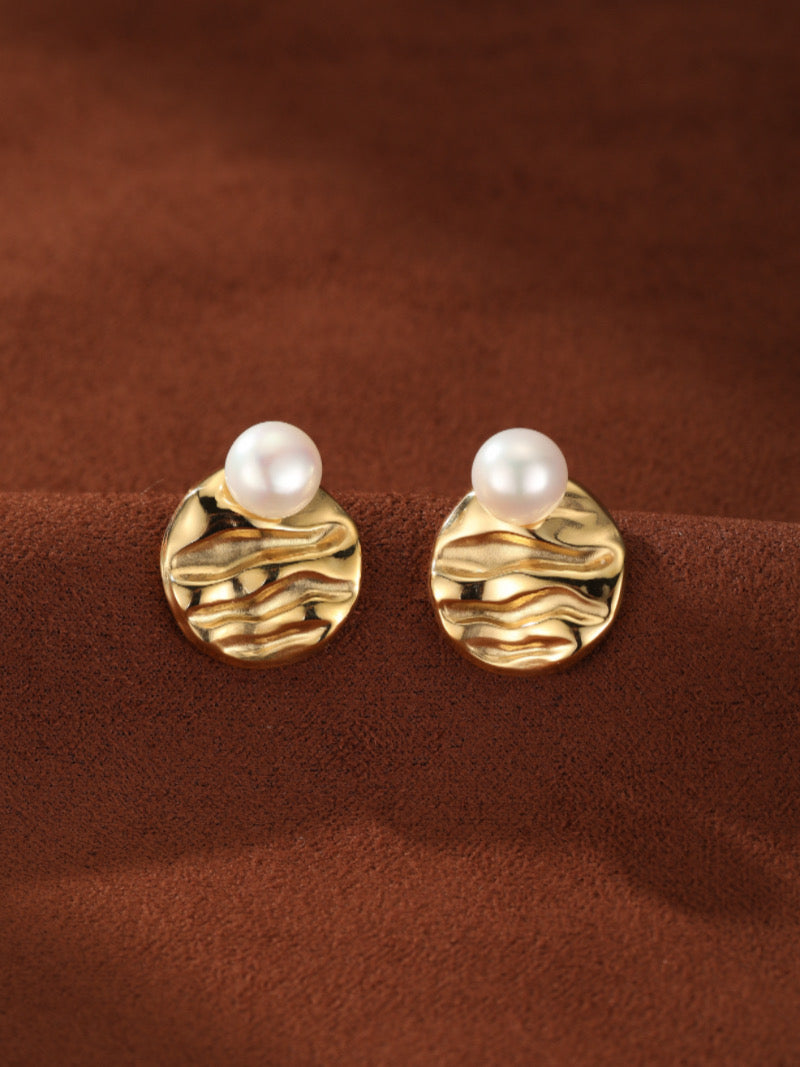
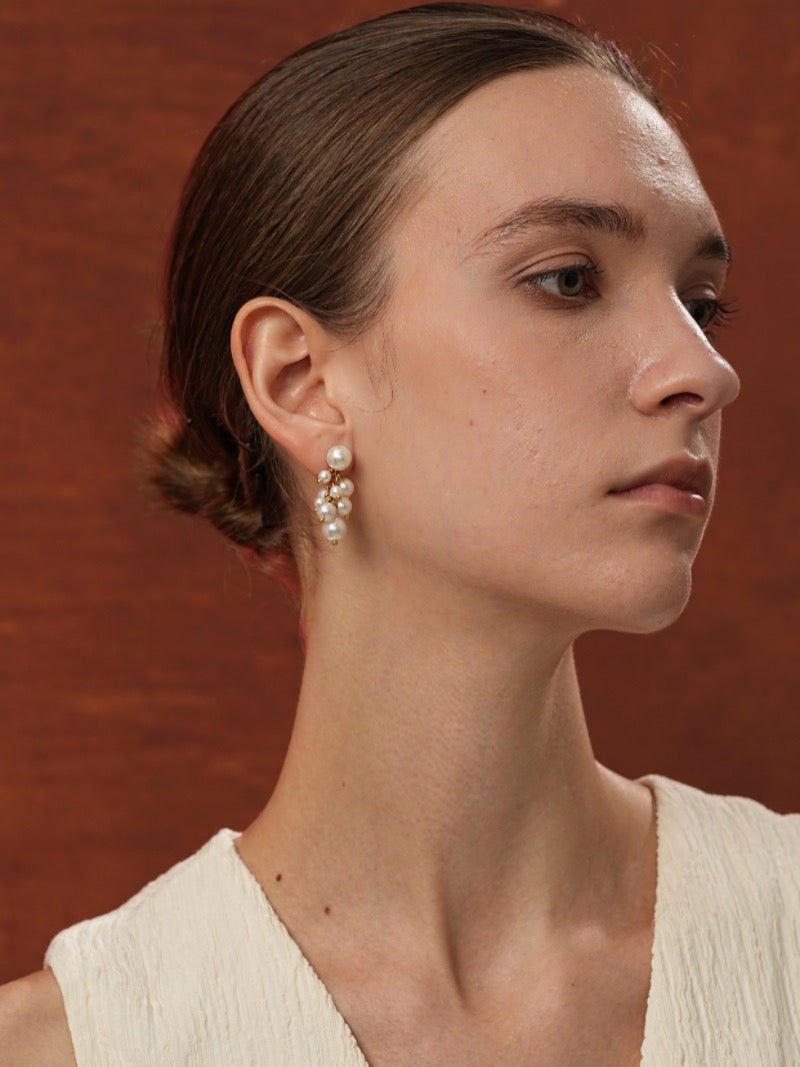
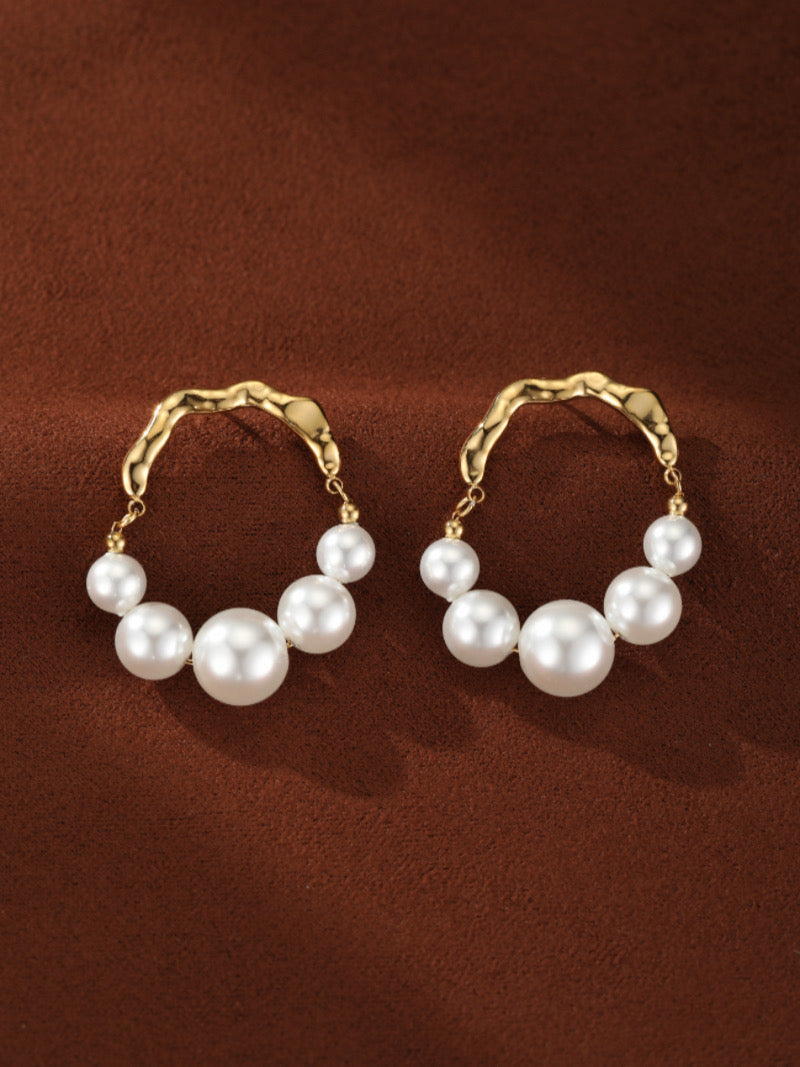
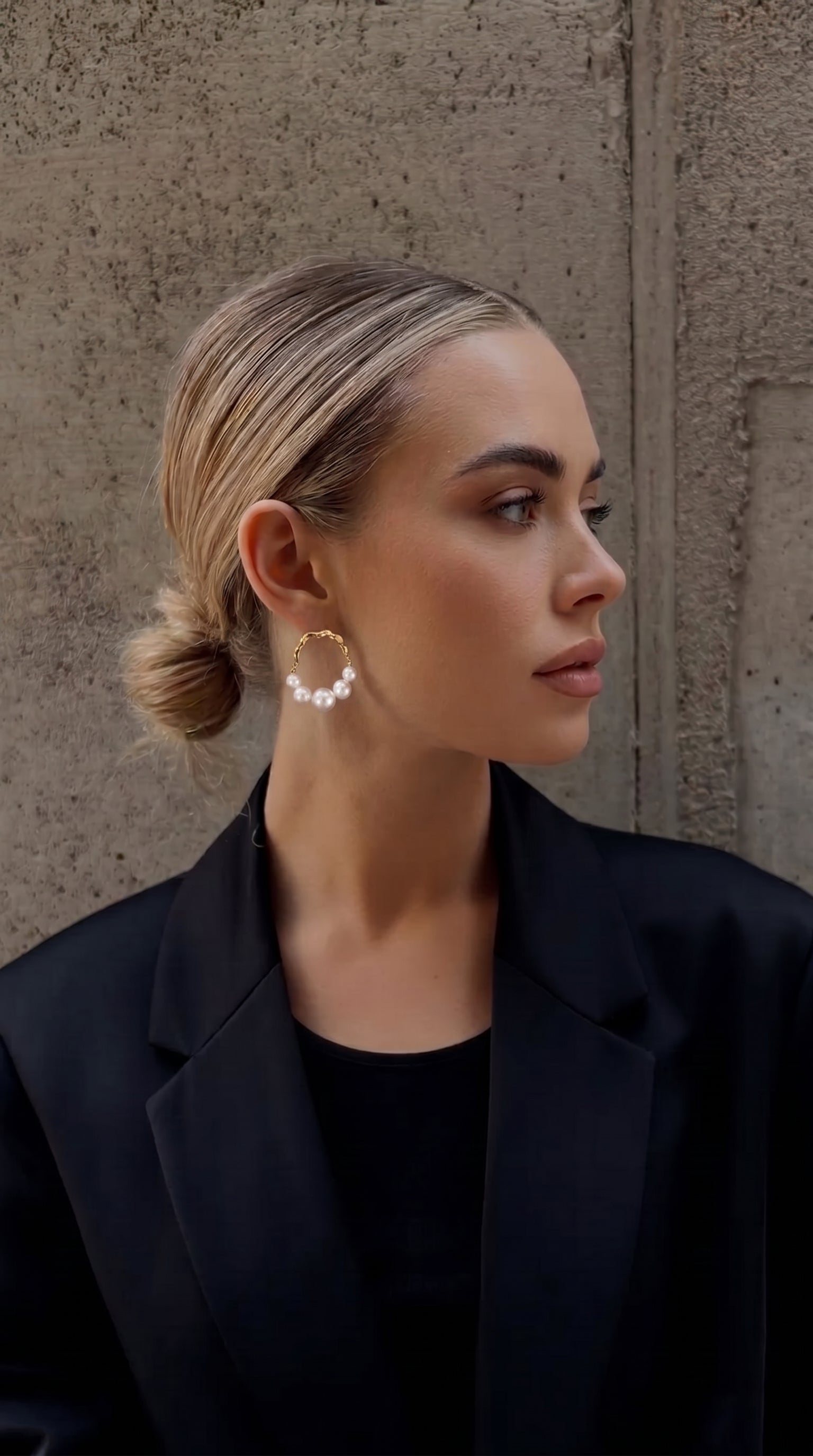
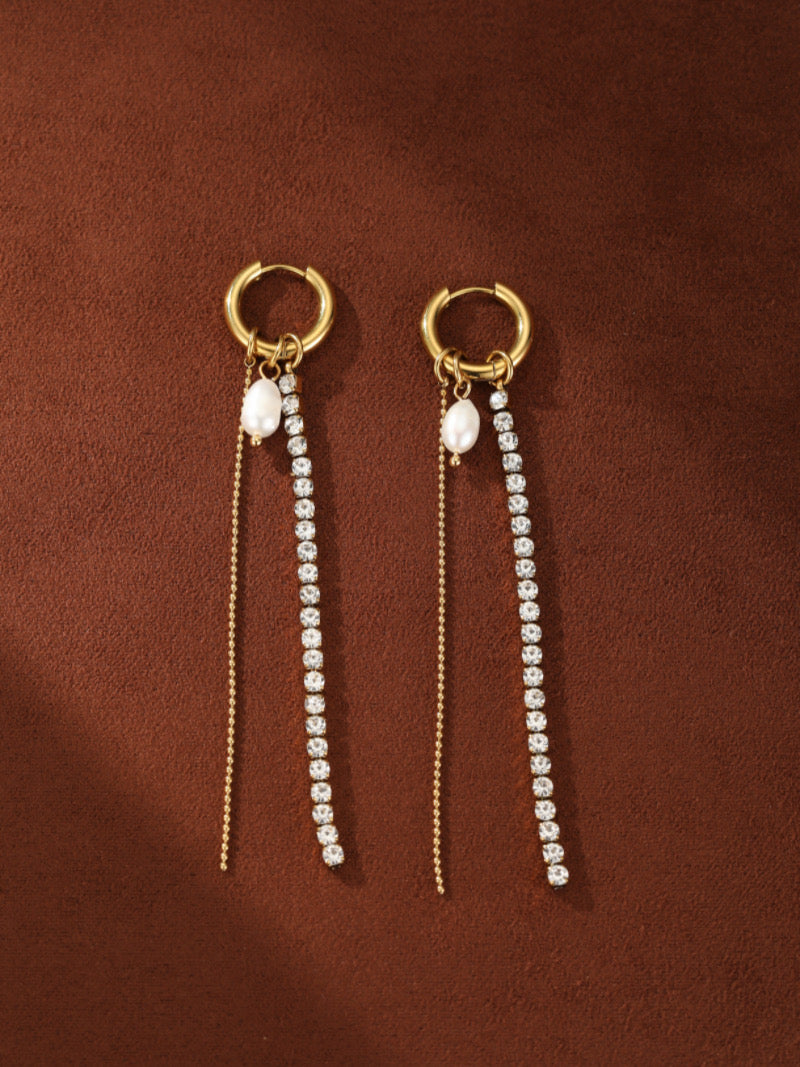
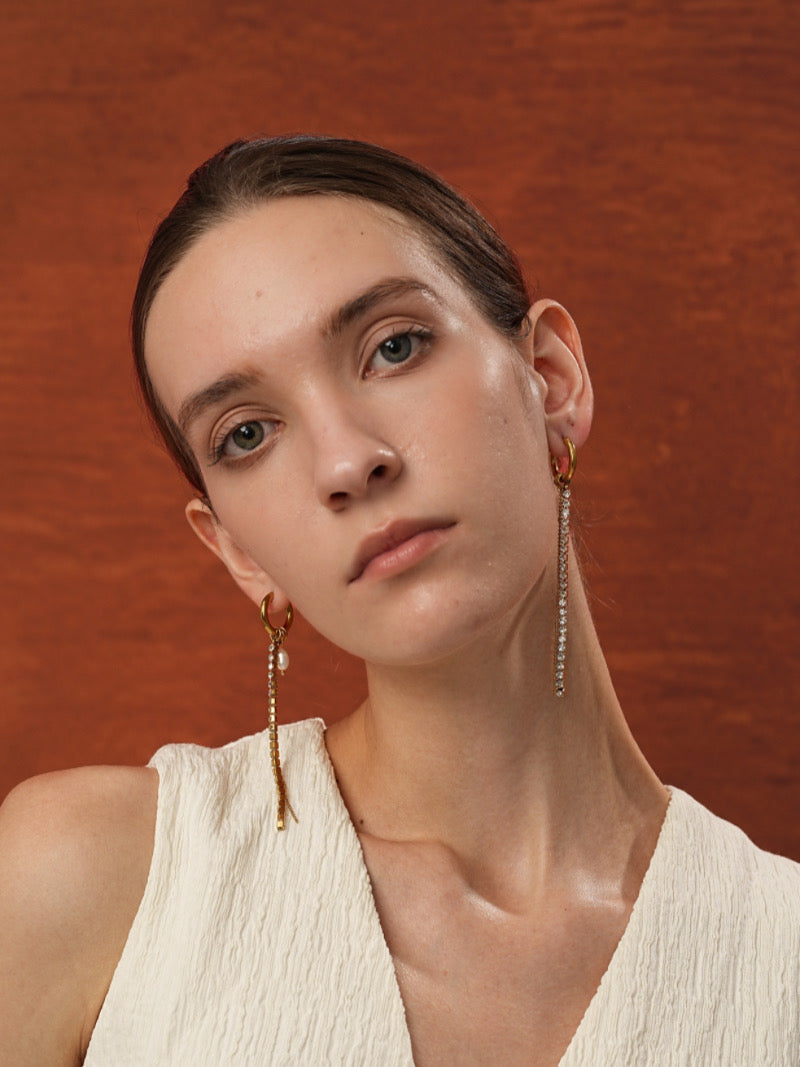
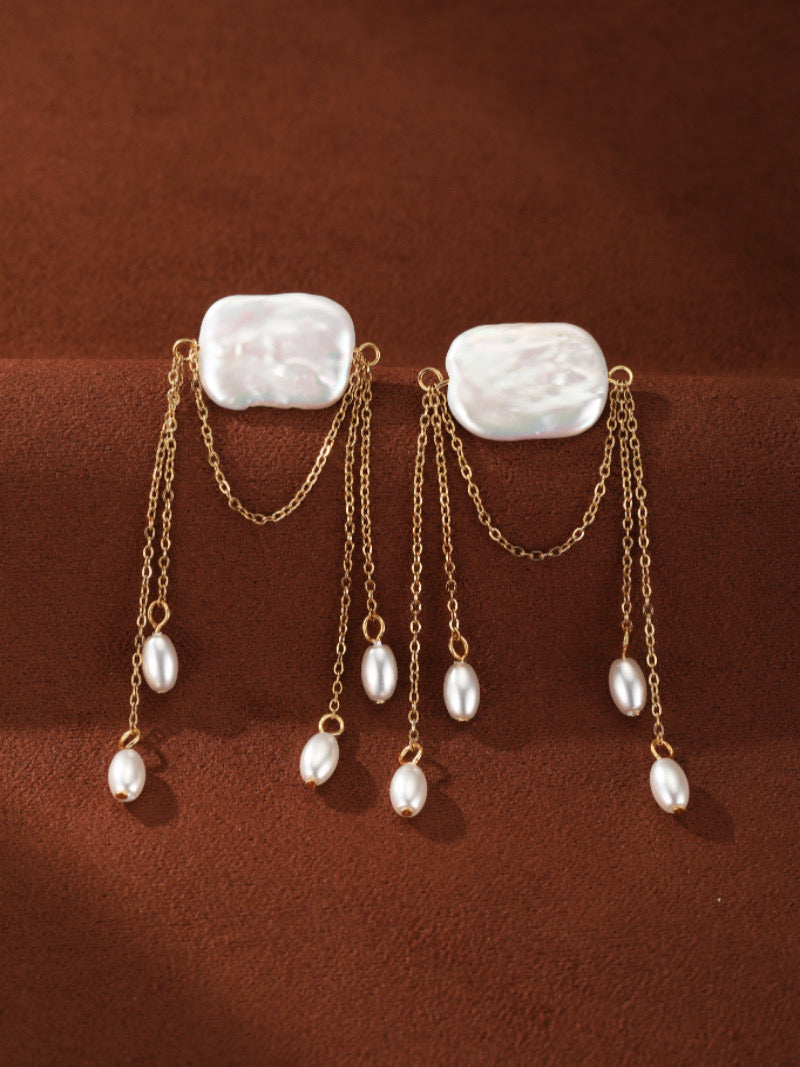
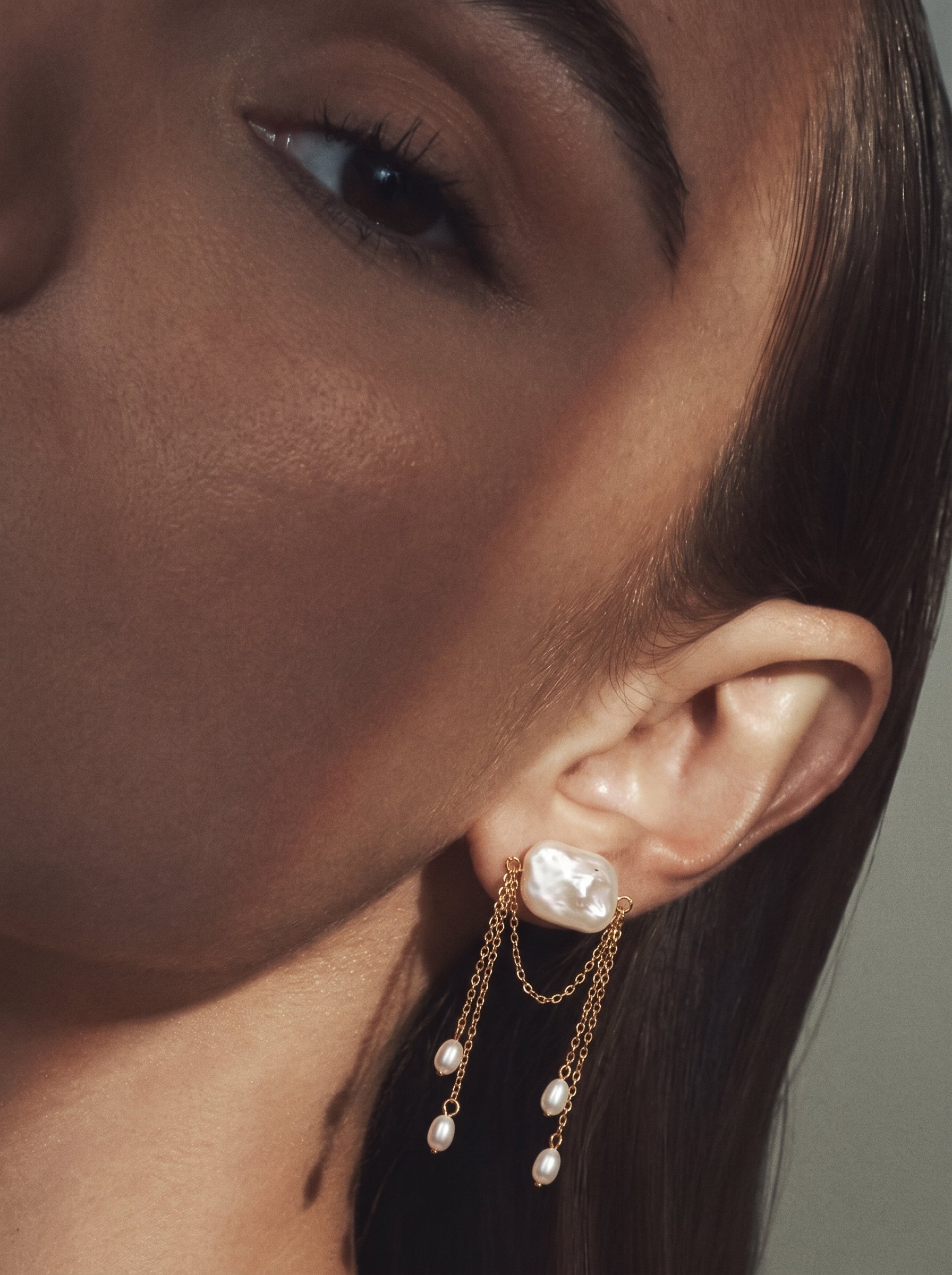
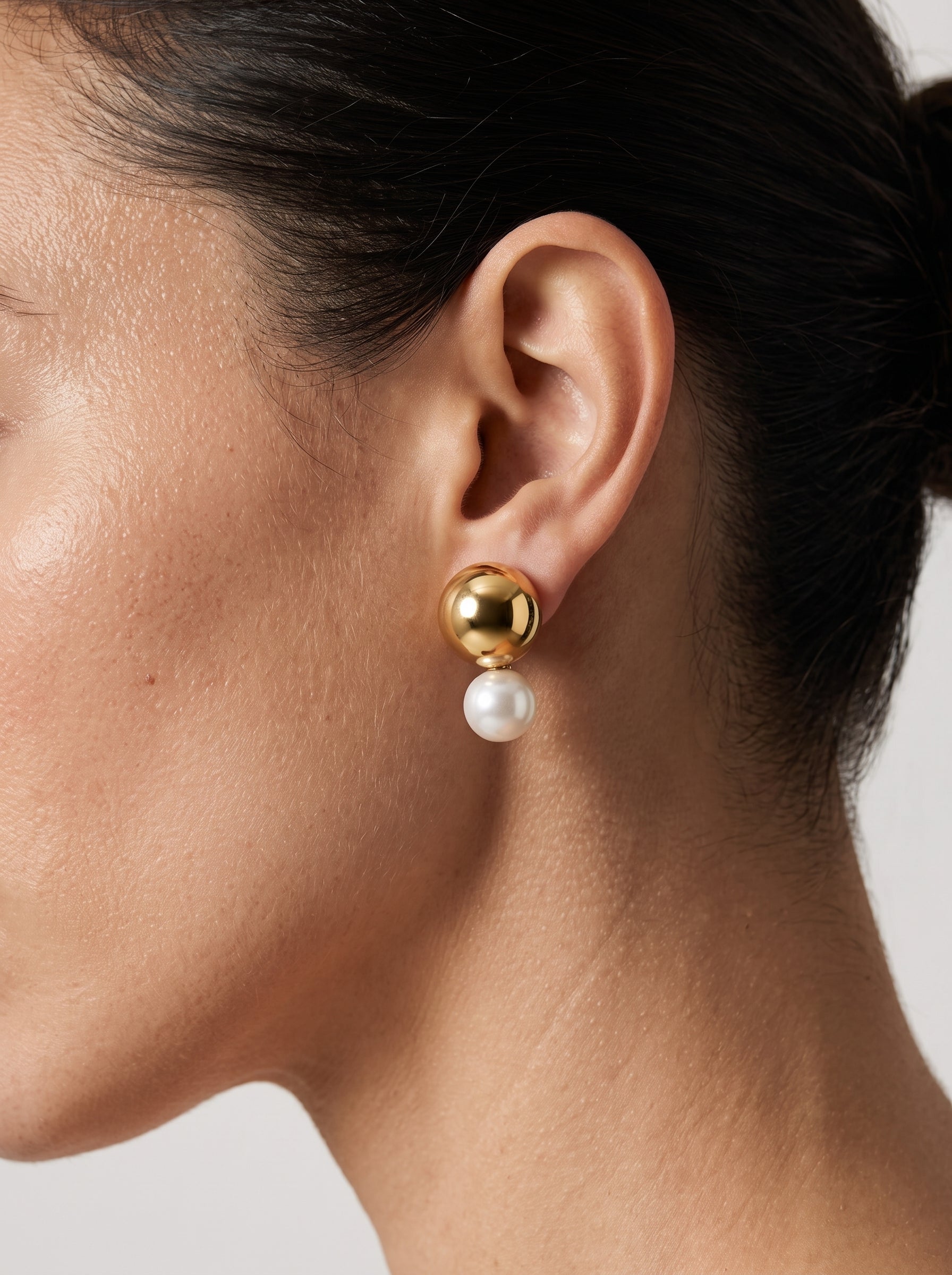
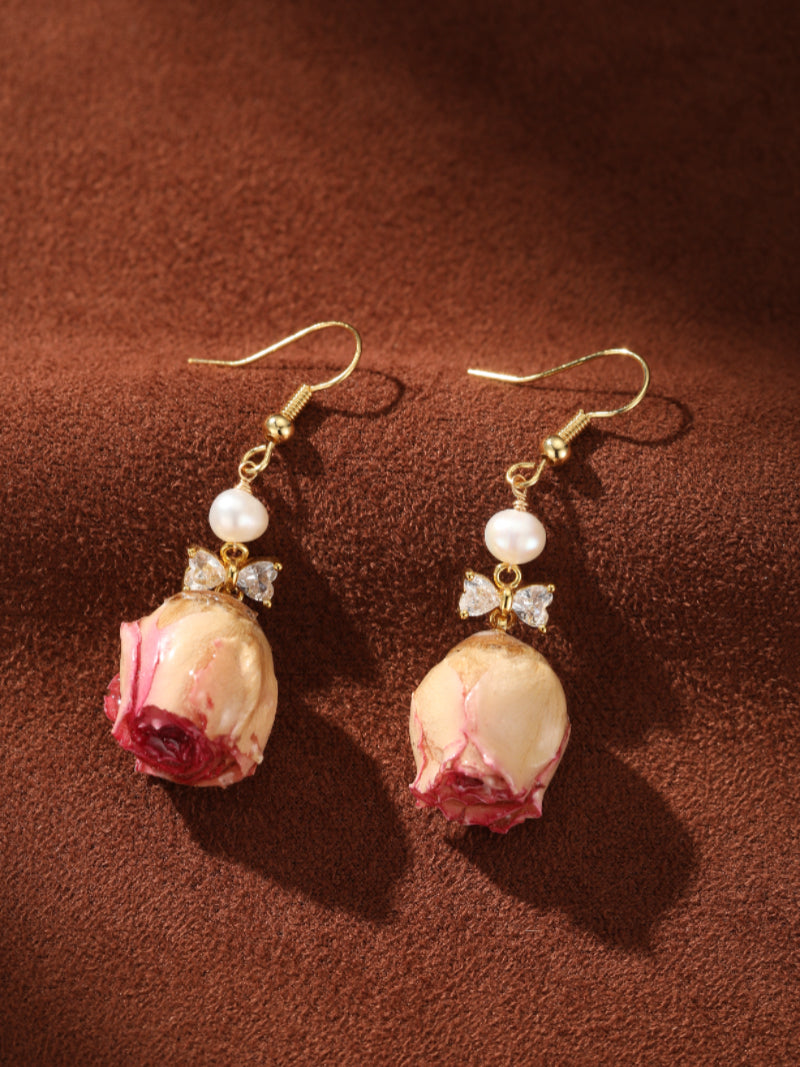
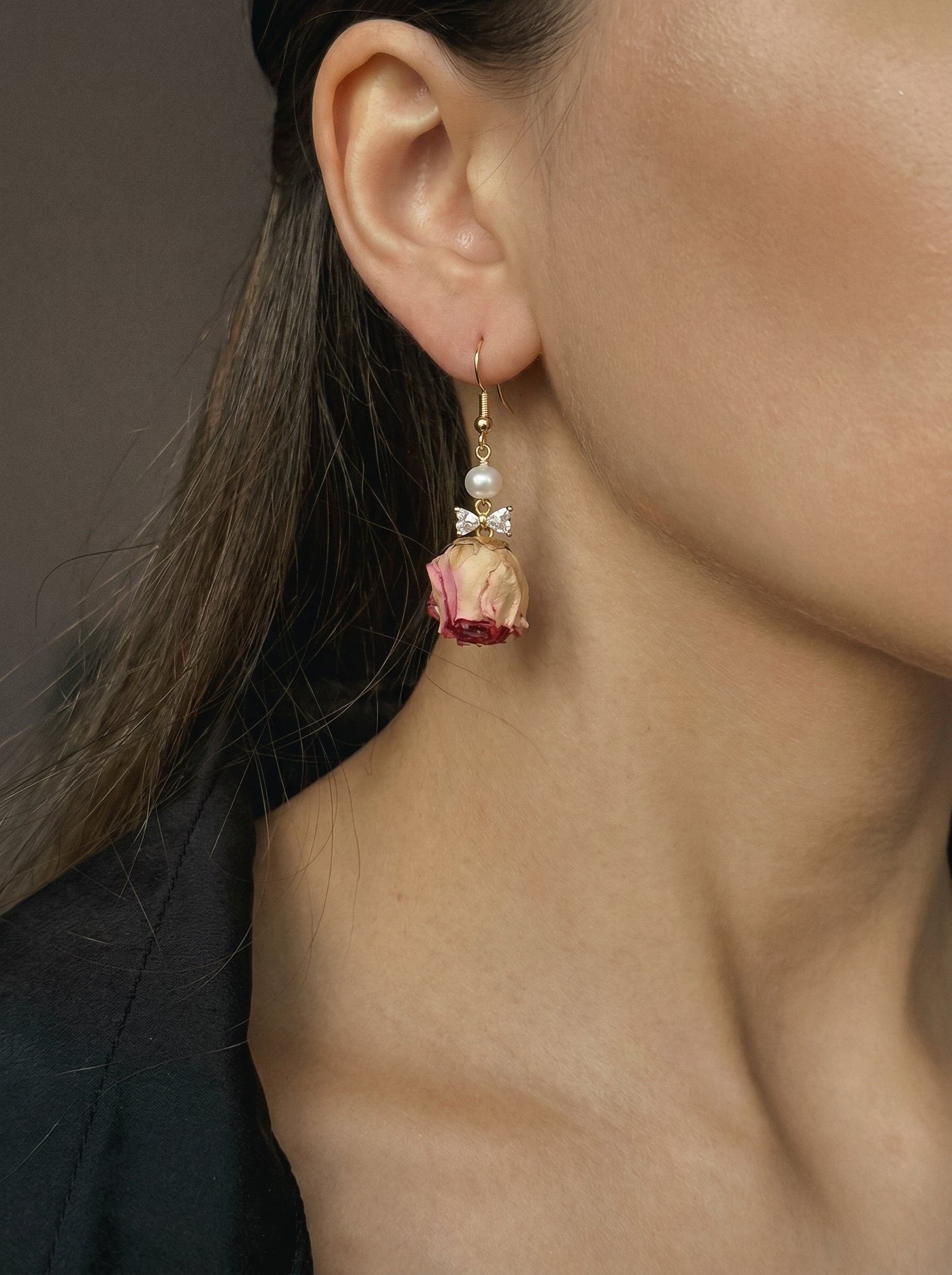
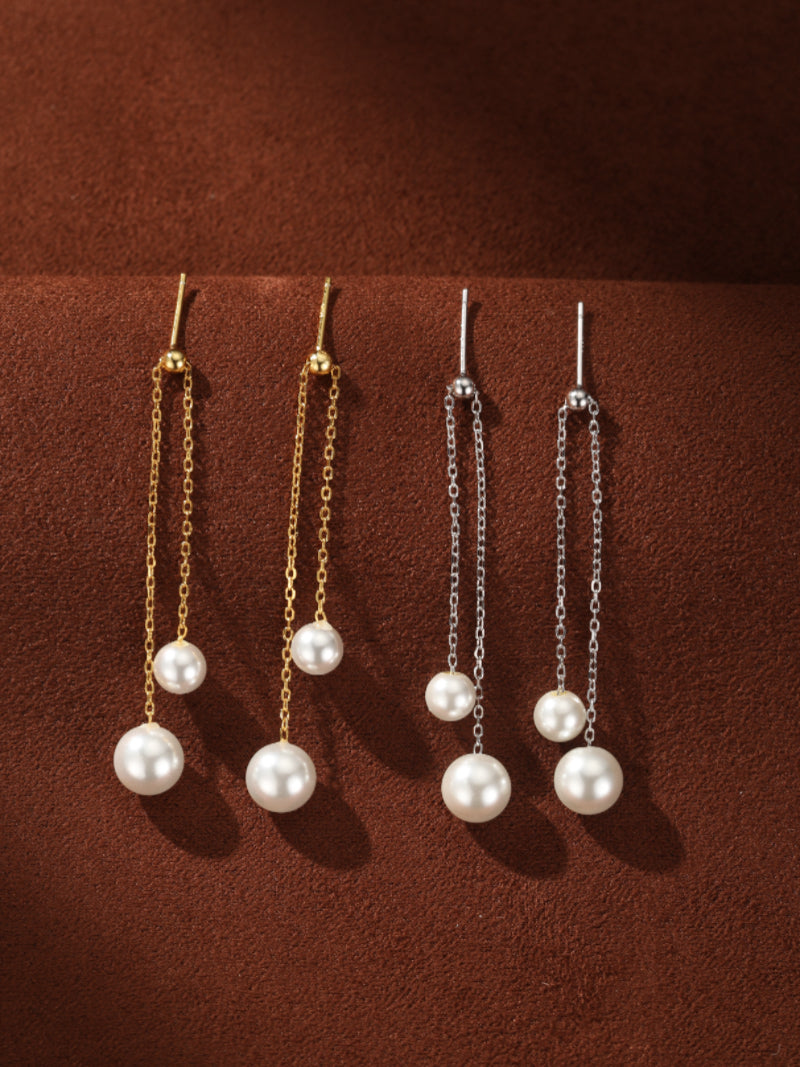
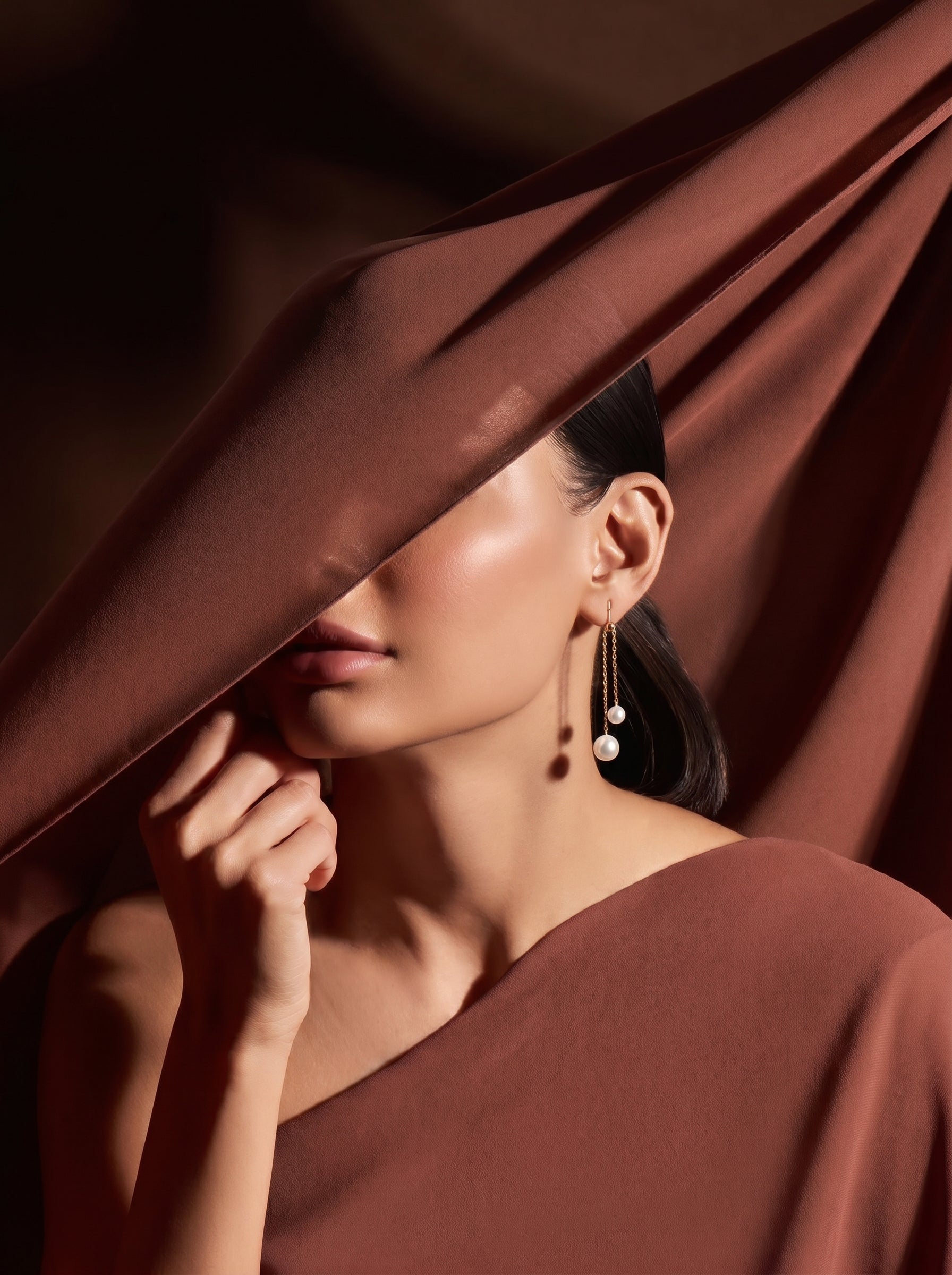
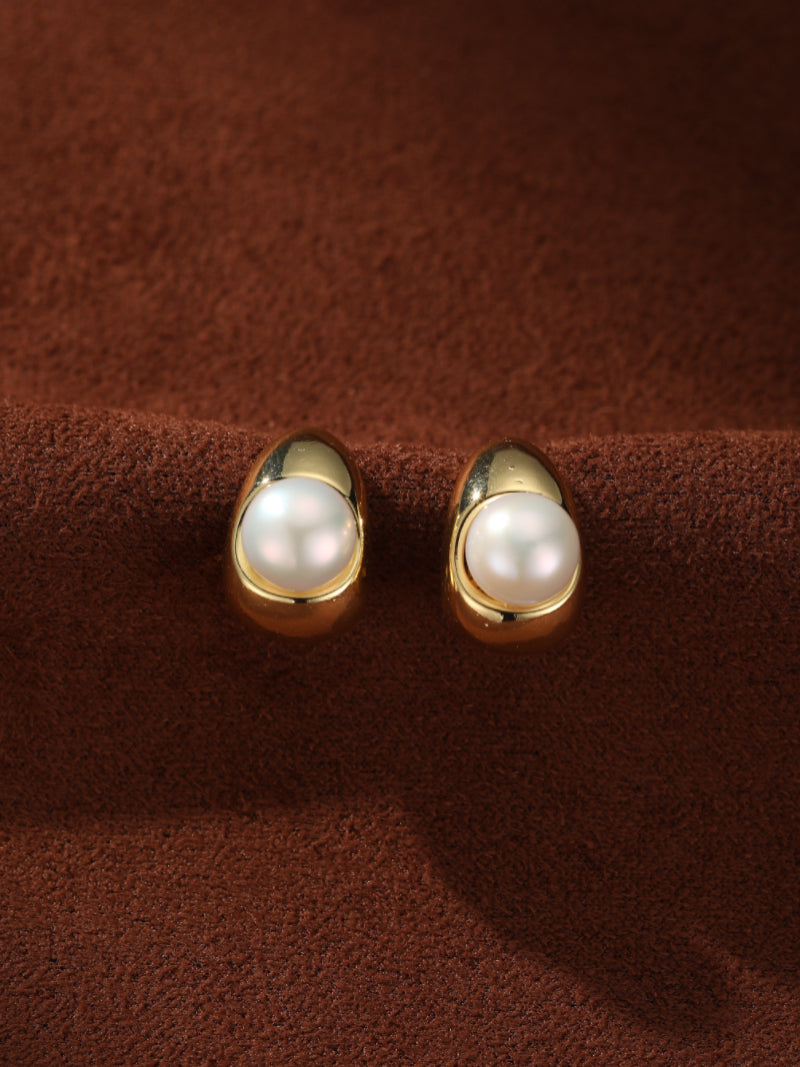
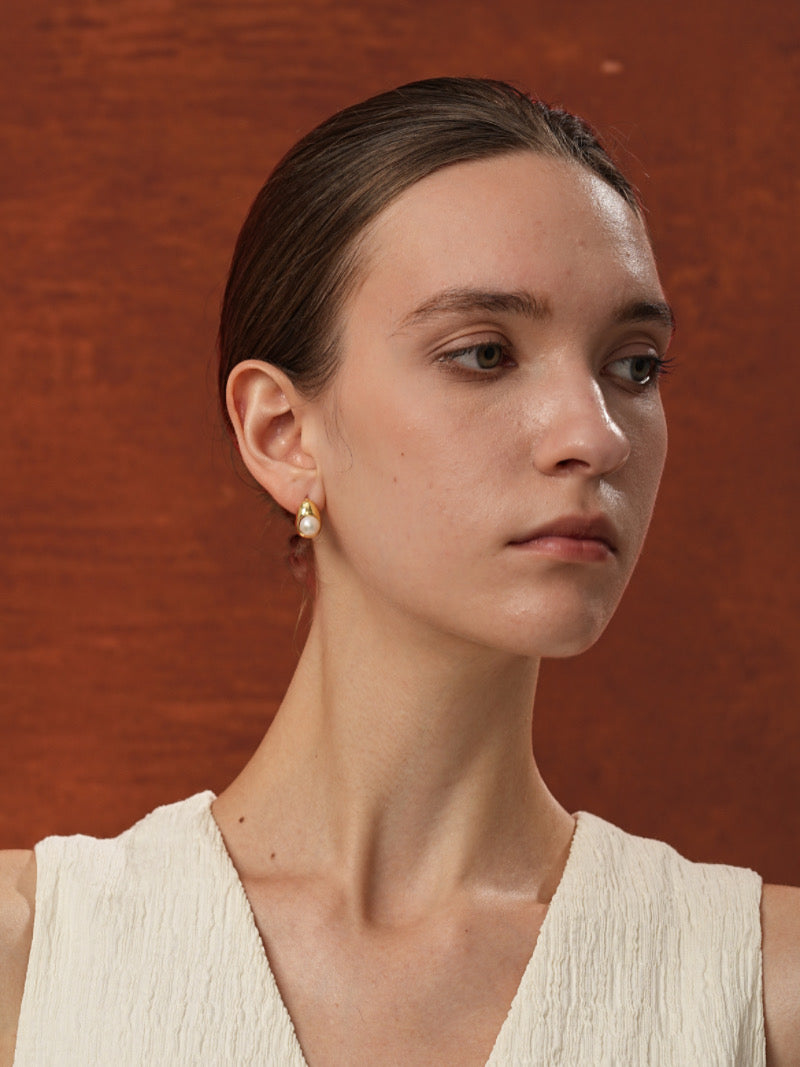
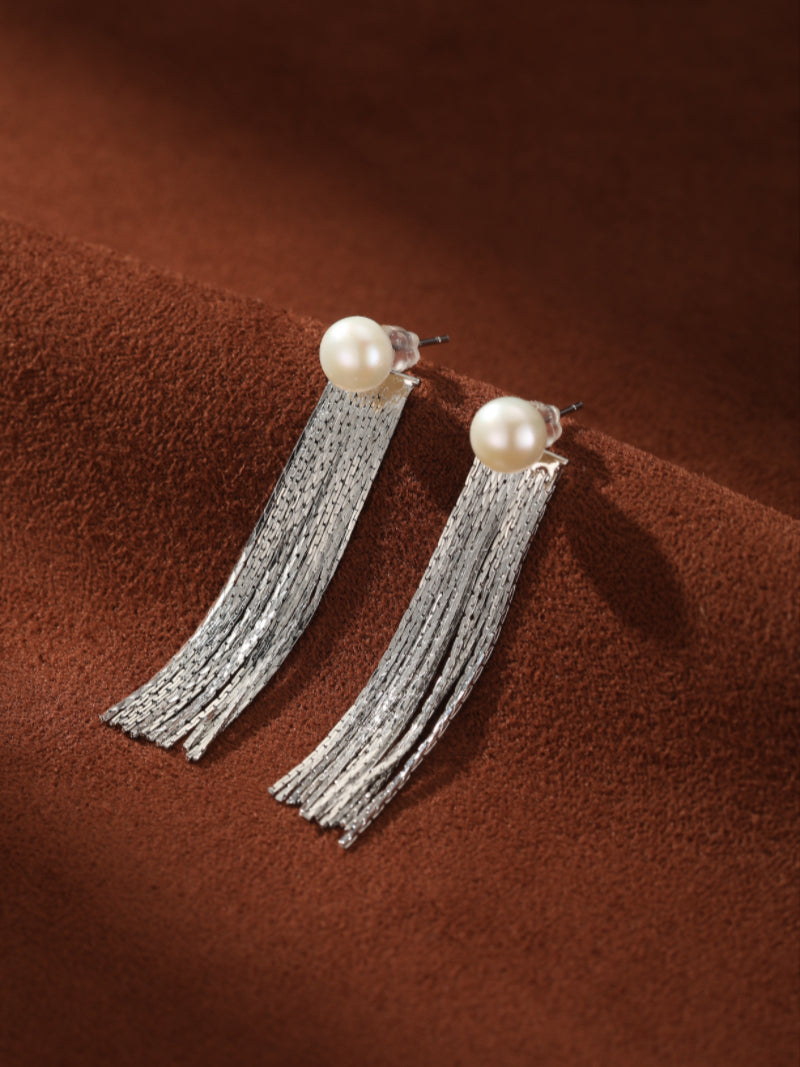
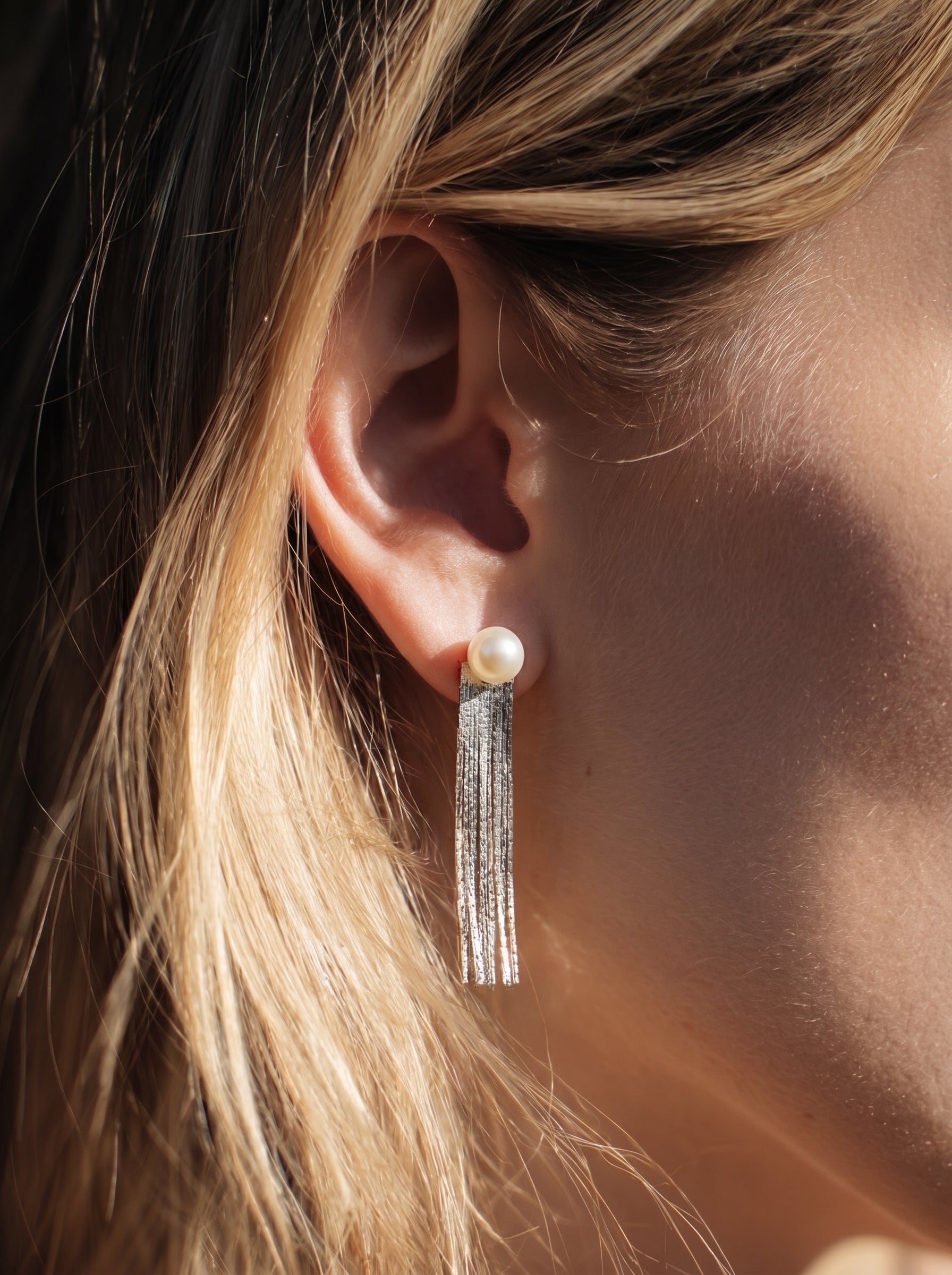
Freshwater pearls grow in more shapes than any other cultured pearl, and each shape solves a different problem on an ear. That is why freshwater earrings span textured studs, wavy hoops, fringe drops, sculpted dangles, ear cuffs and clusters.
What are freshwater pearl earrings?
Freshwater pearl earrings use cultured pearls grown inside freshwater mussels rather than saltwater oysters. Ours come from Zhuji, China, and we name the source because you should be able to check it rather than take our word for it.
Most freshwater pearls are grown without a bead nucleus, which means they are solid nacre through to the center. That matters in earrings more than anywhere else, because solid nacre cannot wear through to a shell core after years of daily use.
Why do freshwater pearls suit earrings so well?
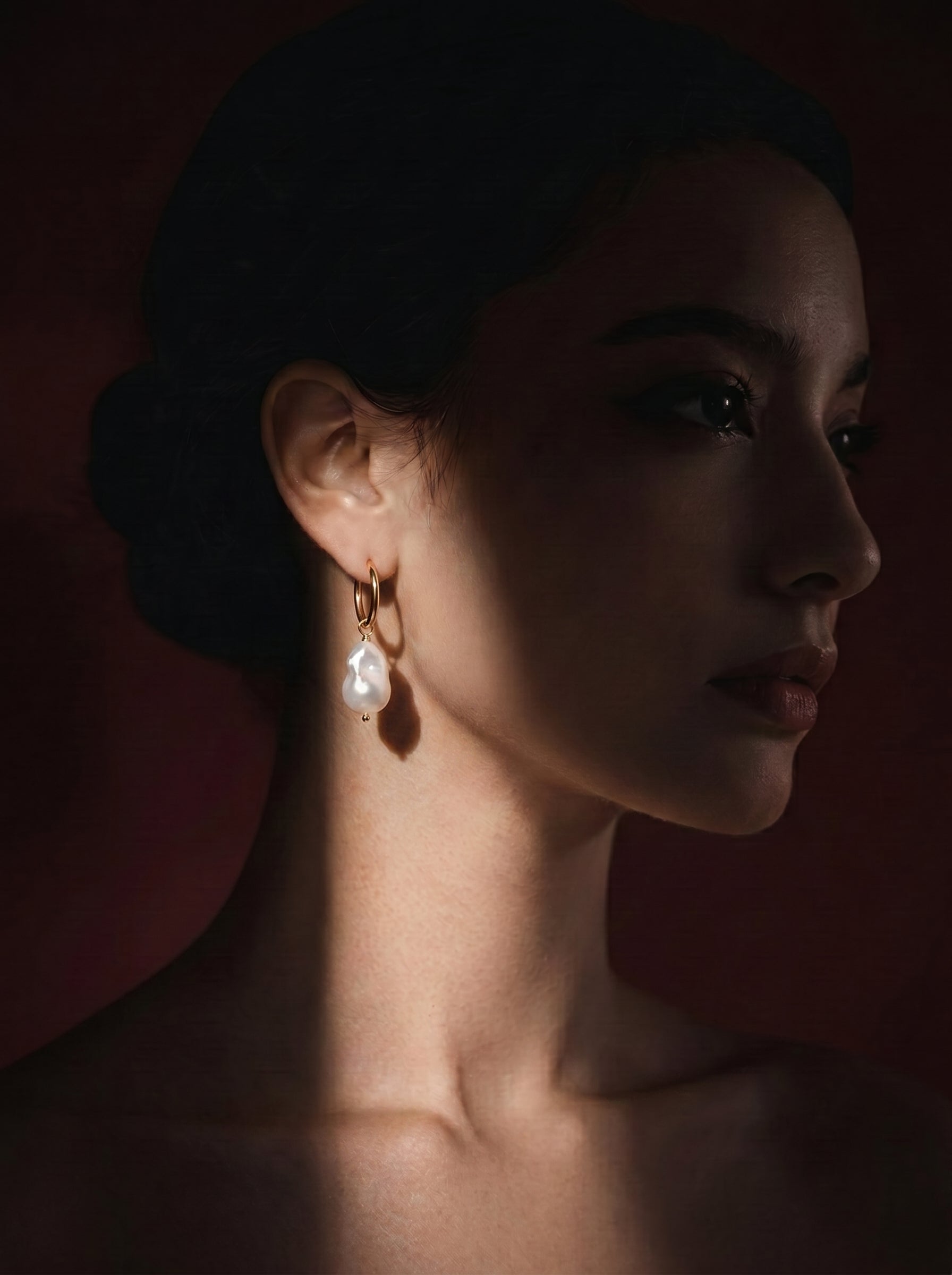
Because there is nothing round at the core, freshwater mussels produce buttons, drops, ovals and baroques as readily as spheres. Each of those shapes solves a different problem on an ear.
- Button pearls — flattened on one side, so they sit close against the lobe. The most comfortable shape for long days and for sleeping.
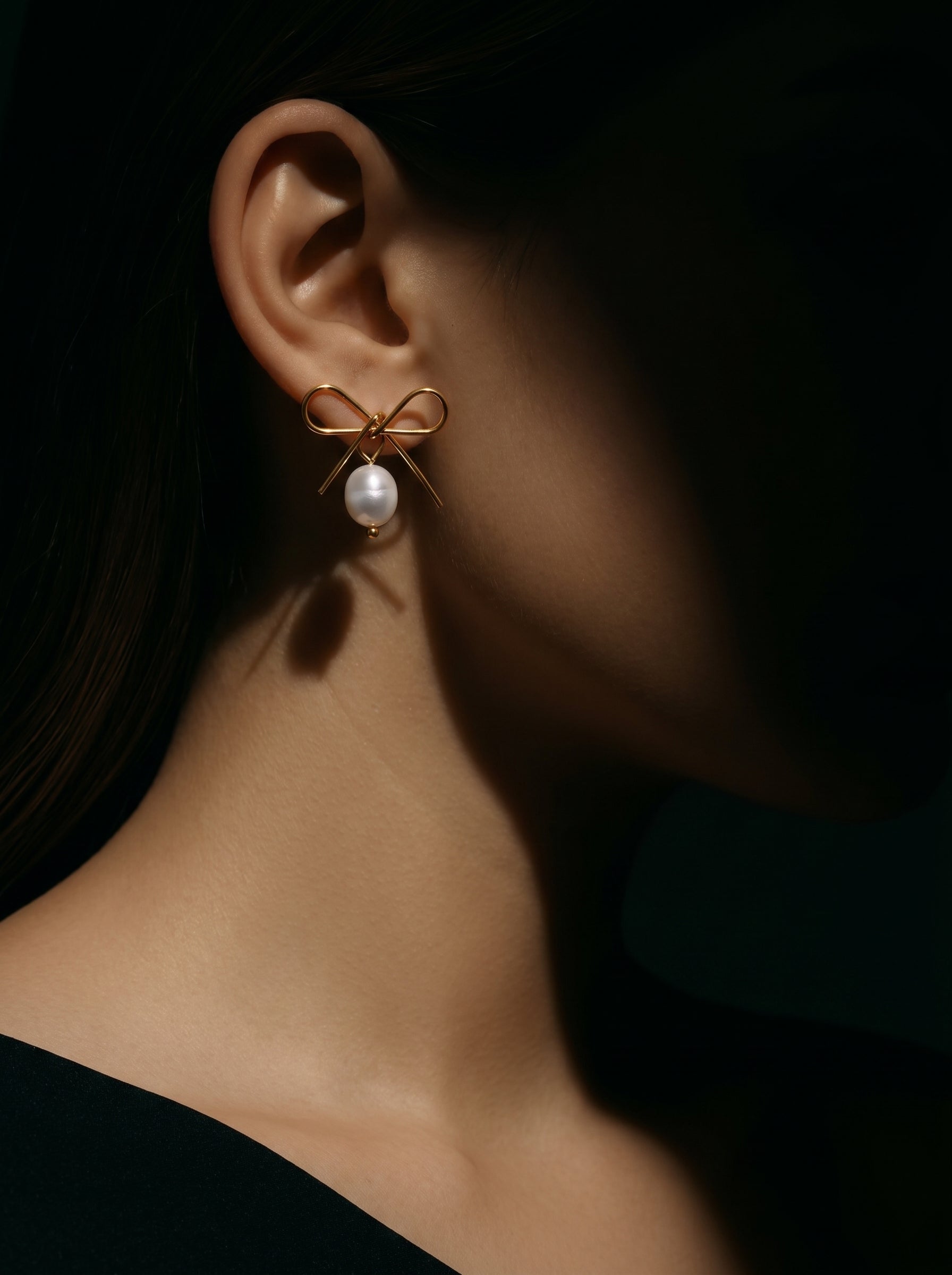
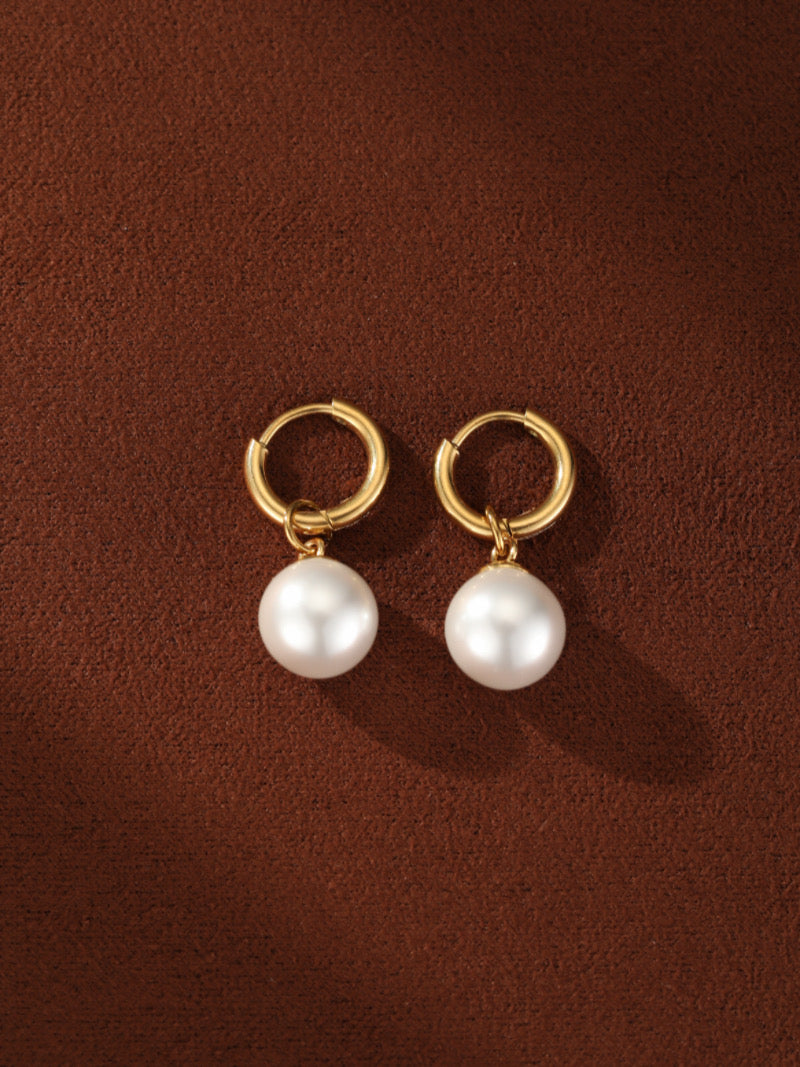
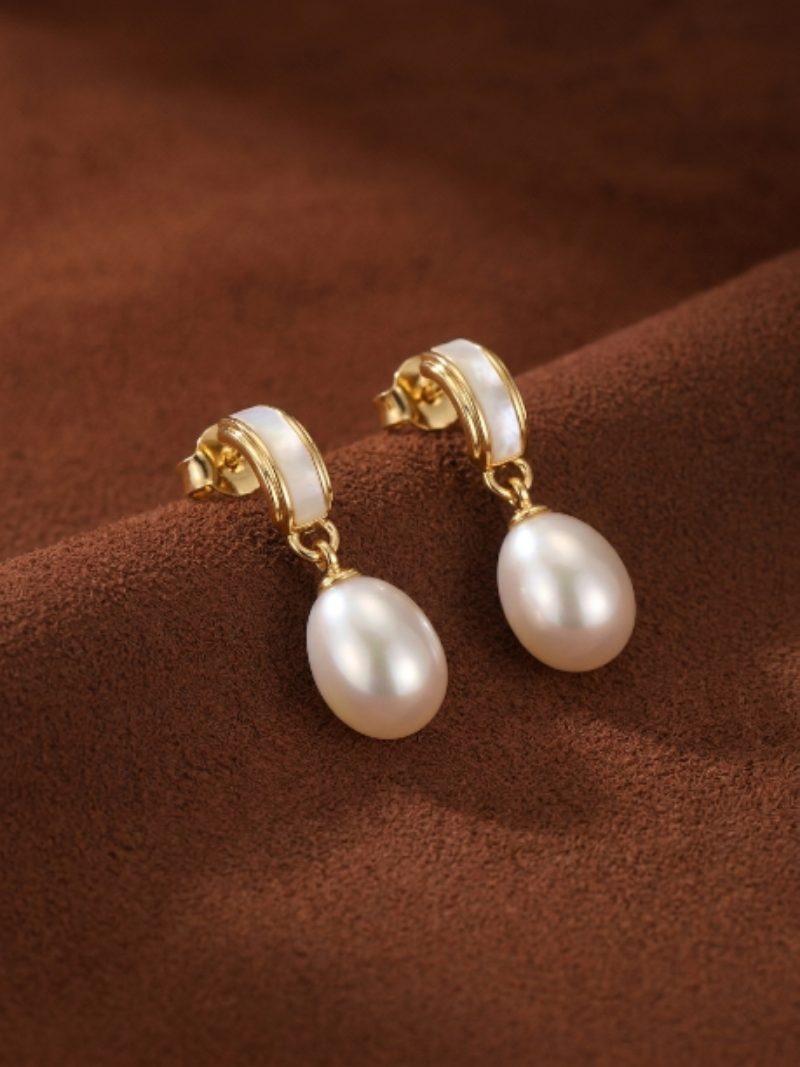
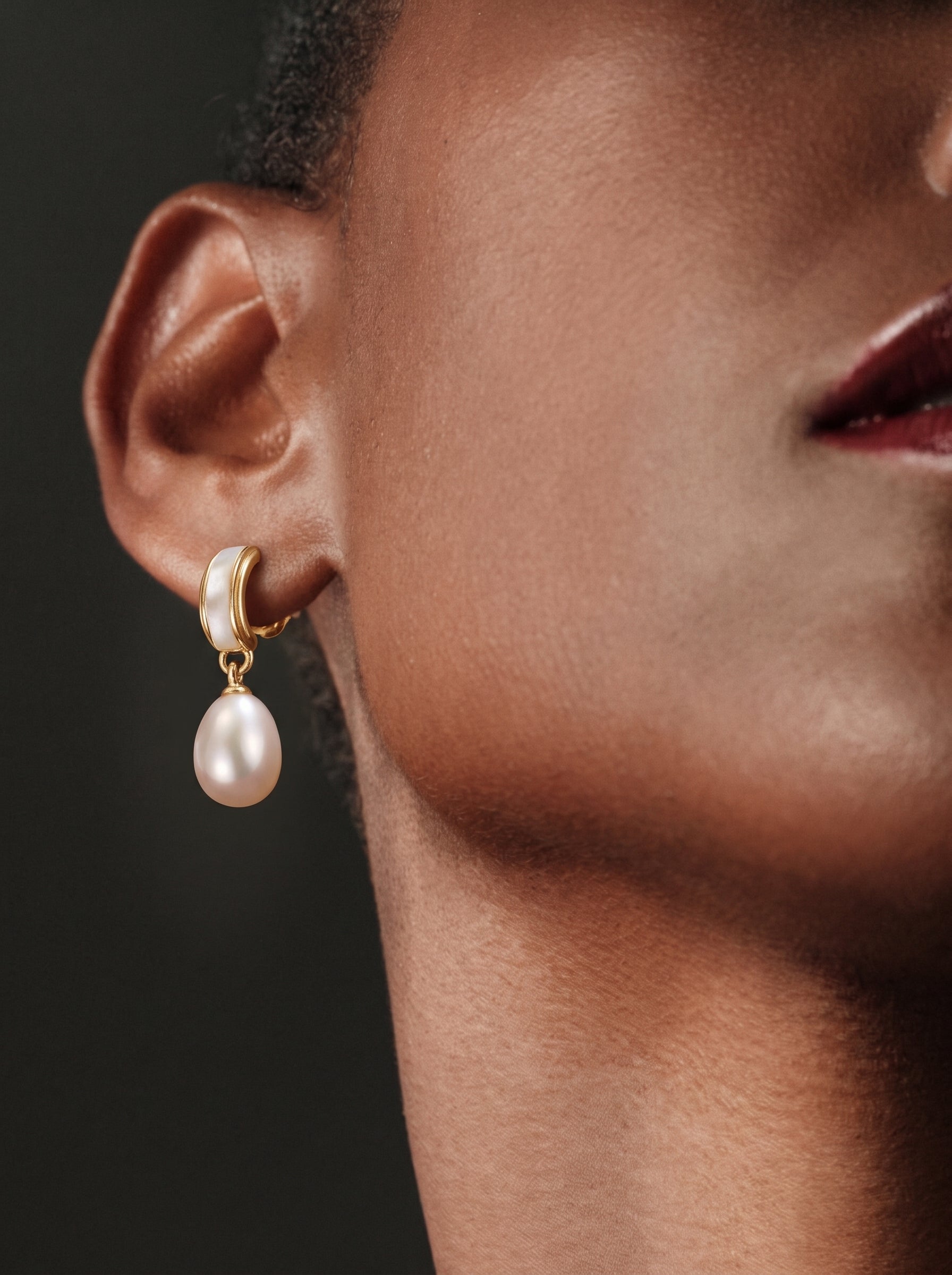
- Drop pearls — tapered at the top, weighted at the base. They point downward and lengthen the face.
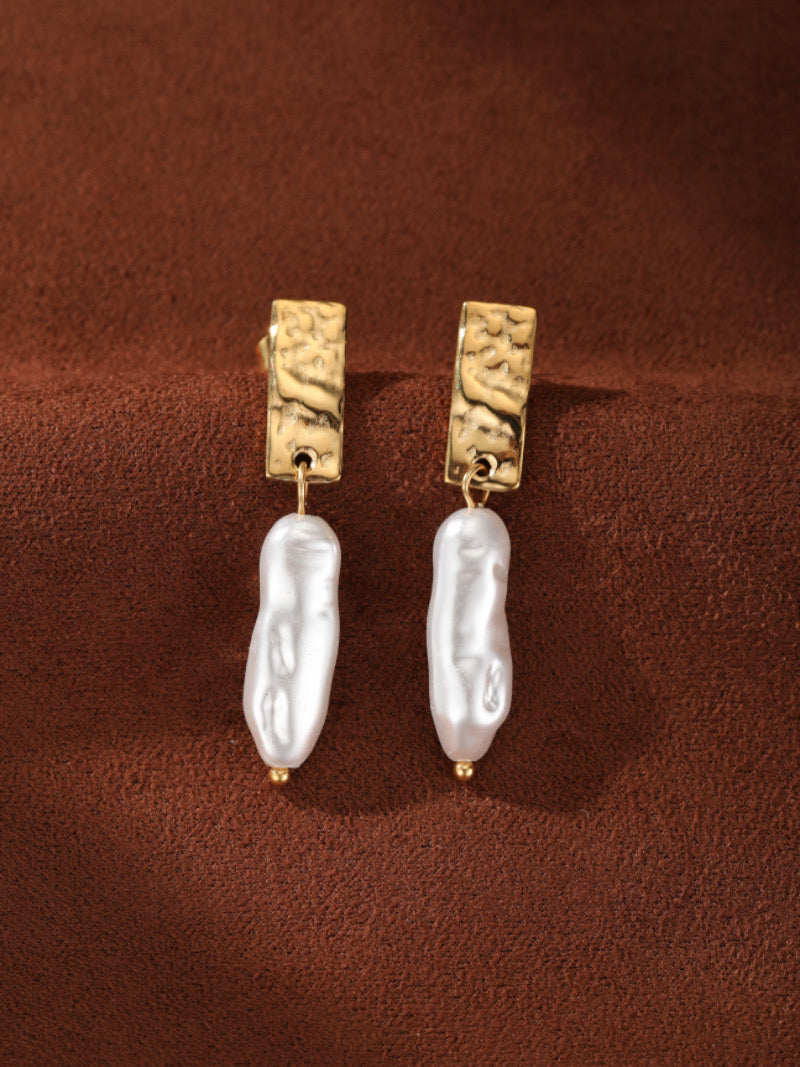
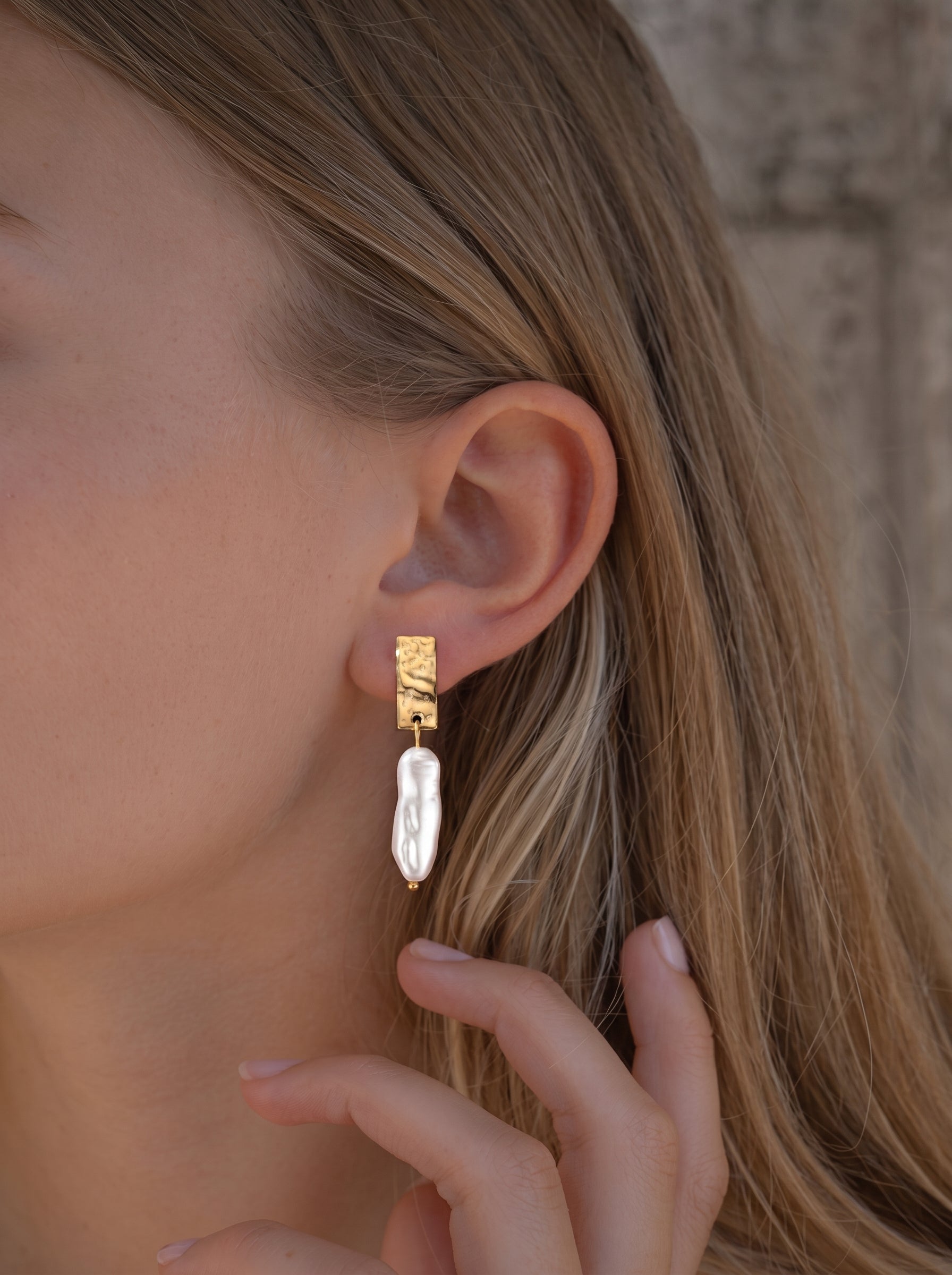
- Baroque pearls — irregular, so your left never quite matches your right. That asymmetry is what makes them look considered.
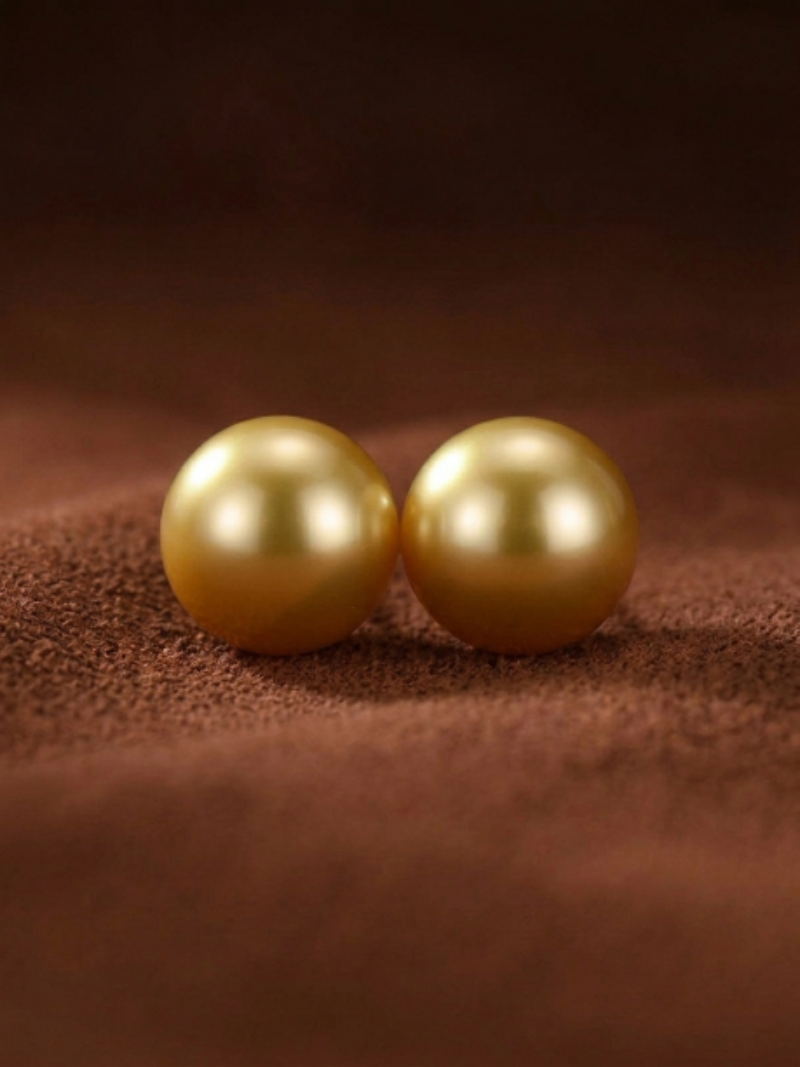
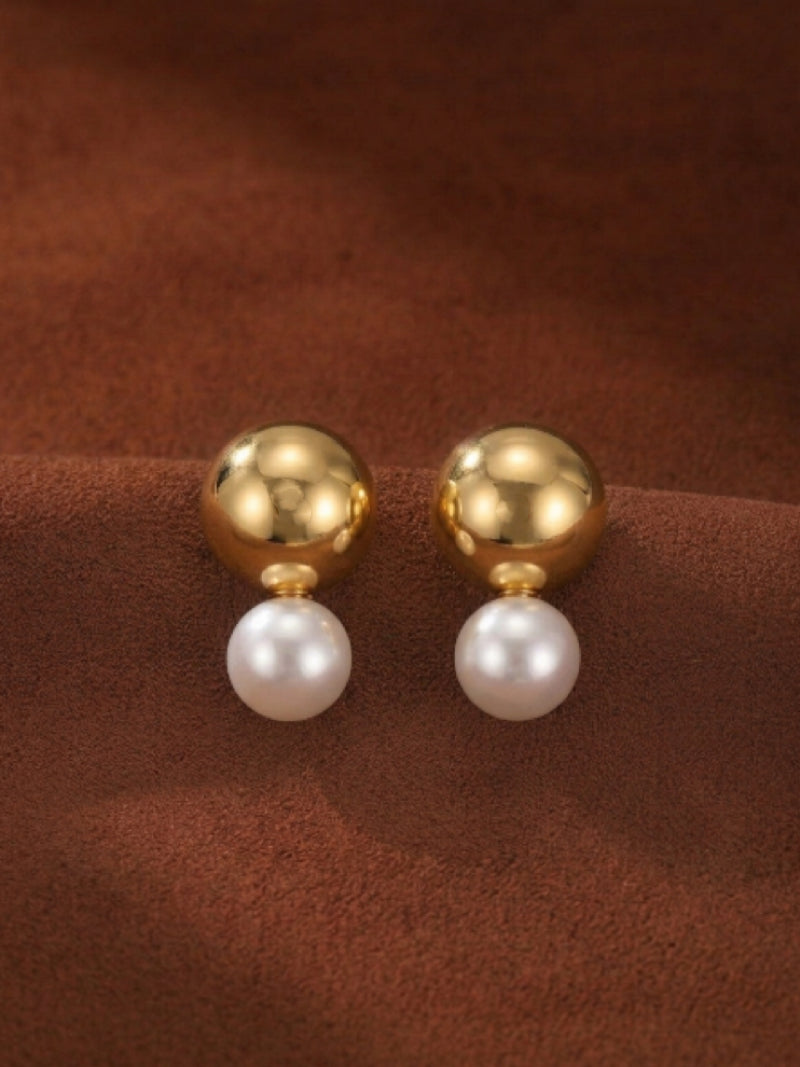
- Round pearls — the most formal reading, and the shape people picture when they hear pearl earrings.
Which freshwater pearl earring style should you choose?
Studs
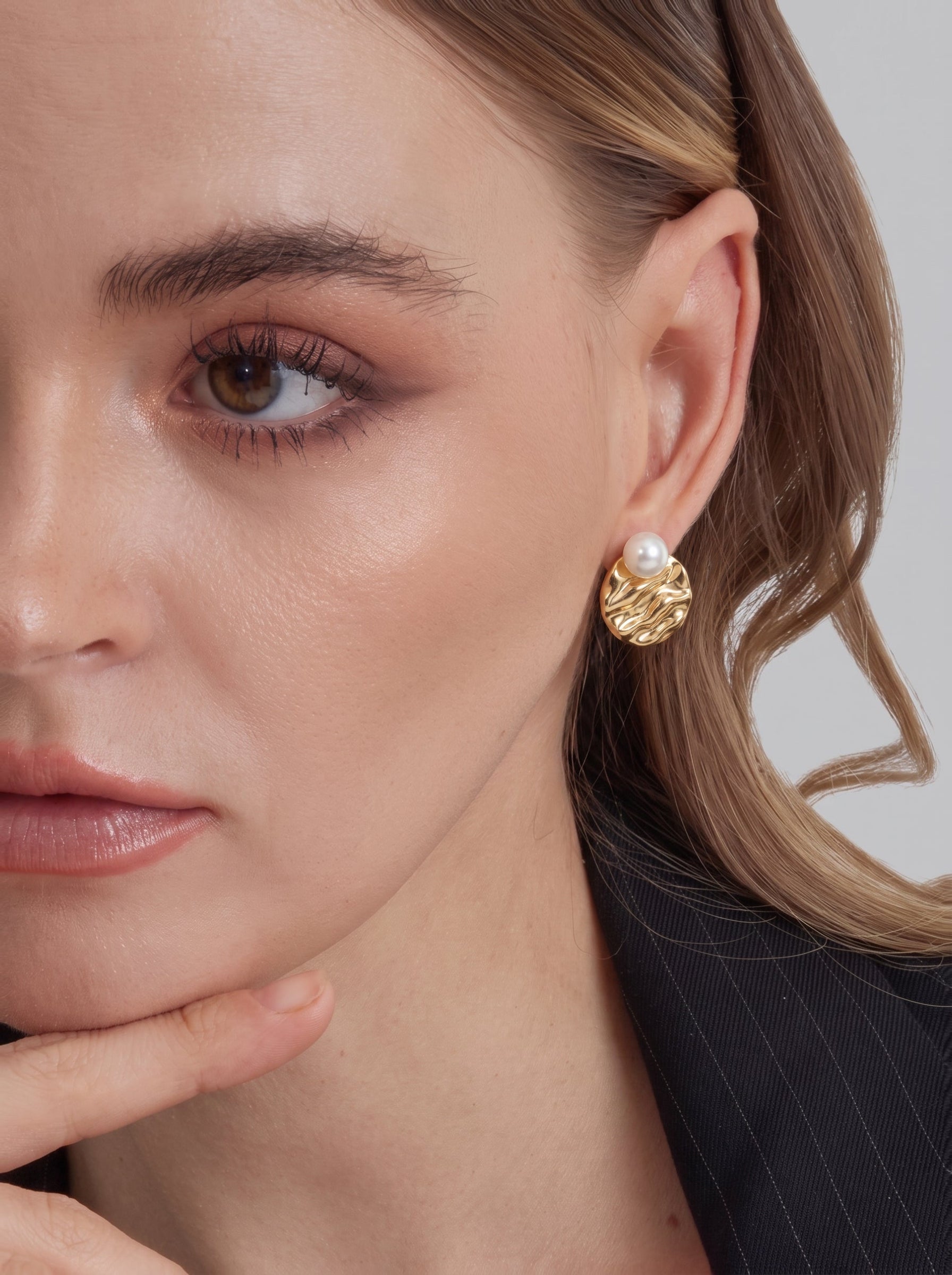
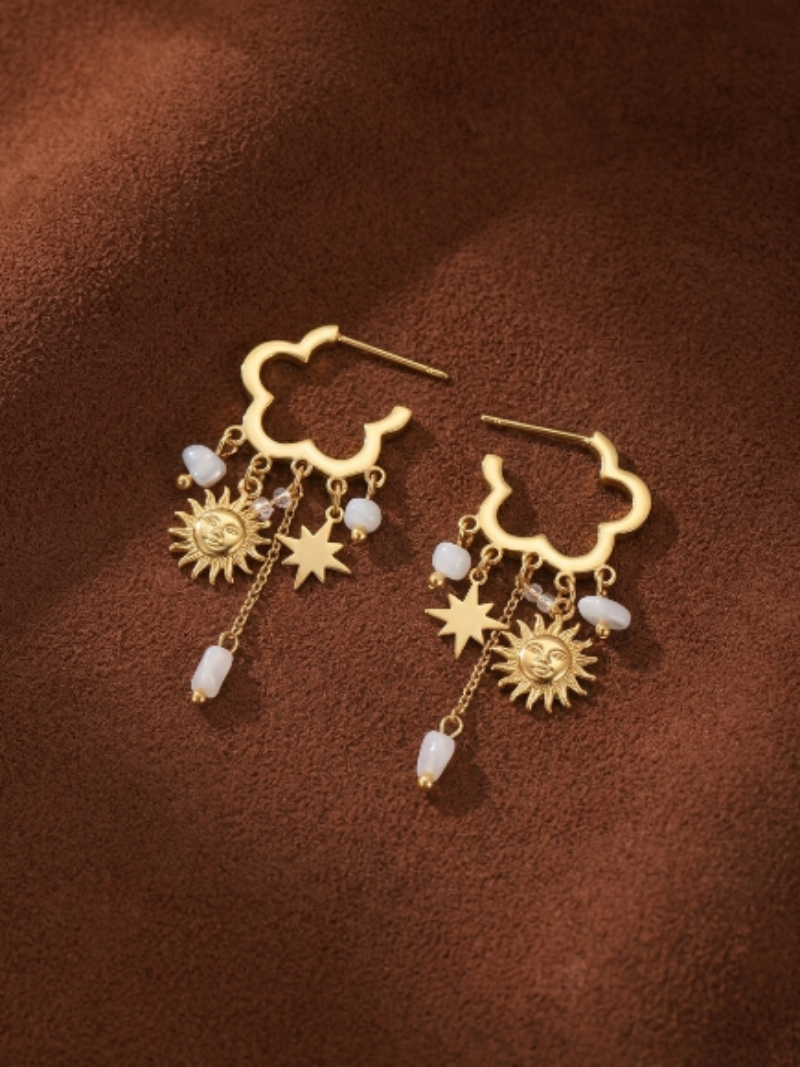
The pair you put in and stop thinking about. Plain pearls, textured surfaces, or pearls set on flowers, crosses, sunbursts and stars. Between 7 and 8 mm suits most ears and most occasions.
Hoops and ear cuffs
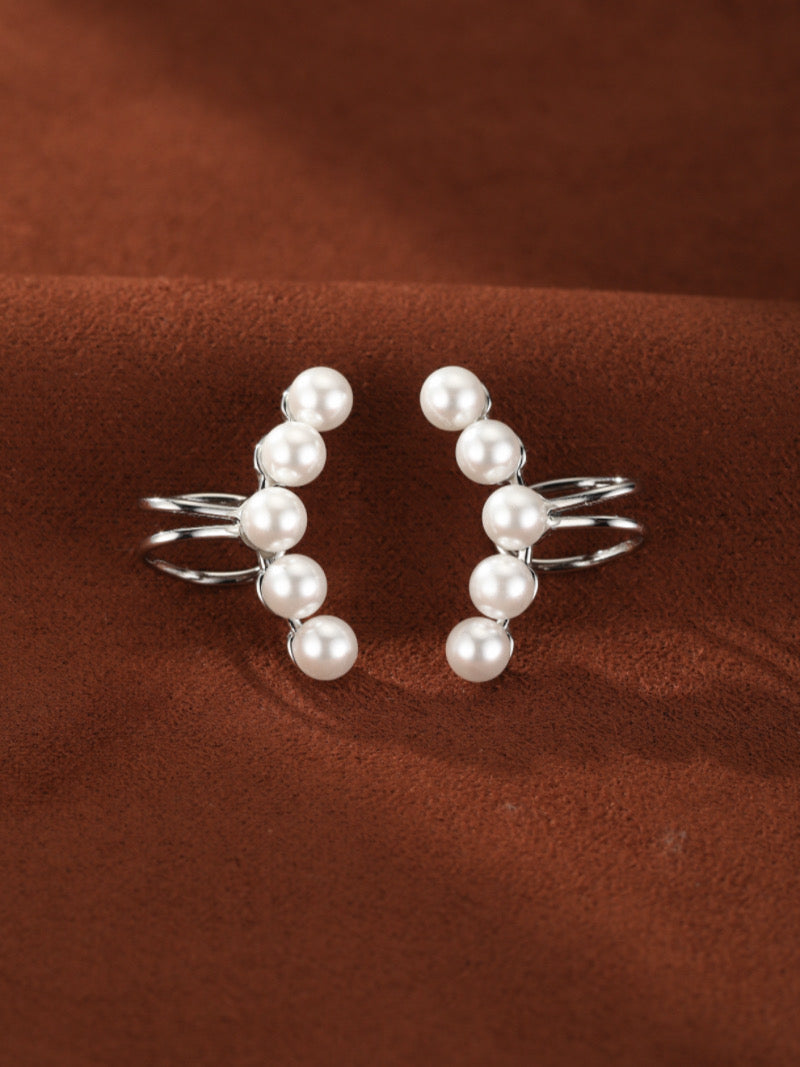
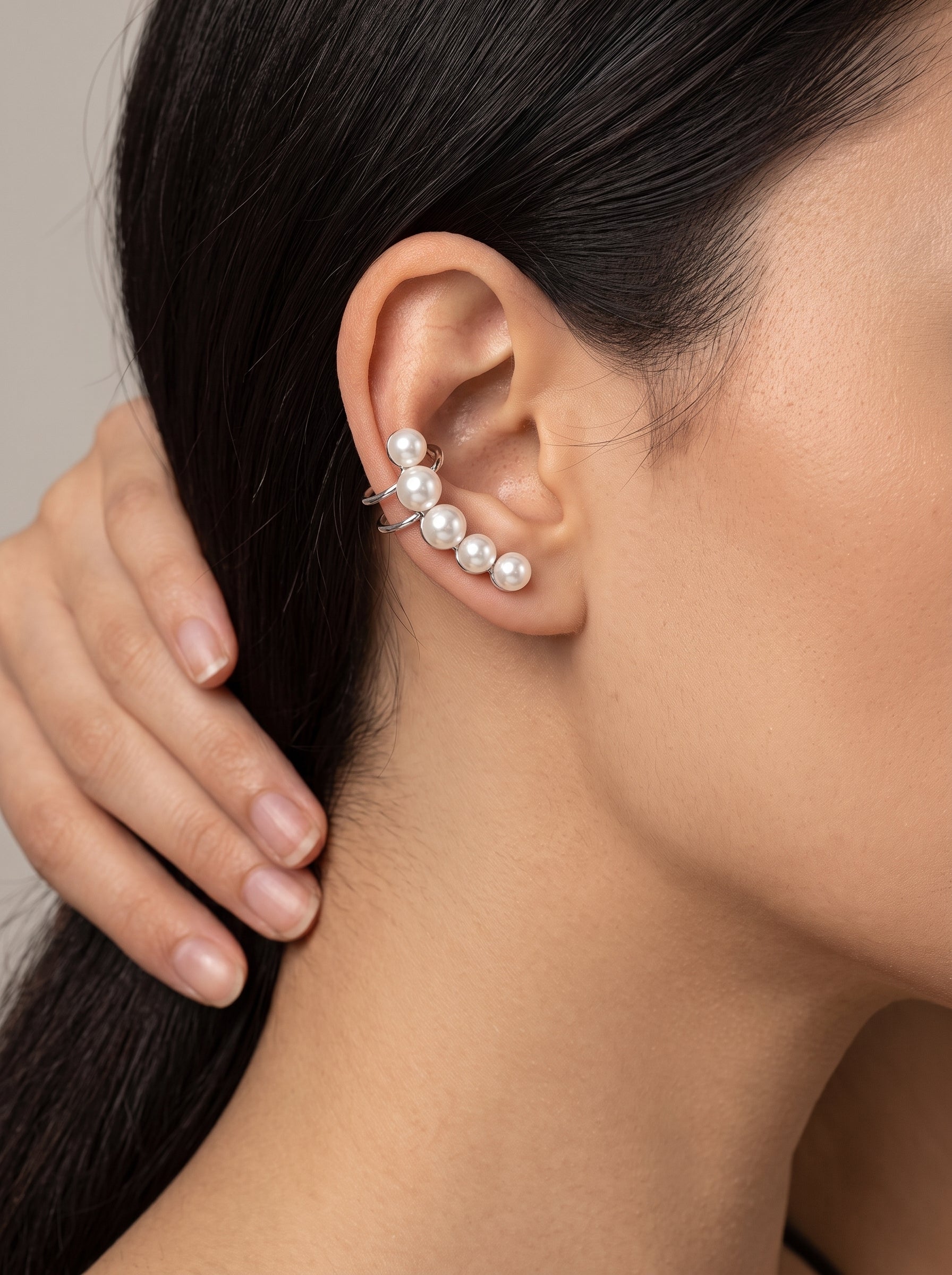
Wavy hoops, spiral forms and chunky bands with a pearl at the curve. Ear cuffs sit on the upper ear without a piercing, which makes them the easiest way to add a second point of interest.
Drops and dangles
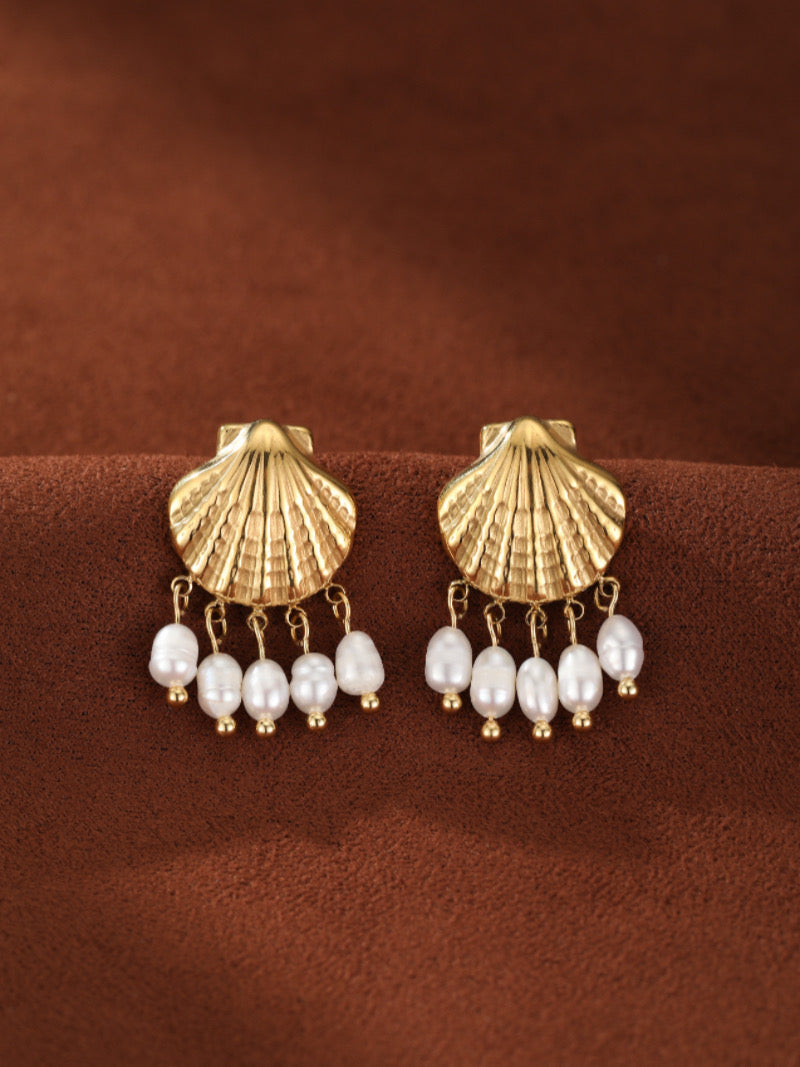
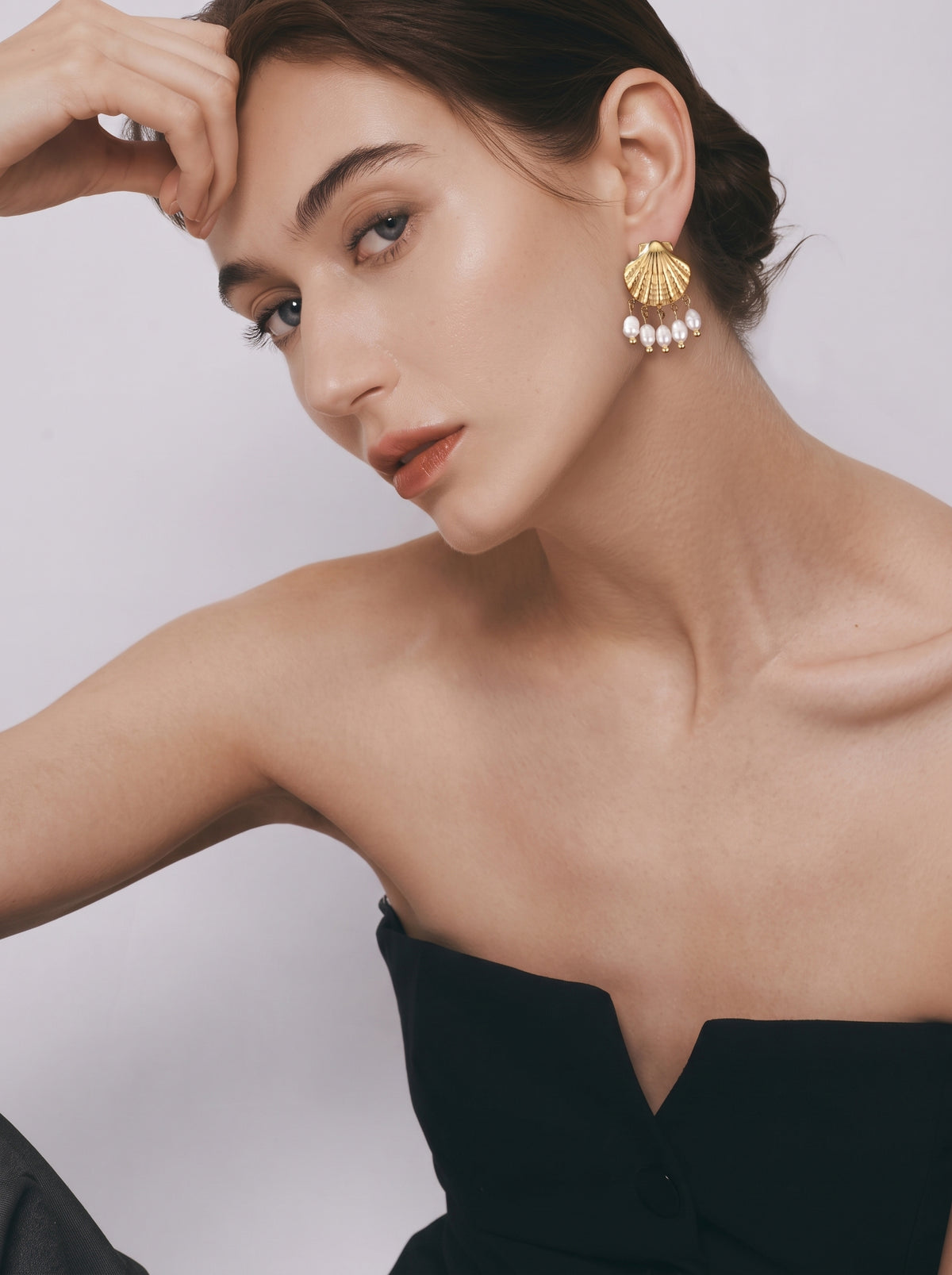
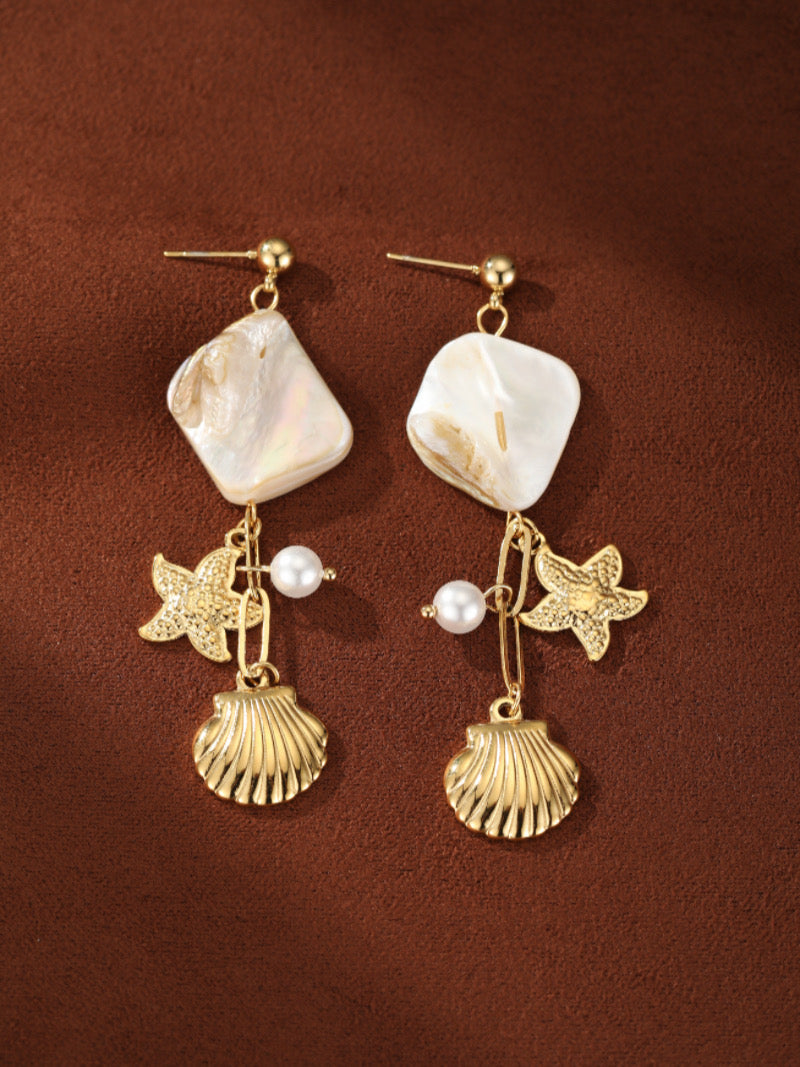
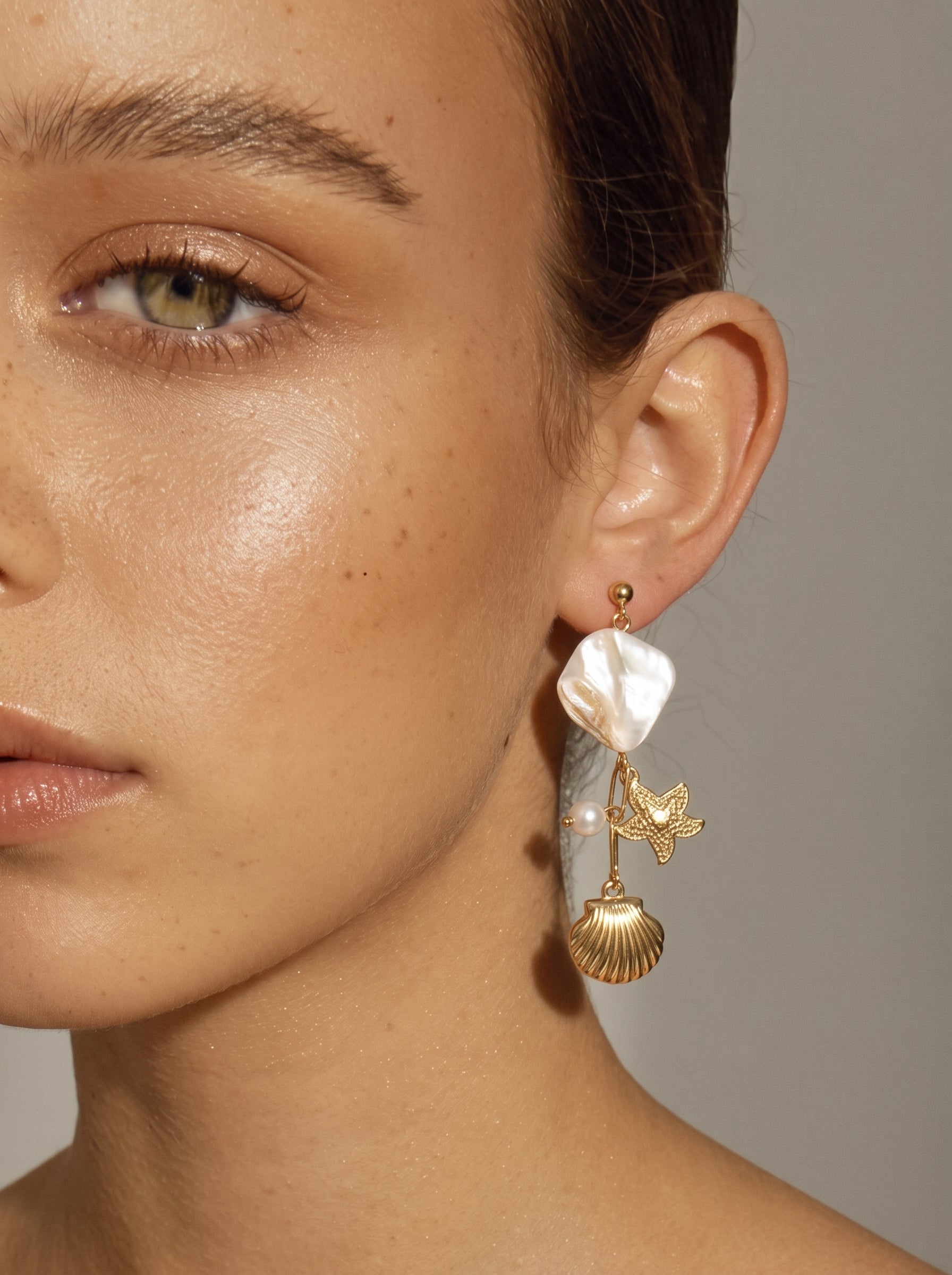
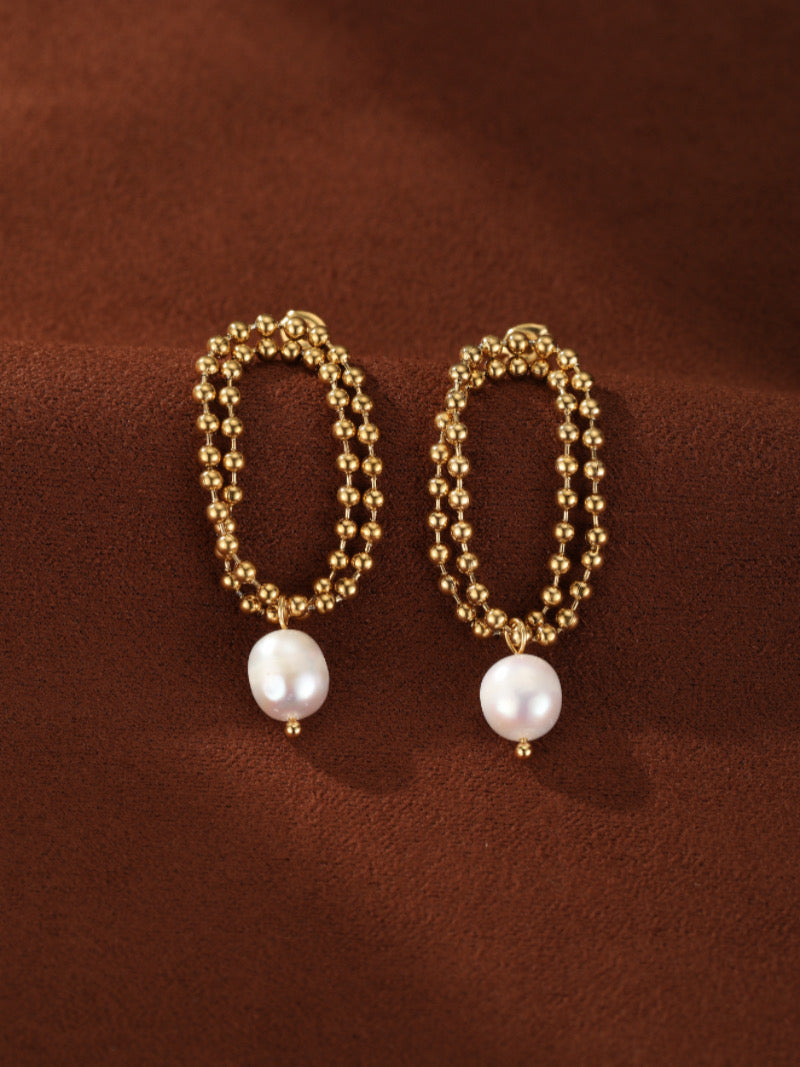
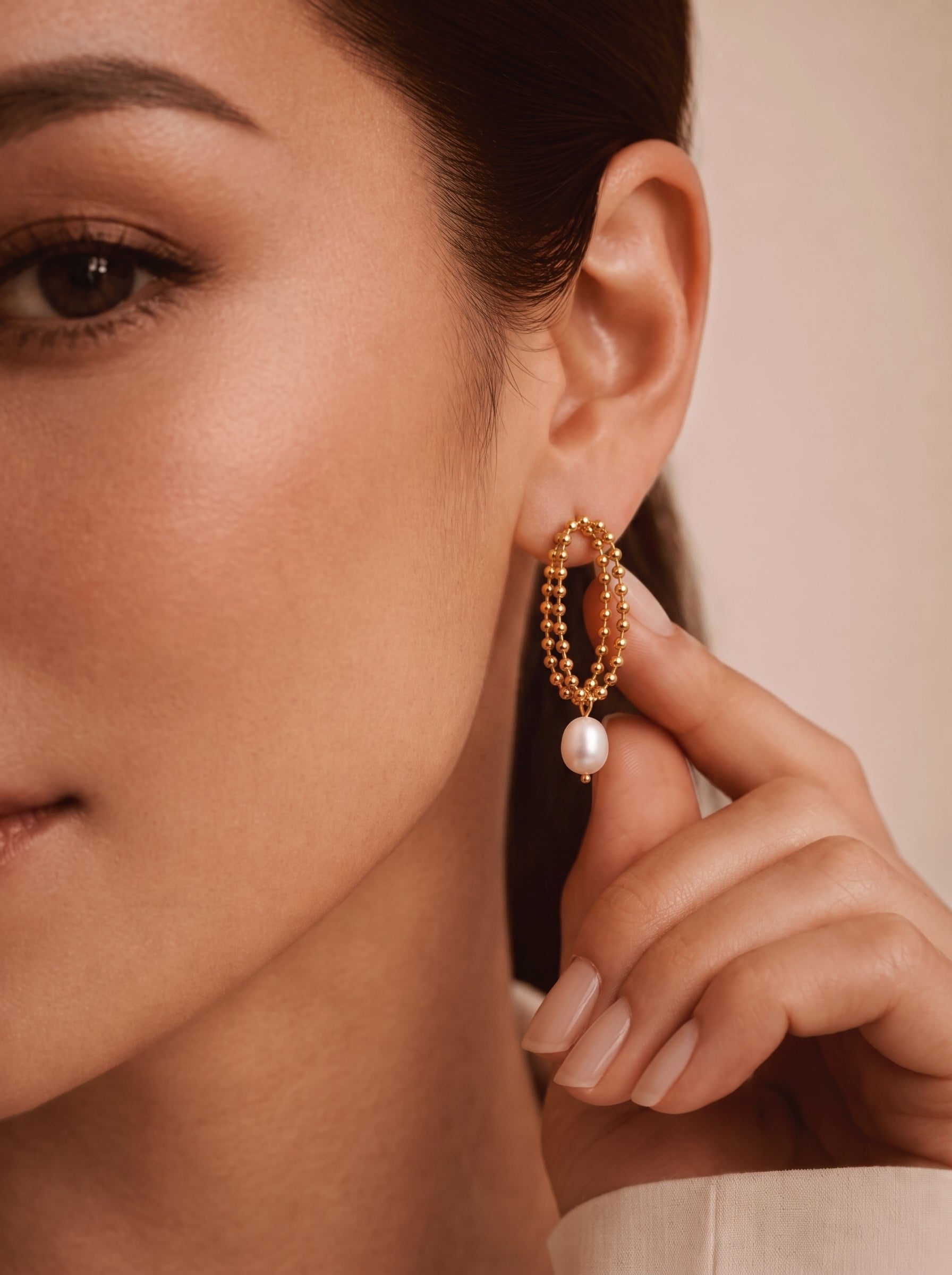
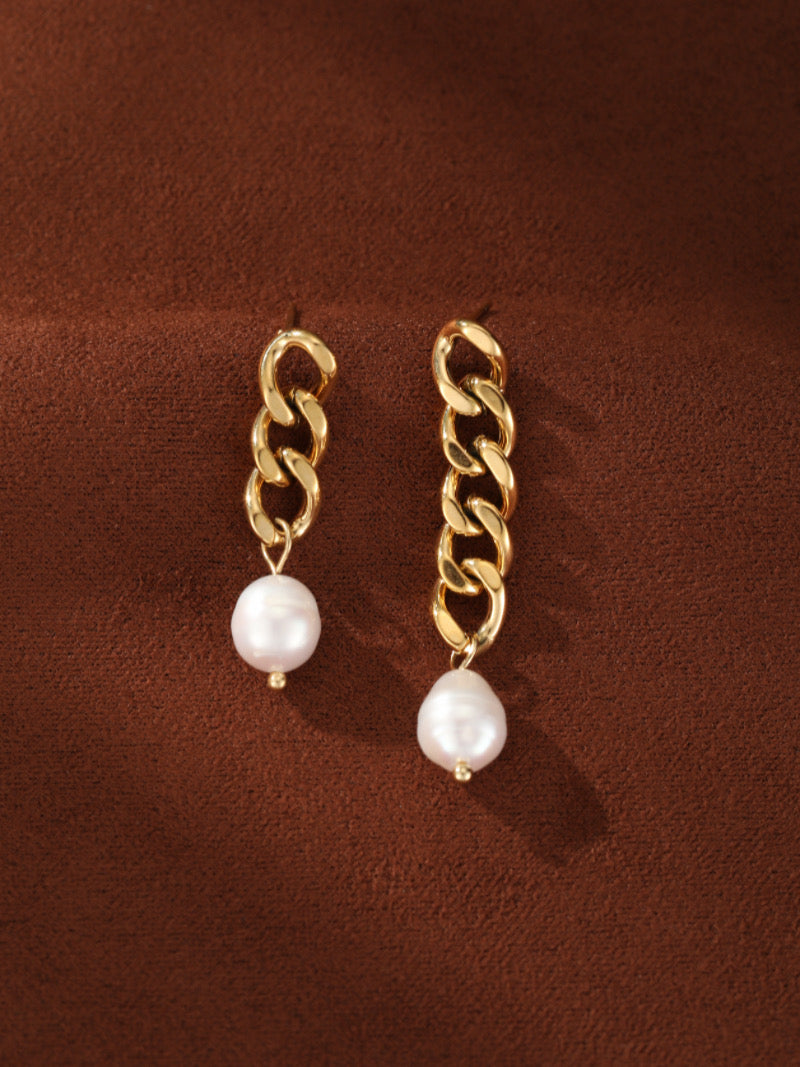
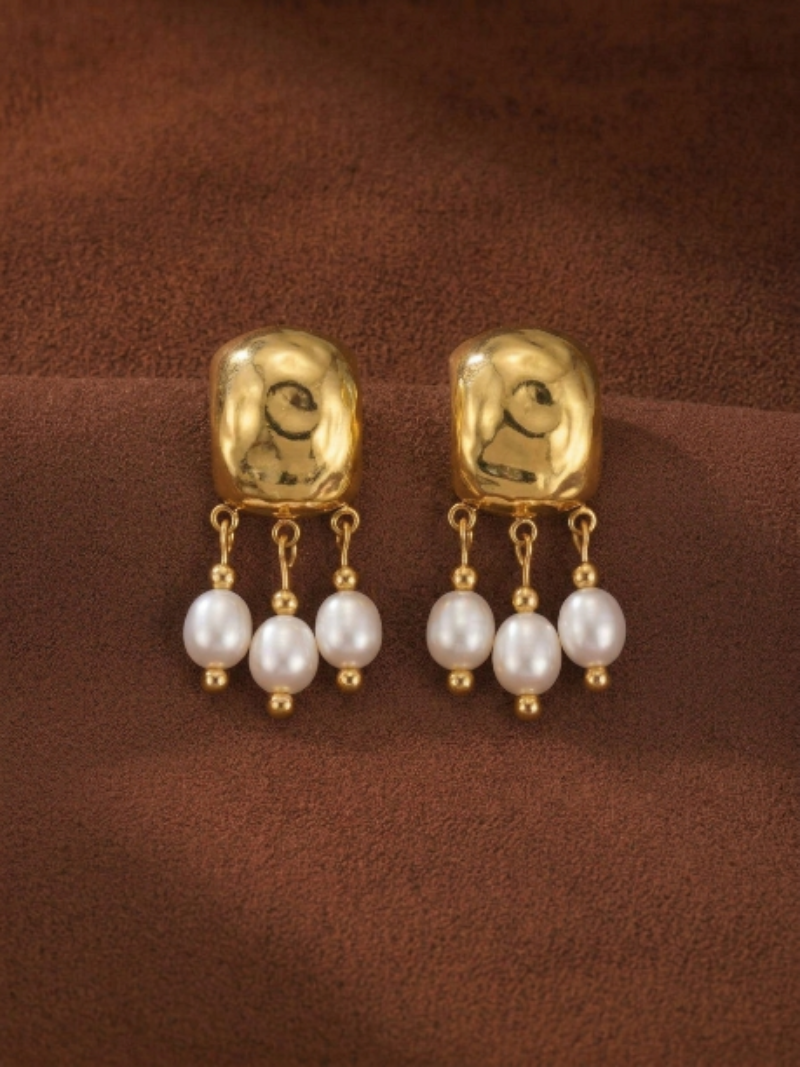
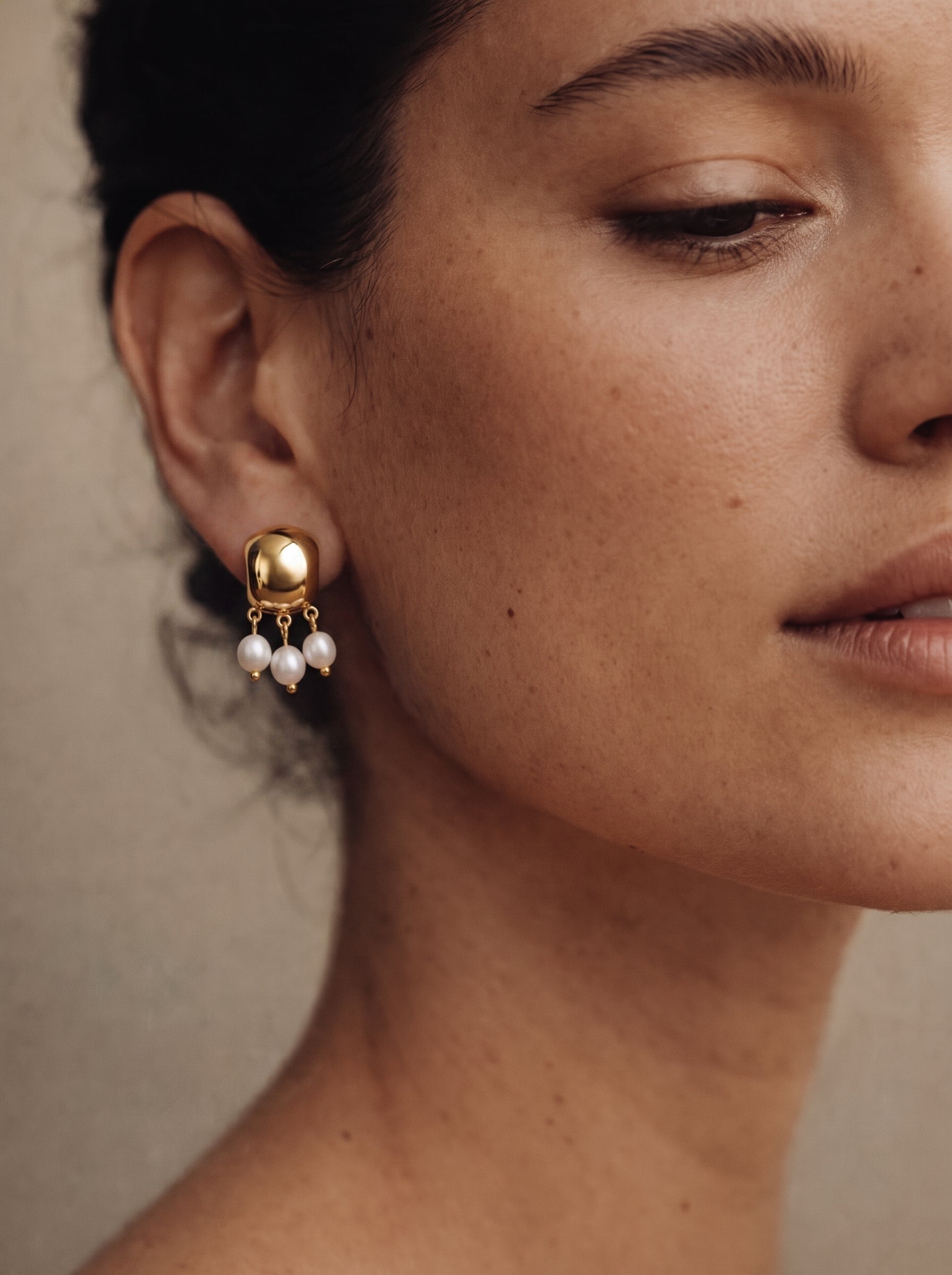
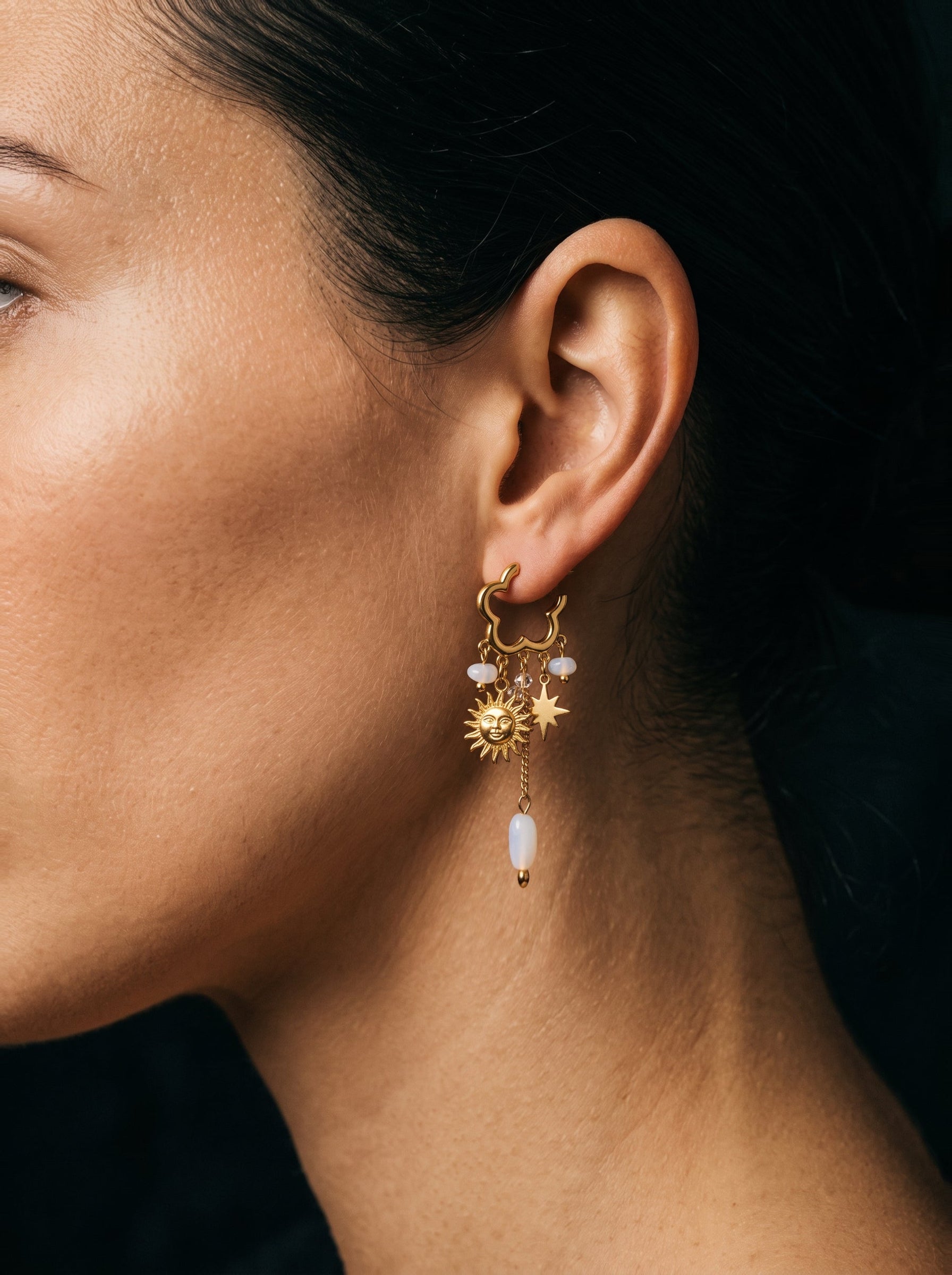
Drops hang without swinging and add length quietly. Dangles use chains, fringes and triple strands that move as you do. The shape range in freshwater pearls means both work here.
Clusters
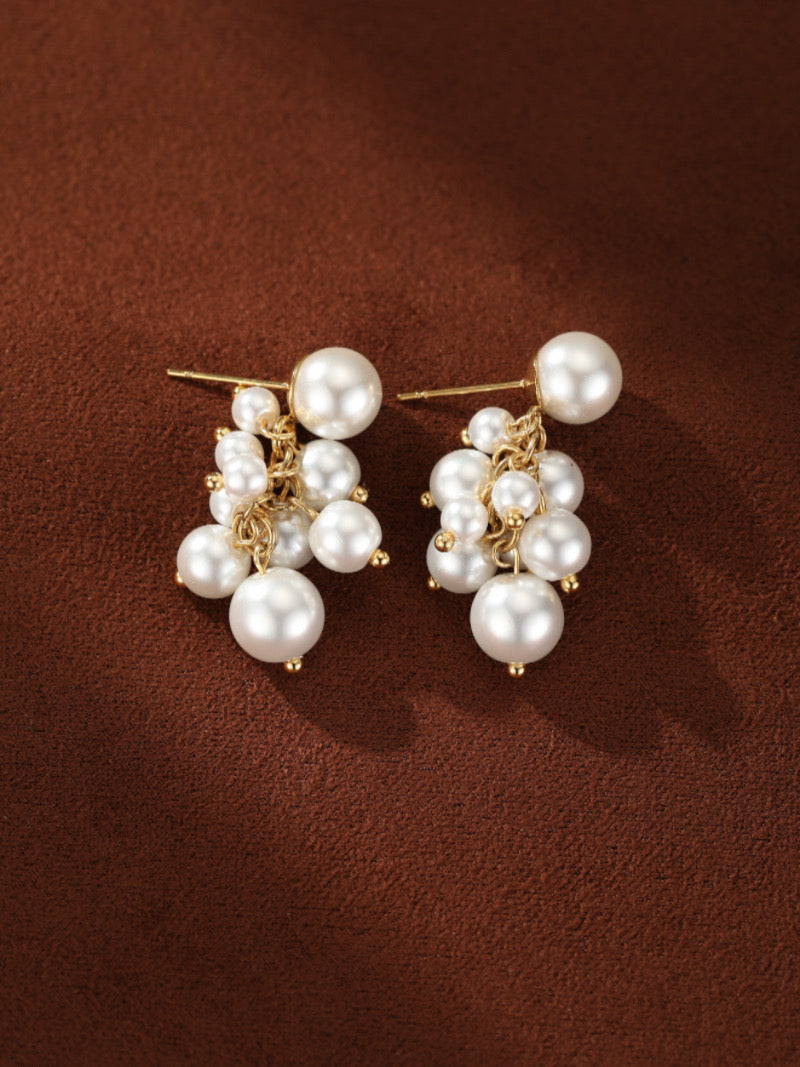
Several small pearls grouped together, giving visual weight without a single large pearl. Freshwater pearls make this affordable in a way other types do not.
What colors do freshwater pearls come in?
White, cream, pink, peach and lavender all occur without treatment, a range no other cultured pearl matches. Freshwater pearls also take dye well, which is exactly why treatment disclosure matters. We state it on every product page as one of eight provenance markers.
Why buy freshwater pearl earrings from Grande Lilith
- Origin named: Zhuji, China. Not a vague claim about responsible sourcing with no place attached.
- Eight provenance markers on every product page, including grade and treatment.
- Partners vetted by our GIA-certified pearl specialist, on working conditions as well as quality.
- Nickel-free, lead-free and cadmium-free posts and fastenings, with hypoallergenic stainless steel across the range.
- Designed in Paris. Thirty days to change your mind, and every order arrives in a magnetic pouch.
Frequently asked questions
Are freshwater pearl earrings good quality?
A well-grown freshwater pearl with strong luster outperforms a poorly grown Akoya. Judge the pearl in front of you rather than the category. What to look at first is luster: the sharpness of the reflection on the pearl's own surface.
How long do freshwater pearl earrings last?
Longer than most bead-nucleated pearls, because solid nacre cannot wear through to a core. Keep them away from perfume and hairspray, wipe them with a soft cloth, and they will outlast the fastening rather than the other way round.
Why are freshwater pearl earrings less expensive?
A freshwater mussel can produce many pearls per cycle, while an Akoya or South Sea oyster produces one. Higher yield means lower price, not lower quality. What you give up is perfect roundness, not nacre.
Can you wear freshwater pearl earrings daily?
Yes, and studs and small hoops are made for it. Put them in after perfume and hairspray have dried, since nacre dulls with repeated contact with alcohol.
Are dyed freshwater pearls still real pearls?
Yes. Dyeing changes color but not authenticity. What matters is that the treatment is disclosed, which is why it appears on every one of our product pages rather than being left unsaid.