


The Best First Pearl Jewelry Purchase: What to Buy If You Own None
Table of Contents
Your first piece of pearl jewelry should be cultured pearl stud earrings, 6 to 8 mm, on a metal your skin tolerates. Studs suit every neckline, need no clasp and cost the least. On our four-criterion rubric, studs scored 19 out of 20, ahead of a pendant at 18, a strand at 14 and a bracelet at 13.
Key takeaways
- Start with studs: they scored highest on our rubric for versatility, durability, cost and ease of wear.
- A pendant is the close alternative if you prefer necklaces or do not have pierced ears.
- Cultured freshwater pearls give the widest choice for a first piece; cultured Akoya pearls give the classic round look at a higher price.
- Size 6 to 8 mm suits most faces, outfits and budgets for a first pair of studs.
- Under the FTC Jewelry Guides (16 CFR §23.20), a cultured pearl must be labeled "cultured," so check the listing says it.
Buying your first pearl piece is harder than it should be. There are four obvious formats, four main pearl types and a wide price range, and every guide seems to recommend something different. This page gives one firm recommendation, the scoring behind it and three alternatives. For the full buying fundamentals, our complete pearl necklace buyer's guide goes deeper.
What should your first pearl piece be?
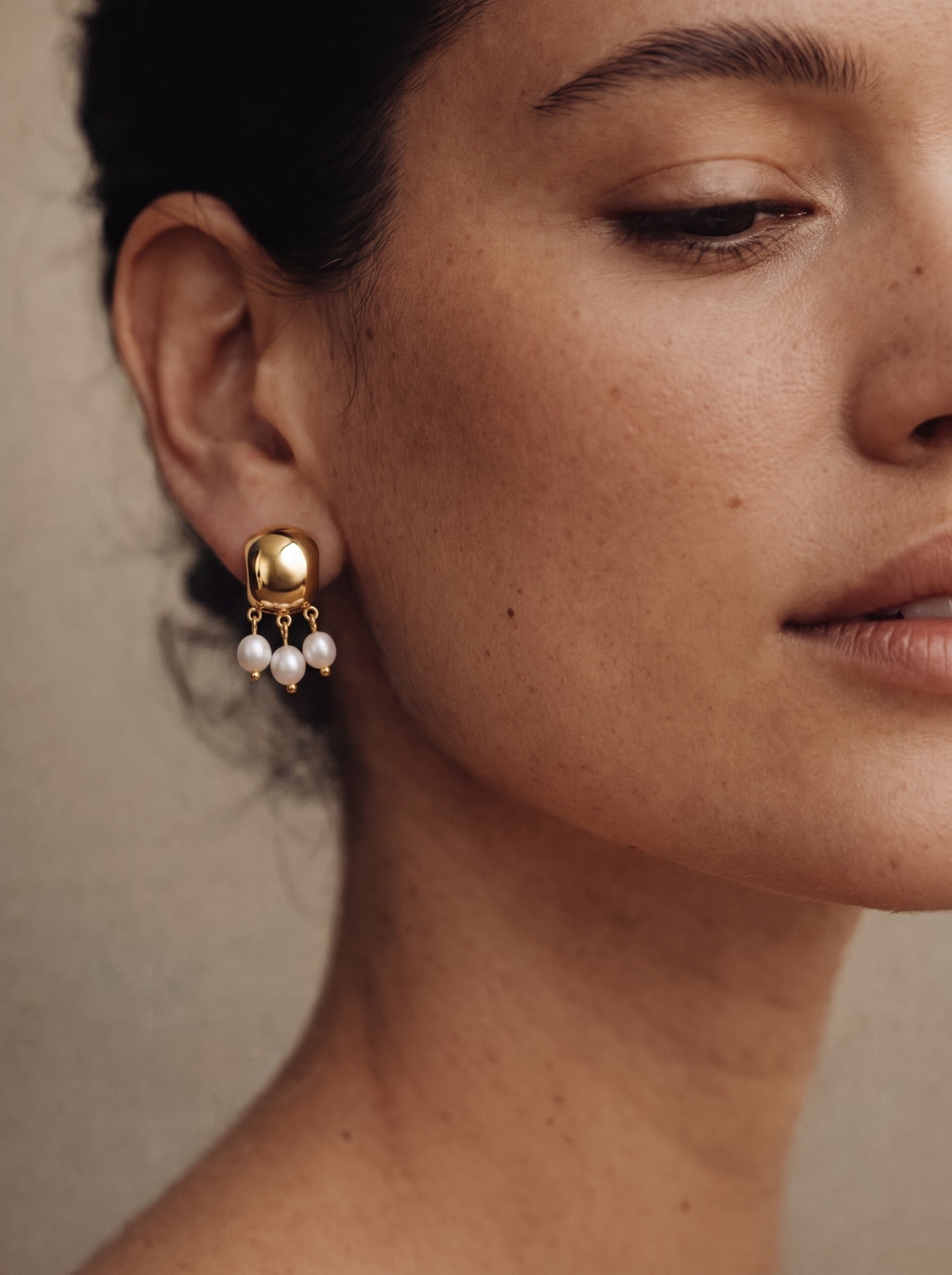
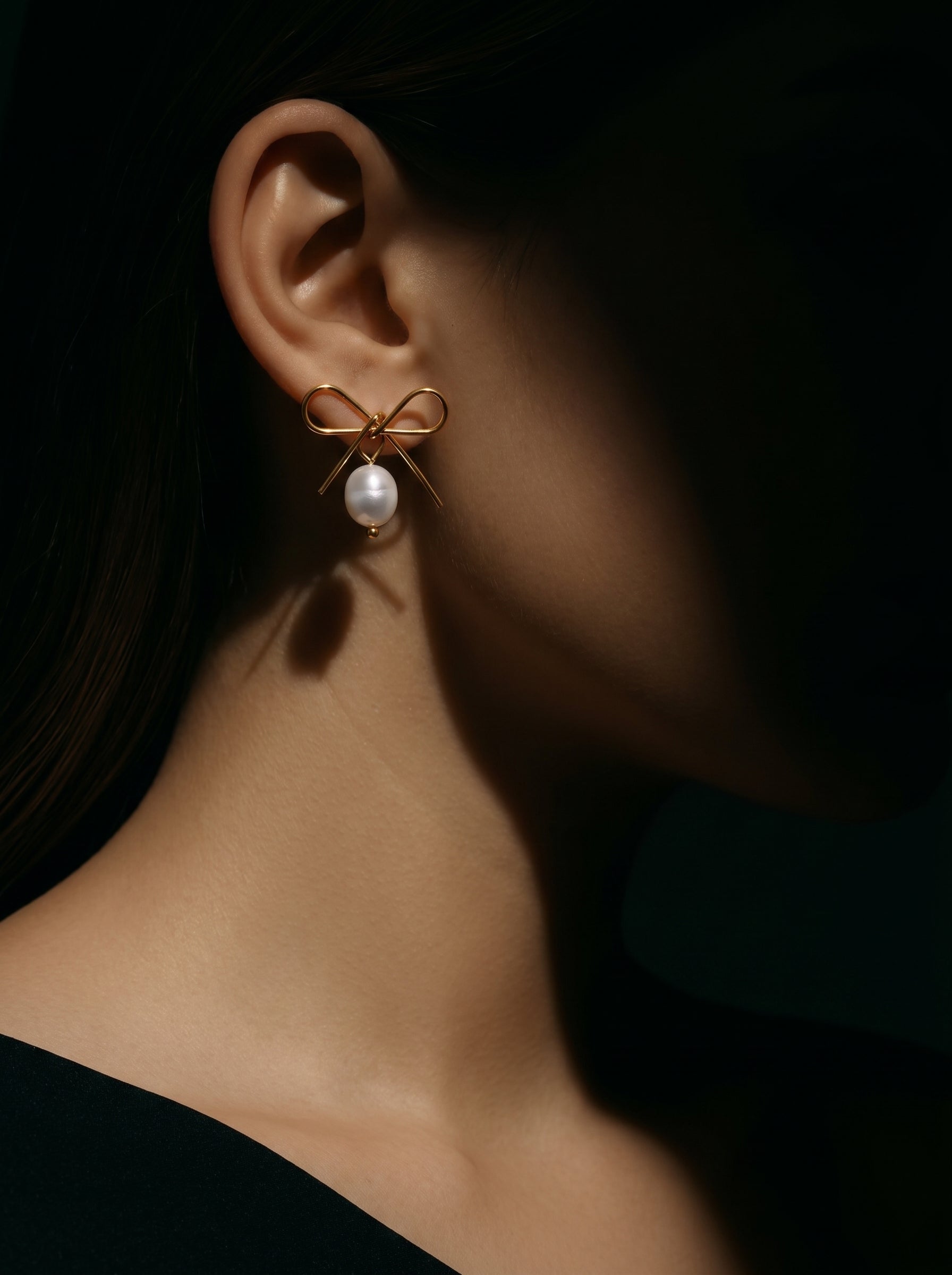
Your first pearl piece should be cultured pearl stud earrings. Studs go with work clothes, weekend clothes and evening wear, frame the face where luster shows best, and have no clasp to fiddle with. In Grande Lilith's range, cultured freshwater pearl studs start under $35, and cultured Akoya studs at $89.
Why studs win is simple. A first piece has one job: to be worn often enough that you learn what you like about pearls. Studs clear that bar on the first morning, because nothing about an outfit rules them out.
We scored the four common first purchases on four criteria, 1 to 5 points each, for a maximum of 20. The scores are our editorial judgment, and the reasons are shown so you can disagree with them.
| Criterion | What earns 5 points |
|---|---|
| Versatility | Works with every neckline, every outfit and every occasion |
| Durability | Little friction, little contact with chemicals, no thread to wear out |
| Cost | A good example available in our range for under $50 |
| Ease of wear | Goes on in seconds, no clasp, nothing to adjust |
| First purchase option | Cost (example in our range) | Versatility | Durability | Verdict |
|---|---|---|---|---|
| Stud earrings | $32 (Verity studs) | 5: every neckline | 4: little friction, but backs can be lost | 19/20. The best first piece |
| Pendant necklace | $35 (Solace pendant) | 4: hidden by high necklines | 5: one pearl on a chain, no thread | 18/20. Best if you prefer necklaces |
| Strand | $35 (Tapestry beaded necklace) | 3: reads dressier | 3: many pearls touch skin and fragrance | 14/20. A strong second piece |
| Bracelet | $35 (Azure Strand bracelet) | 3: competes with watches and sleeves | 2: knocks against desks; meets hand cream and sanitizer | 13/20. Best as an addition |
Scoring: each option received cost 5 (a good example under $50 exists in all four formats), plus the versatility and durability scores shown, plus ease of wear: studs 5, pendant 4 (one clasp), strand 3 (clasp and length to manage) and bracelet 3 (one-handed clasp). Prices from grandelilith.com on 20 October 2026.
Should you start with earrings or a necklace?
Start with earrings unless you do not have pierced ears or simply prefer necklaces. Pearl studs sit at the face, where luster shows most, and they are visible with every top from a turtleneck to a T-shirt. A pendant necklace scored only one point lower and is the right first piece for necklace wearers.

The difference comes down to two points on the rubric. A pendant loses one point on versatility, because a high neckline hides it, and one point on ease of wear, because it has a clasp. It gains back a point on durability, because a single pearl on a chain has no thread to wear and no back to lose.
Think about what you wear most. If you live in crew necks, sweaters or collared shirts, studs will be seen every day. If you wear open necklines most of the year, a pendant at the collarbone works just as hard.
If you have sensitive ears, read our guide to the best pearl stud earrings for sensitive ears before choosing; the post metal matters more than the pearl.
What pearl type is best to start with?
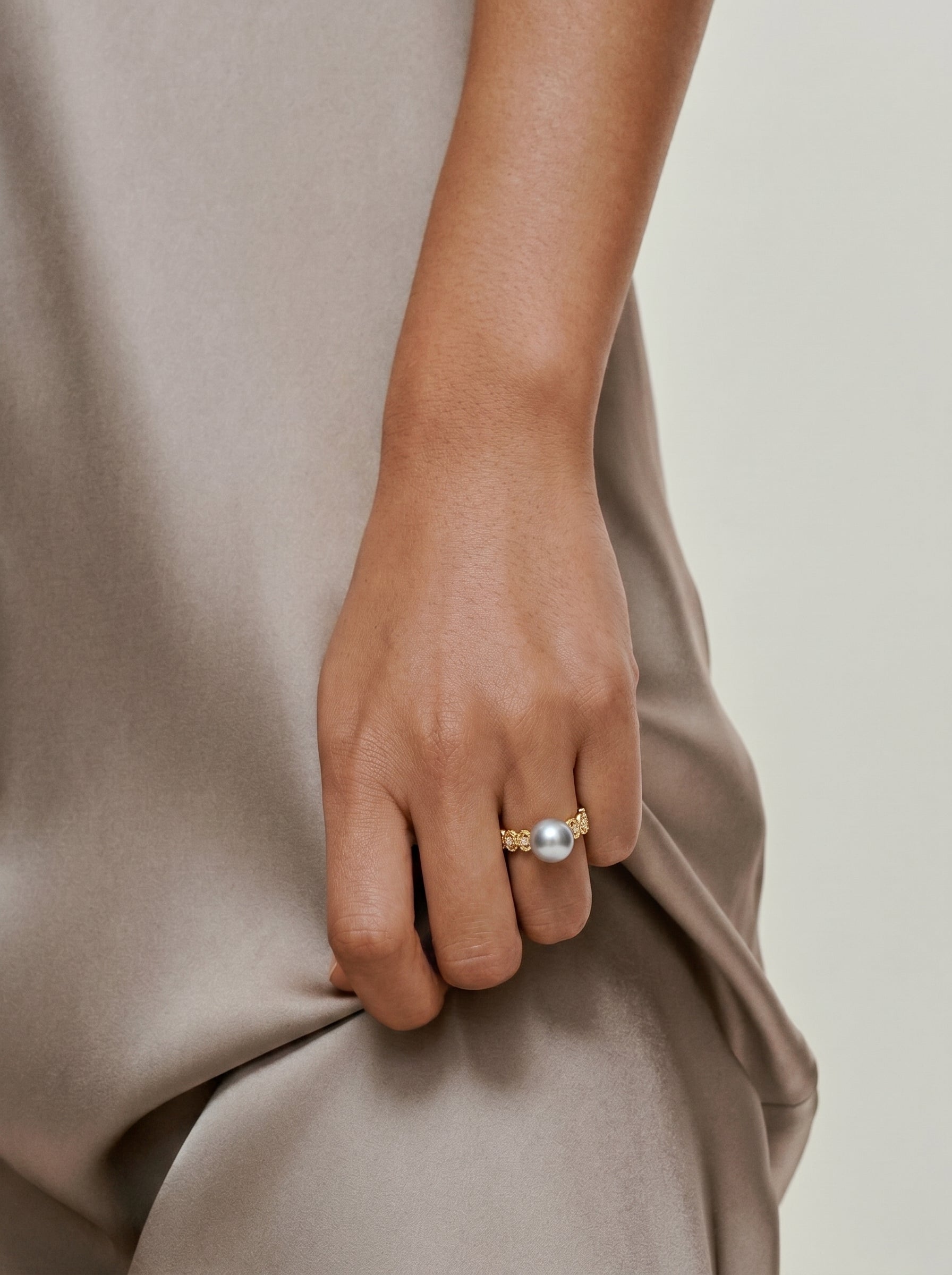
Cultured freshwater pearls are the best type to start with for most people, because they offer the widest choice of shapes, sizes and designs at accessible prices. Cultured Akoya pearls are the alternative for a classic round, mirror-like pearl, at a higher starting price. Tahitian and South Sea pearls make better second or third pieces.
Each type has a place, as our complete guide to every pearl type explains in detail. For a first piece:
- Cultured freshwater: the most choice for the money. Our Verity studs use 6 mm freshwater pearls at $32.
- Cultured Akoya: the classic round white pearl. Our Veritas studs use 8 mm Akoya pearls, listed AAA, on sterling silver at $89.
- Tahitian and South Sea: larger and dramatic, better once you know what you like.
Read the pearl line on any listing before you buy. It should name the pearl type, the size in millimeters and any treatment. Every piece recommended in this guide lists its type and size on the product page and gives its treatment as "None."
Whatever the type, GIA describes pearl quality with seven value factors: size, shape, color, luster, surface, nacre and matching. For a pair of studs, matching matters most: the two pearls should look alike in size, color and luster.
What size should you start with?
Start with pearls of 6 to 8 mm for a first pair of studs or a first pendant. That range is visible without being heavy, suits most earlobes and faces, and keeps the price accessible. Pearls of 9 mm and above make a stronger statement and suit a second purchase once you know how you wear pearls.
Size changes both look and cost. A 6 mm stud reads as discreet and fits under hair; an 8 mm stud reads as classic; a 10 mm stud is noticed across a room. Our pearl earring size guide shows how each size looks on the ear, and our pearl size chart covers all formats.
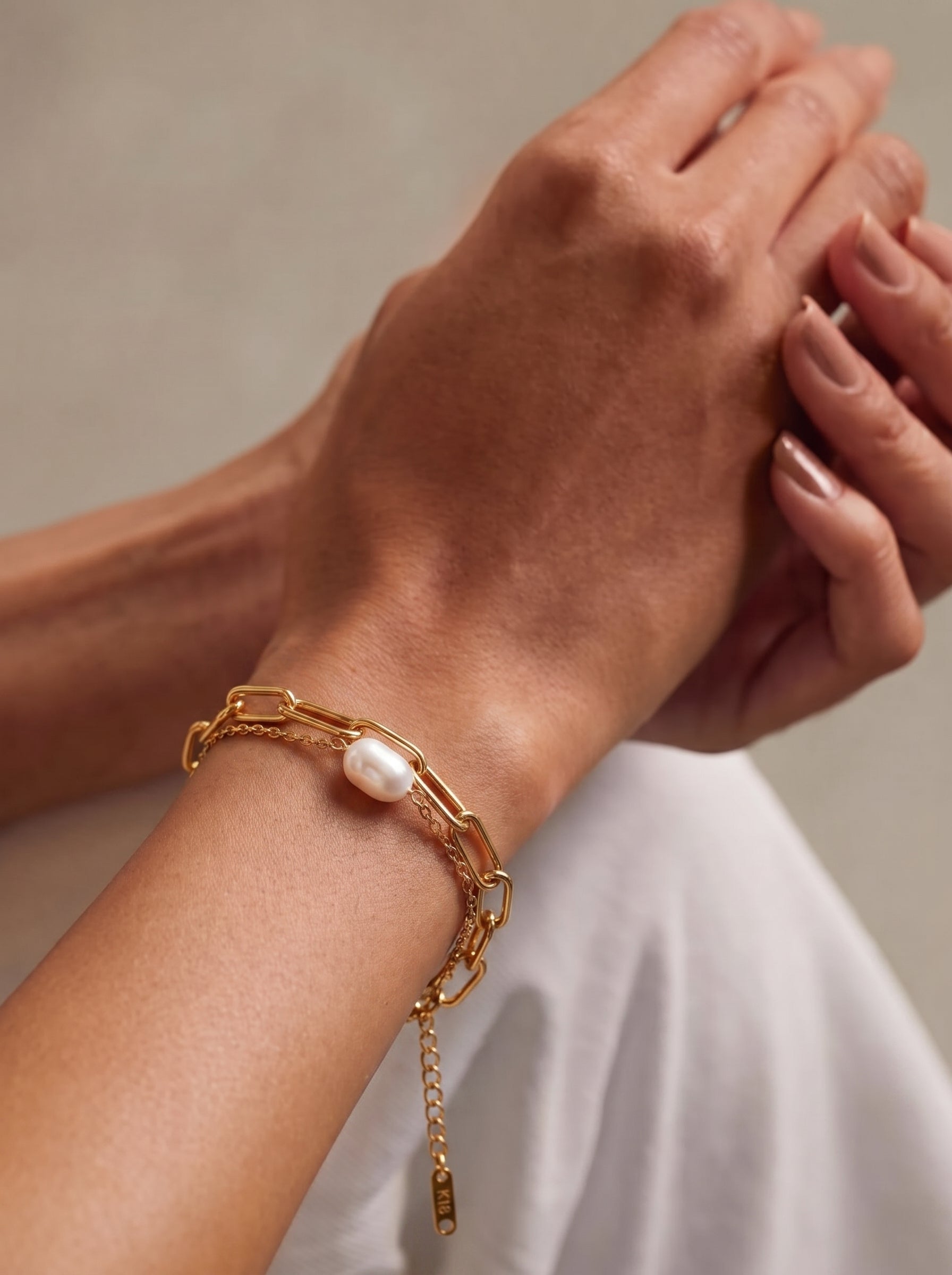
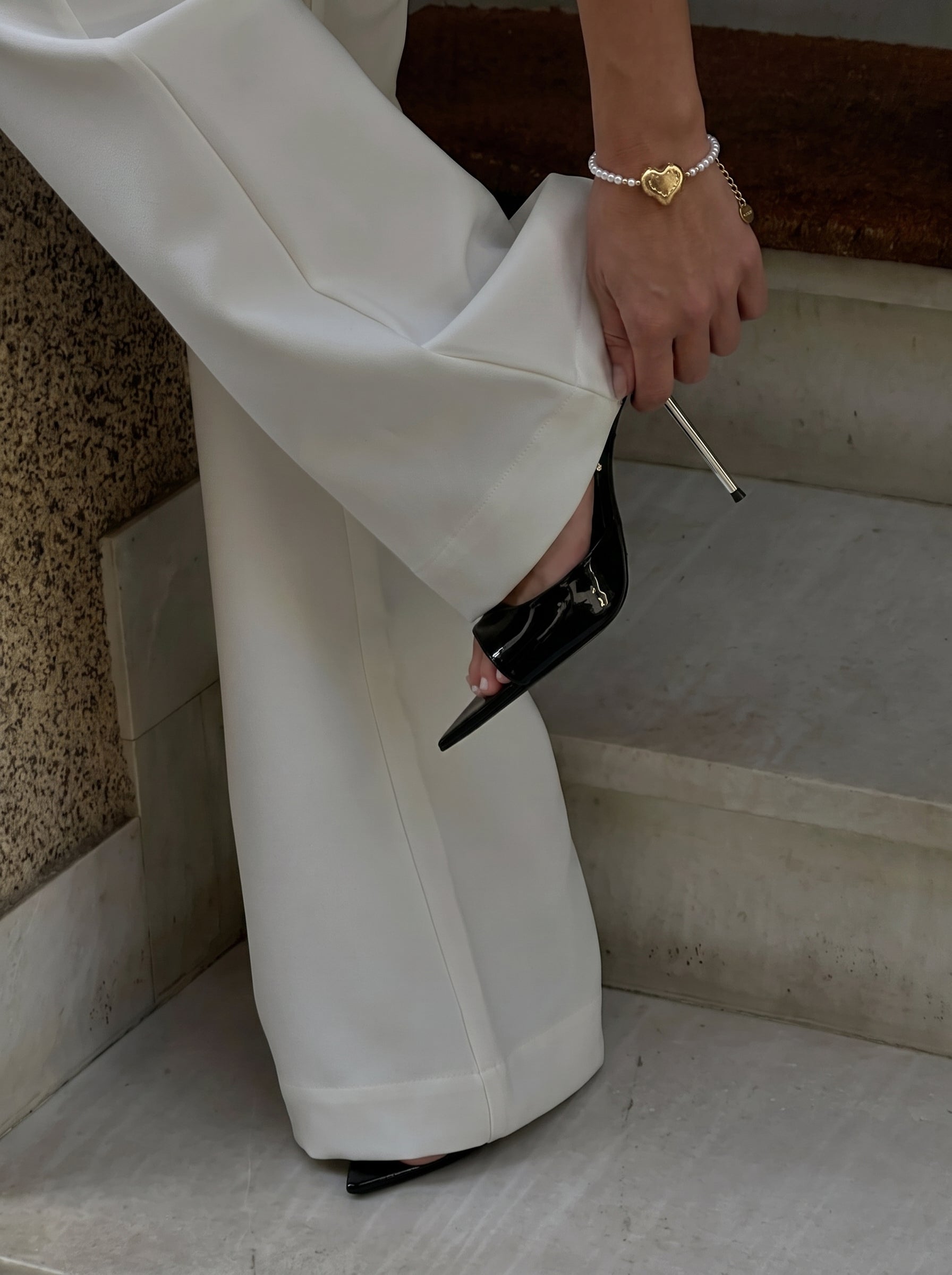
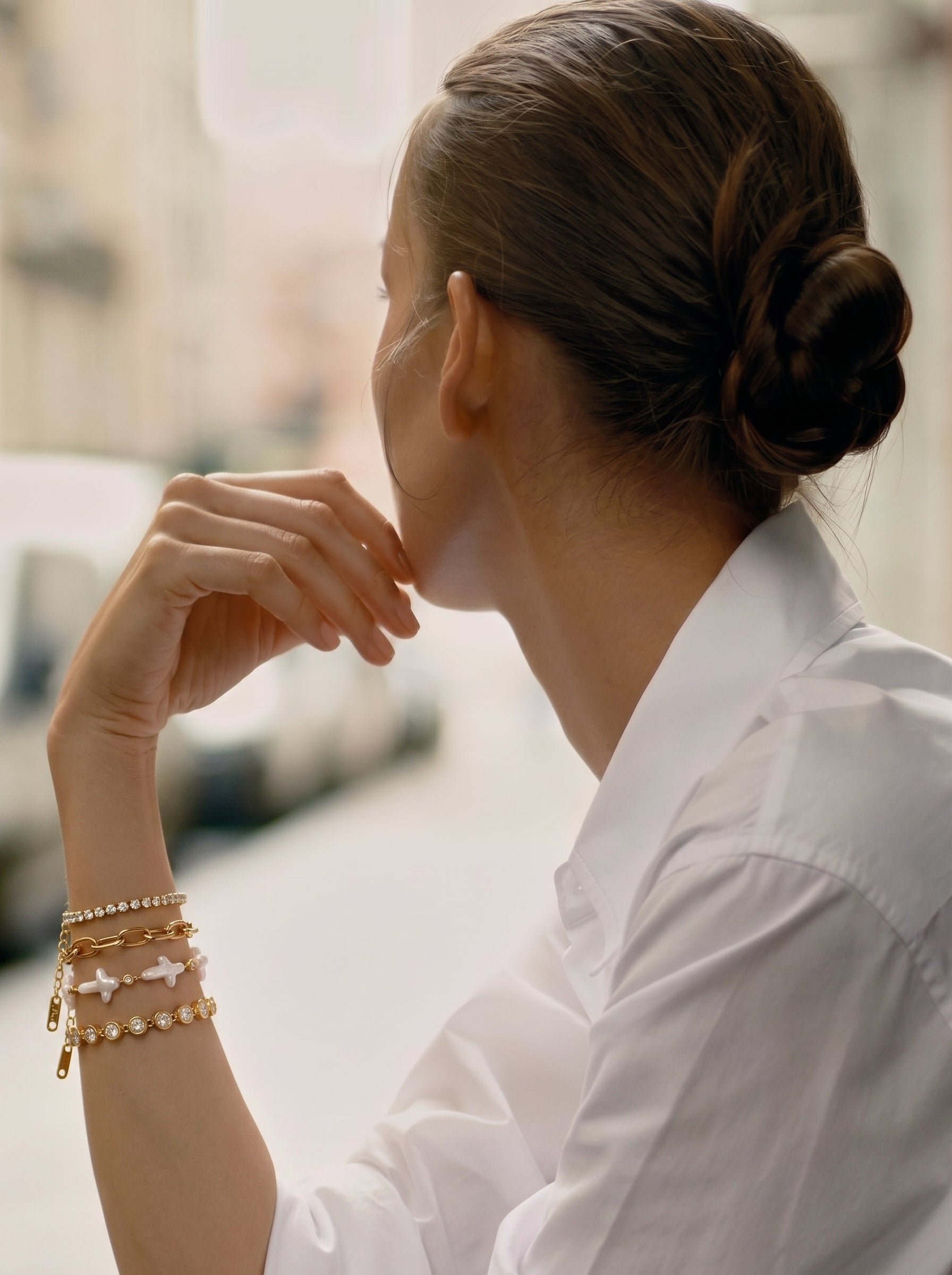
Strands and bracelets work differently, because many pearls sit side by side. Smaller pearls, around 4 to 6 mm, keep a beaded necklace or bracelet light; the Azure Strand bracelet uses 6 mm pearls and weighs 4.7 g. Larger pearls in a full strand add weight quickly, which matters on a piece you wear all day.
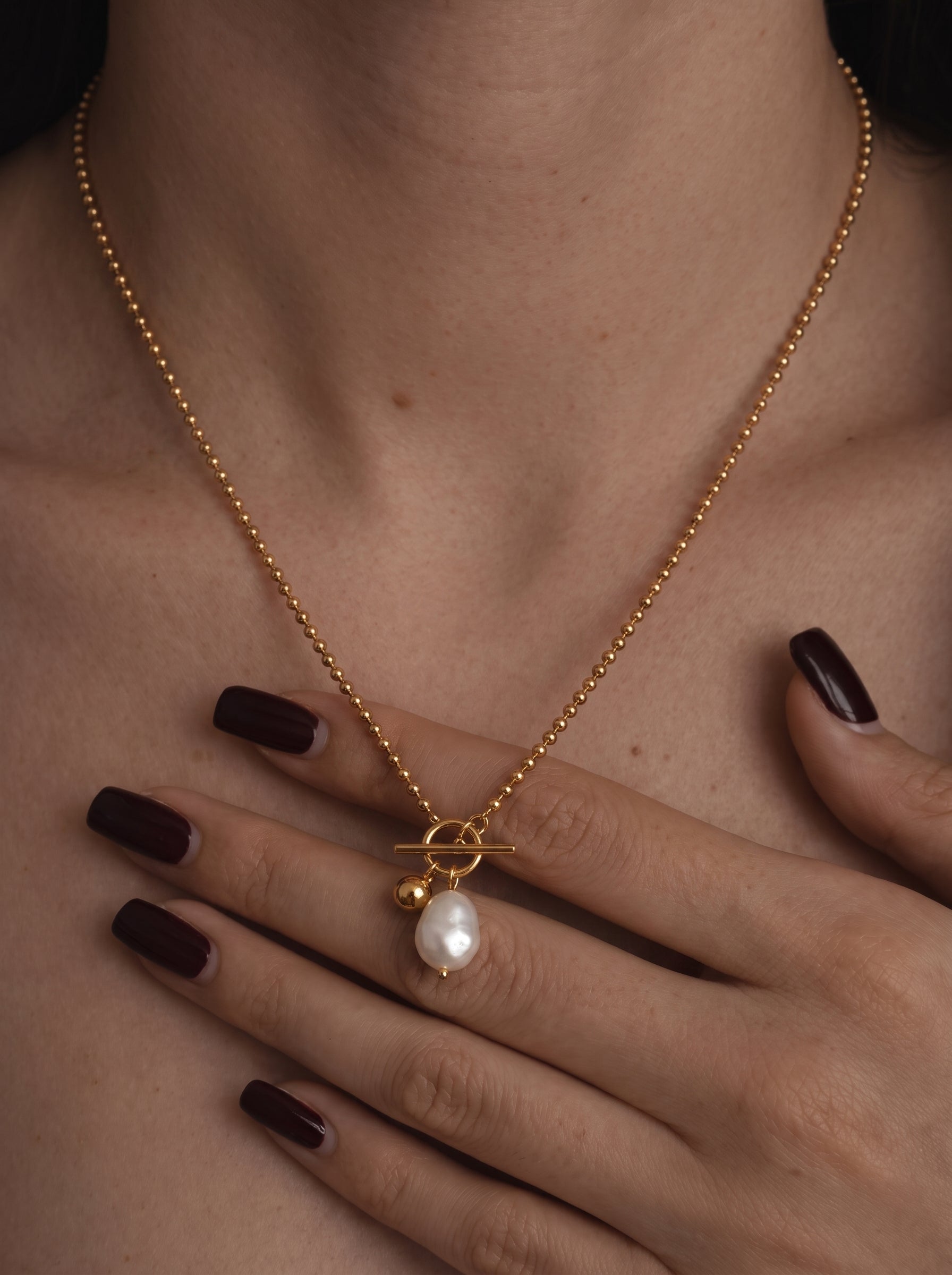
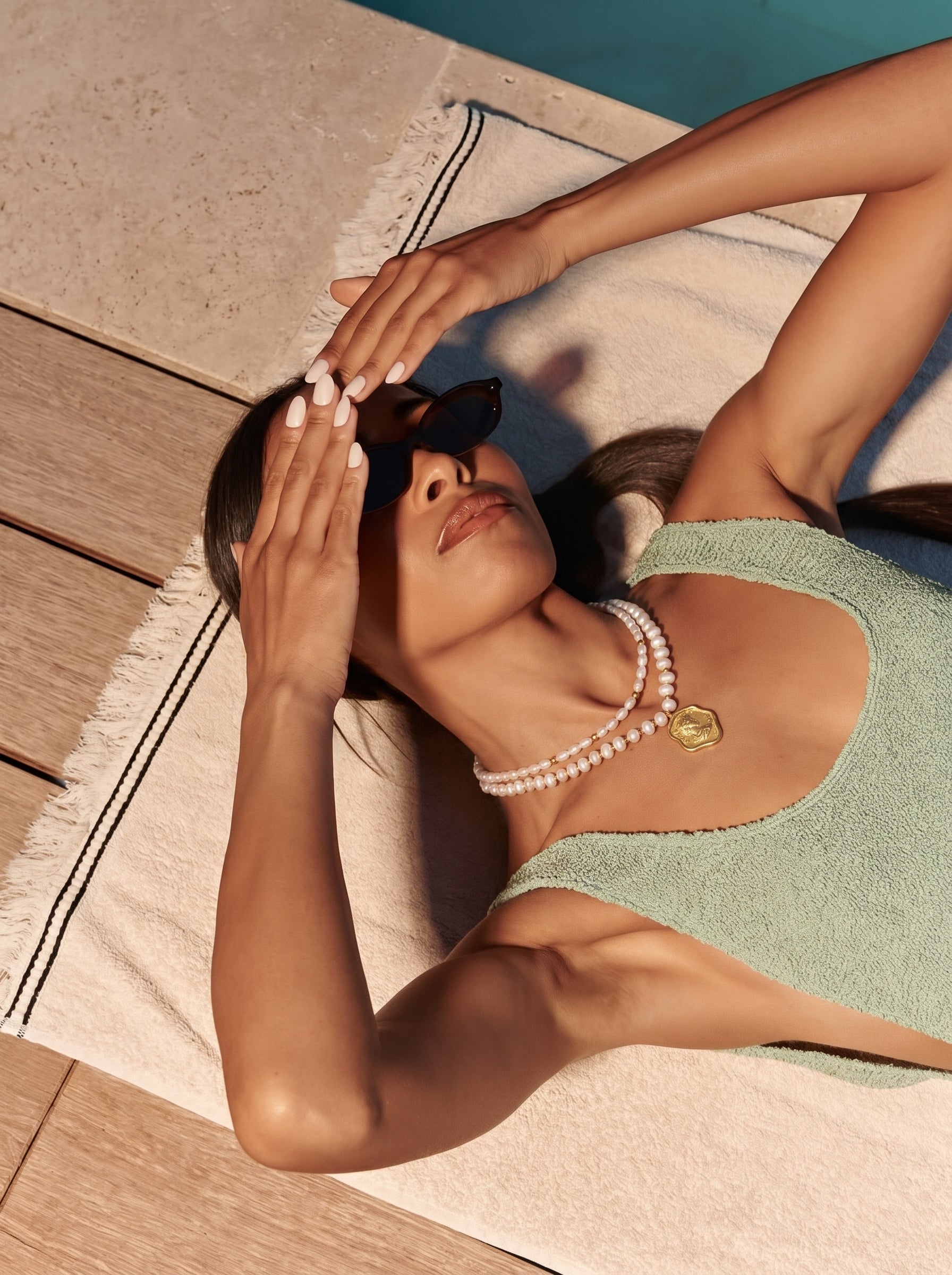
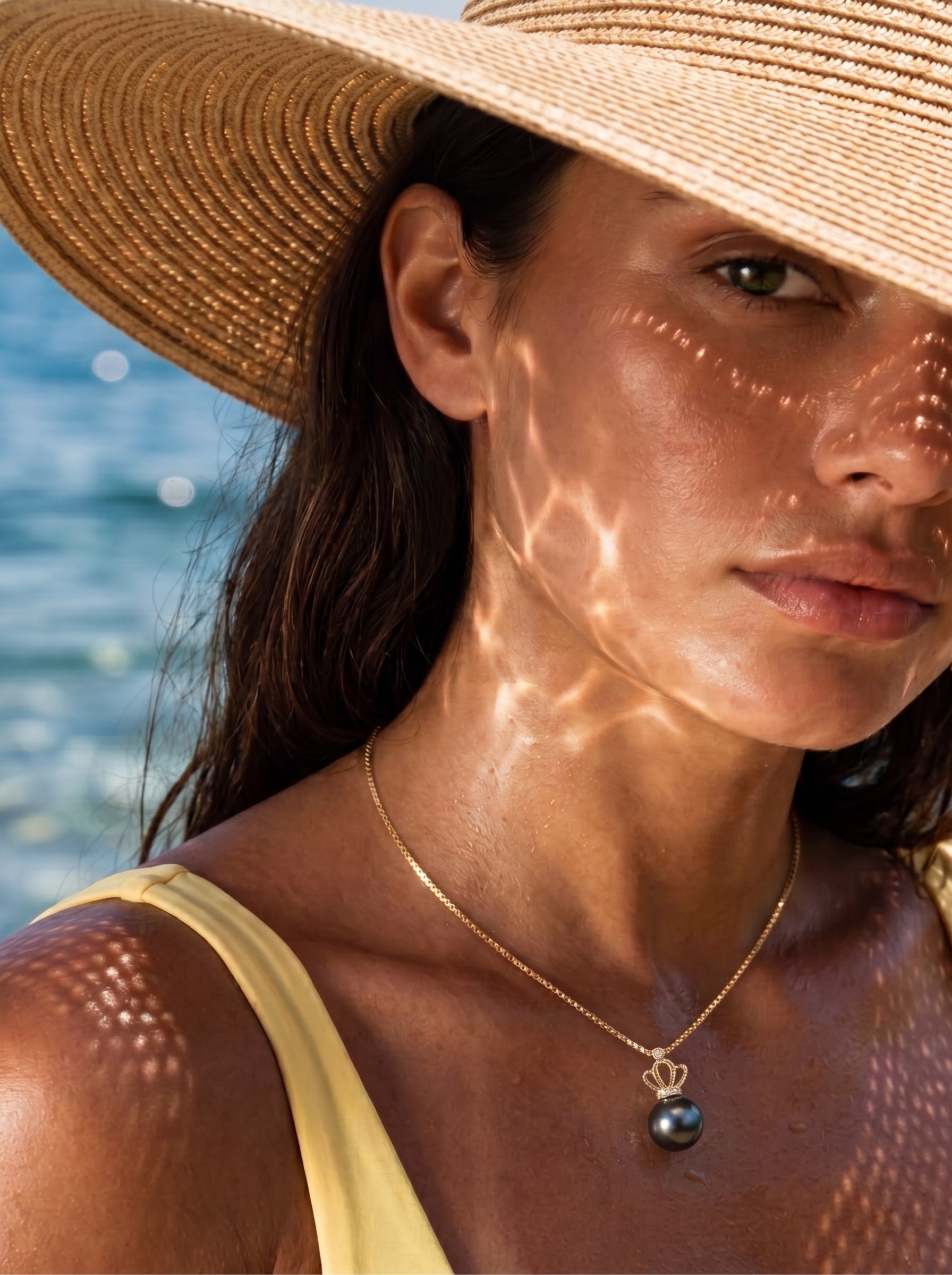
For pendants, the 6 to 8 mm range works too. The Solace pendant uses a 6 mm pearl on an 18-inch chain with a 2-inch extender and weighs 3 g, light enough to wear every day.
How much should a first pearl piece cost?
A first pearl piece costs from about $30 to about $120 in our range. Cultured freshwater studs and pendants start at about $30 to $35, cultured Akoya studs at $89, and 18K gold studs at $119. Spend more on metal if your skin is sensitive, and on pearl type for the classic round look.
Three price points cover most first purchases in our collection on 20 October 2026:
- About $35: cultured freshwater studs, pendant, beaded strand or bracelet on surgical-grade stainless steel.
- About $90: cultured Akoya studs on sterling silver with 18K gold plating.
- About $120: the Amber Sphere studs, 10 or 12 mm cultured freshwater pearls in 18K gold.
Whatever you spend, read the label. The FTC Jewelry Guides require "cultured" before "pearl" for cultured pearls, and under 16 CFR §23.23 it is unfair or deceptive to fail to disclose a treatment that is not permanent, needs special care or significantly affects value. Our guide to the best pearl jewelry under $100 shows what each budget buys.
What should you buy second?
Buy a pendant necklace second if your first piece was studs, and studs second if you started with a pendant. Together, studs and a pendant form a matching everyday set. A strand or bracelet makes the best third purchase, once you know which pearl type, size and metal you reach for most.

Matching is easiest when the second piece repeats the first: the same pearl type, a similar size and the same metal color. A 6 mm freshwater pendant beside 6 mm freshwater studs looks like a set even if the pieces were bought months apart.
For the necklace, our ranking of the best pearl necklaces for everyday wear scores options on the same durability, versatility, comfort and price logic used here.
Keep the metal color consistent across the set. Yellow-gold tones pair naturally with cream and white pearls; if your first studs are on a gold-tone finish, choose a gold-tone pendant to match. Mixing metals works too, but a first set reads more polished when it agrees.
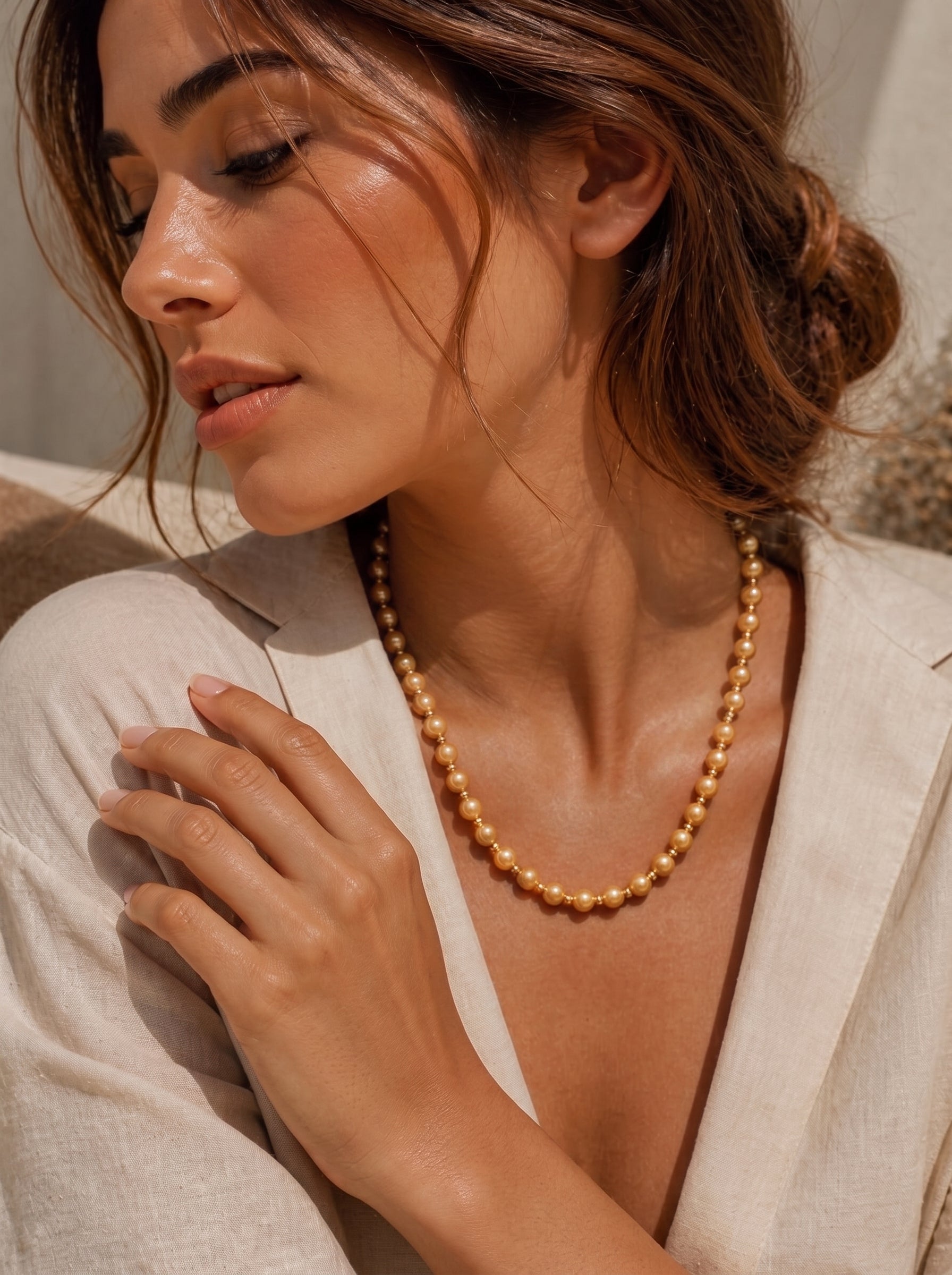
Third pieces can be bolder. A beaded strand such as the Tapestry necklace, at 14 g and 18 inches plus a 2-inch extender, or the Azure Strand bracelet, both best sellers, build on pieces you already wear.
Your first pearl jewelry, chosen with confidence
The right first pearl jewelry is the piece you will actually wear: for most people, a pair of 6 to 8 mm cultured pearl studs on a metal their skin tolerates. A pendant is the close second. Buy the other one next, and you have a set that works every day.
Browse our best-selling pearl jewelry to see the pieces our customers choose most, all under $40.
Studs or a pendant: which would you wear tomorrow?
Frequently Asked Questions
What is the best first piece of pearl jewelry?
The best first piece of pearl jewelry is a pair of cultured pearl stud earrings, 6 to 8 mm. Studs work with every neckline, need no clasp and are the least expensive format to get right. On Grande Lilith's four-criterion rubric, studs scored 19 out of 20, ahead of a pendant at 18.
Should my first pearls be earrings or a necklace?
Choose earrings first unless your ears are not pierced or you strongly prefer necklaces. Pearl studs are visible with every top, from a turtleneck to a T-shirt. A pendant necklace scored only one point lower on our rubric and is the right first piece if you mostly wear open necklines.
What size pearl studs should I buy first?
Buy pearl studs of 6 to 8 mm first. That range is visible without being heavy, suits most earlobes and faces, and keeps the price accessible. A 6 mm stud reads as discreet, an 8 mm stud as classic, and a 10 mm stud as a statement better suited to a second purchase.
Which pearl type is best for beginners?
Cultured freshwater pearls are the best type for most beginners, because they offer the widest choice of shapes, sizes and designs at accessible prices. Cultured Akoya pearls suit beginners who want the classic round white pearl and can spend more; in our range, Akoya studs start at $89 on sterling silver.
How much should I spend on my first pearl jewelry?
A first piece of pearl jewelry can cost from about $30 to about $120 in Grande Lilith's range. Cultured freshwater studs and pendants start at about $30 to $35, cultured Akoya studs at $89 and 18K gold studs at $119. Spend more on metal if your skin is sensitive.
What pearl jewelry should I buy second?
Buy a pendant necklace second if you started with studs, or studs second if you started with a pendant. Together they form a matching everyday set. Repeat the same pearl type, a similar size and the same metal color so the two pieces look like a set even when bought months apart.
Read more

What $100 really buys in pearl jewelry: real cultured freshwater and even Akoya pearls, ranked by what you get and what you give up, with what to avoid.

What a luxury pearl house's price really buys: the same Akoya species, plus selection, design, service and a name. How to measure the premium like for like, and how to spot fakes.
Leave a comment
All comments are moderated before being published.
This site is protected by hCaptcha and the hCaptcha Privacy Policy and Terms of Service apply.