




The Best Pearl Stud Earrings for Sensitive Ears
Table of Contents
The best pearl stud earrings for sensitive ears have posts in solid 18K gold or sterling silver, because nickel is the metal most often behind earring reactions. Stainless steel suits many people but contains nickel by composition. The EU limits nickel release from piercing posts to under 0.2 µg/cm² per week under REACH, Regulation (EC) No 1907/2006, Annex XVII, entry 27.
Key takeaways
- Nickel allergy is common: the EDEN Fragrance Study, published in Contact Dermatitis in 2018, found nickel contact allergy in 14.5% of adults tested across five European countries, and in 22.0% of women.
- Piercings raise the odds: in the same study, nickel allergy affected 6.4% of people with no piercing and 27.6% of those with three or more current piercings.
- The EU sets the strictest limit for posts: under 0.2 µg/cm² per week for parts inserted into pierced skin, against under 0.5 µg/cm² per week for other jewelry in prolonged skin contact.
- "Surgical steel" has no formal regulatory definition, and 316L, the grade most often sold under that name, contains roughly 10 to 14% nickel.
- Price is no guarantee: a 2008 study of 277 earrings bought in San Francisco found no correlation between price and nickel release.
If your earlobes itch, redden or weep within a day of wearing new earrings, the pearl is rarely the problem. The post usually is. This guide explains what causes the reaction, which post metals are reliably safe, and which Grande Lilith pearl studs suit sensitive ears. For the wider buying basics on pearls, start with our complete pearl buyer's guide, and for earrings specifically, our guide to buying pearl earrings by size, setting and metal.
What pearl earrings are best for sensitive ears?
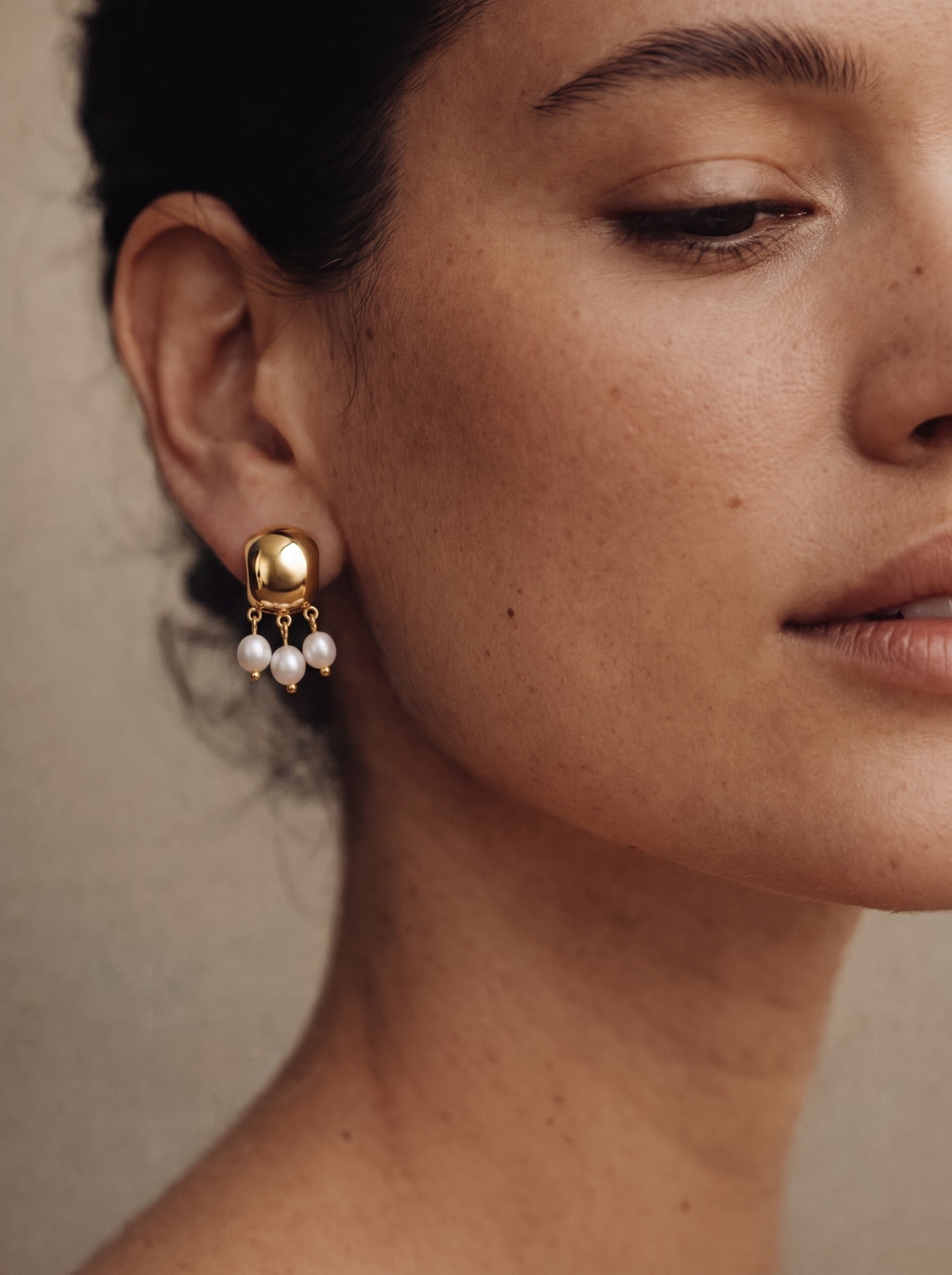
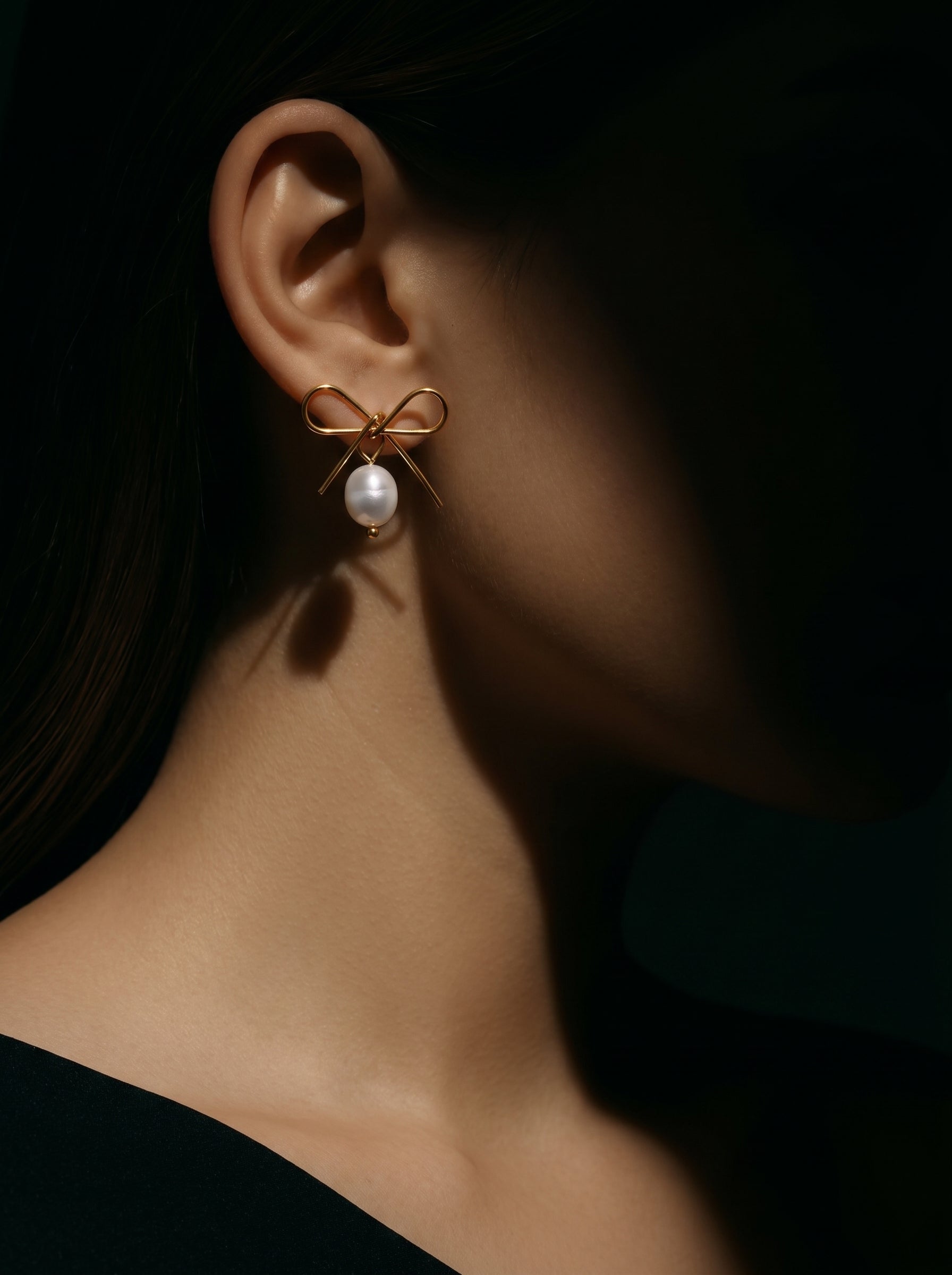
The best pearl earrings for sensitive ears are studs whose posts are solid 18K gold or sterling silver, the metals least associated with nickel reactions. In our range, the Amber Sphere freshwater pearl studs, listed in 18K gold at $119, rank first. Sterling silver studs follow, then stainless steel for people without a confirmed nickel allergy.
We ranked studs from the Grande Lilith pearl stud earrings collection by one criterion first: the base metal listed on each product page, because that metal touches the inside of the piercing. Price broke ties within the same metal. Imitation pearl studs and brass-based pieces were excluded.
| Rank | Stud | Price (18 Oct 2026) | Pearl | Listed base metal | Best for |
|---|---|---|---|---|---|
| 1 | Amber Sphere freshwater pearl studs | $119 | Cultured freshwater, 10 or 12 mm, AAA | 18K gold | Confirmed nickel allergy |
| 2 | Veritas Akoya cross studs | $89 | Cultured Akoya, 8 mm, AAA | Sterling silver with 18K gold plating | Sensitive ears under $100 |
| 3 | Shadowlight Tahitian halo studs | $209 | Cultured Tahitian and mabe, 10 mm, AAA | Sterling silver | A dark pearl in a halo setting |
| 4 | Vertex Tahitian triangle studs | $259 | Cultured Tahitian, 11 mm, AAA | Sterling silver | A larger statement stud |
| 5 | Verity freshwater cross studs | $32 | Cultured freshwater, 6 mm, AA | Surgical-grade stainless steel | Mildly sensitive ears, no confirmed allergy |
| 6 | Surge freshwater studs | $39 | Cultured freshwater, 4 mm, AA | Surgical-grade stainless steel, 18K gold PVD finish | A small everyday stud |
One honest note: the pearl itself is not what triggers nickel allergy. Cultured pearls are organic gems made of nacre; the metal is what you are choosing.
What causes earring reactions?
Earring reactions are most often linked to nickel allergy, a form of allergic contact dermatitis triggered by nickel released from the post or setting. DermNet, the dermatology reference written by New Zealand dermatologists, states that the most common sites for nickel dermatitis are the earlobes, from earrings. Once nickel allergy develops, it often persists for many years.
The numbers explain why so many people react. The EDEN Fragrance Study, led by Marie Schuttelaar and colleagues and published in Contact Dermatitis in 2018, patch-tested a random sample of about 3,100 adults aged 18 to 74 in the Netherlands, Germany, Italy, Portugal and Sweden. It found:
- 14.5% of adults had nickel contact allergy (age-standardized).
- 22.0% of women and 5.3% of men were affected.
- 6.4% of people with no piercing had nickel allergy, against 27.6% of those with three or more current piercings.
A pierced earlobe is a particular risk because the post sits inside broken or freshly healed skin, in constant contact with moisture. That is why the EU sets a tighter nickel limit for posts than for any other jewelry, as the next section explains.
Other causes exist. Rough posts, heavy earrings pulling on the lobe and residue from hair products can all irritate the skin without any allergy. If a reaction persists, a dermatologist can confirm nickel allergy with a patch test.
Is surgical steel hypoallergenic?
Surgical steel is not automatically hypoallergenic. The term "surgical steel" has no formal regulatory definition, and 316L stainless steel, the grade most often sold under that name, contains about 10 to 14% nickel. Many people wear it without trouble because the alloy releases little nickel, but people with a confirmed nickel allergy should choose solid gold or sterling silver.
The distinction that matters is content versus release. Nickel sits locked inside the stainless steel alloy, and what triggers an allergy is the nickel that leaches out onto the skin. DermNet notes that stainless steel "does not usually cause dermatitis unless it is nickel-plated."
The EU regulates exactly that release. Under the REACH Regulation, Regulation (EC) No 1907/2006, Annex XVII, entry 27 sets two limits:
- Post assemblies inserted into pierced ears and other pierced parts of the body: nickel release must be less than 0.2 µg/cm² per week.
- Other articles in direct and prolonged contact with the skin, such as earring fronts and necklaces: less than 0.5 µg/cm² per week.
In practice, that means a post sold in the EU must release under one-fifth of a microgram of nickel per square centimeter of surface each week. The limit is set on release, not on content, which is why a steel containing nickel can still comply. For shoppers anywhere, the EU figure is a clear published benchmark to ask a seller about.
Our stainless steel studs are surgical-grade stainless steel, and the Surge pair adds an 18K gold PVD finish. They suit most wearers; if you know you react to nickel, start with the 18K gold or sterling silver studs in the table above.
Is gold plating enough?
Gold plating alone is not enough for sensitive ears, because plating is a thin layer that can wear through and expose the base metal underneath. What protects a nickel-sensitive ear is the base metal of the post. Gold plating over sterling silver is a safer combination than gold plating over brass or an unknown alloy.
The FTC Guides for the Jewelry, Precious Metals, and Pewter Industries set what "gold electroplate" means in the United States: gold of at least 10 karat with a minimum thickness equivalent to 0.175 microns of fine gold, and at least 2.5 microns for "heavy gold electroplate." Even the heavier figure is a fraction of the thickness of a human hair.
The same Guides define vermeil as sterling silver coated with gold of at least 10 karat and at least 2.5 microns thick. That makes vermeil a reasonable option for sensitive ears: if the gold wears, the metal beneath is sterling silver.
PVD finishes, short for physical vapor deposition, bond a thin metal coating to the base. As with any coating, the base metal is what matters for allergy once wear sets in, so check it on the listing. The Veritas Akoya studs, for example, list sterling silver under their 18K gold plating.
What post metals should you avoid?
If you have sensitive ears, avoid posts listed only as "metal," "alloy" or "base metal," nickel-plated posts, white gold that may be alloyed with nickel, and gold plating over an undisclosed base. Each of these either contains nickel or hides what the post is made of.

The table below compares the common post metals. "Hypoallergenic" here means suitable for most people with nickel allergy; it is a practical label, not a legal standard.
| Post metal | Nickel content | Hypoallergenic | Durability | Price in our range |
|---|---|---|---|---|
| 14k gold | 58.5% gold; nickel possible in some alloys, especially white gold | Yes in nickel-free yellow or rose alloys; check white gold | Good | Not currently offered |
| 18k gold | 75% gold; nickel possible in some white gold alloys | Yes in yellow gold | Good; softer than 14k | $119 (Amber Sphere) |
| Sterling silver | 92.5% silver; the traditional alloy adds copper, not nickel | Yes for most people | Good; tarnishes over time | Studs $89 to $259; drop earrings from $35 |
| Titanium | Virtually nickel-free in implant grades such as ASTM F136 | Yes | Very good; light | Not currently offered |
| Surgical steel | About 10–14% nickel in 316L, held in the alloy | For many people, not for confirmed nickel allergy | Very good | $32 to $39 (studs above) |
| Gold plated | Depends entirely on the base metal | Only if the base metal is safe | Plating can wear through | Varies |
Two details deserve attention. DermNet notes that nine-carat gold and white gold contain nickel, so a gold post is only as safe as its alloy. And the San Francisco earring study, by Jacob Thyssen and Howard Maibach in the Journal of the American Academy of Dermatology in 2008, tested 277 earrings and found "no correlation between price and outcome" of nickel testing. An expensive earring is not automatically a safe one.
What should hypoallergenic pearl earrings cost?
Hypoallergenic pearl earrings cost more where the post metal is precious, not where the pearl is. In our range on 18 October 2026, sterling silver pearl studs start at $89 and 18K gold studs cost $119, while stainless steel studs start at $32. For a confirmed nickel allergy, budget from about $90 for sterling silver studs.
Drop earrings can cost less. The Luminous chain drop earrings, in sterling silver with 18K gold plating and push backs, cost $35, the lowest-priced sterling silver piece in our stud and drop collection.
Pearl type and size drive the rest of the price. The Shadowlight and Vertex studs cost $209 and $259 because they carry 10 to 11 mm cultured Tahitian pearls, not because their sterling posts cost more than the Veritas pair's.
When you compare pearl quality across sellers, GIA's 7 pearl value factors, size, shape, color, luster, surface, nacre and matching, are the shared vocabulary. Letter grades such as AA and AAA are seller scales, so compare them within one seller's range. For studs, matching matters most: the two pearls should look like a pair.
The cheapest option that protects your ears is the one to start with. If stainless steel studs cause no reaction after several days of wear, they are a practical everyday choice; if they do, move to sterling silver.
Choosing pearl stud earrings your ears will tolerate
The right pearl stud earrings for sensitive ears start with the post: solid 18K gold or sterling silver if you have a confirmed nickel allergy, stainless steel if you simply have reactive skin. Then choose the pearl. Amber Sphere is our first pick at $119; Veritas Akoya is the strongest sterling silver choice under $100.
For more pearl pieces at a lower price point, see the best pearl jewelry under $100.

Keep the posts clean as well as the pearls. Wipe pearls with a soft cloth after wearing and keep perfume and hairspray away from them; our guide to cleaning pearls and what destroys them covers the routine. For the matching necklace, see the best pearl necklaces for everyday wear, and for sizing, our pearl earring size guide.
Which metal will you check first on your next pair?
Frequently Asked Questions
What are the best pearl stud earrings for sensitive ears?
The best pearl stud earrings for sensitive ears have posts in solid 18K gold or sterling silver, the metals least associated with nickel reactions. In Grande Lilith's range on 18 October 2026, the Amber Sphere studs in 18K gold cost $119 and the Veritas Akoya studs in sterling silver cost $89.
Is surgical steel safe for nickel allergy?
Surgical steel is not reliably safe for a confirmed nickel allergy. The term has no formal regulatory definition, and 316L stainless steel, the grade usually sold as surgical steel, contains about 10 to 14% nickel. Many people tolerate it because little nickel is released, but nickel-allergic wearers should choose gold or sterling silver.
What is the EU nickel limit for earrings?
Under REACH, Regulation (EC) No 1907/2006, Annex XVII, entry 27, earring posts inserted into pierced ears must release less than 0.2 µg of nickel per square centimeter per week. Other jewelry in prolonged skin contact, such as earring fronts and necklaces, must release less than 0.5 µg/cm² per week.
Can pearls cause an allergic reaction?
Pearls themselves are rarely the cause of an earring reaction. Cultured pearls are organic gems made of nacre, and earring reactions are most often linked to nickel released from the post or setting. DermNet identifies the earlobes, from earrings, as the most common site of nickel dermatitis.
Are gold-plated earrings okay for sensitive ears?
Gold-plated earrings are only as safe as the metal under the plating. Under the FTC Jewelry Guides, gold electroplate needs at least 10 karat gold and a minimum thickness of 0.175 microns, a layer that can wear through. Gold plating over sterling silver, or vermeil, is a safer choice than plating over brass.
How common is nickel allergy?
Nickel allergy is common. The EDEN Fragrance Study, published in Contact Dermatitis in 2018, found nickel contact allergy in 14.5% of adults patch-tested in five European countries, including 22.0% of women and 5.3% of men. People with three or more current piercings had the highest rate, at 27.6%.
Read more

Mother of pearl is real nacre, not an imitation. Here are mother of pearl gifts under $100, from $35 earrings to spoons and a barrette, with real prices, honest looks-expensive notes and care.

Six signs your pearls are wearing out, from blinking and chalky patches to drill-hole wear and stretched silk, what causes each, and which ones restringing can fix.
Leave a comment
All comments are moderated before being published.
This site is protected by hCaptcha and the hCaptcha Privacy Policy and Terms of Service apply.