


Tahitian pearl ring
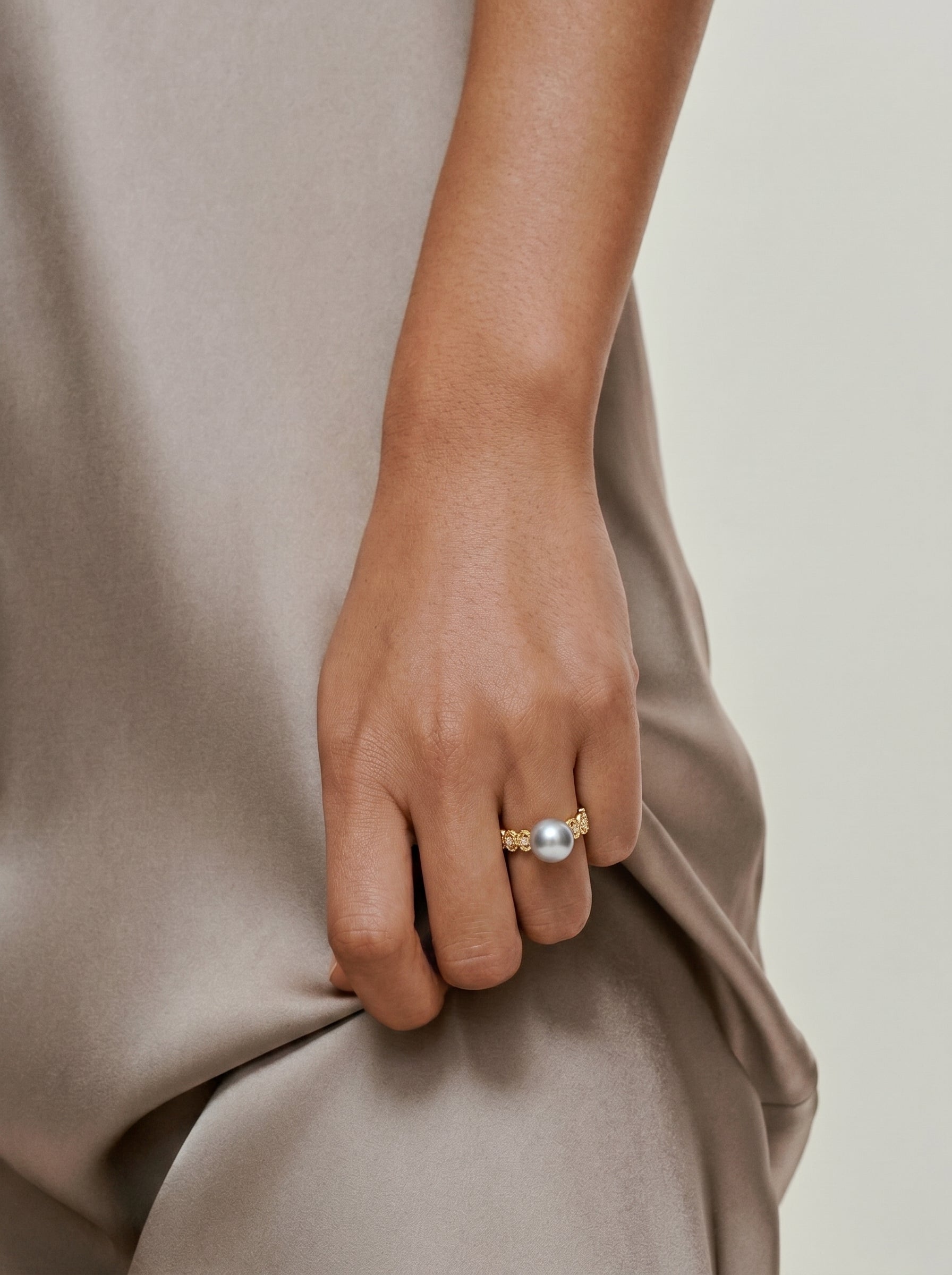
A dark pearl on a hand does not share the frame. Tahitian pearls run large, so one is enough — no stack beside it, nothing else competing. For the woman who wears one ring and means it.
This collection is empty
Tahitian pearl ring
A Tahitian pearl on a hand does not share the frame. It is large enough and dark enough that one is plenty, with nothing stacked beside it and nothing needed to explain it.
What is a Tahitian pearl ring?
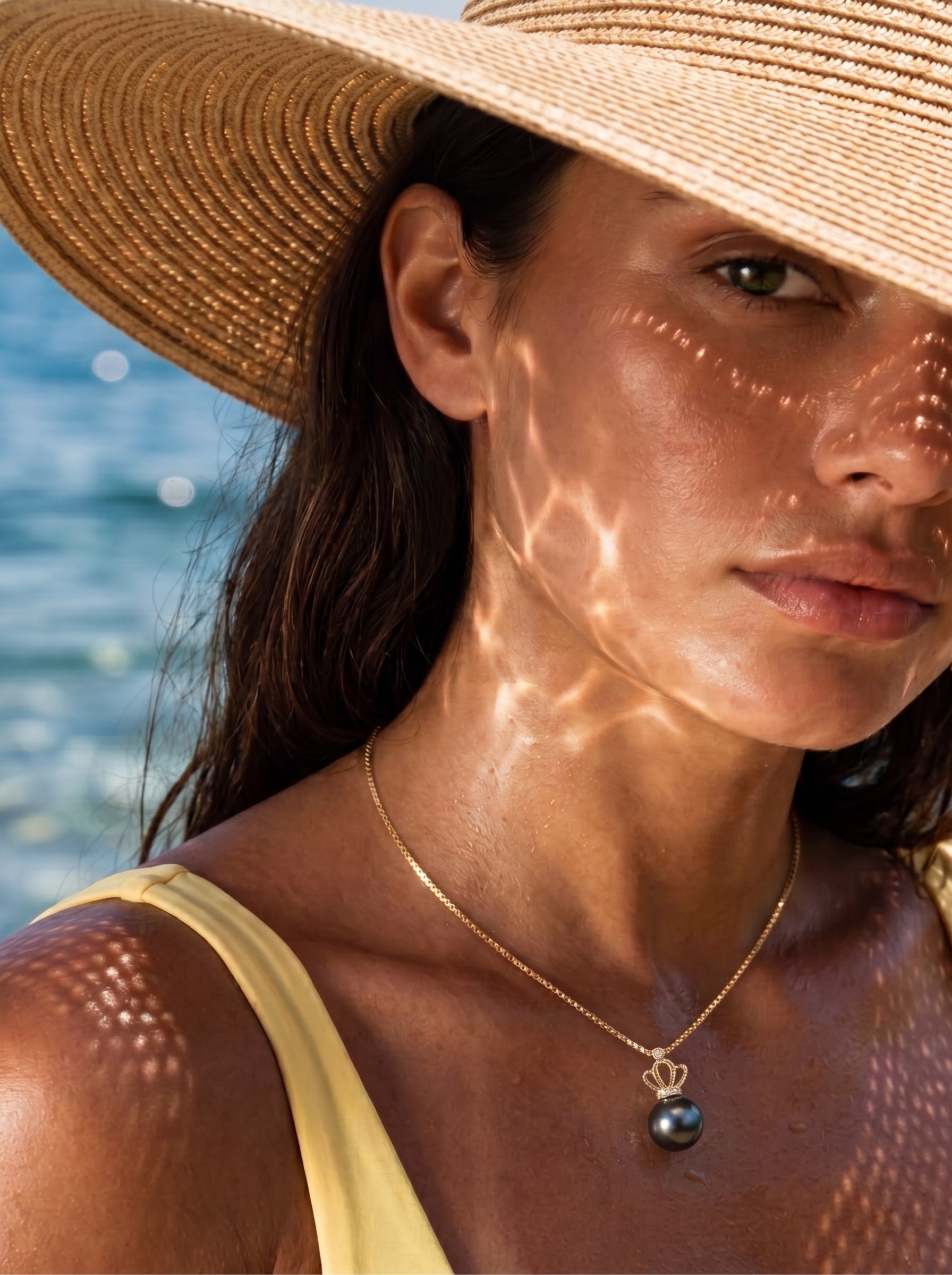
A Tahitian pearl ring sets a cultured pearl grown in the black-lipped oyster, Pinctada margaritifera, in the lagoons of French Polynesia. The oyster produces the dark nacre itself, so the color belongs to the animal rather than to a dye bath.
They run 8 to 16 mm, considerably larger than Akoya, because the host oyster is larger. On a hand that scale is the whole design.
Why does a dark pearl work so well on a hand?
Because a hand is small and busy, and a dark pearl holds its own against that. A pale pearl on a hand can read as a gap between the fingers. A dark one reads as a point.
Dark pearls also read slightly smaller than pale ones at the same diameter, since they absorb light rather than reflecting it. On a hand that works in your favor, because the ring stays wearable at a size that would dominate elsewhere.
Are Tahitian pearls naturally dark?
Yes. The color comes from the oyster's own nacre, and it is in the pearl rather than on it. Other dark pearls sold as black are dyed or treated freshwater pearls, which is legitimate provided it is disclosed.
On a ring this is easy to check, because the drill hole is usually hidden by the setting and the color has to prove itself on the visible surface. A Tahitian pearl shifts from green to aubergine as your hand turns. A dyed one stays flat.
How should a Tahitian ring be set and sized?
Low, and this matters more at large sizes. A 12 mm pearl set high catches on pockets, sleeves and door handles in a way a smaller one does not.
Most pearl rings cannot be resized after purchase, because heat and solder damage nacre. Check the size guide before ordering, and measure at the end of the day when fingers are largest.
Why buy a Tahitian pearl ring from Grande Lilith
Tahitian is the pearl category with the widest gap between what is claimed and what is sold, because a dyed freshwater pearl photographs similarly and costs a fraction as much.
- Origin named: French Polynesia. Not "Tahitian-style" or "black pearl" without qualification.
- Bodycolor, overtone and treatment listed separately, not collapsed into one word.
- Partners vetted by our GIA-certified pearl specialist, on working conditions as well as quality.
- Settings kept low so the ring clears daily life, and nickel-free, lead-free and cadmium-free throughout.
- Designed in Paris. Thirty days to change your mind, and every order arrives in a magnetic pouch.
Frequently asked questions
What size Tahitian pearl suits a ring?
Between 9 and 11 mm for something you will wear regularly. Below 9 mm the scale advantage of a Tahitian pearl disappears. Above 12 mm the ring becomes an occasion piece rather than a daily one.
Can you wear a Tahitian pearl ring every day?
Yes. Tahitian nacre is thick, which makes these pearls relatively forgiving. Take the ring off before hand washing, cleaning and lotion, and store it away from harder stones.
What is a peacock pearl?
Peacock describes a green overtone floating over a dark bodycolor. It is the most sought-after color in Tahitian pearls and commands the highest prices within that category. The name refers to the overtone, not to the pearl type.
Which finger suits a Tahitian pearl ring?
The index or middle finger, where a large dark pearl has room to be seen from several angles. Worn on the ring finger it can read as a substitute for something else, which may or may not be the effect you want.
Do Tahitian pearls fade?
Naturally colored pearls do not, because the color is in the nacre rather than on it. Dyed pearls can lose color over years, which is another reason treatment disclosure matters at the point of purchase.