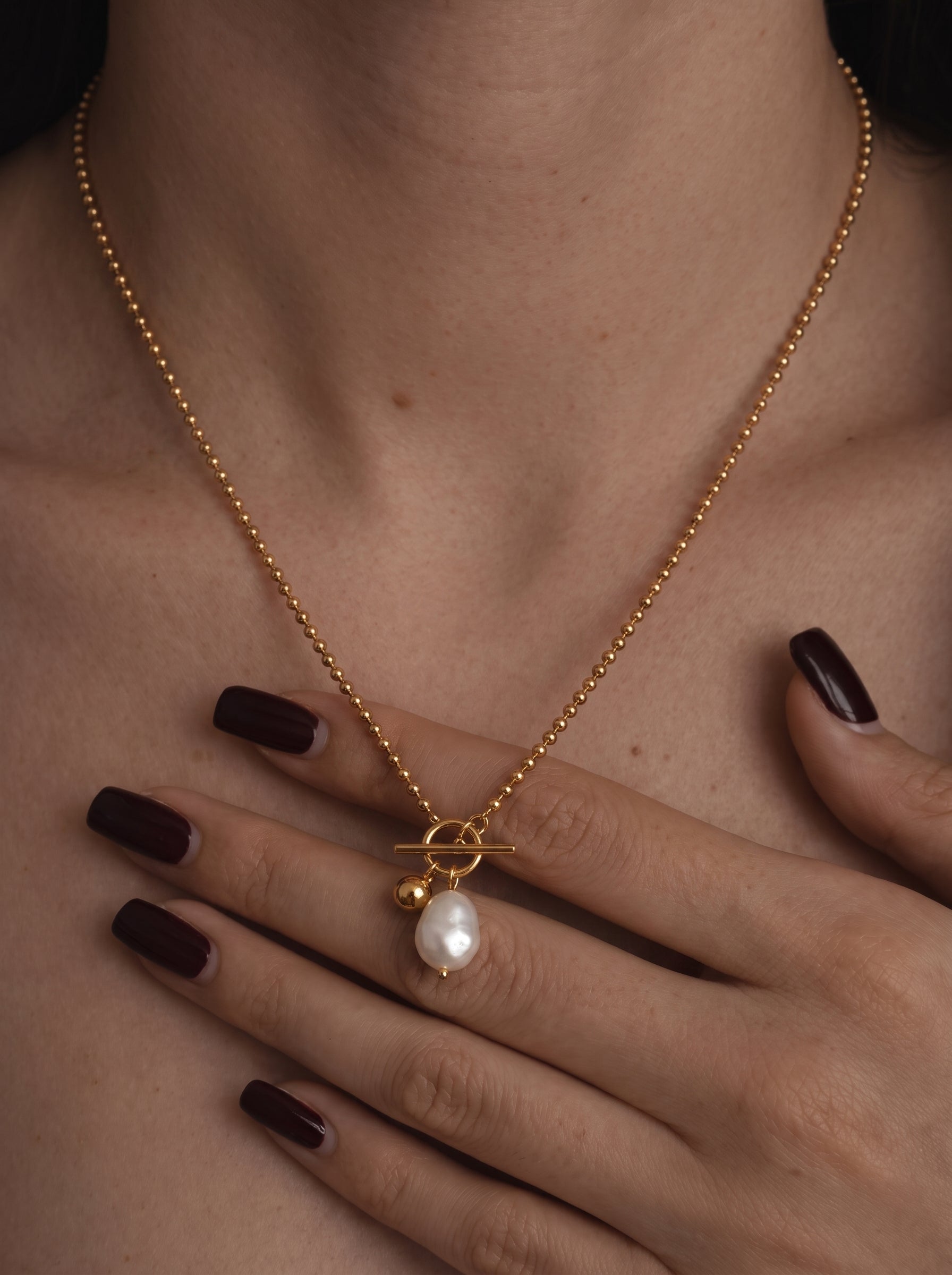
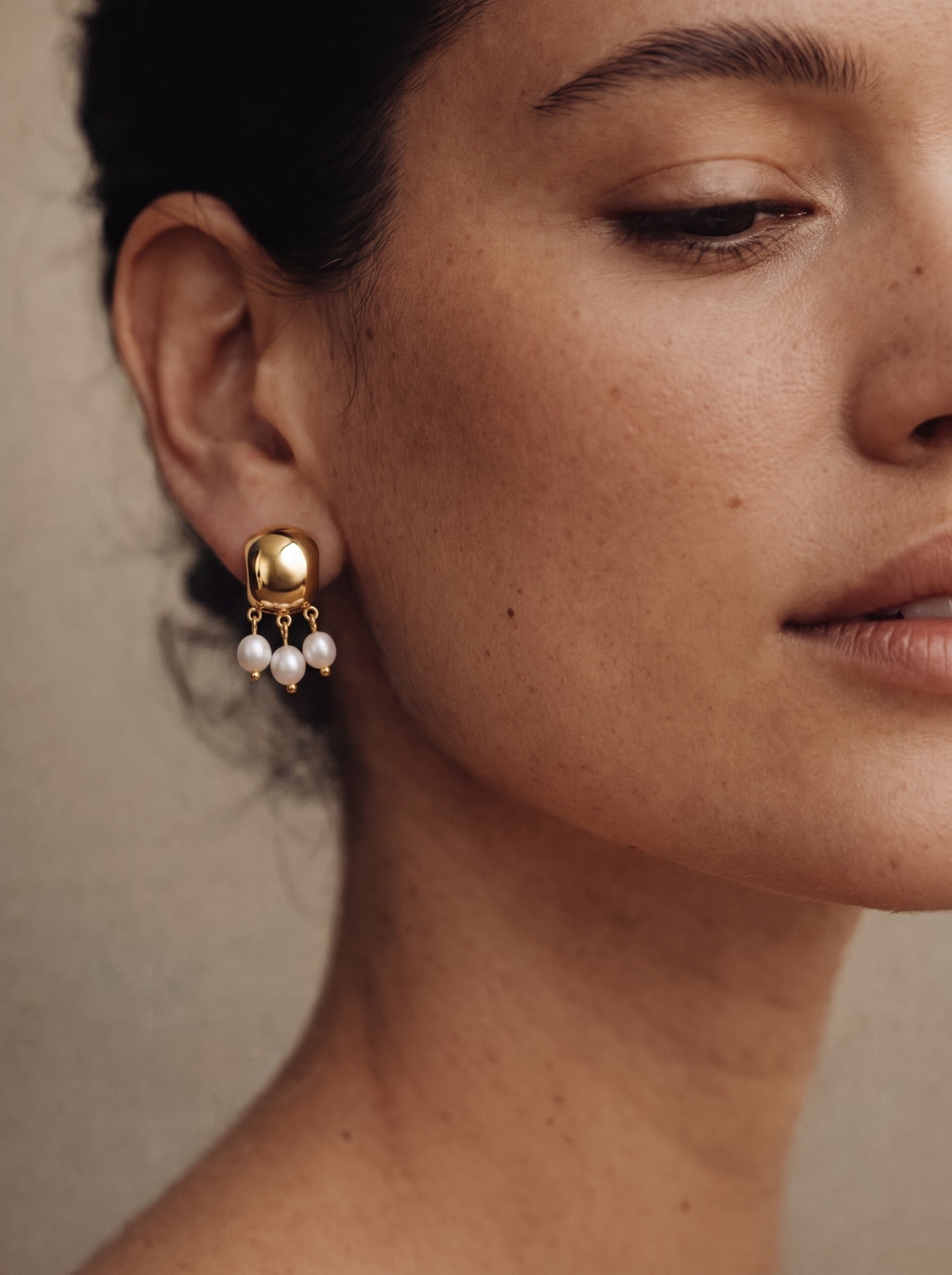
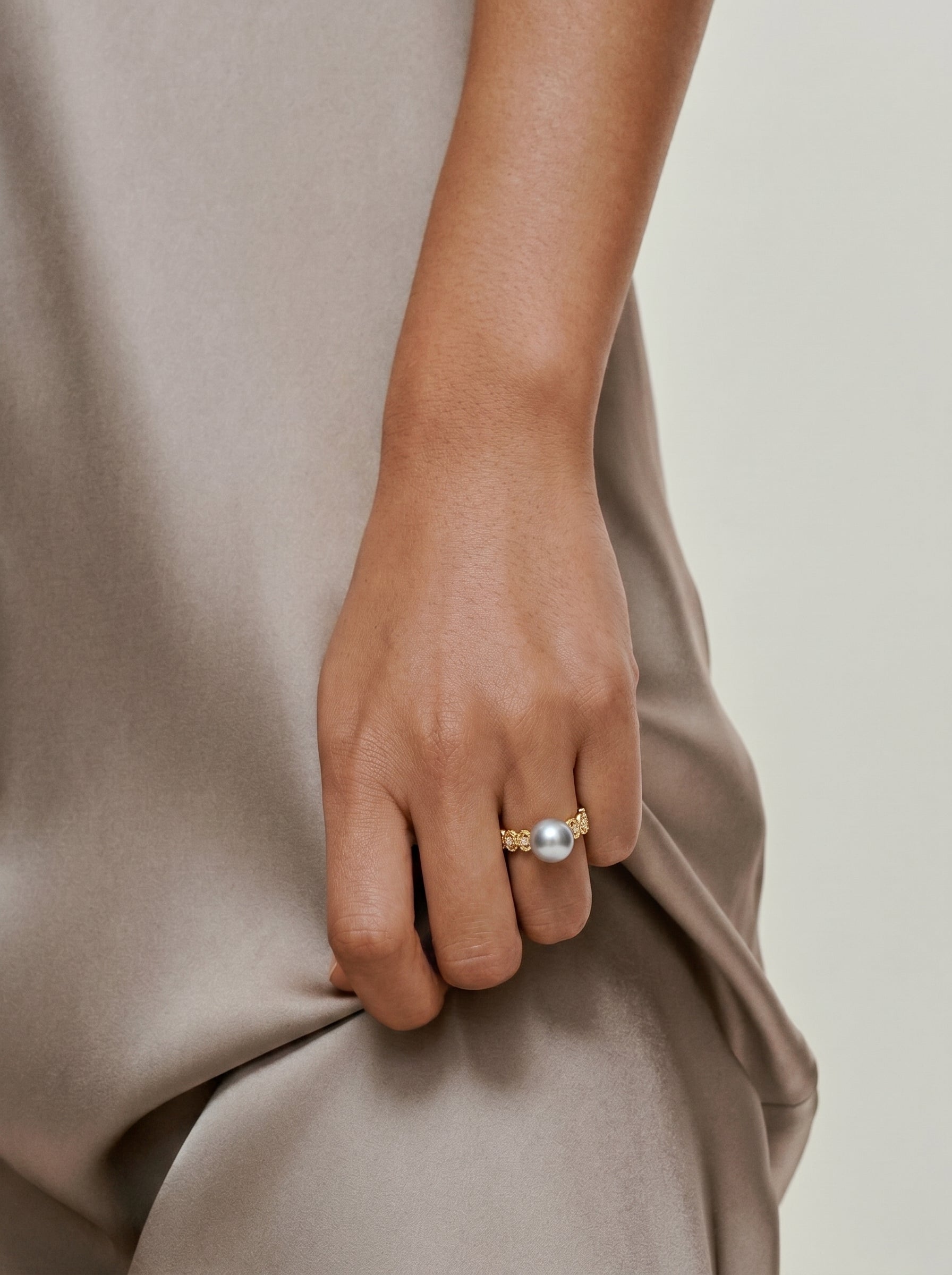
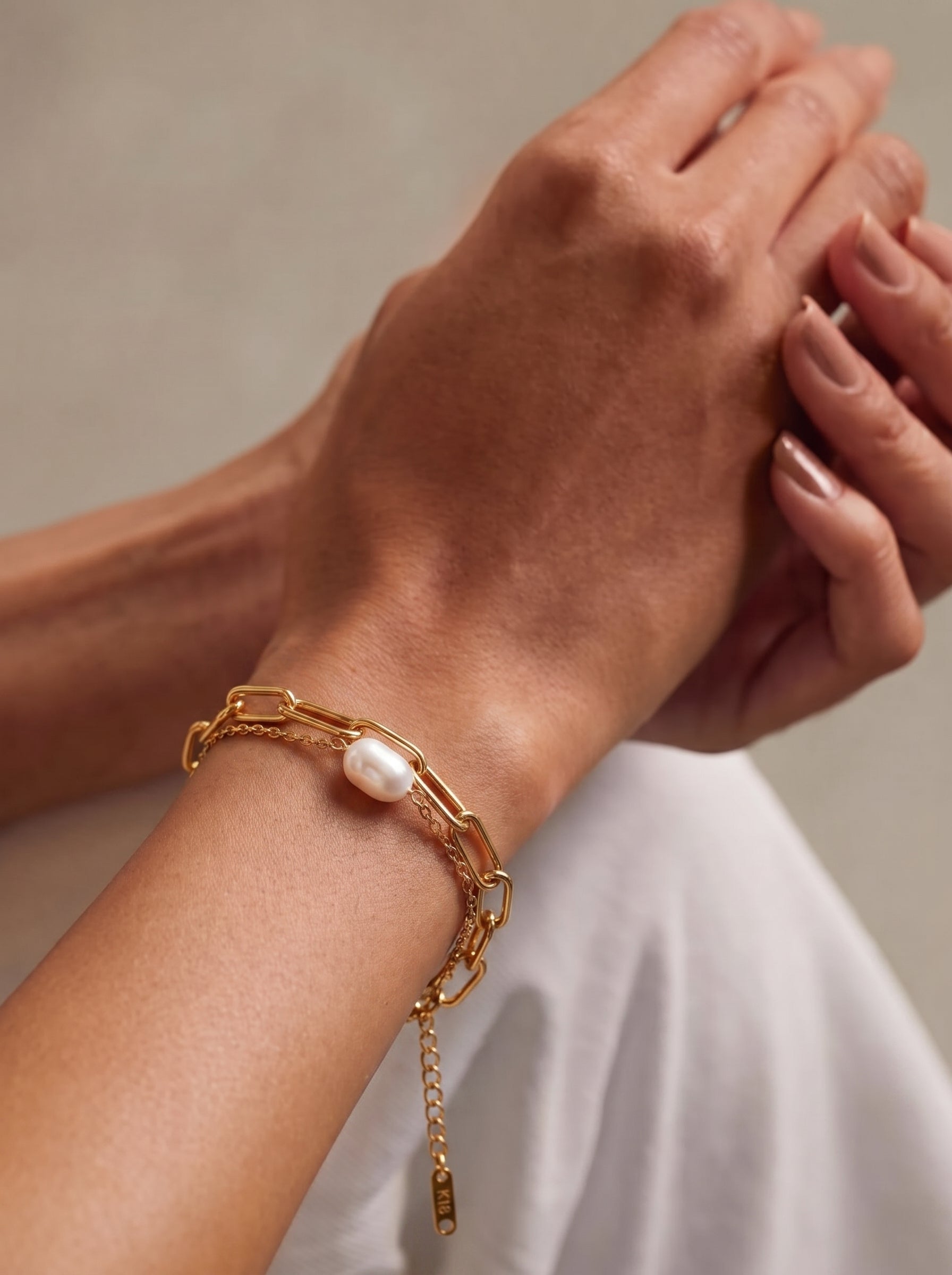
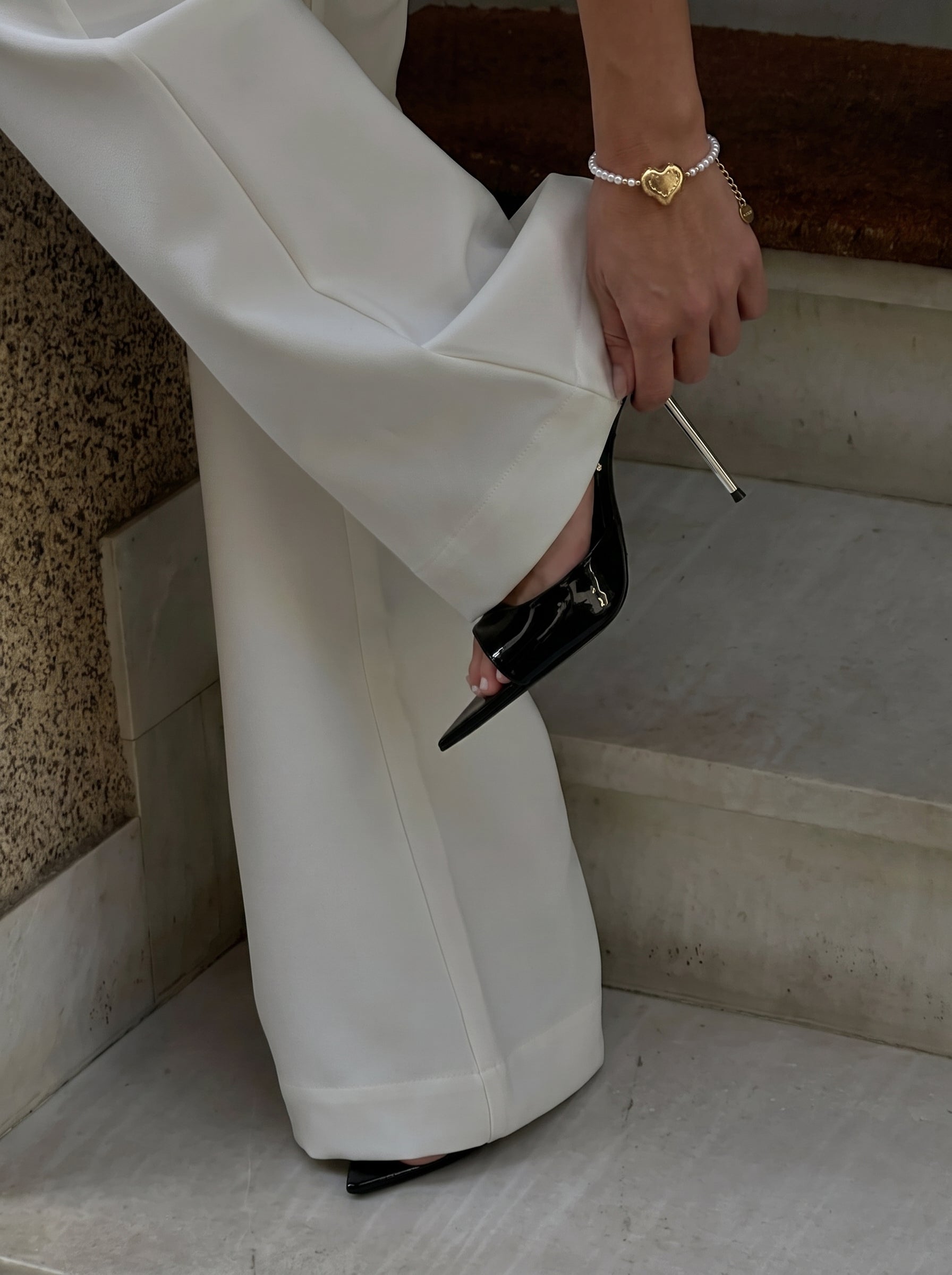
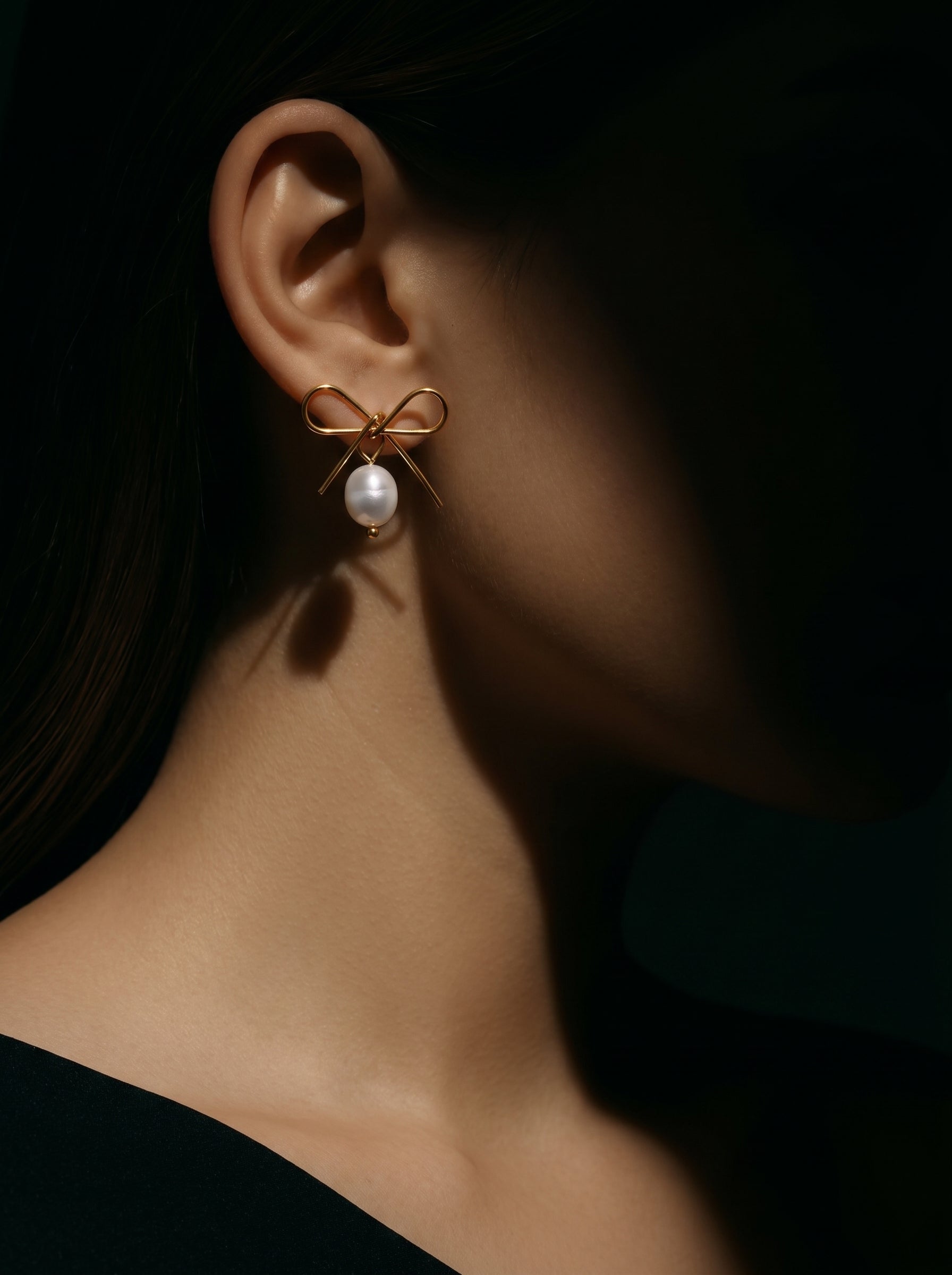
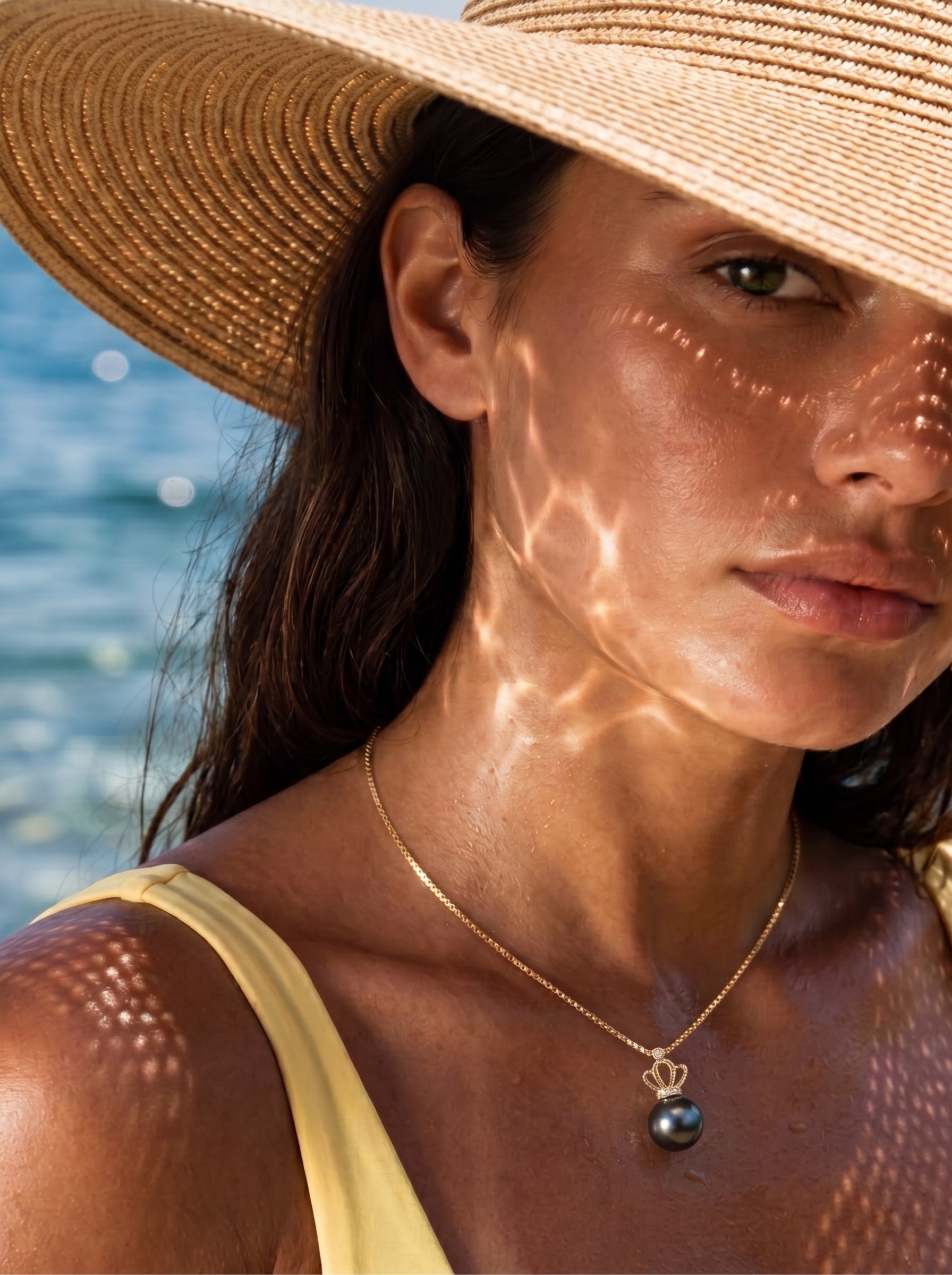
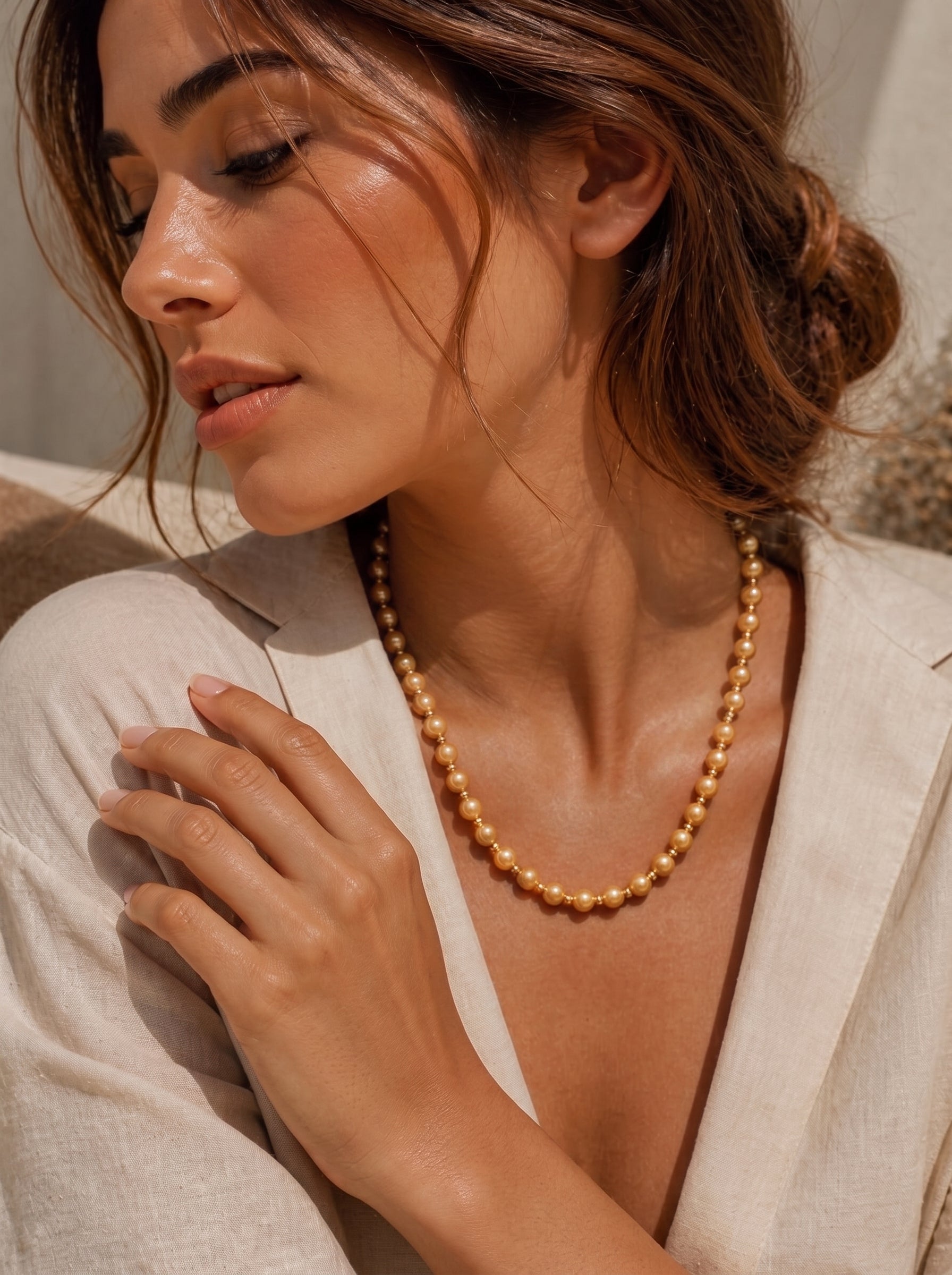
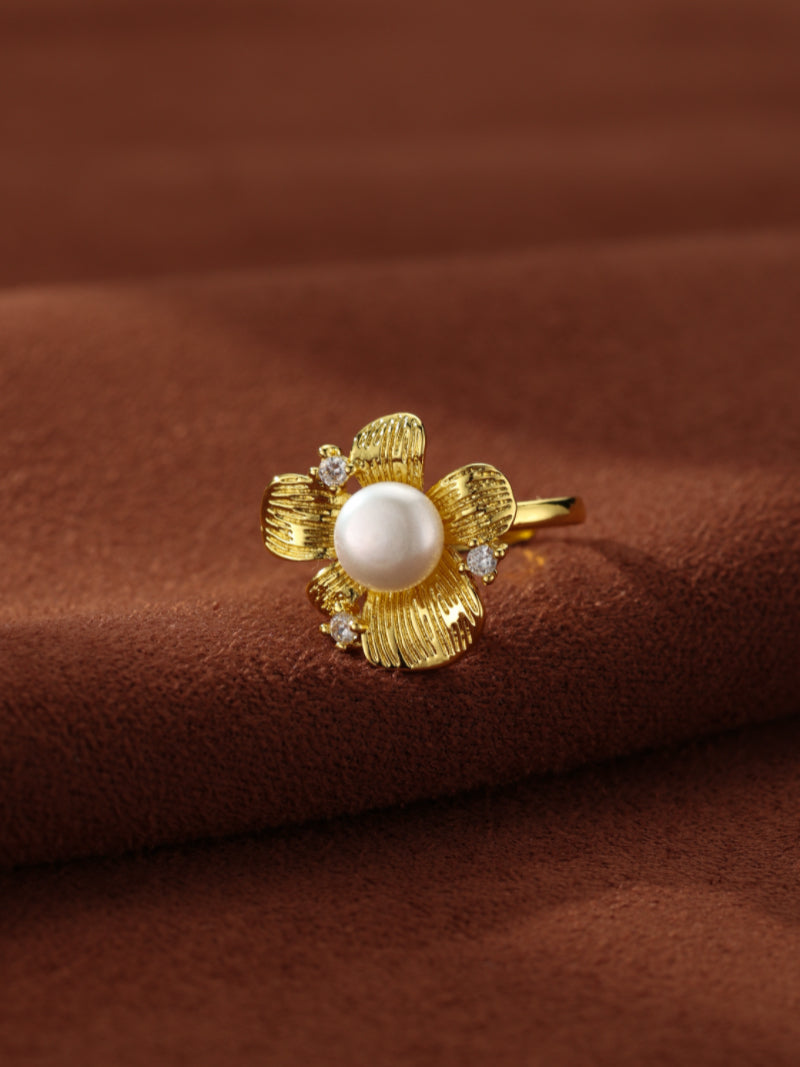
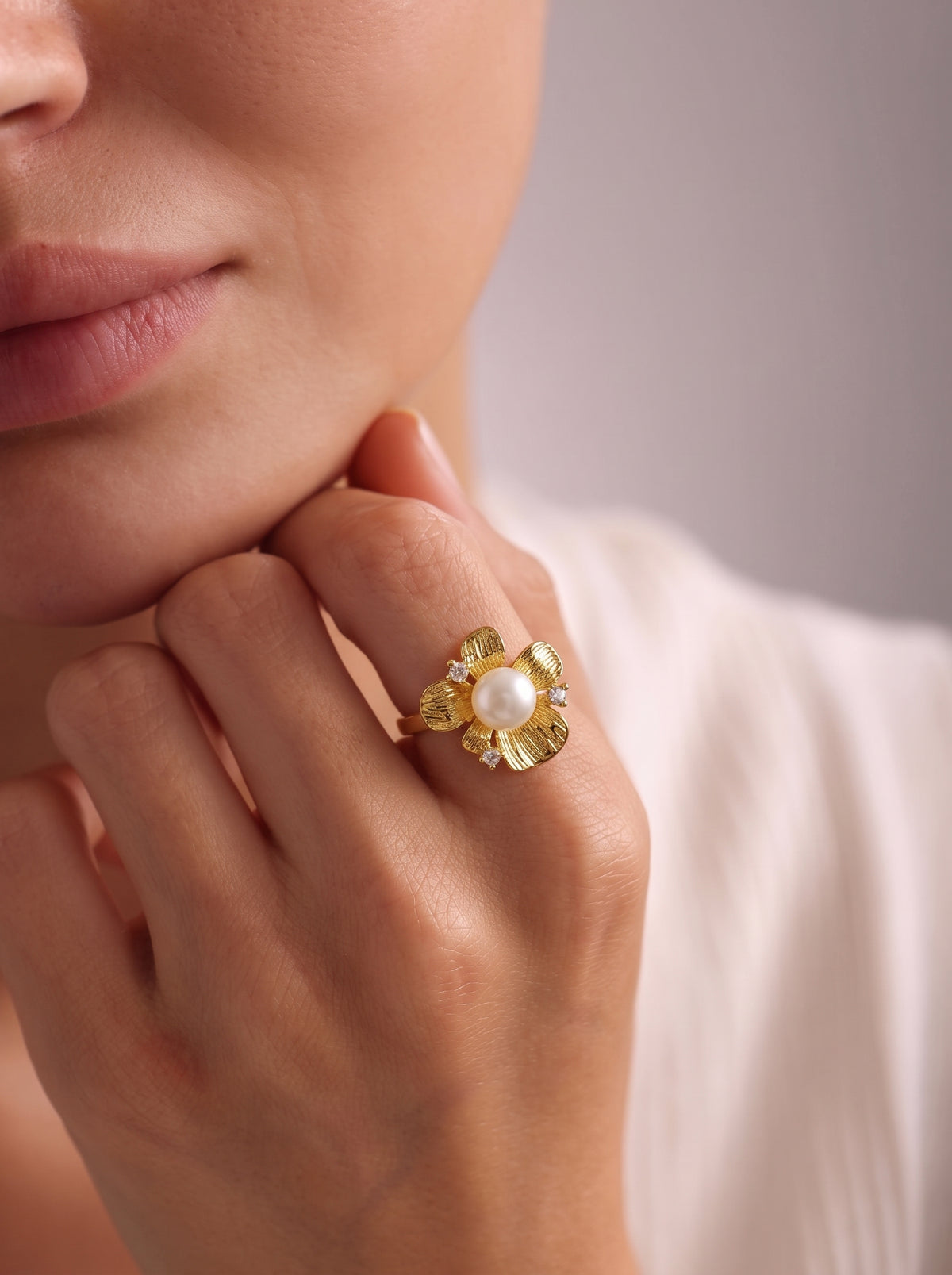
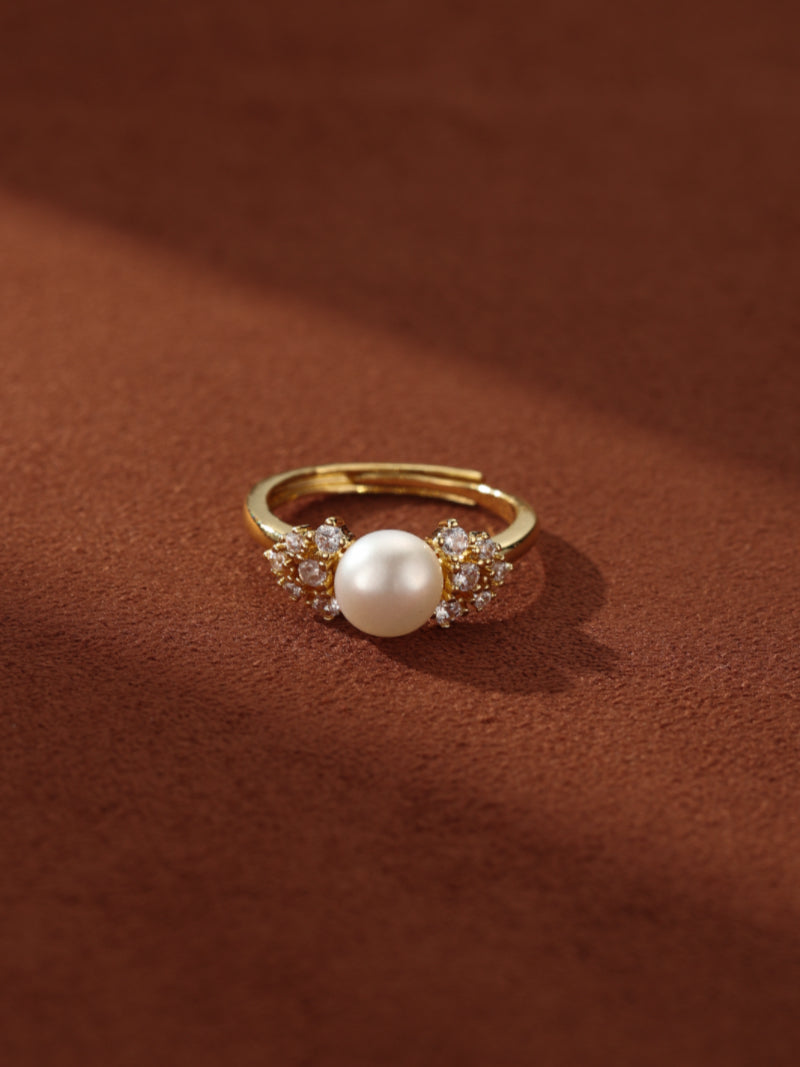
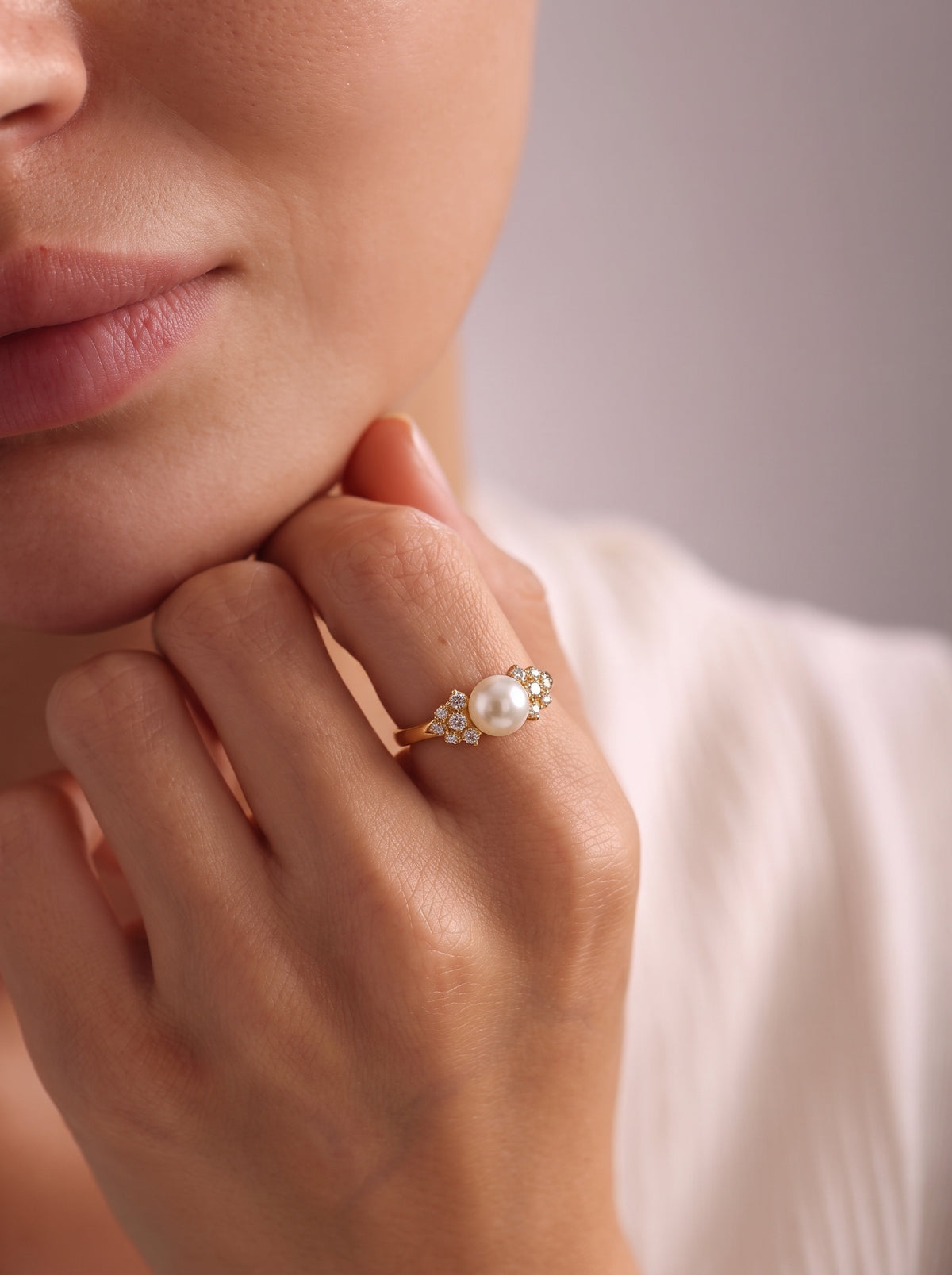
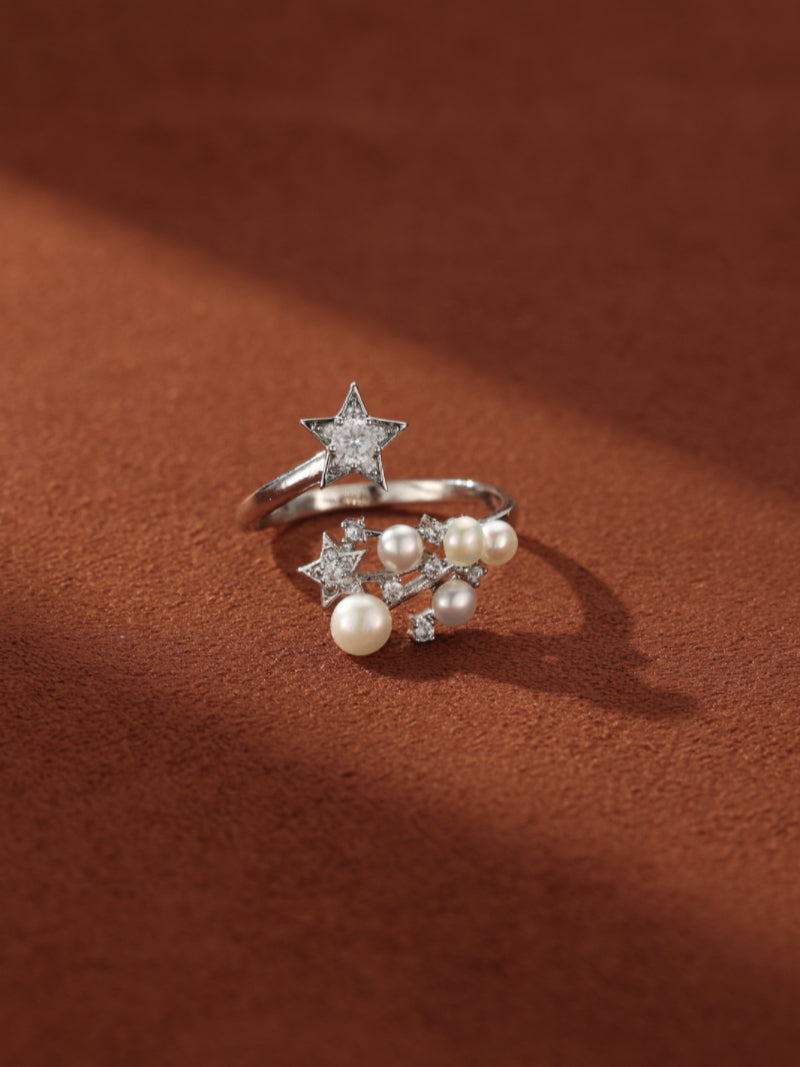
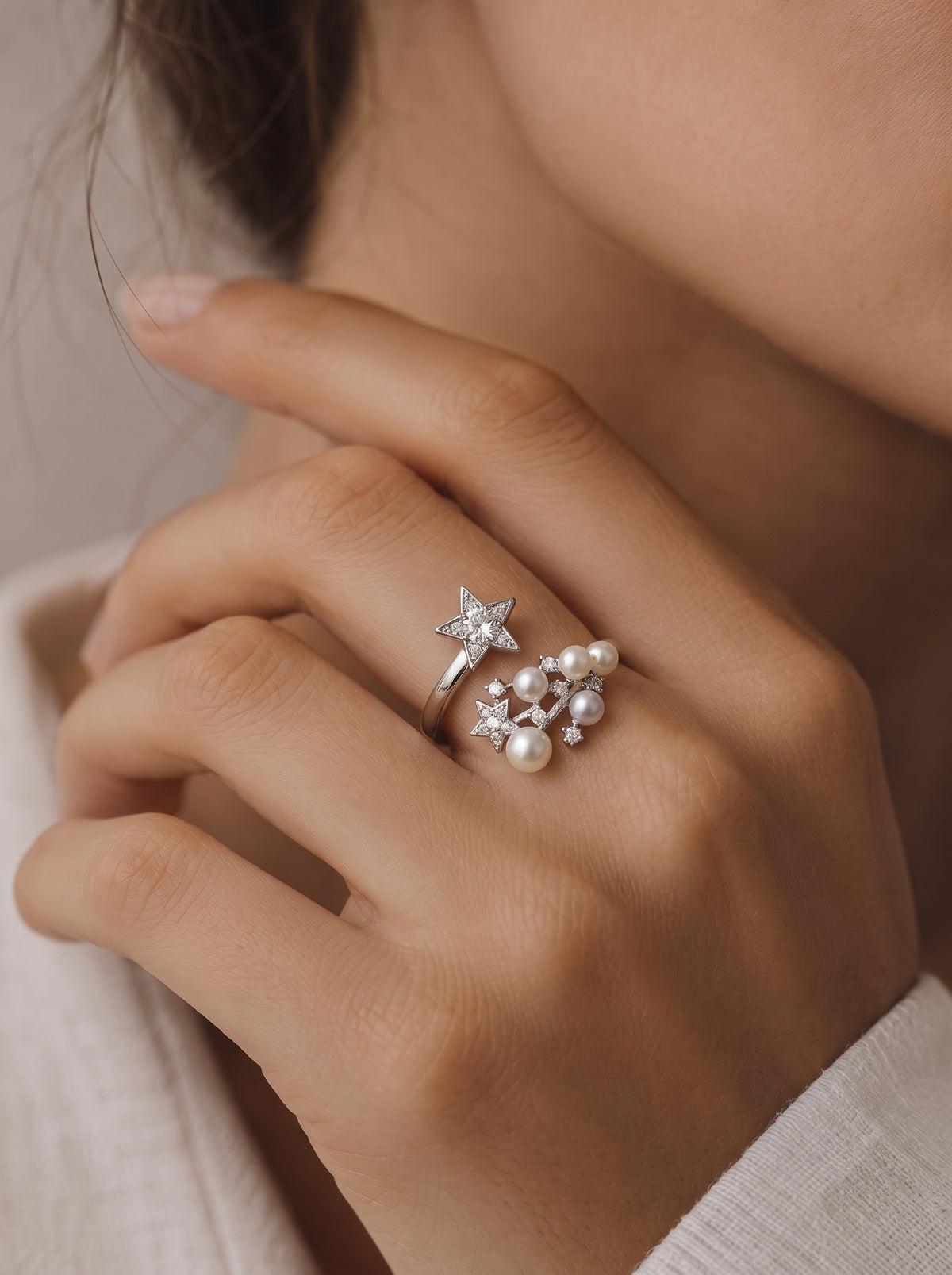
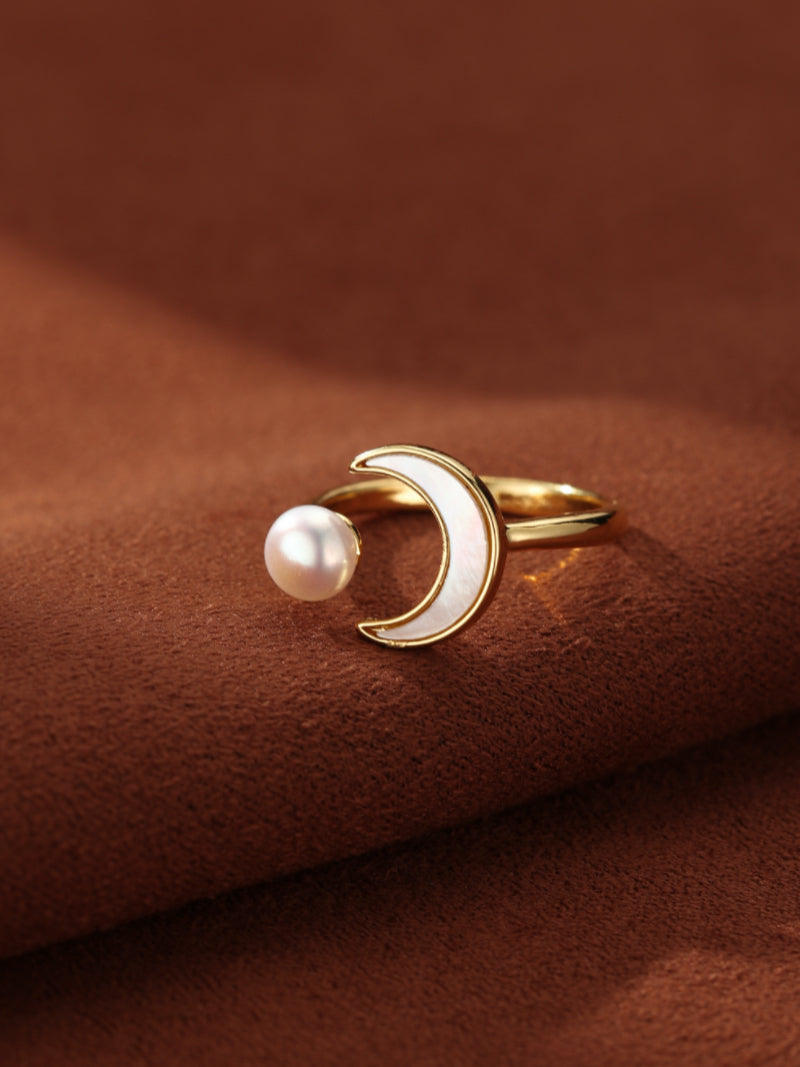
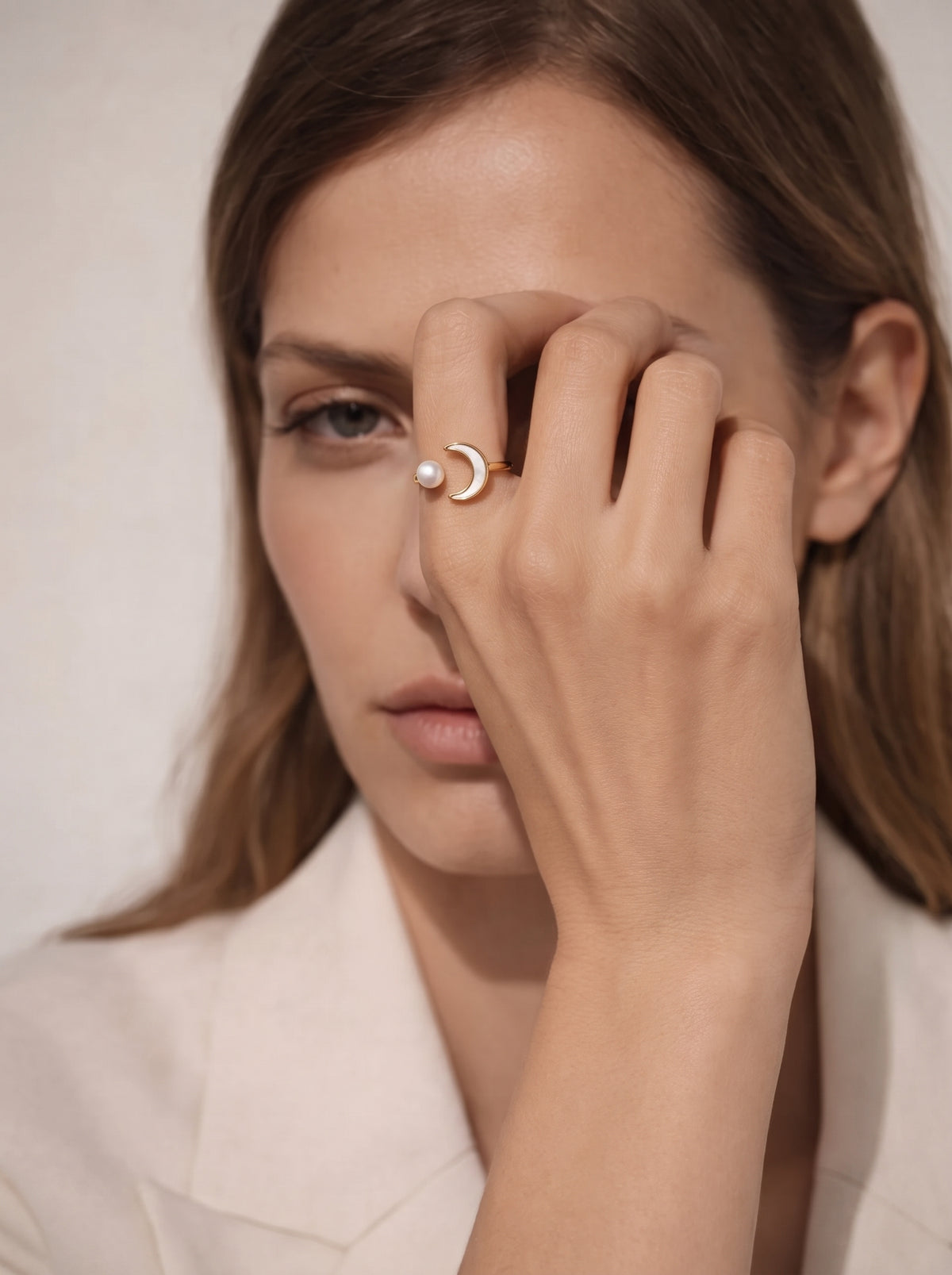
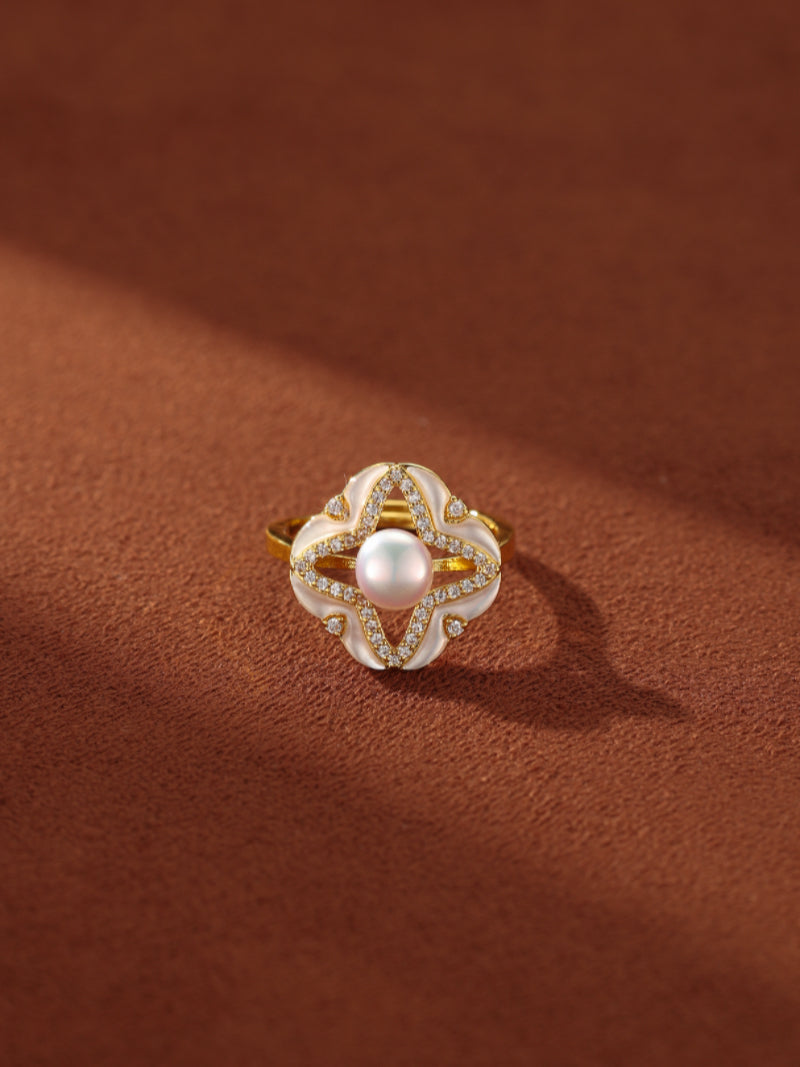
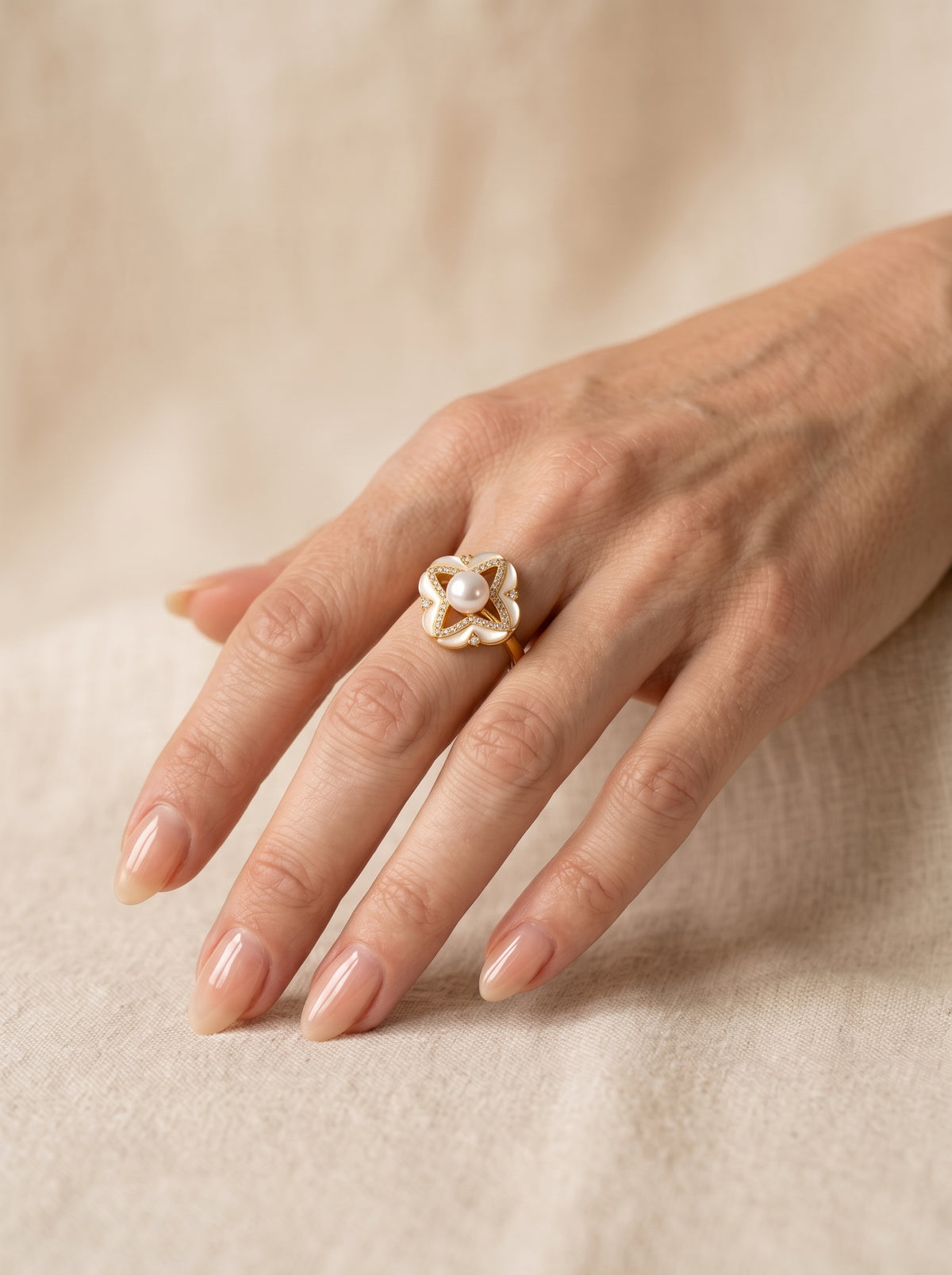
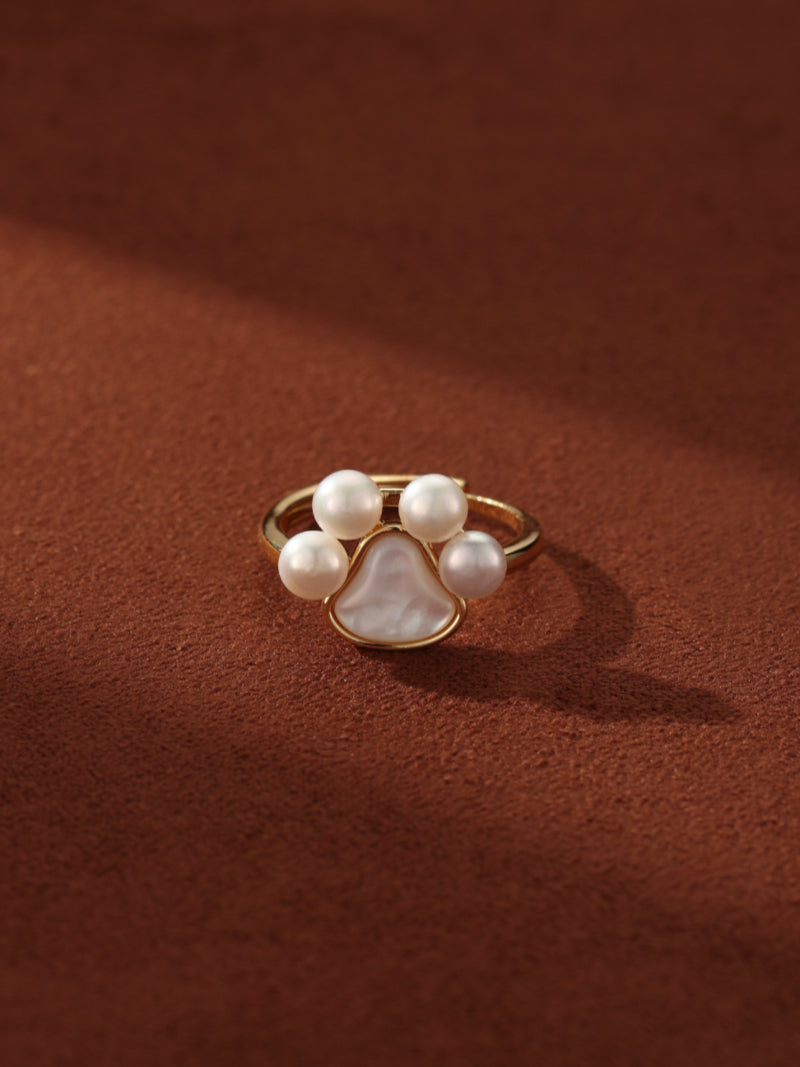
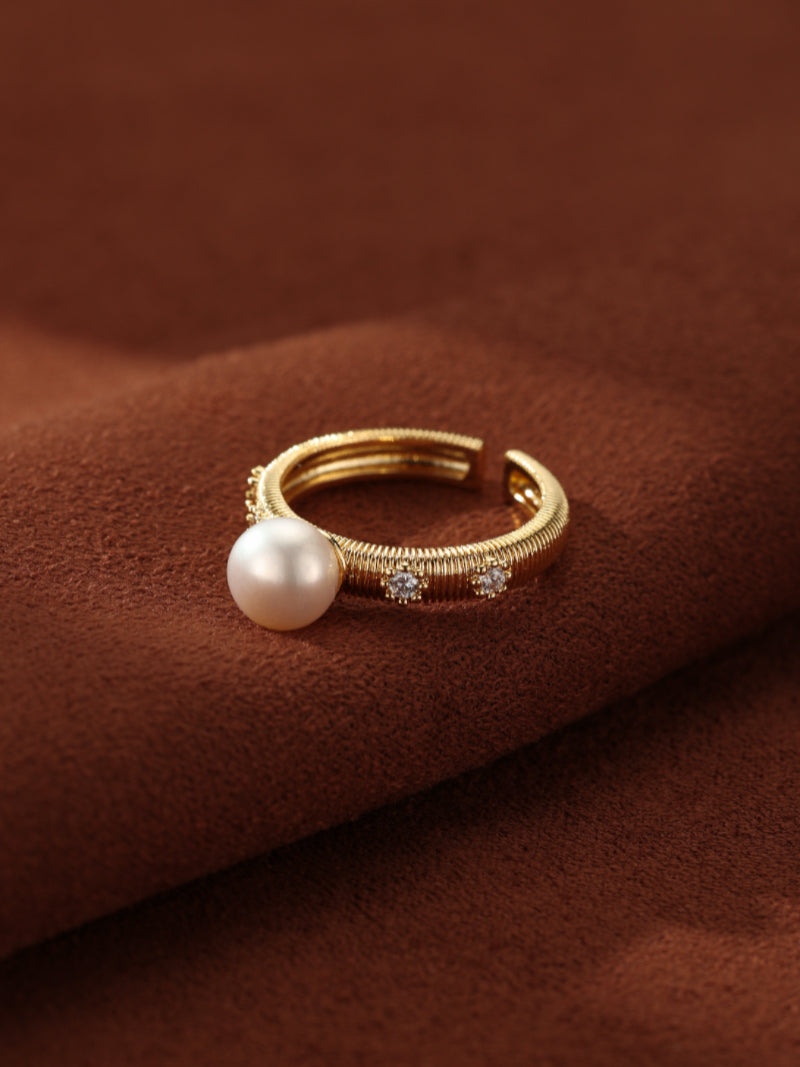
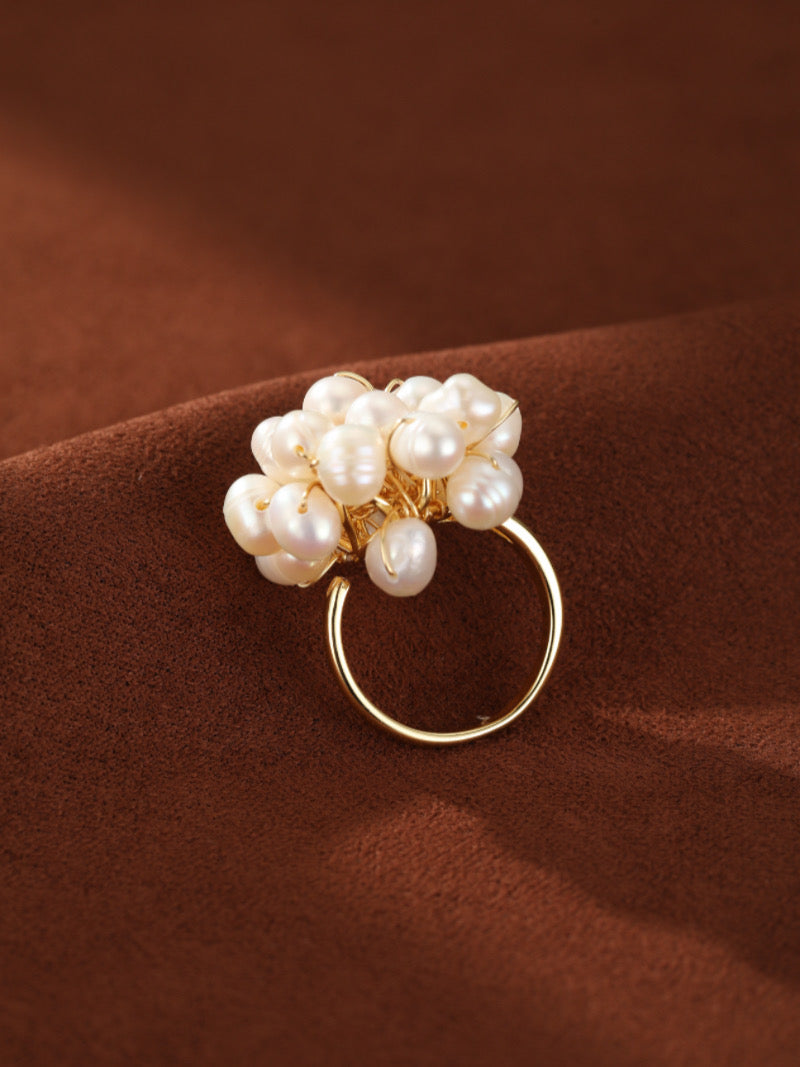
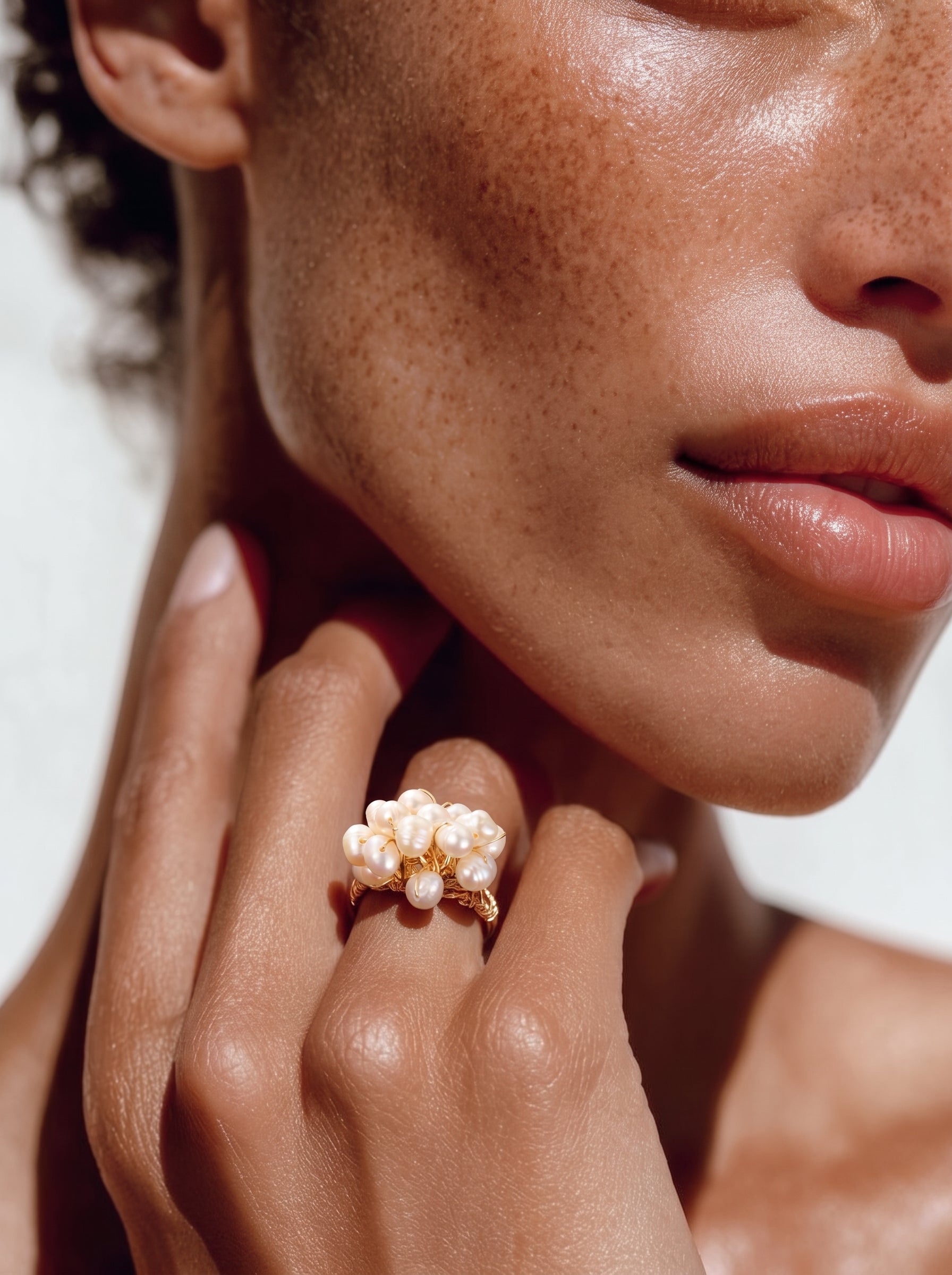
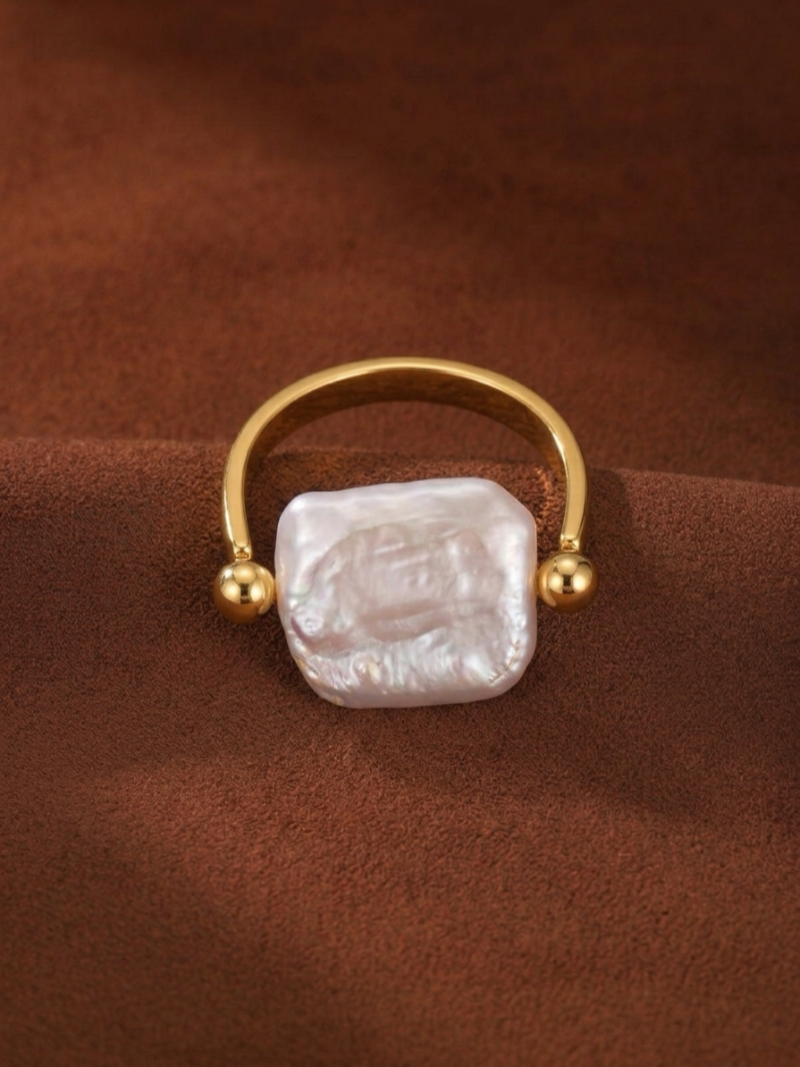
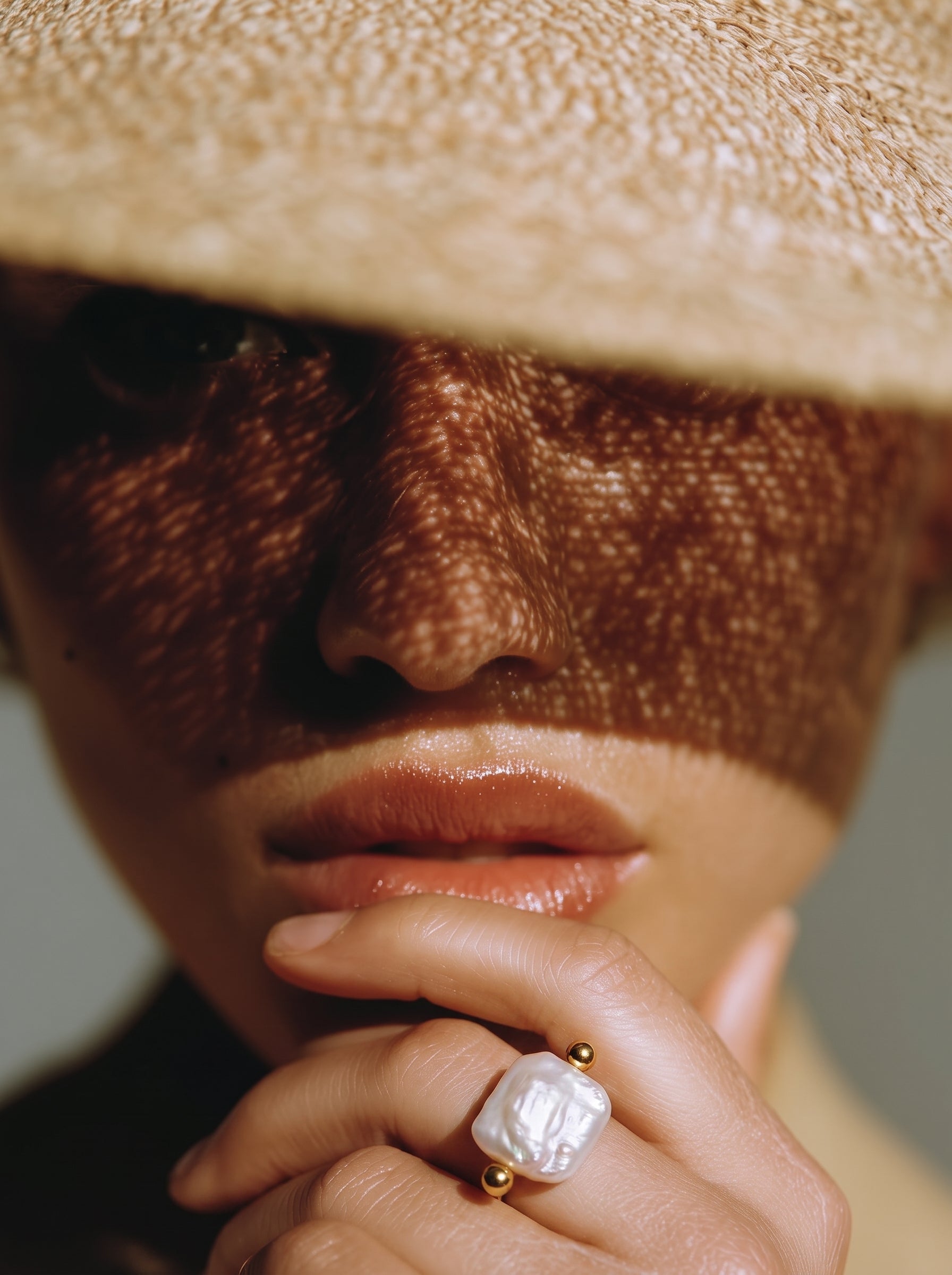
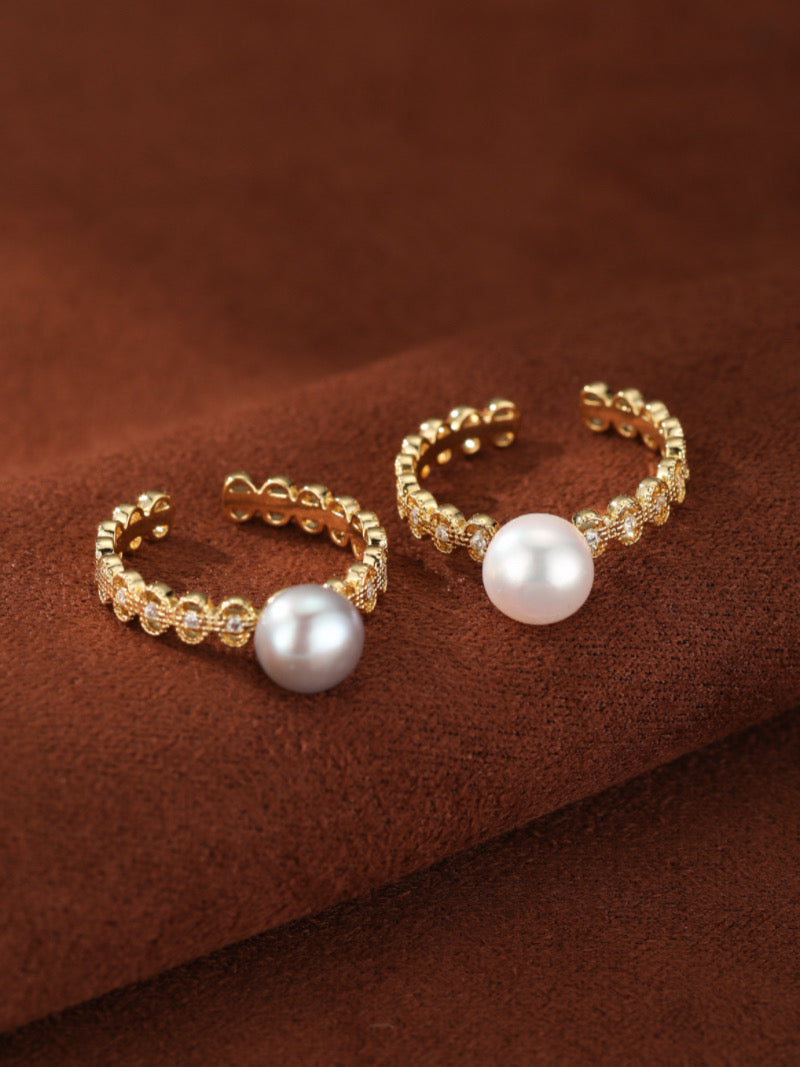
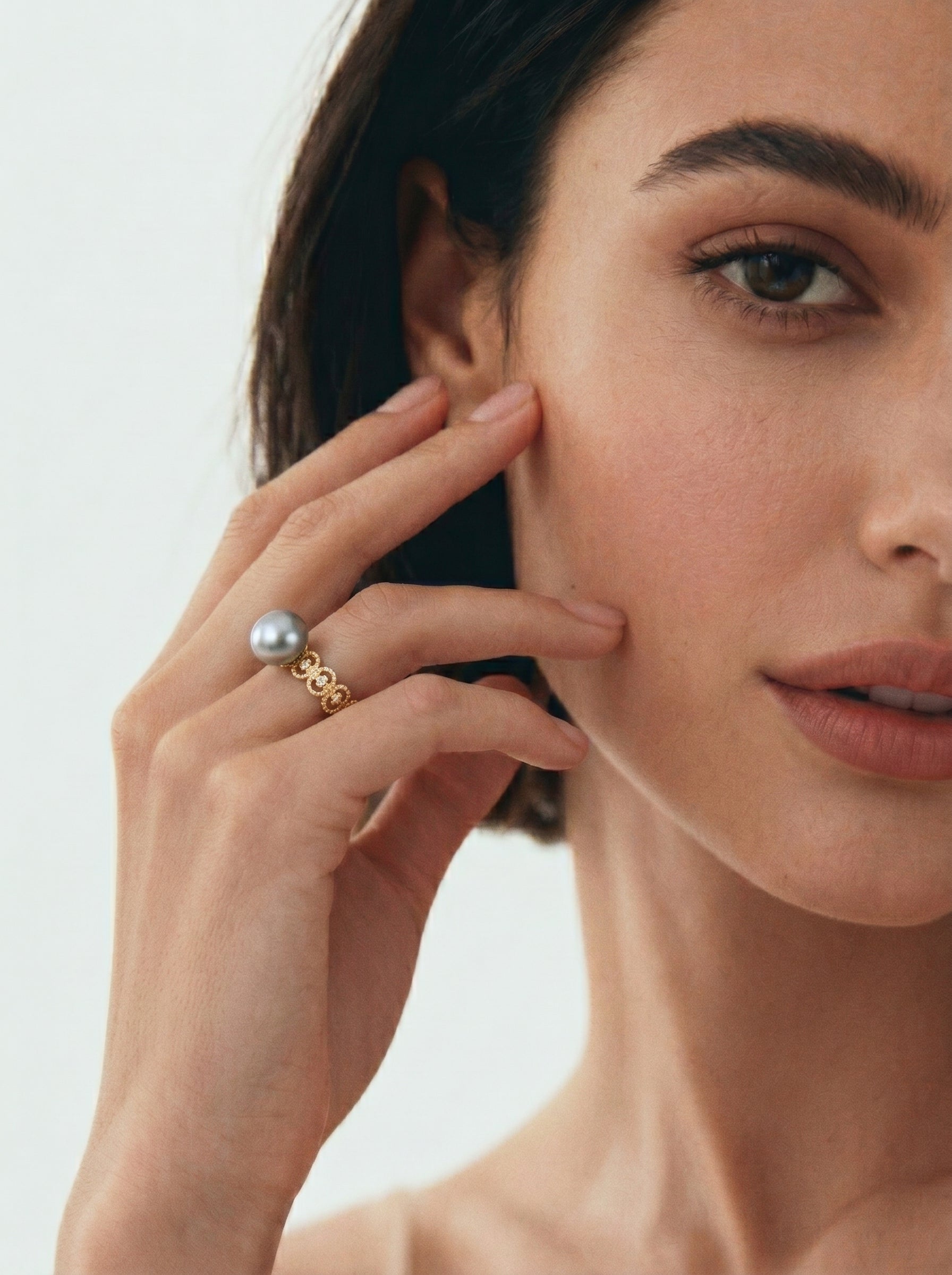
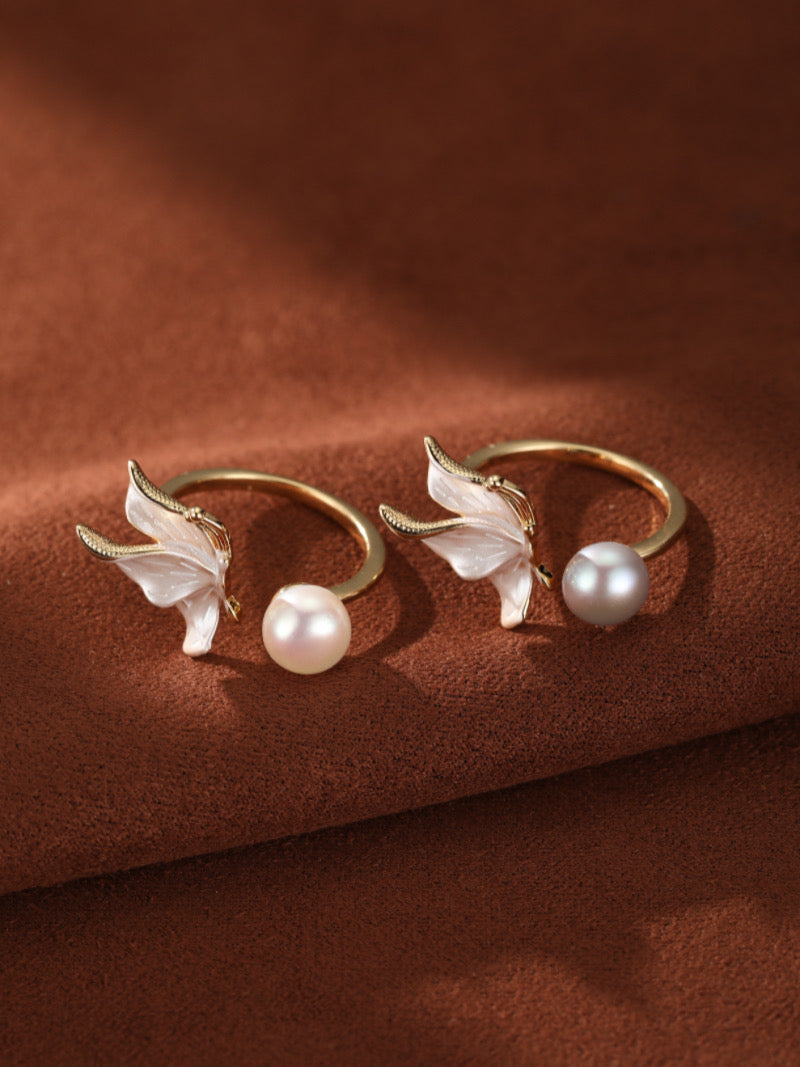
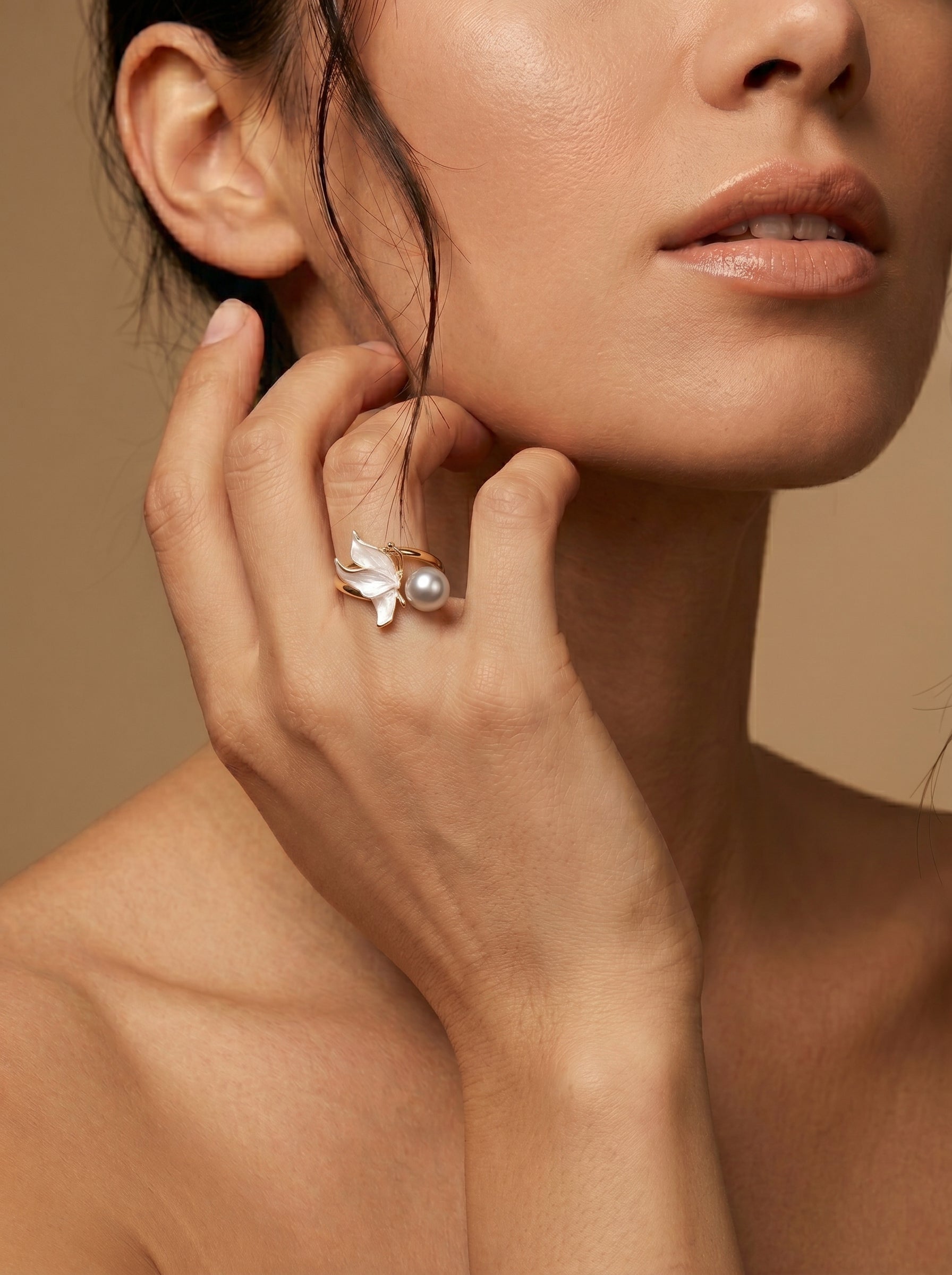
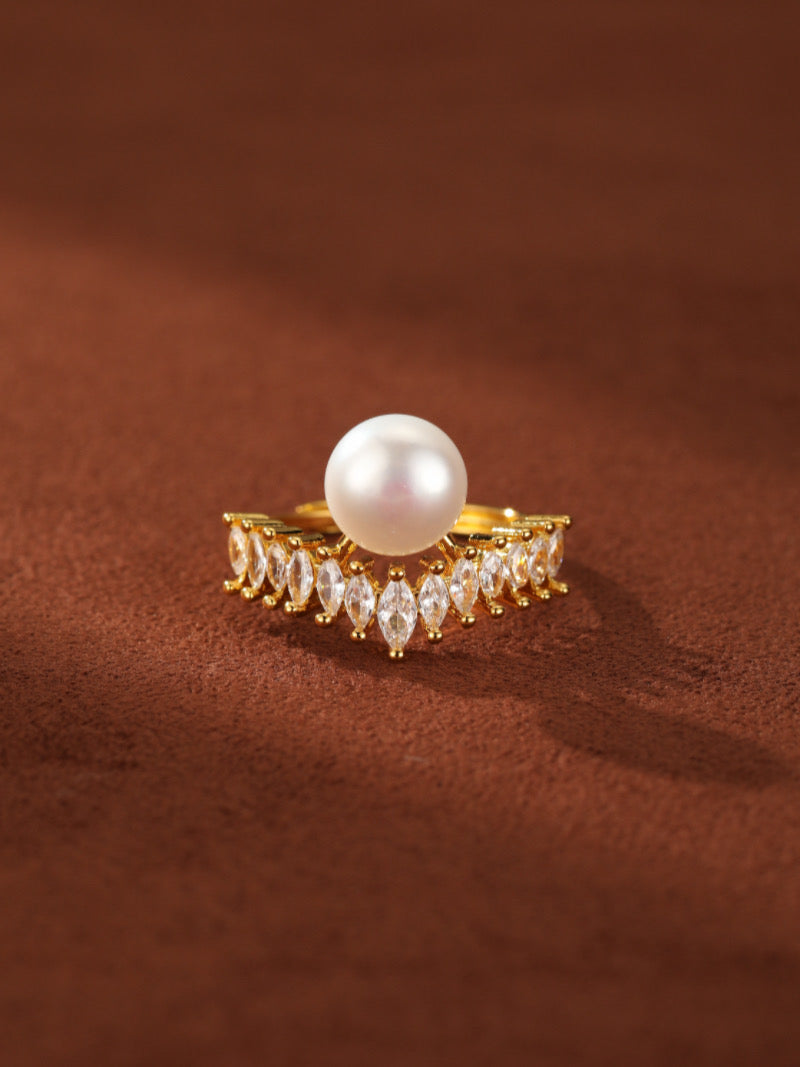
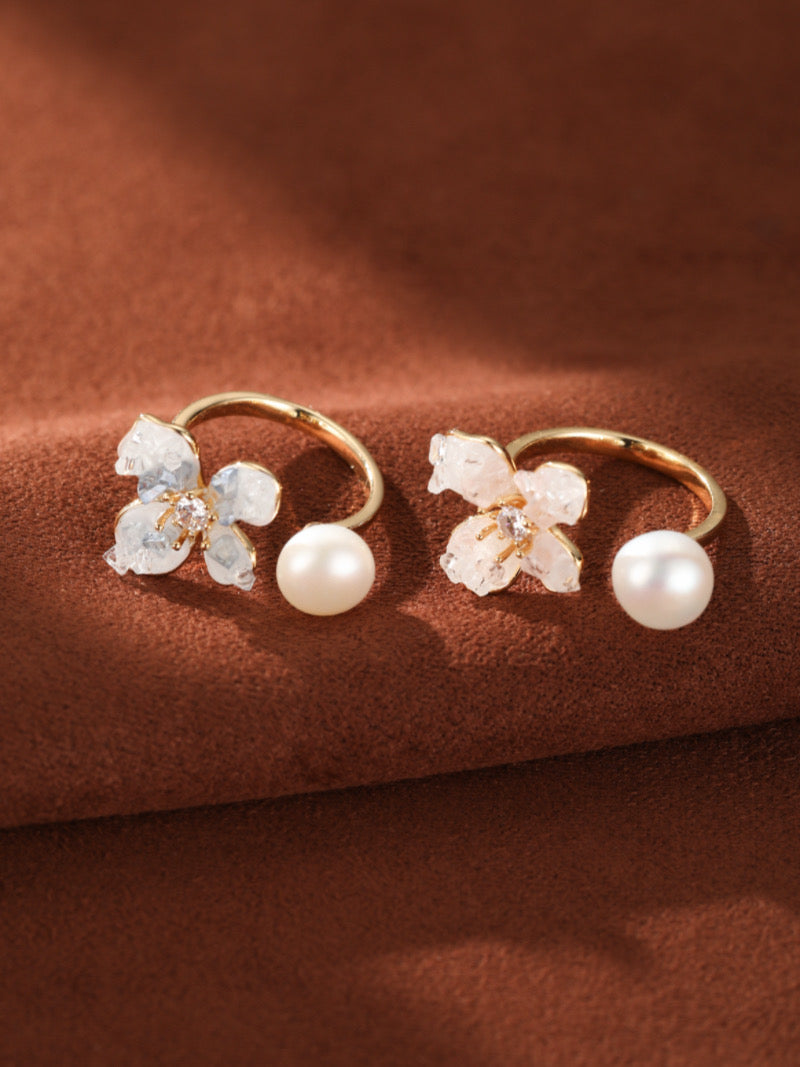
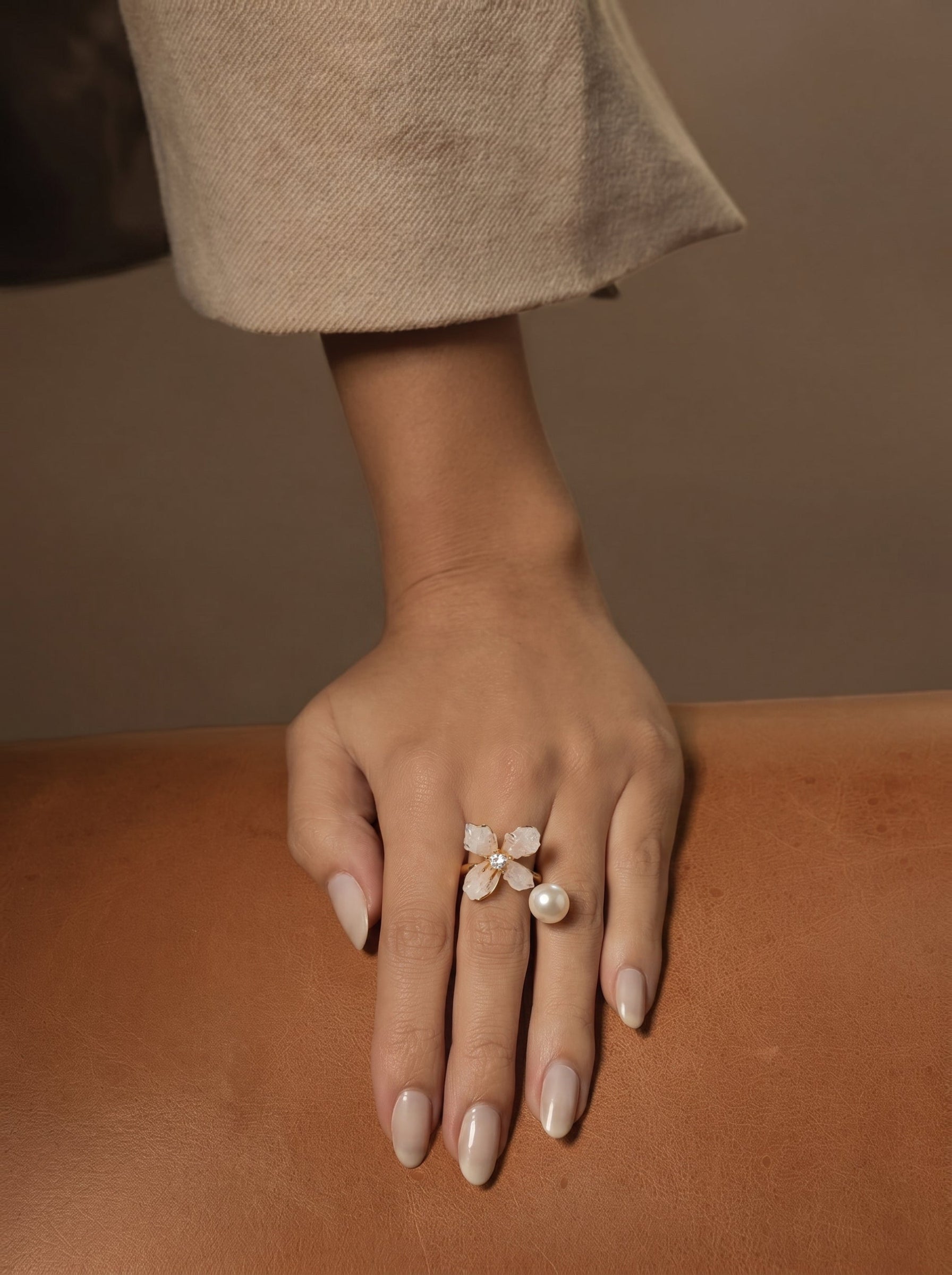
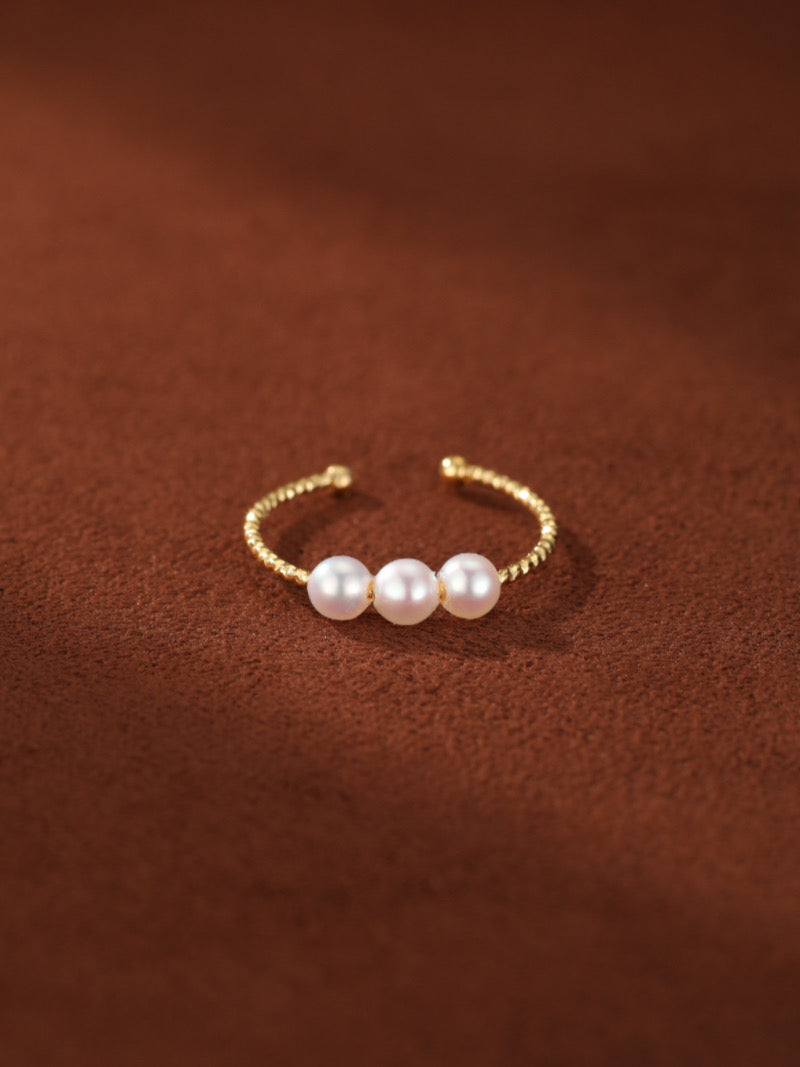
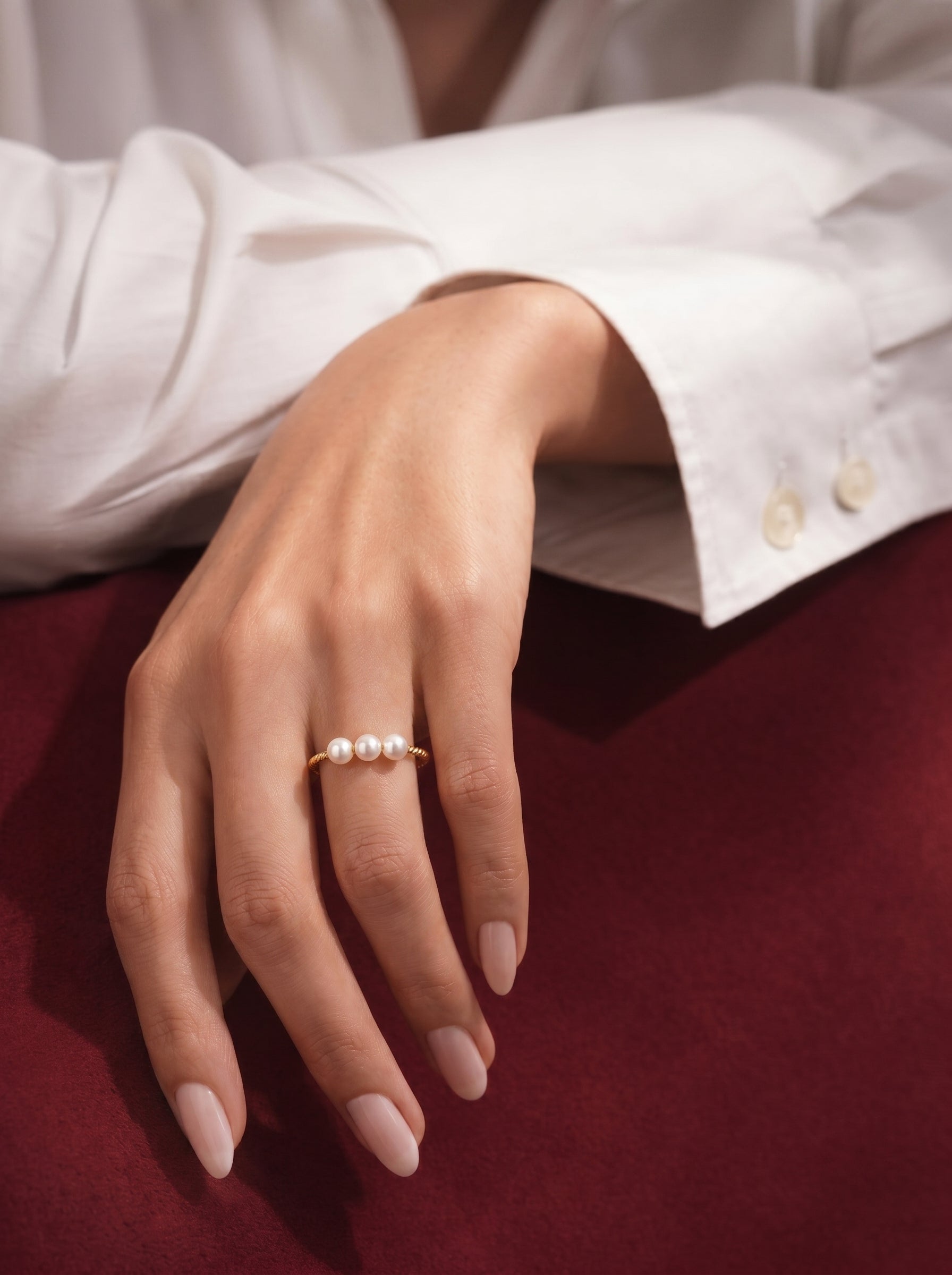
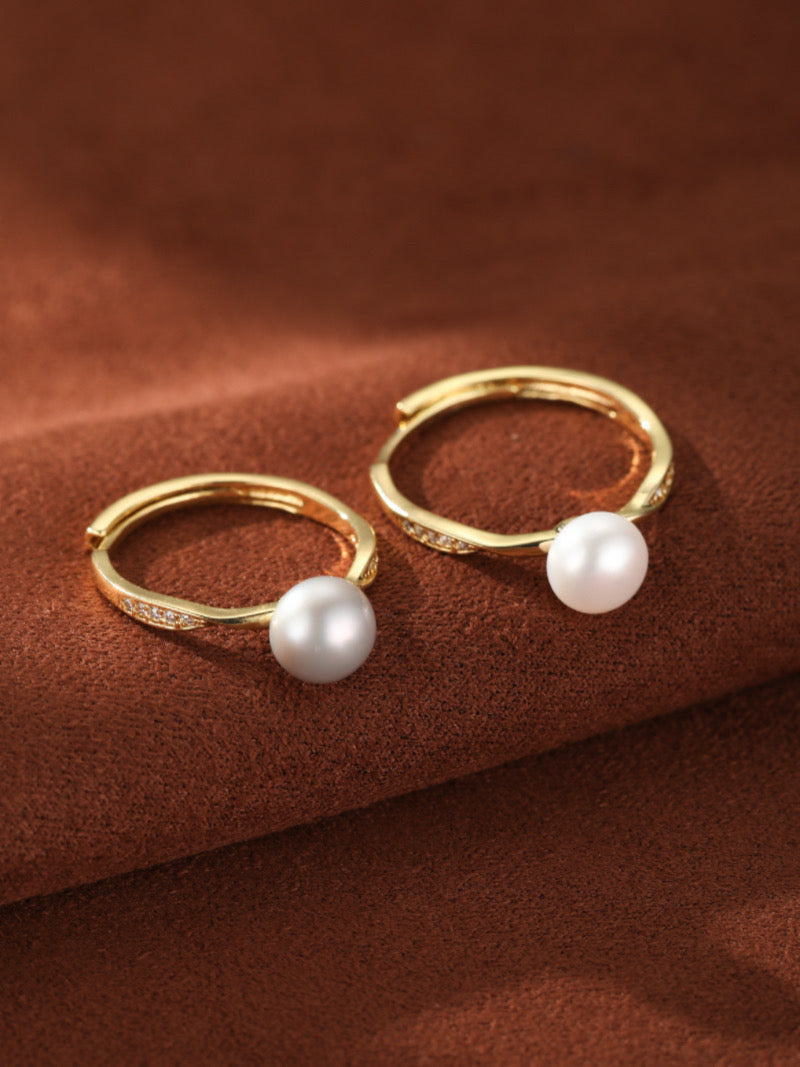
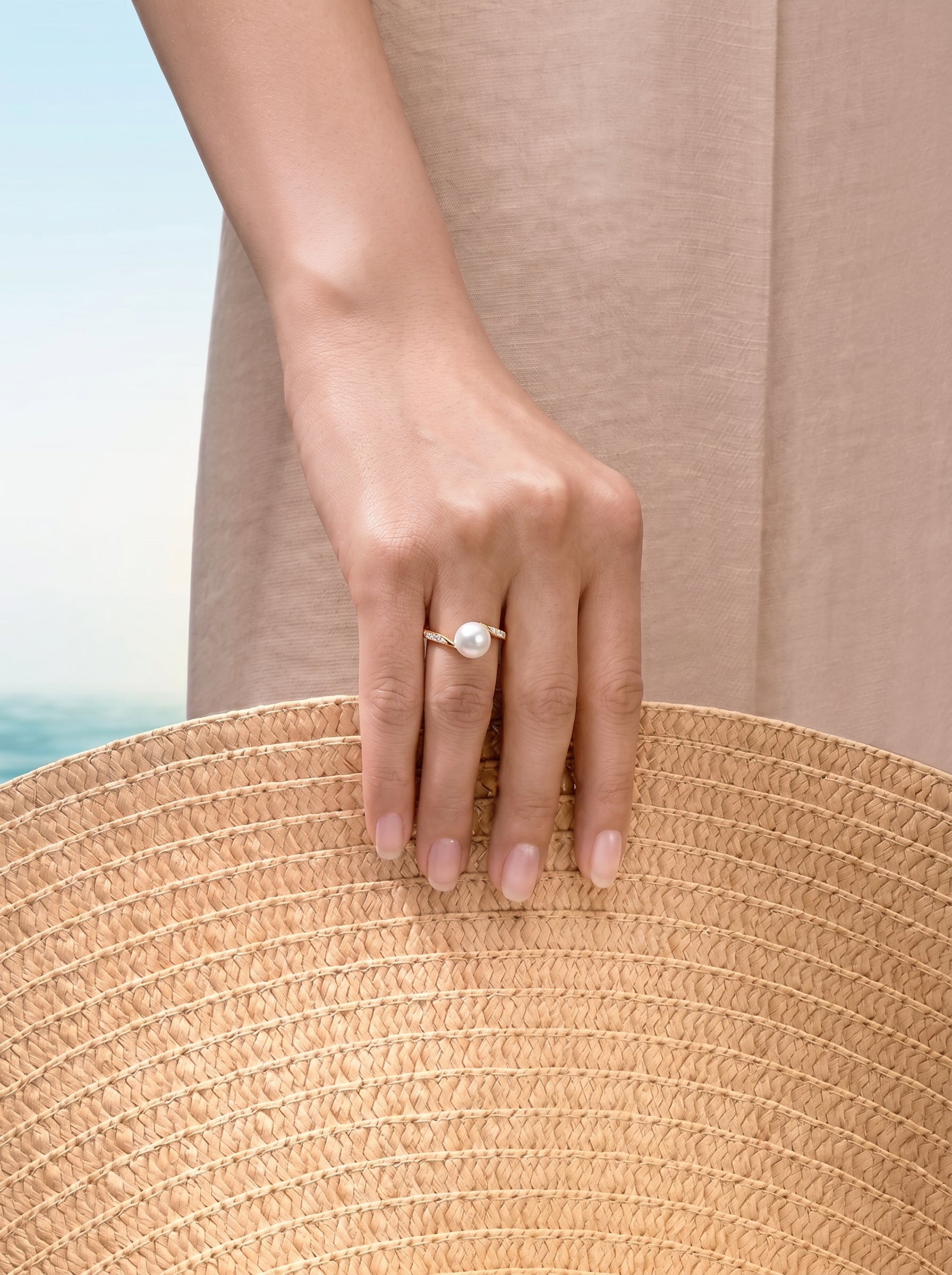
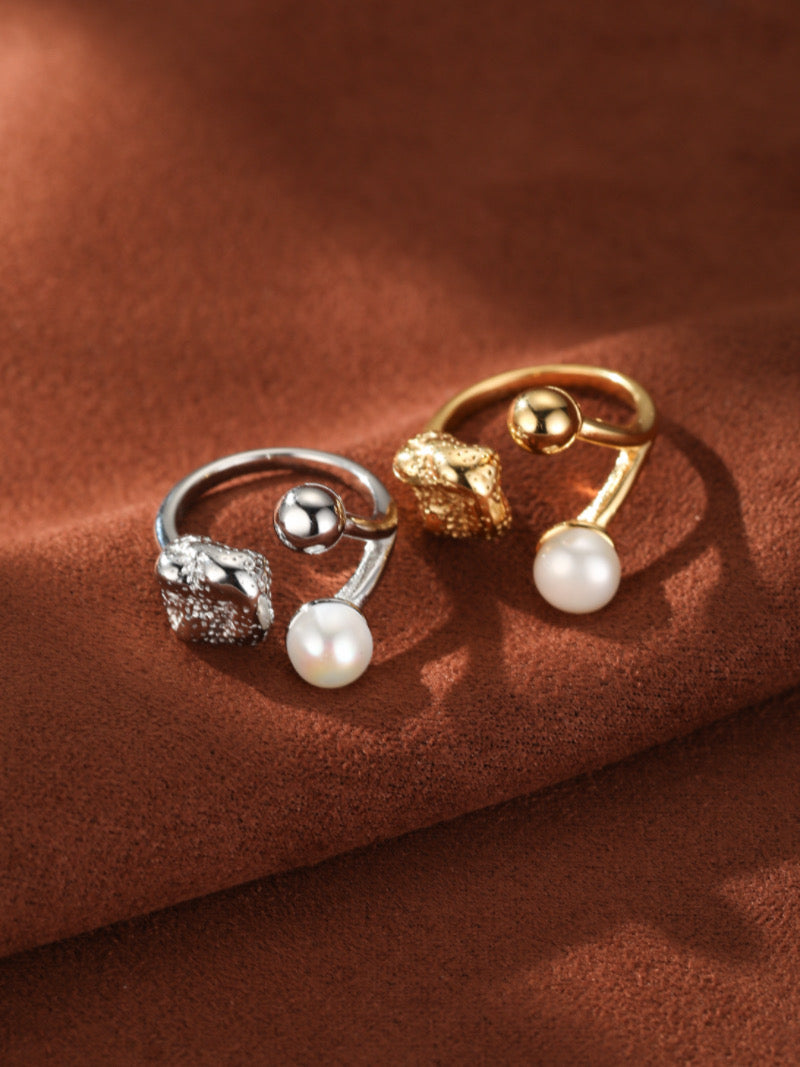
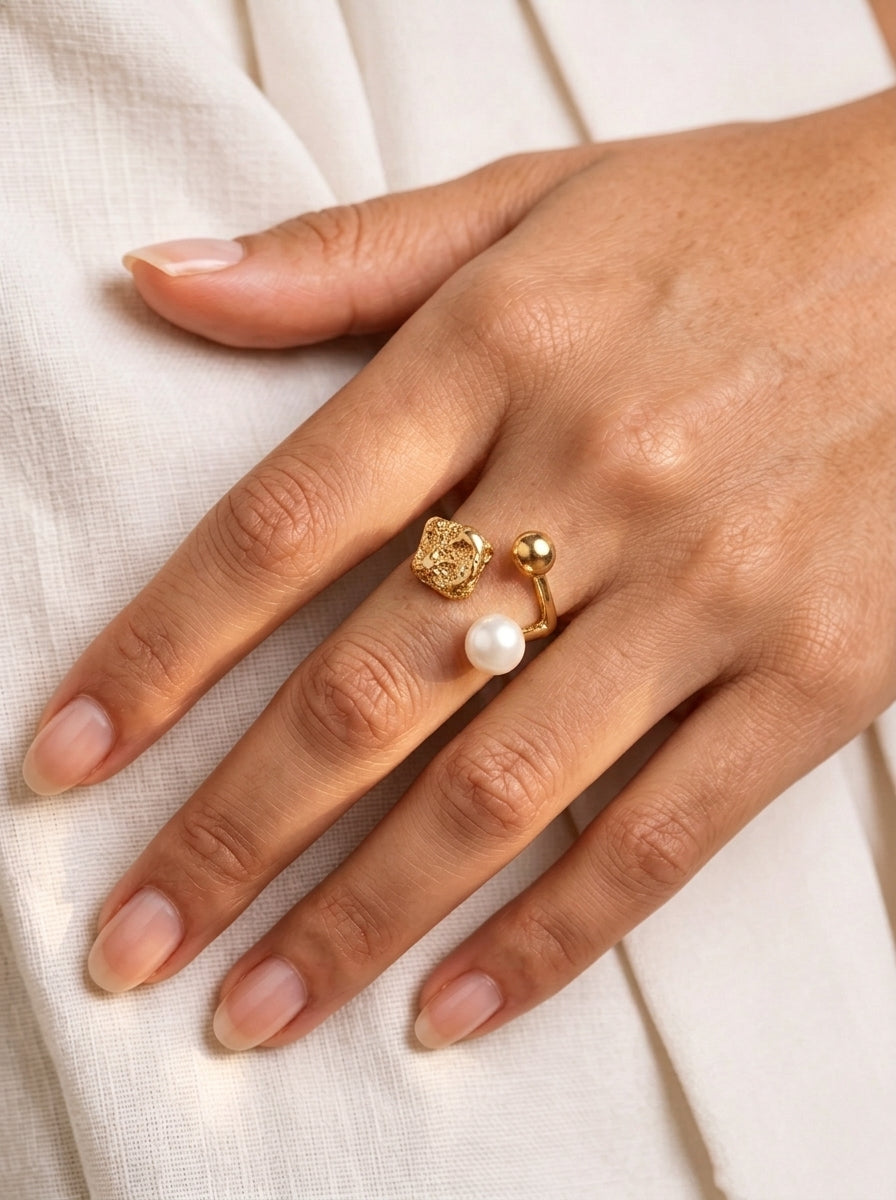
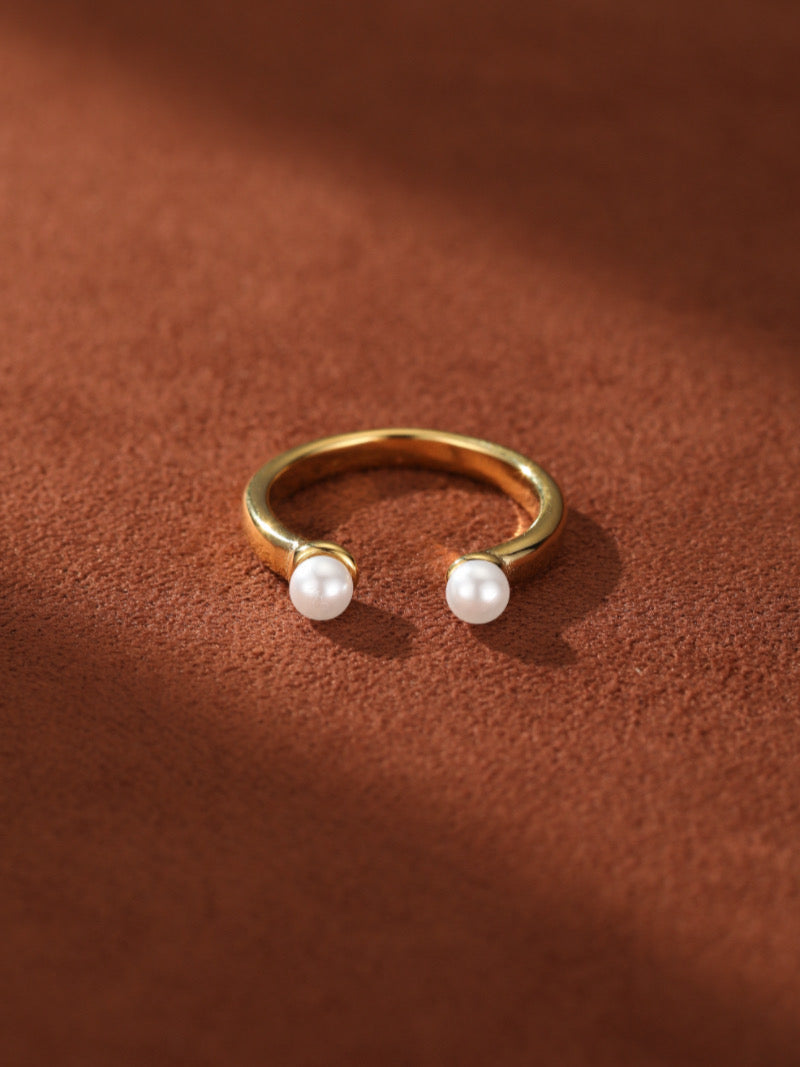
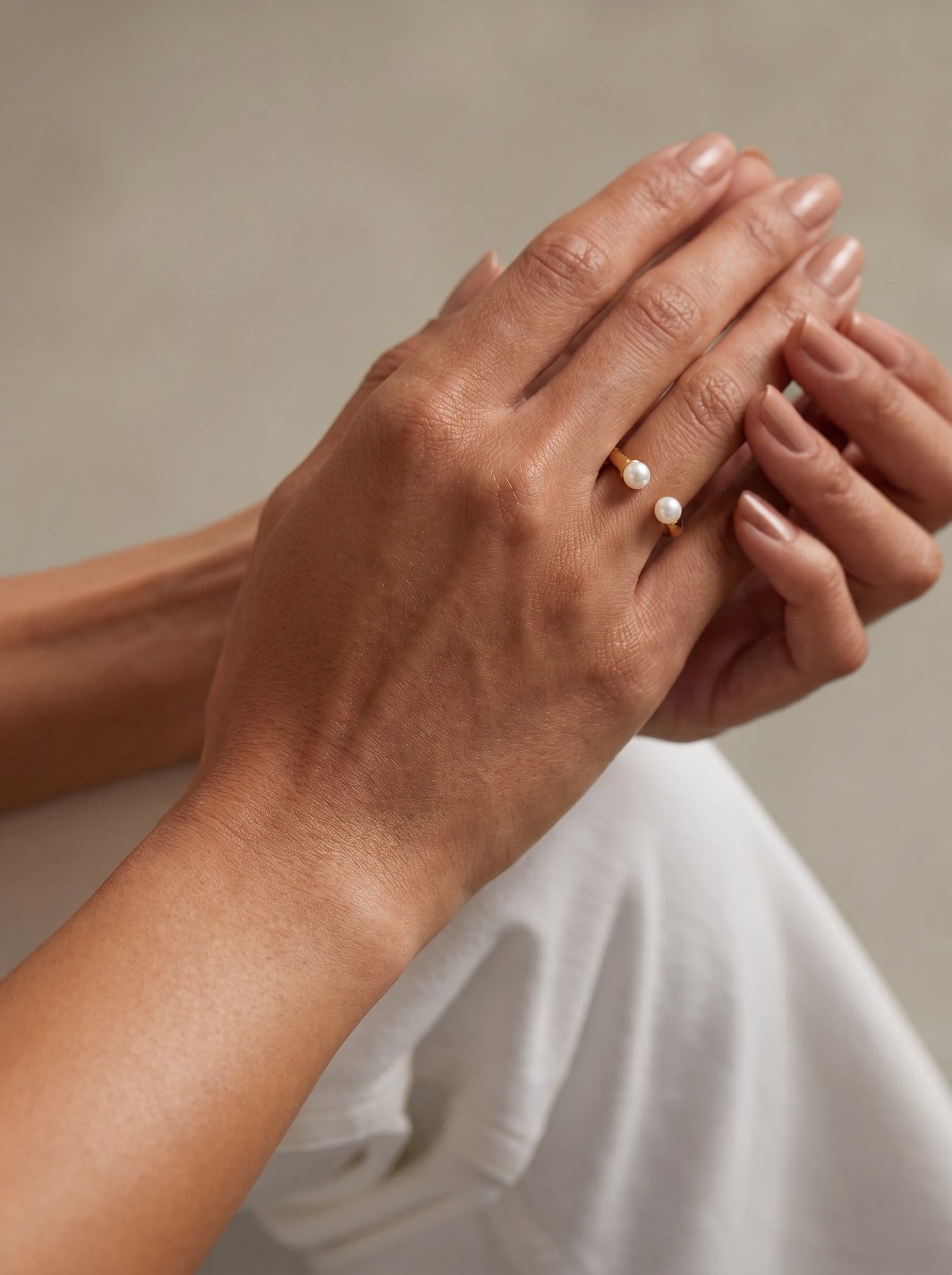
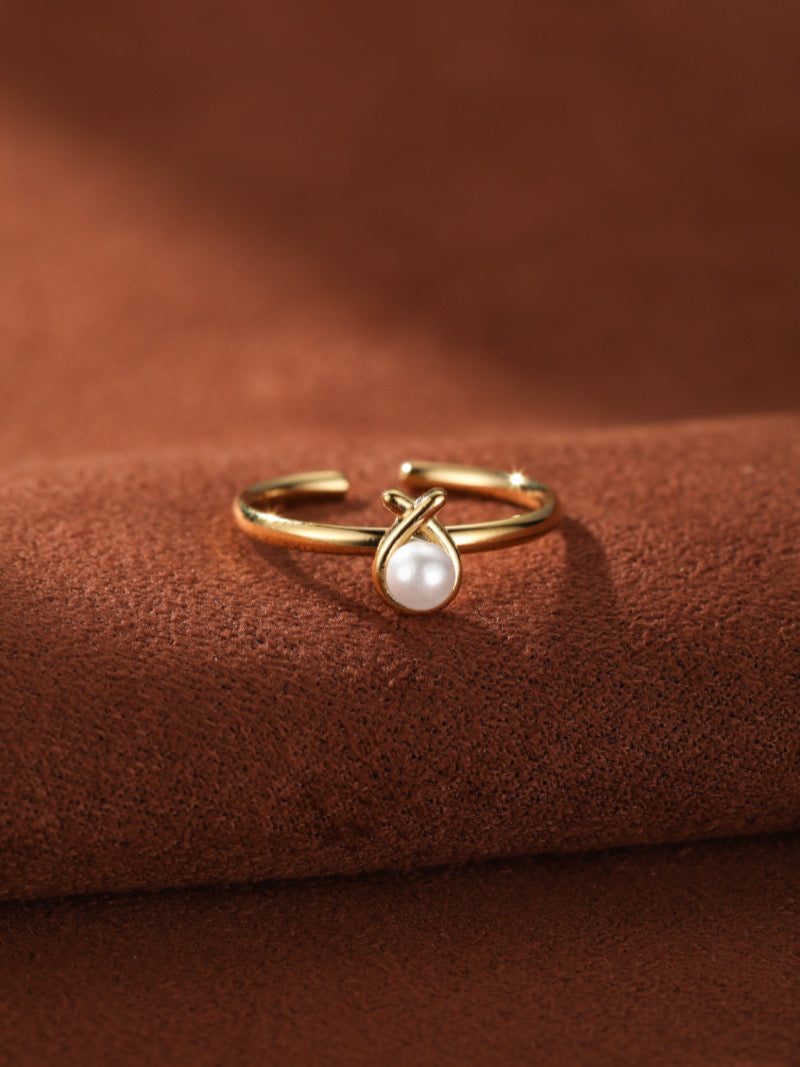
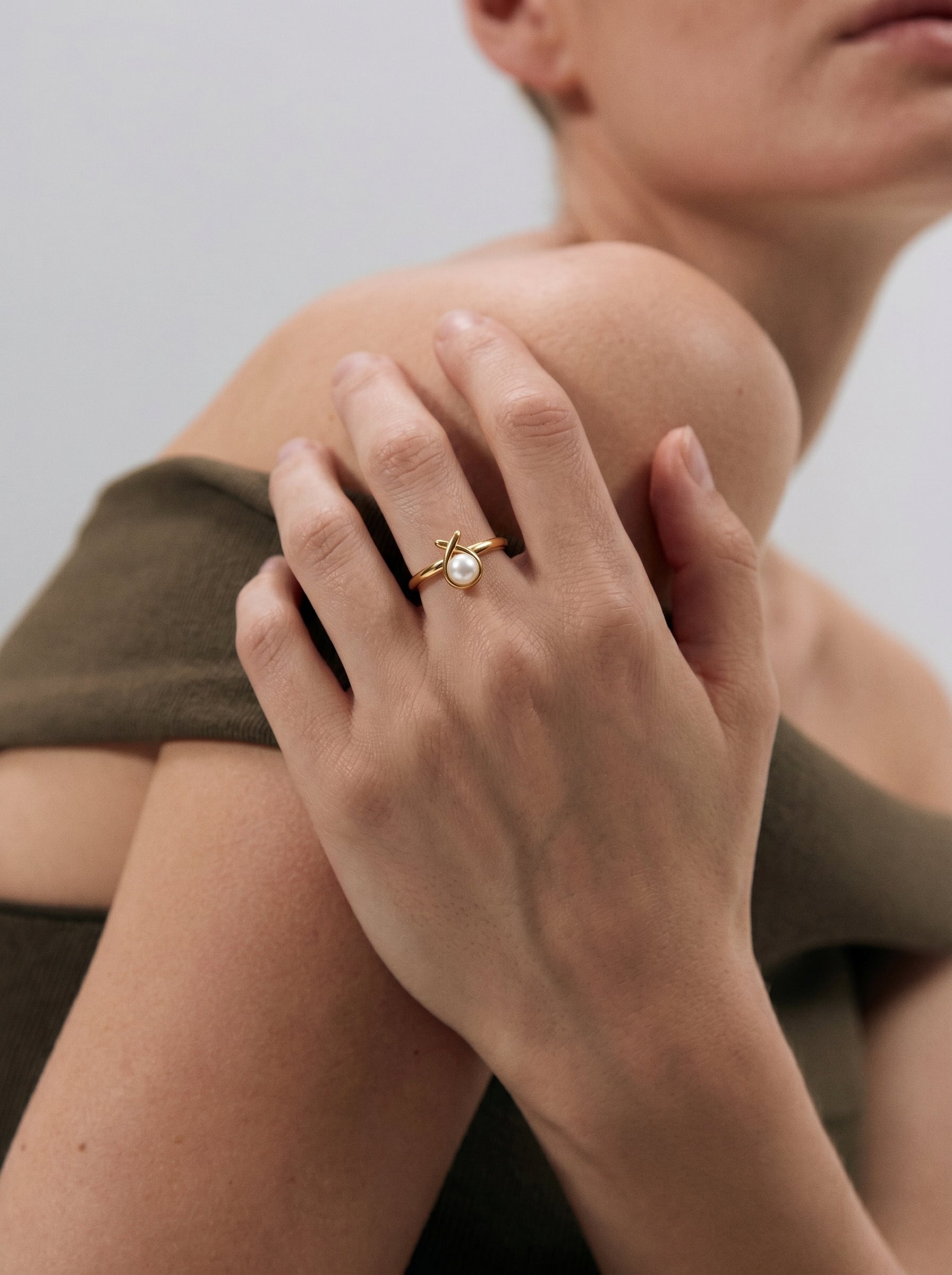
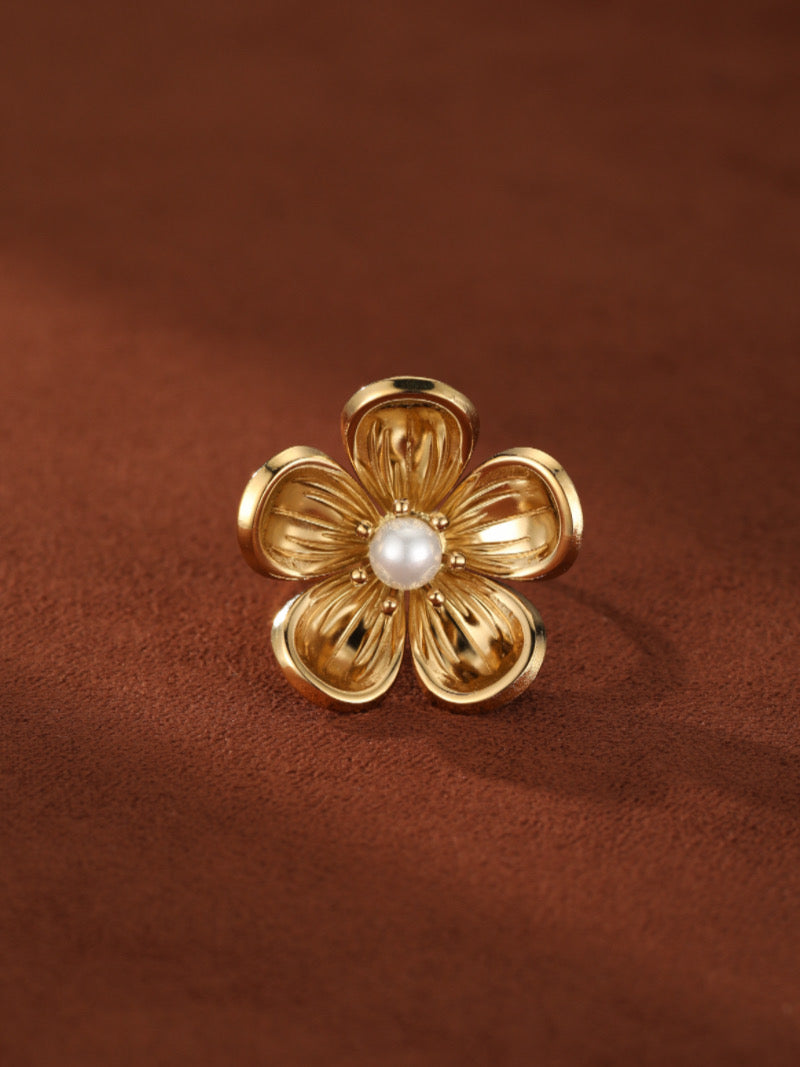
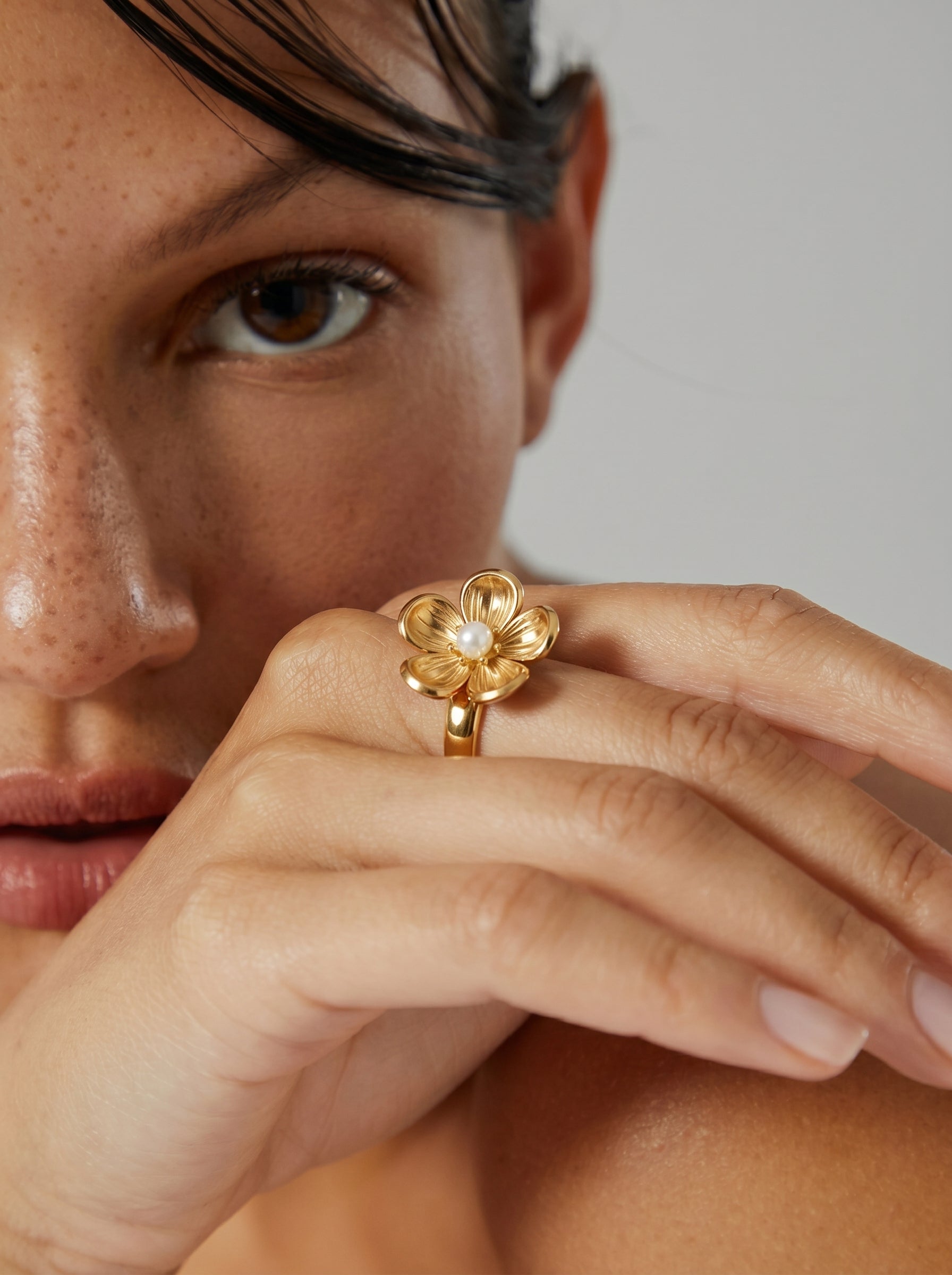
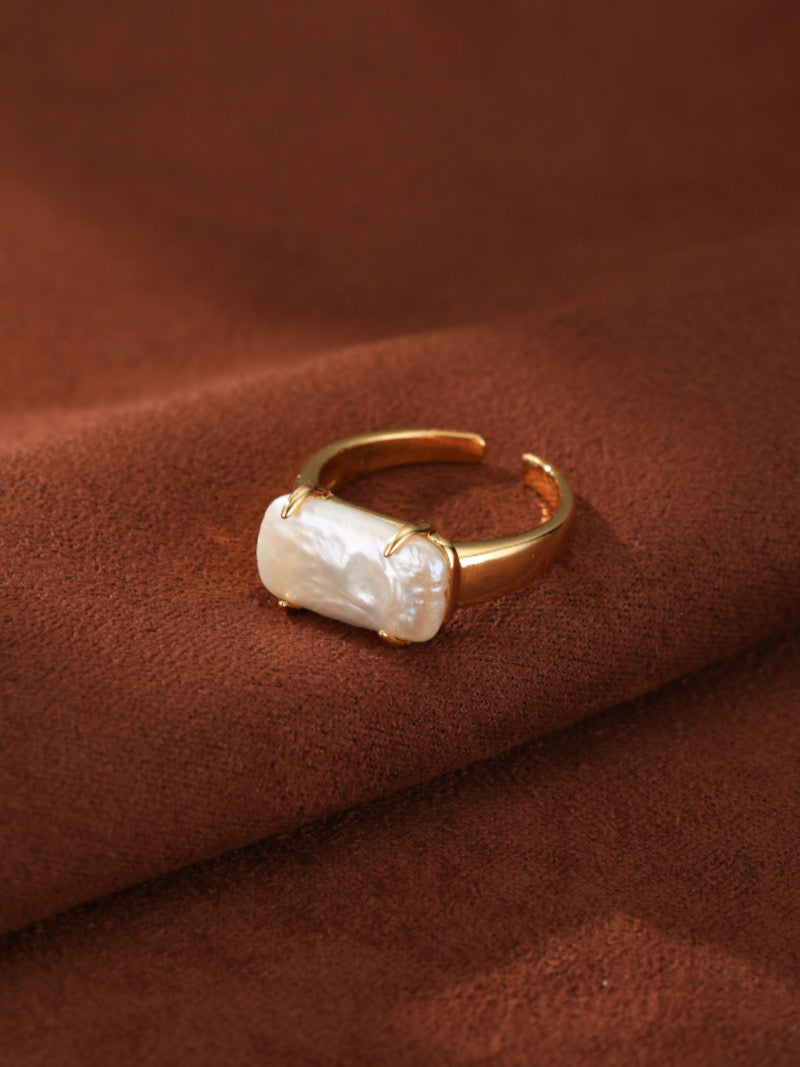
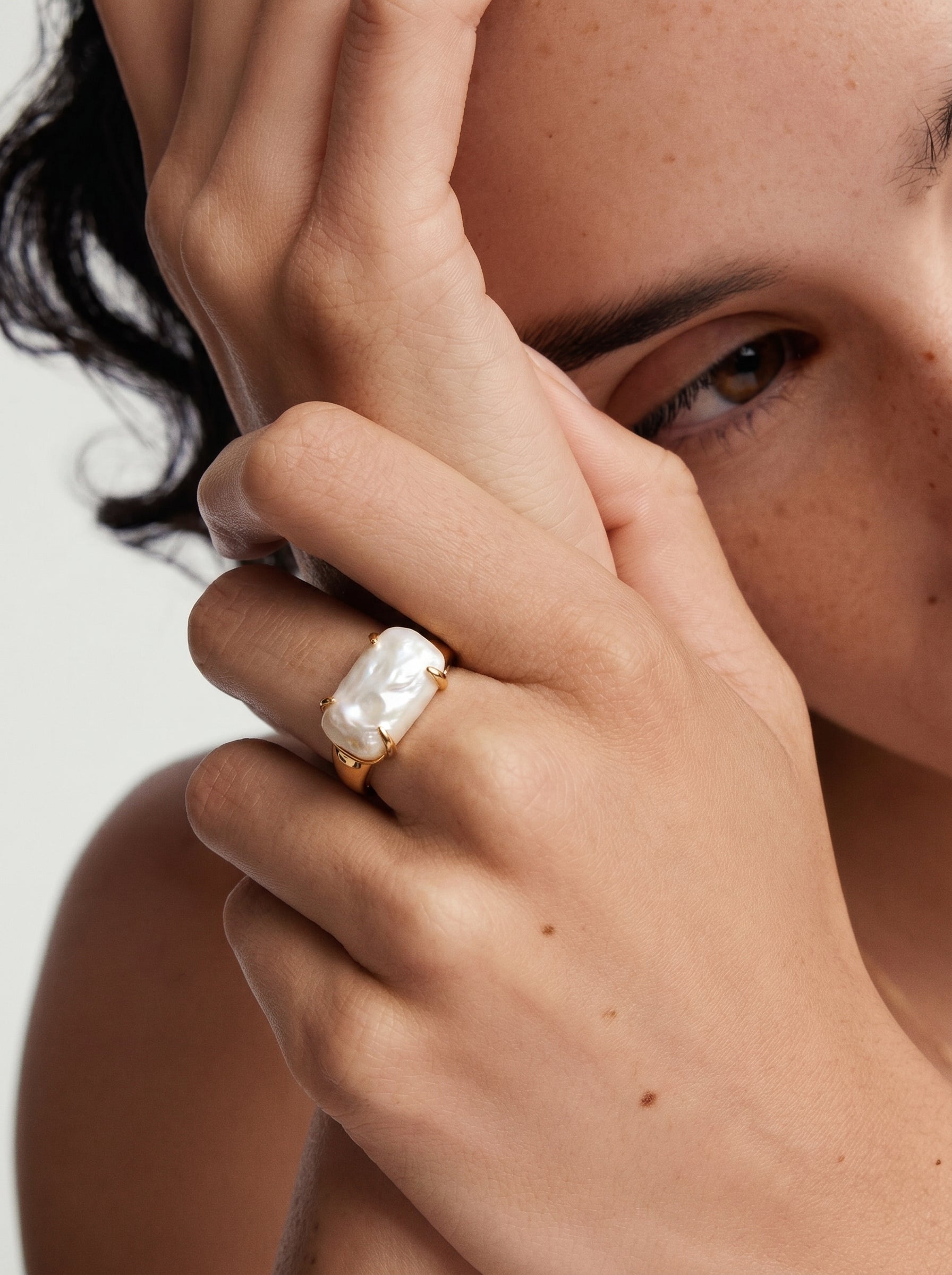
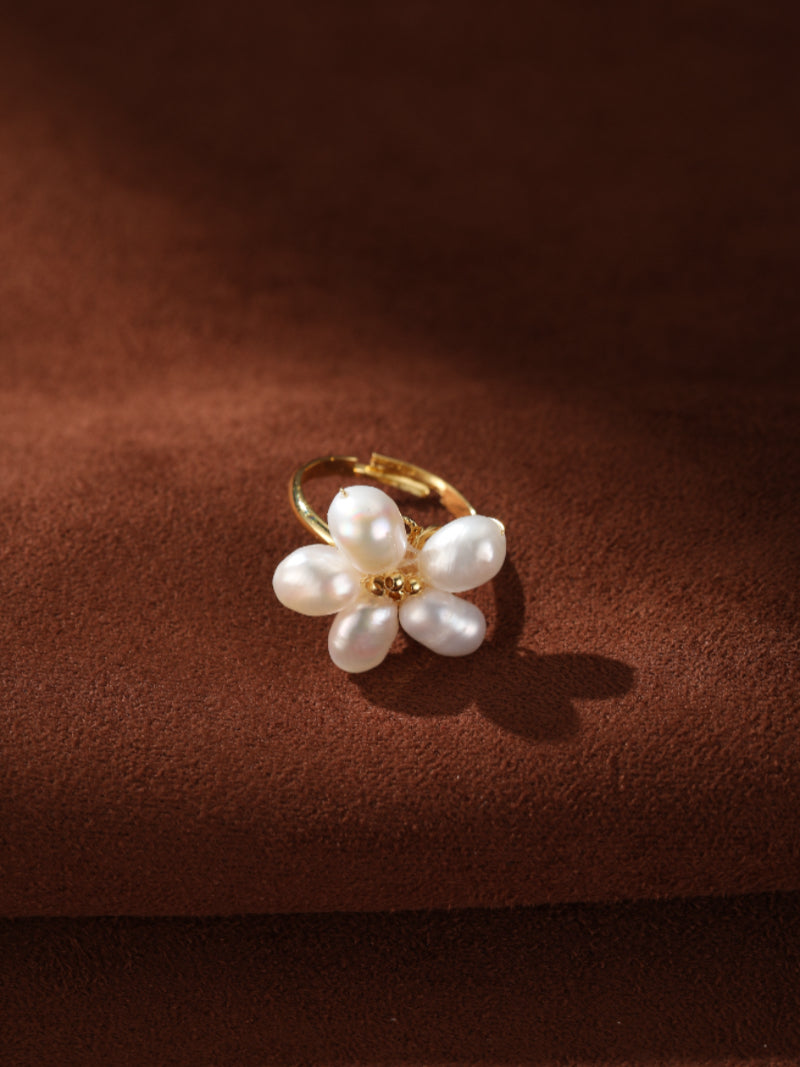
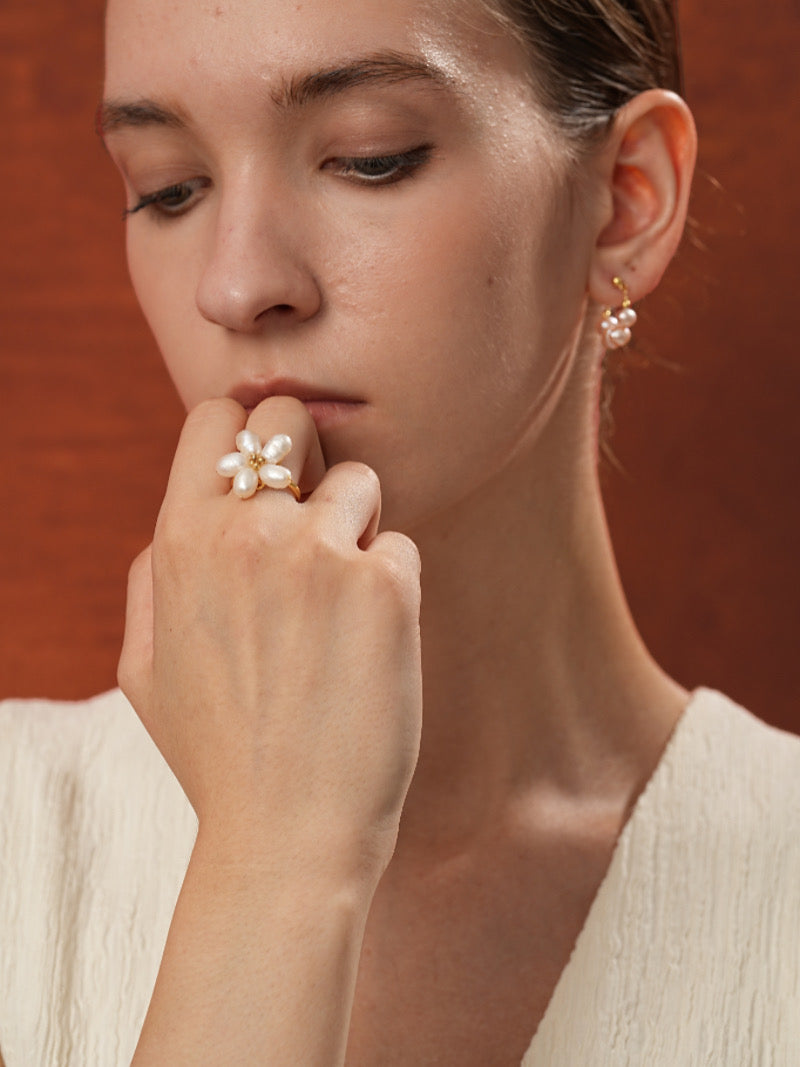
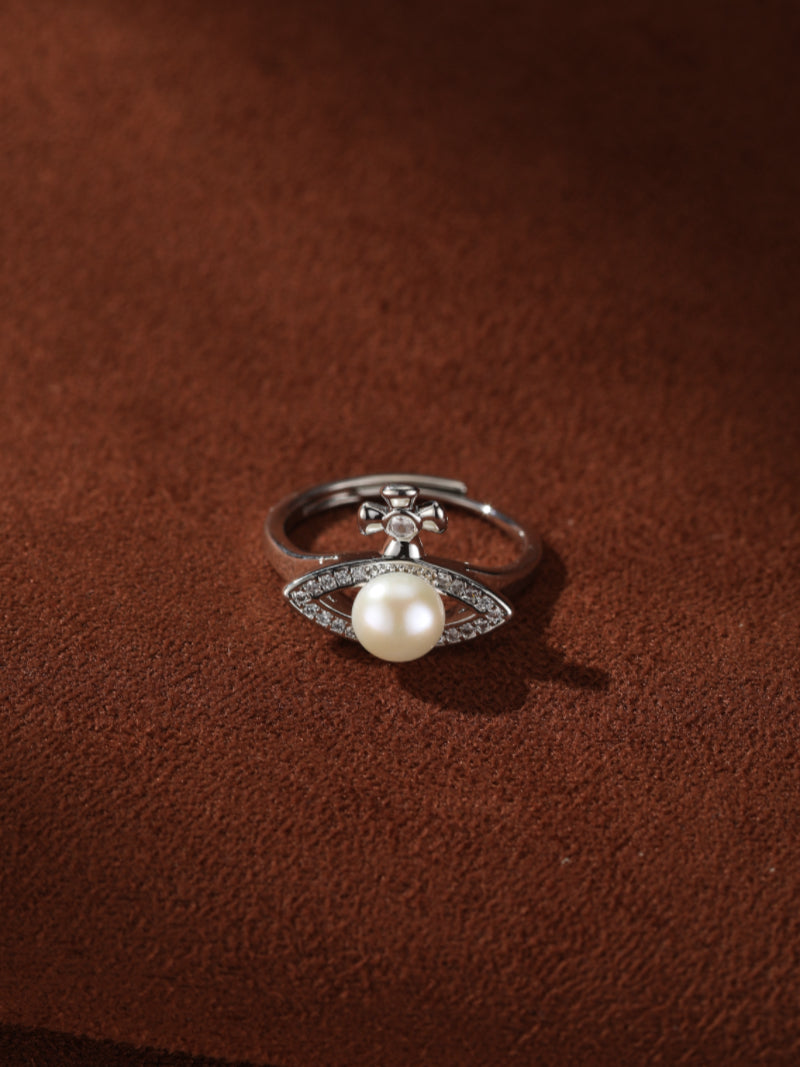
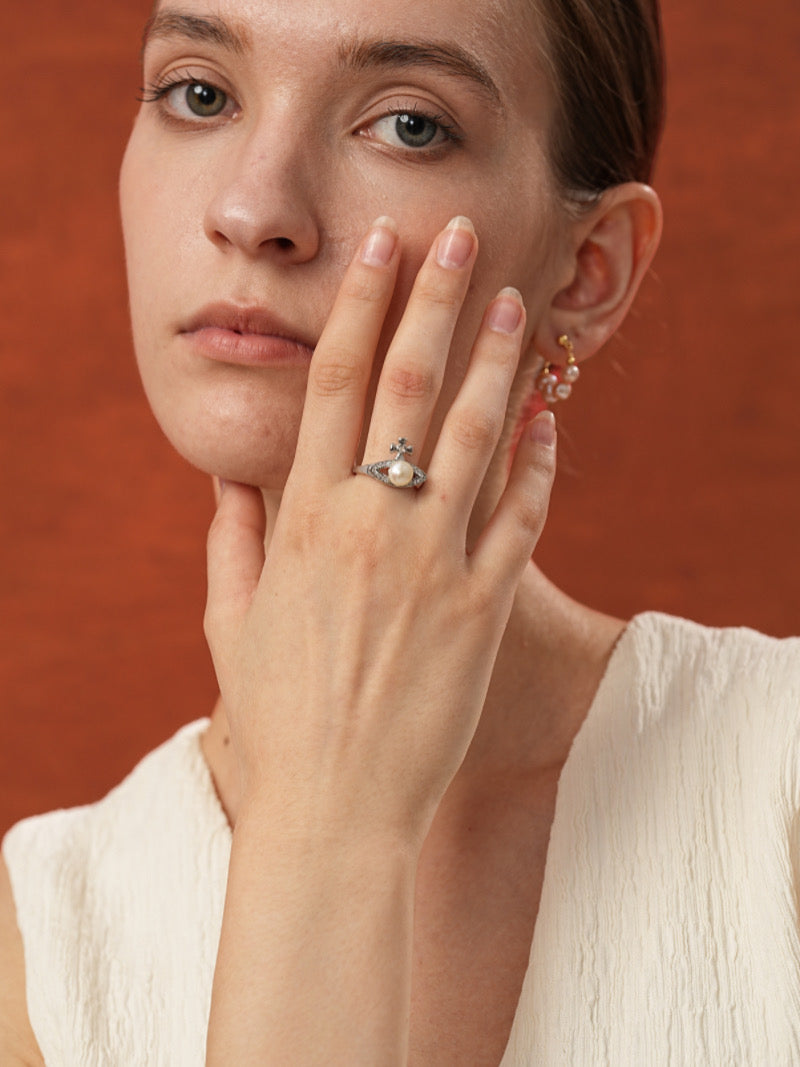
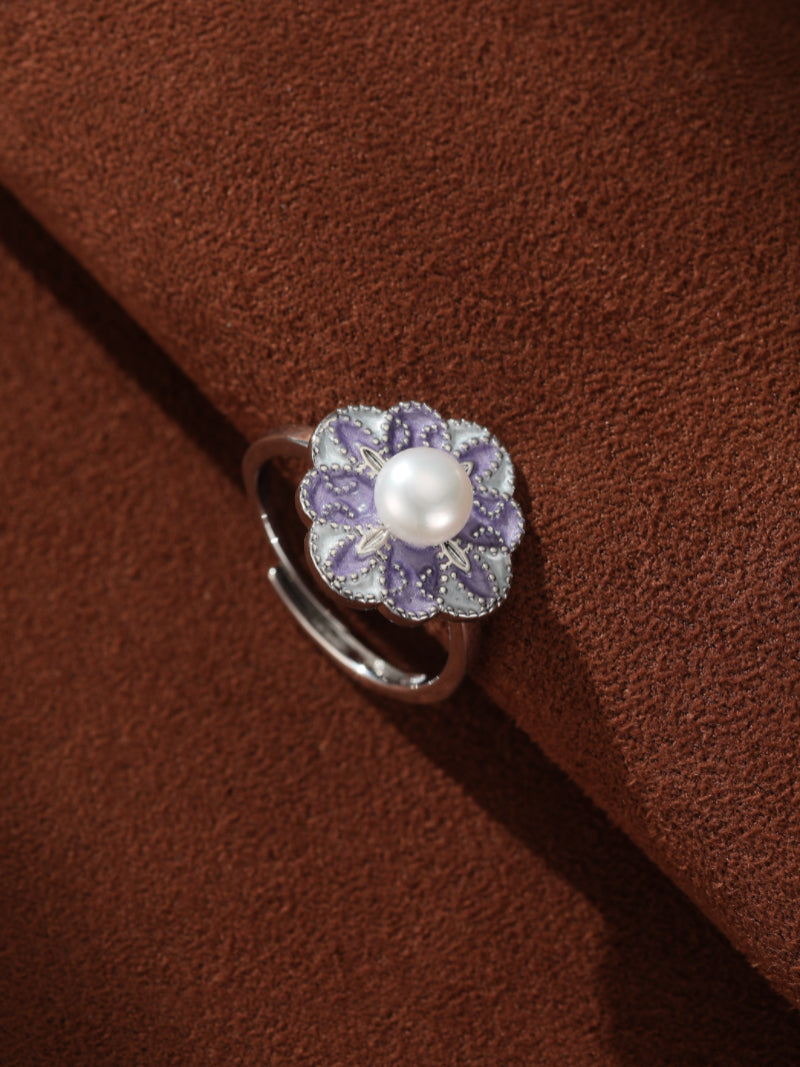
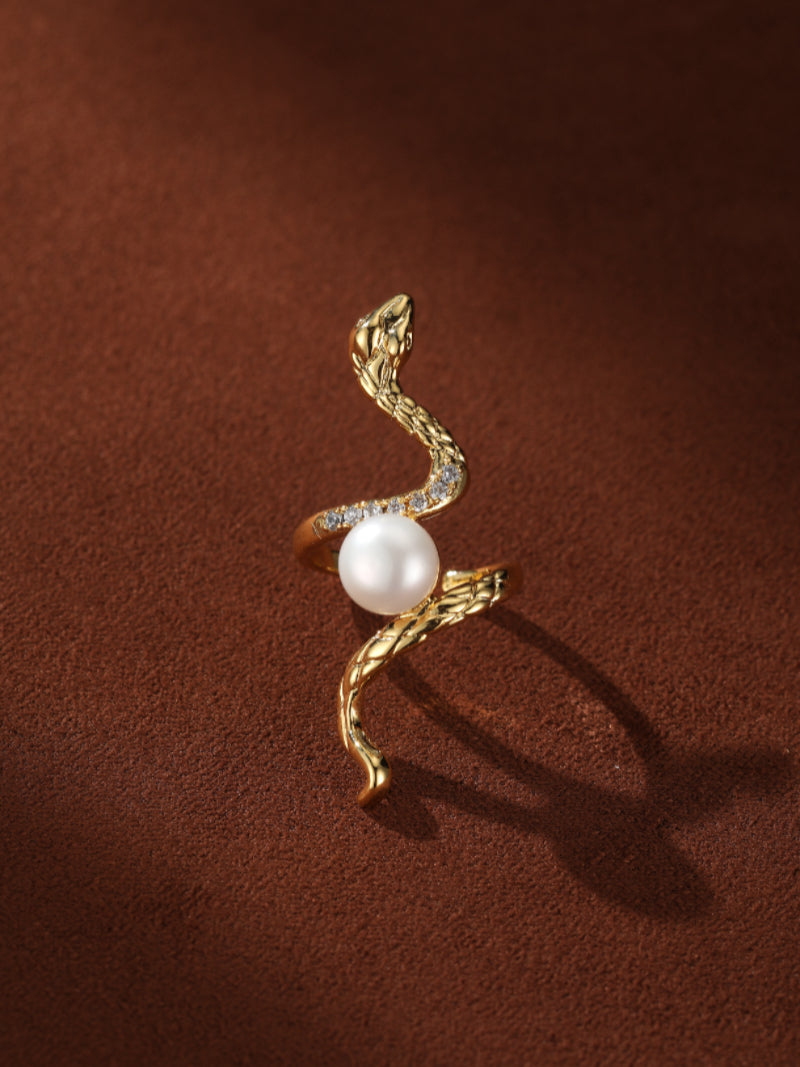
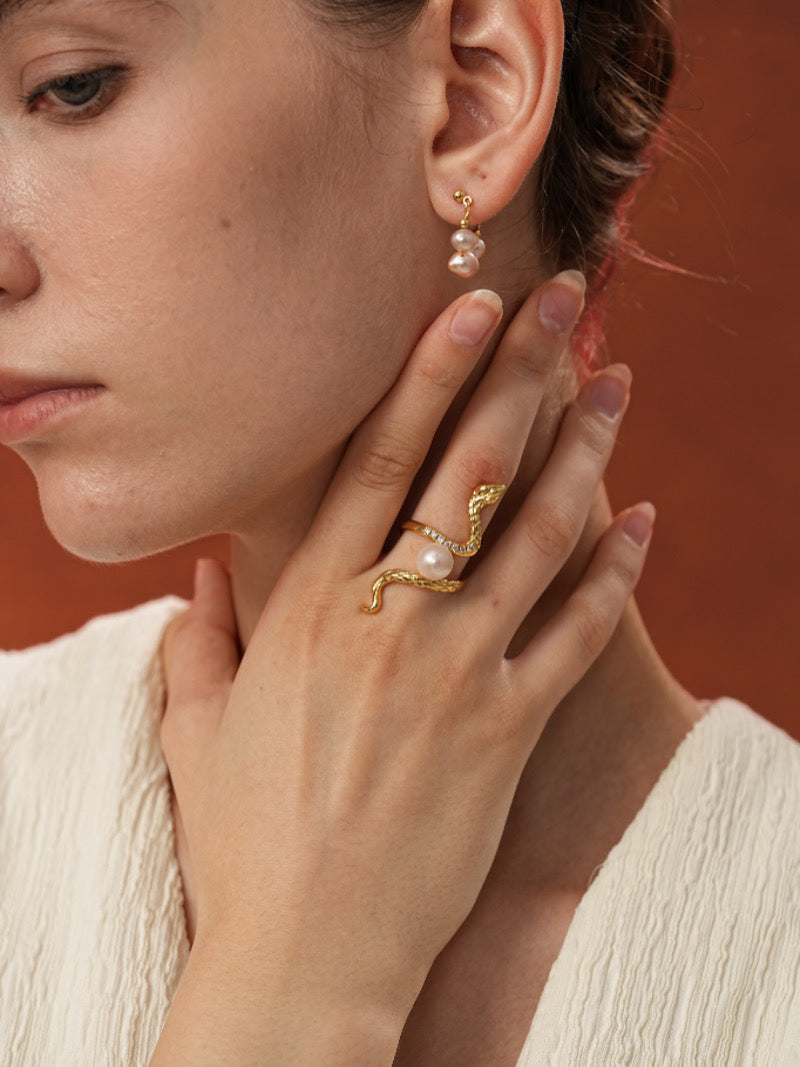
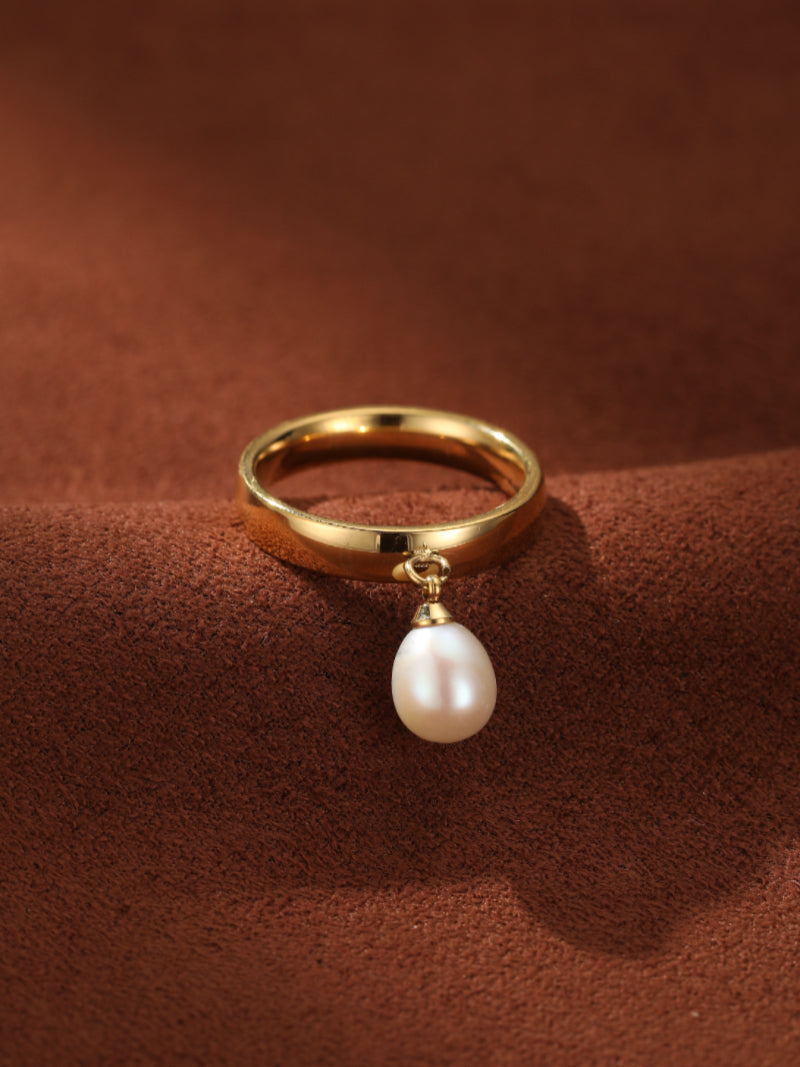
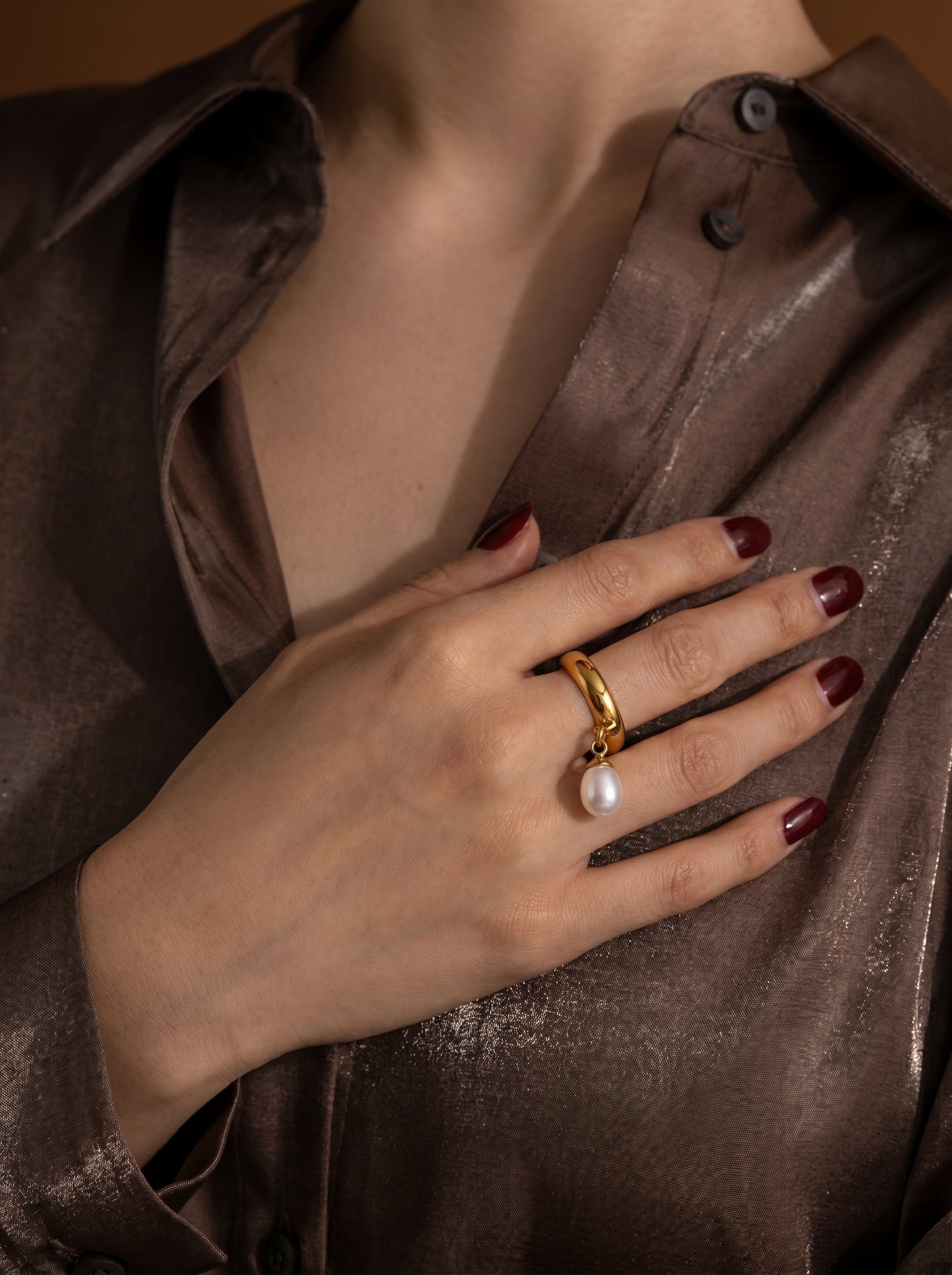
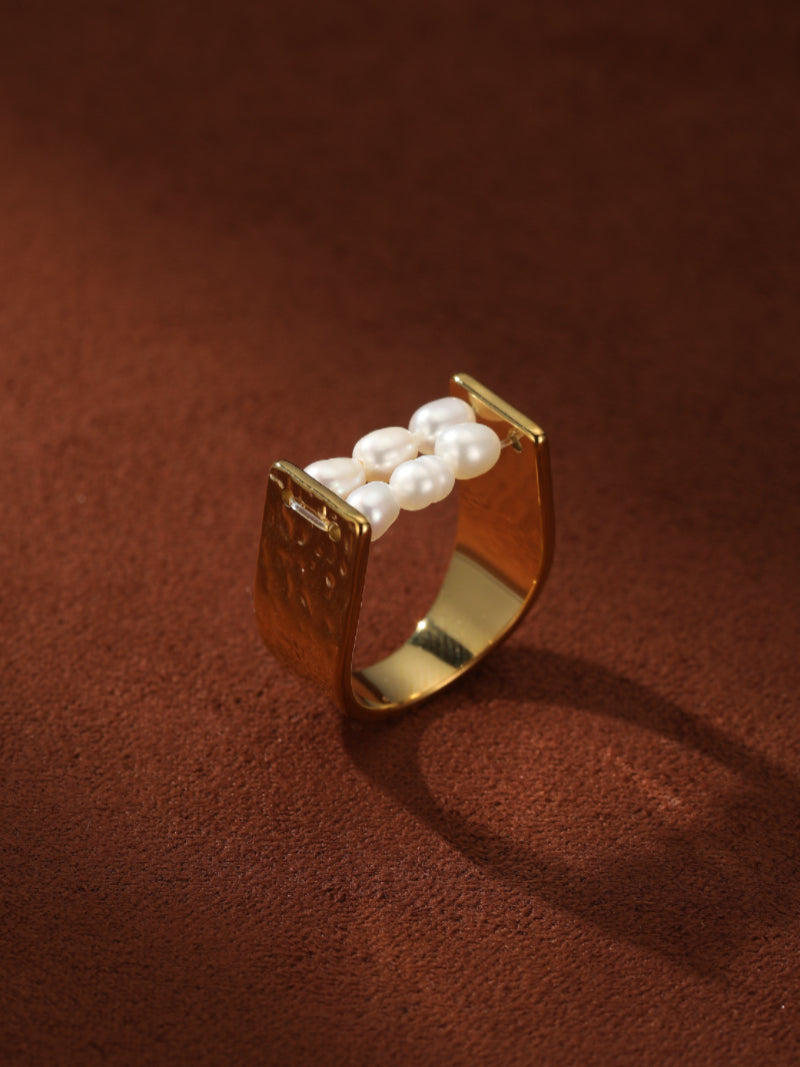
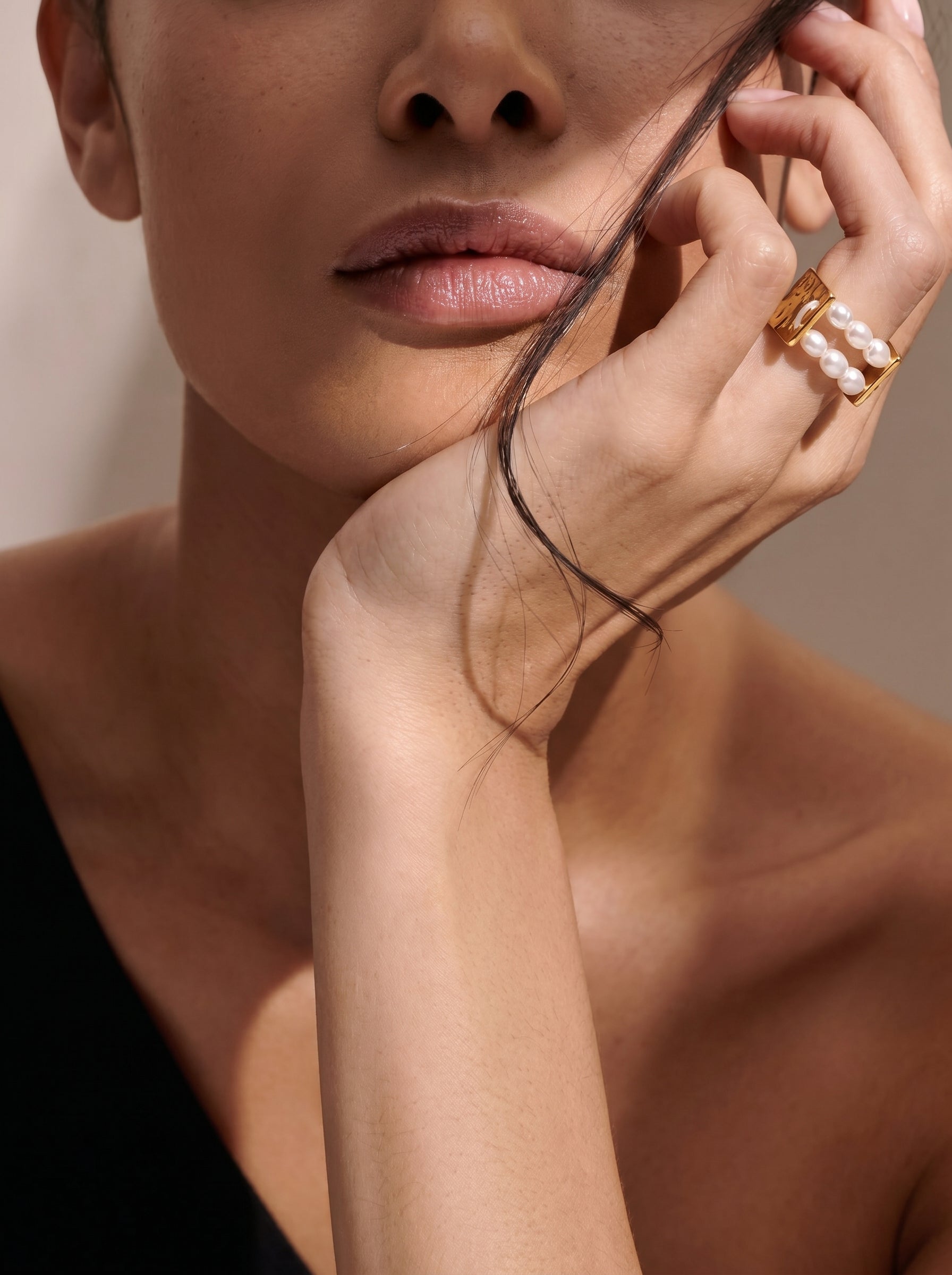
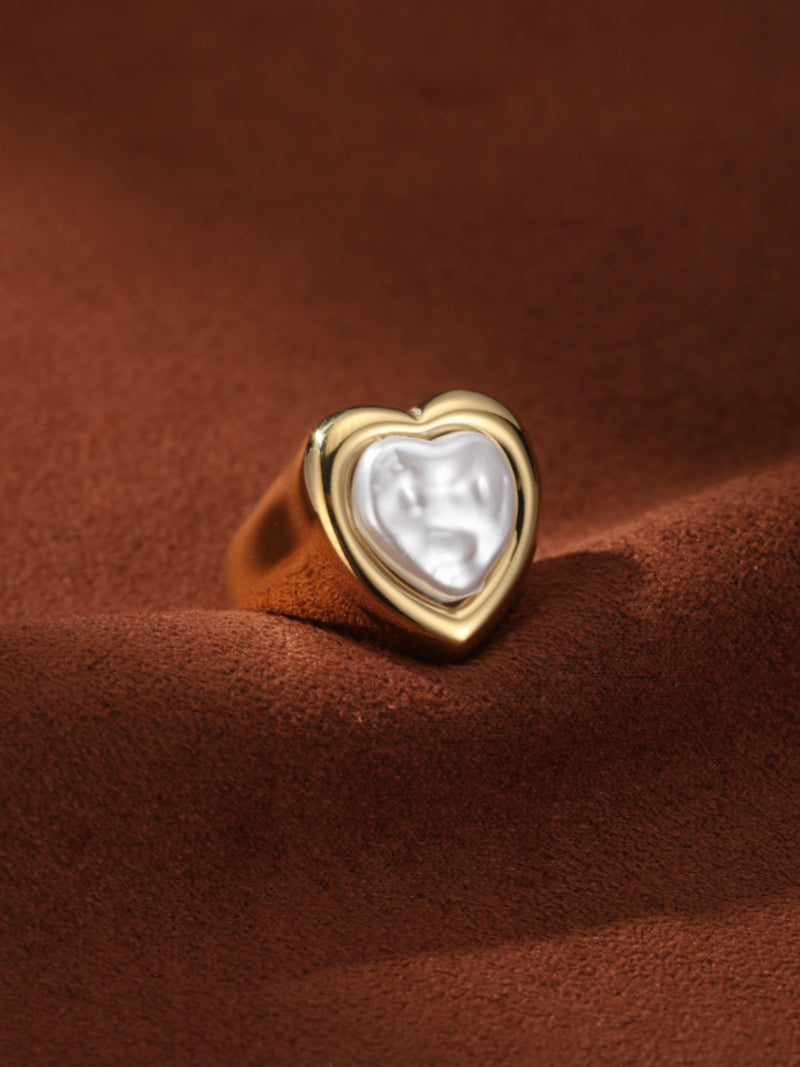
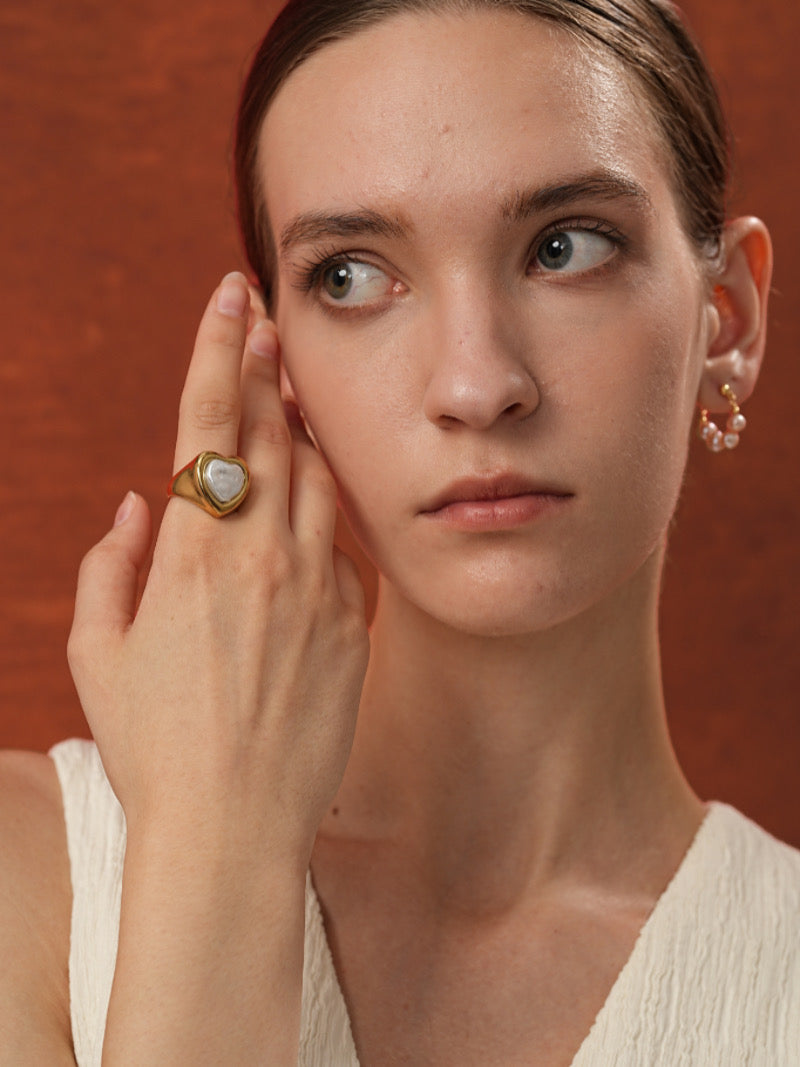
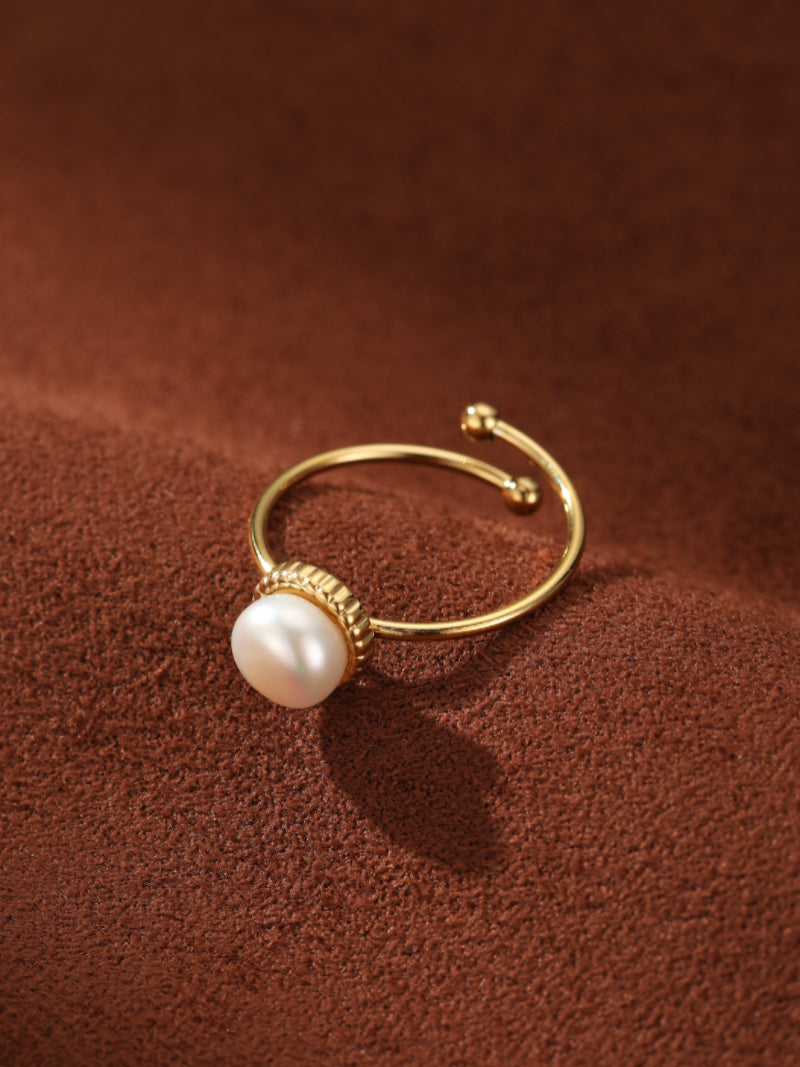
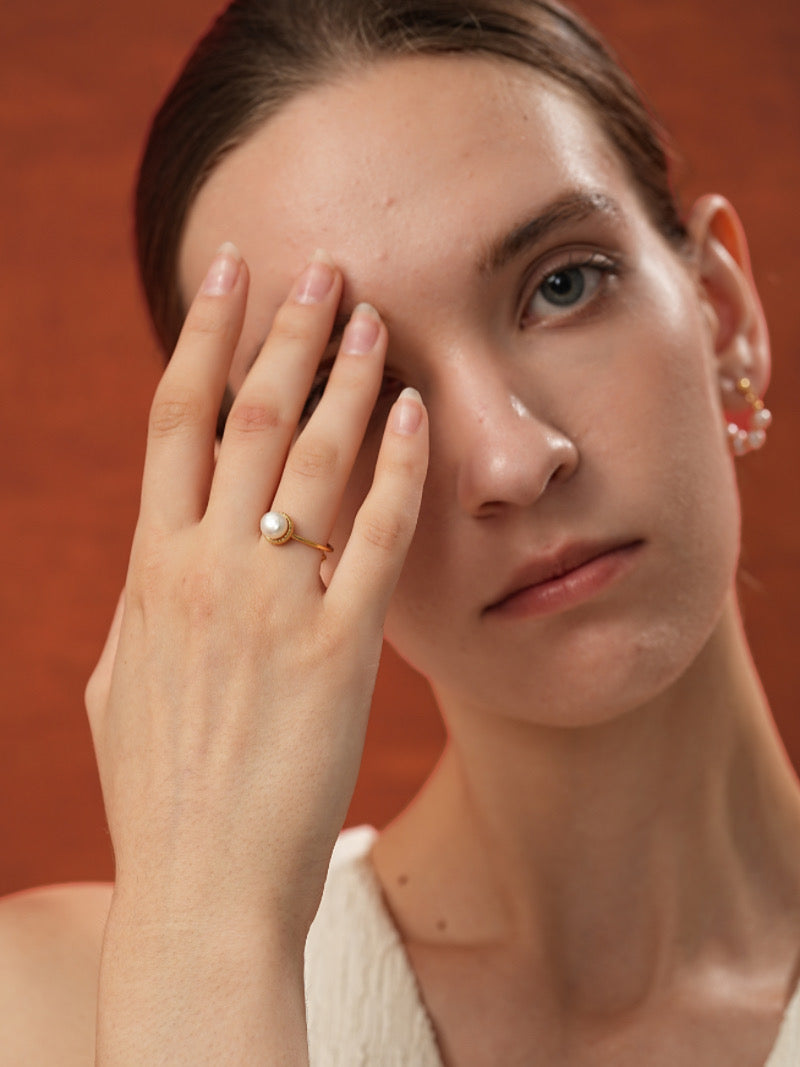
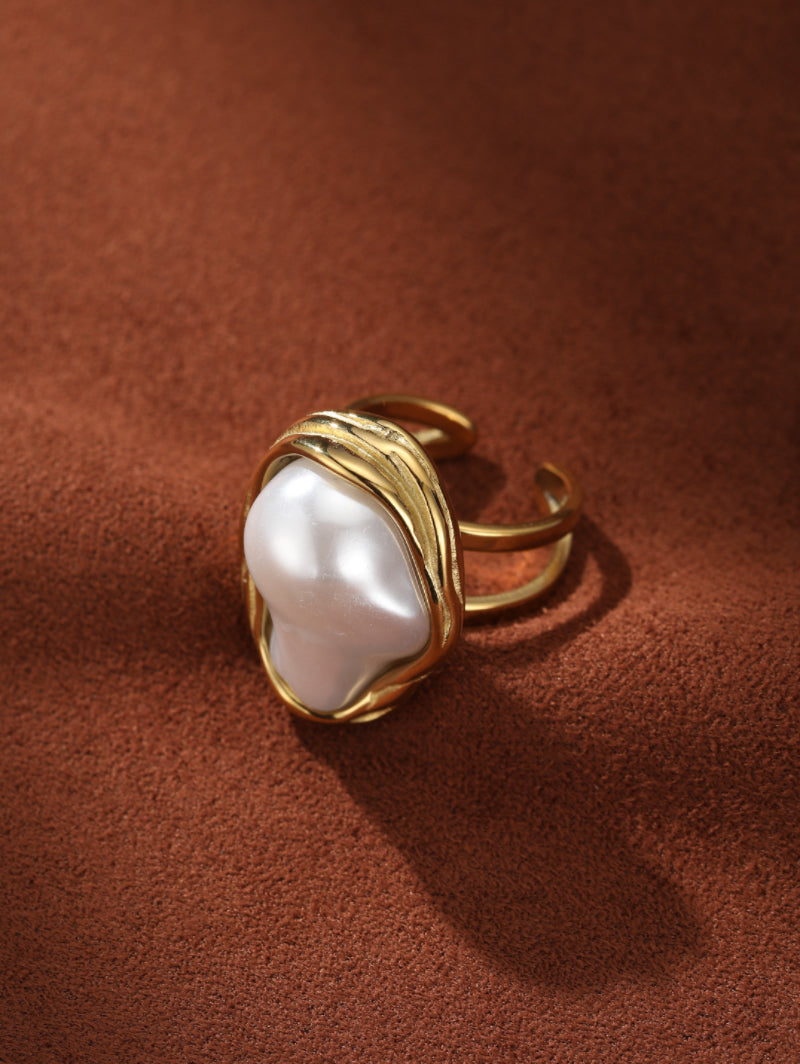
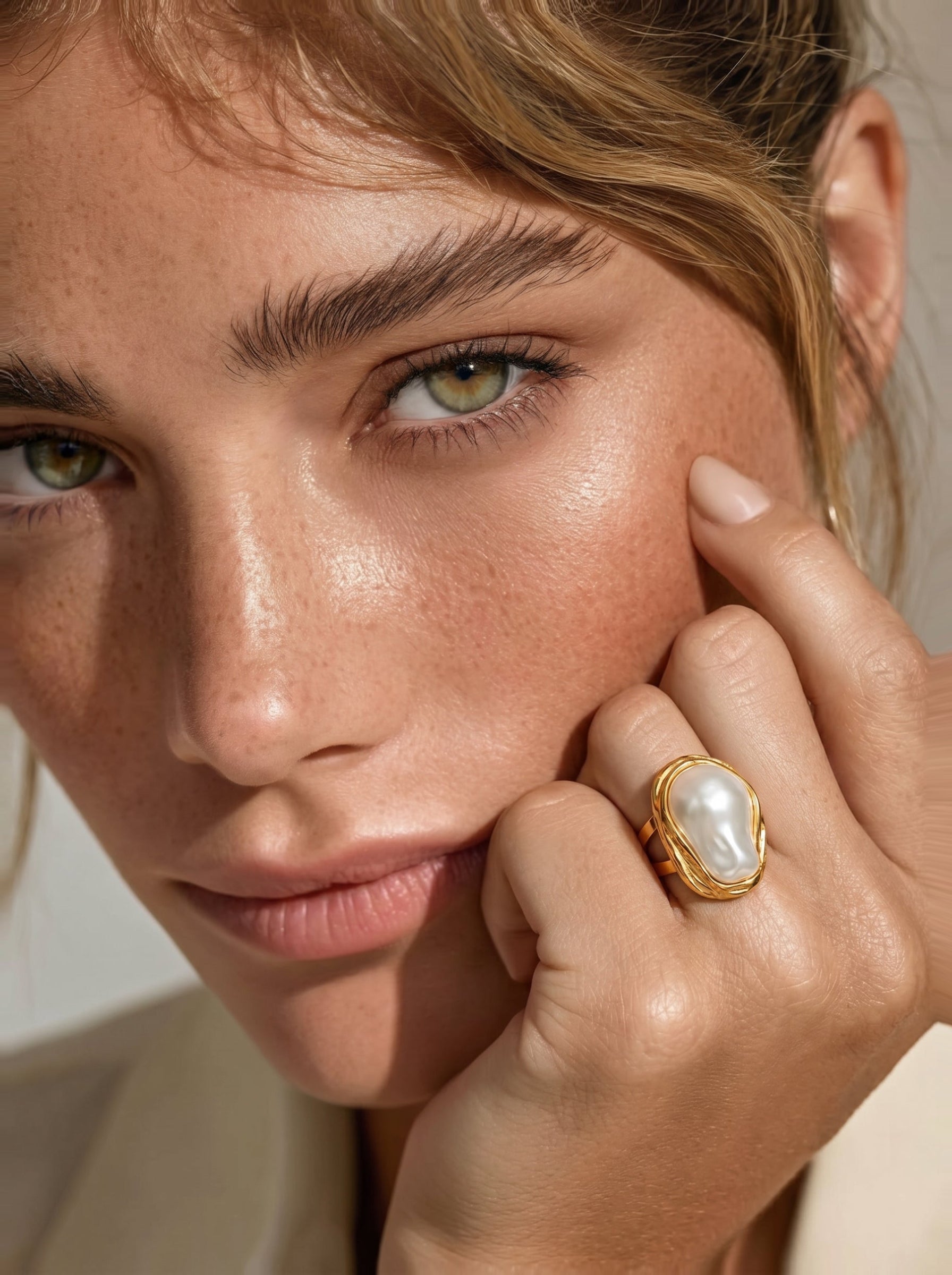
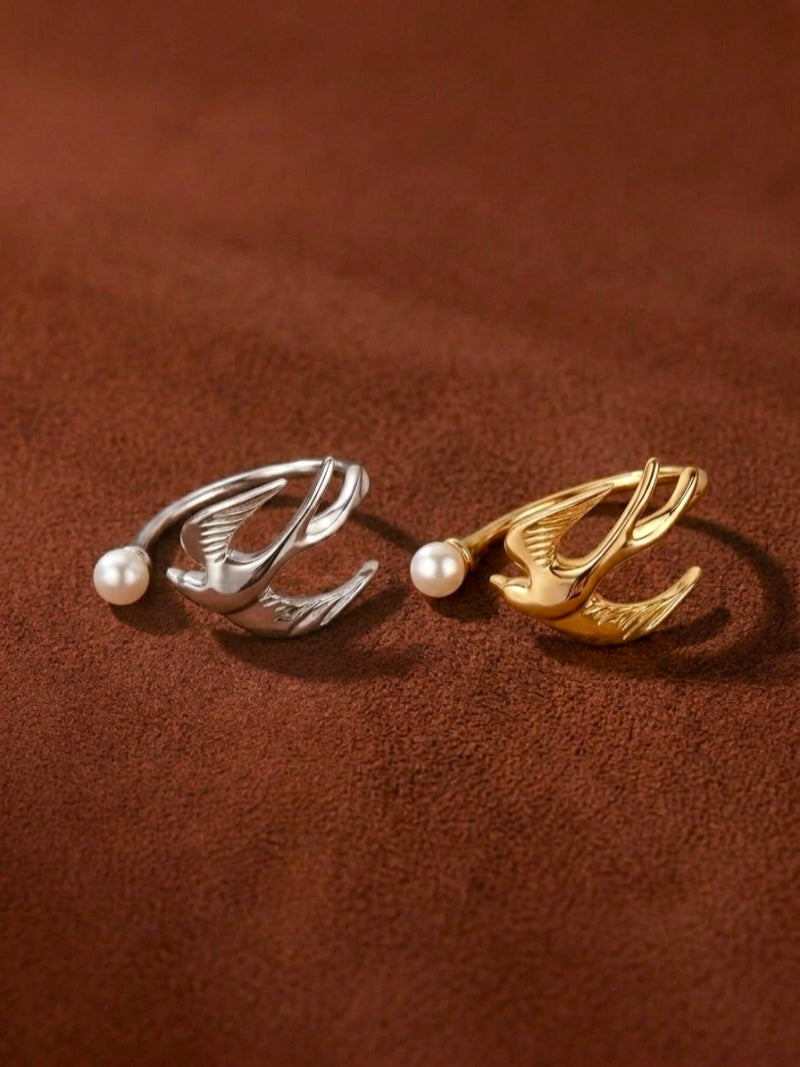
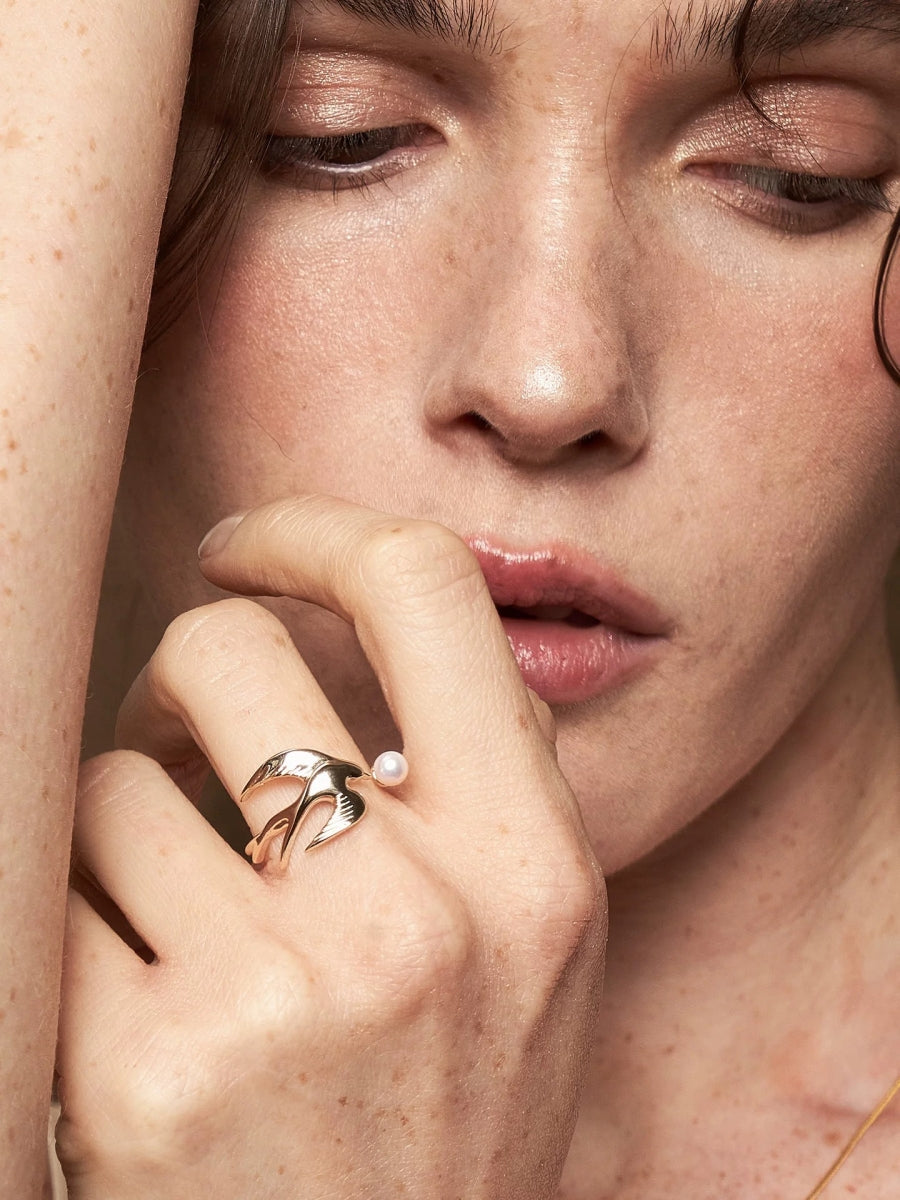
This is the most inventive corner of the collection. Freshwater pearls come in more shapes than any other cultured pearl, and on a ring that means flowers, crowns, knots, crosses, snakes and open cuffs rather than a single pearl on a plain band.
What is a freshwater pearl ring?
A freshwater pearl ring sets a cultured pearl grown inside a freshwater mussel rather than a saltwater oyster. Ours come from Zhuji, China, and we name the source because you should be able to check it rather than take our word for it.
Most freshwater pearls grow without a bead nucleus, so they are solid nacre through to the center. On a ring that matters more than anywhere else, because a hand takes constant contact and solid nacre cannot wear through to a shell core.
Why are freshwater pearls used in so many ring designs?
Two reasons. Shape, because a mussel with no round nucleus produces buttons, nuggets and drops that sit closer to a finger than a sphere does. And price, because higher yield per mussel makes experimentation affordable in a way South Sea or Akoya pearls do not.
That is why the designs here are the boldest we make, and why this is the easiest place to find a ring nobody else at the table is wearing.
Which freshwater pearl ring style should you choose?
Open cuff rings
A band that curves around the finger rather than closing into a fixed circle. It solves sizing entirely and moves between fingers, which matters because most pearl rings cannot be resized after purchase.
Sculpted motif rings
Flowers, crowns, knots, crosses and snakes built around the pearl. The metal carries the design and the pearl finishes it, which suits anyone who finds a plain pearl too quiet.
Beaded bands
Small pearls running around the finger instead of one set on top. These sit lowest of all, clear a keyboard and a coat pocket, and stack well with rings you already own.
How should a pearl ring be set and sized?
Low. Pearls rank 2.5 to 3 on the Mohs hardness scale, softer than almost anything else in a jewelry box, so a raised setting takes more impact than nacre comfortably absorbs.
Most pearl rings cannot be resized after purchase, because the heat and solder used in resizing damage nacre. Check the size guide before ordering, measure at the end of the day when fingers are largest, or choose an adjustable cuff.
Why buy a freshwater pearl ring from Grande Lilith
- Origin named: Zhuji, China. Not a vague claim about responsible sourcing with no place attached.
- Eight provenance markers on every product page, including grade and treatment.
- Partners vetted by our GIA-certified pearl specialist, on working conditions as well as quality.
- Settings kept low so the ring clears daily life, and nickel-free, lead-free and cadmium-free throughout.
- Designed in Paris. Thirty days to change your mind, and every order arrives in a magnetic pouch.
Frequently asked questions
Can you wear a freshwater pearl ring every day?
Yes, with two habits. Take it off before hand washing, cleaning and lotion, and store it separately from harder stones. A beaded band or a low cuff handles daily wear better than a raised single setting.
Can a freshwater pearl ring be resized?
Usually not, because resizing requires heat and solder and both damage nacre. Choose an adjustable open cuff if you are between sizes or buying as a gift.
How do I know my ring size?
Measure at the end of the day, when fingers are at their largest, and in a warm room rather than a cold one. If you are between two sizes, size up. A ring that will not pass the knuckle is a bigger problem than one that turns slightly.
Are freshwater pearls durable enough for a ring?
More durable than bead-nucleated pearls, because solid nacre cannot wear through to a core. They are still softer than stones, so the setting height and your habits matter more than the pearl type does.
Which finger suits a pearl ring?
There is no rule. A large sculpted ring reads best on the index or middle finger, where it has room. Beaded bands and small cuffs work on any finger and stack well with what you already wear.