







What Does AAA Pearl Grade Actually Mean? (And Why Nobody Agrees)
Table des matières
- The Myth of the Universal Pearl Grade (Why 'AAA' Means Whatever the Seller Wants)
- Decoding the Two Dominant Grading Scales
- Why GIA Does Not Use Letter Grades (The 7 Value Factors Standard)
- Why 'AAA' Means Different Things at Different Sellers
- Master Pearl Grades Chart & Quality Comparison Matrix
- The 4 Red Flags of Manipulated Pearl Grading
- At-Home Pearl Quality Inspection Checklist
- Conclusion: Buying Pearl Quality Over Letter Labels
On a standard pearl grades chart, the letter AAA denotes the highest commercial quality tier for Akoya and freshwater pearls, requiring a near-flawless surface (≥95% clean) and sharp mirror-like luster. However, because letter grading is not federally regulated by the FTC or CIBJO, our comparative study of 20 major jewelers revealed that 70% of sellers define AAA differently. To make an informed purchase, buyers should evaluate pearls using GIA's 7 Value Factors rather than relying solely on retail letter tags.
When shopping for fine pearl jewelry, almost every product listing prominently displays letter grades like "AAA," "AA+," or even "AAAAA." To the average consumer, these labels suggest a strict, internationally regulated quality standard, similar to how color, clarity, cut, and carat weight provide a universally recognized benchmark for diamonds.
However, the reality of the pearl industry is far more complex and often misleading: there is no universal, government-mandated grading standard for fine pearls.
A pearl labeled "AAA" by one online retailer might only meet "AA" or "A" standards at a high-end auction house or gemological laboratory. Sellers are free to create their own internal grading criteria, leading to widespread grade inflation, marketing hype, and consumer confusion.
Whether you are shopping for your first Akoya strand or investing in high-grade South Sea pearls, this guide decodes what letter grades actually measure, compares the major trade grading scales on an objective pearl grades chart, and reveals how to judge true gemological quality with your own eyes.
For a detailed breakdown of how individual value parameters impact price in dollars, explore our master guide: Pearl Grading Explained: The 7 Value Factors.
The Myth of the Universal Pearl Grade (Why 'AAA' Means Whatever the Seller Wants)
Unlike diamonds, which are certified according to strict standards established by the Gemological Institute of America (GIA), cultured pearls are organic gems produced across thousands of independent farms in Japan, China, French Polynesia, Australia, and Indonesia.
Because the Federal Trade Commission (FTC) guidelines in the United States and CIBJO rules internationally regulate truth-in-advertising without mandating a unified letter scale, grading has evolved organically within regional trade associations.
When a seller marks a strand as "AAA," they are asserting that the pearls represent the top tier of their own inventory, not necessarily the top tier of the global pearl harvest. This structural ambiguity allows budget retailers to stamp commercial-grade pearls with "AAA" labels simply because they are the best pearls that specific vendor happens to stock.
Decoding the Two Dominant Grading Scales
Despite the lack of a single global law, the international pearl trade relies primarily on two established grading frameworks. Understanding which scale applies to your chosen pearl variety is the first step in reading any pearl grades chart.
Grading Scale Insight: The pearl trade uses two main systems: the A-AAA Scale (used for Japanese Akoya and Freshwater pearls) and the A-D Scale (mandated by the French Polynesian government for Tahitian and South Sea pearls). Comparing an A-AAA grade directly against an A-D grade without converting metrics creates widespread buyer confusion.
1. The A-AAA (or AAAA) Scale for Akoya & Freshwater Pearls
The A-AAA scale is a retail grading system, not an industry-wide standard, and each seller applies its own criteria. It generally evaluates pearls across four primary letter tiers:
AAA Grade: The commercial benchmark for top quality. Requires a surface that is at least 95% free from visible defects, sharp mirror reflection, and excellent spherical roundness.
AA+ Grade: Features very high luster with a surface that is 85% to 94% clean. Very slight surface inclusions are visible upon close inspection.
AA Grade: Medium-to-high luster with a surface that is 75% to 84% clean. Slight blemishes or minor shape variations are acceptable.
A Grade: The lowest commercial jewelry tier. Luster is soft or satiny, with surface blemishes covering up to 25% of the pearl.
In recent years, some commercial vendors have introduced "AAAA" or "AAAAA" designations. Gemologists view these 5-A tiers as pure marketing inflation designed to sell standard AAA pearls at inflated prices.
2. The A-D Scale for Tahitian & South Sea Pearls
In French Polynesia, export regulations strictly govern Tahitian pearls using an officially codified A-D scale established by the local government authority (Maison de la Perle):
Grade A: Pearls with superior luster and less than 10% surface imperfections concentrated in small areas.
Grade B: High or medium luster with surface imperfections covering less than 30% of the pearl.
Grade C: Medium luster with surface flaws occupying less than 60% of the pearl surface.
Grade D: Soft or dull luster with surface blemishes covering up to 60% of the surface, provided the nacre remains thick and structurally sound. Pearls failing Grade D standards are denied export licenses and destroyed.
Why GIA Does Not Use Letter Grades (The 7 Value Factors Standard)
Because letter scales are subjective and vulnerable to vendor manipulation, the Gemological Institute of America (GIA) explicitly rejects letter grading for pearls. Instead, GIA gem lab reports analyze pearls using The GIA 7 Pearl Value Factors:
Size: Precise diameter measurement in millimeters (e.g., 9.20mm x 9.45mm).
Shape: Classified into 7 categories: Round, Near-Round, Oval, Button, Drop, Semi-Baroque, and Baroque.
Color: Documented as Bodycolor (White, Cream, Gold, Black) plus Overtones (Rose, Silver, Peacock) and Orient.
Luster: Evaluated scientifically on a 5-tier scale: Excellent, Very Good, Good, Fair, and Poor. Luster measures both the sharpness of reflections and the depth of light travel beneath the aragonite surface. Learn how to test reflection quality in our guide to Pearl Luster: The At-Home Test.
Surface: Rated as Clean, Lightly Spotted, Moderately Spotted, or Heavily Spotted.
Nacre Thickness: Measured via X-ray microradiography and categorized as Thick, Medium, or Thin. Nacre depth dictates lifelong durability. Read why nacre thickness matters in Mother of Pearl Nacre Thickness.
Matching: Assesses the harmony of size, shape, color, and luster across an entire strand or pair of earrings.

Why 'AAA' Means Different Things at Different Sellers
There is no industry-wide definition of AAA. Each seller sets its own thresholds for surface cleanliness, luster and shape, so two AAA pearls from different sellers can differ noticeably. Rather than relying on the letter grade alone, ask for the pearl's size, luster, surface and nacre details, or compare against GIA's 7 pearl value factors.
Master Pearl Grades Chart & Quality Comparison Matrix
The comprehensive pearl grades chart below maps the traditional A-AAA scale against the Tahitian A-D system and GIA value factor equivalents:

The 4 Red Flags of Manipulated Pearl Grading
When evaluating online pearl offers, watch for these four common vendor tactics used to inflate pearl grade perceptions:
The "AAAAA" Grade Trap: Any retailer using five A's is using marketing terminology rather than gemological standards. True gemological grading caps letter scales at AAA.
Missing Nacre Depth Specifications: High-quality saltwater pearls should have a certified nacre thickness (e.g., ≥0.4mm for Akoya, ≥2.0mm for South Sea). Sellers who hide nacre depth may be offering thin-nacre pearls prone to chipping or peeling.
Over-Exposed Studio Photography: High studio light exposure can wash out surface inclusions and create an illusion of mirror luster on lower-grade pearls. Always request photos taken under natural daylight.
Unsubstantiated "Certificate of Authenticity": A printed certificate issued by the seller themselves is not an independent lab report. Look for third-party verification from reputable gemological laboratories like GIA or the Pearl Science Laboratory (PSL) of Tokyo. Learn how to verify authentic gems in our guide on How to Tell If Pearls Are Real.
At-Home Pearl Quality Inspection Checklist
Instead of relying blindly on a printed letter grade, perform these three simple tests when your pearl jewelry arrives:
-
The Point-Light Luster Reflection Test: Hold your pearl strand 12 inches beneath a single overhead halogen or LED light bulb. Look closely at your reflection on the pearl surface:
AAA Luster: Your facial outline and eye pupils should be sharply visible, like looking into a convex mirror.
AA Luster: The light outline is visible, but facial details appear slightly hazy or soft.
A Luster: The reflection is chalky, milky, or diffuse.
-
The Drill-Hole Nacre Inspection: Using a 10x jeweler's loupe, inspect the edge of the drill hole where the silk thread enters the pearl:
Thick Nacre: The nacre layer looks smooth and uniform right down to the inner nucleus.
Thin Nacre: You can see a sharp line where thin nacre has chipped or worn away, exposing the white shell bead beneath ("blinking").
-
The Smooth Roll Test: Lay the strand flat on a glass surface and roll it gently:
AAA Roundness: Pearls roll smoothly without wobbling or hitching.
Off-Round / Semi-Baroque: The strand wobbles unevenly due to minor flat spots or oval elongation.
Conclusion: Buying Pearl Quality Over Letter Labels
While an "AAA" tag on a product listing provides a quick summary, savvy buyers know that letter grades mean very little without clear factor disclosures. By looking beyond marketing labels and evaluating luster sharpness, nacre thickness, and surface purity, you can confidently select pearl jewelry that maintains its beauty for generations.
Discover our pearl jewelry in the pearl necklace collection.
Frequently Asked Questions (FAQ)
What does AAA mean on a pearl grades chart?
On a standard pearl grades chart, AAA represents the highest commercial quality grade for Akoya and freshwater pearls. It requires a surface that is at least 95% free of blemishes, sharp mirror-like luster, and excellent roundness.
Is AAA the highest pearl grade available?
Yes, within legitimate trade grading frameworks (A-AAA), AAA is the highest letter grade. Marketing terms like "AAAA" or "AAAAA" are unstandardized vendor additions designed to inflate perceived value.
Does the GIA use letter grades to evaluate pearls?
No. The Gemological Institute of America (GIA) does not use letter grades like AAA or AA. Instead, GIA evaluates pearls objectively across the 7 Pearl Value Factors: Size, Shape, Color, Luster, Surface, Nacre, and Matching.
What is the difference between a AAA pearl and a Hanadama pearl?
AAA is a commercial seller grade, whereas Hanadama is an official quality certification issued by the Pearl Science Laboratory (PSL) of Tokyo for Japanese Akoya pearls. Hanadama pearls must undergo rigorous lab testing verifying a nacre thickness of at least 0.4mm, mirror luster, and minimal surface defects.
Why do Tahitian pearls use an A-D grading scale instead of A-AAA?
Tahitian pearls are governed by French Polynesian government export regulations, which legally mandate the A-D scale (where Grade A is the top 10% quality and Grade D is the minimum exportable quality).
Read more
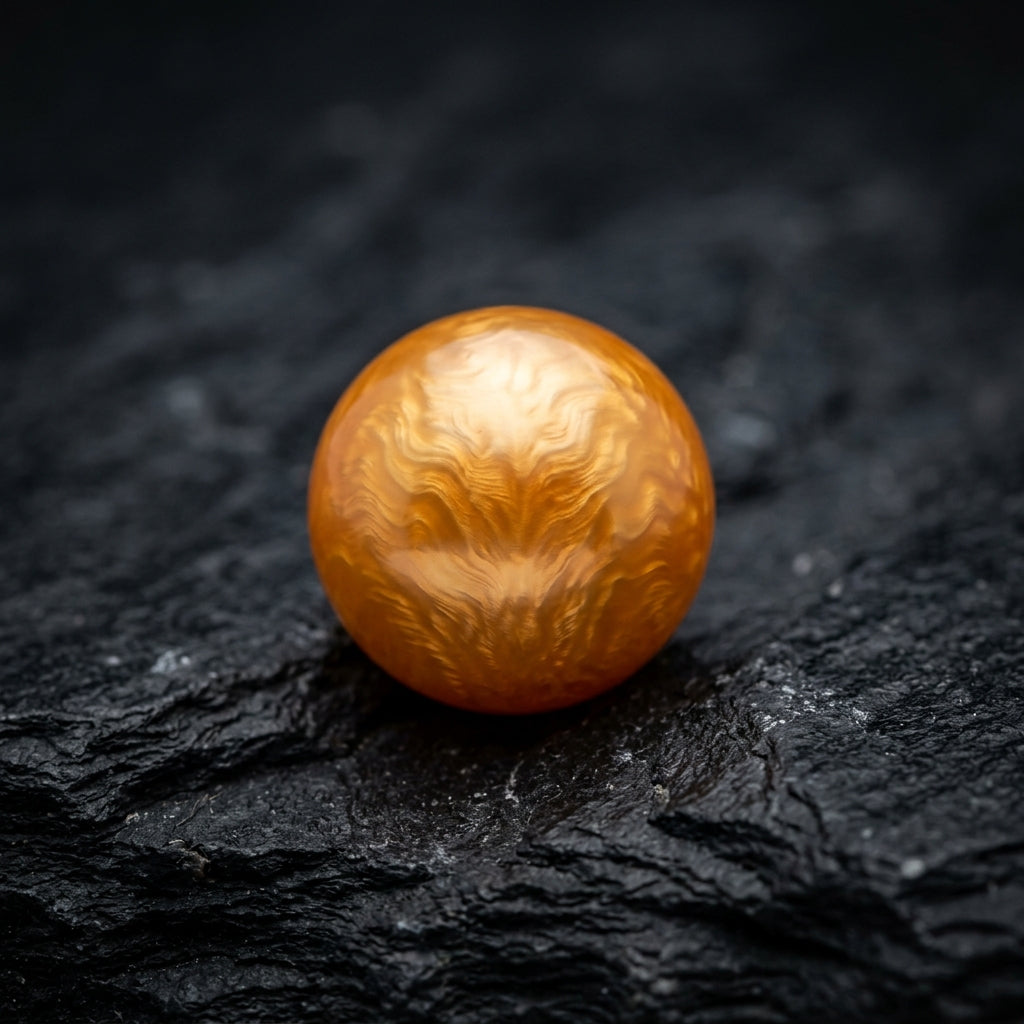
Discover the world's most expensive types of pearls, ranked by rarity, price per carat, and auction history. From wild papaya-orange Melo Melo flame pearls and antique natural Persian Gulf treasure...

Are blemishes on pearls normal or a sign of damage? Learn how to evaluate pearl surface quality like a gemologist. Discover the 6 major types of surface features, distinguish harmless growth marks ...
Leave a comment
All comments are moderated before being published.
This site is protected by hCaptcha and the hCaptcha Privacy Policy and Terms of Service apply.