








Does the Vinegar Test Work on Pearls? (And Why You Should Not Do It)
Table des matières
- Understanding the Vinegar Test for Pearls and its Origins
- Does the Vinegar Test Actually Work? The Chemistry of Destruction
- What Vinegar Does to a Pearl
- Dangerous Testing Myths to Avoid: Beyond How to Tell if Pearls are Real Vinegar
- Safe & Non-Destructive Ways to Authenticate Pearls at Home
- Essential Pearl Care Rules to Prevent Accidental Acid Damage
- Protecting Your Pearls from Destructive Testing
If you're asking how to tell if pearls are real vinegar testing is a dangerous myth. While some believe it's a foolproof method for authenticity, using household white vinegar (5% acetic acid) will permanently destroy genuine pearls. This guide delves into the precise chemical reactions that occur, showing how calcium carbonate (CaCO3) in real nacre dissolves upon contact, causing visible surface pitting and stripping iridescent luster within seconds. We'll explain why acid damages pearls and, crucially, provide safe, non-destructive methods to identify real pearls at home, so you can protect your precious gems.
Understanding the Vinegar Test for Pearls and its Origins
Among the dozens of home authenticity methods circulating online, testing pearls in household vinegar is one of the most widely recommended, and most dangerous, viral myths in jewelry collecting. Understanding how to tell if pearls are real vinegar testing works requires exploring both ancient legend and modern chemistry.
The Cleopatra Myth: Ancient Lore vs. Modern Authenticity
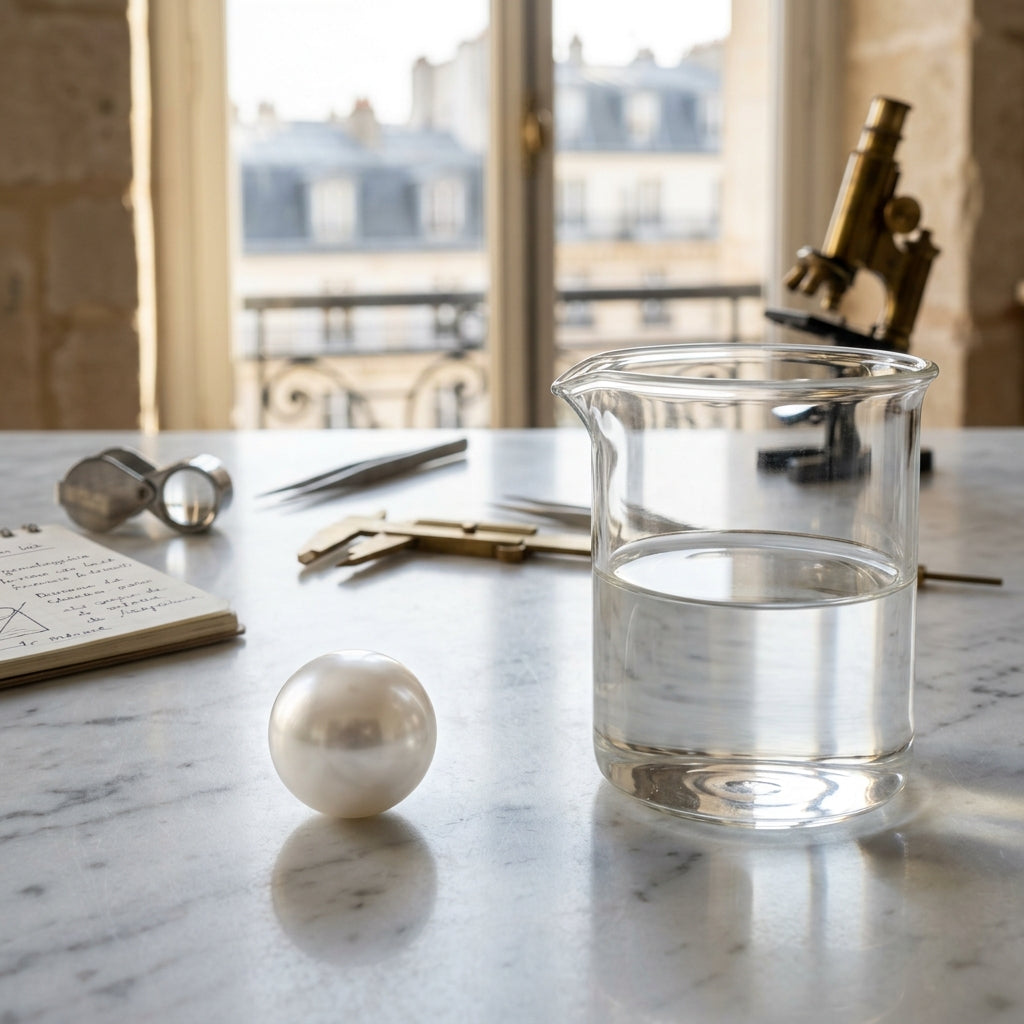
The myth originates from Roman naturalist Pliny the Elder in his 1st-century encyclopedia Naturalis Historia. Pliny recorded that Queen Cleopatra VII of Egypt entered a high-stakes wager with Mark Antony, betting she could host a single banquet costing 10 million sesterces. To win the bet, Cleopatra removed a massive, priceless natural pearl earring, dropped it into a goblet of concentrated wine vinegar until it dissolved, and drank the acidic mixture. While a fascinating story, historical accounts suggest Cleopatra likely used extremely concentrated, perhaps even purified, wine vinegar, far stronger than common household varieties. Her pearl was also of immense size and value, allowing for some dissolution without complete obliteration. This ancient tale, however, does not endorse using vinegar to test pearls today, as even a brief exposure to standard vinegar is catastrophic for modern cultured pearls.
In modern times, viral social media posts and amateur jewelry blogs have unfortunately resurfaced this historical account, claiming that dipping a pearl into white vinegar provides a foolproof way to verify authenticity. Proponents argue that because real pearls fizz when immersed in acid while plastic fake pearls do not, vinegar offers an instant diagnostic test. However, this advice fails to mention the devastating and irreversible damage caused to genuine pearls. Understanding how to tell if pearls are real safely is paramount, and the vinegar test is unequivocally not the answer.
While the underlying chemical reaction is scientifically accurate, performing this test on genuine fine jewelry is disastrous. Dipping a real cultured pearl into vinegar destroys the exact gemstone you are trying to authenticate.
Does the Vinegar Test Actually Work? The Chemistry of Destruction
Many people ask, "Does the vinegar test actually work?" Technically, the vinegar test "works" as a chemical reaction—but it does so by permanently eroding the pearl itself. Real cultured pearls consist of approximately 90% to 94% crystalline calcium carbonate (CaCO3 in the form of micro-thin aragonite platelets), held together by a 4% to 6% organic protein binder called conchiolin.
Commercial household white vinegar is a dilute solution containing roughly 5% acetic acid (CH3COOH) in water, producing a strongly acidic pH between 2.4 and 2.8.
What Happens Chemically When Vinegar Touches Nacre?
When an organic cultured pearl comes into contact with acetic acid, a rapid chemical reaction occurs:
CaCO3 (solid aragonite) + 2CH3COOH (acetic acid) → Ca(CH3COO)2 (soluble calcium acetate) + H2O + CO2 ↑ (carbon dioxide gas)
The Step-by-Step Dissolution Process
Acidic Attack: Acetic acid immediately reacts with the calcium carbonate crystals on the outer nacre layer, initiating a rapid breakdown of the pearl's protective surface.
Effervescence (CO2): Carbon dioxide gas forms rapidly, producing tiny bubbles across the surface of the pearl, a clear visual indicator of the destructive chemical reaction taking place.
Protein Unraveling: As the calcium carbonate dissolves into water-soluble calcium acetate, the organic conchiolin protein matrix holding the nacre together crumbles, leading to structural instability and loss of integrity.
Permanent Luster Destruction: The delicate microscopic optical layers responsible for deep luster and iridescence dissolve, leaving behind a pitted, chalky shell. This is why any attempt to discern how to tell if pearls are real vinegar methods is fundamentally flawed – the "proof" is the pearl's destruction.
Because plastic, glass, and resin imitation pearls do not contain calcium carbonate, they do not fizz in vinegar. However, using acid to prove a pearl is real is equivalent to burning a silk dress to prove it isn't polyester—the test destroys the item in the process.

What Vinegar Does to a Pearl
Vinegar is an acid, and nacre is made mainly of calcium carbonate, which acids dissolve. Even brief contact can etch the surface and dull the luster, and longer exposure causes permanent damage. That is why the vinegar test should never be used to check whether pearls are real.
Dangerous Testing Myths to Avoid: Beyond How to Tell if Pearls are Real Vinegar
Other Destructive 'Tests' You Must Avoid
The vinegar test is not the only destructive myth circulating among amateur collectors. When exploring how to tell if pearls are real vinegar articles, beware of several other dangerous home testing methods:
Myth 1: The Boiling Water Test
Some online guides suggest checking how to tell if pearls are real with hot water by submerging them in boiling water. Proponents claim that fake plastic pearls melt while real pearls survive.
The Reality: Real pearls contain 2% to 4% bound water within their organic conchiolin matrix. Exposing cultured pearls to boiling water causes rapid thermal shock, dehydrating the conchiolin binder and creating micro-cracks across the nacre. This compromises the pearl's structural integrity and diminishes its natural luster, making it brittle and dull. It’s a harsh method for those wondering how to tell if pearls are real with hot water, leading only to damage.
Myth 2: The Nail Polish Remover (Acetone) Test
This myth recommends soaking pearls in pure acetone to see if synthetic lacquer coatings dissolve.
The Reality: While pure acetone does not dissolve calcium carbonate, prolonged exposure strips protective polishing waxes and dries out the organic conchiolin layer, leaving real pearls dull and vulnerable to scratching. This can also weaken the pearl's surface, making it more susceptible to environmental damage and significantly reducing its lifespan and beauty.
Myth 3: The Lighter & Direct Flame Test
Holding a cigarette lighter flame against a pearl to see if it melts or smells like burning plastic.
The Reality: Direct flame scorches natural nacre black within 2 seconds, causes severe thermal splitting, and chars the internal silk thread if testing a necklace. This test offers no genuine insight into authenticity and results in immediate, irreparable destruction of the pearl.
Safe & Non-Destructive Ways to Authenticate Pearls at Home
What Safe Methods Should You Use Instead?
Instead of risking irreversible acid damage, collectors learning how to identify real pearls at home should rely exclusively on 100% safe, non-destructive physical and optical diagnostics.
Safe Method 1: The Gentle Tooth & Surface Friction Check
The safest field diagnostic available is the friction check. Organic nacre consists of microscopic crystalline aragonite platelets stacked like roof tiles. This unique natural structure gives real pearls a distinct, slightly abrasive texture, unlike the perfectly smooth surface of most imitations.
How to Perform: Gently slide a pearl across the front edge of your upper incisor tooth, or rub two pearls from the same strand lightly against each other.
Real Pearls: Feel distinctly gritty, sand-like, or micro-textured due to the crystalline aragonite ridges.
Fake Pearls: Glass, plastic, and shell pearls feel completely smooth and slippery.
To learn how to execute this check safely without scratching your gems, read our complete guide on The Pearl Tooth Test: How to Do It Properly and When It Lies.
Safe Method 2: The 10x Loupe Drill Hole Inspection
Using an inexpensive 10x jeweler's loupe allows you to verify authenticity without touching the pearl with chemicals. This method focuses on the precision and characteristics of the drill hole, which can reveal crucial details about the pearl's composition and manufacturing.
Real Pearls: Feature sharp, clean 90-degree drill hole edges cut cleanly through solid nacre into the internal nucleus.
Fake Pearls: Show chipped glass rims, peeling paint flakes, or gummy lacquer pooling around the hole opening.
For a full step-by-step loupe verification guide, consult How to Tell If a Pearl Necklace Is Real: A Strand-by-Strand Inspection.
Safe Method 3: The Cold Thermal Conductivity Check
Real aragonite crystals conduct heat differently than plastic or resin. Because pearls are natural gemstones, they have a higher thermal conductivity than synthetic materials.
Real Pearls: Feel noticeably cool to the touch for the first 5 to 10 seconds against your skin before warming up to body temperature.
Plastic Pearls: Feel instantly room-temperature or warm upon contact.
Safe Method 4: Expert Gemological Verification
For absolute certainty, especially with high-value pearls, the most reliable non-destructive method is to consult a certified gemologist. They use specialized equipment like refractometers, microscopes, and X-ray machines to analyze the pearl's internal structure, nacre thickness, and composition without causing any damage. This professional assessment provides an independent report, offering peace of mind and protecting your investment. When considering how to identify real pearls at home, remember that professional help is always an option for definitive answers.
For a complete overview of all eight safe home testing methods, explore our master hub guide on how to tell if pearls are real.
Essential Pearl Care Rules to Prevent Accidental Acid Damage
Daily Habits for Long-Term Pearl Preservation
Beyond avoiding destructive tests like the vinegar method, practicing diligent pearl care is crucial for preserving your organic gems. Pearls are delicate and susceptible to damage from various chemicals and environmental factors. By integrating simple habits into your routine, you can ensure your pearls retain their exquisite luster and beauty for generations.

The "Last On, First Off" Rule
Always put your pearl jewelry on as the final step in your morning routine, after applying hairspray, perfume, cosmetics, and body lotions. Take your pearls off first at night before cleansing your skin. This prevents direct contact with acidic or chemical-laden products that can dull their surface or cause permanent etching.
What to Do If Acid Touches Your Pearls
If your pearls come into contact with acidic substances (wine, vinegar salad dressing, citrus juice, or acidic perfumes):
Rinse Immediately: Flush the affected area with lukewarm distilled water. Do not rub, as this can spread the acidic substance further.
Wipe Softly: Gently dry the pearls using a clean, lint-free microfiber cloth. Ensure all moisture is removed to prevent water spots or further chemical reactions.
Never Use Commercial Jewelry Cleaners: Avoid harsh chemical dips, ultrasonic cleaners, and steam machines, which erode organic nacre. These cleaners are designed for harder gemstones and metals, not the delicate organic composition of pearls.
For complete care instructions, read our comprehensive guide on How to Clean Pearls: The Complete Care Guide.
At Grande Lilith, we understand the value of trust when investing in fine jewelry. That's why every piece in our collection comes with 30-day returns. Shop with confidence: every listing states the pearl type, size, grade, treatment and metal.
Protecting Your Pearls from Destructive Testing
In conclusion, attempting to learn how to tell if pearls are real vinegar methods is a dangerous and destructive myth. This guide has demonstrated that while the chemical reaction is real, it comes at the cost of your pearl's permanent damage. By understanding the profound chemical vulnerability of calcium carbonate in nacre and instead relying on 100% safe, non-destructive methods like the gentle tooth friction check, 10x loupe inspection, and thermal conductivity test, you can confidently verify your jewelry without risking permanent harm. Remember, proper pearl care and authentication go hand-in-hand to preserve the beauty and value of these exquisite organic gems.
Explore Grande Lilith's cultured pearls and our care journals to keep your pearls at their best.
Frequently Asked Questions About the Pearl Vinegar Test
What is the vinegar test for pearls?
The vinegar test is a destructive home authenticity method where a pearl is submerged in white vinegar to see if it fizzes. Because vinegar contains 5% acetic acid, it reacts with the calcium carbonate in real pearls, producing carbon dioxide bubbles while eroding the gem's luster.
Does the vinegar test actually work?
While the test causes real pearls to fizz and plastic pearls to remain inert, it is 100% destructive. Placing a real pearl in vinegar dissolves its outer nacre layers within 30 to 60 seconds, permanently destroying its value.
Does vinegar damage real pearls?
Yes. Vinegar permanently damages real pearls by dissolving the calcium carbonate crystals (CaCO3) that form organic nacre. Even 60 seconds of vinegar contact strips iridescent luster and leaves the pearl dull, chalky, and pitted.
What happens chemically when vinegar touches nacre?
Acetic acid (CH3COOH) in vinegar reacts with calcium carbonate (CaCO3) in nacre to form soluble calcium acetate, water, and carbon dioxide gas (CO2). This reaction breaks down the organic conchiolin protein matrix holding the pearl together.
What should you do instead?
Instead of vinegar, use non-destructive authenticity methods such as the gentle tooth friction check (real pearls feel gritty), 10x loupe drill hole inspection (real pearls have sharp, clean edges), or the cold thermal conductivity test.
What other 'tests' should you avoid?
Avoid destructive testing methods including boiling water (causes thermal cracking), acetone or nail polish remover (strips luster coatings), and direct flame or lighter tests (scorches nacre black).
Read more

Discover complementary pearl related gifts for someone who already has pearls. From baroque drop earrings to exotic Tahitian pendants and silk restringing vouchers.

Discover the best pearl gifts for women celebrating a new job or promotion. From classic Akoya studs to solitaire pendants and executive self-rewards.
Leave a comment
All comments are moderated before being published.
This site is protected by hCaptcha and the hCaptcha Privacy Policy and Terms of Service apply.