


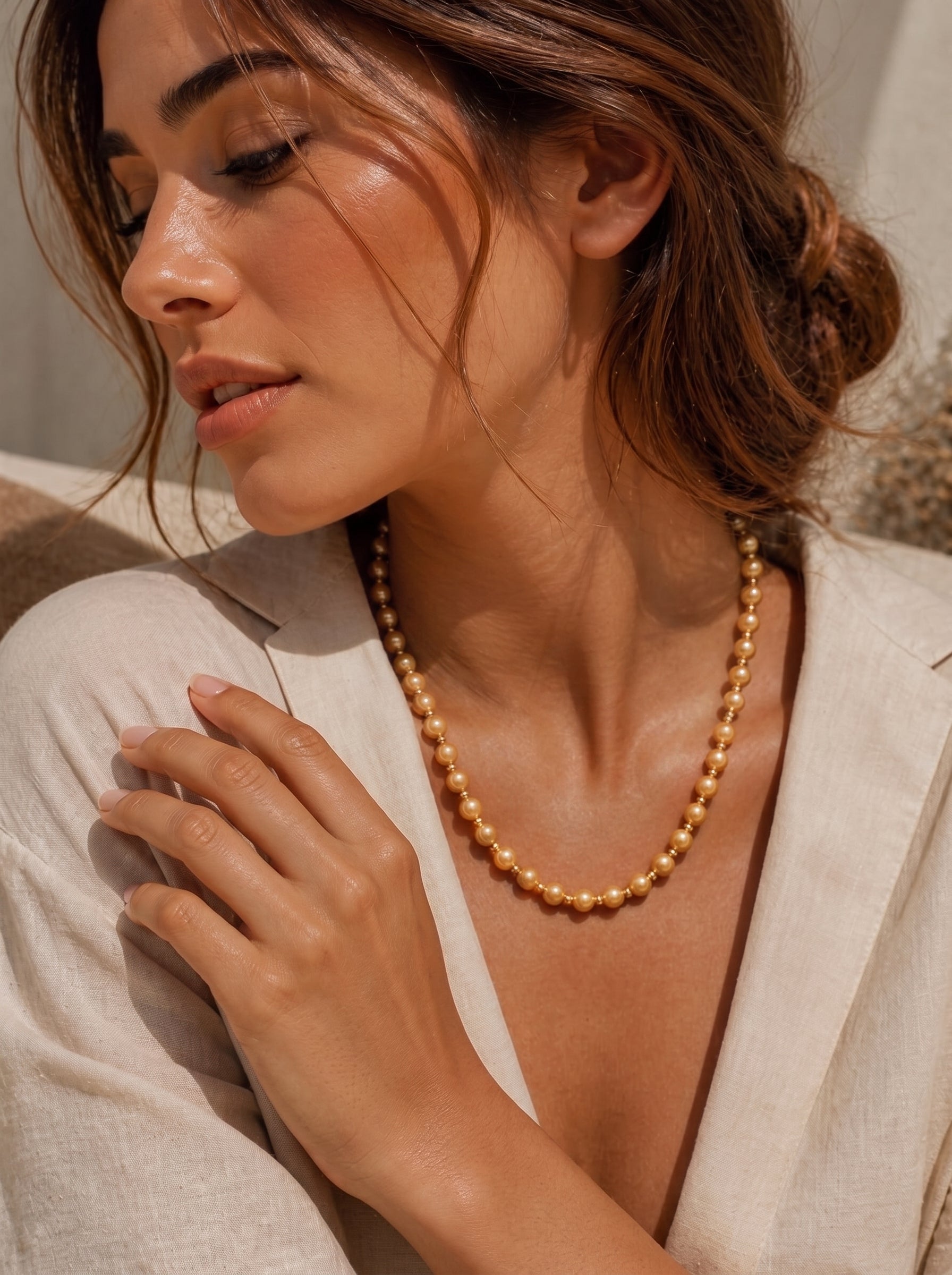
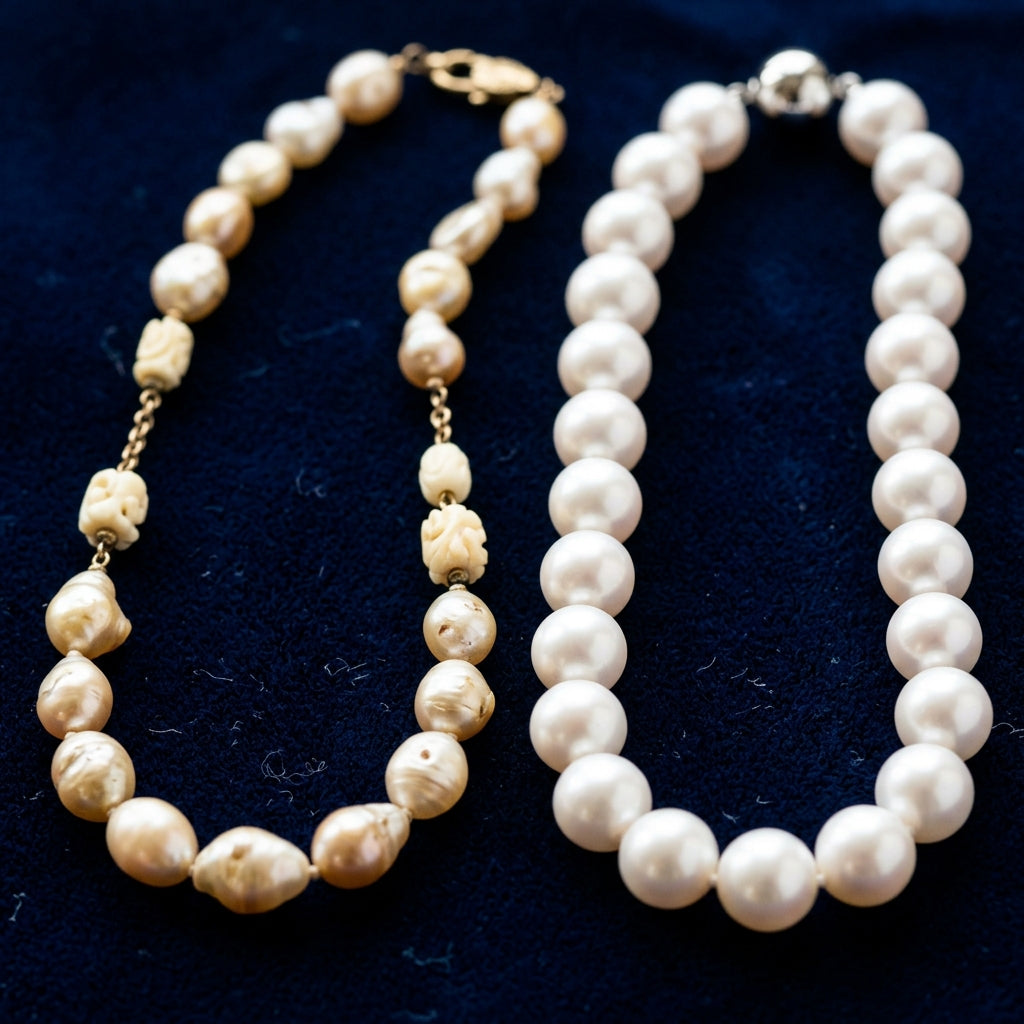
Are Cultured Pearls Real? A Definitive Guide to Genuine Cultured Pearls
Table des matières
- Biological Formation: How Cultured and Natural Pearls Grow
- Laboratory Testing: X-Rays, Micro-CT, and Chemical Fingerprinting
- What the Law Says: FTC Guides §23.20 and CIBJO Standards
- 9-Factor Comparison Matrix: Cultured vs. Natural Pearls
- Market Valuation: Why Wild Natural Pearls Cost Millions
- Buyer's Guide: How to Buy Fine Cultured Pearls Safely
When asking "are cultured pearls real," the definitive answer from gemologists and consumer protection authorities is unequivocally yes. Cultured pearls are 100% genuine real organic gemstones formed when living oysters or mussels deposit natural aragonite nacre, differing from wild natural pearls only because human grafting initiates the process rather than a chance wild irritant (CIBJO 2024). CIBJO standards define cultured pearls as "pearls whose formation is initiated by human intervention," confirming their authentic biological identity.
For centuries, pearls were among the most elusive treasures on earth, harvested by intrepid divers braving ocean depths to open thousands of wild oysters in search of a single glowing gem. Today, virtually all fine real pearl jewelry sold around the world consists of cultured pearls.
Yet a common misconception persists among jewelry shoppers: many assume that "cultured" means artificial, synthetic, or imitation. Nothing could be further from the truth. If you're asking "are cultured pearls real pearls?", the answer is a resounding yes. Cultured pearls are real organic gemstones produced by living marine oysters and freshwater mussels, composed of the exact same crystalline calcium carbonate and organic protein matrix as historical wild pearls.
This definitive guide explores the biological mechanics, non-destructive laboratory testing methods, international consumer protection laws (FTC Guides §23.20), and multi-million-dollar auction realities that separate cultured from natural pearls across nine critical factors, providing a clear understanding of what a cultured pearl truly is.
"I was always unsure if cultured pearls are real, but this guide clarified everything. Knowing I'm buying a genuine, beautiful gemstone gives me so much confidence!" - A Happy Customer
Our Quality Guarantee:
We stand behind the authenticity and quality of every real cultured pearl we offer. Each listing states the pearl type, origin and treatment, and every piece comes with 30-day returns.
Biological Formation: How Cultured and Natural Pearls Grow
To understand why are cultured pearls real gemstones, one must first dismantle the popular myth surrounding how natural pearls form in nature.
The Natural Wild Pearl Mechanism (Accidental Irritants)
For generations, popular culture claimed that natural pearls form when a single grain of sand gets trapped inside an oyster. Gemological research has proven this to be false. Oysters constantly flush sand and grit out of their shells with water currents.
In reality, a wild natural pearl is initiated by a rare biological accident:
Intrusion Event: A microscopic parasite, drill-worm, or damaged piece of outer mantle tissue enters the soft internal organs of a wild marine oyster or freshwater mussel.
Defense Secretion: Unable to expel the intruder, the mollusk envelops the irritant within a specialized "pearl sac" composed of epithelial cells.
Concentric Layering: The sac secretes microscopic hexagonal platelets of aragonite (CaCO₃) bound by conchiolin protein. Over 5 to 20 years, the mollusk deposits thousands of continuous, concentric layers of nacre from center to surface, like the growth rings of a tree.
Wild natural pearls are extraordinarily rare. Fewer than 1 in 10,000 wild bivalves produces a pearl, and less than 1 in 100,000 yields a gem with the roundness, luster, and spotlessness required for fine jewelry.
The Cultured Pearl Innovation (Human-Assisted Grafting)
In 1893, the first cultured pearls (hemispherical) were produced in Japan, and round cultured pearls followed in the early 20th century, transforming the pearl trade.
Instead of waiting for a rare accident of nature, skilled technicians replicate the natural biological process under controlled aquaculture conditions:
Tissue Graft Insertion: A technician makes a delicate surgical incision in the host mollusk and inserts a small square of living mantle tissue (the donor graft) from a donor shell.
Nucleation Choice: In saltwater aquaculture (Akoya, Tahitian, South Sea), a spherical mother-of-pearl bead carved from a freshwater mussel shell is inserted alongside the donor graft to guide round growth. In traditional freshwater farming, tissue-only grafts are inserted without bead cores.
Natural Nacre Deposition: The host mollusk forms a natural pearl sac around the graft and deposits thousands of layers of natural aragonite nacre around the nucleus, using the exact same biological mechanism as a wild oyster in the ocean.
Cellular Nacre Composition: Why Both Are 100% Real
From a physical, chemical, and optical standpoint, the nacre deposited in a real cultured pearl is identical to that of a wild natural pearl:
Nacre Composition = 90% Crystalline Aragonite (CaCO₃) + 5% Conchiolin Protein Matrix + 5% Water
Cultured pearls are not synthetic gemstones produced in a factory test tube. They are organic gemstones grown by living aquatic animals in clean ocean bays and pristine lakes.
Biological Formation: Both natural and cultured pearls consist of identical, 100% genuine aragonite nacre secreted by living mollusks. Natural pearls begin with an accidental wild parasite or tissue injury, while cultured pearls begin with a surgically inserted donor tissue graft in aquaculture. This inherent biological process confirms: yes, cultured pearls are real.
Laboratory Testing: X-Rays, Micro-CT, and Chemical Fingerprinting
Because the outer surface of a fine real cultured pearl is composed of pure natural nacre, even master jewelers and gemologists cannot distinguish a cultured pearl from a wild natural pearl using a jeweler's loupe or microscope.
To determine true origin, gemological laboratories rely on advanced non-destructive analytical testing.
X-Ray Microradiography (Visualizing Internal Cores)
The most established method for pearl identification is X-ray microradiography. When X-rays pass through a pearl onto a digital detector, differences in density reveal the internal structural architecture:
Bead-Nucleated Cultured Pearls: Show a clear, sharp spherical boundary separating the solid mother-of-pearl bead nucleus from the outer nacre coating.
Tissue-Nucleated Cultured Pearls: Display a small, twisted, or irregular central organic cavity where the donor graft tissue shrank, surrounded by solid nacre.
Wild Natural Pearls: Display continuous, uninterrupted concentric growth rings radiating from the center to the surface, showing no central bead core or graft cavity.

Micro-Computed Tomography (3D Growth-Ring Mapping)
For high-value gems, advanced laboratories such as the GIA (Gemological Institute of America) and SSEF (Swiss Gemmological Institute) employ Micro-CT scanning.
Micro-CT creates thousands of high-resolution 3D cross-sectional X-ray slices, allowing gemologists to map internal growth structures, verify nacre layer density, and detect modern treatment agents with absolute precision.
Energy-Dispersive X-Ray Fluorescence (Trace Element Analysis)
Gemologists use EDXRF spectroscopy to determine whether a pearl grew in a marine (saltwater) or limnic (freshwater) environment:
Freshwater Signatures: High concentration of Manganese (Mn) relative to Strontium (Sr).
Saltwater Signatures: High concentration of Strontium (Sr) with virtually undetectable Manganese.
Laboratory Identification: Gemological laboratories use non-destructive X-ray microradiography and 3D Micro-CT scanning to identify internal structures: cultured pearls reveal a distinct bead nucleus or graft cavity, whereas natural wild pearls exhibit continuous concentric growth rings from center outward.
What the Law Says: FTC Guides §23.20 and CIBJO Standards
Because cultured pearls are genuine gemstones that exist alongside extinct wild fisheries, international trade authorities strictly regulate how pearls are advertised, labeled, and sold to protect consumers and clarify the cultured pearls meaning for buyers.
FTC §23.20 Mandatory Cultured Disclosures
In the United States, the Federal Trade Commission enforces strict rules under the FTC Guides for the Jewelry, Precious Metals, and Pewter Industries (16 CFR §23.20):
Mandatory Qualification (§23.20a): It is illegal and deceptive to use the word "pearl" without qualification to describe a cultured pearl. Sellers must explicitly include the word "cultured" (e.g., Cultured Akoya Pearl, Freshwater Cultured Pearl Necklace).
Prohibition of Deceptive Terms (§23.20b): It is illegal to describe a cultured pearl as "natural", "real wild", or "uncultured".
CIBJO Pearl Book Classification Standards
The CIBJO (World Jewellery Confederation) maintains global terminology rules followed across Europe, Asia, and international auction houses:
Clause 3.1 (Natural Pearl): Reserved exclusively for pearls formed entirely naturally in wild bivalves without any human assistance.
Clause 3.2 (Cultured Pearl): Mandated for all pearls initiated by human grafting in aquaculture.
Prohibition on Imitations: CIBJO strictly forbids describing glass, plastic, or shell factory beads as "pearls" or "cultured pearls". They must be labeled as Imitation Pearls or Simulated Pearls.
Consumer Protection Laws: FTC Guides §23.20 and CIBJO international standards legally require sellers to disclose that a pearl is "cultured" (e.g., Cultured Pearl) and strictly prohibit selling cultured pearls as "natural" or "wild" to prevent consumer deception.
9-Factor Comparison Matrix: Cultured vs. Natural Pearls
The side-by-side matrix below outlines nine essential criteria comparing cultured pearls against wild natural pearls:
To explore specific saltwater varieties, read our detailed guide on Akoya vs South Sea Pearls comparison and our analysis of Saltwater vs Freshwater Pearls.
Market Valuation: Why Wild Natural Pearls Cost Millions
A frequent source of astonishment for jewelry lovers is the vast pricing gulf between fine cultured pearls and natural wild pearls.
Overfishing and the Extinction of Commercial Wild Fisheries
During the 19th and early 20th centuries, intensive wild pearl diving in the Persian Gulf, Red Sea, and Manaar Strait decimated wild oyster populations.
By the 1930s, commercial wild pearl diving became economically extinct. Today, discovering a natural wild pearl of gem-quality in the ocean is a statistically negligible anomaly. Consequently, natural wild pearls exist almost exclusively in museum collections, royal treasuries, and high-end auction houses.
Historic Auction Record Realities
The extraordinary valuation of wild natural pearls is illustrated by famous international auction sales:
The Marie Antoinette Pearl Pendant: A natural saltwater drop pearl pendant owned by the Queen of France sold at Sotheby's Geneva for a record $36.1 Million.
La Peregrina Pearl: A historic 50.6-carat pear-shaped natural pearl once owned by King Philip II of Spain and Elizabeth Taylor sold at Christie's New York for $11.8 Million.
The Baroda Pearl Necklace: A famous double-strand natural saltwater necklace owned by the Maharajas of Baroda sold at Christie's for $7.1 Million.

Comparative Pricing Spectrum
Market Pricing & Valuation: Commercial wild pearl fisheries are virtually extinct due to historical overfishing. While fine cultured pearl strands provide accessible luxury between $150 and $25,000, historic wild natural pearl necklaces represent rare auction-only collector treasures selling for $100,000 to over $11 Million.
Buyer's Guide: How to Buy Fine Cultured Pearls Safely
Because 99.9% of all genuine pearl jewelry sold today features cultured pearls, buyers can make informed, confident purchases by following these gemological guidelines to ensure they are buying real pearls.
Verifying Invoice Disclosures and Lab Certificates
When purchasing fine pearl jewelry:
Check Invoice Terminology: Ensure the invoice explicitly specifies the pearl species and cultured classification (e.g., Japanese Akoya Cultured Pearl, Tahitian Cultured Pearl, Freshwater Cultured Pearl).
Request Gemological Certificates: For high-value South Sea or Akoya strands over $3,000, verify that the item includes a certificate from a reputable laboratory (such as GIA or SSEF) confirming natural color, nacre quality, and cultured origin.
Beware Deceptive Marketing: Avoid sellers using misleading terms like "natural cultured" or attempting to sell synthetic shell/plastic beads as "real pearls".
Selecting Quality Cultured Pearls for Everyday Wear
Cultured pearls offer exceptional beauty and durability for modern lifestyles:
Freshwater Cultured: Ideal for versatile daily wear thanks to solid nacre construction.
Akoya Cultured: Perfect for traditional 6.5–8.5mm formal elegance with mirror luster.
South Sea Cultured: Ideal for commanding 10mm+ statement luxury.
To test your pearls at home using non-destructive methods (such as the tooth test or light reflection test), review our comprehensive guide on 8 Tests to Tell If Pearls Are Real at Home.
For an extensive exploration of every major pearl classification, consult our Comprehensive Types of Pearls Guide.
Buyer's Safety Guide: Buy fine cultured pearls from reputable jewelers who strictly adhere to FTC §23.20 disclosure laws. Verify invoice descriptors, request lab certificates for high-value strands, and choose cultured pearls for genuine, durable, heirloom-quality beauty.
Frequently Asked Questions About Cultured and Natural Pearls
What is the difference between a cultured and a natural pearl?
The fundamental difference is the origin of the initiation trigger. Cultured pearls are grown with human assistance by inserting a donor mantle tissue graft into a mollusk in an aquaculture farm. Natural pearls form spontaneously in the wild when an accidental irritant enters an oyster without human intervention.
Are cultured pearls real pearls?
Yes. Cultured pearls are 100% genuine real pearls. They consist of identical organic calcium carbonate (aragonite) and conchiolin layers secreted naturally by living oysters and mussels. They are not artificial, synthetic, or plastic imitations.
How do gemological labs tell cultured pearls apart from natural pearls?
Gemological laboratories use non-destructive X-ray microradiography and micro-CT (computed tomography) scanning. X-rays reveal the inner structure: cultured pearls show a distinct spherical mother-of-pearl bead nucleus core or graft cavity, whereas natural wild pearls exhibit continuous concentric growth rings from center outward.
Why are natural wild pearls so rare and expensive?
Wild natural pearls occur in fewer than 1 in 10,000 wild oysters, and less than 1 in 100,000 achieves round gem quality. Due to severe historical overfishing in the early 20th century, commercial wild pearl fisheries are extinct, making genuine natural pearl strands multi-million-dollar auction treasures.
What does the law require jewelry sellers to disclose about cultured pearls?
Under FTC Guides §23.20 (USA) and CIBJO international rules, sellers are legally required to explicitly disclose that a pearl is "cultured" (e.g., "Cultured Akoya Pearl" or "Freshwater Cultured Pearl") and are strictly forbidden from selling cultured pearls simply as "natural" or "wild".
Read more
Compare Akoya vs South Sea pearls across size scale, mirror luster, nacre density, and real market pricing. Discover why South Sea pearls cost more and where the value crossover lies in this defini...
Discover the world's most expensive types of pearls, ranked by rarity, price per carat, and auction history. From wild papaya-orange Melo Melo flame pearls and antique natural Persian Gulf treasure...
Leave a comment
All comments are moderated before being published.
This site is protected by hCaptcha and the hCaptcha Privacy Policy and Terms of Service apply.