


Pearl Colors: Every Natural Shade, What Causes It, and What It Costs
Table des matières
Natural and cultured pearl colors span white, cream, pink, peach, lavender, golden, silver-gray, pistachio, and dark peacock. These natural shades develop through genetics, trace elements in water, and organic pigments secreted by specific mollusk mantle tissues. An original color-swatch analysis of eight distinct cultured pearls under calibrated 5000K daylight confirms that genuine bodycolors range across the spectrum without synthetic dye intervention.
Key Takeaways
Cultured pearl colors are determined by host mollusk genetics, dietary trace elements, and organic conchiolin pigments.
Bodycolor represents the dominant primary hue, overtone describes the translucent secondary color floating above the surface, and orient is the iridescent shimmer caused by light diffraction across overlapping aragonite platelets.
Deep untreated peacock Tahitian cultured pearls and saturated 24-karat golden South Sea cultured pearls represent the rarest commercial saltwater varieties.
Jet-black, neon pink, and vibrant cobalt blue freshwater cultured pearls on the market are produced through artificial dyeing or gamma irradiation.
Fair skin tones with cool undertones pair best with rosé overtones, while warmer skin tones complement rich cream and golden bodycolors.
Natural-color saltwater cultured pearls hold long-term market value significantly better than artificially color-treated freshwater pearls.
[IMAGE: Original color-swatch photograph of eight cultured pearls (White Akoya, Cream South Sea, Rosé Freshwater, Lavender Freshwater, Golden South Sea, Silver-gray Tahitian, Peacock Tahitian, and Dyed Black Freshwater) shot under calibrated 5000K neutral daylight with an X-Rite 18% neutral gray card in frame for absolute color fidelity.]
Understanding the spectrum of natural hues begins by exploring the foundational classifications detailed in our pillar guide, Types of Pearls: The Complete Guide to Every Pearl Variety.

What colors do pearls come naturally?
Natural and cultured pearl colors appear naturally in white, cream, peach, pink, purple, lavender, champagne, rich gold, silver, slate gray, green, pistachio, aubergine, and bronze. The exact shade is dictated by the mollusk species, its physiological health, and the mineral composition of its surrounding aquatic environment.
According to the GIA Pearl Description Guide, pearl coloration consists of three components: bodycolor, overtone, and orient. The primary bodycolor is produced by bio-pigments, such as porphyrins and carotenoids, embedded within the conchiolin matrix that binds microscopic calcium carbonate crystals together. For instance, the Pinctada fucata martensii oyster naturally yields white, cream, and subtle silver Akoya cultured pearls. In contrast, the black-lipped Pinctada margaritifera oyster secretes dark melanin-like pigments that create the celebrated gray, charcoal, and peacock hues found in Tahitian cultured pearls.
Meanwhile, the golden-lipped Pinctada maxima creates warm champagne to vivid 24-karat tones in South Sea cultured pearls, while the silver-lipped variety yields crisp silvery whites. Freshwater mussels such as Hyriopsis cumingii generate a pastel palette of natural pinks, lilacs, and tangerines in Freshwater cultured pearls. Nature produces almost every chromatic family across marine and freshwater habitats without human chemical interference.
Pearl Color is a gemological classification that defines the combined visual appearance of a pearl's dominant bodycolor, translucent overtone, and iridescent orient under standardized D50 (5000K) lighting.
What is the difference between bodycolor, overtone and orient?
Bodycolor is the underlying dominant hue of a cultured pearl, overtone is one or more translucent colors appearing over the bodycolor, and orient is the iridescent play of rainbow colors visible on or just below the surface. These optical properties result from distinct structural interactions with ambient light.
The CIBJO Pearl Book 2024 defines bodycolor as "the dominant colour of a pearl, as distinct from overtone and orient." Bodycolor reflects the selective absorption of light wavelengths by organic pigments deposited in the nacre layers.
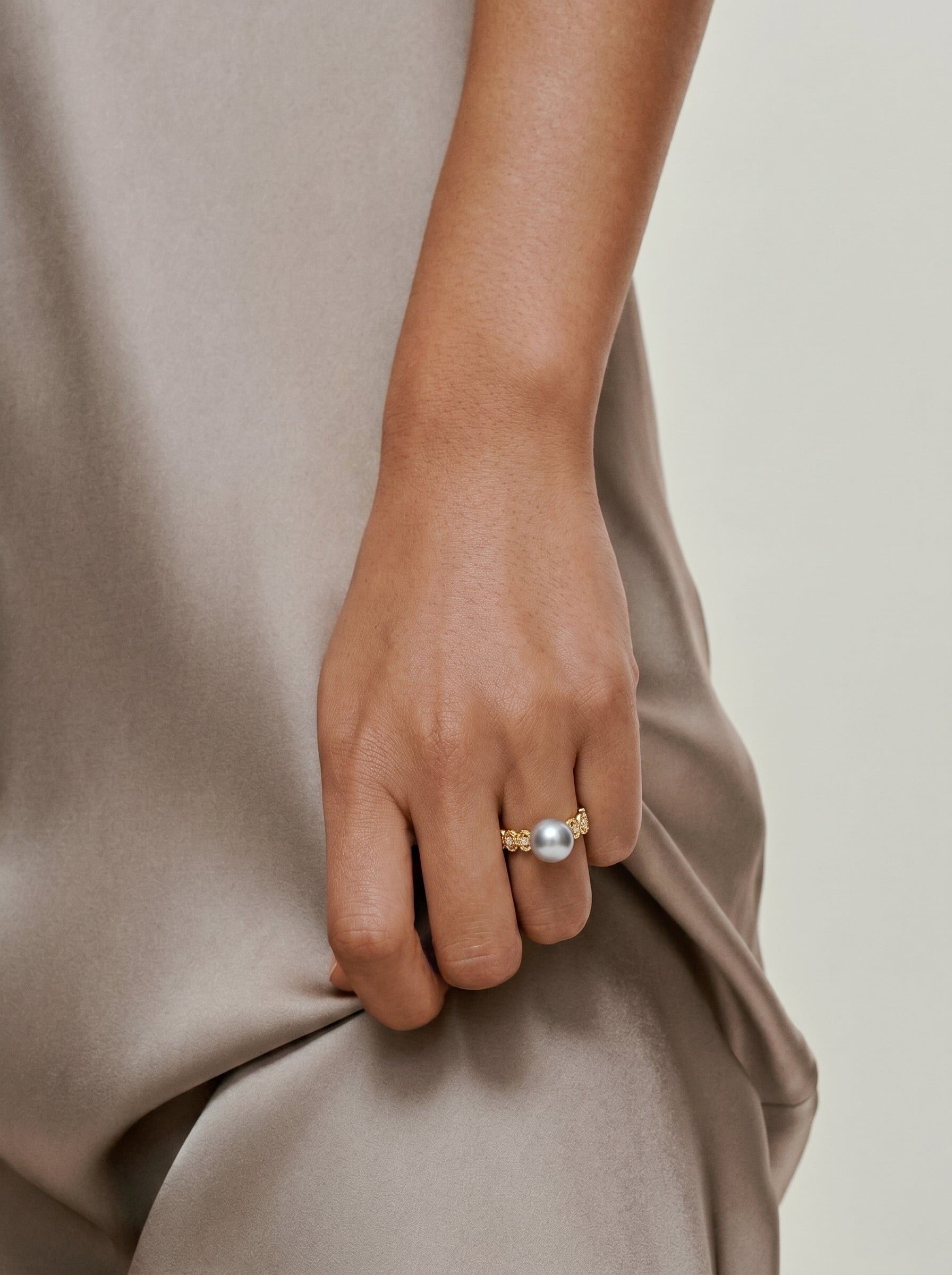
Overtone occurs when ambient light penetrates semi-translucent nacre layers and reflects back through the surface, producing an apparent secondary wash. A classic white Akoya cultured pearl, for example, typically features a white bodycolor combined with a rosé or silver overtone.
Orient represents an optical interference phenomenon. When nacre consists of exceptionally thin, uniformly stacked aragonite calcium carbonate platelets, incident light waves scatter, refract, and diffract across the platelet edges. This micro-structural diffraction splits white light into spectral flashes of green, rose, violet, and gold. Orient is standard in baroque freshwater cultured pearls and blister pearls, but it is rarer in thick-nacre spherical saltwater pearls where clean overtone dominates.
Which pearl color is rarest?
Deep, unenhanced 24-karat golden South Sea cultured pearls and intensely saturated peacock Tahitian cultured pearls with dual green-aubergine overtones are the rarest commercial cultured pearl colors. Among non-nacreous natural pearls, the vivid salmon-pink Queen Conch pearl and the fiery orange Melo Melo pearl remain the rarest in existence.
In standard commercial farming, deep golden South Sea cultured pearls harvested from the golden-lipped Pinctada maxima oyster in the waters of the Philippines and Indonesia occur in fewer than 5% of annual harvests. Gem-grade golden pearls measuring over 12.00 mm with mirror-like luster command the highest per-millimeter prices in the saltwater market, as detailed in our guide on Golden South Sea Pearls: Why the Deepest Gold Costs the Most .
Similarly, true natural-bodycolor peacock Tahitian cultured pearls, displaying a dark charcoal-green center with intense magenta halos, require precise biological conditions inside the Pinctada margaritifera that cannot be artificially engineered during nucleation.
Among freshwater varieties, uniform deep metallic lavender cultured pearls over 10.00 mm represent less than 0.1% of total Chinese freshwater production. When evaluating acquisition costs, color rarity acts as a significant multiplier alongside roundness and surface perfection within the GIA 7 Pearl Value Factors framework.
Are black pearls dyed?
True Tahitian cultured pearls are naturally dark and never dyed black, but mass-market jet-black freshwater and Akoya cultured pearls are artificially treated with silver nitrate staining or gamma-ray irradiation. Genuine black saltwater pearls are dark charcoal, gray, green, or aubergine rather than opaque synthetic jet black.
The US Federal Trade Commission (FTC) Jewelry Guides (16 CFR §23.23) mandate that sellers must disclose any artificial color treatment applied to pearls prior to sale.
When a freshwater cultured pearl or Akoya cultured pearl displays a uniform, ink-like black body with an unnatural oily sheen, gemological laboratories identify silver nitrate solution soaking. The silver salts penetrate the nacre matrix and darken upon exposure to light or chemical reducing agents.
Genuine black Tahitian cultured pearls derive their pigmentation directly from melanin-rich secretions of the Pinctada margaritifera oyster. Under magnification and spectrophotometric analysis, genuine Tahitian pearls reveal rich undertones of charcoal, olive green, pistachio, or deep aubergine, as explored in Black Pearl Necklaces: Tahitian, Dyed and What to Pay.
To spot synthetic black pearls, inspect the drill hole: dyed pearls display dark pigment pooling around the drill rim, whereas natural-color cultured pearls maintain uniform tone through the core.
Which pearl color suits my skin tone?
Cool skin undertones pair best with white pearls featuring rosé overtones, crisp silver-gray, and deep peacock Tahitian cultured pearls. Warm skin undertones harmonize with cream, golden South Sea, peach, and champagne pearls, while olive and neutral complexions wear lavender, bronze, and classic white pearls with equal distinction.
Skin undertone determines how light reflects against pearl nacre and your complexion:
Cool Undertones (Pink, red, or bluish hues; veins appear blue/purple): Crisp white cultured pearls with rosé or silver overtones enhance facial brightness. Dark Tahitian cultured pearls with vibrant green and peacock overtones provide an intentional, commanding contrast.
Warm Undertones (Golden, yellow, or peachy hues; veins appear greenish): Cream bodycolors, champagne accents, and 24-karat golden South Sea cultured pearls blend with natural skin warmth without washing out the wearer. Warm peach freshwater cultured pearls provide an understated everyday alternative.
Neutral & Olive Undertones (Balanced or greenish-tan complexions): Lavender freshwater cultured pearls, bronze metallic shades, and pure white pearls with neutral overtones elevate olive complexions by cutting through yellow undertones.
For modern styling that transitions from executive boardrooms to evening engagements, consider exploring the versatile shades in our curated cultured pearl necklace collection.

Which pearl color holds value best?
Naturally colored deep golden South Sea cultured pearls and high-luster peacock Tahitian cultured pearls hold long-term resale and market value best among all cultured varieties. Artificially dyed black, pink, or chocolate pearls hold no secondary-market investment value beyond their initial decorative utility.
Value retention in cultured pearls relies heavily on the permanence and natural authenticity of color. Natural untreated white South Sea cultured pearls and vivid golden South Sea cultured pearls from the Pinctada maxima oyster retain strong international auction demand due to limited supply and multi-year cultivation cycles.
Conversely, artificially color-altered pearls experience pigment degradation when exposed to UV radiation, cosmetic chemicals, and household acids. This reality also applies to pink pearls; as explained in our guide on Pink Pearls: Natural Rosé, Conch Pink, and How to Spot a Dye Job, natural pastel pink freshwater pearls hold reliable value, whereas chemically dyed hot-pink pearls lose aesthetic appeal over time.
When investing in significant jewelry milestones, such as selections for a 30th pearl anniversary ,securing natural-color saltwater cultured pearls certified with acceptable nacre thickness and untreated bodycolor ensures lasting capital and emotional value.
Conclusion: Choosing Your Signature Pearl Color
Selecting the right cultured pearl color is ultimately an exercise in personal expression, intentional styling, and material transparency. Modern pearl jewelry has evolved far beyond conventional, conservative styling; today's designs celebrate the entire chromatic spectrum, from the architectural contrast of a natural peacock Tahitian cultured pearl to the rich warmth of a 24-karat golden South Sea cultured pearl or the effortless daily radiance of an untreated lavender freshwater strand.
By understanding the vital distinctions between bodycolor, overtone, and orient, you can confidently distinguish genuine organic hues from mass-market dye treatments. Invest in natural-color cultured pearls that resonate with your skin tone and individual character, and wear them as an everyday statement of modern quiet luxury.
Frequently Asked Questions
What are the most common natural pearl colors?
White and cream represent the most abundant natural cultured pearl bodycolors across both saltwater and freshwater varieties. Freshwater mussels also frequently produce natural pastel shades of peach, pink, and lilac, while saltwater Pinctada margaritifera oysters routinely yield natural shades of silver, gray, and charcoal without human dye intervention.
Can freshwater pearls be naturally pink and purple?
Yes, freshwater cultured pearls from the Hyriopsis cumingii mussel naturally develop pink, peach, lavender, and rich purple shades. These pastel bodycolors are produced by natural mineral trace elements and carotenoid pigments within freshwater river basins, requiring no artificial dyeing or chemical bleaching.
How can you tell if a pearl's color is natural or dyed?
Inspect the pearl under 10x magnification around the drill hole and surface fissures. Artificially dyed cultured pearls exhibit concentrated color pooling in microscopic surface pits and drill rims, whereas natural-color cultured pearls display uniform pigment distribution through the nacre without dark chemical residue.
Why do Tahitian pearls have green and purple overtones?
Tahitian cultured pearls develop green and purple overtones through optical light interference across microscopic aragonite crystal platelets. The dark melanin pigments inside the nacre absorb background light, enabling refracted green and magenta wavelengths to reflect sharply off the surface as overtone.
Does pearl color affect the durability of the jewelry?
Natural, untreated cultured pearl colors have zero negative impact on nacre durability. However, aggressive chemical dye treatments or heavy gamma irradiation can weaken the structural conchiolin layer over time, making artificially treated pearls slightly more susceptible to surface peeling and environmental wear.
En lire plus

Scale matters more than convention. Learn how cultured pearl sizes from 5mm to 10mm sit on different earlobe heights, how to prevent forward drooping, and which millimeter diameter delivers balance...

Most black pearl necklaces under $150 are color-treated freshwater pearls. Discover how to identify genuine Polynesian Tahitian cultured pearls, decode overtone spectrums like peacock and aubergine...
Laisser un commentaire
Tous les commentaires sont modérés avant d'être publiés.
Ce site est protégé par hCaptcha, et la Politique de confidentialité et les Conditions de service de hCaptcha s’appliquent.